A STUDY TO ASSESS THE EFFECTIVENESS OF STRUCTURED
TEACHING PROGRAMME ON KNOWLEDGE REGARDING
KANGAROO MOTHER CARE AMONG POST NATAL
MOTHERS IN SELECTED HOSPITAL AT ERODE.
By
301417852
Dissertation submitted to
The Tamilnadu Dr. M.G.R. Medical University, Chennai
In partial fulfillment of the requirement for the degree of
Master of Science
In
Paediatric - Nursing
under the guidance of
Prof. Mrs. S.INDIRA, M.Sc (N),
Professor
Department of Paediatric Nursing
ANBU COLLEGE OF NURSING
M G R NAGAR, KOMARAPALAYAM,
A STUDY TO ASSESS THE EFFECTIVENESS OF STRUCTURED
TEACHING PROGRAMME ON KNOWLEDGE REGARDING
KANGAROO MOTHER CARE AMONG POST NATAL
MOTHERS IN SELECTED HOSPITAL AT ERODE.
Approved by: ANBU COLLEGE DISSERTATION COMMITTEE.
RESEARCH GUIDE
………
Prof. Mrs. S. INDIRA, M.Sc (N),
HOD of Paediatric Nursing,
Anbu College of Nursing
Komarapalayam.
PRINCIPAL
…………...
Prof. Mrs. K.VIJAYALAKSHMI, M.Sc (N),
Principal
Anbu College of Nursing
Komarapalayam.
A DISSERTATION SUBMITTED TO THE TAMIL NADU
DR. M.G.R MEDICAL UNIVERSITY, CHENNAI IN PARTIAL
FULFILLMENT OF THE REQUIREMENT FOR THE DEGREE
OF MASTER OF SCIENCE IN NURSING.
VIVA VOCE:
INTERNAL EXAMINER: ...
ENDORSEMENT BY HEAD OF THE INSTITUTIONS
ACKNOWLEDGEMENT
First of all I bow before God and owe my sincere thanks to almighty, who is
the source strength and inspiration to every step of my life.
I render my sincere thanks to Shri. S.Srinivasan, Chairman of Anbu
Educational Institutions, who gave this opportunity to complete my master degree in
this esteemed institution.
It is my privilege to express my heartfelt thanks to Prof. K.Vijayalakshmi,
M.Sc (N), Head of Obstetric and gynaecological Nursing, Principal, Anbu College of
Nursing, for the encouragement, inspiration, support as well as for providing all
facilities for successful completions of this study.
I express my grateful thanks to Mrs. S.Indira M.Sc (N), Guide and Class
co-ordinator, who has given precious advice, valuable suggestions, and
guidance for the completion of thesis in a stipulated period.
I extent deeply my thanks to The Managing Director, Aswin Hospital, Erode,
granted permission to conduct this study and for his valuable guidance and
co-operation to conduct this study.
My sincere gratitude to all the PG Faculties for their guidance and constant
motivation throughout the study.
I wish to express my sincere thanks to Mr. Subash, Biostatistician, in carrying
out the statistical analysis of the data.
I render my thanks to all the experts who validated tools and provided
constructive and valuable opinions.
I also accord my respect and gratitude to all the UG Faculties and office staff
of Anbu College of Nursing for their timely assistance, co-operation and support
My sincere thanks to all my friends and beloved juniors for their constant help,
ideas and for standing with me during the odds.
I owe my heartfelt gratitude to my parents M. Ponnaiyan, P. Dhanalakshmi,
Brothers P. Vivekandan and P. Vimalraj for their prayer, constant support and ever
memorable help throughout this study.
I am truly grateful thanks to all the participants who formed the core and basis
of this study with their wholehearted co-operation.
Last but not least; I would sincerely thank all the members and colleagues who
have directly or indirectly helped me in the successful completion of the study.
My whole hearted thanks and gratitude to one and all who came on my way to
ABSTRACT
“Too often we underestimate the power of a touch, a smile, a kind word, a listening ear, an honest compliment, or the smallest act of caring, all of which have the
potential to turn a life around.”
LEO. F. BUSCAGLIA QUOTES statement of the proplem
a study to assess the effectiveness of structured teaching
programme on knowledge regarding kangaroo mother care among
post natal mothers in selected hospital at erode
OBJECTIVES OF THE STUDY:
1. To assess the knowledge level regarding Kangaroo mother care among post
natal mothers in selected hospital.
2. To evaluate the effectiveness of structured teaching programme on knowledge
regarding Kangaroo mother care among post natal mothers in selected
hospital.
3. To find out the association between knowledge regarding kangaroo mother
care among postnatal mothers with the selected socio demographic variables.
HYPOTHESIS:
H 1 : There will be a significant difference between pretest and post test score on knowledge regarding kangaroo mother care after post test score among post
H 2 : There will be a significant association between selected demographic variables and post test knowledge regarding kangaroo mother care among post natal
mothers in selected hospital.
METHOD OF STUDY
Research instruments also called research tool are the devices used to collected
data. The tool facilities the observation and measurement of variables.
The following instruments were developed by the research for the present
study.
ORGANIZATION FINDINGS:
Section I:
Descriptive analysis of demographic variables.
Section II:
Assessment knowledge of post natal mothers regarding Kangaroo mother care
prior to implementation of STP.
Section III:
Comparison of pretest, posttest knowledge scores of the postnatal mothers
regarding Kangaroo mother care.
Section IV:
Association between the selected demographic variables with the levels of
RESULTS:
The following were the results of this study.
Finding-1
The study findings revealed that (1) 3% of students had Very poor knowledge, (8)26% of students had poor knowledge, (9)31% of students had average knowledge and the remaining (9)31% had good knowledge.
Finding-2
Comparison of overall mean , SD , mean percentage of pre and post test knowledge scores shows that overall pre test mean score was 1.9 ± 2.01which is 57.52 % where as in post test the mean score was 2.8 ± 2.0 which is 83.85 % revealing the difference of 70.60 % shows the effectiveness of STP.
FindIinig-3
The study findings revealed that association between the level of hemoglobin
and their selected demographic variables. It was interpreted that there was significant
association found between knowledge scores of postnatal mothers regarding
Kangaroo Mother Care with their demographic variables such as Source of
information (P<0.05). No significant association was found between knowledge
scores of postnatal mothers regarding Kangaroo Mother Care with their other
demographic variables such as age, religion, education, family income, type of
delivery. Significant association was found between knowledge scores of post natal
mothers regarding kangaroo mother care such as (occupation, type of family, no of
children, weight of the pre term baby, health services) in p>0.05.
There was no significant association between the level of knowledge with
CONCLUSION
The present study assessed the knowledge regarding Kangaroo mother care
and found the school teachers had inadequate knowledge. After structured teaching
programme on Kangaroo mother care there is significant improvement on post natal
mother knowledge. The study concluded that the structured teaching programme was
effective in improving knowledge regarding Kangaroo mother care.
KEYWORDS :
Effectiveness, structured teaching programme, knowledge, Kangaroo mother
CHAPTER-I
CHAPTER-I
INTRODUCTION
“Children are the wealth of the nation, Take care of them, If you wish to have a strong India”
- Nehru Yes, child health is the foundation of the family and wealth of the Nation.
Newborn is the very important personality of the home. All family members give him
or her warm welcome. M.J.Anderson (2002)
Among the major child health challenges facing the world at the turn of the
new millennium is the problem of high neonatal mortality. The global burden of
newborn deaths is estimated to be a staggering five million per annum. Only 2% (0.1
million) of these death occur in developed countries, the rest 98% (4.9 million) take
place in the developing countries. The highest neonatal mortality rates are seen in
countries of South Asia resulting in almost 2 million newborn deaths in the region
each year, with India contributing 60% (1.2 million) of it. Bohnhorst (2001) Globally about 25 million Low Birth Weight babies are born each years
consisting of 17% of all live births. Approximately 16 to 18% neonates born in
developing world are of Low Birth Weight having a weight of less than 2500 gram.
The World Health Organization defines low birth weight infants (irrespective of
gestational age) as neonates born less than 2500 grams (5 pounds) and extremely low
birth weight as less than 1500 grams. Of these babies, approximately one third dies
by unfamiliar sounds like buzzers, bells but lies all by himself in warmer. The
treatment and routine care giving procedures cause pain and discomfort making it
difficult for very low birth weight infants to experience restful and undisturbed
periods of sleep. An alternative method, which is easy and cheap to practice, having
more advantage is kangaroo care provided for the satisfactory improvement in infant
health. Belizan, J.M. (2003)
More than 20 million babies are born each year with low birth weight. This
represents 15.5% of all births. Of these low birth weight babies, 95.6% are born in
developing countries. One in 12 babies (8.3% of live births) was low birth weight in
2005 in India. Between 1995 and 2005, the number of infants born low birth weight
infants born in India increased to 11%. Because of the poor care and resources, this
rate was increasing steadily. De Alencar.A (2009)
Infants who weigh less than 2500 grams at birth represents about 26% of all
live births in India. More than half of these are born at term. The preterm infants with
greater body surface area in relation to their body weight and have difficulty in
maintaining normal body weight due to inadequate brown fat stores. He further
explains that premature infants have a disproportionate ratio of body surface to body
weight, thin skin, fewer fat stores, immature neurological system and less available
metabolic substrate than full term infants and adults. Therefore, heat transfer through
internal gradient is increased four times more in preterm infants in adults.
Ludington-Hoe (2002) Based on Maslow's hierarchical theory, the basic need of every individual are
love, security and affection. All of which can be expressed through the most old
fashioned and natural way of cuddling. The baby through out the nine-month period
of the womb. This sensation and feeling of security is ended prematurely in the case
of the preterm infants, since they have to face extra uterine life before time. Hence
preterm infant need more cuddling and security, mimicking the intrauterine
environment. Flacking.R (2011)
Kangaroo Mother Care was initially conceived in Bogota, Colombia in 1978
as an alternative to incubator care for the low bi11h weight baby. Kangaroo Mother
Care is a humane, low cost method of care of low birth weight (LBW) infants
particularly for those weighing less than 2000gram at birth. It consists of skin-to-skin
contact, exclusive breast feeding early discharge and with an adequate follow-up.
Suraj Gupta (2004) Incubator care causes dehydration in preterm and full term. There is a similar
effect of maintaining temperature by a cost effective method of care named as
kangaroo care. Kangaroo Care, when replaced by an incubator, leads to many benefits
for both the baby and mother. In India, most of the population t~l11S' below poverty
line, thus restraining them' from sophisticated care for their row birth weight infants.
Basuvantgappa B.T. (2006) Thus, Kangaroo Care ensures people from all economic standards to give the
needed care for their preterm babies. The preterm babies gain temperature slowly and
prevent hypothermia. Therefore, the preterm baby becomes calm and relaxed. It also
helps the baby to conserve energy and bring the organs to normal functioning.
NEED FOR THE STUDY
In general, prematurity and intra uterine growth retardation or low birth weight
are the leading cause of neonatal morbidity and mortality. WHO (2001) stated that
16% of infant deaths (109.5 per 1000 live births) is due to specified low birth weight.
Park.K (2007) Infant mortality rate is 60 per 1000 live births and neonatal mortality rate is 40
per 1000 live births in India and 44 per 1000 live births in Tamil Nadu and 40 per
1000 live births in Karnataka. Data indicates an alarming situation. The Health for All
by 2010 aims for 20 Infant Mortality Rate makes it imperative to develop and low
cost effective modality while for caring low birth weight infants.
Meharban Singh (2004) The newborn should maintain a temperature of 37 degree C. hypothermia in
newborn babies’ results in immature development of central nervous system, birth
asphyxia, intracranial hemorrhage and failure to maintain an effective thermo neural
environment. In preterm and small for gestational age infant’s heat loss is due to high
surface area, reduced subcutaneous tissue, reduced brown fat and reduced glycogen
stores. O.P.Ghai (2005)
Hypothermia in low birth weight babies, leads to increase in surfactant
synthesis and surfactant efficacy, decreased PH, reduced partial pressure of Oxygen
(PO2), hypoglycemia, less O2 consumption, diversion of cardiac output to brown fat,
increased utilization of caloric reserves, reduced weight gain of infant and reduced
blood coagulability. Therefore, it increases neonatal mortality. Parul Datta (2007) Preterm babies who are not developed completely found that the skin-to-skin
contact with mother helps in improvement of neurobehavioral development. In 1979,
incubators” by holding their premature infants skin-to-skin like kangaroo style. It is
an alternative to NICU care because of high rate of nosocomial infections and lack of
resources. Because of Colombian experience, many European countries have
introduced Kangaroo care in their nurseries physiological, emotional and physical
benefits for both parents and infants by Kangaroo care. Wong L.D. (1997) A study conducted on the effects of kangaroo care on sleep. The importance of
sleep to the infant’s developmental outcome was recognized and the use of
skin-to-skin holding as a means of increasing stable infant sleep and rest was implemented.
Marlow (1998) A study to assess the heart rate variability responses of a preterm infant to
kangaroo care. The main outcome measure was heart rate variability, especially the
parasympathetic component, was high when the infant was fussy in the open crib,
indicating increased autonomic nervous system activity. With kangaroo care, the
infant fell asleep and both sympathetic and parasympathetic components of heart rate
variability decreased. Overall kangaroo care produced changes in heart rate variability
that illustrates decreasing stress. WHO (2003) A study on the influence of feeding patterns and other factors on early somatic
growth of healthy, preterm infants in home-based Kangaroo care. The sample
included was 115 mothers and their 129 healthy, preterm infants. 126 (98.4%) infants
were available for evaluations at term infant’s weight were monitored daily until they
achieved 15g per kg per day. The result revealed that sixty (4.6%) infants gained
weight adequately with exclusive breast-feeding. In 14 of those who needs
supplements adequate weight gain was achieved before reaching term and
control trial. Study subjects were 47 healthy mother infant pairs. Kangaroo care began
at 15 to 20 minutes after delivery and lasted for one hour. Control group infants and
kangaroo care infants were brought to the nursery 15 to 20 and 75 to 80 minutes after
birth respectively. The result showed during an hour long observation starting at 4
hours postnatal, the kangaroo care infants slept longer, were mostly in a quiet sleep
state, exhibited more flexor movements and postures and showed less extensor
movements. Mary Margarette (2005)
A study conducted on kangaroo care in clinical setting with full term infants
who were having breast feeding difficulties. This clinical experience suggested that
Kangaroo care is a worthwhile intervention to try when a mother and her full term
infant are struggling to achieve successful breast feeding.
Caroline.A (2007) The above mentioned studies show that Kangaroo care has many advantages
over the conventional incubator care and it improves the health of the newborn. This
care is a cheapest method and can be given even for the babies from below poverty
line. In addition, it emphasizes that qualified nurse specially educated on Kangaroo
care is an integral part of the newborn care team for ensuring quality care to the
neonates. Therefore, the investigator felt the need to undertake this study to evaluate
the effectiveness of structured teaching programme on knowledge regarding kangaroo
Care among post natal mothers having low birth weight babies.
STATEMENT OF THE PROBLEM
A study to assess the effectiveness of structured teaching programme on
knowledge regarding kangaroo mother care among post natal mothers in selected
hospital at Erode.
OBJECTIVES OF THE STUDY:
4. To assess the knowledge level regarding Kangaroo mother care among post
natal mothers in selected hospital.
5. To evaluate the effectiveness of structured teaching programme on knowledge
regarding Kangaroo mother care among post natal mothers in selected
hospital.
6. To find out the association between knowledge regarding kangaroo mother
care among postnatal mothers with the selected socio demographic variables.
OPERATIONAL DEFINITIONS:
ASSESS:
In this assess means “gathering information for evaluation of knowledge regarding kangaroo mother care by formulating close-ended questions’’.
EFFECTIVENESS:
It refers to the output of structured teaching programme in terms of gain in
knowledge among post natal mothers having low birth weight babies as assessed by a
structured questionnaire.
STRUCTURED TEACHING PROGRAMME:
concept of kangaroo care, components of kangaroo care, preparation and procedure
and maintenance of kangaroo care, benefits of kangaroo care, knowledge of
caregivers regarding kangaroo care and post discharge follow up.
KNOWLEDGE:
It refers to the level of understanding on kangaroo care as expressed through
written responses by the post natal mothers.
KANGAROO MOTHER CARE:
It refers to the practice of skin-to-skin contact between mother and infant in
order to transfer the heat from the parent to the neonate. This helps to prevent
hypothermia enables better neurological development and thereby promotes the
POSTNATAL MOTHERS:
It refers to the postnatal mothers (mothers after the delivery of the baby)
having low birth weight babies in selected hospital at Erode.
HYPOTHESIS:
H 1 : There will be a significant difference between pretest and post test score on knowledge regarding kangaroo mother care after post test score among post
natal mothers having in selected hospital.
H 2 : There will be a significant association between selected demographic variables and post test knowledge regarding kangaroo mother care among post natal
mothers in selected hospital.
ASSUMPTION:
1. A structured teaching programme will help in enhancing the knowledge of
postnatal mothers, which in turn will improve the practice related to kangaroo
mother care.
2. To reduce the length of hospitalization among low birth weight babies.
3. Kangaroo mother care technique along with the modern neonatal care reduces
the neonatal mortality and morbidity.
LIMITATION: The study is limited to;
those who are willing to participate.
the sample is 30.
mothers who could able to read and write in Tamil.
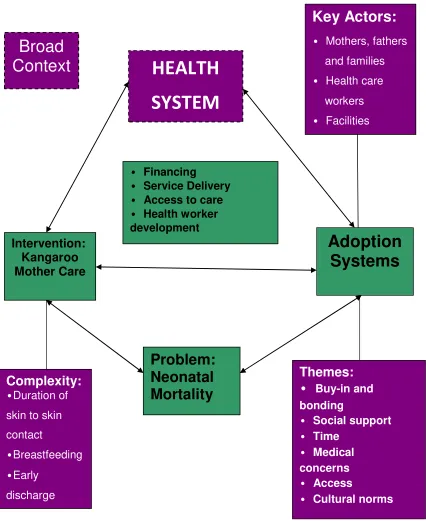
CONCEPTUAL FRAME WORK
Good research usually research findings into an orderly coherent system.
Such integration typically linking research and existing knowledge through review of
prior research on a topic and by identifying or developing an appropriate conceptual
frame work.
Conceptual frame work provides the investigator the guide lines to proceed in
attending the objectives of the study on theory. It is scientific representation of the
steps, activities and outcome of the study.
The conceptual frame work selected for this study is based upon the general
system theory developed by Ludwig von Bertalanffy, According to general system
theory, a system consist of a set interacting compounds, all contributing to the overall
goal of the system. Any system consists of input, through process an output. This
study aims to access the knowledge and practice of delivered mothers regarding
kangaroo mother care.
The process of developed of structured teaching programme includes
preparatory phase as input, the implementory phase, as through process and
evaluation and feedback of the system as the output.
Input :
Input is considered as assessment of knowledge and practice of mothers
delivered regarding kangaroo mother care.
Through Process :
Through process is the process of charge in the knowledge and understanding
about kangaroo mother care, hear the investigator implements questionnaires to the
general information, purpose, importance, kangaroo mother care and purpose of
giving each health teaching about kangaroo mother care.
Output :
Outputfrom a system is energy, matter or information given out by the system
as a result of its process. In this study output refers the result gains in knowledge
FEED BACK :
Difference in the pre and post test score was observed from the knowledge
scores of the samples. In the present study the feed back was considered as a process
of maintaining the effectiveness of video assisted teaching. It is assessed by
CONCEPTUAL FRAME WORK
HEALTH
SYSTEM
Broad
Context
Key Actors:
• Mothers, fathers
and families
• Health care
workers
• Facilities
Intervention:
Kangaroo
Mother Care
Problem:
Neonatal
Mortality
• Financing
• Service Delivery • Access to care • Health worker development
Complexity:
•Duration ofskin to skin
contact
•Breastfeeding
•Early
discharge
Themes:
•
Buy-in andbonding
• Social support • Time
• Medical
concerns
• Access
• Cultural norms
[image:24.612.128.554.118.645.2]CHAPTER-II
CHAPTER - II
REVIEW OF LITERATURE
Review of literature is an essential step in the research project. It provides
basis for future investigation, justifies the need for study, throws light on the
feasibility of the study, Reveals constrains of data collection and relates the findings
from the study to another with a hope to establish a comprehensive study of scientific
knowledge in a professional discipline, from which valid theories developed.
Review of Literature categorized under following Headings:
1) Literatures related to benefits of kangarooing among newborns 2) Literatures related to knowledge regarding kangarooing amongmothers
1) Literatures related to benefits of kangarooing among newborns
Singh M. (2000). A study was conducted on the assessment of newborn babies’ temperature by human touch at AIIMS, New Delhi. Fifty healthy term
neonates were assessed by three pediatricians for skin temperature to the nearest
±0.05°C at three body sites, that is, mid-forehead, abdomen and dorsum of right foot
by touch. The predicted temperatures at different sites were compared with
simultaneously recorded temperatures at the same sites with the help of electronic
thermometers. Rectal temperatures were also recorded in all the babies with rectal
thermometer to compare the variation between the core and skin temperatures. There
was a good correlation between the skin temperature of the babies as perceived by
touch and values recorded with the help of electronic thermometer. All the
importance of evaluating the core and peripheral skin temperature by touch for early
identification of babies under cold stress in order to prevent occurrence of
life-threatening hypothermia.
Linder Kamp (2003) conducted a study to determine whether kangaroo care helps full-term babies. However, a recent clinical trial found evidence kangaroo care
can also help in the development of full-term newborns. The newborns were fell fast
asleep very quickly from the warmth of the mother’s skin. It had a calming effect for
the child and the parents. The babies' vital signs changed. Their heart rate dropped and
they had less episodes of sleep apnea. Research in full-term newborns found more
good results and newborns that had kangaroo care shortly after birth slept longer and
were mostly in a quiet sleep state compared to those who did not have it.
Caroline.A (2007) conducted a study to find if parental Kangaroo had any impact of full term infants who had been exposed to cardiac postoperative intensive
care during the early post-extubation hours. 5 full term infants were exposed to
Kangaroo Care with parent 12 hours after extubation during 2 hour intervals. The
infants were evaluated using cardio respiratory constraints. The outcome of the study
showed that heart rate (123 ± 4 vs 128 ± 5 bpm), respiratory frequency (43 ± 3 vs 51
± 5 breath pm), transcutaneous carbon dioxide (46 ± 2 vs 50 ± 4 mmHg) and central
venous pressure (11 ± 0.8 vs 12 ± 1.2 mmHg) decreased considerably(p < 0.05 for
all), Factors which increased were oxygen saturation (78 ± 6 vs 74 ± 5 mmHg) and
transcutaneous oxygen pressure (42 ± 2 vs 38 ± 3 mmHg) (p < 0.05 for all). The study
concluded that Kangaroo Care may be an influential therapy in regards to stabilizing
Mary Margarette, Kisten (2005) conducted a study on Skin-to-skin parental contact with infants to identify the improvement of physiologic parameters of infants.
Skin-to-skin contact has been implemented recently to facilitate bonding of infants.
The technique allows the infants to rest on the bare chest of a parent or caretaker.
They illustrate a case in which a pre term infant has skin-to-skin contact while being
monitored for physiologic parameters, including heart and respiratory rate,
oxy-hemoglobin saturation, and nasal air flow. They concluded that Improvements in
breathing patterns in this infant during kin-to-skin care and improvement of a normal
temperature suggest that this technique may not only be safe and psychologically
beneficial, but it may also promote physiologic improvement.
Bauer, Jacquilne, Sontheimer (1996) conducted a comparative study on effects of maternal and paternal kangaroo care on oxygen consumption and other
physiologic measures in infants were conducted. The aim of the study was to compare
effects of maternal and paternal kangaroo care in VLBW infants. 12 VLBW infants
with GA 28-34 wks, BW 560-1450g and postnatal Age 7-48 days were studied
before, during and after maternal and paternal kangaroo care. Skin and rectal
temperatures heart and respiration rates, arterial oxygen saturation, oxygen
consumption (VO2), carbon dioxide production (VCO2) and behavioral states were
compared. Results showed that Skin temperature increased significantly (p< 0.05)
during maternal and paternal kangaroo care. The study concluded Maternal and paternal kangaroo care show similar physiologic effects and paternal kangaroo care
Cleary GM, Spinner SS, Gibson E, Greenspan JS (1996) undertook astudy to evaluate the effect of achieving heat conservation in healthy Newborn infants, The
aim of the present study was to compare axillary and skin temperatures and metabolic
adaptation in healthy, full term elective Caesarean section delivered infants who were
randomized to be cared-for either in (a) an incubator, (b) a cot, or (c) skin-to-skin with
the mother. 44 infants were studied. The mean axillary Temperature increase was
significantly greater in the skin to-skin cared-for infants than in the cot cared-for
group. Blood glucose increase was significant in the skin-to-skin group, but not in the
other two groups. The catecholamine levels at 120 min after birth were all within
normal range, and there were no differences between the three groups, suggesting that
none of the groups was exposed to cold stress. Interestingly, at 24 hour after birth, the
mean axillary temperature was significantly higher in the skin-to-skin group than in
the incubator group. The study concluded that kangaroo mother care can effectively
achieve heat conservation in healthy full term Caesarean section delivered infants.
Erlandsson Kerstin. Paternal (2007) studied on paternal skin to skin contact offers caesarean-born baby same calming and development benefits same as
mother as a mother. The sample was 29 Father-infant pairs, full-term healthy
newborns born by planned Caesarean section were randomized to be placed either
skin-to-skin on their father’s chest or beside their father in a crib. The infants in the
skin-to-skin group stopped crying and were calmer compared to infants in the crib
group. A father should therefore be regarded as the primary caregiver for the baby
when a mother is not available immediately following a birth. This study shows that a
Father can soothe his Newborn as effectively as a mother, and more effectively than if
Nathalie Charpak, Juan G. Ruiz-Peláez et al (1997) conducted a study on Kangaroo Mother Versus Traditional Care for Newborn Infants ≤2000 Grams. The
trial was conducted in a large tertiary care hospital. All newborn infants ≤2000 g,
surviving the neonatal period and being eligible for a minimal care unit, were
included. Infants spent 24 hours per day in an upright position, in skin-to-skin
contact, and attached to the mother's chest. After randomization, control infants
remained at the minimal care unit until meeting usual discharge criteria. Both groups
are being followed up to 12 months of corrected age. The result revealed that both
study groups were similar regarding all baseline variables but weight at eligibility.
The risk of dying was similar in both groups (relative risk = 0.59, 95% confidence
interval 0.22–1.6). There were no differences in growth indices. Nosocomial
infections were more frequent in control infants. Hospital stay after eligibility was
shorter in KMC, primarily for infants ≤1800 g.These results show that KMC is a
safe approach to the care of clinically stable LBW infants.
Gathwala, Singh, Balhara (2008) conducted a study based on the theory that kangaroo care facilitates parent baby attachment in low birth weight infants, a
randomized controlled trial done. The Neonates were randomized into a kangaroo
care group and a control group in multiple trials. The kangaroo care group was
subjected to this care at least 6 hours per day and received care after shifting out from
the NICU and into the home setting, while the control group received the standard
incubator care until discharge. At a 3 months follow-up appointment, an interview
researchers concluded, their attachment rate was significantly higher than that
obtained in the control group.
2. Literatures related to knowledge regarding kangarooing among mothers Parmar et al, (in 2009). A study was conducted on “the experience with kangaroo mother care in a neonatal intensive care unit (NICU) in Chandigarh, India”.
The objective was to study the knowledge, feasibility and acceptability of kangaroo
mother care on low birth weight infants in the NICU by mothers, family members,
and health care workers. Family members had to complete a minimum of 4 hours of
kangaroo care per day throughout their time on the unit, and were evaluated by
observation. It was found that this method of care was accepted by 96% of mothers,
82% of fathers, and 84% of other family members. The study showed that 94% of
health care workers also considered it to be a safe conservative method of care in
these infants. Benefits of kangaroo care on babies’ behavior and on maternal
confidence were also reported.
Sivapriya S, Subash J, Kamala S. (2008) conducted a quasi experimental study to assess the knowledge of mothers of preterm babies regarding kangaroo
mother care and to evaluate the effectiveness of structured teaching programme on
kangaroo care among the mothers of preterm babies. A total of 35 mothers were
selected for the study. Findings of the study revealed that, the pre-test knowledge of
the Kangaroo Care was Nil. After the structured teaching programme post test
knowledge of the mother regarding Kangaroo Care was increased. 6 (17.10%)
mothers had inadequate knowledge on Kangaroo Care, 25 (71.4%) mothers had
Kangaroo Care. Kangaroo Mother Care is a simple low cost and highly effective
intervention for low birth weight babies. And also teaching programme can improve
the knowledge of mothers on Kangaroo Care. So, educational programme on
Kangaroo Care can be provided to Mothers, which in turn will improve the preterm
and low birth care.
Kadam S, Binay S, Kanbur W, Mondkar JA, Fernandez A. (2005) conducted randomized controlled trial to determine the acceptability of Kangaroo
Care in a tertiary care hospital in India. Over one year period in which 89 neonates
were randomized into two groups Kangaroo Mother Care and Conventional Method
of Care group. 45 babies were randomized into KMC group and 45 to CMC group.
Findings of study revealed that 70% of mothers felt comfortable during the Kangaroo
Mother Care. 73% felt they would able to give Kangaroo Mother Care. Kangaroo
Mother Care is a easy and powerful way to improve the attachment between Mother
and her low birth weight baby. It also plays a very important role in reducing the
incidences of hypothermia in low birth weight babies.
RESERCH METHODOLOGY
“ Everybody has a talent, but if you do not expose yourself you will not birth the talents within you “
Spike Lee
Methodology is the major phase of research in which the investigator makes a
number of decisions about the materials to be used to study the research problem
basically through the collection of data.
(Polit & Hungler, 1996 )
This chapter deals with the methodological approach adopted for the study.
The purpose of the study is to assess the knowledge and practice of the delivered
mother regarding Kangaroo Mother Care with the effectiveness of structure teaching
programme .
The methodology includes description of research approach, research design,
site and setting, sampling technique, department of the instrument, validation of the
instrument and its reliability, methods of data collection, pilot study and plan for
statistical analysis.
RESEARCH APPROACH
Research approach is the most significant part of any research . The
appropriate choice of research depends upon the purpose of the research study, which
has been undertaken.
The research approach adopted for this study is an educative and evaluative
RESEARCH DESIGN
The research design refers to the researcher’s overall plan for obtaining
answer to the research questions and for testing the research hypothesis . The research
design spells out the strategies that the researcher adopts to develop information that
is accurate, objective and interpretable. For this study the research design chosen is
quasi-experimental design . That is one group pre test and post.
Polit D.F ., Hungler B.P., (2002 )
GROUP
PRE-ASSESSMENT INTERVENTION
POST ASSESSMENT
Experimental O 1 X O 2
Key
O 1 = Pre assessment of knowledge regarding kangaroo mother care. X = Structured teaching programme regarding kangaroo mother care.
O 2 = Post assessment of knowledge regarding kangaroo mother care
VARIABLES :
Variables are the quality of properties or characteristics persons.
Things or situation that change or vary. Charpak. N (1996 )
The variables included in this study are dependent variables, independent
variables .
In the present study dependent variables refers to knowledge of mothers
regarding Kangaroo care. It was the response, behaviours or outcome that was predicated or explained in research.
In this study, the dependent variables are knowledge and practice of Kangaroo
mother care.
Independent variables
An independent variable is the treatment or experimental activity that is
manipulated or varied by the researcher to create an effect on the dependent variable.
In this study the independent variables refers to structured teaching
programme on Kangaroo mother care.
SETTING :
Setting - Selected Hospitals at Erode District.
1. Government Hospital at Erode District.
POPULATION
According to Polit and Hungler, “Population refers to the entire aggregation of
cases that meets designed criteria”. The requirement of defining a population for a
research project arises from the need to specify the group to which the study can be
performed. The population for the present study is the post natal mothers who are
admitted in Government Hospital at Erode District.
SAMPLE AND SAMPLING TECHNIQUES: Sample:
Post natal mothers who are admitted in Government Hospital at Erode District.
Sampling Techniques:
Sampling technique refers to the process of selecting a portion of the
population to prepresent the entire population Polit and Beck, (2007)
In this study non-probability sampling technique was used, in that purposive
sampling was done.
Sample Size:
Sample size for the present study is 30.
CRITERIA FOR SELECTION OF SAMPLE: Inclusion criteria:
infant birth weight of < 2.500 kg an Apgar score six at 1 minute
babies being breast feed
Exclusion criteria:
as Apgar score of 5 or less at birth
Post natal mothers those who undergone health education on Kangaroo mother
care.
Not able to understand and read Tamil.
post natal mother who are not willing to participate.
SELECTION AND DEVELOPMENT OF INSTRUMENT:
Research instruments also called research tool are the devices used to collected
data. The tool facilities the observation and measurement of variables.
The following instruments were developed by the researcher for the present
study.
Section A : Demographic variables of the Post natal mothers
Section B : Structured knowledge questionnaire on Kangaroo mother care
THE STEPS USED FOR PREPARING TOOL:
Instrument is the written device that a research used to collect data. It includes
questionnaire, test and observation schedule Charpak,N (1996). The researcher developed the tools from the reviewed literature and those items that were relevant for
the study were selected. The tool was developed in order to attain the objectives of the
study. The researcher adopted following steps in the development of the instrument.
1. Review of related literature:
2. Preparation of tool: a. Lesson plan
It consists definition components of KMC, pre requisites of KMC, benefits of
KMC, Implementation, Eligibility criteria baby and mother, preparing KMC,
procedure initiation, duration, discharge criteria, post discharge follow up KMC.
b. Questionnaire
3. Consultations with Guide and Research Committee:
The blue prints were given to the experts in research committee. The research
guide and committee members were consulted before finalizing the tool.
4. Preparation of the Final Draft:
Final draft of the tool was prepared after consulting with the expert and
research committee.
DESCRIPTION OF THE TOOL:
The tool was organized into 3 sections. Section I, Section II and Section III.
Section A: Demographic Variables of the post natal mothers
A demographic variable consists of 4 items seeking information about age,
religions, educational qualification, Occupation, Type of Family, Family Income, No.
of Children, Weight of Preterm Baby, Health Services, Type of Delivery.
Section B: Structured Knowledge questionnaire on Kangaroo mother care:
It consisted of 30 closed ended multiple choice questions to assess the
knowledge of samples regarding Kangaroo mother care.
KNOWLEDGE REGARDING KANGAROO MOTHER CARE - 30 items.
A score of one was allotted to correct answers. The structured questionnaire
had 4 alternative responses. The correct response was given a score of ‘one’ and
Adequate knowledge - 75% to 100%
Moderately adequate - 51% to 74%
VALIDITY OF THE INSTRUMENT:
Validity refers to the degree to which an instrument measures what it is
intended to measured (Smith K.M) Content validity is the extent to which the method
of measurement includes all the major elements relevant to the concept being
measured. Charpak.N (1996)
Validity of the tool was assessed by obtaining opinion from 5 experts, this
topic that includes 4 nursing experts and I medical expert.
The experts suggested by simplifying the language to reorganize some items, to
include multiple right answers to avoid options like frequent all of the above and to
include proportionately more number of questions in anatomy and physiology aspects.
Appropriate modifications and corrections were made and tool was finalized.
RELIABILITY OF THE TOOL:
The reliability of the instrument was estimated by Pearson coefficient
correlation. The reliability value of the instrument was 0.9 and it was found to be
reliable.
Ethical Consideration
Prior to the data collection written permission was obtained from the
Data Collection Procedure: Period of data Collection:
During this period, the investigator collects both pre- test, teaching with video
assisted teaching programme then post test.
Stagesof Data Collection:
The data was collected in following three steps:
a)Pre - Test
Pretest was conducted among post natal mothers who are staying in
Government Hospital at Erode District, by giving questionnaire to assess the
knowledge on KMC, before implementation of KMC.
b) Implementation of KMC
Immediately after pretest, KMC was given to the same post natal mothers
regarding KMC.
c) Post test
Evaluation was done by conducting posttest after 3 days of implementation of
KMC. Post test was conducted by using the questionnaire which is used for the
pretest.
PILOT STUDY:
"A pilot study is a small preliminary investigation of the same general
character as the major study. It is designed to acquaint the researcher with the
problems to be corrected in preparation for the larger research project and try out the
problems for collecting the data." Pilot study was conducted to ensure validity and
The pilot study was conducted in Private Hospital in Erode. After getting
formal permission from the Medical Officer. 6 post natal mothers were selected by
purposive sampling technique. A structured pre test, post test questionnaire was used
to collect data from the post natal mothers during pilot study. The study was feasible,
practicable and acceptable.
PLAN FOR STATISTICAL ANALYSIS:
Data was collected and checked with post natal mother’s knowledge and
practice in Government Hospital at Erode. The collected data was summarized and
tabulated by utilizing descriptive statistics which includes mean percentage, standard
deviation and inferential statistics include mothers ‘t’ test. Chi – square test and
Data Collection
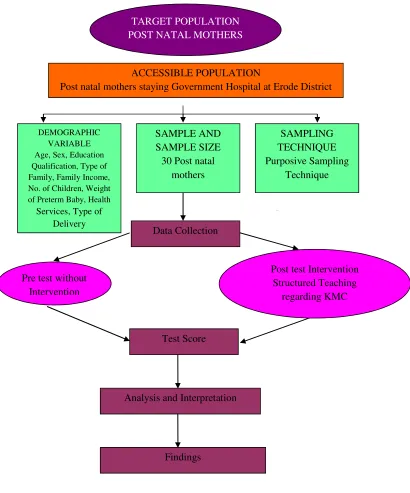
FIG 2 : SCHEMATIC PRESENTATION RESEARCH
TARGET POPULATION POST NATAL MOTHERS
ACCESSIBLE POPULATION
Post natal mothers staying Government Hospital at Erode District
DEMOGRAPHIC VARIABLE Age, Sex, Education Qualification, Type of Family, Family Income, No. of Children, Weight of Preterm Baby, Health
Services, Type of Delivery
SAMPLE AND SAMPLE SIZE 30 Post natal
mothers SAMPLING TECHNIQUE Purposive Sampling Technique Test Score Pre test without
Intervention
Analysis and Interpretation
Findings
Post test Intervention Structured Teaching
CHAPTER-IV
ANALYSIS AND INTERPRETATION
"A clay pot sitting in the sun will always be a clay pot, It has to go through the white heat of the furnace to become porcelain"
- Mildred Struden
Polit and Hungler, (2004) defines as categorizing, ordering, manipulating and
summarizing the data to reduce it into intelligible and interpretable form, so that
research problem can be studied and tested by including relationship between the
variables.
This chapter deals with analysis and interpretation of the data elicited form
Sample of 30 post natal mothers on knowledge and practice regarding Kangaroo
mother care. The data which are necessary to provide the adequacy of the study are
collected through the semi structured interview schedule and analyzed using relevant
descriptive and inferential statistics. The substantive summary of the findings were
arranged in collection with the objectives of the study.
Objectives of the Study:
1. To assess the knowledge regarding Kangaroo mother care among post natal
mothers.
2. To evaluate the effectiveness of structured teaching programme on the
knowledge on Kangaroo mother care among post natal mothers.
3. To find out the association between the level of knowledge & practice with the
Section I:
Descriptive analysis of demographic variables.
Section II:
Assessment knowledge of post natal mothers regarding Kangaroo mother care
prior to implementation of STP.
Section III:
Comparison of pretest, posttest knowledge scores of the postnatal mothers
regarding Kangaroo mother care.
Section IV:
Association between the selected demographic variables with the levels of
SECTION I
DESCRIPTION OF SAMPLE CHARACTERISTICS
TABLE NO 4.1 :- FREQUENCY AND PERCENTAGE DITRIBUTION OF POSTNATAL MOTHERS ACCORDING TO THE DEMOGRAPHIC VARIABLES.
Demographic variables
Frequency
Percentage ( % )
Age
Below 25 18 60
26 – 30 10 33
30 – 40 2 7
Above 40 0 0
Religion
Hindu 25 83
Muslim 2 7
Christian 3 10
Any others 0 0
Educational Status Of Mothers
Illiteracy 3 10
Primary School 6 20
Middle School 4 13
Secondary School 6 20
Higher Secondary
School 4 13
Degree 7 23
Occupation Of the Mothers
House Wife 18 60
Coolie 6 20
Private Job 4 13
Government Job 2 7
Business / Company 0 0
`Type of family Nuclear Family 17 57
Joint Family 9 30
Others 1 3
Family income per
month ( Rupee ) Below 1000 11 37
1500 – 2000 7 23
2000 – 2500 4 13
Above 2500 8 27
No. of Children in
Family 1 Child 14 47
2 Children 12 40
3 Children 4 13
4 and above children’s 0 0
Weight of Pre term
Baby 1 Kg 4 13
1.5 Kg 7 23
2 Kg 15 50
< 2 Kg 4 13
Health Service
Availed from P.H.C 11 37
Sub centre 1 3
Nursing Home 5 17
Hospital 13 43
Type of Delivery Normal Delivery 19 63
Lower segmental
Cesarean Section 4 13
Forceps Delivery 4 13
Normal Delivery with
Table 1 shows the distribution of demographic variables according to their
age, sex, educational qualification and working experience.
Regarding age, 60 % ( 18 ) of respondents are in the age group of below 25
years, 33 % ( 10 ) of respondents are in the age group of 26 – 30 years , 7 % (2) of
respondents are in the age group of 30 – 40 years .
According to the religion 83 % (25) of respondents are Hindu 7 %(2) of
respondents are Muslim and10%(3) respondents are Christian.
According to the educational status of the mother 10 % (3) are Illiterate. 20 %
(6) primary school, 13 % (4) middle school, 20%(6) secondary school, 13% ( 4 )
higher secondary school. 23%(7) are degree.
According to the mothers occupation shows that his her percentage 16%(18)
mothers were house wife, shows that his her percentage 20%(6) mothers were cooli,
that his her percentage 13%(4) mothers were in private job and 7 % (2) mothers were
working in Government Job.
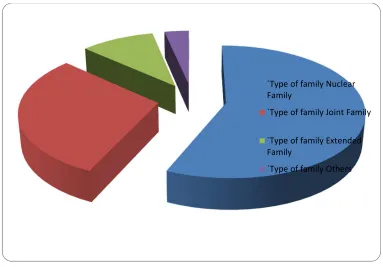
According to the type of family , 57 % (17) of mothers belong to nucular
family , 30%(9) of mothers belong to joint family .10%(3) of mothers belong to
extended family, 3%(1) of mothers belongs to others .
According to the family income of postnatal mothers shows that below
thousand 37%(11) of mothers were belong to 23%(7) two thousand mothers, 13% (4)
postnatal mothers shows that 27%(8) were belongs to income Rs. 2500/-.
According to the no of children in the family, mothers were having that
47%(14)one children , mothers were having that 40%(12)two childrens,morthers
According to the pre term baby weight is ,mothers were shows that 13%(4)of
1000kg of babies weight,mothers were shows that 23%(7)1.5kg of babies
weight,mothers were shows that 50%(15)2kg of babies weight and 13%(4)of mothers
having the baby weight is above 2kg.
According to the health services availed form shows that percentage
37%(11)of the mothers were belongs to PHC and health services availed form shows
that percentage3%(1)of the mothers in sub centre and health services availed form
shows that percentage17%(5)mothers in nursing home and remaining 43%(13)of
mothers in hospitals.
According to type of delivery the mothers belongs to normal delivery of
percentage63%(19), type of delivery the mothers belongs to LSCS 13%(4), type of
delivery the mothers belongs to 13%(4)forceps delivery and type of delivery the
AGE DISTRIBUTION
Educational Status
Fig 3: Bar Diagram showing the distribution of post natal mothers according to
Educational status
Illiteracy
Primary School
Middle School
Secondary School
Higher Secondary School
Occupation of the Mother
Fig. 4.4: Cylindrical Diagram Showing distribution of postnatal mothers
Series1, House Wife, 18
Series1, Coolie, 6
Series1, Private
Job, 4 Series1, Government Job,
Type of Family
Fig. 5.5: Pie diagram showing the distribution of post natal mothers according to Type of family
`Type of family Nuclear Family
`Type of family Joint Family `Type of family Extended Family
Family Income
Fig. 5.6: Cylindrical diagram showing the distribution of post natal mothers according to their Family Income
Series1, Family income per month ( Rupee )
Below 1000, 11
Series1, Family income per month ( Rupee )
1500 – 2000, 7
Series1, Family income per month ( Rupee )
2000 – 2500, 4
Series1, Family income per month ( Rupee )
Above 2500, 8
Number of Children
Fig. 5.7: Cylindrical diagram showing the distribution of post natal mothers according to their Number of Children
Series1, 1 Child,
14 Series1, 2 Children, 12
Series1, 3 Children, 4
Weight of The Preterm Baby
Fig. 5.8: Bar diagram showing the distribution of post natal mothers according to their weight of the preterm baby
Series1, 1 Kg, 4
Series1, 1.5 Kg, 7
Series1, 2 Kg, 15
Health Services Availed from
Fig. 5.9: Cylindrical diagram showing the distribution of post natal mothers according to their health services
Series1, P.H.C, 11
Series1, Sub centre, 1
Series1, Nursing Home, 5
Series1, Hospital, 13
Type of Delivery
Fig. 5.10: Bar diagram showing the distribution of post natal mothers according to their type of delivery
Series1, Normal Delivery, 19 Series1, Lower
segmental Cesarean Section, 4 Series1, Forceps
Delivery, 4 Series1, Normal
Delivery with Episiotomy, 3
SECTION II
Assessment of pre-test and post test knowledge and practice of post natal mothers regarding Kangaroo mother care.
An attempt has been made to study the knowledge and practice of Kangaroo
mother care among post natal mothers. After converting the qualitative information of
the knowledge and practice into a quantitative one the average score was obtained
from the post natal mothers on various dimensions like meaning of Kangaroo mother
care, Importance of Kangaroo mother care, Benefits of Kangaroo mother care,
Position of Kangaroo mother care, Procedure for Kangaroo mother care, Meaning of
PART A: LEVEL OF KNOWLEDGE:
Table 2: Knowledge score on basic Kangaroo mother care among post natal mothers
SECTION II :-
KNOWLEDGE OF POSTNATAL MOTHERS REGORDING KANGAROO
[image:63.612.120.513.318.601.2]MOTHER CARE PRIOR TO IMPLEMENTATION OF STP.
TABLE 4.2: Area wise comparison of mean , standard deviation and mean percentage
of pre test knowledge scores of postnatal mothers regarding kangaroo mother care.
AREAS
MAXIMUM OBTAINABLE
SCORES
SCORES
MEAN SD MEAN
PERCENTAGE
Pre term baby 4 2.2 1.22 66
Low birth
weight babies 5 1.8 2.93 54.6
Kangaroo
mother care 21 1.7 1.88 51.95
Over all 30 1.9 2.01 57.52
Area wise distribution os mean , sd, and mean percentage of pretest
knowledge score of the postnatal mothers regarding kangaroo mother care show s that
among the area s, the highest mean score ( 2.2 + 1.22 ) which is 66 % was obtained
. 6 % was obtained for the area “ Low birth weight babies ” . The lowest mean score (
1.7 + 1.88 ) which is 51.95 % was obtained for the area “Kangaroo mother care ”
reveling poor knowledge. However , for all the other ares the mean percentage was
KNOWLEDGE
Fig. 4.2: Bar diagram showing the distribution of post natal mothers according to their knowledge of kangaroo Mother Care
Pre term baby,
1, 4 Pre term baby,
2, 2.2 Pre term baby, 3, 1.22
Pre term baby, 4, 66 Low birth weight babies, 1, 5 Low birth weight babies, 2, 1.8 Low birth weight babies, 3, 2.93 Low birth weight babies, 4, 54.6 Kangaroo mother care, 1,
21
Kangaroo mother care, 2,
1.7
Kangaroo mother care, 3,
1.88
Kangaroo mother care, 4,
51.95
TABLE NO 4.3 : LEVEL OF KNOWLEDGE OF POSTNATAL MOTHERS ON KANGAROO MOTHER CARE.
Level of Knowledge
Min – Max obtainable
score
Frequency Percentage %
Pre test Post test Pre test Post test
Very poor 0 – 9 1 - 3 -
Poor 10 – 18 8 - 26 -
Average 19 – 27 9 2 31 6
Good 28 – 36 9 11 31 36
Very good 37 – 45 3 17 10 56
Table 3 shows pretest overall level of knowledge for postnatal mothers 26 %
of mothers had poor knowledge and 31 % of postnatal mothers had average
knowledge and 6 % of posttest mothers . Posttest overall knowledge level for
postnatal mothers 36 % of mothers had good knowledge and 56 % of postnatal
LEVEL OF KNOWLEDGE
Fig. 4.3: Cylindrical diagram showing the distribution of post natal mothers according to their pre and post test
Average 19 – 27, 1 8, 9
Average 19 – 27, - -, 2
Average 19 – 27, 3 26, 31
Average 19 – 27, - -, 6 Good 28 – 36, 1
8, 9
Good 28 – 36, --, 11
Good 28 – 36, 3 26, 31
Good 28 – 36, --, 36
Very good 37 – 45, 1 8, 3
Very good 37 – 45, - -, 17
Very good 37 – 45, 3 26, 10
Very good 37 – 45, - -, 56
SECTION III :- COMPARISION OF PRETEST AND POSTTEST
KNOWLEDGE
[image:68.612.122.548.309.595.2]SCORES OF THE POSTNATAL MOTHERS REGARDING KANGAROO MOTHER CARE
TABLE NO :4.4 Area wise comparison of mean , standard deviation and mean percentage of pre and post test knowledge scores of postnatal mothers regarding
kangaroo mother care.
Area
Maxim um Scores
Pretest Score Posttest Score Differ
ence in Mean
%
Mean SD Mean
% Mean SD
Mean %
Preterm Baby 4 2.2 1.22 66 3.0 1.2 90.25 78
Low Birth Weight
Babies
5 1.8 2.93 54.6 2.7 2.9 81.4 68
Kangaroo
Mother Care 21 1.7 1.88 51.95 2.6 1.9 79.9 66
Overall 30 1.9 2.01 57.52 2.8 2.0 83.85 70.60
Comparison of overall mean , SD , mean percentage of pre and post test
TABLE NO : 4.5 :- Comparison between difference of Pre and Post knowledge of postnatal mothers regarding Kangaroo Mother Care.
P=3.18,p<0.05=Significant>0.05=Not significant
Paired ‘t’ test was calculated to assess the pre and post test knowledge scores
of post natal mothers regarding kangaroo mother care. The findings show low
significant difference for all the areas. Thus, it can be interpreted that the difference in
mean score values related to the above mentioned areas were true difference and not
by chance. Hence, the null hypothesis is rejected and research hypothesis accepted
(p>0.05).It shows that the STP was effective for all the areas.
Sl.No Area ‘t’ value Level of significant
1. Pre term Baby 6.91 Low Significant
2. Low Birth Weight Babies 14.99 Low Significant
SECTION IV : TABLE NO 4.6 : ASSOCATION BETWEEN THE SELECTED DEMOGRAPHIC VARIABLES WITH THE LEVELS OF KNOWLEDGE AMOUNG POSTNATAL MOTHERS
Demographic variables
LEVEL OF KNOWLEDGE
CHI SQUARE VALUE
Very
Poor Poor
Avera
ge Good
Ver y Go od
Age
Below 25 0 4 5 7 2
X² = 13.88 DF=12 ( 21.03 ) p > 0.05 ( NS )
26 – 30 1 3 4 2 0
30 – 40 0 1 0 0 1
Above 40 0 0 0 0 0
Religion
Hindu 1 6 6 9 3 X² = 14.58
DF= 12( 21.03) p > 0.05 ( NS )
Muslim 0 1 1 0 0
Christian 0 1 2 0 0
Any others 0 0 0 0 0
Educatio nal Status Of
Mothers
Illiteracy 0 0 0 3 0
Primary
School 0 1 4 1 0 X² = 27.25
Secondary
School 0 2 0 2 2
Higher Secondary School
0 1 1 1 1
Degree 1 3 3 0 0
Occupati on Of the Mothers
House
Wife 0 1 5 9 3
X² = 37.49 DF= 16( 26.30) p > 0.05 ( S )
Coolie 0 2 3 1 0
Private Job 1 2 1 0 0
Governmen
t Job 0 2 0 0 0
Business /
Company 0 0 0 0 0
Type of family
Nuclear
Family 1 2 4 8 2
X² = 23.51 DF= 12( 21.51 ) p > 0.05 ( S )
Joint
Family 0 3 4 2 0
Extended
Family 0 2 0 1 0
Family income per month ( Rupee )
Below
1000 0 2 4 5 0 X² = 18.2
DF= 12( 21.03) p > 0.05 ( NS )
1500 –
2000 0 3 1 2 1
2000 –
2500 0 1 2 1 0
Above
2500 0 3 2 1 2
No.of Children in Family
1 Child 0 2 3 7 2
X² = 24.5 DF=12 ( 21.03 ) p > 0.05 ( S )
2 Children 1 4 4 2 1
3 Children 0 2 2 0 0
4 and
above children’s
0 0 0 0 0
Weight of Pre term Baby
1 Kg 0 1 0 3 0
X² = 21.67 DF=12 ( 21.03 ) p > 0.05 ( S )
1.5 Kg 1 2 1 2 1
2 Kg 0 3 6 4 2
< 2 Kg 0 2 2 0 0
Health Service Availed
P.H.C 0 2 4 5 0 X² = 22.59
DF=12 ( 21.03 ) p > 0.05 ( S )
from
Nursing
Home 0 3 2 0 0
Hospital 1 2 3 4 3
Type of Delivery
Normal
Delivery 2 3 5 7 2
X² = 17.51 DF=12 ( 21.03 )
p > 0.05 ( NS ) Lower
segmental Cesarean Section
0 0 1 2 1
Forceps
Delivery 0 2 2 0 0
Normal Delivery with Episiotomy
0 2 1 0 0
Chi square was calculated to find out the association between the knowledge
scores and demographic variables of the post natal mothers. Significant association
was found between knowledge scores of post natal mothers regarding kangaroo
mother care with their demographic variables such as Source