1
Self Referential Processing Following Psychological
Intervention for Depression: an fMRI study
Deborah Watson
June 2014
Supervised by:
2
3 Acknowledgements
First and foremost I am indebted to the participants of the study. Their willingness to discuss their lives with me and their patience whilst completing a particularly repetitive scanner task made this research possible.
I owe much gratitude to Peter and May. Your insightful guidance and support kept me on track (and continued for significantly longer than you’d originally
bargained for). I also extend sincere thanks to Dr. Joanne Powell and Professor Rhiannon Corcoran, whose specialist expertise and breadth of knowledge has been invaluable.
Many thanks to the helpful and welcoming staff at MARIARC, in particular, to Val. You helped me massively with the scans and were a fantastic source of
knowledge and wit.
4 Abstract
Background: There are multiple conflicting theories of depression and clients are frequently given contradictory explanations of their difficulties. Evidence that brings together biological, psychological and social factors of depression would be particularly useful in addressing this. The current study investigates the neural correlates of self-referential processing following psychological intervention for depression. This provides neurological evidence of how a central feature of psychological models may change following therapy.
Methodology: Fourteen participants, who had received psychological
intervention for depression, underwent functional magnetic resonance imaging scans whilst completing three types of cognitive task: a self-referential processing task, an other-referential processing task, and a graphical task. Participants’ neural activation during self-referential processing was compared to that of ten depressed participants and twelve control participants, which had been collected for a previous study.
5
Conclusions: The findings provide further support for the importance of the self in models of depression. In presenting neurological evidence in relation to psychological models and psychological therapy, they help bring together biological and psycho-social models of depression. It is possible that the ongoing patterns of atypical activation during self-referential processing represent a vulnerability to future episodes of depression. Possible explanations for the valence-specific findings are discussed and these are highlighted as interesting future research questions. Limitations of the research methodology are discussed and possible directions for future research are outlined.
6 Contents
1. Introduction ... 11
1.1. Epidemiology of Depression... 11
1.2. Definition of Terms... 12
1.3. Psychological Approach ... 12
1.4. Intervention for Depression ... 13
1.5. Competing Models of Depression ... 13
1.6. Functional Magnetic Resonance Imaging ... 20
1.7. Functional MRI and Depression ... 24
1.8. Neural Localisation of Self-referential Processing ... 26
1.9. Self-referential Processing in Depression ... 30
1.10. Imaging Studies of Interventions for Depression ... 32
1.11. Summary and Rationale ... 41
1.12. Aims and Hypotheses ... 43
2. Methodology ... 45
2.1. Experimental Design ... 45
2.2. Ethics... 47
2.3. Major Amendments: ... 47
7
2.5. Inclusion and Exclusion Criteria ... 48
2.5.1. Inclusion criteria. ... 49
2.5.2. Exclusion criteria relating to fMRI methodology. ... 49
2.5.3. Group specific criteria. ... 51
2.6. Recruitment. ... 53
2.6.1. Promoting recruitment. ... 53
2.6.2. Group-by-group recruitment. ... 58
2.7. Demographics ... 62
2.8. Measures ... 63
2.9. Cognitive Activation Task ... 65
2.10. Research Procedure ... 67
2.10.1. Reimbursement for time and travel ... 67
Completion of pre-scan interview and psychometrics. ... 67
2.11. Image Acquisition ... 70
2.12. Functional MRI Data Processing and Analysis ... 71
3. Results ... 76
3.1. Psychometric Results ... 76
3.2. Behavioural Response Results ... 78
8
3.3.1. Task adherence. ... 80
3.3.2. Hypothesis one. ... 82
3.3.3. Hypothesis two. ... 86
3.3.4. Hypothesis three. ... 87
3.3.5. Hypothesis four. ... 91
3.3.6. Hypothesis five. ... 93
3.3.7. Hypothesis six. ... 98
3.4. Summary of Results (Table 3.4) ... 100
4. Discussion ... 101
4.1. Overviews ... 101
4.2. Hypotheses ... 103
4.3. Contextualising in Current Literature ... 108
4.3.1. General self-referential processing. ... 108
4.3.2. Negative self-referential processing. ... 112
4.3.3. Positive self-referential processing. ... 114
4.4. Implications... 117
4.4.1. Implications for clinical practice. ... 117
4.4.2. Implications for theory... 118
9
4.5. Summary ... 123
4.6. Limitations ... 125
4.7. Conclusions ... 129
5. References ... 132
11 1. Introduction
1.1. Epidemiology of Depression
The personal, social and economic impact of depression is considerable. Depression is the most common mental health diagnosis in community care settings (NCCMH, 2010). In a pan-European survey 7.7% of respondents reported
experiencing depressive symptoms severe enough to interfere with their employment or social functioning during the past six months (Lepine, Gastpar, Mendlewicz & Tylee, 1997). Depression is associated not only with significant emotional pain, but also with life-limiting functional difficulties comparable to those associated with serious medical disorders (Wells, Sturm, Sherbourne & Meredith, 1996). The health and social care cost of depression in England in 2007 was estimated at £1.7 billion rising to £7.5 billion when lost working days were considered (McCrone Dhanasiri, Patel, Knapp & Lawton-Smith, 2008).
12 1.2. Definition of Terms
Within this thesis the term “depression” is used to refer to “major depressive disorder” as defined by Diagnostic and Statistical Manual of Mental Disorders (4th
ed., text rev., American Psychiatric Association, 2000). The author acknowledges that there are problems with this definition of “depression.” It may be culturally biased (Halbreich et al., 2007) and it is based on an arbitrary cut-off on a continuum of psychological distress.
“Self-referential” processing is a term that is used within functional imaging research to describe mental representations of the self and cognitive processes relating to the self. It is particularly relevant to the study of depression because of the central role that representations of the self (Hollon & Beck, 1979) and cognition about the self (Hollon & Beck, 1979; Mor & Winquist, 2002) play in depression.
1.3. Psychological Approach
The author does not aim to reduce the experience of depression to atypical patterns of neural activation. Nor does she wish to imply a causal role for
13 1.4. Intervention for Depression
In the guidelines Depression in Adults The National Institute of Clinical
Excellence (NICE, 2009) recommend that people experiencing sub-threshold and mild to moderate symptoms are offered low intensity interventions, including guided self help, computerised cognitive behaviour therapy and group physical activity
programmes. The guidelines also recommend that medication is avoided for this group as the associated costs are thought to outweigh the potential benefits. For moderate to severe depression NICE guidelines (NICE, 2009) recommend that medication is offered in conjunction with high intensity CBT or interpersonal therapy (IPT). Mindfulness based cognitive therapy is recommended for people who are not currently depressed, but have experienced 3 or more periods of depression.
There is significant research supporting the efficacy of CBT (Butler, Chapman, Forman and Beck, 2006) and IPT (Cuijpers et al., 2011). Less is known about
outcomes for psychodynamic psychotherapy and counselling for depression (NICE, 2009), although both are offered by the NHS. Cognitive behaviour therapy, IPT and medication have generally been found to have comparable outcomes, although psychological therapy is associated with a reduced drop-out and reduced risk of relapse (NICE, 2009).
14
Depression has traditionally been explained by disparate and often competing models. These include models from medical/biological and psycho-social
perspectives. Typically, medical models of depression are associated with viewing the symptoms of mental health difficulties as the result of pathological functioning (Patil & Giordano, 2010) and focus on biological interventions to alleviate the symptoms of depression (Patil & Giordano, 2010). In comparison, psycho-social models use psychological formulations to situate mental health difficulties within the context of individual experience. In this context mental health difficulties are viewed as
understandable reactions to circumstances, and diagnoses such as depression describe one end of a continuum of human functioning (Bentall, 2004).
Clients accessing mental health services may be given multiple explanations for their difficulties from different professionals (Kecmanovic, 2011). Predictably, psychologists are more likely to favour psychological models, whilst professionals from a medical background, are more likely to favour medical explanations of psychological distress (Fulford & Colombo, 2004). These competing models could lead to confusion for clients (Kecmanovic, 2011) and may obstruct cohesive team working.
15
difficulties (Ghaemi, 2009; Pilgrim, 2011). However, it neither specifies the putative mechanisms of biological, psychological and social factors, nor suggests ways in which these factors may interact. Elements of the model are often viewed as acting independently (Frewen, Dozois & Lanius, 2008), which has led to a fragmented body of knowledge with little communication between researchers within the separate fields (Kecmanovic, 2011). Ghaemi (2009) suggests that without a clear way of integrating the research, clinicians focus on the biological, psychological or social according to personal preference rather than through evidence based reasoning. However, it has been suggested that research on mental health continues to be dominated by biological reductionism (Read, Bentall & Fosse, 2009).
Kinderman (2005) proposes a model that specifies in more detail the role of biological, circumstantial (personally significant life events), social and psychological factors in the development of mental health difficulties. The model situates
psychological processes as the intermediary between biological, circumstantial and social factors and views such processes as “the final common pathway” in the
development of mental health problems. Within the model biological, circumstantial and social factors affect psychological content and processes thus leading to
psychological distress. The model would therefore predict that recovery from depression is always accompanied by changes in psychological processing.
16
genetic technology has facilitated the investigation of the complex relationships between genetics and environment. Similarly, imaging techniques, such as functional magnetic resonance imaging (fMRI), have provided a means of exploring neural activation corresponding to psychological processes. This has enabled researchers to explore links between the psychological and the biological.
Much of the biological research on depression has been from a neurochemical perspective and focussed on the role of serotonin (5-HT) on the development and maintenance of depression. Such research has been fuelled by the antidepressant effects of medications that act on the serotonergic system. A blunted neuroendocrine response to 5-HT is consistently found in people with depression (Sharp and Cowen, 2011) and has been reported following recovery from depression (Bhagwagar, Whale and Cowen, 2002). In keeping with these findings, positron emission tomography (PET) studies report lower levels of 5-HT1a receptor sites in the brains of depressed
people and people who have recovered from depression (Sharp and Cowen, 2011). A common interpretation of these findings is that people with depression have a neural chemical imbalance that can be corrected by medication. However, there is evidence that psychotherapy can also impact on neurochemical functioning (Gabbard, 2000). For example, Lehto and colleagues (2008) report that following 12 months of psychoanalysis participants had increased numbers of serotonin transporters.
17
neuroendocrine system comprising the hypothalamus, pituitary glands and the adrenal glands, which releases hydrocortisone (cortisol) in response to stress. The principal neurotransmitters involved in regulating the HPA axis are serotonin, dopamine and norepinephrine. Childhood trauma has been associated with sensitisation of the HPA axis (Heim, Newport, Bonsall, Miller & Nemeroff, 2001) and increased activity of the HPA axis has been reported in people with depression (Heim, Newport, Mletzko, Miller & Nemeroff, 2008). It has been suggested (e.g. Heim et al., 2008) that the sensitisation of the HPA axis that is associated with childhood trauma is a risk factor for the development of depression in the context of subsequent stress.
Researchers have reported an association between major depressive disorder and neural atrophy, specifically atrophy of the hippocampus (Cole, Costafreda, McGuffin & Fu, 2011). There is evidence that this atrophy is present in first episode depression (Cole et al., 2011) and in non-depressed people who are considered at risk of developing depression due to family history and experience of childhood adversity (Chen, Hamilton & Gottlib, 2010). These findings have been linked to the increased activation of the HPA axis that can be found in depression, as cortisol is associated with hippocampal atrophy and reduced hippocampal neurogenesis (McEwen, 1999).
18
the field of genetics are furthering our understanding of epigenetic mechanisms within mental health. Research investigating gene × environment interactions, and gene × gene × environment interactions, suggests that there may be genes that can be “switched on” by life events such as abuse (Heim and Binder, 2012). For example, Caspi and collagues (2003) report that carriers of the short 5-HTTLPR allele are more likely than non-carriers to develop depression if they are exposed to stressful life events and childhood maltreatment. Although it is worth noting that many studies have been unable to replicate this finding and some meta-analyses report a negative finding (Heim and Binder, 2012). It may be that the specific type of childhood stress is important (Karg, Burmeister, Shedden, & Sen, 2011) and it seems that the effects of a 5-HTTLPR gene can be moderated by other genes (Heim and Binder, 2012).
Viewing the genes associated with depression as merely conferring a
physiological vulnerability to depression is an over-simplification. Heim and Binder (2012) review the literature in this area and suggest that certain genes are associated with a greater sensitivity to environmental factors during specific periods of
development. In the context of negative early experiences these genes are associated with depression, but in the context of enriching early experiences they are associated with particularly positive outcomes.
19
models of depression that stem from a range of psychological theories. The concept of self-referential processing fits most comfortably within cognitive behavioural theories of depression, including “third wave” mindfulness based theories, and for that reason this thesis will focus on cognitive behavioural models of depression.
Beck’s (1967) cognitive model of depression postulates that there are
reciprocal relationships between affect, cognition and behaviour, which can escalate difficulties in all of these areas (Beck, 1971). At the heart of the cognitive model is the concept of schemata, which are cognitive structures that process incoming information (Beck, 1976). Negative events in early childhood, or later, may lead to the development of maladaptive schemata, which underlie the development of mental health difficulties (Beck, 1976). Hollon and Beck (1979) suggested that the schemata of people with depression are typified by negative representation of the self, the world and the future. This is known as the negative cognitive triad (Hollon & Beck, 1979). Cognitive behaviour therapy aims to alter behaviour by altering cognitions (Dozois & Dobson, 2001). Client and Therapist work collaboratively on noticing unhelpful cognitions, finding evidence to test their validity, replacing maladaptive cognitions with more realistic cognitions, and identifying and altering underlying maladaptive schema and assumptions (Kendall and Bemis, 1983).
Mindfulness-based cognitive theories of depression do not focus on attitudes and assumptions themselves, but rather on the importance that attitudes and
20
one relates to one’s thoughts, rather than the content of one’s thoughts, that is viewed as particularly important. In relation to depression problems are seen as stemming from a self-perpetuating pattern of rumination, in which thoughts are viewed as reflecting reality (Segal et al., 2002). The traditional CBT approach of actively trying to change unhelpful cognitions is seen as problematic, as it gives importance to the content of cognition and thus maintains unhelpful ways of relating to thoughts (Segal et al., 2002). The NICE guidelines on depression (NICE, 2009) recommend
mindfulness-based cognitive therapy for the treatment of recurrent depression. This involves developing the ability to purposefully change one’s mode of relating to thoughts from one in which the content of thoughts, and their basis in reality, is given high importance, to a less value-driven mode, where one is more aware of current moment experiences and thoughts are viewed as transitory parts of that experience.
1.6. Functional Magnetic Resonance Imaging
Functional magnetic resonance imaging (fMRI) is a technique that allows the functional localisation of cognitive processes. The technique thus provides a way of integrating the biological and the psychological. Magnetic resonance imaging has the benefit of involving no ionising radiation, which means that it is considered safe. Unlike PET and CT scans, it does not rely on substances being ingested or injected. Additionally, the detail of MRI scans is generally greater than that of other imaging techniques, which means that statistical power is high. This section briefly outlines how fMRI scans work then discusses research investigating neural functioning
21
diagnosis and participants with depression. Finally, research investigating
neurofunctional changes associated with pharmacological therapy and psychological therapy for depression will be discussed.
Magnetic resonance imaging (MRI) scanners consist of a very powerful
magnet, within which the subject is centred. During a scan, radio signals are pulsed in complex sequences at the subject. Through analysis of the emissions that result from the radio signals in the presence of the magnetic field it is possible to construct a two dimensional image of the subject. This process is repeated over consecutive slices of the brain to produce a three dimensional image. MRI is particularly useful for
scanning soft tissues, which makes it suitable for producing detailed scans of the brain and brain blood flow. By producing a series of images of dynamic processes within the brain MRI can allow researchers to investigate how local neural activity changes during different psychological processes. This is known as functional magnetic resonance imaging (fMRI).
The most frequently used outcome measure for fMRI studies is the blood oxygen level dependent (BOLD) response. This relies on the magnetism of
de-oxygenated blood. Approximately two seconds after a neuron becomes active there is a localised increase in oxygenated blood followed by a decrease in de-oxygenated blood. Oxygenated blood is diamagnetic (it responds to magnetic fields) but de-oxygenated blood is paramagnetic (it does not respond to magnetic fields).
22
not. This means that in neural areas where there is a high level of oxygenated blood the MRI signal is stronger. The graphical representation of this stronger signal illustrates the areas of the brain that are more active. An fMRI scan can be repeated every few seconds to allow researchers to see changes in BOLD response as a consequence of changing cognitive processes.
Research that involves comparing brain activity between participants, and combining participants into groups, can be difficult due to individual neuro-structural differences. This problem is overcome by mapping individual neural functioning onto a standardised template of the brain. This facilitates group comparisons and
integration with other research. The most commonly used templates are the Talairach atlas (Talairach & Tournoux, 1988) and the Montreal Neurological Institute (MNI) map. The Talairach atlas is based on the brain of one female whose brain was smaller than average, which means that averaged sized brains must be significantly warped in order to map on to the Talairach atlas and introduces significant potential for error. In contrast the MNI map has is based on 305 healthy brains. This makes it more
representative and thus minimises the potential for error due to warping.
Functional MRI can be used to investigate neural activation at rest or during specific psychological processes. The investigation of specific psychological
23
differences in neural activation patterns associated with gross motor movements or movement on opposite sides of the body. To minimise extraneous noise associated with neurological activation that is unrelated to the experimental task, fMRI analysis usually involves subtracting neural activation during a control condition from neural activation during the experimental condition. This is known as a “contrast.” For example, a researcher interested in the neural correlates of viewing happy faces might subtract BOLD response during a condition in which participants viewed neutral faces from BOLD response during a condition in which participants viewed happy faces. This would be described as the “happy-neutral contrast” or the “happy>neutral contrast”.
24
long rest periods is likely to increase the likelihood that participants will become bored and less task-focussed. In an event-related design, stimuli for each condition are presented pseudo-randomly with a brief rest period between each stimulus, making the task less repetitive and less susceptible to the effects of habituation than a block design task (Pilgrim et al., 2002).
1.7. Functional MRI and Depression
Koenigs and Grafman (2009) review studies investigating localised
neurological functioning in depression. They report that atypical neural activation within the dorsolateral prefrontal cortex1 (dlPFC) and the ventromedial prefrontal cortex2 (vmPFC) has been implicated in depression. Specifically, a diagnosis of depression seems linked to resting hyperactivation in the vmPFC and resting
hypoactivation in the dlPFC (Koenigs and Grafman, 2009). These atypical patterns become more similar to those of non-depressed people when depression remits (Koenigs and Grafman, 2009). Koenigs and Grafman (2009) hypothesise that this pattern relates to different localised functions. Specifically, they highlight evidence that the vmPFC may be linked to either the generation of negative emotion (Zald, Mattson & Pardo, 2002) or self-awareness (Barash, Tranel & Anderson, 2000), and
1
Dorsolateral prefrontal cortex can refer to an area roughly covered by Brodmann areas 9 and 46 (e.g. Grahn, 2010) or to a larger area incorporating the lateral parts of Brodmann areas 9-12, 45 and 46 and the superior part of Brodmann area 47 (e.g. Zelazo and Muller, 2004).
2 Ventromedial prefrontal cortex can refer to Brodmann area 10 (e.g. Finger et al., 2008) or to a
25
the dlPFC may be linked to the regulation of emotion through reappraisal and suppression (Ochsner, Bunge, Gross & Gabrieli, 2002; Phan et al., 2005).
The association between depression and hyperactivation in the vmPFC, a brain region associated with self-awareness, is consistent with cognitive models that stress the importance of self-related cognition in depression. The association also fits with the success of mindfulness based approaches for depression, as mindfulness is negatively associated with activation in the vmPFC (Way, Cresswell, Eisenberger & Lieberman, 2010). Atypical activation in the dlPFC, a brain region associated with reappraisal, fits with evidence concerning the efficacy of CBT, in which repeated reappraisal of events often plays a key role.
The amygdala has been associated with vigilance for negative stimuli and the direction of attention towards negative stimuli (Davis and Whalen, 2001). Consistent with the finding that depression is associated with attentional bias to threatening stimuli (Mathews, Ridgeway & Williamson, 1999), hyperactivity in the amygdala has been found in people with a diagnosis of depression in response to verbal cues (Siegle, Steinhauer, Thase, Stenger & Carter, 2002), faces showing negative emotion (Fu et al., 2004) and at rest (Drevets et al., 1992). Dannlowski and colleagues (2007) present evidence of correlation between amygadala activation and cognitive bias in
depression. They recorded the amygdala reactivity to subliminally presented negative faces in 35 inpatients meeting DSM-IV (APA, 1994) criteria for acute major
26
neutral stimuli, was associated with amygdala reactivity. Additionally, negatively biased processing was associated with more severe depression and a longer course of illness (Dannlowski et al., 2007).
1.8. Neural Localisation of Self-referential Processing
Imaging researchers have used a variety of related tasks to localise self-referential processing in the brain. These include recognizing one’s own face, detecting one’s own first name, attributing an action to oneself, recalling personally relevant information, and assessing one’s own personality, physical appearance, attitudes, or feelings (Legrand and Ruby, 2009).
27
with others’ mindreading, inferential processing and memory recall, suggesting that it may not be self-specific (Legrand and Ruby, 2009).
Comparing neural activation patterns when making judgements about the self to patterns when making judgements about others is the most frequently used measure of self-referential processing for fMRI studies. The other may be a friend or relative (e.g. D’Argembeau et al., 2007; Heatherton et al., 2006; Ochsner et al., 2005) or a famous person (e.g. Gutchess et al., 2007; Kelley et al., 2002; Lemogne et al., 2009; 2010; Sarsam et al., 2013; Yoshimura et al., 2010; 2013). In a review article Gillihan and Farrah (2005) suggest that the results of studies contrasting self-judgements and other-judgements in this way may reflect differences in how well each subject is known. They suggest that if the “other condition” involves a close friend or relative who the participant knows well, rather than a famous figure, there will be less chance that the resultant neural activation will be affected by how well the participant knows them (Gillihan & Farah, 2005). However, for participants with limited social contact or poor familial relationships, difficulties that are more common in people with
depression, judgements about a close other may introduce other confounding variables (Sarsam, 2006).
Studies that compare neural activation when making judgements about the self and neural activation when making judgements about someone else have reported self-referential processing to be associated with alteredactivation in the mPFC
28
2007), the anterior cingulate cortex (d’Argembeau et al., 2007; Gutchess et al., 2007; Heatherton et al., 2006), the precuneus (d’Argembeau et al., 2007) and diffuse areas of the frontal lobe (Gutchess et al., 2007, Heatherton et al., 2006). This supports findings that lesions in the vmPFC have been linked to deficits in self-awareness (Stuss et al., 2001).
Kelley and colleagues (2002) utilised an event-related design to investigate self-referential processing by asking participants to make judgements about whether adjectives referred to themselves (self-referential condition), the current US President (other referential condition; the study was conducted in the United States), or whether the adjectives were in upper case (capital letters condition). In the self>other contrast, self-referential judgments were linked to increased activation in the PCC (BA23) and the mPFC, i.e. when the mean BOLD response to the self-referential task was
29
The default mode network (DMN) is a network of neural areas that are active during wakeful rest, that is, when attention is not focussed on a task or on external stimuli (Sheline et al., 2009). It comprises the dorsal and lateral mPFC, medial, inferior and lateral parietal cortex, medial and lateral temporal cortices and the anterior and posterior cingulate cortex. Sheline and colleagues (2009) point out that the specific tasks that have been associated with increased DMN activity, such as perspective taking, remembering past events and planning for the future, all involve an element of referential processing. This association between the DMN and self-referential processing could explain the findings of Kelley and colleagues (2002) who report that both self-referential and other-referential tasks are associated with a a decrease in mPFC activity compared to baseline, but other-referential tasks are
associated with a significantly greater decrease. It may be that the goal directed nature of the referential task causes a reduction in DMN activation, but the
self-referential nature of the task means that there is significant residual activity. The other-referential task is goal directed and does not involve self-referential processing and there is therefore less residual DMN activity.
30
adjectives refer to your friend), 3) third person self-referential (would your friend say that adjectives refer to you), and 4) third person other-referential (would your friend say that adjectives refer to themselves). They report neural activation associated with self-referential processing in the dmPFC (BA 9), the vmPFC (BA 10) and the SACC (BA 32). The difference between neural activation during self-referential processing and other referential processing was higher than baseline in the dmPFC (BA 9) and lower than baseline in the vmPFC (BA 10).
1.9. Self-referential Processing in Depression
Cognitions relating to the self are key to cognitive theories of depression. Dysfunctional views about the self are one element of Hollon and Beck’s (1979) negative cognitive triad and challenging these dysfunctional views is often a focus of CBT (Kuehlwein, 2002). Additionally, depression is associated with excessive self-focus (Mor & Winquist, 2002), which may also be addressed through CBT. Evidence from fMRI studies provides further support for a disruption in self-referential
31
Sarsam and colleagues (2013) used an event-related fMRI methodology to investigate self-referential processing in depression. They scanned depressed participants (n=14) and controls (n=14) with no history of mental health difficulties whilst they judged whether adjectives referred to themselves or the Queen of England. Sarsam and colleagues (2013) report that during self-referential processing the
depressed group showed greater BOLD response in the dmPFC (BA8). No differences were observed between the depressed and control group during other-referential processing.
In a similar study utilising a block design Lemogne and colleagues (2009) asked depressed (n=15 ) and non-depressed (n=15) participants to judge whether an adjective described themselves or whether it was a socially desirable trait. There was a significant group x condition effect in areas of the dmPFC (roughly corresponding to BA8) and the dlPFC (roughly corresponding to BA9 & BA46). Specifically,
depressed people showed greater neural activation during self-referential processing than when deciding whether the trait was desirable. However, all of the depressed participants were taking anti-depressants, which introduces a potential confound of variables. Additionally, it could be argued, that the control decision, where
32
The DMN tends to show atypical connectivity (Greicius et al., 2009) and activation (Sheline et al., 2009) in individuals with depression. Specifically, in people with depression the DMN shows increased subgenual cingulate (BA25) and thalamic functional connectivity, with functional connectivity to the subgenual cingulate being positively associated with the length of the current period of depression (Greicius et al., 2009). The DMN is typically most active during wakeful rest, becoming less active during non-self-referential tasks, but people with depression do not tend to show this decrease in DMN activity during completion of tasks (Sheline et al., 2009). Sheline and colleagues (2009) suggest that this reflects an inability to appropriately reduce self-referent cognition in depression.
1.10. Imaging Studies of Interventions for Depression
33
Both research groups report similar normalisation effects. However, methodological issues, such as subsets of participants having repeated scans (Yoshimura et al., 2013) and small sample sizes (Lemogne et al., 2010) may have affected results.
Additionally, neither research group subtracted other-referential BOLD response from self-referential BOLD response, meaning that the patterns of neural activation that they report may not be self-specific.
Talking therapy of any modality may facilitate the normalisation of neural activation, although the majority of studies in this area have investigated CBT or IPT. Models of psychological intervention highlight atypical psychological processing patterns, or representations, that can be modified through therapy. It seems reasonable to suppose that there are physiological correlates of these modifications and Kandel (1998) has argued that all successful psychotherapy must involve neuro-structural changes. Similarly, therapy has been described as a “controlled form of learning that occurs in the context of a therapeutic relationship” (Frewen, Dozois & Lanius, 2010). From this perspective it is likely that the changes associated with therapy, like all learning, are accompanied by physiological changes.
34
Lanius, 2010). Similarly, changes may reflect the application of conscious and effortful techniques that have been learned in therapy, or they may represent
unconscious processes, for example a reduced bias towards negative stimuli (Etkin et al., 2005). The use of functional MRI can go some way to addressing these issues, as it allows the investigation of neural activation during specific psychological processes. However, the complex nature of therapeutic mechanisms, and the relative infancy of research in this area, means that uncertainties remain.
Kennedy and colleagues (2007) use PET in a randomised control trial
comparing localised brain glucose metabolism following intervention with either CBT or venlafaxine. They report both modality specific changes and modality independent changes. Response to both CBT and venlafaxine was associated with increased
35
Goldapple and colleagues (2004) used fMRI to compare change in at-rest neural activation patterns following CBT and pharmacotherapy (paroxetine). They report that CBT is associated with increased activation in limbic areas, including the amygdala, which have been associated with encoding of emotional stimuli (Hammen, 2001) and positive and negative reinforcement (Murray, 2007), and decreased
activation in neocortical areas, including the dlPFC (BA9, BA46), the ventral PFC (BA47, BA11) and the mPFC (BA9, BA10, BA11), which are associated with “higher functions” such as reasoning, speech and emotional expression (Fuster, 2008).
Paroxetine was associated with changes in similar areas, but in the opposite direction. Goldapple and colleagues (2004) interpret these results in the context of theories associating CBT with “top-down” (cortical then limbic) changes, and medication with “bottom up” (limbic then cortical) changes.
Researchers investigating the impact of psychological and pharmacological intervention on emotional processing have reported similarly modality-specific
findings. Fu and colleagues (2004) use an event-related design to investigate affective processing before and after pharmocological intervention (fluoxetine) for depression. They scanned people with depression (n=19) and matched controls (n=19) at baseline and again eight weeks later. In the inter-scan period people with depression received fluoxetine. Fu and colleagues (2004) report that treatment with fluoxetine is
36
of CBT for depression on the neural correlates of emotional processing (Fu et al., 2008). At baseline depressed participants (n=16) showed higher neural activation in response to negative stimuli than positive stimuli in the ACC, the right dlPFC, and the vlPFC than matched controls (n=16). Following CBT, this negative bias decreased and activation in these areas more closely resembled that of controls.
Fu and colleagues (2008) also report that higher baseline activation in the dorsal ACC in response to emotional stimuli predicted better outcome following CBT. This contrasts with the findings of Siegle and colleagues (2006) who report that CBT-related improvements were greatest in patients with relatively low pre-treatment reactivity in the subgenual ACC (BA25). These apparently contradictory findings may be due to the specific localisation (dorsal vs. subgenual) of activity within the ACC (Ritchey et al., 2011).
37
cognitive task, report that lower levels of neural activation in this area are predictive of a positive response to CBT. However, the discrepancy may be due to task-related methodological differences, for example whether the cognitive activation task
involves explicit emotional processing or whether this emotional processing is masked by an unrelated task (Keedwell et al., 2010).
Ritchey and colleagues (2010) used a block design to investigate neural activation during emotional processing following CBT for depression. They scanned 22 depressed participants and14 control participants at baseline and 11 depressed participants and seven control participants after the depressed participants had
received CBT. Ritchey and colleagues (2010) report that patterns of neural activation during emotional processing tended to normalise following CBT. Depressed
participants who initially had higher activation levels within the vmPFC (BA11), and were therefore more similar to controls, were more likely to respond to CBT.
However, depressed participants who showed greater negativity bias (i.e. more activation to negative than positive stimuli) in the left anterior temporal lobe (ATL; BA38) and right dlPFC (BA6), and were therefore less similar to controls, were also more likely to respond to CBT.
38
noting that the control group’s second scans were not included in the analysis due to a high drop-out rate, meaning that the authors were not able to control for the effects of repeating the scan.
39
The above study of self-referential processing and anti-depressant medication (Lemogne et al., 2010) is described by the authors as “a pilot study” and there are a number of limitations that should be taken into account when considering the results. The authors highlight the small sample size (eight participants per group), the
heterogeneity within the clinical group, and the non-matched control group, in particular, the eight people with depression were all female and the control group consisted of five females and three males. Additionally, depressed participants were prescribed a variety of antidepressants, medication prescriptions changed over the course of the study, and some participants had their medication regime augmented by mirtazepine (Lemogne et al., 2010). Although participants were not given sedatives on the day of the scan, some sedatives may continue to have an effect on neural activation for significant periods of time. Finally, as noted by Lemogne and colleagues (2010) the scanning parameters did not allow investigation of the amygdala, which previous research has suggested is important in self-referential processing in depression. Lemogne and colleagues (2010) suggest that future research could investigate the effect of CBT for depression on neural activation during self-referential processing.
Yoshimura and colleagues (2013) used a repeated measure block design to investigate the effects of CBT for depression on self-referential processing.
40
(letter processing condition) or the president of Japan (other condition). Their fMRI outcome variable was the BOLD response relating to the “self” condition minus the BOLD response from the “semantic” and “letter processing condition.” The “other” condition was not used in the analysis.
Yoshimura and colleagues report that at baseline depressed participants (n=23), in comparison to control participants (n=15), showed hyperactivation in the vACC and the mPFC when making self-referent decisions about negative adjectives and hypoactivation in the vACC, the superior temporal cortex and the mPFC when making self-referent decision about positive adjectives. Following CBT for
depression vACC and mPFC activity during negative self-referential processing decreased and vACC, superior temporal cortex and the mPFC activity during positive self-referent processing increased. This finding is in keeping with the hypothesis that changes in mPFC activation are modality dependent and associated with CBT rather than antidepressants. Yoshimura and colleagues (2013) report that response to CBT was predicted by baseline vACC activity. Specifically lower baseline vACC activity during negative self-referent judgements was predictive of greater improvement on the Hamilton Rating Scale for Depression (Hamilton, 1980) following CBT.
41
depression. However, the study involved a number of limitations that should be considered. The authors highlight the lack of reliability of the functional findings. That is the non-depressed participants, who did not undergo any intervention, showed significant changes in their patterns of neural activation at the second scan compared to the first scan. Yoshimura and colleagues (2013) suggest that these apparent experience-related changes do not necessarily affect the validity of their findings as they are in the opposite direction to the changes that are associated with CBT. However, in some contrasts the magnitude of these changes meant that depressed participants were less similar to controls at follow-up than at baseline. Research investigating the nature and cause of these changes would aid more rigorous
evaluation of the findings. Nine of the participants had been involved in a previous study that utilised the same cognitive activation paradigm. This is of particular
concern given the marked effects of prior scanning. Yoshimura and colleagues (2013) do not indicate whether these participants are in the depressed or non-depressed group and do not explore the potential confound that their inclusion may introduce.
Additionally, the contrast that was used in the study (self-semantic-letter processing) may not have adequately isolated self-referential cognition. Finally, the authors highlight that all of their depressed participants were taking antidepressant medication and this may have affected their neural activation.
1.11. Summary and Rationale
42
neural activation in people with depression. Following psychological (Yoshimura et al., 2013) and pharmacological (Lemogne et al., 2010) intervention for depression, patterns of neural activation during self-referential processing tends to normalise, but research in this area is in its infancy and it is not clear to what extent methodological factors may have affected the results. It would be useful to explore self-referential processing in depression using a contrast that results in self-specific activation and avoids potentially confounding variables such as subsets of participants having prior scanning experience, mental health co-morbidity and antidepressant use. Sample sizes for fMRI studies are sometimes small. Research that asks similar questions to those already studied is of value as it opens up the possibility for larger meta-analysis.
This research moves away from the problems associated with both biological reductionism and the biopsychosocial model by elucidating links between the
biological, psychological and sociological. It aims to record neural activation during self-referential processing to investigate how psychological processes may change following recovery from depression.
Research investigating the neural effects of successful psychological therapy will build evidence around the question of which elements of therapy work for specific elements of the condition, enabling clinicians to more effectively tailor interventions to individuals. Additionally, such research has the potential to lead to a more cohesive understanding of the development of depression within
43 1.12. Aims and Hypotheses
The initial goal for this research was to build on the work of Sarsam and colleagues (2013) and Lemogne and colleagues (2010) by investigating the impact of psychological intervention for depression on neural activation during self-referential processing. Yoshima and colleagues’ (2013) publication has shed some light on this. However, their findings could be complimented by research that avoids the
confounding effect of re-scanning participants and utilises a contrast that effectively isolates self-referential processing such as that originally used by Kelley et al. (2002).
The hypotheses for this piece of research are as follows:
1) In a self>other contrast differences in BOLD signal change will be observed between control participants and depressed participants in the medial prefrontal cortex (mPFC), the dorsolateral prefrontal cortex (dlPFC), the posterior cingulate cortex (PCC), and the supragenual anterior cingulate cortex SACC).
2) In a self>other contrast previously depressed participants who have received psychological intervention for depression will show normalisation of BOLD signal change, that is, their patterns of neural activity during self-referential processing will become more similar to that of control participants.
44
4) Previously depressed participants who have received psychological
intervention for depression will show normalisation of neural activity during negative self-referential processing, but not during positive self-referential processing.
5) In a contrast involving a graphical condition, such as judging whether a word is in capital letters (caps), (e.g. self negative>caps negative or self positive>caps positive) there will be between group differences in the ventral anterior cingulate cortex, the medial prefrontal cortex and, for positive words, the superior temporal cortex.
45 2. Methodology
2.1. Experimental Design
The research investigated neural activation during self-referential processing in people showing evidence of recovery from depression who had received some form of talking therapy. Three independent groups were involved in the study: Group 1 (control group) were those with no history of mental health difficulties; Group 2 (depressed group) were those with a diagnosis of depression; and Group 3 were those who had completed a psychological intervention for depression in the past 24 months (post-therapy group). The study was therefore a between groups design.
The study’s design was somewhat different from what was originally proposed. The original intention of the researcher was to investigate the effects of CBT for depression on neural activation during self-referential processing. The original design included two groups, a control group and a depressed group.
46
post-therapy group. The post-therapy group included people who had previously met a diagnosis for depression, but no longer did so, and had received some form of talking therapy in the previous 24 months. The new design involved scanning participants once and carrying out between-group comparisons.
The confounding variables that were introduced by the change in design had implications for the essential research question. Specifically, the research no longer related exclusively to CBT. Participants had received various types of talking therapy, some were unsure what types of therapy they had received, and the researcher was unable to assess the extent of fidelity to the therapeutic model. Additionally, some of the participants were using antidepressant medication, or had used it in the past. The original longitudinal design would have been a methodologically robust way of addressing these issues. However, it would not have been possible within any reasonable timescale. Previous research had utilised a single time point design (Farb et al., 2010) and it was felt that such a design would facilitate recruitment and avoid the confounding effects of repeated scanning.
The outcome measure for the study was blood oxygen level dependent (BOLD) signal change relating to five contrasts: 1) self-referential>other-referential, 2) self-referential (negative)>other-referential (negative), 3) self-referential
47 2.2. Ethics
Ethical approval: The study was approved by the University of Liverpool, Division of Clinical Psychology Research Committee in November 2009. It was approved for sponsorship by the University of Liverpool in March 2010, which ensured that the research was covered by indemnity insurance. Ethical approval for research with NHS patients was obtained from North Wales Ethics Committee in May 2010 (Appendix 1).
Data storage: Records were anonymous and ciphers were stored separately as recommended by the Medical Research Council (2005). Data were stored in a locked filing cabinet or a password protected electronic file according to Mersey Care NHS Trust guidelines.
Risk: Magnetic resonance imaging does not involve ionising radiation and, providing no exclusion criteria apply, it is considered a safe procedure for both the person being scanned and for those present. (Exclusion criteria relating to scanner safety are detailed below.) Staff at MARIARC receive training on managing situations where participants become anxious in the scanner.
2.3. Major Amendments:
48
including participants who had accessed therapy other than CBT and who were using antidepressant medication. This amendment was approved in February 2012. A further major amendment was approved in June 2013 (Appendix 2), which involved recruiting participants directly via the university intranet rather than recruiting through Therapists.
The amended study design is less statistically powerful, but it was believed that the amendments were required in order to address the significant differences with recruitment. Additionally, it was noted that previously published studies had used similar single-time-point methodologies (Farb et al., 2007; Farb et al., 2010) and that such methodologies avoid the problems associated with repeated scanning.
2.4. Power Analysis
The optimal sample size for an fMRI study is affected by a number of factors. These include the signal to noise ratio of the contrast under study, the number of occurrences per scan of each condition, the degree of structural heterogeneity between participants, the neural area showing activation, and the degree of functional
heterogeneity between participants. Group fMRI studies typically involve 10-20 participants (Murphy & Garavan, 2004; Thirion et al., 2007) and positive findings emerging at reasonable statistical thresholds from such studies are unlikely to represent type I errors (Murphy and Garavan, 2004).
49 2.5.1. Inclusion criteria.
Age: Participants were required to be 18-65 years. An upper age limit of 65 years was chosen due to neurodegenerative changes in the aging brain (Good et al., 2001). This is a typical age cut-off for fMRI research. The age range of recruited participants was 18-55 years (mean=27.6, standard deviation 9.8).
English as first language: Only those with English as a first language were recruited. This is due to differences in patterns of neural activity during tasks presented in a participants’ first language compared to when tasks are presented in second or subsequent languages (e.g. Kim, Relkin, Lee & Hirch, 1997). The cognitive task involved participants reading sentences presented in English, which precluded non-native English speakers from the study.
2.5.2. Exclusion criteria relating to fMRI methodology.
Medical implants: The strong magnetic fields that are involved in fMRI scans mean that participants with metallic implants such as cardiac pacemakers, stents and shunts cannot be scanned and were excluded from the study.
50
Frequent headaches: As a precautionary measure MARIARC protocol states that people who experience frequent headaches should not take part in fMRI research studies.
High weight: According to the local protocol at MARIARC potential participants who weighed above 20 stone were excluded from the study due to the relatively small space within the scanner.
Glasses: Due to the relatively close-fitting head coil and the high magnetic field, participants were unable to wear glasses during the scan, although wearing contact lenses caused no problems. During the telephone screening participants were told the size of the stimuli and the distance that they would be from the screen and asked whether they felt they would have a problem reading it without wearing glasses. The decision about whether to exclude them was based on their response.
Left-handedness: Neural organisation correlates with dominant hand (Carter, 1988, ch. 2, pg 78-79). Analysis of the scans involved mapping participants’ scans onto a composite model of the brain. In order to ensure a reasonable level of consistency only right-handed participants were included in the study.
51
history of neurological problems including epilepsy, brain injury, cerebro-vascular abnormalities and meningitis were excluded from the study.
Recreational drug use: Long-term misuse of alcohol and recreational drugs is associated with neurological changes (Ishikawa et al., 1986). Participants were excluded if they met DSM-IV-TR (APA, 2000) criteria for past or present alcohol or substance misuse.
Psychotropic medication use: Participants were excluded if they had recently used medications that affect patterns of neural activation. This included the use of psychotropic medication in the four weeks prior to the first scan.
However, the guidelines of the National Institute of Clinical Excellence (NICE, 2009) recommend that for moderate to severe depression antidepressant medication alongside high intensity CBT or IPT is offered. Potential participants who had accessed primary care psychological intervention tended also to be prescribed antidepressants. In order to increase the representativeness of the study sample, and facilitate recruitment in the context of tight time constraints, potential participants for the post-therapy group were not excluded if they were taking antidepressant
medication. The confound of variables that this decision introduced will be discussed in the thesis.
52
Previous or current psychiatric diagnoses: Participants in the clinical group were required to meet DSM-IV-TR (APA, 2000) criteria for major depressive episode as assessed by the SCID-I Clinician Version (First, Spitzer, Gibbon & Williams, 2002). Participants in the post-therapy group were required to meet DSM-IV-TR (APA, 2000) criteria for a previous major depressive episode, but not for a current major depressive episode.
Psychiatric diagnoses have been associated with some degree of
neuro-structural changes (Foong et al., 2001), as well as functional neurological differences (e.g. Fu et al., 2004, 2008; Sheline et al., 2009). Although there is evidence that structural and functional neurological differences decrease as psychological difficulties improve (e.g. Fu et al., 2004, 2008), this is a relatively new area of research, and represents the main hypothesis of this thesis. Therefore participants in the control group were excluded if they had ever had a mental health diagnosis.
53
BDI II cut-offs: Scores of 13 and below on the BDI II (Beck Steer & Brown, 1996) are classed as “minimally depressed” and potential participants in the depressed group who had a BDI score below 14 were excluded from the study. However, potential participants in the control group and the post therapy group who had a BDI II score above ten were excluded from the study. This was done to ensure that there was sufficient difference between the groups to identify differences in neural activation.
Length of time since last therapy session
Participants in the post-therapy group were excluded if there therapy had ended two or more years ago. This cut-off point represented a balance between minimising
confounding variables by scanning participants as soon as possible after therapy, and ensuring that there were enough people in the post-therapy group.
2.6. Recruitment.
2.6.1. Promoting recruitment.
Recruitment of research participants from primary care is frequently
problematic (Bower et al., 2009; Salmon et al., 2007). Recruiting unemployed people, and those with a low household income, is particularly difficult (Patel, Doke &
54
Time pressure is one of the most frequently given reasons for GP’s non-participation in studies (Ross et al., 1999). However, it was necessary to place some demands on staff time as the researcher was not permitted access to clients’ details without the clients’ consent. In order to encourage participation in the research, the time demands were kept to an absolute minimum (5-10 minutes).
Salmon and colleagues (2007) report that GPs frequently raised a lack of relevance for their clinical work as a reason for non-participation in research. In order to address this issue communications with Therapists and Service Managers stressed the clinical implications of the research. Specifically it was emphasised that a more cohesive understanding of depression would mean that all members of a team shared the same explanatory framework and presented the same model to clients. The researcher also offered to return to the services after the study was completed to offer a training session relating to the findings of the research. Service Managers were enthusiastic about this and it was hoped that such a session would directly benefit the service for participation in the research.
55
updates of the study’s progress and reminders about recruitment. Such feedback and reminders also seem to have a positive effect on recruitment (Foy et al., 2003).
Foy and colleagues (2003) report that identification of Research Champions can have a positive effect on recruitment. With this in mind a Research Champion was identified in both participating services who could act as the main point of contact for the researcher and promote the research within the service. In one case this was the service Research Lead and in the other case it was a Senior Therapist who had expressed a particular interest in the research.
To encourage client participation in the study participants were reimbursed for their time. The study placed a relatively large demand on the clients’ time (at least two hours) and there is a degree of inconvenience and possible discomfort associated with having a scan. The researcher felt that it was important that the time
56
Advice about recruitment was sought from an expert in marketing to the public sector. He emphasised the importance of personalised contact and on his advice the researcher obtained the individual email addresses of the Therapists within the service and sent regular emails directly to the Therapists letting them know how the study was progressing and thanking them for their support to date. Additionally, the Researcher took maternity leave, which enabled her to extend the recruitment period considerably. The Researcher maintained regular contact with the Therapists throughout the leave.
In a survey of randomised controlled trials investigating dyspepsia
57
Table 2.1. Recruitment strategies (adapted from Foy et al., 2003).
Recruitment strategy Use in current study
Adapting protocols to GPs (NHS staff) needs Sought feedback, simplified protocol accordingly
Continuing professional education Offered training following study
Visits to practises Presentations at large meetings, met with Managers and Research Leads face-to-face Financial incentives for Health Professionals Not done
Incentives to patients Offered financial incentive Reminders: manualised or computerised
prompts
Regular emails to remind, explored option of including reminder in discharge pack
Feedback of recruitment rates Done through regular emails
Use of local opinion leaders Worked with Research Champion in Service One and Lead for Research in Service two Printed educational – newsletters and mailings Used fliers as it was felt that these were more
likely to be read than a more extensive newsletter
All of the strategies that are detailed by Foy and colleagues (2003) were put into practise in the current study, with the exception of offering payment to the
58
they would resent such a strategy. They explained that they would find it patronising as it would imply that their decision to not recruit a particular participant was not based on their clinical judgement, but on a decision about what they might personally gain.
2.6.2. Group-by-group recruitment.
Both the control group and the depressed group had been previously recruited by Sarsam and colleagues (2013). However, due to missing data, the samples used for this study were slightly different from those used by Sarsam and colleagues (2013). Please see Figure 2.1 for a more detailed description of the recruitment process for each group.
Group 1: Controls
59 Figure 2.1: Group by group recruitment process.
4 excluded at tel .screen: Left-handed (1) Substance misuse (1) Internal metal (2) 8 stopped contact/ Did not attend
Attended n=19
3 excluded at pre-scan screen: Internal metal (1) Frequent headaches (2) 2 withdrew due to anxiety
Scanned n=14
Responded to posters n=31 Control Group
8 stopped contact/ did not attend
2 participants’ data lost
Control group n=12
4 excluded at tel. screen: Left-handed (1) Substance misuse (1) Previous diagnosis (1) No longer depressed (1) 8 stopped contact/ Did not attend
Attended n=15
1 excluded at pre-scan screen: High weight (1)
1 withdrew due to anxiety
Scanned n=13
Responded to info n=20 sheets/posters
Depressed Group
1 stopped contact/ did not attend
3 participants’ data lost
Depressed group n=10
1 excluded at tel. screen: Visually impaired (1)
8 stopped contact/ Did not attend
Attended n=5
1 excluded at pre-scan screen: High BDI II (1)
0 withdrew
Scanned n=4
Referred by therapist n=7 Post-therapy Group
1 stopped contact/ did not attend
0 participants’ data lost
Post-therapy group n=14
14 excluded at tel. screen: Previous diagnosis (2) Didn’t receive therapy (1) Received group therapy (1) History of seizures (1) Therapy >2 years ago (8) English not first language (1) 8 stopped contact/ Did not attend
Attended n=11
1 excluded at pre-scan screen: High BDI II
0 withdrew
Scanned n=10
Responded to adverts n=37
12 stopped contact/ did not attend
60 Group 2: Depressed
The depressed group was recruited through Counsellors and General
Practioners (GPs) within Liverpool Primary Care Trust. The professionals involved gave potential participants an information sheet about the study (Appendix 3) and sought consent for the researcher to contact them. Additionally, the study was advertised through posters in waiting rooms throughout Liverpool PCT GP practices (Appendix 4). Respondents to the posters telephoned the researcher to discuss the research further and were sent a full information sheet. Twenty potential participants contacted the researcher or agreed for their contact details to be sent to the researcher. They were screened over the telephone and had the opportunity to ask questions about the research. Of these twenty, four potential participants were excluded due the telephone screen and one stopped contact with the researcher. Fifteen people with depression attended to be scanned, but one of these had to be excluded and one withdrew from the study. As a result, thirteen people with depression were scanned. Unfortunately, the scan data for three of these participants were lost, which meant that there were ten people in the depressed group. Please see Table 2.2 for demographic details about the group.
Group 3: Post-therapy
61
the services were asked to give potential participants an information sheet (Appendix 5) about the study. The information sheet included contact details for the lead
researcher. Interested participants contacted the lead researcher by telephone and were screened to ensure that they met the above exclusion/inclusion criteria. Eight participants who had accessed CBT for depression at steps three or four were recruited through one of the IAPT services. Of these, one participant was excluded due to visual impairment, one stopped contact with the researcher, and one was excluded as they were still depressed. No participants were recruited through the other IAPT Service (Figure 2.1).
Further participants were recruited to the post-therapy group through an advertisement on the university student intranet. Thirty-seven people responded to the advert, of which thirteen were excluded and eleven stopped contact. Eleven participants attended to be scanned, but two of these were excluded due to a high BDI II score. This meant that there was a total of fourteen participants in the post-therapy group. Three full functional scans were recorded for 12 of the participants. Two of the participants asked to stop the scan early. These participants were happy for the data that had already been collected to be used in the study. Please see Table 2.2 for demographic details about the group.
62
and an unspecified type of therapy (one). Three of the post-therapy participants were taking antidepressant medication. Six of the participants had taken an antidepressant in the past, but were no longer taking it. (Please see Appendix 6 for more details.)
Once eligibility to be involved in the study had been confirmed an appointment was made for the participants to attend MARIARC at the University of Liverpool. Participants were reimbursed for travel expenses and received £20 for attendance.
[image:62.595.107.529.366.588.2]2.7. Demographics
Table 2.2. Demographics of Participants Control group (n=12) Depressed group (n=10) Post-therapy group (n=14) Mean age (std dev.) 26.5 (8.9) 33.8 (11.8) 29.0 (11.7)
Gender (M:F) 8:4 3:7 6:8
Mean BDI II score (std dev.)
3.8 (3.2) 29.9 (12.9) 4.3 (3.1)
Mean time since last therapy session (std dev.)
Not applicable Not applicable 10.1 months (9.2)
63
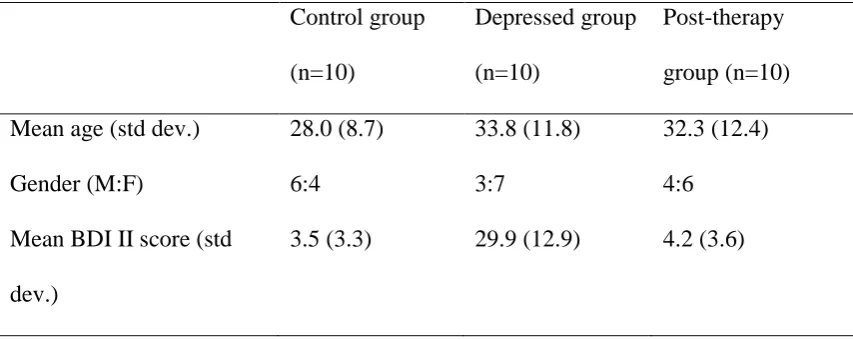
[image:63.595.101.528.200.370.2]number of participants made matching difficult. Demographic information about these reduced groups is given in Table 2.3.
Table 2.3 Demographics of Equally-sized Groups Control group (n=10) Depressed group (n=10) Post-therapy group (n=10) Mean age (std dev.) 28.0 (8.7) 33.8 (11.8) 32.3 (12.4)
Gender (M:F) 6:4 3:7 4:6
Mean BDI II score (std dev.)
3.5 (3.3) 29.9 (12.9) 4.2 (3.6)
Within the equally-sized post-therapy group (n=10) four of the participants had received counselling, three had received CBT, one had received therapy (unknown type), and two had received both counselling and therapy (unknown type). Two of this group had never used medication for mental health difficulties, five were not currently using medication, but had used an SSRI previously, two were currently using an SSRI, and for one person this information is missing.
2.8. Measures