Rochester Institute of Technology
RIT Scholar Works
Theses Thesis/Dissertation Collections
2010
Cochlear implants in the deaf community: Current
circumstances of cochlear implant users among the
deaf youth in Sweden’s educational system
Christopher Samp
Follow this and additional works at:http://scholarworks.rit.edu/theses
This Thesis is brought to you for free and open access by the Thesis/Dissertation Collections at RIT Scholar Works. It has been accepted for inclusion in Theses by an authorized administrator of RIT Scholar Works. For more information, please [email protected].
Recommended Citation
Cochlear Implants in the Deaf Community:
Current Circumstances of Cochlear Implant Users among the Deaf Youth in Sweden’s Educational System
Masters in Science, Technology and Public Policy Thesis Submitted in Fulfillment of the Graduation Requirements for the
College of Liberal Arts/Public Policy Program at ROCHESTER INSTITUTE OF TECHNOLOGY
Rochester, New York June 2010
Submitted by:
Christopher Samp
Master of Science, Technology, and Public Policy (Signature) (Date)
Rochester Institute of Technology
Accepted by:
Dr. James DeCaro
Primary advisor and committee member (Signature) (Date)
Postsecondary Education Network International (PEN-International) Rochester Institute of Technology
Dr. Catherine Clark
Committee member (Signature) (Date)
Department of Audiology
National Technical Institute for the Deaf / Rochester Institute of Technology
Mrs. Patricia Mudgett-DeCaro
Committee member (Signature) (Date)
Postsecondary Education Network International (PEN-International) Rochester Institute of Technology
Dr. Franz Foltz
Graduate Coordinator (Signature) (Date)
Department of Public Policy / Rochester Institute of Technology
Dr. James Winebrake
Chairperson (Signature) (Date)
Title: Cochlear Implants in the Deaf Community: Current Circumstances of Cochlear Implant Users among the Deaf Youth in Sweden‟s Educational System
Author: Christopher Samp
Thesis Committee Members: Dr. Catherine Clark Dr. James DeCaro Dr. Franz Foltz
Mrs. Patricia Mudgett-DeCaro Dr. James Winebrake
Keywords: Bilingualism, Cochlear Implants, Deaf Education, Disability Policy, Health Care, and Sweden
ROCHESTER INSTITUTE OF TECHNOLOGY Rochester, New York
Acknowledgements
The author wishes to express his appreciation to several individuals who in one way or another contributed and extended their valuable assistance in and preparation and completion of this thesis.
First and foremost, I offer my sincerest gratitude to my thesis committee and the Science, Technology, and Public Policy department who has supported me throughout my writing process with each to their own expertise of the subject. I also appreciate their patience as I hurdle all the obstacles in the completion of this research work. As a result, this experience has been very rewarding for me. I would like to thank:
Dr. James DeCaro, primary advisor of the thesis committee and interim President of the National Technical Institute for the Deaf (NTID), for his outstanding knowledge of deaf education around the world including Sweden. In his leadership with PEN-International, I worked as his technical assistant, which for me was a most
wonderful and formative experience. I am forever indebted to his countless support in different ways in ensuring that I have become successful.
Dr. Catherine Clark, committee member and faculty member of the
Communication Studies and Services at NTID, for her wonderful support and expertise on hearing assistive devices and audiology-related resources.
Mrs. Mudgett-DeCaro, committee member and consultant to PEN-International, for her shared international experience with Dr. DeCaro and her personal expertise on bilingualism and deaf culture including societal issues in Sweden.
Dr. James Winebrake, committee member and Chairperson of the Science, Technology, and Public Policy department, for his technology and public policy perspectives as well as his guidance in both undergraduate and graduate studies.
Dr. Franz Foltz, committee member and graduate coordinator of the Science, Technology and Public Policy department, for his guidance and public policy insight with my Thesis.
Ms. Debbie Steene, senior staff specialist of the Science, Technology and Public Policy department, for her administrative support and guidance with the thesis process.
In addition, I would like to thank my Institution and faculty members for their academic support and use of facilities. I would like to acknowledge:
Dr. Chance Glenn, Associate Dean from the Office of Graduate Studies at
Rochester Institute of Technology (RIT), for allowing me to use an office space to better concentrate on my research and analysis.
Ms. Pamela Lamboy, an independent editor, for her prompt copy-editing service.
Ms. Joan Naturale and Ms. Linda Coppola, both librarians at the RIT‟s Wallace library, for their assistance with the library resources and the APA format of my thesis.
I would like to express my deepest gratitude to my family for their devoting love and support throughout my life and my academic studies at Rochester Institute of Technology. I am thankful for all that they could do to help financially, emotionally, spiritually and remotely. I would like to share a special thanks to my mother, a teacher of many
international students in Michigan and abroad, who has helped me become who I am today. Since birth, she sparked my curiosity to the various culture and food shared through her students and this encouraged me to explore the world meeting many wonderful people.
I am indebted to many of my friends and colleagues, including the staff at RIT Residence Life, PEP-Net, and PEN-International, who supported me in many gracious ways
throughout my journey in graduate school. I would like to give my gratitude to these exceptional individuals: Ms. Debbye Byrne, Ms. Corinne Heschke, Ms. Sharon Kompalla, Ms. Mary Lamb, Mr. Bryan Lloyd, Ms. Annemarie Ross, Mr. Stephen Persinger, Ms. Anne Van Ginkel, and Mr. Minoru Yoshida.
I wish to express my utmost sincere thanks to the people in Sweden, whom their names I cannot disclose because of my confidentiality agreement with them. Without their inputs, guidance, and resources, this thesis would not have been made possible.
Abstract
Sweden has maintained an environment of equal opportunities and inclusive disability
policies for its citizens. In Swedish education, a bilingualism method of Swedish Sign
Language and spoken Swedish is used in teaching deaf children. The cochlear implant
device is considered an advanced form of hearing technology and is used with deaf youth
to assist with speech development. Several medical experts and researchers support the
language development theory that there is a “critical period” for a deaf person to acquire
natural language and speech development at a young age. Some experts believe that in
order to achieve this language acquisition of the spoken language, deaf children are
encouraged to get implants as early as possible.
The focus of this thesis is to examine how the emergence of cochlear implant
technology impacts Sweden‟s environment toward existing disability policies and
procedures in education, health care, and organizations serving deaf people. This thesis
will be addressed in the following 3 ways:
1) Provide current documentation of criteria and processes for obtaining a cochlear
implant.
2) Gather existing policy statements on cochlear implants from major organizations
serving deaf people.
3) Collect historical and current statistical data of the deaf population who have
cochlear implants or hearing aids in compulsory education including special
To explore the current circumstances of cochlear implant use in the educational
environment in Sweden, an in-depth literature review was conducted about Sweden‟s
history and background of cochlear implant use. Surveys were distributed to five major
community organizations and agencies serving deaf people as well as six community
hospitals about the process and procedures for obtaining cochlear implants in Sweden.
This research process collected information that occurred predominantly mostly in 2007
Table of Contents
List of Figures and a Table 8
List of Acronyms 9
1.0 Introduction 10
2.0 Literature Review 14
2.1 Sweden‟s background 14
2.2 The Swedish government, laws, and disability policies 16
2.3 Advocacy organizations, government agencies, and international
affiliations 19
2.4 The educational system in Sweden 30
2.5 Access services for the Deaf 39
2.6 Deaf community and identities 42
2.7 The Swedish health care system, process for obtaining a cochlear
implant, and the development of language 49
2.8 Summary of literature review 57
3.0 Methodology 58
3.1 Analytical framework and rationale 58
3.2 Data collection techniques 61
4.0 Interpretation of Results 64
4.1 Findings for Objective 1 64
4.2 Findings for Objective 2 87
4.3 Findings for Objective 3 96
5.0 Sweden and the United States in comparison with several implications
for policy makers 106
6.0 Recommendations for future studies in Sweden 115
7.0 Researcher‟s closing summary 117
8.0 References 121
9.0 Appendices 143
Appendix A: Cover letter from committee chair 144
Appendix B: Cover letter from researcher 145
Appendix C: Consent form 146
Appendix D: Organization questionnaire 1 & 2 147
Appendix E: Hospital questionnaire 149
Appendix F: Data statistics sources 150
Appendix G: Swedish policies dealing with people with disabilities 152
List of Figures and a Table
Figures:
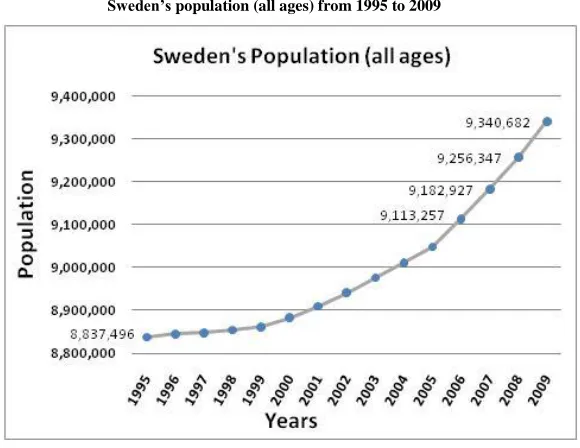
Figure 4.1: Sweden‟s population (all ages) from 1995 to 2009
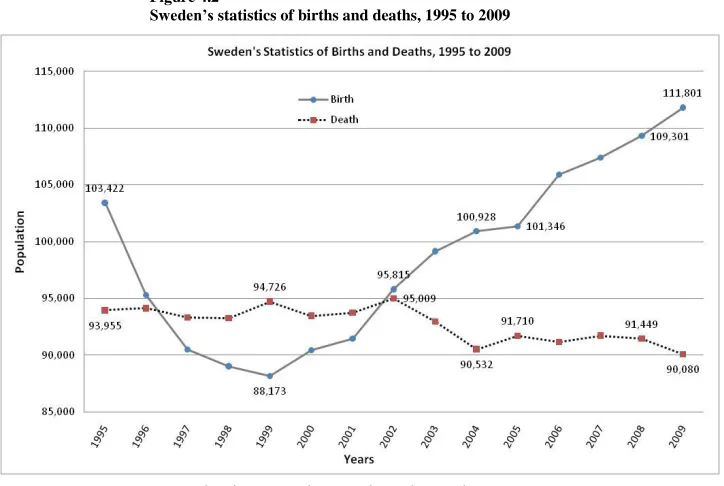
Figure 4.2: Sweden‟s statistics of births and deaths, 1995 to 2009
Figure 4.3: Student population at regular schools (compulsory education), 1995 to 2008
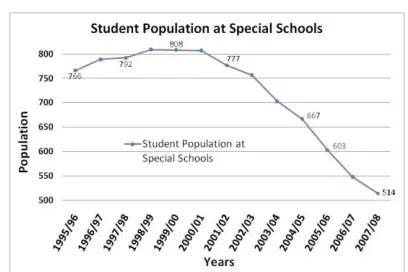
Figure 4.4: Student population at special schools, 1995 to 2008
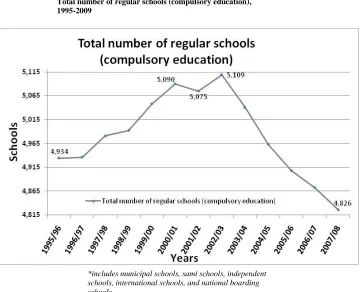
Figure 4.5: Total number of regular schools (compulsory education), 1995 to 2008
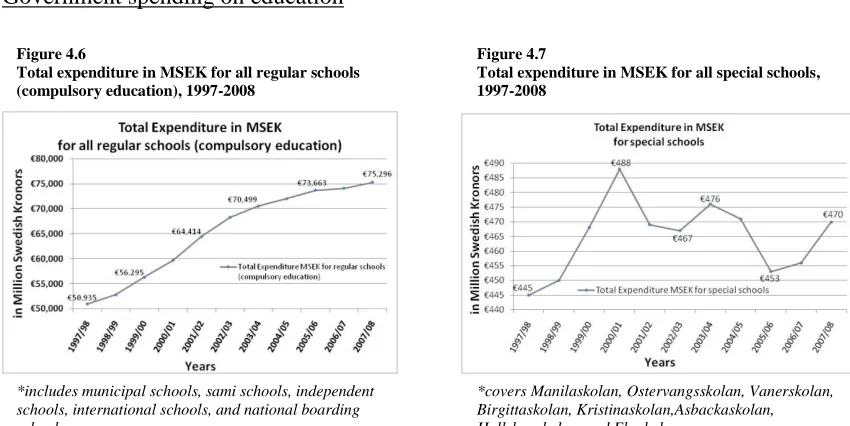
Figure 4.6: Total expenditure in MSEK for all regular schools (compulsory education), 1997 to 2008
Figure 4.7: Total expenditure in MSEK for all special schools, 1997 to 2008
Figure 4.8: Expenditures per student in SEK for all regular schools (compulsory education), 1997 to 2008
Figure 4.9: Expenditures per student in SEK for all special schools, 1997 to 2008
Table:
List of Acronyms
Acronym in English in Swedish
SDR The Swedish National Association
of the Deaf
Sveriges Dövas Riksförbund (SDR)
DHB
The Swedish National Association for Deaf, Hearing-Impaired and
Language-Impaired children
Riksförbundet för döva, hörselskadade och språkstörda barn
(DHB)
Euro-CIU European Association of Cochlear
Implant Users n/a
SCB Statistics Sweden Statistiska centralbyrån
DO Equality Ombudsman Diskriminneringsombudsmannen
(DO)
SI Swedish Institute Svenska institutet
OSS The National Agency for Special
Needs Education and Schools
1.0 Introduction
Cochlear implant technology, one of the most advanced technical devices for
people with significant permanent hearing loss, has been studied around the world.
Sweden is one of many countries to take advantage of this technology. It is wondered
how the emergence of cochlear implant technology impacts Sweden‟s environment
toward existing disability policies and procedures in education, health care, and
organizations serving deaf people. This research question will be addressed in the
following three ways:
1) Provide current documentation of criteria and processes for obtaining a cochlear
implant. Are the criteria and process for receiving cochlear implants in Sweden
any different from the United States? How does the medical team support the
bilingualism policy through various types of hearing assistive devices? There are
six hospitals in Sweden that perform cochlear implant surgery and a questionnaire
was sent to each to collect information on its cochlear implant criteria and the
process that a patient undergoes for receiving cochlear implants.
2) Gather existing policy statements on cochlear implants from major organizations
serving deaf people. Do some major organizations support cochlear implant
technology? Does the policy statement from each major organization support
bilingualism policy in Sweden? Five different groups were identified to have
worked with the deaf community and were given a questionnaire about its
perspectives toward cochlear implants.
3) Collect historical and current statistical data of the deaf population who have
schools (first grade to ninth grades). Are there any statistics on the number of
deaf people wearing hearing aids or cochlear implants? How many deaf children
with cochlear implants are integrated into regular schools and special schools?
Data were found in reports, publications, and through several agencies that collect
statistics.
The emergence of cochlear implant technology influences the way society views
deafness and its policies. Notably, cochlear implant technology has significant influences
on the perspectives from experts in the medical field and from the deaf community.
People in the deaf community share common experiences and in many places use sign
language as their main form of communication. Many medical experts would like to help
a deaf person hear as much as possible by recommending the most advanced technology
available, which currently is the cochlear implant.
There are people within the deaf community who believe, regardless of the
various medical solutions for a person with hearing loss, that there is a natural yearning
for deaf culture, deaf identity, and sign language. For some people, hearing assistive
devices such as cochlear implants, middle ear implants, and hearing aids are just a
medical fix to the hearing loss, but it does not completely bring the person to a normal
hearing level. Deaf individuals each have their own perspectives toward new technology.
Some may fear new technology and resist it because it threatens the value of deaf culture
and the use of sign language whereas some may embrace it because it connects the deaf
community with those who can hear. Technology influences the way deaf individuals
define their own identity such as proudly being a Deaf person, a hard of hearing person,
A cochlear implant is a device that replaces the function of hair cells incapable of
producing electrical impulses to the auditory part of the brain as sounds travel through the
ear. Cochlear implants do not restore normal hearing. Instead, the technology gives a
deaf person greater access to sound. Individual benefits range from the ability to hear
environmental sounds to understanding speech in most situations. (National Institute on
Deafness and Other Communication Disorders [NIDCD], 2009). “According to the Food
and Drug Administration (FDA), as of April 2009, approximately 188,000 people
worldwide have received implants. In the United States, roughly 41,500 adults and
25,500 children have received them” (NIDCD, 2009).
Research studies have been conducted on the use of advanced technology in early
intervention for hearing loss, and the use of cochlear implants is growing worldwide to
support the development of spoken language. Intervention can begin shortly after birth.
At Swedish hospitals, a Universal Neonatal Hearing Screening test is given to all
newborns to identify hearing loss. Parents with their deaf child are referred to a medical
team and educated on deafness. The health care system is funded through taxes by the
government to provide people in Sweden free health and medical care. Cochlear implants
and medical services are provided to deaf people as part of this health care system.
Currently, Swedish hospitals have no government regulations on cochlear implants and
some follow the criteria suggested by the manufacturers.
Several research studies support the theory of “critical period” where the child at
early stages of development acquires and masters the spoken language.This theory is
directly linked to the belief that the child with a hearing loss must be able to hear as early
Cochlear implants are considered to be the advanced form of hearing assistive devices
that allow a child to perceive environmental sounds more clearly than hearing aids, which
mostly amplify the sounds. As stated earlier, the use of cochlear implants does not restore
hearing immediately, it requires training to learn and understand the sounds. Having a
cochlear implant early helps a deaf child develop speech (spoken language skills)
(NIDCD, 2009).
Many countries view Sweden as a leading model in the studies of cochlear
implant technology. Although there are no regulations on the use of cochlear implants in
Sweden, people worldwide study the Swedish model to create new policies for their
home country to support or regulate cochlear implants.
The bilingualism policy encourages the use of technology to help deaf people
with development of spoken language. However, in 1981, the Swedish government also
officially recognized Swedish Sign Language as a primary language before spoken
Swedish for the deaf community. The new policy allowed the deaf community to
embrace Swedish Sign Language and protect their rights to communicate in their own
language.
Furthermore, a literature review will describe the background of Sweden‟s
government, organizations, education, accommodations for the deaf, health care system,
and the process for receiving cochlear implants. This thesis will also discuss the
distribution of questionnaires and the findings from organizations, agencies, and hospitals
about the procedures for receiving a cochlear implant, statistical data for the number of
cochlear implants and hearing aids users in Sweden, and any policy statements from
United States based on Sweden‟s experience and recommendations for future studies on
cochlear implants use.
2.0 Literature Review
2.1 Sweden’s background
Located north of Europe in the Scandinavian region is a country where
approximately 9,336,487 people call Sweden their „People‟s Home‟ (Statistics Sweden,
November 2009). The native language is Swedish; however, minority native languages
such as Sami, Finnish, and Swedish Sign Language are used. Most children are taught
English as a second language in elementary school so that they can participate in the
global community. Sweden is one of the leading models for bilingualism and
multicultural integration (Swedish Travel & Tourism Council, 2003). This is because
immigrants comprised approximately 10 percent of the total population in 2002.
Furthermore, the relaxed immigration policy in the 1960s increased innovations in
education, technologies, health care, and the global market (Odom & Kaul, 2003).
Research and development play very important roles as investments in Sweden‟s
future. Its ambitions and industrial speed in adopting new technology is internationally
recognized. Thus, major multinational corporations have used Sweden as a test market
for development of new products and services including cochlear implants (Swedish
Institute, May 2009).
As an egalitarian society, many of the ideas were borrowed from socialism in
which the government prioritizes people‟s safety and security to maintain one of the best
living standards in Europe or perhaps the world. Sweden maintains its society by
modern and industrial. People put faith in their government to enable a safety net that
minimizes their fear of potential costs of unemployment, medical difficulties, or
education (Stratton, 2007). This includes creating disability policies making their society
accessible for all.
The Swedish government structure is a multi-party system with different levels of
governments such as national (state), county councils (regional), and municipalities (local).
There are twelve different ministries that formulate government regulations and laws for the
Riksdag (Parliament) to discuss and to enforce policies especially for those with disabilities
(Swedish Institute, 2008). The Equality Ombudsman oversees and helps to create the disability
policies (Diskriminerings Ombudsmannen, 2008a). Health and dental care, free to all children
and youth, are provided through the responsibilities of the Ministry of Health and Social Affairs
(Regeringskansliet: Government Offices of Sweden, 2009). Children have been receiving free
health and medical services since 1937 (Odom & Kaul, 2003).The Swedish government
provides services such as education, health and medical care, pensions, social services, and
economic securities to the citizens at no additional cost other than from taxes (Odom & Kaul,
2003; Invest in Sweden Agency, 2009). This includes providing hearing assistive technologies
for the deaf.
The extended literature review will cover existing disability policies and the
emergence of cochlear implant technology in education, health care, and organizations
2.2 The Swedish government, laws, and disability policies
An ideal community is one in which everyone is able to participate equally and
vote on issues without any form of discrimination. In Sweden, policy makers must keep
in mind their disabled citizens when creating or revising laws. Therefore almost each act
or provision has some sort of clause in regards to people with disabilities (Swedish
Institute, 2007). For example, The Health and Medical Service Act mandates that county
councils be responsible to finance community interpreters. The Education Act allows
special schools to exist for deaf children to receive additional support that a regular
school may not be able to provide. There are no Acts in Sweden similar to the Americans
with Disabilities Act (ADA) created in the United States. Instead, some Swedish Acts or
legislations have specific clauses to support people with disabilities.
The deaf community in Sweden has made great strides in protecting their
language and culture. As mentioned earlier, the Swedish Parliament recognized Swedish
Sign Language in 1981 as one of the official languages in Sweden and the primary
language of the deaf community (DeCaro, Mudgett-DeCaro, & Dowaliby, 2001; Preisler,
Tvingstedt, & Ahlström, 2002). Many policies support the use of Swedish Sign Language
such as subsidizing costs for sign language training for parents through the TUFF
program (Sveriges Dövas Riksförbund, 2007a).
The Health and Medical Service Act of 1982 (1982:763) provides an essential
need for Swedish residents. The goal of this Act is to provide equal access to good health
care. The cost of health and medical care amounts to SEK 223 billion (approximately
$30.9 billion) or 8.4% of Sweden‟s GDP. The state is responsible for nationwide policies
residents in their region toward services that require considerable resources such as
interpreting services. The 21 county councils offer their residents services such as
habilitation and rehabilitation, assistive devices for persons with functional impairment,
and interpreting services (Regeringskansliet: Government Offices of Sweden, 2004). If a
deaf person wants a cochlear implant, he/she would receive support through the county
council.
All children and young persons have equal access to education in the national
school system from pre-schools to compulsory secondary schools, Sami schools for the
native Scandinavians, and special schools for children with special needs. This is
supported through the Education Act (1985:1100). The special schools are for children
who need additional assistance that is not provided by the national school system. These
children will receive the same education curriculum that is taught in regular schools. The
only difference between the national school system and the special schools is that special
schools have teachers and personal assistants that are trained to work with children of
various disabilities. Deaf students are required to have an additional year of sign language
to their curriculum.
Education is free for children with disabilities, and the state is responsible for
expenses such as books, meals, writing materials, transportation, and housing for students
who live long distances from home (listed in Chapter 7 of the Education Act). Children
with functional impairments may choose to go to any school. In addition, they are given
the choice to attend special schools. For regular schools, they have a specialized
department linked to assist those students with special needs (The European Social
accepts students with special needs with their own budget and grants. Parents who want
to send their child with disabilities to an independent school can receive grants covering
up to 85% of tuition paid for by the government, according to the Freedom of Choice and
Independent Schools Bill of 1992 (Andrew, 2002; Merrifield, 2005). The National
Agency for Education monitors all education issues, and the local authorities are
responsible to provide educational support to students in their region (The European
Social Network, 2000).
The establishment of the Disability Ombudsman Act in 1994 was to monitor
issues regarding the rights and interest of people with disabilities and to make sure that
they have equal access and fair treatment without comprising their individual integrity.
The Disability Ombudsman has the authority to mandate that county councils and
municipalities report and perform functions relating to people with disabilities. The
Disability Ombudsman provides information about community activities and funds. All
levels of government must report to the Disability Ombudsman any activities regarding
people with disabilities. Evaluation of their policies and procedures is required to make
sure that there are no discrimination activities and that the regulations are fair. The
Disability Ombudsman was one of the few offices that merged under the Equality
Ombudsman (Handikappombudsmannen, 1994; Vocational Rehabilitation and
Employment of Persons with Disabilities, 2007b; Diskriminerings Ombudsmannen,
2008a).
There are advocacy organizations that express their concerns to national
authorities for people with disabilities. One example of an advocacy organization is the
national disability organizations and about 450,000 members. The Swedish Disability
Federation is part of the Advisory Council under the Equality Ombudsman and reports on
specific disability issues (Vocational Rehabilitation and Employment of Persons with
Disabilities, 2007a).
Most of these policies and organizations made sure that all citizens, especially
those with disabilities, have access to education, medical and health services, social
participation, and working environments. The politicians behind these policy-making
processes are trained to ensure that when creating new Acts, they will be all-inclusive. If
missing any, they will create a provision to include equality. Finally, the policies will be
accessible for disabled citizens. Some of the other acts regarding people with disabilities
can be found in Appendix G: Swedish policies dealing with people with disabilities.
2.3 Advocacy organizations, government agencies, and international affiliations
This section of the thesis will focus on five major organizations and agencies that
advocate for deaf citizens in Sweden in addition to several affiliations. The names are in
Swedish and a translation will be given. A brief insight into the organization‟s history,
membership and purpose will be shared. Sweden has international affiliations through
some organizations.
Major organizations, agencies, and affiliations at the international level:
1) SDR-
Sveriges Dövas Riksförbund, the Swedish National Association of the Deaf.
2) Barnplantorna-
Barnplantorna, roughly translated to “Children Implant,” is known as the National
3) DHB-
Riksförbundet för döva, hörselskadade och språkstörda barn or “DHB” is
translated into the National Association for the deaf, hearing impaired and
language impaired children.
4) Skolverket-
Skolverket, the Swedish National Agency for Education.
5) Equality Ombudsman-
Handikappombudsmannen or HO was the former Disability Ombudsman before it
merged with three other ombudsman offices under a new name as
Diskriminerings Ombudsmannen, Equality Ombudsman or DO. The objectives of
the former Disability Ombudsman did not change after they merged the four offices into the new Equality Ombudsman.
6) European Association of Cochlear Implant Users (Euro-CIU)
7) The Nordic Council of the Deaf
8) The World Federation of the Deaf (WFD)
9) European Union of the Deaf
The Swedish National Association for the Deaf (SDR)
The first Association of the Deaf in Sweden was established in 1868 in Stockholm
as a national club serving deaf people all over the country and offering funds toward
health insurance and funeral expenses. By the end of the 1890s, there were protests
among the deaf community that they did not receive support because most funds were
given only to the deaf people residing in Stockholm. As a result, several deaf clubs
formed independently around the country to support their local deaf needs. In 1919, the
Gothenburg Deaf Club brought fourteen different club representatives together and
discussed a need for a central organization in Sweden. On February 26, 1922, the
Swedish National Association of the Deaf was formed to work with all the deaf clubs in
SDR works with politicians and community organizations to ensure full access to
media, education, employment, health and public services for deaf people (Sveriges
Dövas Riksförbund, 2010d). SDR serves its members and the greater community by
advocating for the deaf community for the right to communicate and receive information
in Swedish Sign Language. SDR also works with various groups of people such as
parents of deaf children, deaf senior citizens, interpreters, teachers of the deaf, and many
others by providing information and resources. In the 1980s, the deaf community wanted
to strengthen the communication between the teachers and the students by implementing
two policy changes. These two policy changes were aimed at improving the skills of
teachers for the deaf: “1) Entrance requirements must were changed so that individuals
entering the training program to become teachers of the deaf must first pass a rather
stringent sign language test. 2) A five-year federal grant was given to Stockholm
University to set up a one-semester sign language program for individuals who are
already teachers” (Davies, 1991). In addition to the recognition of sign language in
1980/81, the Swedish Parliament decided to promote bilingualism as part of the deaf
society in Sweden (Davies, 1991). Today, SDR is actively involved with the World
Federation of the Deaf, Nordic Council of the Deaf, and European Union of the Deaf at
the international level (Sveriges Dövas Riksförbund, 2010c).
SDR is an advocate for the use of sign language in Sweden regardless of deaf
people who use cochlear implants or not. Users of sign language, whether the person is
hearing or deaf, can apply for membership within the SDR. Several community opinions
statement on its website, “During the year we formulated our view of cochlear implants
in a statement. We wanted once and for all to make clear that SDR is not against the CI,
but for sign language” (Sveriges Dövas Riksförbund, 2007b, p. 5). SDR also believes that
all deaf children should be given the privilege to learn both spoken Swedish and Swedish
Sign Language regardless of what hearing assistive technology they use. With or without
the hearing assistive technology, the people who use it are still deaf. SDR wants to make
sure that these children have access to the society in their natural language, which is sign
language (Sveriges Dövas Riksförbund, 2007b).
Several statistics on the size of the deaf population in Sweden are scattered
throughout the SDR‟s website. In 2010, there were about 4,500 members with forty clubs
at the local and county level (Sveriges Dövas Riksförbund, 2010e).
Barnplantorna
Barnplantorna is a support organization and resource for parents who have
children with cochlear implants. It was founded in 1995 through four families in
Gothenburg that needed an association to support their children and their use of cochlear
implants. In 2007, Barnplantorna included children with middle ear implants and hearing
aids as part of the organization. The middle ear implant is a sound processor for the
middle ear that is placed behind the ear but directly into the bone to conduct the sounds
toward the functioning cochlea (Cochlear Americas, 2009). Barnplantorna influences the
government and society on technical development for CI, middle ear implant, and hearing
aids. The organization also provides information to schools on how to incorporate
Barnplantorna gives advice to parents on how to receive financial support from the
government for their child with hearing assistive devices. The compensation from the
government can range from 2229 SEK to 8917 SEK (approximately $295 to $1,175) per
month with the proper insurance and paperwork (Barnplantorna, 2010a). About 40,000
parents receive support from the government; however, there are other parents who are
unaware of this government funding. Furthermore, Barnplantorna emphasizes the
importance of spoken language and communication training for parents of deaf children.
On its website, it mentions briefly the deaf community and the use of Swedish Sign
Language as part of deaf culture (Barnplantorna, 2009c).
Barnplantorna worked hard in making the Universal Neonatal Hearing Screening
a national requirement in all hospitals in Sweden. According to Barnplantorna, there are
about 10,000 hearing impaired and deaf children up to 20 years of age in Sweden
(Barnplantorna, 2009b). Generally, 200 children are born each year with some kind of
hearing loss (Barnplantorna, 2008b, p. 11). Each year, 20 deaf newborns are eligible for
CI along with an additional 10 children who lost their hearing to an illness
(Barnplantorna, 2009d).
Barnplantorna works with five regional hospitals that perform CI-surgery for
children and adults by sending trained specialists on a CI-team to Uppsala Hospital,
Karolinska University Hospital, University Hospital in Linköping, Sahlgrenska
The Swedish National Association for the Deaf, Hearing-Impaired and
Language-Impaired children (DHB)
Parents of deaf children are scattered throughout Sweden. Parents in the 1940s
were in need of a national organization that would help educate parents of deaf children
on how to participate in their community by creating a quality education and equal
participation for their deaf children. In 1945, the Manila School, a special school for the
deaf in Stockholm, formed the first parents‟ association. The parents at that time felt that
the schools were lacking quality education for their deaf children and wanted to expand
early education in nursery schools for deaf children (Riksförbundet DHB, 2009a). For
years, parents and members of DHB have worked tirelessly to improve school conditions
and quality of teachers.
DHB has a central office in Orebro and has committees responsible for five
different regions community activities and parental support. DHB has been aggressive in
pursuing quality education for children with hearing loss. In 1980, they participated in the
change of curriculum to include sign language and have the textbooks and writing in
simple forms to meet the deaf needs (Riksförbundet DHB, 2009b). DHB helped the
government develop a statutory right of 240 hours of sign language instructions for
parents of deaf children. DHB would like to expand this by increasing hours and
including parents with children that have language disorders (Riksförbundet DHB,
2009c). Also, DHB works with politicians and authorities to provide better schools, sign
language training and parenting for deaf children (Riksförbundet DHB, 2009d).
DHB acknowledges that spoken Swedish and Swedish Sign Language are two
that Swedish Sign language should be the primary language for deaf children. Regardless
of the type of hearing devices the children use, especially cochlear implants, it is believed
that all deaf children have the need for sign language and it is a safe communication
method in all situations (Riksförbundet DHB, 2009d).
One of the functions of DHB is to provide opportunities for members to get in
touch with families with similar experiences. Members also receive information through
the organization‟s magazine, which comes out four times a year about projects,
conferences, camps and affiliations (Riksförbundet DHB, 2009d).
Skolverket (Swedish National Agency for Education)
Skolverket (Swedish National Agency for Education) is the central administrative
authority for the public school systems in Sweden. The government and parliament
defined the role of Skolverket through the Education Act of 1985. The major goal of this
agency is to follow up with and evaluate the quality of education in public schools to
make sure that all pupils have equal access. Skolverket covers all municipalities from
preschool to college including vocational training schools (Skolverket, 2009b).
Municipalities have the responsibility to distribute resources and organize
education so that students can achieve their national goals (Skolverket, 2009a). The
national curriculum and the Education Act of 1985 define the school systems, basic goals
and guidelines.
Compulsory education in Sweden is free and mandatory for children aged 7 to 16.
The special schools for the deaf are free and have an extra year added to their curriculum
compulsory education is 9 years while for special schools it is 10 years. Skolverket
oversees 8,062 schools in Sweden. In 2009, there were eight special schools for deaf
students out of 4,949 compulsory education schools. The eight schools are: Birgittaskolan
(Orebro), Ekeskolan (Orebro), Hallsboskolan (Stockholm), Kristinaskolan
(Vasternorrlands), Manillaskolan (Stockholm), Vanerskolan (Vastra Gotalands),
Asbackaskolan (Sodermanlands), and Ostervangsskolan (Skane). More information on
these schools and their curriculum will be discussed in section 2.4. Deaf students have the
option to attend either regular school or one of eight special schools. The municipality is
responsible to make sure that accommodations are available for students attending
regular schools (Skolverket, 2009b).
The Equality Ombudsman
The Discrimination Act was created to “combat discrimination and in other ways
promote equal rights and opportunities regardless of sex, transgender identity or
expression, ethnicity, religion or other belief, disability, sexual orientation or age”
(Diskriminerings Ombudsmannen, 2008b). The Equality Ombudsman investigates
complaints from citizens and makes sure that employers, schools, and the general
community comply with the Act and the International Human Rights Declaration. The
Equality Ombudsman received an allocation of 93 million SEK (approximately $13.2
million) in 2009 with 90 employees to monitor community activities and enforce the
Discrimination Act (Diskriminerings Ombudsmannen, 2010). To the researcher‟s best
knowledge, there is no policy statement about the use of cochlear implants. In the
Language in the deaf community and complaints can be sent to the Equality Ombudsman
for investigation.
European Association of Cochlear Implant Users (Euro-CIU)
Founded in 1995, The Euro-CIU is a collective member of European countries to
represent the interest of deaf people who use or support the use of cochlear implant
devices on the European level. They host bi-annual international symposia to disseminate
information and promote awareness of cochlear implants and related research. Sweden
has two memberships within the Euro-CIU: Västplantorna and Barnplantorna.
Västplantorna focuses on the acceptance of cochlear implants at the national level in
Sweden. Whereas, Barnplantorna focuses on cochlear implant issues for children
(European Association of Cochlear Implant Users, 2008). On the website of Euro-CIU, it
does not discuss the use or benefits of sign language in its mission. However its member,
Barnplantorna, joined Euro-CIU to “distribute information about cochlear implants in
children in order to make professionals (teacher, speech therapist, etc.) understand that
children with cochlear implants can hear and develop spoken language as well as sign
language” (European Association of Cochlear Implants Users, 2010).
The Nordic Council of the Deaf
Founded in 1907, the Nordic Council of the Deaf (DNR) consists of deaf
associations from Denmark, Finland, Norway and Sweden. The Nordic Council of the
Deaf meets twice a year with two representatives from each country: the President of
represents Sweden on this council. The purpose of this council is to promote sign
language as an official language of the deaf people, exchange information and develop
issues regarding the deaf in their country (The Nordic Council of the Deaf, 2005). The
emphasis was on sign language alone, there was no mention of hearing assistive
technologies such as cochlear implants on its website.
The World Federation of the Deaf (WFD)
Founded in 1951, the World Federation of the Deaf (WFD) is an international,
non-governmental central organization of the National Associations of Deaf. Over 130
countries have membership within this organization. Like the United Nations, WFD
works and supports human rights with a focus on Deaf people who use sign language as
well as work toward a common goal against discrimination of people with various types
and levels of hearing loss. Every four years, delegates meet at the General Assembly to
discuss the status of national sign language, better education for deaf people, improving
access to information and services, improving human rights for Deaf people in
developing countries, and establishing deaf organizations in countries where none exist
(World Federation of the Deaf, 2010). There is no policy statement about the use of
hearing assistive devices on its website.
European Union of the Deaf
Founded in 1985, European Union of the Deaf is a non-profit organization with its
membership comprising all the National Associations of the Deaf throughout Europe. Its
The European Union of the Deaf monitors the recognition status of sign language in all
European countries. It also encourages empowerment through communication and
information technology, promotes equality in education and employment, and
disseminates information quickly to their members on relevant developments on deafness
and sign language (European Union of the Deaf, 2010). European Union of the Deaf
focuses on the recognition status of sign language in all European countries and there is
no mention of its philosophies or policy statement on the use of cochlear implant on its
website.
Summary of advocacy organizations, government agencies, and international affiliations
These major organizations, agencies, and affiliations at national and international
levels are important to Sweden in development of bilingualism policy and the growth of
cochlear implant recipients. The Swedish National Association of the Deaf (SDR)
advocates and protects the use of sign language in the deaf community. Regardless of the
choices each individual deaf person makes as whether to get cochlear implants or hearing
aids, the right to the use of sign language is protected with the support of SDR. SDR
serves on the Nordic Deaf Councils to exchange information with other Scandinavian
countries and promote sign language. Barnplantorna collects and shares information on
the various hearing assistive devices such as hearing aids and cochlear implants for the
deaf community and for parents of deaf children. Barnplantorna also collaborates with
other organizations such as European Union of Cochlear Implant Users (Euro-CIU) to
foster the use of cochlear implants in development of speech. The Swedish National
education. Bilingualism in special schools is encouraged. The Equality Ombudsman
makes sure that each individual with disabilities is respected and has access to education
or to the resources they need such as interpreting services or cochlear implants. The
European Union of the Deaf collects information about the deaf community in each
country. These organizations and agencies help with the development of bilingualism
policy in Sweden and the growth of cochlear implants use.
2.4 The educational system in Sweden
This section will discuss the compulsory and special schools within the
educational system in Sweden. The Skolverket regulates all schools. The National
Agency for Special Needs Education and Schools provides support to schools that have
students with disabilities.
Skolverket, the Swedish National Agency for Education
The school system in Sweden is monitored and regulated by the Swedish National
Agency for Education (Skolverket) as described in the Education Act of 1985.
Skolverket, a central administrative authority, defines the national goals and guidelines
for all education from children to adults. The municipalities and schools have the
flexibility to establish certain regulations within their region as long as the educational
performances or outcomes meet the objectives by Skolverket. Skolverket, then,
communicates its findings in its reports to the Swedish parliament and the government.
There are public schools that children attend for free: Sami schools (for the native
with additional disabilities). There are independent schools that operate around the
country but they must be approved by Skolverket to function under different regulations
established by the municipalities. Through this recognition, the independent schools will
be allowed grants from its regional municipalities for students to attend (Skolverket,
2009b).
About the Education Act of 1985
The Education Act of 1985 is for all children, youth and adults to have equal access to
education. Skolverket is the sole authority to review and develop policy within the education
system. The government sets national objectives for the schools to achieve, and the
municipalities work with the schools locally on appropriate regulations. Syllabi are given to the
teachers to interpret and create new teaching methods based on the framework given (Skolverket,
2009b). There is a specific section in the Education Act for the deaf community that allows for
special schools to function for deaf students who cannot attend other regular schools because
sign language is their main form of communication (The Education Act of 1985:1100).
Bilingualism began in 1983 for special schools where Swedish Sign Language is a subject of its
own and is the educational language for the deaf. The government supportedbilingualism further
with an addition to the curriculum in 1994 that deaf students should use both languages in the
classroom with sign language as being of fundamental importance for linguistic development
(The Swedish Institute for Special Needs Education, 2007; Mason, 1994). It was also
emphasized that teachers and staff members in schools should be fluent in sign language. Since
then, teachers in special schools and parents were offered Swedish Sign Language courses
education is free to the students including those in special schools. The state is responsible to
provide academic materials, tools, meals, and transportation for students attending special
schools (The Education Act of 1985:1100). Also, for students who do not live near the schools,
the schools must provide residence and recreational activities at no charge to the student
(Specialpedagogiska skolmyndigheten, 2007).
Compulsory education in schools
Compulsory education includes regular schools, Sami schools (for the native
Scandinavians), special schools, and programs for learning disabilities. Children
attending regular schools are between the ages of 7 to 16 years for their first 9 years of
education (not including preschool). However, students attending special schools have an
additional year added to their curriculum for linguistic development of both Swedish Sign
Language and Swedish. Regular schools run five days a week for 40 weeks starting at the
end of August and until the beginning of June. Children have the right to choose any of
the schools in the country, and most of them attend a municipal school close to home
(Skolverket, 2006; Swedish Institute, October 2009).
For deaf students attending regular schools, a majority of them are placed in
special classes with individual tutoring (Ohlson, 1970). Support services vary among the
deaf individuals such as a personal assistant who signs (Angerby, 2005). Classrooms may
be arranged in U-form where students can see each other, especially helpful for the deaf
students. There are “technical amplification systems where the hearing aid can be set to
take in only the teacher‟s microphone, enabling the majority to follow the teacher‟s
1984, p.80).
Before deaf students are admitted into the regular school, their abilities and
qualifications are evaluated. In the past students with minor hearing loss (less than 30 dB)
were placed in special classes within regular schools. Children with moderate hearing
loss (between 30 and 60 dB hearing loss) were placed in a school for the hard of hearing
in Orebro. Children with severe and profound deafness (more than 60 dB hearing loss)
were placed in special schools such as Manillaskolan (Dolanský, 1967; Ohlson, 1970).
What was not clear to the researcher was the placement of deaf and hard of hearing
students in both regular and special schools. In personal communication with Dr. DeCaro
and Mrs. Mudgett-DeCaro of their visit to Sweden in 1999, they observed in special
schools that deaf students were separated in total communication (signing and speaking at
the same time) classes and hard of hearing students were separated in oral
communication classes with teachers who use a microphone, possibly through the FM
unit or hearing loop system (DeCaro & Mudgett-DeCaro, personal communication,
December 21, 2010). This could be similar for regular schools with a special department
for the deaf. Many sources cited different classroom settings for the deaf student so there
is no clear definition on how these deaf students were integrated. Currently, deaf students
can choose any school to attend, and the state will provide the accommodations
depending on the needs of each individual (Skolverket, 2006).
Special schools
Specialskola, or Special school in Swedish, is a bilingual school for the deaf. Both
Deaf students are expected to learn both within their first year of compulsory education
and then follow the typical 9-year education that any student would in a regular school.
Altogether for these students it means 10 years of education. This includes learning a
foreign language, most likely English (Skolverket, 2006).
The first school for the deaf in Sweden, Manillaskolan, was established in 1809 in
Stockholm using hand-alphabet or finger spelling and sign language as the teaching
method. During this early period of deaf education in Sweden, many changes were made
in using the monolingual approach in teaching of the deaf. Many teachers struggled to
choose between manual sign or an oral method. It was announced to the world at the
Milan Conference of 1880 that the oral method was the appropriate way of educating the
deaf although it was heavily debated that sign language had its benefits too (Foster et al.,
2003; Bagga-Gupta & Domfors, 2003). Manillaskolan continued to maintain their
teaching tradition in sign language (Specialpedagogiska skolmyndigheten, 2008). Shawn
Davies wrote in her 1991 article, The Transition Toward Bilingualism Education of Deaf
Children in Sweden and Denmark: Perspectives on Language, that “after all the years of
strict oralism, there was so much negative feeling toward speech training that there are
now very few trained speech teachers in the system” (1991). It is unknown as to when
and for how long the other Swedish schools used oral methods after the Milan conference
of 1880.
Integration of deaf students resulted through the “Contact Hypothesis” by Gordon
W. Allport in 1954, which brought the Swedish community into experimenting and
integrating children with disabilities into the regular classroom. It was assumed that
(Nordén, Tvingstedt, & Äng, 1984). As a result of this hypothesis, the Swedish schools
started integrating a majority of the deaf children into regular schools during the 1960s.
Thus, no further special schools were built for the deaf (Ohlson, 1970). In the late 1970s,
about 73% of the deaf students were placed in regular schools while the remainder (27%)
were placed in special schools (Nordén, Tvingstedt, & Äng, 1984). This was a struggle
for many students who relied on visual information. In 1973, Shawn Davies cited an
observation by Brita Bergman, a sign language linguist who stated that “signed Swedish”
(a different grammatical structure than the Swedish Sign Language) was inefficient and
that the natural sign language, the Swedish Sign Language, could be completely mastered
by deaf children before the age of three. Bergman‟s observation helped pave the way for
bilingual approach in deaf education. Then in 1981, it was declared that Swedish Sign
Language was the natural language of the deaf, and bilingualism became a policy for
educating the deaf students (Mason, 1994; Davies, 1991).
Pribanić summarized in her 2006 article, Sign Language and Deaf Education: A
new tradition, published in the Sign Language and Linguistics journal, that the current
educational method for a deaf student learning both languages is as follows:
Swedish Sign Language and spoken Swedish were taught as separate subjects.
Swedish was taught as a second language, in much the same way as it is taught to
immigrants. It is essential to keep the two languages apart from each other.
Spoken and written words may sometimes correspond to a sign, but more often a
single sign corresponds to a Swedish phrase or even a whole sentence. After many
years of bilingual education, Swedish researchers discovered that many of the
language resemble problems that non-native speakers have learning Swedish. The
goal then was, and still is, to prepare deaf students to read well enough to have a
solid foundation for acquiring knowledge, information and experience through all
kinds of printed materials. At the same time it is also important to prepare deaf
children for an adult life where they can be integrated into society. (p. 244).
Since July 1, 2000 six special schools have been regulated under the Special
School Authority (SPM). In the same year, Ekeskolan (in Orebro) and Hallsboskolan (in
Stockholm) were transformed into resource centers under the Swedish Institute for
Special Needs Education. Both the Special School Authority and the Swedish Institute
for Special Needs Education merged all eight schools under one agency, the National
Agency for Special Schools (Skolverket, 2006).
In a 2005 report by Skolverket to the FEAPDA council by presenter Karen
Angerby, she stated that there were about 600 students in special schools. Also in 2005,
about 70% of the deaf children born in Sweden received cochlear implants (Angerby,
2005). In Descriptive data on childcare, schools and adult education in Sweden
published by Skolverket, in the 2007-08 academic years, there were about 514 students in
special schools. If school population data from 1995 to 2008 were analyzed, it may be
assumed that the decline in enrollment of deaf students attending special schools may be
because of the growth in the use of cochlear implants in deaf children, which caused
some students to transfer to regular schools. According to Angerby (2005), low birth
rates and cochlear implants may have influenced the slight decrease in enrollment for
researcher analyzed further into the century of student population data and found that
there was a trend for student population, which will be explained in Objective 3 section
below.
Teachers of the Deaf
After the recognition of sign language in 1981, teachers of the deaf were required
to be fluent in Swedish Sign Language. Later, a parliamentary decision in 1988 created a
new teacher‟s training program to help support all schools‟ teachers in receiving “the
equivalent of a half term of study in special needs education” (Skolverket, 2006).
Training in Swedish Sign Language was given to existing teachers in their schools. To
become a qualified Sign Bilingual teacher, students in this field must attend three to four
years of coursework at the University of Stockholm (Angerby, 2005). The teachers of the
deaf sometimes devoted their time to creating new educational materials to adapt to the
needs of the deaf students. More audiovisual aids were created in Swedish Schools as a
result of this program (International Congress on Education of the Deaf, 1970). There are
two support associations for the teachers of the deaf students: The Swedish Association
for Educators of the Deaf and the European Federation of Associations of Teachers of the
Deaf (FEAPDA) (Angerby, 2005).
The Swedish Institute for Special Needs Education
The Swedish Institute for Special Needs Education works with municipalities and
schools in providing special needs support to students and parents so that the students
that produces and distributes educational materials to schools for special needs students
(Skolverket, 2006). The task of the Institute is not to take over the responsibilities of the
municipalities but to provide support when needed (The Swedish Institute for Special
Needs Education, 2007).
On July 1, 2008, the National Agency for Special Needs Education and Schools
was established to merge the former National Agency for Special Educational Support,
the Swedish Institute for Special Needs Education, and the National Agency for Special
Schools for the Deaf under one central administrative agency. The main goal of this
agency is to “ensure that children, young people and adults with disabilities will be able
to develop and receive an education based on equality, participation, and accessibility”
(National Agency for Special Needs Education and Schools, 2008).
The Swedish National Agency for Education oversees all compulsory education,
including special schools, making sure that all children have equal access to education.
The deaf students are allowed to choose any regular schools with accommodations. If
necessary, the deaf students may choose to attend special schools where bilingualism of
Swedish Sign Language and spoken Swedish are used in instructions. Teachers of the
deaf must be fluent in Swedish Sign Language and if needed, sign language training is
given at their school. The National Agency for Special Needs Education and Schools
works with students with disabilities to make sure that they received equal access to
2.5 Access services for the Deaf
Access to information is important to deaf citizens. Interpreters, personal
assistants and captioning on TVs are provided to the community through special funding
by the Swedish government.
Interpreters
The need for sign language interpreters in the deaf community was first brought
up in 1947 for legal proceedings (Niska, 2004). It took the Swedish Parliament 21 years
to consider providing money for interpreting services on an experimental basis. For the
first time in 1969, the government employed sign language interpreters. During the
1970s, sign language interpreters were slowly employed throughout the country (Niska,
2004). After the recognition of Swedish Sign Language in 1981, the training program for
sign language interpreters was introduced and expanded. The Swedish Institute for the
Handicapped organized recommendations to the county councils on how the services
should function. The demand for interpreters was great in business arrangements,
medical consultations, lectures and conferences (Fransson, 1984).
Established in 1986 at Stockholm University, the Institute for Interpretation and
Translation Studies (TOI) was responsible for university level education in translation
and interpreting, allocating funds for training of public service interpreters, and
monitoring the training resources for adult education associations and other colleges
offering sign language courses that may lead to interpreting professions. Interpreting
TOI were organized in 1968 to help facilitate communication between immigrants and
the government. In 1986, the government decided to assign Stockholm University to be
the primary university to train most of the community interpreters (Niska, 2004). In 2003,
an estimated 5,000 community interpreters existed in Sweden with over 100 working
languages but only 825 were authorized by Sweden (Niska, 2004). These interpreters
were employed throughout the country and under the Health and Medical Services Act;
all county councils are responsible to provide funds for these interpreting services. In
2004, there were about 60 interpreter service agencies operating in Sweden. About a third
of these agencies were privately owned and the rest operated by towns and municipalities
(Niska, 2004). In addition, there were 450 sign language interpreters in Sweden, but the
demands were still high in 2004 (Niska, 2004). About 200 students take sign language
courses every year. Before entering the interpreting field, students must take an
introductory two-year sign language program then apply to the interpreting program for
another two years. About 40 students continue onto the interpreting program each year
(Niska, 2004).
Sign language interpreting is not offered in special schools because teachers use
sign language as the main form of communication. At the university level, students will
be assigned interpreters for classes, seminars, and group discussions; and this is free of
charge to the students. In 2004, there were about 50 interpreters at the universities (Niska,
2004).
Personal assistants
not need interpreters because instruction is in Swedish Sign Language. For those in
regular schools, deaf students are placed near the teachers, but they may be missing out
on information from their peers. These students can request a personal assistant to help
facilitate the information that they may have missed. It is not clear whether the personal
assistant acts as an interpreter. The personal assistant observes a regular classroom with
the deaf students and sometimes signs for the students any information they may have
missed from their peers and teachers. The Education Act allows students with special
needs to request a personal assistant (The Swedish Institute for Special Needs Education,
2007).
Captioning on TVs
In 1978, the Riksdag commissioned Swedish Television to design a captioning
system for the deaf on televisions. Not only would the deaf benefit from these subtitled
programs, but also senior citizens and immigrants needed foreign translations to many of
the shows on the networks from Finland and Great Britain. By 1984, captioning on
television (formerly called text-TVs) was developed to make shows accessible to roughly
3 million viewers (out of 8 million at that time). However, captioning was provided with
limited funding so not all shows were subtitled on television. Swedish Television did
captioning of shows that appealed to the highest interests of its viewers (Frohm, 1984).
The Swedish parliament mandated new TV programs to be at least 50% captioned by
Summary of access services for the deaf
The deaf community in Sweden is offered a variety of access supports such as
interpreters, personal assistants, and captioning on TVs. The Institute for Interpretation
and Translation Studies (TOI) allocates funds for training of public service interpreters
for the deaf community. Sign Language interpreters in special schools are not needed
because teachers are required to be fluent in sign language. If a deaf student were to
attend a regular school, a personal assistant is given to make sure that information in
classes is not missed. In addition to the access support that deaf students receive, there
are captioning on television.
2.6 Deaf community and identities
Sweden has a bilingual environment for the deaf using Swedish Sign Language
and written Swedish. As a result, the deaf community continues to grow and change
through new technologies and social interaction. When cochlear implants were
introduced to Swedish deaf children in 1995, they caused a nation-wide dialogue among
the various members of the community about the use of such technology for social
development and language development.
Bilingualism in the deaf community
When bilingualism became the Swedish policy in 1981, many teachers and
parents felt that this law gave support for language development in deaf children. Most
society as a whole has the responsibility to maintain and support bilingualism in schools
and at home (Davies, 1991). Therefore, the deaf child and their parents must learn
Swedish Sign Language as soon as possible so that parents can stimulate and participate
in their children‟s education. Preschool teachers use sign language to interact with their
students, which creates a positive influence on children‟s ability to maintain and learn
their language. Consequently, the child was allowed to acquire important social skills
when interacting with peers (Sveriges Dövas Riksförbund, 2007a). The delay in signed
and written and/or spoken language development may make the child‟s peer interaction
more complex (Preisler & Ahlström, 1997). Without the ability to make friends, the child
may not be able to develop his or her own identity. He or she will not be able to
understand the essentials in building strong relationships with peers. Thus, starting the
bilingual environment of signing and spoken Swedish in preschool promotes each child
to connect with others to grow intellectually and socially (Sveriges Dövas Riksförbund,
2007a). In Sweden, almost all parents with deaf children know Swedish Sign Language.
Attitude plays a very important role in fostering this relationship between the parents and
the child. Parents came to accept that Swedish Sign Language is the natural language of
deaf children because Sweden encourages it. With a positive attitude and parents
receiving support in acquiring the Swedish Sign Language, the child quickly connects
and learns more from their peers in society (Davies, 1991).
However with hard of hearing children the situation was less clear. Sven Eric
Malmström presented in his 1984 report to congress in Stockholm criticizing the attitude
among the hard of hearing community that: