
Programme implementation in times of economic crisis : review of programme implementation Winter 2008-Spring 2009
66
0
0
Full text
(2) European Policies Research Centre University of Strathclyde Graham Hills Building 40 George Street Glasgow G1 1QE United Kingdom Tel: +44 (0) 141 548 3908 Fax: +44 (0) 141 548 4898 E-mail: [email protected] [email protected] www.eprc.strath.ac.uk/eprc/default.cfm www.eprc.strath.ac.uk/iqnet/default.cfm. June 2009 The University of Strathclyde is a charitable body, registered in Scotland, number SC015263.
(3) Programme Implementation in Times of Economic Crisis – Review of Programme Implementation Winter 2008 – Spring 2009. PREFACE The research for this paper was undertaken in preparation for the 26th IQ-Net meeting held in Steiermark, Austria, on 3-5 June 2009. The paper was written by Carlos Mendez and Stefan Kah. This paper is the product of desk research and fieldwork visits during Spring 2009 to national and regional authorities in EU Member States (notably partners in the IQ-Net Consortium). The field research team comprised: . Stefan Kah (Austria, Slovenia). . Dr Martin Ferry (Poland). . Prof. Douglas Yuill (Belgium). . Prof. Henrik Halkier (Denmark). . Lucie Jungwiertová, Marie Macešková (Czech Republic). . Dr Sara Davies (Germany). . Heidi Vironen (Finland, Sweden). . Laura Polverari (Italy). . Georges Mercier (France). . Carlos Mendez (Portugal, Spain). . Victoria Chorafa (Greece). . Rona Michie, Dr Martin Ferry (United Kingdom). This paper was revised following the Schloss Seggau meeting in line with the comments of the partners and the substance of discussions at the meeting. EPRC thanks all those who participated in the research. EPRC also gratefully acknowledges the financial support provided by participating Member States and regions, whose contributions are co-financed by technical assistance from the European Structural Funds. The report is, however, the responsibility of the authors alone. The partners in the IQ-Net network are as follows: Austria . State Government of Niederösterreich, Economic and Tourism Department. . State Government of Steiermark, Economic Policy Department. Belgium . Agency for the Economy of Vlaanderen, Europe Economy. Czech Republic . Ministry for Regional Development. Denmark . Danish Enterprise and Construction Authority. IQ-Net Review Paper 24(1). i. European Policies Research Centre.
(4) Programme Implementation in Times of Economic Crisis – Review of Programme Implementation Winter 2008 – Spring 2009. Finland . Alliance of Länsi-Suomi. . Ministry of Employment and the Economy. . Délégation interministérielle à l’aménagement et à la compétitivité des territoires (DIACT). France. Germany . Nordrhein-Westfalen, Ministry of Economy, SMEs and Energy, EU Affairs Unit. . Sachsen-Anhalt, Ministry of Finance. . CSF Management Organisation Unit, Ministry of Economy and Finance. . Lombardia Region, Presidency, Central Directorate for Integrated Programming. . Ministry of Economic Development Institute for Industrial Promotion (IPI). . Śląskie Voivodeship (Marshal’s Office). Greece. Italy. Poland. Portugal . Financial Institute for Regional Development (IFDR). . País Vasco, Provincial Council of Bizkaia, Department of Economy and Finance. Spain. Slovenia . Government Office for Local EU Cohesion Policy Department. Self-Government. and. Regional. Policy,. Sweden . Tillväxtverket, Swedish Agency for Economic and Regional Growth. United Kingdom . Department of Communities and Local Government. . ONE NorthEast. . Scottish Government. . Welsh European Funding Office. IQ-Net Review Paper 24(1). ii. European Policies Research Centre.
(5) Programme Implementation in Times of Economic Crisis – Review of Programme Implementation Winter 2008 – Spring 2009. For further information about IQ-Net, and access to the full series of IQ-Net Papers, please visit the IQ-Net website at: www.eprc.strath.ac.uk/iqnet/default.cfm Disclaimer: It should be noted that the content and conclusions of this paper do not necessarily represent the views of individual members of the IQ-Net Consortium.. IQ-Net Review Paper 24(1). iii. European Policies Research Centre.
(6) Programme Implementation in Times of Economic Crisis – Review of programme implementation Winter 2008 – Spring 2009. IQ-Net Review Paper 24(1). iv. European Policies Research Centre.
(7) Programme Implementation in Times of Economic Crisis – Review of programme implementation Winter 2008 – Spring 2009. PROGRAMME IMPLEMENTATION IN TIMES OF ECONOMIC CRISIS REVIEW OF PROGRAMME IMPLEMENTATION WINTER 2008 – SUMMER 2009 TABLE OF CONTENTS 1.. INTRODUCTION .................................................................................. 1. 2.. THE STATE-OF-PLAY OF THE 2007-13 PROGRAMMES ................................... 3 2.1 Financial implementation in the EU27 ...................................................... 3 2.2 Financial implementation in the IQ-Net partner programmes .......................... 4 2.2.2 Financial absorption challenges and responses......................................... 7. 3.. STRATEGIC CHALLENGES: RESPONDING TO THE ECONOMIC CRISIS ................. 11 3.1 The EU Recovery Plan and EU Cohesion Policy ...........................................11 3.2 IQ-Net partner reactions .....................................................................12 3.2.1 Legislative measures.......................................................................14 3.2.2 Non-legislative measures..................................................................17. 4.. OPERATIONAL CHALLENGES: ADAPTING MANAGEMENT & IMPLEMENTATION SYSTEMS ........................................................................................ 23 4.1 Governance and administration.............................................................23 4.1.1 General governance ........................................................................23 4.1.2 Management and control systems (MCS)................................................24 4.1.3 Other administration and compliance issues ..........................................26 4.2 Project Generation and selection ..........................................................28 4.3 Partnership .....................................................................................32 4.4 Monitoring ......................................................................................35 4.5 Strategic reporting ............................................................................37 4.6 Publicity and communication................................................................40 4.7 Evaluation ......................................................................................42 4.7.1 On-going evaluation in the 2007-13 period ............................................42 4.7.2 Ex-post evaluation of the 2000-06 period ..............................................47. 5.. FINALISING CLOSURE OF THE 2000-06 PROGRAMMES ................................. 49 5.1 Payments, 2000-06 ............................................................................49 5.1.1 Payments in the EU27......................................................................49 5.1.2 Payments in the IQ-Net partner programmes..........................................49 5.2 Closure activities ..............................................................................50. 6.. CONCLUSIONS.................................................................................. 53. IQ-Net Review Paper 24(1). v. European Policies Research Centre.
(8) Programme Implementation in Times of Economic Crisis – Review of programme implementation Winter 2008 – Spring 2009. IQ-Net Review Paper 24(1). vi. European Policies Research Centre.
(9) Programme Implementation in Times of Economic Crisis – Review of programme implementation Winter 2008 – Spring 2009. PROGRAMME IMPLEMENTATION IN TIMES OF ECONOMIC CRISIS – REVIEW OF PROGRAMME IMPLEMENTATION WINTER 2009 – SPRING 2009 EXECUTIVE SUMMARY More than two years into the new programme period, the focus of Managing Authorities is firmly on the management and delivery of the 2007-13 programmes. Significant advances have been made in terms of funding commitments and spending, and project generation and selection activities are well underway. Yet programme implementation faces strategic and operational challenges in these turbulent times of economic crisis. The Commission has responded through a series of legislative proposals and non-legislative recommendations to speed up programme implementation. These have been largely welcomed by the Member States and Managing Authorities, although not all issues of concern have been addressed. Financial absorption is of concern for some Managing Authorities, especially as the December 2009 decommitment deadline approaches and tests the new round of programmes for the first time. Governance arrangements have generally remained stable since the launch of the programmes, but the finalisation and approval of the management and control system descriptions have proved to be demanding and have delayed financial implementation in many cases. In terms of partnership, a key challenge is to ensure that regional and sub-regional actors work in a collaborative manner centred on the pursuit of common strategic objectives. Notable progress has been made with the finalisation of the monitoring systems, although some challenges remain regarding data input/extraction and indicators, and the implementation of the communication plans is generally progressing well. A new area of activity is the preparation of the NSRF Strategic Report on the contribution of the programmes to NSRF and EU objectives, although the utility of the exercise has been questioned due to the late start of the programmes and data limitations. But this has not held up evaluation activity which has stepped up a gear over the last six months with the finalisation of evaluation plans and the launch of evaluation studies covering a broad array of process-related and thematic topics. Some work on the 2000-06 programmes also needs to be done. With some pending spending issues and the closure deadlines (extended in many cases) imminent, Managing Authorities are often still investing a considerable amount of time in the conclusion of the previous programme period. In many cases, the related administrative effort is delaying the implementation of the new programmes.. IQ-Net Review Paper 24(1). vii. European Policies Research Centre.
(10) Programme Implementation in Times of Economic Crisis – Review of programme implementation Winter 2008 – Spring 2009. IQ-Net Review Paper 24(1). viii. European Policies Research Centre.
(11) Programme Implementation in Times of Economic Crisis – Review of programme implementation Winter 2008 – Spring 2009. PROGRAMME IMPLEMENTATION IN TIMES OF ECONOMIC CRISIS – REVIEW OF PROGRAMME IMPLEMENTATION WINTER 2008 – SPRING 2009 1.. INTRODUCTION. More than two years into the new programme period, the focus of activity of Managing Authorities is firmly on the management and delivery of the 2007-13 programmes. Yet programme implementation faces strategic and operational challenges in these turbulent times of economic crisis. The Commission has responded through a series of legislative proposals and non-legislative recommendations to speed up programme implementation, largely welcomed by the Member States and Managing Authorities. Much progress has been made with spending and project generation and selection activities have been well underway for some time now, although absorption remains a concern and certain systems – notably with respect to management and control, and monitoring - are in some cases incomplete. Set against this context, the objective of this paper is to review recent developments in the implementation of the 2007-13 programmes and also the closure of the 2000-06 programmes in IQ-Net partner countries and regions. It draws on a mix of desk research and interviews with staff working on the implementation of Structural Funds programmes. The desk-based research has focused on EU-level and programme documents, including financial performance and monitoring data. The interviews were undertaken in 15 Member States with a range of Managing Authorities, programme secretariats and national coordination bodies. The paper is organised as follows. Section 2 begins with a review of the state-of-play of the 2007-13 programmes in terms of financial implementation, covering the EU27 at Member State level and IQ-Net programmes. Section 3 examines the response of Cohesion policy to the current economic crisis as part of the European recovery package and the reactions of Managing Authorities to the various legislative and non-legislative measures. Section 4 turns to operational developments in the 2007-13 programmes, covering eight key aspects of programme management and implementation: governance and administration; financial implementation and absorption; project generation and selection; partnership; monitoring; strategic reporting; publicity and communication; and evaluation. Section 4 takes a look at the 2000-06 programme period, reviewing financial implementation and recent closure activities. Section 5 concludes the paper and raises points for discussion.. IQ-Net Review Paper 24(1). 1. European Policies Research Centre.
(12) Programme Implementation in Times of Economic Crisis – Review of programme implementation Winter 2008 – Spring 2009. IQ-Net Review Paper 24(1). 2. European Policies Research Centre.
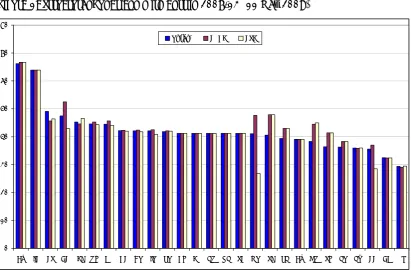
(13) Programme Implementation in Times of Economic Crisis – Review of programme implementation Winter 2008 – Spring 2009. 2.. THE STATE-OF-PLAY OF THE 2007-13 PROGRAMMES. The implementation of the 2007-13 programmes has been well underway since 2008, following the (often delayed) approval process during 2007/8. 1 Commitments are high across the EU, but payments from the Commission to the Member States largely remain limited to the programme advances. However, at programme level payments have advanced significantly over the last six months, and most programme managers remain optimistic about spending the funds in the future, notwithstanding some absorption challenges. Reviewing these developments in more detail, this section begins with a look at financial implementation across EU27 Member States, before examining the state-of-play of IQ-Net partner programmes including a review of absorption challenges and responses.. 2.1. Financial implementation in the EU27. Based on Commission data from 11 May 2009 (see Figure 1), most EU27 Member States have relatively high commitment rates, ranging between 40 and 50 percent. The highest rates can be seen in Cyprus (66 percent) and Ireland (64 percent). At the bottom end of the scale, several of the newer Member States have commitment ranges between 30 and 40 percent of their programme allocations. Figure 1: Structural Funds commitments in 2007-13 (11 May 2009) 80 Total*. ERDF. ESF. 70. 60. 50. 40. 30. 20. 10. 0 CY. IE. ES. BE. FI. UK GR DE AT. IT. PT DK FR LU NL. SE MT. SI. PL. CZ HU SK. LT LV. EE BG RO. Source: Commission data from 11 May 2009, EPRC calculations * Includes ERDF, ESF and Cohesion Fund. 1. Vironen H and Kah S (2008) Mixed Progress with the 2007-13 Programmes: Review of Programme Implementation Summer 2008 - Autumn 2008, IQ-Net Review Paper 23(1), European Policies Research centre, Glasgow.. IQ-Net Review Paper 24(1). 3. European Policies Research Centre.
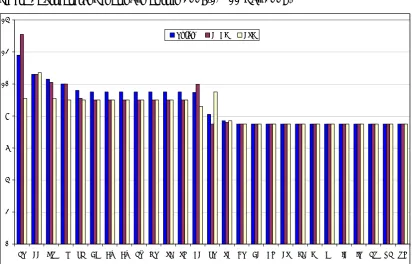
(14) Programme Implementation in Times of Economic Crisis – Review of programme implementation Winter 2008 – Spring 2009. The levels of payments across EU Member States (see Figure 2), however, largely reflect the advance payments made to the Member States (7.5 percent of allocations for EU15 and 9 percent for EU12, Romania and Bulgaria). Only a limited number of Member States have received payments from the Commission beyond these advances (Lithuania, Estonia, Hungary, Romania, Germany, Portugal). Figure 2: Structural Funds payments in 2007-13 (11 May 2009) 14 Total*. ERDF. ESF. 12. 10. 8. 6. 4. 2. 0 LT. EE HU RO PL BG CY CZ LV MT. SI. SK DE PT. SE AT BE DK ES. FI. FR GR. IE. IT. LU NL UK. Source: Commission data from 11 May 2009, EPRC calculations * Includes ERDF, ESF and Cohesion Fund. 2.2. Financial implementation in the IQ-Net partner programmes. Commitment and spending rates amongst IQ-Net partners are quite diverse and difficult to compare for several reasons. First, there has been a reluctance to spend in some programmes as the management and control system descriptions had not yet been approved (e.g. Diputación Foral de Bizkaia, England). Second, monitoring systems were not always fully operational (e.g. Austria) and there are sometimes problems with data time-lags because of outstanding data inputs (e.g. Czech Republic, Niederösterreich). Third, the timing of financial implementation data provided by programme partners differs. With these caveats in mind, the following sections provide a general overview of commitments and payments progress in the programmes.. (i). Commitments. Commitments have advanced significantly across most programmes over the current review period. The highest commitment rates can be found in Vlaanderen and Sweden: . In Sweden, commitments across the eight ERDF OPs are close to 50 percent - 52 percent in the Norra Mellansverige OP and 39 percent in Mellersta Norrland, although the Managing Authority aims to commit 47 percent over the course of this year.. IQ-Net Review Paper 24(1). 4. European Policies Research Centre.
(15) Programme Implementation in Times of Economic Crisis – Review of programme implementation Winter 2008 – Spring 2009. . In Vlaanderen, 44 percent of the funds have been committed. However, most are conditional approvals, implying that projects have six months to address the conditions attached to approvals.. In many partner programmes, commitments are in line with expectations and range between 8 and 24 percent (Niederösterreich, Steiermark, Denmark, France, Italian OP Research & Competitiveness, Länsi-Suomi, Lombardia, Portugal). Satisfactory commitment levels have also been reported in the Czech Republic, Sachsen-Anhalt and United Kingdom. . In Střední Čechy, 20 percent of the funds have been committed and demand in terms of applications substantially exceeds the allocation. Across the Czech Republic, monitoring figures from January 2009 show that 14,655 project applications amounted to CZK 434 billion (approx. €1.6 billion) in the Convergence and Competitiveness and Employment Objective OPs. At 99.2 percent, the targets for the 2007–08 allocation have almost been reached.. . In the Sachsen-Anhalt programmes, the commitment level was 15 percent at the end of February 2009, with 15.3 percent of funding committed in the ERDF OP and 14.2 percent in the ESF OP.. . In North East England, good progress is being made in project approvals. About 70 ERDF projects are in the system (£111 million or €125 million ERDF funding). Around 12 percent of total ERDF had been committed by mid-May 2009.. . For the Scottish Lowlands and Uplands programme, approximately one-third of ERDF funding was committed under the first application round in 2008. Also, about 44 percent of the ESF funding has been committed.. . In Wales, a total of 71 projects had been approved by March 2009, representing a total project investment of over £1.2 billion (approx. €1.36 billion). The commitment of EU funding ranges from 20 to 37 percent in the four Welsh programmes.. Some partners have noted a more challenging commitment process. According to the conclusions of the first Annual Conference of the Greek OPs Monitoring Committees’ Chairmen in March 2009, 173 new projects have been approved for co-financing under the new programmes with a total budget of €941 million total public expenditure (approx. five percent of the total allocation). Commitment rates also remain low under the ESF in LänsiSuomi (Finland). Related to this, the Finnish Minister of Employment and the Economy is considering a transfer of some ESF funding to ERDF unless the situation improves in the course of spring and summer 2009. The situation will be re-assessed at the end of April 2009. The general progress with commitments, however, masks significant variation across programme Priorities. . Commitments in Vlaanderen range from 22 percent (Priority 2 Entrepreneurship) to 81 percent (Priority 3 Improving the Economic Restructuring / Spatial Planning. IQ-Net Review Paper 24(1). 5. European Policies Research Centre.
(16) Programme Implementation in Times of Economic Crisis – Review of programme implementation Winter 2008 – Spring 2009. Environment). High commitment in Priority 3 is unsurprising given that it is public sector driven (with funding flowing directly to provinces and municipalities), infrastructure oriented and is ‘ongoing’ (i.e. it is not the subject of periodic tenders). It also involves large projects compared to other Priorities.. (ii). . Commitments in Länsi-Suomi stood at 17 percent at 31 December 2008, although there is wide variation across Priorities. Commitments are especially high under Priority 1 (Promotion of Businesses) at 22 percent, which contains mostly business aids that are processed under a separate electronic monitoring system.. . In Lombardia, commitments under the ERDF OP were at 12.3 percent at the end of March 2009. These were mainly concentrated under Priority 1 (Innovation and Knowledge Economy, representing 50 percent of the programme), with c. 21 percent of funding committed through two financial engineering funds (FRIM and JEREMIE), and in the Technical Assistance Priority. The other three Priorities, which account for just under half the OP have no commitments, although some projects have been selected under Priorities 2 (Energy) and 4 (Full Exploitation of the Natural and Cultural Heritage), and the related commitments will thus take place soon.. . In Śląskie, around six percent of total funding had been committed by April 2009. Most commitments have come under Priority 4 (Culture, 13 percent) and Priority 7 (Transport). However, there have been no commitments under Priority 1 (RTD, Innovation and Entrepreneurship) where calls for projects concerning SMEs and micro-enterprises have been complicated by questions over the definition of the two categories. No commitments have been made under the Education Priority either.. . In the Scottish Lowlands and Uplands ERDF programme, performance across Priorities is mixed. While ERDF Priority 1 (Research and Innovation) was practically fully committed, and also Priority 2 Enterprise Growth could be almost fully committed soon, levels are lower under Priority 3 (Urban regeneration) and 4 (Rural development). The lower levels under Priority 4 are due in part to delays in the launch of the Global Grant which will be used to deliver the programme in the South of Scotland. Performance in the ESF programme has also varied across Priorities.. . In Portugal, almost a quarter of all funding has been committed by 31 March 2009, concentrating on key NSRF priorities. Support to firms (through three business incentive schemes) and education (ERDF infrastructures, modernisation of schools and the qualification of people through ESF projects) are the two main areas in which it was decided to provide a greater focus at programme launch. Urban regeneration also accounts for a prominent share of commitments.. Payments. Although spending remains low across the programmes, significant progress has been made over the last six months. This has been facilitated by the abovementioned approval of a number of management and control system descriptions, which have created the conditions for certifying expenditure and releasing payments in a significant number of programmes.. IQ-Net Review Paper 24(1). 6. European Policies Research Centre.
(17) Programme Implementation in Times of Economic Crisis – Review of programme implementation Winter 2008 – Spring 2009. Aside from Lombardia, Norra Mellansverige and Sachsen-Anhalt, where payments were in the order of 8.5 (Lombardia) and 6 percent (Norra Mellansverige and Sachsen-Anhalt), all other programme payment rates were below five percent: Steiermark, North East England (4 percent), Länsi-Suomi (3 percent), Niederösterreich, Portugal (2 percent), Czech Republic, Denmark, France, Mellersta Norrland, Śląskie (below 1 percent). Also, in Vlaanderen only 12 applications for payment have been made in the course of the last three months, while payments realised by the Managing Authority of the Střední Čechy programme have yet to be recorded in the monitoring report. However, a number of partners have not yet made any payments. The Diputación Foral de Bizkaia and the English programmes are still waiting for approval of their management and control system descriptions. There are also no payments as yet in Greece, but considering the progress of the open calls and the anticipated impact of the measures included in the European Economic Recovery Plan, the Greek Certifying Authority expects that payments will reach €2 billion by the end of 2009. Most partners are quite positive about the expected advancement of payments in the future. . Estimates for Niederösterreich suggest a payment forecast for 2009 of €18 million, way above the €10 million n+2 target.. . In France, payments are expected to progress rapidly during the coming months. The delay is due to procedural aspects and to the time necessary for the regional authorities to setup the new programming system.. . The ESF unit in Śląskie noted that their spending in the Human Capital OP has been among the highest in Poland, while the ERDF Managing Authority reported that the situation is moving forward rapidly, not least due to the European Recovery Package.. . The North East England programme is rapidly moving towards its expenditure target with more 70 percent spent for 2009.. . In Denmark, the fact that the current programme period gives preference to large, complex, and long-running projects explains the relatively slow pace of payment and makes these likely to increase soon.. 2.2.2 Financial absorption challenges and responses The pressure on programme authorities to spend has increased in 2009 as it is the first year that the automatic decommitment rule will apply in the new period, although the EU12, Portugal and Greece will have an additional year of flexibility this time around (i.e. n+3 instead of n+2). As already noted, delays in the approval of management and control system descriptions have added to absorption and decommitment strains by holding back the launch of intermediate payment claims procedures (e.g. Sachsen-Anhalt, Vlaanderen, Finland, Italian Research & Competitiveness OP, Polish Human Capital OP, País Vasco, Střední Čechy and United Kingdom). The impact of the financial crisis on spending and. IQ-Net Review Paper 24(1). 7. European Policies Research Centre.
(18) Programme Implementation in Times of Economic Crisis – Review of programme implementation Winter 2008 – Spring 2009. demand is of concern among most, though not all, programme partners. For example, Nordrhein-Westfalen noted that demand from applicants has so far been strong, particularly for enterprise and innovation oriented instruments, although it remains to be seen whether the crisis will have a stronger effect in 2009. The problem of raising match-funding is a general problem across the United Kingdom programmes. Although North East England expects to meet its n+2 targets, the programme authority remains cautious, while in Scotland expected co-finance might have to be redirected, and the possible resulting withdrawal of projects could lead to n+2 difficulties. Other crisis-related difficulties include the progress of major infrastructure projects (Slovenia), the impact of reduced bank lending on specific projects (Niederösterreich), constraints on municipal funding/projects (Länsi-Suomi, Wales), and limited implementation/take-up of R&D and innovation interventions in lagging areas (Spain). Also associated with the global downturn, significant exchange rate fluctuations in nonEuro countries (e.g. United Kingdom, Poland, Sweden) has resulted in increased programme values in national currencies, posing the problem of needing to spend more than planned and a proportionate increase in n+2 targets. In North East England, for instance, the programme has increased from £255 million to £365 million (€375 million), which has increased the initial n+2 rate from £22 million to £35 million (an increase of 60 percent). Such concerns can also be seen in Norra Mellansverige, where the n+2 target has risen to challenging levels (SEK 275 million or €26.4 million). As with exchange rate fluctuations, uncertainty concerning expected expenditure levels may result from on-going audit and control activities. For instance, in the País Vasco (along with seven other regional Spanish ERDF programmes), payments were suspended in November 2008 due to audits, which could potentially lead to financial corrections and the need to find replacement projects at short notice. In Sachsen-Anhalt, the potential difficulties relating to n+2 are greater for the ESF OP than the ERDF OP because the latter’s use of loan funds allows resources to be committed and paid out quickly. Also, many of the ERDF projects are relatively large, so that large amounts of money can often be committed and paid out in single blocks, whereas ESF projects are typically smaller. A final factor that is of particular significance in the Czech Republic relates to elections and staff turnover. The resignation of the national government at the end of March 2009 could hinder certain strategic decisions until a new government comes into office in autumn 2009, while the regional elections in October 2008 led to some changes to Střední Čechy’s Structural Funds management structures and will probably lead to OP revisions. Similarly, ministerial reorganisation is affecting the Italian OP Research & Competitiveness by contributing to delays in the launch of the Mezzogiorno Industrial Innovation Project intervention measures and the finalisation of the implementation rules of the guarantee and risk capital fund.. IQ-Net Review Paper 24(1). 8. European Policies Research Centre.
(19) Programme Implementation in Times of Economic Crisis – Review of programme implementation Winter 2008 – Spring 2009. Apart from the measures taken in response to the crisis reviewed earlier, specific examples of corrective measures adopted or considered by Managing Authorities for tackling absorption and decommitment challenges over the last six months include: . Shifting funds: although most programmes have not reprogrammed funds at this early stage, there are plans to make reallocations within or across Priorities in the future. In Steiermark, for instance, there is a need to shift some €9.7 million due to delays faced by an Intermediate Body (the Austrian Research Promotion Agency). In Střední Čechy, reallocations of resources from the tourism Priority to the integrated territorial development Priority may be considered for political reasons, requiring a programme modification and an operational evaluation. Similarly, in Wales, there are plans to shift funds from Priority 1 (employment and inactivity) to Priority 2 (skills and workforce adaptability).. . ERDF/ESF cross-financing: Nordrhein-Westfalen is planning to make better use of potential financial flexibility between the ERDF and ESF OPs, although this should not imply the need for formal reprogramming. This option has also been discussed in Sachsen-Anhalt, particularly with the aim of reducing ESF absorption challenges. Opposition from the Commission, however, suggests that this is unlikely to be realised in Sachsen-Anhalt; instead, an ESF training fund may be set up.. . Adjusting co-financing rates: to help with the exchange rate issues, programme authorities in Wales are asking the Commission to renegotiate on intervention rates.. . Counter-cyclical spending: The setting-up of a small fund for R&D loans is being considered in the Italian OP Research & Competitiveness. This would be a separate Technological Innovation Fund for the four Convergence regions and may have a counter-cyclical function that would help overcome decommitment risks.. . Close monitoring: In the Czech Republic, the National Coordination Authority is preparing a report on funds absorption and decommitment risks for each programme. The first draft of this report has already been produced, analysing the situation up to February 2009. The report is intended to be further developed and published on a quarterly basis. A system of monthly (ministerial), and quarterly (public) reporting has also been introduced in Portugal, while in Scotland sixmonthly reports on the state of the economy (from March 2009) will help to inform programming decisions.. . Speeding up claims procedures: In Vlaanderen, the Managing Authority has brought in a new project stipulation that requires revised projects applications (in response to any conditions laid down) to be submitted within three months of conditional approval being granted. This should allow all the conditions to be met within six months.. . Focusing on mature projects: the favoured approach in Greece is to focus on mature projects, particularly ‘overbooked’ projects from 2000-06 that meet the new programmes’ eligibility criteria (e.g. State aids to SMEs), and infrastructure. IQ-Net Review Paper 24(1). 9. European Policies Research Centre.
(20) Programme Implementation in Times of Economic Crisis – Review of programme implementation Winter 2008 – Spring 2009. projects that are to continue after the 2000-06 period (so-called ‘bridge-projects’). An increased reliance on a first-come-first-served project selection approach is also being employed in 2009.. IQ-Net Review Paper 24(1). 10. European Policies Research Centre.
(21) Programme Implementation in Times of Economic Crisis – Review of programme implementation Winter 2008 – Spring 2009. 3.. STRATEGIC CHALLENGES: RESPONDING TO THE ECONOMIC CRISIS. 3.1. The EU Recovery Plan and EU Cohesion Policy. In response to the ongoing economic crisis and slow-down in the European economy, the Commission presented a wide-ranging recovery plan for the European Union on 26 November 2008, 2 subsequently agreed by the Member States at the European Council of 1112 December 2008. 3 The plan set out a number of short-term stimulus actions and longerterm actions related to the Lisbon Strategy. It aims to mobilize resources worth around 1.5 percent of EU GDP or €200 billion, most of which will be drawn from domestic budgets (85 percent or €170 billion) including measures already approved by national governments. Among the key actions at the EU level are: . increased European Investment Bank intervention of €30 billion during 2009/10, especially for SME loans, but also setting up a European Fund for Energy, Climate Change and Infrastructure;. . the simplification of Cohesion policy and EARDF procedures and faster implementation of programmes, as well as additional ESF action to support employment; and. . a temporary relaxation of certain State aid and public procurement rules.. The response of Cohesion Policy to the crisis is considerable. A series of regulatory proposals and non-regulatory measures have been put forward by the Commission with the underlying objective of accelerating payments to Member States and facilitating access to the Structural Funds (summarised in Box 1). 4 With respect to the regulatory proposals, modifications to specific financial management provisions in the general regulation were approved by the Council on 7 April 2009, 5 while changes to the specific ERDF and ESF regulations regarding eligible expenditure and costs respectively are still to be approved at the time of writing. In addition, a working group has been set up (with Commission and Member State representatives) on simplification. In the coming months it will make additional proposals for simplification of the delivery mechanism of Cohesion policy, including proposals for the post-2013 period.. 2. European Commission (2008) Commission Communication, A European Economic Recovery Plan, COM(2008) 800 final, 26 November 2008, Brussels. 3. Brussels European Council, Presidency Conclusions: http://www.consilium.europa.eu/ueDocs/cms_Data/docs/pressData/en/ec/104692.pdf 4. European Commission (2008) Commission Communication, Cohesion Policy: investing in the real economy, COM(2008) 876, Brussels.. 5 Council Regulation (EC) No 284/2009 of 7 April 2009 amending Regulation (EC) No 1083/2006 laying down general provisions on the European Regional Development Fund, the European Social Fund and the Cohesion Fund concerning certain provisions relating to financial management.. IQ-Net Review Paper 24(1). 11. European Policies Research Centre.
(22) Programme Implementation in Times of Economic Crisis – Review of programme implementation Winter 2008 – Spring 2009. Box 1: Key Cohesion policy measures to respond to the crisis Legislative measures 1. Additional advance payments in 2009 (Reg. 1083/2006, Art. 82) 2. Earlier reimbursement for major projects, without Commission approval (Reg. 1083/2006, Art. 78.4) 3. State aid advances can reach 100 percent of the total amount of aid, instead of only 35 percent (Reg. 1083/2006, Art. 78.2b) 4. Option to declare overhead costs as paid expenditure on a flat rate basis (Reg. 1083/2006, Art. 56) 5. In-kind (non-cash) contributions can be declared as eligible expenditure in the constitution of – and contribution to - financial engineering funds (Reg. 1083/2006, Art. 56) 6. Scope of actions enlarged to energy efficiency and renewable energies in housing for all Member States (Reg. 1080/2006, Art. 7) Other non-legislative measures/recommendations 7. Extension of the date for eligibility of expenditure for the 2000-06 period (by six months) 8. Reprogramming of the 2007-13 OPs to accelerate spending 9. Front-loading of Community co-financing in 2009 10. The launch of two networking platforms on JEREMIE and JESSICA to support implementation. 3.2. IQ-Net partner reactions. For the most part, IQ-Net programme managers have welcomed the general thrust of the Cohesion policy measures agreed as part of the recovery package. As a whole, they have been characterised as a positive move that provides the necessary means for accelerating spending (Greece) and easing implementation obstacles (France). On the other hand, notwithstanding a positive overall reaction by most programme authorities, the measures do not address all of the issues of concern in the current context (Slovenia). Amongst the key criticisms raised by Managing Authorities are: . that the additional responsibilities for programme authorities implied by some of the measures may generate implementation risks (Czech Republic, Sachsen-Anhalt);. . that the added flexibility may threaten the longer-term goals of Cohesion policy (Italy);. . that more could have been done to increase procedural simplification and flexibility (Greece, Italy, United Kingdom);. IQ-Net Review Paper 24(1). 12. European Policies Research Centre.
(23) Programme Implementation in Times of Economic Crisis – Review of programme implementation Winter 2008 – Spring 2009. . and that the practical significance is limited, either because the crisis may be better tackled through existing measures within and outwith the programmes (Denmark, United Kingdom), because of the relatively low scale of funding involved (Denmark, Vlaanderen, Diputación Foral de Bizkaia), or because of domestic constraints on match funding (United Kingdom). The take-up of recovery plan measures often depends on the scale of Structural Funds resources. Some programme authorities intend to exploit most of the measures (Greece), while others do not foresee any significant impact on the operation of the Structural Funds, particularly in those programmes with relatively low financial allocations (e.g. Denmark, Vlaanderen, Diputación Foral de Bizkaia). By contrast, in the Czech Republic, where the volume of resources is far higher than under the previous programme period, certain areas of support have faced co-financing and absorption challenges regardless of the economic crisis, and the need to provide a response was being discussed before the global downturn (as in Portugal). Also of note in the specific case of the Czech Republic is the unstable political context until elections in the autumn of 2009, which may present difficulties in approving any significant modifications to Cohesion policy. A final point to bear in mind is that the implementation of crisis measures through Cohesion policy must be seen within the context of broader domestic recovery packages, which may be of more relevance in shaping programme responses. All countries and (often) regional and local authorities have sought to develop responses to the economic crisis, in line with their policy competences and resources. Although these responses do not do not always feature Structural Funds programmes as a major policy instrument for addressing the crisis, particularly where funding allocations are low, they have had consequences for Structural Funds interventions in some countries and regions. Illustrative examples of domestic recovery plans and the inter-relationships with EU Cohesion policy at national level are provided in Box 2 (Poland and Portugal), and at the regional level in Box 3 (Wales and Lombardia). Box 2: National recovery plans and EU Cohesion policy responses in Poland and Portugal In Poland, the anti-crisis package introduced by the Ministry of Regional Development at the end of 2008 (the Stability and Development Plan – strengthening the Polish economy in the time of the world financial crisis) includes a strong focus on the role of EU Structural and Cohesion Funds. Two specific initiatives are of note. First, in December 2008 a plan was prepared to increase the number of investments co-financed from EU funds in 2009 to achieve zł16.8 billion (approx. €3.8 billion) level of spending. This was accepted by the European Commission and the Ministry will be preparing a quarterly report on the implementation of plan, which is to be presented to the Council of Ministers. Secondly, legislation has also been introduced to reduce barriers hindering co-financing investments, with a particular focus on ensuring investment in infrastructure development. Related to this, new regulations aim to increase the involvement of private companies in infrastructure and construction investments by reducing the administrative barriers to public private partnerships involving EU funds.. IQ-Net Review Paper 24(1). 13. European Policies Research Centre.
(24) Programme Implementation in Times of Economic Crisis – Review of programme implementation Winter 2008 – Spring 2009. In Portugal, the key national response to the crisis is the ‘Initiative for Employment and Investment’, proposed by the government in January 2009. A significant part of the plan is co-funded by EU Cohesion policy, but it does not require a change in the overarching NSRF strategy, which is regarded as being in line with the initiative and is sufficiently flexible to adapt to external changes. However, there have been consequences for certain interventions. For instance, one of the five key measures of the recovery plan is to accelerate the government’s existing plan for the modernisation of the secondary school infrastructure network. In line with this, a specific decision adopted in the Structural Funds context is to allow each municipality that has approved support for a school within a regional OP (and is set to finish the investment by the end of 2009) to receive an advance payment from the domestic component of funding.. Box 3: Regional recovery plans and EU Cohesion policy responses in Wales and Lombardia In Wales, a series of ‘All-Wales Economic Summits’ were launched in October 2008, bringing together Welsh Assembly Government ministers, civil servants, business groups and trades unions, and providing a focus for counter-recession measures. In support of the summits, WEFO has been examining how they can use the Structural Funds programmes (and what they are already doing). This involves looking at the focus of activities within programmes, especially under the Convergence programme, and where they have flexibility to look at the themes within a Priority without reprogramming. The response has included a number of specific projects, including a training measure for employees put on short-time working and offering an alternative to redundancy and the creation of a package of measures to help sustain and encourage new apprenticeship recruitment. In Lombardia, the regional government has put forward an anti-crisis package with measures for both families and enterprises. In January, around €20 million was allocated to a ‘family bonus’ for low income families with three or more children for 2009 (subsequently increased by another €3 million). For the entrepreneurial sector, on the other hand, the regional government defined in October 2008 a package of measures, entailing €351 million for the support of innovation and research, the facilitation of access to credit, and the encouragement of internationalisation. Whilst composed largely of pre-existing measures, not least those funded under the ERDF OP (e.g. JEREMIE, FRIM and Made in Lombardy funds), efforts were made to disseminate the opportunities offered by these measures more widely, particularly through the involvement of business associations, a targeted brochure and a telephone helpline.. 3.2.1 Legislative measures Modifications to the legislative framework relate to a series of regulatory provisions concerning advance payments, reimbursement for major projects, State aid rules and several types of eligible expenditure. One of the key legislative measures in response to the crisis is to increase programme advances - by two percent for EU12 Member States in 2009 and, for the EU15, by paying IQ-Net Review Paper 24(1). 14. European Policies Research Centre.
(25) Programme Implementation in Times of Economic Crisis – Review of programme implementation Winter 2008 – Spring 2009. the third tranche of 2.5 percent in 2009 – with a view to supporting cash flow and facilitating payments to beneficiaries. The measure has received a favourable reaction by a number of Managing Authorities, particularly in terms of the contribution towards the achievement of n+2 targets for 2009 (Finland, France, Steiermark, Niederösterreich, North East England, Nordrhein-Westfalen, Sachsen-Anhalt, Vlaanderen). Others have emphasised the positive impacts associated with the easing of liquidity and supporting investment, as in the OP Research & Competitiveness in Italy which has a large State aid component, or in Greece where the advances will facilitate payments to beneficiaries in key priority interventions (public procurement of major projects, support for SMEs and vocational training). However, it was also noted that the receipt of additional advance payments will not necessarily have practical consequences of significance. In the Czech Republic, for instance, the advances cannot be distributed to Final Beneficiaries immediately due to the pre-configured implementation arrangements and domestic legislative rules, albeit with significant variation among the Managing Authorities of different types of programme. Moreover, programme authorities would take on substantial risks if additional advances are rapidly transferred to Final Beneficiaries. As a result, the preference is to wait until the first certification of expenditure exercises are undertaken before making the transfers. Also designed to accelerate implementation of projects, it is now possible to declare and reimburse expenditure relating to major projects which have not yet been adopted by the Commission. The usefulness of this provision will naturally vary depending on the nature of the programmes and the extent to which this form of assistance is being used. In Greece, several programmes plan to implement major projects and the measure is therefore regarded as a positive decision, not least given previous experiences when it could take up to two years from the initial request to get approval from the Commission. Although also viewed as a positive development in France and Sachsen-Anhalt, the impact will be modest due to the small number of major projects planned, while no major projects are foreseen in some programmes (Steiermark, Niederösterreich, Vlaanderen, Diputación Foral de Bizkaia, Nordrhein-Westfalen). From a more critical perspective, it was noted that it is the Managing Authorities, not the Commission, who will ultimately bear the risk if there are any problems down the line with project approval (United Kingdom, Czech Republic). With this in mind, the national management commission in Portugal has informed the OP Managing Authorities to only accept expenses if they are certain that the major projects will be approved. Regarding the eligibility of expenditure, it has been agreed to allow overhead costs to be declared on a flat rate basis for all the Funds. 6 This should allow public authorities to prepare projects more quickly and will reduce the administrative burden for beneficiaries (Denmark, Sachsen-Anhalt), as is already the case under the ESF and Seventh Framework. 6. The amended regulation distinguishes between three different kinds of flat rates: (i) indirect costs, declared on a flat-rate basis, of up to 20 percent of the direct costs of an operation (ii) flat rate costs calculated by application of standard scales of unit cost as defined by the Member State (iii) and lump sums to cover all or part of the costs of an operation (Reg. 1080/2006, Art. 7.3). IQ-Net Review Paper 24(1). 15. European Policies Research Centre.
(26) Programme Implementation in Times of Economic Crisis – Review of programme implementation Winter 2008 – Spring 2009. Programmes (Steiermark). More generally, it is also viewed as a signal of a trend from auditing of accounts to efficiency control with a focus on outputs instead of inputs (Austria). The measure is seen as one of the most important innovations in the regulatory amendments by some programme authorities (e.g. Austria, Finland, Nordrhein-Westfalen, Slovenia). For those programmes that intend to make use of this provision, the precise methodology to be used is still under scrutiny and is awaiting finalisation. More critically, it was observed that the measure implies a further administrative load and obligation that, moreover, requires Commission approval (Czech Republic, France). Programme authorities in Vlaanderen consider that when the detail was explained by the Commission services it became clear that the option was not a simplification, but rather involved a more complex and difficult approach (an opinion shared by some interviewees in France); as a result, it was decided not to take up this option in Vlaanderen. Furthermore, the utility of applying the new approach to address the current crisis has been questioned given that it is unlikely to be operational for at least a year (France). Additional eligibility flexibility has also been introduced in relation to financial engineering schemes, where contributions in-kind (non-cash) may be considered as eligible expenditure in the constitution of, or contributions to, funds. The measure is not considered to be of major importance by most programme authorities, not least where financial engineering schemes do not feature significantly in the programmes (Diputación Foral de Bizkaia, Niederösterreich, Vlaanderen, Sachsen-Anhalt, Steiermark). By contrast, in the United Kingdom this decision has been described as an important breakthrough in the context of the current discussions about the scope for the inclusion of a JESSICA fund within a programme Priority. Allowing asset values (e.g. land, housing) to be used instead of cash for co-finance is reported to be of particular interest to local authorities in the United Kingdom. The enlargement of the scope of actions to energy efficiency and renewable energies in housing for all Member States provides new opportunities for environmentally-friendly projects. There appears to be support for this by several Managing Authorities, although the degree of interest and pace of take-up varies (Czech Republic, France, Greece, Scotland, Slovenia, Wales). . In France, the implementation of the measure is considered to require OP revisions, which would more likely be undertaken at the mid-term point of the programme in line with the revision of the State-Region Planning Contracts.. . By contrast, in Wales, energy efficiency and renewable energy in low-income households has been added as an eligible activity in the ERDF programmes by amending the eligibility guidance rather than the OPs. This is likely to be implemented on a pilot or targeted basis.. . Similarly, in Greece, provisions have been drawn up and published for immediate implementation of such measures. Two distinct types of actions are provided for: support for energy efficiency projects in public buildings; and support to private buildings to replace diesel or other conventional fuels with natural gas, to replace. IQ-Net Review Paper 24(1). 16. European Policies Research Centre.
(27) Programme Implementation in Times of Economic Crisis – Review of programme implementation Winter 2008 – Spring 2009. energy consuming electrical domestic appliances and to improve the heat insulation of buildings. In some programmes, this change is seen as irrelevant, for example because the programme already incorporates a strategy to enhance energy efficiency (Nordrhein-Westfalen), while in others the extension of Structural Funds activity into housing is questioned (SachsenAnhalt). Though it is seen as having some relevance in Denmark, it would most likely be overshadowed by recent large-scale national initiatives due to the relatively limited size of the programme and, at best, become an added element in future projects rather than the start of a new wave of energy-oriented projects. In order to support enterprises, particularly small and medium-sized enterprises, the conditions governing the payment of advances within the framework of EU State aid rules have been made more flexible by allowing State aid advances to reach 100 percent of the total aid (until 2010), instead of only 35 percent. 7 The measure is considered to be a particularly positive development in Greece where it will be implemented under the new open calls for SME incentive schemes. Although the precise threshold has not yet been determined, it is anticipated that it could rise from the current 35 percent to 50 percent, rather than the full 100 percent. The measure will also be taken up in Slovenia and France, although in the latter case questions have been raised about the efficiency of the measure given its temporary nature. Elsewhere, the measure is not seen as being particularly important or relevant (e.g. Diputación Foral de Bizkaia, Vlaanderen, Niederösterreich, Sachsen-Anhalt, Steiermark).. 3.2.2 Non-legislative measures The non-legislative measures and recommendations put forward by the Commission primarily relate to co-funding arrangements, eligibility deadlines, the JEREMIE, JESSICA, and JASPERS financial instruments, and programme Priorities and delivery mechanisms With a view to easing co-funding pressures in the 2007-13 OPs, programme managers can adjust the European contribution to projects, going even up to 100 percent of the Community contribution, provided that the agreed average co-financing rate is adhered to for the whole programme period. Such frontloading of Community expenditure is being considered or has already been adopted in several programmes (Czech Republic, Finland, Greece, Poland, Sweden), though not always in response to the crisis (Scotland), but in others it is seen as unnecessary (Sachsen-Anhalt). In Finland, for instance, this has resulted in an additional 20 percent of EU funding being allocated to 2009 than initially planned. The decision is perceived to have three main benefits: increasing the amount of public funding available in a period of fiscal restraint; helping to comply with the n+2 rule; and decreasing the pressure associated with spending at the end of the programme period while allowing the programme actors to focus on the closure procedures.. 7. See also: Wishlade F and Michie R (2009) Pandora’s Box and the Delphic Oracle: EU Cohesion Policy and State Aid Compliance, IQ-Net Thematic Paper 24(2), European Policies Research centre, Glasgow.. IQ-Net Review Paper 24(1). 17. European Policies Research Centre.
(28) Programme Implementation in Times of Economic Crisis – Review of programme implementation Winter 2008 – Spring 2009. By contrast, in Scotland, the decision to front-load expenditure had already been adopted at the start of the programme period, rather than as a response to the crisis, in order to achieve high commitment and spend early on. A potential disadvantage of this is that the projects that had been lined up for approval by the March 2009 PMC addressed programme objectives rather than the economic crisis. Therefore, while front-loading may be positive in terms of achieving spending, it may also mean that the projects would not necessarily be focused on tackling the new problems in the current context. Another potentially negative consequence of frontloading expenditure is that it may store up funding constraints for future projects (Sachsen-Anhalt), which is why it was decided not to front-load expenditure in Vlaanderen. To ease liquidity problems in the 2000-06 programmes, the final eligibility date can be extended by a maximum of six months in cases where there are significant changes in the socio-economic situation and the labour market, as set out in the General Regulation. According to the Commission, requests for an extension to the eligibility period have been made for 385 Cohesion policy programmes (out of a total of 555) in 2000-06, covering all four funds (ERDF, ESF, EAGGF and FIFG). 8 For some programme authorities, this is considered to be the most important and well-received change (Czech Republic, Vlaanderen, Portugal, Nordrhein-Westfalen, Sachsen-Anhalt). The main reported benefits are that it allows unforeseen programme absorption challenges to be addressed and objectives to be achieved (Vlaanderen, Greece, Portugal); it provides more time for finalising closure procedures (Slovenia, Vlaanderen, Portugal); it will allow more (including major) projects to be closed (Nordrhein-Westfalen, Sachsen-Anhalt); and it allows programme authorities to deal with unexpected financial corrections (Slovenia, Spain). Not all programmes share these views (e.g. England, Niederösterreich, Steiermark). In the case of Steiermark, the programme management consider that it is not only unnecessary, but also unwise, as it postpones the actual implementation of the 2007-13 programme even further. In the United Kingdom, the estimate of the potential funding offered was not enough to justify the administrative costs involved, particularly given the limited resources of the Government Offices responsible for managing the 2000-06 programmes. In North East England, the managing authority did not want an extension of the ERDF programme, and instead preferred to use domestic funding, feeling that six months would be too short a time in which to develop, approve and spend on projects. Indeed, it is argued that had the Commission notified of the extension earlier, programme actors could have been better prepared to inform project managers and beneficiaries (Finland). Another recommendation by the Commission to address the impacts of the crisis is to modify OP objectives and Priorities to accelerate spending in areas with more growth potential, and to simplify the delivery mechanism and the content of the programmes. For most programme authorities there are no plans to make significant strategic modifications to programme objectives or Priorities, although shifts in funding across and within Priorities have been decided or are being considered in some cases.. 8. Commission increases flexibility of structural funds in response to financial crisis, IP/09/310, Brussels, 24 February 2009. IQ-Net Review Paper 24(1). 18. European Policies Research Centre.
(29) Programme Implementation in Times of Economic Crisis – Review of programme implementation Winter 2008 – Spring 2009. . In Finland, it may be necessary to readjust some of the funding allocated to business aid under Priority Axis 1 due to slower than anticipated take-up, although the situation varies between sub-regions and a decision has not been taken yet.. . In Greece, it is estimated that some €2 billion would need to be shifted between different NSRF thematic priorities in order to adapt to the needs of the real economy, particularly by focusing on investments for promoting entrepreneurship notably in SMEs, and job maintenance and creation.. . In Poland, the potential allocation to SMEs under the Ministry of Regional Development package has risen from €10 million to €50 million for this year, as part of the anti-crisis package introduced by the Ministry of Regional Development at the end of 2008. Regarding the ESF NOP, the Ministry has provided guidelines on how to implement the OP during the crisis, including an increased focus on entrepreneurship (SME start-ups and training for employees).. . In Wales, some ESF funding is being shifted to top up the employment Priority (moving £40 million or €45 million from Priority 1 to 2). The response has included a number of specific projects, such as the ProAct initiative – a £48 million scheme (with £38 million from the ESF Convergence Programme) launched in January 2009 (and to run for 18 months) which provides training for employees put on short-time working and offering an alternative to redundancy. A further £20 million will be made available, subject to support from ESF, for the creation of a package of measures to help sustain and encourage new apprenticeship recruitment.. . In Nordrhein-Westfalen, a new micro-loan fund was launched in November 2008 to help individuals to set up micro firms or to become self-employed. Although the fund had been planned before the crisis, it is seen as timely. The fund is working well and uptake has been stronger than had originally been expected.. An increased emphasis is being placed on ESF-type measures, though not necessarily involving funding shifts across Priorities, in several United Kingdom programmes. . In Scotland, a special meeting of the programme Monitoring Committee was planned for May 2009 to consider a number of key strategic projects designed to respond to redundancies and the need for credit in SMEs.. . In North East England, a targeted call for applications was issued before the end of 2008 for projects to support businesses to retain their competitive position and safeguard jobs. In addition, the ERDF is already co-funding projects that provide additional support for firms e.g. the Support for Business Resilience project delivered through the Business Links, who have been briefed to deliver advice specifically related to the immediate economic challenges, plus free business health checks and workshops.. . In Wales, one of the changes under the employment Priority has been to shift the balance towards support for the unemployed. Within nearly all the projects approved, there is an element of support for both the economically inactive and. IQ-Net Review Paper 24(1). 19. European Policies Research Centre.
(30) Programme Implementation in Times of Economic Crisis – Review of programme implementation Winter 2008 – Spring 2009. the unemployed, to a greater or lesser degree. The programme authorities are working with individual projects to monitor this balance and slightly refocus the client group, although activities remain basically the same. In other cases, no substantive changes are planned, either because the programmes are already considered to be broadly in line with the key challenges faced or because the administrative effort is considered to be too high (e.g. Vlaanderen, Diputación Foral de Bizkaia, Niederösterreich, Portugal, Slovenia, Nordrhein-Westfalen, Sachsen-Anhalt). While no significant changes for the 2007-13 period are foreseen in Portugal, the remaining allocations available under the 2000-06 period will be targeted on key priority interventions (financial engineering schemes for firms, requalification of schools and the education component of the technology plan) that are in line with the strategic Priorities for the 2007-13 period and the government’s general response to the crisis. The simplification of delivery mechanisms and eligibility conditions is being pursued in several programmes. . Removing eligibility restrictions: In Scotland, restrictions on infrastructure projects, requiring them to be small-scale and involving refurbishment of existing facilities, have been removed. There will also be an attempt to relax some of the restrictions on Priorities 3 (urban regeneration) and 4 (rural development), where demand has been lower than expected. The Commission has been supportive of this, and proposals relating to this were going before the March PMC. Similarly, in Portugal, the specific domestic regulations governing the 2007-13 OPs are being examined and new beneficiaries and types of aid are being made eligible for support.. . Accelerating project calls: In Śląskie, the timetable for launching project calls in the regional OPs has been changed by accelerating calls at the beginning of the year and waiting until the level of demand for funding was around three times the funding available. The idea is to look through these proposals and find projects that are well prepared and have all the necessary documentation in place for a rapid transfer of payment (within the first half of 2009). Project appraisal processes have also been simplified by introducing less complex and more streamlined selection criteria, and relaxing and merging specific documentation requirements. In Scotland, there are some significant regeneration projects in the pipeline which would have an impact on the construction sector, and which may be considered for a fast-track procedure (for key strategic projects in response to the current crisis) before the summer.. A final set of measures and recommendations by the Commission relate to the new financial instruments, JASPERS, JEREMIE and JESSICA 9. The aims are to address the bottleneck and. 9. The three financial instruments JASPERS (Joint Assistance in Supporting Projects in European Regions), JEREMIE (Joint European Resources for Micro to Medium Enterprises), and JESSICA (Joint European Support for Sustainable Investment in City Areas) were introduced into the 2007-13 Cohesion policy framework in cooperation with the European Investment Bank Group and other multilateral banks. JESSICA and JEREMIE aim to support national and regional authorities in introducing private and public funds for urban regeneration and venture capital purposes IQ-Net Review Paper 24(1). 20. European Policies Research Centre.
(31) Programme Implementation in Times of Economic Crisis – Review of programme implementation Winter 2008 – Spring 2009. lack of capacities in launching major projects in the EU12 by expanding the use of the JASPERS initiative through a 25 percent increase in the Commission’s technical assistance capacity, and to support the exchange of information, guidance and good practice by launching two networking platforms under the JEREMIE and JESSICA initiatives. These measures were not considered to be of major significance by most programme authorities, especially where the instruments are not currently being used and/or where managing authorities dispose of similar domestic instruments which are perceived to be less bureaucratic (e.g. Czech Republic, Vlaanderen, Niederösterreich, País Vasco, SachsenAnhalt, Steiermark). On the other hand, some programme authorities are currently planning to develop these instruments or may do so in the future (Czech Republic, Greece, Poland, Steiermark, Spain at national level, Wales, North East England) and the exchange of information across countries and regions could prove to be useful, especially given the perceived lengthiness and associated technical difficulties involved in introducing them into Structural Funds programmes.. respectively, while JASPERS is designed to support public authorities in preparing quality investment projects. IQ-Net Review Paper 24(1). 21. European Policies Research Centre.
(32) Programme Implementation in Times of Economic Crisis – Review of programme implementation Winter 2008 – Spring 2009. IQ-Net Review Paper 24(1). 22. European Policies Research Centre.
(33) Programme Implementation in Times of Economic Crisis – Review of programme implementation Winter 2008 – Spring 2009. 4.. OPERATIONAL CHALLENGES: ADAPTING MANAGEMENT & IMPLEMENTATION SYSTEMS. Closely related to the strategic challenges and responses to the economic crisis, important developments have also taken place on the operational side of programme management and implementation over the last six months. The following sections review these activities with respect to: governance and administration; project generation and selection; partnership; monitoring; strategic reporting; publicity and communication; and evaluation.. 4.1. Governance and administration. 4.1.1 General governance The governance arrangements for Structural Funds management and implementation have generally remained stable over the past 6-8 months. Administrative experience of programme delivery has not yet required substantial changes, although systems are likely to be reviewed as implementation progresses, particularly within the framework of evaluation activity (see section 4.7). In Austria, for instance, a so-called ‘governance check’ (see Box 13) is currently being carried out to develop proposals for ensuring that the systems are working as efficiently as possible. In Sweden, an evaluation of the organisation of implementation arrangements was finalised in December 2009, providing a series of recommendations which are being considered by programme authorities (see Box 14). Also of significance in Sweden is the recent institutional restructuring of core regional development bodies at the national level which has important consequences for Structural Funds management responsibilities. Box 4: Institutional restructuring in Sweden On 1 April 2009, NUTEK (as well as the Swedish Institute for Growth Policy Studies (ITPS) and the National Rural Development Agency) was replaced by a new authority, which has been named Tillväxtverket (the Swedish Agency for Economic and Regional Growth). Tillväxtverket replaces NUTEK by becoming the new Managing Authority for the ERDF programmes and working on measures which promote regional and national growth and sustainable growth in businesses. Tillväxtverket will also take on responsibilities previously belonging to the National Rural Development Agency (Glesbyggsverket) as well as the Swedish Consumer Agency (Konsumentverket). Coinciding with the establishment of Tillväxtverket, another body, called the Tillväxtanalys (the Swedish Agency for Growth Policy Analysis) has replaced ITPS in order to support the Government with respect to evaluations and analyses. Beyond these systemic issues, the focus of recent activity in other programmes has been on supporting administrative aspects of programme delivery, such as the issuing of guidance documents for Intermediate Bodies. In Portugal, for instance, the Financial Institute for Regional Development is working closely with Intermediate Bodies on payments issues, including the development of a procedures manual. At the programme level, some of the Portuguese Managing Authorities have recently developed guidance documents to support. IQ-Net Review Paper 24(1). 23. European Policies Research Centre.
(34) Programme Implementation in Times of Economic Crisis – Review of programme implementation Winter 2008 – Spring 2009. implementation (e.g. the Territorial Development national OP and the regional OPs of the Alentejo, Madeira and Norte regions). Similar activities have been underway in Italy (Box 5). Box 5: Lombardia implementation guidelines In October 2008 the regional government of Lombardia approved the ‘Guidelines for implementation’. Similar to the Programme Complement of the 2000-06 period, the Guidelines list the programme measures and describe the procedures to be followed for each of these. The document can be complemented, in future revisions, with new measures which may be implemented at later stages. Due to the complexity of programme organisation, with many actors involved, it was felt that having a commonly understood and well defined set of rules would be necessary. The Guidelines were developed with the involvement of all involved parties, paying particular attention to the engagement of the bodies responsible for the preparation of tenders and for the implementation of the measures. The Lombardia Guidelines are not publicly available, their function is eminently an administrative one and to provide information for potential beneficiaries. Most Italian Managing Authorities have drafted similar documents, though the content, level of detail and publicity given to the document varies from region to region. In several countries and regions staff turnover has impacted on governance arrangements or may do so in the future. In the Czech Republic, a new government will be coming into office in the autumn, and, at the regional level, elections in October 2008 have led to some changes to Střední Čechy’s Structural Funds management structures and personnel. Similarly, in the País Vasco, the recent change in the regional government could have implications for staffing at the regional government level, though not in the Bizkaia province. At the national level, the elections in 2008, and related changes to personnel linked to ministerial restructuring, have contributed to delays with the launch of some of the planned thematic networks (e.g. on R&D and innovation), a key governance innovation in Spain for the 2007-13 period. Lastly, in Scotland, the Intermediate Administrative Bodies’ (IABs) three year contracts come up for renewal in 2009, and will be subject to an external independent review.. 4.1.2 Management and control systems (MCS) One of the key and most challenging tasks facing programme authorities over recent months has been the finalisation and approval of the management and control system (MCS) descriptions. Article 71 of the General Regulation states that MCS descriptions must be approved within 12 months of OP approval and intermediate payments cannot be made until the documents are approved, thus there is considerable pressure to ensure that this is done in a timely fashion. Procedurally, the process begins with a compliance assessment by an independent Audit Authority, which is subsequently submitted to the Commission along with the description for a second check and approval. Reviewing recent developments across the programmes reveals three different states of progress. . Several programme authorities are at the first stage, seeking approval by interacting with their domestic compliance bodies (Finland, Vlaanderen, Italian OP Research & Competitiveness, Scotland), in some cases having already incorporated. IQ-Net Review Paper 24(1). 24. European Policies Research Centre.
Figure
Related documents