JOURNAL OFVIROLOGY, Aug. 1989, p. 3444-3452 0022-538X/89/083444-09$02.00/0
Copyright ©) 1989, AmericanSociety for Microbiology
Chimeric Picornavirus Polyproteins
Demonstrate
a
Common
3C
Proteinase Substrate
Specificity
PATRICIA GILLISDEWALT,1 MARK A. LAWSON,1 RICHARD J. COLONNO,2 ANDBERT L.
SEMLER'*
Department of Microbiology tindMolecldarGenetics, College ofMedicine, University of California, Irvine, California 92717,1 andDepartmenit of Virisand CellBiology, Merck Sharp & DohmeResearch Laboratories,
WestPoint, Pennsylvania 194862 Received 23 January 1989/Accepted 23 April 1989
Cross-species proteolytic processing wasdemonstrated by the3C proteinasesofhuman rhinovirus 14and coxsackievirus B3on poliovirus-specific polypeptideprecursors. Chimeric picornaviruscDNA genomes were constructed in a T7 transcription vector in which the poliovirus 3Ccoding region was substituted withthe correspondingallele from human rhinovirus 14orcoxsackievirus B3. In vitro translation andprocessingofthe polypeptidesencodedbythe chimericgenomes demonstrated that theproteolytic processingofpoliovirus P2
region (nonstructural) proteinscouldbefunctionallysubstituted bytheheterologous proteinases. Incontrast, the 3C proteinase activities expressed from the chimeric genomes were incapable of recognizing the poliovirus-specific processing sites within thecapsid precursor. Since the amino acidsequences flanking and inclusive ofthe P2 regioncleavagesites of the three virusesarenotstringently conserved,these resultsprovide evidence forthe existence ofcommonconformational determinants necessary for 3C-mediatedprocessing.
The coordinate gene expression and replication of the picornaviruses is controlled byahighly complex cascade of proteolytic processing events. All of the members of this
clinically and economically important group of viruses, which includes the enteroviruses (poliovirus, echovirus, coxsackievirus, and hepatitis A virus), rhinoviruses (with 100 serotypes of human common cold viruses), aphthovi-ruses (foot-and-mouth disease virus ofungulates), and car-dioviruses (encephalomyocarditis virus and mengovirus),
express theirgenetic information as a largeprecursor
poly-protein which is processed by at least two virally-encoded proteinases(9, 30, 43)togeneratethe mature structural and nonstructuralviral pr6teins. (Forrecent reviews of picorna-virus proteolytic processing, seereferences 19, 27,and 29).
Inthecaseofpoliovirus,oneof thebest-studied members
of the Picornaviridae, the majority of the posttranslational
processing events occur between Gln-Gly (Q-G) pairs (28)
and are mediated by theproteinase activity of viral protein
3C (9). This enzyme is a member of the cysteine class of proteinases (1, 8, 18, 32, 42). It is unique in its autocatalytic activity (10, 13, 31) and specificity for picornaviral
sub-strates. Comparison of direct end-terminal amino acid se-quencedata derivedfrom viral polypeptides (28,36, 37)with
the complete nucleotide sequence of the poliovirus RNA
genome (16, 34) indicates that only 9 ofapredicted 13 Q-G pairs are everutilized asproteolytic processing sites during
the course of infection. Determinants other than the pres-enceofaparticular linearamino acid sequencemust play a
role in the specific primary site recognition ofaviral poly-peptide substrate by the 3Cenzyme.Proteinase 3C-mediated cleavage of the viral polyprotein in other picornaviruses
generates viral proteins homologous to those produced by
poliovirus. Although Q-G pairs are the most commonly
utilized processing sitesamongthepicornaviruses, the
var-ious 3C enzymatic activities expressed from these viruses
alsocleavebetweenGln-Ala (Q-A), Gln-Ser (Q-S), Gln-Leu (Q-L),andGlu-Gly (E-G) amino acid pairs(27, 29).The lack ofstringentconservation of the amino acid pairscleaved by
Correspondingauthor.
the different picornavirus 3C proteinases suggests that the
enzyme recognizesathree-dimensional conformation of the substrate in addition to a particular dipeptide sequence.
Examinationof the 3C-coding regions ofanumberof picor-naviruses has revealed that whereas the carboxy-terminal one-third of the protein ishighlyconserved and contains the putative active site of the enzyme, the amino-terminal do-mains of thevarious 3Cenzymesarenotashighly conserved (1, 46).Consequently,it islikelythat thedeterminantswhich confer substrate specificityarelocated in theamino-terminal portion of 3C.
In order to determine whether the poliovirus 3C activity can be functionally substituted with a 3C enzyme from
another picornavirus, we generated chimeric cDNA
ge-nomes in which the 3C- and 3CD-coding regions of human rhinovirus 14 (HRV14)orthe 3C-coding region of
coxsack-ievirus B3 (CB3) were substituted for the corresponding poliovirus sequences within the context of a full-length poliovirus type 1 (PV1-Mahoney) cDNA. Although the
HRV14andCB3cleavagesiteshavenotbeen determinedby proteinsequencing, theamino acidsequencepredictedfrom the nucleotide sequence data(4, 41) suggests that the
pro-teolytic cleavage sites of HRV14 and poliovirus are con-served, with the exception ofan E-G pairat the VP3-VP1
junctionandaQ-A pairatthe2B-2Cjunctioninthe HRV14
polyprotein. In the predicted amino acid sequence of the
CB3 and CB1 polyproteins, aQ-N pairis the mostprobable
site ofcleavageatthe 2B-2Cjunction. Theremainder of the 3Ccleavage sites for bothCB3 and CB1 are predictedto be
Q-G pairs (12, 22). We report that the 3C proteinase activi-ties expressed from each of the chimeric picornavirus ge-nomes recognized a subset of the poliovirus Q-G cleavage
sites in an in vitro translation and processing system. The HRV143Cproteinasewas showntobe capableofcorrectly processing poliovirus nonstructural precursor polypeptides
(includingthe Q-G pairbetween 2B and2C) butwas unable to process the poliovirus capsid proteins. A similarpattern ofselective, cross-species processingwasobtained when the
poliovirus 3C allele was replaced with the corresponding
sequences fromCB3.
3444
Vol.63,No. 8
on November 10, 2019 by guest
http://jvi.asm.org/
The results ofthese
experiments
have importantimplica-tions forthe mechanism of
primary
site recognition by 3C.The
ability
ofproteinase
3Cactivity
from one picornavirusto
effectively
cross-process a precursor polypeptide fromanother
picornavirus
at an amino acidpair
distinct from itsnormal
processing
siteprovides experimental
evidence forthe existence of
specific
conformational requirements forcorrect substrate selection
by
3C. In addition, the dataindicate that there are differences between the picornavirus
Q-G
cleavage
activities thatprocess structural polypeptides and those thatgenerate
nonstructural proteins.MATERIALS ANDMETHODS
Construction of chimeric
picornavirus
cDNAs. The source ofHRV14cDNAwas asubgenomic
clone,
pHRVA55, whichhasbeen
previously
described(4).
A 0.8-kilobase (kb) frag-mentofthe HRV14genome(nucleotides
5240to 6017) wasprepared by
complete
digestion
withAvaIl
and Accl and treatment with calf intestine alkalinephosphatase
(Boehr-inger
MannheimBiochemicals).
Thesubgenomic
polioviruscDNA
clone,
pMV3.9,
servedasthe sourceofthefollowingthreeDNA
fragments
(pMV3.9
containsa3.9-kbsegment ofthe
poliovirus
genome between nucleotides 3660 and 7524thathas beeninserted via EcoRI linkers into theEcoRI site
ofa
pBR322
derivative):
a0.3-kbAvaIl
fragment extendingfrom nucleotides 5111 to
5438,
a 1.2-kb fragment extendingfrom the
BstEIl
site at 3925 to theAvaIl
site at 5111 whichwas
subsequently
treated with calf intestine alkalinephos-phatase,
anda3.6-kb vectorfragment
prepared
bydigestionwith
BstEII
andAccl. The fourfragments
were ligated andtransformed into Escherichia coli C600 to obtain a
subge-nomic
plasmid,
pRP111,
in which the entire 3C-codingregion
and first 234 nucleotides ofpoliovirus
3D had beensubstituted with the
homologous
HRV14-coding sequences.pRP111
wasdigested
tocompletion
withBstEII
andAccI
togenerate
a 2.3-kb insert that could be subcloned into afull-length
infectious cDNAplasmid,
pSVP37-5,
which hasbeen
previously
described(5).
In order to complete theupstream
poliovirus
cDNA sequences, a0.7-kbBstEII
frag-ment was
prepared
frompSVP37-5.
A 7.5-kb vector frag-mentwasgenerated by
thecomplete
digestion
ofpSVP37-5 withBstEII
andAccI.
The threefragments
were ligated toyield
thefull-length
chimeric cDNA clone, pRP212.The
subgenomic
clone thatprovided
the CB3 (Nancy)cDNA,
pCBIII-3'A
(obtained
from S. Tracy and N.Chap-man),
was constructed from twopreviously
described
smaller
subgenomic
clones,
pCBIII-211
and pCBIII-35 (44).pCBIII-3'A
wasdigested
withNcol
andSacl
to yield a1.3-kb
fragment extending
from nucleotide 4647 through5934of the CB3genome and
encoding
the carboxy-terminal halfof2C,
3ABC,
and the amino-terminal 8 amino acids of3D. TheCB3
fragment
wassubstituted for the correspondingsequences in a
previously
described(39)
subgenomic PV1cDNA
clone,
pMV7-2.9,
whichhadbeendigested withNcoI
and EcoRVat PV1 nucleotides 4729and 6026,respectively.
A
synthetic
double-strandedoligonucleotide
correspondingto amino acid residues 9 to 13 of CB3 3D was used to
maintain the translational
reading
frame and to bridge the twocDNAfragments
between theSacI
site ofCB3 and theEcoRV site of PV1. The
resulting
chimeric plasmid,pCP-P3-NSE,
wassubsequently
subcloned into the backgroundof
pSVP37-5
toyield
thefull-length
chimeric
cDNA plasmid pCP-P3-FL.Transfections. Subconfluent
monolayers
of COS-1 cellsweretransfected with 0.1 to5.0
,ug
ofCsCl-purified pRP212,A
17PROMOTER
IB H
AUG
LCI
4ent,00 3
CA
-cAcclAvail
I A:
VPg
DRERIE
HRV-141e~
,,V VP4
EcoRI
A-i~
UAG
I I I I t
VP2 VP31 VP1
I
I2BI
2CI
3CI 3DA A A A A 'Ala A
B
17 PROMOTER EcoRI
w w
.L.CA i
X cm Rot E
Nco Eco RV
l A
MCS AUG
EcoRI
Sal MCS
UAG
I I
CC3DERIVEDi .~~~~~~~~~~~~~~~~~~
VP4VP4
IVP2
I| VI
I|
VP
a
2BI
2C,
I3CI|
3DD
A
A*AA
A AA AVPg
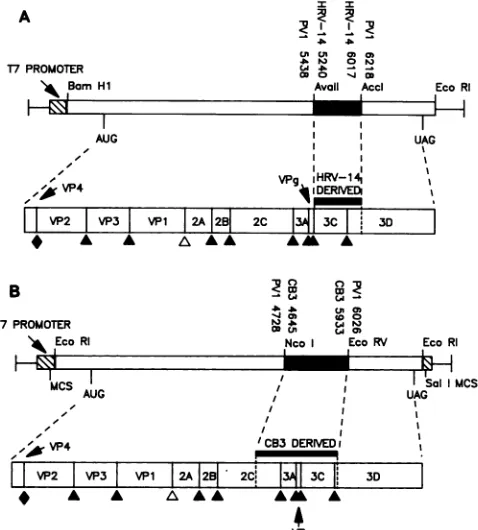
FIG. 1. Genomic structure andchimeric polyproteinencoded by
the T7
transcription
vectorspT7-RP3C
(A)
and pT7-PCP (B). Theconstruction of the chimeric
picornavirus
cDNAs is detailed in Materials and Methods._,
Region
substituted into the polioviruscDNA
background;
, T7 vectorsequences.
MCS, Multiplecloning
site. Thepolyproteins
that could be translated from thebacteriophage
T7transcripts
arerepresented
below the cDNA constructs.Major cleavage
sites utilized in the processing of thepoliovirus polyprotein
are indicated as follows: A, Gln-Gly sitesmediated
by
3Cactivity;
A,
Tyr-Gly
sitesprocessed
by proteinase2A; *,
Asn-Ser maturationcleavage
ofcapsid
precursorVPO.pCP-P3-FL,
orpSVP37-5
DNAaspreviously
described (5).Initial transfections were incubated forup to 7days at 33 or
370C.
Construction of chimeric
PV1-HRV14
andPV1-CB3
tran-scription
vectors. Thechimeric
viral cDNAs from pRP212and
pCP-P3-NSE
were substituted forthe wild-type poliovi-russequences
in derivatives of thebacteriophage
T7tran-scription
vectors,
pT7-1
orpT7PV1-5,
which have beenpreviously
described
(45, 49).
The
resulting
plasmids,pT7-RP3C
andpT7-PCP,
arediagrammed
inFig.
1. An additionaltranscription
vector,
pT7-RP3CD,
wasgenerated
in whichthe entire HRV14
3CD-coding
region
was substituted for thecorresponding
sequences
of
wild-type
poliovirus
cDNA. A6.3-kb
fragment
from
pT7-RP3C
was
generated
by completedigestion
withPvuII,
whichcutswithin thevector,andAccI,
which cuts within the
chimeric
3D-coding
region. Theex-treme 3'-terminal HRV14
cDNA,
containing thecarboxy-terminal
portion
of 3D and the 3'-nontranslated region, wassupplied
by
digestion
ofpHRVA55
withAccI
and PstI toyield
a 1.2-kb
fragment.
The two viral cDNA
fragmentswereligated
into a 2.8-kb T7
transcription
vector
which wasprepared
by
complete
digestion
of
pGEM-1
(Pharmacia,Inc.)
with
PvllII
andPstI.
The 3C deletionmutant,
pT7-RP3C:X,
was
generated
by
thecomplete
digestion ofpT7-RP3C with
BglII
(HRV14
nucleotides 5515 and 5703). Theresulting
10.3-kb
fragment
was treated with the Klenowfragment
of DNA
polymerase
I andrejoined
vialigation withon November 10, 2019 by guest
http://jvi.asm.org/
[image:2.612.317.556.79.344.2]3446 DEWALT ET AL.
a phosphorylated XhoI linker, d(CCCTCGAGGG) (New
England BioLabs, Inc.). Insertion mutagenesis of the
CB3
3C-coding region was accomplished by the introduction of a BglII linker d(CAGATCTG) into the
NheI
site (CB3nucle-otide 5663) of pCP-P3-NSE after the NheI-digested DNA hadbeen treated with the Klenow fragment to produce blunt
ends. A 2.4-kb XmnI-XmnI fragment containing the addi-tional sequences was substituted back into the full-length
transcription vector, pT7-PCP:B, which encodes the
chi-meric PV1-CB3 polyprotein containing the four additional aminoacids inserted in the amino portion ofCB3 3C.
In vitro transcription and translation. Prior to transcrip-tion, the templates were linearized at the 3' end of the
poliovirus-specific sequences withEcoRIorSall.
Transcrip-tion reacTranscrip-tions were carried out with bacteriophage T7 RNA
polymerase (Pharmacia) as previously described (49, 50),
with the modification that the transcription reactions were not treated with DNase after completion.
In vitro translation of transcripts derived from chimeric
cDNAs. Translation reactions were carried out in a rabbit
reticulocyte lysate (Promega Biotec) supplemented with a
postmitochondrial extract from uninfected HeLa cells
(pre-pared as described in reference 2). Reaction conditions were essentially as previously described (50) and included 0.75 mCi of [35S]methionine (Amersham Corp.) per ml. The
translation reactions were diluted in Laemmli sample buffer
and analyzed on 10 or 12.5% sodium dodecyl
sulfate-poly-acrylamide gels (20).
Immunoprecipitationof[35S]methionine-labeled translation
reactions. Aliquots of translation reactions in Laemmli sam-ple buffer were boiled, diluted 10-fold with ice-cold extrac-tionbuffer, and immunoprecipitated as described elsewhere (38). Rabbit antisera had been previously prepared against polioviruspolypeptides 2C and 3D (9, 38) and a tryptic digest of VP1 (B. L. Semler, S. A. Lynch, and E. Wimmer,
unpublished results).
RESULTS
Generation of PV1-HRV14 and PVI-CB3 chimeric ge-nomes. In order to determine whether the 3C proteinase activity of poliovirus could be functionally substituted with
the corresponding enzymatic activity from another
picorna-virus, chimeric viral cDNAs were generated in which the
codingregion forpoliovirus was replaced by the homologous
sequences from either HRV14 or CB3. A PV1-HRV14
chimera was generated in which the coding region for poliovirus 3C and the first 78 amino acids of 3D were replaced by the equivalent sequences from HRV14. The PV1-CB3 chimera resulted from a more extensive substitu-tion ofCB3sequencesinto the PV1 genome, which included
thecarboxy-terminal 127 amino acids of CB3 2C, the entire
3ABC coding region, and the amino-terminal 13 residues of 3D.
Recombinant plasmids containing the full-length chimeric
cDNAs were assayed for infectivity by transfection of
COS-1cellmonolayers.Noplaque formation or other evidence of
virus-induced cytopathic effects was observed. Since the
chimeric cDNAs did not yield infectious virus upon trans-fection, we wanted to determine the nature of any possible proteolyticprocessingdefects by using a cell-free translation system. To that end, the full-length chimeric cDNAs were introduced into a bacteriophage T7 transcription vector which hadbeen previously modified to optimize the in vitro
translationalefficiency of poliovirus-derived transcripts (49).
A schematic diagram of the PV1-HRV14 and PV1-CB3
transcription vectors (pT7-RP3C and pT7-PCP, respectively) and the virus-specific polypeptides that could potentially be
produced
by translation of the transcribed RNA are shown in Fig. 1. In vitro translation analysis of the polypeptides expressed from the hybrid viral genomes provided a novel opportunity to assess which Q-G cleavage sites within the chimeric polyprotein might be poliovirus specific and which might be susceptible to heterologous processing.In vitro translation of pT7-RP3C RNA and processing of poliovirus polypeptides by
HRV14
3C activity. Both wild-type poliovirus and the PV1-HRV14 recombinant transcripts were used to program the synthesis of virus-specific poly-peptides in an in vitro translation system. The rabbit reticu-locyte lysate used in these experiments was supplemented with a postmitochondrial extract from uninfected HeLa cells which has been demonstrated to minimize the internal initi-ation of protein synthesis on the poliovirus RNA genome (6, 33). The virus-specific polypeptides produced by the in vitro translation of the viral transcripts and concomitant process-ing of the primary translation products are shown in lanes 3 (pT7-1) and 4(pT7-RP3C)
of Fig. 2. Figure 2, lanes 6 and 7 represent samples to which poliovirus-infected HeLa cell extract was added after translation was stopped by the addition of cycloheximide and RNase. As previously dem-onstrated in the wild-type poliovirus translation system (26, 49), this experiment was designed to test the ability of exogenous 3C proteinase activity (present in the infected extract) to carry out the Q-G cleavages intrans.
It can be clearly seen in Fig. 2, lane 3 that via the activity of newly synthesized 3C proteinase, the wild-type poliovirus
P1 precursor was processed into the capsid proteins VPO, VP1, and VP3 (VP2 and VP4 are not generated in the cell-free translation system since the requisite virion assem-bly does not occur). The processing of
P1
was more efficient when exogenous 3C activity was provided by the infected-cell extract, as evidenced by the reduction in the amount ofP1
(Fig. 2, lane 6). The P2 precursor and its cleavageproducts,
2BC and 2C, were also detected in the wild-type poliovirus translation. Extensive processing of the P3-de-rived proteins is not readily detected in in vitro translations of wild-type poliovirus genomic RNA or in vitro transcripts. However, as evidenced by the production of mature virus-specific polypeptides derived from theP1
and P2 precursors, 3C proteinase (or 3CD proteinase [see below]) must be generated in sufficient quantities to effect the Q-G cleavages that give rise to these proteins.In contrast to the results obtained from the wild-type poliovirus translations, it appears that the 3C proteinase activity expressed from the pT7-RP3C chimeric transcript was capable of processing the P2 and possibly the P3 region polypeptides but was incapable of processing its
P1
precur-sor (Fig. 2, lane 4). The mature viral capsid proteins resulting from Q-G-processing activity were generated after post-translational incubation of the chimeric translation reaction with the poliovirus-infected cell extract, confirming that theP1 polypeptide expressed from the chimera was indeed a substrate for authentic poliovirus 3C (or 3CD) processing (Fig. 2, lane 7). The data shown in Fig. 2, lane 4 demonstrate that polypeptides which comigrated with polio proteins P2, 2BC, and 2C were produced following translation of the RP3C-derived transcript. The identities of these P2-region polypeptides were later confirmed by immunoprecipitation of the translation samples (see below).
In vitro translation and processing of a chimericPVI/CB3
polyprotein by CB3 3C proteinase activity. In a fashion
similar to that described above, the PV1-CB3 chimeric
J. VIROL.
on November 10, 2019 by guest
http://jvi.asm.org/
z -.-rT c
M ° II t- t
PlB-
-
P2-3CD- _.
.&
P2-..
3D-
E-2B
-vPO
-.ilt i-L.i
P1
-
P2-2BC
-VPO- _
P3
3CD-_-1__
P2
3D-
2BC-
vPo-2C,-_ VPl-.
pi
P3-asD
P21
3D-2BC
v D
I..,
.w VP3- ,.sp._
3C
-VP3- _ -.
3C-VP3- - *
1 2 34 5
FIG. 2. In vitro translation of PV1-HRV14 chimeric T7
tran-scripts. Full-length transcripts from wild-type poliovirus cDNA (lanes 3 and 6),achimeric PV1-HRV14(pT7-RP3C) cDNA encoding
aHRV14 3C proteinase (lanes 4 and 7), or achimericPV1-HRV14 cDNAbearingadeletion within the HRV14 3C-coding region (lanes 5and8)wereusedtodirect the synthesis of viralproteins inarabbit
reticulocyte translationsystemsupplemented with uninfected HeLa cell extract as described in Materials and Methods. Translation
reactionswereprogrammed with 5 ,ug of RNAperml. Lanes 6to8 contain samples which were incubated posttranslationally with poliovirus-infected HeLacellextract afterthearrest oftranslation by the addition of5 p.gofcycloheximide and 10 ,ug of RNase Aper ml.Lanes6to8 have beenunderexposedtofacilitatetheresolution of theprocessed capsid proteins. Lane 1 isamarker lanecontaining [35S]methionine-labeled poliovirus proteins prepared from HeLa cells 6 h postinfection. Samples were diluted in Laemmli sample bufferandsubjectedtoelectrophoresisona 12.5%sodiumdodecyl
sulfate-polyacrylamide gel. Shown isanautoradiogram of the
fluo-rographed gel. Positions of viral proteinsareindicatedtotheleft of lanes 1 and 6.
transcripts from pT7-PCP were translated in the rabbit
reticulocyte system toinvestigate theability oftheCB3 3C proteinasetoprocessbothpoliovirusprecursorpolypeptides
and CB3 cleavage sites within the context of a chimeric polyprotein.The patternofproteolytic processingobserved forthepolypeptides expressedfrom the pT7-PCPRNAwas
similartothatobtained with the PV1-HRV14 chimera. Note thatthe P3-derived PV1-CB3 chimeric polypeptides do not
precisely comigratewith theirwild-type poliovirus
counter-1 2 3 45 1 2 34
FIG. 3. Invitro translation ofPV1-CB3chimeric T7transcripts. (A) Full-length transcripts derived from wild-typepoliovirus cDNA (pT7-1 [lanes 2 and 3]) or a chimeric PV1-CB3 cDNA (pT7-PCP [lanes 4 and 5])wereusedtodirect thesynthesis of viral proteins in
arabbitreticulocytetranslation systemasdescribedinthelegendto
Fig. 2. The translation reactions wereprogrammed with 10 (lanes2 and4)or5(lanes3 and 5) ,ug ofRNAperml.Numbersabove the lanesindicatenanogramsof RNAper
10-RI
reaction.(B) Translation reactionsprogrammedwith5 p.gofpT7-1 (lane 2), pT7-PCP (lane 3),or the insertion mutant pT7-PCP:B (lane 4) RNA per ml were incubated witha poliovirus-infected HeLa cellextract after
trans-lationwasstopped bytheaddition of5,ug ofcycloheximideand10
,ug of RNase A per ml. Lane 1 in both panels is a marker lane containing [35S]methionine-labeled PV1 proteins prepared from HeLa cells 6 hpostinfection. Positionsof viralproteinsareindicated
tothe left of the lanes.
parts. In contrast to the translation and processing ofthe
wild-type poliovirus genome (Fig. 3A, lanes 2 and 3), the most striking aspect of the PV1-CB3 translation was the
production of nonstructural polypeptides derived fromthe P2 and P3 regions coupled with the absence of capsid proteinsfrom the poliovirusP1 precursor. Posttranslational addition of 3C activity (in the form of poliovirus-infected
HeLaextract)tothetranslationofpT7-PCPRNA resultedin
the apparently wild-type processing of P1 into VPO, VP1,
and VP3 (Fig. 3B, lane 3), confirming the integrity ofP1
a. IL
1.-
r'-t 1-7
B
t-..R
...
2 A
-2A
-6 7 8 2A
VP3- imr
on November 10, 2019 by guest
http://jvi.asm.org/
[image:4.612.78.273.75.449.2] [image:4.612.344.527.79.467.2]3448 DEWALT ET AL.
derived from the chimeric polyprotein to serveas asubstrate forpoliovirus 3C (or 3CD).
Invitroprocessing of thePV1-CB3 polyprotein by CB3 3C yieldedpolypeptides whichcomigrated with the P2 cleavage products, P2, 2BC, and 2C. However, the decreased levels
of2BC and 2C in Fig. 3A, lanes 4 and5 indicate that the P2
processing effected by the chimera was somewhat less efficient than wild-typePV1 processing.
Deletion and insertion mutagenesis of chimeric 3C-coding regions. Weconfirmed that theproteolytic processing ofthe
P2regionpolypeptides produced bythe PV1-HRV14 and the
PV1-CB3 recombinants was indeed carried out by the 3C
activities expressedfromthechimerasthroughthe introduc-tion of mutations in the 3C-coding regions which would
abrogateproteolytic activity. The sequences corresponding
to the putative catalytic site of 3C were deleted from
pT7-RP3C by the excision of 188 nucleotides between the BglII sites at positions 5515 and 5703ofthe HRV14-derived cDNA. The sites were rejoined via the ligation of a
10-nucleotide XhoI linker, which maintained the translational
reading frame ofthepolyproteinwhileinserting4 newamino
acids (Pro-Leu-Glu-Gly) into the 3C-codingregion.
The translation products derived from the transcripts of
the deletion construct pT7-RP3C:X are shown in Fig. 2,
lanes 5 and 8. It can be clearly seen in lane 5 that the
proteolyticprocessingof thepoliovirus-specificP2 precursor
was abolished by the deletion in the HRV14 3C-coding
region. Processing of the pT7-RP3C:X polyprotein was
restored by the addition of exogenous poliovirus 3C to the
translation reaction(Fig. 2, lane 8).
Translationofa mutagenized PV1-CB3 cDNA transcript
showed the effect of the insertion of4 amino acids
(Ala-Asp-Leu-Leu) intothe3C region ofpT7-PCP(Fig. 4B, lane 4). The absence of P2 cleavage products in the pT7-PCP:B
translation reaction demonstrated that these polypeptides
wereindeed the resultof3Cproteolytic activity. Processing
ofpT7-PCP:B polyprotein wasdemonstrated byaddition of
exogenouspoliovirus 3C activity tothe translation reaction
(Fig. 3B, lane 4).
Identification of virus-specific polypeptides from cell-free
translations. Translation reactions programmed with
tran-scripts frompT7-1 orthechimericpicornavirus RNAswere
immunoprecipitated with antisera prepared against
poliovi-rus-specific polypeptides in orderto verify the identities of
theproducts of 3C-mediated proteolytic processing.
Immu-noprecipitation with anti-2C serum clearly demonstrated
thatthe HRV14 3Cexpressed from thePV1-HRV14chimera
correctly processed the poliovirus P2 precursor into its
immunologically related cleavage products, 2BC and 2C
(Fig. 4A, lane 3). These results confirm that theHRV14 3C
proteinase activity iscapable ofrecognizing and processing
theQ-G siteswithinthe poliovirus P2region.The relatively
higheramountofP2thatpersisted in the pT7-RP3C
transla-tion(Fig.4A, lane 3)versusin thewild-type polioviruspT7-1
sample (Fig. 4A, lane 4) supports the results from the
translationexperiments which suggest that the rhinovirus 3C is not asefficientasauthenticpoliovirus 3C in the execution of the poliovirus P2cleavages.
Immunoprecipitation of the pT7-PCP translation reactions with poliovirus anti-2C serum also verified the presence of
P2,2BC,and2C, the endproducts of3C-processing activity
(Fig. 4B, lane 9). The P2 region polypeptides were not
detected after immunoprecipitation of the insertion mutant
pT7-PCP:B translation products.
P3 region polypeptides P3, 3BCD, and3CD, were
immu-noprecipitatedwithpoliovirusanti-3Dserumfromthe pT7-1
A M
1 2'
Bp
.2
:~ ~ ~ C
;~ ~ ~ 3
M ..L.
ca.
1....~~~~~~~~~~~~~~~~A:: C A2BC .e
vPo-2C
vpl ..
.:.b...
3
A
1
234 5678910
FIG. 4. Immunoprecipitation ofpolypeptides produced fromthe invitro translation ofT7 transcripts derived from wild-type polio-virus orchimeric virus genomes. Translation reactions were diluted with Laemmli sample buffer and immunoprecipitated with poliovi-rus-specificanti-2Coranti-3Dseraasdescribed inreferences 9and 38. (A) Immunoprecipitation of a [35S]methionine-labeled poliovi-rus-infected HeLacellextract (lane 2), pT7-RP3C translation(lane 3), or pT7-1 translation (lane 4) with antiserum prepared against poliovirus2C. Lane 1 isan immunoprecipitation ofa [35S]methio-nine-labeled HeLa cell extractwith preimmune serum. M, Marker lane as described inthe legend to Fig. 1. (B) In vitro translation of pT7-1 (lane 2), pT7-PCP (lane 3), and pT7-PCP:B (lane 4) tran-scripts. Translation reactions immunoprecipitated with anti-3D (lanes 5 through 7) andanti-2C (lanes 8 through 10) were asfollows: pT7-1 (lanes 5 and 8), pT7-PCP (lanes 6 and 9), and pT7-PCP:B (lanes 7 and 10). Lane 1, marker lane prepared asdescribed inthe legend to Fig.3. Positionsof viral proteins are indicated tothe left of the lanes.
translation (Fig. 4B, lane 5). The lower-molecular-weigili proteins 3D and 3D', which immunologically react with anti-3D, are not normally produced in detectable quantities when pT7-1 RNAs are translated in cell-free extracts. Im-munoprecipitation of pT7-PCP translation products with anti-3D serum detected the presence of P3 region polypep-tides P3 and3BCD(Fig. 4B, lane 6),which did notprecisely comigrate with wild-type P3 or 3CD during electrophoresis in sodium dodecyl sulfate-polyacrylamide gels (compare with Fig. 4B, lane 5). We attribute this lack ofcomigrationto J. VIROL.
on November 10, 2019 by guest
http://jvi.asm.org/
[image:5.612.330.560.79.456.2]PICORNAVIRUS 3C SUBSTRATE SPECIFICITY 3449
the chimeric nature of the P3 region polypeptides derived
from the coxsackievirus and poliovirus sequences and pos-sibly to differential cleavage (either in trans or via autoca-talysis) within these chimeric polypeptides. No detectable 3CD was observed after immunoprecipitation of the pT7-PCP translation reaction with poliovirus anti-3D serum. Though the Q-G pair at the amino terminus of 3C represents
anauthentic CB3 cleavage site, it appears that it may not be
cleaved byCB3 3C expressed from the chimeric P3 region.
We observed similar results upon immunoprecipitation of thepT7-RP3C translation reaction with anti-3D serum (data notshown).
We were unable to identify any authentic 3C-mediated cleavage products after immunoprecipitation of the pT7-PCP:B translation reactions with poliovirus 3D or anti-2C sera (Fig. 4B, lanes 7 and 10). Both antisera brought
down a polypeptide with an apparent molecular weight of
-150 kilodaltons as well as other high-molecular-weight
polypeptides. Presumably, this product represents a P2-P3
fusion protein that was not processed as a result of the
inactivation of CB3 3C by the linker insertion. It should be noted that other chimeric polyproteins carrying the same
4-amino-acid insertion in the CB3 3C sequence as that
encodedinpT71-PCP:B are capable of producing a
polypep-tide thatcomigrates with poliovirus P2 and
immunoprecipi-tateswith anti-2C serum(M. A. Lawson and B. L. Semler, unpublished observations).
Translation and processing of polypeptides expressed from pT7-RP3CD. It has been demonstrated that processing of the
poliovirus P1 capsid precursor in vitro requires 3C
protein-aseactivity in the form of polypeptide 3CD (15, 47). Cleav-age within the P2 and P3regions which generates nonstruc-turalviralproteins can be executed by either 3C or 3CD with
similar degrees of efficiency. The requirement of 3CD for
capsid protein processingsuggeststheexistence of adomain
contained in theadditional 3D sequences thatisinvolved in
stabilizing the interaction
of
the P1 precursor and thepro-teinase. Therefore, thepossibility remainedthat theinability
ofthe 3C activity expressed from pT7-RP3Cto process the
poliovirus P1 precursor was due to the chimeric nature of
3CD rather than simply an incompatibility between the
heterologous substrate and enzyme. In order toanswerthis
question, a recombinant picornavirus cDNA was
con-structed in whichtheintact HRV143CD-coding regionwas
precisely substituted for the corresponding poliovirus
se-quencesin the T7 transcription vector.
The resulting chimeric cDNA, pT7-RP3CD, was
tran-scribed and translatedin vitro as described forpT7-RP3C.
The translation products of 1, RP3C, and pT7-RP3CDare shown in lanes 2, 5, and 8,respectively, ofFig.
5. Immunoprecipitation of the translation reactions with
poliovirus anti-2C serum demonstrated that the 3C
protein-ase activity expressed by pT7-RP3CD (Fig. 5, lane 10) is
similarto thatofpT7-RP3C in its abilityto process the P2
region proteins. Relatively low amounts of the P1 capsid
precursorremained in the translation of the wild-type
polio-virus transcript, pT7-1. As evidenced by immunoprecipita-tion of VP1 withpoliovirus anti-VP1 serum, most of the P1 was processed during translation (Fig. 5, lane 3). Parallel
immunoprecipitation of the pT7-RP3C and pT7-RP3CD
translation reactions with anti-VP1 showednoproductionof
VP1 but ratheran accumulation ofunprocessed P1 (Fig. 5, lanes 6and9).
p17 1 pT7 RP3C pT7RP3CD
CLO n ) a. U
,_ cN, > ci > N
20c-
...
c I... ...i;.
2A- tb'=: .'
::1
2 3 4: 5 6_ 913CD-2.K. ...
...p ...
Is:5..,nv ..i o.
.'. ... ..'.:.. :;
VP3- *... l ..iu.i
pT7-RP3CD (lane 8). Translation reactions immunoprecipitated.,withs S were asfollow: pT7 (lane 3 and 4) pT-R3 (lne 6 and 7),
and~~~pT-R3C~ (ae9an10. Lan 1,makrln.rprda
3C- *_ * _
sS~~~~~~~~~~~~...~~~~~~~~ .. i.;. ...
describedin the legend.to.Fig.3.
FI.5.In..vir trnlto an....peipttono.olpp
Wies havn geeraed
dnwl-y
efinedo chimeric PicoHRnVirugeoe-procesitr rng ltoaof
piconavru
polyn2prTeinRby3C proteinasesnde7RiveDfrom differ v. .Pvu.immunsuccessful
ait-easetirus(lns
andencephlomyoardtis2 virues involvend mixingr6wexperimentinlwh: '.'exogeno
ex.pT7.R
3Cwlans a'ddedtosusrae taT-P3D(aead endLnprvoul synthesizaed
inepvivo
or in~~~:cellexrat (29):'.The aproc we have:unertakeinvolvbedithedect alleic.3.
rego ofvoenertddfndciec
wihtagoenterada-
picornavirus
dreses the quviesinowhte3Csthexermna eienzyefrcansbe functsionally susitutedawithua enzymroeinbofsmilrobteinote
identicalfro
subtraersectificity.Prvosyuuceflat
Statistialomoanalysis ofithe prbeditwednamiotacidsequenceis-ofspoivirus andenehalV4opredictisthatrth lnoatio
ofispe-cificlsecodarye structurallmotfsio
rpaenth
respetive3C-podiy-region~~~~~~~~~~~~~.
ofoepcraiu.ih
hto nte n ddresse t qusto:.;
ofwehrte.nyecnb
functionally~~~~~
susttueanezm::siiawith u oidentical substrate specificity.
Sttitia anlss fte rdcedaiocdseune
of~~.
poiviu
an HR1prdit
thttelcto fse cifiseodr tucua ois ftersecie3 oy VOL.63, 1989on November 10, 2019 by guest
http://jvi.asm.org/
3450 DEWALT ET AL.
peptides are quite similar (46). ho-wever, the two proteins share only 45% amino acid homology (4, 46) and are not immunologically cross-reactive (7). Although most of the Q-G cleavage sites appear to be shared beLween poliovirus
and HRV14, the 3C proteinaseof HRV14 may recognize an E-G pair between VP3 and VP1 and a Q-A pair between 2B and 2C in the HRV14 genome (based on analogy of the predicted amino acid sequence of HRV14 and the apparent molecular weight of HRV14 polypeptides compared with that of poliovirus). The degree of amino acid conservation between the 3C proteins of PV1 and CB3 is 60%, which reflects the closer relatedness that exists between these two enteroviruses (22). On thebasis of theaminoacid sequence deducedfrom the CB3nucleotide sequence, theQ-G
cleav-age sites are conserved between PV1 and CB3 with the
exception ofa Q-N site at the 2B-2C junction. It was of
interest to determinewhich, if any, of theQ-G cleavagesites present in the poliovirus polyprotein could be recognized
andprocessed by heterologous 3Cproteinases.
The most striking result of these experiments was the
inability ofthechimericproteinasetoefficiently processthe
poliovirus-specific P1 precursorintomaturecapsid proteins.
Although X-raycrystallographicdataobtainedforpoliovirus
(11) and HRV14 (35) indicate that the virion particles and theirconstituent capsid proteinsshareabasiccommon core
structure, fundamental differences in the three-dimensional
conformationsof the threevirusesaresuggested bythe lack
of immunological cross-reactivity among their individual
capsid proteinsandby the fact that they bindtodistinct cell
surface receptors (23). Recent data from in vitro translation andprocessing ofgenetically alteredpoliovirus P1
polypep-tides suggestahighlyspecific interactionbetween thecapsid
precursor and the poliovirus Q-G cleavage activity (48).
Consequently, it is likely that the putative site recognition
domain(s) of either heterologous 3Cproteinase is unable to
efficiently direct the catalytic region ofthe enzyme to the
Q-G sites when they are presented in the context of the
poliovirusP1 precursor.Alternatively,inlightof
experimen-tal evidence indicating that 3CD rather than 3C actually
carriesouttheproteolytic processingof the P1Q-Gsites(15,
25, 47, 49), theinability of the hybrid P3 precursor polypep-tides to process the poliovirus capsid proteins may be a
reflection of the heterologous nature of 3CD. Our
experi-mental evidence rules out the latter possibility for HRV14 proteolytic activity. A chimeric genome containingan exact
replacement of HRV 3CD into the poliovirus full-length
cDNA was unable to direct the synthesis of proteinase
activity that will cleave the poliovirusP1precursor
polypep-tides (Fig. 5). In light of this data, it is notsurprisingthat the
chimeric cDNAs initially proved to be noninfectious. It
should be noted thatwe haverecently generated achimeric genomecontaining poliovirus 3CD-codingsequencescloned intoacDNA encoding the CB3 polyprotein. Our preliminary
experiments suggest that poliovirus polypeptide 3CD
ex-pressedfromthis genome is capable of generating low levels ofCB3 capsid polypeptides from the heterologousP1 (CB3) precursor polypeptides (M. A. Lawson and B. L. Semler, manuscript in preparation).
It was particularly interesting that the HRV14 and CB3 proteinases were capable of correctly processing the polio-virus P2 precursor, since the primary sequence of the
2B-2C-processing site is not identical among the three
vi-ruses employedin this study. Mutational inactivation in the
coding regions of the HRV14 and CB3 3C proteinases
correlated with the inhibition of P2 processing, thus
con-firming that the foreign 3C enzymatic activity was directly
responsible formediating the proteolytic processing of the
poliovirus P2 precursor expressed from the recombinant.
The identity ofthe
proteolytic cleavage products
wascon-firmed by immunoprecipitation with antiserum directed
against poliovirus 2C. These results provide experimental
evidence that structural
determinants,
in addition to the presenceofaparticular
amino acidpair,
arerequired
fortherecognitionofacleavagesitebythe 3Cproteinase activity.
The ability of the chimeras to generate 2C supports earlier
conclusions,based onamino acid sequencecomparisons (1)
and
antigenic cross-reactivity (7),
that the 2Cpolypeptides
are structurally conserved among the
picornaviruses.
Itis apparentfromour
experiments
thatprocessing
of the P2 precursor maybefunctionally
substituted with 3C from anotherpicornavirus,
whereasprocessing
of the P1capsid
precursor is more virus
specific
anddependent
on the presenceofspecific
substraterecognition
domains located in 3CD. Thepicornaviruses
have evolved from aprimordial
ancestorintoagroupofviruses that exhibitahighly
diverse host range and a myriad of differentphysiological
effects.Although
these viruses share a common genomeorganiza-tion and basic virion structure, fine structural differences in
the architectureof thevirion surfaceare
likely
toplay
arolein host cell
tropism.
Thestringent enzyme-substrate
require-ments for structural
protein processing
can be thereforepresumed
to be the result of the coevolutionofthecapsid
protein
genes and the substraterecognition
determinantsof theirrequisite
processing
enzymes.Theisolationofchimeric
picornavirus
cDNAs hasproved
to be a valuable tool for
probing
the functions of the5'-noncoding region
ofpoliovirus (14, 21, 40)
andprovides
apotential
alternative forthedevelopment
ofnewpicornavi-rus vaccines (3, 17, 24). The
generation
ofinterspecies
recombinants within the nonstructural
regions
ofpicornavi-rus genomes
provides
theopportunity
tofunctionally
mapthe domains that are
important
forconferring
substratespecificity
tothe 3Cproteinase activity.
Thisinformation isa
key
to ourcomplete understanding
of theregulation
ofpicornavirus protein
processing.
From apractical
stand-point,
this line ofexperimentation
will also determine whether thepicornaviral
proteinases
aresufficiently
similarto serve as a commontargetfor antiviral
chemotherapy.
ACKNOWLEDGMENTS
Wethank S. Tracyand N. Chapmanfor thegiftofsubgenomic
coxsackievirus B3 cDNA plasmidsand E. Wimmer forthe giftof pT7PV1-5 plasmid DNA. We are indebted to Vickie Johnson,
CharlotteDietz, and Shan-Shan Hwangforskillful assistancewith theplasmidconstructions.
This research was supported by Public Health Service grant A122693 fromthe National InstitutesofHealth andbyfundsfrom the Cancer Research Institute (University of California, Irvine).
P.G.D. was supported by a fellowship from the C.U.P.P. ofthe Focused Research ProgramonGene Research and Biotechnology (UniversityofCalifornia, Irvine).M.A.L.isapredoctoraltrainee of the Public Health Service (CA09054). B.L.S. is supported by a
Research CareerDevelopmentAward(AI00721)fromtheNational Institutes of Health.
LITERATURE CITED
1. Argos, P.,P.Kamer, M.J. H.Nicklin, and E. Wimmer. 1984.
Similarityingeneorganizationandhomologybetweenproteins
of animalpicornaviruses anda plantcomovirus suggest
com-mon ancestry of these virus families. Nucleic Acids Res. 12:7251-7267.
2. Brown,B.A.,and E.Ehrenfeld. 1979. Translationofpoliovirus
RNAin vitro:changesincleavagepatternandinitiationsitesby
J. VIROL.
on November 10, 2019 by guest
http://jvi.asm.org/
ribosomal salt wash. Virology97:396-405.
3. Burke, K. L., G.Dunn, M. Ferguson, P. D. Minor, andJ. W. Almond. 1988.Antigenchimaeras ofpoliovirusaspotentialnew
vaccines. Nature(London)332:81-82.
4. Callahan, P.L., S.Mizutani, and R. Colonno. 1985. Molecular
cloningand completesequencedetermination of RNA genome of human rhinovirus type 14. Proc. Natl. Acad. Sci. USA 82:732-736.
5. Dewalt,P.G.,and B. L.Semler. 1987.Site-directedmutagenesis ofproteinase3C results inapoliovirusdeficientin thesynthesis of viral RNA polymerase. J. Virol. 61:2162-2170.
6. Dorner, A. J., B. L. Semler, R. J. Jackson, R. Hanecak, E.
Duprey,and E.Wimmer.1984. Invitrotranslation ofpoliovirus RNA:utilization of internal initiationsitesinreticulocyte lysate. J. Virol. 50:507-514.
7. Emini, E.,W. A.Schlief,R.J. Colonno,and E. Wimmer. 1985.
Antigenic conservation and divergence between the viral spe-cific proteins ofpoliovirus type 1 and various picornaviruses.
Virology 140:13-20.
8. Gorbalenya,A. E., V. M. Blinov, and A. P. Donchenko. 1986. Poliovirus-encodedproteinase 3C: apossibleevolutionary link between cellular serine andcysteine proteinase families. FEBS Lett. 194:253-257.
9. Hanecak, R., B. L. Semler, C. W. Anderson, and E. Wimmer. 1982. Proteolytic processing of poliovirus polypeptides: anti-bodies to polypeptide P3-7c inhibit cleavage at
glutamine-glycine pairs. Proc. Natl. Acad. Sci. USA79:3973-3977. 10. Hanecak, R., B. L.Semler, H. Ariga, C.W. Anderson, and E.
Wimmer. 1984. Expression ofa cloned gene segmentof polio-virus in E. coli: evidence for autocatalytic production of the viral proteinase. Cell 37:1063-1073.
11. Hogle, J. M., M. Chow, and D. J.Filman. 1985. Three dimen-sional structure ofpoliovirus at 2.9 angstrom resolution.
Sci-ence229:1358-1365.
12. lizuka,N.,S. Kuge,and A. Nomoto. 1987. Completenucleotide sequence of the genome ofcoxsackievirus Bi. Virology 156: 64-73.
13. Ivanoff, L. A., T. Towatari, J. Ray, B. D. Korant, and S. R.
Petteway. 1986.Expressionandsite-specific mutagenesisof the
poliovirus3C proteinase inEscherichia coli. Proc. Natl. Acad. Sci. USA 83:5392-5396.
14. Johnson,V. H.,and B. L.Semler. 1988. Defined recombinants
of poliovirus and coxsackievirus: sequence-specific deletions
andfunctionalsubstitutionsin the5'-noncoding regionsof viral RNAs.Virology 162:47-57.
15. Jore, J., B.DeGeus, R. J. Jackson, P. H.Pouwels, and B. E.
Enger-Valk. 1988. Poliovirusprotein3CD is the active protease forprocessingofthe precursorproteinP1invitro.J.Gen. Virol. 69:1627-1636.
16. Kitamura, N.,B.L.Semler,P.G.Rothberg,G.R.Larsen,C.J.
Adler,A. J.Dorner,E. A.Emini,R.Hanecak, J. J. Lee,S. van
der Werf, C. W. Anderson, and E. Wimmer. 1981. Primary
structure, gene organization and polypeptide expression of
poliovirus RNA. Nature (London) 291:547-553.
17. Kohara, M., S. Abe, T. Komatsu, K. Tago, M. Arita, and A. Nomoto. 1988. A recombinant virus between the Sabin 1 and Sabin 3vaccine strainsofpoliovirusas apossiblecandidate for
a new type 3 poliovirus live vaccine strain. J. Virol. 62: 2828-2835.
18. Korant,B. D., J. Brzin,and V. Turk. 1985. Cystatin,aprotein inhibitor ofcysteine proteinases, alters viral protein cleavages
in infected human cells. Biochem. Biophys. Res. Commun. 127:1072-1076.
19. Krausslich, H.-G., and E. Wimmer. 1988. Viral proteinases.
Annu. Rev. Biochem. 57:701-754.
20. Laemmli,U.K. 1970.Cleavageof structuralproteins duringthe
assembly of the head ofbacteriophage T4. Nature (London) 227:680-685.
21. La Monica, N., J. W. Almond, and V. R. Racaniello. 1987. A
mousemodelforpoliovirusneurovirulenceidentifies mutations thatattenuate the virus for humans. J. Virol. 61:2917-2920. 22. Lindberg, A. M., P. 0. Stalhandske, and U. Pettersson. 1987.
Genome ofcoxsackievirus B3. Virology156:50-63.
23. Lonberg-Holm, K., R. L. Crowell, and L. Philipson. 1976. Unrelated animal viruses share receptors. Nature (London) 259:679-681.
24. Murray, M. G., R. J. Kuhn, M. Arita, N. Kawamura, A. Nomoto, and E. Wimmer. 1988. Poliovirus type 1/type 3 anti-genic hybrid virus constructedin lvitro elicits type1 and type 3 neutralizing antibodies in rabbits and monkeys. Proc. NatI. Acad. Sci. USA 85:3203-3207.
25. Nicklin, M. J. H., K. S. Harris, P. V. Pallai, and E. Wimmer. 1988.Poliovirus proteinase 3C:large-scale expression, purifica-tion, and specific cleavage activity on natural and synthetic substrates in vitro. J. Virol. 62:4586-4593.
26. Nicklin, M. J. H., H.-G. Krausslich, H. Toyoda, J. J. Dunn, and E. Wimmer. 1987. Poliovirus polypeptide precursors: expres-sion in vitro and processing by exogenous 3C and 2A protein-ases. Proc. Natl. Acad. Sci. USA 84:4002-4006.
27. Nicklin, M.J.H., H. Toyoda, M.G. Murray, and E. Wimmer. 1986. Proteolytic processing in the replication of polio and related viruses. Biotechnology 4:33-42.
28. Pallansch, M.A.,0. M.Kew, B. L.Semler,D. R.Omilianowski, C. W. Anderson, E. Wimmer, and R. R. Rueckert. 1984. The protein processing map of poliovirus. J. Virol. 49:873-880. 29. Palmenberg, A. C. 1987. Picornaviral processing: some new
ideas. J. Cell. Biochem. 33:191-198.
30. Palmenberg, A.C.,M. A. Pallansch, and R. R. Rueckert. 1979. Protease required for processing picornavirus coat protein re-sides in the viral replicase gene. J. Virol. 32:770-778.
31. Palmenberg, A. C., and R. R. Rueckert. 1982. Evidence for intramolecular self-cleavage of picornaviral replicase precur-sors. J. Virol. 41:244-249.
32. Pelham, H. R. B. 1978. Translation of encephalomyocarditis virus RNA in vitro yields an active proteolytic processing enzyme. Eur. J. Biochem. 85:457-462.
33. Phillips, B. A., and A. Emmert. 1986. Modulation of the expres-sion of poliovirus proteins in reticulocyte lysates. Virology 148:255-267.
34. Racaniello,V. R., and D. Baltimore. 1981. Molecular cloning of polioviruscDNA and determination ofthe complete nucleotide sequence of the viral genome. Proc. Natl. Acad. Sci. USA 78:4887-4891.
35. Rossmann, M. G., E. Arnold, J. W. Erickson, E. A. Franken-berger, J.P.Griffith,H.J. Hecht,J. E. Johnson, G. Kamer, M. Luo, A. G. Mosser,R. R. Rueckert, B. Sherry,andG.Vriend. 1985. Thestructureofa human common coldvirus (rhinovirus 14) and its functional relationships to other picornaviruses. Nature(London)317:145-153.
36. Semler,B. L., C. W. Anderson, N. Kitamura, P. G. Rothberg, W. L. Wishart, and E. Wimmer. 1981. Poliovirus replication proteins: RNA sequenceencoding P3-lb and the sites of pro-teolytic processing. Proc. Natl. Acad.Sci. USA 78:3464-3468. 37. Semler,B. L., R. Hanecak, C. W. Anderson, and E. Wimmer. 1981.Cleavage sites in thepolypeptideprecursorsof poliovirus proteinP2-X. Virology 114:589-594.
38. Semler,B. L.,R. Hanecak,L. F.Dorner, C. W. Anderson,and E. Wimmer.1983. Poliovirus RNAsynthesis in vitro: structural elements andantibodyinhibition. Virology 126:624-635. 39. Semler, B. L., V. H. Johnson, P. G. Dewalt, and M. F.
Ypma-Wong. 1987. Site-specific mutagenesis of cDNA clones expressingapoliovirus proteinase. J.Cell. Biochem. 33:39-51. 40. Semler,B. L., V. H.Johnson, and S. Tracy. 1986. A chimeric plasmid from cDNA clones of poliovirus and coxsackievirus produces a recombinant virus that is temperature sensitive. Proc. Natl. Acad. Sci. USA83:1777-1781.
41. Stanway, G.,P.J. Hughes,R. C.Mountford,P. D.Minor,and J.W.Almond. 1984. Thecompletesequence ofa commoncold virus: human rhinovirus 14. Nucleic Acids Res. 12:7859-7874. 42. Summers, D.F.,E. N. Shaw,M. L. Stewart,andJ. V. Maizel.
1972.Inhibition ofcleavageoflarge poliovirus-specific precur-sorproteins in infected HeLa cellsby inhibitors ofproteolytic enzymes.J. Virol. 10:880-884.
43. Toyoda, H., M.J.H.Nicklin, M.G.Murray, C. W.Anderson, J. J. Dunn, F. W. Studier, and E. Wimmer. 1986. A second virus-encodedproteinase involved in proteolytic processingof
on November 10, 2019 by guest
http://jvi.asm.org/
3452 DEWALT ET AL.
poliovirus polyprotein. Cell45:761-778.
44. Tracy, S., N. Chapman, and H.-L. Liu. 1985. Coxsackie virus B3: primary structure ofthe 5' noncoding and capsid protein coding regions of thegenome. Arch.Virol. 85:157-163. 45. vander Werf, S., J. Bradley, E. Wimmer, F. W. Studier, and
J. J. Dunn. 1986. Synthesis of infectious poliovirus RNA by purified T7 RNA polymerase. Proc. Natl. Acad. Sci. USA 83:2330-2334.
46. Werner,G., B. Rosswirth, E. Bauer, J. M. Seifert, F. J. Werner, and J. Besemer. 1986. Molecular cloning andsequence
determi-nation of thegenomic regions encodingprotease and
genome-linkedprotein of three picornaviruses. J. Virol. 57:1084-1093. 47. Ypma-Wong, M. F., P. G. Dewalt, V. H. Johnson, J. G. Lamb,
and B. L. Semler. 1988. Protein 3CD is the major poliovirus
proteinase responsible for cleavage of theP1 capsidprecursor.
Virology 166:265-270.
48. Ypma-Wong, M. F., D. J. Filman, J. M. Hogle, and B. L. Semler. 1988. Structural domains of the poliovirus polyprotein
are major determinants for proteolytic cleavage at Gln-Gly pairs. J. Biol. Chem. 263:17846-17856.
49. Ypma-Wong,M.F.,and B. L.Semler. 1987.In vitromolecular
genetics as a tool for determining the differential cleavage specificities of the poliovirus 3C proteinase. Nucleic Acids Res. 15:2069-2088.
50. Ypma-Wong, M. F., and B.L. Semler. 1987. Processing deter-minants required for in vitro cleavage of the poliovirus P1 precursortocapsid proteins. J. Virol. 61:3181-3189.
J.VIROL.
![FIG. 2.(lanesacDNAscripts.contain5cellreactionsbyreticulocyteofcellsbufferpoliovirus-infectedlanesml.[35S]methionine-labeledsulfate-polyacrylamiderographed and HRV14 theIn vitro translation of PV1-HRV14 chimeric T7 tran-Full-length transcripts from wild-ty](https://thumb-us.123doks.com/thumbv2/123dok_us/1325072.86310/4.612.78.273.75.449/lanesacdnascripts-cellreactionsbyreticulocyteofcellsbufferpoliovirus-infectedlanesml-methionine-labeledsulfate-polyacrylamiderographed-translation-transcripts.webp)