City, University of London Institutional Repository
Citation:
Galassini D'Elia, S. A., Pelliconi, A., Mele, C., Massa, E., De Gregorio, F. S., Gallotti, G., Passaniti, G., Carnat, I., Montemitro, L., Randazzo, L. and Biondi, V. (2018). ELSA Italy. In: Caja, J., Kalk, K., Tranova, K., Monteiro, B. F., Zidanaki, M., Athanasopoulou, I., Markoviti, A., Denu, P., Sedjakins, O. and van de Walle, V. (Eds.), International Legal Research Group on Migration Law The European Law Students’ Association. (pp. 892-954). ELSA - European Law Students Association.This is the published version of the paper.
This version of the publication may differ from the final published
version.
Permanent repository link:
http://openaccess.city.ac.uk/id/eprint/22757/Link to published version:
Copyright and reuse: City Research Online aims to make research
outputs of City, University of London available to a wider audience.
Copyright and Moral Rights remain with the author(s) and/or copyright
holders. URLs from City Research Online may be freely distributed and
ELSA ITALY
Contributors
National Coordinator
Sara Antonia Galassini D’Elia
National Researchers
Andrea PelliconiChiara Mele Enrico Massa
Francesca Sironi De Gregorio Giulia Gallotti
Giulia Passaniti Irina Carnat Laura Montemitro
Laura Randazzo Vieri Biondi
National Linguistic Editors
Chiara RomagnoliDaniele Fabris
Introduction
In the last 50 years, Italy has experienced a relevant transformation, starting from an emigrant nation (according to the last statistics from the Ministry of the Interior, there are more than 4.636.647 Italians still living abroad) to become an immigrant destination.
From 1970 until now, migrant citizens with regular residence permits in Italy have increased, with a rate of growth that looks almost unstoppable: at the beginning of 2017, there were more than 5,047,028 foreign nationals resident in Italy.
This numbers, added to the illegal immigrants whose numbers are difficult to define, outline a complex situation, characterized by immigrant flows from almost 200 different countries, especially Central Eastern Europe (Albania, Romania and Ukraine), Northern Africa (Morocco), China and the Indian subcontinent (Pakistan, India, and Sri Lanka).
This historically important phenomenon requires in-depth analysis in order to evaluate the effectiveness of the Italian legislation and intervention policies, and to find concrete solutions to help immigrants settling in our country.
1. How is the right to asylum regulated in national law? Give a description of
the national regulations governing asylum; What is the procedure for granting
asylum and who is responsible?
1.1. Description of the national legislation regulating asylum
The right to asylum in Italy is expressly codified by art. 10 par. 3 of the Italian Constitution,
stating that “the foreign citizen who is prevented in his own country from the effective assertion
of the democratic rights guaranteed by the Italian Constitution, has the right of asylum in the
Italian Republic, under the conditions set by the law”.
The main pieces of legislation, implementing EU secondary legislation on asylum, are the Legislative Decree (LD) n. 251 of the 19th November of 2007,2029 concerning the
“Implementation of Directive 2004/83/EC on the minimum standards for the qualification and
international protection and the content of the protection granted” (Qualification Decree) and
the LD n. 25 of the 28th of January of 2008, concerning the “Implementation of the Directive
2005/85/EC on minimum standards for procedures for granting and withdrawing refugee
status” 2030 (Procedure Decree).
Three different categories of protection are provided for by the Italian legislation: the refugee status, the subsidiary protection and the humanitarian protection.
According to the LD n. 251/07, referring directly to the European Directive 2004/83/EC, a
refugee is a “third country national who owing to well-founded fear of being persecuted for reasons of race, religion, nationality, membership of a particular social group or political opinion, is outside the country of his nationality and is unable or, owing to such fear, is unwilling to avail himself of the protection of that country; or who, not having a nationality and being outside the country of his former habitual residence as a result of such events, is unable or, owing to such
fear, is unwilling to return to it”, 2031 while beneficiary of subsidiary protection is considered a
“third country national or stateless person who does not qualify as a refugee but in respect of whom substantial grounds have been shown for believing that the person concerned, if returned to his or her country of origin, or in the case of a stateless person, to his or her country of former habitual residence, would face a real risk of suffering serious harm as defined by this decree, and is unable, or, owing to such risk, unwilling to avail himself or herself of the
protection of that country”.2032
The third category of protection is a residual one. Indeed, a permit of stay for humanitarian reasons, lasting 2 years, can be granted when the applicant does not satisfy the conditions for obtaining asylum or subsidiary protection.2033 In fact, when the Territorial Commission does not
recognize the conditions for international protection, indicates “serious reasons of humanitarian nature” and forwards the asylum seeker’s documentation to the Questura that will grant a
humanitarian permit of stay.2034
The Italian legislation also defines specific causes of exclusion of the recognition of the refugee status. This is the case, inter alia, of the foreigner who has already been recognized as a refugee in another country; who has committed a crime against peace, a war crime, a crime against
2030 LD n. 25 (Implementation of Directive 2005/85/EC on minimum standards on procedures in Member States for granting and withdrawing refugee status) 2008 [Attuazione della direttiva 2005/85/CE recante norme minime per le procedure applicate negli Stati membri ai fini del riconoscimento e della revoca dello status di rifugiato] as modified by the Law n. 46 of the 13th of April of 2017.
2031 Art. 2 LD n. 251/07. 2032Ibidem.
2033 Art. 5 par. 6 of the Consolidated Immigration Act – Legislative Decree n. 286 of the 25th of July 1998, (Testo
unico sull’immigrazione) makes possible to release a residence permit in a situation in which this is justified by “serious reasons, in particular of humanitarian nature or arising from constitutional or international obligations of the Italian State”.
This protection granted to citizens of a third country who are found in objective and serious personal conditions that do not allow their removal from Italy. In order to obtain a humanitarian stay permit, a request has to be
forwarded to the Questura who will examine the applicant’s personal and specific situation.
2034Art. 32 LD 25/08 par. 3. On this point see also Rosa Raffaelli, ‘Background Information for the LIBE Delegation on
humanity; or a serious crime outside Italy, even for political reasons, prior to his/her admission to Italy as a refugee.2035
The Italian legal system defines a single procedure for determining whether an applicant is entitled to the refugee status or to the subsidiary protection.
The authorities that are entrusted with examining the applications for the different types of protection are the Territorial Commissions for the Recognition of International Protection (CTRPI2036 or “territorial commissions”) and the Sub Commissions, administrative bodies within
the Ministry of Home affairs, specialized in asylum matters and located on the entire national territory.2037
Each of the 20 Territorial Commissions is composed of 4 members: two representatives of the Ministry of Home affairs, one of whom is a senior police officer, a representative of the Municipality (or Province or Region), and a representative of the UNHCR.2038
Due to the high numbers of migrants and asylum seekers that have arrived in Italy from the sea
in the last 4 years, the Italian Government has created the “Hotspot system”, in order to
implement the new approach launched by the European Agenda for migration in 2015.2039
According to the European Commission, hotspot centres are sections of external borders characterized by specific and disproportionate migratory pressure, consisting of mixed migratory flows, including asylum seekers and economic migrants.2040 These centres, set up only in two
Member States, Italy and Greece,2041 provide first assistance, processing and identification of
2035 Art. 10 and 12 LD 251/07 and art. 29 LD 25/08. Other options of exclusion are established for whom coming from a state other than his/her own that has adhered to the Refugee Convention, and in which he/she has resided for a period of time, excluding the time necessary for his/her transit from that territory to the Italian border, for who has been declared guilty of acts contrary to the purposes and principles of the UN, has been convicted in Italy for a crime established in the Code of Criminal Procedure. According to the art. 12, can’t obtain the refugee status
also who is considered dangerous for the security of the state. Refugee status is also denied based on an individual evaluation when the legal grounds to claim such status are not met, there are well-founded reasons to believe that the foreigner constitutes a danger to the security of the state, or the foreigner constitutes a danger to public order and safety, after being convicted of certain crimes established in the Code of Criminal Procedure.
2036 Commissioni territoriali per il riconoscimento della protezione internazionale. Home Affairs Ministry
‘Distribution of Territorial Commission for the Recognition of the International Protection and Related’ (3rd of
October of 2016)
<http://www.interno.gov.it/sites/default/files/allegati/commissioni_e_sezioni_decreto_costitutivo_situazione_agg iornata_al_3.10.2016.pdf> accessed 19 July 2017.
2037 Article 4.2-bis LD 25/2008, as amended by Article 5(1)(a)(3) Decree-Law 119/2014. 2038 Article 4.3 LD 25/2008.
2039 The European Commission - Agenda on Migration, adopted in May 2015, stating: “[T]he Commission will set up a
migrants and asylum seekers that have usually arrived after search and rescue operations.2042
Afterwards, migrants are transferred to other centres.2043
1.2. Procedure for granting asylum and allocation of responsibility
National legislation in Italy does not specifically regulate the hotspots; currently only a “standard operating procedures”2044 (SOPs), drafted by the ministry of Home affairs (and hence not
ranking as law) lays down the applicable procedures in the hotspots.2045
In these centres, migrants are asked whether they intend to apply for asylum; in case of a positive answer, they are relocated in shelter centres set up on the entire national territory.2046
According to the LD 142/2015, the asylum procedure starts when an asylum seeker submits
his/her request (through the “C3” form –“verbale delle dichiarazioni degli stranieri che chiedono in Italia il riconoscimento dello status di rifugiato ai sensi della Convenzione di Ginevra del 28 luglio 1951”) at the Border Police office or at the provincial Police station within the territory (Questura).2047
Then, the application and all the supporting documentation is sent to one of the 20 Territorial Commissions operating on the Italian territory.
However, in practice, asylum seekers usually have the possibility to fill the C3 form only after their arrival in the shelters; from here, these forms are forwarded to the competent Questura.
2042Elisa Maimone, ‘The EU «hotspot approach» and the relocation procedures to the (Italian) test: implementation, shortcomings and critical remarks, (2016) ISSN 2531-4009, Working Papers on European Migration Law N. 3, <
http://immigrazione.jus.unipi.it/wp-content/uploads/2016/09/Maimone-Hotspots-and-relocation-Working-Paper-3-2016.pdf > accessed 5 July 2017. Beatrice Gornati, ‘Le nuove forme di trattenimento dello straniero irregolare in Italia: dall''evoluzione' dei CIE all'introduzione dei c.d. “hotspot”’ [2016] Dir. um. dir. int., 2, 490.
2043 All migrants arriving irregularly in Italy are registered under category 2 (illegal entry into national territory "EU IT2"). In a second phase, those who have expressed their intention to seek for international protection, are fingerprinted and registered under category 1 (request for international protection) and transferred to the regional centers. In contrast, migrants registered and identified under CAT 2 who do not intend to apply for international protection will be transferred to Centres of Identification and Expulsion (CIE) to be returned to their countries of origin (see p. 13, Standard Operating Procedures (Sops) Applicable to Italian Hotspots). The return procedure faces numerous problems due to the fact that only in case of readmission agreements in force between Italy or the EU and third countries the return procedure will be completed. According to the data of the Home Affairs Ministry, in 2015 only 2.746 migrants out of 5.242 transferred in the CIE have been effectively returned (representing 52% of the total). On this problematic issue, see Chiara Favilli, ‘L'attuazione in Italia della direttiva rimpatri: dall'inerzia all'urgenza con scarsa cooperazione’ [2011] Riv. dir. internaz., 341.
2044 Home affairs Ministry ‘Standard Operating Procedures (Sops) Applicable to Italy, an Hotspots’ <
http://www.libertaciviliimmigrazione.dlci.interno.gov.it/sites/default/files/allegati/hotspots_sops_-_english_version.pdf> accessed 8 July 2017. Carmela Leone, ‘La disciplina degli hotspot nel nuovo art. 10 ter del d.lgs. 286/98: un’occasione mancata’, (2017) 2, Diritto Immigrazione e Cittadinanza
< https://www.dirittoimmigrazionecittadinanza.it/saggi/73-la-disciplina-degli-hotspot-nel-nuovo-art-10-ter-del-d-lgs-286-98-un-occasione-mancata/file > accessed 13 July 2017.
2045 Even the newly enacted law n. 46/2017, modifying the art. 10ter d. lgs. 286/98, simply refers to the hotspot centres without providing further details on the organization and functioning of these centres.
2046 LD n. 142 (Implementation of Directive 2013/33/EU on standards for the reception of asylum applicants and the Directive 2013/32/EU on common procedures for the recognition and revocation of the status of international protection) 2015 [Attuazione della direttiva 2013/33/UE recante norme relative all'accoglienza dei richiedenti
protezione internazionale, nonché della direttiva 2013/32/UE, recante procedure comuni ai fini del riconoscimento
According to the LD 142/2015, which sets the framework of the so-called “regular procedure”,
the Territorial Commission should interview the applicant within 30 days after receiving the application and decide on his request in the following three working days.2048
Nevertheless, due to the high numbers of requests, such a time limit is almost never respected.2049
During the personal interview, which is not public, the asylum seeker has the opportunity to disclose exhaustively all the elements supporting his/her asylum request.
In all the phases concerning the presentation and examination of an asylum request, including the interview, the applicant, when necessary, receives the assistance of an interpreter in his/her own language or in a language he/she understands. Moreover, the LD 142/2015 specifies that, where necessary, the documents produced by the applicant shall be translated.
As a result of a reform enacted in August 2014,2050 the interview before the Territorial
Commission is carried out by one member only, which should be of the same sex as the applicant. At the end of this procedure, the interviewer presents the case to all the other members which will take a common decision. The decision must be taken with a majority of 3
members; in case of 2:2, the President’s vote prevails.
After the interview in front of the Commission, five different decisions can be taken: 1. the granting of refugee status and the release of a 5-year renewable residence permit; 2. the granting of subsidiary protection, implying the release of a 5-year renewable residence permit; 3. the adoption of a recommendation to the Police to issue a 2-year residence permit on humanitarian grounds; 4. the rejection of the asylum application; 5. the rejection of the application as manifestly unfounded. Should the application be accepted, the file with all the documents is sent to the head of the police.2051 In case the application is rejected, the applicant may introduce an
appeal before the competent ordinary Court in order to obtain a review of the Territorial
Commission’s decision.2052 The appeal must be lodged by a lawyer within 30 days from the
notification of the concerned decision.2053
The recently adopted Law n. 46 of the 13th of April of 20172054 has thoroughly reformed the
procedure of appeal, introducing 14 new Specialized Sections on ‘migration law, international protection and free movement of EU citizens’. According to the new procedure, the case is discussed before of a judicial panel in an en banc session.2055 The judges will decide on the applicant’s case
only by consulting the videotaped interview carried out by the Territorial Commission; only in exceptional cases, oral hearings are allowed.
The judicial panel can either reject the appeal or grant international or humanitarian protection to the applicant; the decision must be taken within 4 months from the submission of appeal. The Law of 13th of April 2017 has introduced another important change: it has eliminated the
possibility to lodge an appeal against the decision of the ordinary court. Such a decision can be appealed only before the Court of Cassation within 30 days.2056 Furthermore, the new Law has
also established that the request for suspensive effect must be decided by the judge who rejected the appeal. The new piece of legislation has been criticized for several reasons.2057
In case the request for asylum is rejected, according with the European legislation,2058 the asylum
seeker will be considered illegally staying on the Italian territory and he/she will be asked to go back to their countries of origin or to a country of transit in accordance with Community or bilateral readmission agreements. The asylum seeker may also decide to move to a different third-country in which he or she will be accepted.2059
2052 Art. 35 and art. 35bis LD 25/08 as modified by the L. 46/2017.
2053 Applicants under the accelerated procedure have only 15 days to lodge an appeal. This appeal does not have suspensive effect.
2054 Law n. 46 (Introducing urgent provisions to speed up proceedings relating to international protection and for the fight against illegal immigration) 2017 [Recante disposizioni urgenti per l'accelerazione dei procedimenti in
materia di protezione internazionale, nonché' per il contrasto dell'immigrazione illegale]. On this point, Chiara
Favilli, ‘Editoriale n. 2/2017’ (2017) 2/2017 Diritto Immigrazione e Cittadinanza < https://www.dirittoimmigrazionecittadinanza.it/19-fascicolo-n-2-2017/editoriale/28-editoriale >, accessed 13/07/2017.
2055 Art. 35bis c. 1 LD 25/08 as modified by the L. 46/2017. 2056 Ibid.
2057 Maria Mitola, ‘La sospensione dell’efficacia esecutiva delle ordinanze in materia di protezione internazionale a
seguito della proposizione dell’appello’ (2017) 2/2017 Diritto Immigrazione e Cittadinanza
< https://www.dirittoimmigrazionecittadinanza.it/commenti/86-la-sospensione-dell-efficacia-esecutiva-delle-ordinanze-in-materia-di-protezione-internazionale-a-seguito-della-proposizione-dell-appello/file> accessed 13 July 2017. The new law raises numerous doubts of illegitimacy due to several factors: the lack of an effective appeal, the residual possibility for the judge to directly interview the applicant, the new procedure of notification, the small numbers of Specialised Sections working on these procedures. On this point, ASGI, ‘Il D.L. 13/2017: le principali ragioni di illegittimità’ (ASGI, 7 March 2017), < https://www.asgi.it/wp-content/uploads/2017/03/2017_ASGI_dl13-17-analisi.pdf> accessed 13 July 2017; Antonello Cosentino, ‘L’Anm
della Cassazione sul D. l. n.13/2017, in materia di protezione internazionale e di contrasto dell'immigrazione
illegale’, (2017) Questione giustizia, < http://www.questionegiustizia.it/stampa.php?id=1249> accessed 21 July
2017; Vittorio Gaeta, ‘La riforma della protezione internazionale: una prima lettura’, (2017) Questione giustizia,
<http://www.questionegiustizia.it/stampa.php?id=1231> accessed 21 July 2017.
2058 Directive 2008/115/EC of the European Parliament and of the Council of 16 December 2008 on common standards and procedures in Member States for returning illegally staying third-country nationals
In particular, asylum seekers who got rejected have the obligation to leave Italy after the notification of the decision,2060 otherwise they can be punished according to art. 162 of the
Italian criminal code.2061 Both the judges and the administrative authority, the Prefetto, which
represents the Minister of Internal Affairs, can release a removal order against the national of a non-EU country illegally staying in Italy.2062 The person which is concerned with the removal
order is not allowed to enter on the Italian territory within 3 years after its release.
2. How does your national law regulate immigration from EU member states
and non-EU states?
The Italian Constitution recognizes a specific status of foreigner in article 10, although it does not give a definition of it. Widely, foreigner means every non-Italian citizen, but a distinction must be made between those who came from other EU Member states, on one side, and non-EU citizens and stateless person, on the other. These two categories enjoy different treatments and, when the Constitution generally refers to foreigners, only the second category should be taken into account.2063
2.1. Immigration from EU member States
Entry and stay of EU-citizens are fully covered by EU legislation, 2064 implemented at the national
level by the Legislative Decree n. 30/2007 (as modified by Legislative Decree n. 32/2008)
“onthe right of citizens of the Union and their family members to move and reside freely within the territory of the EU and EEA member states”.2065 It provides EU citizens with a more
favourable treatment for entry and stay, compared to third-country nationals; the only common rules for both categories concern the exit from the State, and namely the expulsion measures set forth by the decree 286/1998. Restriction on the right of free movement or residence can be imposed only for reasons of public policy, public security or public health.
EU-citizens who wish to stay in Italy for a period exceeding three months are only required to register with the local Anagrafe (Register Office). Permits issued to them may be recognized to their family members as well, even when the latter are not EU citizens.
2.2. Immigration from non-EU member States
The main piece of legislation regulating the entry, stay and exit of non-EU citizens and stateless
persons in Italy is the Legislative Decree (“LD”) n. 286/1998 (Consolidated Code on immigration) as implemented by the Presidential Decree n. 334/2004. Nationals of EU member states, except as provided for in the implementing rules of Community framework,2066 fall outside the scope
ratione personae of the concerned LD. Hence, the conditions for their entry, stay and removal are laid down by different sources of law.
The first part of the Code (Title I) determines the requirements for the legal entry and the stay in Italy. These rules, based on a system of visas and permits, were enacted for two different purposes: on one hand, to control and manage migration flows and, on the other, to favour the entry of specific categories of immigrants.2067
Article 4 of the LD regulates the admission of third country nationals2068 and the procedures to
obtain the appropriate entry visa, which depend on the reason and the duration of the stay. Visas for staying longer than three months are issued by the diplomatic representation of Italy in the country of origin (or of residence) of the third-country national. Short-term Schengen visas (valid for a period of up to three months) may be issued by diplomatic representations of the country of origin, in case Italy has concluded a specific agreement with this country. Third country nationals who are not in possession of a visa shall be refused entry to the territory of Italy. Visa applications must be accompanied by a valid travel document together with the supporting documents required by the type of the requested visas.2069 Applications should state the purpose
of the visit as well as the means of transport and support during the stay. The entry on the Italian territory is refused if the third country national may be considered a threat to the public order or public security of Italy (or of other countries with which Italy has concluded agreements for the abolition of checks at internal borders and for the free movement of people), if he is subject to a prohibition of entry following expulsion, or if he has been condemned for the commission of certain crimes.2070 The entry ban operates automatically, i.e. without any discretion of the
2066 Consolidated Code, article 1, paragraph 2, as amended by D.L. n. 122/2008. E.g., in matters of removal, can be applied the rules of article 13 concerning the administrative expulsion. Contrary, see Supreme Court of Cassation, Case n. 439 [2000], Riv. pen. 2001, 181, which excludes the applicability to EU-citizens of the judicial expulsion as an alternative sanction to detention ex-art. 16, as the application of the Text to nationals from EU member states “only can occur in case of more favourable treatment.”
2067 For example, academic researchers. E. Zanrosso, Diritto dell’Immigrazione. Manuale pratico in materia di ingresso e
condizione degli stranieri in Italia, Edizioni Giuridiche Simone, 2016. 2068Along with the “Schengen borders code”.
2069 Inter-ministerial decree n. 850 of 11 May 2011 defines 21 types of entry visas, along with the requirements and conditions for obtaining them: adoption, business, medical treatment, diplomatic, sports competition, invitation, independent work, subordinate work, mission, family reasons, religious reasons, re-entry, elective residence, research, study, airport transit, transit, transport, tourism, working holiday, volunteer work.
competent authorities,2071 when a third country national commits peremptory offences. A higher
threshold is applied to expel a third country national representing a threat to the public order and security, if this person enters the territory for family reunification.2072
Once they have legally entered Italy, foreigners who stay for visit, business, tourism or study for periods not exceeding three months are not required to apply for a residence permit; instead, they must report their presence in the country to the border authorities2073 and obtain a Schengen
stamp on their travel document on the day of arrival, as an equivalent of the declaration of presence.
Conversely, foreigners who aim to stay for a period exceeding three months must apply for a residence permit2074 within eight days of arrival, on pain of administrative exclusion ex art. 13,
par. 2 of the Code. After an agreement between the Ministry of the Interior and the Italian Post Office, the applications for the issuance and renewal of some types of residence permits are today forwarded to the authorized post offices by the "Sportello Amico", using a special kit (consisting of an envelope which contains two forms and a list of instruction); in all other cases,
the applications must be submitted to the “Questura”, the central police station set up in every
Italian province.
Articles 5 and 4 of the Code are strictly related: the residence permit is issued for the period of time and for the purpose indicated in the visa; the reasons for the denial of issuance or renewal of the residence permits are the same as for the issuance of the visa.2075 Regardless of the reasons
of immigration, the applicant must provide, in addition to a valid travel document, proof of financial self-sufficiency, adequate shelter and valid health insurance.2076 Condition for the
issuance of the permit is also the subscription of an agreement of integration (“accordo d’integrazione”), aimed at achieving specific integration goals during the stay period.2077
According to the length of the stay, there are different types of residence permits: up to nine months for seasonal work; up to one year for subordinate work with a temporary contract, for study or vocational training; up to two years for self-employed work, for subordinate permanent work and for family reunion.
Under the need to achieve the unification of European procedures, the Legislative Decree n. 3/2007 introduced the EC Long-Term Residence Permit2078 (previously called Residence Card)
by the Minister of the Interior in concert with the Minister of Education. It is valid for an indefinite period and works as personal identification document for 5 years.The Long-Term Residence Permit cannot be granted to a foreigner who is a threat to State security or public order, and cannot be requested by holders of a permit for study, professional training, temporary protection, humanitarian reasons, or asylum when the related status has not been recognised yet. It provides the acquisition of resident status, which ensures civil rights of any Italian citizen, on the condition of reciprocity. The EC permit has the same effect when issued by another member State,2079 also for highly qualified foreign workers holding a EU Blue Card.2080
In case of irregular stay, specific procedures for expulsion and manners of removal of the migrant are applied. The application of these measures is strictly based on the rule of law,2081 as
they affect the constitutional right of personal freedom.2082 Articles 13 and 14 of the Code set up
the administrative expulsion procedure. The Minister of Interior or the Prefect are entitled to enforce the measure for reasons of public order or state security or, on a case-by-case basis, when the migrant commits some specific violations. Article 15 and 16, instead, regulate, the judicial expulsion. Expulsion is generally carried out by accompanying the foreigner to the borders. The foreigner who is willing to voluntarily leave the country may be admitted to assisted
repatriation programs, within the limits of the financial resources ofthe “return fund” (Fondo Rimpatri) established by the Minister of Interior, and in cooperation with international organizations, local authorities and other associations.2083
If immediate expulsion is temporary impossible, the foreigner can be detained in so-called
“Permanence Centers for Repatriation”, for the time that is strictly necessary to overcome the
impediment.2084
Moreover, special rules are applicable to certain categories of migrants who could be classified as especially vulnerable and requiring an extra protection. They are listed in the Chapter III of the Code.2085 According to these provisions, foreigners who may be subject to persecution for
reasons of race, nationality, religion or political opinions, victims of trafficking or exploitation, minors, pregnant women (or six months after childbirth), can not be expelled.
2079ibid art. 9-bis, introduced by d.l. 3/2007. 2080ibid art. 9-ter.
2081 Italian Constitutional Court, Case 148[2008]. 2082Ibid, Case 105[2001].
2083 Code, art. 14-bis and art. 14-ter.
2084 This point has been subject to recent changes introduced by Law n. 46/2017 (Decreto Minniti- Orlando). Purpose
of these new centers (before, called “Centers for identification and expulsion”, CIE) should be not reception, but repatriation. However, several doubts of constitutionality have been raised in reason of the violation of personal
freedom and about the “failed model of the administrative detention system itself – an inhuman, expensive and ultimately useless system, since about half of those who are processed through the centers are not actually
repatriated”. G. Savio, I trattenimenti nei CIE alla prova delle giurisdizioni nazionale ed europea: poteri del giudice della convalida e condizioni per la proroga del trttenimento, in “Diritto, immigrazione e cittadinanza”, 2/2014.
3. Is there a ministry, government agency or other public authority
specifically dealing with migrants? If so, please provide a description of the
framework this authority works under.
In Italy, the coordination of migration policy principally falls under the jurisdiction of the Ministry of Interior and it is assigned to the Dipartimento per le Libertà civili e l’immigrazione (Department of Civil Liberties and Immigration) and the Dipartimento della Pubblica Sicurezza (Department of Public Security).
Within the Department for Civil Liberties and Immigration, attributions and functions are divided between the Direzione Centrale dei Servizi Civili per l’Immigrazione e l’Asilo (Central Directorate of Civil Services for Immigration and Asylum), the Direzione Centrale per I Diritti Civili, la Cittadinanza e le Minoranze (Central Directorate for Civil Rights, Citizenship and Minorities), the Direzione Centrale per le Politiche dell’Immigrazione e dell’Asilo (Central Directorate for Immigration and Asylum Policies) and the Commissione Nazionale per il Diritto d’Asilo (National Commission for the Right to Asylum).2086
.
This organisational set-up is provided for by Article 5 of the Presidential Decree no. 398/2001, as amended by Article 2 of the Presidential Decree no. 210/2009.
The Central Directorate of Civil Services for Immigration and Asylum has jurisdiction over the reception of migrants, from the first assistance to the so-called “integrated projects”. It
manages the initial reception through the CDAs- Centri di Accoglienza (Center for First Assistance of Migrants), where immigrants are identified, and the CARAs- Centri di Accoglienza per Richiedenti Asilo (Center for First Assistance of Asylum Seekers), where migrants have access to asylum procedures. The next step is represented by the SPRAR- Sistema di Protezione per Richiedenti Asilo e Rifugiati (Protection System for Asylum Seekers and Refugees), provided for by the law n.189/2002, that consists in a network of infrastructures in which a large number of supporting activities, aimed at reaching the so-called “integrated reception”, are carried out: distribution of
food and/or garments, Italian language courses, legal and social advice etc. The SPRAR, as well as the CDAs and the CARAs, although under the supervision of the Central Directorate, are conducted by associations, cooperatives and NGOs2087 which have been selected as contractors
through a public tender launched at local level by the territorial administrations.
Turco-from prefectures and police headquarters), representatives of local administrations,
representatives of employers’ organisations and of non EU-workers’ organisations, as well as exponents of associations dealing with immigrants’ assistance and of associations of immigrants. According to the implementation decree2088 of the aforementioned law, “at least two
representatives of the most representative associations of immigrants locally operating” should take part to the Council; due to the vagueness of the provision’s formulation, however, those are discretionally chosen by local authorities and often paradoxically devoid of an effective representativeness. Moreover, as provided for in the law n.203/1994 (Chapter B), bodies with the same advisory nature and representative purpose could be discretionally established by regions and local administrations, such as the Consulte Comunali (Municipal Consultative Bodies) and the Consigliere Straniero Aggiunto (Extra Foreign Advisor).2089
The Central Directorate for Civil Rights, Citizenship and Minorities is responsible for the recognition of the Italian citizenship and the statelessness status. According to the law n.94/2009, Art. 9.1.E, for refugees and stateless persons the procedure at stake is less burdensome.
Last but not least, within the Department of Civil Liberties and Immigration, an essential and chief role is played by the National Commission for the Right of Asylum. Chaired by the Prefect, it is made up with two representatives of the Ministry of the Interior (one from the Department of Public Security and one from the Department of Civil Liberties and Immigration), a representative of the Ministry of Foreign Affairs, a representative of the Presidency of the Council of Ministers and UNHCR representatives. As provided for by the legislative decree no.25/2008, Art. 5, the National Commission holds refresher courses for the members of each commission, collects data and statistics over migration and is even responsible for the revocation and cessation of international protection. The National Commission also holds a key position in the exchange of information over migration with the European Commission or public authorities of other countries. Moreover, it coordinates and gives guidance to the Commissioni Territoriali per il Riconoscimento della Protezione Internazionale (Territorial Commissions for the Recognition of International Protection), pointing to the harmonisation of their activities, e.g. drafting and communicating Country of Origin Information or guidelines reports.2090 The Territorial Commissions are the only bodies in charge for the
asylum procedure and the recognition of international protection. Due to the impressive rise of asylum applications during the last years, even the number of the operating Commissions has increased: nowadays there are 20 of them, as against 10 before the decree of the Ministry of the Interior of the 11.10.2014. The same Decree has also established 20 Sections which came up beside the Commissions (with the same functions of these last), and which are now 28. The Territorial Commission is composed of four members: a functionary of the Prefecture, a functionary of the Polizia di Stato, a representative of the ANCI (National Confederation of
2088 Presidential Decree n. 394/1999 [D.P.R. 31 agosto 1999, n.394].
2089Claudia Mantovan, ‘Immigrazione e cittadinanza: auto-organizzazione e partecipazione dei migranti in Italia’ 69-70.
Local Authorities) and a representative of the UNHCR. A feature that strongly characterizes the Italian asylum procedure is the ascription of a decisional role (above the consultative one covered in the National Commission) to the representatives of the UNHCR. Within the Ministry of the Interior, as mentioned before, even the Department of Public Security deals with migration issues: the Direzione Centrale dell’Immigrazione e della Polizia delle Frontiere (Central Directorate for Immigration and Border Police) promotes preventive actions and various measures to tackle irregular immigration.2091 Other Ministries play a secondary but
complementary role in those fields related to immigration which fall under their responsibilities. The Ministry of Foreign Affairs, and in particular the Direzione Genarale per gli Italiani all’Estero e le Politiche Migratorie (General Directorate for Italians Abroad and Migration Policies) has jurisdiction over visa requests and juridical administrative issues regarding foreign citizens and/or asylum seekers or refugees (V and VI Office).2092
For the sake of a coherent framework, which could be jeopardized by the overlap of responsibilities between Ministries, the Consolidation Act on Immigration (Legislative Decree no. 286/1998, article 2-bis, as modified by Law no. 189/2002, Art. 2.1) provides for the Coordination and Monitoring Committee, led by the President or vice-President of the Council of Ministers and constituted by other relevant Ministers designated cas par cas depending on the issues under debate. The Committee is supported by the Technical Working Group,
which plans the subjects of the Committee’s future undertakings, in order to examine migration -related questions and elaborate potential responses in terms of national strategies, and which synchronizes the attitudes of all the governmental bodies involved.
The whole organisational set-up of the Italian migration governance is based on chronic interconnections between central governmental entities and peripheral ones (e.g. regions, provinces, municipalities) and is inspired by the principle of administrative decentralization (Title V of the Italian Constitution). Other subjects actively involved in this systems are private entities (e.g. non-profits and co-ops) as well as international organisations (e.g. UNHCR representatives in the Territorial Commissions).
In order to have a complete overview of the organisational arrangements, it is fundamental to underline the role of the European Union Commission. First of all, it has allocated the Asylum, Migration and Integration Fund (AMIF) to support national migration policies during the period 2014-2020. Secondly, it controls that the Italian national migration policy is aligned with the principles of the EU migration law.2093 A control of function is also attributed to the Garante
well as during the migrants’ detention in Centri di Permanenza per Rimpatri (Immigration Removal Centre). Lastly, an ex post control over the running of the administrative machine may be represented by the judicial review, in case of denial of international protection or citizenship.
4. What are the recent statistics regarding migrants (i.e. asylum-seekers,
immigrants, transitmigrants, trends in migratory flows) in your country?
2016 has been a year of record highs for Italy, for what concerns asylum seeking. As it is possible to notice in Figure 3, the number of applications for asylum procedures has exceeded 123.000 in the last year, with an increment of 47% compared to 2015. Comparing Figures 1 and 2, it is evident a rise of applications took place yet in 2015, with an increment of 32% compared to 2014. During the 2014-2016 period, about 270.000 asylum applications have been filed, whereas in the previous 13 years the total number of submitted applications has been of about 365.000. Table 1 and Figure 4 analyze trends of asylum applications over the last years, starting from 1990: the graphic demonstrates a quasi-constant trend of applications during the first decade, never exceeding 2000 applications per year, with important but sporadic peaks in 1991, with 28.400 applications, and during the 1998-2000 period, when about 82.000 submissions in total were presented. Since 2000, asylum seekers have never been less than 10.000 per year, but they followed a fluctuating and not steady trend, reaching new record highs in 2008 (31.723 requests of asylum) and in 2011 (37.350). However, it is after 2014 that asylum seeking has reached a farfetched climax, with a continuous rise of numbers. Available statistics show that, until June 2017, 72.744 applications have been submitted, with an average of 12.124 requests per month. The sea arrivals until the 17th July of 2017, however, amounted to a larger number: 93,213 – see
Figure 7. Examining Figures 1, 2 and 3, it is noteworthy that, over the last three years, males have been the vast majority of asylum seekers, women representing only the 10-15% of all the applicants. Furthermore, over 50% of the applicants are Africans, followed by Asians (about 25-30%). Taking nationality into consideration, most of the applicants were recorded as Nigerians (about 22%): 10.040 in 2014, 18.174 in 2015 (+81% compared to the previous year) and 27.289 in 2016 (+50% compared to 2015). Pakistan, Gambia and Senegal followed Nigeria in terms of number of asylum seekers, both in 2015 and in 2016. A remarkable number of applications has been filed also by Eritreans, with an impressive increment of 925% from 2015 to 2016 (729 Eritrean applicants in 2015, compared to 7472 in 2016). In 2015 and 2016, asylum has been granted to about 40% of all the applicants, which have been 71.117 in 2015 and 91.102 in 2016: 5% of them have been recognized as refugees, 14% have received subsidiary protection, while 22% have been granted humanitarian protection. In 2014, when 36.270 asylum seekers were interviewed, only 40% of the applications were denied (-20% compared with the last two years).2094 Sea arrivals statistics mainly reflect the trends of asylum seeking exposed before. In
5. How have the decisions by the European Court of Human Rights
concerning migrants been implemented at national level?
Italy was found to breach the provisions of the European Convention on Human Rights (ECHR) or of its protocols for the treatment reserved to migrants in several important judgments delivered by the European Court of Human Rights (ECtHR). This chapter focuses on the implementation of these judgments at national level. The ECHR leaves to the State the possibility to choose the instruments and the procedures to implement its decisions. In the
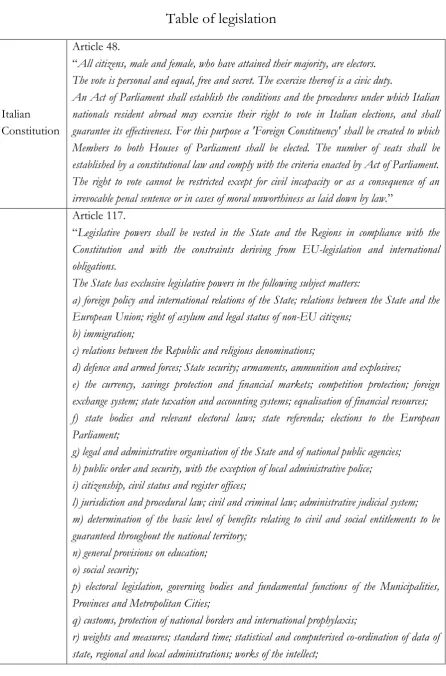
Italian legislative system, the duty to conform to the ECtHR’s decisions can be found in Article 117 of the Constitution. Formally, the competence to monitor the implementation of the
decisions is recognised to the Parliament by the Article 5 §3 let. a bis of Law n. 400 of 1988,2095 as
amended by Law n. 12 of 2006.2096 This provision does not touch the competence of the
Government to choose how and when to implement them. Moreover, anyway, there is no national provision which establishes a procedure to be followed in these cases. This leads to the adoption of several different acts, often expression of the executive power, chosen time by time in relation to the exigencies of the situation.
Any High Contracting Party of the Convention has the duty to implement only the judgments in which it appeared as respondent before the ECtHR, but this does not mean that national law and courts are not influenced also by the others. Due to space constraints, the latter profile will be only briefly addressed before concentrating on the most relevant decisions against Italy.
A recent case decided by the Italian Court of Cassation and that clearly explains the influences of
the ECHR’s judgements is judgment n. 38041/2017.2097 The court of Cassation changed the
decision of the lower court of expelling an individual who was seriously invalid and who proved that his home country did not have any legislative framework to protect people with disability.
The Court of Cassation decided “in the light of the principles stated by the ECtHR and the Constitutional Court”. The decision was taken only a few months after the ECtHR’s case Paposhvili v. Belgium2098
where the Strasbourg judges affirmed that applicability of Article 3 (Prohibition of Torture) of the ECHR to such cases. This is a recent example of how a decision of the ECtHR, even if not directly referred to a certain State, can produce effects in the territories of all the High Contracting Parties of the Charter.
Moving to the main object of this paper, namely the implementation of the judgments in which Italy appeared as respondent, the oldest case is Saadi v. Italy,2099 where the Court found a potential
violation of Article 3 of the ECHR, as a result of Mr. Saadi’s possible deportation to Tunisia.
2095 Law n. 400 (Regulation of the Activity of the Government and Organisation of the Presidency of the Council of
Ministers) 1998 [Disciplina dell’Attività di Governo e Ordinamento della Presidenza del Consiglio dei Ministri]. 2096 Law n. 12 (Provisions on the Execution of the Judgments of the European Court of Human Rights) 2006
[Disposizioni in Materia di Esecuzione delle Pronunce della Corte Europea dei Diritti dell’Uomo].
2097 Judgment 38041/17 [2017] Court of Cassation
<http://www.altalex.com/~/media/Altalex/allegati/2017/allegati-free/cassazione%2038041_2017%20pdf.pdf> accessed 21 September 2017 [Italian].
The findings of the ECtHR led the Italian Court of Cassation to deliver an order2100 stating that
judicial authorities (including Giudici di pace (justices of the peace)), as far as expulsion orders are concerned, should assess the concrete risks that an irregular migrant would face in his or her country of origin before an expulsion order can be executed. Furthermore, on May 28 2010, the Ministry of Justice sent a circular2101 to all the domestic Courts of Appeal stressing the need to
comply with the ECtHR’s interim measures and reaffirming that an evaluation should be made on whether there are “impediments” to expulsion, such as the risk of a violation of rights under Article 3 of the Convention in the country of destination. Regarding the individual measures adopted by the Court, Italy complied with them lifting all the expulsion orders against the applicants and duly paying the sum established as just satisfaction.
The second relevant case is Hirsi Jamaa and others v. Italy.2102 The case concerned the return to
Libya of 11 Somalian and 13 Eritrean intercepted at sea, without any assessment of their individual situation. The Court condemned the State for the violation of Article 3 of the Convention, both for the potential ill-treatment that they could have suffered in Libya and for the subsequent risk of ill-treatment in Eritrea and Somalia if they were to be further deported in those countries. The Court also found a breach of Article 4 for of Protocol n. 4 (prohibition of collective expulsion of alien) and of Article 13 of the ECHR (right to an effective remedy), in conjunction with Article 4 of Protocol n. 4. As far as the execution of this judgment is concerned, it is important to note that the bilateral agreement with Libya, of 2009, which was at the basis of the return of the migrants to Libya, was suspended in 2011 due to the change of the Libyan regime. Italy also provided to the ECtHR assurances that the guarantees contained in national laws and regulations concerning the treatment of asylum seekers were properly applied.2103 In particular, Italy reaffirmed that refugees and asylum seekers would be granted
access to all the relevant domestic procedures in all circumstances, including during military and coast guard operations. Furthermore, the Government informed the Court that the naval units had received the order to disembark all the migrants intercepted at sea in Italy. There, they would be able to file an application for asylum or international protection before the Territorial Commissions. Italy also informed the Court of the adoption of the Legislative Decree n. 142 of 20152104 which implemented the Directive 2013/32/EU (on common procedures for granting
and withdrawing international protection), and the Directive 2013/33/EU (laying down standards for the reception of applicants for international protection). The decree sets up the
2100 Presidenza del Consiglio dei Ministri ‘Relazione al Parlamento Anno 2009 - L’Esecuzione delle Pronunce della Corte
procedures to be followed when a migrant arrives in Italy and includes the possibility to immediately lodge an asylum application which will be evaluated on an individual basis. In principle, this legal background safeguards against expulsions carried out without any individual assessment of the situation of the migrant. For what concerns the individual measures adopted, Italy clarified that the whereabouts of the 9 applicants are unknown, tried to find them contacting the Libyan authorities without success and deposited in an account at their disposal the sum granted as just satisfaction.
The next case, Dhahbi v. Italy,2105 concerns an application from migrants lawfully resident in Italy.
The ECtHR found in this case a violation of Article 14 (prohibition of discrimination) in conjunction with Article 8 (right to respect for private and family life). The victim was a Tunisian national whose application for a family allowance, provided by Section 65 of Law n. 448 of 1998,2106 had been rejected. As a consequence of the judgment, Italy amended that provision
bringing its legislation in line with the Court’s requirements. Article 2 §2 of Decree n. 337 of
20012107 and Article 13 §1 of Law n. 97 of 20132108 recognised access to the allowance,
respectively, to European citizens and to non-Europeans who reside in the country for a long-term period. Also in this case, the just satisfaction was duly paid by the State.
Another interesting judgment, related to the breach by Italy of Article 14 in conjunction with Article 8, is Taddeucci and Mc Call v. Italy.2109 The applicants were a homosexual couple registered
as an unmarried couple in New Zealand; after the facts of this case they married in the Netherlands. When they moved to Italy, the second applicant (Mr. Mc Call), was refused a residence permit which he had requested on family grounds. The refusal was due to the fact that only different-sex spouses could qualify for a residence permit for “family members”. In its judgment, the Court did not question the State’s right to reject an application for a residence
permit to an unmarried couple. However, Italy was condemned since the Court found that as regards the residence permit for family members, the applicants were treated equally to couples in a significantly different situation, namely different-sex couples that decided not to have their relationship legally recognized. The Court found that there was no objective and reasonable justification for this equal treatment of significantly different situations. The discrimination lied in the fact that the two applicants did not have access in Italy to any form of legal recognition of their union. The discrimination was, thus, found in comparison with heterosexual couples who, in abstract, could have married to obtain the permit. Italy has enacted Law n. 76 of 20162110
giving to same-sex couples access to a civil partnership comparable to marriage. Therefore, by
2105 Dhahbi v. Italy App. No. 17120/09 (ECtHR, 8 April 2014).
2106 Law n. 448 (Public Finance Measures for the stabilisation and the development) 1995 [Misure di Finanza Pubblica per la Stabilizzazione e lo Sviluppo].
2107 Decree n. 337 of the Presidency of the Council of the Ministries (Regulation Amending The Decree n. 452 December 21 2000, of the Ministry of Social Solidarity, Concerning Allowance for Maternity and for Family Units with More than Three Minor Children) 2001 [Regolamento Recante Modifiche al Decreto del Ministro per la
Solidarietà Sociale 21 Dicembre 2000, n. 452, in Materia di Assegni di Maternita' e per i Nuclei Familiari con Tre
Figli Minori].
2108 Law n. 97 (Dispositions for the Compliance with Obligations Stemming from Italian’s Membership to the EU) 2013 [Disposizioni per l'adempimento degli obblighi derivanti dall'appartenenza dell'Italia all'Unione europea]. 2109Taddeucci and Mc Call v. Italy App. No. 51362/09 (ECtHR, 30 June 2016).
adopting this piece of legislation Italy has rectified its breaches since transnational same-sex couples are no longer discriminated with respect to different-sex couples. Furthermore, the just satisfaction has been regularly paid by the State.
Sharifi and others v. Italy and Greece2111 is another case which is particularly relevant. The Court
found that the unregistered return of 4 irregular migrants to Greece, on the basis of a bilateral readmission agreement signed in 1999, amounted to a violation of Article 3 of the ECHR, Article 4 of the Protocol n. 4, and Article 13 ECHR in conjunction with Article 3 ECHR and 4 Protocol n. 4. The applicants had neither been granted access to an interpreter, nor to a lawyer, nor to officials capable of providing them with the minimum information about their rights and the procedures to follow in order to seek international protection in Italy. Furthermore, they did not receive any official, written and translated, documents regarding their return to Greece. On July 13 2016, Italy submitted an action plan2112 concerning the implementation of the judgment.
Firstly, this document reaffirmed what already stated in Hirsi Jamaa and others in relation to the possibility to seek asylum in Italy.2113 Secondly, the Government submitted a report2114 of the
Consiglio Italiano per i Rifugiati (Italian Refugee Council) on the reception conditions and on the procedures to apply for international protection in the Adriatic ports. This report was quoted by the State to highlight that in the Adriatic ports the migrants had access to an effective information system in relation to the options available to apply for international protection. Thirdly, Italy affirmed that, at the moment of the submission of the action plan the readmission agreement was applied in compliance with the principles dictated by the ECtHR and that asylum seekers were not subject to it. In support of these statements, the Government provided some statistics highlighting the lowering of the number of migrants sent back to Greece (from 3.433 in 2009, to 426 in 2015, to only 103 in the first half of 2016). Furthermore, a report, published in November 2013 by Medici per i Diritti Umani2115 (Doctors for Human Rights) was quoted by Italy
in its action plan. This report was used to show that irregular migrants who were intercepted on the ships coming from Greece had access to NGOs’ assistance. The officials of the NGOs
interviewed migrants in order to evaluate their legal status. Lastly, the State has underlined that, since 2008, Italy had applied increasingly the sovereignty clause provided for in Article 17 §1 of
Reg. UE 604/2013, derogating in this way from the ordinary criteria established in Dublin III Regulation.
The Sharifi case is particularly interesting because its implementation has received, on September 20-21 2016, a feedback from the Council of Europe’s Committee of Ministers. The latter
highlight several issues raised therein. The NGO complained about the uncertainty of
humanitarian organisation’s (human and financial) resources and of their insufficient presence in
the Adriatic ports. The Committee also paid a special attention to the fact that in the same report the NGO affirmed that the 85% of migrants arriving from Greece were sent back in the next few hours, without any formal procedure, in a clear breach of the above-mentioned bilateral agreement. Another piece of information which is deemed relevant is that in the first half of 2013, only 50% of migrants arriving from Greece had access to the assistance of the organisations. Moreover, the Committee asked for statistical data to clarify the reduction of migrants sent back to Greece, stressing that, without the data related to the total number of arrivals and to the number of asylum requests received, the relevance of the reduction cannot be shown. In its decision, the Committee asks Italy to provide more up to date information in relation to the functioning and funding of the reception system in the Adriatic ports, on the
procedures followed there and on migrants’ access to NGO assistance, and on the numbers
needed to better understand the decrease of migrants sent back to Greece.
Italy communicated an action report on March 16 2017, but the information contained therein were considered by the Committee insufficient to clarify the abovementioned issues. Italy was asked to send further information before the end of September 2017.
Also with regards to the individual measures the Committee of Ministers is not satisfied with the actions of the Italian government. One of the four applicants received international protection in Italy, but the situation of the others is considered not to have been sufficiently clarified in the above mentioned Italian action plan.
The last relevant case is Khlaifia and others v. Italy.2116 The case concerned three Tunisian citizens
who were intercepted at sea by the Italian coastguard and brought to Lampedusa. There, they stayed at an Early Reception and Aid Centre until a violent riot destroyed the centre. The migrants were then transferred to Palermo. Expulsion orders were, then, issued against them; however, they claimed that they did not receive all the relevant documentation. The ECtHR
found a violation of Article 5 of the ECHR (right to liberty and security) §1, §2, §4, and of
Article 13 in conjunction with Article 3 of the ECHR. In order to implement the judgement at issue, an action plan/report was awaited by the Italian Government before June 15 2017 but it is not yet available. However, in the yearly report to the Parliament, the Government stated that the Legislative Decree n. 142 of 2015 would permit to leave the emergency approach, leading, together with previous national provisions, to a structure and flexible system to face the arrival of migrants. Moreover, it is underlined that the new hotspot approach would allow the reception of migrants in structures where operators of the UNHCR and of the IOM can deliver them all of the relevant information. In the report it is also stated that the just satisfaction has been duly paid.2117
2116Khlaifia and others v. Italy App. No. 16483/12 (ECtHR, 15 December 2016).
2117 Presidenza del Consiglio dei Ministri ‘Relazione al Parlamento Anno 2016 - L’Esecuzione delle Pronunce della Corte
In conclusion, ECtHR’s judgments have deeply influenced Italian law and practice. As far as the
last two judgements are concerned, the information on their implementation provided by the Government are not always complete and clear. The shortcomings of the Italian system have been addressed several times by the Court to bring it in line with human rights standards; the full compliance with these standards is a goal still to be reached.
6. How have the recommendations of the European Commission against
Racism and Intolerance and of national human rights bodies concerning the
integration of migrants been implemented?
6.1. The implementation of the recommendations of the European Commission
against racism and intolerance (ECRI)
6.1.1. Implementation at a legislative level
Italy has made relevant efforts to implement the Recommendations of the ECRI,2118 included in
various reports delivered since its creation. However, the last report, published on 7 June 2016,
shows that Italy’s legislation presents some lacunae. For example, Italy has not so far implemented the recommendation to ratify the Protocol No. 12 to the European Convention on Human Rights establishing a general prohibition of discrimination; neither it has enacted an ad hoc ordinary law on equal treatment and prohibition of discrimination,2119 in order to implement
the principle of equality laid down by art. 3 of the Italian Constitution. Nevertheless, although a general prohibition of discrimination does not exist under the national system, there are sector-related pieces of legislation providing for equal treatment between foreigners and Italian nationals. Among the others, the Legislative Decree (LD) No. 286/98, the so-called “Turco
-Napolitano Act”, as amended by Act No. 189/02 of 2002 (known as the “Bossi-Fini” Act) provides for special “Measures for social inclusion” and defines the concept of “Discrimination
based on race, ethnicity, nationality or religion”.2120
In this regard, Italy has to some extent implemented ECRI’s General Policy Recommendation No. 7 to combat racism and racial discrimination. Indeed, Act n. 654 of 13 October 1975 (“Reale Act”), as amended by Act No. 205 of 25 June 1993 (“Mancino Act”) and Act No. 85 of 24