0022-538X/91/010350-06$02.00/0
Copyright© 1991, AmericanSociety for Microbiology
A
Single-Amino-Acid
Substitution in Polyomavirus
VP1
Correlates
with Plaque
Size and
Hemagglutination Behavior
ROBERT FREUND,1 ROBERTL. GARCEA,2 ROLAND SAHLI,3 ANDTHOMAS L.
BENJAMIN'*
Department ofPathology, HarvardMedicalSchool,'
andDivisionof Pediatric Oncology of the Dana-FarberCancerInstitute andthe Children's Hospital,2Boston, Massachusetts02115, and Instituteof Microbiology, Centre Hospitalier Universitaire Vaudois,Lausanne, Switzerland3
Received 3July 1990/Accepted 11 October 1990
Theplaque size andhemagglutination characteristics of five clonedwild-typestrains ofpolyomaviruswere determined. The strains fell into two groups, those with large or small plaques, each with distinctive hemagglutination behavior at different temperatures and pHs. The nucleotide sequenceofVP1, the major capsid protein of the virus, was determined for each of the viral strains. The PTA (large-plaque) and RA (small-plaque) strains differed only at residue 92 ofVP1, where there is aglutamicacid orglycine,respectively (R. Freund, A.Calderone,C. J. Dawe, and T. L.Benjamin,J. Virol.65:335-341, 1991).The same aminoacid differencein VP1correlated with plaque size andhemagglutinationpropertiesof the other sequenced viruses. Mutagenesis converting amino acid 92 from glutamic acid to glycine converted the plaque size and hemagglutination behavior of the large-plaquePTAstrain to thatof asmall-plaque strain. Furthermore, PTA and RA VP1 proteins produced inEscherichiacoli behaved as theirparental viruses did inhemagglutination assays. These results demonstrate that amino acid residue 92ofVP1 is involved indetermining theplaquesize andhemagglutination behavior of polyomavirus and strongly suggest that this region of the VP1 polypeptide interacts directly with cell receptors.
Investigations of the tumorigenic properties of different strains of wild-type polyomavirus have identified "high tumor" strains (inducing a high incidence of tumors) and "low tumor" strains (inducing a low incidence oftumors) (7). Characterization of thegenomic regions responsible
for
the
differences
in tumorigenicity between the high tumorstrain PTA and low tumor strain RA has indicated that a
major
determinant for induction of all tumors ofepithelialorigin
residesin the coding regions of these virus strains (15).Comparison
of the nucleic acid sequences of the PTA andRAstrains revealed multiple single-base substitutions, three of which result in amino acidchanges,oneeach in thelarge Tantigen, in the middle Tand smalltantigens, and in VP1 (13a). Analysis of thetumor
profiles
inducedby
recombinant viruses containingvarious
segmentsofthe PTAand RAviral genome indicated thatVP1 fromPTAis the major determi-nant for the epithelial cell tropism of polyomavirus (13a). Thedifference between the VP1genes ofPTAand RAisasingle
amino acid, aglutamic acidorglycineatresidue 92.This same determinant affects the ability of the virus to replicate andspread inthe animal(9a). In thecurrent study weshow that this amino acid difference inVP1 also deter-mines the plaque size and hemagglutination (HA) behavior of the viruses.
Plaque size variants of polyomavirus have been studied extensively for their differential properties inlyticinfection, transformation, and HA (9, 10, 19, 27, 28). The most consistent difference found between large-plaque (LP) and small-plaque (SP) wild-type virusesis intheiradsorption to cells,with SPviruses
being
more readily adsorbedthanLP viruses. Other differences in virus output, efficiency oftransformation,
orselective advantage during long-termcul-ture have been attributed to this apparent difference in
adsorption.
For example, the mutant Py235 (1), initially*Correspondingauthor.
isolatedastemperature sensitive forgrowth and thoughtto be transformationdefective, was characterized as havinga defect in adsorption leading to an apparent decrease in transformation
efficiency.
HAby
polyomavirus
has been showntobe areliable indicator of thisadsorption
property (6, 11). LPand SP variants have beendistinguished by their HAproperties under differentconditions of pH and temper-ature(9, 12, 19). Although polyomavirus mayrecognize at leasttwoclassesofreceptorproteinsonthecellsurface (2),adsorption
differences betweenplaque variantsappear tobebasedupon
recognition
ofspecific
sialyloligosaccharide
link-ages (3, 4, 16). Thelinkages recognized by
LP and SP variants appeardistinct: both LP and SPvirusesrecognize theunbranchedNeuAca2,3Gal,1,3GalNAcstructureequiv-alently; however, LP variants bind the branched structure
NeuAcoa2,3GalI1,3(NeuAca2,6)GalNAc
withamuchloweraffinity
than SP variants do.Here we report that the LPviruses containglutamic acid and the SP viruses encodeglycineatresidue92of VP1. The resultspresented inthisreport,takentogetherwith data on thetumortropism and replication in mice,suggest thatthis regionofVP1 interacts withcell surfacereceptors.
MATERIALSANDMETHODS
Virus strains. Five
wild-type
virus strains were used in these experiments. The generation of virus stocks from the cloned strains PTA, RA, and A2 has been previously de-scribed (7, 14). The stocks ofP16 andTlp were generated similarly. Lysateswereobtained byinfectinga100-mmplateof
primary baby
mousekidney
cells with asingle large
plaque
isolated from an uncloned stock of the Toronto SPstrain (25, 37) obtained from R. Sheinin or with a small plaque from a P16 stock (9). These
lysates
were used to make viral DNA. TheDNA was isolated by the method of Hirt(21) andpurified
byequilibrium centrifugation in CsCl andethidium bromide. The viralgenomes weremolecularly 350on November 10, 2019 by guest
http://jvi.asm.org/
A.
C.
.4 z E E
a
80
60'
40'
20-6.0
pH
7.0 8.0
pH
D.
7.0 8.0
100-E 60 z
E
a
60-E
40
20'
6.0 7.0 8.0
pH pH
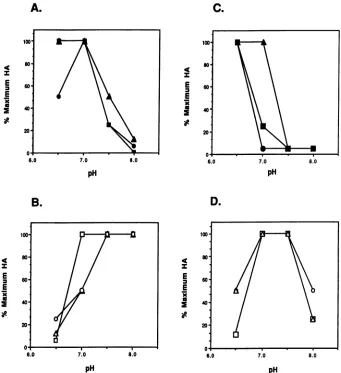
FIG. 1. HAassayofclonedwild-type strains ofpolyomavirus. TheHAtiters ofLP andSPvirusesweredeterminedat4°C (panelsAand
B)andat37°C (panelsC andD)withrespect topH. The titerswerenormalizedtothemaximum titer of thatvirus stockateachtemperature.
Symbols: A, A2; *, PTA;0,Tlp; A, P16; O, RA;0,PTA/RA-VP1.
cloned using standard recombinant DNA techniques (24). Thecloned viral DNAwasexcised from thevector, ligated topromoteself-closure, and usedtotransfect NIH3T3 cells using the DEAE-dextran method (26). The reconstructed viruses were plaque purified on NIH 3T3 cells, and virus stockswerepropagated onbaby mouse kidney cells.
ThemutantPy235, initially derived fromanLPstock that
had been mutagenized (1), was obtained from R. Consigli (Kansas State University) and plaque purified twiceat33°C, first on UClB and then onNIH 3T3 cells. A singleplaque (large and fuzzy
[1])
was used to infect an NIH 3T3 cellmonolayer toobtain avirus lysate.
Plaque assay. The method of plaque assays has been previously described (18). Briefly, 2 x 10⁵ secondarymouse embryo fibroblasts, NIH 3T3 cells, or UClB cells were
seeded on 35-mm-diameter plastic petri dishes. Virus sus-pensions weredilutedin phosphate-buffered saline solution containing 2% calfserum. The virus wasallowedto adsorb for2h,andthe infectedmonolayerswerethen overlaidwith 3 ml ofDulbecco's modified Eagle's mediumcontaining 5% calfserumand0.9%agar. The cells wereincubatedat37°C for10(UClBandmouseembryo fibroblasts)or7(NIH3T3) days. Theplaqueswere photographed after theplates were
further overlaid with Dulbecco's modified Eagle medium containing 0.9%agarand 0.08% neutralred.
HA assay. HA was determined in TD saline (137 mM NaCl,51 mMKCI, 0.38 mMNa2HPO4-7H20,24.8mMTris hydrochloride) by usinga0.2%(vol/vol) suspension of sheep
erythrocytes. TheTD salinewasadjustedtothedesiredpH by titration. Serial twofold dilutions of 50,ulofvirusorVP1 protein solution were made in V-bottom Linbro microtiter
wells, and 50 ,ul of sheep erythrocytes was added subse-quently. Recombinant VP1 protein initially at a
concentra-tion of 1 to 2 mg/ml in 1 M NaCl-0.1 mM EDTA-15 mM 2-mercaptoethanol-10 mM Tris hydrochloride (pH 7.2) was
diluted into TD saline to a concentration of 1 to 2 ,ug/ml immediately before assaying HA titer. The HA titerwasthe
reciprocal of thehighest dilution yielding detectable aggluti-nation.
Nucleotidesequencing.Themolecularlycloned viral DNAs from the strainsPTA, RA, A2, P16,andTlpweresubcloned by standard recombinant techniques (24, 29). The large BamHI-to-EcoRI fragment of the polyomavirus genome
(nucleotide [nt] 1560 to 4632) containing the entire VP1
sequencewascloned into eitherM13mpl9(40)ormWB2311, 4
-x
E2
60E
a 40
20
0ol
100
E
E 60
E
40-
20-B.
6.0
on November 10, 2019 by guest
http://jvi.asm.org/
[image:2.612.130.471.75.448.2]A
10 20 30 40 50
HAPKRKSGVSKCETKCTKACPRPAPVPKLLIKGGMEVLDLVTGPDSVTEIEAFLNPRMGQ
70 00 90 100 11o
PPTPESLTEGGQYYGWSRGINLATSDTEDSPGNNTLPTWSMAKLQLPILNEDLTCDTLQM
130 140 150 160 170
WEAVSVaTEVVGSGSLLDVHGFNKPTDTVNTKGISTPVEGSQYHvFAVGGEPLDLQGLVT
190 200 210 220 230
DARTKYKEEGVVTIKTITKDMVNKDQVLNPISKAKLDKDZYPVEIWHPDPAKNENTRY
250 260 270 280 290
FGNYTGGTTTPPVLQFTNTLTTVLLDENGVGPLCKGEGLYLSCVDIJGWRVTRNYDVHHW
310 320 330 340 350
RGLPRYFKITLRKRWVKNPYPMASLISSLFNNMLPoVoGPMEGENTOVEEVRVYDGTEP
B
RA (SP) P16 (SP)
PTA (LP) TLP (LP) A2 (LP) PY235 (LP)
I2
D T E D S P 6N N TLP T
D 6
E
D E
E N E
370 380 VPGDPDMTRYVDRFGRlKTVFPGN*
FIG. 2. (A)Amino acid sequence ofVP1from the strainRA. Thenucleotide sequenceof the VP1 gene from RAwasdetermined and translatedinto the amino acid sequence. (B) Sequence differences between LP and SP viruses around amino acid 92 of VP1. From the translation ofthenucleotide sequence, the amino acid sequence from residues 86to98is shown for the indicatedvirus strains.Plaquesize is indicated inparentheses.
a vector derived from mWB239 (34) with the M13mpll polylinker.
[image:3.612.78.551.64.235.2]Both strands ofthe VP1 gene from RAwere sequenced. For onestrand,overlappingDNAfragmentsweregenerated bythemethodofHong (22)andsequenced by usingthe M13 universal primer(35). Theopposite strandwassequenced by using Sequenase (United States Biochemical Corporation) with subcloned templates and appropriate oligonucleotide primers. One strand ofthe VP1genefromthestrains PTA, A2, P16, andTlp was sequenced bythe dideoxynucleotide sequencing method by usinga setofoligonucleotide primers complementarytotheplus strand of the VP1 gene(35).The viral DNA from Py235 was obtained by the method ofHirt (21), further purified by electrophoresis in 1% low-melt
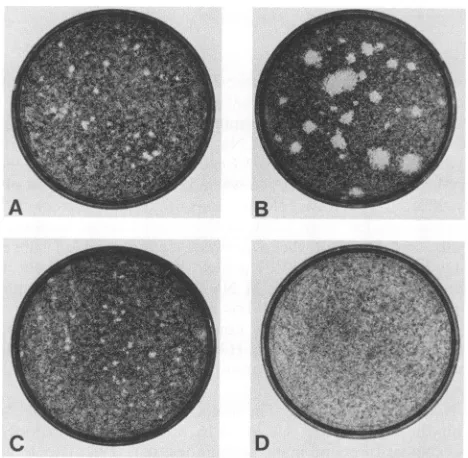
FIG. 3. Plaque size of the site-directed
mutant,
PTA/RA-VP1. Plaque assay was performed onNIH 3T3 cells by usingthe virus stocks RA(A), PTA(B), PTA/RA-VP1(C),
and mock (D).agarose(Seaplaque)inTris-acetatebuffer, phenol extracted, and ethanol precipitated. The VP1 coding region was se-quenced directly from the isolated viral DNA by using Sequenase and appropriate oligonucleotide primers.
Site-directed mutagenesis. Aglutamic acid-to-glycine mu-tation was introduced at position 92 of VP1 from PTA by oligonucleotide mutagenesis. The mutagenesis was per-formed as previously described (5) by using the large BamHI-to-EcoRIfragment (nt 1560to 4632)of PTA cloned into M13mpl9 and the 23-mer
GTGTATTATTCCCTGGG
GAATCC, which iscomplementary to sequence nt 3792to 3812on theplus strand with mismatches (underlined) at nt 3802 and 3803. The construction and propagation of the resulting virus, designated PTA/RA-VP1, was previously described (13a).
Recombinant VP1 protein. The large EcoRI-to-BamHI fragment (nt 1560 to 4632) of PTA was subcloned into
pUC13.
The RA VP1expression
vector,pALVP1, has beenpreviously described(23). In order to express PTA VP1,the HindIII-to-PvuII fragment (nt 3918 to 2032) from the PTA subclone, which contains the VP1 coding sequence from amino acid52 to thecarboxyterminus,was ligated intothe same restriction sites of the expression vectorpALVPltac NCO (17).The NcoIdeletionpresentintheoriginal plasmid was restored upon introduction ofthe PTA fragment. This constructionreplaced theRAVP1codingsequencewiththat ofPTAfrom amino acid52 to thecarboxy terminus ofVP1. RecombinantRAand PTA VP1 proteins expressedin Esch-erichia coli RB791 from these vectors were purified as previously described(23).
Nucleotide sequence accession number. The GenBank ac-cession number for the nucleotidesequencedata ofthe VP1 gene is M34958.
RESULTS
Plaque size and HA behavior of viral strains. The viral DNAs from the strains PTA, RA, A2, P16, and Tlp were molecularly cloned and transfected into NIH 3T3 cells to generate virus stocks. The plaque size of each of these wild-type stockswas determined by plaque assay by using NIH 3T3 cells, UClB cells, or secondary mouse embryo cultures as indicator cells. The strains PTA, A2, and Tlp
on November 10, 2019 by guest
http://jvi.asm.org/
[image:3.612.69.303.466.695.2]A.
.4 z E a E
S
pH
B.
4
E
x
E
S
pH
FIG. 4. HA assay onpurified recombinant VP1 protein. HA titers of purified VP1 protein produced in E.coli were determined at 4°C (panel A) and37°C (panel B) with respect to pH. The assays were performed with equivalent amounts of RA and PTA protein and normalized to maximum titers at each temperature. Symbols: *, PTA protein; O, RA protein.
gave predominantly large plaques, while RA and P16gave
smallplaques (data notshown).
Thesamevirusstockswereusedtomeasureagglutination
of sheep erythrocytes at different pHs and at both 4 and 37°C. The results obtainedwere similarto those previously describedfor SP and LP strains(9). Figure 1 shows the HA behaviorof the LP(PTA, A2, and Tlp) and SP (RAand P16) strains. At both 4 and 37°C, the SP strains RA and P16 hemagglutinated most efficiently at a higher pH (7.5),
whereasthe LP strains PTA, A2, and Tlp hemagglutinated betteratalowerpH (6.5). A comparison of the absolute HA
titersateachtemperature revealed that the LP strainswere
more sensitive to temperature than the SP strains. For example,atpH 7.0, the titer of PTA is 32-fold lowerat37°C thanit isat4°C, while the titer of RA is only 4-fold lowerat
37°C than it isat4°C. The HA behavior of the mutantPy235 wassimilar tothat of the LP strains, as originally reported
(1).
NucleotidesequenceofVP1. Ithas beenshownpreviously by markerrescue experiments (13, 30) that plaque size and HA properties of polyomavirus map to the major coat
protein gene, VP1. To correlate these parameters with the amino acidsequenceofVP1, the nucleotide sequenceof the VP1gene from each strain was determined. VP1 of all five
strains contains 384 amino acids, the same number as
previously reported for VP1 of other polyomavirus strains (8, 33, 36), but the primary sequences differ in certain regions. Figure 2A shows the inferred amino acidsequence of VP1from the RA strain. Acomparison oftheaminoacid sequences ofthe different strains revealed few differences. The PTA and RA VP1 differed only a residue 92; PTA encodedaglutamic acidatthatposition, whileRAcontained
a glycine. Both the LP strain Tlp and the SP strain P16 containaspartic acidatposition88 andisoleucineatposition 291, while theLP strains PTA andA2 and theSPstrain RA encodeaglutamic acidand valineatthesepositions, respec-tively.Since LP and SP viruses have thesameaminoacidat
positions 88and 291, these differences donotaffectplaque size and HA behavior strongly. Figure 2B shows the amino acid sequence aroundposition 92 forthe strains PTA, RA, P16, A2, Tlp, and the mutant Py235. All the LP strains studied contain glutamic acid atposition 92, andall the SP
strains containglycineatthatposition;thus, theamino acid at position 92 in VP1 determines the plaque size and HA properties of the viral strains. The Py235 virus contains a glutamic acid at residue 92 ofVP1, consistent with its LP phenotype. ThePy235 VP1 gene alsocontainstwo noncon-servativeaminoaciddifferences,aproline-to-leucinechange at position 44 and an aspartic acid-to-asparagine change at position 89, and a two-amino-acid deletion at residue 147. These additional differencesmay contributetothe tempera-ture-sensitivegrowth defect ofthe mutantvirus.
Site-directed mutation of the VP1 gene of PTA. The data presented abovesuggest that theamino acidatposition 92 of VP1isresponsible for the differencesinplaquesize andHA behaviorbetween the LP and SP strains. As afurther test, the mutant strain PTA/RA-VP1 constructed from the LP PTA strainby changingthe glutamic acid at position 92 to glycine (13a)wasexamined. Theplaque sizeand HA behav-ior ofthe PTA/RA-VP1 virus was compared with those of PTA and RA. The plaque size of PTA/RA-VP1 was essen-tially identical to that of the SP strain RA (Fig. 3). In addition, PTA/RA-VP1 agglutinates erythrocytes in a man-neridenticaltothatofRA atalltemperaturesand pHs tested (Fig. 1). Thus, a single-amino-acid change at residue 92 in VP1 ofPTA is sufficientto change the plaque size and HA behaviorto those ofanSP strain.
HA properties of recombinant VP1 protein. To show whether the viralproteinVP1byitselfisresponsible forthe agglutination of sheep erythrocytes bythe virusstrains,HA assays wereperformed withpurified recombinantVP1from PTAandRA.The DNAsequences
encoding
VP1fromPTA andRA were cloned into anE. coliexpression
vector(23). Theviral VP1proteins expressedin E. coliwerepurifiedand tested in HA assaysatdifferentpHsandatboth4and37°C. Figure4 shows that therecombinantVP1proteins
from the SP virus RA and the LP virus PTAbehavedsimilarly
totheir parental virus with respectto HA atthe differentpHs
and temperatures. Thus, these data demonstrate that themajor
capsid
protein
VP1 determines the HAproperties
of the virus and that the determinant within VP1 is amino acid residue 92; glutamic acid conveys LPcharacteristics,
and glycineconveys SP characteristics.on November 10, 2019 by guest
http://jvi.asm.org/
[image:4.612.141.488.75.256.2]DISCUSSION
Inthis reportwe demonstrate that the region of the VP1
protein containingamino acid 92 determines theplaquesize
and HA properties ofpolyomavirus. To prove the
impor-tance of this residue in virus-cell adsorption, a single-site mutation was introduced into the LP strain PTA by
site-directed mutagenesis, which changed the glutamic acid at
position 92 of VP1 to glycine. This virus, PTA/RA-VP1, displayed an SP phenotype. Furthermore, by using purified
recombinant VP1proteinfrom PTA and RA in HAassays,it
has beenshown that VP1alone isresponsiblefor agglutinat-ing erythrocytesand that amino acid92determines, atleast
inthesecases, the agglutinating propertiesof the viruses.
Since the virusesusedinthisstudyareindistinguishablein
their overallgrowth propertiesinvitro,weconclude that this
region ofsubstitution(aminoacid 92 ofVP1)does not have a long-rangeeffect on overallprotein structure but is
local-ized within thespecific sialicacid-bindingdomain
responsi-ble for HA and virus-cell adsorption in fibroblasts. This is
supported by X-raydiffraction studies of simianvirus 40 and
polyomavirus, which indicate that the region ofVP1 con-tainingamino acid 92 is inadisorderedloopstructureonthe
outside of the viruscapsid (19a). Furthermore,thisregionof VP1 isamajordeterminant in tumortropism (13a)and viral spread (9a) in mice. These data, taken together, strongly suggestthatthe domainsurroundingamino acid residue 92 in
VP1 interacts directly with the cellular receptors for
poly-omavirus.
HA andrecognitionofspecific sialyloligosaccharide
link-agesby polyomavirusaresimilar in severalrespectstothose
properties of influenza virus and paramyxoviruses (3, 20).
Studies of theescape and horse serum-resistant mutants of
influenza virus have demonstrated that single-amino-acid
substitutions can lead to changes in sialic acid recognition
associated with changes in virus tropism (31, 32, 39). The
recent solution of the structure of the influenza virus HA
molecule cocrystallized with sialyllactose (38) hasprovided
the first insight into the specific chemical interactions
be-tween proteins and sialoglycoproteins. These interactions may be fundamental to a number of important biologic questionsof cell-cellrecognitionandcommunicationaswell
asthoseconcerningviralpathogenesis.Thecrystalstructure
of polyomavirus and characterization of the sialic acid
bindingdomainofpolyomavirusmayprovideanother
exam-ple ofhow glycoprotein recognitionisachieved. ACKNOWLEDGMENTS
Thisinvestigationwassupported by grantR35-CA44343from the
National Cancer Institute to T.L.B. and by U.S. Public Health
ServicegrantCA37667andaJuniorFacultyAwardJFRA158 from
theAmerican CancerSociety toR.L.G. R.S. wassupported bya
grant from the Swiss NationalFoundation and the Swiss League AgainstCancer.
We thank Lynne Montross, Cathy Riney, and Ying Hwang for
excellenttechnicalassistance.
REFERENCES
1. Basilico,C.,andG.DiMayorca. 1974. Mutantofpolyomavirus
withimpaired adsorptiontoBHKcells.J. Virol. 13:931-934.
2. Bolen,J.B.,and R. A.Consigli. 1979.Differentialadsorptionof
polyomavirions andcapsidstomousekidneycellsandguinea pig erythrocytes.J. Virol.32:679-683.
3. Cahan,L.D.,andJ.C.Paulson. 1980.Polyomavirusadsorbsto specific sialyloligosaccharide receptors onerythrocytes.
Virol-ogy 103:505-509.
4. Cahan,L.D.,R.Singh,andJ.C. Paulson.1983.
Sialyloligosac-charidereceptorsofbindingvariants ofpolyomavirus.Virology
130:281-289.
5. Carmichael, G. G., B. S. Schaffhausen, D. I. Dorsky, D. B.
Oliver,and T. L.Benjamin.1982.Carboxyterminus ofpolyoma
middle-sized tumorantigenisrequiredfor attachment to
mem-branes, associated protein kinase activities, and cell
transfor-mation. Proc. Natl. Acad. Sci. USA79:3579-3583.
6. Crawford, L. V. 1962. Theadsorption of polyoma virus. Virol-ogy 18:177-181.
7. Dawe, C. J., R. Freund, G. Mandel, K. Ballmer-Hofer,D. A.
Talmage,and T. L.Benjamin.1987. Variations inpolyomavirus genotype in relation to tumorinduction in mice:
characteriza-tion ofwild-type strains with widely differingtumor profiles. Am. J. Pathol. 127:243-261.
8. Deininger, P., S. Esty, P. Laport, and T. Freidmann. 1979.
Nucleotide sequence and genetic organizationof the polyoma late region: featurescommon to thepolyomaearlyregionand
SV40. Cell 18:771-779.
9. Diamond, L.,and L. V. Crawford. 1964. Some characteristics of
large-plaque and small-plaque lines of polyoma virus. Virology
22:235-244.
9a.Dubensky, T. W., R. Freund, C. J. Dawe, and T. L.Benjamin. 1991.Polyomavirus replication in mice: influences of VP1 type androuteof inoculation. J. Virol. 65:342-349.
10. Dulbecco, R., and M. Vgot. 1960. Significanceofcontinued virus
production in tissue cultures rendered neoplastic by polyoma virus. Proc. Natl. Acad. Sci. USA 46:1617-1623.
11. Eddy, B. E., W.P.Rowe, J. W. Hartley, S. E. Stewart,and R.J. Huebner. 1958. Hemagglutination with the SE polyomavirus.
Virology 6:290-291.
12. Eddy, B. E., and S. E. Stewart. 1959. Characteristicsof the SE
polyoma virus. Am. J. Public Health49:1486-1492.
13. Feunteun, J., L. Sompayrac, M. Fluck, and T. L. Benjamin.
1976. Localization of gene function in polyoma virus DNA.
Proc. Natl. Acad. Sci. USA73:4169-4173.
13a.Freund, R., A. Calderone, C. J. Dawe, and T. L. Benjamin. 1991.Polyomavirustumorinduction in mice: effects of polymor-phisms of VP1 and large T antigen. J. Virol. 65:335-341. 14. Freund, R.,C.J. Dawe,and T. L. Benjamin. 1988.Duplication
ofnoncodingsequencesinpolyomavirus specifically augments thedevelopment of thymictumors in mice. J. Virol.
62:3896-3899.
15. Freund, R., G. Mandel, G. G. Carmichael, J. P. Barncastle, C.J. Dawe, and T. L. Benjamin. 1987. Polyomavirus tumor
induction in mice: influences of viral coding and noncoding
sequences on tumorprofiles. J. Virol. 61:2232-2239.
16. Fried, G.,L. D.Cahan,andJ.C. Paulson.1981.Polyoma virus recognizes specificsialyloligosaccharidereceptors on hostcells. Virology 109:188-192.
17. Garcea, R. L., D. M. Salunke, and D. L. D. Caspar. 1987. Site-directed mutationaffectingpolyomavirus self-assembly in vitro. Nature(London) 329:86-87.
18. Goldman, E.,and T. L.Benjamin.1975.Analysis of hostrange
ofnon-transforming polyoma virus mutants. Virology 66:372-384.
19. Gotlieb-Stematsky, T., and S. Leventon. 1960. Studies onthe biological propertiesoftwo plaque variants isolated from SE polyomavirus. Br. J.Exp. Pathol. 41:507-519.
19a.Harrison,S. C.Personal communication.
20. Hartley,J. W.,W.P.Rowe,R.M.Chanock,and B. E.Andrews.
1959. Studies ofmousepolyomavirusinfection. IV. Evidence formucoprotein erythrocytereceptorsinpolyoma virus hemag-glutination.J. Exp. Med. 110:81-91.
21. Hirt, B. 1967. Selective extraction of polyoma DNA from infectedmousecellcultures. J.Mol. Biol. 26:365-369.
22. Hong,G. F.1982. AsystemicDNAsequencingstrategy. J.Mol.
Biol. 158:539-549.
23. Leavitt,A.D.,T. M.Roberts,and R.L.Garcea. 1985. Polyoma
virus major capsid protein, VP1: purification after high level
expressioninEscherichiacoli. J. Biol. Chem. 260:12803-12809. 24. Maniatis, T., E. F.Fritsch, andJ. Sambrook. 1982. Molecular cloning: alaboratorymanual. ColdSpringHarborLaboratory, Cold Spring Harbor,N.Y.
on November 10, 2019 by guest
http://jvi.asm.org/
25. McCulloch, E. A., A. F. Howatson, L. Siminovitch, A. A. Axeirad, and A. W. Ham. 1959. Acytopathogenic agent from a mammary tumor of a C3H mouse that produces tumours in Swiss mice and hamsters. Nature (London) 183:1535-1536. 26. McCutchan, J. H., and J. S. Pagano. 1968. Enhancement of the
infectivityof simian virus 40 deoxyribonucleic acid with dieth-ylaminoethyl-dextran. J. Natl. Cancer Inst. 41:351-357. 27. Medina, D., and L. Sachs. 1960. The in vitro formation of a
stable cell-virus association with polyoma virus. Virology 10: 387-388.
28. Medina, D.,and L. Sachs. 1963. Studies on the lyticinteraction and cell transformation with a large and asmall-plaque mutant of polyoma virus. Virology 19:127-139.
29. Messing, J.1983. New M13 vectors for cloning, p. 20-78. In R. Wu, L.Grossman, andK.Moldave (ed.), Methods in enzymol-ogy.Academic Press, Inc. NewYork.
30. Miller,L.K., and M. Fried. 1976.Construction ofthegenetic mapof the polyoma genome. J. Virol. 18:824-832.
31. Rogers, G. N., J. C.Paulson,R.S. Daniels, J. J. Skehel, I. A. Wilson, andD.C. Wiley. 1983.Singleamino acid substitutions ininfluenzahemagglutinin change receptor binding specificity. Nature(London)304:76-78.
32. Rogers, G. N., T. J. Pritchet, J. L. Lane, andJ. C. Paulson. 1983. Differential sensitivity of human, avian, and equine
influ-enza virus toaglycoprotein inhibitor ,of infection: selection of receptorspecific variants. Virology 131:394-408.
33. Rothwell,V.M.,and W. R.Folk. 1983.Comparison of theDNA
sequenceof theCrawford small-plaque variant of polyomavirus with those ofpolyomavirus A2 and strain 3. J. Virol. 48:472-480.
34. Sahli, R., G. K. McMaster,andB. Hirt. 1985. DNA sequence comparison betweentwotissue-specific variants of the
autono-mous parvovirus, minute virus of mice. Nucleic Acids Res. 13:3617-3633.
35. Sanger,F., S.Nicklen, and R.Coulson. 1977. DNA sequences with chain-terminating inhibitors. Proc. Natl. Acad. Sci. USA 74:5463-5467.
36. Soeda, E., J. R. Arrand, N. Smolar, J. E. Walsh, and B. E.
Griffin. 1980. Coding potential and regulatory signals of the polyoma virus genome. Nature(London)283:445-453. 37. Stanners, C.P. 1963. Studiesonthetransformation of hamster
embryo cells in culturebypolyoma virus.Virology21:464 476.
38. Weiss,W.,J.H.Brown,S.Cusack, J. C. Paulson, J. J.Skehel,
and D. C.Wiley. 1988. Structureof the influenza virus haemag-glutinincomplexed with its receptor, sialic acid. Nature (Lon-don) 333:426-431.
39. Wiley, D. C., I. A. Wilson, andJ. J. Skehel. 1981. Structural identification of the antibody binding sites of Hong Kong influenzahemagglutinin and their involvement inantigenic vari-ation. Nature(London) 289:373-378.
40. Yanisch-Perron, C., J. Vieira,andJ. Messing. 1985. Improved
M13 phage cloning vectors and host strains: nucleotide
se-quencesoftheM13mpl8andpUC19vectors.Gene 33:103-119.