CopyrightC) 1987,American SocietyforMicrobiology
Characterization
and Nucleotide
Sequence
of Two
Herpes Simplex
Virus
1Genes
Whose Products Modulate
a-trans-Inducing
Factor-Dependent Activation of
aGenes
JENNIFER L. C. McKNIGHT, PHILLIP E. PELLETT,t FRANK J.JENKINS, ANDBERNARD ROIZMAN* The MarjorieB. Kovler Viral Oncology Laboratories, The University of Chicago, Chicago,Illinois60637
Received 21 October 1986/Accepted 23 December 1986
Herpes simplexviruses encodeastructuralproteinwhichinduces, intrans,expressionofagenes,thefirst setofgenestobe expressedafter infection ofpermissivecells. Thisprotein, designatedasthea-trans-inducing factor(a-TIF),mapswithin the BamHI Ffragment,and itsgenehas beensequenced.In thecourseofmapping the domain of theoa-TIFgene,itwasnoted that theintact BamHIfragmentwasconsistentlymoreeffectivethan the complete domain ofthe a-TIFgeneininducingexpressionofagenes. Cotransfections of DNAfragments containinganaindicatorgeneand thea-TIFgenewith variousregionsof theBamHI F DNAfragmentrevealed that thesequenceslocated3' tothe ot-TIF generaised theactivity of the a-TIFgenetonearlythe samelevel
asthat of the intact BamHI Ffragment. Thenucleotidesequence andS1nucleasemapping analysesrevealed the presence of two transcribed open reading frames capable of encoding polypeptides with translated molecular weights of 77,357 and 70,527. To determine whether the effect of these sequences in trans on
a-TIF-mediatedinduction ofa geneswasduetoexpression of thesegenesorcompetition fortranscriptional
factors,weconstructedplasmidsthat containedbothgenes.Into eachorboth of thesegenes weinserted,near
the translation initiation sites, 14-base-pair linkers carrying translational stop codons (TAG) in all three reading frames. Analyses of these plasmids indicated that the gene encoding the 70,527-molecular-weight polypeptide reduceda-TIF-dependentinductionofagenes, whereas thegeneencodingthe
77,357-molecular-weight polypeptideincreased thisactivity. Insertion of the stop codons abolished these activities.
The herpes simplex virus 1 (HSV-1) genes form at least
five groups (a, Pl,
P2,
yl, and Y2), whose expression iscoordinately regulated and sequentiallyordered inacascade
fashion (15).Thefiveoa genes(a0, a4, x22, ox27,and ax47)are
expressed first and are operationally defined as capable of
beingtranscribed in the absence of denovoproteinsynthesis
(15, 16). Although the functions of the a genes arefor the
most part unknown, the products ofat least three a genes
(a4, ox22,anda27)have been showntobe requiredforviral
geneexpressioninproductivelyinfected cells (8, 18, 34, 36, 38).
Aunique characteristic of HSVgene regulation is that a
structural component of the virion induces ao gene
expres-sion (3, 31). Specifically, chimeric genes consisting of the structural sequences of an indicatorgene (e.g., the HSV-1
thymidine kinase [TK]) linked to the 5' nontranscribed promoter-regulatory domain of a genes (e.g., a-TK) and
resident incellscanbe induced by infection of the cells with HSV-1 in the absence of de novo protein synthesis. The
induced chimeric genes are regulated as agenes. The gene
specifying the viral at-trans-inducing factor(a.-TIF)has been mapped and sequenced(6, 7, 30). In thevirion, itis located inthetegument,i.e., between the capsid and theenvelope of thevirus (3, 6).
a-TIF maps in the BamHI F fragment of the HSV-1
genome. In the course of studies of the induction of
a-chimeric genes in transient-expression systems, we noted
that the intact fragment induced the chimeric genes more
efficiently than did the intact domain of the a-TIF gene.
* Corresponding author.
tPresent address: Centers for Disease Control, Atlanta, GA
30333.
Moreover,theportionsof the BamHI Ffragmentlocated 3' tothea-TIFgenerestored, intrans,theactivityof thea-TIF
gene to approximately the same level as that of the intact
BamHI F fragment (27). Neitherfragment affected
expres-sion ofthe chimeric atgenesin the absence ofa-TIF. Earlier studiesbyHalletal. (13)haveshownthat BamHI-Fencodesseveralgenes.These studies indicated thathybrid selectedtranscriptsof thetwogeneslocated 3' tothea-TIF
genespecify,inaninvitro translation system, proteinswith apparentmolecularweightsof70,000and85,000.Toexplore further the observedphenomenon,wemappedthe
transcrip-tion initiatranscrip-tion and terminatranscrip-tion sites and sequencedthe two
genes. The nucleotide sequencespredictthatthetwogenes
specify proteinswithtranslated molecularweights of 70,527 and77,357.Inthispaper,wereportthatsubfragments ofthe HSV-1 BamHI Ffragment containinganuninterruptedcopy
of the gene specifying the 77,357-molecular-weight protein enhanced, in trans, the activity of the a-TIF gene. In contrast, the subfragment containinganuninterruptedcopy of the gene specifying the 70,527-molecular-weight protein
reduced theactivity ofa-TIF, either aloneorin thepresence
of thefragment specifyingthe77,357-molecular-weight
pro-tein.
MATERIALS ANDMETHODS
Virus and cells. The properties and propagation of HSV-1(F), the prototype HSV-1 strain used in this laboratory,
were described elsewhere (9). BHKtk- cells (BM0348A)
were obtained from the Mutant Cell Repository, Camden, N.J.
RNA isolation. Cytoplasmic RNA was extracted at 14 h postinfectionfrom Vero cellsinfected with 20 PFUpercell aspreviouslydescribed (17).
992
on November 10, 2019 by guest
http://jvi.asm.org/
MODULATION OF a-TIF-DEPENDENT HSV-1 a GENE ACTIVATION 993
TABLE 1. Recombinant plasmids used in these studies
Plasmid Descriptiona DNA Reference
fragment no.
Plasmids containingox-TK chimericgenesb
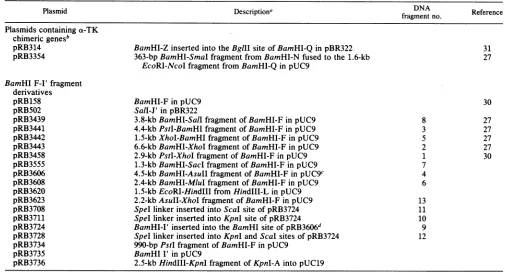
pRB314 BamHI-Zinserted into theBglII site of BamHI-Q in pBR322 31
pRB3354 363-bpBamHI-SmaI fragment from BamHI-N fused to the 1.6-kb 27
EcoRI-NcoIfragment fromBamHI-Q in pUC9 BamHI F-I' fragment
derivatives
pRB158 BamHI-F in pUC9 30
pRB502 SalI-J' in pBR322
pRB3439 3.8-kbBamHI-SalI fragment of BamHI-F in pUC9 8 27
pRB3441 4.4-kbPstI-BamHI fragment of BamHI-F in pUC9 3 27
pRB3442 1.5-kbXhoI-BamHI fragment of BamHI-F in pUC9 5 27
pRB3443 6.6-kbBamHI-XhoI fragment of BamHI-F in pUC9 2 27
pRB3458 2.9-kbPstI-XhoI fragment of BamHI-F in pUC9 1 30
pRB3555 1.3-kbBamHI-SacI fragment of BamHI-F in pUC9 7
pRB3606 4.5-kbBamHI-AsuII fragment of BamHI-F in pUC9c 4
pRB3608 2.4-kbBamHI-MluI fragment of BamHI-F in pUC9 6
pRB3620 1.5-kbEcoRI-HindIII from HindIII-L in pUC9
pRB3623 2.2-kbAsuII-XhoI fragment of BamHI-F in pUC9 13
pRB3708 SpeI linker inserted into ScaI site of pRB3724 11
pRB3711 SpeI linker inserted into KpnI site of pRB3724 10
pRB3724 BamHI-I'inserted into theBamHI site ofpRB3606d 9
pRB3728 SpeI linker inserted into KpnI and ScaI sites of pRB3724 12 pRB3734 990-bpPstI fragment of BamHI-F in pUC9
pRB3735 BamHI I' in pUC9
pRB3736 2.5-kbHindIII-KpnI fragment of KpnI-A into pUC19
aRefer to Fig. 1 for fragment designations and relevantrestrictionenzyme sites.
bThe a-TKchimeras are under promoter-regulatory control of thea4gene. cActual
right
endpoint is 130 bp 3' of theAsuIIsiteat residue 31 (Fig. 2).dFragments areoriented as in the viral genome.
Si nucleasemapping. DNAfragments were generated by restriction endonuclease cleavage of recombinant plasmid DNA. To label the 5' end,welabeledDNA fragmentswith polynucleotide kinase and
[.y-32P]ATP
(New England Nu-clear Corp., Boston, Mass.) as previously described (26). DNAfragmentswerelabeledatthe 3' end withthe Klenowfragment
of Escherichia coliDNApolymerase and 100 p.Ci of[a-32P]dCTP
as previously described (26). End-labeled DNA wasaddedto150p.g
of infected-cell cytoplasmicRNA andprecipitated with2volumesof coldethanol. Thepellets were dissolved in20 ,ul of hybridization buffer (80%form-amide, 0.4 M NaCl, 1 mM EDTA, 40 mM PIPES
[piperazine-N,N'-bis(2-ethanesulfonic acid], (pH 6.4), dena-tured by incubation at 70°C for 10 min, and hybridized overnightat61°C. Hybridizationwasterminatedby addition of10volumesof
S1
buffer(250mMNaCl, 1 mMZnSO4,
30 mM NaOAc, 5% glycerol, pH 4.6). S1 nuclease (167 Vogt units; BoehringerGmbH,
Mannheim, Federal Republic ofGermany)
wasadded, anddigestion carriedoutfor30min at 45°C. The samples were extracted withphenol-chloroform and then chloroform. Carrier tRNA was added to each sample, followed by ethanolprecipitation. Samples
wereseparated by electrophoresis in denaturing 8% polyacryl-amidegels.
DNA sequencing. Cloning, sequencing, and
assembly
of the DNA sequences and subsequentanalysis
of thecom-pletedsequence weredone as
previously
described(29).
Plasmid constructs. The structures ofall ofthe
plasmids
carrying
HSV-1 DNAfragments
used in the testsof a-TK chimeric geneexpression
are shown in Table 1. The two HSV-1a-TKchimeric geneconstructs used in these studies (pRB314andpRB3354)areboth under controlof the a4 genepromoter-regulatory domainbut differin the size of the a4 domain fused to the TK gene (Table 1). pRB3724 was constructedbyaddition of the BamHI I'fragment(pRB3735) to pRB3606 to reconstruct the BamHI-I'-Fjunction in the viral orientation. pRB3711, pRB3708, and pRB3728 were derived from pRB3724 by insertion of a 14-base-pair (bp) SpeI linker (New England BioLabs, Inc., Beverly, Mass.) into the KpnI site ofopen reading frameA, the Scalsite of openreadingframeB,orbothsites, respectively(seeFig.1). The KpnI site was treated with T4 polymerase (New En-gland BioLabs) before ligation, and both pRB3711 and pRB3708were recutwithSpeI(NewEnglandBioLabs)after colony purification to remove multimer linker insertions before religation. Plasmid DNA was isolated by the Triton X-100procedure (26) and purified by two cesium chloride density gradient centrifugations. DNA used in transient-expression assayswasgreater than80% supercoiled.
Transient-expression assays. Transient-expression assays weredone as described elsewhere(20, 30). Briefly, BHKtk-cellswere seeded at aninitial
density
of 0.5 x 10⁵to1.0 x105
cells per well in 10-cm2 six-well dishes (Costar, Cambridge, Mass.) and grown for 12 to 16 h in Dulbecco modifiedEaglemediumcontaining
5%fetal calfseruminanatmosphere of 5%
C02-95%
air. Cells were transfected in parallelonreplicatedishes withplasmidDNA(adjustedto5 ,ug of total DNA per well withpUC9
vectorDNA)
after calcium phosphateprecipitation (12)
and shocked 3.5 hposttransfection
with15%glycerol
(11, 35).
The cells were maintained in Dulbecco modifiedEagle
mediumsupple-mented with5% fetal calfserum.The cultureswere replen-ished with fresh mediumat24 h and harvestedat40to48 h. TKassays. TK assayswere doneas
previously
described VOL.61,1987on November 10, 2019 by guest
http://jvi.asm.org/
(20, 31). TK activity is expressed as counts per minute of [3H]thymidine converted to thymidylate per microgram of cell lysate protein.
RESULTS
Sequences located 3' to the at-TIF gene enhance a-TIF-mediated induction of the a-TKindicatorgene. Inthe process ofmapping theot-TIFgene,wenoted that theintact BamHI F DNA fragment reproducibly induced ot-TK genes to a
higher
level
of activitythan did the DNAfragmentencoding the structural sequences and the promoter-regulatory do-main of the ot-TIF gene (27). Figure 1 shows the DNA fragmentsderived from the HSV-1 genome and tested in this study.Table 2illustratesthisphenomenon and demonstrates that sequences mapping 3' to the ot-TIF gene enhance, in trans,ot-TIF-dependentinduction ofot-TKgenesspecifically asfollows. (i)Both theintactBamHI Ffragment,clonedas pRB158, and fragment 2 reproducibly induced the a-TKA.
B. 3,
B HB SSCP
C. 9C
*313,
ZJ
M iSK A
A B
D.
R-gionS*qu*nced
O i 2 5xiOOObp
E. 1
2 i
3
4 i
5
6 p
7 I
[image:3.612.321.555.94.418.2]i-8 1
TABLE 2. Mappingofat-TIF-enhancing activitywithin the BamHI Ffragmentof HSV-1
HSV-1 test Induction
sequencea levelb
a-TKC plus: Expt 1
None... 1.0
BamHI-F... 20.0
Fragment2 ... 20.0 Fragment3 ... 13.0 Fragment 5 ... 1.3 Expt2
None... 1.0
Fragment 1 ... 5.4 Fragment 2 ... 14.0 Fragment 3 ... 4.4 Fragment5 ... 1.0 Expt3
None... 1.0
Fragment 1 ... 3.6 Fragment4 ... 1.0 Fragment 6 ... 1.4 Fragments 1 + 4 ... ... 5.6
Fragmnents 1 + 6 ... ... 12.0
Expt 4
None ... 1.0
Fragment1 ... 10.0 Fragment7 ... 1.0 Fragment 8 ... 1.0 Fragments 1 + 7 ... ... 9.6
Fragments 1 + 8 ... ... 14.0
aRefertoFig. 1.
bValuesareexpressedasthe ratio of the level ofinducedexpressionover thelevel of basalexpressionintransient-expressionassayssimilartothose described inFig.5.Ratiosarebasedon countsperminute of[3H]thymidine
converted to thymidylate per microgram of total cellular protein. Basal expressionisgivenavalue of 1.0. Values in thiscolumnshould becompared
withthoseobtainedin the sameexperiment by using fragment1intheabsence
of additionalfragments.
cThe a-TKindicatorgeneused in theseexperimentswasineitherpRB314
(experiments 1, 2,and4)orinpRB3354 (experiment 3).
9
~-10
p-11
-V) L
TAG
TAGI
TAG
I
13
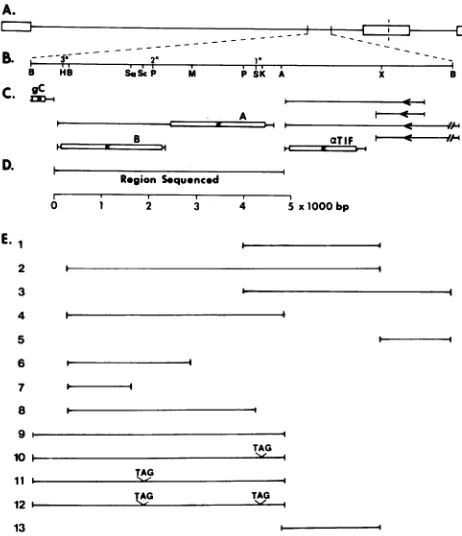
FIG. 1. (A) Schematic representation of the HSV-1 genome
showing the region relevanttothese studies. (B) Expansion of the region depicted in A which contains both the 0.7-kb BamHI I' and the adjacent 8.1-kb BamHI Ffragments of the HSV-1(F) strain. Numerals with asterisks indicate the locations of the 5' and 3'
end-labeledprobes used in S1 analyses. Only the relevant restriction endonucleasecleavage sitesareindicated. Abbreviations: A, AsuII;
B, BamHl; H, HindlIl; K, KpnI; M, Mlul; P, PstI; S, Sall; Sa, SacI; Sc, ScaI; X, XhoI. (C) Domains (single and double lines), orientation (arrowheads), and codingsequences(double lines) of the
mRNAs mapped to the BamHI-I'-F region from open reading
frames Aand B. The line drawings with arrowheadstothe right of
a-TIF represent additional mRNAs encoded by the BamHI F fragment whichweremapped byHallet al. (13). gC, Glycoprotein C.(D) Location of the 4,866-bp region sequenced in thisstudy. This
region extends from the 3' terminus of the a-TIFgenepreviously
sequenced (30)tothe 3' coterminus of thetranscribed domains of
the genes encoding the 70,527- and 77,357-molecular-weight
polypeptides. (E) The domains of the cloned HSV-1DNAfragments
tested in transient expression systems in this study. The cloned DNA constructsaredescribed in Table 1.
indicator geneto levels approximately twofold higher than those observed with fragment 1 or 3, which contained an
intact ot-TIF gene (experiments 1 and 2, Table 2). (ii) The DNA sequences 5' from the cx-TIF gene, represented as
fragment 5,hadnoeffectonot-TIF-mediatedinduction ofthe a.-TK gene. In contrast, the sequences 3' from the at-TIF gene (fragment 4) increased ot-TIF-dependent induction of a-TK gene tolevelshigherthan those observed withot-TIF alone. In the absence of
at-TIF,
this effect was abolished (experiment 3, Table 2). (iii) Hall et al. (13) reported the mapping oftwogenesin the segmentof BamHI-F, which in theexperiments above are shown toincrease the activity of the ao-TIF gene. Preliminary studies on a subclone of frag-ment 4(pRIB3607),
containing the proximal 3' gene, sug-gested that it reduced the activity of the ot-TIF gene (27). Experiment 4 (Table 2) indicated that the DNA fragment containing the distal 3' gene (fragment 6) enhanced the activityof the ot-TIF gene. Deletion of the 5' end of the distal gene(fragment7) abolished this effect when compared with results ofusingthe ot-TIF gene alone.These observations raised the question of whether the effect of the sequences mapping 3' from the ot-TIF gene reflected competition for cellular factors able either to en-hanceorrepress ot-TIFactivityorwhether these sequences
--- I
aTIF .4 #
on November 10, 2019 by guest
http://jvi.asm.org/
[image:3.612.64.295.268.536.2]MODULATION OF a-TIF-DEPENDENT HSV-1
a
GENE
ACTIVATION 995encoded functions capable of modulating
ax-TIF
activity. To answer these questions, we sequenced and analyzed the transcriptional domains of the DNA sequences downstream from theax-TIFgene.Thesequenceof the
BamHI
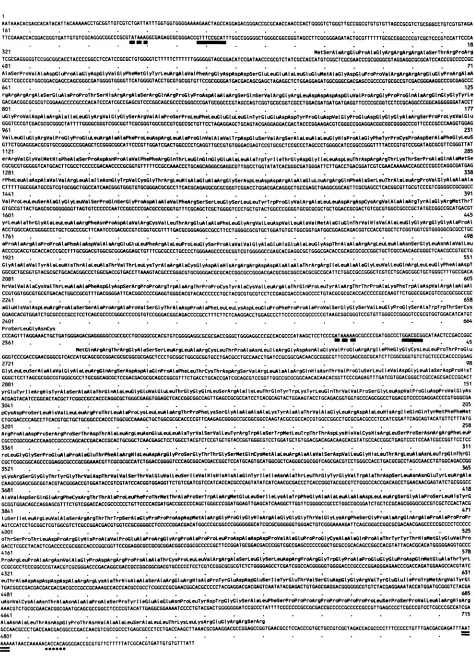
F fragment domain 3' from the &-TIF gene. We sequenced (Fig. 1 and 2) a 4,866-bp DNAsegment
of HSV-1(F) DNA extendingleftward
in the proto-type orientation from the polyadenylation signal shared by ot-TIF and two other previously described mRNAs (13) to the polyadenylation signal for glycoprotein C (10). We included in the sequence 146 nucleotides (residues 1 to 146)previously
reported at the 3' end of theaxTIF
gene (30). In addition, the 5' end of the sequence reported here overlaps asequence
previously reported for HSV-1(17) by 619 nucleo-tides (7). There is also an overlap of 72 nucleotides at the 3' end of this sequence with the sequence reported for the 3' end of glycoprotein C (10). The bulk of the nucleotidesequence
was obtained from a panel of sonication-derived shotgun clones from theBamHI
F fragment which hybrid-izedtothe 3,652-bpBamHI-to-SalI
fragment from BamHI-F(Fig.
1). Additional clones were obtained as required to fill in gaps in the sequence and to sequence the portion of thegenome
extending into theBamHI
I' fragment. All cloning was done in the pUC9 vector. Both strands of each clone were sequenced with the forward and reverse M13sequenc-ing
primers,
and the sequence shown was determined from double-stranded data. Codon usage analyses, done to mini-mize the possibility that the sequence contained reading frameerrors,demonstrated that the nucleotide sequences of two genes have codon usage patterns typical of otherse-quenced
HSV genes sequenced in this laboratory. In addi-tion, sincethe sequence across the BamHI-F-I' junction was not determined, electrophoretic separations in high-resolution polyacrylamide gels were done to rule out thepossibility
thatanadditionalsmallBamHI
fragment couldbe locatedbetween theBamHI
F and I' fragments. Two plas-mids were used for this analysis.pRB3715
contains the BamHI I' fragment cloned into theBamHI
site of pRB3443 toreproduce
the junction in the viral orientation, andpRB3736
contains a 2.5-kilobase (kb)HindIII-KpnI
fragment which spans the junction. Both clones were cleaved with HindIII and AccI to yield 228-bp fragments spanning thejunction.
Electrophoresis of the DNA fragments on a 21-cm 8% polyacrylamidegel failed to show any differences in theirmigration
(data not shown). A minimum fragment of 6 bp would result from tandem BamHI sites, and a shift of this size canbe easily resolved on this gel.Hall et al. (13) reported that this region encodes two mRNAs. One was estimated to be 4,700 nucleotides long
(minus
polyadenylation) and to encode aY2
protein with anapparent
molecular weight of 70,000. The other mRNA was estimatedto be 2,500 nucleotides long (minuspolyadenyla-tion)andto encode a ylprotein with an apparent molecular weightof 85,000. The nucleotide sequence (Fig. 2) indicates the
presence
of two long nonoverlapping reading frames with codonusagetypical of HSV genes and corresponding to the transcripts described by Hall et al. (13). To verify the openreading frames, we mapped the 5' terminus of the 4.7-kb
transcript
with the end-labeled probes indicated in Fig. 1.Hybridization
of the late cytoplasmic RNA topRB502
DNA thathad been cleaved withSall
(probe 1*, Fig. 1) and 5' end labeled protected a DNA fragment 385 ± 5 bp long (Fig. 3) from Si nuclease digestion. This located the 5' end of the mRNA at nucleotide 232 ± 5, 28 nucleotides downstream from the sequence TATAAA beginning at position 204, which could serve as the TATA box (4). Two sequences,AGGGCGGCCC
beginning
atposition
191 and GGGGCG GCGGbeginning
atposition
250,
differ by 3 and 2nucleo-tides,
respectively,
from the consensus binding sequenceGGGGCGGGGC
of the
transcriptional
factor
SP1
(5).
5'
mapping
of the
-Yl
2.5-kb mRNAwasdone with the end-labeled probes shown inFig.
1.Hybridization
of late cytoplasmic RNA topRB3734
DNA that had been cleaved withPvuI
(probe 2*,Fig.
1)
and 5' end labeledprotected
a DNAfragment 258 ± 3bp
long
from Si nucleasedigestion
(Fig.
3). This located the 5' end ofthetranscript
toposition
2541 ± 3, which is28bp
downstream of thesequence
ATAAAAA, which could serve asthe TATA box(4).
Sequences
which differfrom theSP1
binding
site consensussequence
by
two nucleotides and one nucleotide were foundbeginning
at positions 2218 and2240,
but on theopposite
strand.Previous work has shown that both transcripts are coterminal atthe3' end
(13).
Hybridization
of late cytoplas-mic RNA topRB3620
DNA that had been cleaved withHindIII
(probe
3*,
Fig.
1)
and3' end labeledprotected DNAfragments
118 to 119bp long
from Sinucleasedigestion(Fig.3).
Thepresence
ofbands
differing
by
1 nucleotide in length is due toimprecise
digestion by
the Sienzyme and the high resolution of thegel
in thisregion.
This locates the 3' terminus of both mRNAtranscripts
tonucleotide 4818 ± 3, which is 21 nucleotides downstream ofthe polyadenylationsignal
AATAAA atposition
4798. The 5' and 3' termini of the twotranscripts
yielded
valuesof4.59 and 2.27kb for the sizes of thenonpolyadenylated
mRNA, and thesecorre-spond, respectively,
to the 4.7- and 2.5-kbtranscriptsprevi-ously mapped
tothisregion
(13).
Asequence,
CGTGTTCT,beginning
atposition
4831corresponds
to the consensussequence
YGTGTTYY(Y
=pyrimidine)
which is found downstream ofthepolyadenylation
signal
ofmanyeucary-otic
genes
and which has been shown to be a factor in efficient formation of3' termini (28).The ATG codons
predicted
toinitiate translation from the twoopen
reading
frames werelocated bycomparison of the nucleotidesequence
with theconsensus sequencedescribedby
Kozak(19).
Inthe caseofthe4.59-kbRNA, the sequence CCACCATGTwaslocated atposition
427. Since it shares afive-of-six match with the consensus sequence CCRCC
ATGG,
this ATG is alikely
candidate fortranslation initia-tion. The nextATG,
located atposition
512, shares only one ofthesix nucleotides withtheconsensusand,moreover, this codonislocatedin anotherreading
frame. Mapping of the 5' end of themessage
at nucleotide232,
combined with thepredicted
initiator ATG atnucleotide 427, givesthe 4.59-kb RNA a 5' nontranslated leadersequence
195 nucleotides long.The first
potential
translationinitiation codon downstream ofthe 5' terminus of the 2.27-kb RNA is located at position 2586 and contains a four-of-six match with the consensussequence
(19).
The nextpotential
initiating codon is found 603 nucleotides downstream in asuboptimal
environmentfor translationinitiation,
in frame with the upstream ATG atposition
2586. Given that the ATG atposition
2586is likely to be theinitiating
codon,
the 5' nontranslated leaderse-quence
would be 45 ± 3 nucleotides long.The molecular
weights
andproperties
of the twopolypeptides
aspredicted
from thesequence
analysis. Thepredicted
translation initiation site for the 4.59-kb RNA located atposition
427 is followedby
anopen reading frameextending
tothenext in-frame translation termination codon atposition
2419. Thepolypeptide
encoded in this openreading
frame would consist of 664 amino acids with a translated molecularweight
of70,527 (open
reading frameA,VOL.61, 1987
on November 10, 2019 by guest
http://jvi.asm.org/
mm.
~~~~~~~~~~~~~~~~~~~~~~~~~~~~~~18
321 MetSerALaArgGluProALaGlyArgArgArgArgALaSerThrArgProArg
481 71
641 125
801 177
961 231
1121 285
erArgVaLGtyVatMetHisPheAtaSerProAspAsnProAtaVatPhePheArgGtnThrLeuG(nGtnGtyGtuAlaLeutAaTrpTyrIl(eThrGtyAspGLyIlteLeuAspLeuThrAspArgArgThrLysThrSerProAtaGtnAta4etSe
1281 338
1441 391
1601 445
1761 498
aProA(aArgALaProProALaPheALaAspVaLALaArgGtuGLuLeuPheArgA(aLeuProLeuGLySerProA(aVa(Va(GtyAlaGLuHisGtuALaLeuG(yAspThrALaAtaArgArgLeuLeuAtaAsnlSerGtLeLuAsflAtaVaILeu
1921 551
GtyAtaA(aVa(TyrA(LaeuHisThrAtLeteALaThrVatThrLeuLysTyrAtaArgALaCysG(yAspA(aHisArgArgArgAspAspAtaALaALaThrArgArglLeLeuALaALaG(yLeuVaLLeuG(nArgLeuLeuGlyPheAlaAspT
2081 605
2241 658
2401 664
ProSerLeuGLyAsnCys
2561 mm45
MetGtnArgArgThrArgGtyAtaSerSerLeuArgLetA(aArgCysLeuThrProA(aAsnLeuIlLeArgGLyAspAsnAtaGLyValProGluArgArgILePheGlyGtyCysLeuLeuProThrProGtu
2721 98
GtyLeLeuSrA(a(aVaGtyAaLeurgGinrgSeAspApALaInPrA(&PeLeuTrCyshrAsArgSrVatrgL taA(ArgGnHissnThVaaPoGsuerLeuLeVaAspSyeeuAaSeAspPoHis
2881 151
yrGtuTyrlLeArgHisTyrAtaSerAtaAtaThrGtnALaLeuGtyGtuVatGLuLeuThrGtyG(yG(LeLuSerArgA(aI(LeLeuThrGLnTyrTrpLysTyrLeuGtnThrVatValProSerGLyLeuAspVatProGluAspProVa(GLyAs
3041 205
3201 . . ... 258
ArgPoALaspPrSerrgPrSerTrAsphrAaLeurgLeAsnGuLeLeuAaTyratSeVateuTyArgTpAtSerTp#4eLeuTpThThrApLysisVaCysisArLeuSrProerAnArgrgPhLeP
roLeutyGLSerPrGLuAaProtaGtuhrPhAtaAgHisLuAsprgGlyroSeGtyTrThrGySerMetGnCysMtALaeuArALaAsVaeSrAspVALeuLyHiLeuThArgL eATrsnLeurpG(TrrG
3521 . . ... 365
yLysArgSerGtyGLyThrTyrGLyThrVatAspThrVatVaLSerThrVatGIuVa(LeuSerIlteVaLHisHisHisALaGLnTyrILteIleAsnAtaThrLeuThrG(yTyrGtyVa(TrpAtaThrAspSerLeuAsnAsnG(uTyrLeuArgALa
AtaVatAspSerGLnGLuArgPheCysArgThrThrAtaProLeuPheProThrN@etThrALaProSerT'rpAtaArgMCtGtuLeuSeri
LeLysAtaT'rpPheGLyA(aALaLetA(aALaAspLeuLeuArgSerGLyALaProSerLeuHisTyrG
3841 ... . ... 471
4001 . ... 525
4161 . .578
4321 ... 631
euThrA(aAspAspAspAspAspALaArgArgLysA(aThrHisALaAlaSerALaArgGtuArgHisALaProTyrGLu&AspAspG(USerIteTyrGLuThrVa(SerGtuAspGLyGtyArgVaLT'yrGLuGluIL'eProTrpHetA'rgVa(TyrGL
4481 .. . ... 685
4641 .. ... 715
A(aAsnALaLeuThrAsrAspGtyProThrAsnVaLALaALaLeuSerALaLeuLeuThrLysLeuLysArgGluGtyArgArgSerArg
4801 ..
[image:5.612.78.552.37.697.2]AAAAATAACCAAAAACACCACAGGGGACCGCGTGTTCTTTTTATCGCACGTGATTGTGTGTTTATT
FIG. 2. Nucleotide andpredictedaminoacid sequenceofopenreadingframesAand Bencodingthe70,527- and77,357-molecular-weight polypeptides. The solidlines indicatetheapproximatelocations ofcappingsites determined fromSi nuclease
a'nalyses.
Theboldface dots indicate the3'coterminus of the mRNA encodedbyopenreadingframes A and B Thebrokenlinesindicatethepositionsof the TATAboxes upstreamfromthecapping sites. Thedouble solidlinesindicatetheposition ofthe 3' coterminalpolyadenylation signal.996
on November 10, 2019 by guest
http://jvi.asm.org/
MODULATION OF
cx-TIF-DEPENDENT
HSV-1 oa GENE ACTIVATION 997j.&A456
78 910_385
.-258
average hydropathicvalue of -1.14 based on the valuesof KyteandDoolittle(22),ascompared with thegrand average hydropathicvalue of -0.4determined fromalarge data base of proteins. In this portion of the molecule 36% of the residues are charged, whereas in the carboxy-terminal 489 aminoacidsonly19%of theresidues are charged. Ofinterest is thepredicted arginine-richdomain located betweenamino acid positions63 and 75, in which 9 of13 predicted amino acidresidues arearginine (Fig. 4A).
The first in-frame stopcodon after the ATG predicted to initiate translation of the 2.27-kb RNA at position 2586 is located atposition 4731. The openreading frameextending from position 2586 to 4730 encodes a polypeptide of 715 amino acids with a translated molecular weight of
77,357
(open reading frameB, Fig. 1). The difference between the translated molecular weight of this polypeptide and the reported 85,000 apparent molecular weight of the polypep-tide translated in vitro from the 2.5-kb mRNA (13) may reflect the abundance of proline residues (10.6%). The hydropathic analysis is shown in Fig. 4B and, incontrast to
I a
*-~~~~-118
FIG. 3. Autoradiographic images of the labeled DNA probe fragments protected from digestion by S1 nuclease.Thesizes ofthe protectedfragmentsareindicated in nucleotides.3' or 5'end-labeled probeDNAfragmentswerehybridized with -y(12 to 14h postinfec-tion)totalcytoplasmicRNA andsubjectedtoSinucleasedigestion, andprotected fragments were separated by electrophoresis in 8% denaturing polyacrylamide gels. Lanes: 1 to4, a DNA sequencing laddergenerated as describedin Materials andMethods;5, DNA fragments protected with 3' end-labeled Hindlll (probe 3*, Fig. 1)-digested pRB3670 DNA; 6, same as lane 5 except that the concentration of probe DNA in the hybridization mixtures was increasedtwofold;7, DNAfragments protectedwith 5'end-labeled Sall (probe 1*, Fig. 1)-digestedpRB502 DNA; 8, same as lane 7 except that the concentration ofprobe DNA in the hybridization mixturewasincreasedtwofold;9,fragmentsprotected DNA with5' end-labeled PvuI (probe 2*, Fig. l)-digested pRB3734 DNA; 10, same aslane9except thattheconcentration ofprobeDNAin the hybridization mixturewasincreased twofold.
Fig. 1). Hall et al. (13) estimated an apparent molecular weight of 70,000 for the polypeptide made in an in vitro translation system with the 4.7-kbmRNA as a template,in agreement with the predicted translated molecular
weight.
The N-terminal 175amino acids ofthispolypeptide maybe described as very hydrophilic on the average, with an
[image:6.612.102.252.80.494.2]Amino AcidNumber
FIG. 4. Hydropathic analysis of the predicted amino acid se-quenceforthe70,527(panel A)-and the77,357(panel B)-molecular-weightpolypeptides.Thehydropathicprofilewasobtainedbyusing thealgorithm of Kyte and Doolittle (22) withamoving window of sevenresidues. Thesubsequentprofilewassmoothed forplottingby taking its average in a moving three-residue-wide window. TheX axis of theplot is drawnattheaveragehydropathicityvalue deduced by Kyte andDoolittle sothat points above the lineare of above-average hydrophobicity and those below the line are of above-averagehydrophilicity. ARG marks the location of the arginine-rich region in the70,525-molecular-weight polypeptide.
VOL.61, 1987
on November 10, 2019 by guest
http://jvi.asm.org/
[image:6.612.313.552.313.638.2]CO)
0)
I-D 0. 1 pmolespRB314 0.02 pmolesF13
I
20 0.2 0.4
pmoles DNA
0.6
FIG. 5. Thymidine kinase activity in BHKtk- cells transfected withmixtures of a-TKchimericgenesand fragments derived from
the BamHI I'-F fragment of HSV-1 DNA. All fragments used in these studies were cloned into apUC vector and transfected as
>80%supercoiledplasmid DNA. (A) Effect of increasing equimolar
amountsoffragments 1 and 9, 10,or11cotransfected with 0.05 pmol
ofot-TK (pRB3354) per well. Fragments 9, 10, and 11 were also cotransfected inthe absenceof fragment 1 without effectonc-TK
expression,asshown.The activity ofthymidinekinase shown is the averageofduplicate wells and is expressed incountsperminuteper
microgram of cell extract. (B to D) The effectsof various cloned DNAfragments cotransfected withconstantamountsof fragment1
or 13and a-TKchimericgenes (pRB314orpRB3354, Table 1)on
expression of the a-TK gene. The amounts of DNA fragments
maintainedataconstantconcentrationperwellareindicatedin each
figure. Panel C showsacomparisonoftwodifferenta-TKchimeric
genesdiffering in the size of thepromoter-regulatory domain fused tothe TKgene(Table 1). The effects of various concentrationsof fragments 11 and 12ona-TKin thepresenceofconstant amountsof
fragment 13, shown inpanelsCand D,wereobtained in thesame
experiment. As indicated in Fig. 1,fragment13contains the domain ofthea-TIFgene,but it lacks the promoter-regulatory domain of
openreadingframe Apresentin fragment1.The TK activity shown
wasnormalized withrespect totheactivity of a-TK in thepresence
the70,527-molecular-weight polypeptide, demonstratesfew, if any, unusual characteristics.
Enhancement of a-TIF-mediated induction ofa genes re-quires anintactopenreading frame forthegeneencodingthe
77,357-molecular-weight polypeptide. The nucleotide se-quence described above enabled us to determine whether intact openreadingframeswererequiredfor enhancementof
cx-TIF-mediated
inductionofotgenesbythe DNA sequenceslocated immediately 3' to the a.-TIF gene. The strategy we used was to interrupt the open reading frame encoding the 70,527- or 77,357-molecular-weight polypeptide while leav-ing both their sequences and relative orientation intact. This was done by insertion of an SpeI linker, CTAGACTAGTCTAG, containingtranslational stopcodons in all three reading frames into the 5' translatedportion of each gene. In fragment 10 (Fig. 1), the TAG termination codon was inserted after amino acid 35 of the 70,527-molecular-weight protein, whereas in fragment 11 (Fig. 1) the TAG codon was inserted after amino acid 130 of the 77,357-molecular-weight protein. The control, fragment 12 (Fig. 1), was constructed to contain the linker at both locations. In addition to the SpeI linker constructs, two other constructs were tested. Fragment 4 contained open reading framesAand B with a3' deletion which extendedup to theBamHI site(Fig. 1). Thus, both open readingframes lacked the 3' coterminal polyadenylation site, and open readingframe B was deleted in the sequence encoding the C-terminal 55 amino acids of the
77,357-molecular-weight
polypeptide. Fragment 8 contained, in addition to the 3' deletion offragment 4, a second deletion located in the 5' portion ofopenreadingframe A whichextendedtothe SalI site (Fig. 1) and removed the entire promoter-regulatory domainand the sequencesencodingtheN-terminal63amino acids ofthe
70,527-molecular-weight
polypeptide. Four se-ries ofexperiments were done by usingtheseconstructs in transient-expression assays.Inexperiment 1 (Fig. SA), the effects offragments 9, 10, and 11(Fig. 1) onox-TIF(fragment 1)-mediated induction of ca-TK were compared with the induction of a-TK by the intactBamHIFfragment. In theseexperiments, the concen-tration of the a-TK indicator gene (pRB3354) was main-tainedat0.05 pmol.a-TIFwaseithercotransfectedwith the indicator gene alone ormixed with anequimolaramountof fragment 9, 10, or 11. Fragments 9, 10, and 11 were also cotransfected with the indicator gene in the absence of a-TIF.
In experiment 2 (Fig. 5B), we compared the effects of fragments 4 and 8 (Fig. 1) on ot-TIF-mediated induction of ot-TK. In theseexperiments, both the concentrationsof the cx-TK indicator gene (pRB314) and ot-TIF (fragment 1) re-mained constantat0.1 and 0.01 pmol, respectively.
In experiment 3, the effects of fragments 11 (Fig. 5C, closedcircles)and 12(Fig.5D) onoa-TIF-mediated induction of
oQ-TK
werecompared. In this experiment, the concentra-tions of the ox-TKindicator gene (pRB314) and a-TIF (frag-ment13)weremaintained at 0.1 and 0.02 pmol, respectively. Experiment 4 (Fig. 5C, open circles) was similar to the comparison offragment 11 in experiment 3 but differed in both the amounts and structures of theco-TK
and a-TIF fragments used. Inexperiment 4, the concentrations of theof the DNAfragment (1or13) containing the a-TIFgene.Datapoints
shownareaveragesofduplicateexperimental points. The TK activity
of duplicate wells differed from 5 to 15% of actual counts. Backgroundcountsweresubtracted beforenormalization.
0 2 0.4 0.6 0.8
2,
Co0.05pmolespRB3354 0.15pmolesFl
.0.1 pmoles pRB314 0.02 pmoles F13
It
F 1
.
00
.02 .04 .06 .08 1.0B 0.1 pmoles pRB314
0.01pmoles F1 F8
F4
I
2~
on November 10, 2019 by guest
http://jvi.asm.org/
[image:7.612.104.268.91.509.2]MODULATION OF a-TIF-DEPENDENT HSV-1 a GENE ACTIVATION 999
a-TK
indicator gene (pRB3354) anda-TIF(fragment 1) were maintained at 0.05 and 0.15 pmol, respectively. The results of experiment 4 (Fig.5Cand D) are shown in different panels for the sake of comparison, but each experiment used the same batch of cells and the same plasmid preparations and were done concurrently.The conclusions of these experiments were as follows. (i) Consistent with previous results, the intactBamHI F frag-ment induced a-TK activity approximately twofold greater than that induced by thea-TIFgene (Fig. 5A). The enhanced
a-TIF-mediated
induction observed with the intact BamHI F fragment was also observed when the downstream se-quences containing uninterrupted open reading frames A and B were physically separated froma-TIF(Fig. 5A, fragments 1 and 9).(ii) The enhancement of a-TIF-mediated induction of a-TK in trans was higher when open reading frame A was interrupted than when it was intact. This conclusion is based on two experiments. In experiment 1 (Fig. 5A), the mixture offragments 1 and 10 enhanced a-TK expression to a higher level than did the mixture of fragments 1 and 9. Experiment 2 (Fig.5B) indicated that fragments 4 and 8, which lacked the 3' terminus of open reading frame B, were both capable of enhancing a-TIF-mediated induction of a-TK. However, fragment 8, which lacked the promoter-regulatory domain and the 5' region of open reading frame A, was more effective in enhancing a-TIF-mediated induction than was fragment 4, which contained an intact open reading frame A. Other experiments (Fig. SA and C) are consistent with the conclusion that fragment 11, containing an intact open reading frame A and an interrupted open reading frame B, inhibits a-TIF-dependentinduction of a-TK.
(iii) The mechanism responsible for modulation of a-TIF-mediated induction of a-TK can beattributedto expression of open reading frames A and B, which encode the 70,527-and 77,357-molecular-weight polypeptides. Interruption of both open reading frames A and B (fragment 12) abolished the effects observed when either one (fragments 10 and 11) or neither (fragment 9) of the two open reading frames was interrupted (Fig. SA, C, and D).
(iv) Neither polypeptide was able to inducea-TK activity in the absence of a-TIF. Fragments 9, 10, and 11 transfected in the absence of a-TIF did not inducea-TK (Fig. SA).
DISCUSSION
We found that the putative products of twoopen reading frames, A and B, of the HSV-1 genome located 3' to the a-TIF gene domain affected its function; whereas one en-hanced the activity ofa-TIF, the other caused areductionin the amount of a-TIF-dependent agene expression. Several aspects of the results obtained in this paper merit further discussion.
Modulation ofa-TIF-dependent induction ofa-genes re-quires expression of the genes encoded in open reading frames A and B. Sequence analysis ofthe4,866-bpDNA segment of the HSV-1 genome revealed the presence of two open, nonoverlappingreading frames startingimmediately 3' ofthe a-TIF gene and extending up to the poly(A) signal for the gene specifying glycoprotein C(10).S1 nuclease analysis of HSV-1 late cytoplasmic RNA identified two 3' coterminal mRNAs corresponding to thetwoopenreadingframes. The sizes of the two RNAs, 4.59 and 2.28 kb, are in close agreement with the 4.7- and 2.5-kb RNAs previously mapped to this region (13). The translated, unmodified molecular weights of the twopolypeptides corresponding to
openreadingframes A and B are 70,527 and 77,357, respec-tively, in good agreement with the previous estimates of 70,000 and85,000 obtained by invitrotranslationof the two RNA species mapped to this region (13). The significant finding is thattheDNAfragments containingthe tworeading frames A and B act in trans to modulate a-TIF-mediated induction of a genes.
Modulation in trans ofa-TIF activity by the DNA frag-mentcontaining the two open reading frames could occur by two differentmechanisms; i.e., one which is sequence de-pendent but notproduct dependent and one which is gene product dependent. For example, the modulation could occur as a consequence of the competition of the trans-acting fragments for cellular repressors specific for DNA sequences contained in the domain of the a-TIF gene. Conversely, the modulationcould be afunction ofproducts of the two genes affecting either the a-TIF protein or the physiological milieu of the transfected cell. Inasmuch as fragments carrying SpeI linkers inserted into the coding sequences of the two open reading frames eliminated the trans-acting effects on a-TIF-mediated induction of a-TK genes, we concludedthat modulation ofa-TIFactivity was caused by theproducts ofthese genes.
Properties of theputative products of openreadingframes A and B. Enhancement ofa-TIF-dependent induction ofa genes requires at least the 5' domain ofopenreading frame B. The predicted amino acid sequence of the 77,357 pre-dicted-molecular-weight polypeptidegives very little insight into its possible function. Computer-assisted analyses (23, 37) of available data bases have not revealed
significant
homology with other reported polypeptides.
DNA fragments containing open reading frame A de-creased a-TIF-dependent induction ofa-TK at
relatively
low concentrations, and this activity also required a 5' uninter-ruptedopen reading frame. Theproduct ofthis openreading frame has apredicted translated molecular weight of 70,527, and the predicted amino acid sequence shares little overall homology with those of known proteins. Ofinterest is the small arginine-rich domain occurring near the amino termi-nus of the polypeptide. Significant homologies with the arginine-rich domain were present in the predicted amino acid sequence of the BBRF3 (2) open reading frame of Epstein-Barr virus and those of several protamineproteins
present in the National Biomedical Research Foundation protein data base (data not shown).
The function of the putative products of open reading frames AandB inrelationtoot-TIF-dependent induction of ft genes. The issues relevant to this section concern
(i)
the observation that genesaffecting
the function of a-TIF map so close to the gene or gene product on whichthey
act and (ii) the mechanism by which theseputative
infected-cell proteins affecta-TIF-mediated induction ofa genes.With respect to the first
issue,
although
functionally
re-lated genes do not necessarily map
contiguously
inasingle
cluster, subsets of these genes do form small
clusters,
Examples of such clusters are those formed
by
the genes specifyingsets of a proteins(e.g., a4 anda22, anda47)
(25,
33); glycoproteins G, D, and E and the small open
reading
frame encoding a putative
glycoprotein
gene located be-tween D and E (1, 32, 33); and the cluster formedby
the genesspecifying the viral DNApolymerase
andmajor
DNA binding proteinrequiredfor viral DNAsynthesis
(14).
Thus,
theclustering ofgenes relatedto
a-TIF,
either in its function as a structural component of the virion or in relation to induction of a genes, hasprecedent.
trans-acting factors
regulating
geneexpression
at the VOL.61, 1987on November 10, 2019 by guest
http://jvi.asm.org/
transcriptional level could be expectedtoactbyone oftwo
mechanisms, i.e., bybinding directly to DNAsequences of
the regulated target gene or by acting on other
transcrip-tional factors. a-TIF is astructural componentof the virion contained inthe tegument, i.e., between the capsid and the envelopeof the virion(3, 6). at-TIF-dependentinduction ofa
genes requires thepresence ofacis-acting site in regulatory
domains ofa genes (20, 24, 27). Attempts to demonstrate that a-TIF binds directly to the promoter-regulatory do-mains of atgenes, and specifically to the a-trans induction
cis-actingsite, have notbeensuccessful, butcurrent studies indicate that theoa-trans induction cis-acting site binds at
least one and possibly several cellular proteins (21). These observations suggestthat thepolypeptides encodedbyopen
reading frames A and B have one or more of several
functions; i.e., (i) in the natural environment of the virion and the infected cell they form a complex with
at-TIF
anddetermineits functions, (ii) they affect the physiologic state of thecell inafashion thatis not specificfor
a-TIF,
or(iii)theyaretranscriptional factorsofundefined function intheir
own right. We cannot differentiate among these various
possibilities atthepresent time, buttwoobservationsare of
potential interest. (i)Thereduction in a.-TIF-mediated induc-tion ofa genes by relatively low ratios of DNA fragments
encoding the 70,527-molecular-weight protein tooa-TIF (Fig.
SC) is consistent with the possibility thatthe product of the
gene interacts with a-TIF or other proteins in complexes
differing in the ratio of the interacting proteins. (ii) The enhancementof at-TIF-mediated induction ofa.gene
expres-sion leveled offwith increasing concentration of DNA frag-ments containing the intact open reading frame B (data not
shown). This observation is consistent with the possibility thatthe77,357-molecular-weightpolypeptide eitherinteracts with or modifies a-TIF. These observations are consistent
with all threehypotheses.Furtherstudies onthefunction of
ax-TIF and the products specified by open reading frames A
and B are in progress.
ACKNOWLEDGMENTS
We thank S. Silver for pRB502 and S. Rudofsky for superb technical assistance.
Thesestudieswereaidedby Public Health Servicegrantsfrom the National Cancer Institute(CA08494and CA19264) andagrantfrom the American Cancer Society (MV-2R). J.L.C.M. and F.J.J. are U.S. Public Health Service postdoctoral trainees (PHS-5-3T2-CA-09241). P.E.P.was aU.S.Public Health Service predoctoraltrainee (T32-PHS-AI07182).
ADDENDUM IN PROOF
After this manuscript was accepted, we compared the
sequences of at-TIF, open reading frames (ORFs) A and B
with the complete nucleotide sequence of varicella-zoster virus (VZV) kindly provided by Andrew Davison, MRC
Virology Unit, Glasgow, Scotland. In additiontothe shared amino acid homology between VZV ORF 10 and
ao-TIF
commented on by A. J. Davison (J. Gen. Virol.
67:1759-1816, 1986),wenoted thatORFs AandBof HSV-1
described in this paper share significant homology and
identical order with ORFs 11 and 12 of VZV. The HSV-1
ORF A (70,527 Mr, 664 amino acids) shared significant
homology withVZVORF11 (91,828Mr, 819 amino acids) in two regions. One is a stretch of approximately 30 amino acidslocated between residues350and400ofORFA. The otheroccursatthe C-terminusof the protein and consists of
broken stretches of approximately 10 and 20 amino acids
located between residues 540 through 620 of ORF A. The HSV-1 ORF B (77,357 Mr, 715 amino acids) shared
signifi-cant homology and contained
large
stretches ofidentity
(20
to40 aminoacids) with VZV
ORF
12 (74,271Mr,
661amino acids), beginning approximately 30 amino acids from the N-terminus and extendingjust beyond residue 400 ofORF
B. The conservation of order and amino acid sequence homology suggests similar functions. The majordivergence
between
ORFs
B and 12 is inthe C-terminalregion,
which,
when absent (see Table 2 and Fig. 5) from the polypeptide encoded by the truncated HSV-1 ORF B, did not affect its function.
LITERATURE CITED
1. Ackermann, M., R. Longnecker, B. Roizman, and L. Pereira. 1986. Identification, properties, and gene location of a novel glycoprotein specified by herpes simplex virus 1. Virology 150: 207-220.
2. Baer, R., A. T. Bankier, M. D. Biggin, P. L. Deininger, P. J. Farrell, T. G. Gibson, G. Hatfull, G. S. Hudson, S. C.Satchwell, C. Seguin, P. S. Tuffnell, and B. G. Barrell. 1984. DNA sequence and expression of the B95-8 Epstein-Barr virus genome. Nature (London)310:207-211.
3. Batterson, W., and B. Roizman. 1983. Characterization ofthe herpes simplex virion-associated factor responsible for the induction ofa genes. J. Virol. 46:371-377.
4. Breathnach, R., and P. Chambon. 1981. Organization and
ex-pression of eucaryotic split genes coding for proteins. Annu. Rev. Biochem. 50:349-383.
5. Briggs, M. R., J. T. Kadonaga, S. P. Bell, and R. Tjian. 1986. Purification and biochemical characterization ofthe promoter-specific transcription factor,
Spl.
Science 234:47-52.6. Campbell, M. E. M., J. W. Palfreyman, and C. M. Preston. 1984. Identification of herpes simplex virus DNA sequences which encode a trans-acting polypeptide responsible for stimu-lationof immediate early transcription. J. Mol. Biol. 180:1-19. 7. Dalrymple, M. A., D. J. McGeoch, A. J. Davison, and C. M. Preston. 1985. DNA sequence of the herpes simplexvirus type 1 gene whose productis responsible for transcriptional activa-tion of immediate early promoters. Nucleic Acids Res. 13: 7865-7879.
8. Dixon, R. A. F., and P. A. Schaffer. 1980. Fine-structure mapping and functional analysis of temperature-sensitive mu-tants in the gene encoding the herpes simplex virus type 1 immediate early protein VP175. J. Virol. 36:189-203.
9. Ejercito, P. M., E. D. Kieff, and B. Roizman. 1968. Character-ization of herpes simplex virus strains differing in their effects onsocial behavior of infected cells. J. Gen. Virol. 3:357-364. 10. Frink, R. J., K. P. Anderson, and E. K. Wagner. 1981. Herpes
simplex virus type 1
HindIll
fragment L encodes spliced and complementary mRNA species. J. Virol. 39:559-572.11. Gorman, C. M., G. T. Merlino, M. D. Willingham,
I.
Pastan, and B. Howard. 1982. The Rous sarcoma virus long terminal repeat is a strong promoter when introduced into a variety of cells by DNA-mediated transfection. Proc.Natl.
Acad. Sci. USA79:6777-6781.12. Graham, F. L., and A. J. Van der Eb. 1973. A new technique for the assay of infectivity of human adenovirus 5 DNA. Virology 52:456-467.
13. Hall, L. M., K. G. Draper, R. J. Frink, R. H. Costa, and E. K. Wagner. 1982. Herpes simplex virus mRNA species mapping in
EcoRI
fragmentI.
J. Virol. 43:594-607.14. Holland, L. E., R. M. Sandri-Goldin, A. L. Goldin, J. C. Glorioso, and M. Levine. 1984. Transcriptional and genetic analyses of the herpes simplex virus type 1 genome: coordinates 0.29 to 0.45. J. Virol. 49:947-959.
15. Honess, R. W., and B. Roizman. 1974. Regulation of herpesvirus macromolecular synthesis.
I.
Cascade regulation of the synthe-sis of three groups of viral proteins. J. Virol. 14:8-19.16. Honess, R. W., and B. Roizman. 1975. Regulation of herpes-virus macromolecular synthesis: sequential transition of poly-peptide synthesis requires functional polypoly-peptides. Proc.
Natl.
on November 10, 2019 by guest
http://jvi.asm.org/
MODULATION OF a-TIF-DEPENDENT HSV-1 a GENE ACTIVATION 1001
Acad.Sci. USA 72:1276-1280.
17. Jenkins, F. J., and M. K. Howett. 1984. Characterization of mRNAs that mapin the BglII N fragment of the herpes simplex virus type 2 genome. J. Virol. 52:99-107.
18. Knipe, D. M., W. T. Ruyechan, B. Roizman, and I. W. Hal-liburton. 1978. Molecular genetics of herpes simplex virus: demonstration of regions of obligatory andnonobligatory iden-tity within diploid regions of the genome by sequence replace-mentandinsertion. Proc. Natl. Acad. Sci. USA 75:3896-3900. 19. Kozak, M. 1986. Point mutations define a sequence flanking the AUG initiator codon that modulates translation by eukaryotic ribosomes. Cell 44:283-292.
20. Kristie, T. M., and B.Roizman. 1984. Separation of sequences defining basal expression from those conferringagene recogni-tion within the regulatory domains of herpes simplex virus 1 a genes. Proc. Natl.Acad. Sci. USA 81:4065-4069.
21. Kristie, T. M., and B. Roizman.1987. Host cell proteins bind to the cis-acting site required for virion-mediated induction of herpes simplex virus 1 a genes. Proc. Natl. Acad. Sci. USA 84:71-75.
22. Kyte, J., 4nd R. F. Doolittle. 1982. A simple method for displaying the hydropathic character ofaprotein.J. Mol. Biol. 157:105-132.
23. Lipman, D., and W. R. Pearson. 1985. Rapid and sensitive protein similarity searches. Science 227:1435-1441.
24. Mackem, S., andB. Roizman. 1982. Structural features of the herpes simplex virus a gene 4, 0, and27 promoter-regulatory sequences which confer a regulation on chimeric thymidine kinase genes. J. Virol. 44:939-949.
25. Mackem, S., and B. Roizman. 1982. Differentiation between a promoter andregulator regions of herpes simplex virus 1: the functional domains and sequence of a movable a regulator. Proc. Natl. Acad.Sci. USA 79:4917-4921.
26. Maniatis, T.,E. F. Fritsch,andJ. Sambrook. 1982. Molecular cloning: alaboratory manual. ColdSpringHarborLaboratory, ColdSpring Harbor, N.Y.
27. McKnight, J. L. C., T. M. Kristie, S. Silver, P. E. Pellett, P. Mavromara-Nazos, G. Campadelli-Fiume,M.Arsenakis,and B. Roizman. 1986. Regulation of herpes simplex virus 1 gene expression: the effect of genomicenvironmentsandits implica-tions for model systems, p. 163-173. In M. Botchan, T. Grodzicker, andP. Sharp (ed.), Control of geneexpression and replication. Cancer cells, vol. 4. ColdSpring Harbor
Labora-tory,Cold Spring Harbor, N.Y.
28. McLauchlan, J.,D.Gaffney, J. L.Whitton, and J. B. Clements. 1985. The consensus sequence YGTGTTYY located down-streamfrom theAATAAAsignal is required for efficient forma-tion of mRNA 3' termini. Nucleic Acids Res. 13:1347-1368. 29. Pellett, P. E., K. Gy. Kousoulas, L. Pereira, and B. Roizman.
1985. Anatomy oftheherpes simplex virus1 strainF glycopro-teinBgene: primary sequence and predicted protein structure ofthewild typeand of monoclonal antibody-resistantmutants. J. Virol. 53:243-253.
30. Peliett,P.E., J.L.C.McKnight,F.J.Jenkins,and B.Roizman. 1985. Nucleotide sequence andpredicted amino acid sequence of a protein encoded in a small herpes simplex virus DNA fragment capable oftransinducingagenes. Proc. Natl. Acad. Sci. USA82:5870-5874.
31. Post,L.E., S. Mackem, andB.Roizman. 1981.The regulation of agenesof herpes simplex virus: expression of chimeric genes producedbyfusion of thymidine kinase withagene promoters. Cell 24:555-565.
32. Richman,D.D.,A.Buckmaster,S.Bell, C. Hodgman,and A.C. Minson. 1986. Identification of a new glycoprotein of herpes simplex virus type1andgenetic mapping of the genethatcodes for it.J. Virol.57:647-655.
33. Rixon,F.J.,and D.J. McGeoch. 1985.Detailedanalysis ofthe mRNAs mapping inthe shortunique region of herpes simplex virus type 1. Nucleic Acids Res. 13:953-973.
34. Sacks,W.R.,C. C.Greene,D. P.Aschman, andP. A.Schaffer. 1985.Herpessimplex virus type 1ICP27 isanessential regula-toryprotein. J. Virol. 55:796-805.
35. Scholer,H.R., andP.Gruss. 1984. Specific interaction between enhancer-containing molecules and cellular components. Cell 36:403-411.
36. Sears,A.E.,I. W. Halliburton,B. Meignipr, S.Silver, andB. Roizman. 1985. Herpes simplex virus 1 mutant deleted in the a22gene:growth and geneexpressioninpermissiveand restric-tive cells and establishment of latency in mice. J. Virol. 55:338-346.
37. Staden,R.1982.Aninteractivegraphicsprogramforcomparing andaligning nucleic acid and amino acid sequences. Nucleic AcidsRes. 10:2951-2961.
38. Watson,R.J.,andJ.B.Clements.1980. Aherpes simplex virus type1 functioncontinuously required for early and late virus RNAsynthesis. Nature (London)285:329-330.
VOL.61, 1987