Cohesion policy implementation, performance
and communication
Scotland case study
Viktoriya Dozhdeva, Carlos Mendez
and
John Bachtler
European Policies Research Centre
TABLE OF CONTENTS
1.
Introduction ... 3
2.
Context and background ... 5
2.1
EU attitudes and identity ... 5
2.2
Political context ... 9
2.3
Regional and local governance ... 10
3.
Cohesion policy implementation and performance ... 11
3.1
EU Cohesion policy strategic and implementation framework ... 11
3.1.1.
Operational Programmes for Scotland 2007-2013 ... 11
3.1.2.
Operational Programmes for Scotland 2014-2020 ... 12
3.1.3.
Implementation framework and partnership structures ... 15
3.2
Assessment of performance ... 19
3.2.1
Programme performance ... 19
3.2.2
Partnership ... 33
3.3
Assessment of added value ... 36
4.
Cohesion policy communication ... 39
4.1
Approach to communication ... 39
4.2
Assessment of effectiveness of communication strategies ... 49
4.3
Good practice examples ... 56
4.4
Media framing of Cohesion policy ... 58
4.5
Implications for citizens CP perceptions and attitudes to the EU ... 62
5.
Citizens views of Cohesion policy and the EU ... 69
5.1
Citizen survey results ... 69
5.2
Focus group results ... 74
6.
Conclusions ... 76
6.1
Key findings ... 76
7.
References ... 79
8.
Annexes ... 83
Annex 1: Research methods ... 83
Annex 2: List of interviewees ... 84
Annex 3: Operational Programmes for Scotland 2014-2020 ... 85
Annex 4: Operational Programmes for Scotland 2014-20: targets and
expected results ... 89
Annex 5: Media framing of Cohesion policy in the UK ... 90
1.
Introduction
Objectives and rationale
The objective of this case study is to investigate EU Cohesion policy performance and communication in Scotland and the impact on citizens’ attitudes to the EU. The case study also contextualises comparative COHESIFY research findings and provides more in-depth insights into the performance and communication of Cohesion policy.
The case study focuses on two ERDF and two ESF Operational Programmes in 2007-13 (covering two programme areas of the Highlands and Islands, and the Lowlands and Uplands of Scotland) and Scotland-wide ERDF and ESF Operational Programmes in 2014-20.
The selection criteria for the case study included Cohesion policy eligibility and financial intensity, programme type, governance system and European identity.
Funding and eligibility. In 2007-13, Scotland was allocated the total of €820m, split across the ERDF (€498m) and ESF (€322m). The funds were implemented through four programmes in two distinct programme areas covering the Highlands and Islands, as a less-developed (‘Convergence’) region; and the Lowlands and Uplands, a more less-developed (‘Regional Competitiveness and Employment’) region. For the 2014-20 programming period, Scotland was allocated relatively higher EU funding of €941m, split relatively equally across the ERDF (€476m) and ESF (€464m). The programme architecture was rationalised by reducing the programmes to two Scotland-wide programmes, within which the Highlands and Islands region is incorporated as a transition region.
ensure that devolved governments implement EU policy, the Scottish Government enjoys considerable discretion in policy implementation.
EU attitudes and identity. Scotland is a generally pro-EU region in UK-wide terms, at least in terms of EU membership attitudes given that a large majority of 62 percent voted to Remain in the EU during the 2016 referendum vote. At the same time, however, two thirds of people in Scotland are sceptical about the EU (Curtice 2017). Various studies have shown that Scots are capable of accommodating multiple identities, which are not mutually exclusive. Nevertheless, European identity is lower relative to UK and EU averages, and there is a very strong regional Scottish identity.
Implementation settings. COHESIFY analysis of the regional relevance of EU policies, examining the objective vulnerability, receptivity and desirability of EU policies, from the point of view of the structural development situation, needs and challenges of regions, along with the analysis of relations between the features of territories, their receptiveness to EU policies and the perceptions of the EU and EU Cohesion policy, resulted in the development of territorial typologies, which also served the basis for the case study selection. Analysis of regional policy implementation settings classified most of Scotland in an appropriate policy (i.e. match between real and perceived needs) and Eurosceptic context (i.e. the good quality of institutions is not matched with a widespread support to EU institutions), whereas North-Eastern Scotland – in an unrequested policy (i.e. mismatch between real and perceived needs) in a Eurosceptic context (Capello and Perucca 2017). The analysis of European identification in EU regions based on two dimensions – citizens’ image of the EU and their attachment to the EU – using Eurobarometer data showed that a
negative image prevails in all parts of Scotland although the majority of citizens feel attached to the EU (Dąbrowski et al. 2017)1.
Methodology
In addition to secondary and primary resources for the desk-based analysis, the case study is based on the following original data:
Stakeholder survey
A stakeholders’ online survey was carried out in the spring – summer of 2017. The survey was sent to 152 stakeholders, involved in ESI Funds during the 2007-13 and 2014-20 programming periods, including (i) Monitoring Committee members: stakeholders involved in the management and monitoring of operational Programmes, including Managing Authorities, implementing bodies, associations of local authorities or businesses, economic and social partners, education institutions, civil society organisations and NGOs; (ii) local state authorities: stakeholders involved in the delivery of EU projects as project promoters at the local level, (iii) and other economic development stakeholders. The response rate was 21 percent (or 32 respondents, out of which 14 incomplete and 18 complete responses) and the completion rate was 12 percent (or 18 complete responses), as shown in Table 37 in Annex 1.
Stakeholder interviews
Interviews were conducted with 18 stakeholders representing the Managing Authority (including the Communication officer), economic and social partners, civil society organisations, local governments and local authority associations, and implementing partners at regional level. Most of the interviews were carried out between June and August 2017, while two interviews took place in December 2017 and January 2018. (see Annex 2 for more details).
Focus groups
In the case study of Scotland, 15 participants (7 female and 8 male) took part in 3 focus groups in the city of Glasgow. The groups included between 4-6 participants, and were homogenous per age cohort (19-41, 26-42, and 57-65 respectively). The first two groups had a relatively even gender balance. While the third group had a stronger male representation (4 males, 1 female), this did not hinder the level of engagement by the female participant in the discussion. The majority of participants were residents in Glasgow and were British citizens. One Scottish participant was a resident from the Scottish city of Aberdeen, and two participants were from Sweden and Bulgaria although studying or working in Glasgow.
The majority of participants were recruited through the COHESIFY citizen survey, which asked a random sample of respondents living in Scotland to provide a contact telephone number if they were willing to participate in a focus group discussion on the topic of EU funding and attitudes to the EU. This method allowed the recruitment of 9 participants. The remaining 6 participants were recruited through snowball sampling using professional and personal networks. A payment of £25 was made to each participant as an incentive to participate. (see Table 38 and Table 39 in Annex 1 for more details).
Citizen survey
The analysis also draws on the results of a citizen survey of citizens in Scotland, which asked a representative sample of 500 citizens about their awareness and perceptions of Cohesion policy as well as their attitudes to and identification with the EU (Borz et al. 2017).
Structure of the case study
The case study is structured as follows. The contextual scene is set in the next section by reviewing the socio-economic and political background including public opinion on the EU, territorial identity issues and political context. It then proceeds to the analysis of the implementation and performance of Cohesion policy, based on desk research, stakeholders’ surveys and interviews. The analysis of the communication aspects follows in terms of the effectiveness of communication strategies and wider media framing of Cohesion policy, based on desk research, surveys, interviews and media framing analysis. Public perceptions of Cohesion policy and the impact of Cohesion policy on identification with the EU are reviewed in the final sections, drawing on policymaker surveys and interviews, the citizen survey and focus group results. The key findings are summarised in the conclusion including the policy implications and recommendations stemming from the case study.
2.
Context and background
2.1
EU attitudes and identity
ScotCen Social Research data2, less than 5 percent of people in Scotland opt for ‘European’ as their
political identity if forced to choose.
By contrast, a recent survey asking respondent about their level of identification with each territorial level (i.e. not requiring a choice between levels) shows that Scottish people feel noticeably less British and more European than English or Welsh counterparts, according to data from the British Election Study in 2016 (Pattie and Johnson 2017). As for relative priority attached to different levels of identity, European is clearly the weakest in the ‘hierarchy’ of Scottish territorial identities, as is common across the EU. When contrasting Scots’ British and European identities, a sense of ‘Britishness’ appears the majority feeling, being significantly higher than their average ‘Europeanness’ score – 52 percent of Scots report feeling more British than European (Pattie and Johnston, 2017). The regional Scottish identity is in relative terms the strongest. As noted, the feeling of regional identity also is significantly higher in Scotland than England. In England, most people feel ‘Equally English and British’, while in Scotland most people feel either ‘Scottish not British’ or ‘More Scottish than British’ (Moreno 2006, Pattie and Johnston 2017; Ormston 2015).
Socio-demographic determinants of European identity include gender, profession, education and political leaning, with higher levels of European identity found among males, managerial and professional occupations, graduates, those aged under 65, and Liberal Democrat and Labour party supporters (Ormston 2015). The impact of European or regional identity upon support for the EU or EU membership is contested. One of the earliest studies found evidence of a positive relationship between European identity and perceived EU benefits but, contrary to expectations, no relationship was between European identity and regional/Scottish identity (Huici et al 1998), although the study was based on a student sample rather general population. A study of young Scottish adults whose study or work orients them to Europe found that the main factor shaping their European identity was transnational exchanges with fellow Europeans including friendships, shared experiences, emotions and communication (Grundy and Jamieson 2007).
Turning more specifically to EU attitudes, Scotland is generally a more pro-EU region than English regions, as reflected in the EU referendum vote where a large majority of 62 percent voted to Remain in the EU. In 2014, Scottish attitudes to EU membership showed a positive balance of opinion, with a ratio of about 3:2 judging EU membership as ‘good’ and intending to vote to remain – as compared to that of around 1:1 in England (Henderson et al. 2016, based on Future of England Survey 2014). The analysis of EU referendum voting intention over the period May 2015 – March 2016 equally demonstrated a consistently and significantly more pro-European stance of Scottish respondents (average of 65.6 percent pro-Remain in Scotland against 50.4 percent in England) (Henderson et al. 2016). A 2014 survey on wider attitudes showed that respondents from Scotland were relatively less negative about the EU and European cooperation on all aspects covered, ranging from specific personal benefits stemming from free movement to the promotion of democratic values and cultural affinity (Henderson et al. 2016).
Historical data shows that Scotland has not always been more pro-European than other UK regions (see Figure 1). During the mid-1970s more respondents in England expressed a positive view of the EEC than was the case in Scotland, the pro-European ‘spike’ associated with the EEC referendum being more sustained in England than Scotland. Evidence well into the 1980s is that a larger proportion of respondents in Scotland than England held a negative view of the EU (Henderson et al. 2016). However, from the late 1980s the rank order of attitudes to European integration had reversed, and the balance of opinion became relatively more positive in Scotland than in England (Henderson et al. 2016) – a trend largely maintaining over time until the present day.3
2http://whatscotlandthinks.org/questions/forced-choice-national-identity-5
3 In UK-wide terms, a spike of positive attitudes towards Europe associated with the EEC referendum was evident in the mid-1970s. From
Figure 1: EU: good thing or bad thing? England, Northern Ireland and Scotland
Source: Henderson et al. (2016)
More positive EU attitudes in Scotland than England are also reported in Eurobarometer and Social Attitudes data. In 2006, significantly more Scottish respondents agreed that working conditions in the UK are better due to EU membership (60 percent compared to the UK average of 51 percent). Marginally more Scottish respondents felt that the EU increased business opportunities and provided
more opportunities to live, work and study in another country (80 percent, compared to 78-79 percent
in the UK). A majority of UK respondents remained more Eurosceptic and were inclined to disagree with the statement ‘the UK has benefited from its membership of the EU’ and ‘the EU is a good thing’.
Looking at trends over time, Euroscepticism is consistently greater in England than Scotland according to BSA data (Henderson et al. 2016). While trends over the 1993-2013 period appear similar in England and Scotland – both showing a spike of Euroscepticism in the mid-1990s and a further hardening of sceptical opinion around the beginning of the current decade – ‘Eurosceptic’ opinion is consistently lower in Scotland.
That said, people in Scotland report broadly similar Eurosceptic views as people in Britain as a whole, with the main differences being related to an appreciation of specific benefits of EU membership (Mahendran and McIver 2007). In addition, the level of Euroscepticism in Scotland appears to have
increased since late 90s. SSA data show that voters in Scotland were more sceptical about Britain’s
relationship with the EU in the years immediately running up to the EU referendum than they had been in the early years of devolution. While in 1999, only two in five (40 percent) said either that Britain should leave the EU or try to reduce the EU’s powers, by 2005 over half (53 percent) were of that view, and in 2015 the figure had risen to three in five (60 percent, compared to 65 percent in the UK) (Curtice 2017). This long-term increase in scepticism about Europe reflects similar trends in the UK (Curtice 2016, as cited in Curtice 2017) suggesting that attitudes are similar (Mahendran and McIver 2007) and that differences in the attitudes of Scots and rest of Britain towards the EU should not be overstated (Montagu 2016).
Euroscepticism in Scotland appears to have increased following the EU referendum (Curtice 2017). The proportion saying that Britain should leave the EU increased between 2015 and 2016 by eight points (to an all-time high of 25 percent), while the proportion saying it should seek to reduce the EU’s powers remained at just over two in five. As a result, two in three (67 percent) of people in Scotland could be said to be sceptical about the EU (Curtice 2017). This data however shows that the correlation between the level of Euroscepticism, or wider attitudes towards different aspects of
the EU, on the one hand, and the position on the EU membership, on the other, is not straightforward, and any linear links should be avoided. The binary divide between Leave and Remain voters hides a multitude of variation and heterogeneity of views (McCrone 2016).
Despite the insignificant difference in the identified levels of Euroscepticism in 2015, a much lower proportion of Scots than English wanted the UK to leave the EU (16.5 percent compared with 25.4 percent) (McCrone 2016). Conversely, despite 60 percent of people in Scotland being sceptical about the EU in 2015, a large majority of 62 percent voted to Remain in the EU (Curtice 2017). At the same time, no less than 56 percent of those who said they voted to Remain said that Britain should seek to reduce the EU’s powers, while only 9 percent actually preferring the EU to become a more powerful institution (Curtice 2017). Staying in the EU but reducing EU powers appears to have been the preferred option for the majority of Remain voters in both Scotland and England, questioning the strength of commitment to the EU of many of those who supported continued membership in the EU (McCrone 2016; Curtice 2017).
Level of knowledge of the EU and political party cues have been highlighted among key determinants of attitudes to Europe in Scotland. The relative ignorance amongst people in Scotland (as in Britain overall) and the desire to know more (Mahendran and McIver 2007) may be considered one of the obstacles towards an increased appreciation of the benefits of the EU and its policies. Differences in referendum voting in Scotland and England can also be partly explained by the strength of party cues: while in England voters are faced with a Conservative government and party that is split on the issue, in Scotland the SNP have made membership of the EU a central feature of their vision for an independent Scotland (Montagu 2016).
As concerns the relationship between identity and EU attitudes, it appears problematic to establish any straightforward correlation, which overall appears limited (Ormston 2015). While it is true that most people who feel European would prefer Britain to remain in the EU, those who lack a European identity appear to be divided in their views about the EU (Ormston 2015). Instrumental concerns about the economic consequences of Britain’s membership are more clearly associated with views towards EU membership than identity considerations.
The clear weakness of European identity among the hierarchy of identities Scottish people relate to, while demonstrating lack of a strong emotional attachment to Europe, does not preclude the possibility that people in Scotland may express relatively more positive views towards the EU or be in favour of political and economic union with Europe (Curtice 2015). The evidence overall suggests a weak sense of cultural affinity of the UK citizens with the EU. Their cultural concerns might be outweighed by a sense of the specific, including economic, benefits of EU membership (Henderson et al. 2016).
There is evidence that a strong regional identity may weaken European identity. Scottish and English citizens whose feelings of sub-state (English/Scottish) identity dominate, are more likely to express scepticism about the EU, as local people’s stronger sense of national identity might lead to weaker attachment to apparently distant supranational institutions (Ormston 2015). Others suggest that exclusive identities, whether national (British) or subnational (English/Scottish/Welsh) may push towards Euroscepticism. Scottish-only and British-only identifiers in Scotland were those most likely to want to leave the EU or see the EU as a ‘bad thing’, as was the case with English-only identifiers in England (Henderson et al. 2016). However, the relationship between exclusive sub-national identity and Euroscepticism is stronger in England than in Scotland (Henderson et al. 2016). In Scotland, national or sub-national identity (British or Scottish) does not appear to structure attitudes on EU membership consistently (Henderson et al. 2016)4.This may be related to the
4 In the case of England, this correlation, inter alia, may be confirmed by the results of the EU referendum: those who thought of
greater fit between perceived European and Scottish values. For instance, Ichijo (2003) suggests that European values may be closer to Scottish values than the UK, and the Scottish identity has a European outlook (Mahendran and McIver 2007; Medrano 2011).
2.2 Political context
European integration has long been an issue of contention between parties in Scotland – particularly with the Conservative party being in favour of economic integration but opposing to political and social integration, and the centre-left parties such as Labour, Liberal Democrats and the Scottish National Party being strongly in favour of the social dimension of the process (Hepburn 2014). At the same time, more recent years have seen an increased consensus on supranational matters, with the growing criticism among all the parties towards the lack of political accountability in the EU and the European single currency (Ibid.). However, European integration still has largely been viewed as a generally positive development for Scotland, the major divide on the European issue being ‘whether Scotland should have its own seat on the European Council as a small independent member-state (SNP), or if Scottish interests are best represented through being part of a large, powerful member-state’ (other parties) (Ibid.).
The SNP has been supportive of European integration since the late 1980s, having adopted its position of ‘independence in Europe’ in 1988, where ‘Europe was portrayed as an external economic and political framework for Scottish independence that in a way could replace’ the UK structure (Hepburn 2014). While analysis of election manifestos demonstrates a relatively strong pro-European integration position (Debus and Gross 2017), and ‘independence in Europe’ has been the central objective of the party for more than twenty years, there also has long been an anti-European integration element within the party and times in its past when it was officially hostile to membership of the EC (Lynch 1996; Mitchell 1998; as cited in Mitchell et al. 1992). The position on Europe has been more cautious at times and the party has been critical of the lack of democratic accountability in the EU, the weakness of MEPs, and of the Common Fisheries Policy and impact on the Scottish fishing industry (Hepburn 2014).
Scottish Labour’s position has been similar to that of the SNP favouring a reformed and more democratic Europe, and supporting EU membership (Hepburn 2014). Its position has become more critical in early 2000s since its apogee in a pro-European stance in the mid-1990s (Ibid.).
The Scottish Liberal Democrats’ position has shown a similar trend, shifting from unconditional support towards European integration and the creation of a federal Europe to more cautious views (Ibid.). The Scottish Conservative and Unionist Party have ‘always been critical of the non-single market aspects of European integration’ – although more critical views not necessarily translating into the opposition to EU membership (Ibid.).
In general terms, there does not appear to exist a direct correlation between the position of a specific political party with regards to European issues, as stems from the manifesto analysis, and the European self-identification of its supporters. Thus, in UK-wide terms, Liberal Democrat supporters are most likely to identify as European (26 percent, compared with 17 percent of Labour identifiers, 13 percent of Conservatives and just 5 percent of those who identify with UKIP). At the same time, data from Scottish Social Attitudes indicate that in 2014 just 8% of SNP identifiers felt European (Ormston 2015) – despite the relatively strong position of the party with regards to European integration and EU Cohesion policy, as stemming from the analysis of regional parties’ election manifestos.
Analysis of the main party manifestos in the UK as part of the COHESIFY study shows that while the Conservative Party, British National Party (BNP) and UK Independence Party (UKIP) are heavily opposed to European integration and EU Cohesion policy, the Labour Party, the Liberal Democrats and the Green Party are strongly in favour of it – which is also the case for Scottish National Party at regional level in Scotland (Gross and Debus 2017).
Scottish parties only deviate marginally from their national party counterparts regarding European integration and Cohesion policy. At the same time, the Scottish Conservative Party takes on more EU-friendly positions in its regional election manifestos than the national party. UKIP dedicates more than 50 percent of its regional election manifestos in Scotland to European issues, the tone being predominantly negative. All other parties do not devote more than six percent of their manifestos to European issues, Cohesion policy overall not appearing to be a major issue in Scottish election campaigns (Ibid.).
When looking at the regional party positions in Scotland, the SNP, along with the Scottish Green Party, Scottish Labour Party and Scottish Liberal Democrats feature in terms of favourable positions on European integration and EU Cohesion policy, sustained over several election cycles, whereas UKIP Scotland and Scottish Libertarian Party feature at the opposite end of the political spectrum.
2.3 Regional and local governance
The Scottish Government is the devolved government for Scotland and has a range of responsibilities including the economy, education, health, justice, rural affairs, housing, environment, equal opportunities, consumer advocacy and advice, transport and taxation. The government was established in 1999 as the Scottish Executive under the Scotland Act 1998, which created a devolved administration for Scotland in line with the result of the 1997 referendum on Scottish devolution. The Scottish Parliament is made up of all elected members of the Scottish Parliament and is the law making body for devolved matters.
Local government in Scotland consists of 32 unitary local council, responsible for the provision of a range of public services. Local authority areas reflect the geographical diversity within Scotland with wide variations in size and population. The current structure was the result of a reorganisation in 1996, the legislative basis for which was the Local Government etc (Scotland) Act 1994. Councils in Scotland operate independently of central government and are accountable to their electorates for the provision of services. The Scottish local councils’ umbrella body, the Convention of Scottish Local Authorities (COSLA), is engaged regularly in policy formulation and consultation with the Scottish Government (Mc Garvey and Cairney 2008).
3.
Cohesion policy implementation and performance
3.1 EU Cohesion policy strategic and implementation framework
3.1.1.Operational Programmes for Scotland 2007-2013
In 2007-2013, EU Structural Funds in Scotland were allocated to two distinct programme areas covering the Highlands and Islands (H&I), designated as a less-developed (so-called ‘Convergence’) region; and the Lowlands and Uplands (LUPS) area, designated as a more developed (‘Regional Competitiveness and Employment’) region. For each Structural Fund (ERDF and ESF) there were separate programmes in H&I and in LUPS, i.e. four programmes in all covering Scotland.
H&I ERDF OP: €291 million in total, of which ERDF contributed €121.862 million
H&I ESF OP: €104.3 million in total, of which ESF contributed €52.15
LUPS ERDF OP: €910 million, of which ERDF contributed €376 million
LUPS ESF OP: €599 million total budget, of which ESF contributed €270 million
The Scottish LUPS ERDF OP allocated a quarter of funding to Priority 1 to support research and innovation by improving the competitiveness of the enterprise base through increased innovation and a fuller use of its RTD base. The strongest priority in financial terms was Priority 2 – acccounting for more than a third of the budget – to improve enterprise formation and growth rates by enhancing the business support environment, particularly in the areas of access to finance, entrepreneurship, e-commerce and resource efficiency. Substantial funding was allocated to Priority 3 to support urban regeneration in the most disadvantaged urban communities. Finally, around a fifth of the ERDF budget aimed to maximise the contribution of rural areas to achieving EU Lisbon agenda goals and sustainable growth under Priority 4.
The lion’s share of funding under the ESF programme for the LUPs area was alloocated to Priority 1 (almost half of the ESF budget), to support progression into employment by assisting the co-ordinated progress of unemployed and inactive people of all ages towards sustainable employment. Accounting for over a third of funding, Priority 2 aimed to improve the skills of the workforce to enhance employability, productivity, adaptability, inclusion and entrepreneurial expertise. Priority 3 aimed to improve access to lifelong learning by widening access to post-school lifelong learning, particularly for key client groups. In response to the global economic slowdown, in 2010 the LUPS ESF programme was modified to introduce a new Priority 5 ‘Strategic Skills Pipeline’ focusing on linking needs and opportunities through local-level Community Planning Partnership Bids.
disadvantages. The second priority aimed to increase skills and earnings levels within the H&I workforce in all sectors of the regional economy, with particular reference to priorities identified in the ERDF programme, fostering the growth of enterprises and entrepreneurship. Finally, Priority 3 aimed to widen access to lifelong learning, increasing the range of quality education and training provision available and participation rates, particularly through the UHI and its network.
Table 1: Priority axes and allocations of Scottish OPs in 2007-13
Highlands and Islands Scotland ERDF OP 2007-2013
Priority axes EFDF
allocation (%)
ERDF allocation (EUR)
1. Enhancing Business Competitiveness, Commercialisation and Innovation 44.7 54.5m 2. Enhancing Key Drivers of Sustainable Growth 36.4 44.4m 3. Enhancing Sustainable Growth of Peripheral and Fragile Communities 15.8 19.2m
4. Technical Assistance 3 3.6m
Total 100.0 121.862m
Highlands and Islands Scotland ESF OP 2007-2013
Priority axes ESF
allocation (%)
ESF allocation (EUR)
1. Increasing the Workforce 29 15,123,557
2. Investing in the Workforce 39 20,338,576
3. Improving Access to Lifelong Learning 29 15,123,557
4. Technical Assistance 3 1,564,505
Total 100.0 52,150,195
Lowlands and Uplands Scotland ERDF OP 2007-2013
Priority axes ERDF
allocation (%)
ERDF allocation (EUR)
1. Research and Innovation 24.3 91,648,953
2. Enterprise Growth 32.3 121,575,144
3. Urban Regeneration 26.8 101,000,888
4. Rural Development 18.5 69,874,522
5. Technical Assistance 2.3 8,977,857
Total 100.0 375,957,844
Lowlands and Uplands Scotland ESF OP 2007-2013
Priority axes ESF
allocation (%)
ESF allocation (EUR)
1. Progressing into Employment 47.2 127,283,072 2. Progressing through Employment 22.1 59,712,715 3. Improving Access to Lifelong Learning 5 13,440,003
4. Technical Assistance 2.4 6,456,791
5. Strategic Skills Pipeline 23 62,140,373
Total 100.0 269,920,942
3.1.2.
Operational Programmes for Scotland 2014-2020
Scotland and for the Highlands and Islands being rationalised into one Scotland-wide OP per Fund,
with account being taken of the particular needs of the Highlands and Islands (which has Transition Region status). As a result, there is one national ERDF OP and one national ESF OP in Scotland, representing a halving of the number of ERDF and ESF OPs in 2007-13, with the Highlands and Islands Transition region incorporated within the two Scotland-wide programmes.
In terms of substantive content, the Scottish OPs saw significant changes over the previous programme driven by evolving EU and domestic priorities. A tightly-drawn set of objectives for the new programmes and emphasis on vertical policy alignment from EU2020 through to regional priorities gave a top-down steer to the programming process. At the same time, the Scottish Government’s strategic objectives were seen to be in line with the EU 2020 targets and the 11 thematic objectives, including a tighter focus on building the low carbon economy, on R&D and innovation, and on investing in human capital through employability and skills initiatives. Financial allocations are made to schemes, programmes and projects through three Scottish Themed Funds: (i) Competitiveness, innovation and jobs; (ii) Low carbon, resource efficiency and the environment; and (iii) Local development and social inclusion. By using the Scottish Themed Funds, it is expected to concentrate on interventions with the greatest impact and ensure the greatest push towards Europe 2020 targets.
Despite certain positive trends in Scottish macroeconomic performance at the 2014-20 programming stage – such as improvements in labour market and GDP indicators and a less severe recession than many parts of Europe, demonstrating resilience of workforce - a wide range of challenges remained, including high levels of unemployment, a fall in living standards and economic growth at modest levels. In the framework of the SWOT analysis exercise underpinning OPs strategic design, the following key challenges that the 2014-20 ESIF programmes should address have been identified:
Overcoming the low expenditure on business R&D. Despite the high quality of the R&D undertaken by the higher education sector, exploitation of this potential through business commercialisation is limited. Given the importance of R&D in driving Scotland towards its low carbon economy ambitions and delivering faster sustainable economic growth, overcoming this challenge is seen as having the potential to deliver significant gains for the economy.
Tackling the barriers to new firm formation. Despite recent increases in business births, it continues to lag behind other countries. Tackling the barriers to entrepreneurship and starting a business – such as access to finance, skills, innovation – are seen crucial.
Increasing the ambitions of SMEs. Scotland’s economy is dominated by micro and small businesses, many of which do not innovate, lack growth ambitions or have not taken steps towards becoming international. Innovative, high growth, exporting firms are seen as the key to economic success.
Boosting digital infrastructure. Encouraging all citizens and businesses to adopt and exploit digital technologies has the capacity to deliver a number of economic and social benefits for Scotland.
Exploitation of alternative sources of financing for SMEs. Credit conditions for SMEs remain constrained, and the new ERDF programme offers the opportunity to explore non-traditional forms of finance.
Striving to improve energy efficiency. The low carbon economy, covering the renewables sector but also energy efficiency installations and technology, supply chains and encouraging innovative consumption patterns in SMEs to reduce environmental impact, is seen as a key driver for job creation and sustainable growth.
As in 2007-13, the Highlands and Islands (as a Transition region in 2014-20), faces a range of additional challenges, particularly those related to permanent geographical handicaps, including distance and sparse populations, peripherality and remoteness from markets and services, which in turn leads to market failures around infrastructure (digital, business, and enabling infrastructure for R&D and low carbon), availability of services, fuel costs, transport time, and additional business costs (ERDF Scotland OP 2014-20). Concrete consequences include reluctance of the private sector to invest in infrastructure to support new sectors with growth potential and additional build costs (e.g. through transportation and less market competition) outweighing returns on investment (Ibid.). In addition, the innovation performance of Highlands and Islands businesses continues to lag behind that of businesses elsewhere in Scotland.
The 2014-20 programmes therefore put focus in particular on:
RTD&I – particularly focusing on commercialisation and collaboration between business and academia
SME competitiveness through innovation, digital take-up and business models, export and globalisation, investment, and leadership development
Digital roll out and take up in hard-to-reach areas and remote communities
Encouraging and supporting low carbon investment and innovation, including low carbon transport solutions
Resource efficiency in business and industry, and promoting and up-scaling circular economies
Increasing employability for individuals facing multiple barriers to participation and enhancing labour market mobility
Social innovation, social inclusion and combating poverty – targeted support at areas of multiple and complex need aimed at financial inclusion, household/family wellbeing and resilience and basic life skills
Education, skills and lifelong learning – aimed at increasing skills levels (vocational, academic and business-ready) linked to Smart Specialisation or regionally significant sectors – matching skills supply and demand – and extending and improving vocational education pathways
[image:14.595.57.544.686.772.2]Seeking to address the specific challenges faced by the Transition region, ERDF allows limited and sector specific infrastructure and capital support, e.g. for specialist builds and shared equipment. In addition, support to regional ‘businesses of scale’ for capital investment where that is part of enhancing their business competitiveness, securing new markets and creating additional employment in remote and sparsely populated areas can be supported. While ERDF funding supports smart growth and sustainable growth objectives, ESF supports inclusive growth activity. Both programmes focus investments into niche areas to maximise the positive impact of the funds in achieving EU2020 objectives and Scottish Government policy priorities. (seeAnnex 3for details)
Table 2: Priority axes and allocationsof Scottish OPs in 2014-20
Scottish OPs 2014-2020
Thematic objectives ERDF ESF YEI Total
1. Increasing R&TD&I 111.5 0.0 0.0 111.5 2. ICT technology and usage 25.0 0.0 0.0 25.0
3. SME competitiveness 143.7 0.0 0.0 143.7
Scottish OPs 2014-2020
Thematic objectives ERDF ESF YEI Total
5. Climate change adaptation 0.0 0.0 0.0 0.0 6. Environment and resource efficiency 56.0 0.0 0.0 56.0
7. Sustainable transport 0.0 0.0 0.0 0.0
8. Employment and labour mobility 0.0 198.0 46.3 244.4 9. Social inclusion and combating poverty 0.0 89.4 0.0 89.4 10. Education, skills and lifelong learning 0.0 122.0 0.0 122.0
11. Capacity building 0.0 0.0 0.0 0.0
12. Technical Assistance 9.5 8.4 0.0 17.9
Total 476.7 417.8 46.3 940.9
Interviews with stakeholders highlighted the path-dependent nature of economic development and the significance of specific territorial challenges. Several interviewees observed that the core needs and problems of the Scottish economy have not changed significantly in scale or over time during the last two decades. The needs and challenges of the regional economy and the labour market have mirrored trends in the wider UK and EU, but some of the fundamental challenges identified at the end of the 1990s remain significant challenges today. These include underperformance in R&D efforts, labour market exclusion problem, or shortage of a vibrant and growing business base.
The specific territorial challenges of the H&I region were frequently highlighted, particularly by local stakeholders, which relate to the geographical remoteness from the mainland UK and Europe, peripherality and insularity and leading to challenges with transportation of goods, economies of scale and overall competitiveness of the regional economy. As discussed further below, there are concerns from some H&I stakeholders that these challenges are not sufficiently addressed in the new Scotland-wide programme for 2014-20.
3.1.3.Implementation framework and partnership structures
Implementation framework
In 2007-13, programme management was largely centralised within the Managing Authority, although a number of strategic delivery mechanisms played a strong role. Further consolidation and centralisation of programme management was carried out in 2011 with abolition of the Intermediate Administrative Bodies5 (programme secretariats).
Drawing upon experience of delivery arrangements in other Member States, a range of Strategic
Delivery Mechanisms were developed to deliver elements of the 2007-13 Highlands and Islands and
Lowlands and Uplands ERDF and ESF Operational Programmes, including:
Strategic Delivery Bodies: With the goal of achieving greater strategic alignment (i.e.
between Scottish government objectives and EU Lisbon objectives) the programmes identified Strategic Delivery Bodies and the scope of their involvement in the Programmes as follows:
o Scottish Enterprise: LUPS ERDF Priority 1 (Research and innovation).
o Highlands and Islands Enterprise: H&I ERDF Priority 1 (Enhancing business competitiveness, commercialisation and innovation).
5 Until then, two Intermediate Administrative Bodies (IABs) assisted with administrating the funds for the 2007-13 Programmes. The IAB
o University of the Highlands & Islands: H&I ERDF Priority 2 (Enhancing key drivers of sustainable growth) and ESF Priority 3 (Access to Lifelong Learning)
Community Planning Partnerships comprising urban area CPPs within LUPS targeted on
the basis of disadvantage and all CPPs in H&I. Investing a degree of responsibility for Structural Funds management in the CPPs pursued the goal of achieving greater tactical alignment between locally derived objectives and the scope within the Priorities of the OPs.6
Global Grants Body: in the LUPS programme, the MA designated an intermediate body to
manage and implement a global grant (as defined in Articles 42-43 of the General Regulation) in the South of Scotland under Priority 4 for rural development.
National Delivery Bodies: were identified to commission strategic activity in LUPS during
the operational phase of the programmes, and specifically in relation to the creation of ESF Priority 5 in the LUPS area in 2010, a number of organisations were designated.7
The established Strategic Delivery Mechanisms were anticipated to provide for: (i) greater strategic alignment; (ii) greater tactical fit; and (iii) best value for money and enhanced impact with the reduced funds available in 2007-13 as compared to 2000-06.
In addition, the Monitoring and Evaluation Group was established, with the following features:
brought together officials from the Scottish Government (both policy and analytical services) with representatives of partner organisations (the two economic development bodies in Scotland, several from local government, and the two IABs)
remit covered both ESF and ERDF and, geographically, both the LUPS and H&I
provided advice on evaluation of the ESIF in Scotland
tasked with identifying the additionality associated with European funding with an emphasis on understanding the effectiveness of delivery mechanisms introduced in the 2007-2013 programme and looking for lessons for the next programme.
In 2007-13, there were two separate programme monitoring committees, one for each region: LUPS and H&I Programme Monitoring Committees. The monitoring committees were responsible for ensuring effective implementation of the ESIF in line with EU requirements. Their tasks included reviewing progress, especially the degree to which the quantified targets associated with each of the priorities have been achieved, approving selection criteria and approving annual and final reports on implementation.
In the current, 2014-20 period, the Scottish Government continued to be Managing Authority for the ERDF and ESF programmes with responsibilities for overseeing governance, calling for and assessing applications for Strategic Interventions, ensuring monitoring, audit and regulatory activity complies with EC requirements, reporting on targets and for the overall performance of the ESF and ERDF programmes. However, the Structural Funds Division has brought the functions previously delegated to Intermediate Bodies in-house to ensure the expertise to manage the Funds is retained in the long term.
6 Community planning, based on the Local Government in Scotland Act 2003, is the process by which councils and a wide range of other
public sector bodies (e.g. NHS, enterprise agencies, colleges, third sector organisations) work together with local communities and the business sector to plan and achieve better delivery of services that include economic and skills development, community regeneration and renewal.
7 National Delivery Bodies comprised Skills Development Scotland, Scottish Further & Higher Education Funding Council, Scottish Trades
Implementation of the ESIF programmes has been to some extent decentralised from the Managing Authority while at the same time increasingly concentrated in the hands of a small number of key partners (public bodies/government agencies/ ‘Lead Partners’) who are tasked with greater responsibility for leading on project delivery and verification.
How projects are defined has also changed, with the packaging of projects within ‘Strategic Interventions’, resulting in a major reduction in the number of projects from several hundred in 2007-13 to around 13 ‘Strategic Interventions’ in 2014-20. Strategic Interventions present large-scale funding allocations (minimum of €15 million), structured around specific themes defined as ‘programmes of work of significant scale and defined scope’ which align with and help shift the focus on domestic policy.
Strategic interventions are managed and co-financed by Lead Partners. Lead Partners are policy directorates, agencies and local authorities with the capacity to manage the funds and provide match funding of their own to increase the overall levels of investment. Lead Partners receive funding allocations from the Managing Authority, similar to the previous Strategic Delivery Body model, which operated for Scottish Enterprise, Highlands and Islands Enterprise and the University of the Highlands and Islands. The SI and match funding are divided into smaller amounts (operations), with individual projects and organisations then applying to lead partners to access the funds. Lead Partners provide the initial match funding, but may deliver operations directly, contract delivery or enter into partnerships. Monitoring of these operations is done by Strategic Delivery Partnerships (SDPs) which ensure that they are complementary and that various interventions are performing and making a measurable contribution to the Europe 2020 targets.
Overall, the new programme structure seeks to ensure a more integrated and streamlined approach to delivering ESIF as well as addressing the issues identified in the National Reform Programme. A number of interrelated reasons are stated to lie at the core of a shift to the existing programme and management structure:
First, the need to identify match funding in a spending climate of budget consolidation, hence focusing on concentrating relatively few and significant interventions of scale that OPs of this size can affect and change positively (ERDF OP Scotland 2014-20).
Second, the need to maximise the impact of investments: large number of smaller and fragmented interventions were found to lead to fragmented outputs, be less efficient in achieving the desired results and impacts, and judged unlikely to make a measurable contribution to Europe 2020 (Office of the Chief Economic Adviser 2013), justifying need for greater (thematic or geographical) targeting, fewer but larger and more strategic projects and lead partners taking responsibility for significant programmes of work to deliver bigger outcomes. Among other things, larger-scale interventions are hoped to help make a bigger contribution to the objectives of the Programmes; retain the focus on the long-term outcomes; and increase additionality and reduce duplication between local projects.
As noted in the ex-ante evaluation of the 2014-20 Scottish OPs, the pursued approach, seeking to minimise the risk to the MA and at the same time simplify the audit and compliance burden on delivery bodies, is expected to drive improved delivery.8
Partnership structures
Partnership was ‘at the heart’ of the OP design process, with intensive working group activity as well as on-going dialogue and consultation with a wide range of partners. The process involved, among other things, a set of parallel surveys outlining collective priorities for future Structural Funds programmes, the Monitoring and Evaluation Group working groups, a public consultation on content of the future programmes, and stakeholder workshops.
Scotland has established a Joint Programme Monitoring Committee covering all ESIF, replacing past separate programme monitoring committees. The JPMC oversees:
Performance – monitoring progress towards outcomes, targets and milestones, and continually assessing the contribution to EU 2020;
Complementarity – of the programmes and schemes in operation, with the ability to recommend changes to the SDPs, and to the Operational Programmes if required; and
Implementation and mainstreaming of horizontal themes, ensuring that European Funded activity contributes to equality and sustainability.
The JPMC meets at least twice a year, generally in spring and autumn.
Source: Hall Aitken (2014)
8 At the same time, the EAE notes that the potential benefits were not well understood by partners and key stakeholders, the widespread
The Monitoring and Evaluation Group (MEG) was re-shaped in April 2015 to assist in the development, agreement and implementation of the Evaluation Plan 2014-2020. The group aims to meet on a quarterly basis to coincide with key evaluation milestones throughout the life of the programmes. Chaired by the MA, the overarching purpose is to be involved in the: (i) planning and development of evaluations, (ii) steering of evaluations (iii) quality control of evaluations (iv) and making long-term (post 2020) recommendations. The membership of this group is drawn from key stakeholders concerned with all aspects of the OPs. Many members are involved in other aspects of governance, e.g. the territorial committees for Highlands and Islands or the Youth Employment Initiative; or in the Joint Programme Monitoring Committee, securing a strong link between governance of the ESF and ERDF programmes. Individual additional members have been invited to join the MEG based on past experience and expertise and to reflect the prioritisation of work identified by MEG. Short-life Working Groups may be formed from MEG members to assist in gathering views and insights from stakeholders. This work will inform the development of the evaluation plan.
The Territorial Committees for Highlands and Islands or the Youth Employment Initiative monitor the impact of interventions in question and recommend relevant improvements. The rationale for the territorial committee for H&I was to respond to the elimination of the previous OP for the region and therefore to provide a local oversight mechanism for the implementation of region-wide initiatives in Scotland. Its responsibilities include periodically reviewing progress made within the Territorial Area towards achieving the specific targets of the OP and making recommendations to the JPMC and Operational Programme Committees on the financial allocations across the Strategic Interventions. Membership of the Committee comprises Local Authorities, Highlands and Islands Enterprise, the University of the Highlands and Islands, SCVO (for Third Sector), Scottish Natural Heritage, Scottish Funding Council, Skills Development Scotland, VisitScotland, officials of Scottish Government, as well as Lead Bodies for ESI purposes as appropriate.
At the local level, there are no specific partnerships purely focused on ESIF, although local action groups (with regards to rural and fisheries matters) and community planning partnerships have been highlighted as playing a direct role in the delivery of ESI Funds, and local employability partnerships present a space where partners receive updates on the implementation progress of employability programmes. In addition, the Scottish Local Authorities Economic Development Group (SLAED), as a network of senior officials from economic development teams across all Scottish local authorities, acts as a ‘national voice for local economic development services in Scotland’, linking the work of member councils, also in collaboration with wider partners. It provides a forum to discuss challenges and seek clarifications from the SG with regards to the implementation of the programmes.
3.2 Assessment of performance
3.2.1
Programme performance
1. 2007-2013
In Scotland, no impact evaluation was done in 2007-13. The only available assessment of achievement is available in the AIRs based on monitoring data. The reports shows that some targets were achieved or over-achieved several years before the end of the period. For instance, by the end of 2011, for the ERDF Programmes, the number of enterprises supported was 42,295 against targets of 17,000. The number of job brokerage initiatives was 124, against a target of 30. A total of 230 renewable energy projects had been supported, against Programme targets of 160.
In the Highlands and Islands region, AIRs report that European Funds played a critical role in the
Economic Recovery Plan, supporting capital expenditure, improving business support and up-skilling
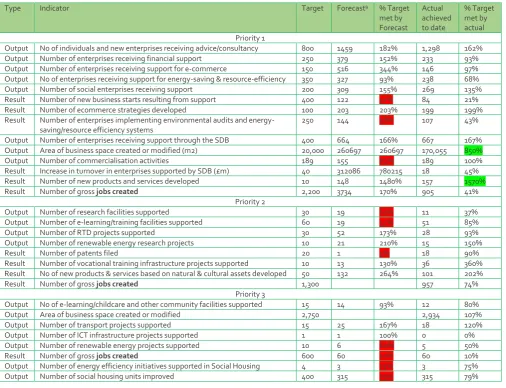
individuals. By 2013, the Structural Funds programmes secured training and improved skills for 135,000 individuals; and delivered 30,000 new jobs. Tacking action to address youth unemployment is considered to have been an important part of this. By 2014, a number of targets had been met in full, or in some cases, exceeded significantly. Over several consecutive years, the programme was reported to have made significant progress in supporting business: strong achievement against several of the business support indicators was reported, which was believed to be possibly related to businesses seeking support as a result of the recession. Already by 2012, the number of individuals
and enterprises receiving advice and consultancy support was 140% above the original target set for
the end of the programming period (reaching 162% in 2014), while in 2014 the number of enterprises receiving support through the SDB was 167% and that of new products and services developed by supported enterprises was 1570% above the programme target.
At the same time, slower progress against indicators related to, for instance, R&D was being recorded over time, due to the lead-times involved before possible realisation, although many of the targets were close to being met by the end of the programme. The number of actual gross jobs
created in 2014 was still at more than half way to the overall ERDF programme target, and the
[image:20.595.73.580.357.745.2]number of business start-ups resulting from support was only at 21% of the target value. More details are provided in Table 3.
Table 3: HIE ERDF OP: progress towards indicators, 2014
Type Indicator Target Forecast9 % Target
met by Forecast
Actual achieved to date
% Target met by actual Priority 1
Output No of individuals and new enterprises receiving advice/consultancy 800 1459 182% 1,298 162% Output Number of enterprises receiving financial support 250 379 152% 233 93% Output Number of enterprises receiving support for e-commerce 150 516 344% 146 97% Output No of enterprises receiving support for energy-saving & resource-efficiency 350 327 93% 238 68% Output Number of social enterprises receiving support 200 309 155% 269 135% Result Number of new business starts resulting from support 400 122 31% 84 21% Result Number of ecommerce strategies developed 100 203 203% 199 199% Result Number of enterprises implementing environmental audits and
energy-saving/resource efficiency systems
250 144 58% 107 43% Output Number of enterprises receiving support through the SDB 400 664 166% 667 167% Output Area of business space created or modified (m2) 20,000 260697 260697 170,055 850% Output Number of commercialisation activities 189 155 82% 189 100% Result Increase in turnover in enterprises supported by SDB (£m) 40 312086 780215 18 45% Result Number of new products and services developed 10 148 1480% 157 1570% Result Number of gross jobs created 2,200 3734 170% 905 41%
Priority 2
Output Number of research facilities supported 30 19 63% 11 37% Output Number of e-learning/training facilities supported 60 19 32% 51 85% Output Number of RTD projects supported 30 52 173% 28 93% Output Number of renewable energy research projects 10 21 210% 15 150% Result Number of patents filed 20 1 5% 18 90% Result Number of vocational training infrastructure projects supported 10 13 130% 36 360% Result No of new products & services based on natural & cultural assets developed 50 132 264% 101 202% Result Number of gross jobs created 1,300 957 74%
Priority 3
Output No of e-learning/childcare and other community facilities supported 15 14 93% 12 80% Output Area of business space created or modified 2,750 2,934 107% Output Number of transport projects supported 15 25 167% 18 120% Output Number of ICT infrastructure projects supported 1 1 100% 0 0% Output Number of renewable energy projects supported 10 6 60% 5 50% Result Number of gross jobs created 600 60 10% 60 10% Output Number of energy efficiency initiatives supported in Social Housing 4 3 75% 3 75% Output Number of social housing units improved 400 315 79% 315 79%
Source: AIR 2014
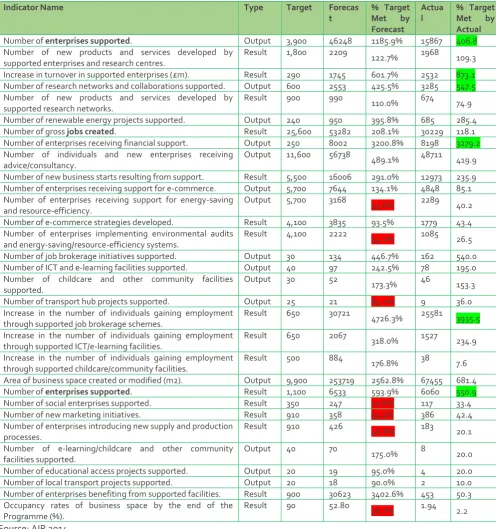
[image:21.595.74.571.223.753.2]In the Lowlands and Uplands region, gross jobs created were estimated to be close to the programme target already in June 2012, being at 118% over the target value in 2014. Support to business was a prominent feature of the programme and 12,973 new business starts were recorded in 2014 under Priority 2, which was around 236% of the target. The business assistance targets were over three times more than the expected target already in 2012, in 2014 reaching over five times above the original target set for the end of the period potentially implying that targets were poorly estimated or set low. Poorer performance can be noted in indicators related to support for energy-saving and resource-efficiency, social enterprises or educational access projects.
Table 4: LUPS ERDF OP: progress towards indicators, 2014
Indicator Name Type Target Forecas
t
% Target Met by Forecast
Actua l
% Target Met by Actual
Number of enterprises supported. Output 3,900 46248 1185.9% 15867 406.8 Number of new products and services developed by
supported enterprises and research centres.
Result 1,800 2209
122.7% 1968 109.3
Increase in turnover in supported enterprises (£m). Result 290 1745 601.7% 2532 873.1 Number of research networks and collaborations supported. Output 600 2553 425.5% 3285 547.5 Number of new products and services developed by
supported research networks.
Result 900 990
110.0% 674 74.9
Number of renewable energy projects supported. Output 240 950 395.8% 685 285.4 Number of gross jobs created. Result 25,600 53282 208.1% 30229 118.1 Number of enterprises receiving financial support. Output 250 8002 3200.8% 8198 3279.2 Number of individuals and new enterprises receiving
advice/consultancy.
Output 11,600 56738
489.1% 48711 419.9
Number of new business starts resulting from support. Result 5,500 16006 291.0% 12973 235.9 Number of enterprises receiving support for e-commerce. Output 5,700 7644 134.1% 4848 85.1 Number of enterprises receiving support for energy-saving
and resource-efficiency.
Output 5,700 3168
55.6% 2289 40.2
Number of e-commerce strategies developed. Result 4,100 3835 93.5% 1779 43.4 Number of enterprises implementing environmental audits
and energy-saving/resource-efficiency systems.
Result 4,100 2222
54.2% 1085 26.5
Number of job brokerage initiatives supported. Output 30 134 446.7% 162 540.0 Number of ICT and e-learning facilities supported. Output 40 97 242.5% 78 195.0 Number of childcare and other community facilities
supported.
Output 30 52
173.3% 46 153.3
Number of transport hub projects supported. Output 25 21 84.0% 9 36.0 Increase in the number of individuals gaining employment
through supported job brokerage schemes.
Result 650 30721
4726.3% 25581 3935.5
Increase in the number of individuals gaining employment through supported ICT/e-learning facilities.
Result 650 2067
318.0% 1527 234.9
Increase in the number of individuals gaining employment through supported childcare/community facilities.
Result 500 884
176.8% 38 7.6
Area of business space created or modified (m2). Output 9,900 253719 2562.8% 67455 681.4 Number of enterprises supported. Result 1,100 6533 593.9% 6060 550.9 Number of social enterprises supported. Result 350 247 70.6% 117 33.4
Number of new marketing initiatives. Result 910 358 39.3% 386 42.4
Number of enterprises introducing new supply and production processes.
Result 910 426
46.8% 183 20.1
Number of e-learning/childcare and other community facilities supported.
Output 40 70 175.0% 8 20.0
Number of educational access projects supported. Output 20 19 95.0% 4 20.0 Number of local transport projects supported. Output 20 18 90.0% 2 10.0 Number of enterprises benefiting from supported facilities. Result 900 30623 3402.6% 453 50.3 Occupancy rates of business space by the end of the
Programme (%).
Result 90 52.80
58.7% 1.94 2.2
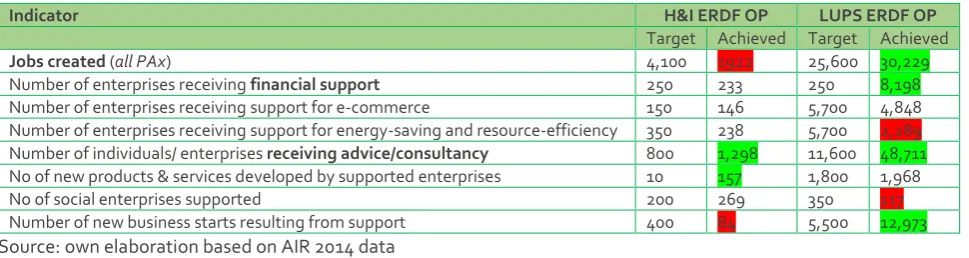
Table 5: Scottish OPs 2007-13: progress across key common indicators (summary based on 2014 data)
Indicator H&I ERDF OP LUPS ERDF OP
Target Achieved Target Achieved
Jobs created (all PAx) 4,100 1922 25,600 30,229
Number of enterprises receiving financial support 250 233 250 8,198
Number of enterprises receiving support for e-commerce 150 146 5,700 4,848 Number of enterprises receiving support for energy-saving and resource-efficiency 350 238 5,700 2,289 Number of individuals/ enterprises receiving advice/consultancy 800 1,298 11,600 48,711 No of new products & services developed by supported enterprises 10 157 1,800 1,968
No of social enterprises supported 200 269 350 117
Number of new business starts resulting from support 400 84 5,500 12,973 Source: own elaboration based on AIR 2014 data
Although the forecast targets from committed projects in certain areas look more promising, the final assessment of Programme performance should be made on the basis of the final physical data. In addition, it is difficult to interpret for instance how many of the gross jobs created for the programmes as a whole are additional in the sense that they would not otherwise have been there (Tyler 2012a); and more robust commentary on the overall impact of the programmes on beneficiaries and the programmes as a whole in terms of both jobs and enterprise creation must await the results of a proper impact evaluation. With regards to ESF Programmes, by the end of 2011, the number of participants supported through the Scottish ESF OPs was 269,265, a considerable overshoot of 156% of the target.
Two evaluations of ESF-related activities in Scotland 2007-13 were undertaken. The first is an evaluation of the delivery of employability support through the Community Planning Partnerships (CPPs) (Blake Stevenson 2011). The CPPs were an innovation in 2007-13 to achieve a more strategic use of the funds and to encourage more partnership at a local level, covering ESF and ERDF projects in both Scottish Programmes. The study found that the new delivery mechanism had stimulated more strategic behaviour at a local level and that had contributed to more effective use of the ESF. The interim findings influenced the development of the new Priority 5 for the Lowlands and Uplands Scotland ESF Programme, introduced in 2010.
The second study was a survey of ESF participants (Hall Aitken 2012b). It found that ESF Priority 1 projects were largely ‘successful in targeting those experiencing disadvantage in the labour market’. In particular, they successfully engaged young people in the NEET group, those with health problems and some disadvantaged ethnic minority groups. The survey found that those who participated in work placements were ‘more likely to complete their training course and to move onto a positive destination’. The survey showed that training courses incorporating work experience appear to have provided ‘a popular and effective route towards employability’ for participants. Some 89% of participants thought that their time spent on the ESF supported training was ‘time well spent’. Overall, ‘participants rated work placements highly and were most positive about practical experience gained and getting exposure to the world of work’ (Ibid.).
Overall, the evidence from evaluations of the 2007-13 Programmes highlight several key findings:
First, the relatively low share of ESIF funding as compared to the size of the economy implies that impacts are modest. Although providing a valuable contribution to economic and social development, the Funds represent a relatively modest amount of funding to bring in a radical change in significant policy areas, such as business competitiveness or commercialisation rates of R&D&I (Office of the Chief Economic Adviser 2013), meaning that the overall impact can only be relatively small (UK 2012).