City, University of London Institutional Repository
Citation
:
Robinson, J., Sinclair, M., Tobias Mortlock, J. M. and Choi, E. (2017). More
Dynamic Than You Think: Hidden Aspects of Decision-Making. Administrative Sciences,
7(3), 23.. doi: 10.3390/admsci7030023
This is the published version of the paper.
This version of the publication may differ from the final published
version.
Permanent repository link:
http://openaccess.city.ac.uk/id/eprint/20005/
Link to published version
:
http://dx.doi.org/10.3390/admsci7030023
Copyright and reuse:
City Research Online aims to make research
outputs of City, University of London available to a wider audience.
Copyright and Moral Rights remain with the author(s) and/or copyright
holders. URLs from City Research Online may be freely distributed and
linked to.
Article
More Dynamic Than You Think: Hidden Aspects
of Decision-Making
Jennifer Robinson1,†, Marta Sinclair2,†, Jutta Tobias1,†,* and Ellen Choi3,†
1 School of Management, Cranfield University, Cranfield MK43 0AL, UK;
2 Department of International Business and Asian Studies, Griffith University, Nathan QLD 4111, Australia;
3 Ivey Business School, Western University, ON N6G 0N1, Canada; [email protected]
* Correspondence: [email protected] † These authors contributed equally to this work.
Received: 21 November 2016; Accepted: 8 July 2017; Published: 14 July 2017
Abstract: Decision-making is a multifaceted, socially constructed, human activity that is often non-rational and non-linear. Although the decision-making literature has begun to recognize the effect of affect on decisions, examining for example the contribution of bodily sensations to affect, it continues to treat the various processes involved in coming to a decision as compartmentalized and static. In this paper, we use five theories to contribute to our understanding of decision-making, and demonstrate that it is much more fluid, multi-layered and non-linear than previously acknowledged. Drawing on a group experience of deciding, we investigate the intrapersonal, interpersonal, and collective states that are at play. These states are shown to be iterative: each being reinforced or dampened in a complex interaction of thought, affect, social space and somatic sensations in a dynamic flux, whilst individuals try to coalesce on a decision. This empirical investigation contributes to theory, method and practice by suggesting that Volatility, Uncertainty, Complexity and Ambiguity (VUCA) is a human condition. VUCA permeates and impacts decision-making in a multitude of ways, beyond researchers’ previous understanding. The innovation generated through this paper resides in a set of propositions that will accelerate progress in the theory, method, and practice of decision-making.
Keywords: non-rational; decision-making; intuition; mindfulness; wisdom; organizational space; social improvising
1. Introduction
Decisions—even strategic decisions—are increasingly made within a context that can be characterized as time-pressured, dynamic, uncertain, and with decision makers having access to inadequate information. In some instances, the situation is so new that there is little or no historical data available. In other cases, there are vast volumes of information but not enough time to process it. In short, we live in a VUCA world. The term “VUCA” has its genesis back at the end of the Cold War and was originally coined to ring in an era marked by increasingly ambiguous, multilateral, and multifaceted challenges in conditions that are Volatile, Uncertain, Complex, and Ambiguous (VUCA) (Hicks and Nicholas 2002). Seminal papers such as that by Allison (Allison 1969) demonstrate VUCA in action; in particular, the way that many constituent parts combine to create unique contexts at unique time points, unique decisions, and unique consequences. VUCA means that never-to-be repeated conditions provide the background against which decisions get made. This point is further illustrated by recent events in the world around us. During the writing of this paper, geopolitical shifts such as Brexit in the United Kingdom and the election of
President Donald Trump seem to indicate that assumptions deemed immutable are less solid than they appear (https://extranet.cranfield.ac.uk/dana-na/auth/url_default/welcome.cgi). The macro environment of decisions for politicians is substantively different and evolving faster than, for example, just 12 months ago. This is not just true in politics but in many arenas including business, where scandals continue to emerge based on the actions of a very few. In a tightly coupled world, each action has consequential actions and counter actions (Weick and Roberts 1993) triggering further actions and counter actions, many of which are unpredictable.
This is how VUCA has become the reality that many senior executives in organizations routinely face when making decisions, operational as well as strategic. Given the fluidity of situations, and that facts too, can be emergent, decision-making theory and practice cannot be overly mechanistic. Fluidity in this context is taken to mean a continuous flux, where “rapid, unpredictable change [occurs] in many directions” (Lane and Maznevski 2014, p. 14). This, in turn, requires continuous adjustments when making sense of a situation, rendering the decision-making process itself fluid. Within this context, new models of decision-making are needed to take account of new organizational realities.
To meet the challenges of the current reality, scholars have turned their attention to new perspectives that complement and enrich (not necessarily replace) the analytical, rational models of decision-making (Eisenhardt and Zbaracki 1992;Isenberg 1984;Klein 1998;Langley et al. 1995). These new perspectives are the focus of this paper. As traditional decision-making theory has been extensively discussed and researched elsewhere (Tversky and Kahneman 1985), the ensuing discussion foregrounds less explored, still developing approaches that might yield additional insights in an effort to bring contemporary decision-making perspectives into balance. This is not completely unexplored territory, following seminal work published, for example, byDane and Pratt(2007) and
Lieberman(2000) on intuition;Kabat-Zinn 2005(2005) andFiol and O’Connor(2003) on mindfulness;
Lefebvre (1991) and Nonaka and Takeuchi (1991) on organizational space, and Weick(1998) on improvisation (Dane and Pratt 2007;Sadler-Smith 2016;Kabat-Zinn 2005;Fiol and O’Connor 2003;
Lefebvre 1991;Nonaka and Takeuchi 1995;Weick 1998). These papers provide growing evidence that non-traditional perspectives have a contribution to make to theory building.
Herein we provide an integrative, iterative, and innovative perspective on decision-making, drawing on “non-rational” or “bottom up” frameworks such as mindfulness and intuition, some of which have been insufficiently integrated into the decision-making literature because they may defy strict “scientific” explanations (see for example,Dane and Pratt (2007)). By way of contrast, we contend that by explicitly addressing decision-making from a variety of perspectives, we can generate new insights that address the specific demands of a VUCA world, particularly with respect to decision-making. In doing so we propose ways that new perspectives can amend and/or complement traditional rational approaches. This move to consider non-rational decision-making is also mirrored in economics, where it is increasingly acknowledged that, for example, emotions have a role to play (Oullier and Basso 2010, p. 296).
to and/or complements current decision-making practices. These perspectives have been recently explored as possible ways to address the VUCA conditions; however, to date each has been studied in isolation, thus further fragmenting (instead of integrating) contributions to the decision-making field. Although each perspective is rooted in a different philosophy and literature, all have attempted to address the fluid nature of contemporary decision-making, and acknowledge the role of awareness in the process. Our inclusive and non-hierarchical stance avoids a reductionist approach and holds all points of view to be equally valid. This pluralistic stance models both our methodology and our contribution to theory; it also has implications for practice.
In keeping with this investigative quality, our methodology is similarly pluralistic, seeking to bring “understanding rather than measurement” to the nature of decisions (Hernes 2007, p. 143). At the heart of this investigation was the design, delivery, and analysis of a workshop with like-minded academics and practitioners who critiqued our thinking and built upon it. This experience forms the basis for our findings. Approaching the research process as an unfolding (Hernes 2007), our research question was for guidance, not adherence—as follows: What hidden aspects of the decision-making process are revealed through a multiple-perspective approach? We begin this paper with a description of the five different perspectives on decision-making and highlight their unique contribution to the role of awareness and fluidity in the decision-making process. In drawing on these different views we seek to demonstrate the multi-level nature of decisions, particularly in organizations where strategic choices are rarely the purview of one individual but may involve many groups coming together to discuss and decide. The paper then illustrates an innovative and iterative approach to knowledge creation through the integration of these various facets of decision-making. It concludes with a discussion of the propositions we draw from analyzing the findings from the workshop experience, and suggestions for follow-up research.
1.1. Mindfulness
Mindfulness refers to present-moment, non-judgmental awareness of internal and external phenomena (Brown and Ryan 2003). A good portion of mindfulness research is concerned with the antecedents and consequences of consciously paying attention to the present moment thereby increasing awareness of the different perspectives and different interpretations that exist within any present moment experience. Mindfulness is a multi-level construct that can be practiced by individuals, for example through meditation, or induced at collective levels (for instance in teams or entire organizations) through non-meditative processes and routines (Sutcliffe et al. 2016). Mindfulness can equip individuals and groups with self and situational awareness and the ability to pause before reacting (Garland et al. 2011). This brief pause lends itself to a variety of improved outcomes including less bias and reliance on outmoded mental heuristics (Fiol and O’Connor 2003).
There is a growing body of empirical evidence that mindfulness promotes bottom-up and non-judgmental, or rather pre-judgmental, processing. In other words, experiencing the situations we encounter in a mindful way enables us to question or at least delay premature judgment. Indeed, recent mindfulness research examining individuals’ decision-making has demonstrated that mindfulness may help people make more effective or even ‘rational’ decisions. A specific example of a mindfulness intervention is Hafenbrack, Kinias and Barsade’s (Hafenbrack et al. 2013) research where just 15 minutes of mindfulness practice reliably enabled research participants to bypass the sunk cost bias. In terms of individual-level processes, mindfulness training has been linked reliably with increased cognitive skills, for example increased working memory (Mrazek et al. 2013), insight problem solving (Ostafin and Kassman 2012), creative performance (Baas et al. 2014) and several other different measures of intelligence.
demonstrates this lack of objectivity. Integrating the practices of mindfulness may offer tools to help us pause, and reflect when considering the decision criteria and broader scope of the situation while honouring the challenges of being human. This reflexivity offers a more objective quality of awareness and offers flexibility of position and perspective during a fluid decision-making process.
Mindfulness can be placed within the decision-making literature alongside perspectives that acknowledge the limitations of bounded rationality (March and Simon 1993) and human inference (Kahneman et al. 1982). One intention of mindfulness practices is to train what is referred to in the contemplative traditions as “bare attention” (Gunaratana 2009), a quality of attention that enables phenomenon to be absorbed without judgment, with limited influence of the past, and without immediate categorization into existing cognitive schemas. This characteristic of mindfulness supports equanimity and allows decision makers to treat equally information and data that are both confirmatory and dis-confirmatory of a preferred point of view (Santorelli 2011). This open approach to processing information is the antithesis of premature cognitive commitment (Langer 1992, p. 292). It provides an individual with the facility to be conscious of both the “content and context of information” (Sinclair and Ashkanasy 2005, p. 290) so that it becomes possible to use information outside of pre-established categories. Such freedom from cognitive rigidity can underpin novel idea generation such as seeing a chair for a ladder or a rubber dog toy as an eraser.
Mindfulness challenges paradigms of top-down management control thinking, and instead embraces bottom-up processing at different levels of analysis: internal, interpersonal, and collective (Sutcliffe et al. 2016). In sum, mindfulness brings light to a quality of attention that has gone relatively under examined in the extant decision-making models. As information is processed, not all of it will be interpreted equally since our prior experiences, habits and biases may color what information we notice and how we absorb it. Studying the mindful processing of information allows researchers to consider how such bottom-up, non- or pre-judgment related processes may prompt decision makers to break habitual, potentially less effective, decision-making patterns in a VUCA world.
1.2. Intuition
Intuition is understood as direct knowing without any use of conscious reasoning (Sinclair and Ashkanasy 2005). It refers to our ability to process subconsciously or access directly information without the engagement of rational thinking, be it in the form of analysis or development of a logical argument. We think of a problem or see a situation and simply know the answer, albeit we are not aware that any deliberation on our part occurred. That is why intuition is sometimes called ‘knowing what without knowing how’ (Vaughan 1979). Dual-process theories (Epstein 1990;
Stanovich and West 2000) suggest that our brain activates different regions, for different reasons, and that various mental processes strengthen certain regions of the brain. For example, Lieberman and colleagues (Lieberman et al. 2007) demonstrated that asking participants to label their affective state activated the right pre-frontal cortex, thereby dampening the effect of the amygdala, or primitive brain.Desbordes et al.(2012) also found reduced activity in the amygdala within a mindfulness group of practitioners when compared to a control group. The mechanism that de-activates one part of the brain to activate another is still under investigation, but there is sufficient evidence to show that some of these functions are physiologically binary.
cognition is called System 1 while conscious, deliberate reasoning tends to be called System 2 (Li 2014). Although there are opposing views on whether intuition always serves as default or whether it runs in parallel and competes for primacy with reasoning (Evans 2008) the existence of two information processing systems, and their fluid interface, remains undisputed.
The intuitive mechanism is activated in fast-paced, ambiguous, or uncertain situations when we do not have access to adequate information or time to process it (Behling and Eckel 1991;
Wally and Baum 1994;Parikh et al. 1994), which are frequent conditions in today’s business environment. Under some circumstances this type of information processing serves us well. The coveted decision speed is attributed to its holistic, non-sequential processing of data that can be likened to a jigsaw puzzle built in a haphazard manner until the resultant, albeit incomplete picture becomes apparent (Sinclair and Ashkanasy 2005). This is possible because intuition works with (mostly non-verbal) associations (Epstein 1990), which accelerates the decision-making process. As such, it is inherently suited for non-conscious matching, approximation and/or re-integration of information, rather than highly accurate abstract processes involved for instance in mathematics. In high-pressured situations, we therefore sometimes circumvent time-consuming systematic evaluation and allow our brain to match or reorganize stored memory patterns in an expedient, non-linear way without our conscious intervention (Simon 1987). Such an approach has been frequently recorded in professions dealing with crises that require a fast decision (Langan-Fox and Vranic 2011). The result is often a non-conscious intuitive judgment (Dane and Pratt 2007), the accuracy of which is contingent on the level of domain-specific expertise (Baylor 2001; Kahneman and Klein 2009). This means that expert intuition is a reliable decision-making tool in such situations only for those with high levels of expertise. Recent research suggests this kind of intuiting draws on patterns stored in declarative memory (knowingthat) while a different neural configuration may be in place in conjunction with procedural memory (knowinghow) that maps “input stimuli or factual knowledge into actions or ideas” directly while our attention is directed elsewhere (Dreyfus 2014, p. 23). In view of its different purpose and functionality, Dreyfus calls it System 0.
In either case of processing, the advantage of expert intuition is that it can sift through huge amounts of data and deal efficiently with ambiguous situations that would otherwise stifle or protract deliberation. In less time-pressured contexts, when conscious deliberation has the tendency to interfere with intuitive processing, it can be diverted to another activity. For example, marketing research found that people made a superior choice of rental apartment when facing conflicting criteria if they were distracted by another task before making the final decision (Dijksterhuis 2004).
theory suggests that its key difference from expert intuition may not lie necessarily in the engagement of different neural networks but rather in its focus on problem-solving (instead of decision-making) that entails a unique dynamic. That is whyDörfler and Ackermann(2012) put forward a case for distinguishing between “intuitive judgment [where] the decision aspects are tacitly integrated into a picture about what to do . . . [and] intuitive insight [where] the components of the domain knowledge are tacitly integrated in a novel way producing knowledge that did not exist before.” We argue that in the VUCA environment of constant flux, decision-making models need to be expanded to include problem-solving mechanisms. The intersection of decision-making and problem-solving is especially poignant in organizational improvisation, as discussed later, where intuition may provide the connecting link (seeBatista and Cunha(2008)).
We know less about group intuitions (and how they inform decisions) that arise from collective consciousness (Sinclair and Hamilton 2014). Emerging research into intuitive group problem-solving suggests that individuals, if they are primed to set the same intention, can intuitively uncover various aspects of the same problem that can be then consciously integrated into a much richer and clearer solution that is not contaminated by personal or organizational biases (Sinclair and Hamilton 2014).
Both individual and group intuition may be better understood through innovative research methods such as those developed byPetitmengin(2006, p. 189) to “help a person become aware of the usually unnoticed part of a given cognitive process, and to describe it with precision.” Through her elicitation process it has been possible to ask study participants to recollect intuitions in advance of epileptic fits. Such early and precise identification is a very personal early warning system that can be used by these individuals. This specificity and quality of forecasting was previously believed impossible because it was considered impossible for individuals to generate such minute awareness (Petitmengin 2006). The Petitmengin elicitation process can also be applied skilfully within groups—a point the methodology of this paper uses, to a limited degree.
Intuition research thus offers a complementary perspective to reasoned decision-making and paves the way to an integrated decision-making model that reflects more accurately the variation in awareness that we hold when we process information in today’s dynamic world. It gives more credence to decisions we cannot fully justify rationally and teaches us to pay more attention to intuitions as a source of information that might otherwise go unnoticed (Dane 2011). Because of the intangible nature of intuition, it is necessary to create a supportive environment (internally through introspection facilitated by mindfulness and externally through increased confidence in intuitive skills aided by supportive organizational space) that will allow us to access this resource more easily, both internally and externally. On the research front, it forces the development of new methods to study the phenomenon, which can inform other disciplines as well. It has obvious benefits for practice, as it builds a foundation for the development of practical decision-making tools. AsDane and Pratt(2007, p. 49) suggest, “research on intuition is inherently practical”.
1.3. Wisdom
To understand the unique value of the expanded view of wisdom, it is necessary to more fully understand “Wu”. Specifically, “Wu” refers to intuitive imagination aimed at generating insight via metaphor, using mindfulness to enhance receptivity to conflicting information. Within Western scientific disciplines, there are also investigations of practical wisdom (Shotter and Tsoukas 2014). There are both similarities and differences between the two conceptualizations. In common between the two is the integration of past, present and future; and the integration of thoughts, feelings, and somatics. Whereas “Wu” is imaginative, “phronesis” (practical wisdom) draws one’s attention to a moral framing (Shotter and Tsoukas 2014, p. 234), which, so far as we can discern, is missing from the Eastern teaching. “Wu” focuses instead on “proactive insight-making” (p. 38), which necessitates the inclusion of conflicting views. As the core process of creative cognition, “Wu”-based intuition therefore encompasses both conscious and non-conscious processes and is much broader, and more conciliatory, than the Western notion of wisdom. To make a clear distinction from the non-conscious System 1 and System 0, and the conscious System 2 (Evans 2008;Kahneman 2011), Li calls it System 3 (Li 2012) and sees all four systems nested in layers like an onion.
The usefulness of “Wu” lies also in its permeability allowing for the integration of contradictions, without the need to reconcile or reduce them. In this way, it helps expand the Western understanding of decision-making and challenges choices that might be false dichotomies stemming from a more limited view (Li 2014; Teerikangas and Välikangas 2014). On a systems level, this opens up the possibility of integrating conscious and non-conscious information processing in both System 1/0 and System 2, as it pertains to their respective exploitative and explorative functions. This offers an explanation for parallel and competing (vs. default interventionist) dual-process theories (Evans 2008) that posit an equal position of both information processing systems, continuously competing for primacy, by proposing a fluid mechanism for their interaction.
In respect of (Western) decision-making, “Wu” is a largely untapped area of investigation. However, it is possible to conceive that its holistic nature allows for the combination and re-combination of both tacit and explicit knowledge. This may be achieved through an integration of intuitively and rationally processed information, which may be more accessible in a mindful state to generate more novel and previously unseen decisions. At this point, in view of the current research paucity, such reasoning remains an educated conjecture.
1.4. Organizational Space
Organizational space is derived from the theory of social space, elaborated by Henry Lefebvre (Lefebvre 1991). According to the French sociologist (Lefebvre 1991, pp. 11–12): “space is produced through bringing together the various modalities of space—physical, mental and social—into one logic-epistemological space, the space of social practice, the space occupied by sensory phenomena, including projects of the imagination”. Specifically, organizational space (Yeung 2005b) may be considered as a form of “social space”, embedded in the organizational system. The process of decision-making does not happen in organizational vacuum (Nonaka and Takeuchi 1991), it is embedded in the organizational context and related to social interaction. This relatedness occurs in the “space” of knowledge called “Ba” (Nonaka and Konno 1998;Von Krogh et al. 2012). “Ba” can be a physical, virtual, mental, or affective (emotional) space, characterized by the emergence of embedded and situated bodies of knowledge (Nonaka et al. 2006). Within such spaces, it is possible for decision makers to transcend the individual and to become engrossed in a social process of heedful interrelating (Weick and Roberts 1993).
the concept of collective mind is more than the sum of single parts (Sutcliffe et al. 2016). This collective view of decision-making is explored in concepts such as organizational space.
Organizational space is produced by ongoing relations within and between organizations and its configuration is intrinsically dynamic. Since space, in the sense used herein, co-evolves together with the web of intra- and inter-organizational relationships, it is interpreted as a fluidly emerging phenomenon, typical of complex organizational systems (Maimone and Sinclair 2014). However, with e-mediated businesses, organizational space is not always about the physical. It is a kind of topological configuration emerging from social interactions (Yeung 2005a, p. 219). Therefore, space is a social-relational reality that goes beyond the material dimension of the architecture of physical spaces and the office lay-out (Kornberger and Clegg 2004). As such it is possible for one organization to produce several organizational spaces. The theory of organizational space is relevant to decision-making through the patterns that are enacted within an organization, across teams and formal business units. These patterns may operate at the individual level or favor collective decision-making.
Decision-making processes do not occur in a vacuum, but are enacted in a living work place, where different organizational spaces may be present. If we “reason with our body” (Oullier and Basso 2010, p. 293), i.e., process information intuitively, and our body is contained within a space that includes other individuals, we again see layer upon layer of interaction: architectural, individual, and social. Therefore, we may assume that decisions are “socio-spatially bounded” and awareness to these aspects and how they may fluctuate would contribute to our understanding of decision-making.
Social Improvisation
Continuing the theme of the social nature of organizations and decisions, improvisation embraces the interdependent nature of decision-making. Improvisation in organizational context is understood as “spontaneous, intuition-guided action” (Crossan and Sorrenti 1997). It has been identified as a “combination of intuition (Maimone and Sinclair 2014), creativity (Amabile and Khaire 2008), and bricolage that is driven by time pressures” (Leybourne and Sadler-Smith 2006). This process of interdependency is best illustrated through the metaphor of the “jazz band”, proposed by Meyer and Weick (Meyer et al. 1998): once the performance begins each player is free to improvise, the members of a jazz band do not decide in advance what each is going to play. The point is to depart from the original composition but stay close enough that others can synchronize. In strategic decision-making, organizational decision makers, much akin to jazz musicians, are intuitively attuned and respond to each other’s actions to create an organically emerging outcome within predetermined parameters. If they are skilled, their decision-making process becomes “innovative, surprising and adaptive” (Eisenhardt 1997, p. 2) without compromising quality or proper execution. It is possible that in an environment that supports mindfulness, intuitions are more acutely noticed and wisdom more likely to be generated through exploration and shared through interactions in organizational space.
Organizational improvisation is unlikely to occur in a vacuum. Moorman and Miner (Moorman and Miner 1998) affirmed that organizational memory is bi-directional: the past influences improvisation in decision-making and improvisation, on the other hand, has an impact on organizational memory. So, we may assume that improvisation in decision-making is also influenced by the dynamics enacted within and across organizational spaces. In a parallel line of theorizing,
and episodic memory) in the vein of expert intuition, novices reach out for intuition because they lack in this respect (Batista and Cunha 2008). To compensate for this deficiency, novices resort to improvisation or draw on schemata from other disciplines, thus encouraging thinking out of the box (which is reminiscent of entrepreneurial intuition). That is why, for example, hotel industry recruited experts in revenue management from such distant fields as railroad logistics or plane manufacturing (seeSinclair and Sinclair(2009)).
1.5. Summary
In the above review, we have chosen five different perspectives as prisms through which to look at decision-making under VUCA conditions. Although they overlap and relate to each other in multiple ways, each offers a unique contribution to handling the fluid, ambiguous and continuously changing environment of decisions made in today’s business world while shedding light on the richness of awareness to aspects that are under-accounted for in rational perspectives.
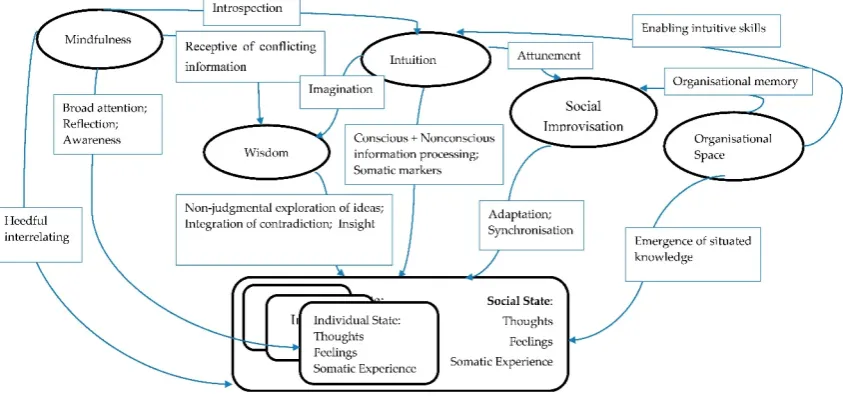
In Figure1below, we depict the research framework that has emerged from our literature review, laying the five explored perspectives side by side and using them additively. As the figure illustrates, they contribute to decision-making states at both individual and social levels. This framework provides a visual map of the complex and multi-layered way that these perspectives relate to each other, and to the dynamic and frequently changing states that decision-makers in today’s business world find themselves in. It informs our empirical investigation below, and outlines the relationships between perspectives derived from the literature.
Adm. Sci. 2017, 7, 23 9 of 29
changing environment of decisions made in today’s business world while shedding light on the richness of awareness to aspects that are under-accounted for in rational perspectives.
[image:10.595.88.510.376.574.2]In Figure 1 below, we depict the research framework that has emerged from our literature review, laying the five explored perspectives side by side and using them additively. As the figure illustrates, they contribute to decision-making states at both individual and social levels. This framework provides a visual map of the complex and multi-layered way that these perspectives relate to each other, and to the dynamic and frequently changing states that decision-makers in today’s business world find themselves in. It informs our empirical investigation below, and outlines the relationships between perspectives derived from the literature.
Figure 1. A framework for integrating five non-rational perspectives impacting decision-making states.
Through our theoretical explorations, we came to view mindfulness as central for all examined processes as it helps the individual and/or collective mind to introspect and switch to ‘broadly focused attention’, which are overall conditions for receptivity to intuition, wisdom, and social improvisation. Mindfulness ‘primes’ our access to intuition, among other things, through the activation of peripheral vision (Cappon 1993) and non-striving acceptance (Kabat-Zinn [1990] 2005) that, for Western mind, are often attributes absent from common business practices. That is where we found the Eastern view on wisdom, “Wu”, to be useful: not only does it provide a mechanism for non-judgmental observation but also for non-discriminatory acceptance of conflicting views. And since none of these activities occurs in a vacuum, organizational space offers a physical, psychological, and social environment where introspection (needed for mindfulness, intuition, and wisdom) can flourish but also encourages group processes leading to group intuitions and organizational improvisation. This is an important mechanism for a fluid interaction between individual and social processes. As we concluded earlier, in mindful environments intuitions are more acutely noticed and wisdom can be generated through exploration and shared through interactions in organizational space encouraging further improvisation.
2. Methods
At the Annual Meeting of the Academy of Management, 2016, the authors hosted a Professional Development Workshop (PDW) allowing them to engage with an academic community and discuss the five outlined perspectives on decision-making. The authors created a scholarly exchange reflecting the complexity and richness of the topic at hand. While showcasing the contributions of non-rational perspectives was the first intention, the second intention was to create new knowledge by adopting an iterative and innovative approach that facilitated both the integration of different theoretical perspectives and a decision-making experience designed to unearth new insights. The
in mindful environments intuitions are more acutely noticed and wisdom can be generated through exploration and shared through interactions in organizational space encouraging further improvisation.
2. Methods
At the Annual Meeting of the Academy of Management, 2016, the authors hosted a Professional Development Workshop (PDW) allowing them to engage with an academic community and discuss the five outlined perspectives on decision-making. The authors created a scholarly exchange reflecting the complexity and richness of the topic at hand. While showcasing the contributions of non-rational perspectives was the first intention, the second intention was to create new knowledge by adopting an iterative and innovative approach that facilitated both the integration of different theoretical perspectives and a decision-making experience designed to unearth new insights. The three-hour PDW involved 40 academics and practitioners aligned with the latest debates on decision science. In effect, the workshop became a crucible in which existing knowledge could be integrated and new knowledge created.
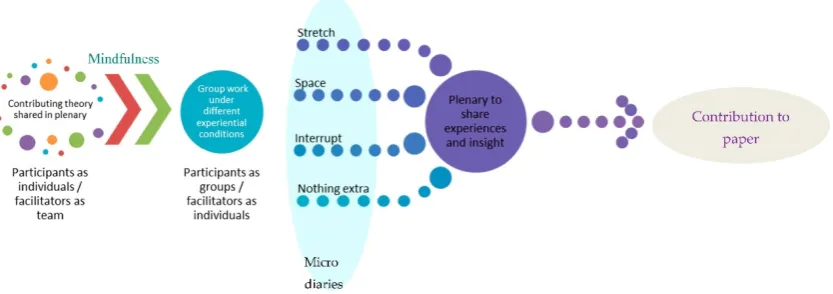
Participants registered to attend the PDW, which was entitled Innovative Approaches to Improving Organizational Decision Making: Theory, Method, and Practice. The agenda comprised four inter-related sections (see Figure2below). The first session of the workshop was a panel presentation by five leading scholars who provided an integrated theoretical overview. The presentations were followed by a short meditation to help induce mindfulness and to allow the ideas provided in the theoretical overview to “sediment” and to help participants move from a mental modality to a somatic modality in readiness for the next exercise. Participants were then invited to take part in an experiential exercise in table groups, in which each group was tasked with coming to a decision in the face of ambiguous information and within varied contexts. Finally, the experiences of the participants in the group work became the foundation for a plenary discussion and collaboration to build new knowledge. This discussion was a way of building new knowledge and incorporating individual and collective perspectives from the participants into the proposed theoretical framework we have outlined above.
Adm. Sci. 2017, 7, 23 10 of 29
three-hour PDW involved 40 academics and practitioners aligned with the latest debates on decision science. In effect, the workshop became a crucible in which existing knowledge could be integrated and new knowledge created.
[image:11.595.91.508.458.605.2]Participants registered to attend the PDW, which was entitled Innovative Approaches to Improving Organizational Decision Making: Theory, Method, and Practice. The agenda comprised four inter-related sections (see Figure 2 below). The first session of the workshop was a panel presentation by five leading scholars who provided an integrated theoretical overview. The presentations were followed by a short meditation to help induce mindfulness and to allow the ideas provided in the theoretical overview to “sediment” and to help participants move from a mental modality to a somatic modality in readiness for the next exercise. Participants were then invited to take part in an experiential exercise in table groups, in which each group was tasked with coming to a decision in the face of ambiguous information and within varied contexts. Finally, the experiences of the participants in the group work became the foundation for a plenary discussion and collaboration to build new knowledge. This discussion was a way of building new knowledge and incorporating individual and collective perspectives from the participants into the proposed theoretical framework we have outlined above.
Figure 2. Schematic of Participant Experience at the AoM PDW.
The PDW became a laboratory for a small social experience of decision-making and it is this experience that provides the basis for our empirical findings.
Guided and mentored by the facilitator team, participants joined any of several possible table discussions, forming a work group. At each table, participants and facilitators faced varying forms of uncertainty and complexity with many people interacting in processes that were under-specified. This ambiguity left individuals, and the table groups in which they worked, to undertake their own sense making of the situation before collectively deciding. Tables were divided into four different experiences: one was allocated to promote a mindfulness experience; one was allocated to encourage a social space experience; one to an intuition-conducive experience; and one to work “as normal”.
Each group was provided with an identical picture riddle to solve (see Appendix A for several examples), as a proxy for sense making and decision-making, but each group experienced their own unique mid-task break designed to interrupt (or maintain) the decision-making process, as previously determined by the facilitator team, based on available literature. The mindfulness group was invited to participate in a physical stretch (Langer and Moldoveanu 2000); the social space group walked around the room and then continued their discussions while standing (Nonaka et al. 2006); the intuition group was invited to play another mind game (by way of distraction; see Dijksterhuis (2004)); the fourth group was left to simply work uninterruptedly on the picture puzzle. Subsequently, all participants and facilitators discussed how individuals and groups had made sense of the picture riddles, and how the quality of decision-making was impacted by different factors within and between individuals and across groups. Permission was obtained from participants and facilitators to use their personal records in this paper. A schematic of the PDW (Figure 2) is provided below.
Figure 2.Schematic of Participant Experience at the AoM PDW.
The PDW became a laboratory for a small social experience of decision-making and it is this experience that provides the basis for our empirical findings.
Each group was provided with an identical picture riddle to solve (see AppendixAfor several examples), as a proxy for sense making and decision-making, but each group experienced their own unique mid-task break designed to interrupt (or maintain) the decision-making process, as previously determined by the facilitator team, based on available literature. The mindfulness group was invited to participate in a physical stretch (Langer and Moldoveanu 2000); the social space group walked around the room and then continued their discussions while standing (Nonaka et al. 2006); the intuition group was invited to play another mind game (by way of distraction; seeDijksterhuis(2004)); the fourth group was left to simply work uninterruptedly on the picture puzzle. Subsequently, all participants and facilitators discussed how individuals and groups had made sense of the picture riddles, and how the quality of decision-making was impacted by different factors within and between individuals and across groups. Permission was obtained from participants and facilitators to use their personal records in this paper. A schematic of the PDW (Figure2) is provided below.
Rather than measuring decision outcomes, the focus of this experience was to gain novel insights into some of the antecedents and outcomes of social decision processes. To gain in-the-moment understanding of participants’ ongoing experiences, each participant recorded their thoughts, feelings, and bodily sensations in a micro diary, and similarly, the facilitators who led the workshop provided post hoc their own micro diaries to illustrate their momentary experiences (see Supplementary Materials for further details). Micro diaries where chosen as the primary approach to data collection, because they allow for very small interruptions whilst participants are engaged in a fluid process. The diaries were expected to provide multiple time-sliced responses like that achieved in Experience Sampling Method (ESM) (Fisher and To 2012). Both Gendlin and Petitmengin (Gendlin 1995;
Petitmengin 2006), for example, have demonstrated that it is possible to reconstitute sensations whilst narrating the experience of sensations. Although in both cases this is usually achieved verbally, we hoped that micro diaries would help participants bring to consciousness that which is usually “below the threshold of consciousness” (Petitmengin 2006, p. 230).
Our choice of micro diaries was also influenced by the growing trends associated with social media, where individuals are inclined to engage in multiple but fragmented conversations simultaneously (Faulkner and Culwin 2005;Deloitte 2016).
Although the participants’ micro diaries provide an individual unit of analysis of the experience, they also give insight into the group unit of analysis. In keeping with the principles of “Wu”, we have taken the liberty of mixing together units of analysis: individual and social; together with levels of analysis: micro, meso and meta. This matrix approach allows us to jump from the very small individual sense making to the much bigger group intuiting. Leaps of this type provide insights and novel understandings that when presented statically, do not accurately represent the dynamism of the phenomenon. The following section presents the findings and extracted narratives from the micro diaries. Irrespective of source or structure, each diary provides a window into the unique universe of the individual taking part in this workshop.
3. Results
Thirteen participant micro diaries were handed to the authors. The template requested participants to record: thinking, feeling and bodily sensations in tabular form, but not all participants completed all fields. Under “thinking”, all participants completed all the fields; under “feeling”, all participants completed some fields; under “bodily sensations”, 11 of the 13 participants completed some of the fields. This suggests that to some participants “bodily sensations” as a description did not make sense or, they were unable or unwilling to get in touch with somatic experiences and record them.
elements can subtly influence the decision-making process and moreover, how dynamic the impact of these elements can be.
“Wu” suggests that these multiple perspectives can be jointly held without rushing to reconcile contradictions and divergences. Following this open and explorative vein, the internal, interpersonal, and collective narratives, the participants’ and facilitators’ feelings and somatic states are explored in the findings below.
3.1. The Experience of Participants
3.1.1. Individual Differences in Decision Experience
Participant 10 shows, in this time-sliced account how internal states vary from moment to moment. The diary illustrates how state might affect the decision. For example, the urge for coffee may make things hurried and unconsidered. A small piece of happenstance—meeting a fellow national—changes the mood dramatically. Over the course of approximately 20 min this micro diary is a demonstration of the flux and flow of mind and body:
[image:13.595.84.510.363.494.2]In common with Participant 10 (Table1), the next participant records a change of mood following an interval of stretching. This micro diary highlights how the somatic experiences of the body show up in both thoughts and feelings.
Table 1.Participant 10’s micro diary.
Thinking Feeling Bodily Sensations
09:45 making sense of these pictures collectively
I do not see the point of the exercise; can we skip
to the “conclusion”?
all the good work of the mindfulness practice session lost—feeling anxious!
Time for coffee!
09:49 found a common
nationality in the group happy someone suggests stretching
09:55 We’re coming to conclusions—deciding
much more relaxed about the exercise
now great, feeling less tense in me back/arms relaxed
10:07
relieved to hear others felt tense/anxious about the decision exercise too
curious about how this happens; why were we tense about pictures
time for caffeine
[image:13.595.93.501.569.646.2]Over a similar time-period, state-volatility is also demonstrated by Participant 4 (Table2) but whilst the range is similar the content is different.
Table 2.Participant 4’s micro diary.
Thinking Feeling Bodily Sensations
09:42 why are these surprising a bit confused nervous, anxious
09:50 this was fun a bit embarrassed at the “double [xxx]” picture
09:52 approach to deciding,
I should do this more often more mixed not as sleepy
Participant 5 (Table3) makes a special mention of the effect of stretching on their state, but does not expand this comment further under “bodily sensations”.
Table 3.Participant 5’s micro diary.
Thinking Feeling
how relaxed I am happy—open to learning Time not provided I am a little frustrated not knowing what pictures are need to figure this out
[image:13.595.89.508.720.770.2]Participant 7 (Table4) shows how transient feelings can be. The “early” and “later” are undefined, but the group work only lasted 20 min—so this turnaround occurred within that timeframe:
Table 4.Participant 7’s micro diary.
Thinking Feeling
Early Imagination Relaxed
Later trying to think out of box Frustrated
The next two micro diaries are the only two in the collected data that are cross-sectional and therefore no change is recorded.
Participant 2 simply records their positivity: “this is fun, bouncing ideas off each other, joyous, playful, accepting, feel awake”.
This is in stark contrast to Participant 9, who recorded: “what a challenge, Stuck”.
As outlined in the previous section, there is interplay between the individual and social levels of decision-making. In the following micro diary (Participant 11, Table5) this interplay is demonstrated quite starkly; the process that a group goes through seems to have an important impact on individual affect. They note that the group is stuck on the comments of one or two contributors, resulting in this individual’s frustration. This emotive charge could potentially get in the way of constructive conversations. Below we see that the process has activated difficult thoughts and feelings for one individual, which will likely have an impact on the social level.
Table 5.Participant 11’s micro diary.
Thinking Feeling Bodily Sensations
why only two sheets with pictures for 6 people frustrated, extroverted Headache why [are] we taking the first suggestion bored, no creativity
still anchoring frustrated, [discussion] hung on one or two people Tired
The foregoing micro diary study demonstrates how participants’ internal state contributes to their ability to concentrate. Also, their internal state changes what they might say and how they might say it. All of this can have a material effect on the nature of the discussion and the subsequent decision.
3.1.2. Changing Experiences over Time
Further, the micro diaries demonstrate that affect states fluctuate wildly and frequently. Small things matter: a stretch, a new voice, a joke. Almost anything can change the tenor of the conversation. People’s states are mostly volatile. Only three of the diaries recorded a singular state throughout the group exercise; all the others illustrate mood fluctuations and how this affected thinking and willingness to engage.
In this low-stakes environment, these fluctuations were of little consequence to the group outcome. However, in high-stakes situations it is possible that people remain on autopilot and are largely unaware of how their state is influencing their decisions. Within the different experiences in the workshop, we do not have sufficient data to say which intervention (stretch, walk, distract or without interruption) had the biggest effect or the best effect. Based on the small amount of data collected, we can suggest that the different interventions did have an effect and sometimes, a detrimental one. For example, the distraction exercise that occurred whilst one group was in full flow was reported in the diaries as disruptive and intrusive.
3.2. The Experience of the Facilitators
[image:14.595.79.514.407.453.2]and bodily sensations), and were largely structured in a linear fashion tracking their experiences over time. The excerpts in the section below demonstrate how intentional and unintentional factors can shape the social space within which decisions take place. Moreover, the extent to which an individual is aware of their own thoughts and feelings begins to reveal how behavior follows and, thereafter, how individuals interact with others to create a social space.
3.2.1. Individual Differences in Decision Experience
The following excerpts illustrate a high level of self- and other-awareness and self-monitoring, which makes the facilitators’ behavior distinct from that of participants. The recalled incident suggests that each facilitator flexed their behavior to subtle changes in the environment, and that their decisions were affected by other people’s actions.
F2 “I came early, still jet lagged and felt immediately relieved that all co-organizers were there already and clearly focused on the task at hand; I felt that I did not have enough time to spend with [name] as we were meeting for the first time and it would have been helpful to have a few minutes to make a personal connection before the PDW started . . .
Just as I got oriented and was about to give co-organizers a hand, the other two speakers started arriving. Since I was the only one who knew them in person, I quickly re-focused my attention on them to make them feel welcome, comfortable and introduce them to each other and the organizers...
I was relieved to see that in the meantime my co-organizers ‘worked the room’ and greeted all incoming participants, which broke the ice and created an atmosphere of inclusion. It was also encouraging to see that the room filled up despite the Friday morning slot.”
F3 “I am aware of my own narrative about my limited contributions to the PDW so far and how this impacts my willingness to engage with others as a “host”.”
F4 “I consciously took some actions to help build a psychological container for the participants. For example, I went around and shook hands and personally introduced myself, stopping occasionally to have a light-hearted word with a few people. I encouraged people as they entered the room to move to the front tables not simply stay at the tables at the back. I deliberately used words to indicate inclusion: sit anywhere, we’re very informal...”
3.2.2. Changing Experiences over Time
In this next selection of facilitator excerpts, we see a direct parallel with the internal experience and the outer experience. In many of the same ways as the participant diaries, these excerpts show a pattern of fluctuating and divergent individual states as reflected in thoughts, feelings and bodily sensations. Each facilitator brings to the workshop their individual state, which in turn is affected and moderated by her experience of the interpersonal state, located (and constantly shifting) in the space between her and the co-facilitators as the workshop unfolds.
F1 “[during the break] We wandered around a bit, but I was nervous that few people would come back. The conversations outside the room were very engaged though, so I thought, just go with it. “
F2 “Surprisingly to us, most participants returned after the break even though they were very cold and most of them could not locate coffee . . . ”
F1 “Loved that [final] session, loved the flow of it, and although I was struggling somewhat to put onto slides what people said, the atmosphere in the room felt great. As time moved on and got close to the top of the hour, I spoke up and reminded people that we needed to stop to get everyone to their next session on time, and while I didn’t like doing that (the atmosphere in the room was so constructive and friendly), I thought it was the right thing to do, and everyone did get out on time. The conversations at the end were full of energy, and I felt immensely grateful to my team for having created something really beautiful.”
F2 “It was good to give people space to talk and share, I was grateful that [name] typed their comments, not only for us but also for them to see. I knew that we were running out of time but still interrupted and asked participants what we should add to our model. I felt it was too important to leave it out.”
Although retrospective, these diary entries again illustrate how an individual’s internal life and self-talk shines through in the choices they make and how these internal experiences manifest in behavior and interpersonal interaction that can then influence the social setting and further decisions concerning how to interact and/or what to focus on.
3.2.3. The Emergence of Divergent Interpretations and Counter-Interpretations
The reflective diary excerpts below demonstrate that each facilitator is watching the room and making individual choices in response to their observations of the social dynamic emerging. They show that any single event can trigger multiple interpretations and that from individual experiences, group intuition begins to form. Here, there is a subtle incident at the start of the panel discussion where F2 has chosen to stand and F1 has chosen to remain seated. Both facilitators remark on their internal dialogue and both have intuitively understood each other’s differing intentions and decided not to rescind previous decisions to stand or sit.
F1 “[name] stood up for the first time, I was a bit concerned that this meant lots of big speeches, and I decided not to stand up myself. When [name] and [name] stood up as well I doubted my decision somewhat but because I felt I had to look at my notes from before, and from taking down notes whilst the other speakers spoke, I decided to stick to that decision. It seemed right.”
F2 “I cannot comment on the content of answers to each question as I was focused more on the organizational side of the discussion (how we organized ourselves and how the audience responded—I watched their facial expressions.). Since my seat was partially obstructed by the lectern, I stood up so everybody could see me. Naturally, [name] and [name] followed suit. I noticed that [name] remained seated and figured that she wanted to make the atmosphere more casual and inclusive through the gesture.”
Later, in the panel discussion another group-intuition arose, this time involving F1,2,3 and 4. One of the speakers was overly zealous in their contribution to the panel and was hence encroaching on the speaking time of others. The internal sense making of each facilitator demonstrates equal measures of concern for the speaker and the integrity of the workshop. It may also suggest that the alignment of group intuitions was increased due to the shared intention to facilitate an all-inclusive and integrative workshop and allow for the unexpected. In this way, the cohesiveness of the facilitators suggests that they were, as a result, in ‘psychophysiological coherence’ (Bradley 2011).
F3 “ . . . [name] runs on long without awareness of his time and other’s efforts to cue him; panel gets noticeably uncomfortable; I feel anxious for him; [name] is noticeably concerned”
making judgments on how best to interrupt. Worry about the power of doing so. Am I ego-motivated; am I preventing the participants [from] hearing more. Without action, I am robbing the others in the panel of time. I speak.”
F3 “Similar experience occurs where there are strong responses from the panel to the facilitator prompts and the audience is captivated; again, [name] needs to be managed.”
F2 “As organizers, [name] and I were quite disciplined in our time limit, even though I think I went over in the last question. [Name] was very well disciplined and did not need much reminding. [Name], on the other hand, was so focused on his English speech and the desire to make a good impression in a completely new (to him) conference, that he not only did not see [name’s] signals but did not even notice my gentle pulling of his sleeve.
F4 “I need to intervene again and use my standing and body language as a signal. [Name] and others have intuitively understood my physical signals. [Name] hasn’t. I have to interrupt again. Worry, worry, worry about whether it is right to interrupt.”
3.3. Summary
The diary excerpts depict decision-making as a flow process embedded within other flow processes akin to the process ontologies ofCrevani et al.(2010) andHernes(2007): where the individual and the collective give rise to and experience volatility, uncertainty, complexity, and ambiguity bringing about a cascade of inter-linked actions and reactions. This collection of participant and facilitator excerpts illustrate that events in the room had multiple interpretations and thence multiple responses. Facilitators particularly were constantly monitoring the situation, undertaking individual sense making and taking action accordingly. However, as the facilitators were also a team, guided by the shared intention (to facilitate an all-inclusive and integrative workshop and allow for the unexpected), each one was scanning the others and adjusting their behavior too. All of this had a constant ripple effect on the others. In some small way, this was a form of social improvisation by the facilitators, consistent with social flow theories (Crevani et al. 2010). It is interesting to note that despite understanding some of the precepts of unknowing (drawn from “Wu”), none of the facilitators could abide in that unknowing space. In fact, each facilitator took steps to reduce uncertainty through their actions. Given the multiple interpretations of a situation, each facilitator could take action based only on what they believed to be true and valid. In a workplace context, such an example might equate to enabling or disabling social improvisation within the organizational space. These overlapping cycles of interpretation and action and reaction have the potential to reinforce or dampen cognition, affect, and physicality within individuals and between/among them inside the room.
4. Discussion
In contrast to other interpretations of “integration” we have laid five perspectives side-by-side, integrated these in our research framework, and found ways to use each perspective in our analysis of the findings. We stress once again that unlike other attempts at integration, here it is taken to mean a way of expanding and including different academic studies. We have not simply collapsed the literature. In taking this approach, we have deliberately stretched our thinking beyond the usual Western paradigm of duality. On this premise, we present below four propositions as our contribution to theory and four propositions intended to contribute to practice. In addition, we provide two contributions to method.
4.1. Theory Contributions
human aspect of decision-making. Specifically, we propose that VUCA exists within individuals (internal), between individuals (interpersonal), and around the interpersonal space, throughout groups (collective). Our contention is that beyond the usual conceptualization of VUCA as a purely amorphous contextual issue, VUCA can be considered an internal, interpersonal and collective phenomenon.
Consistent with mindfulness, we find that individuals’ experiences of phenomenon arise and fade (Kabat-Zinn 2013); affective states are impermanent. Further, through the content analysis of the narratives generated in the decision experience in the workshop, we demonstrate that individuals’ somatic experiences reflect, amplify, and impact their thoughts and feelings and vice versa. This three-part exchange of thoughts, feelings and bodily sensations generates a multidimensional “state” that holistically affects decisions. This state is in a constant flux. As with the interactions of medical practitioners in the critical decisions vortex (Coget and Keller 2010) where analytical and intuitive processing fluidly interact; this small workshop shows a more nuanced and dynamic flux occurs within, between and among individuals, and appears to be more immediate. So, whilst decision-making is a single time point, it is possible that a different multiplicity of states at different time points would result in materially different decisions at another single time-point. In this light, decisions become an outcome of happenstance; an almost unrepeatable event along a timeline of change.
Hence, thought, affect and bodily sensations both create and continuously amend the internal, interpersonal, and social VUCA states—all of which impact decisions in an iterative and integrative way. This is demonstrated by the multiplicity, and multi-laterality of the narratives, of the different groups of decision makers in our empirical investigation. These conclusions resonate with those from research into organizational space where social interactions are likened to a dance that continuously (re)shapes responses by individuals as they contribute to group intuitions (Maimone and Sinclair 2014).
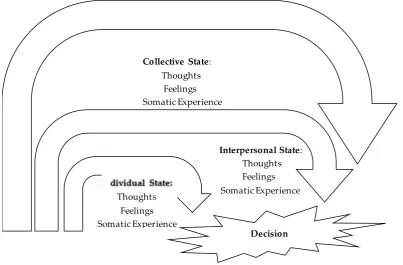
Based on this analysis, we have created a visual model of “VUCA in action” (see Figure3below), in other words, an illustration of the dynamic and fluid relationship between individual, interpersonal and collective decision-making states. All three of these levels of decision-making states impact each other in an iterative way, which in turn shapes the decisions taken by individuals and groups.
Adm. Sci. 2017, 7, 23 17 of 29
Hence, thought, affect and bodily sensations both create and continuously amend the internal, interpersonal, and social VUCA states—all of which impact decisions in an iterative and integrative way. This is demonstrated by the multiplicity, and multi-laterality of the narratives, of the different groups of decision makers in our empirical investigation. These conclusions resonate with those from research into organizational space where social interactions are likened to a dance that continuously (re)shapes responses by individuals as they contribute to group intuitions (Maimone and Sinclair 2014).
[image:18.595.98.502.453.718.2]Based on this analysis, we have created a visual model of “VUCA in action” (see Figure 3 below), in other words, an illustration of the dynamic and fluid relationship between individual, interpersonal and collective decision-making states. All three of these levels of decision-making states impact each other in an iterative way, which in turn shapes the decisions taken by individuals and groups.
Figure 3. VUCA in action: A dynamic model illustrating how individual, interpersonal, and collective decision-making states are integrated and iteratively impact decisions.
We therefore propose the following and invite further debate, regarding:
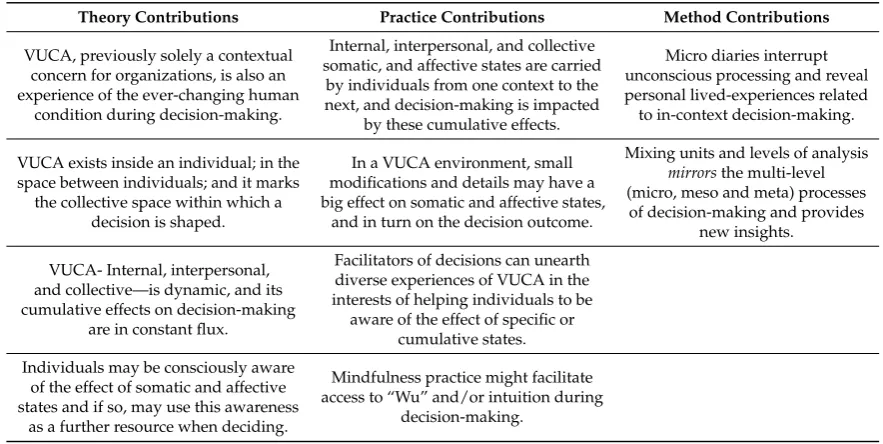
Theory Proposition One. VUCA, previously solely a contextual concern for organizations, is also an
experience of the ever-changing human condition during decision-making.
Theory Proposition Two.VUCA exists inside an individual; in the space between individuals; and it marks
the collective space within which a decision is shaped.
Theory Proposition Three. VUCA—intra, inter and social—is dynamic and its cumulative effects on
decision-making are in constant flux.
These propositions represent a foray into new dimensions of relationships between individual, interpersonal, and social factors impacting decision processes and outcomes. Exploring each proposition in turn will help generate a new theory on the antecedents and outcomes of decision-making. Additionally, these propositions extend the reach and scope of VUCA by suggesting it impacts decision theory in a manner that is relevant to the present day. Accordingly, the micro diaries reveal the different levels of awareness of VUCA by participants and facilitators.
The requirement to fill in a micro diary is likely to have encouraged participants to become more aware of their experience as it occurs, uncovering and revealing to them their hidden thoughts,
Interpersonal State: Thoughts Feelings Somatic Experience
Collective State: Thoughts Feelings
Somatic Experience
In
Thoughts Feelings Somatic Experience
Decision
We therefore propose the following and invite further debate, regarding:
Theory Proposition One. VUCA, previously solely a contextual concern for organizations, is also an experience of the ever-changing human condition during decision-making.
Theory Proposition Two.VUCA exists inside an individual; in the space between individuals; and it marks the collective space within which a decision is shaped.
Theory Proposition Three. VUCA—intra, inter and social—is dynamic and its cumulative effects on decision-making are in constant flux.
These propositions represent a foray into new dimensions of relationships between individual, interpersonal, and social factors impacting decision processes and outcomes. Exploring each proposition in turn will help generate a new theory on the antecedents and outcomes of decision-making. Additionally, these propositions extend the reach and scope of VUCA by suggesting it impacts decision theory in a manner that is relevant to the present day. Accordingly, the micro diaries reveal the different levels of awareness of VUCA by participants and facilitators.
The requirement to fill in a micro diary is likely to have encouraged participants to become more aware of their experience as it occurs, uncovering and revealing to them their hidden thoughts, feelings and bodily sensations. Without the prompt to complete a micro diary entry, it is not clear how aware individuals would have been of their internal experience. Nevertheless, even with prompted awareness (Gendlin 1995;Petitmengin 2006), the diaries demonstrate that levels of individual awareness are highly variable and this notion aligns with progressive/developmental theories of mindfulness (Rinpoche 2003). It is therefore our proposition that contributors might be aware of awareness itself (meta-cognition) or they might not. By way of example from the micro diaries: one participant is craving coffee and might have used this awareness to suggest to the group that his concentration was lapsing and a break would be helpful. For another individual, an interruption was experienced as disorienting—and they might have pointed out that the group was in flow and it would be helpful to keep working without interruption.
A mindful awareness of state is a separate consideration to that of awareness of flux and flow, which is also variable (Begley and Davidson 2012). The complex psycho-physiological loop between cognition, emotion, and sensations can be brought to awareness with practice, but in the micro diaries there is no evidence that individuals responded to the self-revelations of state. The participants’ diaries record that affective states surged and changed with their own momentum. Seemingly, no one took proactive steps to change their affective state. Where state-change was recognized and diarized it can be attributed to either natural happenstance or to planned interventions initiated by the facilitators. At the very least, it could be also that the intensity of the state, was affected by subtle external factors (embedded in the group space), such as the choice of words or the tone of voice, as suggested by research into effects of unconscious stimuli (Shevrin et al. 2012).
In summary, individuals vary considerably in their awareness of affective and somatic (physical) state, and this awareness also fluctuates over time. Those who are (or become) aware show some ability to influence their affective state. In the retrospective micro diaries of the facilitators, there is more evidence of social awareness and of instances where this type of awareness led to positive actions when it became consciously discernible to a facilitator. For example, decisions to stand or sit and whether or not to intervene influenced interactions between facilitators and, relatedly, their affective experience. Supporting this observation is research by Coget and colleagues (Coget and Keller 2010), who found that effects of the same discrete emotion on the choice of intuitive vs. rational information processing differed according to the previous emotional experiences of the decision maker.
Theory Proposition Four.Individuals may be consciously aware of the effect of somatic and affective states and if so, may use this awareness as a further resource when deciding.
As suggested by Eisenhardt and Zbaracki (Eisenhardt and Zbaracki 1992), the four propositions above extend the strategic narrative in which the decision-making discourse is situated and suggest that further research will be enhanced by a wider investigative lens to consider more factors when studying this important domain.
4.2. Practice Contributions
As researchers, we have attempted to uncover and reveal more about the complex and dynamic nature of sense making and decision-making in a relatively small experiential workshop with colleagues. Despite the restricted number of participants, the workshop was not atypical of interactions throughout the workplace. In accepting this parallel, we suggest that practitioners need to take account of the multiplicity and complexity of fluctuating states of thoughts, emotions, and sensations at the three levels of analysis presented above. In the section below, we describe how the theoretical insights can influence practice.
The micro diaries show that individuals arrive to a situation “fully loaded”, they are not empty vessels (Raelin 2007). People carry over thoughts, feelings and sensations derived from the previous events of their lives, whether that is the last few moments, few hours, or years. This has consequences in the workplace as people arrive to meetings or even to emails where they are being asked to take in new information or create new knowledge. Leaders of meetings and conveners of groups can help by ensuring that people have time and space to prepare internally for what is to come, possibly using the ‘third space’ technique, designed to help professionals bracket their private life from their professional ‘emotional baggage’ (Fraser 2012). The proposition below is intended to raise practitioners’ awareness
of this phenomenon.
Practice Proposition One.Internal, interpersonal, and collective somatic, and affective states are carried by individuals from one context to the next, and decision-making is impacted by these cumulative effects.
Similarly, construction of the physical space needs attention because physical configurations matter too. Our Western Cartesian mentality shows through in meeting rooms where we sit opposite each other. For example, the U.K. Parliament is two sword widths apart and sets up an oppositional House of Commons. Physicality sets the tone for “either/or” discussions, it reinforces that in choosing
thiswe reject that. Conveners of decisions might give more consideration to the physical space. Our contention is that physical space (that in turn affects social space) can be made more conducive to “Wu”, where there is no need to reconcile opposites and collaboration is encouraged through designed configurations.