EFFECTIVENESS OF OIL MASSAGE ON SELECTED PARAMETERS AMONG NEWBORNS AT SELECTED HOSPITAL IN
TRICHY DISTRICT
By
Ms. K.SANGEETHA
Reg. No: 30106211
A DISSERTATION SUBMITTED TO
THE TAMILNADU DR. M.G.R.MEDICAL UNIVERSITY, CHENNAI, IN PARTIAL FULFILLMENT OF THE REQUIREMENT FOR THE
DEGREE OF MASTER OF SCIENCE IN NURSING
CERTIFICATE
Certified that this is the bonafied work of Ms.K. SANGEETHA, Final year M.Sc (Nursing) student of Sara Nursing College, Tiruppur , Submitted in partial fulfillment of the requirement for the Degree of Master of Science in Nursing to The Tamil Nadu Dr. M. G. R. Medical University, Chennai, under the Registration No. 30106211.
College Seal:
Signature: ………. PROF. M. KANDASAMY, M.Sc(N)., (Ph.D)., PRINCIPAL,
SARA NURSING COLLEGE, DHARAPURAM,
EFFECTIVENESS OF OIL MASSAGE ON SELECTED PARAMETERS AMONG NEWBORNS AT SELECTED HOSPITAL IN
TRICHY DISTRICT
Approved by the Dissertation Committee on: 02.02.2012
Signature of the Research Guide ………
Prof. M. Kandasamy, M.Sc(N)., (Ph.D)., Principal,
Sara Nursing College,
Dharapuram, Tiruppur (Dt). Signature of the Clinical Speciality
Guide ………
Mrs. E.V. Jasmin Guilda Star,M.Sc(N),
Assistant Professor,
Department of Child Health Nursing,
Sara Nursing College,
Dharapuram- 638673.
Signature of the Medical Expert ……….
Dr. D. S. Arivanand, M.B.B.S.. M.D. (Ped)
Consultant Pediatrician,
Maharishi Nursing Home,
Dharapuram.
ACKNOWLEDGEMENT
Give thanks to the Lord for He is good and his endures forever. I praise God Almighty for his guidance, strength, wisdom and support throughout this endeavor.
It is my privilege to be a part of this institution and to thank Mrs. Mariyam UL Asia, Chairman, Sara Nursing College, Manakkadavu, Dharapuram, for allowing me to undertake the study and avail the facilities in this institution.
It is a moment of great pleasure to place on record my deep sense of gratitude and indebtedness to Mrs. Benazir MBA., Vice-Chairman, Sara Nursing College, Dharapuram for providing necessary facilities to conduct this study.
I am very much thankful and grateful to my research guide Prof. M. Kandasamy, M.Sc (N)., (Ph.D)., Principal, Sara Nursing College, Dharapuram for his periodic assessment of my work, valuable suggestion and exemplary guidance throughout this dissertation.
I am indeed with great pleasure and privilege to work and to take up this dissertation under the scholarly guidance of my Clinical Speciality Guide Mrs. E. V. Jasmin Guilda Star M.Sc (N)., Assistant Professor of Child Health Nursing, Sara Nursing College, Dharapuram who has been a constant source of inspiration and encouragement in completing this dissertation.
I am immensely thankful to my medical guide Dr. D. S. Arivanand, M.B.B.S., M.D (Ped)., Maharishi Nursing Home, Dharapuram who gave suggestions for my study.
No research project is complete without statistics. Hence my deep thanks to Mr. S. Senthil Kumar, Lecturer in Statistics, G. V. N. Hospital, Trichy District, for his constructive suggestions regarding statistical analysis.
My sincere thanks to Mrs. Mary Sumathi M.Sc (N)., Mrs. Gomathi M.Sc (N)., Mrs. Usha M.Sc (N)., Mrs. Nisha Wilson M.Sc (N)., Mrs. Manjula M.Sc (N)., Mrs. Leema Rose M.Sc (N)., Miss. Jayalakshmi M. Sc(N)., for giving me motivation during the course of my study.
Devasirvadam MSc (N)., (Ph.D)., our former Research Co-ordinator, and my former Clinical Speciality Guide Mrs. J. Kavitha M.Sc (N)., for their guidance throughout the study.
My sincere thanks to Prof. Mallika Rajadurai M.Sc (N)., (Ph.D)., Prof. S. Sumithra M. Sc (N)., Prof. Sherene G. Edwin, M.Sc(N)., (Ph.D)., who gave valuable suggestions and opinions for my study.
My Sincere thanks goes to Dr. Veena Jagaram, M.D.(OG), Chairman, Jagatha Hospital, Trichy for having permitted me to undertake the study.
My sincere thanks to Mr. C. Vijaya Kumar, M.Sc., MLIS, M.Phil., Librarian, and Mr. Shakthivel B.Lit., CLISC Asst. Librarian, Sara Nursing college, for their timely support through out my study.
My sincere thanks to Mr.S. Saminathan Selvaraj MA, M.Ed, M.Phil., for his timely work in English editing my research contend successfully.
My sincere thanks to all Staff of Vijay Xerox, Dharapuram, for their full co-operation to complete this research project.
I wish to thank all the good hearts and the research subjects who have participated, whole heartedly in the study and for their valuable co – operation which made the study effective.
I wish to pledge my heartfelt thanks to my parents Mr. N. Kailasam, Mrs. K. Banumathi for their great support and help in the successful completion of my thesis.
I also take this opportunity to extend my thanks to my precious brothers Mr. K. Vinoth Kumar M.C.A., Mr. K. Sathish Kumar M.C.A., M.B.A., and my dear friend Ms. M. Gayathri D. Ed., M.Sc.(Maths)., for their great support and help in successful completion of my thesis.
TABLE OF CONTENTS
CHAPTER CONTENT PAGE NO
I INTRODUCTION 1-9
• Need for the study • Statement of the problem • Objectives
• Hypothesis
• Operational Definitions • Assumptions
• Delimitations
• Conceptual framework
3-4 5 5 6 6 6 7 7-9
II REVIEW OF LITERATURE 10-23
III METHODOLOGY 24-28
• Research approach • Research Design • Variables
• Description of settings • Population
• Sampling
• Description of the tools • Validity and reliability • Pilot study
• Method of data collection • Plan for data analysis
24 24 24 24 25 25 26 26-27 27 27-28 28
IV DATA ANALYSIS AND INTERPRETATION 29-39
V DISCUSSION 40-42
VI SUMMARY, CONCLUSION, IMPLICATIONS
AND RECOMMENDATIONS
43-45
BIBLIOGRAPHY 46-49
LIST OF TABLES
TABLE NO TITLE PAGE NO
4.1 Distribution of subjects according to selected
demographic variables 30-32
4.2 Effectiveness of oil massage on selected
parameters among newborns 35
4.3
Association between selected parameters of newborns and their demographic variables among Experimental group
36-37
4.4
Association between selected parameters of newborns and their demographic variables among Control group
LIST OF FIGURES
FIGURE
NO TITLE
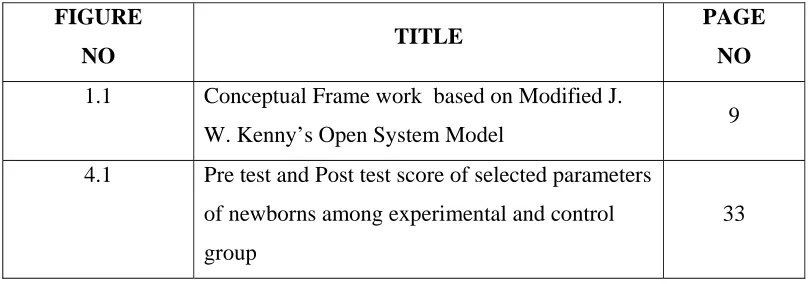
PAGE NO 1.1 Conceptual Frame work based on Modified J.
W. Kenny’s Open System Model 9 4.1 Pre test and Post test score of selected parameters
of newborns among experimental and control group
LIST OF ANNEXURES
ANNEXURE TITLE PAGE
NO. A Letter seeking permission to conduct a research study I-ii
B Tool for data collection iii-vii
C Coconut oil massage Viii-ix
D Letter requesting opinion and suggestion of experts
for content validity of research tool X
E Certificate of Validation Xi
F List of experts Xii
G Certificate for editing Xiii
ABSTRACT
A study to evaluate the effectiveness of oil massage on selected parameters among newborns at selected hospital in Trichy District.
The study was conducted in Jegatha Hospital at Trichy. The quasi experimental time series design was used for this study. Permission was obtained from the medical officer of the hospital and data collection was done over a period of 4 weeks. The investigator had selected 60 subjects (30 subjects in experimental group, 30 subjects in control group) by convenience sampling technique. Oral consent was obtained.
Selected newborns were assessed for selected parameters such as skin integrity, heart rate, respiratory rate, hypothermia, frequency of feeding pattern, digestion, sleep, sign of infection, colic and gas, comfort and stress by observational checklist. On 1st day, pretest on selected parameters was done among newborns on both experimental and control group. After the pretest, on 2nd day onwards oil massage was given to the newborn who are in experimental group, for 5 minutes, 3 times in day time, for 3 days in four hours interval. The post test on selected parameters was done among newborns after oil massage, everyday. The control group was not received oil massage but post test was done daily for 3 days. Overall average of post test data was taken for the data analysis. Descriptive and inferential statistics were used to analyze the findings of the study.
There was a significant difference (P<0.05) between mean post test score on selected parameters among newborns of experimental group and control group. The mean post test score of experimental group was 29 (± 0.95) where as in control group it was 16.5 (±1.857) respectively. There was a significant association (P<0.05) between the selected parameters of newborns and their education of mothers of experimental group. There was no significant association between the selected parameters of newborns and the selected demographical variables of control group.
CHAPTER –I
INTRODUCTION
A baby is born with a need to be loved and never outgrows it.
~ Frank A. Clark.
The children’s health is a nation’s wealth. A healthy child – a sure future. A healthy childhood is a precursor to healthy adulthood and they are asset to their parents as well as to the nation.
The birth of an infant is one of the most awe-inspiring and emotional events that can occur in one’s lifetime. After 9 months of anticipation and preparation, the neonate arrives amid a flurry of excitement. The new human being affects the lives of the parents and also other family members. Some parents and families adjust easily to necessary changes in their lifestyles, where as others find it difficult to cope with these changes and feel varying degrees of turmoil and anxiety. This is especially true if the neonate is not the robust, healthy, lovable infant who was expected. (Dorothy
R. Marlow, 2006)
Adaptation to extra uterine life requires rapid and profound physiologic changes, including aeration of the lungs, rerouting of the circulation and activation of the intestinal tract. To obtain nourishment, to avoid hypothermia or hyperthermia, to ensure safety, neonates must react appropriately to an expanded range of sensory stimuli. (KliegmanM. Robert, 2008)
The healthy newborn infant born at term, between 38 – 42 weeks, cries immediately after birth, establishes independent rhythmic respiration, quickly adapts with extra uterine environment, having an average birth weight and no congenital anomalies. (Datta Parul, 2009)
Neonatal health problems are frequently found ranging from minor physical or physiological peculiarities to the serious life- threatening illness. Minor problems should not be ignored lightly without adequate assessment of the conditions. Early diagnosis and management of the serious problems helps to reduce neonatal morbidity and mortality. Minor problems of neonates are vomiting, constipation, diarrhea, excessive crying, evening colic or 3 months colic, dehydration fever, sneezing and nose block, hiccups, napkin rash, breath holding spells and physiological jaundice.
(Datta Parul, 2009)
Massage plays an important role in the growth and development of baby's body. Massage makes baby's bones strong and develops healthy body. It also helps baby to have a sound sleep and remain active and cheerful. At the same time this process brings the mother and baby closer. It enables baby to remain in mother's warmth for a longer time. It also helps baby to feel fresh as it improves the in baby's body. In India the concept of massage is popularly known as 'Tel Malish'. (Baby
massage, 2000)
Massage is a natural and almost instinct way to care the child. It encompasses a wide variety of techniques that manipulates the soft tissue. Oil massage has a long tradition in India, originated from China and flourished in Persia. The written documents about massage dates back to 2000BC the word massage is defined from Latin word ‘Massa’ or green masseing or ‘masso’ meaning is to touch, handle, rubbing the entire body of the baby gets comfort both physically and psychologically.
(Field, 1999)
Baby massage is culturally accepted and has scientifically proven benefits. Most babies enjoy an oil massage, they cry less and sleep better. It improves the circulation and tone of the muscles, gives comfort to the baby, strengthens maternal bonding and provides additional energy to the baby. Because oil can get absorbed from thin skin of the baby. Oil massage is created to improve weight gain, reduce stress and enhance immunological functions of the baby. It prevents dryness and chaffing of skin. Use a non irritating oil like olive oil or coconut oil for oil massage.
Oil massage is both culturally and scientifically acceptable as it provides insulation against heat loss and reduces insensible water loss. Oil protects the skin from the hot climate while stroking and stretching the body are commonly believed to help the babies to grow stronger. Oil can act as a source of warmth and nutrition. Topical oil application has been shown to improve skin barrier function, thermoregulation and is suggested to have a positive effect on growth. The practice of oil massage has gained favor in neonatal intensive care units in developed countries.
(Parthasarathy, 2010)
Need for study Worldwide incidence
Globally 10 million children die annually before their fifth birthday, most of them in the neonatal period. More than 98% of these deaths occur in developing countries. Almost half of the deaths in under-five-year-olds occur in infancy. Of the infant deaths, about two-thirds occur in the neonatal period. It has been noted that one-third of all neonatal deaths occur on the first day of life, almost half within 3 days and nearly three-quarters within the first week of life. In developing countries, about 34 of every 1000 live births result in neonatal death. Approximately four million global neonatal deaths that occur annually, 98% occur in developing countries. Health providers mentioned bathing or washing the baby immediately after cutting of the cord, 79% of people give oil massage as a normal procedure. (Agarwal Monica,
Awasthi Shally, 2006)
Topical therapy with Aquaphor and sunflower seed oil (SSO) were both highly cost-effective than control group, reducing neonatal mortality by 26% and 32% respectively. Topical therapy with SSO and Aquaphor were highly cost-effective in reducing deaths from infection among the preterm neonates studied. The choice of emollient should be made taking into account budgetary limitations and ease of supply. Further research is warranted on additional locally available emollients, use of emollients in community-based settings and generalizability to other geographic regions. (Ahmed AS, Black R, LeFevre A, Shillcutt SD, Saha SK, Law PA, et. al.,
In Nepal, approximately, 90% of deliveries take place at home. A cross-sectional survey was carried out in the immunisation clinics of Pokhara city, western Nepal during January and February, 2006. Two trained health workers administered a semi-structured questionnaire to the mothers who had delivered at home. A total of 240 mothers were interviewed. Planned home deliveries were 140 (58.3%) and 100 (41.7%) were unplanned. Majority (93.8%) of the newborns were given a bath soon after birth. Mustard oil massage of the newborns was a common practice (144, 60%).
(Chandrashekhar T Sreeramareddy, 2006)
In Pakistan, a qualitative and quantitative study was conducted regarding Newborn care practices in low socioeconomic settlements of Karachi. Five focus group discussions and 15 in-depth semi-structured interviews were conducted in July and August 2000; structured questionnaires were administered to 525 recently delivered women. Newborns were bathed immediately (82.1%) after delivery as the vernix was considered 'dirty looking' (78.5%), and it was felt it should be removed. To foster muscle relaxation (80.2%) and strengthen the bones (43.0%), daily massage was universally practiced, mustard oil (75.9%) being the most frequently used lubricant. (Ali TS, Urocher JM, 2000)
National wide incidence
In India the neonatal mortality rate (NMR) dropped significantly from 69 per 1000 live births in 1980 to 53 per 1000 live births in 1990. In recent years, however, the NMR has remained almost static decreasing only from 48 to 44 per 1000 live births from 1995 to 2000 (AgarwalMonica, Tuhina Verma, 2006)
.
At 40th annual conference of the Indian Academy of Pediatrics in Mumbai, the researchers reported that oil massage increases the fatty acid levels and improves growth in neonates. (Matani, 2011)
Tactile/ kinesthetic stimulation was given to forty preterm infants (mean gestational age 30 weeks; mean birth weight 1.17 kg). The stimulation was given 45 minutes per day (three sessions of 15 minutes each) for 10 days. It was observed that infants who received massage had 21% greater weight gain (34 versus 28 g). (Scafidi,
1986)
Based on the above literature review, Investigator feels that there is a need to create awareness in Tamil Nadu regarding the benefits of oil massage which is one of the traditional practice among newborns. In this study investigator wants to evaluate the effectiveness of oil massage on selected parameters such as skin integrity, heart rate, respiratory rate, hypothermia, frequency of feeding pattern, digestion, sleep, sign of infection, colic and gas, comfort and stress among newborns who are delivered in Jegatha Hospital at Trichy. However, very few such attempts have been made in India to evaluate the effectiveness of oil massage among newborns. The present study will be undertaken to add evidence based information in the field of Pediatric nursing care in newborns on selected parameters in Jegatha Hospital at Trichy district, Tamilnadu.
Statement of the Problem
A study to evaluate the effectiveness of oil massage on selected parameters among newborns at selected hospital in Trichy District.
Objectives
• To assess the selected parameters of newborns among experimental and control group.
• To evaluate the effectiveness of oil massage on selected parameters among newborns.
• To associate the selected parameters of newborns with their demographic variables among experimental group.
Hypothesis
H1- There will be a significant difference between the mean post test score of selected parameters among newborns who undergo oil massage and who do not undergo oil massage at P< 0.05 level of significance.
H2 - There will be a significant association between the selected parameters of newborns and their selected demographic variables of experimental group at P< 0.05 level of significance.
H3- There will be a significant association between the selected parameters of newborns and their selected demographic variables of control group at P< 0.05 level of significance.
Operational Definition Effectiveness
Its refers to statistically significant change in selected parameters among newborns who undergo oil massage.
Oil Massage :
It’s a kind of manuer where the baby is kept in supine position and coconut oil massage is done using fine movements like circular motion starting from the neck, trunk and extremities of the newborns. In the back efflurage must be given.
New Born :
Newborn refers to babies born at Jegatha hospital, Trichy who are less than 28 days old.
Selected parameters:
It refers to changes in skin integrity, heart rate, respiratory rate, hypothermia, frequency of feeding pattern, digestion, sleep, sign of infection, colic and gas, comfort and stress.
Assumption
• Oil massage may have some improvement on selected parameters of newborns.
Delimitation
• The study was limited to 4 weeks only.
• The study was conducted only among the participants from Jegatha hospital, Trichy. Hence, the generalization was possible only for selected area.
Conceptual Framework:
A conceptual framework is interrelated concept or abstractions that are assembled together in some rationale scheme by virtue of their relevance to common theme. (Polit, 1995)
The conceptual framework based on MODIFIED J.W. KENNY’S OPEN SYSTEM MODEL (1969) which focus onresponse.
An open system is a system which continuously interacts with its environment. The interaction can take the form of information, energy, or material transfers into or out of the system boundary, depending on the discipline which defines the concept.
The concept of an "open system" was formalized within a framework that enabled one to interrelate the theory of the organism, thermodynamics, and evolutionary theory. This concept was expanded upon with the advent of information theory and subsequently systems theory.
Input
According to theorist, resources are taken or received from the external environment.
In this study, input refers to assessment of newborns on selected parameters such as skin integrity, heart rate, respiratory rate, hypothermia, frequency of feeding pattern, digestion, sleep, sign of infection, colic and gas, comfort and stress and demographic variables among experimental and control group.
Throughput
In this study, throughput was application of coconut oil massage on newborns among experimental group.
Output
According to theorist, the work of the system, exported back into the environment.
In this study, Output refers to the improvement in selected parameters of newborns among experimental group and minimal change in selected parameters of newborns among control group.
Feedback
According to theorist, a continuing source of information concerning the relationship with the external environment used to make the necessary changes in order to service and to grow.
CONTROL GROUP EXPERIMENTAL
GROUP
FEED BACK
INPUT THROUGH PUT OUT PUT
Assessment of the newborn on selected
parameters such as skin integrity, heart rate, respiratory rate, hypothermia, frequency of feeding pattern, digestion, sleep, sign of infection, colic and gas, comfort and stress and Demographic variables
Application of coconut oil massage on newborns
No application of coconut oil massage on newborns
Improvement in selected
parameters of newborns
Minimal change in selected
[image:19.612.69.728.44.543.2]parameters of Newborns
Figure 1.1 CONCEPTUAL FRAMEWORK BASED ON MODIFIED J.W. KENNY’S OPEN SYSTEM MODEL (1969)
CHAPTER-II
REVIEW OF LITERATURE
The literature review involves the systematic identification, location, scruting and summary of written materials that contain information on a research approach.
The purpose of review of literature is to obtain comprehensive knowledge base and in depth information about related research topic for laying strong foundation for the study. (Polit, 1998)
The literature reviewed related to the present study is organized and presented under the following headings.
I. Literature related to oil massage
II. Literature related to selected parameters of newborns III. Literature related to coconut oil massage among newborn IV. Literature related to massage
I. Literature related to oil massage
Darmstadt. GL., (2008). conducted a study on effect of skin barrier therapy on neonatal mortality rates in preterm infants at Bangladesh. A prospective, randomized, controlled, clinical trial was conducted among preterm infants (gestational age: ≤33 weeks; N = 497) received daily topical applications of sunflower seed oil or Aquaphor ointment. Treatment with sunflower seed oil resulted in a statistically significant 26% reduction in mortality rates, compared with infants not receiving topical emollient therapy. Aquaphor therapy also significantly reduced mortality rates, by 32%. Topical therapy with skin barrier-enhancing emollients improved survival rates among preterm hospitalized infants in Bangladesh. This study provides strong evidence for the implementation of topical therapy for high-risk preterm neonates in developing countries.
Ahmed Nawshad Uddin, Saha K. Samir, (2007). conducted a study on acceptability of massage with skin barrier-enhancing emollients in young neonates in Bangladesh. The study was carried out to gain insights regarding oil-massage practices and acceptability of skin barrier-enhancing emollients in young, preterm Bangladeshi neonates. Prospective study was conducted among preterm infants of <33 weeks gestational age were randomized to high- linoleate sunflower seed oil, aquaphor original emollient ointment in Comparison group. A survey was administered at admission to assess routine skin- care practices prior to admission. Oil massage was given to 83 (21%) of 405 babies before hospital admission, 86% (71/83) of whom were delivered at home. Application of oil, most commonly mustard oil (88%, 73/83), was started within 1 hour of birth in 51 cases (61%). Of infants who receive emollient therapy in the hospital, 42% (n=32) of mothers reported that the emollient applied in the hospital was better than that available at home, and only 29% would use the same oil (i.e. mustard oil) in the future as used previously at home.
three groups. Oil application may have a potential to improve weight gain among preterm very low birth weight neonates.
Darmstadt. GL., Saha. SK., (2005). conducted a study on effect of topical treatment with skin barrier-enhancing emollients on nosocomial infections in preterm infants in Bangladesh using a randomized controlled trial. They randomly assigned infants born before week 33 of gestation to daily massage with sunflower seed oil (n=159) and aquaphor (petrolatum, mineral oil, mineral wax, lanolin alcohol; n=157). Then they compared incidence of nosocomial infections among infants in these two groups with an untreated control group (n=181). 20 patients in the control group, and 22 in each of the treatment groups left the hospital early, but were included in the final analysis. Overall, infants treated with sunflower seed oil were 41% less likely to develop nosocomial infections than controls (adjusted incidence rate ratio [IRR] 0.59, 95% CI 0.37-0.96, p=0.032). No adverse events were seen. Their findings confirmed that skin application of sunflower seed oil provides protection against nosocomial infections in preterm very low birth weight infants.
Darmstadt. GL., Samir. K., (2003). conducted a study on neonatal oil massage in Bangladesh. Topical application of certain natural oils may improve skin barrier function and results in a number of potential health benefits, particularly among preterm infants. they conducted a survey of neonatal oil massage practices in Bangladesh, and found that 96% of 352 caregivers practiced oil massage, irrespective of socioeconomic status and place of residence. Mustard oil and olive oil were used most commonly (alone or in combination in 95% and 11% of cases, respectively), although olive oil was used primarily by families of higher socioeconomic status. In 80% of cases, oil massage was started within 4 days of birth and practiced 2-3 times daily over the entire body throughout the neonatal period.
sustained 5 hour after application. In contrast, the other vegetable oils (mustard, olive and soybean oils) were tested for massage. This study shows that there is a significantly delayed recovery of barrier function compared with control- or Aquaphor-treated skin. Twice-daily applications of mustard oil for 7 days resulted in sustained delay of barrier recovery. Their data suggested that topical application of linoleate-enriched oil such as sunflower seed oil might enhance skin barrier function and improve outcome in neonates with compromised barrier function.
Darmstadt. GL., Saha SK., (2002). conducted a study on traditional practice of oil massage of neonates in Bangladesh. This study was undertaken to gain insights into epidemiology, practice and perceptions regarding traditional oil massage of Bangladesh neonates. A questionnaire was administered verbally to the primary caretaker of 352 outpatients at the Dhaka Shishu Hospital, More than 96% (340/352) of the caregivers practiced oil massage, irrespective of socioeconomic status and place of residence. Among those at the Dhaka Shishu Hospital who practiced oil massage, mustard oil was used alone or in combination 95%(303/320) over the entire body, 1-3 time(s) daily (96%), starting in the first three days of life(72%) in both term and by preterm neonates. Perceived benefits included prevention of infections(69%) and hypothermia(2%).
Darmstadt. GL., Mullany. LC., Khatry. SK., Tielsch. JM., (2000). conducted a study on traditional massage of newborns in Nepal. A questionnaire concerning the usage and reasons for application of mustard and other oils to newborn skin was administered to the caretakers of 8580 newborns in Sarlahi district of rural Nepal. Approximately 99 % of newborns were massaged at least once with mustard oil in the 2 weeks after birth, and 80% were massaged at least twice daily. Promotion of strength, maintenance of health, and provision of warmth were the most commonly cited reasons for application of mustard oil. An understanding of cultural, social, and economic factors that shape the context of traditional healthcare practices is essential to the design and implementation of intervention trials examining the relative efficacy of application of oils in reducing neonatal mortality and morbidity.
Field, Schanberg, (1996). conducted a study on Massage with oil has more positive effects on normal infants at Touch Research Institutes, United States. As compared with infants who received massage without oil, infants who received massage with oil were less active, showed fewer stress behaviors and head averting, and their saliva cortisol levels decreased more. Also, vagal activity increased following massage with oil versus massage without oil.
Nopper and coworkers, (1996). conducted a study on the effect of prophylactic application of emollient ointment in preterm infants using randomized controlled trials. Infants were evaluated for a decrease in the risk of proven nosocomial infection among infants who received prophylactic application of emollient ointment (typical relative risk 0.29, 95% CI 0.07, 1.16, typical risk difference -0.13, 95% CI -0.25, -0.01). Prophylactic application of emollient ointment decreased transepidermal water loss, decreased the severity of dermatitis, and decreased the risk of suspect sepsis and proven sepsis.
hours and nearly 50% (198/405) had temperatures < 36 degrees C at 24 hours (14% were < 35 degrees C). Most of the infants who were cold at 24 hours had initially become cold at the time of delivery. In the intervention study, all infants were dried and wrapped before random assignment to one of the three methods like the "kangaroo" method, the traditional "oil massage" and a "plastics waddler". All three were found to be equally effective. Overall, 38% (114/298) of the infants had temperatures < 36 degrees C at 2 hours and 18% (41/231) at 24 hours (when none was < 35 degrees C).
Rutter. N., Hull. D., (1981). conducted a study onreduction of skin water loss in the newborn with the effect of applying topical agents. The waterproofing effect of a number of creams, oils, and greases was examined by measuring water loss from adult skin before and after topical application. Creams had a high water content and were ineffective, oils produced a modest fall in water loss, but paraffin in grease form had a pronounced, sustained waterproofing effect. A paraffin mixture (80% soft, 20% hard paraffin (BP) was then applied to the skin of 3 preterm babies nursed naked in incubators. Overall skin water loss fell by 40 to 60% after application and was still lower than pretreatment levels 6 hours later. The topical application of paraffin offers a new approach to reduction of the high evaporative water and heat losses of preterm babies.
II. Literature related to selected parameters of newborns 1. Skin integrity
a) Skin turgor
Newborn’s skin should feel resilient if the underlying tissue is well hydrated. If a fold of the skin is grasped between the thumb and fingers, it should feel elastic. When it is released, it should fall back to form a smooth surface, If severe dehydration is present, the skin will not smooth out again but will remain in an elevated ridge. (Adele pillitteri, 1999)
b) Skin texture
2. Heart rate
Heart rate the newborn, an average 120 to 160 beats per minute with an average of 140 beats per minute. It may be irregular and increased during crying and may be slow about 80 to 100 beats per minute during sleep. (Datta Parul,
2009)
3. Respiratory rate
Healthy neonates cries almost immediately after birth and establishes satisfactory and spontaneous respiration. The respiratory rate the newborn varies between 30 to 60 breaths per minute, that is at resting state to crying, with an average 40 breaths per minute. Respiration is usually periodic, shallow but irregular. It may be slow in some babies. It is usually thoraco- abdominal without any retractions and grunting. (Datta Parul, 2009)
4. Hypothermia
Temperature range in which the basal metabolic rate of the newborn at minimum oxygen utilization is least and baby thrives well is known as ‘thermo – neutral range of temperature’ or ‘neutral thermal environment’. (Ghai, 2008) Normal temperature - 36.5 -37.50Celsius
Mild hypothermia - <36.5- 36.00Celsius Moderate hypothermia - <36.0 - 32.00 Celsius Severe hypothermia - <32.00 Celsius
5. Frequency of feeding pattern
6. Digestion
Moderate pressure massage stimulate vagal activity (activation of vagal nerve is an index of parasympathetic nervous system activation) which leads to an increase in the release of digestive hormones and an increase in gastric motility. (Diego, 2005)
7. Sleep
Sleep patterns vary from those of a newborn, who sleeps an average of 16 out of every 24 hours, to those of an adult, who can make do with only 4 hours out of 24. A neonate spends about 80 percent of the time in sleeping about 20 hours a day. (Datta Parul, 2009)
Infants less than 36 weeks of gestation (birth weight <2.5 kg) subjected to massage till 8 months of age, had improved quality of sleep with less awakening during sleep. These infants were more active during the day.
(Kelmanson, 2000)
8. Colic and Gas
Colic often is diagnosed using the rule of threes- crying for more than 3 hours per day, more than 3 days per week, for more than 3 weeks. The crying of colic is often described as paroxysmal and may be characterized by facial grimacing, drawing up of the legs, and passing flatus. Colic is a condition in which the infant cries inconsolably after most feedings colic is different from the expected and normal evening fussy time. Colicky babies seem especially gassy. (Karen J. Marcdante, 2010)
9. Stress
Massage is reduction in stress behaviors like sneezing, crying, grimacing, yawning, jerking of limbs of neonates. (Hernandez, 2007)
sleep-wake pattern, enhanced neuromotor development, better emotional bonding, reduced rates of nosocomial infection and thereby, reduced mortality in the hospitalized Children.
III. Literature related to coconut oil massage among newborns
Field. T., (2010). conducted a study on preterm infant massage therapy at Touch Research Institutes, Miami. Research on ways of delivering the massage is also explored including using mothers versus therapists and the added effects of using oils. The use of mothers as therapists was effective in at least one study. The use of oils including coconut oil and safflower oil enhanced the average weight gain, and the transcutaneous absorption of oil also increased triglycerides. The weight gain was associated with shorter hospital stays and, thereby, significant hospital cost savings. Despite these benefits, preterm infant massage is only practiced in 38% of neonatal intensive care units. The increases noted in vagal activity, gastric motility, insulin and IGF-1 levels following moderate pressure massage are potential underlying mechanisms.
Ramasundari. BA., (2009). conducted a study on the effectiveness of coconut oil massage on newborns at OM Sakthi Hospital Krisnagiri. In this study 30 newborns delivered by LSCS, weight more than 2.5kg were conveniently selected. Pre and post assessment was done by Brazeldon neonatal behaviour assessment scale. The mean difference 1.8 with S.D 0.388 and paired ‘t’ test 8.11 which was highly significant at (P<0.001) level in sleeping time, crying spell the mean difference was 0.9 with S.D 0.045 and paired ‘t’ value of 9.0 which was highly significant at (P<0.001) level, feeding frequency the mean difference was 1.07 with S.D 0.060 and paired ‘t’ value of 7.44 showed high level of significance at (P<0.001). Massage therapy on newborns crying spell reduced, feeding frequency increased, sleeping time increased.
between the results in groups A and B and groups A and C but there was no significant difference between those in groups B and C.Massage with coconut oil has a positive effect on weight gain in preterm newborns.
Sushma Nangia, Vinod Paul, (2008). conducted a study on topical coconut oil application reduces trans epidermal water loss in preterm very low birth weight neonates using a randomized clinical trial at All India institute of medical sciences, New Delhi. In this study seventy-four preterm VLBW neonates were randomly assigned at 12 hours of age to either 4 mL of topical coconut-oil application every 12 hours for 7 days (n = 37) or no oil application (n = 37). TEWL declined for those in both groups during the first week of life, proportional reduction in TEWL in the infants in the coconut-oil group was much greater compared with controls. (mean difference: 6.8 g/m2 per hour all during first week of life [95% confidence interval: 3.5–10.2]; P = .000). Coconut oil application in pre term very low birth weight neonates reduced transepidermal water loss by as much as 46%.
Jhansi. B., (2006). conducted a study on effect of oil massage on changes in weight and neuro behavioral response of low birth weight babies at NICU and obstetrics wards in St. Johns medical college hospital, Bangalore. In this study sample size was 64 low birth weight babies (n = 64). Quasi experimental study was used. The Oil massage was found to be feasible, safe and cost effective. There was marginal improvement in mean in experimental group showed more improvement in attention and habitualization(P<0.05). The study revealed that there was a significant difference in attention and habitualization.
Kirti solanki, Manoj Matani, (2005). conducted a study on transcutaneous absorption of topically massaged oil in neonates at Pune, India.120 study babies were randomly assigned to three oil groups i) safflower oil (n=40), ii) coconut oil (n=40), iii) no oil group (n=40) . Post oil triglyceride values were significantly raised in both the oil groups and in controls. However, the quantum of the rise was significantly higher in oil groups as compared to controls (P<0.05). Fatty acid profiles showed significant rise in essential fatty acids in safflower oil group and saturated fats in coconut oil group(P<0.05). Changes were more evident in term babies.
Sankaranarayanan. K., (2005). conducted a study on oil massage in neonates using an open randomized controlled trail of coconut versus mineral oil in Mumbai, India. In this study total of 224 babies(112 preterm and 112 term babies) were enrolled. In each gestation strata, there were 38 babies in the coconut oil, 37 in the mineral oil and 37 babies in the placebo group. In the preterm group, 32(84.2%) babies completed the follow up in the coconut oil and mineral oil subgroups and 31(83.8%) in the placebo group. In the term babies, 33(86.8%) completed the follow up in the coconut oil group and 32 babies (86.5%) completed the follow up in the mineral oil and placebo groups. Coconut oil massage resulted in significantly greater weight gain velocity as compared to mineral oil and placebo in the preterm babies group and in the term group, are compared to placebo group. Neuro behavioral outcome was assessed by Braselton score. The study shows significant result in newborns receiving coconut oil.
IV. Literature related to massage
Procianoy, (2010). conducted a study on neurodevelopment of newborns at Touch Research Institutes, United States. In this study 73 newborns (35 in Intervention Group, and 38 in Control Group) were selected. Babies in the intervention group exhibited higher Psychomotor Development Index and significantly higher Mental Development Index scores than babies from the Control Group.
Shiv Sajan Saini, (2009). conducted a study on researchable issues in care of normal newborn, neonatal transport, hypoglycemia, CPAP, cranial ultrasonograpy and blood component therapy in Chandigarh. Oil massage is a low cost traditional practice well ingrained in Indian cultures. Two Indian studies in the term babies have shown that oil massage promoted weight gain in healthy term neonates.
Livingston K, Beider S, Kant AJ, Gallardo CC, Joseph MH, Gold JI et. al., (2007). conducted a study on touch and massage for medically fragile infants at Childrens Hospital Los Angeles, USA using a longitudinal randomized control trial (RCT) of hand containment/massage versus standard of care in a level III academic Center for Newborn and Infant Critical Care (CNICC). In this study Certified infant massage instructors (CIMIs) taught parents to massage their hospitalized infants. Preliminary data from this study indicates feasibility and safety of infant massage and satisfaction among the caregivers, CIMIs and the nurses in the CNICC. In this study was the demonstration of the infants' safety based on physiological stability and no change in agitation/pain scores of the infants receiving massage.
Vickers A, Ohlsson A, Lacy JB, Horsley A, (2004). conducted a study on massage for promoting growth and development of preterm and low birth-weight infants using randomized trials in which infants with gestational age at birth <37 weeks or weight at birth <2500g received systematic tactile stimulation by human hands. Thereafter, massage was continued at home. Changes in weight, length and head circumference and neuro-behavior (Brazelton Neuro-Behavioral Assessment Scale) were assessed in both groups before, during and after the study period. Massage interventions improved daily weight gain by 5.1g (95% CI 3.5, 6.7g). Massage interventions also appeared to reduce length of stay by 4.5 days (95% CI 2.4, 6.5) though there are methodological concerns about the blinding of this outcome.
4.24 g/day more than controls, which was statistically significant. On the Brazelton Scale the test group showed statistically significant improved scores on the orientation, range of state, regulation of state and autonomic stability clusters at follow-up. Tactile-kinesthetic stimulation when administered to well, preterm infants has a beneficial effect on growth and behavioral development with no adverse effects on physiologic parameters.
Field T, Wheeden A, (1993). conducted a study on massage effects on cocaine-exposed preterm neonates at Touch Research Institutes, United States. Findings suggested that the massaged infants averaged 28% greater weight gain per day (M=33 versus 26 g), although the groups did not differ in intake (calories or volume). It showed significantly fewer postnatal complications and stress behaviors than did control infants and demonstrated more mature motor behaviors on the Brazelton examination at the end of the 10-day study period.
Field T, and Schanberg, (1990). conducted a study on massage alters growth and catecholamine production in preterm newborns at Touch Research Institutes, United States. The treatment group showed superior performance on the NBAS on the habituation cluster following the treatment period, and less time in active sleep and less facial grimacing, mouthing/yawning, and clenched fists.
Field T, Scafidi F, and Schanberg, (1987). conducted a study on massage of preterm newborns to improve growth and development at Touch Research Institutes, United States. Heightened responsiveness of the neonate may enhance the early parent-infant relationships which may, in turn, contribute to optimal growth and development at later stages in infancy.
CHAPTER-III
RESEARCH METHODOLOGY
“I keep six honest service men, they taught me all
I know their names are,
What, When, Why, Where, Who & How’”
- Anonymous. Research approach
An evaluative approach was used in this study.
Research design
The research design used in this study was Quasi experimental time series design.
E O1 X O2 X O3 X O4 C O1 O2 O3 O4 E - Experimental group
C - Control group
O1 - Pre test score before manipulation O2,O3,O4 - Post test manipulation
X - Manipulation (oil massage)
Variables
Independent variable
Independent variable was oil massage.
Dependent variable
Dependent variable was selected parameters such as skin integrity, heart rate, respiratory rate, hypothermia, frequency of feeding pattern, digestion, sleep, sign of infection, colic and gas, comfort and stress.
Description of study setting
Study population
The target population of the study was newborns.
Sampling Sample
The newborns who fulfils the inclusion criteria and delivered in Jegatha Hospital at Trichy during the period of data collection.
Sample size
The total sample size used for this study was 60 newborns who are delivered in Jegatha Hospital, Trichy. Among them 30 were in experimental group and 30 were in control group.
Sampling technique
Convenience sampling technique was used for this study.
Criteria for sample selection
The samples was selected based on the following inclusion and exclusion criteria.
Inclusion criteria
• Full term newborns weighing 2500gms or more.
• Medically stable with no requirement of drugs other than mineral and vitamin supplements.
• Apgar score >7 at 1 and 5 minutes with no resuscitation required at birth. • Mothers of newborns those who are willing to participate in this study. • Those who are available during the period of data collection.
• Babies of puerperal sterilized mothers. • Babies born with all types of deliveries.
Exclusion criteria
• The newborns with congenital anomalies or neuromuscular disorders, dermatological problems.
• Less likely to follow-up.
Description of tool
The data collection tool consists of
Section- A: Structured interview questionnaire on Demographic data of newborns and family.
Section- B: Checklist to assess the Selected parameters of newborns.
Section-A
Demographic data
It consists of two parts.
Part– A
Newborn’s profile
Age (Number of days), Birth order of baby, Gender, Mode of delivery, Birth weight, Religion, Feeding pattern.
Part- B
Mother’s Profile
Education of mother, Occupation of mother, Family income and Type of family.
Section - B
It consists of observational checklist. This tool consisted of 15 items of questions related to selected parameters such as skin integrity, heart rate, respiratory rate, hypothermia, frequency of feeding pattern, digestion, sleep, sign of infection, colic and gas, comfort and stress. Each question had 2 options. If the parameter is normal, the score of 2 has been given. If it is abnormal the score one was given. The maximum obtainable score for the observational checklist was 30. Total score of each subject was calculated, and converted into percentage and interpreted as follows.
50% and below - Poor response
51-74% - Moderate response 75% and above - Good response
Reliability
To ensure the reliability of the tool, it has been administered to 6 newborns. The reliability to assess the selected parameters was established by inter- rater method. The reliability coefficient was r = 0.886. Hence the tool was reliable.
Pilot study
In order to find out the feasibility and practicability, a pilot study was conducted at Government Hospital, Dharapuram for a period of 1week (16.6.2011- 23.6.2011) among 6 newborns (3 in experimental and 3 in control). The study was found feasible to conduct.
Method of data collection Ethical consideration
Formal permission was obtained from the medical officer and informed oral consent was obtained from the parents of newborn.
Period of data collection
The data collection was done over a period of four weeks from 29.06.2011 to 28.7.2011.
Data collection procedure
On 1st day, pretest on selected parameters was done among newborns on both experimental and control group. After the pretest, on 2nd day onwards the baby kept in supine position and coconut oil massage was given using fine movements like circular motion starting from the neck , trunk and extremities of the newborns. In the back, efflurage must be given to the newborn who are in experimental group, for 5 minutes, 3 times in day time, for 3 days in four hours interval. The post test on selected parameters was done among newborns after oil massage, everyday. The control group was not received oil massage but post test was done daily for 3 days. Overall average of post test data was taken for the data analysis. Descriptive and inferential statistics were used to analyze the findings of the study.
Plan for data analysis
CHAPTER-IV
ANALYSIS AND INTERPRETATION
Analysis of data is a general way which involves a number of closely related operations, which performed, with the purpose of summarizing the collected data, organizing these in such a manner that they answer to research questions.
Korlinger describes data analysis as categorizing, ordering, manipulating and summarizing the data to obtain answer to research questions. Data analysis was conducted to reduce, organize and give meaning to the data. The data were collected, analyzed and interpreted according to the objectives of the study.
This chapter presents the analysis and interpretation of data collected from 60 newborns to evaluate effectiveness of oil massage on selected parameters among newborns at selected hospital in Trichy District. The results obtained were classified and tabulated and the following analysis were performed in fulfilling the objectives of the study.
The data analysis are presented in the following sections.
Section- A Distribution of samples according to selected demographic variables. Section- B Assessment on selected parameters among newborns of experimental
and control group.
Section- C Effectiveness of oil massage on selected parameters among newborns Section- D Association between selected parameters of newborns and their
selected demographic variables among experimental group.
SECTION-A
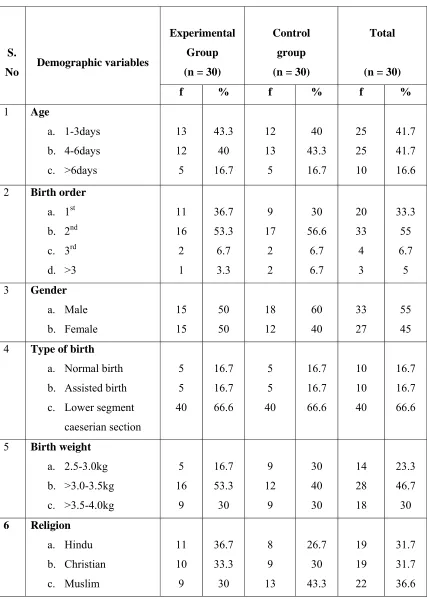
Table 4.1: Distribution of samples according to selected demographic variables.
n=60
S.
No Demographic variables
Experimental Group (n = 30)
Control group (n = 30)
Total
(n = 30)
f % f % f % 1 Age
a. 1-3days b. 4-6days c. >6days 13 12 5 43.3 40 16.7 12 13 5 40 43.3 16.7 25 25 10 41.7 41.7 16.6
2 Birth order a. 1st b. 2nd c. 3rd d. >3 11 16 2 1 36.7 53.3 6.7 3.3 9 17 2 2 30 56.6 6.7 6.7 20 33 4 3 33.3 55 6.7 5 3 Gender
a. Male b. Female 15 15 50 50 18 12 60 40 33 27 55 45 4 Type of birth
a. Normal birth b. Assisted birth c. Lower segment
caeserian section 5 5 40 16.7 16.7 66.6 5 5 40 16.7 16.7 66.6 10 10 40 16.7 16.7 66.6
7 Feeding pattern a. Breast feeding b. Formula preparation c. Both 12 8 10 40 26.7 33.3 15 5 10 50 16.7 33.3 27 13 20 45 21.7 33.3
8 Education of mother a. No formal
education b. Primary c. High school d. Higher secondary e. Collegiate 5 8 6 6 5 16.7 26.6 20 20 16.7 5 4 10 5 6 16.7 13.3 33.3 16.7 20 10 12 16 11 11 16.7 20 26.7 18.3 18.3 9 Occupation of mother
a. Home maker b. Daily wage worker c. Technical worker d. Professional worker 12 11 3 4 40 36.7 10 13.3 12 4 8 6 40 13.3 26.7 20 24 15 11 10 40 25 18.3 16.7 10 Family income
a. < Rs 3000 b. Rs 3001-Rs 5000 c. >Rs 5001
4 14 12 13.3 46.7 40 4 7 19 13.3 23.3 63.3 8 21 31 13.3 35 51.7 11 Type of family
a. Joint family b. Nuclear family
6 24 20 80 16 14 53.3 46.7 22 38 36.7 63.3
Regard to birth weight 16(53.3%) were >3.0-3.5kg of Experimental group, 12(40%) were >3.0- 3.5kg of Control group. With regard to religion 11(36.7%) were Hindu of Experimental group, 13(43.3%) were Muslims of Control group. Regarding feeding pattern 12(40%) were breast feeding of Experimental group, 15(50%) were breast feeding of Control group. Regard to education of mother 8(26.6%) were with Primary education of Experimental group, 10(33.3%) were with High school of Control group.
Regard to Occupation of mother 12 (40%) were Home maker of Experimental group, (40%) were Home maker of Control group. With regard to family income 14(46.7%) had family income between Rs.3001-Rs.5000 of Experimental group, 19(63.3%) had family income between >Rs.5001 of Control group. Regarding the type of family 24 (80%) were living in nuclear family of Experimental group and 16(53.3%) were living in joint family of Control group.
SECTION B
50% 50%
0% 0% 0%
100%
50% 50%
0%
60%
40%
0%
0% 10% 20% 30% 40% 50% 60% 70% 80% 90% 100%
%
o
f Ne
wb
or
ns
Experimental Pretest Experimental Posttest Control Pretest Control Posttest
[image:43.612.121.688.96.408.2]POOR RESPONSE MODERATE RESPONSE GOOD RESPONSE
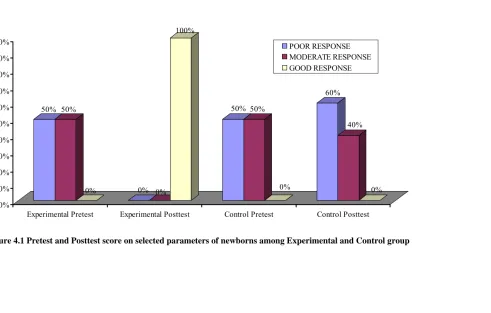
The figure 4.1 shows that the subjects 15(50%) had poor response, 15(50%) had moderate response, 0(0%) had good response in pretest of experimental group. The subjects 0(0%) had poor response, 0(0%) had moderate response, 30(100%) had good response in posttest of experimental group.
The subjects 15(50%) had poor response, 15(50%) had moderate response, 0(0%) had good response in pretest of Control group. The subjects 18(60%) had poor response, 12(40%) had moderate response, 0(0%) had good response in posttest of Control group.
Section-C
Table 4.2: Effectiveness of oil massage on selected parameters among newborns n = 60
SL
No Variable
Maximum score
Experimental group
Control
group ‘t’
Value
Mean SD Mean SD
1 Parameter assessment score
30 29 0.95 16.5 1.857 32.7*
*( P< 0.05)
The Table 4.2 Shows that there was a significant difference (P <0.05) between post test score on selected parameters of experimental group and control group. The mean post test score of experimental group was 29(±0.95), whereas in Control group it was 16.5(±1.857) respectively.
The ‘t’ value shows that oil massage was effective on selected parameters among newborns of experimental group with the significant result (32.7) which is greater than the table value (1.671) at (P <0.05).
Section- D
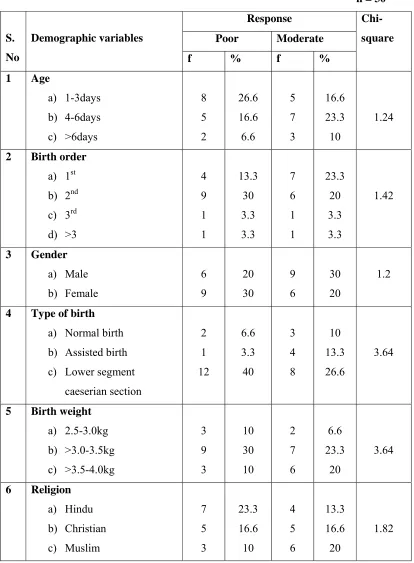
Table 4.3: Association between selected parameters of newborns and their demographic variables among experimental group
n = 30
S. No Demographic variables Response Chi- square Poor Moderate f % f % 1 Age a) 1-3days b) 4-6days c) >6days 8 5 2 26.6 16.6 6.6 5 7 3 16.6 23.3 10 1.24
2 Birth order a) 1st b) 2nd c) 3rd d) >3 4 9 1 1 13.3 30 3.3 3.3 7 6 1 1 23.3 20 3.3 3.3 1.42 3 Gender a) Male b) Female 6 9 20 30 9 6 30 20 1.2
4 Type of birth a) Normal birth b) Assisted birth c) Lower segment
caeserian section 2 1 12 6.6 3.3 40 3 4 8 10 13.3 26.6 3.64
7 Feeding pattern a) Breast feeding b) Formula preparation c) Both 4 5 6 13.3 16.6 20 8 3 4 26.6 10 13.3 2.71
8 Education of mother a) No formal education b) Primary
c) High school d) Higher secondary e) Collegiate 1 5 3 4 2 3.3 16.6 10 13.3 6.6 4 3 3 2 3 13.3 10 10 6.6 10 19.2*
9 Occupation of mother a) Home maker b) Daily wage worker c) Technical worker d) Professional worker
6 6 1 2 20 20 3.3 6.6 6 5 2 2 20 16.6 6.6 6.6 0.44
10 Family income a) < Rs. 3000
b) Rs.3001- Rs. 5000 c) > Rs. 5001
2 7 6 6.6 23.3 20 2 7 6 6.6 23.3 20 0.95
11 Type of family a) Joint family b) Nuclear family
3 12 10 40 3 12 10 40 0.41
* (P <0.05)
Section- E
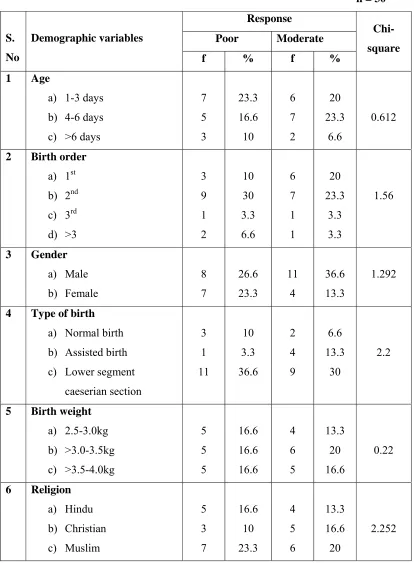
Table 4.4: Association between selected parameters of newborns and their demographic variables among control group
n = 30
S. No Demographic variables Response Chi- square Poor Moderate
f % f % 1 Age
a) 1-3 days b) 4-6 days c) >6 days
7 5 3 23.3 16.6 10 6 7 2 20 23.3 6.6 0.612
2 Birth order a) 1st b) 2nd c) 3rd d) >3 3 9 1 2 10 30 3.3 6.6 6 7 1 1 20 23.3 3.3 3.3 1.56 3 Gender a) Male b) Female 8 7 26.6 23.3 11 4 36.6 13.3 1.292
4 Type of birth a) Normal birth b) Assisted birth c) Lower segment
caeserian section 3 1 11 10 3.3 36.6 2 4 9 6.6 13.3 30 2.2
7 Feeding pattern a) Breast feeding b) Formula preparation c) Both 8 3 4 26.6 10 13.3 7 2 6 23.3 6.6 20 0.66
8 Education of mother a) No formal education b) Primary
c) High school d) Higher secondary e) Collegiate 3 1 2 3 6 10 3.3 6.6 10 20 2 4 6 2 1 6.6 13.3 20 6.6 3.3 7.78
9 Occupation of mother a) Home maker b) Daily wage worker c) Technical worker d) Professional worker
5 3 4 3 16.6 10 13.3 10 7 1 4 3 23.3 3.3 13.3 10 1.34
10 Family income a) < Rs. 3000
b) Rs.3001- Rs. 5000 c) > Rs. 5001
3 2 10 10 6.6 33.3 2 5 8 6.6 16.6 26.6 1.68
11 Type of family a) Joint family b) Nuclear family
8 7 26.6 23.3 11 4 36.6 13.3 1.292
CHAPTER-V DISCUSSION
This chapter presents the interpretation of the statistical findings. It has been discussed based on the objectives of the aim of this study was to evaluate the effectiveness of oil massage on selected parameters among newborns in selected hospital at Trichy District.
An evaluative approach was used for the present study. The study population comprised of newborns. The sample size was 60. A convenience sampling technique was used to collect the data. The data collection tools used were Demographic variables, observational checklist was used to evaluate the level of effectiveness of oil massage.
Objective 1:- To assess the selected parameters of newborns among experimental group and control group.
The findings shows that the subjects 15(50%) had poor response, 15(50%) moderate response in pretest of experimental group and 15(50%) had poor response,15(50%) had moderate response in pre test of Control group.
Objective 2:- To evaluate the effectiveness of oil massage on selected parameters among newborns
There was a significant difference (P<0.05) between post test score on selected parameters of experimental group and control group. The mean post test score of experimental group was 29(±0.95), whereas in Control group it was 16.5(±1.857) respectively.
H1:There will be significant difference between the mean post test score of selected parameters among newborns who undergo oil massage and who do not undergo oil massage at P< 0.05 level of significance.
The findings were congruent with the study conducted by Arora J, (2005) to
massage group (365.8 +/- 165.2g) was higher compared to the only massage group
(290.0 ±150.2g) and no massage group (285.0±170.4g). This difference in other
anthropometric parameters was not statistically significant. Serum triglycerides and
neonatal neuro behavior were comparable in the three groups.
Therefore hypothesis H1is retained.
Objective 4:- To associate the selected parameters of newborns with their demographic variables among experimental group.
There was a significant association (P<0.05) between the selected parameters of newborns and their education of mothers of experimental group.
H2: There will be significant association between the selected parameters of newborns and their demographic variables of experimental group at P<0.05 level of significance.
The findings were congruent with the study conducted by Ahmed Nawshad
Uddin A.S.M, (2007) to determine the acceptability of massage with skin barrier-
enhancing emollients in young neonates in Bangladesh. The study results showed that
influence of factors on use of oil massage in young neonates prior to admission
associated with maternal education at P = 0.001 level of significance.
Hence H2 is retained.
Objective 4:- To associate the selected parameters of newborns with their demographic variables among control group.
H3: There will be significant association between the selected parameters of newborns and their demographic variables of control group at P<0.05 level of significance.
The findings were congruent with the study conducted by Saeedi, (2008) to
determine the Transcutaneous Feeding: The Effect of Massage with Coconut Oil on
Weight Gain in Preterm Newborns at Mashhad Medical University in Mashhad, Iran.
The study results showed that no significant difference was found in sex, birth weight,
gestational age, birth length, or birth head circumference (P < 0.05) level of
significance.
CHAPTER-VI
SUMMARY, CONCLUSION, IMPLICATIONS, RECOMMENDATIONS
This chapter deals with summary of the study findings and its implications for nursing and health care services. It clarifies the implications and recommendations given for different areas like nursing education, nursing practice, administration for health care delivery system and nursing research.
Summary of the study
The purpose of the study was to evaluate the effectiveness of oil massage on selected parameters among newborns. An evaluative quasi experimental time series design was used to conduct this study among 60 newborns of experimental and control group at selected hospital in Trichy District, Tamilnadu.
Major findings of the study
• The subjects 13(43.3%) were between 1- 3 days of Experimental group, 13(43.3%) were between 4- 6 days of Control group. With regard to birth order 16(53.3%) were 2nd child of Experimental group, 17(56.6%) were 2nd child of Control group. Regard to gender 15(50%) were male and female of Experimental group, 18(60%) were male of Control group. Regarding the type of birth 40(66.6%) were lower segment caeserian section of Experimental group, 40(66.6%) were lower segment caeserian section of Control group. • Regard to birth weight 16(53.3%) were >3.0-3.5kg of Experimental group,
12(40%) were >3.0- 3.5kg of Control group. With regard to religion 11(36.7%) were Hindu of Experimental group, 13(43.3%) were Muslims of Control group. Regarding feeding pattern 12(40%) were breast feeding of Experimental group, 15(50%) were breast feeding of Control group. Regard to education of mother 8(26.6%) were with Primary education of Experimental group, 10(33.3%) were with High school of Control group.
Experimental group, 19(63.3%) had family income between >Rs.5001 of Control group. Regarding the type of family 24 (80%) were living in nuclear family of Experimental group and 16(53.3%) were living in joint family of Control group.
• The subjects 15(50%) had poor response, 15(50%) had moderate response, 0(0%) had good response in pretest of experimental group. The subjects 0(0%) had poor response, 0(0%) had moderate response, 30(100%) had good response in posttest of experimental group.
• The subjects 15(50%) had poor response, 15(50%) had moderate response, 0(0%) had good response in pretest of Control group. The subjects 18(60%) had poor response, 12(40%) had moderate response, 0(0%) had good response in posttest of Control group.
• There was a significant difference (P <0.05) between post test score on selected parameters of experimental group and control group. The mean post test score of experimental group was 29(±0.95), whereas in Control group it was 16.5(±1.857) respectively.
• There was a significant association (P<0.05) between the selected parameters of newborns and their education of mother of experimental group .
• There was no significant association between the selected parameters of newborns and selected demographic variables of Control group.
Conclusion
The findings of the study , Statistically proved that oil massage on selected parameters among newborns is effective. There was a significant association (P<0.05) between the selected parameters of newborns and their education of mothers of experimental group.
Nursing implications
The findings of this study had implications in various areas of nursing i.e., nursing practice, administration, education.
Implication in Nursing Practice
• Nurses can intervene oil massage therapy to alter the physical discomfort and psychological disequilibrium of the newborn.
• Nurses can teach the family members about oil massage in order to improve the health status of the newborn.
Implication in Nursing Administration
• Nurse administrators should arrange health education programme to newborns of parents regarding importance of oil massage to improve the health status of newborns.
• Nurse administrators encourage the nurses to prepare adequate assessment tool for assessing the health status of newborn in hospital and community.
• The administrator should emphasize and encourage the nurse to use skills and knowledge to apply oil massage for newborns.
Implication in Nursing Education
• Nurse educator should be given in-service education to update their knowledge and abilities regarding oil massage.
• Nurse educator can educate the parents of newborn regarding oil massage • Nursing students must be specially trained to assess the changes in selected
parameters of newborns. So that it will help them to plan appropriate care. • Nurse educators can effectively teach the uses and significance of oil massage
and it helps the nursing students to gain knowledge regarding oil massage. It helps nursing students to perform oil massage among newborns in order to improve the health status of the baby.
Recommendations
Recommendations for further research:
• A study can be conducted on knowledge, attitude and practice of mothers regarding oil massage.
• A comparative study can be done among rural and urban area. • A comparative study can be done among pre term and term neonates.
• The same study can be followed up for longer period of time to find out long term effects of oil massage
BIBLIOGRAPHY Books References
• Adele pillitteri, (1999). Child Health Nursing. (1st edition). Philadelphia, Lippincott Company.
• Agarwal. K.N., (2005). Pediatrics and Neonatology. (1st edition). New Delhi, Modern Publishers.
• Barbara Kozier, (2008). Fundamentals of Nursing. (7th edition). Philadelphia, Mosby year book.
• Basavanthappa. B. T., (2007). Nursing Research. (2nd edition). New Delhi, Jaypee Brothers Publications.
• Best John. W., (1999). Research and Education. (7th edition). New Delhi, Prentice Hall of India private limited.
• Burns Nancy, (2002). Understanding Nursing Research. (2nd edition). New Delhi, Harcourt Private Limited.
• Datta Parul, (2009).Pediatric Nursing. (2ndedition). New Delhi, Jaypee Brothers publications.
• Denise. F. Polit, (2008). Nursing Resear