IN
D
A
NFORMA
ON KN
ILLN
A DISSE
DR.M.G.R
FULFIL
O
A STUDY
ATION EDU
NOWLEDG
NESS AM
SELECTE
ERTATIO
R.MEDICA
LLMENT O
OF MAST
TO ASSE
UCATION
GE AND A
MONG WO
ED RURA
COIM
ON SUBMI
AL UNIVE
OF REQUI
ER OF SC
APR
SS THE E
N COMMU
ATTITUDE
MEN SEL
AL AREA A
BATORE
ITTED TO
RSITY, CH
IREMENT
CIENCE I
RIL-2012
EFFECTIV
UNICATIO
E REGAR
LF HELP G
AT COIMB
E
O THE TAM
HENNAI,
T FOR THE
IN NURSI
A STUDY TO ASSESS THE EFFECTIVENESS OF
INFORMATION EDUCATION COMMUNICATION (IEC) PACKAGE
ON KNOWLEDGE AND ATTITUDE REGARDING MENTAL
ILLNESS AMONG WOMEN SELF HELP GROUPS IN A
SELECTED RURAL AREA AT COIMBATORE
BY
MEENAKSHI.R
A DISSERTATION SUBMITTED TO THE TAMILNADU
DR.M.G.R.MEDICAL UNIVERSITY, CHENNAI, IN PARTIAL
FULFILLMENT OF REQUIREMENT FOR THE DEGREE
OF MASTER OF SCIENCE IN NURSING
A STUDY TO ASSESS THE EFFECTIVENESS OF
INFORMATION EDUCATION COMMUNICATION (IEC) PACKAGE
ON KNOWLEDGE AND ATTITUDE REGARDING MENTAL
ILLNESS AMONG WOMEN SELF HELP GROUPS IN A
SELECTED RURAL AREA AT COIMBATORE
APPROVED BY THE DISSERTATION COMMITTEE ON ...
RESEARCH GUIDE ……...………...…….
PROF. DR. MRS. R. ANNAPOORANI, MA, DSP,
M.Phil, Ph.D.D.Sc (GER)
ANNAI MEENAKSHI COLLEGE OF NURSING,
COIMBATORE.
CLINICAL GUIDE ……….
PROF .MRS.M.SUSEELA KUMARI, M.Sc(N),
PROF & HOD OF PSYCHIATRIC NURSING ,
ANNAI MEENAKSHI COLLEGE OF NURSING .
MEDICAL EXPERT ………
PROF.DR. MARIKANNAN, M.D., (PSY)
ASST. PROF. OF PSYCHIATRY,
COIMBATORE MEDICAL COLLEGE HOSPITAL,
A DISSERTATION SUBMITTED TO THE TAMILNADU
DR.M.G.R.MEDICAL UNIVERSITY, CHENNAI, IN PARTIAL
FULFILLMENT OF REQUIREMENT FOR THE DEGREE
OF MASTER OF SCIENCE IN NURSING
CERTIFIED THAT THIS IS THE BONAFIDE WORK OF
MS.R.MEENAKSHI,
ANNAI MEENAKSHI COLLEGE OF NURSING,
COIMBATORE, TAMILNADU.
SUBMITTED IN PARTIAL FULFILLMENT OF THE
REQUIREMENT FOR THE DEGREE OF MASTER OF SCIENCE IN
NURSING TO THE TAMILNADU DR.M.G.R. MEDICAL
UNIVERSITY, CHENNAI.
COLLEGE SEAL:
PROF.CAPT.MRS.KALPANA JAYARAMAN,
B.Sc., R.N.R.M., M.Sc., (N).,
PRINCIPAL,
DEDICATION
***
“
For An Interest To Be Rewarding, One Must Pay In Discipline
And Dedication, Especially Though The Difficult Or Boring Stages
Which Are Inevitably Encountered”
This book is dedicated to my parents MR.M.K.RAJENDREN, and
MRS.R.VIJAYALAKSHMI, sister for their love, support, compassion and
commitment to lifelong learning. Their prayer stood by me when I
worried and knew not how to move forward. I strongly believe that
god worked on me through them.
I take this opportunity to register my heartfelt gratitude to my
uncle MR. MANI for his blessing they have showered on me. I will be
failing in my duty if do not register my thanks to my beloved friend
MS.KAVITHA for her valuable support and encouragement. I am
pleased to express my gratitude to all my friends for their valuable
contribution and enduring support throughout the study.
ACKNOWLEDGEMENT
“
At the Heart of the Agreement is an Acknowledgement of Both
Organizations of the Tradition that one another Have”
- Tod Leiweke
I praise and thank the Lord Almighty for his blessings throughout this research.
I express my sincere thanks to MR.M.PADMANABHAN, M.A, correspondent of our college, for given me an opportunity to study in this esteemed institution.
I am extremely grateful to our principal PROF.CAPT.KALPANA JAYARAMAN, M.Sc (N), Principal whose excellent guidance, expert suggestions, encouragement and support helped me to tide over the hardships encountered during the research.
I express my hearty gratitude to PROF MRS.MAHALAKSHMI M.SC (N), Vice Principal and Class Co Ordinator for her intense encouragement, valuable suggestion and guidance. She had shown me the different ways of approaching research problem and the need to be relentless in accomplishing goal.
I deeply express my sincere gratitude to my Research Guide, Prof.Mrs.DR.ANNAPOORANI.MA, DSP, M.Phil., P.hD., D.Sc (Ger),Professor in
I acknowledge my sincere gratitude and heartfelt thanks to my guide PROF MRS. SUSHEELA KUMARI M.Sc.(N).HOD OF PSYCHIATRIC NURSING Whose excellent guidance, expert suggestions, encouragement and support helped me to tide over the hardships encountered during the dissertation. Being guided by him has been great honour and privilege.
I honestly and deeply express my sincere thanks to Medical guide, Prof. Dr K.MARIKANNAN .MD (Psy), Asst. Professor of Psychiatry, Coimbatore Medical College Hospital. for his impressive suggestions and timely help extended for this research.
I extend my deepest gratitude to DR.SENTHIL KUMAR, M.B.B.S, D.P.H, the Deputy Director Of Health Services, Coimbatore. For granting me permission to conduct the research study in the villages coming under his authority.
I Extend My Sincere Thanks To Associate Professor PROF. MRS.MUMTAZ, M. Sc(N), for her valuable suggestion to carry out this research successfully.
I am pleased to express my gratitude to MRS. SAHAYAMARY, M.Sc(N), MRS.PONNAMMAL, M.Sc(N), MRS. DHANALAKSHMI, M.Sc(N),
MRS.BALAMANI, M.Sc(N), MRS. SUTHANTHIRAKUMARI, M.Sc(N), MRS. SIVAPRIYA, M.Sc(N), MRS. JAYA VARUNANI, M.Sc(N), MR. CHINNACHADAYAN, M.Sc(N) for their valuable contribution and enduring
support for this dissertation.
My special thanks to all the expert who have validated my tool
• DR.MARIKANNAN MD (Psychiatry), Assistant Professor of Psychiatry, Coimbatore Medical College.
• DR. RAJENDRAN MD (Psychiatry), Consultant Psychiatrist, Naveen Hospital, Coimbatore.
• MRS. NUZAIBA M.SC (N), Associate Professor, Ramakrishna college of Nursing, Coimbatore.
• MR. SELVARAJ M.SC (N), Associate Professor, Shanmuga college of Nursing, Salem.
• MR. BASKAR M.SC (N), Assistant Professor, PSG college of Nursing, Coimbatore.
• MR. MEERA SARAVANAN M.SC (N), Associate Professor, PSG college of Nursing, Coimbatore.
• MRS. KALAISELVI .K. M.SC (N), Principal, Nightingale college of Nursing, Coimbatore.
• MRS. SUNDARI M.SC (Psychology), Psychologist, Naveen Hospital, Coimbatore.
My sincere thanks to PROF. WILLAM JOHN M.A, M.Phil (English Literature), Joseph Educational Trust.
I extend my gratitude to MS.REVATHI M.L.I.S, And MRS.SULOCHANA B.L.I.S..LIBRARIAN for their assistance and for extending the facility of the library.
My special thanks to MR.VENKATESAN GREEN PARK NET CAFE, Sundrapuram.
My special thanks to my project participants who extended their cooperation throughout my project period.
My Special thanks to all non-teaching staffs of Annai Meenakashi College of Nursing for their help throughout my project. Little words of appreciation and gratitude cost so little, yet when it is missing life’s best charm is lost. There were so many people involved in completion of this study. I would like to extend a special word of thanks to all.
LIST OF ABBREVATION
df
-
Degree Of Freedom
DMHP -
District Mental Health
Program
IEC
-
Information Education
Communication
ISG
-
Internet
Support
Group
ITP
-
Internet Training Program
LCD -
Liquefied Crystal Display
MD -
Mean Difference
r - Reliability
SD -
Standard Deviation
SHGs -
Self Help Groups
UNICEF -
United Nation International
Children Emergency Fund
Who -
World Health Organization
ABSTRACT
Mental illness is a serious medical illness. Just as diabetes is a disorder of the pancreas, mental illnesses are often the disorder of brain and resulting by a diminished coping capacity of the individual with the ordinary demands of life. poor knowledge and negative attitude towards mental illness threatens the effectiveness of patient care and rehabilitation. The study aimed to assess the effectiveness Of Information Education Communication Package (IEC) on knowledge and attitude regarding mental illness among Women Self Help Groups in selected rural area at Coimbatore. Objectives:
1. To assess the existing level of knowledge and attitude regarding Mental illness among Women Self Help Groups.
2. To evaluate the effectiveness of IEC Package Regarding Mental illness among Women Self Help Groups.
3. To find out the relationship between the knowledge and attitude regarding mental illness among Women Self Help Groups.
4. To determine the association between the knowledge regarding mental illness with their selected demographic variable.
5. To determine the association between the attitude regarding mental illness with their selected demographic variables
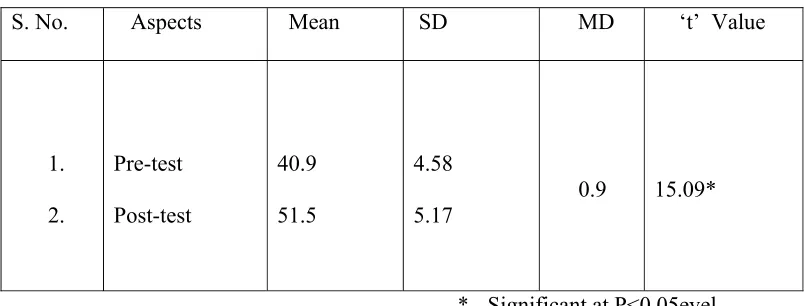
post-test mean score was 15.8, standard deviation 2.70 and the mean difference is 0.14, the ‘t’ value was 27.70, which is statistically significant at 0.05 level. The pre-test attitude mean score was, 41.2 standard deviation was 5.01. and post-pre-test mean score was 51.5, standard deviation 5.17 and the mean difference is 0.16, the ‘t’ value was 21.24, which is statistically significant at 0.00level. The study concluded the presence of stigma regarding mental illness everywhere and education will remove those stigmas effectively
TABLE
OF
CONTENTS
CHAPTERS CONTENTS PAGE
NO
I
II
III
INTRODUCTION
¾ Background of the Study
¾ Need for the Study
¾ Statement of the Problem
¾ Objective of the Study
¾ Hypotheses
¾ Operational definition
¾ Assumptions
¾ Limitations
¾ Projected outcomes REVIEW OF LITERATURE
¾ Studies related to knowledge and attitude regarding mental illness
¾ Studies related to knowledge and attitude regarding mental illness among self help group
¾ Studies related to self help group
¾ Studies related to IEC Package on Mental Illness Conceptual Frame Work
METHODOLOGY
¾ Research Design
CHAPTERS CONTENTS
PAGE NO
IV
¾ Variables
• Independent Variables
• Dependent Variables
¾ Setting of the Study
¾ Population
¾ Sample
¾ Sampling Technique
¾ Criteria for Sample Selection
• Inclusion criteria
• Exclusion criteria
¾ Development of Description of Tool
¾ Scoring procedure
¾ Information Education Communication Package
¾ Validity
¾ Reliability
¾ Pilot Study
¾ Data Collection Procedure
¾ Plan for Data Analysis
¾ Protection of Human Rights
DATA ANALYSIS AND INTERPRETATION
CHAPTERS CONTENTS
PAGE NO
V
VI
DISCUSSION
SUMMARY, CONCLUSION AND RECOMMENDATION
¾ Summary of the Study
¾ Major Study Findings
¾ Conclusion
¾ Implications of the Study
¾ Limitation
¾ Recommendations
REFERENCES APPENDICES
85
LIST OF TABLES
TABLE
NO. TITLE
PAGE NO. 1 2.1 2.2 3.1 3.2 3.3 3.4 4
Frequency and Percentage Distribution of Women Self Help Groups in relation to Demographic Variables.
Frequency and Percentage Distribution of Women Self Help Groups on Pre Test Knowledge regarding Mental Illness Frequency and Percentage Distribution of Women Self Help Groups on Pre Test Attitude regarding Mental Illness
Frequency and Percentage Distribution of Women Self Help Groups on Pre and Post Test Knowledge regarding Mental Illness
Frequency and Percentage Distribution of Women Self Help Groups on Pre and Post Test Attitude regarding Mental Illness Mean, Standard Deviation, Mean Difference and ‘t’ Value of Knowledge regarding Mental Illness among women self help groups.
Mean, Standard Deviation, Mean Difference and ‘t’ Value of Attitude regarding Mental Illness among Women Self Help Groups.
Mean, Standard Deviation, Mean Difference and ‘r’ Value of Knowledge and Attitude regarding Mental Illness among Women Self Help Groups
TABLE NO.
TITLE PAGE
NO.
5.1
5.2
6.1
6.2
Frequency, Percentage Distribution and χ2 value on Pre Test level of Knowledge regarding Mental Illness.
Frequency, Percentage Distribution and χ2 value on Post Test level of Knowledge regarding Mental Illness.
Frequency, Percentage Distribution and χ2 value on Pre Test level of Attitude regarding Mental Illness.
Frequency, Percentage Distribution and χ2 value on Post Test level of Attitude regarding Mental Illness.
62
68
73
LIST OF FIGURES
FIGURE
NO. TITLE
PAGE NO
1
2 3
4
5
6
7
8
Conceptual Frame Work based on modified CIPP Model of Program Evaluation (Stufflebeamdaniel. L (1987).
The Schematic Representation of Research Methodology. Percentage Distribution of Pre test level of Knowledge regarding Mental Illness among Women Self Help Group Percentage Distribution of Pre test and Post level of Attitude regarding Mental Illness among Women Self Help Group Percentage Distribution of Pre test and Post test level of Knowledge regarding Mental Illness among Women Self Help Group
Percentage Distribution of Pre test and Post level of Attitude regarding Mental Illness among Women Self Help Group The Mean value of Pre and post test level of knowledge regarding Mental Illness among Women Self Help Groups. The Mean value of Pre and Post test level of Attitude regarding Mental Illness among Women Self Help Groups.
31
34 50
52
54
56
58
60
LIST OF APPENDICES
APPENDIX TITLE
A
B
C
D
E
F
G
H
I
J
K
L
Letter Seeking and Granting Permission to Conduct Study at Arisipalayam PHC, Coimbatore.
Letter Requesting the Opinion of Experts on Content Validity of the Tool
List of Experts Consulted for Content Validity.
Structured self administered Questionnaire (English)
Structured self administered Questionnaire (Tamil)
Scoring Key.
Evaluation Criteria rating scale for Validation of Tool
Information Education Communication On Mental Illness (English)
Information Education Communication On Mental Illness (Tamil)
Evaluation Criteria Checklist for Validation of Information Education Communication On Mental Illness
Certification of Validation
CHAPTER - I
INTRODUCTION
“There is a thin line between genius and insanity I have erased this line”
- Oscar Levant
Genius manipulates their environment, where insane shows maladjustment with their environment. When, a person attempt to solve a problem and achieve their need effectively, he is been praised as genius. Beside if he feels difficulty in coping with the situation, he is been named as mentally deficient or insane .Mental illness is a serious medical illness. Just as diabetes is a disorder of the pancreas, mental illnesses are often the disorder of brain and resulting by a diminished coping capacity of the individual with the ordinary demands of life.
psychosocial treatments and supports. Early identification and treatment is of vital importance.
“Mental illness is nothing to be ashamed of but stigma and bias shame us all”
-Bill Clinton (2007)
Some diseases are tough to diagnose and some disease are tough to treat, there are some diseases which is tough to accept and struggling with denial and neglect and often being misconceived are mental illness. Stigma remains a powerful negative attitude in all social relation. It is considered an amalgamation of 3 related problem: a lack of knowledge (ignorance), negative attitude (prejudice),and exclusion or avoidance of behaviour (discrimination). Such poor knowledge and negative attitude towards mental illness threatens the effectiveness of patient care and rehabilitation.
The maltreatment of this vulnerable population has been reinforced by the hurtful stereotypes of incompetency and dangerousness. The belief that person with mental illness are uniformly dangerous is an equally harmful myth. Despite countless promises for a better life by national commissions there has evolved a vicious cycle of neglect, abandonment, cruel, inhuman treatment of person with mental illness. It provides policy makers with an ostensible justification to exercise control over persons with mental illness, even if they have not committed a violent offences. Although some nation have been successful in fighting stigma and increasing acceptance of the mentally ill, lack of awareness is very evident in India and other developing countries.
“Mental illness is a brain disease and not a black’s diseases”
A research conducted for universality of stigma revealed that survey do not support the claim that mental illness is less stigmatized in developing countries (Fabrega, 1991). Although developing countries constitute a diverse group in terms of culture and social norms, it is nevertheless true that our findings are in broad agreement in places such as India and Ethiopia (Thara & Srinivasan, 2000). Indeed, as noted by Murthy (2002), stigmatization of mental illness probably exists everywhere, even though the form and nature of it may differ across cultures. Our observations suggest that poor knowledge of the causes of mental illness, especially an attribution to supernatural causation, as well as very negative views of persons with mental illness, may indeed be more common in Asian and Africans communities than hitherto realized. Attitude to mental illness is consequently characterized by intolerance of even basic social contact with people known to have such illness. In the society in which poor health facilities and poverty make the care of people with mental illness a major burden for both patients and their families, the degree of stigma experienced by individuals with mental illness suggest an unusual level of illness related burden.
education is recognized as one of the feasible long-term approaches for preventing and control of health problems. Well designed and meticulously planned health education and communication activities immensely help in promoting healthy lifestyle. Therefore, the goal of any pedagogical effort should be the optimum utilization of information, Education and Communication (IEC) inputs to expand knowledge create awareness, modify attitudes and behaviour.
Many studies in the area of health education clearly indicate that knowledge attitudes and practices are significantly interrelated (Johnson et al, 1985; Axel son et al 1992). This relationship based on a scientific construct, adopted by health communication to represent cognitive processes of individual regarding information on health. This construct plays an important role in health assumption, communication because one underlying information / persuasion effort is that increasing individuals’ knowledge or changing their belief about health, one can expect desired changes in their health related attitudes and behaviour. Although no one is given credit specifically for originating the health knowledge construct and its relationship to health-related behaviour such an assumption appears to be a logical extension of the historical proposition that people think, feel and do what people think would, therefore, be related to what the feel and do.
SHG is group of rural poor who have volunteered to organize themselves into a group for eradication of poverty of the members. They degree to save regularly and convert their savings into a common fund known as group corpus. The members of the group agree to use this common fund and such other funds that they may receive as a group through a common management. It may consist 10-20 persons. They not only manage the financial aspects but also engage in some village welfare activities. Self Help Group (SHG) movement is affecting the social dynamic of village life as seen never before. Most women reported that after their participation in SHGs they are more respected in their own families and society in general. Their contribution to the family is valued and the family in turn supports them to undertake activities like these awareness campaign. Particular impact of the SHG programme, namely, active participation of members in community matters, has the potential to change village life in India. Hence, the SHG programme used to convey the knowledge regarding mental illness which is unpopular to rural Indians.
Need for the Study
WHO (2010) reported that 1 in every 4 people (or) 25% individual develops one or more mental disorders at some stage in the life.
WHO (2010) reported that Mental health problems represent 5 out of 10
leading causes of disability. WHO (2010) reported that Close to 15 million people in India are battling
with severe mental disorder.
DMHP (2008) reported that Roughly 2, 50,000 new psychiatric cases every year.
Attitude to Mental Illness Research Report. (MARCH 2010) revealed that The older age group (age 55+)and youngest group (16-34yrs)have more negative attitude towards mental illness.
Attitude to Mental Illness Research Report (MARCH 2010) revealed that 9 out of 10 experience stigma and discrimination regarding mental illness.
Muralimadhav. S. (2001-2010) conducted a epidemiological study of prevalence of mental disorder in India among 8 states including Tamilnadu, the data were collected by interview questionnaire and psychiatric examination .the finding of the study revealed that 65.4 per 1000 population in the national prevalence rate of mental illness. Among which 64.4 were from rural and 66.4 were from urban.
The study conclude that rural Indians has significant high score stigmatization toward the mental illness.
Jorm AF.,(2010) conducted an experimental study “mental health first aid training for high school teachers: a cluster randomized trial”. The main objective of the study is to improve the skills of teachers by giving mental health first aid training course and evaluate ill. The cluster randomized trial was used to this study. Teachers at 7 schools were received training. They were assessed with the questionnaire related to mental health knowledge, stigmatizing attitude and teacher mental health. The study findings showed that training increased teacher’s knowledge and had training has positive effect on teacher’s mental health knowledge.
G. Wolf ,S Pathare., et.al (1996) conducted a descriptive study on community knowledge of mental illness and reaction to mentally ill in London. Structured knowledge and attitude questionnaire were used to collect the data. The result revealed that most of the sample(80%) knew somebody who had a mental illness but a substantial proportion of respondent had little knowledge about mental illness .They concluded that hypothesis that negative attitudes especially in older people are fuelled by a lack of knowledge. negative attitude among the children are not related to a lack of knowledge.
UNICEF, National Health Policy and also DMHP advocate the importance of IEC as appropriate communication strategy towards the public in easily understandable for the people.
Prof. D. Sambangi (2009) conducted a descriptive study on “ self help group as an effective strategy and doable approach to empowers women in India” the objective of the study are to understand and analyze psychological, social and economical benefit accrued by women participating in SHGs and b) to explore the merits of SHGs as strategy and approach to empower women in India. The sample was 100 women in 20 self help groups. The study findings showed that 67 percentages had got good general knowledge. New ideas and communication skills. 75% of the women had the chance to save their own community such as safe drinking water, street light, public sanitation and about 71 percent of their attained economic independence to greater extent and able to contribute lowers properly of the family. The study concluded that shg not empower themselves but also empower the country. It makes the society enriched by making beneficial attempts and awareness.
Organizing women around regard thrift and credit services is a very effective method of conveying information regarding health, education, and environmental sanitation.
C.K.Gariyali (Secretary of Health and Family Welfare Of Tamil Nadu) stated that The mentally ill and disabled should be included in the existing network of self help groups (SHGs). “Every Panchayat in Tamil Nadu has an SHG,” and therefore “SHGs (have) proved that the poor are bankable, so why not the disabled? Even if only one mentally ill or disabled person is included in each of them, 136,000 the total number of self help groups in the state of them would benefit in the first year itself.”
8 Women Self Help Groups who has mentally ill family member in Madurai named as Nambikkai group which is actively involved in making awareness regarding health and illness and conducting the camp for disabled person. -DMHP Madurai
Investigator got information from the Dr .Senthil Kumar, M.B.B.S.,D.P.H. Deputy Director of District Health Services, Coimbatore, that there is no negotiation between district mental health programme and women self help group in Coimbatore district and no evidence of running any mental health awareness campaign through women self help groups.
and can the investigator bring up the positive attitude towards the mental illness. Hence the investigator adopted this study.
Statement of the Problem
A Study to Assess the Effectiveness of Information Education Communication (IEC) Package on Knowledge and Attitude Regarding Mental Illness Among Women Self Help Groups in a Selected Rural Area at Coimbatore.
Objectives
6. To assess the existing level of knowledge and attitude regarding Mental illness among Women Self Help Groups.
7. To evaluate the effectiveness of IEC Package Regarding Mental illness among Women Self Help Groups.
8. To find out the relationship between the knowledge and attitude regarding mental illness among Women Self Help Groups.
9. To determine the association between the knowledge regarding mental illness with their selected demographic variable.
10.To determine the association between the attitude regarding mental illness with their selected demographic variable.
Hypotheses
H1: There will be significant difference between the mean pre and post test knowledge
score regarding Mental illness among Women Self Help Groups.
H2: There will be significant difference between the mean pre and post test attitude
H3: There will be a significant relationship between the knowledge and attitude
regarding mental illness among Women Self Help Groups.
H4: There will be a significant association between the pre and post test level of
knowledge regarding mental illness among Women Self Help Groups with their selected demographic variables.
H5: There will be a significant association between the pre and post test level of
attitude regarding mental illness among Women Self Help Groups with their selected demographic variables.
Operational Definitions
Effectiveness
It refers to extend to which IEC on mental illness has achieved the desire effect in improving the knowledge and attitude regarding mental illness.
Information Education Communication Package
It refers to systematically planned teaching program design to provide information regarding mental illness, educate the women about what is mental illness and make the communication easier between the women self help group and the investigator.
Knowledge
It refers to cognition or clear known apprehension regarding mental illness.
A complex mental state involving beliefs and feelings and values and dispositions regarding mental illness to act in desired way.
Mental illness
Mental illness is maladjustment in living. It produces a disharmony in the person’s ability to meet human needs comfortably (or) effectively and function within the culture.
Women Self Help Group
It is involuntary group intended to work for self employment and other village welfare activities including awareness campaign.
Assumptions
• The women who engaged in Women Self Help Groups in rural areas may have inadequate knowledge regarding Mental illness.
• Providing Information Education Communication to the Members of Women Self Help Groups will be effective in spreading the information regarding Mental illness in the community.
Limitation
• This study is limited to women in women self help groups in Vazhukkupparai village at Coimbatore.
• The study will help the women to know what mental illness is and have the desirable attitude about it.
• The IEC will be helpful to the community people to access the mental health services.
• The women in Women Self Help Groups will encourage the mentally ill people to be hospitalized rather than undergoing poojas and mantras.
CHAPTER II
REVIEW OF LITERATURE
Review of literature is an important step in the development of any research project. According to Polit and Hungler, literature research is a critical summary of prepared to put a research problem in context.
For this study literature review are derived into the following:
• Studies related to knowledge and attitude regarding Mental Illness
• Studies related to Knowledge and Attitude regarding Mental Illness among Self Help Groups
• Studies related to Self Help Groups
• Studies related to IEC Package on Mental Illness
Studies Related to Knowledge and Attitude regarding Mental Illness
public education to increase mental health literacy among general public to increase awareness and positive attitude of people towards mental illness.
Johm Geofrey Chikomo., (2011) conducted a study in knowledge & attitude of the Kinandoni community towards mental illness. This researcher aimed at assessing the knowledge & attitude of the Kinondoni community members towards mental illness. The research design used was descriptive cross sectional survey with qualitative approach. Stratified sampling technique was used. The sample size is 300. The data was collected used the Modified version of Chiness knowledge & attitude opinion questionnaire which comprise of 50 items. The result show that most of respondent through that mentally ill people could not perform regular job had, they are dangerous & violent. They conducted that increase in the communities mental health literacy should result in a improvement of attitudes towards people with mental illness.
was poor (72.5%). The study conducted that knowledge of mental illness among the Arabic – spealing population of Quatar was quite poor.
Kim Foster et.al., (2006) conducted a descriptive study on mental health Worker’s attitude towards Mental illness in Fiji island. The study aimed to survey mental health workers attitudes toward Mental illness in Fiji as a means of understanding the attitudes of there staff. Attitude toward acute mental health scale (ATAMHS 33) was modified & distributed to 71 registered nurses in a mental health setting in Fiji. The results indicate participated expressed both positive & negative attitude toward individuals in mental health care by the mental health worker at (p>0.05%). Hence they concluded. It will enable future educational intervention to be evaluated & comparison to be made with other culture.
Alice Fearn et.al., (2006) conducted a study on youth knowledge of and attitude to mental health & mental illness. It comparative day from 1997 to 2004 in Newzealand. Using random sampling 1008 people selected in 2004 people selected in 1994. Data were collected using knowledge & attitude questionnaire through interview method CATI system (computer assisted telephone interviewing) by trained interviewing. They conclude that lower knowledge & less positive attitudes for youth raises question as to how much focus should be on this group within the life minds campaign.
of 2040 individuals are assessed with the help of knowledge attitude questionnaire. The study revealed that poor knowledge of causation was common. Negative view illness was widespread with as many as 96.5% believing that people with mental illness are dangerous because of their violent behaviour. Socio-demographic predictors of both poor knowledge and intolerant attitude were generally very few. The study concluded that There is a wide spread stigmatizations of mental illness in the Nigerian community, negative attitudes to mental illness may be fuelled by notion of causation that suggest affected people are in some way responsible for their illness.
Levav I et.al.,(2004) conducted a comparative study on mental health related knowledge, attitude and practices in two kibbutizim this study aimed at exploring mental health related knowledge, attitude and practices in two kibbutizim. A brief self administered questionnaire exploring KAP within the Kibbutz context was completed anonymously by 108 members in one Kibbutz and 90 the other. The study revealed that mental health literacy was high ,75% endorsed a multifactorial causation of mental disorder and 79% thought that they were treatable. The study concluded that mental health KAP among this Kibbutz have not developed in parallel. While the attitudes are mixed at best, knowledge and practices are more positive.
female, younger age and urban dwelling were associated with positive disposition towards mentally ill(p<0.01) race was not significantly influenced on almost all attitudinal variables. The study concluded that Health education is capable of positively influencing knowledge about & attitude towards , mental illness in Fiji.
Shyangwa P.M et.al., (2003) conducted a descriptive study on knowledge and attitude regarding mental illness among nursing staff in Nepal . The sample consisted 110 nursing staff in BPKIHS hospital. The data was collected through structured questionnaire consisting 35 item where knowledge deals with aetiology, The demographic variables, like sex, age, religion & education. The result indicate that there was overall(82.8%) has adequate knowledge & by and large a positive attitude. The study concluded that although the nurses have adequate knowledge but the nurses were not satisfied with their current knowledge .
Studies Related to Knowledge regarding Mental Illness among Self Help
Group
Manulyn citron Ph.D (1999) conducted on study “self help groups for familiar of person with mental illness: perceived benefits of helpfulness”. The number of save plus was 202. In certain avocation of self-help groups for familiar of the mentally ill. The study findings may provide the basis for evaluating and improving self help group effectiveness and contribute to understanding process within a self-help group which mean bar find beneficial.
Studies Related to Self Help Groups
Prof. D. Sambangi (2009) conducted a descriptive study on “ self help group as an effective strategy and doable approach to empowers women in India” the objective of the study are to understand and analyze psychological, social and economical benefit accrued by women participating in SHGs and b) to explore the merits of SHGs as strategy and approach to empower women in India. The sample was 100 women in 20 self help groups. The study findings showed that 67 percentages had got good general knowledge. New ideas and communication skills. 75% of the women had the chance to save their own community such as safe drinking water, street light, public sanitation and about 71 percent of their attained economic independence to greater extent and able to contribute lowers properly of the family. The study concluded that shg not empower themselves but also empower the country. It make the society enriched by making beneficial attempts and awareness
Studies Related to IEC Package on Mental Illness
Amanda Lundvik Gyllensten., (2011) conducted a study on attitudes in healthcare students towards mental illness. The study aimed to investigate the effect of naturalistic educational interventions on attitudes towards person with mental illness. A total of 456 students was assessed through level of familiarity questionnaire developed by Corrigan, fear & behavioral intention towards the mentally ill developed by Wolff and changing minds. After this educational programmes regarding mental illness were provided for 3-10 weeks, The result indicate that positive changes in attitudes round the total group, but most if the attitude towards person with mental illness didn’t change in the group of health care students as a whole after university education programme, care seminars & lectures were round to influence the attitude towards mental illness in a positive way.
Griffiths K.M.,Crisp.D .,et al (2010) conducted an intervention study “the ANU wellbeing study: a protocol for a quail – factorial randomized controlled trial of the effectiveness of an internet support group and an automated internet intervention for depression”. The study aimed at assessing the effectiveness of internet support for depression. Members of the community with elevated psychological distress were randomized to receive one of the following Internet support group, Multi module automated psycho educational and skills internet training program, a Combination of ISG and ITP and An internet attention control website. Each intervention was 12 weeks long. The study concluded that ISG is effective on making awareness.
BTS (Breaking the silence Program) in middle school. The data was collected through the questionnaire to measure the knowledge, attitudes & behaviors related to mental illness among 106 students in four schools. The study revealed that there is significant improvement in knowledge and attitude towards mental illness after BTS program.The study concluded that BTS program is effective as a means to improve knowledge, attitudes and behaviors related to mental illness among middle school students. Even brief instruction (21/2 – 3 hrs) can produce change in how students understand mental illness.
Pibernik Okanovic. M, begic D., et.al., (2009) conducted an psycho education versus treatment as used in diabetic patients with sub threshold depression preliminary results of a randomized controlled trail. This study was aimed at exploring the effect of a psycho-educational intervention on depression and diabetes related outcome in patient with mild to moderate depression symptoms. The randomized controlled study design with 50 mild to moderate depressive symptoms were randomly assigned to either an intervention or a control depression symptoms. The intervention group underwent four psycho-educational section aimed at enabling self management of depressive symptoms. It revealed that both intervention and control group reported significant decrease in depressive symptoms.
biological & psychosocial causes, however they lacked knowledge about treatment. The students didn’t strongly endorse negative attitudes about mental illness at baseline. The curriculum produced significant improvement in both knowledge 7 attitudes at past test & was most effective in improving attitudes among those with more negative baseline attitudes. the study concluded that brief educational program can be an effective intervention to increase knowledge and improve attitude about mental illness.
Gjerdingen, crow s., et al. (2009) conducted an experimental study on “stepped care treatment of postpartum depression: impact on treatment, health and work outcomes”. The objective of this study was to step collaborative care intervention improved woman’s knowledge of their postpartum depressed in diagnosis and their receipt of treatment. 506 mothers of infants from 7 clinics completed the survey and structured clinical interview. The study revealed that 45 depressed women the stepped care intervention increased mother’s depression (p=0.008). They concluded that The stepped care intervention improved the women’s knowledge of their postpartum depression diagnosis and the treatment.
effect was observed on secondary outcome except for delay in reaching early intervention services which was statistically shorter in patient registered in intervention practices. The study concluded that GP training on first episode psychosis is inefficient to alter referral rates to early intervention services.
Hugenholtz N1.,De Croon EM et.al (2008) conducted an interventional study on “effectiveness of e-learning in continuing medical education for occupational physician. The aim of thin study is to evaluate the effect of e-learning on knowledge on mental health issues as compared to lecture – based learning in a Continuing Medical Education program for Occupational physicians. The design was randomized controlled trial with 74 postgraduates. Test averments of knowledge were made before and immediately after are education session. The study findings showed that signification gain in knowledge on mental health care was found (p<.05).however there was no significant difference between the two educational approaches. And concluded that effect e-learning can be beneficial for the Continuing Medical Education.
learner cantered educational methods depending on the GPs attitude. The study revealed that the intervention effect was 46% and 50% in large and small group setting respectively.
B.o.olley (2007) conducted an interventional study on changes in attitude towards mental illness after exposure to a course in abnormal psychology among students of a Nigerian university. the study aimed to determine the effect of exposure to a 13 weeks course in abnormal psychology on knowledge and attitude of undergraduate students.140 students were assessed and after 13 weeks (26 hrs) the end of the course evaluation was done. The result revealed that students showed improved knowledge and desirable attitude after intervention. The study concluded that poor knowledge still exist among Nigeria students. Educational intervention show significant improvement in their knowledge and attitude.
Susan et.al M godschalx (2007) conducted study on effect of a mental health educational program upon police officers. The study aimed to show the effectiveness of an hour educational seminar would significantly improve knowledge & attitudes of police officers toward people experiencing emotional difficulty. The study resulted that Police officers knowledge about working with people experiencing emotional difficulty increased, but attitudes were not altered. All officers reported that the seminar was a valuable experience. These result concluded that educational program can impact non health care workers in contact with the emotionally distributed.
Arogonies E.,caballero., et al (2007) conducted a cluster randomized study on assessment of an enhanced programme for depression management among primary care. The aim of this study is to determine whether the implementation of a structured programme for managing depression will provide better health outcomes than usual management.20 primary care centres in which 400 patients over 18 years of age with an episode of major depression have participated in this study. A multi component programme with clinical, educational and organizational procedure that includes training for the health care provider and evidence based clinical guidelines. It revealed that this approach could be effective to improve the outcome of depression in primary care.
regarding somatisation was provided. The study revealed that the brief training increased GPs awareness of medically unexplained physical symptoms.
Brown JS., Elliott SA .,et al (2004) conducted a randomized controlled study on meeting the unmet need for depression services with psycho-educational self-confidence workshop. The purpose of the study was to examine the effectiveness of a psycho educational intervention. Large scale self referral “How to improve your self confidence” were run at the weekend. Among 120 people who self referred 75% of participants had general health questionnaire scores of 3 and above. The study revealed that over 39% had never previously consulted their doctors. At 3 month follow up members of experimental group were significantly less depressed and reported higher self esteem. The study concluded that workshops were shown to be accessible and effective. A large more rigorous trial is now needed.
intervention such as the journey of hope may provides families with the information they need to cope with mentally ill relative.
Trevor waring et.al., (2000) conducted a descriptive study on youth mental health promotion in the hunter region in Australia. This study aimed to described the work of the hunter institute of mental health, with special emphasize on its ride in mental health promotion and intervention with promotion & prevention with adolescents. The Ottawa charter for health promotion is used as a frame work to describe the varied functions of this organization. The sample size was 424 selected through random sampling is 424. The data was collected through 10 items questionnaire. The study revealed that hunter institute of mental health, a self-findings unit of the hunter area health service, provides innovative health promotion programs as part of it’s role as a provides of mental health education & training. They concluded that participation in these youth mental health program has required not only a solid grounding in clinical and educational aspects but also need more little dose of creativity.
CONCEPTUAL
FRAMEWORK
A conceptual frame work is the processor of a theory. It provides broad perspectives for nursing practice, research and education. Conceptual frame work plays several inter related roles in the progress of science. Their overall purpose is to make scientific studies meaningful and generalizable.
Polit and hungler(1995) stated that a conceptual frame work is interrelated concept on abstract that are assembled together in some rational scheme by circle of their relevance to the common theme. It is a device that helps to stimulate research and extension of knowledge by providing direction.
This study is based on the concept of administering Information Education Communication Package on Mental Illness to improve the knowledge and attitude regarding the mental illness. As it is concentrating on educational intervention the researcher adopted the CIPP model as the base for developing the conceptual framework. This frame work is based on Daniel .L. StuffleBeam’s CIPP Model(971).
Context Evaluation :( Environment and Needs)
It includes examining and describing the context of the program, conducting a need assessment. It helps in making program planning decision.
In this study, it is the assessment of demographic variables Includes age, marital status, religion, family history of mental illness, if present specify the treatment which they undergone, educational status, occupation, monthly income, previous exposure to knowledge regarding mental illness, and if yes specify the source of information .and pre –test level of knowledge and attitude regarding mental illness.
Input Evaluation :( Strategies and Resources i.e. Plan)
It includes activities such as description of the program input and resource which help in making program planning decision.
In this study the researcher’s plan to administer information education and communication package on mental illness for 1hr through LCD presentation. It includes the following domains meaning of mental illness
• Causes of mental illness
• Signs and symptoms of mental illness
• Treatment of mental illness
• Psychiatric Rehabilitation
• Misconception towards mental illness
Process Evaluation :( Action)
identify defects and provides decision about how to modify or improve the program and to make sure the legal ethical guidelines are followed.
In this study the IEC on mental illness was provided for 1 hr through LCD presentation by lecture cum discussion in Tamil medium to the members of Women Self Help Groups .
Product Evaluation :( outcome)
This includes determining and examining the general and specific outcomes of the program to establish the actual worth or value of the program. Product evaluation refers to the outcome which include qualitative and significant. It is for recycling decision it related to the goal and objectives of the input information and process evaluation.
In the present study it refers to post test assessment of knowledge and attitude in 7 days of interval of IEC package was assessed using the same questionnaire. The result revealed that all the participants have gained moderate and adequate level of knowledge and attitude and no participants were in inadequate knowledge or unfavourable attitude. Thus present study proves that IEC package are effective in improving knowledge and desirable attitude.
Recycling decision:
The undesirable outcomes are processed back from planning to gain a desirable outcome.
In the present study recycling decision was not included.
CHAPTER
III
METHODOLOGY
Methodology deals with the research approach, research design, setting of the study, population, criteria for selection of sample, sample size, sampling technique, instrument, data collection, data analysis and protection of human rights.
According to Polit and Hungler, research methodology refers to the methodology refers to the researcher ways of obtaining, organizing and analyzing data.
Research Approach
Polit and Hungler, (2004) defined the approach as “a general set of orderly discipline procedures used to acquire information.
Quantitative approach was used to determine the effectiveness of IEC Package on knowledge and attitude regarding mental illness among women self help group.
Research Design
The pre experimental design (one group pre test and post test design) was selected for the study to evaluate the effectiveness of IEC package on knowledge and attitude regarding Mental illness. The diagrammatical representation of research design is given below
Pre test Day – 1
IEC Day –2
Post test Day -9
O1 X O2
(O2-O1) = Effectiveness of IEC on mental illness
Key
O1 = Assessment of level of knowledge and attitude regarding Mental
Illness among Women Self Help Groups (pre-test). X = IEC Package on mental illness
O2 = Assessment of level of knowledge and attitude regarding Mental
Illness among Women Self Help Groups (post-test).
Variables
A variable is “an attribute of a person or object that varies that is taken on different values”
• Dependent variable – knowledge and attitude regarding mental illness
• Independent variable – Information Education Communication package on mental illness
Figure 2: The Schematic Representation of Research Methodology Target Population
Members of women self help groups
Accessible population
Pre - Experimental Design
Research Design
Members of women self help groups in vazhukkuparai
Sampling Technique
Non-randomized Purposive sampling technique (60 sample)
Data collection procedure
Intervention on IEC package on mental illness
Post-Test assessment of knowledge and attitude regarding mental illness assessed by structured self administered questionnaire.
Descriptive and Inferential Statistics
Knowledge and attitude regarding
Pre-Test assessment of knowledge and attitude regarding mental illness assessed by structured self
administered questionnaire.
Data Analysis
Setting of the Study
The study was conducted in Vazhikkupparai under Arisipalayam PHC. It is situated at a distance of 7 kms from Annai Meeanakshi College of Nursing. In this village total population was 1256 and there are 1008 female population. The main occupation of the village is agriculture and farming. In the village there are 8 women self help groups comprising 102 women. They engage in small self employment works like tailoring, farming, pet shop etc. The setting was chosen on the basis of feasibility in terms of availability of adequate sample and co-operation extended by the community people.
Population of the study
Polit and Hungler, (1991) stated that A population is the entire aggregation of cases in which the researcher is interested.
Target Population
The target population selected for this study was Members of women self help groups.
Accessible Population
Sample and Sample Size
60 women in women self help groups in vazhukkupparai.
Sampling Technique
Polit and Hungler (1991)stated that
it
is a process of selecting the portion of the population.Non Randomised of Purposive sampling Technique was used in this study. Survey was done for 2 days to identify the number of Women Self Help Groups in vazhukkupparai and number of women totally engaged in this programme. Based on the participants’s inclusion criteria 60 samples were selected from the women self help groups.
Criteria for Sample Selection
Inclusion Criteria
• Women who are willing to participate
• Women who are in the age group between 20-60 years.
• Women who can read and write Tamil.
Exclusion Criteria
• Women who are not present at the time of the study
• Women who are deaf and dump.
Development of the Instrument
The research instrument was developed the tool in English after the extensive review of literature and expert opinion. The structured self administered questionnaire, multiple choice knowledge questionnaire and three point likert attitude scale was developed to assess the knowledge and attitude regarding mental illness among the Women Self Help Groups.
Description of the Tool
The data was collected by structured self – administered questionnaire consist of 3 parts.
Part - I
Deals with demographic variables consist of age, marital status, religion, family history of mental illness, if present specify the treatment which they undergone, educational status, occupation, monthly income, previous exposure to knowledge regarding mental illness, if yes source of information .
Part – II
Deals with the questionnaire for the assessment of knowledge regarding mental illness. It consists of 20 multiple choice questions.
Part – III
Scoring Procedure
Part –II
The pattern of question is multiple choice. The questionnaire consists of 20 items. The maximum possible score is 20, each correct answers has ’1’ score. Each wrong answer has ‘0’ score. The total 20 score interpreted as
Inadequate knowledge - 0-25% ( 0-5 ) Moderate knowledge - 26-70% (6-14) Adequate knowledge - 71-100% (15-20)
Part –III
The pattern of question is three point likert scale. It consists of 20 statement in which 10 positive questions, and 10 negative questions. The score 3 was given for each correct answer. The score 2 was given for each uncertain answers. The score 1 was for each wrong answers. The total 60 score was interpreted as follows.
Unfavourable attitude - (0-50%) 20-30 Moderately favourable attitude - (51-83%) 31-50 Favourable attitude - (84-100%) 51-60
Information, Education and Communication Package (IEC)
objectives, content, teacher – learner activities, summary and conclusion. It is comprise of certain domains which includes,
• Meaning of mental illness
• Causes of mental illness
• Signs and symptoms of mental illness
• Treatment of mental illness
• Psychiatric Rehabilitation
• Misconception towards mental illness
The method of teaching project was given by lecture cum discussion in Tamil Medium Liquid crystal display (LCD) projector was used as audio visual aid.
Validity and Reliability
Hostings – Tolsma (1989) stated that content validity is a judgment regarding how well the instrument represents the characteristics to the assessed. Judgment is based on prior research in the field and on the opinion of experts.
Content Validity of the Tool
According to Burns and Grove, (2005) “the validity of an instrument is the determination of the extent to which the instrument reflect the abstract constant that is being examined”.
50,and ask to remove the classification of mental illness in the content. Based on their valid suggestion, reframing of the tool was done.
Reliability of the Tool
The tool was administered to 5 samples representing the characteristics of the population. The reliability was calculated through test re-test method and split half method. Test retest score for knowledge is (0.2) and attitude is (1.45). split half method score of knowledge is (0.6) and attitude is (0.25). Hence it is reliable.
Pilot Study
Polit and Beck, (2004) denote that “pilot study is a small-scale version or trial run done in preparation of a major study”.
difference was 1.1, t value is 7.14 which is significant at 0.05 level. The result revealed that setting, tool and sample are feasible to conduct the main study.
Data Collection Procedure
Data collection period was 12 days at vazhukkupparai village,Coimbatore . Permission to conduct the study was obtained from the Deputy Director of Health Services and Medical officer in Arisipalayam primary health centre. The samples were informed by the investigator about the nature and purpose of the study. The written consent and pre test knowledge and attitude level of mental illness was assessed from members of Women Self Help Groups by administering self administered questionnaire for 20 mts on day 1 by going home visit. Followed by that on 2nd day IEC package on mental illness was given for 1 hr through LCD. women asked to gather as four groups in varies places like school, panchayat office, houses for education. In 7 days of interval again with same structured self administered questionnaire was used to assess the post test knowledge and attitude on 9th day.
Plan for Data Analysis
mental illness with their selected demographic variable are analyzed using chi – square test.
Protection of Human Rights
The study was conducted after the approval of vazhukkupparai Panchayat. The nature and purpose of the study was explained to the members of women self help group. The written consent was obtained from the study participants to gain full co-operation. Assurance was given to the study samples that the anonymity of each individual would be maintained strictly.
CHAPTER IV
DATA ANALYSIS AND INTERPRETATION
This chapter deals with the analysis and interpretation of the collected data from 60 members of Women Self Help Groups and to assess the effectiveness of (Information, Education Communication) IEC package on mental illness. The purpose of analysis was to reduce the data to a manageable and interpretable form so that the research problem can be studied and tested.
Kerlinger, has defined analysis as “the categorizing, reducing, manipulating and summarizing of data to obtain assures to research hypothesis questions”.
The analysis and interpretation of data of this study are based on data collected through structured self administered questionnaire among members of Women Self Help Groups regarding mental illness.
The Study findings are presented in sections as follows:
SECTION I : Data on Demographic Variables of Knowledge and Attitude Regarding Mental Illness among Women Self Help Groups SECTION II : Data on Assessment of Knowledge and Attitude Regarding
Mental Illness Among Women Self Help Groups
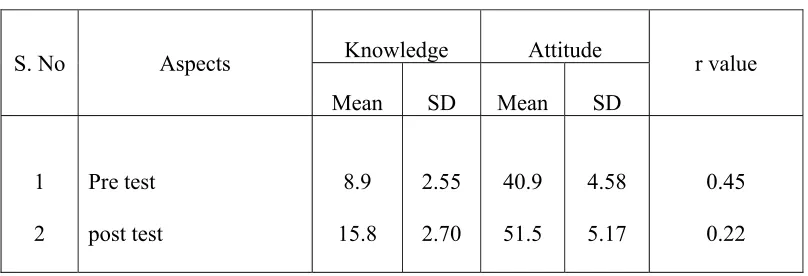
SECTION IV : Data on Relationship Between Knowledge and Attitude Regarding Mental Illness among Women Self Help Groups
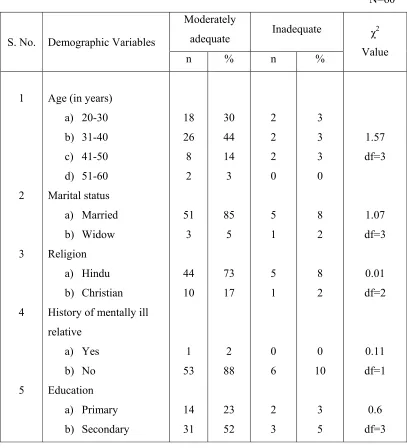
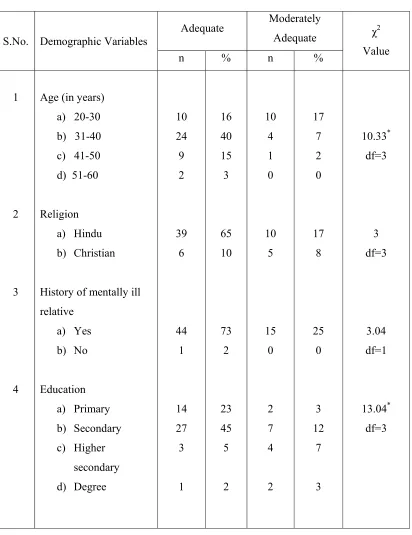
SECTION V : Data on association Between Knowledge Regarding Mental Illness among Women Self Help Groups with Their Selected Demographic Variables.
SECTION VI : Data on Association Between Attitude Regarding
SECTION: I DATA ON DEMOGRAPHIC VARIABLES OF
KNOWLEDGE
AND
ATTITUDE REGARDING
MENTAL
ILLNESS
AMONG WOMEN SELF HELP
[image:63.612.135.526.228.696.2]GROUPS.
Table :1
Frequency and Percentage Distribution of Women Self Help Groups in relation to Demographic Variables.
N =60
S.No. Demographic Variables n %
S. No. Demographic Variables n %
4
5
6
7
History of mentally ill person in the family a) Yes
b) No
If present specify the treatment which they undergone
a) Poojas and Mantras
b)
Medication c) MarriageEducational qualification a) Primary
b) Secondary c) Higher secondary d) Degree.
Occupational status a) Government Employee b) Private Employee c) Self employee
S.
No. Demographic Variables n %
8
9
10
Monthly income a) Below ` 5000 b) ` 5001- ` 7000 c) ` 7001- ` 10000 d) Above ` 10001
Previous exposure to knowledge regarding mental illness
a) Yes b) No
Source of information a) Mass Media b) Health personnel c) Relatives and Friends
[image:65.612.130.527.62.529.2]23 36 1 0 18 42 11 2 5 38 60 2 0 30 70 61 11 28
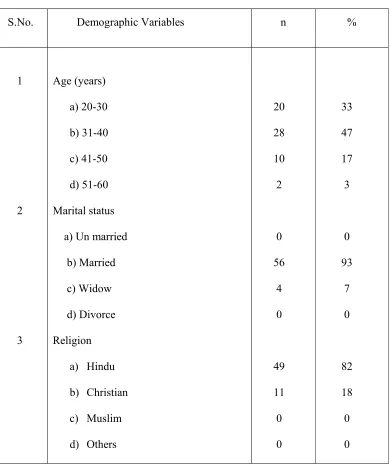
Table 1 reveals that, regarding age, majority of the women 28 (46.7%)belongs to the age group of 31-40yrs,20(33%) belongs to the age group of 20-30 yrs and 10(17%) belongs to the age group of 41-50and 2(3) belongs to 51-61yrs of age group.
Regarding the religion of the women 49(82%) were Hindu and 11(18%) were Christian, and 0(0) were Muslims and others.
Regarding the history of mentally ill family members 59(98%) were said no and 1(2%) was said yes.
Regarding specification of the treatment which they undergone ,1(2%) was said that the medication and none of them told pooja, marriage or others.
Regarding the educational status, majority of the women 34(57%) were coming under secondary education .and 16(27%) were primary education and 7(12%) were higher education and 3(5%) were degree holder.
Regarding Occupational status ,majority of the women 37(62%) were private employee and 20(33%) were Self employee and 3(5%) Government Employee.
Regarding Monthly income, majority of the women 36(60%) were coming under ` 5001 - ` 7000 Category and 23(38%) were under Below ` 5000 and 1(2%) were under ` 7001- ` 10000 and 0(%) were Above ` 10001.
Regarding Previous exposure to knowledge regarding mental illness ,42(70%) were said no and 18(70%) were said yes.
SECTION II: DATA ON ASSESSMENT OF KNOWLEDGE AND
ATTITUDE REGARDING MENTAL ILLNESS
AMONG WOMEN SELF HELP GROUPS
Table 2.1
Frequency and Percentage Distribution of Women Self Help Groups on Pre Test Knowledge Regarding Mental Illness
N=60
S.No. Level of knowledge Classification of Respondents
n %
1
2
3
Adequate knowledge
Moderately adequate knowledge
Inadequate knowledge
0
54
6
0
90
10
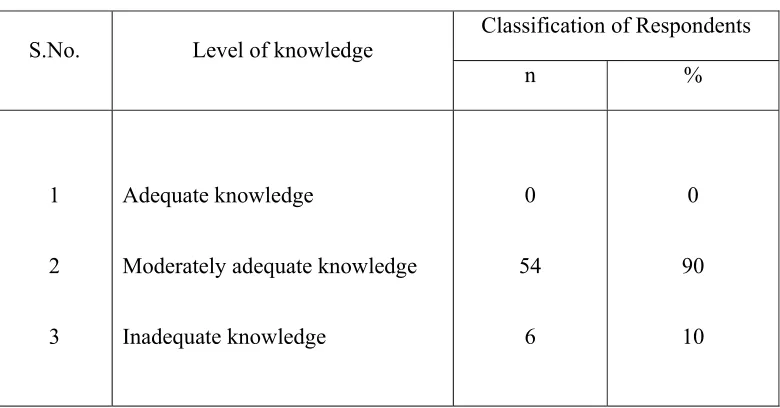
Table 2.1 shows the Pre test level of knowledge regarding mental illness among members of Women Self Help Groups, Among 60 women 53 (88%) were under moderately
adequate knowledge, 6 (33.3%) of total women were under inadequate knowledge and
Table 2.2
Frequency and Percentage Distribution of Women Self Help Groups on Pre Test Attitude Regarding Mental Illness
N=60
S.No. Level of Attitude
Classification of Respondents
n %
1
2
3
Favourable attitude
Moderately favourable attitude
Unfavourable attitude
0
57
3
0
95
5
SECTION III: DATA ON EFFECTIVENESS OF INFORMATION
EDUCATION COMMUNICATION PACKAGE ON
KNOWLEDGE AND ATTITUDE REGARDING
MENTAL ILLNESSAMONG WOMEN SELF HELP
GROUPS.
Table 3.1
Frequency and Percentage Distribution of Women Self Help Groups on Pre and Post Test Knowledge Regarding Mental Illness
.
N=60
S. No. Level of knowledge
Classification of Respondents
n % n %
1 2 3
Adequate knowledge
Moderately adequate knowledge Inadequate knowledge 0 54 6 0 90 10 45 15 0 75 25 0
Table 3.2
Frequency and Percentage Distribution of Women Self Help Groups on Pre and Post Test Attitude Regarding Mental Illness
N=60
S. No. Level of attitude
Classification of Respondents
n % n %
1 2 3
Favourable attitude
Moderately favourable attitude Unfavourable attitude
0 57
3
0 95
5
42 18 0
70 30 0
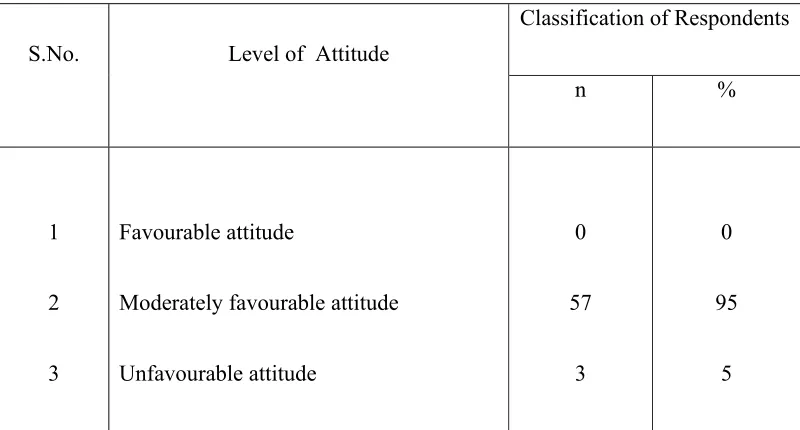
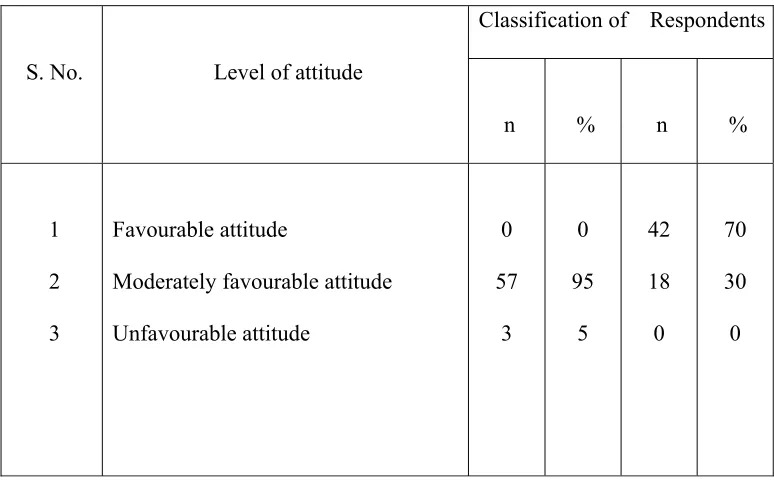
Table 3.2 shows the Pre Test level of attitude regarding mental illness among members of Women Self Help Groups, in pre – test majority 54 (90%) were under moderately favourable attitude, 3 (5%) of total samples were under unfavourable attitude. and 3(5%)were under favourable attitude. It is inferred that majority of the women had moderately favourable attitude and only very few has unfavourable and favourable attitude. In post – test majority 42 (70%) were under Moderately favourable attitude, 18 (30%) of total samples were under favourable attitude. and 0(0%)were under unfavourable attitude. It is inferred that majority of the women has favourable attitude and moderately favourable attitude and none of them has unfavourable attitude after the education on mental illness.
Table 3.3
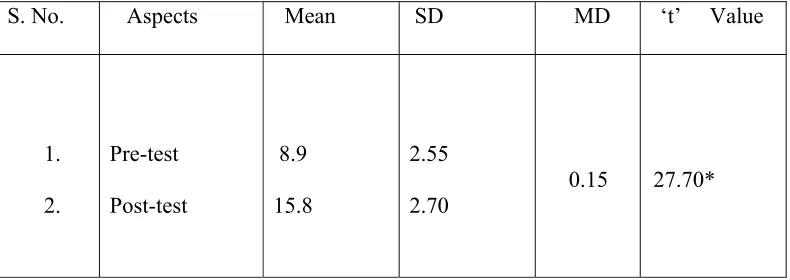
Mean, Standard Deviation, Mean Difference and ‘t’ Value of Knowledge Regarding Mental Illness among Women Self Help Groups.
N=60 S. No. Aspects Mean SD MD ‘t’ Value
1. 2.
Pre-test Post-test
8.9 15.8
2.55
2.70 0.15 27.70*
* - Significant at P<0.05evel
The above table 3.3 shows the effectiveness of IEC package on knowledge regarding mental illness among Women Self Help Groups. the pre-test knowledge mean score was8.9, standard deviation was 2.56 and post-test mean score was 15.8, standard deviation 2.70 and the mean difference is 0.14, the ‘t’ value was 27.70, which is statistically significant at 0.05 level. Hence stated hypothesis:H1 is accepted.
H1 : There will be signi