EFFECTIVENESS OF VIDEO ASSISTED TEACHING PROGRAMME ON PROGRESSIVE MUSCLE RELAXATION TECHNIQUE TO
REDUCE STRESS AMONG COTTON MILL WORKERS IN SELECTED INDUSTRIES AT DINDIGUL.
A DISSERTATION SUBMITTED TO,
THE TAMILNADU DR. M.G.R. MEDICAL UNIVERSITY, CHENNAI IN PARTIAL FULFILLMENT OF THE REQUIREMENT FOR THE
DEGREE OF MASTER OF SCIENCE IN NURSING
EFFECTIVENESS OF VIDEO ASSISTED TEACHING PROGRAMME ON PROGRESSIVE MUSCLE RELAXATION TECHNIQUE TO
REDUCE STRESS AMONG COTTON MILL WORKERS IN SELECTED INDUSTRIES AT DINDIGUL.
Certified Bonafide Project Work Done By
Ms.K. MUTHULAKSHMI M.Sc., Nursing II Year Bishop’s College of Nursing
Dharapuram.
_________________________ _________________________
Internal Examiner External Examiner
COLLEGE SEAL
A DISSERTATION SUBMITTED TO
THE TAMILNADU DR. M.G.R. MEDICAL UNIVERSITY, CHENNAI IN PARTIAL FULFILLMENT OF THE REQUIREMENT FOR THE
CHAPTER - I
INTRODUCTION
What a Job should not look like Out I want to know what a health
Promoting Job does look like
- Gunn Johnson
BACKGROUND OF THE STUDY
Mental health as a continuum. Thus, an individual's mental health may have many different possible values. Mental wellness is generally viewed as a positive attribute, such that a person can reach enhanced levels of mental health, even if they do not have any diagnosable mental illness. The definition of mental health highlights emotional well being, the capacity to live a full and creative life and the flexibility to deal with life's inevitable challenges.
Mental Health as "A state of emotional and psychological well-being in which an individual is able to use his or her cognitive and emotional capabilities, function in society, and meet the ordinary demands of everyday life."
Stress is the body's reaction to a change that requires a physical, mental or emotional adjustment or response.
Angela Morrow,R., (2009)
The seven leading causes of stress, which represented as, 23 percent of respondents due to finances, 21 percent of those responding due to work, family, Personal concerns that are only indirectly created by others are another. Most people find that personal health is a leading cause of stress; probably the most wrenching cause of stress is the death of a loved one or close friend
Thomas,T., (2006)
According to U.S National Institute of Occupational Safety & Health., (2009) Job stress as the harmful physical and emotional response that occurs when the requirements of job do not match the capabilities, resources or need of the works. Stress also occurs when the situation has high demands and the work has little or no control over it.
According to National Institute for Occupational Safety and
Management style: Lack of participation by workers in decision-making, poor communication in the organization and lack of family-friendly policies. (iii) Interpersonal relationships: Poor social environment and lack of support or help from co-workers or supervisors.(iv)Work roles: Conflicting or uncertain job expectations, too much responsibility, too many "hats" to wear.(v) Career concerns: Job insecurity and lack of opportunity for growth, advancement, or promotion; rapid changes for which workers are unprepared.(vi) Environmental conditions: Unpleasant or dangerous physical conditions such as crowding, noise, air pollution, or ergonomic problems.
According to Northwestern National Life Insurance Company report (2009) 40% of respondents said their jobs were very stressful, 34% said they didn’t have enough time to get their work done, 69% said stress reduced their personal productivity, 33% of respondents said at the time of responding they had some stress-related physical or mental condition,72% said they experienced three or more stress-related physical or mental conditions simultaneously somewhat or very often,
34% said they expected to burn out on the job.
younger workers. It is also true, however, that physical violence is most often reported by workers from the 25-39 age group, and harassment and unwanted sexual attention by the youngest group (“24 or less”). It is also worth mentioning that between 2000 and 2005, stress prevalence in the 40-54 age group decreased by 9 percentage points, from 32% in 2000 to 23% in 2005. However, anxiety and irritability indices remained almost at the same level for this age group. Sleeping problems, anxiety, and irritability increased slightly in the 25-39 and +55 age groups. The overall fatigue indicator has dropped in all age categories.
According to European report (2005) stress is a little more prevalent among men (23%) compared to women (20%). Stress indicators, with the exception of anxiety, were slightly more prevalent among men. Women are more at risk of harassment than men, but the prevalence of physical violence is similar for both genders.
There are potentially many ways that job stress can affect the risk of ill health. The stress first influence is the biophysiological stress reactions that can exacerbates the effects of physical strain and limit the ability of the body’s defense and repair systems to deal with micro trauma, the second influence is the effects of stress on the behaviour of the individual that may increase exposures or decrease the motivation to seek help. The third is the general sensitization of the individual psychologically and physiologically by exposure to job stress; this may lead to greater perceived pain and poorer overall health and vital capacity.
Michael, J., (1996)
certain that there is an elevated stress level since all of these symptoms can be caused by other medical and/or psychological conditions.
Folkman, S., (2008)
According to statistical report of Canada (2009) the annual cost to Canadian companies due to stress-related disorders is $12 billion Absenteeism due to stress has increased by over 300% since 1995.
Once the cause is known appropriate control strategies can be put into place, other techniques have been useful in reducing stress; include physical exercise, recreational activities, and relaxation techniques.
NEED FOR THE STUDY:
In modern times, life runs on a fast lane everyone in the world is forced into stressful situation. Its employees who are more vulnerable to this situation stress are known to be the back bone of all psychiatric disorders.
According to Roper Starch world wide survey report (2009) 30,000 people between the ages of 13 and 65 in 30 countries showed women who work full time and has children under the age of 13 report the greatest stress world wide, nearly one in four mother who work full time and have children under 13 feel stress almost every day, globally 23% of women executives and professionals and 19% of this male peers say the full ‘super stressed’.
Gallup Poll, (2000) estimated that 80% of workers feel stress on the job, nearly half say they need help in learning how to mange stress and 42% say their 10 workers need such help 14% felt like scramming or shouting because of job stress, 10% an concerned about an individual at work, they fear would become violent, 9% at are aware of an assault or violent act in their workplace and 18% had experienced some sort of threat or verbal intimidation in the part year.
Dawn Aufuso,D., (2009) estimated that 64% of American workers describe themselves as either struggling or suffering due to economic stress.
predicted to be the leading occupational disease of the 21st century, nearly 50% higher for workers who report stress.
Around 1 in 6 considers their work to be very or extremely stressful; stress is the second most commonly reported reason for work related ill health in UK.
Swinton,L.., (2008)
According to Labour force survey report (2009) around 16.7% of all working individuals thought their job was very or extremely stressful. The annual incidence of work-related mental health problems estimated was approximately 5,126 new cases per year, 230 000 people, who worked in the last 12 months, first became aware of work-related stress (incidence), depression or anxiety in an annual incidence rate of 760 cases per 100 000 workers. , depression or anxiety accounted for an estimated 11.4 million lost working days in Britain .
Workers view job stress as more prevalent than work related injury, the cost of work time lost to stress in Canada at 30 billion for annum, job related stress has been identified as world wide epidemic.
About 37% of full-time workers felt stress at work as a result of too many demands or hours, compared with 20% of part-time workers. 34% of working Canadians cited too many demands or hours as the most common source of workplace stress.
Cara Williams, (2003)
According to Aventis Healthcare Survey report (2002) 1% of Canadian employees experience a great deal of stress at work. 25% of these employees have been physically ill from workplace stress.
The prevalence of work related stress in Sweden, estimated that 10% of group reported high perceived stress owing to individual demands and commitment, 20% reported low influence at work and 33% reported work interference with leisure time.
Holmgren,K et.al., (2009)
annual economic cost of work-related stress in the EU15 was estimated at EUR 20,000 million.
Occupational stress among Australian workers, perceived stressors and revealed that 33% employees are suffered by job stress.
Kendall, T et.al., (2008)
Taiwan – Survey results estimated that Overall, 7.6% of men and 6.5% of women reported often or always feeling very stressed at work. Higher levels of perceived job stress were found among subjects who were younger, with higher education level, working in a larger firm, working for longer hours per week, and who were administrators or managers
Yawen Cheng, (2001)
Occupational stress and work-related unintentional injuries among Iranian car manufacturing workers. The prevalence of job stress was 21.3%. The main occupational stressors were time pressure (78.5%), mode of payment and evaluation (56.4%), and interaction with people and machines (41.3%).
An epidemiological survey of job stress and health in four occupational populations in Fuzhou city of China. The relative risks of high job stress level for peptic ulcer, depression, anxiousness, bad temper, sleep disturbances, fatigue, having a poor appetite and backache, adjusted for age, sex and smoking, are 1.86, 6.55, 14.16, 7.09, 2.05, 1.75, 2.52 and 1.70 (p < 0.05), respectively. Results may suggest that the intellectuals in China have suffered a high risk of high level of job stress, and this stress has impacted on their bodily and mental health.
Jun Tian, (2004)
Survey on work-related stress in India. It is estimated that Approximately 12,000 employees from 400 companies were interviewed. The workers experienced a slightly lower increase with 57% reporting a 'higher' or 'much higher' growth over the past two years
Deepa Suryanarayan, (2009)
media, courier companies, small scale industries, retail and card franchise company. Employees of small scale industries in India have to work 15 - 16 hours, adversely altering their mental health and leading to depression and stress.
Progressive Muscle Relaxation (PMR) is a tension-reducing
technique that involves the systematic tension and relaxing of specific muscle groups.
One stress management technique which may be effectively implemented on the job for clerical workers is progressive muscle relaxation. In primary prevention, nursing intervention strives to reduce the effects of harmful stress by identifying and assessing stressors and then implementing measures to strengthen lines of defense.
Vaughn,M et.al.,(1989)
There fore nurses in the industrial setting have the primary responsibility of integrating mental health care along with community and general health care this integration is accepted as the most important step for extending mental health care to the individuals in the community.
STATEMENT OF THE PROBLEM:
A study to assess the effectiveness of video assisted teaching programme on progressive muscle relaxation technique to reduce stress among cotton mill workers in selected industries at Dindigul.
OBJECTIVES:
1. To assess the pretest level of stress scores among cotton mill workers.
2. To assess the posttest level of stress scores among cotton mill workers.
3. To compare the pre test and post test stress scores of cotton mill workers.
OPERATIONAL DEFINITIONS: Effectiveness:
It producing the intend result.
In this study effectiveness refers to determine the extent to which the teaching programme has brought intended result in terms of significant difference in pre and post test stress scores which is measured by statistical measurements.
Video Assisted Teaching Programme:
It’s a process of showing set of pictures and information using laptop/television.
In this study video assisted teaching programme refers to showing pictures and demonstrating the progressive muscle relaxation techniques for a period of 30 minutes by using Laptop for a group of cotton mill workers.
Stress:
Stress is prolonged unpleasant emotional state such as harmful physical and emotional state such as fear or anger.
capabilities, resources or needs of workers which will be measured by Job stress inventory given by Arbor Employee Assistance, Omaha.
Progressive muscle relaxation techniques:
One method of reducing muscle tension through a technique called Progressive Muscle relaxation in which muscles are relaxed part by part.
In this study Progressive Muscle Relaxation (PMR) is a tension-reducing technique that involves the systematic tension and relaxing of specific muscle groups, helps to maintain positive attitude to make feel better emotionally, improve behavioural skills and enhance feelings of control on Job stress.
Cotton Mill Workers:
People who are working in the cotton mill industries.
HYPOTHESES:
H1 - The Mean post test stress score is significantly lower than the mean pre test stress score among cotton mill workers.
ASSUMPTIONS:
Cotton mill workers may have stress towards their Job.
Progressive muscle relaxation technique is helpful in reducing Job related stress.
DELIMITATIONS:
The data collection period is limited to 4 weeks only. The sample of the study is restricted to 60.
PROJECTED OUTCOME:
The study will provide data regarding level of stress among cotton mill workers. The findings of this study will help to practice progressive muscle relaxation techniques regularly and improve their psychological well being among cotton mill workers which in turn will help to reduce the occurrence of mental health problems.
CONCEPTUAL FRAME WORK
MODIFIED ROY`S ADAPTATION MODEL:-
Roy (1984) stated that the recipient of nursing care may be the person, a family, a group, a community, or a society. Each is considered by the nurse as a holistic adaptive system. According to Roy “a person is bio-psycho-social being, in constant interaction with a changing environment”. The person as living system is whole made up of parts or subsystems that function as unity for some purpose”.
The idea of an adaptive system combines the concepts of system and adaptation as follows.
SYSTEM:
In this study, the system is cotton mill workers and the environment is work setting. Both will have constant interaction with each other.
INPUT:
The adaptive system has input of stimuli and adaptation level, out put as behavioral responses that serve as feed back, control process known as coping mechanisms.
Focal stimuli: The internal or external stimulus most immediately confronting the person, the object or event that attracts one’s attention “a degree of change that precipitates adaptive behavior, stimulus most immediately confronting the person, the one to which he must make an adaptive response, stressor.
Contextual stimuli: All other stimuli of the person’s internal and external world that can be identified as having a positive or negative influence on the situation.
uncertain, influencing stimuli, includes beliefs, attitudes, experience (or) trails, knowledge level, strengths and / or limitations.
Demographic variables of the cotton mill workers such as age, sex, education, years of experience, type of placement. (internal factors) and religion, marital status, area of residence, type of family, income (external factor) precipitates the coping mechanism of the cotton mill workers reflected either as adaptive or maladaptive responses. Because of internal and external factors interaction, most of the cotton mill workers will have stress and reduced coping abilities. Stress levels were assessed by modified job stress assessment rating scale.
CONTROL PROCESS/COPING MECHANISMS:
Roy had used the term coping mechanism to describe control processes of the person as an adaptive system, which are called the “Regulator” and “Cognator”.
Regulator subsystem
Cognator subsystem:
A cognator subsystem is a coping mechanism which responds through complex perception and information processing through learning, judgment and emotion.
The maladaptive pattern of stress response alters both regulator and cognator subsystem. The changes in regulator subsystem can be noted as palpitation, shallow breathing, sweating, poor appetite, poor sleep pattern. The changes in cognator subsystem can be noted as reduced concentration, poor memory, irritability etc.
There is imbalance of regulator and cognator subsystem because of mal adaptive stress response. It is balanced by practicing progressive muscle relaxation technique.
Video assisted teaching programme on progressive muscle relaxation techniques was given to the group of cotton mill workers by using laptop for 30 minutes. Progressive muscle relaxation technique is the coping mechanisms which help to reduce the level of stress among cotton mill workers.
EFFECTORS/ADAPTIVE MODES:
observable. The adaptive modes are the physiological self concept, role function and interdependence modes. By observing the person’s behavior in relation to the adaptive modes, the nurse can identify adaptive or ineffective responses in relation to health & illness.
The four adaptive modes for assessment are as follows. Physiological mode:
The physiological mode represents physical response to environmental stimuli and properly involves the regulator subsystem. The basic need of this mode is physiologic integrity comprised of the needs associated with oxygenation, nutrition, elimination, activity and rest and protection. The complex processes of this mode are associated with all senses, fluids and electrolytes, neurological function and endocrine functions.
The adaptive responses in physiological mode is normal heart beat, normal breathing pattern, maintaining normal sleep and appetite, in role function mode increased social interaction.
Role function mode:
The adaptive responses in role function mode is increased concentration, able to make decisions independently, job responsibilities, reduced level of anxiety, increased family, job satisfaction.
Self concept mode
The self concept mode relates to the basic need of psychic integrity. It is focused on the psychological and spiritual aspects of the person.
The adaptive response in self concept mode is increased self esteem, and decreased feeling of inadequacy.
Interdependent mode
Interdependent mode is where affectional needs are met.
The adaptive response in interdependent mode is to maintain social integrity.
OUT PUT AND FEED BACK:
Adaptive responses are those, which promote the integrity of the person.
Post test Through Modified Job Stress assessment Rating Scale Cotton mill workers Internal stimuli.
Age, Sex, years of experience, type of placement. education External stimuli. Religion, Marital Status, Type of Family, Area of Residence.
Physiological mode
¾ Balance in bio-physiological function
¾ Increased rest and sleep Role Function mode
¾ Increased concentration ¾ Able to make decisions
independently ¾ Problem solving ¾ Job responsibilities ¾ Reduced level of
anxiety
¾ Family, job satisfaction Self concept mode
¾ Increased self esteem ¾ Decreased feeling of
inadequacy Interdependent mode
¾ Able to maintain social integrity Pre test Through Modified job Stress assessment Rating Scale Video assisted teaching programme on Progressive muscle relaxation technique
by using laptop for
30 minutes
Severe stress.
Feedback
Moderate stress
Mild stress Regulator sub system
Cognator sub system
OUT PUT EFFECTORS
CHAPTER-II
REVIEW OF LITERATURE
Review of literature consists of ¾ Part I– Overview of stress
¾ Part II- Studies related to job stress
¾ Part III- Studies Related to Effectiveness Of Progressive Muscle Relaxation Technique on stress
PART I- OVERVIEW OF STRESS:-
It is an essential component of work while studying in any field of knowledge. It helps the investigator to gain information on what has been done previously and gain deeper insight into the research problem. The more developed, the network linking of a research topics and existing knowledge are generally developed by through review of prior researcher on a topic and by a framework for the topic on the basis of what is studied.
In general, stress is related to both external and internal factors.
(i) External factors include the physical environment, including job, relationships with others, home, and all the situations, challenges, difficulties, and expectations you're confronted with on a daily basis.
(ii) Internal factors determine body's ability to respond to, and deal with, the external stress-inducing factors. Internal factors which influence your ability to handle stress include your nutritional status, overall health and fitness levels, emotional well-being, and the amount of sleep and rest you get.
Job stress is defined as “a situation in which some characteristics of the work situation are thought to cause poor psychological or physical health, or to cause risk factors making poor health more likely.”
Beehr, (1995)
the employee’s ability to have some control on situations or cope in their ways. Workers are overburdened with workload that remains high regard for of their efforts. The workload is the ‘STRESSORS’ employee feels anxious and their heart rate speeds up because they cannot, control their workload that is ‘STRESS’ Increased blood pressure insomnia, or chronic head ache that is ‘STRAIN’.
Stress results from an imbalance between various elements of the work system. This imbalance produces a ‘load’ on the human responses mechanisms that can produce adverse reaction, both psychological and physiological. The human response mechanisms, which include behaviour, psychological reaction and cognition act to bring control over the environmental factors that are creating imbalance. These efforts coupled with an inability to achieve balance, produce overloading of the response mechanisms that leads mental and physical fatigue. Prolonged exposure to fatigue leads to strain and disease.
STAGES OF STRESS:
Stress is how the body reacts to a stressor, real or imagined, a stimulus that causes stress. Acute stressors affect an organism in the short term; chronic stressors over the longer term.
Han`s Selye labeled this universal response to stressors the general adaptation syndrome or GAS into 3 stages
(i) Alarm is the first stage. When the threat or stressor is identified or realized, the body's stress response is a state of alarm. During this stage adrenaline will be produced in order to bring about the fight-or-flight response. There is also some activation of the HPA axis, producing cortisol.
(ii) Resistance is the second stage. If the stressor persists, it becomes necessary to attempt some means of coping with the stress. Although the body begins to try to adapt to the strains or demands of the environment, the body cannot keep this up indefinitely, so its resources are gradually depleted.
autonomic nervous system symptoms may reappear (sweating, raised heart rate etc.). If stage three is extended, long term damage may result as the capacity of glands, especially the adrenal gland, and the immune system is exhausted and function is impaired resulting in decompensation.
Mary,C.Townsend, (2006)
MANIFESTATION OF STRESS:-
Physiological changes:
a. acute increased heart rate b. increased respiration c. pupils of eye widens
d. chronic release of corticosteroids e. physiological collapse
Changes in thought:
a. poor concentration b. memory loss
Changes in behaviour:
a. Increased Smoking
b. Increased Alcohol Consumption c. Changes In Diet
d. Decreased Ability To Cope e. Social Withdrawal
f. Aggressiveness g. Impatience h. Hyperactivity i. Absenteeism
STRESS MANAGEMENT TECHNIQUES:-
If your methods of coping with stress aren’t contributing to your greater emotional and physical health, it’s time to find healthier ones. There are many healthy ways to manage and cope with stress, but they all require change. You can either change the situation or change your reaction. When deciding which option to choose, it’s helpful to think of the four as: avoid, alter, adapt, or accept.
Strategy #1: Avoid unnecessary stress
Not all stress can be avoided, and it’s not healthy to avoid a situation that needs to be addressed.
• Learn how to say “no” – Know your limits and stick to them. Whether in your personal or professional life, refuse to accept added responsibilities when you’re close to reaching them
• Avoid people who stress you out
• Take control of your environment
• Avoid hot-button topics
Strategy #2: Alter the situation:
If you can’t avoid a stressful situation, try to alter it. Figure out what you can do to change things so the problem doesn’t present itself in the future. Often, this involves changing the way you communicate and operate in your daily life.
• Express your feelings instead of bottling them up.
• Be willing to compromise
• Be more assertive
• Manage your time better
Strategy #3: Adapt to the stressor:
If you can’t change the stressor, change yourself. You can adapt to stressful situations and regain your sense of control by changing your expectations and attitude.
• Reframe problems. Try to view stressful situations from a more positive perspective
• Look at the big picture. Take perspective of the stressful situation. Ask yourself how important it will be in the long run.
demanding perfection. Set reasonable standards for yourself and others, and learn to be okay with “good enough.
• Focus on the positive.
Strategy #4: Accept the things you can’t change:
Some sources of stress are unavoidable. You can’t prevent or change stressors such as the death of a loved one, a serious illness, or a national recession. In such cases, the best way to cope with stress is to accept things as they are. Acceptance may be difficult, but in the long run, it’s easier than railing against a situation you can’t change.
• Don’t try to control the uncontrollable.
• Look for the upside. As the saying goes, “What doesn’t kill us makes us stronger.” When facing major challenges, try to look at them as opportunities for personal growth
• Share your feelings
• Learn to forgive.
Strategy #5: Make time for fun and relaxation:
• Set aside relaxation time.
• Do something you enjoy every day.
• Keep your sense of humor.
Strategy #6: Adopt a healthy lifestyle:
• Exercise regularly. Physical activity plays a key role in reducing and preventing the effects of stress. Make time for at least 30 minutes of exercise, three times per week. Nothing beats aerobic exercise for releasing pent-up stress and tension.
• Eat a healthy diet.
• Reduce caffeine and sugar.
• Avoid alcohol, cigarettes, and drugs.
• Get enough sleep. Adequate sleep fuels your mind, as well as your body.
PART II: STUDIES RELATED TO JOB STRESS:-
STUDIES RELATED TO INCIDENCE, PREVALENCE OF JOB STRESS:
Job stress is something we all face as workers and we all handle it differently. There is no getting around it but not at all stress is bad, and learning how to deal with and manage stress is critical to our maximizing our job performance staying safe on the job, and maintaining on physical and mental health.
Elizabeth scott,(2008) the percentage of American who are extremely stressed at work range between 29-40%.Over half of respondents are so stressed at work that they feel close to or consumed by burnout much.
Orietta Gurrea, (2008) stated that 17% of working women suffering depression could attribute their condition to job stress, compared with 13% of working men with depression in Australia.
Salleh,et.al., (2008) conducted a study on how detrimental is job stress in Malaysian furniture industry and the study results revealed that 35.85% of the respondents feel they are stressful at work.
Madhan Mohan, (2008) prevalence of job strain among Indian foundry shop floor workers were experiencing high job strain, hazardous working conditions, limited decision making authority appeal to be main contributing factors for the higher levels of strain.
Noronha,et.al., (2001) revealed that more than 1/3 of workers had yet not recovered from their economic, social and job related problems.
Soma sundaram,et.al.,(1979) reported that out of 99 industrial workers referred for psychiatric opinion in a period of 7 month. 40 had Neurosis; they were compared with a control group for social factor. The study indicated that younger age group, single workers, lower income groups, and person coming from large families were more prone to the development of neurosis.
STUDIES RELATED TO SOURCES OF JOB STRESS:
Randall, (2009) According to one theory differences in individual characteristic such as personality and coping style, are best at predicting what stress one person but no another, the theory proposes that certain working conditions are inherently stress as fear of job loss, excessive workload, demands, lack of control or clear directions, poor or dangerous physical working conditions, flexible work hours and conflicting job experiences.
necessitate further investigations into the work and performance process relevant to the individual case.
Spector paul, et.al.,(2008) Interpretation of observed relation between job stressors and job strain in cross sectional survey revealed that relations between job stressors and job strains, however, work is most cases not affected significantly when prior strains and negative affectivity were controlled for the results suggested that ”negative affectivity” measures are subject to occasions factors only on the job. Evidence found that some background factors affected.
Vanroelenc,et.al.,(2009) reported that the occupational stressors contribute five dimensions immaterial demands, physical demands, control over work environment, social relationship at work and employment uncertainty are all significantly related with a least one of the health outcomes-with immaterial demands having the strongest effects.
psychiatry diseases were followed from 1997 to2003. Depression cases with sickness absence of >= 30 days were registered by the occupational physician. Job characteristics were measured by NIOSH Generic Job Stress Questionnaire. Results showed that men with low job control had significantly higher 95% for depression (RR 2.6; CI 1.2-5.6),role ambiguous and role conflicts were also associated with depression (2.1; 0.9-4.7, and 2.6; 1.2-5.8,respectively). The data suggest that psychosocial job characteristics, in particular low job control, predict depression and the related outcomes.
total variance. The results confirmed that occupational stress was a major risk factor for poor mental health among Chinese off-shore oil workers. Reducing or eliminating occupational stressors at work would benefit workers' mental health.
Vijay rao, (2000) conducted study at nuclear level complex Hyderabad to assess the shift workers problem. Effect on personal as well as social life was assessed and clearly demonstration that in there is no significant adverse effects observed in the group as well as shift work.
Gonz ileum, et.al., (2007) conducted a study on contribution of mental workload to job stress in industrial workers of the 95 worker participants, 26.3% presented high level of job stress and 17.9% of the workers were found to present high levels of mental workload. The result showed that working hours, mental demand, temporal demand, and frustration when faced with a given task may be considered risk factors for job stress.
workers compared to day workers. Study revealed that the 3 shift system of employment increases work related stress, and that job control is low among shift workers.
Dori,B.Reissman, (1999) conducted a study to measure psychological distress and stress inducing work demands after 6 months of rumor about up coming corporate downsizing event. Higher stress levels were seen among older, more educated workers, who had longer company tenure, and role boundary problems, noxious physical environments, and company tenure were retained in the final multivariable model predicting distress level.
STUDIES RELATED TO IMPACT OF JOB STRESS:
Holmes, (2001) assessed work related stress, the paper reviews the concept of work related stress showing how it’s deleterious impact on the work force thus affecting both individual and organizational effectiveness.
Inoue.A et.al.,(2009) the study is to investigate the prospective associations of job strain, role stressors, and job security with long term sick leave due to depressive disorder. Results shows that During 5.14 years of follow up on average, 47 incident cases of sick leave of 30 days or more to depression disorders were observed, High job control at baseline was associated with a adjusting for demographic variables, depression symptoms, and neuroticism at baseline, high role ambiguity was associated with the higher risk. Job control and role ambiguity may be important predictors of long term sick leave due to depressive disorder among male employees, independent of depressive symptoms and neuroticism.
strain was associated with a more elevated risk of developing high levels of depression symptoms among both the women and the men.
Park,S.G et.al., (2009) study was conducted to investigate the association between depressive symptoms and job stress. Job stress scales reveals the effect for males is job demand, inadequate social support, and lack of rewards, were associated with depressive symptoms, where as for females organizational injustice was associated with depressive symptoms. Results indicate that job stress may play a significant role in increasing the risk of depressive symptoms.
psychosocial job characteristics, in particular low job control, predict depression and the related outcomes.
Takashi Amagase, et.al.,(2005) conducted study on 22 cases of work related suicide. Results indicated that 27 had experienced personnel changes, such as promotion or transfer, low social support was recognized in 18, high psychological demand in 18, low decision latitude in 17, and long working hours in 19 cases. The subjects had depressive episodes by the ICD-10 criteria and showed that long working hour, heavy workloads, and low social support may cause depression, which can lead to suicide.
Ota and Masue,A et.al., (2009) study conducted on psychosocial job characteristics and insomnia among Japanese workers. Results suggests that who were insomnics at the baseline low social support and effort reward imbalance at the baseline had a significantly relationship to insomnia at the follow up.
non-high-strain towards a non-high-strain job was associated with a significant increase in sleep-related complaints.
Nakata.A et.al.,(2008) study on perceived psychological job stress and sleep bruxism among male, female workers. Results indicated that overall 30.9% of males and 20.2% females reported sleep bruxism. In male workers with low social support from superiors, or from collogues, and high depressive symptoms had a significantly increased risk of sleep bruxism, no significant association was found in females.
Nishitani.N et.al., (2009) study conducted on eating behaviour related to obesity and job strain in male Japanese workers. Results stated that obesity was associated with eating behaviours such as eating to safety, eating fast and substitution eating from irritability. These eating behaviours were related to high job demands of quantitative workload. The eating behaviours were also correlated with psychological stress responses to fatigue, tension, anxiety, and depression, which were associative with quantitative workload. Increased workplace stress from job strain may affect the workers through eating behaviours to eat a lot that contribute to obesity.
tobacco dependence, potential alcohol dependence and perceived stress. After adjusting for demographic confounders, perceived working conditions and job dissatisfaction remained with smoking and tobacco dependence.
Andrew Steptoe, et.al.,(2008) The effects of workload in psychological well being, cortisol, smoking and alcohol consumption were examined, results suggests that salivary cortisol was universally associated with job strain and did not vary across sessions, females but not male smokers consumed more cigarette’s during periods of long working hours, and self reported smoking and nicotine concentration were greater among smokers with higher nicotine dependency scores. Men but not women with poor social supports consumed more alcohol as work hours lengthened. These data indicate that health behaviours are affected only to a limited extent by variation in workload.
Melvin Chagas Silva, et.al.,(2003) The study to describe the
disorders. Results found that the prevalence of hazardous drinking, defined as an AUDIT score of more than 8 was 21%. There was a significant association with CMD. Hazardous drinking was significantly associated with severe health problems, such as head injuries and hospitalization, whereas CMD was found to be a confounder in its association with adverse economic outcomes. Hazardous drinking is common among male industrial workers in Goa. Interventions in the workplace must target both drinking problems and CMDs, since they often co-exist and are associated with different types of adverse outcomes.
Tsutsumi, A et.al.,(2009) conducted a study on “occupational stress and risk of stroke”. Results revealed that more than 2-fold increase in the risk of total stroke among men with strain (combination of high job demand and low job control) compared with counterpart men with low strain results shows that no significant differences were found for any stroke incidence among women’s, occupational stress related to job strain was associated with incident strokes among men.
Krisztina, et.al.,(2008) A nation wide representative survey on work related stress factors and menstrual pain among women’s aged 18-55yrs. Results found that 15.5% of women reported to experience menstrual pain that limits their daily activities. Low job control, low co-worker support and low job security were found to be associated with a higher risk for menstrual pain even after controlling for the effect of age, educational attainment, parity status, smoking, body mass index and treatment for gynecological problems.
longitudinal cohort of 1,355 men and women in the United States. Change in body mass index was assessed for multiple domains of psychosocial stress related to work, personal relationships, life constraints, and finances, controlling for other factors associated with weight gain. Among men with high baseline body mass index, weight gain was associated with increasing levels of psychosocial stress related to job-related demands, lack of skill discretion, lack of decision authority, and difficulty paying bills. Among women with high baseline body mass index, weight gain was associated with job-related demands for interaction with baseline body mass index), perceived constraints in life strain in relations with family ,and difficulty paying bills .Interventions to address psychosocial stress may limit weight gain among overweight and obese men and women.
Bunker, S.J et.al.,(2003) stated that the increased risk contributed by these psychological factors (job demands and strains, dissatisfaction) is of similar order to the more conventional coronary heart disease risk factors such as smoking, dyslipidemia and hypertension. The identified psychological risk factors should be taken into account during the individual risk assessment and management.
California Utility Company (2001) reported that men between the ages of 40 and 60 who reported high job stress, had a36% chance of having signs of Atherosclerosis in their carotid arteries. Only 21% who reported low job stress had signs of Atherosclerosis.
Chen, W et.al.,(2005) study on impact of occupational stress and other psychosocial factors on musculoskeletal pain among Chinese
workers. The prevalence of musculoskeletal pain over the previous 12
months varied between 7.5% for elbow pain and 32% for low back pain;
56% workers had at least one complaint. Significant associations were
found between various psychosocial factors and musculoskeletal pain
in different body regions after adjusting for potential confounding
factors. Occupational stressors, in particular stress from safety, physical
environment, and ergonomics, were important predictors of
musculoskeletal pain, as was coping by eating behaviour.
PART III- STUDIES RELATED TO EFFECTIVENESS OF PROGRESSIVE MUSCLE RELAXATION TECHNIQUE ON STRESS:-
De macro sinata, (2000) had conducted a study to assess the relaxation training as a holistic nursing intervention. Relaxation technique can be employed by nurses to reduce the negative effects of stress, illness and surgery while promoting healing and self efficacy. Holistic nursing approach supports an innovative model of caring for nursing practice.
Dr.Gurumurthy, (2004) had stated that exercise promotes well being and overall quality of one’s life. Exercise reduces the blood pressure and helps to overcome the stress and fatigue. It promotes clarity of thought, creativity and problem solving skills.
Coach Yip,(2009)stated that the progressive muscle relaxation techniques offer a good foundation or pathway where individual can use it to initiate the body relaxation, then transferring this relaxation state into Taichi practice where it can further be used to achieve both mind and body relaxation and lastly to habitualise it into daily activities.
significantly more often than PMR participants practiced relaxation during the intervention period. Although there were no differences between groups on any of the primary outcome measures, across both treatment conditions there were statistically significant reductions from pretreatment to post treatment in general psychological distress.
stress, although meditative treatments in general do not appear to reduce stress responding as effectively as previously suggested.
Archana khanna, et.al.,(2007) a study to compare the
effectiveness of GSR biofeedback training and progressive muscle
relaxation training in reducing blood pressure and respiratory rate
among highly stressed individuals, Amritsar, India. Out of the 120
females, only those whose anxiety scores were greater than 40 and
percentile greater than 70 were selected for the study. Ultimately, 30
highly stressed females with high anxiety scores, who were free from
any ailments and not undergoing any kind of medication treatment
were chosen for the study. Of these subjects, 20 were randomly
assigned to one of the two training groups: GSR biofeedback training
and PMR training. The remaining 10 subjects were taken as control. The
training was provided for 20 min daily for 10 consecutive days only
group 1 showed significant reduction in post training values of
respiratory rate on day 10 as compared to day 1. Statistically significant
differences were observed on intercrop comparison between GSR
biofeedback and control group (t = 2.79) and between PMR and control
group (t = 3.19,). Present study has shown PMR training to result in
significant decrease in blood pressure whereas GSR biofeedback
simple and easy to use. These can be well adopted by people who face
stressful work conditions.
Yoon Bok Hann, et.al.,(2007) assess the effectiveness of the thermal biofeedback training combined with the progressive muscle relaxation then treatment of patients with essential hypertension, blood pressure decline was measured on the treatment group who had thermal biofeedback and progressive muscle relaxation training, and on the control group who had only the progressive muscle relaxation training. A significant decline of the systolic and diastolic pressure was observed in the treatment group.
Prabhu,K., (2006) A study to assess the effectiveness of progressive muscle relaxation on stress and coping among single old age men in Chevvayur. Results suggested that in post intervention, among 60 samples 25(41.5%) had less stress and adequate coping, 35(58.3%) had moderate stress, none of them had increased stress and inadequate coping. The data implies that the effectiveness of progressive muscle relaxation in single old age men was highly significant.
immunoglobulin A (sIgA). Members of age- and gender-matched undergraduate student pairs were randomly assigned to an experimental or control group. Forty-one experimental subjects were led through Abbreviated Progressive Relaxation Training (APRT) during a 1-h laboratory session; 14 control subjects merely sat quietly in the laboratory for an equal amount of time. All subjects provided pre- and post-intervention saliva samples and self-report data on state anxiety, perceived stress, and relaxation levels. Heart rate was also monitored immediately before and after APRT or quiet sitting. Results indicated that a brief relaxation exercise led to experimental subjects having significantly lower levels of post-intervention salivary cortisol and significantly higher levels of post-intervention sIgA concentration and secretion rate than control subjects. The data suggest that relaxation training may play a role in immunoenhancement.
Relaxation and Disengagement at Week 4 and higher levels of Mental Quiet and Joy as a post training aftereffect at Week 5. Results suggest the value of supplementing traditional somatic conceptualizations of relaxation with the psychological approach embodied in ABC relaxation theory.
breakfast and less night-time eating. These data support the role of stress and anxiety in NES and suggest that practicing relaxation may be an important component of treatment for this condition.
Pawlow, et.al.,(2002) study conducted on abbreviated progressive muscle relaxation on salivary control. Result suggests that subjects in the experimental group had significantly lower heart rate, state anxiety, perceived stress and salivary control, than control subjects, reported higher levels of relaxation.
Van Der Klink, (2001) this quantitative meta-analysis sought to determine the effectiveness of occupational stress-reducing interventions and the populations for which such interventions are most beneficial. Four intervention types were distinguished: cognitive-behavioral interventions, relaxation techniques, multimodal programs Biofeedback was the least frequent technique used in work settings and also seemed to be the least effective technique. Meditation produced the most consistent results across outcome measures but was used in only six studies. In general, studies using a combination of techniques (e.g., muscle relaxation plus cognitive-behavioral skills) seemed to be more effective across outcome measures than single techniques.
Youngshin Kim, (2008) study was to investigate the effects of two music therapy approaches, improvisation-assisted desensitization, and music-assisted progressive muscle relaxation and imagery on ameliorating the symptoms of music performance anxiety (MPA) among student pianists. Thirty female college pianists were randomly assigned to one of two conditions: All participants received 6 weekly music therapy sessions according to their assigned group. Two lab performances were provided; one before and one after the 6 music therapy sessions, as the performance stimuli for MPA. Participants' finger temperatures were also measured. When results of the music-assisted PMR and imagery condition were compared from pretest to posttest, statistically significant differences occurred in 6 out of the 7 measures—MPA, tension, comfort, STAI, MPAQ, and finger temperature, indicating that the music-assisted PMR and imagery treatment was very successful in reducing MPA. For the improvisation-assisted desensitization condition, the statistically significant decreases in tension and STAI, with increases in finger temperature indicated that this approach was effective in managing MPA to some extent.
CHAPTER – III
METHODOLOGY
This Chapter of Research Methodology is a way to systematically solve the research problems. It includes the step of process and strategic for valid reliable data for the study. It includes the research approaches, research design, sampling and selection, research settings and data analysis.
RESEARCH APPROACH:
An evaluative approach was used for the study to determine the effectiveness video assisted teaching programme on progressive muscle relaxation technique to reduce stress among cotton mill workers.
RESEARCH DESIGN:
Quasi experimental; one group pre test and post test design. Which is represented below,
Groups Pretest Intervention Post test
I
O
1X O2
The symbols used:
O1 - Collection of demographic data. Pretest assessment of level of stress among cotton mill workers.
X - Video assisted teaching programme on progressive muscle relaxation technique.
O2 - Post test done to assess the level of stress among cotton mill workers
RESEARCH SETTINGS:
The study was conducted in Vishnuram Textiles Limited located in kalikkampatty, Dindigul District, approximately 5 Km from Dindigul and totally 200 employee’s are working in this Industry. It consists of 5 departments such as Blow room, winding, spinning, guarding, and cone Winding. The duty hours are divided into 3 shifts with 8hours, timings 6am-2 pm, 2 pm-10 pm, 10 pm-6 am, on the whole 50 persons per shift, 15 persons are working per shift in each department.
POPULATION:
SAMPLE:-
Sample constitutes of workers who were working in Vishnuram textiles, Dindigul.
CRITERIA FOR SAMPLE SELECTION: Inclusion Criteria:
Workers who are aged between 20 –40 Years. Both male and female workers.
Workers who are available during data collection period.
Exclusion Criteria:
Workers who are on Leave.
Workers who are not willing to participate.
SAMPLE SIZE:
The sample size comprised of 60 members who are working in the cotton mill.
SAMPLING TECHNIQUE:
INSTRUMENTS AND SCORING PROCEDURE:- a) Description of the Instrument
Part I:
It consists of Demographic Variables such as age, sex educational status, Marital status, monthly income, religion, area of residence, type of family, years of experience, type of placement.
Part II:
Through structured interview schedule modified job stress inventory was used to assess the level of Stress by Arbor Employee Assistance, Omaha. It consists of rating scale, which has 5 responses such as never, occasionally, some what often, frequently, and almost always.
b) Scoring Procedure and Interpretation:
Five point rating scale was used to assess the level of stress among cotton mill workers. It consists of 65 questions. Total score is 260.
0 = Never
1 = Occasionally 2 = somewhat often
LEVEL OF STRESS
SCORES PERCENTAGE
mild Below 86 0-33%
moderate 87-172 34-66% severe 173-260 67-100%
VALIDITY AND RELIABILITY: Validity:
The validity of tool was established in consultation with experts, psychiatrists, community medicine, psychiatric nursing experts. The tool was modified according to the suggestions and recommendations of the experts and finalized.
Reliability:
PILOT STUDY:
Pilot study was conducted for a period of two weeks in Dharani textiles at Vadamadurai. The investigator obtained written permission from the manager prior to the study. The researcher introduced about the study to the workers and established rapport with them and demographic variables were collected. 10 workers were selected by using stratified random sampling technique that satisfies the inclusion criteria. The level of stress was assessed by using structured interview schedule using rating scale. Immediately after pretest video assisted teaching programme on progressive muscle relaxation technique was given in the form of group teaching in a common place by using laptop for 30 minutes. The effectiveness was assessed on 15th day by using same interview schedule.
DATA COLLECTION PROCEDURE:-
PLAN FOR DATA ANALYSIS:
Descriptive and inferential statistics were used for data analysis.
Data analysis Method Purpose
Descriptive Statistics
Inferential Statistics
Frequency, Percentage,
Mean, Standard Deviation.
Paired ‘t’ test
Chi square test
To describe the demographic variables of common mill workers
To assess the level of pre test and post test stress scores
To evaluate the effectiveness of video assisted teaching programme between pre test and post test stress scores
To find the association between post test stress scores with their selected demographic Variables.
PROTECTION OF HUMAN SUBJECTS:
CHAPTER IV
DATA ANALYSIS AND INTERPRETATION
This chapter deal with the analysis and interpretation of the data collected to assess the effectiveness of video assisted teaching programme on progressive muscle relaxation technique to reduce stress among cotton will workers.
The Analysis of data collected from 60 cotton mill workers to assess the effectiveness of video assisted teaching programme on progressive muscle relaxation technique to reduce stress.
The Data has been tabulated and organized as follows.
SECTION – A: Description of the sample according to their Demographic variables.
SECTION – B: Comparison of pre and post test stress scores among Cotton mill workers.
SECTION –A
Table –1: Frequency and Percentage distribution of cotton mill workers according to their demographic variables.
n=60
S.No Demographic Variables Frequency Percentage % 1. Age (in years)
a. 20-25 b. 25-30 c. 30-35 d. >35 13 4 15 28 22 6 25 47 2. Sex
a. Male b. Female 32 28 53 47 3. Educational Status
a. No formal education b. Primary education c. Secondary education d. Graduate 7 38 13 2 12 63 22 3 4. Marital Status
a. Married b. Unmarried c. Widow 51 7 2 85 12 3 5. Monthly Income
a. < Rs. 1,500 b. Rs.1,500 – 3,000 c. Rs.3,000 – 4,500 d. > Rs.4,500
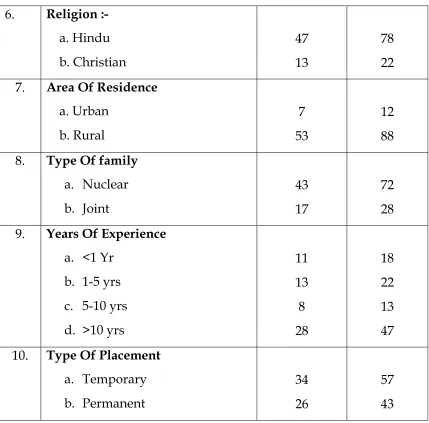
6. Religion :- a. Hindu b. Christian 47 13 78 22 7. Area Of Residence
a. Urban b. Rural 7 53 12 88 8. Type Of family
a. Nuclear b. Joint 43 17 72 28 9. Years Of Experience
a. <1 Yr b. 1-5 yrs c. 5-10 yrs d. >10 yrs
11 13 8 28 18 22 13 47 10. Type Of Placement
[image:76.595.102.531.94.517.2]a. Temporary b. Permanent 34 26 57 43
Table 1 showed the distribution of demographic variables age, sex, educational status, marital status, monthly income, religion, area of residence, type of family, years of experience and type of placement.
workers in the age group of 25-30 yrs. It shows that most of the workers were above > 35 yrs of age. (Fig: 2).
The highest percentage 53 %( 32) of workers were male and 47 %(28) of workers were female. (Fig:3).
The highest percentage 63%(38) of workers had primary education, 22%(13) of workers had secondary education and 12%(7) of workers had no formal education. Only 3%(2) of workers were graduate. It shows that most of the workers had primary education.
(Fig:4).
The majority 85%(51) of workers were married, where as 12%(7) were unmarried. Only 3%(2) were widowers. It shows that most of the workers were married. (Fig: 5).
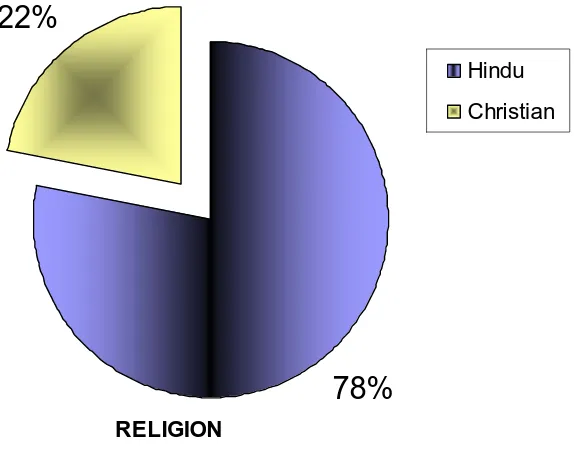
The majority 78%(47)of workers were Hindu, where as 22%(13) of them were Christian. It shows that the most of the workers were belongs to Hindu Religion. (Fig: 7).
The majority 88%(53) of workers were from rural area, where as 12%(7) of workers were from urban area. It shows that the most of the workers were from rural area because the cotton mill is located in rural area. (Fig: 8).
The highest percentage 72%(43) of workers belong to nuclear family, 28%(17) belong to joint family. It shows that, three fourth of the workers belong to nuclear family. It may be due to that, now days the joint family system is changing in to nuclear family in India. (Fig: 9).
The highest percentage 47%(28) of workers had> 10yrs of experience, where as 22%(13) of workers had 1 -5 yrs of experience. However 18%(11) of workers had <1yr of experience and 13%(8) had 5- 10yrs of experience. It shows that, around half of the workers had >10yrs of experience. (Fig: 10).
22%
6%
25%
47%
0
10
20
30
40
50
60
70
80
90
100
P
E
R
CE
NT
AG
E
O
F
W
O
RKE
R
S
20-25
25-30
30-35
>35
[image:79.595.148.685.64.399.2]AGE (In Years)
SEX
53% 47%
[image:80.595.205.630.121.326.2]Male
Female
12%
63%
22%
3%
0
10
20
30
40
50
60
70
80
90
100
P E R C E N T A O F W K E GE O R RNo formal
education
Prim ry
education
Secondary
education
Graduate
EDUCATIONAL STATUSa
PERCE NTA GE OF W
O
RKE
R
[image:81.595.199.674.97.396.2]S
85%
12%
3%
0 10 20 30 40 50 60 70 80 90 100
P
E
RCE
NT
AG
E
O
F
W
O
RKE
RS
Married Unmarried Widow
[image:82.595.205.642.96.470.2]M ARITAL STATUS
6%
40%
12%
42%
0
10
20
30
40
50
60
70
80
90
100
PER
C
EN
T
A
G
E
O
F
WO
R
K
E
R
S
< Rs. 1,500 Rs.1,500 – 3,000 Rs.3,000 –
4,500
> Rs.4,500
[image:83.595.100.630.113.433.2]MONTHLY INCOME
RELIGION
78%
22%
Hindu
[image:84.595.291.578.190.418.2]Christian
AREA OF RESIDENCE
88%
12%
Urban
Rural
TYPE OF FAMILY
28%
72%
Nuclear
[image:86.595.244.602.123.327.2]Joint
18% 22%
13%
47%
0 10 20 30 40 50 60 70 80 90 100
P
E
R
CE
NT
AG
E
O
F
W
O
RKE
R
S
[image:87.595.230.617.130.429.2]<1 Year 1-5 yrs 5-10 yrs >10 yrs YEARS OF EXPERIENCE
Fig : 11 Percentage distribution of cotton mill workers according to their Type of Placement TYPE OF PLACEMENT
43%
SECTION-B
Table-2
Comparison of pre and post test stress scores of cotton mill workers.
n=60
Pre test Post test
Level of
stress Frequency Percentage
(%) Frequency
Percentage (%)
Mild 2 3 53 88
Moderate 57 95 7 12
Severe 1 2 - -
[image:89.595.102.552.229.417.2]Total 60 100 60 100
Table 2 showed the Comparison of pre test and post test stress scores of cotton mill workers.
Among 60 workers, almost all the workers 95%(57) had moderate level of stress and 3%(2) of workers had mild stress. Only 2 %(1) of workers had severe stress, where as none of them had found without stress in pretest.
In post test the majority 88 %( 53) of workers had mild stress, and only 12%(7) of workers had moderate stress.
95%
3% 2%
12% 88%
0 10 20 30 40 50 60 70 80 90 100
Mild Moderate Severe
LEVEL OF STRESS
PER
CENT
AGE
OF
W
O
RKE
R
S
[image:90.595.199.667.100.463.2]Pre test Post test
Table -3
Comparison of mean, standard deviation and `t` test value of pre and post test stress scores among cotton mill workers.
n= 60
S.NO Variable Mean Standard
Deviation `t` Value
Table Value
1 Pre test 112.95 24
2 Post test 63.7 22.3
19.01 1.671
df=59 P<0.05
The table 3 showed that mean scores of pre test and post test stress scores of the cotton mill workers were 112.95 (SD+ 24) and 63.7 (SD+ 22.3) respectively.
The post test stress scores were lower than pretest stress scores. The ‘t’ value is 19.01 which was significant at 0.05 level.
SECTION – C
Association between post test stress scores among cotton mill workers with their selected demographic variables.
Table - 4
Association between post test stress scores among cotton mill workers with their selected demographic variables.
[image:92.595.74.559.308.665.2]n= 60 Level of stress
Mild Moderate Severe Demographic
Variables
No % No % No % 2
χ
Value TableInference 1 1.1 1.2 1.3 1.4 Age 20 -25 yrs 25 -30yrs 30 -35yrs 35 -40yrs 12 3 14 26 20 5 23 43 1 1 1 2 2 2 2 3 - - - - - - - -
0.353 3.841 (NS)
2 2.1 2.2 Sex Male Female 32 23 54 38 - 5 - 8 - - -
3 3.1 3.2 3.3 3.4 Educational status No Formal education Primary Education Secondary education Graduate 5 35 13 2 8 59 22 3 2 3 - - 3 5 - - - - - - - - - -
1.814 3.841 (NS)
4 4.1 4.2 4.3 Marital Status Married Unmarried Divorced 46 7 2 77 12 3 5 - - 8 - - - - - - - -
0.1764 3.841 (NS)
5 5.1 5.2 5.3 5.4 Monthly Income Rs 1500 Rs.1500-3000 Rs3000-4500 Rs>4500 4 19 7 25 6 32 12 42 - 5 - - - 8 - - - - - - - - - -
12.145 3.841 (S)
6 6.1 6.2 Religion Hindu Christian 42 13 70 22 5 - 8 - - - - -
1.508 3.841 (NS)
7. 7.1 7.2 Area Of residence Town Village 5 50 9 83 2 3 3 5 - - - -