FORMULATION AND EVALUATION OF TOLTERODINE TARTRATE SUSTAINED RELEASE CAPSULES
Dissertation
Submitted to
The Tamil Nadu Dr.M.G.R Medical University, Chennai In partial fulfillment for the award of degree of
MASTER OF PHARMACY in
PHARMACEUTICS by
A.MOHAMED RIYAS 26113308
DEPARTMENT OF PHARMACEUTICS ULTRA COLLEGE OF PHARMACY 4/235, COLLEGE ROAD, THASILDAR NAGAR
DECLARATION
I hereby declare that this thesis work entitled " FORMULATION AND EVALUATION OF TOLTERODINE TARTRATE SUSTAINED RELEASE CAPSULES" Submitted to The Tamilnadu Dr.M.G.R Medical university, Chennai was carried out by me in the Department of Pharmaceutics, Ultra College of Pharmacy, Madurai under the valuable and efficient guidance of Dr.C.Vijaya, M.PHARM., M.Pharm, Ph.D, Professor & Head, Department of Pharmaceutics, Ultra college of Pharmacy, Madurai during the academic year Nov 2012- Oct 2013. I also declare that the matter embodied in it is a genuine work and the same has not formed the basis for the award of any degree, diploma, and associateship, fellowship of any other university or institution.
PLACE : MADURAI (A.MOHAMED RIYAS)
ULTRA COLLEGE OF PHARMACY 4/235, COLLEGE ROAD THASILDAR NAGAR MADURAI.
CERTIFICATE
This is to certify that, the thesis work entitled " FORMULATION AND EVALUATION OF TOLTERODINE TARTRATE SUSTAINED RELEASE CAPSULES" submitted in partial fulfillment of the requirements for the award of degree of Master of Pharmacy in Pharmaceutics of The Tamil Nadu Dr.M.G.R Medical University, Chennai is a bonafide work carried out by A.Mohamed Riyas and was guided and supervised by me during the academic year Nov 2012- Oct 2013.
PLACE: MADURAI Dr.C.Vijaya, M.Pharm, Ph.D,
DATE: PROFESSOR & HEAD,
DEPARTMENT OF PHARMACEUTICS, ULTRA COLLEGE OF PHARMACY,
ULTRA COLLEGE OF PHARMACY 4/235, COLLEGE ROAD THASILDAR NAGAR MADURAI.
CERTIFICATE
This is to certify that, the thesis work entitled " FORMULATION AND EVALUATION OF TOLTERODINE TARTRATE SUSTAINED RELEASE CAPSULES " submitted in partial fulfillment of the requirements for the award of degree of Master of Pharmacy in Pharmaceutics of The Tamil Nadu Dr.M.G.R Medical University, Chennai is a bonafide work carried out by A.Mohamed Riyas and was guided and supervised by Dr.C.Vijaya, M.Pharm, Ph.D, Professor & Head, Department of Pharmaceutics, Ultra College of Pharmacy, Madurai during the academic year Nov 2012- Oct 2013
PLACE: MADURAI Dr.A.Babu Thandabani,
DATE: Principal,
ULTRA COLLEGE OF PHARMACY 4/235, COLLEGE ROAD THASILDAR NAGAR MADURAI.
CERTIFICATE
This is to certify that, this thesis work entitled " FORMULATION AND EVALUATION OF TOLTERODINE TARTRATE SUSTAINED RELEASE CAPSULES" submitted in partial fulfillment of the requirements for the award of degree of Master of Pharmacy in Pharmaceutics of The Tamil Nadu Dr.M.G.R Medical University, Chennai is a bonafide work carried out by A.Mohamed Riyas and was guided and supervised by Dr.C.Vijaya M.Pharm, Ph.D, Professor & Head, Department of Pharmaceutics, Ultra College of Pharmacy, Madurai during the academic year Nov 2012- Oct 2013 was evaluated by us.
EXAMINERS: 1.
2
Dedicated to . . .
My Beloved Family, Teachers
&
ACKNOWLEDGEMENT
At the outsets I thank GOD for his Divine grace and strength in completing this thesis. I am indebted to Mr. Babu Thandapani, Principal, Ultra College of pharmacy, Madurai, The Tamil Nadu Dr. M.G.R Medical University, for providing me necessary facilities to carry out the project work.
I am very glad to take this opportunity to express my sincere thanks and gratitude to my institutional guide Dr.C.Vijaya, M.Pharm, Ph.D, Professor&Head, Ultra College of pharmacy, Madurai, for his valuable guidance, constructive criticism and constant encouragement and also for making the requisite arrangements to enable me to complete my dissertation work.
I would like to thank Mr. Senthil Kumar, Ultra College of pharmacy, for his support and encouragement during my course.
I also thank to Non – teaching staff of Ultra College of pharmacy, who helped me directly or indirectly during my project work.
I am really indebted to RA CHEM PHARMA Ltd, Nacharam, Hyderabad, for providing me a platform to develop my skills and expertise in the subject and for extending association to my study.
With great pleasure I acknowledge my sincere thanks and gratitude to my industrial guide Dr. M. Thilek Kumar, FR&D, at RA CHEM PHARMA Ltd. (Research labs), Hyderabad. For providing me the necessary laboratory facilities to carry out this work with great ease and precision.
I am very thankful to Dr. J. Balasubramaniam, GM, Research and Development, RA CHEM PHARMA Ltd, for the necessary guidance and support and constant encouragement, help and co-operation during my project work.
I also thankful to the scientists Mr. Niranjan, Mr. Y. Rajesh, Mr. Ravi, Mr. Hema kumar, Mr. Praveen, Mr. Satyanarayana, Mr. Sreekanth, Mr. Aditya, Mr. Raja Rao, Mr. Krishna Mohan, Mr. Pradeep, Mr. Harendra Pradap, Ms. Swathi, Ms.Vishnu priya for their company, constant encouragement, help and co-operation during my project work.
I also thank to all other friends from Rachem Pharma Ltd for their support during the course.
I thank to my friends Mr. T. Chozharajan, Mr. D. Prawin, for their fabulous support and who have willingly helped me out with their abilities.
I specially thank to Lab instructor Mrs, Masila, Department of Pharmaceutics, Ultra College of Pharmacy, Madurai.
Words are not enough to express endless thanks to all my friends for their help and unconditional support during my project work.
I would like to thank my brother A. Mohamed Mustafa and my sister A.Shafana Begam for their co-operation, support and encouragement.
I owe my deepest regards to my parents for caring me with their emphatic encouragement and preserving support all through the way. I cannot express in words about what their appreciation and moral means for me. They have been like foundation upon which the building of my life rests.
1. INTRODUCTION
1.1 DRUG DELIVERY SYSTEM
The treatment of acute diseases or chronic illness has been achieved by delivery of drugs to the patients for many years. These drug delivery systems include tablets, injectables, suspensions, creams, ointments, liquids and aerosols. Today these conventional drug delivery systems are widely used. The term drug delivery can be defined as techniques that are used to get the therapeutic agents inside the human body. Another role of the delivery systems is to allow the safe application of the drug. This includes that the drug in the formulation must be
chemically, physically and microbiologically stable. Side-effects of the drug and drug
interactions should be avoided or minimised by the use of suitable drug delivery systems. The
delivery systems also need to improve the patient’s compliance with the pharmacotherapy by the
development of convenient applications. For example, one can improve patient compliance by
developing an oral dosage form where previously only parenteral application was possible.
Finally, the delivery system needs to be reliable and its formulation needs to be technically
feasible. This means the Pharmaceutical quality of the delivery systems needs to be assured, drug
release from the system needs to be reproducible and the influence of the body on drug release
should be minimized. (For example, food effects after oral administration.)1, 2
Drug delivery systems
1. Conventional drug delivery systems
1.2 Conventional Drug Delivery Systems
Conventional drug therapy requires periodic doses of therapeutic agents. These agents are formulated to produce maximum stability, activity and bioavailability. For most drugs, conventional drug delivery is effective, but some drugs which possess narrow therapeutic window and which cause irritation to gastric mucosa requires modified drug delivery system to achieve desired therapeutic effect. These delivery systems have a number of advantages over traditional systems such as improved efficiency, reduced toxicity and improved patient convenience. The main goal of modified drug delivery systems is to improve the effectiveness of drug therapies.
Conventional dosage forms are rapidly absorbed, with the ascending and descending portions of the concentrations versus time curve reflecting primarily the rate of absorption and elimination, respectively. Because of the rapid rate of absorption from conventional dosage forms, drugs are usually administered more than once daily, with the frequency being dependent on biological half- life (t½) and duration of pharmacological effect. The time of dosing may also be effected by therapeutic index of a drug. 3, 4, 5
1.2.1 Disadvantages of Conventional Drug Delivery Systems
•••• In conventional oral drug delivery systems, there is little or no control over the release of the drug and effective concentration at the target site.
•••• Conventional drug delivery system is not suitable for the drugs which cause irritation to the gastric mucosa.
•••• The rate and extent of absorption of drug from conventional formulations may vary greatly, depending on the factors such as physicochemical properties of the drug, presence of excipients, various physiological factors such as the presence or absence of food, pH of the gastrointestinal tract, gastrointestinal motility and so on.6
1.3 MODIFIED DRUG DELIVERY SYSTEMS
Dosage forms can be designed to modify the release of the drug over a given time or after the
dosage form reaches the required location. Drug release only occurs sometime after the
administration or for a prolonged period of time or to a specific targeted site in the body.
Modifications in drug release are often desirable to increase the stability, safety and efficacy of
the drug, to improve the therapeutic outcome of the drug treatment and/or to increase patient
compliance and convenience of administration.7
Classification:
Modified Release dosage form may be classified as
Extended Release
•••• Sustained Release
•••• Controlled Release
Delayed Release 1.3.1. Extended Release:
1.3.2. Sustained Release:
This term is constantly used to describe a pharmaceutical dosage form formulated to retard the release of the therapeutic agent such that its appearance in the systemic circulation is delayed and prolonged and its plasma profile is sustained in duration. The onset of its pharmacological action is often delayed, and the duration of its therapeutic effect is sustained.
In orally administered dosage forms, this duration is in hours and critically depends on the residence time of the dosage form in GI tract, whereas in the case of injectable this period may vary from days to months.
1.3.2a. Advantages of SR Dosage Forms:
Improved patient compliance due to reduced frequency of drug administration.
The blood level oscillations characteristic of conventional dosage forms is reduced.
A less obvious advantage that the total amount of drug administered can be reduced, thus maximizing availability with minimum dose.
Better control of drug absorption can be attained, since the high blood level peaks that may be observed after administration of a dose of high availability drug can be reduced by formulation in an extended action form.
The safety margin of high potency drugs can be increased, and the incidence of both local and systemic adverse side effects can be reduced in sensitive patients.
Reliable therapy. [9]
1.3.2b. Disadvantages:
•••• Administration of SR medication does not permit the prompt termination of therapy.
•••• Less flexibility in adjusting dosage regimen.
•••• Sustained release forms are designed for normal population, i.e., on the basis of biological half-lives. Consequently, disease states that alter drug disposition, significant patient variation, and so forth are not accommodated.
•••• Economic factors. [9]
Should be effectively absorbed in small intestine.
Biological half- life should lie within 1-12hours.
Dosage that is not titrated according to individual.
Small doses(<1g) [9]
Fig.1 Plasma Dug Concentration Profiles for Conventional Tablet Formulation, a Sustained Release Formulation and a Zero Order Controlled Release Formulation.
SR system generally don’t attain zero order type release and usually try to mimic zero order release by providing drug in a slow first order. Repeat action tablet are an alternative method of sustained release in which multiple doses of drug are contained within a dosage form and each dose is released at a periodic interval. Delayed release system, in contrast, may not be sustaining, since often the function of these dosage forms is to maintain the drug in the dosage for some time before its release, Eg: Enteric coated tablet.
concentration in the body organ over an extended time; in other words, the amount of drug entering the system is equivalent to the amount of drug removed from the system. All forms of metabolism and excretion are included in the removal process: urinary excretion, enterohepatic recycling, sweat, fecal and so on. Since, for most of the drugs these elimination processes are firstorder, it can be said that a certain blood level, the drug will have a specific rate of elimination. The idea is to deliver drug at this exact rate for an extended period. This is represented mathematically as following,
Rate in = Rate out = kelim × Cd× Vd Where Cdis the desired drug level,
Vdis the volume of distribution, and
kelimis the rate constant of drug elimination from the body.
1.3.3. PHYSICOCHEMICAL FACTORS INFLUENCING ORAL SUSTAINED-RELEASE DOSAGE FORM DESIGN [13, 14]
a. Dose size
b. Ionization, pka and aqueous solubility
Most drugs are weak acids or bases. Since the unchanged form of a drug preferentially permeates across lipid membranes, it is important to note the relationship between the pka of the compound and the absorptive environment. Presenting the drug in an unchanged form is advantageous for drug permeation. Unfortunately, the situation is made more complex by the fact that the drug’s aqueous solubility will generally be decreased by conversion to unchanged form. Delivery systems that are dependent on diffusion or dissolution will likewise be dependent on the solubility of the drug in aqueous media. These dosage forms must function in an environment of changing pH, the stomach being acidic and the small intestine more neutral, the effect of pH on the release process must be defined.
Compounds with very low solubility (<0.01mg/ml) are inherently sustained, since their release over the time course of a dosage form in the GI tract will be limited by dissolution of the drug. So it is obvious that the solubility of the compound will be poor choices for slightly soluble drugs, since the driving force for diffusion, which is the drug’s concentration in solution, will be low.
c. Partition Coefficient
When a drug is administered to the GI tract, it must cross a variety of biological
bioavailability. Furthermore, partitioning effects apply equally to diffusion through polymer membranes. The choice of diffusion-limiting membranes must largely depend on the partitioning characteristics of the drug.
d. Stability
Orally administered drugs can be subjected to both acid-base hydrolysis and enzymatic degradation. Degradation will proceed at a reduced rate for drugs in solid state. For the dosage form that are unstable in stomach, systems that prolong delivery over entire course of transit in the GI tract are beneficial; this is also true for systems that delay release until the dosage form reaches the small intestine. Compounds that are unstable in small intestine may demonstrate decreased bioavailability when administered from a sustaining dosage form. This is because more drugs are delivered in the small intestine and, hence, is subject to degradation.
1.3.4. BIOLOGICAL FACTORS INFLUENCING ORAL SUSTAINED-RELEASE DOSAGE FORM DESIGN [13,14]
· Biological half- life. · Absorption.
· Metabolism.
a. Biological half life
The usual goal of an oral SR product is to maintain therapeutic blood levels over an
extended period of time. To achieve this, drug must enter the circulation at approximately the same rate at which it is eliminated. The elimination rate is quantitatively described by the half-life (t1/2). Each drug has its own characteristic elimination rate, which is the sum of all
permanently remove drug from the blood stream. Therapeutic compounds with short half-life are generally are excellent candidate for SR formulation, as this can reduce dosing frequency. In general, drugs with half-life’s shorter than 2 hours such as furosemide or levodopa are poor candidates for SR preparation. Compounds with long half-lives, more than 8 hours are also generally not used in sustaining form, since their effect is already sustained. Digoxin and phenytoin are the examples.
b. Absorption
Since the purpose of forming a SR product is to place control on the delivery system, it is necessary that the rate of release is much slower than the rate of absorption. If we assume that the transit time of most drugs in the absorptive areas of the GI tract is about 8-12 hours, the maximum half-life for absorption should be approximately 3-4 hours; otherwise, the device will pass out of the potential absorptive regions before drug release is complete. This corresponds to a minimum apparent absorption rate constant of 0.17-0.23h-1 to give 80-95% over this time period. Hence, it assumes that the absorption of the drug should occur at a relatively uniform rate over the entire length of small intestine. For many compounds this is not true. If a drug is absorbed by active transport or transport is limited to a specific region of intestine, SR preparation may be disadvantageous to absorption. One method to provide sustaining mechanisms of delivery for compounds is to maintain them within the stomach. This allows slow release of the drug, which then travels to the absorptive site. These methods have been developed as a consequence of the observation that co-administration results in sustaining effect. One such attempt is to formulate low density pellet or capsule. Another approach is that of bio adhesive materials.
Drugs those are significantly metabolized before absorption, either in the lumen or the tissue of the intestine, can show decreased bioavailability from slower-releasing dosage form. Hence criteria for the drug to be used for formulating Sustained-Release dosage form is,
· Drug should have low half-life(<5 hrs) · Drug should be freely soluble in water. · Drug should have larger therapeutic window. · Drug should be absorbed throughout the GIT.
Even a drug that is poorly water soluble can be formulated in SR dosage form. For the same, the solubility of the drug should be increased by the suitable system and later on that is formulated in the SR dosage form. But during this the crystallization of the drug, that is taking place as the drug is entering in the systemic circulation, should be prevented.
1.3.5. Controlled Release Dosage:
CR dosage form is generally accomplished by attempting to obtain “zero- order” release from the dosage form which is independent of the amount of drug in the delivery system (i.e., a constant release rate). Sustained Release systems generally do not attain this type of release and usually try to mimic zero order release by providing drug in a slow first order fashion (i.e., concentration dependent).
The controlled release systems for oral use are mostly solids and based on dissolution, diffusion or a combination of both mechanisms in the control of release rate of drug.
These systems release the drug for a prolonged period of time along the entire length of gastrointestinal tract with normal transit of the dosage form.
The various systems under this category are as follows: A. Dissolution controlled release systems
B. Diffusion controlled release systems
C. Dissolution and diffusion controlled release systems D. Ion exchange resin- drug complexes
E. pH dependent formulation
F. Osmotic pressure controlled systems [13]
b. Delayed transit and continuous release systems
These systems are designed to prolong their residence in the GI tract along with their release. Often the dosage form is fabricated to retain in the stomach and hence the drug present therein should be stable in gastric pH. Systems included in this category are mucoadhesive systems and size based systems. [13]
1.3.6. Delayed Release
A Delayed Release dosage form is designed to release the drug at a time other than promptly after administration. Dosage forms can be designed to modify the release of the drug over a given time or after the dosage form reaches the required location.
Delayed Release systems release a bolus of the drug after a predetermined time in a predetermined location, i.e. they do not release the drug immediately after ingestion, for example enteric-coated tablets, pulsatile-release capsules.
Delayed Release dosage forms are designed to provide spatial placement or temporal targeted delivery of a drug to the distal human gut. Spatial placement relates to targeting a drug to a specific organ or tissue, while temporal delivery refers to desired rate of drug release to target tissue over a specified period of time.
The correct selection and balance of excipients and processes in solid dosage formulations are designed either for improving the micromeritic or macromeritic properties of materials during manufacture and/or for providing a desired drug delivery system. The most commonly used pharmaceutical sustained release solid oral dosage forms today include tablets, capsules, granules and pellets. [14, 15]
1.4 MULTIPARTICULATES / MULTI UNIT DOSAGE FORMS
Multiple unit dosage forms are essential where drug-excipients or drug-drug physicochemical interaction is possible in a single-unit formulation, they are also known to have less variance in transit time through the gastro intestinal tract than single unit dosage forms. They are usually delivered in hard gelatin capsules or made into tablets that disintegrate instantly.
Types of Multiple unit dosage forms comprise
•••• Pellets
•••• Mini tablets mini depots
•••• Micro particles (Microspheres or Microcapsules) and Nano particles
Multi particulates are
•••• Filled into hard-gelatin capsules
•••• Compressed tablets
•••• Suspended in liquids or
•••• Packed in sachets.
1.4.1 Features of the Performance of Multiparticulates
Multi particulate dosage forms have a number of useful features which can be used for
the advantage in modified release forms. Foremost is their ability to overcome the variation in
performance which may arise through variation in gastrointestinal transit time and, in particular,
variation occasioned by erratic gastric emptying. The size of most multi particulates enables
them to pass through the constricted pyrolic sphincter so they are able to distribute themselves
along the entire gastrointestinal tract. As the dose of drug is spread out over a large number of
particles, then the consequences of failure of a few units has nothing like the potential
consequences of failure through dose dumping of a single coated tablet used as a modified
release dosage form. Additionally, as the drug is not all concentrated in one single unit,
considerations of an irritant effect to the mucosal lining of the gastrointestinal tract are very
much reduced. 16
1.5 PELLETS11,19
1.5.1 Desirable Properties of Pellets:
Pellets may be uncoated type or coated type. a) Uncoated pellets:
Uncoated pellets must have following properties
•••• Uniform spherical shape and smooth surface.
•••• Optimum size of pellets is between 600 and 1000?m.
•••• Good flow properties.
•••• High physical strength and integrity.
•••• Good hardness and low friability.
•••• High bulk density.
•••• Ease and superior properties for coating.
•••• Reproducible packing of beds and columns.
b) Coated pellets: Along with the above properties, the coated pellets must contain as much as possible of the active ingredient to keep the size of the final dosage form within reasonable limits.
1.5.2 Stages in Pellet Formation and Growth:
Formation and growth of pellets can be divided into four stages: 1. Pendular state
2. Funicular state 3. Capillary state 4. Droplet state.
Figure 3: Different formal spatial structures of liquid-bound agglomerates 1.5.3 Advantages of pellets:
•••• Improved appearance of the product which is having fine pharmaceutically elegant.
•••• Pelletization offers flexibility in dosage form design and development.
•••• Pellets improve the flow properties in formulation development.
•••• Pellets are less susceptible to dose dumping.
•••• It improves safety and efficacy of a drug.
•••• Pellets offer reduced variation in gastric emptying rate and transit time.
•••• Pellets disperse freely in G.I.T. and invariably maximize drug absorption and also reduce peak plasma fluctuation.
•••• Pellets ensure improved flow properties in formulation development.
•••• Pelletization is a convenient way to manage the separation of incompatible drugs.
•••• Chemically incompatible products can be formed into pellets & delivered in a single dose by encapsulating them.
•••• The most important reason for the wide acceptance of multiple unit products is the rapid increase in popularity of oral pellets dosage forms, Pellets oral solid dosage forms are usually intended either for delivery of the drug at a specific site within the gastrointestinal tract or to sustain the action of drugs over an extended period of time.11
1.5.4 Disadvantages of pellets:
•••• The manufacturing of multiple unit dosage forms is more complicated and more expensive.
•••• The filling into gelatin capsules is difficult to accomplish, especially in the case where different subunits are involved.
•••• Scale-up of pellets is a very complicated one.
1.5.5 Theory of pellet formation and growth
experiments on the mechanism of pellet formation and growth, the following steps were proposed: nucleation, coalescence, layering and abrasion transfer.
Nucleation is a stage of pelletization process that occurs whenever a powder is wetted with solvent system. The primitive particles are drawn together to form three-phase air-water-liquid nuclei system which are held together by air-water-liquid bridges that are pendular in nature. The reduction of particle size will improve the bonding strength between them. Further the size, the rate and the extent of nuclear formation depends upon the size of the particles, the moisture content, the viscosity of the binding particles, the wet ability of the substrate and the processing conditions, such as tumbling and drying rates.
Nucleation is followed by a transition phase where the growth mechanisms affecting are coalescence and layering. Coalescence is defined as the formation of large-sized particles by random collision of well-formed nuclei, this mechanism require slightly excess moisture on the surface of the nuclei although the number of nuclei is progressively reduced even though the total mass of the system remains unchanged during this operation. Layering is a slow growth mechanism and with the successive addition of fragments and fines on an already formed nuclei. In the layering step, the number of particles remains constant while the total mass of the system increases due to increasing particle size as a function of time. The fragments or fine particles can be formed by particle size reduction.
growth phase is the abrasion transfer which involves the transfer of materials from one granule formed to another without any preference in either direction. This phase does not result in any change in the total number or mass of the particles. However, the particles undergo a continuous change in their size as long as the conditions that lead to the transfer of material exist. 11, 12
1.5.6 Pelletization techniques 11,19
Pelletization is an agglomeration process that converts fine powders or granules of bulk drugs and excipients into small, free-flowing, spherical or semi-spherical units, referred to as pellets.
The most commonly used and intensely investigated pelletization processes are 12
1. Powder layering,
2. Solution/Suspension layering, and 3.Extrusion–Spheronization.
Compaction and drug layering are the most widely used pelletization techniques in Pharmaceutical industry. Other pelletization methods such a globulation, balling and
Fig.No 4: Different pelletization techniques
1.5.6.1 LAYERING
a) Powder layering:
Fig.No.5: Depicts the principle of powder layering
b) Solution / Suspension layering:
Solution/suspension layering involves the deposition of successive layers of
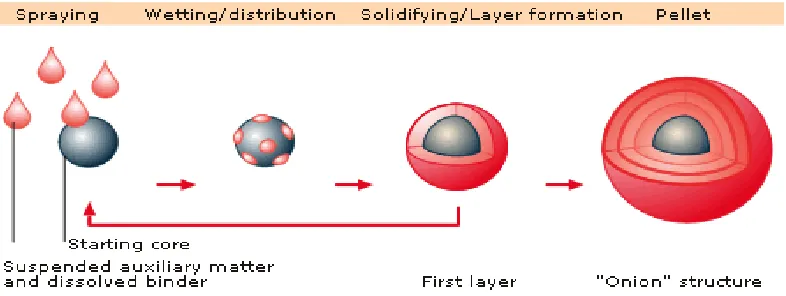
solutions or suspensions of drug substances and binders over the starter/non-pareil seeds, which is an inert material or crystals/granules of the same drug. During solution or suspension layering all the components of the formulation are dissolved or dispersed in the application medium. As the solution or suspension is sprayed on to the spheres (staring core) the droplets impinge on the starter spheres and spread evenly on the surface provided favorable drying and fluid conditions. This is followed by a drying phase which allows dissolved material to crystallize and form solid bridges between the core and initial layer of the drug substance as well as among the successive layers of the drug substances. The process continues until the desired pellet size is achieved.
method. The efficiency of the process and the quality of the pellets produced are in part related to the type of equipment used. 10, 12
Fig.No.6: Depicts the principle of solution and suspension layering,
c) Direct pelletization:
Fig No.7: Depicts the principle of direct pelletization,
1.5.6.2 COMPREESION
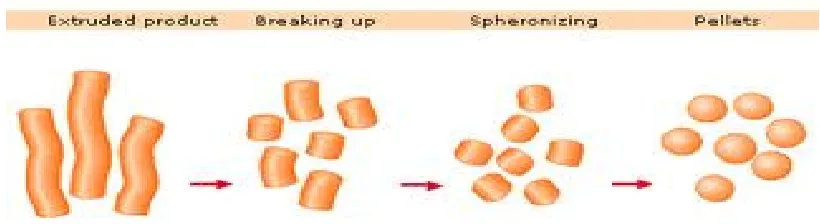
a) Pelletization by Extrusion and spheronization:
Fig No.8: Depicts the principle of Extrusion & Spheronization,
b) Compression:
It is one type of compaction technique for preparing pellets. Compacting mixtures or blends of active ingredients and excipients under pressure prepare pellets of definite sizes and shapes. The formulation and process variables controlling the quality of pellets prepared are similar to those used in tablets manufacturing.
1.5.6.3 AGITATION
a)Balling:
1.5.6.4 GLOBULATION or droplet formation consists two related processes, spray drying and spray congealing, involve atomization. Atomization of hot melts solution or suspensions to generate spherical particles pellets.
a) Spray drying:
During spray drying, drug entities in solution or suspension are sprayed, into a hot air stream to generate dry and highly spherical particles. As the atomized droplets come on contact with hot air, evaporation of the application medium initiated. The drying process continues until the entire application medium is driven off and solid particles are formed. Generally, spray dried pellets tend to be porous. This process is commonly used for improving the dissolution rates; hence bioavailability of poorly soluble drugs.
b) Spray congealing:
1.5.6.5 OTHER PELLETIZATION METHODS 19
a) Cryopelletization:
In cryopelletization, droplets of liquid formulation are recovered in to solid spherical particles or pellets by employing liquid nitrogen as the fixing medium. This technology can produce drug-loaded pellets by allowing droplets of solution or suspension to come in contact with liquid nitrogen at -1600C. The procedure permits instant and even freezing of the material
being processed due to the repaid heat transfer which occurs between the droplets and the liquid nitrogen. The pellets are dried in conventional freeze dryers.
The most critical step in Cryopelletization is droplet formation, which is influenced not only by formulation variables such as viscosity, surface tension and solid contents, but also by equipment design and the corresponding processing variables. The diameter and design of the shearing edges of the holes on the container plates are also critical. For instance, the diameter of the holes determines the flow rate, which in turn is governed by the viscosity of the formulation. The diameter of holes also influences the size and shape of the pellets. The smaller the nozzle diameter, the smaller the pellets produced. The shape of droplets depends on the distance of the droplets travel before contacting the liquid nitrogen. 11, 19
1.6 PELLET COATING PROCESS
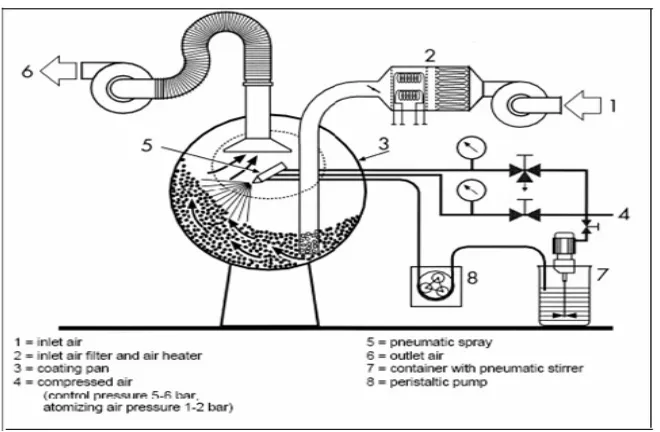
1. Conventional Coating Pan
2. Perforated Coating Pan
3. Fluidized Bed Processor
1.6.1 Conventional Coating Pan:
[image:35.612.151.481.442.658.2]The standard coating pan system consists of a circular metal pan mounted somewhat angularly on a stand, the pan is rotated on its horizontal axis by a motor, the hot air is directed into the pan and onto the bed surface, and is exhausted by means of ducts positioned through the front of the pan. Coating solutions are applied by spraying the material on the bed surface. In this technique the granules or sugar spheres are placed in the coating pan and the coating solution is sprayed on the granules by atomizer with pressure.
1.6.2 The perforated Coating Pan:
Perforated pan coaters are efficient drying systems with high coating capacity, and can be completely automated for both sugar coating and film coating processes. There are four different type of coaters available Acela-Cota, Hi-Coater, Driacoater, Glatt coater. In all four of these perforated pan systems the coating solution is applied to the surface of the rotating bed of pellets through spraying nozzles that are positioned inside the drum.10
1.6.3 Fluidized Bed Processor:
•••• One machine can perform multiple functions like coating, drying, granulation and pelleting.
•••• Highly efficient drying system.
•••• Aqueous or organic coatings can be applied.
•••• Uniform continuous product coating achieved. Applications:
1. Ideal for a wide range of process applications include coating hearing drying agglomeration and granulation.
2. Ideal for control release film coating, pellet granulation and hot melt coating. 3. Suitable for coating of micro particles, granules, pellets or tablets.
4. Specific manipulation of the particle surface characteristics. Protection of the product against moisture, light, air.
Principle of operation:
Different types of fluidized bed processors are
A) Top spray coating
B) Bottom spray coating (Wurster coating) C) Tangential spray coating (Rotor pellet coating) 1.6.3.1 Top spray coating:
This process is used to spray binder solution for powder granulation. Particles are fluidized in the flow of heated air, which is introduced into the product container via a base plate. The binder solution is sprayed into the fluid bed from above against the air flow (counter current) by using nozzle. Air volume is adjusted to have the center of the particle stream very close to the nozzle. Drying takes place as the particles to move upwards in the air flow.
TOP SPRAY BOTTOM SPRAY TANGENTIAL SPRAY
Applications:
•••• Preferred when a taste masking coating is applied. Additionally suitable for the application of hot melt coating.
•••• Continuous spray coater is particularly suitable for protective coatings/colour coating.
1.6.3.2 Bottom Spray coating (Wurster coating):
The process is suitable for pellet suspension coating or film/sugar coating, particularly useful for a control release active ingredients.
[image:38.612.115.493.560.778.2]In this process, a complete sealing of the surface can be achieved with a low usage of coating substance. When the hot air flows through the bottom screen of container and coating column, it will generate the siphonage principle. Convection is created through the strong force from bottom toward top. The granules will then fall down and will be sucked into the coating column again, while the bottom spray gun will spray towards top to achieve coating purpose. As the particles continue travelling upwards, they dry and fall outside the Wurster tube back towards the base plate.
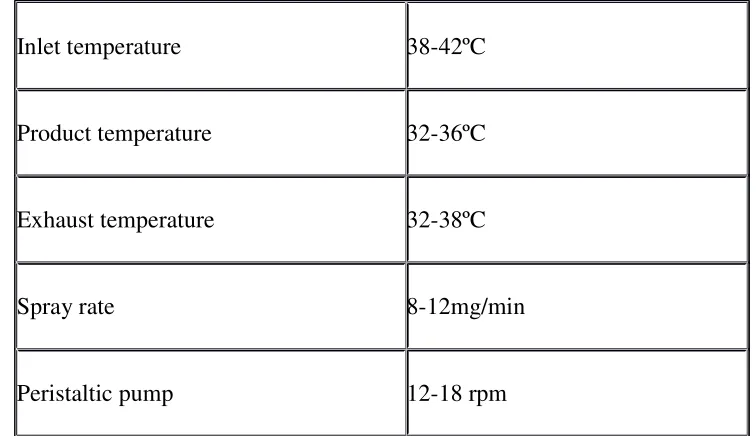
Table No.1: Parameters Used in Bottom Spray Equipment
Inlet temperature 38-42ºC
Product temperature 32-36ºC
Exhaust temperature 32-38ºC
Spray rate 8-12mg/min
Fig No.11: Orifice plate of a Wurster coater
Applications:
•••• Preferred for the application of modified release coatings to a wide variety of multi particulates.
•••• And also suitable for drug layering when the drug does is in the low to medium range.
1.6.3.3 Tangential spray coating (Rotor pellet coating):
This process is particularly suitable for pellet powder coating, suspension coating or film/sugar coating.
In this process the cores are placed on the turntables and hot air is blown upward between the turntables and the granulation area. The passage of air causes the cores to roll on the turntables. At the same time, the coating solution is sprayed on the rolling cores through the pump and spray gun. The process involves simultaneous coating and drying of the cores, layer after layer, until the repeated actions achieve the desired coating thickness or granule size.
•••• Suitable for the application of modified release film coatings to a wide range of multi particulate products.
•••• Ideal for drug layering when the dose is medium to high.
•••• Also useful as a spheronizing process for producing spheres from powders.
1.7 EXCIPIENTS FOR PELLETS
Formulation aids or excipients are added to pharmaceutical dosage forms mainly to produce satisfactory delivery of the drug to the intended site, to impart favorable characteristics to the dosage form and to facilitate the manufacture of the product.
Table No.2: Commonly Used Excipients for pellets
Filler MCC, starch, sucrose, lactose, mannitol
Binder Gelatin, HPC, HPMC, MC, PVP, sucrose, starch
Lubricant Calcium stearate, glycerine, PEG, Mg. stearate
Separating agent Kaolin, talc, silicon dioxide
Disintegrant Alginates, croscarmellose sodium
pH adjuster Citrate, phosphate, meglumine.
Surfactant Polysorbate, SLS
Spheronization enhancer MCC , sodium CMC
Glidant Talc, starch, Mg stearate.
Release modifier Ethyl cellulose, carnauba wax, shellac.
1.8 CAPSULES
Capsules are available in many different sizes and shapes and can be used for administration of powders, semisolids and liquids.
1.8.1 Capsules Standards and limits
Description:
It should comply with specifications of product.
Content of active ingredients:
90 to110% of label claim or as per In house limit.
Uniformity of weight:
Table No.3:Content uniformity limits
Average weight of capsules content
Percentage
deviations allowed less than 300mg 10%
300mg or more 7.5%
1.9 DISEASE PROFILE20, 21, 28
Overactive bladder (OAB) is a condition that results from sudden, involuntary contraction of the muscle in the wall of the urinary bladder. It is commonly characterized by urinary urgency, with or without urge incontinence usually with frequency and nocturia. It causes sudden and unstoppable need to urinate (urinary urgency), even though the bladder may contain a small amount of urine. Overactive bladder, however, should not be considered as normal part of aging.
Overactive bladder is typically caused by spasms of the muscles of the bladder, resulting in an urge to urinate (hence, urge incontinence). It is primarily a problem of the nerves and muscles of the bladder. Voluntary control of the sphincter muscles at the opening of the bladder can hold the urine in the bladder for longer time. Up to 600 cc of urine can be contained in a normal adult bladder. Overactive bladder typically results from inappropriate contraction of the detrusor muscle regardless of the amount of urine. Detrusor is one of the major muscles of the bladder. Its contraction in response to filling of the bladder by urine is one of the steps in the normal process of urination. The contraction and relaxation of the detrusor muscle is regulated by the nervous system. Approximately 300 cc of urine in the bladder can signal the nervous system to trigger muscles of the bladder to coordinate urination.
OAB affects approximately 17% of adults globally. A recent study using current ICS definitions of OAB found the prevalence of OAB to be 11% in men and 13% in women.28
1.9.2 Causes of overactive bladder
The common abnormalities of the nervous system that cause overactive bladder are as follows
•••• Spinal cord injury
•••• Parkinson’s disease
•••• Dementia
•••• Multiple sclerosis
There are also some causes of overactive bladder and urge incontinence with a normal nervous system. For example, urinary tract infection, bladder stones, or bladder tumors can cause also cause over activity of the detrusor muscle, leading to overactive bladder.
1.10 Drugs used to treat overactive bladder: 28
Antimuscarinic agents are widely used to treat overactive bladder. Some of the antimuscarnic drugs used to treat this condition are:
Oxybutinin
Atropine
Tolterodine tartrate
Ipratropium etc.
CHAPTER-2
LITERATURE REVIEW
2.1 Review of literature:
Kreder et al(2002). Reported on longterm safety, tolerability and efficacy of extended release tolterodine in the treatment of overactive bladder. They conducted randomized double blind study in 1377 patients and compared extended release and immediate release dosage forms. They reported that tolterodine ER 4mg displayed a favourable safety, tolerability and efficacy profile during 12 months treatment of patients with overactive bladder .33
Vinay pandit et al.(2008) studied formulation and evaluation of transdermal films for the treatment of overactive bladder. A number of the polymers like HPMC, carbopol-934p and ethylcellulose were employed alone or in combination for the preparation of transdermal films. The films were casted using solvent casting technique. Solutions containing polymer at different concentrations and polymer at various concentrations were prepared and evaluated for in vitro
drug release. It was found that polymer concentration of 2% was found to be best and if increased drug release was retarded and 20% concentration of propylene glycol (plasticizer) shows less release. Among all the formulation using HPMC: Carbopol (3:1) with 30% propylene glycol showed the best release.30
under in vitro and in vivo conditions. From the results of in vitro and in vivo studies it was concluded that (E)-2 isopropyl methylcyclohexyloctadec-9 -enoate(M-OA) is the most promising enhancer among O-acyl menthol derivatives for transdermal drug delivery and 2-isopropyl-5-methyl-cyclohexyl 2-hydroxypanoate (M-LA) produced highest enhancing activity in TOL in isopropylmyristate solution.31
Kang ten gong et al.(2008) investigated the relationship between formulation variables and drug release in aqueous ethyl cellulose coating. Here they studied on the critical factors and their influence on the drug release characteristics from an aqueous ethylcellulose barrier membrane coated system. It was concluded that the incorporation of HPMC or PVA has shown to be effective in modifying the drug release characteristics through a surelease barrier membrane system. They also reported that by controlling the critical variables like pore former concentration, coating level and drug solubility the desired release characteristic can be achieved .35
Maria A.F.H et al.(2010) investigated release mechanisms of theophylline pellets coated with aqueous ethylcellulose dispersions containing plasticizers and hydroxyl propyl methylcellulose as a water soluble pore former. Three different release mechanisms of pellets coated with aqueous ethylcellulose dispersion, hydroxypropyl methylcellulose and triethylcitrate, diethyl phthalate, dibutyl phthalate or dibutyl sebacate are determined. It was found that the drug release is dependent on the physical state of swollen ethylcellulose and migration of water soluble pore former respectively.34
pharmacodynamic advantage over tolterodine l-tartarate tablets. They reported that the continued inhibition of muscarinic receptor of the microspheres formulation might provide a more effective treatment of OAB patient than that of the oral formulation which inhibits the receptor impulsively.32
Namrata et al. (2012) In recent pharmaceutical applications, multiparticulate dosage forms are gaining much importance over single-unit dosage forms. The purpose of designing
multiparticulate dosage form is to develop a reliable formulation that has all the advantages of a
single unit formulation and yet devoid of the danger of alteration in drug release profile and
formulation behavior due to unit to unit variation. The aim of present work is qualitative study
on formulation of multiparticulate modified release pellets of Tolterodine Tartrate, by “Wurster
Based Fluidized Bed Coating Process”(layering technique).The main purpose of the present
study was to investigate the feasibility of the wurster process for preparing extended release
pellets and subsequently comparing the release profile of the pellets so prepared with a marketed
reference product in various media. Additionally, the effects of some independent process
variables were evaluated. The effect of the various process parameters i.e. inlet air temperature,
product temperature, exhaust temperature, atomization speed, spray pump speed, atomization air
volume and air flow on the Wurster process was studied. The results suggested that the process
parameters greatly vary with the physical properties of the drug, polymers and solvents used in
CHAPTER-3
SCOPE, OBJECTIVE AND
PLAN OF WORK
3.1 Scope of WorkTolterodine tartrate is an antispasmodic used in the treatment of bladder hyperactivity. It controls bladder incontinence by controlling contractions. Tolterodine tartrate is a muscuranic receptor antagonist inhibiting bladder contraction and reducing urinary frequency. The contraindication factor that prohibit its use include known hypersensitivity, uncontrolled narrow-angle glaucoma, urinary retention, and gastric retention.
Tolterodine is rapidly absorbed. Both Tolterodine and the 5-hydroxymethyl metabolite reach
maximal serum concentrations 1-3 hours after dose. The half-life for Tolterodine given as the
tablet is 2-3 hours in extensive metabolizers and about 10 hours in poor metabolizers (devoid of
CYP2D6). Steady state concentrations are reached within 2 days after administration of the
tablets. Food does not influence the exposure to the sum of the unbound Tolterodine and the
active 5-hydroxymethyl metabolite in extensive metabolizers, although the Tolterodine levels
increase when taken with food
The recommended dose is 2 mg b.i.d. In the case of troublesome side-effects the dose
may be reduced from 2 mg to 1 mg b.i.d. The recommended dose is 1 mg b.i.d. for patients with
potent CYP3A4 inhibitors. Tolterodine tartrate is available in market in 1mg and 2mg as
immediate release and 2mg & 4mg as sustained release.
Hence, in the present study, an attempt has been made to develop the sustained-release Capsules of Tolterodine tartrate using hydrophobic ethyl cellulose polymer with the addition of a pore former and a barrier membrane coating and evaluated by in-vitro drug release which will be comparable to the reference product (Detrol, mfg by Pfizer). The drug release data were plotted using various kinetic equations (first-order, Higuchi’s kinetics) to evaluate the drug release mechanism and kinetics. In-vivo drug release, biopharmaceutical evaluation, and in-vitro/in-vivo correlations were beyond the scope of this study and will be considered in future work.
3.2 Objective
The objective of the present work is to prepare the tolterodine tartrate sustained release capsules which matches to the reference product
To study the effect of different concentration of ethyl cellulose in modifying the drug release and identify the prototype which matches to the originator.
3.3 PLAN OF WORK
3.3.1 Preformulation Study:
a) API Characterisation.
b) Drug- Excipient Compatibility Study.
3.3.2 Formulation Development:
b) Preparation of Drug Solution
c) Drug Layering Process (FBP)
d) Film Coating(FBP)
Preparation of Film Coating Solution
Coating Process
e) Coating (FBP)
Preparation of Coating Solution
Coating Process
f) Sifting
g) Capsule Filling
3.3.3 Evaluation
a) Evaluation Tests For Drug Loaded Tolterodine Tartrate Pellets
Physical Description Sieve Analysis
Water content by KF titration
b) Evaluation Tests For Capsule Containing Pellets
Weight Variation Tests Content Uniformity Lock Length
Assay by HPLC
Dissolution by HPLC
CHAPTER-4
MATERIALS AND EQUIPMENTS
4.1 Instruments and Equipments Used
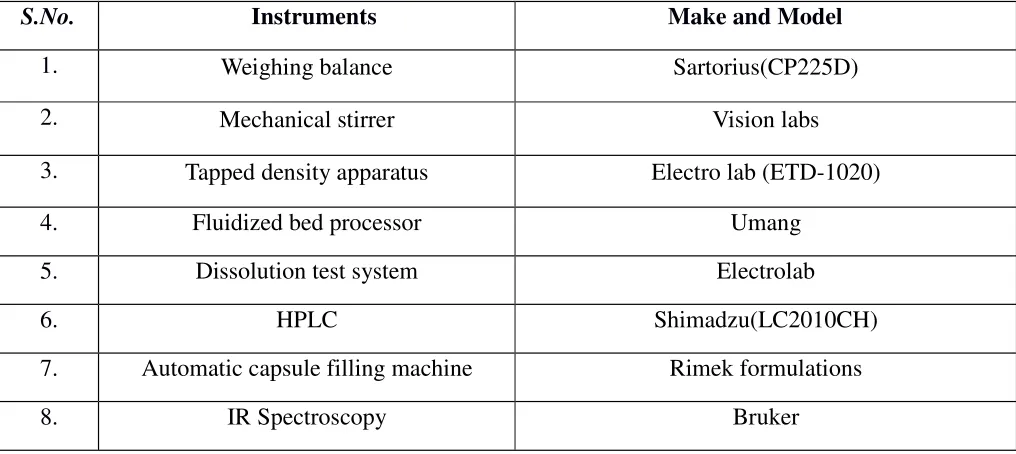
S.No. t Instruments Make and Model
1. Weighing balance Sartorius(CP225D)
2. Mechanical stirrer Vision labs
3. Tapped density apparatus Electro lab (ETD-1020)
4. Fluidized bed processor Umang
5. Dissolution test system Electrolab
6. HPLC Shimadzu(LC2010CH)
7. Automatic capsule filling machine Rimek formulations
[image:51.612.72.580.277.504.2]8. IR Spectroscopy Bruker
4.2 LIST OF MATERIALS USED
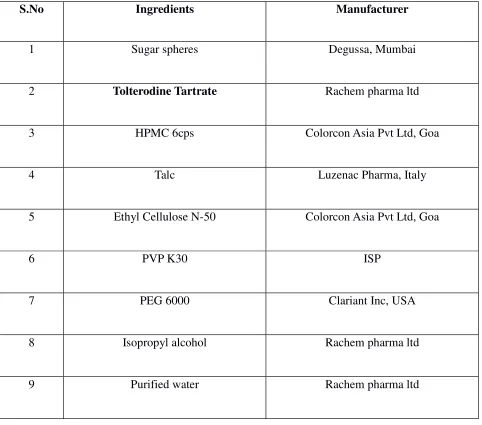
S.No Ingredients Manufacturer
1 Sugar spheres Degussa, Mumbai
2 Tolterodine Tartrate Rachem pharma ltd
3 HPMC 6cps Colorcon Asia Pvt Ltd, Goa
4 Talc Luzenac Pharma, Italy
5 Ethyl Cellulose N-50 Colorcon Asia Pvt Ltd, Goa
6 PVP K30 ISP
7 PEG 6000 Clariant Inc, USA
8 Isopropyl alcohol Rachem pharma ltd
[image:52.612.67.549.146.571.2]9 Purified water Rachem pharma ltd
Table: 5 List of Materials used
4.3 Drug profile: 28
Chemical Name: (R)-N,N-diisopropy-3-(2-hydroxy-5-methylphenyl)-3-phenyl propanamine hydrogen tartrate
Chemical Formula: C26H37NO7
Molecular weight: 475.6 gm/mol
Structure of Tolterodine tartrate:
Category: Competitive muscarinic receptor antagonist.
Solubility: Very soluble in water, soluble in methanol, slightly soluble in ethanol, and practically insoluble in toluene.
Melting Point: 205o
C
metabolite, which exhibits an anti-mucarinic activity similar to that of tolterodine, contributes significantly to the therapeutic effect.
Pharmacokinetics: 20,21,28
Tolterodine is rapidly absorbed. Both tolterodine and the 5-hydroxymethyl metabolite reach
maximal serum concentrations 1-3 hours after dose. The half-life for tolterodine given as the
tablet is 2-3 hours in extensive metabolizers and about 10 hours in poor metabolizers (devoid of
CYP2D6). Steady state concentrations are reached within 2 days after administration of the
tablets. Food does not influence the exposure to the sum of the unbound tolterodine and the
active 5-hydroxymethyl metabolite in extensive metabolizers, although the tolterodine levels
increase when taken with food. Clinically relevant changes are likewise not expected in poor
metabolizers.
Absorption:
After oral administration tolterodine is subject to CYP2D6 catalyzed first-pass metabolism in
the liver, resulting in the formation of the 5-hydroxymethyl derivative, a major
pharmacologically active metabolite. The absolute bioavailability of tolterodine is 17% in
extensive metabolizers, the majority of the patients, and 65% in poor metabolizers (devoid of
CYP2D6).
Tolterodine and the 5-hydroxymethyl metabolite bind primarily to alpha-1-acid glycoprotein.
The unbound fractions are 3.7% and 36%, respectively. The volume of distribution of
tolterodine is 113 L.
Metabolism:
Tolterodine is extensively metabolized by the liver following oral dosing. The primary
metabolic route is mediated by the polymorphic enzyme CYP2D6 and leads to the formation of
the 5-hydroxymethyl metabolite. The half-life of the 5-hydroxymethyl metabolite is 3-4 hours.
Further metabolism leads to formation of 5-carboxylic acid and N-dealkylated 5-carboxylic acid
metabolites, which account for 51 % and 29 % of the metabolites recovered in the urine,
respectively. A subset (about 7%) of the population is devoid of CYP2D6 activity. The identified
pathway of metabolism for these individuals (poor metabolizers) is de-alkylation via CYP3A4
to N-dealkylated tolterodine, which does not contribute to the clinical effect. The remainder of
the population is referred to as extensive metabolizers. The systemic clearance of tolterodine in
extensive metabolizers is about 30 L/h. In poor metabolizers the reduced clearance leads to
significantly higher serum concentrations of tolterodine (about 7-fold) and negligible
concentrations of the 5-hydroxymethyl metabolite are observed.
The 5-hydroxymethyl metabolite is pharmacologically active. Because of the differences in the
protein-binding characteristics of tolterodine and the 5-hydroxymethyl metabolite, the exposure
(AUC) of unbound tolterodine in poor metabolizers is similar to the combined exposure of
unbound tolterodine and the 5-hydroxymethyl metabolite in patients with CYP2D6 activity given
the same dosage regimen. The safety, tolerability and clinical response are similar irrespective of
Elimination:
The excretion of radioactivity after administration of 14C-tolterodine is about 77% in urine and
17% in faeces. Less than 1% of the dose is recovered as unchanged drug, and about 4% as the
5-hydroxymethyl metabolite. The carboxylated metabolite and the corresponding dealkylated
metabolite account for about 51% and 29% of the urinary recovery, respectively.
Indications and usage:
Tolterodine tartrate is indicated for the treatment of overactive bladder with symptoms of urinary
urgency, frequency and/or urge incontinence.
Dosage and administration:
The recommended dose is 2 mg b.i.d. In the case of troublesome side-effects the dose may be
reduced from 2 mg to 1 mg b.i.d. The recommended dose is 1 mg b.i.d. for patients with
impaired renal function, impaired liver function, or receiving concomitant ketoconazole or other
potent CYP3A4 inhibitors. After six months the need for further treatment should be considered.
Safety and effectiveness in children have not been established.
Contraindications:
Tolterodine is contraindicated in patients with:
•••• Known hypersensitivity to Tolterodine or any other component of the drug.
•••• Urinary retention
•••• Uncontrolled narrow angle glaucoma.
Warning and Precautions:
•••• At risk for urinary retention.
•••• At risk for decreased gastro intestinal motility.
•••• With impaired renal function.
•••• With impaired hepatic function
•••• With myasthenia gravis.
Storage:
Store in a tightly closed container.
4.4.EXCIPIENT PROFILE17,18
4.4.1. Ethyl cellulose
Nonproprietary Names
• BP: Ethyl cellulose
• PhEur: Ethyl cellulosum
• USPNF: Ethyl cellulose
• Synonyms: Aquacoat ECD; Aqualon; E462; Ethocel; Surelease.
Chemical Name: Cellulose ethyl ether
Empirical Formula and Molecular Weight: Ethylcellulose with complete ethoxyl substitution
(DS = 3) is
C12H23O6(C12H22O5)nC12H23O5 where n can vary to provide a wide variety of molecular weights.
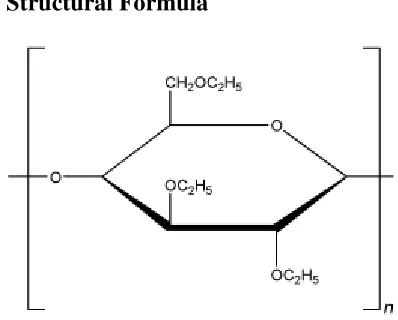
Ethyl cellulose, an ethyl ether of cellulose, is a long-chain polymer of β-anhydroglucose units
Structural Formula
Functional Category: Coating agent; flavoring fixative; tablet binder; tablet filler;
viscosity-increasing agent.
Description: Ethyl cellulose is a tasteless, free-flowing, white to light tan-colored powder.
Applications in Pharmaceutical Formulation or Technology: Ethyl cellulose is widely used in
[image:58.612.69.268.78.238.2]oral and topical pharmaceutical formulations;
Table 6 : Uses of Ethyl cellulose.
Use Concentration (%)
Use Concentration (%)
Sustained-release tablet coating 3.0–20.0
Tablet coating 1.0–3.0
Tablet granulation 1.0–3.0
The main use of ethyl cellulose in oral formulations is as a hydrophobic coating agent for
tablets and granules. Ethyl cellulose coatings are used to modify the release of a drug, to
mask an unpleasant taste, or to improve the stability of a formulation; for example, where
granules are coated with ethyl cellulose to inhibit oxidation. Modified-release tablet
formulations may also be produced using ethyl cellulose as a matrix former.
Ethyl cellulose, dissolved in an organic solvent or solvent mixture, can be used on its own
to produce water-insoluble films. Higher-viscosity ethyl cellulose grades tend to produce
stronger and more durable films. Ethyl cellulose films may be modified to alter their
solubility, by the addition of hypromellose or a plasticizer; An aqueous polymer
dispersion (or latex) of ethyl cellulose such as Aquacoat ECD (FMC Biopolymer) or
Surelease (Colorcon) may also be used to produce ethyl cellulose films without the need
Drug release through ethylcellulose-coated dosage forms can be controlled by diffusion
through the film coating. This can be a slow process unless a large surface area (e.g.
pellets or granules compared with tablets) is utilized. In those instances, aqueous ethyl
cellulose dispersions are generally used to coat granules or pellets. Ethyl cellulose-coated
beads and granules have also demonstrated the ability to absorb pressure and hence
protect the coating from fracture during compression.
High-viscosity grades of ethyl cellulose are used in drug microencapsulation.
Release of a drug from an ethyl cellulose microcapsule is a function of the microcapsule
wall thickness and surface area.
In tablet formulations, ethyl cellulose may additionally be employed as a binder, the ethyl cellulose being blended dry or wet-granulated with a solvent such as Ethanol (95%).
Ethyl cellulose produces hard tablets with low friability, although they may demonstrate
poor dissolution.
Ethyl cellulose has also been used as an agent for delivering therapeutic agents from oral
(e.g. dental) appliances.
In topical formulations, ethyl cellulose is used as a thickening agent in creams, lotions, or gels,
providan appropriate solvent is used. Ethyl cellulose has been studied as a stabilizer for
4.4.2. Hypromellose
Nonproprietary Names:
• BP: Hypromellose
• JP: Hydroxypropylmethylcellulose
• PhEur: Hypromellosum
• USP: Hypromellose
Synonyms:
Benecel MHPC; E464; hydroxypropyl methylcellulose; HPMC; Methocel; methylcellulose
propylene glycol ether; methyl hydroxypropylcellulose; Metolose; Tylopur.
Chemical Name:
Cellulose hydroxypropyl methyl ether
Empirical Formula and Molecular Weight:
Hypromellose defined in the USP 28 specifies the substitution type by appending a four-digit
number to the nonproprietary name: e.g., hypromellose 1828. The first two digits refer to the
approximate percentage content of the methoxy group (OCH3). The second two digits refer to the
approximate percentage content of the hydroxypropoxy group (OCH2CH(OH)CH3), calculated
on a dried basis.. Molecular weight is approximately 10 000–1 500 000. The JP 2001 includes
three separate monographs for hypromellose: hydroxypropylmethylcellulose 2208, 2906, and
Structural Formula:
Where R is H, CH3, or CH3CH(OH)CH2
Functional Category:
Coating agent; film-former; rate-controlling polymer for sustained release; stabilizing agent;
suspending agent; tablet binder; viscosity-increasing agent.
Applications in Pharmaceutical Formulation or Technology:
Hypromellose is widely used in oral, ophthalmic and topical pharmaceutical
formulations.
In oral products, Hypromellose is primarily used as a tablet binder, in film-coating, and as
a matrix for use in extended-release tablet formulations. Concentrations between 2% and
5% w/w may be used as a binder in either wet- or dry-granulation processes.
High-viscosity grades may be used to retard the release of drugs from a matrix at levels of 10–
80% w/w in tablets and capsules.
film-coating solutions, while higher-viscosity grades are used with organic solvents. Examples
of film-coating materials that are commercially available include AnyCoat C, Spectracel,
and Pharmacoat.
Hypromellose is also used as a suspending and thickening agent in topical formulations.
Compared with methylcellulose, hypromellose produces aqueous solutions of greater
clarity, with fewer undispersed fibers present, and is therefore preferred in formulations
for ophthalmic use. Hypromellose at concentrations between 0.45–1.0% w/w may be
added as a thickening agent to vehicles for eye drops and artificial tear solutions.
Hypromellose is also used as an emulsifier, suspending agent, and stabilizing agent in
topical gels and ointments. As a protective colloid, it can prevent droplets and particles
from coalescing or agglomerating, thus inhibiting the formation of sediments.
In addition, hypromellose is used in the manufacture of capsules, as an adhesive in plastic
bandages, and as a wetting agent for hard contact lenses. It is also widely used in
cosmetics and food products.
Description:
Hypromellose is an odorless and tasteless, white or creamy-white fibrous or granular powder.17,18
4.4.3.IPA
Nonproprietary Names:
• BP: Isopropyl alcohol
• PhEur: Alcohol isopropylicus
• USP: Isopropyl alcohol
Synonyms:
Dimethyl carbinol; IPA; isopropanol; petrohol; 2-propanol; sec-propyl alcohol.
Chemical Name:
Propan-2-ol
Empirical Formula and Molecular Weight:
C3H8O,60.1
Structural Formula:
Functional Category:
Applications in Pharmaceutical Formulation or Technology:
Isopropyl alcohol (propan-2-ol) is used in cosmetics and pharmaceutical formulations
primarily as a solvent in topical formulations. It is not recommended for oral use owing
to its toxicity;
Although it is used in lotions, the marked degreasing properties of isopropyl alcohol may limit its usefulness in preparations used repeatedly. Isopropyl alcohol is also used as a
solvent both for tablet film-coating and for tablet granulation, where the isopropyl
alcohol is subsequently removed by evaporation. It has also been shown to significantly
increase the skin permeability of nimesulide from carbomer 934.
Isopropyl alcohol has some antimicrobial activity and a 70% v/v aqueous solution is used as a topical disinfectant. Therapeutically, isopropyl alcohol has been investigated for the
treatment of postoperative nausea or vomiting.
Description:
Isopropyl alcohol is a clear, colorless, mobile, volatile, flammable liquid with a characteristic,
spirituous odor resembling that of a mixture of Ethanol and acetone; it has a slightly bitter
taste.17,18
4.4.4. PEG
Nonproprietary Names:
• BP: Macrogols
• Macrogol 1500
• Macrogol 4000
• Macrogol 6000
• Macrogol 20000
• PhEur: Macrogola
• USPNF: Polyethylene glycol
Synonyms:
Carbowax; Carbowax Sentry; Lipoxol; Lutrol E; PEG; PluriolE;polyoxyethylene glycol.
Chemical Name:
α-Hydro-ω-hydroxypoly(oxy-1,2-ethanediyl) [25322-68-3]
Empirical Formula and Molecular Weight:
HOCH2(CH2OCH2)mCH2OH where m represents the average number of oxyethylene groups.
Alternatively, the general formula H(OCH2CH2)nOH may be used to represent polyethylene
glycol, where n is a number m in the previous formula + 1.
The number that follows PEG indicates the average molecular weight of the polymer.