EUROPEAN COMMISSION
RESEARCH DIRECTORATE-GENERAL
Directorate A : Coordination of Community activities Planning, programming, evaluation
MONITORING 2004
IMPLEMENTATION OF ACTIVITIES
UNDER THE EC AND EURATOM FRAMEWORK
PROGRAMMES AND CORRESPONDING SPECIFIC
INDEX TABLE
Monitoring 2004 – Implementation of activities under the EC and Euratom Framework Programmes and corresponding specific programmes.
Part A: Report of the 2005 External Expert Panel……….3
Part B: Response of the Programme Management to the External Monitoring
MONITORING 2004
IMPLEMENTATION OF ACTIVITIES
UNDER THE EC AND EURATOM FRAMEWORK
PROGRAMMES AND CORRESPONDING SPECIFIC
PROGRAMMES
PART A:
REPORT OF THE 2005 EXTERNAL EXPERT PANEL
TABLE OF CONTENTS
1. Executive summary...5
2. Mandate and approach ...8
3. Review of new initiatives...9
3. 1 Technology Platforms ...9
3. 2 ERA Nets ...10
3. 3 Research infrastructures...12
3. 4 NEST / FET ...12
3. 5 Marie Curie enlarged in FP6...13
4. Implementation Process – EC at work...16
4.1 Interpretation of new instruments ...16
4.2 New selection mechanisms ...17
4.3 Annual review of new instruments ...18
4.4 IT tools ...19
5. Participation of Actors ...20
5.1 International S&T cooperation – INCO partner countries...20
5.2 Involvement of SMEs ...22
5.3 New member states ...23
6. Evaluation ...25
6.1 Ex ante impact assessment...25
6.2 Reshaping the evaluation process ...26
Annex I...28
A.1 Interviews of Commission services by the Panel...28
A.2 List of reports / documents consulted by the Panel...29
Annex II ...35
FP6 – an instrument for balancing R&D spending in the member states? ...35
Members of the Panel:
Chair Prof. Christoph Mandl, University of Vienna, Austria; Director of Mandl, Luethi & Partner
Rapporteur Prof. Claudia Pahl-Wostl, University of Osnabrück, Germany Members Prof. Maria Calzarossa, University of Pavia, Italy
Prof. Stavros Ioannides, Panteion University, Athens, Greece
Dr. Karel Klusacek, Technology Centre AS CR, Prague, Czech Republic Prof. Philippe Laredo, Ecole Nationale des Ponts et Chaussées, France, and University of Manchester, UK
1. Executive summary
In 2004 the Research Framework Programmes (FPs) had their 20th anniversary. From their inception in 1984 until now, with the Sixth Framework Programme (FP6), the FPs enjoyed steady growth and might, if present intentions for the Seventh Framework Programme (FP7) become true, experience even higher growth in the future. The record of the FPs is truly astounding. What was inconceivable when the European Union (EU) was founded is now daily practice in the European RTD community: enterprises, universities and research institutions from all member states collaborate with great ease to create new scientific and technological knowledge for the good of society.
Competition for scarce resources paired with collaboration creates – as we know from evolution – a hotbed where innovation can flourish. The fundamental concepts of FPs have been highly successful not only through their continuous enabling of RTD hotbeds on a European scale but also as role models for member states’ RTD programmes. The firm establishment of competition and collaboration within the emerging European Research Area (ERA) through today’s FP asks for enormous learning efforts from researchers and involved institutions alike. In particular, the invention of new instruments to enable RTD endeavours of a size and complexity rarely found in Europe before FP6 has caused (and is still causing) some stress due to the major shifts it has required actors to take along learning curves. This is a good sign, indicating the positive effect FP6 is having on learning and innovation.
So successful has FP6 been so far that in some areas the competition for funding has far exceeded the availability of funds. However, competition for funding is only stimulating up to a certain level. If this threshold is passed, actors might retreat and possibilities could be lost. The Panel shares the Commission’s concern about oversubscription and welcomes all activities to overcome it.
Although the FP has matured and is now the single largest source of RTD funding in Europe, it is reassuring to find that it has not lost its ability to be innovative and create new initiatives. However, with the continuous growth and new initiatives comes an obligation to learn continuously from past experience. Apart from the five-year assessment, annual monitoring is at present the main institutionalized learning exercise and this report covers the lessons learned from monitoring FP activities carried out in the year 2004.
In 2004, implementation of FP6 reached a steady pace and intensive preparations for FP7 were under way. Thus, the Panel considered not only issues relating to implementation of FP6 but also emerging issues concerning implementation of FP7. Taking up a recommendation of the 2003 Monitoring Panel, the 2004 Panel looked more at effectiveness than at efficiency. The issues that emerged as being particularly relevant for the years to come were identified by the Panel as coming into the following areas:
– New Initiatives
– Implementation Process – Participation of Actors – Evaluation.
On these issues, the Panel proposes the following recommendations: Crosscutting issues
scale. For Technology Platforms and ERA Nets, the Panel considers that systematic analyses of their dynamics might prove insightful.
New Initiatives
2) Technology Platforms, which gather stakeholders led by industry, seem to have become an important route for emergence of new research priorities. It is thus essential that there are clear “rules of the game” for the process of recognising a Technology Platform as such.
3) ERA Nets emerge as an instrument for enlarging institutional cooperation between member states beyond the remit and scope of the FPs. This dynamic should be maintained and even enlarged in FP7. However, confining support for ERA Nets to the thematic priorities of the Cooperation programme might endanger this dynamic. Thus, the Cooperation programme should include a horizontal line dedicated to “institutional cooperation between member states”. 4) From their enthusiastic take-up, it is clear that researchers hold the FPs’ FET and NEST
initiatives in high esteem. This drives the Panel to recommend strongly that both the thematic priorities of the Cooperation programme and the Ideas programme should develop specific NEST-like activities for areas of new and emerging science and technology, fostering in particular the interdisciplinary approaches that the FPs have proved to be successful for achieving innovation.
5) Despite the big efforts made, there are still different views and approaches to the definition and implementation of Networks of Excellence (NoEs). Thus, even more effort is required to establish a common view of NoEs. In addition, a systematic review of the dynamics of the whole process of implementing NoEs needs to be undertaken. Also, preliminary returns from the first annual reviews show that further work should be done on the methodology used to measure the degree of integration of NoEs.
Implementation Process
6) The use of remote individual assessment of proposals should be maintained and increased wherever feasible. This approach should make it easier for independent experts of high international calibre to participate in proposals evaluation.
7) A tighter link between the overall planning and implementation of the FPs and IT tools development should be established. Workflows, procedures and standard reporting used by Units within and across DGs should be analyzed to achieve a better integration. Additionally, to support the new approach proposed by the Commission for programme evaluation in FP7, appropriate IT tools for data mining and decision support systems could be designed well in advance.
Participation of Actors
8) Budgets for the part of the INCO programme handled under thematic priorities should be clearly earmarked as such and publicised better to scientific officers and researchers. It would be useful to establish a more efficient means for exchange with the INCO programme for projects implemented under thematic priorities. It would also be helpful to integrate international cooperation objectives into the evaluation criteria used for proposals evaluation.
Evaluation
9) Potential users should be involved in the process at an early stage. Impact assessments based on statistical analyses give little insight without more in-depth analyses; it could be useful to investigate and report individual examples of successes and failures in more depth.
evaluation of the past FP), the Panel recommends that the ex-post evaluation should be conducted in two steps. This would allow the Commission to prepare relevant analyses for step two on problem areas identified in step one. Further, the mid-term review should include specific studies on the new initiatives developed by the ongoing FP. To prepare the ex-post evaluation of FP6, research on methodologies and horizontal studies should be launched at the latest in 2006.
As with any executive summary, this one cannot incorporate all the insights, comments and lessons laid out in the monitoring report. The Panel thus urges you to take time to read the whole report, especially as this should take little more than half an hour. The FP certainly deserves that much time being spent on what can be learned from 2004.
2. Mandate and approach
This report reviews implementation of the FPs in 2004. In that year implementation of FP6 reached a steady pace and intensive preparations for FP7 were under way. The report makes recommendations on issues of implementation of the remaining part of FP6 up to 2006 and suggests improvements on emerging issues related to FP7.
The 2004 monitoring was carried out by a panel of seven independent, high level experts (referred to as the Panel in this report) from a range of fields in science, technology and the social sciences and coming from different member states. The Panel undertook its assessment on the basis of a comprehensive and extensive range of evidence organised for the exercise. This included: self assessments produced by the services; analyses by independent experts; presentations from Commission staff; and a database of evaluation and implementation documents. Panel members also undertook their own research and data gathering including interviews with Commission staff. Full lists of the documentation and information used by the Panel are in Annex I.
The Panel carried out its work between June and August 2005 and held four one- or two-day meetings in Brussels.
Follow up of recommendations of the 2003 monitoring report
The 2003 Monitoring Panel recommended that future monitoring exercises should be supported by a concise table of expected and observed proposal-related workflows. Such information was not available at the time of the 2004 monitoring exercise. However, the Panel acknowledges the Commission’s efforts in setting up a taskforce on “Rationalisation and acceleration of Framework Programme implementation”.
In its analyses and choice of specific topics the Panel took into consideration the recommendation of the previous panel that the focus of monitoring should shift from efficiency towards the effectiveness of FP6 in terms of achievements and outcomes. Further, significant attention was devoted to evaluation and assessment as suggested by the 2003 monitoring report.
The Panel has no further recommendations related to the Commission’s response to the 2003 monitoring report.
Focus of the work of the Panel
Following its mandate to monitor the follow-up of prior recommendations, the self assessments by services, and the achievements of the implementation of the FPs, the Panel decided to report its findings on the basis of the issues that emerged in 2004 as being particularly relevant for the years to come. Several such overarching issues were identified and grouped into four major thematic areas:
3. Review of new initiatives
The main objective of FP6 is to contribute to creation of the ERA by improving the integration and co-ordination of research in Europe which till now has largely been fragmented. At the same time, research should be targeted at strengthening the competitiveness of the European economy, solving major societal questions and supporting the formulation and implementation of other EU policies. To achieve these objectives, new initiatives have been launched by the Commission and stakeholder groups. The Panel decided to focus on Technology Platforms, the ERA Net scheme, research infrastructures, the NEST and FET initiatives, and new developments in Marie Curie actions. These, between them, address some topics key to establishment of the ERA:
- fostering exchanges between industry and other stakeholders in key areas of technical interest
- encouraging coordination of initiatives of the member states - sharing knowledge and research facilities across Europe
- detecting at an early stage innovative research topics and European capacity to address them - promoting mobility of researchers, especially at the early stage of their career, across the
ERA.
3. 1 Technology Platforms
Technology Platforms are a new concept while not being a formal instrument of the FP. The overall approach is that stakeholders, led by industry, get together to define a Strategic Research Agenda on a number of important issues with high societal relevance. Although the oldest Technology Platforms were launched three or four years ago, the bulk of activity in this area took place in 2004. Over twenty Technology Platforms have now been launched. The Panel identified four main foci: (i) frontier RTD (e.g. nano-medicine, hydrogen and fuel cells, nano-electronics); (ii) high tech industries (e.g. aeronautics, space, mobile and wireless communications, embedded computing systems); (iii) infrastructures and environment (e.g. transport, water, sustainable chemistry, animal health); and (iv) classical industries (e.g. steel, textiles, construction).
The Commission services envisages three stages to the development of a Technology Platform1: 1) stakeholders, with industry in the lead, get together around a vision statement that identifies
clear challenges
2) broad consultation process to define a Strategic Research Agenda (SRA) 3) implementation of the SRA.
The longer-established Technology Platforms, e.g. aeronautics and hydrogen and fuel cells, have already gone through the first two stages. Regarding the third stage, the Panel considers that the Technology Platform’s role in implementation of the SRA is not clear – whether it will be to provide a place for fostering alliances and consortia and/or be an operator for certain activities. The latter would raise the issue of a platform’s legal status.
The Commission services see their role as one of encouraging, guiding, occasionally providing limited funding for a Secretariat, and (in the third stage) funding collaborative research projects where appropriate. The Commission services believe that the Technology Platforms have already had a strong impact on the definition of FP7 (especially on the Cooperation Programme) and this
1 See the following reports compiled by a Commission Inter-Sevice Group on Technology Platforms: EUR 21256 –
was reinforced by anecdotal evidence gathered by the Panel. It is hoped that this will lead to increased industrial participation in FP7 via the main collaborative research instruments. In addition, a new mechanism is to be introduced in FP7 which will enable coherent, large-scale structures (Joint Technology Initiatives – JTIs) to be set up to support the implementation of those parts of some SRAs that are ambitious enough to require mobilisation of big public and private investments and large material and human research resources.
Comments of the Panel
The significant take-up of the approach by stakeholders in 2004 shows that Technology Platforms can turn into an important support mechanism for the emergence and formalisation of future research priorities. In this respect the Panel has three major comments:
There appears to be de-facto recognition by Commission services of given platforms through their inclusion on the CORDIS website. But there is, apart from the application of a set of very general principles, no established process for this de-facto recognition. The Panel considers that, if the Commission wishes to continue to use Technology Platforms as important routes for the emergence of new research priorities, there should be clear “rules of the game” for the recognition process. The Commission should also consider whether a small budget line should be established to help, solely through Specific Support Actions(SSAs), those platforms that do not fit into current FP priorities.
The Commission highlights the fact that Technology Platforms are industry-led. This might address a present-day priority, but there is no reason why only industry should develop visions and be faced with research challenges. Hospitals, cities, development agencies and utilities at large are also concerned and could be active promoters of Technology Platforms. These actors might well be covered already under the present definition, but this was not visible from the documentation given to the Panel or the interviews made. The approach would thus benefit greatly from clarification and probably also from a wider definition of promoters to include, for instance, those actively involved in supply of public services. As for any new initiative, an important learning phase has to be undergone to delineate the
different types of platforms and identify key success factors or critical turning points in their dynamics. Meetings between promoters have taken place to share experiences and good practices. The Panel considers that a more systematic analysis of the dynamics of the current platforms would be useful in nurturing the learning process and shaping it in a form useful to new promoters.
3. 2 ERA Nets
ERA Nets have been presented as standing between the coordination of policies and cooperative projects. They focus on coordination of national research programmes and “operators”. The “clients” of the action are ministries, funding agencies and research organizations.
Up to June 2005, there have been four successive cut-off dates under an open call with a total of 110 M€ of support granted. Up to the third cut-off date, support could be requested either for the initial phase of exploration and definition of the ERA Net only (via an SSA) or for establishing the ERA Net’s strategic plan and initiating joint activities, in particular “joint calls” (via a Concerted Action (CA)). The fourth cut-off date requested proposals for CAs only.
For ERA Nets, the normal peer reviewing process has been adapted to take account of the specific nature of the activities: the peers are other “research managers” (selected from fields other than that of the proposal) complemented by an expert in the field covered by the proposal.
for SSA proposals was 37% and for CA proposals 52%. On average, a selected ERA Net involved 14 participants and 11 countries.
The Commission classifies ERA Nets into broad themes. Life sciences, environment/energy and industrial technologies/IT have roughly similar numbers of ERA Nets while social sciences and humanities and fundamental research have rather less. However, this approach does not aid the understanding of the underlying dynamics of ERA Nets. A very preliminary categorisation highlights five main types, which:
1. coordinate wide research fields (e.g. social sciences, humanities, chemistry, materials or marine research)
2. build specialities at EU level (e.g. plant genomics, functional genomics, bio-energy, catalysis research, complex systems research)
3. focus on research on specific ‘collective problems’ (e.g. infectious diseases, rare diseases, cancer clinical practice, flood management)
4. coordinate sector-driven technology (e.g. space, transport, wood, construction)
5. address horizontal issues in research and innovation (e.g. women in science, coordination of bilateral cooperation with specific third countries, science awards, foresight, science education, support to SMEs).
When discussing the relationship of the selected ERA Nets with FP6 priorities, the Commission services considered that 80% did not fall in any clear FP6 category, none corresponded to any bullet point of the FP6 work programmes, and quite a number were not expected at all.
In a few cases (e.g. hydrogen fuel cells, aeronautics), the ERA Net exists alongside a Technology Platform, acting as both a support to the functioning of the platform and a complementary approach to coordinate member state public interventions.
Comments of the Panel
Coordination of policies between member states has always been a challenge. Although it is too early to analyse effective dynamics, it is clear that the ERA Net concept is attractive and drives “research operators”2 to gather together “bottom-up” and enter into the process of sharing information, practices and, we hope, resources. This Panel has two major comments:
ERA Nets respond to the longstanding quest for a means of extending cooperation beyond the themes covered by the FP priorities. It is thus important to continue the experience in FP7 at a sufficiently significant level. The inclusion of a new incentive in ERA Net+ (where the Commission tops up member states’ funding of “joint calls”) will probably increase the attractiveness of the instrument, thus providing a pragmatic and effective means of building the ERA in public sector research. However, this will only take place if the scope of the instrument is not restricted to established FP7 priorities. The thematic variety observed so far (which extends far beyond the FP6 priority areas) calls for expanding the present FP7 proposal (which sees the ERA Net solely as an instrument mobilised by the thematic priorities) and including a specific “horizontal line” within the Cooperation programme for “operator or institutional cooperation”.
Even more than with Technology Platforms there is a need with ERA Nets to share experience and lessons learned about key steps, common pitfalls and success factors. The large number of ERA Nets calls for more than the informal accumulation of knowledge by
2 The term was created during the 1980s by Robert Chabbal in his report about the organisation of the evaluation
programme managers or monitoring panels. It calls for establishment of an “observatory” that could also act as a space for provision of advice for promoters and coordinators.
3. 3 Research infrastructures
Within the scope of the Community action, the term “research infrastructures” refers to facilities that provide essential services to the scientific community for basic or applied research. They may concern any of the whole range of scientific and technological fields, from astronomy to social sciences (an area largely neglected previously as far as research infrastructures are concerned) through genomics or nanotechnologies. Examples of research infrastructures include libraries, databases, biological archives, clean rooms, communication networks, synchrotrons, accelerators, telescopes. They may be single-sited, distributed, or virtual. Research infrastructures are essential tools for the development of leading-edge scientific and technological research in Europe. By attracting users from various countries and through networking they integrate and structure the scientific community and play a major role in the construction of the ERA.
The calls for proposals published so far under FP6 have attracted large numbers of proposals in a wide range of fields. The total funds requested were much greater than the financial resources available. So far, calls for proposals have been through a bottom-up approach. Call 4 covered Design Studies and Construction of New Infrastructures and closed in March 2004; it resulted in 121 evaluated proposals. Call 5, on Transnational Access and Integrating Activities, closed in March 2005 with 145 proposals.
In 2003, the Commission established the European Strategy Forum on Research Infrastructures (ESFRI). In September 2004, ESFRI began preparations for development of a European roadmap for new large-scale research infrastructures. So far, a “list of opportunities” comprising 23 research infrastructure projects has been developed.
Comments of the Panel
Sharing expensive infrastructure and using complementary facilities can increase the competitiveness of the ERA and support capacity building.
The Panel recognizes the need to develop a vision and roadmap for research infrastructures in Europe for the next 10 to 20 years. In this context, ESFRI should play an important role. However, although the need for a strategic approach is undisputed, the Panel is also aware
that processes of filtering tend to favour well-established research areas to the disadvantage of recent and emerging scientific topics. Thus it is important that the bottom-up approach be maintained by, for example, increasing the scope and number of feasibility study actions. Organising knowledge in public web-based archives open to all citizens should be
encouraged and receive support as a particularly cost-effective way of combining opportunities for international cooperation in support of a strengthened science infrastructure with a legitimate modus operandi that ensures high public support.
3. 4 NEST / FET
In both these initiatives, the research areas supported can be determined by researchers who can submit proposals of any topic using a bottom-up approach, as in NEST-Adventure, NEST-Insight and FET-Open. Alternatively, they can be predefined in the calls using a top-down approach as in NEST-Pathfinder and FET-Proactive. NEST-Pathfinder focuses on topics determined in consultation with the scientific community. Similarly, FET-ProActive focuses on a small number of strategic areas identified after consultation with relevant scientific and technological communities and research associations like ERCIM. Both initiatives encourage interdisciplinary and innovative research.
It is worth noting that FET and NEST have supported activities that ended up in the mainstream programmes. Examples are nano-electronics, quantum computing, mathematics, pervasive computing.
NEST uses traditional instruments only, whereas FET uses both traditional and new instruments. Open call research proposals follow a two-stage submission and evaluation process. The evaluation starts with remote assessment of outline proposals, typically consisting of few pages, followed by assessment of a reduced number of full proposals. Despite the open nature of the calls, oversubscription has not been too high and the overall success rate has been in the acceptable range for up-stream research of around 10%.
FET-Proactive initiatives are implemented through the new instruments and evaluation of the proposals is based on remote assessment followed by a consolidation meeting and project hearings in Brussels.
Comments of the Panel
The Panel recognizes the importance of initiatives like NEST and FET for the development of new scientific knowledge and technological capabilities with very high potential impact. It suggests that they be given a higher visibility within the Commission for strategic considerations.
The Panel supports the idea of including new and emerging science and technology in the next FP in each thematic priority area of the Cooperation programme (as has been the case for FET in the present and previous FPs) as well as in the Ideas programme implemented by the European Research Council.
3. 5 Marie Curie enlarged in FP6
Due to the numerous new developments introduced in FP6 Marie Curie Actions and the recognised importance of research training for the ERA, the Panel decided to devote a specific section to this theme in its review of new initiatives. The panel was struck by two main aspects which are considered separately below: the very high oversubscription rate of the different incentives supporting mobility; and the important activities devoted to framing an adequate European environment.
Framing the European environment for mobility
Mobility requires an adapted institutional framework and “generic infrastructures” that support it. Establishment of these is an important task of the Directorate in charge of Human resources, mobility and Marie Curie actions.
As pointed out by the Commission, the main 2004-2005 policy developments are the Directive and recommendations on entry and residence of third country researchers, and adoption of the European researchers’ charter and the code of conduct for the recruitment of researchers.
researchers and their families relating to their mobility experience), and preparatory work for the ERA-link network of EU researchers working in the US.
There have also been important awareness activities, with the 2005 awareness campaign (the call for proposals selected 29 projects), the first European researchers’ night (planned for 23 September 2005), the second Marie Curie week in Warsaw (during which the Marie Curie awards were presented), the 2004 Paris conference on “brain drain, brain gain”, two documentaries on the researcher’s profession (with ARTE), and the preparation of a television series expected for 2006. Finally, the Commission has given IPTS a contract to develop a methodology for measuring researchers’ flows and the role of mobility in career paths. These developments are critical for the future.
Incentives to increase researchers’ mobility
Although the funds allocated to mobility were increased in FP6, the increase does not match demand, as witnessed by a rate of increase in proposals received of 70-80% for all the major Marie Curie instruments. As a result, success rates are low – around 7% for training networks, host fellowships for early stage training (EST) and excellence grants, and between 12% and 15% for individual fellowships including chairs. Only the new initiatives have better rates: 24% for host fellowships for transfer of knowledge and >90% for reintegration grants.
The Commission considers that, to diminish pressure, it should target the calls more and take some restrictive measures concerning eligibility. The latter – even if they are useful in, for instance, preventing one individual from submitting five different applications for a fellowship – are of marginal impact and only for the short-term. Other solutions tested this year have been to merge the two EST calls into one and to restrict one of the research training networks calls to inter-sectoral and multi-disciplinary projects, thus reducing the number of applications. In addition, the 2005 deadlines for EST and RTN have been brought close together, which could reduce proposal numbers since many consortia have in the past posted multiple near-to-similar applications to the different annual calls. The problem however remains: bearing in mind the very limited share of on-going “early stage researchers” covered by the present scheme, the pressure can but increase for a number of years. Even the tripling of the budget in FP7 might not be enough to arrive at the 20% success rate considered acceptable by the Marie Curie advisory board. The Directorate considers that at current budget levels it cannot provide support for all types of mobility. Rather, its role has to be one of setting the scene and providing relevant benchmarks, which means that systematic implementation is the remit of member states.
Whatever the viewpoint, the Directorate will be faced with a continuous increase in the numbers of activities it has to handle in the future. It is thus critical for it to focus on administrative implementation. To overcome long times-to-contract, the Directorate has been reorganized to achieve better balance, all individual actions being pooled together. It is also worth noting that the Marie Curie initiatives are at the forefront in using IT tools for remote evaluation. The Panel recognizes that all these steps are important starting points for coping with the present situation. Comments of the Panel
The Panel considers that support of training activities and, therefore, capacity building is a priority for establishment of the ERA.
The Panel recognizes the important role of the Commission in establishing a shared European framework for research training and suggests that the ex-post evaluation of FP6 considers these activities specifically as part of their overall analysis.
Commission should be given sufficient budget to ensure broader coverage of mobility for researchers.
4. Implementation Process – EC at work
During the implementation of FP6 some difficulties were encountered, especially during the initial phases where experience with new instruments had to be gained. The Commission reacted to this experience and to the recommendations of previous monitoring panels. Therefore, the present Panel focused in particular on two aspects: the performance of new measures undertaken to rationalise and accelerate project selection and implementation; and the role of IT tools in the different stages of the implementation process. The annual management plans of the Directorates-General were consulted on specific topics; the Panel felt these were useful sources but found it difficult to locate relevant information in them.
4.1 Interpretation of new instruments
FP6 was designed with the explicit purpose of contributing to the creation of the ERA. To this end, it introduced novel instruments – notably, Integrated Projects (IPs) and Networks of Excellence (NoEs) – aimed at providing a powerful structuring effect and reducing fragmentation of research efforts and capacities in Europe. In addition, new approaches to facilitating the implementation of these instruments were introduced. These were intended to achieve a move from ex ante to ex post
control by the Commission, greater autonomy and flexibility in the management of projects by the participants, and simpler financial and administrative rules compared to previous FPs. Much effort has been spent providing explanations of the purpose and modalities of the new instruments, but a number of start-up problems did occur. The massive response to the first calls for proposals resulted in higher-than-expected oversubscription, creating disappointment in unsuccessful applicants. Based on the experience of its own services and input from proposers, Programme Committees and other stakeholders, the Commission started implementing corrective measures, which contributed to alleviating the situation in the subsequent round of calls.
Many of the corrective measures introduced by the Commission were in line with the recommendations of the Marimón panel of high-level experts entrusted with carrying out a mid-term review of the impact of the new instruments. In its Communication published in August 2004, the Commission welcomed the main conclusions of the Marimón report and gave details of the corrective measures already taken or to be taken in the future in response to the report.
Scientific officers and contractors together put a great deal of effort during 2004 into establishing the NoEs funded from the first FP6 calls – particularly their Joint Programmes of Activities. However, it is apparent that different Directorates and Units still have different perspectives of what constitutes an NoE.
During 2004, programme managers in individual thematic priority areas refined their concept of the particular role they expect each instrument (IP, STREP, NoE, etc.) to play.
Comments of the Panel
The Panel suggests that even more effort should be put into establishing a common view of NoEs. Additionally, it seems that a more systematic review of the dynamics of the whole process of implementing NoEs is needed.
The Panel suggests that, in attempting to simplify matters in FP7 by removing the legal distinction between IPs and STREPs, care should be taken that the different concepts associated with the current IP and STREP instruments should not be lost.
The Panel recommends that more flexibility be permitted in the handling of instruments to allow them to respond to different requirements, such as different sizes and kinds of project, or the needs of growing research fields such as social sciences or interdisciplinary research. Despite progress, participation in FP6 remains complex for non-administrators and, in
particular, smaller actors. Further simplification and rationalisation is a conditio sine qua non. In this context, the proposal for FP7 represents both an opportunity and a challenge.
The Panel therefore greatly welcomes the establishment of a Commission inter-services working group to bring forward proposals for simplification under FP7 and the set up of the Sounding Board of smaller actors with the aim of removing or reducing the barriers faced by small players participating in FP7.
4.2 New selection mechanisms
FP6 introduced as major new instruments IPs and NoEs. A two-stage proposal process has been used in a number of thematic areas for IPs, NoEs and, in a few cases, for STREPs. A major reason for introducing two-stage evaluation for IPs and NoEs was to reduce the workload for proposers and improve the quality of full proposals. However, apart from anecdotal evidence, it is not clear if these goals have really been achieved. Some coordinators consider preparing a first-stage proposal to be nearly as much work as preparing a full proposal. Other problems have arisen from lack of continuity in the evaluation process. In some cases not a single member of the evaluation panel for the first-stage evaluation participated in the second stage. In a few cases this resulted in contradictory assessments of key elements of the research approaches chosen by proposers. The Panel cannot judge if the reported problems are exceptions since systematic analyses are not available. The Commission plans to continue the two-stage evaluation processes and to support submission formats for full proposals where the proposal text can be transferred directly to Annex I of the contract. This could speed up the negotiation process and reduce the time required for contract preparation.
A two-stage proposal evaluation process was also used for STREPs in FET and NET, to scan for innovative ideas. The high success rate in the second stage is a sign of the success of this procedure. Given the size of some of the large projects, the number of high-level European researchers involved in the application processes, and the ambitious nature of many programmes, it has been increasingly difficult to find independent experts of sufficient international calibre. Overall, it was reported that reviewers welcome remote individual assessment but prefer face-to-face meeting for reaching consensus. The Commission services noted that briefing new experts for remote evaluation is challenging and requires specific tools. It also reported that some stakeholders expressed concern about the potential lack of confidentiality associated with individual remote assessment.
Comments of the Panel
The Panel recognizes clear advantages of a two-stage evaluation process in case of large collaborative projects and networks and to screen innovative ideas in new emerging areas of research.
A certain degree of continuity in the membership of evaluation panels for first-and second-stage proposals should be ensured.
The Panel recommends that use of remote individual evaluation be increased, even though some stakeholders expressed concerns.
So far, experience of remote consensus is limited. The Panel expects that the use of the remote evaluation tool RIVET will enable further experience of remote consensus to be gained. This should be monitored to enable judgements to be made on the potential benefits, problems and areas of application.
4.3 Annual review of new instruments
The first-year reviews of the oldest FP6 projects are currently under way. In the majority of cases, the review is carried out by one or more peer reviewers with relevant expertise from the scientific community. The reviewers examine the first-year reports and financial information, make a site visit, and report to the Commission scientific officer. In general, the reviews are proving a success. The following points are worth noting:
- Project participants who have had review meetings seem to have found the experience valuable.
- Review of NoEs is proving particularly difficult. Reviewers are required to evaluate the degree of integration achieved by the network using a methodology based on a number of performance indicators. Interpretation of these indicators for a particular NoE takes a good deal of time on the part of the reviewer and scientific officer working together. The results are essentially subjective.
- Similarly, it is proving difficult to evaluate the financial information submitted by NoE contractors. The contract was negotiated on the basis of per capita information whereas the first year report breaks the information down by activity and contractor. It is therefore difficult to compare the actual data with the contract budget.
- The question as to whether contractors who have done no work in the first year are legally obliged to submit audit certificates needs to be resolved.
- It was reported that the time allocated to external experts for reading deliverables and reports of the project under review was not always sufficient.
- The rule that the reviews must be completed with 45 days of receipt of the contractors reports is proving difficult to meet and needs reassessing.
In one specific instance the Panel saw a different approach. In this case the review process was organized around a panel of external experts who prepare for the review at their own site and then meet in Brussels for a week, listen to the project presentations, ask questions and write the review reports with the recommendations about the continuation of the projects. This review process seems efficient in terms of time and mobilized resources.
Comments of the Panel
The Panel suggests that, when the current round of reviews has been completed, the efficiency and effectiveness of the procedure should be assessed.
The Panel found the “panel-based review procedure” compelling and recommends that information on this process be spread as a “good practice”, to be adopted when feasible. Further work should be done on the methodology to be used for measuring the degree of
As the effort needed to become familiar with an IP or NoE is typically large, any requirement to rotate experts should be reconsidered. It is advisable that the pool of experts who review a given project does not change (or only changes to a limited extent) during the lifetime of the project itself.
4.4 IT tools
IT tools which support the management and implementation of the FP currently serve five DGs with a large variety of needs and requirements. The activities across DGs and Units within DGs are organized in different ways and involve very different workflows. Hence, the design a single set of IT tools that suits all workflows is highly challenging.
In the design and development of IT tools, time and formal constraints often play a crucial role at the expense of reliability and innovation. Some tools (especially in their earlier versions) met with strong criticism from users within and outside the Commission because of bugs and poor usability. Moreover, tools developed early in the FP (e.g. CFP for contract management) did not always conform to the state-of-the-art in the IT field. More recently developed tools (e.g. RIVET for remote proposal evaluation) conform better.
Since the beginning of 2005, the Unit responsible for IT tools has devised more “acceptance tests” for the prototypes of the software tools being developed. These tests involve users from inside and outside the Commission. The objectives of these tests are to evaluate the design specifications of the tools and to assess the latter’s robustness and usability. Specific Commission staff are responsible for checking the functionality of the tools, whose development is contracted outside the Commission. The Panel was told that, despite the importance of these activities, not all of the five user DGs participate in the definition of the tool specifications and in the acceptance tests in a way recommended for effective IT-development.
Comments of the Panel
The Panel recognizes that the task of designing and implementing in a short period of time an integrated information system capable of addressing the heterogeneous workflows of Units in different DGs is complex and challenging. Nevertheless, the lack of an information system accepted by all the “actors” leads to inefficiencies (e.g. data inconsistencies) and waste of resources (when, e.g., different tools to perform the same task are developed by different Units).
A tighter link between the overall planning and implementation of the FP and IT tools development should be established. Workflows, procedures and standard reporting used by Units within and across DGs should be analyzed to achieve a better integration.
The Panel recognizes the key role played by acceptance tests to evaluate tools being developed and to identify possible corrective actions at earlier stages. These tests represent a useful vehicle to promote the use and acceptance of IT tools. They should be applied to a greater extent and involve a larger number of users.
5. Participation of Actors
One of the main measures of the success and effectiveness of FP programmes is the participation of major actor groups. The Panel decided to examine the involvement in the programme of three groups which are significant in establishing the ERA, strengthening the competitiveness of the European economy, and increasing Europe’s role in the global science and policy arena. These are the INCO partner countries, small and medium-sized enterprises (SMEs) and the new member states.
5.1 International S&T cooperation – INCO partner countries
The EC has long-standing experience of international S&T cooperation. This has evolved over more than 20 years into a constituent part of the FPs, being known as ‘INCO’ since FP4. Research priorities for international S&T cooperation sponsored by the Union, even when not clearly identified as such in the programme priorities, have been formulated through bi-regional dialogue or by reference to EU commitments in international negotiations such as the Kyoto Protocol, the Convention on Biological Diversity (CBD), the Millennium Development Goals (MDGs) and the Johannesburg Plan of Implementation (JPoI) adopted at the World Summit on Sustainable Development in 2002. Recognition of the continuum between education, life-long learning, research and innovation as a core factor for sustainable development is increasing and informs policy formulation in Europe and elsewhere.
Compared to previous programmes, a novelty of FP6 is a stronger emphasis on international cooperation in the Specific Programmes. Three major routes have been designed for international S&T cooperation, as follows.
1. The opening of the Specific Programme ‘Focussing and integrating Community research’ to third country organisations, with substantial funding. Through this, participation of third countries in the seven thematic priorities and the specific activities covering the wider field of research (e.g. policy support and SMEs) has been encouraged. The funded work is carried out from the perspective of European interest and/or contribution to global efforts. 285M € has been allocated for INCO partner countries’ participation.
2. Specific measures in support of international cooperation (INCO) based on mutual interest and benefit. The aim is to research issues from the perspective of contributing to problem-solving in the partner regions. 315M € has been allocated to this.
3. Support for international researcher mobility using both incoming and outgoing Marie Curie fellowships.
The total budget for international S&T cooperation through routes 1 and 2 is 600M €. To date, route 2 (the specific INCO programme) has spent its allocation as planned.
opening of FP6 to third country organisations (route 1 above), a number of the current Priority 6 projects have the goal of providing efficient knowledge and technology transfer between European and developing countries. Efforts are under way to increase coordination with support from the specific INCO budget line (route 2) and enhance effectiveness overall, seeking improved links between research and other international policies (RELEX, Development, Environment, Trade). The potential for strengthening Europe’s international political and economic impact is substantial. Despite the good intentions and potential prospects, however, there has been a general under-use of route 1 – the FP6 285M € budget for INCO target third countries’ participation in the thematic priorities. The problems were analysed by an internal Steering Group and an external pilot working group established at the request of the Programme Committee. The main reasons given for the under-spend were: lack of awareness; lack of information and trust on both sides; lack of research potential in third countries; IPR; an evaluation process that does not take account of international cooperation objectives; different administration and financial procedures. Unfortunately, the budget for opening the thematic priorities to international cooperation was not clearly earmarked as such and as a consequence part of the money initially targeted might have been allocated for other purposes.
The lack of success illustrates the need to integrate international cooperation objectives fully into proposals evaluation criteria. It also underlines the existence of a separation within the European research community between those researchers who have been working in the INCO programme and those who have mainly focused on research within thematic priorities from the normal European perspective. This suggests the need to involve in the programme as much as possible researchers able to integrate and balance the objectives and needs of the INCO programme and those of the thematic research priorities.
The guiding principles of the INCO programme are that the objectives of the project work programmes are determined together with the partner countries in the target regions, and that the benefits and profits from the research are shared equally. Mutual trust requires long-term partnerships and the need to build on past achievements. The establishment of long-term partnerships would benefit from more coordination at EU level. However, attempts to further increase the impact of cooperation with developing countries suffer from the lack of a coordinated foreign policy and a lack of common understanding of what constitutes good practice. As a result, good experience at the INCO projects and programme level has not been amplified – as would be desirable – through uptake in other policy areas with international dimensions, such as RELEX, Development, Environment, Trade, nor has upscaling so far taken place in the thematic priorities. Comments of the Panel
The Panel recognizes the need for the development of a plan for establishing collaborations and S&T exchange with third countries, particularly international cooperation partner countries (INCO target countries), which would guide and support individual projects and support the establishment of long-term collaboration and enduring relationships of mutual trust.
Budgets for INCO country participation in work handled under the thematic priorities should be clearly earmarked as such and publicised better to scientific officers and researchers.
It would be useful to establish a more efficient means for exchange with the INCO programme for projects implemented under thematic priorities, transferring to the latter the experience collected during years of successful international cooperation through INCO. International cooperation objectives and priorities should be fully integrated into the
It would be useful to strengthen the connections at policy and programme level between all aspects of international S&T cooperation in the RTD and other external policy areas (RELEX, Development, AIDCO, Environment and Trade), as suggested by an on-going INCO impact study expected to provide detailed analyses and recommendations.
5.2 Involvement of SMEs
The encouragement of SME participation in European research is a strong element of FP6, with the introduction of a new horizontal activity (Collective Research) and with the setting of a target of 15% of total funding for SMEs. The Panel made two observations on the current definition of SMEs adopted by the Commission. The first is that it includes all private for-profit and non-profit organizations, thus making it difficult to link the recorded SME rates of participation to actual industrial involvement in the thematic priorities of FP6. Secondly, the term SME is too broad to describe the technological status and the research capabilities of the relevant entities.
However, with regard to the second observation, the Panel was pleased to note that the FP7 proposal on SME specific measures targets both low to medium tech SMEs with little or no research capability and research-intensive SMEs in need of outsourcing research to complement their core research capability. This also clarifies the scope of the participation of research performing SMEs in the horizontal research activities involving SMEs.
In surveying SME actions during 2004, the Panel has focused on three topics: the horizontal activities of FP6; the thematic priorities; and the preparation for FP7.
The very high oversubscription rates during 2004 in Cooperative Research (CRAFT) and Collective Research horizontal activities testify to the interest that these programmes have generated among European SMEs and their Associations. This oversubscription has meant that only about 12% of proposals received funding. Given this wide interest, the Panel believes that there is need for specific impact assessment exercises to be carried out on the horizontal SME activities in FP6. As the Commission envisages a doubling of the budget for FP7, the Panel feels that it is important to know as early as possible what the relative impact of the various horizontal programmes has been so far.
In the thematic priorities of FP6, SME participation in 2004 was below the target of 15% of overall funding and the Commission is already taking actions to improve matters. There exist vast differences in SME participation rates among instruments, with STREPs being the SMEs’ instrument of choice. The Panel still cannot be sure whether the difficulty of SMEs with the new instruments is a structural problem or whether we are still in the middle of a learning process, in which SMEs may gradually be getting acquainted with the new instruments. If the latter is the case, it is important to define more effective ways to encourage SME participation in IPs as already initiated under the thematic priorities of FP6.
Comments of the Panel
To ensure efficiency and effectiveness of measures taken to increase SME involvement, the Panel has three comments:
Impact assessment of horizontal activities in FP6 must be conducted in 2005, as it may prove of great value in designing future research policy towards the strengthening of the innovation capacity of SMEs.
As the Commission is already implementing SME IPs, it is important to be able to assess the experience of these IPs as early as possible.
Extra care must be taken to ensure good coordination between operational management and strategic considerations if third parties are involved in managing project implementation.
5.3 New member states
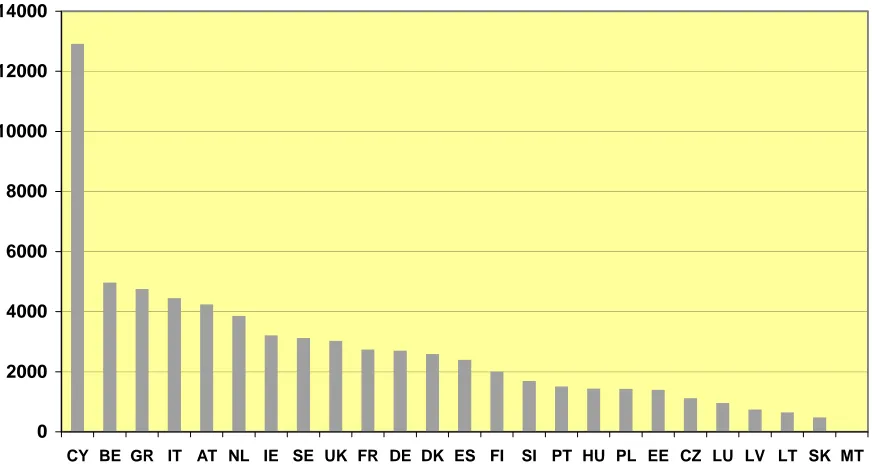
It is of major concern that there should be sufficient participation of the new member states in the FPs to avoid creation of a knowledge divide in Europe. Available statistical data show new member states’ involvement in research projects to be below that of the EU-15 countries if contracted participation or funds relative to the capacity of the national RTD system (e.g. per 1000 researchers) are examined. However, more detailed analyses3 provide additional information from which more
important conclusions can be drawn.
The new member states usually have a lower intensity of RTD investment (Gross Expenditures on RTD – GERD) than the old member states. In the EU-15 the average spend reaches ~ 2% of GDP, whereas in the new member states the average spend is >1%.
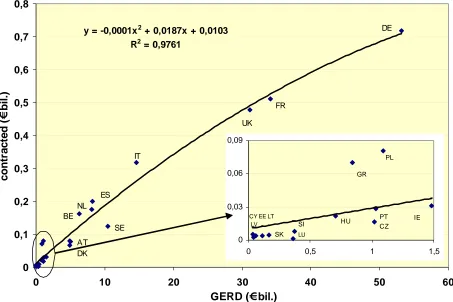
Analysis of (nationally) contracted funds and GERD (see Annex II) provides clear evidence of a remarkably close relationship between GERD and contracted funds – higher GERD leads to higher subsidy of national research from the FP. Consequently, the best way to increase the participation (and contracted funds) of new member states is to invest more in RTD at the national level, i.e. to develop the national research capacity.
In this context, the potential of Structural Funds for developing national RTD capabilities in new member states should be considered. The experiences of Portugal and Ireland prove the success of such programmes. Measures eligible for structural fund support include RTD infrastructure, RTD equipment and instrumentation, training of RTD personnel, technology transfer mechanisms.
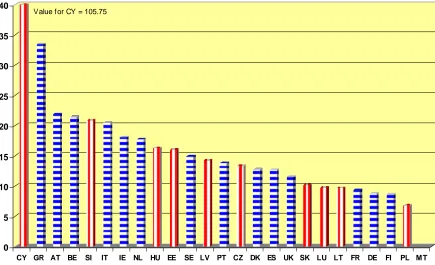
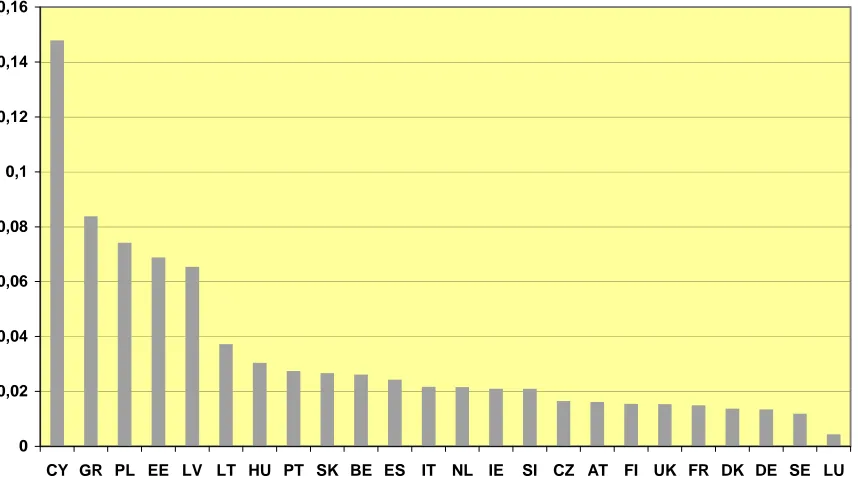
There is also the issue of whether different statistics should be used to assess FP participation. For instance, if the index relating contracted funds to GERD is used, i.e. “how many euros (or, rather, eurocents) are yielded by 1€ of GERD”, the new member states’ participation appears much more successful than if traditional indicators like contracted funds or participants per 1000 researchers are used.
Comments of the Panel
The Panel recognizes that high national investment in RTD is an essential prerequisite for a developed national research capacity and creates the conditions required for successful participation in the FP.
Investments into capacity building in member states are considered to be a better strategy for ensuring long-term successful participation in the FP than enforcing participation of new member states by setting fixed quotas in the thematic priorities. The latter may be
6. Evaluation
FP6 introduced major changes in rationales for intervention and instruments. In addition, new requirements were established for the introduction of new policies, the main one being linked to ex-ante impact assessment. The changes caused the Commission to reconsider the overall FP evaluation process. In doing this, it benefited from inputs from the active network of evaluation practitioners working at EU level, the European RTD Evaluation Network facilitated by the Commission services, which discussed these issues at their conference in Maastricht in 2004. The Panel therefore addressed the changing evaluation scene as part of its 2004 monitoring.
6.1 Ex ante impact assessment
It is now mandatory for every EU policy, including FP7, to be accompanied by an ex ante impact assessment and ex post evaluation. The 2003 monitoring panel recommended that future panels should pay attention to the state of implementation of ex ante and ex post assessments as a means of judging the effectiveness of FP programmes.
The Panel looked into the Commission’s ex ante impact assessment for FP7. The authors of the assessment report point out clearly that it is difficult to assess impacts of research policies because of the lack of unambiguous causalities between research investments and effects, and the time-lags of effects. The assessment investigates impacts along the three dimensions of sustainability – economic, social and environmental – and was based on both past experience from previous FPs and forecasting methods.
Past experience provides clear evidence that FPs boost scientific performance and increase international competitiveness. Firms participating in FP projects are more innovative and produce more patents. It remains unclear whether the more innovative firms are more likely to participate in FP projects and/or whether participation in FP projects increases the potential for innovation. Participants in FP6 projects are more likely to collaborate. Hence one can conclude that FPs support capacity building. However, capacity building without investment in long-term cooperation has little impact. Overall, past FPs supported the establishment of trans-national research collaborations and the integration of national research in the EU – and, therefore, the establishment of the ERA. Economic models were used to make forecasts of the micro- and macro-economic effects of the planned FP7. Expected impacts include increased turnover and profitability and a benefit of 4-7 € per 1 € invested in RTD. Impacts on GDP and employment were quantified for different FP7 funding scenarios. Assessment of the potential economic impacts of research programmes was not linked to any plan for ex-post evaluation to test if the assessments were appropriate. Numbers were given with a high level of accuracy without uncertainty boundaries.
Impact assessment is an important but – from the viewpoint of how the results are used – sensitive issue. The evidence base and data collection, including the reporting process, need to be improved. Methodological gaps and lack of experience with impact assessment may have an effect on the quality of the results. In particular, it is difficult to establish causal links between input (i.e. the money spent on RTD) and output (i.e. the benefits for society).
Comments of the Panel
The use of impact assessment to support the policy process is very welcome. The Panel acknowledges the first attempts made.
Impact assessments based on statistical analyses give few insights without more in-depth analyses. It could be useful to investigate and report individual examples of successes and failures in more depth, instead of providing only overall statistical summaries.
6.2 Reshaping the evaluation process
The evaluation process has now been established in its present shape for a decade. However, it is faced with a set of transformations that have driven the Commission to reconsider the overall system. The Panel considers these in turn before making some suggestions for the future.
Four challenges facing the present evaluation process
The first two challenges are linked to the overall evolution of the objectives and implementation of the FP. They require the evaluation process to reconsider two assumptions which are key to present methodologies. The first assumption considers that programmes are made of such large numbers of quasi-similar projects that the overall programme results will not be endangered by the failure of any one project. With the advent of IPs and NoEs, this might no longer be the case: whole topics in thematic priorities’ work programmes are now often addressed by one large project. Thus, the fate of individual projects might have strong influence on the overall impact of a programme.
The second assumption is that collaboration as such is a positive output whatever the initial situation. It is now recognised that, over a certain threshold, diversity turns into fragmentation and is counter-productive. There is thus a need for mapping and judging the initial state, and adopting measures that will foster not only project-based collaborations but also lasting integration. How to measure the degree of fragmentation? How to monitor integration? These new questions cause evaluations (both ex-ante and ex-post) to face difficult theoretical and methodological issues. They probably call for radically new approaches based less on global indicators that are mostly derived from opinion surveys or econometric models, and more on “maps” similar to those produced by geographic information systems.
The third challenge is linked to the adoption of a new decision-making process within the Commission and the systematic requirement for ex-ante assessments. This faces evaluation with a lasting issue since the causality between very broad objectives (e.g. improving competitiveness or employment) and precise actions (which are limited in scope to match the RTD support) is difficult to establish. This calls for focusing attention on the ways political “broad” goals are transformed into “research policy objectives” and expression of the latter in ways that are “verifiable”, i.e. subject to quantification or description which can later be measured or traced. This has three implications for the proposed process. (i) The establishment of verifiable objectives should be a major deliverable of ex-ante impact assessment activities, requiring strong articulation between both activities. (ii) However, one should be cautious, at least for the coming period, to keep open the notion of “verification” and recognise that in many instances, “qualitative indicators” (which are better labelled “descriptors”) are better suited to analyse effects. (iii) This calls for considering the first round of such evaluations as “real size experiments”, thus accepting a trial-and-error process and remaining realistic in terms of what it can deliver.
Toward a new evaluation framework – the Commission’s proposal at a glance
The Commission considers the last issue in the previous paragraph to be a major problem. It therefore proposes to go back to classical ex-post evaluation that delivers results some two years after programme-end. To feed the preparation of the next FP with preliminary lessons from the on-going FP, the Commission proposes to add a new mid-term evaluation, based on the use of science panels, that focuses on the RTD content and development of the programme. This would be complemented by specific horizontal studies and a specific budget for methodological developments. Finally, the Commission has highlighted an internal need to improve the quality and reliability of available data.
Comments of the Panel
The Panel supports the new evaluation process proposed. It suggests that the mid-term evaluation should also include specific activities to look at the development and potential of new initiatives. It would, for instance, have been useful to have had a specific analysis on the interest in and limitations of the IP instrument before deciding to discontinue it.
For the ex-post evaluation, the Commission should consider whether a two-step panel process would not prove more fruitful. The first step would take a generic approach based on some initial studies. This would allow identification of the specific issues which require more in-depth analysis. The second step would take place a few months later, after the needed studies have been conducted, thus enabling the panel to tailor its recommendations. The Panel strongly recommends that the first sets of methodological research and horizontal
studies are launched as soon as possible. This would prepare for the ex-post evaluation of FP6, enabling the future evaluation panel to start addressing the above-mentioned challenges.
The Panel recognises that the requirement for information presents an important bottleneck. However it does not seem realistic to think that such a situation can be alleviated through changes to the central database. The Panel suggests that it would be useful to invest in the development of a “second layer” of IT tools to enable construction of a “data clearing house” that taps into existing disseminated information.
Annex I
A.1 Interviews of Commission services by the Panel
27 June 2005:
• ERA-Nets: F. Gautier, W. Wittke, M. Weydert, RTD B2
• Research infrastructures: H. Pero, RTD B3
• Methodology of impact assessment: B. Sloan, RTD A5
• Rationalisation / acceleration: M. Richards, RTD A3
28 June 2005:
• Review of projects :
- From a general point of view: N. Hartley, RTD G1
- Life Sciences, genomics and biotechnology for health: A. Vanvossel, RTD F2 - Information society technologies: A. de Albuquerque, INFSO D1
- Nanotechnologies and nanosciences, knowledge-based multifunctional material, and new production processes and devices: J. Suominen, RDT G2
• NEST + FET/IST: W.Cannell, RTD B1 & T. Van der Pyl, INFSO F1
• IT tools: M. Bohle & H. Van Delft RTD R5
• SMEs: T. Arnold, RTD M4 & Maria Pia Viglioralo, DG ENTR D1
• Technology Platforms: P. Kerr & S. O’Reagain, RTD B2
18 July 2005:
• Marie Curie actions: R. Liberali, RTD D
• Project evaluation process and external agencies : G. Stroud, RTD A2
• Review of projects :
- Food quality and safety: J. Claxton, RTD E3
- Aeronautics and space (Surface Transport): J. de Bock, RTD H2 - Aeronautics and space (Aeronautics): D. Knoerzer, RTD H3
- Sustainable development, global change and ecosystems: K. Zaunberger, RTD I3
• Science and Society: E. Magnien, RDT C1
19 July 2005:
• Evaluation under FP7: B. de Boissezon, RTD A4
A.2 List of reports / documents consulted by the Panel
Key Issues as set out in mandate
Name of doc Ref.
Fifth Framework Programme 0.1
Sixth Framework Programme 0.2
Decision making - general 0.3
Expression of interest Sixth Framework Programme 0.4
Expression of interest Seventh Framework Programme 0.5
NEST evaluation summary report - Confidential (June 2005) 0.6
NEST - Information Seminar, October 2003 0.7
NEST - A review of NEST experience, relevant to the FP7 "Co-operation" programme 0.8
NEST - Dossier on RESEARCH POLICY and DG RESEARCH 0.9
NEST - A 'successful experiment', November 2004 0.10
NEST - Feathering the NEST 0.11
FET - Open, Impact Assessment 1994-2004 (December 2004) 0.12
FET - Collaborative basic research in ICTs in FP7, November 2004 0.13 FET - IST Workshop, 'New Directions for ICTs in FP7: Grand Challenges for Basic Research' 0.14
FET - The Pathfinder for IST 0.15
FET - Emerging Challenges in IST, December 2004 0.16
0) General Information on FPs
FET - Working paper on FET in FP7 0.17
I) Follow up
Follow up of recommendations 2003 I.1.1
The Monitoring report 2002 I.1.2
The Monitoring report 2003 I.1.3
1. Overall follow up
Responses by Commission services to the 2003 Monitoring Report I.1.4
Annual Management Plan 2004 RTD I.2.1
Annual Management Plan 2005 RTD I.2.2
Annual Management Plan 2004 INFSO I.2.3
Annual Management Plan 2005 INFSO I.2.4
Annual Management Plan 2004 ENTR I.2.5
Annual Management Plan 2005 ENTR I.2.6
Annual Management Plan 2004 FISH I.2.7
Annual Management Plan 2005 FISH I.2.8
Annual Management Plan 2004 JRC I.2.9
Annual Management Plan 2005 JRC I.2.10
Annual Management Plan 2004 TREN I.2.11
Annual Management Plan 2005 TREN I.2.12
Work programme 2004 - Life sciences, genomics and biotechnology for health I.2.13
Workprogramme 2004 - Nanotechnology I.2.15
Workprogramme 2004 - Aeronautics and space I.2.16
Workprogramme 2004 - Food quality and safety I.2.17
Workprogramme 2004 - Sustainable Energy I.2.18
Workprogramme 2004 - Sustainable surface transport I.2.19
Workprogramme 2004 - Global change and ecosystems (call 2) I.2.20
2. Objective/ Indicators