UNIVERSITI TEKNIKAL MALAYSIA MELAKA
Development of Small Volume Watering & Soil Cooling System By
Using Microcontroller
This report is submitted in accordance with the requirement of the Universiti Teknikal Malaysia Melaka (UTeM) for the Bachelor of Electronic Engineering
Technology (Industrial Electronics) with Honours.
BY
NG LIAW YONG B071410168 921221-13-5627
UNIVERSITI TEKNIKAL MALAYSIA MELAKA
BORANG PENGESAHAN STATUS LAPORAN PROJEK SARJANA MUDA
TAJUK: Development of Small Volume Watering & Soil Cooling System Using Microcontroller
SESI PENGAJIAN: 2017/2018 SEMESTER 1
Saya NG LIAW YONG
mengaku membenarkan Laporan PSM ini disimpan di Perpustakaan Universiti Teknikal Malaysia Melaka (UTeM) dengan syarat-syarat kegunaan seperti berikut:
1. Laporan PSM adalah hak milik Universiti Teknikal Malaysia Melaka dan penulis. 2. Perpustakaan Universiti Teknikal Malaysia Melaka dibenarkan membuat salinan
untuk tujuan pengajian sahaja dengan izin penulis.
3. Perpustakaan dibenarkan membuat salinan laporan PSM ini sebagai bahan pertukaran antara institusi pengajian tinggi.
4. **Sila tandakan ( )
SULIT
TERHAD
TIDAK TERHAD
(Mengandungi maklumat yang berdarjah keselamatan atau kepentingan Malaysia sebagaimana yang termaktub dalam AKTA RAHSIA RASMI 1972)
(Mengandungi maklumat TERHAD yang telah ditentukan oleh organisasi/badan di mana penyelidikan dijalankan)
Alamat Tetap:
LOT 716, KAMPUNG ENTULANG
95000 SRI AMAN SARAWAK
Tarikh: ________________________
Disahkan oleh:
Cop Rasmi:
Tarikh: _______________________
IV
DECLARATION
I declare that this thesis entitled Development of “Small Volume Watering & Soil Cooling System by Using Microcontroller” is the result of my own research except as cited in the references. The thesis has not been accepted for any degree and is not concurrently submitted in candidature of any other degree.
Signature :………..
Author’s Name : NG LIAW YONG
V
APPROVAL
This report is submitted to the Faculty of Engineering Technology of UTeM as a partial fulfillment of the requirements for the degree of Bachelor of Engineering Technology (Industrial Electronic) (Hons.). The member of the supervisory is as follow:
Signature: :………..
Supervisor name : IR. NIK AZRAN BIN ABDUL HADI
VI
ABSTRACT
VII
ABSTRAK
Kepentingan air untuk tumbuhan menyalakan penciptaan sistem penyiraman
perisikan. Sistem penyiraman pintar kecil seperti sistem penyiram mikrokontroler
boleh dilihat pada hari-hari ini. Oleh itu untuk projek ini, sistem penyiraman isipadu
kecil dan sistem penyejukan tanah akan dibangunkan. Sistem penyiraman
mikrokontroler berskala kecil masih tidak cukup baik dan tidak sesuai untuk
beberapa jenis tumbuhan dari segi jumlah air. contohnya pohon strawberi sangat
sensitif terhadap takongan air, menggunakan sistem penyiraman pintar berasaskan
pam air boleh menyebabkan takongan air dan risikonya tumbuhan akan menjadi
busuk. Selain itu, benih strawberi memerlukan suhu tanah tertentu untuk bercambah
di mana negeri Melaka, Malaysia suhu tanah tidak sesuai untuk percambahan benih
strawberi kerana keluar daripada julat suhu. Oleh itu, dalam kaedah untuk
mengawal jumlah air sistem penyiraman, tiub plastik kecil akan digunakan untuk
mengawal aliran air ke tanah berdasarkan sudut lenturan plastik yang dikendalikan
oleh motor servo. Kadar aliran air akan dipantau oleh sensor yang berfungsi
sebagai maklum balas kepada mikrokontroler untuk mengawai kadaran aliran air.
Bagi sistem penyejukan tanah untuk tujuan percambahan benih, modul Peltier yang
dikawal oleh mikrokontroler akan digunakan untuk menyejukkan suhu tanah. Dari
hasilnya, sistem penyiraman isipadu kecil mampu membekalkan isipadu air kecil
dari minimum 15 liter mikro air per minit kepada maksimum 0.3milli liter air per
minit. Bagi sistem penyejukan tanah, ia mampu menyejukkan suhu tanah dari
kira-kira 30 ° C hingga suhu paling rendah 20 ° C. Dari hasil projek, semasa proses
pembangunan sistem penyiraman isipadu kecil, sudut lenturan plastik tidak
mempunyai hubungan linear dengan kadar aliran air. Sebagai kesimpulan, sistem
penyiraman kelantangan kecil mempunyai potensi tinggi dalam perdagangan dan
digunakan untuk aplikasi lain seperti medan medis, medan pertanian, medan kimia
VIII
DEDICATION
IX
ACKNOWLEDGEMENT
X
TABLE OF CONTENTS
ABSTRACT VI
ABSTRAK VII
DEDICATION VIII
ACKNOWLEDGEMENT IX
TABLE OF CONTENTS X
LIST OF TABLES XIII
LIST OF FIGURES XIV
LIST OF ABBREVIATIONS, SYMBOLS AND NOMENCLATURE XVI
INTRODUCTION 1
1.1 Overview 1
1.2 Problem Statements 2
1.3 Objectives 6
1.4 Project Scopes 6
LITERATURE REVIEWS 7
2.1 Introductions 7
2.1.1 Literature Review on Flood Prone Plant 7 2.1.1.1 Flood Prone Plant (Strawberry Plant) 9 2.1.2 Journal and Article Review for Microcontroller Based Watering System 12 2.1.2.1 Smart Watering System using Wireless Sensor Networks 12 2.1.2.2 Garden Watering System Based on Moisture Sensing & Automated
Plant Watering System 14
XI 2.1.2.4 GSM Activated Watering System Prototype 18 2.1.3 Journal and Article Review for Soil cooling Technology 21
2.1.3.1 Seed Germination charts 21
2.1.3.2 A Simple Method for Cooling down the Soil in Bench 23
METHODOLOGY 25
3.1 General flowchart 25
3.2 Development of Small Volume Watering System 26
3.2.1 System Operation Concept 27
3.2.2 System Development Process 30
3.2.1 Small Volume Watering System Microcontroller Program Algorithm 31
3.2.2 Electronic Device and Component 32
3.2.2.1 Drip Sensor 32
3.2.2.2 90SG Servo 35
3.2.2.3 Water Tank 36
3.2.2.4 Microcontroller PIC18F1939 37
3.3 Development of soil cooling system 38
3.3.1 System operation concept 38
3.3.2 System Development Process 41
3.3.1 Soil Cooling System Microcontroller Program Algorithm 42
3.3.2 Electronic Device and Component 43
3.3.2.1 Peltier Module 43
3.3.2.2 DS18B20 Digital Temperature Sensor 44
3.3.2.3 DC Water Pump 45
3.3.2.4 Copper Tube and Plastic Tubing 46
RESULTS & DISCUSSIONS 47
4.1 System/Product Appearance 47
4.2 Small Volume Watering Systems Analysis 50
4.2.1 Small volume Watering System Analysis 50 4.2.1.1 3 Seconds per Drip, Supplied Water Volume in Every 5 Minutes 51 4.2.1.2 The Relationship between Water Drip Rate and Servo Motor Angle 52
4.2.2 Soil Cooling System Analysis 54
4.2.2.1 Minimum Achievable Water Temperature with Fixed Water Volume
XII 4.2.2.2 Water Temperature Fluctuation, Varies In Water Scanning Interval
(No Pump) 58
4.2.2.3 Minimum Achievable Water Temperature with Fixed Water Volume
(With Pump) 62
CONCLUSIONS 67
5.1 Conclusions 67
5.1.1 Results and Discussion Summary 68
5.1.1.1 Small Volume Watering System 68
5.1.1.2 Soil Cooling System 68
5.2 Future Improvement 69
5.3 Commercials Value Based on This Project 69
5.3.1 Low Cost Large Scale Small volume Watering System 69
5.3.2 Used In Chemical Labs 69
5.3.3 Hospitals 69
REFERENCES 70
XIII
LIST OF TABLES
Table 2-1: Hardware Comparison 15
Table 3-1: Light Dependent Resistor (LDR) Specifications 32
Table 3-2: LED Specifications 33
Table 3-3: Plastic Pipe Specifications 34
Table 3-4: Towerpro Sg90 Servo Specifications 35
Table 3-5: Water Tank Specifications 36
Table 3-6: Microchip PIC16F1939 Specifications 37 Table 3-7: Peltier TEC-12706 Specifications 43 Table 3-8: DS18B20 Digital Temperature Sensor Cable Specifications 44 Table 3-9: DS18B20 Digital Temperature Sensor Technical Specifications 44 Table 3-10: DC Water Pump Casing Specifications 45 Table 3-11: DC Water Pump Technical Specifications 45
Table 3-12: Copper Tube Specifications 46
Table 3-13: Plastic Tube Specifications 46
XIV
LIST OF FIGURES
Figure 1-1: Water Flood on the Soil (Haber, 2016) 2 Figure 1-2: Water Flood on the Soil (Svsembedded, 2017) 3 Figure 1-3: Water Flood on the Soil (Ottevangers, 2016) 3 Figure 1-4: Water Flood on the Soil (watch, 2017) 4 Figure 1-5: Water Flood on the Soil (Hack, 2016) 4
Figure 2-1: Plant Cell Membrane 8
Figure 2-2: Strawberry Plant Shallow Roots 9 Figure 2-3: Dripping System for Strawberry Plant (A, B, C, D) 11 Figure 2-4: The Solenoid Valve Used for the Irrigation 12 Figure 2-5: Wireless Transmitter for Soil Moisture Sensor 12 Figure 2-6: Illustration Of Low Cost Soil Probe 14
Figure 2-7: Soil Moisture Sensor 14
Figure 2-8: Teensy 2.0 14
Figure 2-9: Arduino Uno 14
Figure 2-10: Dc Water Pump 15
Figure 2-11: Dc Water Pump 15
Figure 2-12: Garden Watering System Based On Moisture Sensing Journal 15 Figure 2-13: Weather Based Watering System Using Soil Sensor and GSM 16 Figure 2-14: Weather Based Watering System Using Soil Sensor and GSM 17 Figure 2-15: GSM Activated Watering System Prototype Operation 18 Figure 2-16: GSM Activated Watering System Prototype Overall System 19 Figure 2-17: GSM Activated Watering System Prototype SMS 19 Figure 2-18: GSM Activated Watering System Prototype Overall Hardware 20 Figure 2-19: Seed Germination Soil Temperature Chart (Anon., 2010) 21 Figure 2-20: Seed Germination Days (Anon., 2010) 22 Figure 2-21: Soil A:No Cooling, Soil B:Pipe Cooling, Soil C:Evaporating Cooling 23
Figure 3-1: Working Plan 25
Figure 3-2: Small volume Watering System Block Diagram 27 Figure 3-3: Small volume Watering System Signal Transmission 28 Figure 3-4: Small volume Watering System Block Diagram 28 Figure 3-5: Small volume Watering System Development Process 31 Figure 3-6: Small Volume Watering System Algorithm 31 Figure 3-7: Light Dependent Resistor (LDR) 32
Figure 3-8: 3mm Orange Color LED 33
Figure 3-9: Plastic Tube 34
Figure 3-10: Drip Sensor Working Concept 34
Figure 3-11: Water Tank 36
XV
Figure 3-13: Soil Cooling Concept 38
Figure 3-14: Soil Cooling System Illustration 39 Figure 3-15: Soil Cooling System Development Process 41 Figure 3-16: Soil Cooling System Microcontroller Program Algorithm 42
Figure 3-17: Peltier TEC-12706 43
Figure 3-18: Digital Temperature Sensor DS18B20 44
Figure 3-19: DC Water Pump 45
Figure 3-20: Copper Tube and Plastic Tube 46
Figure 4-1: System Overall View 47
Figure 4-2: System Side View 48
Figure 4-3: System front View 48
Figure 4-4: System Top View 49
Figure 4-5: Small volume Watering System Side View 50 Figure 4-6: Water Tank with Servo Motor Installed for Valve Control 50 Figure 4-7: Supplied Water Volume for Every 5 Minutes (3 Seconds per Drip) 51 Figure 4-8: The Relationship between Drip rate and Servo Angle 52 Figure 4-9: Soil Cooling System Side View 54 Figure 4-10: Soil Cooling System Labeling 54
Figure 4-11: Water Cooling Process 55
XVI
LIST OF ABBREVIATIONS, SYMBOLS AND
NOMENCLATURE
LDR Light Dependent Resistor
1
CHAPTER 1
INTRODUCTION
1.1 Overview
2 1.2 Problem Statements
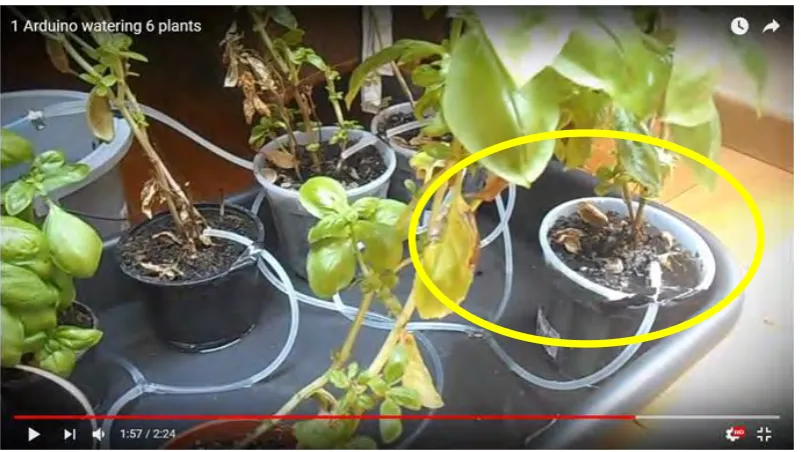
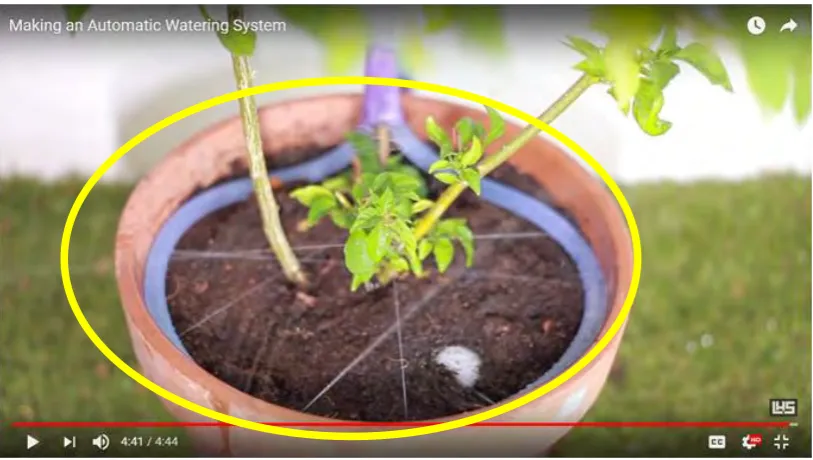
[image:17.595.118.517.385.610.2]Microcontroller such as Microchips, Arduino and others microcontrollers has been wildly used for plant watering system that watering automatically. Mostly small scale microcontroller based watering system utilizes a water pump or solenoid to allow or disallow the water supply to the target soil. With a specified program on the microcontroller, the microcontroller can control the water pump either on or off depending on the condition as stated in the program to watering the plant on a pot or ground. Some microcontroller based watering systems utilize GSM, WIFI or Bluetooth as support/feature for its user to control this system from far distance for plant watering purpose. However, the microcontroller based watering system by using water pump and solenoid has issue in some condition. Following figure show the microcontroller based watering system using water pump or solenoid for control the water flow.
3 Figure 1-2: Water Flood on the Soil (Svsembedded, 2017)
[image:18.595.119.520.384.610.2]4 Figure 1-4: Water Flood on the Soil (watch, 2017)
Figure 1-5: Water Flood on the Soil (Hack, 2016)
[image:19.595.117.524.361.591.2]5 continuously turned on. Some plant might can tolerance with water that filled on the top of soil but not for some plant. So there is a risk of plant die due this type of watering system which uses water pump or solenoid to control the water to the soil. Also with strong water flow rate to the soil for seed germination is not suitable. So there is a need for control the water volumes to the soil so that this problem can be avoid.
6 1.3 Objectives
To develop small volume watering system in the purpose of control water volume to the soil.
To develop soil cooling system in the purpose of maintains and control soil temperature for seed germination.
1.4 Project Scopes
To know more about which plant is water sensitive plant literature review will be carrying out. Next, current technology regard small scale microcontroller based watering system will be studied and compared for each others. An automated small scale microcontroller based watering system that can control the water volume to the soil can be expected at the end of this final year project.
After the hardware is completed, analysis will be carry out. The analysis will be on the range of the water volume in minutes that can supply by the gentle watering system and it output tolerance.
This project also aims to be low cost as possible while remain it effectiveness and functionality. To reduce the chance of unexpected product failure during operation, product evaluation and improvement will be made to make sure long term functional to let the user peace of mind for not worrying too much about their planting.
7
CHAPTER 2
LITERATURE REVIEWS
2.1 Introductions
This section will be discussed about the type of plant which is sensitive to water. Next, current microcontroller based watering system and the soil cooling system will also me mentioned and discussed.
2.1.1 Literature Review on Flood Prone Plant
As with other climatic factors, water can possibly cause unfavorable effects on plant growth and development. Excess water in the soil can injure flood prone plants, like corn (maize), due to lack of oxygen. In this case water stress due to flooding means oxygen stress by deficiency (hypoxia) or total absence (anoxia).
Excess water within the plant can also cause injury. Edmond, et al. (1978) explained that under conditions that favor high absorption and low transpiration rates, there is build-up of high turgor pressure in the region of cell elongation which causes maximum swelling of the cells. This results to the development of leggy seedlings.
8 Figure 2-1: Plant Cell Membrane
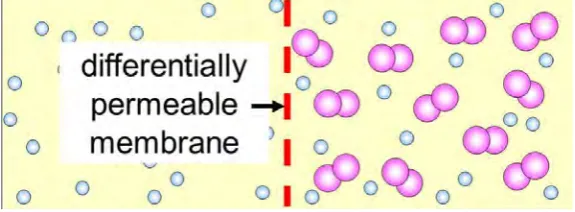
The cell membrane is "differentially permeable," that mean salt contained water molecules can enter, but the salt molecules are too large to escape. The result is that water pressure builds inside the cell, causing the cell membrane to exert pressure on the cell wall.
9 2.1.1.1 Flood Prone Plant (Strawberry Plant)
Figure 2-2: Strawberry Plant Shallow Roots