i
UNIVERSITI TEKNIKAL MALAYSIA MELAKA
INVESTIGATION OF MOBILE NETWORK COVERAGE
PERFORMANCE IN UTEM’S TECHNOLOGY CAMPUS USING
COVERAGE PROFILING
This report is submitted in accordance with the requirement of the Universiti Teknikal Malaysia Melaka (UTeM) for the Bachelor of Electronic Engineering Technology
(Telecommunication) with Honours.
By
SHAWN SHIVANESON M. BALAKIRISNAN B071410785
911124-12-5727
ii
UNIVERSITI TEKNIKAL MALAYSIA MELAKA
BORANG PENGESAHAN STATUS LAPORAN PROJEK SARJANA MUDA
TAJUK: Investigation Of Mobile Network Coverage Performance In UTeM’s
Technology Campus Using Coverage Profiling
SESI PENGAJIAN: 2017/2018, Semester 1
Saya SHAWN SHIVANESON M. BALAKIRISNAN
mengaku membenarkan Laporan PSM ini disimpan di Perpustakaan Universiti Teknikal Malaysia Melaka (UTeM) dengan syarat-syarat kegunaan seperti berikut:
1. Laporan PSM adalah hak milik Universiti Teknikal Malaysia Melaka dan penulis. 2. Perpustakaan Universiti Teknikal Malaysia Melaka dibenarkan membuat salinan
untuk tujuan pengajian sahaja dengan izin penulis.
3. Perpustakaan dibenarkan membuat salinan laporan PSM ini sebagai bahan pertukaran antara institusi pengajian tinggi.
4. **Sila tandakan ( )
SULIT
TERHAD
TIDAK TERHAD
(Mengandungi maklumat yang berdarjah keselamatan atau kepentingan Malaysia sebagaimana yang termaktub dalam AKTA RAHSIA RASMI 1972)
(Mengandungi maklumat TERHAD yang telah ditentukan oleh organisasi/badan di mana penyelidikan dijalankan)
Alamat Tetap:
No. 15, Lorong Nosoob 3, Taman
Nosoob, Jalan Penampang, 88300,
Penampang, Sabah
Tarikh: ________________________
Disahkan oleh:
Cop Rasmi:
Tarikh: _______________________
iii
DECLARATION
I hereby, declared this report entitled “INVESTIGATION OF MOBILE NETWORK COVERAGE PERFORMANCE IN UTEM’S TECHNOLOGY CAMPUS USING
COVERAGE PROFILING” is the results of my own research except as cited in references.
Signature : ………. Author’s Name : SHAWN SHIVANESON M BALAKIRISNAN
iv
APPROVAL
This report is submitted to the Faculty of Engineering Technology, Universiti Teknikal Malaysia Melaka as a partial fulfilment of the requirements for the conferment of degree of Bachelor of Engineering Technology (Bachelor’s Degree In Electronic Engineering Technology Telecommunication) (Honours’.). The member of the supervisory is as follows:
……… (Supervisor)
v
ABSTRAK
vi
ABSTRACT
vii
DEDICATION
Dedicated to my beloved parents, Mr. M. Balakirisnan A/L P. Muniandy and Mrs. Maria Binti Gudiman @ Diman which encourages me to complete this final year
project.
Special thanks to my supervisor, Puan Rahaini Binti Mohd Said and to my co-supervisor, Puan Zahariah Binti Manap.
Also, special thanks to the Electrical Engineering Department lecturers at Politeknik Kuching Sarawak.
viii
ACKNOWLEDGEMENT
All glory, praises and thanksgiving to God for the completion of this final year project that I’ve undergone for two semesters, and the completion of this thesis on the time of final evaluation and presentation.
With this great opportunity, I would like to extend my gratitude to my university and individuals for their valuable assistance and co-operation in completing this final year project and thesis as well.
First of all, I would like to give thanks to both of my supervisors, Puan Rahaini Binti Mohd. Said and Puan Zahariah Binti Manap for the expertise and guidance to execute this research, and also assistance on improving this research and the thesis as well. It’s a blessing for me to have a lecturer who are expert in statistics and also mobile communication systems as this research need cooperation of both lecturers to make this research a reality.
I would like to give thanks to my beloved parents, for all they have done to ensure that I can able to finish up what I have started from the first day I entered diploma at Politeknik Kuching Sarawak until to the completion of degree at Universiti Teknikal Malaysia Melaka. Even though both of you are busy to make ends meet, but you never fail on showing care, love, understanding and support to me and my sibilings.
ix
TABLE OF CONTENTS
Project title i
Report verification ii
Declaration iii
Approval iv
Abstrak v
Abstract vi
Dedication vii
Acknowledgement viii
Table Of Contents ix
List Of Tables xii
List Of Figures xiv
CHAPTER 1: INTRODUCTION 1
1.1 Overview Of Research 1
1.2 Problem Statement 2
1.3 Objective 2
1.4 Scope 3
1.5 Report Outline 3
CHAPTER 2: LITERATURE REVIEW 5
2.1 Introduction 5
2.2 Radio Frequency 5
2.3 History Of Cellular Systems 5
2.2.1 First Generation (1G) 6
2.2.2 Second Generation (2G) 7
x
2.5 GSM Architecture 9
2.3.1 Base Station Subsystem (BSS) 10
2.3.2 Core Network (CN) 10
2.3.3 User Equipment (UE) 12
2.5 Cellular Concept 13
2.5.1 Types Of Cell Sizes In A Cellular Network 14
2.5.2 Interference In Cellular Network 15
2.5.3 Co-Channel Interference and System Capacity 16
2.5.4 Coverage In Communication 16
2.5.5 Factors Affecting The Mobile Network Coverage 17 2.5.6 Received Signal Strength Indicator (RSSI) 19
2.6 Wireless Channel Propagation Models 20
2.6.1 Free Space Propagation Model 20
2.6.2 Plane-Earth Propagation Model 21
2.7 Empirical Propagation Models 22
2.7.1 Okumura Propagation Model 22
2.7.2 Hata Propagation Model 23
2.7.3 COST-231 Hata Model 24
2.8 Statistical Methods 25
2.8.1 Analysis Of Variance (ANOVA) 25
2.8.1.1 One Way ANOVA 26
2.9 Kriging 26
2.9.1. IDW Kriging 27
2.10 Related Researches 27
2.10.1 Drive Test Measurement Between Maxis 2G
and 3G Networks in UiTM Shah Alam Campus 27 2.10.2 Determining The Drop Call Rate, Failed Call Rate
And Signal Strength of Celcom Mobile Network
In The Universiti Tenaga National Putrajaya Campus 29
CHAPTER 3: METHODOLOGY 32
3.1 Introduction 32
xi
3.3 Obtaining The Map Plan 34
3.4 Sample Area Zoning 35
3.5 Sample Data Measurement 37
3.5.1 Hardware Devices For Data Measurement 37 3.5.2 Software Used For Data Measurement 40
3.6 Data Analysis Using SPSS 43
3.6.1 ANOVA Analysis Using SPSS 44
3.6.2 One-Sample Statistics Using SPSS 46
3.7 Designing The Mobile Network Coverage Profile 48
CHAPTER 4: RESULTS AND DISCUSSION 56
4.1 Introduction 56
4.2 Coverage Area Prediction 56
4.3 Statistical Analysis 59
4.3.1 Case 1: Comparison Between Two Different
Smartphones Under U Mobile Network 59
4.3.2 Case 2: Comparison Between Two Different
Smartphones Under Digi Network 61
4.3.3 Case 3: Comparison Between Two Different Mobile
Providers Using Xiaomi Redmi 3S 62
4.3.3 Case 4: Comparison Between Two Different Mobile
Providers Using Asus Zenfone 4 63
CHAPTER 5: CONCLUSION 65
5.1 Conclusion 65
5.2 Recommendation And Future Works 68
REFERENCES 70
APPENDIX A 73
xii
LIST OF TABLES
2.1 Description Of Types Of Cells Size In Cellular Network 14
2.2 Signal Strength Description 20
3.1 Comparison Between Asus Zenfone 4 And Xiaomi Redmi 3S 38 3.2 RSSI Readings Measured Under U Mobile Network
Using Xiaomi Redmi 3s 41
3.3 RSSI Readings Measured Under U Mobile Network
Using Asus Zenfone 4 41
3.4 RSSI Readings Measured Under Digi Network
Using Xiaomi Redmi 3s 42
3.5 RSSI Readings Measured Under Digi Network
Using Asus Zenfone 4 42
3.6 Placement Of Variables In Dependent And Independent
List For Each Case 45
3.7 Placement Of Test Variables For Each Case 47
4.1 Defined RSSI Levels
4.2 ANOVA Table Generated For Case 1 59
4.3 One-Sample Statistics Results For Case 1 60
4.4 ANOVA Table Generated For Case 2 61
4.5 One-Sample Statistics Results For Case 2 61
4.6 ANOVA Table Generated For Case 3 62
4.7 One-Sample Statistics Results For Case 3 62
4.8 ANOVA Table Generated For Case 4 63
4.9 One-Sample Statistics Results For Case 4 63
xiii
xiv
LIST OF FIGURES
2.1 General Architecture of GSM System 9
2.2 Representation of A Base Station At Every Cell 13 2.3 Representation Of Cells According To Their Sizes 15 2.4 Kriging Output To Show The Network Coverage Of
A Studied Area 27
2.5 Drive Test Conducted Through The Main Road
(Represented By Blue Lines) Around The Campus 28 2.6 Visualization Of Cellular Signal Strength of Maxis Network
Along The Studied Path Using NEMO Outdoor 29
2.7 Signal Strength Recorded Using MyMobileCoverage
Application 30
2.8 Drive Test Route Indicating The Signal Strength and Position Where Drop Calls Are Detected (Marked By
Red Arrow) 31
3.1 Flow Chart Of Project Implementation 33
3.2 Geographical Map of Technology Campus, FTK Shown
In Google Earth Pro 34
3.3 Placemark Pins Added On The Corners Of The
Whole Area Of Technology Campus, FTK 34
3.4 Program Interface Of GE Path Program 35
3.5 Campus Map That Has Been Divided Into Small Sample
Areas Generated By GE Path Tool 36
3.6 Xiaomi Redmi 3S 37
3.7 Asus Zenfone 4 37
xv 3.9 Interface of IBM SPSS Statistics (Version 25) Software 43
3.10 Means Window Interface in SPSS 44
3.11 Options For Means Function 44
3.12 ANOVA Analysis Result Displayed At Viewer Output 46
3.13 One-Sample T Test Interface 46
3.14 One-Sample T-Test Options Window 47
3.15 One-Sample T-Test Results Displayed At Viewer Output 48
3.16 ArcMap Interface 49
3.17 Shapefile Representing The Studied Area 50
3.18 Data Frame Properties Window 50
3.19 Table Of Contents Panel 51
3.20 Display XY Data Option 51
3.21 Data Points On Shapefile Layer 52
3.22 IDW Kriging Options 52
3.23 Environment Options For IDW Kriging 53
3.24 Result of IDW Kriging 53
3.25 Symbology Tab Under Layer Properties 54
3.26 Updated Raster Image With RSSI Colour Schema 54
3.27 Layer To KML Options 55
4.1 Mobile Network Coverage Profile For U Mobile
(Xiaomi Redmi 3s) 57
4.2 Mobile Network Coverage Profile For U Mobile
(Asus Zenfone 4) 57
4.3 Mobile Network Coverage Profile For Digi
(Xiaomi Redmi 3s) 58
4.4 Mobile Network Coverage Profile For Digi
1
INTRODUCTION
This chapter will briefly discuss on the overview of research. This chapter also emphasizes the problem statement, research objective, scope, and the organisation of the whole report.
1.1 Overview Of Research
The Malaysian telecommunication landscape centers on four major mobile network operators (MNO), namely Celcom, U Mobile, Digi and Maxis, together with few mobile virtual mobile operators (MVNO) such as Tune Talk, XOX, Tron, ALTEL, Friendi, YES, TMgo, Webe, etc. These MVNO’s utilize any one of four major mobile network infrastructures that depends on which of them bags the network ‘riding’ agreement with any one of four major MNO’s. The growth of mobile telecommunications networks suggests that in the next several years, the number of cellular users keep continue growing as well as the services demand, (Huerta-Barrientos & Elizondo-Cortés, 2013).
On the other hand, mobile network coverage is one the major factors for planning process of cellular networks. In fact, all telecommunication companies are putting a greater emphasis and concern on network coverage, (Taghizadeh, Krishnaswamy, Rahman, & Malekifar, 2014). The planning process means to permit the maximum number of users sending and receiving proper signal strength in a cell (Guo, Zhang, & Maple, 2003).
2 with respect to the user’s location (indoor and outdoor). For this reason, it is very important to evaluate the coverage area in a mobile network operator in order to provide the better service to users.
The aim of this research is about finding out and identifying the best mobile network operators performs in Technology Campus area, Universiti Teknikal Malaysia Melaka. It is done by measuring the reception level of each designated points in the campus area. Next, the mobile network coverage profile for two selected mobile network operators is generated and the network performance between these MNO’s is analysed by using ANOVA analysis of statistical methods. From there, we can know which MNO has the better network coverage.
1.2 Problem Statement
Every Mobile Network Operator (MNO) and even Mobile Virtual Network Operator (MVNO) claims to have the best coverage in Malaysia and MNO’s coverage area provided in their respective websites (MCMC, 2017; OpenSignal, 2016).
At the moment, there are no data or statistics that can prove the network performance specifically at Technology Campus, UTeM. Therefore, there’s a need to investigate the mobile network performance, to determine which mobile operator that gives stable coverage and better performance on the studied area.
1.3 Objectives
The objective of this research is:
a) To study the network performance of different network operators in Malaysia.
b) To design the mobile network coverage profile at UTEM’s Technology Campus.
3 1.4 Scope
The scope of this project covers only UTeM’s Technology Campus area, but comes with some limitations. Among them are:
a) The area of research covers indoor and outdoor areas.
b) For indoor areas, only cafeteria, FTK building, FKM building, Factory 1, Factory 2, Factory 3 and UTeM Holdings building are covered.
c) The warehouses (including indoor and outdoor areas) located between Factory 1, Factory 2 and Factory 3 does not covered due to constructions happening on the area and permissions entering the area are unable to be secured at this year of research.
d) Restricted areas as defined by the university’s management (such as control room, roof areas, etc.) does not covered.
In addition, two mobile phones are used in this research, which is Xiaomi Redmi 3S and Asus Zenfone 4 (A400CG). There are two Mobile Network Operators (MNO), which are U Mobile and Digi that are used in this research.
1.5 Report Outline
This report consists of five chapters, in which:
a) Chapter 1 basically focuses on introducing the research, along with the problem statement, research objective, scope and the outline of this report. b) Chapter 2 shall emphasize on the literature review which is crucial and
relevant to the research topic.
c) Chapter 3 shall explain the methodology used in research. These includes the flowchart to explain the research developmental stages and Gantt Chart to track the progress of the research.
4 e) Chapter 5 shall cover the overall conclusion of the research, alongside the
5
LITERATURE REVIEW
2.1 Introduction
As a part of a requirement to complete this research, a literature review was conducted to obtain information and knowledge about related theories associated with cellular systems, radio frequency, GSM technology, radio propagation methods and any other relevant topics which are necessary for this research. The main sources for this project was mostly based on reference books, journals obtained through IEEE, ResearchGate and other websites. Previous project reports and related research journals was covered as well to get a better view of this research.
2.2 Radio Frequency
Radio frequency is defined as any of the electromagnetic wave frequencies that are ranged between the frequency bands 3kHz and 300GHz bands and also includes the frequencies used for communication signals, for instance, radio and television broadcast, mobile phone and satellite transmission (Merriam-Webster, 2016).
2.3 History Of Cellular Systems
6 revived interest in cellular systems. Since that time, technologies of cellular systems have changed dramatically. There are several generations of cellular communication technologies that have been outlined by most industry experts.
2.3.1 First Generation (1G)
Known as First Generation (1G), it was the earliest generation of cellular systems technology developed in early 1980’s. At that time, it is a set of wireless standards developed that features some prominent cellular systems and technologies such as Improved Mobile Telephone Service (IMTS), Mobile Telephone System (MTS), Advanced Mobile Phone System (AMPS), TACS (Total Access Communications System), C-450, Radiocom 2000, Radio Telefono Mobile Integrato (RTMI) and Push to Talk (PTT).
1G wireless networks utilize analog signals, which are radio frequency transmissions that are transmitted similarly to sinusoidal waveforms. For the 1G network, it’s transmission speed varies between that of a 28k modem (28kbps) and 56k modem (56kbps), which means that the actual download speeds are ranging between 2.9kbps to 5.6kbps.
Circuit-switching technology is another part of technologies used in 1G. A dedicated and direct physical connection is made between the caller and the recipient of the call, through the telephone company’s switch. The connection remains open between only these two users during the telephone conversation. For that, the busy tone will be sent for those who dial any of these engaged phones, since no other calls can be made from the phone while the first conversation is going on. This direct connection will last for the length of the call, in which the switch drops the connection.
7 towers, making these calls susceptible to unwanted eavesdropping by third parties. Due to these limitations, 1G is only basically be used for voice communications. Although 1G is the pioneer in cellular telephony despite its limitations and disadvantages, it was soon replaced with improved digital technology.
2.3.2 Second Generation (2G)
Second Generation (2G) is the next iteration of cellular telephony, starting to establish in the early 90’s and remained active until today. 2G cellular mobile networks were commercially launched on the GSM standard in Finland by Radiolinja in 1991 (Nitesh & Kakkar, 2016). 2G network transmits data between 9.6kbps and 14.4kbps in the 800MHz and 1900MHz frequencies. Like 1G systems, 2G systems are also circuit-switched networks.
Starting with 2G systems, it utilizes digital transmission over analog transmission. 2G went a step ahead by providing new services such as The features of 2G services are summarized as follows:
a) The shift from using analog transmission to digital transmission, enabling efficient use of frequency spectrum and transmission power and enables smaller and cheaper individual receivers and transmitters. b) Providing new services such as Short Messaging Services (SMS),
Multimedia Messaging Services (MMS) and Voice Mail System c) Introduction of GPRS by enabling the air interface for transmission of
data for internet services. Later superseded by EDGE technology with higher internet speeds than GPRS.
d) Better voice call quality and the inclusion of digital encryption on phone signals.
8 Although 2G systems are widely accepted, there are some drawbacks of it. For instance, strong digital signals and proper network coverage in the specified area are required to make the mobile phones work. In low population density areas, the weaker digital signal on higher frequencies might not be enough to reach a cell tower, albeit that it does not pose any problems for transmission at lower frequencies.
While digital calls are free of static and background noise, the lossy compression used by the codecs suffers a lot, as the range of sound that they convey is reduced. A recipient will hear less of the tonality of someone's voice talking on a digital cell phone, but the recipient will hear it more clearly.
Another drawback of 2G technology are it is difficult to handle complex data such as video. Plus, the packet data transfer that leads into lower system efficiency
2.3.3 Third Generation (3G)
To resolve the drawbacks of 2G and at the same time to standardize a single global network protocol instead of different other techniques, 3G was introduced.
Introduced in 2000, it is based on wide band wireless network and fulfilling the International Mobile Telecommunications 2000 (IMT-2000) specifications. 3G utilizes packet-switching technology systems although that requires the infrastructure change to the previous 2G systems. The features of 3G are as follows:
a) Like 2G, the usage of TDMA and CDMA technology is still evident. b) Introduction of 3G-based value added services (VAS) such as mobile
9 c) The basic feature of 3G is high-speed data transfer rates, with the speeds can reach up to 42Mbps (with HSPA+ technology). This makes video calls and high-speed mobile internet access possible in their mobile devices.
d) Packet Switching technique is used to send the data, along with Voice Communication services.
Despite the emergence of 3G mobile technologies, there are also drawbacks of it. 3G requires higher bandwidth for transmission compared to previous mobile technologies. The infrastructure of 3G at that time, isn’t easy to build. The usage of 3G technology also calls for a mobile phone with a larger battery capacity since usage of 3G networks decreases the battery life due to high power utilization. Applying for 3G Service License also is quite expensive.
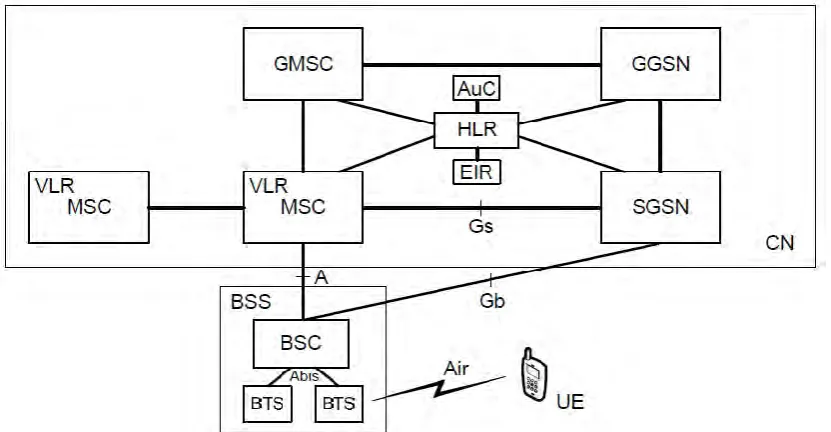
[image:24.595.116.532.434.650.2]2.4 GSM Architecture
Figure 2.1: General Architecture of GSM System