AN ITEM AND ORDER PROCESSING ANALYSIS OF WORD LENGTH, GENERATION AND
PERCEPTUAL INTERFERENCE EFFECTS IN HUMAN MEMORY
Liam Hendry, B. Sc. (Psychology) (Hons.)
A Thesis Submitted in Fulfillment of the
Requirements for the Degree of
Doctor of Philosophy at the
University of Southern Queensland
STATEMENT OF ORIGINALITY
This thesis describes original research conducted by the author. I certify that the ideas,
experimental work, results and analyses reported in this thesis are entirely my own effort,
except where otherwise acknowledged. Data from Experiments 1 to 6 and Experiment
10 have been presented in poster form at the Quebec Short-term and working Memory
Conference in July 2002, and published online in an article in the scientific journal
Memory, January 2004 (Hendry & Tehan). No part of this dissertation has been previously
submitted for an academic award at this or any other university.
Candidate:
Liam Hendry
CONTENTS
LIST OF TABLES
vii
LIST OF FIGURES
viii
LIST
OF
APPENDICES
ix
ACKNOWLEDGEMENTS
x
ABSTRACT
xii
CHAPTER
1.
INTRODUCTION
1
1.1
Background
and
History
2
1.2
The
Working
Memory
Model
3
1.3
The
Word
Length
Effect 4
1.4
Processing
Accounts
of
Memory
4
1.5
Item and Order Information
5
1.6
Item and Order Tradeoffs: Generation and Perceptual Interference
6
1.7
Chapter
Summary
7
CHAPTER 2. THE STANDARD MODEL AND THE WORD LENGTH EFFECT
10
2.1
Decay Vs. Rehearsal in the Original Account
10
2.2
The Baddeley, Thomson and Buchanan Study
11
2.3
Problems with decay and Rehearsal
14
2.4
Alternative Explanations of the Word Length Effect
16
2.4.1
Decay
at
Output
16
2.4.2
Linguistic
Complexity
17
2.4.3
Compilation
Errors
17
2.4.4 Localist Vs. Globalist Assumptions
18
2.4.5
Proactive
Interference 19
2.5
Chapter
Summary
20
CHAPTER 3. THE GENERATION EFFECT AND THE PERCEPTUAL INTERFERENCE EFFECT 23
3.1
Improved Recall from Generation
24
3.2
A
Processing
Account
25
3.3
Reversed
Generation
Effects
25
3.4
Item and Order Processing in Generation
26
3.5
The
Perceptual
Interference
Effect
28
3.6
Processing Tradeoffs in Perceptual Interference
29
3.7
Chapter
Summary
29
CHAPTER
4.
SYNTHESIS
AND
HYPOTHESES
31
4.1
Processing Dissociations in Other Memory Effects
32
4.2
A Processing View of Word Length
32
4.3
Rationale for the Current Design
33
4.4
Modifications to the Nairne et al. (1991) Paradigm
34
4.5
Hypotheses
of
the
Current
Study
35
CHAPTER 5. WORD LENGTH EFFECT EXPERIMENTS
37
5.1
Introduction
and
Predictions
39
5.2
General Method
40
5.2.1 Participants
40
5.2.2 Materials
40
5.2.3 Procedure
41
5.3.1 Participants
42
5.3.2
Materials
and
Procedure
42
5.4
Experiment
1
Results
42
5.4.1
Rationale
for
Analysis
42
5.4.2
Individual
Differences
43
5.4.3 Group Data
44
5.4.3.1
Immediate
Serial
Recall 45
5.4.3.2
Recognition
46
5.5
Experiment
1
Discussion 47
5.6
Experiment 2. Word Length & Delayed Recall
48
5.6.1 Participants
48
5.6.2
Materials
and
Procedure
48
5.7
Experiment
2
Results
48
5.7.1
Individual
Differences
48
5.7.2 Group Data
49
5.7.2.1
Delayed
Recall 50
5.7.2.2
Recognition
50
5.8
Experiment
2
Discussion 51
5.9
Experiment 3. Word Length & Irrelevant Speech
52
5.9.1 Participants
52
5.9.2
Materials
and
Procedure
52
5.10
Experiment
3
Results
52
5.10.1
Individual
Differences
52
5.10.2 Group Data
53
5.10.2.1 Immediate Serial Recall
54
5.10.2.2
Recognition
54
5.11
Experiment
3
Discussion 55
5.12
Chapter
Summary
56
5.12.1
Effect
Size
Estimates
56
CHAPTER 6. GENERATION EFFECT EXPERIMENTS
58
6.1
Rationale
and
Predictions
60
6.2
General Method
60
6.2.1 Participants
61
6.2.2 Materials
61
6.2.3 Procedure
62
6.2.4
Conditional
Scoring
63
6.3 Experiment
4.
Generation
& Immediate Serial Recall
63
6.3.1 Participants
63
6.3.2
Materials
and
Procedure
63
6.4
Experiment
4
Results
63
6.4.1
Individual
Differences
63
6.4.2 Group Data
64
6.4.2.1
Immediate
Serial
Recall 65
6.4.2.2
Recognition
65
6.5
Experiment
4
Discussion 66
6.6
Experiment 5. Generation & Delayed Recall
67
6.6.1 Participants
67
6.6.2
Materials
and
Procedure
67
6.7
Experiment
5
Results
67
6.7.1
Individual
Differences
67
6.7.2.1
Delayed
Recall 68
6.7.2.2
Recognition
69
6.8
Experiment
5
Discussion 70
6.9
Experiment 6. Generation & Irrelevant Speech
71
6.9.1 Participants
71
6.9.2
Materials
and
Procedure
71
6.10
Experiment
6
Results
71
6.10.1
Individual
Differences
71
6.10.2 Group Data
72
6.10.2.1 Immediate Serial Recall
72
6.10.2.2
Recognition
73
6.11
Experiment
6
Discussion 74
6.12
Chapter
Summary
75
CHAPTER 7. PERCEPTUAL INTERFERENCE EXPERIMENTS
77
7.1
Rationale
and
Predictions
79
7.2
General Method
79
7.2.1 Participants
79
7.2.2 Materials
80
7.2.3 Procedure
80
7.3
Experiment 7. Perceptual Interference & Immediate Serial Recall
81
7.3.1 Participants
81
7.3.2
Materials
and
Procedure
81
7.4
Experiment
7
Results
82
7.4.1
Individual
Differences
82
7.4.2 Group Data
83
7.4.2.1
Immediate
Serial
Recall 83
7.4.2.2
Recognition
84
7.5
Experiment
7
Discussion 85
7.6
Experiment 8. Perceptual Interference & Delayed Recall
86
7.6.1 Participants
86
7.6.2
Materials
and
Procedure
86
7.7
Experiment
8
Results
86
7.7.1
Individual
Differences
86
7.7.2 Group Data
87
7.7.2.1
Delayed
Recall 87
7.7.2.2
Recognition
88
7.8
Experiment
8
Discussion 89
7.9
Experiment 9. Perceptual Interference & Irrelevant Speech
90
7.9.1 Participants
90
7.9.2
Materials
and
Procedure
90
7.10
Experiment
9
Results
90
7.10.1
Individual
Differences
90
7.10.2 Group Data
91
7.10.2.1 Immediate Serial Recall
91
7.10.2.2
Recognition
92
7.11
Experiment
9
Discussion 93
7.12
Chapter
Summary
93
8.2.1 Participants
97
8.2.2
Materials
and
Procedure
97
8.3
Experiment
10
Results
97
8.3.1
Individual
Differences
97
8.3.2 Group Data
98
8.3.2.1
Immediate
Serial
Recall 98
8.3.2.2
Recognition
99
8.4
Experiment
10
Discussion
100
8.5
Experiment 11. Generation and Immediate Serial Recall
101
8.5.1 An Alternative Generation Manipulation
101
8.5.2 Participants
102
8.5.3
Materials
and
Procedure
102
8.6
Experiment
11
Results
103
8.6.1
Individual
Differences
103
8.6.2 Group Data
103
8.6.2.1
Immediate
Serial
Recall 104
8.6.2.2
Recognition
105
8.7
Experiment
11
Discussion
105
8.8
Chapter
Summary
106
CHAPTER 9. GENERAL DISCUSSION AND CONCLUSION.
108
9.1
Summary
of
Experiments
109
9.2
Item Manipulation Vs. Encoding Manipulation
110
9.3
Word
Length
and
Word
Frequency
110
9.4
Applying the Item/Order Account to Other Word Length Effects
112
9.5
Theoretical
Implications 114
9.6
Problems
and
Limitations
117
9.7
Conclusion
117
REFERENCES
119
LIST OF TABLES
Table 1
Summary of group data from Experiment 1
45
Table 2
Summary of group data from Experiment 2
49
Table 3
Summary of group data from Experiment 3
53
Table 4
Summary of effect sizes from Experiments 1 to 3
57
Table 5
Summary of group data from Experiment 4
64
Table 6
Summary of group data from Experiment 5
68
Table 7
Summary of group data from Experiment 6
72
Table 8
Summary of effect sizes from Experiments 4 to 6
74
Table 9
Summary of group data from Experiment 7
82
Table 10
Summary of group data from Experiment 8
87
Table 11
Summary of group data from Experiment 9
91
Table 12
Summary of effect sizes from Experiments 7 to 9
94
Table 13
Summary of group data from Experiment 10
97
Table
14 Comparison
of
effect
sizes
101
LIST OF FIGURES
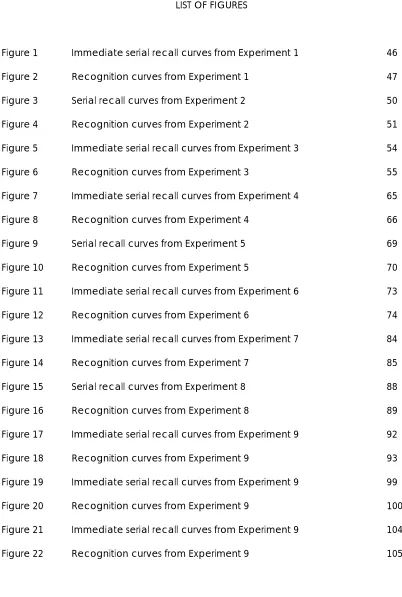
[image:8.595.86.488.107.704.2]LIST OF APPENDICES
Appendix 1
Words used in Experiments involving Word Length
Appendix 2
Words used in Experiments involving Generation
Acknowledgements
This dissertation represents the end point of an 8-year odyssey through the levels
of degrees of Psychology at the University of Southern Queensland. In that time, I
consider I have been most fortunate to have had around me, right from the very first
day, friends, colleagues and teachers of the highest calibre. Like an actor receiving an
Oscar, I have a long list of people to whom I wish to express my deepest gratitude, for
without their help and support I would not be where I am now.
On that very first day of undergraduate Psychology, I met the group of people
who would remain great friends and colleagues throughout the programme to this very
day, and although we have all followed different paths through the various levels of
academic endeavour and are now scattered across the globe, we remain linked by our
common experiences at USQ. For their special friendship and support, my thanks go out
to David Kocinski, Craig Smith, and Nancey Hoare, who have always been there for me
through the ups and downs of all those years of study.
Much can happen in 8 years, David is now a psychologist at the Gold Coast,
Craig is working in San Francisco, and Nancey is still at USQ, also in the Ph.D. programme.
We still have a terrific study group, although the faces have changed, and I feel
privileged to have been working alongside my new colleagues in the Ph.D. room -
Sharron, Geoff, Kerry, Sandra, Maxine, Coralie & Don to name but a few. The friendship
and support of these wonderful people over the last few years has made a difficult task
seem easy and fun. The social aspects of our time together have provided excellent
relief from the rigours of research (special thanks to Maxine- the hostess with the mostest),
and the intellectual benefit of having such a collection of keen minds close by has
provided much discussion and food for thought over the years.
privilege to learn much from some of the finest teachers to be found anywhere, most
notably Terry Carter, Christine Macdonald and Gerry Tehan. I have worked with Gerry
since first year, and as a teacher, supervisor, friend and mentor, I could have asked for
none better. From Gerry, I learned to think like a scientist, which to me is a gift beyond
price. He has shown infinite patience over the years with an unruly student with a
strange sense of humour, and even stranger work habits. All I can do when words fail is
to paraphrase the old Eastern adage: ‘when the pupil is ready, a teacher will come.’
My thanks must also include some truly wonderful members of staff at USQ – from
Toni, Leanne and the ladies at the coffee shop, thanks for the wonderful years of
cappuccinos, to Debbie O’Reilly for organising the Canada trip, to Simon, Rob, Ken, Ross
and Susie for their timely and efficient technical assistance, and to Ruth and Christine at
Research & Higher Degrees. For assistance with data collection, my thanks to Kerry
Neale, Anne Tolan, Julie Wilson and Helen Waters.
The most deserving of my gratitude, however, is my wife Jen, who has for half of
our married life endured housefuls of stressed-out students discussing exams, assignments
and theories day and night while she made literally thousands of coffees, being faced
daily with incomplete renovations and hastily-repaired vehicles – Jen, it’s nearly over,
and with our son Rob we can soon get back to some semblance of normality.
I will always consider my years at USQ to be among the best of my life, and I
thank you all for your friendship, love and support.
Abstract
When participants are presented with lists of items for immediate serial recall, tradition
would suggest that a race begins – between the need to constantly refresh or recycle
the memory trace of that list, and a tendency for the memory trace to decay. Standard
models in the literature assumed a complex interaction of mental subsystems whereby a
controlling attentional process strove to keep the memory of such a list alive for a
sufficiently long period of time so it could be remembered and output in order, using a
type of recirculating loop rehearsal and storage mechanism to offset the decay process.
Evidence supporting such models stemmed from the observation that more short words
could be remembered in order than long words (Baddeley, Thomson, & Buchanan,
1975). This word length effect, described in the second chapter, was a crucial piece of
evidence for rehearsal and decay models, in the example given, the recirculating loop
was seen as being time-based and extremely limited in capacity, such that memory was
deemed equivalent to the amount of information which could be cycled through the
rehearsal loop in about two seconds. A number of recent challenges to this model of
remembering have cast doubt on the nature of the process as described in such models
as that of Baddeley (1990; 1996).
were better remembered, information about their presentation order diminished. This
observation (Nairne, Riegler, & Serra, 1991) was introduced as the item-order hypothesis.
The item-order hypothesis suggested that under certain conditions increased item
processing could lead to deficits in order processing, and that this produced a
dissociation in performance between item and order memory tasks. The generation
effect (Slamecka & Graf, 1978) was one such example, as was the perceptual
interference effect (Mulligan, 2000), and these were discussed in Chapter 3. The word
length effect was seen as another instance where this tradeoff might be observed. A
design incorporating elements of item and order tasks based upon Nairne et al. (1991)
was detailed in the fourth chapter, leading on to empirical testing of the word length
effect (Chapter 5), the generation effect (Chapter 6) and the perceptual interference
effect (Chapter 7). This series of experiments compared word length and generation
effects under serial recall and single item recognition tasks, using a range of test
conditions designed to allow replication and extension of existing data from these
separate streams of research.
Chapter 1 Contents
1.1
Background
and
History
2
1.2
The Working Memory Model
3
1.3
The
Word
Length
Effect 4
1.4
Processing
Accounts
of
Memory
4
1.5
Item
and
Order
Information
5
1.6
Item and Order Tradeoffs: Generation and Perceptual Interference
6
CHAPTER 1
Introduction
1.1 Background and History
George Miller (1956) was the first of the modern researchers to estimate the capacity of
human short-term memory (STM). He suggested the capacity was 'seven plus or minus two' chunks
of information. Whether a 'chunk' of information was defined in terms of digits, letters or words,
Miller's major finding has since been largely interpreted as the ability to retain about seven items in
immediate memory, where items have been typically defined by experimenters as words
(Baddeley, Thomson, & Buchanan, 1975).
Initial attempts to measure the characteristics of forgetting from STM by John Brown (1958)
and Lloyd and Margaret Peterson (1959) spearheaded a wealth of research into the structure and
function of STM. Rapid forgetting from STM was seen to occur when participants were distracted,
for example by having to count backwards in threes while attempting to retain information. It was
felt that Brown and the Petersons provided strong evidence for at least two different memory
systems - in that short-term forgetting displayed different characteristics from forgetting in long-term
memory (LTM). Forgetting over the short-term was seen as a function of time-based decay,
whereas interference was the prime determinant of forgetting in LTM.
Waugh and Norman (1965) developed a model of human memory partitioned into primary
memory and secondary memory, where primary memory referred to the theoretical system they
assumed to be responsible for short-term storage. In addition, they used the descriptor "short term
memory" to refer to an experimental situation in which typically a small amount of information is
retained over a short period of time (Baddeley, 1990). Secondary memory was assumed to reflect
a long-term store. Their major contribution to the field was the thought that both primary and
secondary memory systems could be involved in STM, as well as LTM tasks.
a short term store, then a long-term store. The short-term store was seen to have a very limited
capacity. It was also described as a 'workspace' where information could be rehearsed and or
processed. It could retain information for up to 30 seconds, this information being stored in a serial
order manner. Information from the long-term store could be retrieved in parallel fashion i.e. many
items at once. The short-term store was also believed to operate on acoustic information, whereas
the long-term store operated primarily on semantic information. The main attraction of the
Atkinson and Shiffrin (1968) model was that they specified a number of distinct stores - but more
importantly, they described how information passed from store to store.
1.2 The Working Memory model
By the middle of the 1970's, most of the assumptions which underpinned the Atkinson and
Shiffrin model had been disputed, and at the same time a new model of immediate memory was
emerging. Existing ideas of multiple stores were expanded by Alan Baddeley in 1966, in an
ongoing process culminating in the in the working memory model (Baddeley & Hitch, 1974;
Baddeley et al., 1975). The working memory model was initially tripartite, comprising a Central
Executive, which controlled and allocated resources, a Visuo-Spatial Scratchpad for the storage
and manipulation of visual imagery, and a Phonological Loop for the recycling of verbal (acoustic
or auditory) information.
That is, immediate recall involved counteracting the decay process by continuous rehearsal of the
to-be-remembered items (Baddeley, 1996). Viewing the process of short-term memory
performance in terms of a race between decay and rehearsal has become widespread in many
current formal models of immediate memory (Nairne, 2002).
1.3 The Word Length Effect
One of the cornerstones of the trace decay plus rehearsal (TDR) models is the word length
effect (WLE), the finding that immediate serial recall for short words is better than for long words.
The basic assumption here is that rehearsal occurs in real time and that in any given period of time,
more short words can be rehearsed than long words. Further support for this notion was that the
word length effect was eliminated when rehearsal was prevented by the use of articulatory
suppression (Baddeley et al., 1975). The word length effect is a robust phenomenon when length is
measured in terms of the number of syllables and much is known of its boundary conditions.
The locus of the word length effect was initially identified as the spoken duration of words,
however recent research has questioned this explanation, as well as the more general proposition
that immediate serial recall can be sufficiently explained in terms of the decay-rehearsal tradeoff.
In Chapter 2, the word length effect will be examined in detail, and for present purposes it is
sufficient to note that it has no universally accepted explanation. The current thesis tests a new
explanation of the word length effect.
1.4 Processing Accounts of Memory
secondary, or long-term and short-term, their model concentrated on how information was
processed. The durability of memory was seen more as a function of the amount or quality of
processing given to information. The deeper an item was processed, the easier it would be to
remember.
According to this approach, the strength of a memory is related to the depth of the
encoding process, which is of itself a continuum. An example of depth of processing would be
where participants are shown a list of words, and asked to make different types of judgements
about each word, relating to processing levels. A shallow processing approach would deal with
the appearance of the word (for example, 'was the word in uppercase or lowercase?') An
intermediate processing level question might ask 'does the word rhyme with fish?'; and a deep
processing question might require the participant to see whether the word fits into a blank space
to make a meaningful sentence, or perhaps to rate items on an emotional dimension such as
pleasantness. Results typically were interpreted to mean that deeper processing produced better
recall. As there was no direct measure of processing depth, it was somewhat roundly assumed
that the better-recalled words were those which had received deeper processing. While the
circularity of the assumption is not fatally problematic for levels of processing models (Searleman &
Herrmann, 1994), it has led to wide criticism of this approach in the literature (e.g. Baddeley, 1978).
1.5 Item and Order Information
overall performance on a recognition test, and relational processing had a beneficial effect in free
recall in terms of the clustering of related items (Einstein & Hunt, 1980). However, recall was
maximised when both item and relational information were successfully used in combination.
The distinction between item and relational processing has subsequently been applied to
numerous effects in the study of human memory. There are two important extensions of this work
that form the basis for the current series of experiments. The first is that other researchers have
taken serial order information to be a form of relational processing. Secondly, with item and order
processing as a research focus, more recent memory studies have provided examples of situations
where they are seen to dissociate, depending upon the type of memory task employed.
1.6 Item and Order Tradeoffs: Generation and Perceptual Interference
One crucial development of the item/order literature has been the assumption that under
some circumstances item processing and order processing can trade-off and this produces
dissociations in memory performance on tasks assumed to be differentially sensitive to item or order
processing. The generation effect and the perceptual interference effect, for example, have
recently been explained in such terms (DeLosh & McDaniel, 1996; Engelkamp & Dehn, 2000;
Mulligan, 1999, 2000; Nairne, Reigler & Serra, 1991).
The Nairne et al. (1991) study is particularly relevant to the hypotheses of this paper. In
three experiments, they investigated the effects of generation on item and order retention, using
different memory tasks within the same experiments. In their procedures participants either read
items as they appeared on a screen or generated items from a word fragment, e.g. umbr_lla.
Each list contained a small number of items that were processed in either of the above ways. At
the end of each list participants attempted either serial recall after a brief retention interval or they
were told to not respond and simply wait until the next trial began. After the lists had been
items that had been generated were better recognised than the read items. In short, on a test of
order there was a read advantage but on a test of item information there was a generate
advantage: The different types of processing dissociated on the two types of test. The Nairne et al.
(1991) explanation for the above results is that generation requires more item processing than does
simply reading an item and that the facilitative effects of extra item processing will be evident on a
test of item memory, such as recognition. However, if the task involves order processing, extra
resources being devoted to item processing will necessarily lead to decreased time or resources
being devoted to order processing, given that both item and order processing must be done in the
same limited time frame. Thus, generated items will not receive much order processing because
more time/resources are being spent on item processing and this deficit will become manifest in an
order memory task, such as immediate serial recall. In short, the dissociation across memory tasks
stems from a differential tradeoff in item and order processing.
As mentioned earlier this form of reasoning has been extended beyond the generation
effect. For example, Mulligan (2000) found an equivalent pattern of results with a perceptual
interference task. Again, items were either read or each item was presented briefly followed by a
visual mask. Lists were tested for either serial recall or a later item recognition test. The read items
were better recalled than the masked items on serial recall, but the masked items were better
recognised than the read items. Mulligan argued that masking an item required additional
processing resources to be expended at the item level, reducing the degree of order processing
performed.
1.7 Chapter Summary
words in immediate serial recall, because they have received more order processing. The key
prediction is that long words will be remembered more often in an item recognition test.
This thesis is organised around a series of experiments which explore word length,
generation and perceptual interference effects in such a manner as to make the patterns of results
directly comparable. The experimental paradigm used is very similar to that used by Nairne et al.
(1991. In all cases order information is tested using immediate serial recall and item information is
tested via a final surprise item recognition test. As the same basic method is used for all the
experiments, a consistent pattern of results across the three effects would provide evidence of a
generalised processing similarity. If this pattern emerges, it would no longer be necessary to
consider the word length effect as a purely short-term phenomenon, and by extension it may no
longer be necessary to view human memory in terms of a multicomponent model, if a simpler
unitary system based on processing differences would suffice.
The item/order processing tradeoff approach potentially provides a very different account
of standard serial recall effects. From this perspective, no special stores are required, and
Chapter 2 Contents
2.1
Decay Vs. Rehearsal in the Original Account
10
2.2
The Baddeley, Thomson and Buchanan Study
11
2.3
Problems with decay and Rehearsal
14
2.4
Alternative Explanations of the Word Length Effect
16
2.4.1
Decay
at
Output
16
2.4.2
Linguistic
Complexity
17
2.4.3
Compilation
Errors
17
2.4.4
Localist
Vs.
Globalist
Assumptions
18
2.4.5
Proactive
Interference 19
CHAPTER 2.
The Standard Model and the Word Length Effect
From the introductory notes in Chapter 1, the word length effect has been represented as a
robust and stable short-term memory effect, about which much is known in the literature, yet it is
now proposed to examine it from such a novel perspective as item and order processing tradeoff
effects. If an existing theoretical framework was already providing an adequate explanation of
the word length effect, it would seem unnecessary to advance an alternative theory. A review of
the word length literature, however, reveals there are already several competing theories, with
many studies reporting apparently contradictory data.
2.1 Decay Vs Rehearsal in the Original Account
The original account of the word length effect was provided by Baddeley, Thompson and
Buchanan (1975). By observing reliable span differences between lists of monosyllabic and
polysyllabic words, they were the first to empirically show that short-term memory capacity was not
a function of a fixed number of items, rather a function of the spoken duration of those items. A
model of working memory eventuated from these and additional data (Baddeley & Hitch, 1974),
comprising a Central Executive to oversee the processing and storage of information, a
Visuo-Spatial Scratchpad for the manipulation and storage of visual information, and an Articulatory
Loop for both processing of auditory inputs, and the encoding from visual into auditory codes of
visually presented verbal information. This model has evolved (Baddeley, 1996; Cowan, Baddeley,
Elliott, & Norris, 2003; Gathercole, 1997)and withstood three decades of research, often with
contradictory findings, to become established in textbooks and scientific journals. Memory models
such as that of Baddeley, which are based on assumptions of trace decay and rehearsal, have
been described under the general title of the Standard Model (Nairne, 2002).
the components reserved for storage, particularly that of phonological information, memory traces
for items such as words were thought to rapidly decay unless they were actively and continuously
rehearsed. The Phonological Loop is of most interest to short-term memory researchers, as it is seen
as the process by which verbal material is rehearsed and recycled in order to be remembered.
Since the Baddeley et al. (1975) article was published, the Phonological Loop in his model has
been further divided into two separate components: the Phonological Store in which items are
placed, where they decay rapidly unless refreshed by rehearsal, and the rehearsal process,
responsible for simple rehearsal as well as the translation of visually presented material into an
acoustic code (Gathercole, 1997).
2.2 The Baddeley, Thompson and Buchanan study
The word length effect is intimately related to this conception of memory. From the results
of eight experiments, Baddeley et al. (1975) concluded the following:
(1) That memory span was sensitive to word length across a range of verbal material. In the first
experiment, using small closed word pools, a recall advantage was found for short (monosyllabic)
words across list lengths ranging from four to eight items. To control for linguistic differences
between short (mainly Anglo-Saxon) and long (mainly Latin) words, the second experiment
compared short and long country names, again using closed small word pools, and again a clear
advantage was found for the short (monosyllabic and disyllabic) items when tested in lists of five
items.
(2) That the word length effect remained even when the number of syllables and the number of
phonemes were held constant, and all that varied was the spoken duration of the words. Their
third experiment reduced the distinction between long and short items from an obvious difference
in the number of syllables to the spoken duration of those items when syllabic length was the same.
All items were disyllabic, the short word lists comprised words of a shorter spoken duration as
items) and closed. Five-item lists were tested at a 2 second presentation rate, with recall paced by
use of a metronome. Again, shorter items were recalled more often, but only in the first three list
positions. Baddeley et al.’s fourth experiment further refined the difference between long and
short items, with the number of phonemes also held constant. This reduced the closed word pools
to only five items, which were presented at the rate of one per second. A recall advantage for the
shorter items was again evident, across all serial positions. This and the preceding experiments had
utilised auditory presentation, however when the experiment was repeated using visual
presentation at a 2 second rate, no effect of word length was found. The absence of an effect
was explained in terms of participant strategies, with the 2 second per item presentation rate
allowing some participants to use imagery rather than rehearsal. Their fifth experiment, therefore,
replicated the preceding one with visual presentation and instructions to participants to rehearse.
A recall advantage was again found for the shorter items, and additional measures were taken to
assess reading rate and articulation rate.
seconds, suggesting that the capacity of short-term memory was constant when measured in units
of time, rather than units of structure (Baddeley et al., 1975).
4) That concurrent articulation (which prevented participants from rehearsing) removed the word
length effect under visual presentation conditions. Baddeley and his colleagues suggested that if
memory traces were subject to decay, and that decay was offset by refreshing the memory traces
through the process of rehearsal, then preventing rehearsal should remove the effect of word
length, because the rehearsal process was seen as the locus of the effect. If short term memory
depended upon a time-based rehearsal process, it followed that more short words could be
rehearsed than long words in the estimated 1.8 seconds. Recall for one syllable and five syllable
words was tested in the seventh experiment with rehearsal prevented for one group by the use of
articulatory suppression. The group using suppression failed to show any effect of word length,
while the control group produced a clear advantage in recall for the short words. This result,
however, was premised on the assumption that articulatory suppression (requiring participants to
repeatedly articulate an irrelevant or neutral item during presentation of lists of words) prevented
rehearsal. The eighth experiment provided data suggesting that the effect of suppression
depended upon list presentation modality, and could be observed with visual presentation but not
with auditory presentation. This result in particular suggested a multicomponent model, with
different systems involved in processing visual and verbal inputs. The articulatory process,
vulnerable to suppression, was seen as the means of converting visual stimuli into acoustic or
phonemic information, under the assumption that short-term memory traces are phonemic in
nature. Auditory stimuli, however, required no conversion and directly accessed the store, and
were thus relatively unaffected by suppression.
could be read aloud in approximately two seconds. The strong linear association between
reading rate and span was described as “remarkably straightforward” (Baddeley et al., 1975,
p.583.), but it is possible that the fast readers were good memorisers because of the influence of
another unexplored variable.
The reading rate/span relationship has been used to explain materials (Schweickert &
Boruff, 1986), developmental (Hulme, Thomson, Muir & Lawrence, 1984) and cross-linguistic (Ellis &
Hennelly, 1980) differences in memory span. Because time, and not a fixed amount, was now seen
as the underlying measure of immediate memory, it followed that more shorter items would be
rehearsed in the same amount of time than longer items, as reflected in the word length effect.
To summarise, models of memory such as that of Baddeley (1996) view the word length
effect as being indicative of a tradeoff between decay and rehearsal (Neath & Nairne, 1995) in an
immediate memory system, such that if rehearsal does not occur quickly enough, the memory
trace of an item ‘will have decayed too far to be usable’ (Neath & Nairne, 1995, p.429.).
2.3 Problems with Decay and Rehearsal
words and nonwords (Service, 1998). These data seem to limit the generality of spoken duration as
an adequate explanation of the word length effect, and thus cast doubt on an explanation of
immediate memory based on a race between decay and rehearsal.
Other challenges to decay-rehearsal models include instances where rehearsal rate and
span dissociate. Thus, it is possible to match items for spoken duration and still see differences in
span (Hulme, Maughan & Brown, 1991; Schweickert, Guentert & Hersberger, 1990). Likewise it is
possible to see differences in spoken duration without accompanying changes in span (Caplan et
al., 1992; Service, 1998). It should be noted, however, that while spoken duration manipulations
may or may not precipitate a reliable word length effect, the manipulation of number of
syllables/phonemes remains a robust method of demonstrating it.
2.4 Alternative Explanations of the WLE
2.4.1.
Decay at output.
An alternative explanation for the word length effect (the output time / decay model of
Cowan and his colleagues) also involves decay, but it occurs during the recall (output) process
rather than during the study of lists. Word length effects were examined in lists containing a mixture
of short and long spoken duration words (Cowan et al., 1992). Spoken duration effects seemed to
be stronger in the later serial positions than in the earlier serial positions. In lists with longer duration
items in the earlier serial positions, recall was worse for items that were recalled towards the end of
the list. The interpretation was that the act of recalling the early items affected retention of the
later items. As items of longer duration were being recalled, the representations of the later items
were undergoing more decay in active memory than when items of shorter duration were being
recalled first. The longer it took to recall the initial items the harder it became to retrieve the later
items. According to this account, the word length effect was occurring because of differential
amounts of decay during the recall process itself resulting from the duration of the early items,
rather than during rehearsal prior to recall. The locus of the effect was placed firmly at output, and
if so, then it is difficult to assert that rehearsal and output could be occurring simultaneously
(Nairne, 2002).
Twelve seconds of doing mathematics problems should have provided sufficient time for trace
decay to occur in the absence of rehearsal. This finding has recently been replicated and
extended using free and serial recall with delays of up to 60 seconds, and open and closed word
pools (Russo & Grammatopoulou, 2003).
2.4.2
Linguistic complexity.
Yet another explanation for the word length effect is the linguistic complexity argument put
forward by Caplan, Rochon and Waters (1992). Monosyllabic and polysyllabic words differ on a
wide range of possible measures, and in the linguistic complexity hypothesis the word length effect
results from differences in complexity of output plans for the short and long words. To test this idea
they used words that differed in spoken duration but were matched for number of syllables and
phonemes. In their version of the task, participants were to respond by pointing to pictures of the
words. Under conditions requiring no verbal output at recall, long spoken duration (more complex)
words enjoyed a recall advantage in an apparent reversal of the word length effect. These and
similar findings have produced both debate and further empirical evidence (Baddeley & Andrade,
1994; Caplan & Waters, 1994; Cowan, Nugent, Elliott & Geer, 2000; Service, 1998, 2000) and this
issue remains unresolved.
2.4.3
Compilation Errors.
This model has been tested using simulations (Neath & Nairne, 1995) and has displayed
many classic short-term memory effects. It models word length effects by seeing each list item as
itself a list of segments. The numbers of segments do not correspond with the numbers of features
of list items, and for the purposes of simulation the numbers of features were held constant
between long and short items. Item length was defined as the number of segments in an item,
and the reasoning was that longer items with more segments had therefore a greater probability of
assembly error, due to the compounding of error associated with each segment. When segments
were used as a measure of word length, simulation results showed a relationship between number
of segments and correct recall, such that correct recall declined as the number of segments
increased from 1 to 13.
Neath and Nairne (1995) also simulated the effect of articulatory suppression, and found it
eliminated the word length effect. Their model, however, could not accommodate the findings of
LaPointe and Engle (1990) above, who reported a word length effect to be resistant to suppression
when a large pool of unique items was used.
The lack of any definition or idea as to what constitutes a segment is also problematic for
this account, however its replacement of time-based decay with the probability of matching
traces of segments provides a contrasting view of forgetting. If a memory trace can be likened to
the striking of a tuning fork, decay theory would have the note gradually lose its intensity until it
became inaudible, whereas the feature model would suggest the tone remained undiminished,
but with an associated probability that the vibrations of the fork could be suddenly muffled out at
any given time.
2.4.4
Localist Vs Globalist Assumptions.
individual items which affect their recall regardless of the other list items. Using six-item lists for
immediate serial recall in which the proportion of long and short items was varied (short items were
of one syllable, and long items were five syllables, both from small closed pools) from pure lists of
long items through to pure lists of short items, they reported a word length effect between the pure
lists which disappeared under articulatory suppression. Although this effect was statistically
significant (F (1,39) = 4.60, p. < .04) the F-ratio is surprisingly small given the size of the data set and
the magnitude of the ratio for suppression in the same analysis (F (1,39) = 82.48, p. < .001).
Serial recall performance in the mixed lists decreased as the proportion of long items in lists
increased, another effect which disappeared under suppression. Critically for the localist account
(e.g. Neath & Nairne, 1995), a prediction that the proportion correct for long and short items, when
examined separately, should not differ as a result of the proportion of long items in lists was
disconfirmed. In addition, anomalies in some of the results, including the presence of word length
effects under suppression and a clear isolation effect (von Restorff, 1933) in lists with one item of
different length, would not appear to support predictions derived from the Phonological Loop
model in its current form. The authors contended it was possible that participants were using
visuo-spatial storage to aid recall, or that the Phonological Loop was selectively being used for
rehearsing long items only. In general, although their data appeared to support a globalist view,
they could not be well described by the Baddeley model without some major renovations. In fact,
the data did not easily support any of the models described, and the authors concluded that a
different “flavour” of any one of the models would be required, rather than concluding the data
supported a particular model as it now stands.
2.4.5
Proactive Interference.
in recall between the groups. A different group received 24 lists of long and short words. The word
length effect was not evident on the first four trials, as previously, but became apparent as more
lists were presented.
These results supported the notion that the word length effect is related to proactive
interference and that PI and word length effects build up over lists. Tehan and Turcotte (2002)
have recently attempted to replicate the Nairne et al. (1997) study by using the Cowan et al.
(1992) words, but also including a stronger manipulation of word length by varying the number of
syllables in the short and long words. The study concluded that PI effects were not reliably
observable but word length effects were. These data cast doubt on the viability of a PI
explanation for word length effects, yet continued to support the notion of a syllable/phoneme
manipulation producing a more reliable word length effect than a manipulation of spoken
duration.
2.5 Summary and Conclusions
From the above studies, it can be suggested that traditional trace decay and rehearsal
explanations are not sufficient to explain the word length effect under a range of methodological
conditions, and alternative theories are at best problematic. In this environment, the possibility
exists for another approach to be explored, using a combination of the recall techniques and
conditions described above. A suitable perspective to investigate is the item and order processing
tradeoff approach described in the first chapter. In many of the memory studies previously
described, immediate serial recall is an order task where the word length effect has often been
observed. The tradeoff approach to word length would suggest that item recognition for long
words should be more successful than for short words, once a recognition task has been
The irrelevant speech paradigm refers to an experimental situation where memory tasks,
such as serial recall, are performed with an audible distractor, such as a foreign voice speaking in
the background (Neath, 2000). In a summary of studies which used irrelevant speech, the robust
findings have been that it eliminates, or at least diminishes, the word length effect in both visual
and auditory presentation modalities, and affects word length in the same manner as articulatory
suppression, though not as seriously (Neath, 2000).
In terms of the Phonological Loop model, the two conditions should affect memory for
words in different ways. Irrelevant speech, by providing an additional source of auditory
information, interferes with items in the phonological store, degrading their traces in some
unspecified manner. Articulatory suppression affects the Phonological Loop by preventing
rehearsal of items, which then decay. This crucial theoretical difference between them has been
observed in the pattern of results from the above complementary experiments using the word
length effect (Neath, 2000).
These different tasks provide known patterns of results for the word length effect, and form
a basis for replication of these effects when word length effect is approached from an item/order
processing tradeoff perspective. Word length in immediate serial recall, with the addition of a final
surprise recognition test, is a suitable starting point, as patterns of recall performance are robust
and stable in the literature.
Grammatopoulou, 2003), further replication will establish a pattern for comparison with the other
effects (generation and perceptual interference) to be explored in this study.
Test parameters are therefore chosen and word length effects examined under a common
framework where a short-term memory account would predict word length effects in immediate
but not delayed serial recall. In addition, a further examination can be made of word length
effects under more controversial test conditions, such as irrelevant speech and articulatory
Chapter 3 Contents
3.1
Improved Recall from Generation
24
3.2
A Processing Account
25
3.3
Reversed
Generation
Effects
25
3.4
Item and Order Processing in Generation
26
3.5
The
Perceptual
Interference
Effect
28
3.6
Processing Tradeoffs in Perceptual Interference
29
CHAPTER 3
Generation and Perceptual Interference Effects
If a to-be-remembered word is not simply read aloud from a list, but has to be generated
during study from a stimulus or cue, improved memory for the self-generated words usually results.
In a typical generation experiment, participants are presented with two types of words. Some of
the words are intact (control items), and are simply read aloud as they are presented to
participants. The experimental items are presented as cues, and participants must generate an
appropriate response. Memory is then compared for the control and generated words, and the
items which had to be generated tend to be recalled more often.
3.1 Improved Recall from Generation
This effect was first explored by Slamecka and Graf (1978), who reported improved recall of
items generated from semantic associates as well as rhyme cues. In their first experiment, stimuli in
the experimental condition involved presenting a word, an associated rule, and the initial letter of
the desired response. An example of an item from the experimental condition was given as
“synonym: rapid – f…” In this case participants were required to generate a synonym for rapid
which began with the letter f, i.e. fast. Rules used in the experiment were synonym, associate,
category, opposite and rhyme.
Once participants had completed the study phase, they were given a recognition test,
which required them to choose the correct response from three alternative answers for each
stimulus. Participants were told before the test that the recognition task would follow the study
phase. Recognition probabilities were significantly greater for generated items than for those
simply read aloud across all rules, and regardless of whether generation was timed or self-paced.
The second experiment introduced changes to the design (from between to
made a difference to the pattern found in the previous experiment. Slamecka and Graf (1978)
reasoned that generated items required more attention and processing than the simply read
items, and in further experiments demonstrated that the generation effect was occurring with
responses and not with stimuli (at output but not at study), and in cued and multitrial free recall as
well as in recognition tasks.
3.2 A Processing Account
Although the study reported above was largely exploratory and descriptive, suggestions
were made by the authors as to the potential theoretical background of the effect. Among their
speculations was the possibility that the generation effect could be explained from a processing
perspective, with the self-generated items requiring a “more profound processing level” than
simply read controls (Slamecka & Graf, 1978, p. 602). Other possible explanations they advanced,
such as a paired-associates approach, where the generation task “forces a distinctive encoding of
the relation between stimulus and response” (Slamecka & Graf, 1978, p. 603), would by their nature
presumably require more intensive processing than controls.
Further studies revealed generation of items from antonyms, definitions, translations from
other languages, and from abbreviations and word fragments all led to improved recall (Mulligan,
2001). The effect has been observed in such memory tasks as free recall, cued recall, and
recognition, as well as in both intentional and incidental learning situations (Burns, Curti, & Lavin,
1993). To date, the generation effect has been described only as a long-term memory
phenomenon (Burns et al., 1993; Nairne, Riegler, & Serra, 1991) although some of these studies
have employed experimental situations more common to short-term memory research.
3.3 Reversed Generation Effects
aloud were better remembered than the generated items) have been reported in a series of
experiments by Burns (1986; Burns et al., 1993).
Burns and his colleagues (1993) studied generation effects using measures of immediate
and delayed recall and order reconstruction, as well as a final recognition test. Generation was
manipulated by using word fragments as stimuli, with a missing letter replaced by a hyphen in the
word, such that there was only one legal solution to the fragment. They found results to vary with
delay period and distractor difficulty, such that control items were better recalled than generated
items under an ‘easy’ distractor (making odd/even judgements on numbers) and generated items
were better recalled than controls under a ‘difficult’ distractor (recalling numbers), but only after
an 80-second delay. They did, however, find a general advantage for generated items over
controls on an unexpected final recognition task in each case, as did DeLosh & McDaniel (1996).
Patterns such as these have led some researchers (e.g. Burns et al., 1993; Nairne et al., 1991) to
conclude that generation has opposite effects on item and order processing.
3.4 Item and Order Processing Tradeoffs in Generation
Partitioning memory for a list of items into item and order processing has been found useful
in a number of relatively recent memory studies, and is deemed necessary because different
memory tasks as used in the above studies seem to be measuring different aspects of list memory.
Immediate serial recall and order reconstruction (where the items from a recently-presented list are
re-displayed in a different random or alphabetical order, to be reconstructed into their original
order of presentation), for example, involve the necessity to remember list items in their correct
presentation order, whereas tasks such as recognition and free recall do not necessarily require the
retention of order information, focussing instead on the items themselves.
Item-specific processing, in those studies which examined it (Burns et al., 1993; Engelkamp
& Dehn, 2000; Nairne et al., 1991), has generally been measured using a recognition test, where
words from the studied lists are randomly mixed with distractor items which were not in the
experiment. The test is typically given after the conclusion of the experiment, with items either
presented individually or on a list, and participants asked to identify whether or not each word had
been used in the experiment.
A general pattern has emerged which suggests that generating items has a positive effect
on item retention, with a corresponding negative effect on order retention (Engelkamp & Dehn,
2000; Mulligan, 2001). The direction of generation effects seems to be dependent upon the type
of recall test used. If memory for order is required, the negative effect is found, but when memory
for individual items is tested, the standard generation effect is observed (generated items are
remembered more often).
Exceptions extend mainly to situations where recall is required after a long (80 second)
delay (Burns et al., 1993) or where the number of generated items within lists was manipulated
(Kelley & Nairne, 2001). These results are not necessarily at odds with the general pattern, as the
long delay in the Burns et al. (1993) study mirrored the generation advantage found in final
recognition tests, while the mixed-list manipulation of Kelley and Nairne is likely to have produced a
special case of the von Restorff (isolation) effect, as noted in their discussion.
Notwithstanding the above exceptions, a reasonably robust pattern of generation effects
can be predicted in order reconstruction and item recognition tasks. The advantage of
generated words over control items in final recognition tests is undisputed to date (Burns et al.,
1993; DeLosh & McDaniel, 1996; Engelkamp & Dehn, 2000; Greene, Thapar, & Westerman, 1998;
Nairne et al., 1991; Mulligan, 2001). Additionally, the recall advantage for simply read words in
order tasks has been found over a range of presentation rates, varying from 500 to 3000
generalised to experimental designs (such as immediate serial recall) traditionally used in
short-term memory research, as noted in the previous word length effect chapter.
In summary of the generation effect, one of the critical assumptions of this dissertation is
addressed – that there is a ‘difficulty’ dimension underlying the generation effect. When
considered from a processing perspective, it does not seem unreasonable to suggest that items
which must be generated from a cue would require more mental processing than control items
which are simply read aloud by participants, as originally suggested by Slamecka and Graf (1978).
The additional processing load involved in generating a word from a cue adds a level of
complexity relative to an equivalent control item, which is seen by Nairne et al. (1991) as
enhancing item-specific information in the memory trace, but at the expense of order-relational
information. That is, the above results appear to be showing a tradeoff in item and order
processing, to the extent that additional processing of an item relates to a decrement in the
available information about its order on a list.
3.5 The Perceptual Interference effect
Although a relatively new phenomenon in the memory literature, the perceptual
interference effect, first described by Nairne (1988) is beginning to provide data which support the
item-specific/order-relational processing distinction currently being advanced to explain the
generation effect. If the perception of a word is interfered with (backward masked) during
presentation, improved memory for that word relative to another item displayed without
interference tends to result (Mulligan, 2000).
interference)condition across a variety of tasks including, but not limited to, recognition, free recall
and cued recall (Mulligan, 2000).
3.6 Processing Tradeoffs in Perceptual Interference
Akin to the effects of generation described earlier, however, there are instances when
perceptual interference effects are eliminated or reversed. Perceptual interference has been
shown to disrupt order memory, when measured by an order reconstruction test. Mulligan (2000)
found that perceptual interference disrupted performance on tests of absolute order in the same
manner as it did with generation (Greene et al., 1998). In fact, similarities in memory test
performance between perceptual interference and generation are quite striking. Both, under
similar conditions, appear to enhance the processing of individual items at the expense of order
processing (Nairne, 1988; Westerman & Greene, 1997).
Other similarities between perceptual interference and generation include the observation
that both effects are less likely to occur with unfamiliar words and nonwords (Westerman &
Greene, 1997), and that both effects are found to be more prevalent in within-subjects than in
between-subjects designs (Mulligan, 2000). Such effects are also likely to be stronger in mixed lists
(lists containing, for instance, read items as well as generated items) than in pure lists (DeLosh &
McDaniel, 1996), and, by extension, may even be a function of list length (Engelkamp & Dehn,
2000). In a similar manner to the generation literature, perceptual interference has been mainly
studied from a long-term memory perspective, albeit under conditions which have many features
in common with the traditional approach to short term memory studies involving the word length
effect previously described. In both cases, the theoretical long-term/short-term distinction is
becoming less important as a more generalised processing view is applied.
3.7 Chapter Summary
The following chapter integrates the separate streams of research described above with the word
length effect from the previous chapter, to result in a design which will allow the relative
Chapter 4 Contents
4.1
Processing Dissociations in Other Memory Effects
32
4.2
A Processing View of Word Length
32
4.3
Rationale for the Current Design
33
4.4
Modifications to the Nairne et al. (1991) Paradigm
34
CHAPTER 4.
Synthesis: Word Length, Generation and Perceptual Interference - A Processing View
4.1 Processing Dissociations in Other Memory Effects
The concept of a tradeoff between item-specific and order-relational processing
suggested in the generation effect and perceptual interference literature has also been
advanced to explain dissociations in recognition and order reconstruction or free recall
performance in a number of other domains. Thus, word frequency (DeLosh & McDaniel, 1996),
bizarreness (McDaniel, Einstein, DeLosh, May & Brady, 1995) and enactment (Engelkamp & Dehn,
2000) effects have all been investigated and explained in terms of differential item and order
encoding. In each case, it appears that adding any extra processing load associated with
difficulty or complexity in one set of items relative to a control set will benefit item processing but
diminish order processing.
4.2 A Processing View of Word Length
From the conclusion in Chapter 2, no existing hypothesis can fully and adequately explain
the word length effect. Therefore, there is sufficient reason to re-examine it from the perspective of
processing, which has become an effective explanation of the generation and perceptual
interference effects. To begin, an obvious assumption is that long words necessitate more
Firstly, lexical access variables play an important part in span (Brown & Hulme, 1995; Tehan
& Lalor, 2000) so the possibility remains that the word length effects in short-term recall might in
some way be related to lexical access differences. Secondly, the item/order processing tradeoff
has provided a viable explanation for other effects in the memory literature, and may readily
extend to the word length effect if indeed there are processing differences between items of
differing length.
Given that there appears to be an item/order trade-off pattern emerging with varying
types of ‘difficulty’ or ‘complexity’ manipulations exemplified by generation and perceptual
interference, it would seem reasonable to extend this hypothesis to the word length effect. If long
words are more difficult to process, processed more slowly or require additional item processing
relative to short words, fewer resources would subsequently be available for order processing. As
such, the processing tradeoff approach predicts that a short word advantage should be apparent
with order tasks. However, the extra item processing associated with the long words should
produce a long word advantage in item tasks.
4.3 Rationale for the Current Design
In order to directly compare patterns of processing tradeoff effects across word length,
generation and perceptual interference, a design is required which permits systematic
examination of all three effects within a framework which allows direct comparisons to be made.
Disregarding memory models which contain separate components with related memory tasks
suited to each, the current approach requires simply a task which measure item processing,
combined with one which assesses order processing. These tasks are linked within an experiment
whose parameters are suited to exploring all three memory effects while allowing for replication of
existing data. The experimental framework developed by Nairne et al. (1991) is considered a
useful starting point because it allows for item and order processing to be examined concurrently.
fragment (with one letter missing, for example ‘f_sh’) and participants were required to generate a
word from that cue (in this case ‘fish’). Fragments were carefully constructed so that there was
only one possible legitimate English word which could be made from each fragment. The
remaining lists contained complete words that were simply read aloud. Participants were
instructed that they needed to be able to recall the eight items on each list after a 30 second
distractor activity.
After the filled delay, the provided recall cue determined the participant’s response. If a
line of asterisks was presented, participants were instructed not to respond, but to simply wait for
the next list. However, if no asterisks appeared, the items from the list were instead presented in a
different random order and participants were requested to rearrange the words into their original
presentation order.
As well as the order reconstruction task, the experiment also contained a final surprise