This is a repository copy of Overview of the massive young star-forming complex study in infrared and X-ray (MYStIX) project.
White Rose Research Online URL for this paper: http://eprints.whiterose.ac.uk/84010/
Version: Accepted Version
Article:
Feigelson, ED, Townsley, LK, Broos, PS et al. (16 more authors) (2013) Overview of the massive young star-forming complex study in infrared and X-ray (MYStIX) project. Astrophysical Journal, Supplement Series, 209 (2). 209 - 226. ISSN 0067-0049
https://doi.org/10.1088/0067-0049/209/2/26
[email protected] https://eprints.whiterose.ac.uk/ Reuse
Unless indicated otherwise, fulltext items are protected by copyright with all rights reserved. The copyright exception in section 29 of the Copyright, Designs and Patents Act 1988 allows the making of a single copy solely for the purpose of non-commercial research or private study within the limits of fair dealing. The publisher or other rights-holder may allow further reproduction and re-use of this version - refer to the White Rose Research Online record for this item. Where records identify the publisher as the copyright holder, users can verify any specific terms of use on the publisher’s website.
Takedown
If you consider content in White Rose Research Online to be in breach of UK law, please notify us by
See complete version at http://www.astro.psu.edu/mystix
Accepted for Astrophysical Journal Supplements, August 2013
Overview of the Massive Young Star-Forming Complex Study in
Infrared and X-ray (MYStIX) Project
Eric D. Feigelson∗1,2, Leisa K. Townsley1 , Patrick S. Broos 1, Heather A. Busk1 , Konstantin
V. Getman1 , Robert King3, Michael A. Kuhn1 , Tim Naylor3 , Matthew Povich1,4 , Adrian Baddeley5,6 , Matthew Bate3, Remy Indebetouw7 , Kevin Luhman1,2 , Mark McCaughrean8 ,
Julian Pittard9 , Ralph Pudritz10 , Alison Sills10 , Yong Song5 , James Wadsley10
ABSTRACT
MYStIX (Massive Young Star-Forming Complex Study in Infrared and X- ray) seeks to characterize 20 OB-dominated young clusters and their environs at distances d ≤ 4 kpc using imaging detectors on the Chandra X-ray Obser- vatory, Spitzer Space Telescope, and the United Kingdom InfraRed Telescope. The observational goals are to construct catalogs of star-forming complex stel- lar members with well-defined criteria, and maps of nebular gas (particularly of
1 Department of Astronomy & Astrophysics, Pennsylvania State University, 525 Davey Laboratory, Uni-
versity Park PA 16802
2 Center for Exoplanets and Habitable Worlds, Penn State University, 525 Davey Laboratory, University
Park PA 16802
3 Department of Physics and Astronomy, University of Exeter, Stocker Road, Exeter, Devon, EX4 4SB,
UK
4 Department of Physics and Astronomy, California State Polytechnic University, 3801 West Temple Ave,
Pomona, CA 91768
5 Mathematics, Informatics and Statistics, CSIRO, Underwood Avenue, Floreat WA 6014, Australia
6 School of Mathematics and Statistics, University of Western Australia, 35 Stirling Highway, Crawley
WA 6009, Australia
7 Department of Astronomy, University of Virginia, P.O. Box 400325, Charlottesville VA 22904
8 Research & Scientific Support Department, European Space Agency, ESTEC, Postbus 299, 2200 AG
Noordwijk, The Netherlands
9 School of Physics and Astronomy, University of Leeds, Woodhouse Lane, Leeds, LS2 9JT, UK
Ð 2 Ð
hot X-ray emitting plasma) and dust. A catalog of MYStIX Probable Complex Members (MPCMs) with several hundred OB stars and > 30, 000 low mass pre- main sequence is assembled. This sample and related data products will be used to seek new empirical constraints on theoretical models of cluster formation and dynamics, mass segregation, OB star formation, star formation triggering on the periphery of HII regions, the survivability of protoplanetary disks in HII regions.
This paper give an introduction and overview of the project, covering the data analysis methodology and application to two star forming regions, NGC 2264 and the Trifid Nebula.
Subject headings: infrared: stars; stars: early-type; open clusters and associa- tions: general; planetary systems: protoplanetary disks; stars: formation; stars: pre-main sequence; X-rays: stars
1. Introduction
1.1. Star Formation in Giant Molecular Clouds
Recent decades have witnessed considerable progress in characterizing and understand- ing star formation that occurs in small molecular clouds. Millimeter and infrared studies of the Taurus, Perseus, Chamaeleon and similar nearby clouds give a detailed view of the phases of gravitational collapse, protostar formation, and early stellar evolution of stars in isolation or in small groups. The census of young stars in these regions is traced from intermediate- mass stars to cool brown dwarfs. Astrophysical modeling of isolated star formation is also in a well-developed state.
However, our understanding of star formation in massive star forming regions (MSFRs), particularly the emergence of rich star clusters, is more primitive with fundamental issues unresolved. Rich clusters are an important, perhaps the dominant, mode of star formation in the Galaxy (see reviews by Lada & Lada 2003; Allen et al. 2007; Kennicutt & Evans 2012). Questions of interest here include:
2. Do all stars in a cluster form essentially simultaneously during a single crossing time (Elmegreen 2000), or is star formation continuous active for millions of years (Tan et al. 2006)? Is it mainly a global process, or do rich clusters develop from the merger of smaller groups (McMillan et al. 2007; Maschberger et al. 2010)? Is the IMF constant during cluster formation both spatially and temporally (Krumholz et al. 2010)? Many clusters show a spread in apparent ages in the Hertzsprung-Russell diagram, but the interpretation of this effect is debated (Baraffe et al. 2009; Hosokawa et al. 2011; Jeffries et al. 2011).
3. Is the triggering of star formation in cloud material by expanding HII regions a major,
or a minor, mode of star formation? Observational support for the Ôradiatively driven implosionÕ model of triggered star formation near HII regions is growing (Ogura et al.
2007; Getman et al. 2009, 2012).
4. What are the principal mechanisms of massive OB star formation? Proposals include monolithic collapse, stellar mergers, rapid disk accretion, and Ôcompetitative accretionÕ of ambient gas (Zinnecker & Yorke 2007). Some clear cases of disk accretion have been found (Cesaroni et al. 2007).
5. What are the causes of mass segregation, the concentration of OB stars in dense cluster cores? Does it arise from primordial star formation processes or rapid dynamical evolution (Allison et al. 2009)? Why is mass segregation absent in some young clusters (Wang et al. 2008)? Are many OB stars subject to dynamical ejection from cluster cores (Pflamm-Altenburg & Kroupa 2006)? Why are OB stars sometimes found to form after the lower mass stars (Feigelson & Townsley 2008; Ojha et al. 2010)?
6. Is the interstellar space within HII regions around rich clusters principally filled with
photoionized gas at 104 K temperatures, as assumed for a classical Str¬omgren sphere, or
with hotter plasma at 107 K from the shocked winds of OB stars? Several convincing cases of X-ray emitting plasma suffusing the interior of large HII regions have been
found (Townsley et al. 2011b).
Ð 4 Ð
1.2. Motivation for MYStIX
We believe that, in large part, these issues remain poorly understood because the en- deavor is starved of high-quality data on stellar populations in MSFRs. While rich young clusters in the nearby Galaxy have been known for decades or centuries, the census of their stellar members has been very incomplete. Except for the nearest rich cluster, the Orion Nebula Cluster where the full Initial Mass Function (IMF) is clearly identified (except per- haps for ejected massive stars; Pflamm-Altenburg & Kroupa 2006), the census of stellar members for most young clusters is typically restricted to the dense central regions. In many cases, only a handful of lightly obscured OB stars are catalogued.
The weakness of the stellar membership census in and around massive clusters can be attributed to three difficulties encountered in optical and infrared surveys: spatially variable nebular line emission from heated gas and PAH emission from heated dust in the HII region
and photodissociation region; spatially variable obscuration from the molecular cloud hosting the cluster; and crowding and contamination from Galactic field stars unrelated to the MSFR. For MSFRs in the Galactic Plane at low Galactic longitudes, there may be a hundred times more field stars than member stars in the magnitude range of interest. As a result, optical and infrared samples are largely restricted to MSFR members with distinctive photometric colors: lightly obscured OB stars with blue colors, and young stars hosting protoplanetary disks with infrared excesses. These restrictions miss the population of disk-free, lower mass young stars that often dominate the populations of young clusters.
These difficulties are significantly alleviated if sensitive, high-resolution X-ray images of the cluster and its environs are available. NASAÕs Chandra X-ray Observatory has proved to be a highly effective telescope for discriminating young stars in star forming regions up to distances of 4 kpc, even through obscuration of AV tens of magnitudes (Feigelson 2010).
The emission processes are magnetic reconnection flares for lower mass pre-main sequence stars and shocked stellar winds for O stars. Contamination by older Galactic field stars is much reduced in X-ray images compared to optical or infrared images, and contamination by extragalactic sources can be mostly removed as the infrared counterparts are fainter than the pre-main sequence stars.
source classification algorithms give objective selection of cluster members; incompleteness and selection biases are still present but are reduced to acceptable levels for many purposes. Once cleaned of unresolved sources, the X-ray images then reveal the diffuse 107 K plasma from shocked OB stellar winds or supernova remnants that fill some HII regions. Many of the
analysis procedures are based on our earlier multiwavelength survey of the Carina Nebula complex (Townsley et al. 2011a).
The MYStIX project is principally based on analysis of archival X-ray data from NASAÕs Chandra X-ray Observatory, near-infrared (NIR) from the United Kingdom InfraRed Tele- scope (UKIRT) and the 2MASS survey, and mid-infrared (MIR) observations from NASAÕs Spitzer Space Telescope. Many of the UKIRT observations were obtained by the United Kingdom Infrared Deep Sky Survey Galactic Plane Survey (UKIDSS; Lawrence et al. 2007).
An important aspect of the MYStIX project is to compare properties of different star forming regions and young clusters. While past studies have investigated individual MSFRs, they are based on diverse methodologies and datasets that hinder intercomparisons. Al- though MYStIX clusters do not constitute a well-defined sample, they do represent a range of properties. Some are dominated by only one late-O star with M "' 30 M0 while others have dozens of O stars with masses up to M "' 100 − 150 M0. Some are embedded deep in cloud material while other lie at the edges of clouds or have entirely dissipated nearby cloud material. Some are relatively isolated structures on 1 − 5 pc scales while others are part of multi-cluster star formation complexes on 20 − 50 pc scales. Some have very high central star densities while others are more diffuse. Some have high protoplanetary disk fractions and others have low fractions or spatial gradients in disk fraction.
With 31,550 identified ÔMYStIX Probable Complex MembersÕ (MPCMs) in the 20 tar- geted MSFRs (Broos et al. 2013), the MYStIX project gives the largest samples of stellar populations of rich star forming regions obtained to date. Together with images of nebular emission, they provide a strong new empirical basis for addressing the astrophysical ques- tions outlined in ¤1.1. This empirical foundation allows us to address questions concerning the structure and early evolution of clusters, the IMF and total stellar populations, total OB population (including obscured members), spatial gradients in stellar mass and protoplane- tary disk distributions, protostellar populations embedded in cloud material around clusters, and relationships between hot, warm and cold gases in and around HII regions1 .
1 In addition to their importance to Galactic star formation studies, our local Sun and Solar System likely
formed in or near an OB-dominated cluster (Adams 2010; Dauphas & Chaussidon 2011). A recent analysis of the astrophysical origins of the short-lived radionuclides in Solar System meteorites suggests that the Sun formed with a few hundred stars in a molecular cloud several parsecs from an OB-dominated cluster with
Ð 6 Ð
1.3. Outline of this paper
This paper provides an overview of the motivation, data sources, analysis methodology, and data products for the MYStIX project. It is published simultaneously with six papers that give detailed information and electronic data products for several steps in the projectÕs progress. These papers present: single-wavelength analysis of Chandra X-ray data for 10 MYStIX fields (Kuhn et al. 2013a), UKIRT near-infrared (King et al. 2013), and Spitzer (Kuhn et al. 2013b) mid-infrared data; matching between X-ray and infrared sources (Naylor et al. 2013); identification of the ÔMYStIX Infrared Excess StarÕ sample (MIRES; Povich et al. 2013); classification of X-ray sources and construction of the MYStIX Probable Complex Member sample (MPCM; Broos et al. 2013). Additional Chandra data are presented by Townsley et al. (2013). Several scientific studies will quickly emerge concerning: spatial clustering of MPCM stars (Kuhn et al., in preparation); a new stellar age estimator and star formation histories in MYStIX regions (Getman et al., in preparation); and candidate new OB stars in MYStIX regions (Busk et al., in preparation). A range of additional studies addressing the astrophysical issues outlined above are underway or planned.
2. The MYStIX Star-Forming Complex Sample
2.1. Sample selection
The Chandra X-ray Observatory mission has imaged about three dozen Galactic young rich stellar clusters and their vicinities. We have selected 20 of these with the following criteria: observed during the first decade of the mission, have nearby distances (d ≤ 4 kpc), have young estimated ages (t≤ 5 Myr), and exhibit rich populations dominated by at least one O star. We further restrict the sample to those with Chandra exposures of sufficient duration to give X-ray limiting sensitivity log Lx ≤ 30.0 erg s−1 in the hard 2 − 8 keV band
at the center of the Chandra field.
Note that we do not set a criterion based on obscuration or close association with a molecular cloud. Some of our targets are in the Lada & Lada (2003) catalog of nearby embedded clusters while others are in the Kharchenko et al. (2005) catalog of visible OB as- sociations. An obscuration criterion is omitted because the X-ray emission of many (although not all) young stars is often hard enough to penetrate through considerable interstellar ma- terials, NH 1022 cm−2 hydrogen column density equivalent to tens of visual magnitudes
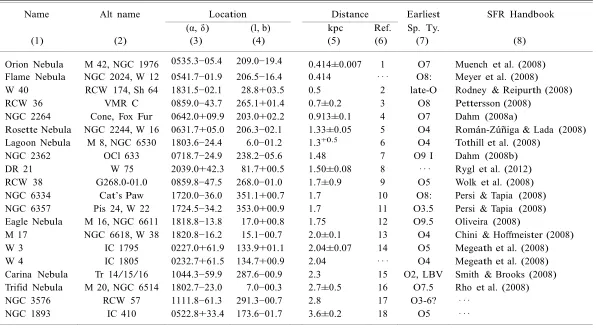
The MYStIX MSFRs are listed in Table 1 with a number of basic properties: common names, equatorial and Galactic coordinates, estimated or measured distance from the Sun, and earliest known spectral type. They are listed in order of increasing distance from the Sun. There is no consistent nomenclature for MSFRs; common names sometimes refer to the star cluster and sometimes to the associated gas as either a radio HII region or an Hα
emission nebula. We will use the names given in the first column of Table 1 in MYStIX studies, recognizing that more precise identifiers of cluster and cloud components will often be needed. The final column in Table 1 lists the major reviews on these clusters from the Handbook of Star Forming Regions (HSFR, Reipurth & Schneider 2008). Appendix A gives brief summaries of the MYStIX MSFRs, emphasizing studies published after these reviews were written.
The distance criterion d ≤ 4 kpc is needed to give sufficient sensitivity and resolution in the X-ray to resolve large numbers of individual stars in each cluster. This criterion eliminates the MSFRs associated with the starburst around the Galactic Center, and also removes the most luminous young Ôsuper star clustersÕ in the Galaxy such as Westerlund 1 and NGC 3603 (see review by Turner 2009). However, by including mosaics of contiguous Chandra fields (each Chandra exposure subtends 171 × 171 or "' 10 pc at d "' 2 kpc), the sample does include some star forming complexes tens of parsecs across comparable to Ôgiant extragalactic
HII regionsÕ seen in nearby spiral galaxies. These include the large survey of the Carina
Nebula Complex described by Townsley et al. (2011a, and associated papers), portions of the W3/W4/W5 complex, and the less well-studied NGC 6334/NGC 6357 complex.
This MYStIX sample of massive star forming regions is not formally com- plete in any way. The sample is spatially restricted to only a few percent of the Galactic disk. But it is also restricted by the haphazard process of different scientists proposing, and different telescope allocation committees approving, targets to be observed with the Chandra X-ray Observatory during the first decade of the mission. This sample incom- pleteness restricts the nature of the scientific inferences we can make. Relationships between cluster properties (e.g., mass segregation vs. cluster central density, disk fraction vs. OB population) and classifications (e.g., clouds around clusters with and without triggered star formation, HII regions with and without hot plasma) can be studied. But the sample cannot
Ð 8 Ð
2.2. Star Forming Region Distances and Ages
The distances to rich young clusters and their associated star forming regions have historically been difficult measure accurately. Recently, multi-epoch VLBI astrometric mea- surements of maser spots associated with high-mass protostars (or for the Orion Nebula region, VLBI measurements of low-mass non-thermal radio stars) give direct trigonometric parallax distances for some star forming regions. In the MYStIX sample, accurate VLBI parallactic distances are available for the Orion Nebula, DR 21, M 17, and W 3 (references in Table 1). We assume that the associated star forming complex has the same distance as the measured embedded star. We further assume that the Flame Nebula in the Orion B molecular cloud lies at the same distance as the Orion Nebula in the Orion A cloud, and that W 4 lies at the same distance as its adjacent W 3 cloud.
For the other clusters, distances are estimated by a variety of techniques: fitting of the high-mass main sequence on the Hertzsprung-Russell diagram (HRD), extinction maps of background stars, constraints from the X-ray luminosity function, or kinematic fitting of molecular cloud radial velocities. These estimates are often subject to considerable uncer- tainties. For example, fitting the ZAMS to OB stars may require determination of binarity and differential absorption for individual stars. Cluster stellar memberships are mainly main sequence OB stars where the locus in the HRD is nearly vertical so distance is poorly con- strained. For low mass pre-main sequence stars, stellar age and distance are degenerate in the HRD. Systematic uncertainties can be larger than internal uncertainties for each distance estimation method. Tothill et al. (2008), for example, describe over a dozen estimates for the Lagoon Nebula with most in the range 1.3 − 1.8 kpc. Cases where the distance appears to be obtained with greater accuracy (such as 1.48 kpc for NGC 2362) may simply represent fewer efforts to estimate the distance.
MYStIX science results are based on the distances listed in Table 1. Some findings will be vulnerable to distance errors. Comparisons of cluster sizes in units of pc, stellar surface densities in stars pc−2, X-ray luminosities in erg s−1 , and IMFs could be systematically
Ð
9
Ð
Table 1. MYStIX Young Star-Forming Complexes !
!
!
Name
!
Alt name
!
Location ! !
!
Distance !
!
Earliest
!
SFR Handbook
! ! (α, δ) (l, b) ! kpc Ref. Sp. Ty. !
(1) (2) (3) (4) ! (5) (6) (7) (8)
!
Orion Nebula !
M 42, NGC 1976 0535.3−05.4 209.0−19.4 !
! 0.414±0.007 ! 1 ! O7 !
Muench et al. (2008)
Flame Nebula NGC 2024, W 12 0541.7−01.9 206.5−16.4 ! 0.414 · · · O8: Meyer et al. (2008)
W 40 RCW 174, Sh 64 1831.5−02.1 28.8+03.5 ! 0.5 2 late-O Rodney & Reipurth (2008)
RCW 36 VMR C 0859.0−43.7 265.1+01.4
! 0.7±0.2 3 O8 Pettersson (2008)
NGC 2264 Cone, Fox Fur 0642.0+09.9 203.0+02.2 ! 0.913±0.1 4 O7 Dahm (2008a)
Rosette Nebula NGC 2244, W 16 0631.7+05.0 206.3−02.1 ! 1.33±0.05 5 O4 Rom«an-Zu«n÷iga & Lada (2008)
Lagoon Nebula M 8, NGC 6530 1803.6−24.4 6.0−01.2
! 1.3+0.5 6 O4 Tothill et al. (2008)
NGC 2362 OCl 633 0718.7−24.9 238.2−05.6
! 1.48 7 O9 I Dahm (2008b)
DR 21 W 75 2039.0+42.3 81.7+00.5 ! 1.50±0.08 8 · · · Rygl et al. (2012)
RCW 38 G268.0-01.0 0859.8−47.5 268.0−01.0 ! 1.7±0.9 9 O5 Wolk et al. (2008)
NGC 6334 CatÕs Paw 1720.0−36.0 351.1+00.7 ! 1.7 10 O8: Persi & Tapia (2008)
NGC 6357 Pis 24, W 22 1724.5−34.2 353.0+00.9
! 1.7 11 O3.5 Persi & Tapia (2008)
Eagle Nebula M 16, NGC 6611 1818.8−13.8 17.0+00.8 ! 1.75 12 O9.5 Oliveira (2008)
M 17 NGC 6618, W 38 1820.8−16.2 15.1−00.7 ! 2.0±0.1 13 O4 Chini & Hoffmeister (2008)
W 3 IC 1795 0227.0+61.9 133.9+01.1 ! 2.04±0.07 14 O5 Megeath et al. (2008)
W 4 IC 1805 0232.7+61.5 134.7+00.9 ! 2.04 · · · O4 Megeath et al. (2008)
Carina Nebula Tr 14/15/16 1044.3−59.9 287.6−00.9
! 2.3 15 O2, LBV Smith & Brooks (2008)
Trifid Nebula M 20, NGC 6514 1802.7−23.0 7.0−00.3
! 2.7±0.5 16 O7.5 Rho et al. (2008)
NGC 3576 RCW 57 1111.8−61.3 291.3−00.7
! 2.8 17 O3-6? · · ·
NGC 1893 IC 410 0522.8+33.4 173.6−01.7
! 3.6±0.2 18 O5 · · ·
!
! !
Note. Ñ Distance references: 1. Menten et al. (2007) 2. Shuping et al. (2012) 3. Baba et al. (2004) 4. Baxter et al. (2009) 5. Lombardi et al. (2011) 6. Tothill et al. (2008) 7. Moitinho et al. (2001) 8. Rygl et al. (2012) 9. Schneider et al. (2010) 10. Russeil et al. (2010)
[image:10.792.86.688.116.445.2]Ð
1
0
Ð
!
!
Ð 11 Ð
!
!
The situation is even more uncertain when the ages of MSFRs, or their constituent star clusters, are considered. For example, to estimate an age of 1.5 Myr for NGC 2264, Baxter et al. (2009) combine fitting pre-main sequence isochrones on the HRD with a revised distance. In W 4, Wolff et al. (2011) estimate an age of 1 − 3 Myr from the HRD of massive stars. In cases where spectroscopy of individual stars is not available, cluster ages are sometimes estimated from isochrone fitting to color magnitude diagrams (e.g., Prisinzano et al. 2011, for NGC 1893). However, this method can systematically underestimate true cluster ages (Naylor 2009).
!
Nearly all HRD and color-magnitude diagrams of young clusters show an age spread, but it is difficult to interpret whether it represents a true range in birth times or a combination of other causes such as observational uncertainties, stellar variability, unresolved binaries, and different accretional histories (Baraffe et al. 2009; Reggiani et al. 2011; Jeffries et al. 2011; Littlefair et al. 2011). Even in the Orion Nebula Cluster, which has the best-characterized stellar population and distance of any rich young stellar cluster, this debate has not been resolved, and the problem is worse when comparing other clusters with uncertain distances. Finally, some MSFRs are studied nearly exclusively at long wavelengths for very young protostars, so that older populations can be missed. This problem can be alleviated by X- ray surveys because the magnetic flaring of pre-main sequence stars is elevated for hundreds of millions of years. For example, an X-ray study revealed populous older clusters lying in front of the NGC 6334 cloud complex that is primarily known for its massive protostars (Feigelson et al. 2009), and Chandra has revealed a significant older, widely distributed older stellar population in the Carina Complex (Townsley et al. 2011a).
!
Ð
1
2
Ð
!
! ! !
Table 2. MYSTIX Datasets !
!
Name !
Chandra !
!
Near-IR ! !
!
Mid-IR !
! Pointings Publs. ! ! SST ! Publs.
(1) (2) (3) (4) ! (5) ! (6)
!
Oriona ! 1 (838)
! · · · a
!
· · · a !
!
· · · a ! 38, 39
Flame 1 (80) 1, 2 2MASS ! archive 38
W 40b 1 (40) 3 · · · b ! archive 40, 41
RCW 36 1 (75) · · · 2MASS ! archive · · ·
NGC 2264 3 (100+50+60) 4, 5, 6, 7 UKIRT ! archive 42, 43, 44, 45, 46
Rosette 5 (100+4x20) 8, 9, 10, 11 UKIDSS ! archive 47, 48
Lagoon 2 (61+180) 12, 13 UKIDSS ! GLIMPSE 49
NGC 2362 1 (100) 14, 15, 16 UKIRT ! archive 50, 51
DR 21 1 (100) · · · UKIDSS ! archive 52, 53, 54
RCW 38 1 (100) 17, 18, 19 2MASS ! Vela-Carina 19
NGC 6334 2 (40+40) 20, 21 UKIRT ! GLIMPSE 55
NGC 6357 3 (40+40+40) 22 UKIRT ! GLiMPSE 56
Eagle 3 (80+80+80) 23, 24, 25, 26 UKIDSS ! GLIMPSE 25, 57, 58
M 17 2 (340+100) 8, 27, 28 UKIDSS ! GLIMPSE 59, 60
W 3 4 (3x80+50) 29, 30, 31 2MASS ! archive 31, 61, 62
W 4 1 (80) · · · 2MASS ! archive 31
Carinac
· · · c 32, 33, 34
· · · c
! Vela-Carina 63, 64, 65, 66, 67
Trifid 1 (60) 35 UKIDSS ! GLIMPSE 68, 69, 70
NGC 3576 2 (60+60) 29 2MASS ! archive · · ·
NGC 1893 1 (446) 36, 37 UKIRT ! archive 33
!
a Chandra Orion Ultradeep Pro ject. X-ray source list and properties were obtained from
[image:13.792.182.584.116.445.2]Ð
1
3
Ð
counterparts are based on UKIRT observations.
!
cThe Carina observations are obtained from the Chandra Carina Complex Pro ject (Townsley
et al. 2011a) based on a large mosaic of Chandra images (Broos et al. 2011a), VLT/HAWK-I near-infrared images (Preibisch et al. 2011), and Spitzer IRAC observations (Povich et al. 2011b). The MYStIX field of view is restricted to the HAWK-I survey field; this is shown in Figure 5 of Townsley et al. (2011a) and Figure 1 of Preibisch et al. (2011). Chandra exposures overlap so exposures can vary across a cluster, particularly for Tr 16.
!
!
Note. Ñ X-ray publications: 1. Skinner et al. (2003) 2. Ezoe et al. (2006a) 3. Kuhn et al. (2010) 4. Ram«õrez et al. (2004) 5. Sung et al. (2004) 6. Rebull et al. (2006) 7. Flaccomio et al. (2006) 8. Townsley et al. (2003) 9. Wang et al. (2008) 10. Wang et al. (2009) 11. Wang et al. (2010) 12. Damiani et al. (2004) 13. Henderson & Stassun (2011) 14. Delgado et al. (2006) 15. Damiani et al. (2006) 16. Dahm et al. (2007) 17. Wolk et al. (2002) 18. Wolk et al. (2006) 19. Winston et al. (2011) 20. Ezoe et al. (2006b) 21. Feigelson et al. (2009) 22. Wang et al. (2007) 23. Linsky et al. (2007) 24. Guarcello et al. (2007) 25. Guarcello et al. (2010) 26. Guarcello et al. (2012) 27. Broos et al. (2007) 28. Townsley et al. (2011b) 29. Hofner et al. (2002) 30. Feigelson & Townsley (2008) 31. Roccatagliata et al. (2011) 32. Feigelson et al. (2011) 33. Wolk et al. (2011) 34. Wang et al. (2011) 35. Rho et al. (2004) 36. Caramazza et al. (2008) 37. Prisinzano et al. (2011)
!
Mid-infrared publications: 38. Morales-Calder«on et al. (2011) 39. Megeath et al. (2012) 40.
Gutermuth et al. (2008a) 41. Shuping et al. (2012) 42. Teixeira et al. (2006) 43. Young et al. (2006) 44. Sung et al. (2009) 45. Teixeira et al. (2012) 46. Balog et al. (2007) 47. Poulton et al. (2008) 48. Kumar & Anandarao (2010) 49. Dahm & Hillenbrand (2007) 50. Currie et al. (2009) 51. Marston et al. (2004) 52. Kumar et al. (2007) 53. Beerer et al. (2010) 54. Brogan et al. (2009) 55. Fang et al. (2012) 56. Indebetouw et al. (2007) 57. Guarcello et al. (2009) 58. Povich et al. (2007) 59. Povich et al. (2009) 60. Ruch et al. (2007) 61. Rivera-Ingraham et al. (2011) 62. Tapia et al. (2006) 63. Smith et al. (2010) 64. Povich et al. (2011a) 65. Povich et al. (2011b) 66. Tapia et al. (2011) 67. Rho et al. (2006) 68. Lefloch et al. (2008) 69.
Ð 14 Ð
! !
!
3. MYStIX datasets !
!
3.1. Chandra X-ray Data
!
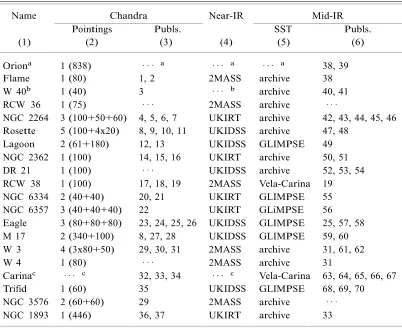
Table 2 lists the multiwavelength datasets used for the MYStIX project. The first columns summarize the archived Chandra observations examined. ObsIDs (column 2) gives the observation identifiers. ÔPointingsÕ (column 3) indicates the number of different expo-
sures. Each exposure subtends 171
× 17 using ChandraÕs four-CCD Advanced CCD Imaging
Spectrometer Imaging Array (ACIS-I, Garmire et al. 2003). The following numbers in paren- thesis gives the approximate exposure time in kiloseconds. For typical Chandra exposures of star forming regions around 2 kpc, and applying the well-established (though poorly understood) correlation between X-ray luminosity and stellar age for pre-main sequence stars (Preibisch et al. 2005; Telleschi et al. 2007), ChandraÕs sensitivity is sufficient to capture
most 1 M0 stars and higher-mass stars with a decreasing fraction of lower mass stars. We
thus emphasize that, although Chandra images typical show hundreds to thousands of pre- main sequence members, these represent only a small portion of the full IMF that peaks around 0.3 M0.
For seventeen MYStIX targets, we reanalyzed archived Chandra data using the pro- cedures outlined in ¤5.1. Methodology, X-ray source lists and images for these regions are
presented by Kuhn et al. (2013a) and Townsley et al. (2013). For three MYStIX MSFRs −
Orion Nebula Cluster, W 40, and the Carina Complex − X-ray analysis at the same level of
sensitivity had been carried out by our group (Getman et al. 2005; Kuhn et al. 2010; Broos et al. 2011a). In these cases, we used the published X-ray source lists and stellar properties for MYStIX analysis.
!
Column (4) lists the principal published studies of the Chandra image of MYStIX star forming regions. Most involve the stellar populations, but a few discuss diffuse plasma X-ray emission. Most of the X-ray images have been studied in the past, some in considerable detail. We reiterate that the role of the MYStIX project is to analyze the full sample with
the same methodology available today − the most sensitive point source detection techniques
and careful characterization of diffuse emission. The existing publications are heterogeneous, and often not optimal, in X-ray analysis capabilities.
! !
!
3.2. UKIRT and 2MASS Near-Infrared Data !
!
!
(UKIRT). Many of these observations were performed by the United Kingdom Infrared Deep Sky Survey Galactic Plane Survey (UKIDSS GPS) surveying 1800 sq.deg. of the Galactic Plane (Lawrence et al. 2007; Lucas et al. 2008). The remaining fields were observed with the same camera using UKIDSS procedures. In regions where crowding is unimportant (such as NGC 2264), the UKIRT sensitivity reaches J"'19.6, H"'18.9 and K"'17.9 at a signal-to-noise
of 10. Typical UKIDSS point spread functions (PSFs) have 0.811 − 1.011 FWHM with 0.411
pixels. For finding counterparts of Chandra sources in MYStIX fields, spatial resolution is often more important than photometric depth, both to resolve crowded stellar fields and to reduce the effect of spatially variable nebular emission in HII regions associated with the clusters.
!
For MYStIX targets inaccessible to UKIRT, and for brighter stars that are saturated in UKIRT images, we obtained J H K photometry from the Point Source Catalog of the Two Micron All Sky Survey (2MASS PSC) obtained with dedicated 1.3m telescopes (Skrutskie
2006). 2MASS sensitivity limits are approximately J "' 15.8, H "' 15.1, and Ks "' 14.3. For
the more distant MYStIX targets, the 2MASS PSC is inadequate for identifying young stellar counterparts to Chandra sources both due to limited sensitivity and spatial resolution. With
211
pixels, 2MASS source blending difficulties start around 611
− 811
separations (Cutri 2006, ¤4b). However, for the nearer MYStIX star forming regions (hence with brighter and more widely separated pre-main sequence members), 2MASS has fewer difficulties.
!
The near-infrared coverage of the Chandra MYStIX targets is listed in column (5) in Table 2. This can be summarized as follows: eleven star forming regions have corresponding UKIDSS or UKIRT observations, three have published near-infrared counterparts to high- quality X-ray source lists, and six have 2MASS survey coverage. The UKIRT observations are presented in detail by King et al. (2013).
! !
!
3.3. Mid-Infrared Data
!
The Infrared Array Camera (IRAC) on the Spitzer Space T elescope provides wide-field
imaging in four MIR bands: 3.6µm, 4.5µm, 5.6µm and 8.0µ (Fazio et al. 2004). At the shorter
Ð 16 Ð
! !
!
et al. 2013).
!
All of the MYStIX star forming complex targets have Spitzer IRAC coverage (last col- umn of Table 2). Five are only covered by the short-exposure Galactic Legacy Infrared Mid- Plane Survey Extraordinaire (GLIMPSE) project (Benjamin et al. 2003). Ten have deeper archived observations that we analyze as part of the MYStIX effort. For the Carina complex, we take infrared results published by the Chandra Carina Complex Project (Townsley et al. 2011a; Povich et al. 2011b; Preibisch et al. 2011). For RCW 38 and NGC 3576, the data are obtained from the Vela-Carina survey (Majewski, PI).
! !
!
4. Two Prototype MYStIX Star-Forming Regions: NGC 2264 and the Trifid Nebula
!
!
To illustrate the methodology and scientific potential of the MYStIX project, we focus on two MYStIX star forming complexes that exemplify range of challenges encountered in this effort. The presentation here concentrates on the identification of stellar members of the MSFRs, a sample we call ÔMYStIX Probable Complex MembersÕ (MPCMs). The MYStIX project also involves mapping of diffuse X-ray emission, and comparing it to maps of cloud gas and dust. This aspect is not discussed here for the prototype MSFRs.
!
NGC 2264 is relatively nearby with bright cluster members and it lies in a region with low field star contamination. Its pre-main sequence stellar membership has been studied for decades in the visible band. However, the stars are not concentrated into a single rich cluster, and the region is dominated by late-O and early B stars that produce relatively weak nebular HII regions. The Trifid Nebula is more distant and lies in a very crowded
region of the Galactic Plane at longitude 7◦. It has a centrally concentrated main cluster
dominated by an O6 star that ionizes a very bright HII region nebular emission. Its pre-
!
4.1. NGC 2264 !
!
Figure 1 shows the NGC 2264 region at X-ray (Chandra), near-infrared (UKIDSS), mid-infrared (Spitzer) and visible (Digital Sky Survey) wavelengths. (Note that we consider visible light images in this section although they are not included in MYStIX analysis.) The polygon outlines the Chandra mosaic that constitutes the field of MYStIX study. The images have qualitatively different characteristics. The visible image shows stars, but the
population is severely limited by obscuring dust clouds and, to a lesser degree, by Hα neb-
ulosity. The near-infrared image penetrates deeper and gives a more reliable stellar census;
both obscuration and nebulosity (mostly Brγ emission) are reduced. The mid-infrared im-
age shows many of these stars plus others in heavily obscured cloud cores but it is more severely affected by bright nebulosity, mostly from emission bands of polycyclic aromatic hydrocarbons, and by saturation of the brightest infrared protostars. In all of the optical and infrared images, the large majority of stars are Galactic field stars distributed through- out the image, giving a challenge to selection of recently formed stars. The X-ray image has no immediately evident emission nebulosity (the diffuse orange structures Figure 1 are due to the detector background), and the sources are a combination of cluster members and background extragalactic sources. Comparison with the infrared images shows that X-ray detections are common even among cluster members with moderately heavy absorption. With many fewer contaminants, the X-ray image list gives a more direct indication of the young stellar population and structure than the infrared images.
!
A closer examination of some distinctive locations gives further insight into the contri- butions and limitations of each waveband.
!
1. In the northern ACIS field, the V = 4.6 O7 main sequence star S Mon lies on the
edge of a small ( 3011 0.1 pc) clump of pre-main sequence stars seen in X-rays and
infrared. These lower mass members are invisible in standard visible light images due to the wings of the O star PSF.
2. The bright ÔFox Fur NebulaÕ LBN 912 101 southwest of S Mon has an amorphous
morphology in visible Hα images, but appears as a prominent incomplete shell-like
H II region in the Spitzer image. Associated with a small molecular cloud (Teixeira et
al. 2012), it is likely illuminated by the off-center B1 star BD +09◦1331B, an isolated
massive star without an associated concentration of X-ray emitting pre-main sequence stars.
!
3. The embedded massive star IRS 2 lies near the top of the southern ACIS field lies in
curved and elongated stellar structure 21 long with several dozen members seen in
Ð 20 Ð
! ! !
shows very heavily absorbed faint stars but is insensitive in the inner 3011 due to
bright dust emission around IRS 2. The near-infrared image shows the central object is
a visual binary with separation 211 and sees some of the associated young stars. The
X-rays from the massive member is relatively weak (as is typical for intermediate-mass A and B stars) but X-ray selection here does not add significantly to the youngest embedded populations.
!
4. The IRS 1 region above the Cone Nebula is the most crowded portion of the X-ray image. As with the IRS 2 region, the cluster has an irregular structure without a central
concentration, extending 101 to the south. IRS 1 itself is not detected in X-rays, but
a number of closeby X-ray stars are masked by diffuse emission and saturation in the infrared images.
!
5. The V = 7.2 B2 III star HD 47887, famous as the bright star 21 north of the bright
tip of the Cone Nebula, is a weak X-ray source with several X-ray pre-main sequence in its immediate vicinity. The two optical stars superposed on the ionized portion of Cone Nebula are brightly detected in X-rays.
! !
!
4.2. Trifid Nebula !
!
Figure 2 shows a four-band view of the Trifid Nebula MYStIX field, delineated by a single Chandra ACIS pointing (upper left panel). Here the OB stars produce a high-surface
brightness HII region nebular emission that prevents detection of the lower mass population in
the visible band (lower right panel). The near-infrared image has much reduced nebulosity, but the dense stellar pattern is nearly uniform across the field (lower left panel). This indicates that the vast majority of UKIDSS stars are Galactic field stars unrelated to the star forming regions because the Trifid, lying in a nearby Galactic spiral arm, is projected against the Galactic Center region. The mid-infrared image (upper right panel) shows nebulosity from heated dust (mostly PAH bands), and a moderately rich stellar field that is also nearly uniform. Thus, superficial examination of all long-wavelength images does not reveal the young stellar cluster.
!
!
!
2. The northern component of the Trifid Nebula, characterized by a large reflection nebula of blue light in the visible image (Figure 2, lower right), is illuminated by the A7 I supergiant HD 164514. It is isolated without an associated cluster of infrared or X-ray emitting lower mass stars.
!
3. The main (southern) ionized component of the Nebula is ionized by the double O6 star HD 164492 lying near the intersection of the three dark dust lanes. The X-ray image
reveals a moderately rich cluster distributed asymmetrically 51 east and north of the
dominant star (Rho et al. 2004).
!
4. Infrared-excess protostars are concentrated in dense cloud cores, particularly to the south of the emission nebula (Rho et al. 2008).
! ! ! ! !
5. MYStIX Data Analysis Methodology !
!
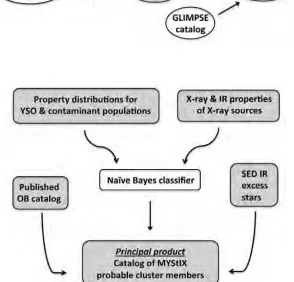
Figure 3 shows a diagram of the principal data analysis tasks involved in MYStIX anal- ysis. We briefly describe these methods in the following subsections. Details and electronic source lists are given in accompanying MYStIX papers on the Chandra X-ray observations (Kuhn et al. 2013a; Townsley et al. 2013), UKIRT near-infrared observations (King et al. 2013), Spitzer mid-infrared observations (Kuhn et al. 2013b), X-ray/infrared source match- ing (Naylor et al. 2013), infrared excess determination (Povich et al. 2013), and MSFR membership classification (Broos et al. 2013). We illustrate the application of these methods on the prototype clusters, NGC 2264 and Trifid.
! !
!
5.1. X-ray analysis !
!
Ð 23 Ð
!
!
! ! ! !
! ! ! !
!
[image:21.612.161.455.300.582.2]!
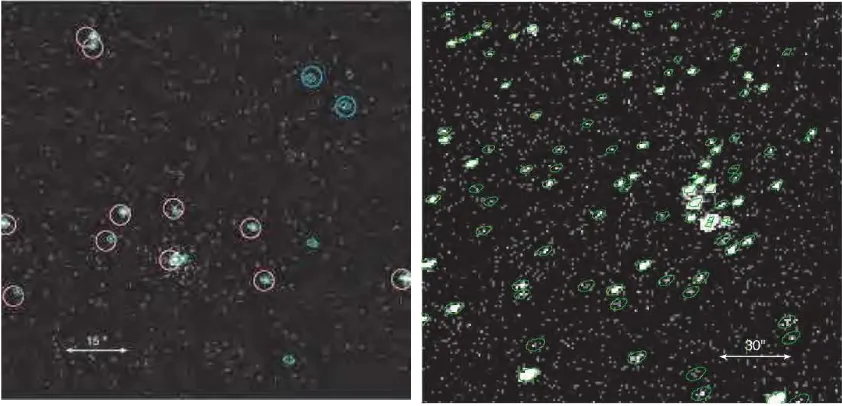
varies due to overlapping exposures and/or diffuse astrophysical emission. Source photons are then extracted using accurate models of the telescope PSF. The X-ray photometry of faint sources are estimated nonparametrically using the source counts and median energy following procedures described by Getman et al. (2010). Diffuse X-ray emission is analyzed by extracting and smoothing source-free regions of the image, and then proceeding with parametric spectral analysis following procedures described by Townsley et al. (2011b). The MYStIX analysis is similar the analysis of the Chandra Carina Complex Project (CCCP) with a few enhancements. Figure 4 shows unsmoothed X-ray images and source extraction regions for portions of the NGC 2264 and Trifid fields.
!
!
!
Fig. 4.Ñ Example of Chandra images illustrating challenges in MYStIX source detection. Left: Northern portion of the NGC 2264 ACIS mosaic. Green polygons show the ACIS Extract source extraction regions, magenta circles are sources found by Ram«õrez et al. (2004), and cyan circles are two additional sources found by Sung et al. (2004). Right: Dense source concentration in the Trifid Nebula.
!
The MYStIX source detection procedures are considerably more sensitive than some other commonly used analysis procedures for ACIS data, partly due to lower source ex- istence thresholds and partly due to improved treatment of local background levels and crowded source regions. This increase in sensitivity is important for MYStIX star formation region memberships because the X-ray luminosity function of pre-main sequence stars rises
rapidly from the high luminosity limit around log Lx 32 erg s−1 to 30.0 ergs s−1 , the
typical sensitivity limit of a MYStIX exposure (see Figure 9 of Wang et al. 2008). Thus an
improvement of a factor of 2 in faint source sensitivity can give a factor of 2 − 3 more cluster
[image:22.612.95.516.263.466.2]Ð 25 Ð
! !
!
cluster data.
!
The sensitivity of our source detection method is illustrated in Figure 4, (left panel) where MYStIX finds two faint isolated sources ( 5 photons) and resolve two close doubles
(separation 1.0 − 1.511) missed by earlier researchers. In this ACIS exposure, the Chandra
Source Catalog lists 239 sources, Ram«õrez et al. (2004) found 263 sources, and Sung et al. (2004) found 271. The MYStIX analysis, in contrast, locates 450 sources in this pointing. One can also see that the PSF centroiding method in ACIS Extract sometimes gives more accurate source positions than wavelet positions.
!
The MYStIX X-ray analysis procedures, and resulting X-ray source lists, are given by Kuhn et al. (2013a) and Townsley et al. (2013).
!
! ! !
5.2. Near-Infrared Analysis !
!
The UKIRT Wide Field Camera (WFCAM, Casali et al. 2007) performs wide-field sur- veys in the J H K bands. MYStIX uses data from both the UKIDSS Galactic Plane Survey (Lawrence et al. 2007) and independent WFCAM observations. MYStIX analysis is based on procedures developed for UKIDSS (Hodgkin et al. 2009) modified for the crowding and nebulosity typically found in MSFRs. For example, source extraction is made with smaller apertures. Photometry for bright saturated stars is replaced with 2MASS photometry. The combination of UKIRT catalog with 2MASS photometry for bright stars results in the MYS- tIX NIR catalog.
!
Figure 5 (left panel) shows a small portion of the UKIDSS K -band image around the bright stars ionizing the Trifid Nebula. Visual examination of the MYStIX star catalog shows it is highly sensitive and reliable for finding well-separated stellar sources. But in high star density (low Galactic longitude) and high nebulosity regions, a number of errors are seen. False positives can appear as spurious sources in saturated PSFs of bright stars, near intermediate brightness stars (yellow arrow in Figure 5), in regions of bright emission nebulosity, and along sharp gradients in nebular emission (cyan arrows). False negatives
include some missed stars 111
!
False sources are seen in the PSFs of bright sources (red circles with black arrows) and occa- sionally in diffuse patches (cyan arrow). The algorithm misses some faint sources appearing
mostly in the 3.6 µm band (green arrows). We provide a second catalog based on more
sensitive source detection settings that captures many of these faint sources; however, these settings also give rise to increased false positive sources.
!
Overall, the MIR source detection algorithm appears to be effective with good sensitivity and few false positives even in regions of spatially variable nebular emission. Of course, the sensitivity to faint stars is unavoidably greatly reduced in the close vicinity of the brightest infrared sources such as IRS 1 in NGC 2264. The MYStIX procedures are comparable in sensitivity to the GLIMPSE analysis procedure with very similar photometry. Comparing to the MYStIX mid-infrared catalog to that obtained by Sung et al. (2009) for the same NGC 2264 dataset shows our catalog includes 96% of their sources and has 21% additional faint sources.
!
A full description of the mid-infrared analysis and source lists for the MYStIX project is given in the accompanying paper by Kuhn et al. (2013b).
! !
!
5.4. X-ray/Infrared Source Matching
!
The matching of X-ray to infrared source catalogs is particularly tricky for the MYS- tIX project. First, the positional uncertainties of Chandra sources are ÔheteroscedasticÕ,
depending on location in the field and count rate. Uncertainties can range from 0.211
on-axis to 511 far off-axis. The infrared positional uncertainties are constant across the
field, though they can increase for fainter sources. Second, Spitzer images have lower reso- lution than UKIDSS or Chandra on-axis images, so unique one-to-one correspondences with mid-infrared sources may not be possible in crowded regions.
!
Third, and most important, is the frequent dominance of Galactic field stars over MSFR members. For uncrowded MYStIX complexes like NGC 2264, the Galactic field star con- tamination is not heavy and a straightforward positional matching based on these positional uncertainties can give reliable X-ray/infrared counterparts. But for distant clusters, partic-
ularly those projected near the Galactic Center like the Trifid, 90 − 99% of stars may be field
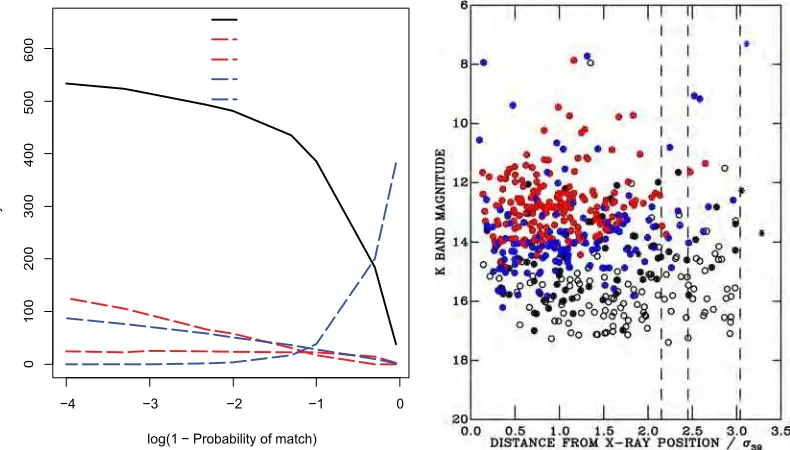
stars. A single Chandra or Spitzer source can have multiple UKIDSS counterparts so that false matches to foreground or background stars become common. This effect is illustrated in Figure 6 (left panel).
!
Ð 28 Ð
! !
!
magnitudes characteristics of the young stellar population under consideration in each field. This method is based on the work of Sutherland & Saunders (1992). It is used in MYStIX for both Chandra-UKIRT and Chandra-Spitzer matching. Figure 6 (right panel) shows the result of its application to the crowded Trifid Nebula region; if the infrared source closest to an X-ray source is faint, it may be rejected as the true counterpart in favor of a more distant, but brighter, source. Naylor et al. (2013) fully describe the method and provide lists of infrared matches to MYStIX X-ray sources.
! !
!
5.5. Infrared Excess Sources !
!
Populations of young stars in clusters and star forming regions have long been obtained by detecting photometric infrared excesses from dusty protoplanetary disks orbiting pre-main sequence stars. Young stellar objects have traditionally been identified either in polygonal re- gions of infrared color-color diagrams (e.g., Grasdalen et al. 1973; Lada & Adams 1992; Allen et al. 2004) or by fitting star-plus-disk models to infrared spectral energy distribution (e.g., Robitaille et al. 2007). Unfortunately, for the more challenging MYStIX clusters that have bright, spatially variable nebulosity and many thousands of Galactic field stars unrelated to the star forming region, straightforward application of established infrared excess crite- ria give samples that are clearly dominated by non-cluster members. Problems arise from contributions of dusty galaxies seen through the Galactic Plane, dusty post-main sequence asymptotic giant branch (AGB) stars, faulty photometry from nebular knots incorrectly identified as stars, and from incorrect matching of near- and mid-infrared stars. As a result, the MYStIX procedures involve a number of additional criteria to reduce contaminants at the expense of completeness.
!
Sources in the UKIRT (¤5.2) and Spitzer(¤5.3) catalogs are first merged using a simple proximity rule (not the the magnitude-weighted matching outlined in ¤5.4). Seven photo- metric values constitute the spectral energy distribution (SED) are typically available for
each infrared sources in the MYStIX fields (J , H , K , 3.6 µm, 4.5 µm, 5.6 µm, and 8.0 µm
!
the resulting sample culled of these problematic SEDs as ÔMYStIX InfraRed Excess SourcesÕ (MIRES).
!
The MIRES sample is still often dominated by unclustered sources unrelated to the star forming region. The surface density of remaining infrared-excess sources away from the known clusters is measured and assumed to represent remaining contamination by AGB stars and galaxies. A probability of cluster membership is then calculated for each source based on the local surface density of infrared-excess objects, and only sources above some probability threshold are flagged as probable cluster members (¤5.7). The infrared-excess sample that enters the MPCM catalog is thus biased towards clustered groups of infrared-excess sources, and is less sensitive to widely dispersed populations.
!
A full description of the infrared excess analysis with tabulated MIRES source lists is given in the accompanying paper by Povich et al. (2013). For many MYStIX fields, this analysis is performed over a wider field of view than covered by the Chandra exposures. The MIRES sample thus has infrared excess stars that are not included in the MPCM sample.
! !
!
5.6. Published OB Stars
!
The catalog of cluster members includes all stars in the MYStIX fields of view that are identified as OB stars by optical spectroscopy. We obtain these stars by combining stars listed in two collations of the astronomical literature: the catalog of stellar spectral classifications
by Skiff (2010) and the SIMBAD astronomical database2 . Stars with spectral types B3
through O2 are included. More modern types are used when discrepant classifications are present in the historical literature.
!
As historical positions of OB stars often do not have the subarcsecond accuracy needed for MYStIX analysis, we use positions from our near-infrared catalog. Historical positions are matched to J H K band catalogs, and a prominent near-infrared star is typically found
within 111
. As these stars are bright in the near-infrared, positions and magnitudes are typically obtained from the 2MASS catalog rather than from UKIRT data where the image and photometry can be badly saturated. But the low resolution of the 2MASS telescope can be confused by the crowded environment and/or binary components of high-mass systems.
!
The association of X-ray sources to published OB stars presents several particular prob- lems. It is not uncommon for two or more X-ray stars to lie within the 2MASS point spread function of massive stars (see for example, the O5 star HD 46150 in Rosette; Wang et al.
!
!
Ð 30 Ð
! !
!
2008). To mitigate these problems, X-ray sources close to published OB stars were exam- ined in the Chandra and UKIRT images, and the literature of the OB stars was studied for reliability of the spectral classification. A number of associations that were not obtained by the automated system were added. Results from these examinations of OB stars are given the footnotes of the MPCM lists given by Broos et al. (2013).
! !
!
5.7. Statistical Classification of ÔMYStIX Probable Complex MembersÕ !
!
Although the X-ray and infrared-excess source populations of MYStIX fields show clear concentrations of stellar clusters, it is not trivial to reliably associate an individual source with the young stellar population. In simpler single-waveband situations, straightforward decision trees can be effectively used, such as ÔDisk-bearing young stars can be discriminated
from disk-free stars by Spitzer IRAC colors [3.6]-[4.5[≥0.0 and [5.8]-[8.0]≥0.4Õ or ÔAn X-ray
source exhibiting a strong variations on timescales of hours is a magnetically active young starÕ. Our multiwavelength study not only needs to combine criteria such as these, but it needs to reduce large contaminating populations of Galactic field stars.
!
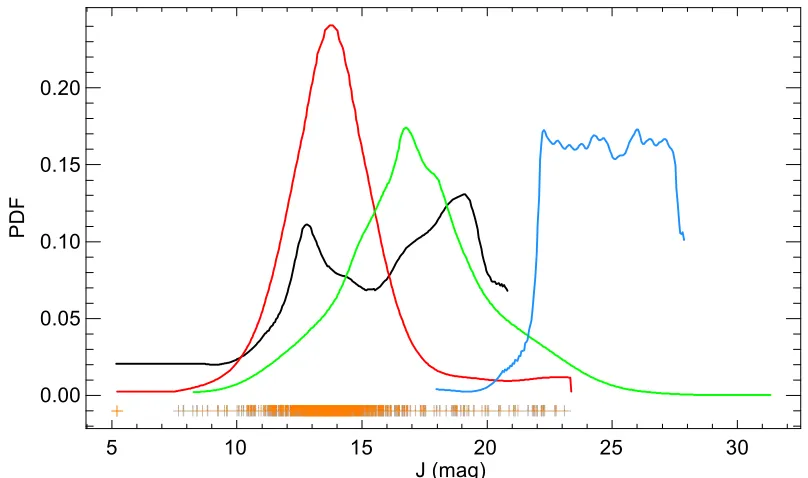
To address this challenge in classifying MYStIX sources, we build upon the statistical classifier for X-ray sources developed by Broos et al. (2011b) for the Chandra Carina Com- plex Project (CCCP). Based on Ônaive Bayes classifiersÕ, the probability that an X-ray source lies in a chosen class is treated as the product of independent probabilities associated with different properties (J band magnitude, mid-infrared colors, X-ray hardness and variability, and so forth). The method requires prior knowledge of the properties from Ôtraining setsÕ, giving in advance the probability distribution of each property for each class of target and contaminants. The construction of training sets for both young stars and contaminant popu- lations for the CCCP is presented by Getman et al. (2011) and further refined in Broos et al. (2013). The probability that an X-ray source is classified as a young star is increased when it lies in a localized spatial concentration of X-ray sources. This is based on the premise that contaminant populations (both stellar and extragalactic) will be roughly spatially uniform. Table 3 lists the four classes and eight properties used in the MYStIX classifier.
!
! ! ! ! ! ! ! !
!
Table 3. MYSTIX Source Classification
! ! ! ! !
Classes of ob jects H1 Foreground Galactic stars H2 MYStIX cluster members H3 Background Galactic stars
H4 Galaxies and active galactic nuclei Source properties
X-ray J magnitude
sources X-ray median energya X-ray variabilityb
X-ray source density mapc Infrared [4.5] magnituded
sources SED infrared excesse MIR source density mapc Optical Spectroscopic OB star
! !
aThis measures line-of-sight absorption.
!
bThis indicates magnetic flaring.
!
c This indicates spatial clustering.
!
dThis discriminates extragalactic sources that
are always faint.
!
Ð 32 Ð
! !
!
After the Ônaive BayesÕ product of class probabilities is computed for each X-ray source, a decision rule is applied to define when the probability of MSFR membership exceeds the probability of a contaminant population. We also indicate when an X-ray source has so little associated information that no classification is feasible. Many of the fainter members of rich clusters are seen only at one or another band, and thus do not have multiwavelength confirmation of membership. Most contaminants are ÔunclassifiedÕ.
!
X-ray sources satisfying these classification criteria are combined with infrared sources with SEDs satisfying the criteria for dusty disks (¤5.5) and spectroscopic OB stars (¤5.6) to constitute the final list of MPCMs.
!
The full description of the MYStIX source classifier and other elements entering the MPCM sample construction is given in the accompanying paper by Broos et al. (2013). The resulting MPCM samples seem effective in most respects, giving large populations of highly clustered stars, often with X-ray emitting stars dominating rich clusters and infrared-excess stars distributed in the molecular cloud around the main clusters. Spatially uniform star distributions that may be highly contaminated with non-MSFR populations have low surface densities.
! !
!
6. Results of MYStIX Analysis of the Prototype Star Forming Complexes !
!
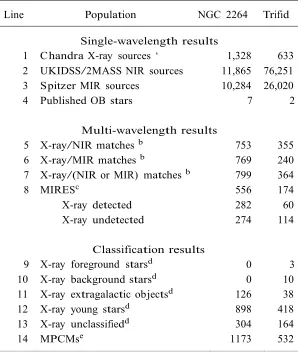
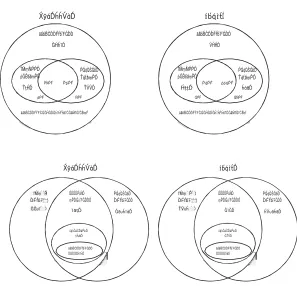
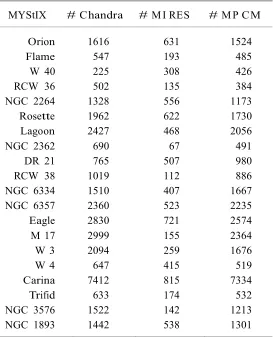
Table 4 and Figure 9 summarize the results at several stages of the MYStIX analysis for the prototype NGC 2264 and Trifid Nebula targets. Tabulations similar to Table 4 for the full MYStIX MSFR sample are given by Broos et al. (2013); an abbreviated version is shown
in Table 5 here. The Chandra populations are generally in the range 500 − 3000 sources
!
The NIR source population in the Chandra field of view (line 2) is 7 times higher, and the MIR population (line 3) is 2.5 times higher, in the Trifid Nebula compared to NGC 2264 despite the smaller field of view of the Trifid. This illustrates the enormous contamination by Galactic field stars in MYStIX fields at low Galactic longitudes: sometimes >99% of the infrared stars have no relation to the star formation region under study. This problem has inhibited infrared-only studies of stellar populations in many rich star formation regions. The majority of X-ray sources ( 60%) have stellar matches in either or both of
the NIR and MIR catalogs (lines 5 − 7 of Table 4). The top panels of Figure 9 give more
details on the X-ray matching results. In NGC 2264, the UKIRT and Spitzer surveys provide nearly identical matches: 95% of the near-infrared matches have mid-infrared counterparts, and vice versa. The availability of infrared photometry for most X-ray sources allows SED
analysis showing that only 10 − 20% of X-ray sources have infrared excesses (line 8 of
Ð 34 Ð
!
!
! ! !
Table 4. Source Populations in Prototype MYSTIX Fieldsa
!
!
Line Population NGC 2264 Trifid
!
Single-wavelength results
1 C handra X-ray sources Ô 1,328 633 2 UKIDSS/2MASS NIR sources 11,865 76,251 3 Spitzer MIR sources 10,284 26,020
4 Published OB stars 7 2
!
Multi-wavelength results
5 X-ray/NIR matches b 753 355 6 X-ray/MIR matches b 769 240 7 X-ray/(NIR or MIR) matches b 799 364
8 MIRESc 556 174
! X-ray detected 282 60
! X-ray undetected 274 114
! !
!
9
! !
Classification results X-ray foreground starsd
! !
!
0
! !
!
3 10 X-ray background starsd 0 10 11 X-ray extragalactic objectsd 126 38
12 X-ray young starsd 898 418
13 X-ray unclassifiedd 304 164
14 MPCMse 1173 532
!
a Spatially restricted to X-ray field of view
!
bCounterpart probability >0.80 using the magnitude-
weighted proximity procedure (Naylor et al. 2013)
!
c MIRES = MYStIX InfraRed Excess Sources (Povich et al.
2013)
!
dIncludes X-ray sources only
!
e MPCM = MYStIX Probable Complex Member, including
[image:31.612.157.455.155.510.2]X − ra y so u rce s 0 1 0 0 2 0 0 3 0 0 4 0 0 5 0 0 6 0 0 ! ! ! ! ! ! ! ! ! ! ! ! ! ! ! ! ! ! ! ! ! ! ! ! ! ! ! !
−4 −3 −2 −1 0 !
log(1 − Probability of match)
!
!
[image:32.612.111.506.186.411.2]Ð 36 Ð
!
PD
F
! ! ! ! ! ! ! ! ! ! ! ! ! !
!
Fig. 7.Ñ Three examples of X-ray sources with infrared excess from SED modeling in the NGC 2264 region: (a) previously studied T Tauri star; (b) previously identified Class I protostar; and (c) previously uncatalogued star with a weak infrared excess. The solid curves show the best-fit SED model and the dashed curves show the dereddened photospheric contribution from the best-fit star-plus-disk model.
! ! ! ! ! !
0.20
!
! !
0.15
!
! !
0.10
!
! !
0.05
!
! !
0.00
!
5 10 15 20 25 30
J (mag)
! !
[image:33.612.80.534.112.225.2] [image:33.612.104.508.337.576.2] ! ! ! ! ! ! ! ! ! ! ! ! ! ! ! ! ! ! ! ! ! ! ! ! ! ! ! ! ! ! ! ! ! ! ! ! ! ! ! ! ! ! ! !
[image:34.612.152.449.205.491.2]Ð 38 Ð
! ! !