• No results found

Potassium Permanganate (KMnO4) Can be Employed as Anode Material for Lithium Ion Batteries

N/A
N/A
Protected

Academic year: 2019

Share "Potassium Permanganate (KMnO4) Can be Employed as Anode Material for Lithium Ion Batteries"

Copied!
11
0
0

Loading.... (view fulltext now)

Full text

(1)

Int. J. Electrochem. Sci., 12 (2017) 5657 – 5667, doi: 10.20964/2017.06.62

International Journal of

ELECTROCHEMICAL

SCIENCE

www.electrochemsci.org

Short Communication

Potassium Permanganate (KMnO

4

) Can be Employed as Anode

Material for Lithium Ion Batteries

Keqiang Ding1,*, Binjuan Wei1, Yan Zhang1, Fujuan Shi1,Chenxue Li1, Xiaomi Shi1, Junqing Pan2,* 1

College of Chemistry and Materials Science, Hebei Normal University, Shijiazhuang, Hebei 050024, P.R. China

2

State Key Laboratory of Chemical Resource Engineering, Beijing University of Chemical Technology, Beijing, 100029, China

*

E-mail: [email protected]; [email protected]

Received: 12 March 2017 / Accepted: 18 April 2017 / Published: 12 May 2017

For the first time, a novel finding, that potassium permanganate (KMnO4) can be directly employed as anode material for lithium ion batteries (LIBs), is reported in this short communication. To improve the electrical conductivity of KMnO4, graphene is doped into the pure KMnO4 by a very simple method of milling, which leads to the formation of graphene-doped KMnO4. The samples of graphene-doped KMnO4 having 1 wt. %, 2 wt.% and 3 wt.% graphene are denoted as sample a, b and c, respectively. The characteristics of the prepared samples are mainly examined by using scanning electron microscopy (SEM), cyclic voltammometry (CV), galvanostatic charge-discharge tests and electrochemical impedance spectroscopy (EIS). The results of the electrochemical measurements indicate that the discharge capacities of pure KMnO4, sample a, b and c are evaluated to be approximately 82, 92, 110 and 126 mAh g-1 after 20 cycles at a current density of 100 mA g-1. This work has not only developed a novel anode material but also proposed a novel mechanism for the lithiation/delithiation process.

Keywords: anode material; KMnO4; graphene; electrochemical measurements; Li ion battery

1. INTRODUCTION

(2)

which could further lead to the performance degradation of the LIBs [2]. Meanwhile, the redox potential of graphite is very close to that of the Li/Li+ couple, therefore, Li dendrite growth may take place especially when being overcharged, which may further produce cell shorting or even result in thermal runaway [3]. Thus, developing novel anode materials with high energy density, long cycle life and high rate capability has become the major challenge of the next generation of LIBs [4,5].

Till present, many kinds of anode materials have been developed with an intention to replace graphite anode material. Summarily, there are three kinds of novel anode materials. (1) Transition metal oxides (TMO) [6]. This group material can also be classified as two parts, namely, Li ions-contained TMO and Li ions-free TMO. Among the Li ion-ions-contained TMO, lithium titanate (LTO) [7] is the most widely investigated material mainly due to its relatively higher charging/discharging voltage plateau (at around 1.55 V vs. Li/Li+) and the limited volume expansion/contraction during cycling. Till present, many types of Li ions-free TMO, e.g., Fe2O3 [8], Co3O4 [9] and SnO2 [10], have been employed as anode materials for LIBs, showing satisfactory electrochemical performance. Careful analysis of above TMO substances revealed that the central metal atom in a TMO molecule generally has a variable valency which is the essential characteristics of this TMO group material. (2) Elementary substances. In this group, Si [11] and Sn [4] are the main typical substances that have been widely probed as potential anode materials for LIBs. However, the poor electrochemical properties of the quick capacity fading and short cycle life, which were mainly caused by the large volume change during cycles of lithiation and delithiation process, made them unsuitable for the commercial applications in LIBs. (3) Novel kinds of carbon. To improve the electrochemical properties of graphite, many kinds of carbon with novel morphologies and crystal structure, such as carbon nanotubes [12], carbon nanofiber [13] and graphene [14], have been produced recently, showing enhanced electrochemical performance as compared to the traditional anode material of graphite. Although, as mentioned above, many kinds of novel anode materials have been prepared, the complicated synthesis process and higher preparation cost have greatly limited their wide applications in the field of LIBs. Also, it is well known that except for the electrochemical properties, the preparation cost and the synthetic route are the main factors for the commercialization of a novel anode material. Or in other words, although numerous papers regarding the preparation and applications of novel anode materials are published every year, the practical applications of novel anode materials in the commercial LIBs are extremely rare. Thus, hunting for a novel anode material of LIBs is still an urgent need for the further applications of LIBs. To the best of our knowledge, the utilization of KMnO4 as anode material for LIBs has not been reported so far.

(3)

this preliminary work will have a huge impact on the development of anode material of LIBs, though the electrochemical properties like the discharge capacity and the cycling stability were not as good as the current anode materials.

2. EXPERIMENTAL 2.1. Materials

All chemicals were bought from Tianjin Chemical Reagent Co. Ltd. All materials used for the electrochemical testing, such as PVDF (polyvinylidene fluoride) binder, electrolyte of 1 M LiPF6, acetylene black and the cell were all supported by the Tianjin Lianghuo S&T Developing Co. Ltd. All the chemicals were used as-received without any further treatment.

2.2. Preparation of graphene-doped KMnO4

1 g KMnO4 and 0.01 g graphene were thoroughly mixed for 5 min, and then the resultant mixture was milled in an agate mortar for 10 min to prepare the 1 wt.% graphene doped KMnO4, which was denoted as sample a. Similarly, other samples were fabricated using the same process. Briefly, the as-prepared graphene-doped KMnO4 containing 1wt.%, 2 wt.% and 3 wt.% graphene are denoted as sample a, b and c, respectively. KMnO4 was directly employed as anode material only after a 10 min milling, which was nominated as sample o.

2.3. Characterization

The particle morphology was observed by scanning electron microscopy (HITACHI, SEM S-570). Energy dispersive spectrometer (EDS, INCA Energy 350, England) was employed to analyze the components of the as-prepared samples.

Electrochemical measurements were performed on a CHI 660B electrochemical workstation (Shanghai Chenhua Apparatus, China) which was controlled by a personal computer. In the electrochemical impedance spectroscopy (EIS) measurement, the frequency of the alternating current (AC) employed was from 0.1 Hz to 100 kHz, and the oscillation voltage applied to the cells was 5 mV. All reported experiments in this communication were carried out at room temperature.

(4)

(DEC) and dimethyl carbonate (DMC) (2:5:11, vol.) were utilized in the preparation of half batteries. Evidently, the metallic lithium foil was utilized as both the reference and counter electrodes. The galvanostatic charge-discharge tests were carried out on a battery testing system (CT-3008W-5V20mA-S4, Shenzhen Neware Electronics Co., Ltd. China). In this preliminary work, the current density and the potential range were 100 mA g-1, and 0~4V, respectively.

3. RESULTS AND DISCUSSION 3.1 Characterizations of the samples

10 20 30 40 50 60 70 80

In

tensity/a.u

.

2/degree

c

b

a

o

C

01-074-2330

[image:4.596.188.425.226.415.2]

KMnO4 01-089-3951

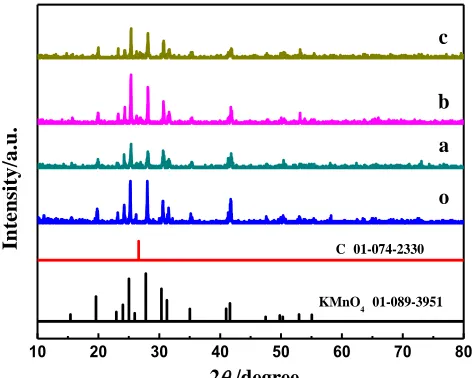
Figure 1. XRD patterns of all the synthesized samples. Patterns o, a, b and c correspond to sample o, a, b and c.

0 5 10 15

E/keV

o c

b a

C

C

C K

K

K

K O

O

O

O

K

K

K

K Mn

Mn

Mn

Mn

Mn

Mn

Mn

Mn

Figure 2. EDS spectra for all the samples. Curves o, a, b and c correspond to sample o, a, b and c.

[image:4.596.186.459.465.683.2]
(5)

in all obtained XRD patterns, which confirmed that the starting material was KMnO4 rather than other substances. Meanwhile, the small diffraction peaks appearing at 26.6° should be assigned to the (002) facet of graphene basing on our previous work concerning graphene [15]. It effectively demonstrated that graphene was really doped into the final samples.

The compositions of the samples were also examined by EDS analysis. The typical results are plotted in Fig.2. For the pure KMnO4 (curve o), the peaks corresponding to K, Mn and O were all clearly exhibited. Moreover, the atomic ratio of K: Mn: O was 1:1:4, further confirming that the starting material was KMnO4 and no other impurities were introduced. While, for the graphene-doped KMnO4, the peak of C element was detected, and the atomic ratio of K: Mn: O still remained unchanged. The results of Fig.1 and Fig.2 substantially demonstrated that graphene was really doped into the pure KMnO4 and no novel substances were created in the prepared samples.

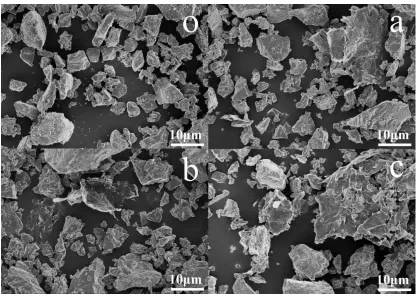
Figure 3. SEM images for all the samples. Images o, a, b and c correspond to sample o, a, b and c.

[image:5.596.90.507.281.577.2]
(6)

3.2 Electrochemical properties

0 40 80 120 160 200 240 280

0 1 2 3 4

Capacity/mAhg

-1

Vol

tag

e/

V

o a b

[image:6.596.137.491.97.366.2]

c

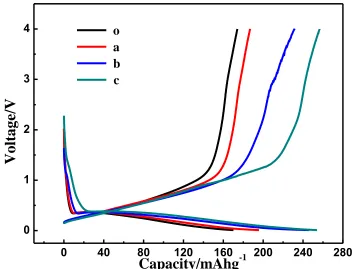
Figure 4a. The initial galvanostatic charge-discharge curves at the current density of 100 mA g-1 in the potential range of 0-4 V. Curve o, a, b and c corresponded to half-cells assembled by sample o, a, b and c.

(7)

0 5 10 15 20

40 80 120 160 200 240 280

Cycle number

Capac

ity

/m

Ah

g

-1

[image:7.596.150.462.69.306.2]

o a b c

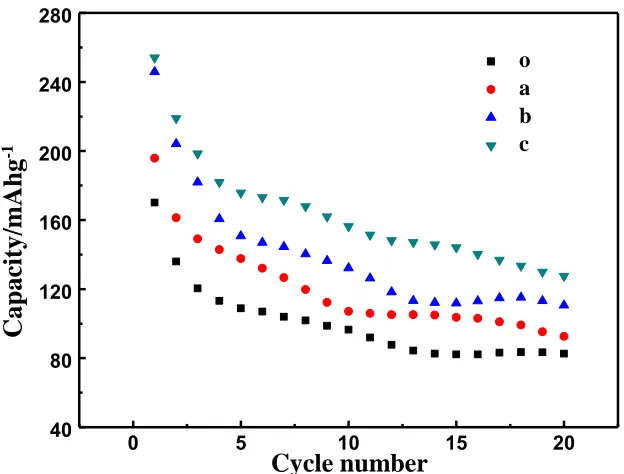
Figure 4b. Cyclic performance for all prepared batteries at the current density of 100 mA g-1. Curve o, a, b and c correspond to half-cells assembled by sample o, a, b and c.

The cycling performances for all prepared materials are shown in Fig. 4b. It can be seen that for all the samples, the discharge capacities decreased slightly with increasing the cycle number, which was a common phenomenon since all the practical processes were the irreversible processes. Obviously, all the graphene-doped KMnO4 samples showed much higher discharge capacity than the pure KMnO4, which indicated that the doping of graphene could greatly promote the electrochemical performance of KMnO4. The discharge capacities of the first cycle for sample o, a, b and c were 170, 196, 245 and 253 mAh g-1, respectively. And at the 20th cycle, the discharge capacities for the sample o, a, b and c were estimated to be 82.9, 91.6, 110.7 and 126.2 mAh g-1, which were equal to 48.7%, 46.7%, 45.2% and 49.9% of their initial discharge capacities, respectively. It seemed that more amounts of doped graphene in pure KMnO4 were favorable for the enhancement of electrochemical performance of KMnO4. Evidently, the enhancement of graphene amount would inevitably increase the preparation cost of a lithium ion battery, which was not advantageous to the large scale production of LIBs. The research work concerning the optimum content of graphene in the graphene-doped KMnO4 was under progress in our lab.

(8)

0 1 2 3 4

-0.16 -0.12 -0.08 -0.04 0.00 0.04 0.08

E/V

I/

mA

[image:8.596.127.483.74.328.2]

o a

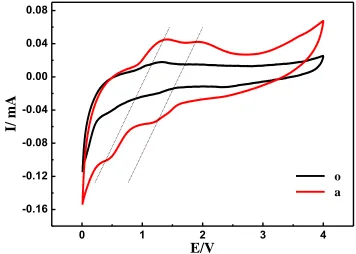
Figure 5. Cyclic voltammetry curves at a scan rate of 1 mV s-1 in the potential range of 0-4 V. Curve o and a correspond to the half-cell assembled by sample o and a.

It should be noted that the half-cell was first discharged at a current density of 100 mA g-1, and then the charging process was followed which was recorded as the initial curve in Fig.4a. That is to say, the charging curve was measured first and then the discharging curve was plotted. Probably, after the initial discharging process, KMnO4 was totally converted into Li3MnO4 [17] under the driving forces from the external power and concentration diffusion, thus, the following delithiation and lithiation process probably occurred in KMnO4.

Charging process: Li3MnO4+K+- e KLiMnO4 + 2Li+ KLiMnO4- e KMnO4 + Li+

Discharging process: KMnO4 + e +Li+ KLiMnO4 KLiMnO4 + e +2Li+ Li3MnO4 +K+

(9)

organic solvent was created, which was rather different from the previously reported system concerning LIBs. Therefore, there must be a novel mechanism for interpreting the charging-discharging mechanism presented in this work. More works are really required for achieving satisfactory explanation.

0 100 200 300 400 500 600 700

0 100 200 300 400

Z'/

-Z

''

/

o

a

b

[image:9.596.124.486.163.429.2]

c

Figure 6. Impedance spectra (Nyquist plot) of all prepared batteries. Curve o, a, b and c correspond to the half-cells assembled by sample o, a, b and c.

Electrochemical impedance spectroscopy (EIS) as a conventional method has been widely used in investigating the electrochemical performance of a lithium ion half battery mainly because of its simple analysis [21]. Nyquist plot, as one typical curve in EIS, is the most widely used plot from which the electrochemical performances of different Li half-cells can be easily analyzed and compared. Fig. 6 gives Nyquist curves of all the synthesized half cells. It should be mentioned that these curves in Fig.6 were recorded after 20 cycles testing and all the curves were measured at their open circuit potentials. Generally, for a typical Li half-cell, the total resistance (Ohmic resistance (RΩ) ) of the electrolyte,

(10)

kinetics as compared to pure KMnO4. The results shown in Fig.6 were consistent with those consequences displayed in Fig.4a.

4. CONCLUSIONS

For the first time, the purchased KMnO4 was directly employed as anode material for LIBs, showing a discharge capacity of 82 mAh g-1 after 20 cycles at the current density of 100 mA g-1. This result was an amazing result since it meant that a novel group materials, namely, KMnO4-based anode material, was found. This novel finding probably could greatly reduce the preparation cost of anode materials. Also, in this preliminary, three kinds of graphene-doped KMnO4 were produced by a very simple method of milling. As expected, the significantly enhanced electrochemical performances were exhibited by the graphene-doped KMnO4 as compared to the pure KMnO4. Additionally, a K+ and Li+ involved mechanism of lithiation and delithiation process was proposed which may roughly explain the electrochemical performance shown by the prepared samples, basing on the CV curves obtained. It is expected that this pioneering work may not only start the research work of KMnO4-based anode materials but also may bring about brand-new mechanism, namely, K+ and Li+ involved mechanism for explaining lithiation and delithiation process.

ACKNOWLEDGEMENTS

This work was financially supported by National Natural Science Foundation of China (No. 21676022 & 21173066), the State Key Program of National Natural Science of China (21236003), Natural Science Foundation of Hebei Province of China (No. B2011205014 and B2015205150), the Fundamental Research Funds for the Central Universities (JD1612 and YS1406), BUCT Fund for Disciplines Construction and Development (No. XK1531).

References

1. X. Lu, L. Gu, Y.-S. Hu, H.-C. Chiu, H. Li, G. P. Demopoulos and L. Chen, J. Am. Chem. Soc., 137 (2015)1581.

2. B. Wang, Z. Wen, J. Jin, X. Hong, S. Zhang and K. Rui, J. Power Sources, 342 (2017) 521. 3. P. Li, S. Qian, H. Yu, L. Yan, X. Lin, K. Yang, N. Long, M. Shui and J. Shu, J. Power Sources,

330 (2016) 45.

4. Z. Yi, Q. Han, D. Geng, Y. Wu, Y. Cheng and L. Wang, J. Power Sources, 342 (2017) 861. 5. Y. Deng, C. Fang and G. Chen, J. Power Sources, 304 (2016) 81.

6. Z. Wang, L. Zhou and X. W. Lou, Adv. Mater., 24 (2012) 1903.

7. Q. Zhang, M. G. Verde, J. K. Seo, X. Li and Y. Shirley Meng, J. Power Sources, 280 (2015) 355. 8. Y. Huang, Z Lin, M. Zheng, T. Wang, J. Yang, F. Yuan, X. Lu, L. Liu and D. Sun, J. Power

Sources, 307 (2016) 649.

9. L. Li, G. Zhou, X.-Y. Shan, S. Pei, F. Li and H.-M. Cheng, J. Power Sources, 255 (2014) 52. 10.R. Liu, D. Li, C. Wang, N. Li, Q. Li, X. Lü, J. S. Spendelow and G. Wu, Nano Energy, 6 (2014)

73.

(11)

15.K. Ding, Y. zhao, L. Liu, Y. Li, L. Liu, L. Wang, X. He and Z. Guo, Electrochim. Acta, 176 (2015) 240.

16.K. Ding, J. Zhao, J. Zhou, Y. Zhao, Y. Chen1, Y. Zhang, B. Wei, L. Wang and X. He, Int. J. Electrochem. Sci., 11 (2016) 446.

17.J. A. Saint, M. M. Doeff and J. Reed, J. Power Sources, 172 (2007) 189.

18.S. Soiron,A.Rougier, L.L. Aymard and J-M. Tarascon, J. Power Sources, 97-98(2001)402. 19.W.P. Kilroy, W.A. Ferrando and S. Dallek, J. Power Sources, 97-98(2001) 336.

20.G. Jin, H. Qiao, H. Xie, H. Wang, K. He, P. Liu, J. Chen, Y. Tang, S. Liu and C. Huang, Electrochim. Acta, 150 (2014) 1.

21.K. Ding, H. Gu, C. Zheng, L. Liu, L. Liu, X. Yan, Z. Guo, Electrochim. Acta, 146 (2014) 585.

Figure

Figure 2.  EDS spectra for all the samples. Curves o, a, b and c correspond to sample o, a, b and c
Figure 3 . SEM images for all the samples. Images o, a, b and c correspond to sample o, a, b and c
Figure 4a. The initial galvanostatic charge-discharge curves at the current density of 100 mA g-1 in the potential range of 0-4 V
Figure 4b. Cyclic performance for all prepared batteries at the current density of 100 mA g-1
+3

References

Related documents