EUROPEAN COMMISSION
Brussels, 9.7.2012 SWD(2012) 199 final
VOL 1
COMMISSIO STAFF WORKIG DOCUMET
EU Accountability Report 2012 on Financing for Development Review of progress of the EU and its Member States
Accompanying the document
COMMUICATIO FROM THE COMMISSIO TO THE EUROPEA PARLIAMET, THE COUCIL, THE EUROPEA ECOOMIC AD SOCIAL
COMMITTEE AD THE COMMITTEE OF THE REGIOS
Improving EU support to developing countries in mobilising Financing for Development.
Recommendations based on the 2012 EU Accountability Report on Financing for Development.
COMMISSIO STAFF WORKIG DOCUMET
EU Accountability Report 2012 on Financing for Development Review of progress of the EU and its Member States
Accompanying the document
COMMUICATIO FROM THE COMMISSIO TO THE EUROPEA PARLIAMET, THE COUCIL, THE EUROPEA ECOOMIC AD SOCIAL
COMMITTEE AD THE COMMITTEE OF THE REGIOS
Improving EU support to developing countries in mobilising Financing for Development.
TABLE OF COTETS
1. Reducing aid dependency and increasing sustainable Financing for Development .. 12
1.1. Improving domestic resource mobilisation... 12
1.1.1. Strategic Orientations... 12
1.1.2. EU assistance to developing countries in tax and customs reform and related capacity building ... 14
1.2. Maintaining sustainable debt levels ... 20
1.2.1. Honouring EU commitments on debt relief ... 21
1.2.2. Public Debt Management: a critical component of debt sustainability... 21
1.2.3. Diversified sources of lending and debt vulnerabilities... 23
1.2.4. The status of Vulture Fund Litigation... 24
2. International Private Flows for Development ... 27
2.1. Supporting trade as an engine for development ... 27
2.1.1. Towards a more focused EU policy framework on Trade and Development... 27
2.1.2. Taking stock of the way the EU has delivered on its Trade and Development commitments since 2002... 28
2.1.3. Progress on Aid for Trade ... 29
2.2. Remittances as an instrument of development... 31
2.2.1. Towards a renewed EU overarching framework for the cooperation with third countries in the area of migration and mobility ... 31
2.2.2. Progress on remittance outflows ... 32
2.2.3. Reducing transfer costs of remittances ... 33
2.2.4. Donor initiatives... 34
3. Leveraging International Development Finance: beyond official, beyond development and beyond assistance... 35
3.1. Innovative Financing – Sources and Mechanisms ... 35
3.1.1. Distinction between innovative financing sources and mechanisms ... 36
3.1.2. State of play and revenues raised by existing innovative mechanisms... 37
3.1.3. Major EU initiatives... 38
3.1.4. EU Blending Mechanisms... 38
3.2. Facilitating Private Investment ... 39
3.2.2. Corporate Social Responsibility (CSR) ... 46
4. International Development Finance: EU support to global goals ... 50
4.1. Scaling up Official Development Assistance (ODA) ... 50
4.1.1. EU ODA Commitments in the Global Context... 50
4.1.2. EU ODA Performance 2005-2011 compared to other donors ... 51
4.1.3. Performance on ODA targets (2005-2011) ... 52
4.1.4. Achievement of the 0.7% ODA/GNI Target by 2015... 54
4.1.5. The Way Forward ... 57
4.1.6. Falling short of EU’s promise on ODA to Africa ... 58
4.1.7. Honouring the EU commitment on ODA to Least Developed Countries... 59
4.2. Scaling up funding for tackling Climate Change and Biodiversity in the context of Sustainable Development... 61
4.2.1. Climate change fast-start finance ... 61
4.2.2. Biodiversity ... 65
4.2.3. Sustainable Development... 69
4.3. Seeking synergies in EU support ... 70
5. Making EU actions more effective for development ... 71
5.1. Making EU aid more effective ... 71
5.1.1. EU and Member States performance in implementing the Paris Declaration (2005-2010) ... 72
5.1.2. EU and Member States action on alignment... 72
5.1.3. EU and Member States action on complementarity and division of labour effectiveness ... 75
5.1.4. EU and Member States actions on mutual accountability and managing for results. 76 5.1.5. The Post-Busan Dialogue on Development Effectiveness... 78
5.2. Supporting better Global Governance... 79
5.2.1. The Evolving Global Context ... 79
5.2.2. Reforming Multilateral Institutions... 80
LIST OF ACROYMS
A2II Access to Insurance Initiative
ACP Africa, Caribbean and Pacific
ADA Austrian Development Agency
ADB Asian Development Bank
ADF Asian Development Fund
AfDB African Development Bank
AFI Alliance for Financial Inclusion
AfT Aid for Trade
AMC Advance Market Commitment
ASEAN Association of Southeast Asian Nations
AT Austria
ATAF Africa Tax Administration Forum
B4D Business for Development
BE Belgium
BIO Belgian Investment Company for Developing
Countries
BMI/SBI Belgian Corporation for International Investment
BMZ Germany’s Federal Ministry for Economic
Cooperation and Development
BPC Building Productive Capacity
CBD Convention on Biological Diversity
CDE Centre for the Development of Enterprise
CDM Clean Development Mechanism
CER Certified Emission Reduction
CGAP Consultative Group to Assist the Poor
CIAT Inter-American Centre of Tax Administrations
COP Conference of the Parties to the CBD
CPA Country Programmable Aid
CPSS Committee on Payment and Settlement Systems
CRS Creditor Reporting System
CRW IDA Crisis Window
CSO Civil Society Organisation
CSR Corporate Social Responsibility
CZ Czech Republic
DAC Development Assistance Committee
DDA Doha Development Agenda
DE Germany
DFI Development Financial Institutions
DFID Department for International Development - UK
DK Denmark
DMF World Bank Debt Management Facilitaty for Low
Income Countries
DMFAS Debt Management and Financial Analysis System
from United Nations UNCTAD
DTC Double Taxation Convention
DTIS Diagnostic Trade Integration Study
EAC East African Community
EBRD European Bank for Reconstruction and
Development
ECB European Central Bank
EDFI European Development Finance Institution
EGI Ethical Globalisation Initiative
EIB European Investment Bank
EIF Enhanced Integrated Framework
EITI Extractive Industries Transparency Initiative
EPA Economic Partnership Agreement
ES Spain
ETS EU Emission Trading System
EU European Union
EUR Euro
FAC Foreign Affairs Council
FAO Food and Agriculture Organisation
FAT Financial Activities Tax
FDI Foreign Direct Investment
FI Finland
FIRST Financial Sector Reform and Strengthening
Initiative
FLEGT Forest Law Enforcement, Governance and Trade
FR France
FTA Free Trade Agreement
FTT Financial Transaction Tax
G20 Group of Twenty (G8 countries plus Argentina,
Australia, Brazil, China, EU, India, Indonesia, Mexico, Saudi Arabia, South Africa, South Korea, and Turkey)
G8 Group of Eight (i.e. Canada, France, Germany,
Italy, Japan, Russia, United Kingdom and USA, plus EU)
GAVI Global Alliance for Vaccines and Immunisation
GDP Gross Domestic Product
GEEREF Global Energy Efficiency and Renewable Energy
Fund
GEF Global Environment Facility
GIZ Gesellschaft für Internationale Zusammenarbeit
GNI Gross National Income
HDI Human Development Index
HIPC Highly Indebted Poor Countries
HLF High Level Forum
HU Hungary
IBRD International Bank for Reconstruction and
Development
IDB Inter-American Development Bank
IE Ireland
IF EIB Investment Facility
IFAD International Fund for Agricultural Development
IFCA Investment Facility for Central Asia
IFFIm International Financial Facility for Immunisation
IFI International Financial Institutions
ILO International Labour Organisation
IMF International Monetary Fund
IPD Innovative Partnerships for Development
IPSAS International Public Sector Accounting Standards
ITC International Tax Compact
ITF EU–Africa Infrastructure Trust Fund
ITRS International Transactions Reporting System
KfW Kreditanstalt für Wiederaufbau
LAIF Latin America Investment Facility
LDC Least Developed Countries
LT Lithuania
LIC Low Income Countries (LDC+OLIC)
LMIC Lower Middle Income Countries
LU Luxembourg
LV Latvia
MDG Millennium Development Goals
MDRI Multilateral Debt Relief Initiative
MIGA Multilateral Investment Guarantee Agency
MoU Memorandum of Understanding
MS Member States
MSME Micro, Small and Medium Enterprises
MT Malta
MTO Money Transfer Organisation
NGO Non Governmental Organisation
NIF Neighbourhood Investment Facility
NL Netherlands
NORAD Norwegian Agency for Development Cooperation
ODA Official Development Assistance
OECD Organisation for Economic Cooperation and
Development
OECS Organisation of Eastern Caribbean States
OJ Official Journal
OLIC Other Low Income Countries
PCD Policy Coherence for Development
PEFA Public Expenditure and Financial Accountability
PEM Public Expenditure Management
PFM Public Financial Management
PPP Private Public Partnerships
PSD Payment Services Directive
PT Portugal
REDD and REDD+ Reducing Emissions from Deforestation and
Forest Degradation. REDD+ goes beyond deforestation and forest degradation, and includes the role of conservation, sustainable management of forests and enhancement of forest carbon stocks.
REGMIFA Regional Micro Small and Medium-Sized
Enterprises Investment Fund for Sub-Saharan Africa
REPARIS The Road to Europe: Programme of Accounting
Reform and Institutional Strengthening
ROAP Regional Office for Asia and the Pacific
ROSC Report on the Observance of Standards and
Codes
SE Sweden
SME Small and medium-sized enterprises
TA Technical Assistance
TCX The Currency Exchange
TD Trade Development
TEEB The Economics of Ecosystems and Biodiversity
Study
TIEA Tax Information Exchange Agreements
TNA Trade Needs Assessment
TPR Trade Policy Regulations
TRA Trade Related Assistance
TRAdj Trade Related Adjustment
TRI Trade Related Infrastructure
UK United Kingdom
UMIC Upper Middle Income Countries
UN United Nations
UNCCD United Nations Convention to Combat
Desertification
UNCTAD United Nations Conference on Trade and
Development
UNEP United Nations Environment Programme
UNFCCC United Nations Convention on Climate Change
UNITAID International Drug Purchasing Facility
US or USA United States of America
USD United States Dollar
WB World Bank
WBIF Western Balkans Investment Framework
WFP World Food Programme
EXECUTIVE SUMMARY
This Staff Working Document is the tenth in a series of annual progress reports drafted since 2003 for the purpose of assessing where the EU and its Member States stand in relation to their common commitments on financing for development, including aid effectiveness, aid for trade, fast-start climate finance and good governance in tax matters.
The EU and its Member States are making substantial efforts to achieve international targets on the quantity and quality of Official Development Assistance (ODA), as enshrined in the Millennium and Paris Declarations. Collectively the EU is not only the world’s largest provider of ODA in value, but its ODA/GNI ratio is more than double those of Japan and the USA. The EU has also made a greater contribution to the achievement of the aid effectiveness agenda than any other bilateral donor. The EU is keeping to its commitments on fast-start climate finance, has achieved the goal of providing ODA to LDCs equivalent to 0.15 % of GNI, and has increased EU ODA to Sub-Saharan Africa by around EUR 5.5 billion in real terms over the period 2004-2011.
While the direction of change is positive, the pace of implementation is modest. This report shows in fact that the EU and its Member States missed their collective 2010 ODA/GNI target of 0.56%, and in 2011 the ODA/GNI ratio declined from 0.44% to 0.42%, while aid volumes fell by about EUR 400 million. The EU scaling-up process has been uneven, with asymmetric efforts. Member States that do not contribute fairly to the burden-sharing effort endanger the performance of the EU as a whole and substantially increase the risk of failure for future ODA targets.
The projections confirm that Member States do not plan to make the necessary increases under the current tight budget conditions. At today’s pace, the 0.7% target will not be achieved by 2015 as planned. Based on the projections provided by Member States and/or estimates prepared using their 2006-2011 compound annual growth rate, the EU27 ODA is expected to increase to 0.45% by 2015. Considering the expected GNI growth rate till 2015, reaching the 0.7% ODA/GNI target would require the EU and its Member States to dramatically step up efforts and almost double their current ODA in nominal terms. At the current pace, there is a delay equivalent to about 25 years on the path to 0.7%, as ODA is projected to increase at an annual rate of 0.01% of GNI.
Progress on improving aid effectiveness has also been modest. As noted by the OECD DAC Secretariat in its analysis of the 2011 Paris Declaration Survey’s findings, these were ‘sobering’ for all donors, including the EU and its Member States. As a whole, the EU met only one of the twelve indicators relating to donor performance (i.e. coordinated technical cooperation). However, OECD DAC also concluded that ‘considerable progress has been made towards many of the remaining targets’. Most of the overall progress among bilateral donors worldwide was made possible by the performance of EU Member States, which was generally above the ‘all donors’ average, showing a significant commitment to achievement of the goals of the Paris Declaration under difficult global conditions.
As noted in recent EU policy statements on budget support, and on increasing the impact of EU development policy, fair and transparent tax systems are central to fostering citizenship and state-building, leading to enhanced domestic accountability and political participation. Member States are increasingly focusing on the issue of taxation and development. The EU and most Member States undertook new initiatives in 2011 to support tax reforms in developing countries. Many Member States delivered training indirectly by funding specialised programmes managed by international organisations ( such as the IMF, OECD, etc.). Other support focused on tax policy reforms and related legislation.
The EU has consistently supported developing countries in using trade as a tool for development. Since 2007, the EU and its Member States have been driving the global Aid for Trade efforts, confirming again in 2010 the EU’s position as collectively the largest provider of AfT in the world. Indeed, the EU and its Member States together accounted for around 32% of total AfT flows in 2010, reaching more than EUR 10.7 billion (EUR 8.2 billion from Member States and EUR 2.5 billion from the EU), an increase of 4.2% in comparison with 2009. The EU and its Member States have exceeded their 2010 EUR 2 billion target for Trade Related Assistance (TRA) since 2008. However, for the first time since 2005 there has been a decrease of TRA, in 2010. Total TRA in 2010 reached EUR 2.6 billion, compared to EUR 2.8 billion in 2009 (or -8% in 2010, as compared to +24% in 2009).
The Commission and the EU Member States are steadfastly committed to providing debt relief and are increasingly prioritising the prevention of unsustainable debt. In 2011, the EU provided debt relief through participation in the World Bank's Debt Relief Trust Fund (DRTF) to fund the participation of the African Development Bank in the HIPC Initiative. By the end of 2011, 32 countries had reached HIPC completion point, with another seven sub-Saharan countries potentially eligible.
The 2011 Commission Staff Working Paper on ‘Migration and development’ provides further analysis of the achievements since 2005 in the area of remittances, and identifies some remaining challenges, including capacity building to support partner countries interested in designing regulatory frameworks and in promoting financial literacy, new technologies and access to credits to stimulate productive investment and job creation. According to the latest estimations of the World Bank, global remittance flows to developing countries increased by 12.1% in 2011, and are expected to grow at a rate of 7-8 % annually to reach EUR 333.5 billion by 2014. At EU level, total EU27 remittance outflows amounted to EUR 31.2 billion in 2010, a 3% increase from the previous year (EUR 30.4 billion in 2009), most of which are sent to developing countries.
At EU level, remittance services have been made cheaper, more transparent, more competitive and more reliable. In particular, the transposition of the 2007 Payment Services Directive (PSD) into the national legislation of a majority of EU Member States has contributed to increased transparency in the provision of payment services, including the remittance market. Moreover, several EU Member States (including France, Germany, Italy, the Netherlands and the United Kingdom) have set up their own remittance price comparison websites on costs and quality of services.
development and/or climate action. Examples of these mechanisms are the International Finance Facility for Immunisation (IFFIm), the Advance Market Commitments (AMC), the air ticket levy, and the EU Emissions Trading System. Following on from a Commission proposal, the EU is currently discussing the possible establishment of a Financial Transaction Tax as a new own resource for the EU budget. While the revenues raised would not be earmarked for development per se, they could nonetheless facilitate Member States’ efforts to mobilise funding required for meeting aid targets and tackling other global challenges.
Recent EU policy statements have given added emphasis to inclusive and sustainable economic growth as a crucial element contributing to long-term poverty reduction and also leading to wealth and job creation. The EU and its Member States support programmes to achieve these goals by improving competitiveness of local private sectors, enhancing the investment climate, promoting MSMEs, facilitating access to finance and encouraging public-private partnerships. Blending mechanisms can leverage additional financial resources for development at a time when the prospects for increased foreign investment look uncertain. The Busan meeting put forward a framework to enable the participation of the private sector in the design and implementation of development policies. Furthermore, Corporate Social Responsibility has been given added prominence in order to improve the quality of growth.
The need for improved global governance has been recognised following the Busan Forum during which the EU played a prominent role. This involves broadening cooperation to all development partners. The EU is committed to self-restraint with regard to avoiding further proliferation of global and thematic programmes or vertical funds, and will seek to use and strengthen the existing channels. Completing the reforms of multilateral institutions thus takes on added prominence. These reforms entail increasing developing countries’ representation and voice.
The way forward
Introduction
This Staff Working Document is the tenth in a series of annual progress reports drafted since 2003 (previously labelled ‘Monterrey report’). Building on previous reports, it assesses where the EU and its Member States stand in relation to their common commitments on financing for development. This report is especially focused on the evolution in key areas since the previous one, and thus only summarises issues discussed at length last year.
The Report fulfils the Council’s invitation to the European Commission to monitor progress and report annually on common EU commitments, initially focusing on ODA commitments made at the 2002 International Conference on Financing for Development in Monterrey. The Council later expanded the original monitoring mandate to cover all areas of financing for development, including aid effectiveness, aid for trade, tax governance and development, and fast-start climate finance.
The report is also intended to serve as input for EU preparations for several international meetings to be held in 2012, for the operationalisation of the Busan High Level Forum IV on aid effectiveness held in late November 2011, and the bi-annual WTO/ OECD monitoring meeting of all donors on aid for trade. It will also contribute to discussions on the post-2015 MDG framework, including the UN MDG Review Summit.
The report is based on input provided by EU Member States and the Commission through (i) the 2012 EU annual questionnaire on Financing for Development, which covers key EU commitments related to the international financing for development agenda, (ii) the bi-annual 2011 trade and development WTO/OECD survey, (iii) the complementary in-country monitoring, through EU Delegations, of aid for trade provided by EU donors and (iv) public sources and OECD online databases on development cooperation (IDS Online).
1. REDUCIG AID DEPEDECY AD ICREASIG SUSTAIABLE FIACIG FOR
DEVELOPMET
1.1. Improving domestic resource mobilisation
EU Commitments
● EU policy on tax and development is set out in the 2010 Communication on “Tax and Development - Cooperating with Developing Countries on Promoting Good Governance in Tax Matters”1 and accompanying Staff Working Document. Their main recommendations were endorsed by the Council in its Conclusions of 14 June 20102 and by the European Parliament resolution of March 2011.
● The relevance of this agenda was reinforced through the 2011 Commission Communication on “The future approach to EU Budget support to third countries”.3 The “Agenda for Change” Communication provides further emphasis on tax policy and administration by stating that “the EU will continue to promote fair and transparent domestic tax systems in its country programmes, in line with the EU principles of good governance in the tax area, alongside international initiatives and country by country reporting to enhance financial transparency”.4 The main recommendations of the Agenda for Change were endorsed by the Council in its Conclusions of 14 May 2012.5
The objective of this chapter is to present EU progress in implementing the Monterrey consensus, and subsequent Doha declaration in the area of tax and development. The recent Busan Partnership for Effective Development Cooperation highlights the relevance of this area by emphasising its role in underpinning sustainable development and combating illicit flows by addressing tax evasion.6
As evidenced by the fiscal difficulties experienced worldwide during 2011, domestic resource mobilisation is more crucial than ever for creating a sustainable fiscal space to implement and support development programmes.
1.1.1. Strategic Orientations
Taxes are essential for sustainable development, the legitimacy of the State, economic stability, and the financing of public services and infrastructure. The Commission's Communication on Tax and Development argued that development aid policies should contribute to building effective, efficient, fair, and sustainable tax systems in line with the principles of good governance in tax matters (transparency, exchange of information and fair tax competition) and to helping generate sustainable revenues in partner countries. The Council Conclusions on Tax and Development of 14 June 2010 stated that the EU would support developing countries in tax policy, tax administration
1
COM(2010) 163 final,
http://ec.europa.eu/development/icenter/repository/COMM_COM_2010_0163_TAX_DEVELOPMENT_EN.PDF
2
Council Conclusions on Tax and Development – Cooperating with developing countries in promoting good
governance in tax matters, 11082/10, 15 June 2010, http://register.consilium.europa.eu/pdf/en/10/st11/st11082.en10.pdf
3
COM(2011) 638 final, http://eur-lex.europa.eu/LexUriServ/LexUriServ.do?uri=COM:2011:0638:FIN:EN:PDF
4
COM(2011) 637 final, http://eur-lex.europa.eu/LexUriServ/LexUriServ.do?uri=COM:2011:0637:FIN:EN:PDF
5
http://www.consilium.europa.eu/uedocs/cms_Data/docs/pressdata/EN/foraff/130243.pdf
6
http://www.europarl.europa.eu/sides/getDoc.do?pubRef=-and tax reforms, including the fight against tax evasion http://www.europarl.europa.eu/sides/getDoc.do?pubRef=-and other harmful practices.7 A recent IMF paper8 reviews issues and good practices concerning revenue mobilisation in developing countries and provides a useful complementary road-map on implementing reforms in this area. Some of its proposals are taken on board below.
Following the Monterrey Conference of 2003, there has been no visibly increased emphasis on tax reform in developing countries, which is in contrast to the significant scale-up of reforms in the mirror area of public expenditure management. The 2011 Agenda for Change Communication9 calls on the EU and its Member States to accelerate progress in this area through promoting more domestic resource mobilisation in line with the principles of good governance in tax matters, inter alia in the context of budget support operations. Furthermore, as noted in the 2011 Communication on Budget support10, fair and transparent tax systems are central to fostering citizenship and state-building, lead to enhanced domestic accountability and political participation. Both Communications also reaffirm the principle whereby EU budget support should complement the partner country's own efforts to mobilise domestic revenues. The EU will thus continue to promote domestic resource mobilisation in its country programmes and will pay special attention to reforms in this area when considering eligibility to Budget Support.
Complementing the above-mentioned EU policies, Member States are increasingly focusing on the issue of taxation and development. Recently issued policy statements or analysis include:
• A DFID briefing note issued in 2009, but still reflecting current UK policy, highlights how effective tax systems are central to core priorities including promoting economic growth, tackling climate change and achieving the Millennium Development Goals. It points that the tax system is at the heart of an effective State. Taxes, raised in ways that encourage economic growth and promote political accountability, build the political legitimacy of the State and offer the eventual “exit strategy from aid”. Furthermore, in February 2012, a select committee11 of the UK Parliament reporting on tax and development made the case that in view of substantial funding available to tax agencies, UK aid should focus more on neglected areas such as international and subnational taxation, encouraging broader citizen engagement, and building specialised expertise in tax administrations.12
• In 2011, the French Ministry of Finance issued a working paper entitled “Orientations for French Cooperation in Tax Matters.”13 Noting that taxes are the largest source of development finance, the report argues for more attention to be paid to revenue mobilisation through taxes. It concludes that in order to enhance the impact of actions this context justifies strengthening bilateral cooperation in the field of tax mobilisation while ensuring it is well articulated with both France’s bilateral budget support and with all the multilateral programmes.
• The German Ministry of Economic Cooperation and Development, in collaboration with the OECD, has funded a report on appropriate modalities for supporting tax systems.14 The objective of this 2011 study was to assess the role of various aid approaches and to identify practical recommendations for improving development assistance in this area.
7
More details were provided in the 2011 Accountability Report.
8
“Revenue Mobilization in Developing Countries”, IMF, March 2011. http://www.imf.org/external/np/pp/eng/2011/030811.pdf
9
COM(2011) 637 final, Op. Cit.
10
COM(2011) 638 final, Op.Cit.
11
Appointed by the House of Commons.
12
http://www.publications.parliament.uk/pa/cm201012/cmselect/cmintdev/writev/1821/tax04.htm
13
http://www.diplomatie.gouv.fr/fr/IMG/pdf/Rapport_cooperation_en_matiere_fiscale.pdf
14
http://www.taxcompact.net/documents/2011-11-02_Appropriate-Aid-Modalities-for-1.1.2. EU assistance to developing countries in tax and customs reform and related capacity building
Supporting domestic resource mobilisation in developing countries remains the most important element of tax reform from a macroeconomic standpoint. For low income countries, it is important not only to increase domestic revenues, but possibly to consider the tax system as a whole: its composition, its impact on economic activity and private investment, its redistributive effects and its impact on state-building.
There is limited systematic and comparable information on tax systems of developing countries. There appears to be support for establishing a standard diagnostic framework for assessing tax programmes, styled after the Public Expenditure and Financial Accountability (PEFA) framework that has been widely used for budget assessments. Nevertheless, recent studies provide insights for specific regions:
• A news release by OECD in January 2012 underlines the role of rising tax revenues in Latin America’s economic development. It shows that the average tax to GDP ratio in 12 Latin American and Caribbean countries rose almost continuously from 14.9% in 1990 to 19.2% in 2009. This increase reflects strong economic growth, taxation of non-renewable natural resources, and better management of tax administrations. As these countries find themselves in relatively strong economic conditions, they are able to consider reforms that generate long-term, stable resources for governments to finance development.
• A 2012 report by the Asian Development Bank15 considers the issue of how mobilised revenue can help alleviate inequality. It notes that both government spending and taxation can affect inequality and that more tax revenues can be mobilised by broadening tax bases and improving tax administration.
The need for additional revenue is substantial in many developing countries, but the quality of measures also matters. More fundamentally still, the centrality of taxation in the exercise of State power means that more efficient, fairer, and less corrupt tax systems can spearhead improvement in wider governance relations. Developing countries bear primary responsibility for building and improving efficient and fair tax systems and committing the necessary resources thereto, with EU and Member States supporting these efforts.
It is unclear whether Member States pursue coordinated and complementary approaches to avoid aid fragmentation and unmet demand in some countries – especially those with limited donor presence. Nevertheless, a division of labour based on comparative advantage seems to be applied in practice to improve coverage of recipient countries.
In contrast to the previous period, the EU and its Member States do not report initiating any new support to national supreme audit institutions, nor were civil society organisations (CSOs) and parliaments specifically targeted. The relatively low level of engagement with CSOs and national parliaments may lead to low level of stakeholder ownership of tax reform. Indeed, where CSOs are weak, key stakeholders in reforms may lack a voice. Similarly, parliaments lacking an adequate understanding of public financial management issues may not fully appreciate the importance of the laws presented to them in this area, and may not sufficiently scrutinise public financial management and hold governments to account.
15
Mobilising domestic financial resources for development
The EU and most Member States undertook new initiatives in 2011 to support tax reforms in developing countries. Exceptions include both new Member States and some Eurozone members. The breadth and scope of activities were quite diverse with respect to focal countries and type of assistance. Capacity building activities commonly reported included the development of financial management systems, research programmes, training and study tours. Many Member States deliver training indirectly by funding specialised programmes managed by international organisations (such as the IMF, OECD etc.). Other activities focused on tax policy reforms and related legislation. Most of the assistance was concentrated on ACP countries, ENP countries and candidate countries for EU membership, as well as Latin America, in contrast with what was reported last year. Ministries of finance as well as tax and customs administration constituted the bulk of beneficiaries in recipient countries. While three-quarter of Member States provide no or limited support for domestic resource mobilisation in the context of Public Financial Management reforms, they nonetheless recognise its importance and monitor progress. Only Portugal reports a substantial level of support.
The EU and about one-third of Member States monitor domestic resource mobilisation. Typically, this is done in the context of budget support operations, notably through a Financial Management criteria. Some Member States such as Austria and Finland rely on specific indicators to monitor domestic resource mobilisation. Similarly, Sweden and Germany refer to indicators embedded in joint assessment frameworks. The latter also conducts annual fiduciary risk assessments in each country receiving budget support; revenue/GDP below 10% is considered as grounds for exclusion from such support. Finally, DFID’s monitoring is indirect, through project monitoring of interventions which aim to improve revenue collection in countries.
Limiting the impact of tax expenditures
The general EU position is to discourage tax avoidance. However, a number of developing countries, investors and development partners have put forward arguments either in favour of or against specific regimes. The basic case made in favour of tax expenditures (including exemptions, deductions and credits) is that they promote economic development, for instance by reducing investment costs, help overcome market distortions elsewhere and avoid regressive taxation, such as taxation of humanitarian aid. The case against specific regimes argues that they lead to revenue loss, may reduce transparency and create an uneven playing field, while many of the benefits may be gained through appropriate provisions in the general tax code.
Tax expenditures are substantial in most developing countries and half of EU Member States support initiatives aimed at improving tax collection and reducing exemptions. The EU supports partner countries in this area through various initiatives. The Commission Communication on Tax and Development gives a strong signal towards reducing tax exemptions and provides the basis for technical cooperation with partner countries in the tax area, as well as for the bilateral support provided through the EU Delegations. Most of the aid provided by Member States is through technical assistance. This includes direct support such that provided by Belgium to Burundi, Germany to African and Latin American countries, France’s fiscal diagnostic, dissemination of best practice by Latvia, and the UK's support to Kosovo16. Romania’s support is provided through the sponsoring of study tours for experts from Iraq and Palestine. Another approach is to fund regional centres, especially those associated with the OECD and the IMF. Member States providing such support include Germany, Spain, Hungary and the UK. Finland’s involvement in this area was through participation in joint public expenditure reviews in Tanzania.
There is no consensus between Member States on whether or not tax exemptions should continue to be sought on projects financed through external aid. The debate concerns whether tax exemptions reflect a specific case or should be dealt with by encouraging coherence with the general EU stance against it, and if taxes are to be financed who should do so (donor, beneficiary, and/or government). One rationale for continued exemptions as opposed to funding of taxes by donors is to ensure that maximum amount of funding is used to support the specific project, as opposed to providing the government’s consolidated budget with resources. Austria for example notes the risk of providing such additional resource to governments with weak governance structure. The UN has also argued that taxation hinders humanitarian assistance and proposes that this type of aid be exempted. In addition to being in-line with the general position on tax exemption, one argument in favour of funding taxes by development partners is pragmatic, in line with growing programmatic lending and to avoid project implementation difficulties due to insufficient counterpart funding and/or delays in granting of tax exemption.
Some donors and international financial institutions, including the World Bank17 in 2004, have already changed their rules and regulations towards funding all reasonable project costs including taxes. The practice regarding tax exemptions of EU projects is also moving in this direction. However, a common approach has not yet been adopted by Member States. Some are considering eliminating the requirement that their projects be tax exempt without necessarily adopting a formal position on the matter (e.g. Finland, Denmark and UK), while others have either expressed cautious support (e.g. Austria, Cyprus, Czech Republic, Germany) or are in favour of no longer requiring tax exemptions (Estonia, Slovenia, France and Romania are already implementing this measure) and/or start funding taxes. Despite progress, the following considerations still remain: (a) certain types of exemptions may need to remain (humanitarian aid, officially supported credits, and exemptions based on double taxation treaties); (b) donor approaches (EU, OECD and UN) would need to be harmonised; and (c) as pointed out by Hungary, specifics would need to be worked-out.
1.1.3. Promoting good governance in the tax area
The EU and most Member States have provided support in the past for addressing tax evasion and harmful tax competition, and promote the principles of good governance in tax matters in their cooperation policy.
The EU promotes the principles of good governance in tax matters with partner countries by:
• Including specific references to the principles of good governance and to the need for strengthening tax systems in economic cooperation, partnership and other agreements with third countries.
– Making the best use of its relevant dialogue and assessment tools for the monitoring of domestic revenue efforts and good governance commitments. Mainstreaming DRM issues into EU budget support programmes.
– Providing capacity building in tax matters to developing countries committed to the principles of good governance in the tax area.
The Commission and nine Member States reported new activities in 2011. Member States completing new Tax Information Exchange Agreements (TIEA) were Belgium, Czech Republic and
Slovak Republic. Technical assistance and training seminars were also funded by Germany (supporting the East Africa Community and Central American countries) Spain, France (Chad), Slovak Republic (Georgia and Serbia) and UK (Kenya and Ghana). The German Federal Ministry for Economic Cooperation and Development (BMZ) also continued its support of the International Tax Compact18 (ITC) – an informal international action and dialogue platform grouping bilateral and multilateral donors to strengthen international cooperation with developing and transition countries to fight tax evasion and avoidance.
Adoption and implementation of the OECD Guidelines on Transfer Pricing
Transfer pricing rules determine how international transactions within a multinational company must be priced to ensure each country receives its fair share of tax. The OECD Transfer Pricing Guidelines, approved by the OECD Council in their original version in 1995 (last updated in 2010), provide guidance on its application. At the OECD’s first Global Forum on Transfer Pricing on 28 March 2012, tax officials from 90 countries agreed on the need to simplify transfer pricing rules, strengthen the guidelines on intangible issues and improve the efficiency of dispute resolution. In the coming year, the Global Forum will carry out a transfer pricing risk assessment, developing a detailed “how-to” manual19 which will establish good practices for governments when they assess transfer pricing risk at the beginning of an audit.
In the past years, about half of the Member States had already provided assistance with implementing OECD guidelines on transfer pricing. Eight Member States, as well as the EU, supported new initiatives in this area during 2011. The Commission, Netherlands and Belgium participated in the OECD task force subgroup on Transfer Pricing. Belgium, Spain, France, Slovenia and UK organised training seminars – some in collaboration with OECD. The EU and some Member States, at times in collaboration with OECD, supported developing countries in drafting transfer pricing regulations: EU pilot initiative in Ghana and Vietnam; Germany’s support to Ghana; Estonia’s support to Moldova; and UK’s assistance to Kenya and Ghana.
In 2011, the EU funded a study20 on transfer pricing oriented towards strengthening this area in developing countries. The study recommends suitable approaches for supporting developing countries in the adoption and implementation of transfer pricing rules in line with international standards in order to increase tax revenue. The study outlines the current transfer pricing situation in Ghana, Honduras, Kenya and Vietnam, and makes recommendations for donor support to developing countries. As a follow up to the study, the Commission envisages providing support to capacity building in transfer pricing to a number of developing countries.
To increase donor coordination in the field of transfer pricing which results in better targeted and more coordinated assistance to the partner countries an OECD/EU/WB initiative on transfer pricing was initiated.
18
http://taxcompact.net/index.html
19
In parallel with this UN is working on a manual that provides practical guidance on dealing with transfer pricing issues and applying the arm’s length principle to developing countries.
See: http://www.un.org/esa/ffd/tax/documents/bgrd_tp.htm
20
Revenue Transparency21
The OECD’s 2011 publication on tax transparency22 documents substantial progress in areas such as multilateral conventions, and Tax Information Exchange Agreements as well as double taxation conventions. The number of agreements that meet the international standard has increased by more than 700 since the G20 put a spotlight on the issue. These agreements are starting to yield real results as mechanisms for the enforcement of tax laws. During 2011, members of the Global Forum on Transparency and Exchange of Information for Tax Purposes have issued reports (peer reviews) on the 14 EU Member States.23 These reviews provide information on agreements with developing countries.
EU Member States also participate in other initiatives that contribute to transparency and combating corruption. In particular, 23 EU Member States report their support and/or adherence to the United Nations Convention against corruption24 and 20 Member States participated in the implementation of the OECD convention on combatting bribery of foreign officials.25 A further 9 Member States participated in the Stolen Asset Recovery initiative26 launched in 2007 by the World Bank and UN. In addition, in October 2011 the Commission adopted a legislative proposal27 for a new set of disclosure requirements for extractive companies that are based in EU countries. Under the new rules, companies in the EU would have to publish all payments to the governments in countries they operate in. This proposal is currently being discussed in the Council and the European Parliament. The increase in transparency will contribute to fighting corruption, increase resource-rich countries' accountability and improve domestic revenue mobilisation.
Box 1.1.3 The Extractive Industry Transparency Initiative (EITI)
Some 3.5 billion people live in countries rich in oil, gas and minerals. Through good governance the exploitation of these resources can generate large domestic revenues to foster inclusive growth, discourage conflict and reduce poverty.
The EITI is a voluntary process aimed at strengthening governance by improving transparency and
accountability in the extractive industries sector. With 35 implementing countries now, the initiative is becoming a
global standard for corporate governance and transparency. The EITI requests that companies publish payments to governments, and that the latter, in turn, disclose revenues received from companies. This enhances domestic accountability and strengthens the demand for good governance so as to reduce corruption related to extractive activities. EITI implementation slowed down in 2011. Nevertheless, 13 countries have now achieved EITI-compliant status (compared to 11 last year) and 20 countries are new candidates.
The EU is an increasingly active participant in, and supporter of, this initiative. Its position is reflected in the recent European strategy on the sustainable supply of raw materials, and in the follow-up to the commitments on enhanced support made in the 2010 Tax and Development Communication. The Commission is a member of the Steering Working Group of EITI and a member/observer of the EITI Board. It provided further support to EITI during 2011 through (a) co-financing of two conferences (i.e., 5th Global Conference and National Coordinators Conference); (b) bilateral support via Delegations; and (c) contribution to World Bank EITI Trust Fund.
21
The Kimberley process was covered in some detail in the 2011 Accountability Report. One notable recent event is that in November 2011, the EU played a key role in reaching a consensus on trading Marange diamonds from Zimbabwe.
22
OECD, Tax transparency 2011 – Report on progress, http://www.oecd.org/dataoecd/52/35/48981620.pdf
23
OECD, Op. cit. see P. 14
24
http://www.unodc.org/unodc/en/treaties/CAC/
25
http://www.oecd.org/dataoecd/4/18/38028044.pdf
26
See website for further information. http://www1.worldbank.org/finance/star_site/
27
COM(2011) 683 final of 25.10.2011
Several Member States listed activities in support of EITI:
• Belgium and UK provided funding to the multilateral Trust Fund administered by the World Bank. In addition to funding the Trust fund, Germany, Denmark and Netherlands also supported the EITI secretariat by funding its activities. Denmark also funded the 2011 EITI Global Conference. Netherlands was an EITI board member in 2011, hosting the 17th board meeting June 2011, and has seconded a staff member to EITI secretariat for the period 2012 – 2015.
• Germany is supporting the EITI implementation through various bilateral as well as regional TC-projects, e.g. in DR Congo.
• The Italian Government continues to support EITI by: (a) favouring its outreach proposing a suitable scoring system so as to provide an incentive for good performance by implementing Countries; (c) supporting the New EITI rules without expanding the scope of the Initiative; (d) improved monitoring. A private Italian enterprise engaged in the oil and gas, power generation, petrochemicals, oilfield services and engineering industries is implementing pilot projects and initiatives in Congo, Gabon, Nigeria, Kazhakstan and Timor Leste.
Support to international and regional initiatives, and organisations
The EU and many Member States indicated that they continued relying on intermediaries when supporting developing countries’ tax reform agendas. This is being done through international initiatives such as the Africa Tax Administration Forum (ATAF), the OECD, the International Tax Compact (ITC) and International Tax Dialogue28 (ITD), “Centro Inter-Americano de Administraciones” (CIAT) and three IMF facilities (i.e. Regional Technical Centres, the Trust Fund on Tax Policy and Administration, and the Topical Trust Fund on Managing Natural resource Wealth).
The IMF remains the prime partner,receiving by far the most financial support. ITC was the next largest recipient, albeit at a much smaller scale. While there are a number of institutions receiving support, there is insufficient information to assess whether this leads to inefficiency and unnecessary segmentation in delivery of tax reforms.
Emerging themes
While the impact of the new approach to EU budget support will only be evident in the future, it is likely that EU and Member States will incorporate tax administration and fair tax collection as part of their budget support eligibility criteria.
28
1.2. Maintaining sustainable debt levels
EU Commitments
● Council Conclusions of 11 3ov 200829, § 44: ‘The EU will take action to help restore and preserve debt sustainability in low-income countries (…), to prevent unsustainable lending behaviour by lenders which have not contributed to alleviating the burden of poor countries, and to deter aggressive litigation by distressed-debt funds. The EU also agrees not to sell claims on HIPCs to creditors unwilling to provide debt relief.’
● Council Conclusions of 18 May 200930: (§12): ‘the EU will continue supporting the existing debt relief initiatives, in particular the Heavily Indebted Poor Countries (HIPC) Initiative and Multilateral Debt Relief Initiative (MDRI) and values the Evian approach as an appropriate flexible tool to ensure debt sustainability’.
● In line with the Doha Declaration, the EU has also confirmed in the Council Conclusions of 18 May 2009 (§12), that it ’supports discussions, if relevant, on enhanced forms of sovereign debt restructuring mechanisms, based on existing frameworks and principles, including the Paris Club, with a broad creditors’ and debtors participation and ensuring comparable burden-sharing among creditors with a central role for the Bretton Woods Institutions in the debate.
In 2011, the European Commission and the EU Member States have maintained their engagement in providing debt relief and are increasingly prioritising actions on the prevention of unsustainable debt, including by:
• reducing debt levels through debt relief, using existing mechanisms (HIPC, Paris Club, etc.);
• strengthening public debt management capacity to avoid unsustainable debt levels;
• supporting greater transparancy in the new forms of financing;
• fighting against aggressive litigation by vulture funds.
In addition, most EU Member States have highlighted three current challenges to continue ensuring debt sustainability:
• In light of the increased weight of bilateral non-Paris Club creditors, there is a need for more transparency and closer collaboration between these creditors and the Paris Club in order to guarantee that debt relief operations deliver sufficient relief and preserve a fair burden sharing.
• Debt relief under the HIPC Initiative and MDRI has also created new borrowing space. Domestic debt is likely to grow in importance as domestic savings increase and governments seek to develop domestic debt markets. Low Income Countries (LICs) are likely to face new risks as the range of creditors and debt instruments continues to expand.31
29
Council Conclusion on Guidelines for EU participation in the International Conference on Financing for Development (Doha, 29 3ovember - 2 December 2008), 15480/08,
30
Council Conclusions on Supporting developing countries in coping with the crisis, 10018/09
31
• Moreover, due in part to the current economic context, many countries remain vulnerable to shocks, particularly exporters, facing risk of unsustainable debt in the future.
1.2.1. Honouring EU commitments on debt relief
For the past decade, debt relief has been a key tool for achieving debt sustainability. It has been implemented through the HIPC/MDRI initiative, complemented with bilateral and other types of debt forgiveness.
The Commission and EU Member States have continued to deliver on their commitments on debt relief. In 2011, the EU provided debt relief through participation to the World Bank's Debt Relief Trust Fund (DRTF) to support the participation of the African Development Bank in the HIPC Initiative. HIPC Interim debt relief in the form of coverage of debt service payments or arrears clearance was also provided to the following countries: Comoros, DRC, Ivory Coast, Guinea and Togo. Full relief further to reaching HIPC completion point was provided to Liberia in early 2011.
As of end-2011, 32 countries had reached HIPC completion point, with another 7 sub-Saharan countries potentially eligible.32
Debt relief has markedly improved the debt position of the 32 post-completion point Highly Indebted Poor Countries, bringing their debt indicators to sustainable levels. Debt cancelation has brought, and still brings, strong positive effects for debt-distressed countries, allowing more fiscal space for poverty related expenditures.
To date, debt reduction packages under the HIPC Initiative have been approved for 36 countries, 30 of them in Africa, providing EUR 54.6 billion (USD 76 billion) in debt-service relief over time. The debt stocks of the 36 post-decision-point HIPCs have been reduced by over 90 %.33
It is to be mentioned that the IMF and IDA Boards had informal discussion on the future of the HIPC Initiative during 2011. So far, this question remains an open issue and the focus is rather on ensuring a close monitoring of vulnerabilities of Low Income Countries than only focusing on HIPC.34
1.2.2. Public Debt Management: a critical component of debt sustainability
In 2002, the Monterrey Consensus called for a speedy, effective and full implementation of the enhanced Heavily Indebted Poor Countries initiative and for increased international cooperation for
32
HIPC Fall Meeting 2011: Chad, Côte d’Ivoire, Comoros and Guinea have past the Decision Point and half of them expected to reach completion point in 2012, while Eritrea, Sudan and Somalia are potentially eligible.
33
HIPC Initiative country documents and IDA/IMF staff estimates, Fall 2011
34
sustainable debt financing.35The G8/Africa Joint Declaration of the Deauville G8 summit of May 2011 reiterated the call to preserve debt sustainability in Africa.36
Debt relief alone is not sufficient to guarantee debt sustainability. As illustrated in the latest World Bank report on HIPC Status37, strengthening debt management capacity and institutions in HIPC countries is also a priority. According to this study, seven post-Completion Point HIPCs remain at high risk of debt distress after HIPC and MDRI relief, and 10 at moderate risk.
While good debt management has proven to be a valuable asset in mitigating the effects of external shocks, poor public debt management contributes to the negative impact of these shocks and seriously undermines a country’s ability to achieve sustainable growth. Governments, both creditor and borrower, need to closely monitor debt management.
"Debt management systems in most African countries have advanced, albeit only marginally" according to the mutual review of development effectiveness in Africa.38 To reduce their debt vulnerabilities sustainably, countries need to pursue cautious borrowing policies and strengthen their public debt management capacity.
Beyond HIPC and MDRI, EU Member States have maintained a strong support to enhance debt management capacities of developing countries. The main international initiatives to support better debt management and to which the EU contributes include the Debt Management Facility and the Debt Management and Financial Analysis Software.39 (see box 1.2.2) The European Commission has committed new contribution of EUR 3 million to the World Bank's Debt Management Facility (DMF Trust Fund) and EUR 3 million to UNCTAD's Debt Management and Financial Analysis Software (DMFAS); both signed in December 2011.
Box 1.2.2: The Debt Management Value Chain
● The World Bank Debt Management Facility‘s covers “upstream” activities: - Diagnosing the performance of debt management in a country (DEMPA)
- Assistance in formulating reform plans to correct the weaknesses identified by the DEMPA (Reform Plan) - Preparing a reform plan to address the weaknesses identified (Reform Plan)
- Preparing a medium term debt strategy (MTDS)
● The Debt Management and Financial Analysis Software from UNCTAD comparative advantage is in the ‘downstream’ activities needed for implementing the DMF Reform Plan and strategy, through:
- Supporting countries in implementing debt management reform plans - Providing debt management systems (the DMFAS system)
- Training the debt management staff in debt reporting, operations, statistics and analysis - Advising on debt office reorganisation, integration and staffing
- Providing sustainable support (Helpdesk) for these areas
35
http://www.un.org/esa/ffd/monterrey/MonterreyConsensus.pdf
36
http://www.g8-g20.com/g8-g20/g8/english/live/news/shared-values-shared-responsibilities-g8-africa.1320.html
37
WB 2011 HIPC status report.
http://siteresources.worldbank.org/INTDEBTDEPT/ProgressReports/23063134/HIPC_MDRI_StatusOfImplementation 2011.pdf
38
Mutual Review of Development Effectiveness 2011.
http://www.oecd.org/document/0/0,3746,en_39862406_39906520_49370432_1_1_1_1,00.html
1.2.3. Diversified sources of lending and debt vulnerabilities
In a number of LICs, finding sources to finance priority infrastructure investments has led to an increase of reliance on non-concessional external borrowing, requiring a close monitoring on the evolution of debt vulnerabilities in those countries.40 In addition, keeping debt at sustainable levels will continue to be a necessity in the context of EU blending operations in developing countries. Debt sustainability is assessed by the European Commission in all of the activities in the framework of innovative financing (see chapter 3.1 on Innovative Financing).
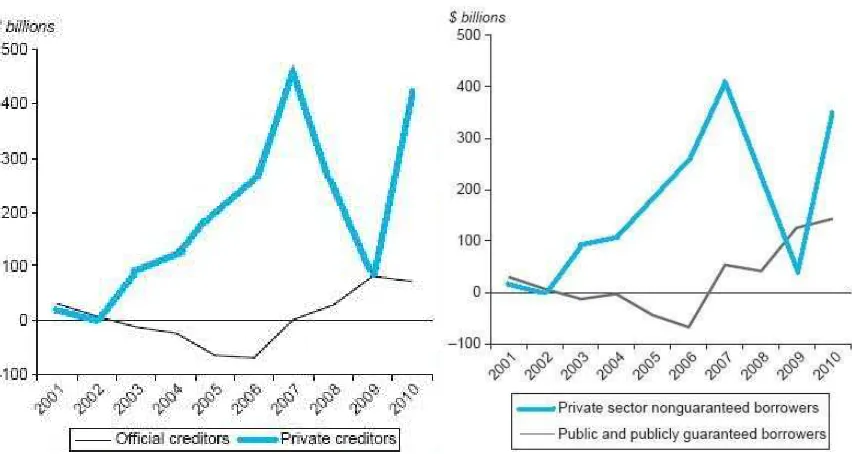
[image:24.595.67.493.342.569.2]Over recent years, a number of new public and private creditors have increased their lending to Africa’s Low-Income Countries, creating concerns of swelling debt burdens. Intra-developing country lending, or so-called South-South flows, have been a driving force behind the rise in lending by bilateral creditors and new commitments. Between 2007 and 2010, bilateral creditors signed new loan agreements totaling around EUR 102 billion (USD 135 billion), of which China accounted for close to one third.
Figure 1.2.3
et Debt Flows by Creditor Type, 2001-2010 et Debt Flows by Borrower Type, 2001-2010
Source: World Bank Debtor Reporting System in World Bank Global Finance 2012: External Debt of Developing Countries
In an effort to cast more light on the recent activities of new donors, the OECD, in collaboration with the World Bank, the United Nations Development Programme (UNDP), and the United Nations Department of Economic and Social Affairs (UNDESA), conducted a survey of nine
40
developing countries that are considered as important new lenders (Brazil, Chile, China, India, Malaysia, Russia, South Africa, Thailand, and Venezuela). So far only Chile, Malaysia, and Thailand responded to the survey.41
A recent analysis by the Africa Economic Outlook42 shows a relatively limited impact of financing from the non-Paris Club creditors, though the lack of transparency does not allow to fully measure the situation. The lack of transparency in loan contracting processes from non-Paris Club continues to constitute a risk, especially for the most fragile nations. Raising transparency standards for financial transactions between African countries and their new partners would help developing economies to borrow more sustainably. This would strengthen the credibility of the "emerging" partners as part of the international financial governance structure.43 The G8 Action Plan for Good Financial Governance in Africa emphasises the importance of the joint World Bank-IMF Debt Sustainability Framework as the framework of choice for the “new” donors and lenders.
The growing importance of private creditors within the new lenders also increased the need for closer coordination amongst different types of lenders. In 2010, lending by private creditors to developing countries significantly increased from EUR 61.9 billion (USD 86 billion) in 2009 to EUR 320.1 billion (USD 424 billion) in 2010.44
The EU as a whole believes that creditor coordination is key to reaching the objective of restoring and preserving debt sustainability in LICs. In that connection, EU Member States call for enhanced dialogue and outreach to non-Paris Club offical bilateral creditors.
1.2.4. The status of Vulture Fund Litigation
The problem posed by vulture funds is also a major concern. Vulture fund modus operandi is simple: commercial creditors purchase distressed debt on the secondary market, significantly below its face value, and seek to recover the full amount, including through litigation.
Litigation is possible because most debt relief initiatives, such as the HIPC initiative, do not alter the legal rights and obligations between HIPCs and their external creditors. Accordingly, creditors are legally entitled to use available legal mechanisms to enforce their credit claims against HIPCs, unless the HIPC debtors and their creditors reach bilateral legal agreements which would put their debt into the authority of HIPC initiative.
Figure 1.2.4 Where Vulture Funds Strike45
41
OECD: “Prudent versus Imprudent Lending to Africa: From debt relief to emerging lenders”, http://www.oecd-ilibrary.org/development/prudent-versus-imprudent-lending-to-africa_242613675043
42
“Transparency needed to end debt sustainability fears”, 2 march 2012 http://www.africaneconomicoutlook.org/en/in- depth/africa-and-its-emerging-partners/industrialisation-debt-and-governance-more-fear-than-harm/transparency-needed-to-end-debt-sustainability-fears/
43
http://www.g8.utoronto.ca/finance/g8finance-africa.pdf
44
Global Development Finance 2012: External Debt of Developing Countries. World Bank 2012. page 17. http://data.worldbank.org/sites/default/files/gdf_2012.pdf
45
African Legal Support Facility, Tunisia, 26 January 2012,
http://www.aflsf.org/attachments/article/57/02.%20Amir%20SHAIKH%20(ALSF)-The IMF reports that in some cases, the claims by vulture funds constitute as much as 12-13 % of a country’s gross domestic product; 11 HIPCs have been targeted so far in forty-six lawsuits and the plaintiffs are concentrated in three countries, ie. USA (8), British Virgin Islands (7), and the United Kingdom (4).46 The lawsuits are mostly concentrated in a few courts (New York (15), London and Jersey (7), Paris (7)).47
Box 1.2.4: Vulture Funds in Figures48
– Vulture funds have average recovery rates of about 3 to 20 times their investment, equivalent to returns of (net legal fees) 300-2000 %.
– The vulture funds exert pressure on the sovereign debtor by attempting to obtain attachment of the government’s assets abroad: in a recent case against Zambia, a vulture fund, having bought a debt for EUR 2.16 million (USD 3 million), sued Zambia for EUR 39.55 million (USD 55 million) and was awarded EUR 11.14 million (USD 15.5 million) at High Court of England and Wales.
– Litigation is typically protracted with many lawsuits taking 3 to 10 years to “settle.” Legal documents indicate six years as a conservative medium estimate for recovery, which suggests that annualised returns average 50 to 333 %
– Some of these claims were bought at roughly 10 % of face value, implying very high gross recovery rates. Subtracting legal costs, often recouped from the sovereign debtor, these recovery rates are probably the highest in the distressed debt market.
46
Presentation by IMF, Litigating Creditors in the Context of the HIPC Initiative: An Overview – G-7 Debt Experts Meeting, presented December 12, 2007, Paris, France
47
http://www.aflsf.org/attachments/article/60/Annex%201_Memorandum%20for%20the%20establishment%20of%20A LSF.pdf
48
African Development Bank 2011,
– The World Bank estimates that more than one-third of the countries which have qualified for its debt relief have been targeted with lawsuits by at least 38 litigating creditors with judgments totalling USD 1 billion in 26 of these cases. Out of this amount 72% of the judgments have been against Regional Member Countries.49
In 2010, the Paris Club confirmed its deep concern over vulture fund litigation. Taking stock of the harmful consequences of litigation for HIPC countries, and consistent with the principle of comparability of treatment, the Paris Club had resolved50 in May 2007 to avoid the sale of their claims on HIPCs to other creditors who do not intend to provide debt relief under the HIPC initiative. The Paris Club had also urged other creditors to follow suit.
In that connection, five EU Member States have implemented specific interventions in order to prevent the actions of distressed-debt funds:
– On April 6, 2008, Belgium has passed a bill to prevent the seizure or transfer of public funds for international cooperation, in particular related to the methods of the Vulture Funds. Belgium also aims to assist African countries in their legal protection against vulture funds through financial support to the African Legal Support Facility.
– Spain regularly supports, on a case by case basis, the initiatives and discussions that take place in the Paris Club in order to prevent aggressive litigation against HIPCs. Spain is committed not to sell or securitize debt owed by HIPC countries. Spain also supports the Debt Reduction Facility by the World Bank, that addresses the issue of litigating creditors.
– France is strongly supporting the Debt Reduction Facility by the World Bank.
– Italy is commited with any intervention to prevent aggressive litigation against HIPCs within the Paris Club and through the World Bank.
– In 2011, the UK made the Debt Relief (Developing Countries) Act 2010 permanent. This legislation limits the amount of money that commercial creditors can recover from developing countries progressing through the HIPC Initiative, removing the incentive to pursue them in courts.
49
cf list of RMC http://www.afdb.org/en/about-us/members/
50