School of Information Systems
Developing a Four Phase Model:
Thirty-Four Case Studies Exploring the Utilisation of Electronic Commerce
in Australian Small and Medium Sized Enterprises:
A dissertation submitted to the
Faculty of Commerce, University of Tasmania
in fulfilment of the requirements for the Degree of Doctor of Philosophy
by
Stephen B. Chau
B.Ec., Grad.Dip.Sci.(IT), B.Comp(Hons).
This dissertation contains no material which has been accepted for the
award of any degree or diploma by the University or any other
institution, except by way of background information and duly
acknowledged in the Thesis, and to the best of the candidate's
knowledge and belief no material previously published or written by
another person except where due acknowledgment is made in the text
of the thesis.
This Thesis may be made available for loan and limited copying in
accordance with the
Copyright Act 1968.
Stephen Chau
Abstract
This thesis explores the utilisation of electronic commerce (e-commerce) amongst thirty-four Australian small and medium sized enterprises (SMEs). While e-commerce adoption amongst Australian SMEs is now well understood, there remains a lack of insight into how SMEs actively utilise e-commerce and the factors that influence their ability to derive benefit from this utilisation. Recently, a number of SME e-commerce models have emerged, although few of these have been grounded in the direct experience of SMEs utilisation of e-commerce. Through the conduct and analysis of thirty-four case studies this research develops a four phase model of e-commerce utilisation and business transformation. At the substantive level, these case studies, involve SMEs from two Australian States and represent a range of businesses from nine industry sectors: Agriculture, Mining, Finance, Retail Trade, Wholesale Trade, Hospitality, Education, IT/Communications and Manufacturing.
This research adopts a subjective ontology and employed an interpretative epistemology. The research strategy involved a qualitative research approach using multiple case studies that involved semi-structured interviews with owner / managers of SMEs located in Tasmania and Western Australia. Interview transcripts were analysed using a combination of qualitative data analysis techniques drawing on the principles of grounded theory and domain analysis. Both these methods utilise an inductive approach to theory generation whereby theories, concepts and models are derived directly from the data or grounded in the data. In presenting the data analysis of the case studies, three representative case studies are used to display in detail the depth of analysis conducted across all cases.
Acknowledgments
I gratefully acknowledge the considerable support and assistance of my supervisors, Professor Chris Keen and Dr Paul Turner at School of Information Systems, Faculty of Commerce, University of Tasmania. I am especially appreciative of Dr. Paul Turner for his words of encouragement and support at various times throughout my research. His friendship and reassurance, to continue and finish will always be remembered.
I'm indebted to my wife Tania, for her unwavering support and encouragement to finish this thesis, and my baby son Oscar for his love and inspiration to conclude this work. I would like to acknowledge the support of my parents and encouragement from my colleagues at the School of Information Systems. Specifically I would like to thank Dr Judy Young and Stewart Pedersen for their assistance, which was truly appreciated.
I would also like to thank all the anonymous referees from the Board of Editors /Referees of:
• The 9th Australasian Conference on Information Systems (1998) • The 3rd Annual Collecter Conference (1998)
• The ll Australasian Conference on Information Systems (2000) • The 12th Australasian Conference on Information Systems (2001)
• Information Resource and Management Association International Conference (2001) • •The 13th Australasian Conference on Information Systems (2002)
• Information Resource and Management Association International Conference (2002) • The Xth European Conference on Information Systems (2002)
Table of Contents
1. INTRODUCTION 7
1.1 Background 7
1.1.1 SMEs 7
1.1.2 E-Commerce 8
1.1.3 IS Models of IT/EC related Business Transformation 10
1.2 The Research Problem 11
1.2.1 The Research Objectives 12
1.2.2 The Research Question 12
1.2.3 The Research Scope 12
1.3 Justification for this PhD study 13
1.4 Chapter Summary 14
1.5 Summary Reflections of the Chapter 15
2. LITERATURE REVIEW 17
2.0 Introduction 17
2.1 Background 18
2.2 Defining E-Commerce 19
2.3 Large versus Small Business 21
2.4 Existing IS Models of IT/EC related Business Transformation 23 2.5 The Nature of Small and Medium Sized Enterprises 25
2.6 Small Business IT Research 27
2.6.1 Small Business IT Issues 27
2.6.2 Inhibitors to Small Business IT Adoption 29
2.7 Initial Research into SME E-Commerce 30
2.7.1 Factors driving E-commerce 31
2.7.2 Perceived Benefits of E-commerce 32
2.7.3 Competitive Advantage derived from E-commerce 33
2.7.4 Entrepreneurial Opportunities 33
2.7.5 Barriers to e-commerce adoption 34
2.7.6 Inter-organisational systems 38
2.8 The Utilisation of E-commerce by SMEs 42
2.9 Emergent SME E-Commerce Models Prior to Data Collection 44 2.10 A Review of the Literature after Data Collection 48
2.11 Summary Reflections 49
3. METHODOLOGY 50
3.0 Introduction 50
3.1.1 The Ontology 51
3.1.2 An Interpretative Epistemology 51
3.2 Research Strategy 52
3.2.1 Research Method 52
3.2.2 Qualitative Research Design 56
3.3 Research Procedures 57
3.3.1 The Question Format 58
3.3.2 Location of the Study 58
3.3.3 Case Selection 59
3.3.4 Data Collection 60
3.4 Data Analysis 63
3.4.1 A Combined Approach to Data Analysis 63
3.4.2 The Use of Three Case Study Examples 64
3.4.3 The Use of High Level Grounded Theory 65
3.4.4 Case Summaries 68
3.4.5 The Use of Domain Analysis 69
3.5 Discussion and Interpretation 71
3.6 Reflections 72
4. DATA ANALYSIS PART 1 74
4.0 Introduction 74
4.1 Part A of Data Analysis using High Level Grounded Theory 74
4.2 Open, Axial and Selective Coding Techniques 75
4.2.1 Analysis of Micro Business Case Study (Case Study X) 75 4.2.2 Analysis of Small Business Case Study (Case Study E) 83 4.2.3 Analysis of Medium Business Case Study (Case Study R) 90
4.3 A Consolidated List of Individual Case Codes 99
4.3.1 A Collective List of Open Codes Apparent in the Data 99 4.3.2 Identification of Axial Codes (Associated Codes) 100
4.3.3 Emergent Core Codes 102
4.4 Reflections 102
5. DATA ANALYSIS PART 2 103
5.0 Introduction 103
5.1 Part B of Analysis using Domain Analysis Techniques 104
5.2 Theme 1: Why is e-commerce used by SMEs? 106
5.5.1 Internal Factors contributing to the Utilisation of E-Commerce. 123 5.5.2 External Factors contributing to the Utilisation of E-Commerce 125 5.6 Theme 5: Factors that presents problems for E-Commerce utilisation 126
5.7 Reflections 128
6. INTERPRETATION & DISCUSSION 130
6.0 Introduction 130
6.1 The Utilisation of E-Commerce amongst SMEs 131
6.1.1 How e-commerce is used 131
6.2 Two approaches to SMEs E-Commerce 140
6.2.1 Experimental Use of E-Commerce 140
6.2.2 The Strategic Use of E-Commerce 141
6.2.3 The Virtual Small Business 147
6.3 Four Phases of E-Commerce Utilisation 156
6.3.1 Phase 1: SMEs incorporate a static web presence 157 6.3.2 Phase 2: SMEs use e-commerce to supplement their traditional business 158 6.3.3 Phase 3: SMEs use e-commerce to substantially re-engineer business processes 158
6.3.4 Phase 4: Virtual Business Structure 159
6.3.5 Highlights of the Four Phase Model of E-Commerce Utilisation by SMEs 160 6.4 E-Commerce based Organisational Transformation and potential E-Commerce Benefit 162 6.5 A Four Phase Model of E-commerce Business Transformation 165
6.5.1 Key elements of the Model 168
6.6 Factors affecting the implementation of E-commerce by SMEs 170 6.6.1 Internal factors influencing SME E-Commerce business transformation 170 6.6.2 External factors influencing SME E-Commerce Business Transformation 177 6.7 Factors and Forces: Affecting SMEs ability to derive benefit from E-Commerce 181
6.7.1 Internal Forces 181
6.7.2 External Forces 182
6.8 The Four Phase Model of E-commerce Utilisation and Business Transformation 183 6.9 A Discussion of the Findings in Relation to the IS Literature 185 6.9.1 Post 2000 SME E-Commerce Adoption Literature 185 6.9.2 Models of E-Commerce Adoption and Utilisation 186
6.9.3 E-Commerce Maturity Models 188
6.10 A Summary Reflection of this Chapter. 191
7. CONCLUSIONS & FUTURE WORK 192
7.0 Introduction 192
7.1 Summary of Findings 192
7.1.1 The utilisation of e-commerce among Australian SMEs 192 7.1.2 Factors that influence the utilisation of e-commerce by Australian SMEs 195
7.3 Recommendations for SMEs engaging in web based e-commerce 196
7.4 Limitations of the Study 198
7.4.1 Scope of the research 198
7.4.2 Limitations of the Multiple Case Study Research 198
7.5 Future Research 200
7.6 Concluding Reflections 201
BIBLIOGRAPHY 202
APPENDIX ONE: DOMAIN ANALYSIS WORKSHEETS 233
APPENDIX TWO: LETTER OF INTRODUCTION 246
APPENDIX THREE: QUESTION FRAME: 247
List of Figures
Figure 5-1. The Development of a Domain Analysis Aggregate Worksheet. 105 Figure 5-2. Domains and potential relationships associated with the first
research theme in the three case examples 108
Figure 5-3. Domains and potential relationships associated with the second
research theme in the three case examples 112
Figure 5-4. Potential relationships between the domains associated with the
third research theme in the three case examples 116 Figure 5-5. Factors that contribute to the utilisation of e-commerce derived
from the three case examples 122
Figure 6-1. Conceptual Framework of Virtual Small Businesses 149 Figure 6-2. A Four Phase Model of E-Commerce Utilisation by SMEs 156 Figure 6-3. Two Perspectives of E-Commerce Usage by SMEs 160 Figure 6-4. Venkatraman's Five Levels of IT-Enabled Business
Transformation framework 165
Figure 6-5. Poon and Swatman's Framework. 166
Figure 6-6. Four Phase Model of E-Commerce Enabled Business
Transformation 167
Figure 6-7. A Four Forces Model: Factors impacting on SME Organisational Transformation and Potential to derive E-
Commerce Benefit. 181
Figure 6-8. The Impact of Internal and External Forces on the potential E-
Commerce Benefits across Four Phases 184
List of Tables
Table 3-1. An Outline of the Stages of Building Theory 55
Table 3-2. Tasmanian Cases 60
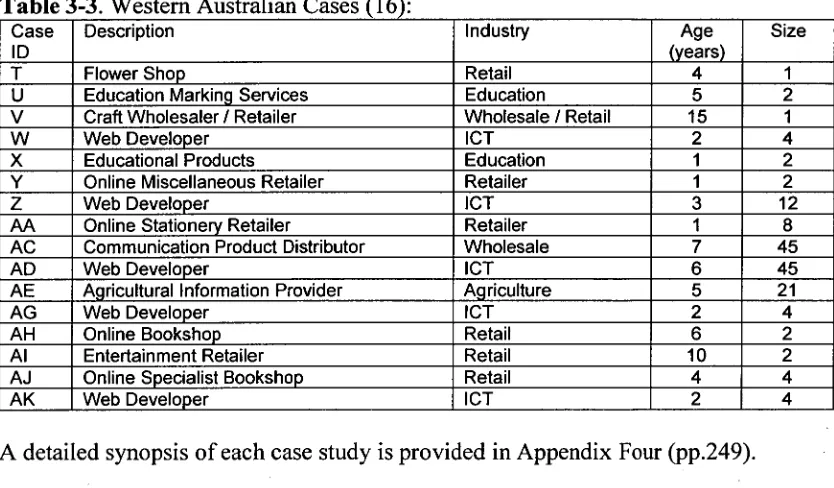
Table 3-3. Western Australian Cases 60
Table 3-4. The number of SMEs included in the Study 61
Table 3-5. An Example of an Case Summary 69
Table 3-6. Example of a Domain Analysis Worksheet 70
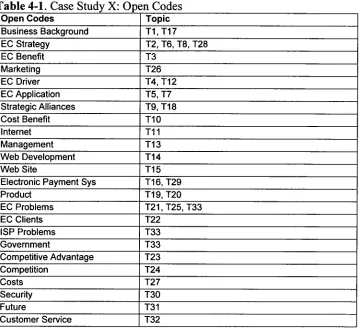
Table 4-1. Case Study X: Open Codes 76
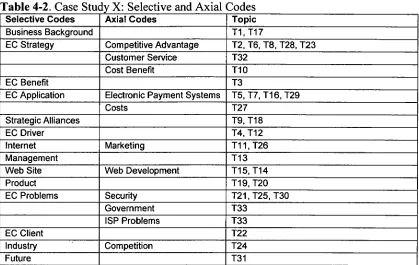
Table 4-2. Case Study X: Selective and Axial Codes 77
Table 4-3. Case Study X: Theme 1 Codes 78
Table 4-4. Case Study X: Theme 2 Codes 79
Table 4-5. Case Study X: Theme 3 Codes 80
Table 4-6. Case Study X: Theme 4 Codes 81
Table 4-7. Case Study X: Theme 5 Codes 82
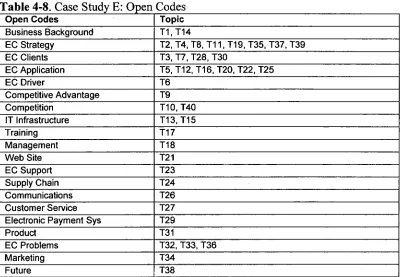
Table 4-8. Case Study E: Open Codes 84
Table 4-9. Case Study E: Selective and Axial Codes 85
Table 4-11. Case Study E: Theme 2 Codes 87
Table 4-12. Case Study E: Theme 3 Codes 88
Table 4-13. Case Study E: Theme 4 Codes 89
Table 4-14. Case Study R: Open Codes 91
Table 4-15. Case Study R: Selective and Axial Codes 92
Table 4-16. Case Study R: Theme 1 Codes 93
Table 4-17. Case Study R: Theme 2 Codes 94
Table 4-18. Case Study R: Theme 3 Codes 95
Table 4-19. Case Study R: Theme 4 Codes 97
Table 4-20. An outline of the Core Codes and Associated Codes found in all cases. 101 Table 5-1. Codes from Cases (X,E,R) associated with Theme 1 106 Table 5-2. Theme 1: Domain Analysis Aggregate Worksheet (Cases X,E,R) 106 Table 5-3. Codes from Cases (X,E,R) associated with Theme 2 110 Table 5-4. Theme 2: Domain Analysis Aggregate Worksheet (Cases X,E,R) 110 Table 5-5. Codes from Cases (X,E,R) associated with Theme 3 114 Table 5-6. Codes from Cases (X,E,R) associated with Theme 4 119 Table 5-7. Theme 4: Domain Analysis Aggregate Worksheet (Cases X,E,R) 119 Table 5-8. Codes from Cases (X,E,R) associated with Theme 5 126 Table 5-9. Theme 5: Domain Analysis Aggregate Worksheet (Cases X,E,R) 127 Table 6-1. Summary of how e-commerce is used by SMEs included in this study 132 Table 6-2. Summary of Cases using e-commerce strategically 143
Table 6-3. Virtual Dimensions of SMEs 155
1. INTRODUCTION
This thesis explores the utilisation of electronic commerce (e-commerce) amongst thirty-four Australian small and medium sized enterprises (SMEs). Through the conduct and analysis of these case studies this research develops a four phase model of e-commerce utilisation and business transformation.
This chapter provides a summary of the background to this thesis and identifies the research objectives and research questions. It also highlights the contribution this thesis makes to the theory and practice of information systems (IS) research in the areas of SMEs and e-commerce. The first section of this chapter highlights the limitations of previous research on e-commerce and SMEs. A review of the literature reveals a lack of insight into how Australian SMEs utilise e-commerce. In this context, the second section outlines the research objectives and primary research questions. The section discusses the scope of this research on thirty-four SMEs located in two Australian States. The third section presents the contributions of this thesis to knowledge and practice in IS research. This section outlines contributions at the substantive, methodological and theoretical levels. The fourth section presents a review of the thesis structure outlining the remaining six chapters. The chapter concludes with a summary reflection of these four sections.
1.1 Background
The background to this research involves inter-related conceptual and practical concerns arising from research in three areas: SMEs, E-commerce and IS models. At the conceptual level definitional differences on how SMEs are classified, and how e-commerce has been defined has made comparisons of IS research on SMEs and on e-commerce problematic. Additionally, the tendency in IS to adapt models developed from research from large organisational experiences has often marginalised the significant differences between large and small businesses and how these differences impact on technology related business transformation. At the practical level, although e-commerce adoption amongst SMEs is now well understood, there remains a lack of detailed qualitative case studies into e-commerce utilisation in Australian SMEs. More specifically, there is little detailed understanding of factors that influence the ability of SMEs to derive benefit from e-commerce utilisation. The following sections discuss these research concerns in the three areas in more detail.
1.1.1 SMEs
In Australia SMEs are an important business group that contribute immensely to the country's economic and social prosperity however there is limited Australian research available that provides a deep understanding of SME business practices and their use of technology. Already in 1998-99 the Australian Bureau of Statistics estimated there existed over 1,051,500 small private sector businesses. This equates to 95% of all private sector businesses in 1999 employing 48% of all private sector employment (Australian Bureau Statistics, 1999).
200 employees are generally defined as SMEs. These definitional differences highlight the difficulties comparing and contrasting the SME literature across regional locations. This also makes it extremely difficult to conduct cross regional research on the SME business group.
In the past organisational theorists believed that small businesses were similar to large businesses and that therefore application of organisational theory should be equally as relevant to small businesses. However subsequent research has highlighted differences between large and small organisations (Dandridge, 1979; Welsh and White, 1981; Delone, 1988; Thong, 1999) that have challenged these beliefs.
These differences between large and small businesses are particularly evident in the examination of small business technology adoption and utilisation. In this area, researchers have revealed at least six major factors influencing the adoption, innovation, management and successful use technology by SMEs. These factors include the role of management, strategic direction, available resources, technical complexity, IT knowledge and education and external issues (Cragg & King, 1993; Thong & Yap, 1995; Fuller 1996).
In this context, the application of existing IT and small business theory provides only a limited basis for examining the intricacies of SME e-commerce. Previous small business and technology research concentrated on the impact of technology on internal computing applications and systems. However the implementation of e-commerce extends beyond the application of technology in internal systems (Poon & Swatman, 1999). E-commerce has the capacity to transform not only internal practices but also the methods SMEs use to interact with their trading partners, associates and customers.
1.1.2 E-Commerce
With the advent of the Internet considerable business interest has been generated particularly with application of commerce technologies. The Internet and e-commerce has provided firms with an opportunity to conduct business electronically in a manner that is non-intrusive cost effective and accessible. For many businesses the decision to adopt various aspects of e-commerce makes a valid value proposition.
"I strongly believe that in the future you will be able to measure the prosperity, or the failure, of small enterprise by their rate of adoption of e-commerce and its integration into their business strategies." (NOIE, 2001). The judgment to incorporate some form of e-commerce becomes an astute business decision for those SMEs that can identify cost savings, better customer relationships and improved supply chain management and business growth in terms of productivity and wealth creation.
communications perspective; a business process perspective; a service perspective and an online perspective. The variety of e-commerce definitions creates a conceptual problem for conducting e-commerce research amongst individuals and businesses practicing e-commerce.
This study adopts Koshiur's (1997) definition of e-commerce.
Electronic commerce is a system that includes not only those transactions that centre on buying and selling goods and services to directly generate revenue, but also those transactions that support revenue generation, such as generating demand for those goods and services, offering sales support and customer service, or facilitating communications between business partners (Koshiur, 1997:4).
The Australian government actively encourages and supports e-commerce initiatives (SETEL, 2001). The government has established a number of educational e-commerce initiatives and e-commerce incubator programs to promote the adoption of e-commerce among SMEs; these include the establishment of the National Office of the Information Economy (NOIE), Information Technology Online Grant program (ITOL), and incubator programs such as the Australian Electronic Business Network (AUSe.NET ) and the Tasmanian Electronic Commerce Centre (TECC). Despite these activities SMEs continue to lag behind large businesses in their adoption of e-commerce (Small Business Index, 2001; NOIE, 2001; Wong & Turner, 2001).
The ability of large businesses to conduct e-commerce differs substantially from the capability of smaller businesses to implement e-commerce. SMEs are often disadvantaged by their ability to allocate resources and finance to new innovation and this is compounded by the lack of technical skills and knowledge (Cameron & Clarke, 1996; MacGregor et al., 1998; Poon et al., 1996; Corbitt et al., 1997; Lawrence 8c Keen, 1997; Fred, 2000;). Even where the SMEs are capable of conducting e-commerce, research has highlighted they are often reluctant to so (Lawrence & Chau, 1998).
Although SMEs may be disadvantaged in their ability to conduct e-commerce, SMEs have traditionally been highly adaptive, innovative and agile within their competitive business environments (Levi & Powell, 1998). The Internet and e- commerce provides SMEs with an opportunity to attain a level of competitiveness in line with larger trading organisations (Ihlstrom & Nilsson, 1999). E-commerce differs from past implementations of IT in SMEs, rather than being simply a support tool, e-commerce has the potential be used as a strategic tool to develop new organisational infrastructures, business relationships and value chains.
within the organisation and externally in the business environment (Poon & Swatman, 1997).
To date, there is a lack of empirically grounded heuristic IS models in the literature that depict the actual utilisation of e-commerce by Australian SMEs. Emergent models and frameworks that began to appear in the literature were often unsubstantiated or lacked empirical validation. There is a need amongst the IS research community, practitioners and government for a set of e-commerce models that have been grounded in the experiences from SMEs actively utilising e-commerce.
1.1.3 IS Models of IT/EC related Business Transformation
The development of early models and frameworks relating to IT/EC business transformation was based on the experiences and knowledge gained from large business. Researchers have previously adapted established IS models such as Davis's (1989) Technology Acceptance Model (TAM), Rodger's (1995) Diffusion of Innovation Model, Nolan's (1973) Stage of Growth Model and Porter's (1985) Value Chain Model to examine IT/EC related business transformation among smaller businesses. However the adaptation of these models for SME research is often inappropriate and problematic for modelling the use of technology by SMEs.
The demand for new theoretical and practical IS models that can further our understanding of new emergent technologies applies equally to both small and large businesses. The opportunities to integrate e-commerce technologies challenge existing business practices. (Bloch et al., 1996; Dalton, 1999; Viehland, 1999). Burgess and Cooper (1999) reviewed thirteen e-commerce business models derived from large business e-commerce experiences. They concluded that although the models demonstrated similar components, they were "not mutually exclusive". Their analysis determined that the business models could be categorised into two collections. That is, e-commerce models reflecting an adaptation or extension of existing IS models or new successive models replacing traditional business exemplar. The initial e-commerce models that emerged in the IS literature were often generic in nature and offered little insight into the use of e-commerce by SMEs.
Unlike large organisations, the e-commerce activities of SMEs are constrained by their usually insignificant influence on the value chain and industry circles. They are typically resource poor and have traditionally used IT as a support mechanism as opposed to an entrepreneurial tool (CEC, 1996). Although most significant IS theory and models have been developed from the study of large organisations some IS models and theories have been aptly applied to smaller organisational studies. These include Venlcatraman's (1994) "IT-Enabled Business Transformation Model".
include concepts, theories and models addressing the utilisation of e-commerce by SMEs.
There is a need in IS for alternative developments of theoretical and methodological approaches to investigate e-commerce utilisation amongst SMEs that are based on the experiences and knowledge relating specifically to SMEs. This thesis develops a conceptual four phase model of e-commerce utilisation that is grounded in the experiences from Australian SMEs. The next section discusses the research problem and objectives of this thesis. An outline of the research question and scope of the study is also presented in the following section.
1.2 The Research Problem
Researchers have established that small firms are not like large business. It has been considered inappropriate to use IS models derived from large organisational observations and experiences to explore the application of technology in small firms. Small business technology research has previously focused on the use and adoption of IT within the firm. However adapting or extending previous small business technology research to explore the use and benefits of e-commerce provides limited opportunities to investigate the potentially broad impact of e-commerce amongst SMEs. The potential benefits of e-e-commerce extend beyond the internal boundaries of SMEs potentially influencing trading relationships and interactions with external entities beyond the physical scope of the SME.
It is problematic that the definition of SMEs is not standardised at a global level. It is conceivable that a business classified as an SME in North America may be categorised as a large organisation in the European and Australian context. This definitional problem also extends to the meaning of commerce. The term e-commerce has a number of contextual dimensions and lacks a standard meaning among individuals, academics and business. These definitional dilemmas, make it difficult for IS researchers to compare SME research across regional boundaries and examine the e-commerce activity conducted by firms categorised within SMEs classification.
The existing IS models of SME commerce activity has previously focused on e-commerce adoption and implementation factors. Models that have emerged examining the use of e-commerce are adapted and/or are extensions of previous IS models. These models are often conceptual models that have not been empirically tested or grounded in the SMEs experiences and attitudes and opinions of individuals actively utilising e-commerce.
1.2.1 The Research Objectives
A review of the IS literature indicates that there has been limited Australian case study research into the utilisation of e-commerce by SMEs. The IS discipline lacks an essential body of theory that addresses the utilisation of e-commerce among SMEs particularly within the Australian context. The purpose of this thesis is to contribute to the IS discipline a substantive examination of the utilisation of e-commerce amongst thirty-four Australia SMEs. The research aims to satisfy the following objectives, namely to:
• Identify why these Australian SMEs are using e-commerce.
• Determine how these Australian SMEs are using e-commerce.
• Investigate the impact of e-commerce on these businesses.
• Discover what factors affect the utilisation of e-commerce.
• Detect possible problems associated with using e-commerce.
1.2.2 The Research Question
In order to fulfil these objectives two research questions have been formulated.
The first research question is as follows:
RQ1: What is a suitable framework to explore the utilisation of electronic commerce amongst SMEs in Australia?
The second research question asks:
RQ2: What factors influence the utilisation of electronic commerce amongst Australian SMEs?
1.2.3 The Research Scope
In order to address the research questions the scope of the research involved selecting and locating suitable case study participants. The methods used for data collection and the analysis of the data was an important consideration. This section discusses various aspects of the research scope.
The Selection of the Participants
Finding a selection of SMEs actively engaged in the utilisation of e-commerce proved a difficult task initially. When the research started it was hard to identify those SMEs that displayed an active use e-commerce. Three methods were employed to find a range of SMEs using of e-commerce. An initial search of online business indexes revealed a number of SMEs utilising e-commerce. An inspection of web developer's web-sites provided a showcase of e-commerce clients and finally discussions held with web developers also provided a list of recommendations of other potential users of e-commerce.
The Location of the Participants
Data Collection Methods
Face-to-face interviews were conducted with owner/mangers of each case study. A semi-structured question frame was employed to gain data about the SMEs' experiences and participants' views and meanings concerning the utilisation of e-commerce. The structure of the question frame gathered details about the SMEs business background, their current use of e-commerce, the impact and changes to the business as a result of using e-commerce and any problems that have been incurred from the utilisation of e-commerce.
Techniques used for Data Analysis
Each interview was transcribed for data analysis. A series of coding procedures based on the principles of grounded theory (Glaser & Strauss, 1967) were applied to simplify and manage the individual case data. The initial data analysis was complimented by a second qualitative data analysis technique, called domain analysis (Spradley, 1979), which provides a deeper insight into the interrelationships concerning the utilisation of e-commerce and a mechanism for a cross comparative analysis of all case studies. The combined approach to data analysis leverages the strengths of grounded theory and domain analysis to reveal the conceptual complexity in the data and to highlight the semantic relationships that exist within and between the data.
1.3 Justification for this PhD study
The thesis provides three levels of contribution to IS discipline. At the level of research practice the thesis provides an in-depth study of thirty-four Australian SMEs actively utilising e-commerce.
• Thirty-four SMEs from two States of Australia: Tasmanian and West Australia are examined to reflect the different types of e-commerce utilisation by micro, small and medium sized enterprises.
At a methodological level the thesis provides an innovative approach to qualitative data analysis. The research develops a methodological framework that incorporates the qualitative vigour of grounded theory and domain analysis to explore the rich multi faceted case study data.
• The two qualitative data analysis techniques apply an inductive approach to theory generation where theories, concepts and models are directly related to the data or grounded in the data.
• The open, axial and selective coding practices reflecting the principles of grounded theory are deployed to condense the large volume of qualitative data and to distil key concepts and themes embedded in the data.
• The use of domain analysis extended the initial data analysis by distinguishing the inter-relationships and semantic relationships that exist within and between the emergent concepts and themes across all cases. The role of domain analysis is to extract rich detailed information about the experiences of using e-commerce in relation to the research objectives and questions.
At a theoretical level the thesis develops a framework exploring the utilisation of e-commerce among SMEs. This thesis provides a set of alternative IS models and a conceptual framework that expands the existing collection IS exemplars.
• The development of an initial four phase model of e-commerce utilisation among SMEs.
• The development of a four phase model of SME e-commerce business transformation.
• A four forces model that acknowledges the range of factors that influence the ability for SMEs to conduct e-commerce and business transformation.
• The four phase model of e-commerce utilisation and business transformation reflecting the influence of internal and external factors.
It is envisaged that this thesis will provide useful insights for future IS research exploring the use of e-commerce by SMEs. The next section provides a summary of the remaining chapters. In keeping with the interpretative research approach each chapter concludes with a section providing a summary reflection of the highlights of each chapter.
1.4 Chapter Summary
Chapter 2:
Chapter 2 provides a review of the literature pertinent to the research. The chapter presents literature relating to SME e-commerce prior to data collection. There exists a substantial body of literature concerning factors that affect the adoption of the Internet and e-commerce by SMEs. A discussion of potential e-commerce benefits, inhibitors and opportunities has been well reported by researchers. Subsequent to data collection, a number of SME e-commerce models have emerged however many of these are yet to be validated. The issues surrounding the adoption and implementation of e-commerce remains an area of interest and emergent e-commerce maturity models are gaining attention. The initial review of the literature substantiates that IS research lacks a substantive number of SME e-commerce models and theories that have been empirically validated.
Chapter 3:
Chapter 4:
Chapter 4 provides an overview of the first part of the data analysis. The first part of data analysis utilises a high-level grounded theory coding procedure to reveal the emergent themes and constructs from individual case studies. Three representative case examples are used to illustrate the coding process that was applied to the thirty-four case studies. The high-level grounded theory analysis of the data revealed twenty-four core codes and an extra fifty-four associated codes. An overview of all the emergent categories are presented towards the end of the chapter.
Chapter 5:
Chapter 5 continues to analyse the data using domain analysis techniques. Domain analysis offers an in-depth analysis of the concepts and themes revealed in Chapter 4. The relationships between the core codes and associated codes are explored in detail providing a rich insight into the semantic relationships that exist within and across all thirty-four case studies. The chapter highlights the domain analyses of three representative case examples, which are mapped against each of the research objectives of the study.
Chapter 6:
Chapter 6 provides an interpretation and discussion of the complete data set. The interpretation of the data draws upon the data analysis presented in Chapter 4 and the domain analyses completed for each case in Chapter 5. The interpretation of the data analysis forms the basis for the development of a set of e-commerce models that are presented in the chapter. Initially a four-phase model of commerce utilisation is presented which forms a base for subsequent SME e-commerce models developed in this chapter. A second model of e-e-commerce utilisation by SMEs is proposed by expanding the initial four-phase model. This model adapts the work of Venkatraman (1994) to provide another conceptual model exploring the relationship between organisational transformation and potential benefit derived from e-commerce. Further analysis of the inter-relationships found in the data leads to a refined model, The Four Phased Model of E-commerce Utilisation and Business Transformation. The chapter concludes with a discussion of the findings in relation to emergent IS literature subsequent to data collection, which relates to SME e-commerce.
Chapter 7:
Chapter eight outlines the conclusions of this study. A review of all major findings is discussed along with an outline for future work in this emergent research area.
1.5 Summary Reflections of the Chapter
This chapter has provided a background summary to this thesis. It identifies the objectives of the research and highlights the research questions of the study. The chapter discusses the contribution this thesis provides to the theory and practice of IS research in the areas of e-commerce and SMEs.
significant insight into the actual use of e-commerce by SMEs. Within Australia, a review of the literature revealed a lack of detailed insight into how Australian SMEs utilise e-commerce.
In this context, a set of research objectives and primary research questions were presented in the chapter along with a discussion on the scope of the research to explore the utilisation of e-commerce among thirty-four SMEs in two Australian States.
This chapter outlines three levels of contributions the thesis provides to the knowledge and practice in IS research at a substantive, methodological and theoretical level. The chapter concluded by providing a summary review of the thesis structure outlining the remaining six chapters.
2. LITERATURE REVIEW
2.0 Introduction
This chapter presents an overview of the research literature relating to SME e-commerce prior to collection of the data. The purpose of this literature review was to explore the existing IS data surrounding the research area.
• The first section provides a background of e-commerce activities in Australia. This section discusses the importance of e-commerce to the Australian economy and the initiatives instigated by the Australian government to encourage and support e-commerce activities by SMEs.
• The second section discusses the lack of a standard e-commerce definition and the implication this has for researchers working in this area.
• The third section outlines the differences between large organisations and small businesses. The appropriateness of using large organisational theory for smaller organisations is explored.
• The fourth section reflects on previous IS models that have been used to examine the adoption and diffusion of technology by organisations. A range of IS models are explored and their implications to this study are discussed. • The fifth section examines the nature of small and medium sized businesses. • The sixth section reviews the literature concerning small business and IT.
Previous research involving small business has been focused on the adoption and use of IT however the application of small business IT theory to SME e-commerce needs careful consideration as e-e-commerce differs to IT.
• The seventh section provides a review of IS research in SME e-commerce prior to data collection. This section discusses a range of factors that influence the adoption of e-commerce, the perceived benefits derived from e-commerce and the relative competitive advantages and opportunities relating to SME e-commerce.
• The eighth section reviews the literature concerning the utilisation of commerce prior to data collection. The section explores the emergent use of e-commerce by SMEs. Researchers reported a range of e-e-commerce applications however the level of sophistication of these e-commerce activities was relatively minor.
• The ninth section discusses emergent models of e-commerce adoption and utilisation by large and small organisations. Prior to data collection the number of SME e-commerce models within the Australian context was comparatively small. This further justified the need to establish IS models that specifically addressed the utilisation of e-commerce by SMEs.
• The tenth section provides an insight into the IS e-commerce models that have surfaced since collecting the data. The e-commerce models relating to the use of e-commerce by SMEs are introduced in this section but are explored in detail in Chapter 6, where the models are compared and contrasted against the findings of this research.
2.1 Background
As we enter the new millennium the conventional methods of conducting business are set to change forever. The effects of competition and globalisation of many of the world's economies have motivated businesses to re-evaluate business strategies internal and external to their organisations. For many, conventional business practices are too rigid unable to cope with the new threats, problems and competition posed by the digital economy. The solutions to these new problems may in part be found in the integration of electronic business philosophies. The integration of electronic business into the organisation requires organisations to understand and determine how, when and where e-commerce may be used (Kalakota and Whinston, 1996).
In Australia, SMEs form a substantial part of the economy, making up more than 95% of all enterprises and accounting for more than 50% of private sector employment, within Australia there are almost one million small to medium businesses (NOIE, 2001). Numerous studies have highlighted the benefits of e-commerce for SMEs including global reach (Hughes et al., 1998), equalising the business environment (Whinston et al., 1997), cost savings and increased productivity (Burgess 1998).
In 1999, Australia was viewed by the OECD as leader in e-commerce initiatives among 29 of its member countries. The Australian government recognised the importance of e-commerce and deemed it significant to encourage all organisations large and small to explore the use of e-commerce. Consequently, the government initiated a number of e-commerce programs specifically aimed at encouraging Australian SMEs to adopt e-commerce. Initially these included the formation of the National Office of the Information Economy (NOIE) promoting programs such as the Australian Electronic Business Network (AUSe.NET ), the Information Technology Online Grant program (ITOL) and the Tasmanian Electronic Commerce Centre (TECC). As a result of the interest and demand for information regarding e-commerce, there has been a plethora of research conducted in all areas of the e-commerce, however prior to 2000 there remained little research into the utilisation of e-commerce by SMEs particularly in the Australian context.
Historically there is a vast amount of literature that has explored the use of IT within large organisations and smaller businesses. With the advent of the Internet, interest surrounding the Internet and e-commerce technologies has attracted significant research attention. The interest in e-commerce research continues into the new millennium. This is reflected by the increased numbers of e-commerce related articles published in leading IS journals and the establishment of academic journals specifically publishing e-commerce literature. In 2002, Bharati and Tarasewich (2002) cited over sixty journals that currently publish e-commerce research.
business associates. Within Australia it has been reported that already by 1997 over one billion electronic transactions had taken place (DIST, 1998). The Small Business Index (2001) observed the largest rise in Internet connections since the first Index started to record the issue in 1995. Connections to the Internet have increased from 60% to 75% connection rate for small businesses and 89% to 95% for medium businesses.
The application of e-commerce has altered the conventional manner in which business is conducted. The global commercialism of the Internet and WWW has created a vacuum of e-commerce support from all business sectors. The demands and expectations of the online market place require organisational strategies that can change and meet customer requirements in a timely and competitive manner. Conventional organisations need to be in a position to alter their traditional business models and be flexible enough to introduce new electronic business systems to enable to trade in the business environment of the new millennium.
The interest in e-commerce by large organisations prompted significant interest in e-commerce research to explore the value of e-commerce, factors contributing to the adoption of commerce and the identification of inhibitors and barriers to e-commerce.
The review of the literature prior to data collection suggests a lack of substantial theory in the IS literature that has been empirically validated exploring how SMEs are currently using e-commerce and identifying factors that affect their utilisation e-commerce. An objective of this study is to gain an insight into the issues that affect SMEs ability to utilise e-commerce.
2.2 Defining E-Commerce
There exists a multitude of e-commerce definitions for the term "electronic commerce" and some believe that the term is often misapplied (Mougayar, 1998). The field of e-commerce research has increased as the IS research discipline expands into a multitude of areas. Consequently the definitions for e-commerce varies contextually across the different dimensions of e-commerce research.
Within in the IS discipline there exists no clear, concise definition for the terms e-commerce, e-business and Internet commerce. In essence these terms have been used interchangeably at times. In recent years researchers (McKay et al., 2000) are beginning to acknowledge a distinction between these terms but there is still no consistent definition of e-commerce across the discipline and within the commercial world OECD (1999). Within Australia the definition of e-commerce from a SME perspective still remains a subject of debate (SETEL, 2002)
When this study began the amount of literature specifically focusing on the use of e-commerce and the Internet by Australian SMEs was relatively minor. For the purpose of this study the thesis considers the terms e-commerce, e-business and Internet commerce to share similar meanings as they collectively signify the conduct of business over electronic networks especially in the context of SMEs.
statement. They state that e-commerce can be considered from four perspectives; a communications perspective, a business process perspective, a service perspective and an online perspective.
• From a communications perspective, electronic commerce is the delivery of information, products/services, or payments via telephone lines, computer networks, or any other means.
• From a business process perspective, electronic commerce is the application of technology toward the automation of business transactions and workflows. • From a service perspective, electronic commerce is a tool that addresses the
desire of firms, consumers, and management to cut service costs while improving the quality of goods and increasing the speed of service delivery. • From an online perspective, electronic commerce provides the capability of
buying and selling products and information on the Internet and other online services.
Kalakota & Whinston (1996) presents four broad views of e-commerce which are distinct and but valid. However others researchers consider a broader e-commerce definition, such as Timmers (1999: 4) who defines e-commerce as "doing business electronically" broadly encompassing all types of electronic business.
David Koshiur (1997:4) proposes a definition of electronic commerce that lies in between the two previous definitions. He defines e-commerce as;
Electronic commerce is a system that includes not only those transactions that centre on buying and selling goods and services to directly generate revenue, but also those transactions that support revenue generation, such as generating demand for those goods and services, offering sales support and customer service, or facilitating communications between business partners.
All these definitions described here are extremely broad. The large number of definitions that exists for e-commerce creates a problem of definitional confusion. The confusion that is associated with defining e-commerce exists not only among researchers of e-commerce but also among individual conducting e-commerce. This confusion is compounded further when e-commerce is discussed across different tiers of businesses; large corporations, governments and small businesses. In each case, e-commerce means something different for each of these groups.
2.3 Large versus Small Business
.Researchers have long acknowledged the disparity between large and small businesses (Cohn & Lindberge, 1972; Dandridge, 1979; Thong & Yap, 1995; Welsh & White, 1981). However the disparity between large and small business may be potentially reduced with the strategic use of e-commerce. The ability of SMEs take advantage of e-commerce to formulate sophisticated trading hubs and partnerships may provide a means to narrow the gap between large and small businesses in the information age.
Historically, the implementation of e-commerce by SMEs has occurred as a response to requests from large organisations. SMEs were often coerced into adopting early e-commerce technologies to retain their trading relationships with major customers. Early adopters of e-commerce discovered the costs associated with adopting e-commerce technologies prohibitive especially where more complex forms of e-commerce, such as EDI were applied (Goldsworthy, 1997).
SMEs have unique characteristics that segregate them from large organisations, these include been resource poor, lacking trained personnel, sensitive to a volatile competitive environment and have short term management outlooks (Welsh & White 1981). Small businesses in particular, are likely to be younger and more susceptible to been taken over or cease trading as they grow. They have less formal business structures in place and are sensitive to movements in the marketplace. The lack of formal business processes in small business can make it difficult for them to identify opportunities to automate practices using IT. The implementation of new technology and changes to the operation of the business need to be low risk. These factors contribute to the diversity between large and smaller business in their ability to uptake e-commerce.
It is essential for small businesses to manage their cash flow (Welsh & White 1975) as they are susceptible to seasonal variations in sales which, unlike large organisations have the ability to draw on cash reserves or small loans to adjust against season fluctuations. The ability of small businesses to recover from business mistakes or misjudgments is significantly reduced compared to large business.
However, aside from obvious distinctions based on size, turnover and resources, SMEs have traditionally exhibited adaptability, innovation and agility (Levi & Powell, 1998). These are the very attributes that large businesses have strived to obtain by formulating virtual organisations or by engaging in web-based commerce (Poon & Swatman, 1998). This suggests that SMEs are well positioned to harness major productivity gains from the global arena by exploiting their ability to be flexible, dynamic and agile in the new web base economy (Malone,
1985; Montazemi, 1988; Kaplan et al., 1997). With the advent of the Internet and commerce these small businesses can readily harness the potential power of e-commerce to project a level of competitiveness envied by large trading corporations.
of e-commerce through the provision of new infrastructures that enabled SMEs to compete on equal basis as larger organisations (Ihlstrom & Nilsson, 1999). SMEs possess flexible organisational structures and adaptable decision making processes providing commercial advantages beyond the reach of many large organisations. Unfortunately SMEs have scare technology and human resources and are not likely to invest in new technology unless there is scope for immediate returns on the investment (Ihlstrom & Nilsson, 1999).
The costs of adopting and implementing new technology are dramatically reduced compared to a decade ago. The diffusion of technology in business and in the general household of develop countries, open up new market opportunities never experienced before. The potential for small business to compete with large business on equal terms is a realistic possibility.
The potential for SMEs to use e-commerce to build partnerships and associations suggests that SMEs can gain as much from e-commerce as large organisations if not more (Schwartz, 1997). The notion of virtual organisations facilitated by e-commerce is gaining increase interest particularly with regards to the virtual organising practices among small businesses. But the first challenge is to encourage the participation of e-commerce among SMEs. New opportunities for SMEs adopting e-commerce increase as the interest in the Internet grows. However the actual uptake of e-commerce technologies by SMEs still remains slow.
In a study by Haynes et al., (1998) a comparison of Internet usage by small, medium and large corporate comparison suggested that there was no significant difference in Internet usage however medium sized firms were the least likely to use a web site. The perceived slowness in adopting e-commerce, in comparison to small business and large business, may indicate that medium sized organisations were at a competitive disadvantage if they did not consider adopting the Internet in a more meaningful manner. Small business embracing e-commerce quickly have the potential to disintermediate mid-sized businesses exerting further competitive pressure on medium businesses.
In the past the development of organisational theory literature has been founded by studies of large corporate organisations. Former organisational theorists believe that small businesses are like large businesses and organisational theory should apply equally as well for small businesses as large organisations. The application of these theories to smaller businesses was not often appropriate (Thong & Yap 1995). It is suggested that IT is a resource that can enable small businesses to behave like large organisations (Porter & Millar, 1985).
Fundamental differences between smaller organisations and large corporate business do exist (Dandridge 1979; Welsh and White 1981; Delone 1988; Thong 1999). There is a need for further research that specifically addresses SME business structures providing an alternative to large organisational theory.
2.4 Existing IS Models of IT/EC related Business Transformation
Previously a range established IS models have been adapted to explore the adoption and use of IT in smaller organisations. A number of IS models have been developed to examine and explore the role of technology within the workplace. Amongst these models a few have proved popular by IS researchers to explore the diffusion and uptake of technology. Behavioural decision theories from social psychology provided a basis for IS researchers exploring the issues of IT adoption and utilisation by individuals. Most notable are the Theory of Reason Action (TRA) developed by Ajzen and Fishbein's (1980) and an adaptation of the model by Davis (1989) the Technology Acceptance Model (TAM).• Theory of Reasoned Action (TRA)
The Theory of Reason Action was a theory developed by Fishbein and Azjen (1975) which was subsequently revised by to the Theory of Planned Behaviour
Azjen (1991). These intention models have been widely accepted in IS, The theory proposed by Fishbein and Azjen is useful to predict and describe the behaviour of individuals during the a decision making process. This theory provides a plausible foundation for developing theory for technology adoption and utilisation. The Theory of Reasoned Action was subsequently adapted and refined over subsequent years by Davis (1989) and Davis et al., (1989).
With regards to small business IT adoption, researchers Thong and Yap (1995) support the theory of reason action in their study of 172 small businesses. Their study concurs with the theory that the intention of an individual to behave in a certain manner is influenced by his or her attitude towards the behaviour (Fishbein & Azjen, 1975). The study found that owners/managers were willing to advocate an IT project if they thought that the business would derive some advantage or benefit economically.
• Technology Acceptance Model (TAM)
technologies because in the context of the online environment many additional variables come into affect.
• Rogers' Diffusion of Innovation Model
Rogers (1995) developed a stage approach to the diffusion of innovation within organisations. He identified four stages of innovation; knowledge, persuasion, implementation and confirmation. The knowledge stage reflects the time an individual is exposed to an innovation and gains time understanding its application and potential. The persuasion stage occurs when an individual started to form an opinion about the innovation either it be favourable or unfavourable. If opinion is favourable the next stage of implementation is likely to occur where the innovation is used. The final stage of diffusion involves a period of evaluation, in the confirmation stage the innovation is either adopted or rejected.
• Nolan 's Stage of Growth:
Nolan's (1973) stage of growth model reflects on an organisation's acceptance of a particular technology. The model was subsequently revised to include six stages of computer use in organisations. The model indicates a relationship of time versus costs for each stage of technology growth. These six stages were identified as; initiation, contagion, control, integration, data administration and maturity
(Nolan, 1979). The model can represent different organisations using the same technology at the same time but at different stages. An organisation may be portrayed as having different technologies implemented at each stage. The time each organisation spends at each stage may differ depending on how important or comfortable an organisation is with the new technology. It has been suggested that Nolan's model (1979) would be useful to test on small businesses but no studies have been reported (Cragg & King, 1993). The model has been widely cited in the IS literature however some researchers have criticised the use of the model (Benbasat et al. 1984, King & Kraemer 1984; Farhoomand 1992).
• Porter's Value Chain Model
Porter's (1985, 1990) value chain model suggests that an organisation can enhance its competitive positioning by performing key internal activities in the value chain at a lower cost and better than its competitors. The model breaks the activities into primary and secondary actions. Primary actions include major activities as production, marketing, sales, logistic and customer service. The secondary activities are those activities that support the primary activities that may include the use of technology, human resources management.
• McKinney, MacFarlane & Cash Strategic Grid
The strategic grid developed by Cash, McFarlan and McKenny's (1983) is useful to outline the strategic use of IT within an organisation. The grid depicts the various levels of strategic use of IT by organisations. The strategic grid reflects four levels of strategic usage of IT. At the lowest level IT is represented as providing support to the organisation. The turnaround phase exists when information derived from IT systems is used to provide strategic information. The
factory phase represents a stage where IT is integral to the operation of the business and the final strategic phase depicts where the business relies on IT for it's survival. The development of the strategic grid offers an insight into the strategic use of IT however the application of the model for smaller businesses like SMEs required further validation.
The IS exemplar that has been discussed so far formed an IS conceptual environment in which e-commerce models started to emerge. Past IS models have been used by IS researchers to explore the technology adoption and utilisation amongst businesses large and small. However there remains an over concentration on large businesses that does not acknowledge SME differences. Small business is different from large business and the use of IT differs to that of e-commerce. Although the appropriateness of past IS models have been clarified by some researchers (Galliers & Sutherland, 1994) there still exists a gap in IS literature for IS models and theory that specifically addresses the use of e-commerce by SMEs.
The e-commerce paradigm is a new and emergent business phenomena (Fingar et al., 1999). Little theory has been generated from current e-commerce research. The parallels between IT and e-commerce are evident however the use of IT and e-commerce differ substantially. Traditionally IT has been and continues to be used as a business support tool. The strategic value of IT is not readily identified when IT is introduced within the organisation but this draconian view of IT is changing dramatically (Kalakota & Whinston, 1996). The use of e-commerce differs substantially from IT, the primary driver for e-commerce lies in it's perceived strategic value to the business. Organisations seek value from e-commerce as alternative means to conduct business transactions, communications, marketing, supply chain and customer management. A detailed review of initial e-commerce research is presented in detailed in section 2.7.
2.5 The Nature of Small and Medium Sized Enterprises
In view of the fact that SMEs frequently constitute more than 90 percent of the total number of businesses in most developed countries (OECD, 1999) the success of small business has a direct impact on the national economy (DoCITA, 1998). SMEs are a key provider of employment and commercial innovation and a significant contributor to GNP (Lymer and Johnson, 1997; Poon & Swatman, 1998; Purao & Campbell, 1998).
faced with a range of issues that make it difficult to survive in this dynamic, high risk and competitive business world (DoCITA, 1998).
The pressure faced by all small businesses to survive in their business environment is at times overwhelming. The level of risk is magnified when we examine micro businesses. Typically micro businesses are classified as sole traders or partnerships. The organisational structure is flat with business decisions stemming directly from the owner/managers. Often family members are employed in the business, as is the case with seven of the business participating in this study. Micro businesses seldom survive misjudgments and have to be careful how they utilise their limited resources (Chappell & Feindt, 1999). E-commerce has the potential to improve the SMEs' productivity and efficiency, while enabling them to access international markets previously constrained by geographical boundaries (Goldsworthy, 1997).
SMEs include a wide diversity of businesses that span across all industries. In the Australian context SMEs can be defined as micro businesses, small businesses and medium sized businesses. The Australian Bureau of Statistics (Australian Bureau of Statistics, 1999) defines SMEs as a business group comprising of:
• Micro businesses employs less than 5 people, including non-employing businesses;
• Small Businesses employs less than 20 full time equivalent people in the non-agricultural sector and less than 100 people in the manufacturing sector; • Medium businesses are differentiated as those firms employing less than 200
people but more than 20 full time equivalent people.
The commission of European communities recommend SMEs to be defined: as enterprises having fewer than 250 employees, and either, an annual turnover not exceeding ECU 40million or an annual balance sheet total not exceeding ECU 27 million (Holmes, 2001).
Further the European commission defines 'small enterprise' as a firm that: has fewer than 50 employees and has either, an annual turnover not exceeding ECU 7 million, or an annual balance-sheet total not exceeding ECU 5 million (ECOJ, 1996:7).
The United States consider SMEs to include:
firms with fewer than 500 employees where small firms are distinguished as employing fewer than 50 employees, and micro-enterprises have at most ten, or in some cases five, workers (OECD, 1999:7).
There is growing body of literature focusing on small business and e-commerce (Poon and Swatman, 1996; Abell and Lim, 1997; Lymer and Johnson, 1997; Poon and Swatman, 1999). Despite variations in topic and approach, all of these authors have concluded that small businesses are increasingly using the Internet and that this will radically change the way some small businesses operate.
2.6 Small Business IT Research
A substantial volume of literature has been written concerning the adoption and use of IT by small business. To date the discourse on SMEs adoption and utilisation of technology has largely been exploratory. Small businesses are readily increasing the use of IT within their businesses (Cragg and King, 1993) but the nature of small business is also changing. The problems and issues faced by large business IT adoption are also faced by smaller businesses however the manner in which small business overcomes these issues are different (Delone, 1988). What was lacking within the IS discipline is a substantial body of theory that improves the understanding of relationships between the adoption, innovation, management and successful use of IT by small organisations (Moore & Benbasat 1991). Historically the small business literature suggests that IT has little real benefit for small business (Fuller, 1996). The small businesses tend to introduce computers to perform administrative tasks such as accounting and desktop functions as opposed to providing strategic management tool.
2.6.1 Small Business IT Issues
Fuller (1996) suggests that there are a range of issues that affect the ability of small businesses to adopt IT which include strategic direction, availability and suitability of resources, technical complexity, computer technology, education and external advice and resources. Other researchers (Lees & Lees, 1987; Cragg & King, 1993; Thong & Yap, 1995; Cragg, 1998) have identified other key issues influencing the adoption of IT and these can be broadly categorised into:
• The involvement of the owner/manager • Strategic direction
• Available resources • Technical complexity • IT knowledge and education • External issues
• Owner/Manager Involvement
The entrepreneurial owner/manger that drives innovation through the use of IT has a profound impact in an organisation. This is particularly so in small businesses, as the owner/manager is the main decisions maker and ones that determines the future of the business. The types of small businesses likely to adopt IT are those that possess owner/managers that are interested IT and have acquired a level of IT knowledge (Thong & Yap, 1995). That is they know what the technology can do and how best to use it within their organisation.
• Strategic Direction
In order to maximise the investment in IT, the implementation of IT should coincide with strategic plan for the business. The alignment of business and IT objectives is important but in reality small business are often removed from any strategic planning indulgences. The volatile trading environment and low resources restrict the ability of business owners to indulge in any serious business planning which may potentially maximise the investment in IT. But SMEs are renown for having a flexible and highly adaptive business structures enabling them to better cope with changing market conditions (Chang & Powell, 1998). The application of information technology in core business processes can positively influence the strategic value of IT. (Raymond 1985; Cragg & King,
1993 )
• Available Resources
The small business IT infrastructure consists largely of stand alone or networked PC's with a range of desktop software installed on them. The costs of these resources is not a major IT adoption issue (Fuller, 1996) and requires minor IS expertise to use (Cragg & King, 1993). It is the support from management and other staffs to provide appropriate IT skills and knowledge that contributes to the successful adoption of IT. Raymond (1985) suggests that for a small business to gain the most success from IS implementation, the business needs to have the capacity to develop, administer and utilise applications beyond the basic up take of IS.
• Technical Complexity
The introduction of any new technology in the workplace can lead to resistance amongst staff, agitation and unrest with normal business operations. A lack of technical expertise and misinformation can aggravate the situation. In order to overcome the potential for technical complexity it is important to keep IT adoption simple and controllable (Cragg, 1998).
• IT Knowledge/Education
The process of education is an evolutionary one. The implementation of the IT infrastructure is a learning process for an organisation. Learning to use and maintain the applications is the next stage of IT adoption and finally gaining the experience to apply and possibly customise the applications to better suit the organisation is recognised as an important phase of the adoption process. (Lees & Lees, 1987)
• External Issues
expertise or skills. Small businesses rely on external providers for advice and skills for development, implementation, training and ongoing support. Lees and Lees (1987) investigated the relationships between external vendors and consultants during the development and implementation. The issue of ongoing support and training are important for small business to successfully reap the full benefits of IT implementation. The use of friends and associates to help facilitate ongoing IT support is not uncommon amongst small businesses (Fuller, 1996) and these resources provide an essential service.
• Competitive Advantage
A factor encouraging the use of IT can be to acquire a 'relative advantage' (Cragg & King, 1993). Cragg & King describe relative advantage is associated with a desire to innovate which may be motivated by the perception that IT will save time, provide a better work environment and derive economic benefit.
Alternatively, competitive advantage can also be a major driver for the use of IT however from a small business perspective the desire to gain competitive advantage from IT is not as significant compared to large organisations. Small businesses consider IT as an enabling technology to create flexibility and increase profit. The use of IT by small businesses to gain competitive advantage has been problematic (Fuller, 1996). In many cases the problems and barriers to incorporate IT within the business over ride the potential to gain competitive advantage.
2.6.2 Inhibitors to Small Business IT Adoption
The lack of IT training, managerial time and economic factors were factors that discourage IT growth (Cragg and King, 1993). Localised resources within a small business are scarce. The owner/mangers of these businesses perform multiple roles. Time is a limited resource for these owner/mangers and any time allocated to new innovation and IT implementation is restricted.
A major factor that restricts IT growth in small businesses is the allocation of financial resources to upgrade or purchase new equipment and technology. It is a significant decision particularly for small businesses that are renown for poor cash flow (Welsh & White, 1975; Dandridge, 1979; Thong & Yap, 1995). If short-term gains can't be acquired relatively quickly, the decision to spend precious finances is approached with scepticism (Cragg & King, 1993).