
Through the looking glass
171
0
0
Full text
(2) THROUGH THE LOOKING GLASS. A thesis submitted with creative work in fulfilment of the requirements of the degree of. DOCTOR OF PHILOSOPHY at. James Cook University By. Sasikala Victoire B.A. (U.N.E., Lismore) Grad. Dip. of Ed. (U.S.C., Lismore) M.V.A (C.S.U., Wagga Wagga). April 2007. School of Creative Arts.
(3) STATEMENT OF ACCESS. I, the undersigned, author of this work, understand that James Cook University will make this thesis available for use within the University Library and, via the Australian Digital Theses network, for use elsewhere. I understand that, as an unpublished work, a thesis has significant protection under the Copyright Act and; I do not wish to place any further restriction on access to this work.. 06.04.2007 Signature. Date. ii.
(4) ELECTRONIC COPY. I, the undersigned, the author of this work, declare that the electronic copy of this thesis provided to the James Cook University Library is an accurate copy of the print thesis submitted, within the limits of the technology available.. 06.04.2007 Signature. Date. iii.
(5) STATEMENT OF SOURCES. DECLARATION. I declare that this thesis is my own work and has not been submitted in any form for another degree or diploma at any university or other institution of tertiary education. Information derived from the published or unpublished work of others has been acknowledged in the text and a list of references is given.. 06.04.2007 Signature. Date. iv.
(6) ACKNOWLEDGEMENTS My profound thanks to Professor Diana Davis who has guided me in pulling together, through life’s stops and starts, the many unfolding threads and deftly, caught my many split infinitives in this research. My thanks to Anneke Silver for her support in the visual readings of my research and to Jude Bohm-Parr my gratitude for her mentorship in glass. To my husband,. , my gratitude and love for his patience and support. in solving my many computer glitches and projecting the gaze that fills me with the confidence and courage to complete this journey. To my girls a big hurrah for challenging their lives to be the best they can be, and filling my eyes with pride and love in their quest for their identity.. v.
(7) ABSTRACT There are pertinent questions in one’s life that develop into that central, challenging grain in the oyster. Questioning the lack of choice perceived in my mother’s life led to an investigation of the role of the gaze through memories of the gaze, as a child. This led to further questioning into adulthood, a probing of female identity, and analysis of layers of cultural veils that exist in society. Initially integral in constructing my own identity as a child within Malaysian society, the gaze continued to be relevant to my adult life in Australia in sometimes creating a negative, confining and unpredictable impact on self- identity. The gaze in this research refers to looking according to social codes and values. The role of the gaze has been analysed by theorists in terms of gender relations to uncover issues of power instrumental in creating the inequality that contributes to the lack of adequate representation of women in society. This research was designed to explore and confront sanctioned structures and mechanisms in society that covertly use the gaze as an instrument of power and control. In a broader context, it is argued that the gaze is used by society to harness women’s behaviour and to procure compliance to benefit patriarchal aims. When the agenda of others become predominant in articulating self, a person becomes an artefact of multiple gazes and the person suffers a loss of control over the definition of self. To validate the premise that women are artefacts of society, the artist narrowed the framework for visual enquiry to provide contemporary, feminist light on the psychoanalytic theories of Freud (1931), Lacan (1954), Sartre (1953), as well as Foucault (1988), through the writings of Beauvoir (1972), Grosz,(1990) Spivak, (1990) Bordo,(1993) Ramazanoglu (1993), Moi (1999), Irigaray,(2000) and others. Berger’s (1972) theories of looking are also interrogated for insight into looking for conceptual decisions in the visual enquiry. The artist probes for evidence of mechanisms in society through her gaze using personal narratives as child, wife, and mother to question the role of the gaze and uses visual evidence of violence and inequalities in many cultural frameworks. Personal experiences also lead to the questioning of the role of vi.
(8) cinema (specifically Bollywood) in reinforcing acquiescent behaviour in women and towards constructing value systems. By probing Mulvey’s (1975) film theory, the representation of women in mass culture is revealed, whereby the woman is placed under spectatorship within a masculine gaze. These theories are pivotal in uncovering power and control mechanisms in culture that uses the gaze to covertly dominate women’s behaviour, to coerce them into acquiescence. The research uncovers violence perpetrated against women in the name of religion, culture, popular art and fashion. It exposes the power politics that invalidates their position in society through shaped acquiescent behaviour. The research also questions the representation of women in terms of body politics, ideals in beauty and fashion across a variety of cultures to provide a visual framework for the development of artworks. The exhibition explores the role of the gaze in objectifying woman through stereotypic notions of gender, colour and reveals the patriarchal agendas that continue to define and hence confine women in society through institutionalised religion. Feminist art has historically been used as an agency for change, to raise awareness of political, social and environmental issues. The artist, similarly, has developed this exhibition as a deliberate intervention strategy for visibility and to defy the gaze. Issues embedded in this research challenge the audience to absorb and reflect on inherent messages. The decisions are made in the artmaking process as a deliberate strategy for advocacy, to increase visibility and to highlight the role of women in society. Using a variety of media such as digital photography on canvas; installations with mirror and mannequins; kiln glass; sculpture and mixed media to build the visual and verbal dialogue in the artworks, the exhibition Through the Looking Glass opened in the Cairns Regional Gallery on 28th August 2004 with subsequent tours throughout regional Queensland in 2005 and 2006. As a result of this exploration, many new directions and possibilities arise to further question current trends in gender roles in a cross-generational and cross-cultural framework. The discovery of kiln glass process also opens up infinite possibilities to combine other processes like printmaking and film making to further challenge and explore visual narratives in the gaze.. vii.
(9) TABLE OF CONTENTS STATEMENT OF ACCESS. ii. ELECTRONIC COPY. iii. STATEMENT OF SOURCES. iv. ACKNOWLEDGEMENTS. v. ABSTRACT. vi. TABLE OF CONTENTS. viii. LIST OF TABLES. xiv. LIST OF FIGURES. xv. LIST OF PLATES CHAPTER 1:. CHAPTER 2:. xvi. INTRODUCTION. 2. 1.1. A MATTER OF CHOICE?. 2. 1.2. THE VEIL FROM WITHIN AND THE VEIL FROM WITHOUT. 4. 1.3. THE GAZE AND POWER. 6. 1.3.1. Images of Woman. 6. 1.3.2. Gender Roles. 9. 1.4. CULTURE, RELIGION, ART AND FASHION: THE NEXUS. 12. 1.5. RATIONALE FOR AND AIMS OF THE RESEARCH. 17. 1.6. ORGANISATION OF THE THESIS. 19. THEORETICAL PERSPECTIVES ON THE GAZE 2.1. 2.2. 23. DEFINING THE GAZE. 23. 2.1.1. Gaze and Identity. 24. 2.1.2. Psychoanalytic Frameworks. 26. 2.1.3. Defining Self. 29. 2.1.4. Gaze and the Objectification of Women. 30. FEMALE GAZE. 31. 2.2.1. Politics of Representation. 31. 2.2.2. What is a Woman?. 32. 2.2.3. Self and the Gaze. 34. 2.2.4. Power and Identity. 38. viii.
(10) 2.3. 2.4. 2.5. 2.6. CHAPTER 3:. CHAPTER 5:. 39. 2.3.1. Masculine Mythology. 40. 2.3.2. Spectatorship. 41. 2.3.3. Gaze as Strategy for Control. 41. CINEMA AND THE GAZE. 44. 2.4.1. Mulvey’s Film Theory and the Gaze. 44. 2.4.2. Bollywood. 46. CULTURAL GAZE. 47. 2.5.1. Shame, Guilt and Pain. 47. 2.5.2. Violence against Women. 50. FASHION AND THE GAZE. 56. 2.6.1. The Beauty Myth. 57. 2.6.2. Role of Fashion. 60. 2.6.3. Glamour and Envy. 61. THE GAZE IN RELIGION 3.1. CHAPTER 4:. MALE GAZE. 65. GAZE AND THE REPRESENTATION OF WOMEN IN RELIGION. 65. 3.1.1. Hinduism. 69. 3.1.2. Christianity. 74. 3.1.3. Taoism, Confucianism and Buddhism. 78. 3.1.4. Islam. 79. 3.1.5. Role of Religion. 84. DEFYING THE GAZE. 87. 4.1. THE ROLE OF FEMINISM. 87. 4.2. ROLE OF FEMINIST ART. 90. 4.3. MULTICULTURALISM AS A POSITION. 96. TOWARD A FRAMEWORK OF REFERENCE. 99. 5.1. EARLY DAYS. 5.2. ART EDUCATION. 101. 5.2.1. Malaysia (1958-1968). 101. 5.2.2. Melbourne (1970-1980). 102. 5.2.3. Lismore - 1985-1997. 106. 5.3. NEW DIRECTIONS. 99. 107. ix.
(11) CHAPTER 6:. 5.4. PROBLEM SOLVING. 109. 5.5. VISUAL CODES AND ICONOGRAPHIC LANGUAGE. 120. 5.6. UNPACKING THE GAZE. 125. THE RESEARCH. 127. 6.1. DIRECTIONS FROM THE LITERATURE. 127. 6.2. TOWARDS A RESEARCH METHODOLOGY. 128. 6.2.1. The Gaze as Research Framework. 128. 6.2.1.1. I as Subject. 130. 6.2.1.2. I as Object. 130. 6.2.1.3. I as Narrator/Protagonist. 130. 6.3. TRANSITIONS 6.3.1. 131. From Alice in the Interface to Through the Looking Glass 131. 6.4. UNPACKING THROUGH THE LOOKING GLASS AS VISUAL RESEARCH. 131. 6.4.1. The Gaze as a Conceptual Framework. 131. 6.4.1.1. Gaze in Art History. 131. 6.4.1.2. Dismantling the Gaze. 132. 6.4.1.3. Windows as Framework. 132. Global Hangers in the Visual Analysis. 136. 6.4.2.1. Derivations of Cultural Imagery. 137. 6.4.2.2. Theoretical and Societal Filters. 138. 6.4.2.3. Using a Feminist Framework as Strategy. 6.4.2. 6.4.2.4 6.5. 6.6. for Subversion. 138. Using Text. 139. RELATIONSHIP BETWEEN GLOBAL HANGERS AND MATERIALS/MEDIA. 140. 6.5.1. Looking at and through Cultural Windows. 140. 6.5.2. Unfolding Positions in Looking. 140. 6.5.3. Strategies to Reclaim the Gaze. 141. 6.5.4. Assembling Found Materials. 141. MATERIALS AND MEDIUM. 142. 6.6.1:. 143. Investigation of Glass as a Medium. x.
(12) 6.7. 6.8. CHAPTER 7:. TECHNICAL EXPERIMENTATION. 144. 6.7.1. Refactory Moulds. 145. 6.7.2. Casting. 147. THE KILN. 147. 6.8.1. 151. Method for Stressing Glass. PROCESSES TOWARDS THE EXHIBITION 7.1 7.2. 7.3. 7.4. 7.5. 153. VIDEO DOCUMENTATION OF THE WOMEN’S FORUM. (APPENDIX B). 153. RATIONALE FOR PROCESS. 153. 7.2.1. Choice of Venue. 154. 7.2.2. Decision Making. 154. 7.2.3. Text as Visual Imagery. 156. CONCEPTUAL ANALYSES TOWARDS ICONOGRAPHY. 157. 7.3.1. Exploration of the Gaze. 158. 7.3.2. Unpacking the Methodological Positions. 159. VISUALLY UNPACKING THE GAZE: AS SUBJECT. 159. 7.4.1. Questioning Gaze (Plate 8.1.2). 160. 7.4.2. Her Gaze Created the Boundaries for my Behaviour. (Plate: 8.1.3). 161. 7.4.3. Family Values (Plate 8.1.4). 162. 7.4.4. Gaze 1 (Plate 8.1.5). 163. 7.4.5. Lower your Gaze (Plate 8.1.6). 164. 7.4.6. Fractured Gaze (Plate 8.1.7). 164. 7.4.7. Religious Gaze (Plate 8.1.8). 165. 7.4.8. Thread Testing Glass for Compatibility. 166. 7.4.9. Privileged Gaze (Plate 8.1.9). 166. 7.4.10. Sacrifice (Plate 8.1.10). 168. 7.4.11. Multiple Gaze (Plate 8.1.11). 169. 7.4.12. Acquiescence (Plate 8.1.12). 170. 7.4.13. Sati: Virtuous Woman (Plate 8.1.1). 170. VISUALLY UNPACKING THE GAZE: AS OBJECT. 170. 7.5.1. Bollywood Gaze (Plate 8.1.13). 171. 7.5.2. Con Words, (Plate 8.1.14). 172. xi.
(13) 7.5.3 7.6. Black and White (Plate 8.1.15). 172. AS NARRATOR AND PROTAGONIST: WINDOWS AS METAPHOR 173. 7.7. 7.6.1.. Cultural Window 1 (Plate 8.1.16). 173. 7.6.2. Cultural Window 2 (Plate 8.1.17). 175. 7.6.3. Cultural Window 3 (Plate 8.1.18). 176. 7.6.4.. Cultural Window 4 (Plate 8.1.19). 178. DEFYING THE GAZE. 179. 7.7.1. Hope Chest (Plate 8.1.20). 179. 7.7.2. Glass Ceiling (Plate 8.1.21]. 180. 7.7.3. States of Being (Plate 8.1.22). 181. 7.8. THE CATALOGUE (APPENDIX C). 181. 7.9. INVITATIONS (APPENDICES D.1 TO D.6). 182. 7.10. THE LAYOUT AND DECISIONS FOR INSTALLATION (PLACEMENT AND HANGING METHODS). CHAPTER 8:. THE EXHIBITION – THROUGH THE LOOKING GLASS. 183 188. 8.1. THE ARTWORKS. 188. 8.2. THE OPENING. 211. 8.2.1. Opening Formalities. 211. 8.2.2. Formal Opening by the Honourable Desley Boyle MP, Minister for Local Government, Planning, Environment and Women. 8.2.3 8.2.4 CHAPTER 9:. Opening Speech by Anneke Silver (Associate Professor, College of Music and Visual Arts). 212. Anousha Victoire (Appendix E.3). 212. REFLECTIONS, IMPLICATIONS AND DIRECTIONS 9.1. 211. 215. REFLECTIONS. 215. 9.1.1. Personal Obstacles and Ways Forward. 215. 9.1.2. Visual Cues. 215. 9.1.3. Limitations. 216. 9.1.3.1. The Challenge of Glass as a Medium. 216. 9.1.3.2. Restrictions on Presentations at Venues 217. 9.1.4. Artist’s Talk. 217. xii.
(14) 9.2. 9.1.5. Catalogues. 219. 9.1.6. Visual Imagery. 219. CONTRIBUTION TO KNOWLEDGE. 221. 9.2.1. 221. Unpacking the Gaze. 9.3. FULFILLING TARGETS. 223. 9.4. USING WOMEN’S EYES. 230. 9.5. OUTCOMES. 230. 9.5.1. 232. 9.6. The Status Quo: Women and Feminism. FURTHER EXHIBITION OUTCOMES TO DATE: TOURING EXHIBITIONS. 233. 9.6.1. Umbrella Studios Gallery. 233. 9.6.2. Sugar Museum. 234. 9.6.3. Exhibition Report. 235. 9.6.3. Visitors’ Book. 235. 9.6.4. Conversations with Audience. 237. 9.6.5. Published Exhibition Reviews and Publicity. 242. 9.6.6. Visitors’ Book. 244. 9.6.7. Maintaining Vigilance. 244. 9.7. IMPLICATIONS FOR FURTHER PRACTICE AND RESEARCH. 245. 9.8. POSTSCRIPT. 250. BIBLIOGRAPHY. 252. APPENDIX A - PREVIOUS REVIEWS OF EXHIBITIONS. 264. APPENDIX B - WOMEN’S FORUM (DVD). 269. APPENDIX C - CATALOGUE: CAIRNS REGIONAL GALLERY. 270. APPENDIX D - INVITATIONS. 277. APPENDIX E - OPENING SPEECHES. 284. APPENDIX F -. 295. EXHIBITIONS REPORT. APPENDIX G - VISITORS’ BOOK. 299. APPENDIX H - REVIEWS. 306. APPENDIX I -. 315. PUBLICITY. xiii.
(15) LIST OF TABLES TABLE 6.2.1:. Analysis of the Dialogical positions. 129. 6.5.1:. Classification for Cultural Windows. 142. 6.5.2:. Materials and Mediums. 143. 6.8.1:. Firing Schedules. 150. 6.8.2:. Fire Polish. 151. 9.2.1:. Overview of evidence. 223. 9.3.1:. Fulfilling Aim 1. 224. 9.3.2.1:. Fulfilling Aim 2: The Process. 226. 9.3.2.2:. Fulfilling Aim 2: The Exhibition Product. 227. 9.5.1:. Subversion Strategies in Artworks. 231. xiv.
(16) LIST OF FIGURES FIGURE 1.3.1:. The State of Women, The State of the World Atlas by Joni Seager (1997). 1.3.2:. 8. In their Place, The State of the World Atlas by Joni Seager (1997: 28). 11. 2.1.1:. Shaping of the Gaze. 25. 2.5.1:. Domestic Violence, The State of the World Atlas by Joni Seager (1997: 16). 2.5.2:. That’s my Boy! The State of the World Atlas by Joni Seager (1997: 34). 2.5.3:. 51. 53. Under The Knife, The State of the World Atlas by Joni Seager (1997: 52). 55. 6.4.1:. Global Hangers. 137. 6.8.1:. Stages of Firing. 149. 7.3.1:. Conceptual Analysis towards Visual Iconography. 158. 7.10.1:. Layout of the Loft Gallery, Cairns Regional Gallery. 183. 7.10.2:. Set Up in the North End of Gallery. 184. 7.10.3:. Set Up in the South End of Gallery. 184. xv.
(17) LIST OF PLATES PLATE 4.2.1:. Van Eyck Arnolfini Marriage (1434). 4.2.2:. Peter Tyndall A person looks at a work of art/ someone looks at something (1997). 5.1.1:. 92. Chotanikara Bagawati, 20 x 15 cm print of oil painting from temple. 5.2.1:. 91. 100. Kampong Scene, p 68 Kuala Lumpur, A sketchbook, Archipelago Press. 101. 5.2.2:. Talc Sculpture, 1970, 12 x 10 cm. 103. 5.2.3:. After Ash Wednesday, 1982, 45 x 60 cm. 105. 5.2.4:. Mud-brick Design, 1990, Alexanders Lane, Lismore. 106. 5.3.1:. Mothers and their Heritage, 1988, pastel on paper, 110 x 140 cm. 108. 5.4.1:. Exotic, 1992, mixed media on ply, 110 x 60 cm. 110. 5.4.2:. Fallen Angel, 1990, mixed media on sandstone 20 x 20 cm. 110. 5.4.3:. Reprocessing Perceptions, 1995, mixed media. 113. 5.4.4:. Alice in the Interface, 1998, mixed media Installation. 115. 5.4.5:. Alice in the Interface, 1998, detail of mixed media on parachute fabric. 5.4.6:. Migration, 1998, digital image and screen-printing on silk. 5.4.7:. 116. 117. Dispossessed and Lost heritage, 1998, digital image and screen-printing on silk. 117. 5.4.8:. Alice Characters, Tanks Art Centre, Cairns, 1998. 118. 5.4.9:. Stratford Centenary of Celebration, 2001,. 5.5.1:. a Community Development Project. 119. Exotic Stereotype, image from postcard from India. 121 xvi.
(18) 5.5.2:. Alice Crockery, 1998. 122. 5.5.3:. Box of Ideals, 1995, mixed media installation. 123. 5.5.4:. Ingrés meets Hokusai, 1995, 70 x 105 cm, mixed media. 5.5.5:. Mere Words, 2005, 220 x 100 cm, Mixed media on perspex. 6.4.1:. 125. Mona Lisa, Leonardo da Vinci, circa 1503–1507 Musée du Louvre. 6.4.2:. 124. 133. Judith Decapitating Holofernes, Artemisia Gentileschi, c.1618. Uffizi Gallery, Florence. 134. 6.4.3:. Rockwell, Norman Girl at the Mirror. 135. 6.4.4:. Rockwell, Norman Triple Self-Portrait, 1960. 135. 6.6.1:. Bullseye Glass Samples. 144. 6.7.1:. Refactory Moulds. 145. 6.7.2:. Plaster Mould of Duty. 146. 6.7.3:. Final Cast in Mould. 146. 6.7.4:. Casting Glass in Moulds. 147. 6.8.1:. Stacking a Load. 148. 7.2.1:. Arabic text ‘God is Great’. 156. 7.4.1:. Myself as the Child Alice, 1954, photograph detail. 160. 7.4.2:. Diary Notes 1. 161. 7.4.3:. Diary Notes 2. 164. 7.4.4. Gelfix Latex Moulds. 167. 7.4.5:. Leaking Molten Glass. 168. 7.6.1:. Diary Notes 3. 176. 7.6.2. Immolation by Fire. 178. 8.1.1:. Sati (Virtuous Woman) 2004, 120 x 84 cm, digital image on canvas mounted on screen-printed mirror. 189 xvii.
(19) 8.1.2. Questioning Gaze, 2004, 18 cm diameter, mixed media in glass. 8.1.3:. 190. Her Gaze Created the Boundaries for my Behaviour, 2004, 18 cm diameter, mixed media in glass. 191. 8.1.4:. Family Values, 2004, 25 cm diameter, mixed media. 192. 8.1.5:. Gaze 1, 2004, 40 x 28 cm, mixed media under slumped glass. 8.1.6:. Lower your Gaze, 2004, 40 x 28 cm, mixed media & bevelled mirror frame. 8.1.7:. 194. Fractured Gaze, 2004, 40 x 28 cm, mixed media under slumped glass. 8.1.8:. 193. 195. Religious Gaze, 2004, 40 x 28 cm, mixed media under slumped glass. 196. 8.1.9:. Privileged Gaze, 2004, 40 x 28 cm, open cast glass. 197. 8.1.10:. Sacrifice, 2004, 40 x 28 cm, slumped glass. 198. 8.1.11:. Multiple Gaze, 2004, 182.5 x 75 cm, digital image and mixed media on canvas. 8.1.12:. Acquiescence, 2003, 151 x 40 cm, digital image and mixed media on canvas. 8.1.13:. 203. Cultural Window 1, 2004, 159 x 104 x 19 cm, mixed media installation. 8.1.17:. 202. Black and White, 2004, 203 x 80 cm, installation, sandblasted text on mirror & mediated mannequin. 8.1.16:. 201. Con Words, 2004, 203 x 80 cm, installation, sand blasted text on mirror & mediated mannequin. 8.1.15:. 200. Bollywood Gaze, 2004, 203 x 80 cm, mixed media on mirror. 8.1.14:. 199. 204. Cultural Window 2, 2004, 159 x 104 x 19 cm, mixed media installation. 205. xviii.
(20) 8.1.18:. Cultural Window 3: 2004, 159 x 104 x 19 cm, mixed media installation. 8.1.19:. Cultural Window 4, 2004, 159 x 104 x 19 cm, mixed media installation. 8.1.20:. 208. Glass Ceiling 2004, installation, 15 cm diameter x 60cm h, sandblasted text on 3 glass cylinders & wire figure. 8.1.22:. 207. Hope Chest, 2004, 88 x 43 x 37 cm, mixed media on chest. 8.1.21:. 206. 209. States of Being, 2004, Installation 6 x wood, wire cages & mixed media on plastic glass mirror. 210. xix.
(21) CHAPTER 1 Introduction. 1.
(22) CHAPTER 1: 1.1. Introduction. A Matter of Choice?. How the gaze operates to contribute to the identity of a person underpins this research. It was prompted by questioning the lack of choice perceived in my mother’s life and led to the investigation of the role of the gaze in constructing my own identity. The gaze is thus dominant in the reading of the family interactions in the following autobiographical snapshots of aspects of my life to foreground this research. I begin this narrative by remembering… the way, as a child, I rested my questioning gaze upon my mother, not always understanding her actions. In a poem, I recorded the paradox I detected in my mother’s life, in terms of the availability of her choices: My Amma 1 What a pity she knows no joy! Her life prescribed by a sense of duty, to a life of martyrdom. I never understood it. She said she had no choice. Born into a chain of events… From which there is no escape So gripped with fear, she takes no risks. Only… to risk, not living. A good daughter, a good wife, a good mother… She is allowed no wrong decision. The ultimate paradox, a victim Of, no choice! Being married to a man. 1. Malayalam word for mother. 2.
(23) Who feared life… itself? Life takes care of itself Even without choice. I understand me through her fears, his fears And try not to fear any fear. Choice is what I run to …without any choice. I gazed upon my mother, proud at her intelligence, her personal strength and wondered why she continued to live such a subservient role in our family. She contributed to the major decisions that affected our lives but she ate after all the family had finished and her choice of pickings was limited to the remains of the rest of the family. She accepted this ritual without malice, anger and never attempted to change it for herself or enforce this on me. To my mother, choice or option could not be defined as a personal need because the person seeking it was deemed selfish, sacrificing common good for personal pleasure. In seeking personal pleasure the enormous guilt that followed was often more overwhelming than the pleasure that was anticipated. The family of Nairs is renowned for its matrilineal strength and written about by anthropologists and sociologists, as having equality between the sexes (Fuller, 1976: 6) but my gaze could not detect it in the life that I saw my mother lead. The anthropological phenomenon and uniqueness I read about the Nairs did not present itself in any way in my family or for my mother. My awareness and encounter of the gaze has been through a fear of domination and the knowledge of the consequences of not complying with the socially organised pattern that one was expected to follow. I relegated these memories to spaces that defied logic and pushed them deep away in little boxes of scars and wounds that I picked up and smoothed and straightened…just like my mother did, her best silk sarees and scant family heirlooms in the camphorwood box. Thus, that gaze was set in concrete and therefore defined my role within my family, as a deviant for the rest of my life. Acceptance seems to become a. 3.
(24) strategy for survival in a culture where the other women themselves monitored and sought compliance from their sisters, daughters and mothers in society. I am the eldest daughter in an aspiring, middle class family of migrants from Kerala. The people of Kerala pride themselves on possessing the highest literacy among women and set the scene for my relentless drive to educate myself in order to create currency for myself in terms of my family and the society I belong to. To be regarded a success one had to achieve in so many realms! Not only does one have to be fair skinned (an important factor in assessing beauty), one has also to be intelligent and also a ‘dutiful Indian daughter’. The ‘dutiful Indian daughter’ has many demands placed on her spirit. That gaze has followed me into adulthood and made me aware that it is a relentless mechanism of control that elicits compliance. The issues of power relations come into play and operate covertly within many cultural frameworks. Is this paradox as problematic as the one in Margaret Mead’s anthropological study of the Samoans (Leacock, 1992)? To what extent is attributed the empowerment of the Nair2 women (Fuller, 1976) part of a fictionalised anthropological gaze? How much of the study is reality, and how much might be attributed to what the culture was prepared to show the outsiders. Is this the same way our family is reflected to the outside world? Somewhere deep under this seemingly ordinary, displaced, migrant family from India, a seed of feminist rage was being kept alive through subtle expressions of regret and lack of fulfilment. Friday (1996) proposes that everything begins with the Gaze and qualifies it with John Berger’s statement ”Soon after we can see, we are aware that we can also be seen. The eye of the other combines with our own eye to make it fully credible that we are part of the visible world.” (Berger, 1972: 9) 1.2. The Veil from within and the Veil from without. On days when we had visitors in our home, in Malaysia, my mother would insist on my wearing clothes that covered me up. I remember looking down at myself and wondering, quizzically, “Am I not already covered up?” She, of course, meant that more attention had to be paid to detailed issues of modesty,. 2. Sometimes spelt Nayar. 4.
(25) like covering my shoulders, no plunging necklines and paying more attention to the length of my normally short dresses. I had to look like the dutiful Indian daughter, she wanted me to be; this role is even more important for special occasions when the external gaze is upon the family. The Macquarie Dictionary describes the act of being veiled as covered, concealed, not openly expressed, lacking directness, or clarity. (1989:1888.) All these meanings point to a lack of transparency. Interestingly, the dismantling of this word provides various ways of looking, where the politics of power moves from the object that is looked at, to the spectator who is actively looking. It creates two positions in looking, namely, the act of being veiled and the act of veiling. Apart from veiling for reasons of modesty and honour, in dress, the word also means to conceal or cover so that the object or person who is veiled is also denied access or actively refuses access. The paradox in the perception of concealment as an adornment as opposed to concealing nakedness is seen in the Qur’an, in which greater emphasis is placed on behaviour and attitudes of the wearer than the clothing itself. The responsibility of upholding the moral code is assigned to the woman rather than to the man. Muslim societies use the term hijab 3 which translates to curtain and which means the screen behind which Muslims were told to address the Prophet’s wives as a mantle of purity. In order to quell the desire in men, the women are required to veil their zeenah.4 The veil is an apt metaphor that positions the gaze as an external look at the object, while it places the object in the position of looking out. Both positions reflect inaccessibility and control. While the veil serves to conceal, it also attracts attention and therefore defeats the purpose of the anonymity it seeks. Although my family was not Muslim, my family monitored my every action and all movements were restricted and strictly chaperoned, for fear of a bad name. My brother on the other hand, had the freedom to be anywhere he chose to be. The inequality and gender bias were never expressed in actual material terms, but in terms of loss of personal freedom and the hours of eternal. 3. Hijab means curtain or screen, the word also means veil (clothing). 4. Zeenah is an Arabic word to mean beauty and the word alters in other contexts to mean apparel, and parts of the body which may invoke desire. 5.
(26) boredom that took its toll on my flagging spirit. My mother on the other hand, like numerous wives of her generation, resigned herself to the cultural expectations and rarely left the home even for shopping. She played out her role with all the female martyrs, who helped scaffold the many screens and veils that the next generation of women had to carefully but surely dismantle. 1.3. The Gaze and Power. On balmy nights, after much persuasion to let us go, my grandmother, my brother and I were allowed to accompany the estate chauffeur to an open-air movie, shown for the workers in the rubber estates. We sat away from the rest of the workers, at the back of the modified, four-wheel drive Land Rover (which my father used to travel through the estates) and watched the movie with excitement. Between mosquitoes and tropical insects flying into the lights of the movie projector, we watched the portrayal and reinforcement of traditional roles. The roles of women were played out to prescriptive ideas of perfect mother, wife, sister, and daughter who sacrifice themselves for the family, country or spouse. In any plot, where the female’s aspirations were not sanctioned by society, heavy moralising on the duties of the individual invariably followed, with the female encountering difficulties and ultimately, sorrow. 1.3.1. Images of Woman. These Bollywood5 films reflected and dictated to the masses images of women that responded and appealed to the male gaze and were “men’s imagining-ofwomen”. (Bonner, Goodman, Allen and King, 1992: 134) The way films portray women, was first described in 1975 by the film and cultural theorist, Laura Mulvey in an article entitled Visual pleasure and Narrative Cinema. She used the word Gaze to align with other psychoanalytic theorists like Freud and Lacan on the politics of looking and questioned the “way the unconscious (formed by the dominant order), structures ways of seeing and pleasure in looking”. (Mulvey, 1975: 18) She observes that the camera is actively engaged in the act of looking from a male point of view as the spectator and. 5. Bollywood is a media term for an extremely successful film industry in Bombay. Most of the films are worked to a formula and have mass appeal.. 6.
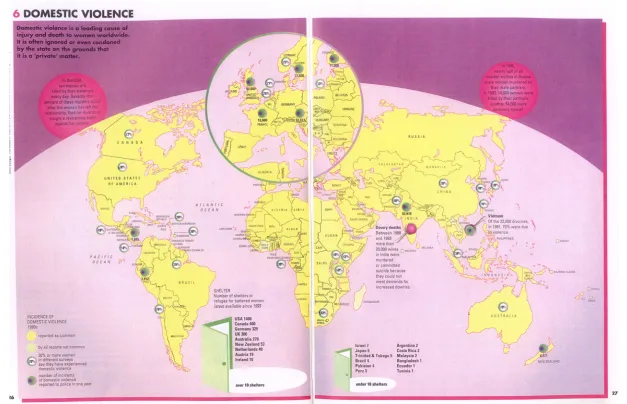
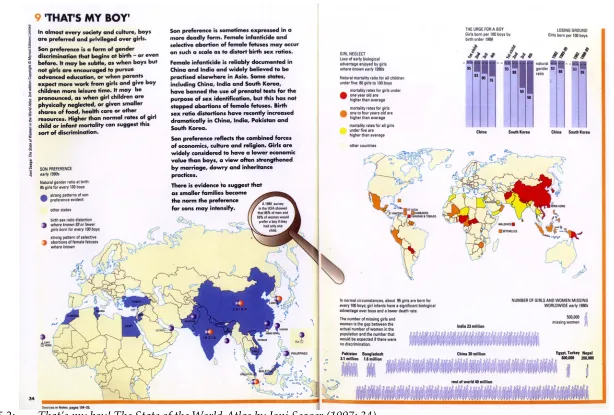
(27) thus placed the woman as the object. She argued that this then creates a privileged and gendered position, wielding the power to construct women from a patriarchal set of values. The same politics of power and sexual imbalance, in line with Mulvey’s (1975) theories, existed within my cultural framework where I grew up in a climate of acquiescence, working from an unequal platform. What happens to the image of woman and the depiction of the woman when it is produced within a male definition is the coercion to read her within the same context. Mulvey (1975) first, refers to this relationship between looking and dominant patriarchal ideology in her paper, Visual Pleasure and Narrative Cinema, in Screen 16. Contributing further to the analysis of this power relationship, Harrison and Wood (eds.) in Art in Theory states ...the film reflects, reveals, and even plays on the straight, socially established interpretation of sexual difference that controls images, erotic ways of looking, and spectacle, … demonstrating the way the unconscious of patriarchal society has structured film form. (Harrison & Wood, 964: 1992) We are invited to view the images of woman, where the idea of woman is one that is constructed, to be looked at and determined by men. Figure 1.3.1 shows the political reality in the global status of women that existed as of August 1996. Regardless of the rhetoric that prevail on the advancement of the status of women since the Beijing Declaration (1995), Schoetzau of the ‘Voice Of America’, reports that in appraising the progress made in gender equality since the 1995 Conference, the global human rights group Amnesty International states that violence against women has continued unabated since the adoption of the Beijing Declaration with many nations not fulfilling their pledges. (Schoetzau, B., 2005, Global Status of Women to be reviewed at UN, Internet accessed 15/05/2006) The gap between the reality and the rhetoric of equality for many women in this world supports Mulvey’s view of the constructed woman.. 7.
(28) Figure 1.3.1: The State of Women, The State of the World Atlas by Joni Seager (1997) 8.
(29) Hence the power in the male gaze, Mulvey (1975) states, is to exhort an image of woman. Pollock in Vision and Difference states that in the psychoanalysis of looking, Mulvey (1975) uncovers the politics in the looking, by establishing a scopophilic link where “pleasures generated by the visual domination and voyeuristic consumption of images of female form evoke the anxiety that female form is made to signify within patriarchal culture” (Pollock: 148). Mulvey (1975) argues that the image of woman, “stands in patriarchal culture as signifier of the male other, bound by a symbolic order in which man can live out his fantasies and obsessions through linguistic command by imposing them on silent image of woman still tied to her place as bearer of meaning, not maker of meaning.” (Mulvey, 1975). Life under this gaze is then internalised as the norm where images of woman in cinema constitute the accepted female gaze. 1.3.2. Gender Roles. Another most obvious discrepancy existed in the division of labour where the home was a battleground in the war against women and the men were the victors. In my experience, the male and female roles were frustratingly, set in concrete. On festive days, all the women occupied the kitchen for the neverending catering for up to sixty family guests. The men sat together and talked, played cards, drank and did very little. When dinner was ready, the men ate first with the male children followed by the girls and women, who then did the washing up. On numerous occasions, I broached this inequality with my mother, my grandmother and all the women who wielded power behind the scenes in my family. They all would return with a similar response, that’s the way things are, in our culture. This is the natural order of things, in our home and across the country where the patriarchal supremacy and power reigns unchallenged, sanctioned by society and culture. In family discussions, my opinions were not asked for and the barrier that delineated the positions could not be broken. This natural order of male privilege is also the justification for the rampant violence against women through female foeticide. See chapter 2.5.2 for a more extensive discussion of this. The stereotypical expectations and the invalidation of the views of women by the male members of the family were a source of many heated arguments. Such women risk being branded by labels such as modern, rebellious and stubborn, with complicit female members acting as gatekeepers. 9.
(30) Strangely, the same invisibility and contempt for women exists here in Australia where I have encountered patriarchal culture, both in the workplace and in dealing with tradesmen. Having built houses all my adult life, creating sculptures and spaces, I have gained a wealth of information and knowledge about building. When tradesmen arrive to discuss various aspects of building, they invariably talk to me as if I were invisible and not able to grasp building terminology. If my husband is present, the tradesman never addresses me on any issues, always assuming that the man had the greater capacity for understanding building issues. It has occurred to me that this attitude is not just cultural but about power and gendered looking! Another area of male domination is expressed through restrictions placed on women to speak freely. Swann, (1992) discusses this in terms of delineations in public and private speech: Restrictions placed upon women speaking in public are consistent with the fact that, historically, women have been relegated to the private and domestic sphere, while men operate in the public domain. But this is not to suggest that women in private have been able to speak freely. For men to be master in their own home restrictions need to be placed on women- and these have included restrictions on their speech. (Swann, 1992: 59) The visual ideology fuelled by male gaze forms the basis for the domination of women. The State of the World Atlas by Joni Seager (1997) gives a visual accounting of the state of the world’s domination of women. (See Figure 1.3.2). 10.
(31) Figure 1.3.2: In their place, The State of the World Atlas by Joni Seager (1997: 28) 11.
(32) The politics of power in social life is underwritten heavily by the dominance of male power “in which women are ‘private’ and ‘passive’, ‘body’ to men’s ‘public’, ‘active’, ‘mind’…“ (King, 1992: 135) The privileged gaze secures the male agenda and men’s ability to maintain their economic domination in society and in the workplace. It feeds on the mass insecurity and disempowerment that exists fuelled by complicit societies. In order to establish a democratic framework in which equity for women might be achieved, it is important to ensure that the visual ideology based on female objectification and male desire is challenged and sexism in covert practice stamped out. 1.4. Culture, Religion, Art and Fashion: The Nexus. These words from Lewis Carroll’s Alice in Wonderland aptly echo my feelings about the cultural climate of my youth: A curse on this game. How can you stick at a game when the rules keep changing? (Carroll: 1996) This was my sentiment as an adolescent growing in a baffling atmosphere of dichotomy and paradox. The rules within the gaze of the immediate family, (where truth and honesty were badges of family honour), were simple and direct, but the terms of reference altered when exposed to society’s eyes. Truth was played according to the audience demands and honesty became a very elastic commodity, both working to protect the honour of the family. We lived in an atmosphere of nervous anxiety where the manipulation and transformation of rules of the game altered according to the agenda and the game kept getting “curiouser and curiouser.” (Carroll, 1996: 23) Respect in my family is generally a preordained value that is based on hierarchy and age. As children we do not contradict or challenge elders as a mark of respect, while quelling the surge of emotions that rebel in one’s chest when situations appear wrong or untenable. All conversations carry this prerequisite and this protocol still underlies all communications with elders in my family. I recall an incident at a social occasion when my brother and I were included in a formal cross-cultural dinner with our parents. My parents followed the Indian etiquette of including children, but not for long… 12.
(33) We were expected to remain polite, quiet and pretend that all the adult conversations, were not taking place. At some point one of the guests made a very sexist and crude remark to which I responded quite sharply by stating that it was unnecessary and inappropriate. The dinner guests stopped and stared at me following my perceived faux pas. I suffered my parents’ indignation and embarrassment for years afterwards. In my eyes, the statement was derogatory and any woman worth her salt would surely have to object, but at that point, I also learnt that I could think what I liked, but only in the privacy of my head. The ever-changing rules of the game relied heavily on cultural frameworks. I would have to learn to understand it quickly, or suffer the ostracism that surely followed later. The continual scrutiny under which women are placed, their lack of freedom to express real feelings and the ongoing acceptance of their situation always baffles me. Is censorship cultural? Or is it the continued indoctrination that requires a woman to forego something as precious as self- expression? Is it simply more convenient to be agreeable to societal structures just to survive the scrutinised journey that may be a woman’s life? Could this internalised cultural prohibition be similar to the case of Asian students in Australia? (I am aware of the generalisation!) Due to the cultural barriers linked to issues of respect in place, Asian students have difficulties participating in the discussions so central to western pedagogy. Often, in institutions, this reluctance is interpreted as a lack of confidence, compliance or worse still, weakness and incompetence. The same paradoxes exist in women working in patriarchal structures where stereotyping of roles create misguided hierarchies. Many of the structures that determine behaviour exist on a subconscious level. It is indeed difficult to analyse and differentiate cultural influences separate from religious mores. There are many instances where the words from the Bible or Qur’an or the Bagavad Gita are translated so literally that it confines the people who follow them. Here I come to the notion of original sin… In Australia, many years later, my family and I had achieved the ultimate Australian dream of our very own home. We followed the adventurous seventies and built an ultra modern mud brick house in the Dandenongs, following many years of the bohemian influences of Montsalvat and the 13.
(34) environmental movements of Eltham. In response to our newly found ideology, we decided to shed the unsavoury trappings of a middle-class existence. We moved at a very crucial time in our, oh, so very comfortable suburban life of owning two of everything, including children. We set out to seek this good life in the land of the Aquarius festival in the Far North Coast of New South Wales. Our search brought us to a picturesque property, nestled in the bend of a large creek called Cooper’s Creek. We happened to settle opposite a born-again Christian family. Their children did home study and were forbidden to go to the local country school or mix with the local hippies. Our relationship with them appeared congenial except when we came to talking about the role of the wife. She explained the creation theory and how the women were the source of original sin and women therefore had to repent in service of men eternally, in order be forgiven by the only true God. We had launched into a large learning curve of self-sufficiency in terms of farming and socialisation. In this land, the ethics and religious differences grew faster than the weed that provided the income for so many alternative families. My conversations about Hinduism with the wife of the household were received with the same distrust shown by the Muslims about the West. A lot of effort was invested in the months that followed towards saving the souls of my children. I was perceived as this heathen, foreign sinner and devil worshipper. They picked my children up, promptly, to be taken into the safe arms of the local Sunday school. The crunch came eventually, when the pastor asked my youngest daughter whether she and her sister would like to join their faith. She declined politely and told him: “We love coming to Sunday school but we are not church people.” They were, as a result, thankfully, abandoned. In this encounter, my children clearly separated themselves from the neighbours of the village of Rosebank, not through any of our actions, (which I was so careful to avoid in an effort to belong in the environment we chose) but through their own perceptions of themselves. How they arrived at a sense of where they belonged in terms of religion or culture was from their own understanding and perception of difference. To me, the life my neighbour’s wife led and the way my mother articulated her identity was from this universal, internalising of culture and religion which uses power to define and confine women in order to maintain power. I find that 14.
(35) it becomes increasingly difficult to separate what constitutes religious belief and what constitutes cultural reinforcement. Hinduism as such is not prescriptive but it cannot tear itself away from the culture of domination and subordination or the agenda that is weighted so heavily against women. In my family, in Malaysia, the issue of modesty and what constituted modesty was always a puzzle. There are all these pictures of Hindu Gods in many stages of fornication from the Ellora and Ajanta caves that are deemed acceptable and live in the region of the sacred. Yet, my pastel drawings of nudes from a life drawing class, which I took home to Malaysia during the holidays, to cover my bedroom wall, represented censorship material. Is this merely prudery or is it cultural embarrassment? In art books and images of Indian culture, there is a transparency in the display of eroticism and desire but it is rarely sanctioned within everyday life. It was not always clear where my mother stood in terms of culture and in terms of modesty. She gave a semblance of openness in the company of women but the boundaries were still very clear when it came to touching. She was most uncomfortable with proximity and I cannot remember when my parents displayed any affection towards each other. They had also stopped physical contact with both my brother and me. That period of delineation between child and parent must have happened gradually. I am always aware of the lack of physical contact between our family members when I return home for those rare visits from Australia. The languid afternoons were the times when the communal bonding happened when the household rested, showed affection and played quiet games as the elders took their siesta. I remember fondly, the times when the family closeness was acted out in cuddles, massages for the matriarch in return for the neverending legends and epics that resembled the Arabian Nights. Contact between all of us was open, natural and comfortable, filled with a naïve, happy, contentment. As we grew into puberty, things changed. That innocence turned into this awareness of desire. The difference in the look by the male members was heightened by the actions of my mother, who was aware of the physical and emotional changes that were happening. A clear separation between the males and females began to take place. The curtain of taboos henceforth was drawn. My life became filled with a 15.
(36) discomfort of the look, followed by sexual confusion. That insidious feeling of shame had begun to creep in. My mother used the English word shame to refer to female genitals. I do not know how it became a focus of shame but I remember my grandmother using it… perhaps, it was used in the family as a polite term for the unmentionables. In terms of reference now, I find it interesting, that the part of the body that signifies difference, enigma and procreation is thus regarded. In terms of fashion my mother disapproved of any clothes that revealed the crotch. I remember her insistence on wearing a long shirt that covered this area. When skin-tight jeans emerged as fashion and gradually made their conquest through the family ranks, I remember her cultural discomfort and unease. She was surely responding to the years of inculcated morals. She was merely protecting her female child from the social gaze, in a society where only a hint of rumour can burden a family with an unmarried female child. The concept of shame is always referred to in any admonishment that my mother metes out, whether warranted or not. The role my father played as enforcer of these rules was indirect. There was a clear pecking order, and I watched that game played out. Whenever the children caused him any displeasure, my father would demean and ostracise my mother as a failure and for her lack of control over us. She was responsible for our academic progress, performance, behaviour in public or the lack of money or anything else about which he wished to verbally abuse her. These sessions always happened when we retired to bed and I would lie awake hearing my mother sobbing afterwards. The next day she would emerge trapped in all the insecurities and fears she harboured. There was nowhere else to sink her rage except at the daughter, who, in her eyes over the years would cause her so much more anxiety and pain. I had spent years deciphering this tactic and examined its lasting effect on me. She turned the disappointments that she endured into a mechanism of control to remind me of my duties as daughter, just as my father controlled her through eternal reminders of her duty as wife. I harboured guilt and shame for years and felt responsible for her pain, her disappointments and her miserable life. Her eyes created the boundaries for my behaviour.. 16.
(37) In the realm of desire, all I could ever muster to cope with the advances of a male when I was at the height of sexual readiness was a muffled sense of shame and outrage at my rational self for not being able to give a semblance of relaxed abandonment. To this day the fear of invasion of my private space is so overwhelming, it is as if I was living with a collective memory of many generations of women in my family… Now, I reconcile it to the way I was brought up and confirm with a smile… that I am that product of the nexus of culture, religion, art and fashion. Together they contribute to the framework for understanding myself and perhaps may explain the foreignness that I display to others. 1.5. Rationale for and Aims of the Research. Previous sections have dealt with aspects of the way an individual life (self) has been constructed through the process of looking and by the extent to which the structures exist in the Indian culture to scaffold the way the gaze operates in my experience. Since the 1970’s, conventions have changed in advertising, with men increasingly becoming the object of the gaze. This thesis will not delve into the gaze on men, as this exploration is on a different tangent. It is important to be aware that there is no homogenous Indian culture just as there is no homogenous woman. An exploration of these areas through the self and through singular eyes (my gaze) as an accessible subject enables and facilitates the construction of identity using the contexts of looking. The orientation in this research is from an Eastern perspective but in order to frame the research it is necessary to select concepts from Western literature. However, these pose limitations of being Eurocentric. When Simone de Beauvoir introduced the feminist classic, The Second Sex, in 1949, she was accused of working from her personal experience too heavily. She was also accused of historical inaccuracy and anthropological constructs. Her defence was that the scope of her work was so broad that it delved into a myriad of systems of positional analysis and that her actions were unavoidable. Similarly, I am able to explore these areas through myself and through my eyes, as the most accessible subject. I am able to construct my identity using the contexts in my life. My “culture, race, age, sexual orientation, ability, and class. 17.
(38) privilege may influence (my) readings by placing me in certain positions in relation to any narrative.” (Goodman, 1992: 67) Feminist philosophy also legitimises the use of first person narratives to understand “the broad impact a relational understanding of self and subjectivity can have… to underscore the relevance of narrative accounts of self and of social identity that portray the self as necessarily emerging out of dialogical contexts beyond the borders of any sub-discipline” (Alcoff & Kittay, 2006: 12). The ‘I’ as a starting point, then provides an essential initial step in the exploration of identity. Most children begin life with a questioning frame. I was no exception but in my case, the questioning gaze was intensified by the perceived lack of choice that my mother articulated through her level of confinement by cultural restrictions. This exploration through memories begins through my gaze as a child and then moves into adulthood where I probe female identity and analyse the layers of cultural veils that exist. It is important to seek a framework to question the politics of power that continue to impact upon the lives of women I know. They continue to be covertly dominated through compliance maintained by society. Compliance is procured through cultural rules that endorse patriarchy as a normal state and continues to affect my life, as every visit back to my origins, makes glaringly apparent. It is a primary assumption of this research that the objectified gaze turns women into artefacts for the benefit and survival of patriarchy. The mechanisms of control that exist across a variety of cultural frameworks in religion, culture and media demonstrate that there is powerful evidence that these covert patriarchal structures exist solely to manage, control and dominate the lives of women. Through the framework of religion, culture, art and fashion, the patriarchal organization of our society places compliance demands on women by denying themselves and placing increasing belief in the mythology that confer authority on men, husband and fathers who then use violence to elicit compliance. The violence against women is linked with what patriarchy sees as rights over women and their bodies. The need to control, direct and manage the lives of women either by blatant or by covert methods, leaves women vulnerable to 18.
(39) creating a collective consciousness that rejects and invalidates their position in society. It is critical to examine the way control continues to be exercised through restraints and even physical violence on parts of women’s bodies under the sanction of religion, culture, fashion and expression of style and art. This research has both personal and universal dimensions in order to scope the problem at two levels. The art making intents to uncover issues developed in this research to fulfil research aims. Hence the research aims: •. To explore the extent to which external gazes through a variety of players in my life construct my self -identity and reality.. •. To use art making as a strategy for visibility and to defy the gaze by uncovering visual artefacts of power and control in culture, religion, media and fashion.. 1.6. Organisation of the Thesis. Given the initial aim is to explore the extent to which external gazes construct my self-identity and reality, it is necessary to establish the role of the gaze in forming a woman’s identity and in creating dialogue with the self. It is also necessary to question the role of compliance through cultural rules that endorse patriarchy as a normal state. The gaze is situated within both Eastern and Western frameworks as a strategy for uncovering the politics of the representation of women and the awareness of the institutional framework that determines the reading of the role of women. Chapter 2: This chapter uncovers the answers to the unequal relations in gender and the various positions within the gaze by probing three major bodies of literature to reveal the psychoanalytic reasons and the political agenda that are embedded in looking that create the behaviours that support a climate of the oppression in women. The psychoanalytic frames of Freud (1931); Lacan (1954); Sartre (1953); Foucault (1988); Berger (1972) and many others are used to provide specific insight into gender and power relations in the gaze to develop the visual framework. By probing the psychoanalytic theories, Mulvey’s (1975) film theory the research questions the role of cinema (Bollywood) in articulating the role of women by the spectator’s identification in film and discusses the 19.
(40) politics of representation in the way the camera determines an assigned male viewpoint. The theories in the politics of looking by Berger (1972) uncover power structures in looking. Feminist theories by Beauvoir (1972); Cixous (1995); and Moi (1999) are interrogated to uncover the politics of representation and power by questioning psychoanalytic theories to provide insight into the internal dialogue and behaviour of women who subject themselves to limitations through dominant patriarchal beliefs. Chapter 3: Analyses of major religions expose religious perspectives that carry cultural sanctions, accepted as codes of social behaviour, which serve the institutionalised domination of women through patriarchal and hierarchical systems. Chapter 4: Pertinent questioning of feminist theories on the oppression of women lead to women challenging and developing strategies to take active responsibility for changing the existing hegemony that controls their lives by defying the gaze. It provides the framework of reference for the role of the feminist artist in art history to question the representation of women, identity and sexual politics through art making. Aligning with the second research aim to use art making, the visual research is argued as a viable strategy for visibility and to defy the gaze. Chapter 5 outlines the artist’s framework of reference through her life, past research and developing visual codes and iconographic language in her work. Chapter 6 sets out the research methodology in developing the dialogical implications involving the self in interlocking but also identifiably discrete roles in the representation of self as narrator, as the protagonist and the object. The analyses of various positions in looking contribute to the visual framework, the conceptual analyses that drive the work and the technical experiments that result in the presentation of the exhibition. It also looks at the rationale underlying the final decisions for the choice of materials and processes towards the visual imagery. Chapter 8 looks at the culmination of process, choice of venues, layout, decisions for installation, catalogue production and video documentation of the Women’s forum as support material for the exhibition, Through the Looking Glass. It reflects on the artist talk and the speeches at the opening of the exhibition. 20.
(41) Chapter 9 reflects on both process and product. Outcomes are analysed in terms of the aims of the research and the evidence of audience response. Future directions for practice and research are explored in the context of both ongoing personal development and more universal applications.. 21.
(42) CHAPTER 2 Theoretical Perspectives on the Gaze. 22.
(43) CHAPTER 2: 2.1. Theoretical Perspectives on the Gaze. Defining the Gaze. This chapter analyses the gaze to reveal the various positions within it. Probing major bodies of literature reveal the psychoanalytic reasons for acquiescence and the political agenda embedded in looking that create the behaviours that support a climate of the oppression in women, It also establishes the researcher’s reasons for examining the psychoanalytic theories through feminist perspectives. The politics of representation in various positions within the gaze reveal unequal relations between genders and behind the gaze in culture (including cinema), religion and society. The major thrust of the research arguments is developed mainly from feminist readings by Beauvoir (1972); Cixous (1995); Moi (1999); Bordo (1993); and others to provide insight into the internal dialogue of women who negotiate cultural bias and impose limitations on themselves by acquiescing to the dominant patriarchal beliefs. The psychoanalytic frame of Freud (1931); Lacan (1954); Sartre (1953); Foucault (1988); Berger (1972); and many others are examined within a feminist framework to provide specific insights into gender and power relations in the gaze to uncover misogyny and develop the visual framework to expose them Gaze, means merely to look steadily or intently; look with curiosity, wonder etc. a long steady look. The gaze in this study, however, refers to looking according to social codes and values. Cultural codes or conventions regulate looking to reflect a cultural context or to define gender variation. The relationship between the person who is looked at and the person who is doing the looking needs to be examined in terms of hierarchy and power. It is important to examine the context, the experiences and the agenda behind these. The role of the gaze is analysed by theorists in terms of gender relations to uncover issues of power instrumental in creating the inequality that contributes to the lack of adequate representation of women in society. Some theorists, for example Coward (1985) and Mulvey (1975), make a distinction between the gaze and the look by referring to the gaze as reflecting a gendered code of desire (i.e., reflecting masculine desire) rather than an open perusal or scrutiny. This distinction is important if one is to analyse the politics 23.
(44) behind the looking. The ability to represent female pleasure and desire rather than simply the reflected masculine one is important in defining and sustaining the political position in terms of power. Gaze is defined as the act of looking and women are described as the object of gaze. The gaze or the look was originally used to analyse film in the 1970s, (Mulvey, 1975) but now has taken on a broader connotation in visual media in terms of the way images of people are viewed. Involving more than the voyeuristic dimension in looking, it is important to analyse the agenda behind the depiction of the image as well as the looking itself. The important aspect of looking rests in examining the politics of representation for the psychological relationship behind the gaze. This requires identifying not only who does the looking but also the agenda behind the depiction of the image! There are similar difficulties in representation analysed by Spivak, who discusses the problematic position of the subaltern herself being the subject of deconstruction in politics of representation (Spivak, 1990). The gaze operates with similar tendencies where the hegemonic interests need examination so that the looking and the reason behind the looking are analysed to establish the politics of power. Argyle (1976) examines the way the gaze conveys information. By requiring women in many Asian and Middle Eastern cultures to avert their gaze as an act of submission, the culture thereby confers authority on the male. 2.1.1. Gaze and Identity. In this analysis of theoretical works, the gaze is linked to the construction of identity; in particular, how women are constructed by the gaze and construct themselves through a mediated gaze in the context of how society views them. This research intends to locate the reading of personal identity and the experiences that are instrumental in defining self. When the representation of self operates through a number of gazes, the individual’s own perception of self is a reflected mirror-view. A person becomes an artefact of multiple gazes and the person suffers a loss of control over the definition of self when the agenda of others become predominant in articulating self. In Foucault’s analysis, the relationship in the gaze to power is defined thus: There are two forms of relationship of the victim to the gaze: instrumental and identificatory. Both are potentially two-way, with 24.
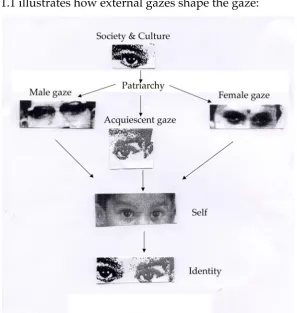
(45) the figure of authority turning its gaze on the victim and the victim looking back. But in the case of instrumental gaze it is the ‘looking’ of authority that is crucial … (Ramazanoglu, 1993: 214). Here the reference to gaze as an instrument of power and control is established where the power through the gaze reinforces patriarchal control over the representation of women. In this work, another perspective is added to support or vary existing analyses by introducing and including examples of Eastern framework exemplars. The role of the gaze and the role of women as unconscious enforcers of these patriarchal values are established by identifying the areas of acquiescence by women to existing patriarchal systems in both contexts. The process of ‘looking at’ and the process of ‘being looked at’ are examined to show that the gaze affects the articulation of identity. It also involves an unconscious reading of self through the process of seeing, thus contributing to the articulation of self by self as well as others. Figure 2.1.1 illustrates how external gazes shape the gaze:. Figure 2.1.1: Shaping of the Gaze. 25.
(46) 2.1.2. Psychoanalytic Frameworks. Since the field of literary criticism is fluid and continually evolving, relevant discussions and analytic writings around the gaze are obtained first as background information from primary sources. Disparate and contradictory psychoanalytic theories relating to looking and its effect on consciousness can be found in the works of Freud (1931); Lacan (1954); Sartre (1953); Foucault (1988) and many others. To clarify the positions in this research and build on existing arguments, substantial secondary support material have also been sought for investigation to unpack the embedded threads to reveal ideology that discriminate and subordinate women. Secondary references relating to psychoanalytical sources have been discussed, debated and expanded in terms of current application in feminist theory by Beauvoir (1972); Cixous (1995); Moi (1999); Bordo (1993); and others. Grosz (1990) in Jacques Lacan, A feminist introduction discusses her own reliance on psychoanalytic theories for her analysis. As “both investigative object of feminist researches, and as critical, and strategically valuable tool,” their psychoanalysis forms the “paradigm of other discourses and knowledges (sic).” Similarly, in this thesis, the readings of feminist researchers who “develop their objections from within its frame,” contribute to the primary arguments to uncover power relationships. (Grosz, 1990: 189) When examining the gaze, the most relevant works examining the philosophies in looking and at sexual difference have been by feminist theorists. When deconstructing looking, the feminists have found the theorists of psychoanalytic frameworks to perpetuate the narrow, established patriarchal philosophies and largely ignore and exclude the other half of humanity. Thus feminist examination of existing psychoanalytical theories, have been valuable contributions to the rhetoric for the empowerment of women, to question and reject certain patriarchal readings. It is relevant therefore, to probe the deliberate omissions by these theorists, to gain new insights into social division, sexual politics and power relations. Consistent with theories about the gaze, Berger (1972) identifies two positions in looking when he observes that, “Soon after we can see, we are aware that we can also be seen” (Berger, 1972: 9).. 26.
(47) Sartre (1953) also referenced these two positions by the expression ‘le regard’ or ‘the look’, in his book Being and Nothingness and the ‘phenomenon of being’ as a consciousness of ‘being-in-itself’ and ‘for-itself‘(trans. Barnes, 1956: 74). Lacan (1954), a post-structuralist thinker, also located the gaze in two positions, one of an infant perceiving itself as an individual when it sees itself in the mirror for the first time; the mirror-phase is where the subject lives in a narcissistic realm of being entranced by its own image. Here the gaze remains the property of the subject who is also the object. The other position is as an unconscious mind, gathering meaning freely to differentiate from the Other, to determine Self, to then, be located by this acquired meaning. The Self as a construct (as the object) remains the property of the gaze. In terms of psychoanalysis, the being is conscious as an autonomous object within “itself” but is relational from the “for-it-self” through the signifiers. Signifiers such as language and culture then play a more dominant role in the articulation of self. Although Lacan (1954) uses the word gaze, it is Sartre’s (1953) interpretation of becoming an object, as part of another’s consciousness that is relevant here; when self is determined by an outside influence or spectator, it is in danger of losing power over itself. This loss of power and self-determination is important in terms of gender relationships to identify the loss of power in women. In her work, Woolf (1928), enlarged on the mirror-phase, and refers to women acting as mirrors reflecting back to men an enlarged view of masculinity. She had suggested the imbalance in sexual politics is created by defining woman through continued references to femininity and its continued use as a weapon for cultural misogyny. By defining women to a ‘place’ woman is also assigned an inferior position. Although Woolf’s (1928) writings remain limited and bound by her class and society, her ideas on the power politics in looking are relevant to this research. Gross omissions of women’s contribution by historians were detected when examining the role of women in shaping Australia’s history. Jebb and Haebich (1994) cite research conducted by historian, Hunt (1986), who found that historians have deliberately excluded the woman’s role because “there was considerable difference between the ideology of women’s roles as defined by traditional family function and actual practices with a frontier society”. (Jebb 27.
(48) and Haebich, 1994: 26) In addition, when investigating the gender roles and the historical invisibility of women in Australia, there are references to a ‘womanless frontier’. (Jebb and Haebich, 1994: 26) In an effort to remedy this, feminist writers have then reintroduced women’s role in the frontier. Jebb and Haebich (1994) note that: Issues arising out of feminist critiques have provided the foundation for including women’s experiences of the frontier within an overall analysis and for examining the structural relationships of class, race and gender. (Jebb and Haebich, 1994: 26) If glaring imbalances for women did not exist, there would have been no need for feminist theories. The feminist perspective is therefore necessary due to the “gendered character of looking and being looked at.” (Bonner and Goodman, 1992: 4) In more recent analyses, Alcoff and Kittay (2006) uncover a transformative dimension where “feminist values of equality and inclusiveness” in defining feminist philosophy are used to introduce “new approaches to traditional questions” by “expanding the scope, method and vision of philosophy in allowing for a permeability of disciplinary boundaries” (2006:10-12). In exploring the gaze, it is this transformative capacity in the discourse that transfers as subversive strategies in the art making. Here it is necessary to look at the definition of the word gender as opposed to the word sex. The meaning of both words has undergone much change and new definitions describe gender as the difference between men and women. “Gender continues to function as a grammatical term, for example, as well being a euphemism for a person’s sex…sexuality gradually assumed a new status as an object of scientific and popular knowledge.”(Glover and Kaplan 2000: xi) The distinction on gender identity has been debated extensively from the eighteenth century to now and is regarded “a much contested concept”. (Glover and Kaplan 2000: ix) The many debates and distinction between the two, however, is relevant to define my area of study, and to examine existing theoretical framework on the gendered gaze. Mulvey (1975) a feminist theorist and filmmaker relies on the analysis of Freud and Lacan for the following positions; the representation of 28.
(49) gender in film; the gendering of the spectator’s gaze and the internalising of patriarchal values. This is accomplished by constructing a consciousness that relies on the characters in the film to convey the narrative in the film. Mulvey (1975) argues that in the dark cinema environment the audience is isolated and identifies with the main protagonist. Within the phallocentric analysis, the representation of women serves no other narrative function than to be the object of desire and to be looked at as erotic objects for the male characters and for male spectators. The men serve as active, primary players in the narrative to lead the women in the audience to identify with the male gaze that dominates and turn the passive women into objects of desire. Mulvey (1975) uses Lacan’s theories on the ‘Mirror stage’, to show that the characters on the screen act as the ‘mirror’ that reflects the idea of perfect and more complete image to the viewer. The person looking at the movie identifies with the characters in the screen in a state of anxiety and loss of ego to internalise the values projected in the film. (Harrison & Wood: 964-965) Mulvey (1975) turns to Freudian psychoanalytic theory to explain that the male anxiety is due to the castration complex from the presence of women in the screen. The reaction is by rendering women to a passive, ‘done to’ position to reclaim power in gender politics within the narrative of the film. This fixed position of passive spectatorship for the feminine and active spectatorship for the masculine is questioned. Mulvey argues that gender identity is confirmed through the use of masculine language (within a patriarchal order) and enacting, by default, behaviour derived from the unconscious due to the Oedipus complex. By disputing that the gaze is distinctively male, feminist writers have produced arguments for the inclusion of the female gaze in the rhetoric of power. (Chandler, Notes on the gaze, Internet accessed 03/05/2002) 2.1.3. Defining Self. The ‘self’ is a negotiated space and is defined from many positions in the context of living. It is formed from an internal dialogue with oneself and also through the external influences that affect and determine this dialogue. Benglis (1973) perceives: A person’s identity is (sic) a composite picture of one’s ideas, beliefs, infinite longings, abstractions, glances in the mirrors, personal 29.
(50) relationships, size, height, weight, and colour, one’s library card, driver’s licence, social security number, bank account, acquired names, one’s occupying one space as opposed to another, wearing of certain clothes as opposed to others, one’s taste in foods, one’s sex. (Benglis, 1973: 96) To define one’s position in life and to find self, there is a mountain of conflicting, indirect and confusing data to manoeuvre. The accepted notion of self exists as a fluid form, affected by external influences and the internalising of the external influences. Berger (1972) refers to the way the individual responds to visual data and to the realm of looking and being looked at. He acknowledges the gaze as an active factor in determining self through the relationship between what we know and what we believe: “The way we see things is affected by what we know or what we believe; We never look at just one thing; we are always looking at the relation between things and ourselves.” (Berger, 1972: 8 - 9) When representation of self relies on the information from being seen and seeing and it is important to consider who is doing the seeing and how the seeing is constructed, it is particularly relevant to look at the power structures in play to determine the agenda behind the looking. 2.1.4. Gaze and the Objectification of Women. The linking of the looking to the female body as the object of the look is central to the political reading of the consequences of male definition for this thesis. Thus, looking has to involve the object or the body, which is looked at. This is definitely not to reinforce existing preconceptions of the body from a patriarchal standpoint of sexual desire but to investigate its repercussions on women as artefact. The marginalisation of the woman as the object of the gaze is itself problematic but, by placing women as the object of the gaze, an artificially constructed, detached position of the woman is assumed. Through this prescriptive gaze, women are confined in roles that restrict their movement and their freedom. Many women remain in poverty, oppression and violence through institutionalised disadvantage and indifference. In the book, Visions and Difference, Pollock (1988) refers to the creation of ideological difference between masculine and feminine in art culture, which further oppress women. By placing “Woman as the beautiful image desiring masculine 30.
Figure


+7


Related documents
