Relationships are key: building
intercultural capabilities for Indigenous
postgraduate coursework students and
their teachers
Final report of the project
Keeping on track: teacher leaders for
Indigenous postgraduate coursework students
2013
Australian Catholic University (lead institution)
Dr Jack Frawley (project leader)
Professor Nereda White
James Cook University
Professor Sue McGinty
Dr Felecia Watkin-Lui
Support for the production of this report has been provided by the Australian Government Office for Learning and Teaching. The views expressed in this report do not necessarily reflect the views of the Australian Government Office for Learning and Teaching.
With the exception of the Commonwealth Coat of Arms, and where otherwise noted, all material presented in this document is provided under Creative Commons Attribution-ShareAlike 3.0 Unported License (http://creativecommons.org/licenses/by/3.0/au/). The details of the relevant licence conditions are available on the Creative Commons website (accessible using the links provided) as is the full legal code for the Creative Commons Attribution-ShareAlike 3.0 Unported License
(http://creativecommons.org/licenses/by/3.0/au/legalcode).
Requests and inquiries concerning these rights should be addressed to: Office for Learning and Teaching
Department of Industry, Innovation, Climate Change, Science, Research and Tertiary Education
GPO Box 9880,
Location code N255EL10 Sydney NSW 2001
2013
Acknowledgements
We would like to thank the team who have worked on the project from both Australian Catholic University (ACU) and James Cook University (JCU). The project team members are: Professor Nereda White, Director, Centre for Indigenous Education and Research (ACU); Dr Jack Frawley, Deputy Director, Centre for Creative & Authentic Leadership, and Senior Research Fellow, Centre for Indigenous Education and Research (ACU); Professor Sue McGinty, Acting Director, The Cairns Institute (JCU); and Dr Felecia Watkin-Lui, Senior Lecturer / Director of Research Training, School of Indigenous Australian Studies, Faculty of Arts, Education & Social Sciences (JCU).
The team would like to thank the following people who were members of the reference group and who provided valuable advice throughout the project. They are: Professor Jeannie Herbert, Foundation Chair of Indigenous Studies, Charles Sturt University (CSU); Professor Yvonne Cadet-James, Chair of Indigenous Australian Studies, School of Indigenous Australian Studies, Faculty of Arts, Education and Social Sciences (JCU); and, Associate Professor Michael Bezzina, Director, Centre for Creative & Authentic Leadership (ACU).
The team would also like to thank the following for their contributions to the project: Trina Jackson (JCU); Marnie Campbell (JCU); Katelyn Barney, The University of Queensland (UQ); Lauren Scheiwe (UQ); Leanne King (ACU); Deborah Clarke (CSU); Associate Professor Charles Burford (ACU); Soma Nagappan (ACU); Dr David McClay, AM; and Dr Paul Chesterton. We also appreciate the many students and staff who participated in the project.
List of acronyms used
ACER Australian Council for Educational Research ALTC Australian Learning and Teaching Council Ltd AUSSE Australasian Survey of Student Engagement CAPA Council of Australian Postgraduate Associations COP Community of Practice
DEEWR Department of Education Employment and Workplace Relations IHEAC Indigenous Higher Education Advisory Council
ISU Indigenous Support Unit
ITAS Indigenous Tutorial Assistance Scheme KOTL Keeping on Track Lecturer
KOTS Keeping on Track Student
NIHEWS National Indigenous Higher Education Workforce Strategy
NIPAAC National Indigenous Postgraduate Association Aboriginal Corporation OLT Australian Government, Office for Learning and Teaching
Executive summary
Relationships are key is the final report of the project Keeping on track: teacher leaders for Indigenous postgraduate coursework students. The project focused on disciplinary and cross-disciplinary leadership to enhance learning and teaching through leadership capacity-building in discipline structures, communities of practice and cross-disciplinary networks, with an emphasis on strengthening teacher leader capabilities of lecturers involved in the teaching of Indigenous postgraduate coursework students.
The overall purpose of Keeping on Track was to clearly delineate and to improve teacher leadership practices across higher education institutions in Australia serving Indigenous postgraduate coursework students, as differentiated from practices in supervision of postgraduate research students. Marshall (2008) states that studies that focus on the ‘how’ of development of leadership capability in learning and teaching are limited. It is the ‘how’ of teacher leadership which this project addressed, through the design and development of a Blueprint for Intercultural Capabilities informed by the experiences of Indigenous postgraduate course work students and their teachers.
The Keeping on Track project aimed to answer three research questions focused on the Indigenous postgraduate coursework experience by collecting and analysing the teaching and learning experiences of Indigenous students and their teachers in postgraduate coursework programs. Data were collected through an online survey and the establishment and operation of a University Community of Practice (UCoP) at participating universities, through which focus group discussions and interviews were held. Project end aims were to consider the implications of the data collected, and make recommendations for strengthening teacher leadership capabilities in the teaching and learning of Indigenous postgraduate students through the development of a teacher leadership capabilities framework which would be developed, trialled and evaluated.
Four findings became clear towards the end of the project:
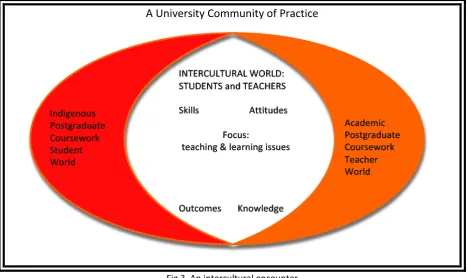
1. the value of UCoP in forming an intercultural space in which the process of teaching and learning is the focus;
2. that intercultural capabilities are required by both teachers and students to engage fully with the cultural interface of teaching and learning;
3. that this requires intercultural sensitivity (Bennett, 2004); and,
4. that relationships are key to intercultural exchanges and building intercultural sensitivity.
As such, there is no recommendation for a teacher leadership framework, but rather recommendations for encouraging intercultural development through student/teacher encounters facilitated through the establishment of UCoPs. These are:
1. where UCoPs aren’t established, that universities through their Learning and Teaching Centres (or equivalent departments), facilitate the development of one in order to encourage student/teacher encounters; and,
Table of Contents
Chapter 1: Keeping on track ... 7
The Project ... 7
Chapter 2: Indigenous students and postgraduate education ... 10
Impediments ... 11
Success ... 12
Responsive institutions... 13
Postgraduate experience ... 14
Student characteristics ... 15
Transition issues ... 16
Continuing support ... 16
Best practice ... 18
Resourcing ... 18
Leadership ... 20
Tensions ... 21
Engagement ... 21
Outcomes ... 22
Chapter 3: Teacher leadership ... 24
Leadership in Higher Education ... 24
Teacher capabilities ... 26
Teaching roles and leadership levels ... 26
Capabilities ... 27
Further research ... 28
Chapter 4: Community of practice ... 30
Community of Practice and assumptions of learning ... 30
Community of practice in the Australian higher education context ... 31
University Communities of Practice ... 32
Possibilities and Limitations ... 32
Chapter 5: Methodology ... 34
Survey ... 34
Interviews and focus group discussion ... 36
The University UCoP ... 36
Chapter 6: Data collection and building theory ... 38
UCoP Facilitation ... 39
Project challenge ... 40
University Communities of Practice participation ... 41
Building theory ... 43
Chapter 7: Data analysis and discussion ... 47
Perspectives ... 47
The meaning of meaning ... 49
Shifting cultural capital ... 50
Conclusion ... 52
Chapter 8 : A blueprint for intercultural capabilities ... 54
The cultural interface, both ways and interculturalism ... 54
Capabilities or competence ... 55
A Blueprint for Intercultural Capabilities ... 55
Respectful relationships: the possibilities of UCoP ... 57
Bibliography ... 60
Chapter 1: Keeping on track
In 2008 there were 1527 Indigenous postgraduate students across Australian universities out of a total enrolment of 278,323. This represents approximately 0.54% (DEEWR, 2010) – a clear shortfall against the accepted benchmark of around 3% (IHEAC, 2007). Undoubtedly more needs to be done to recruit Indigenous students into postgraduate programs, and, importantly, these programs need to be designed and taught with special attention to the needs of Indigenous postgraduate students. While there has been significant work in the area of supporting Indigenous researchers and supervisors (Devlin & James, 2007; Laycock et al, 2009), very little research has focused on similar issues for Indigenous students and their teachers within postgraduate coursework programs. The Council of Australian Postgraduate Associations (CAPA) believes that, in general, this is the case for all Australian postgraduate students: “We are unaware however, of any institution-wide policies on facilities and resources for postgraduate coursework students. We believe that this is due to the view, widespread throughout the sector, that the needs - both material and pedagogic - of postgraduate coursework students do not differ meaningfully from those of undergraduate students. We dispute this view” (CAPA, 2004, p.4). The Keeping on Track project aimed to address this lack of research by focusing on the postgraduate teaching and learning experiences of Indigenous students and their teachers.
The Project
Keeping on Track was funded project under the Leadership for Excellence in Learning and Teaching program. Leadership for Excellence projects build leadership capacity in ways consistent with the promotion and enhancement of learning and teaching in contemporary higher education. Keeping on Track focused on disciplinary and cross-disciplinary leadership to enhance learning and teaching through leadership capacity-building in discipline structures, communities of practice and cross-disciplinary networks, with an emphasis on strengthening teacher leader capabilities of lecturers involved in the teaching of Indigenous postgraduate coursework students. Keeping On Track consisted of an Australian Catholic University (ACU) and James Cook University (JCU) consortium, with ACU as the lead institution.
The building of institutional leadership through capacity strengthening of teaching staff and the development of teacher capabilities and capacities is an important focus of the project. Teacher leadership is defined as the capacity for teachers to exercise leadership for teaching and learning within and beyond the classroom, and implies a redistribution of power and a re-alignment of authority within the institution (Harris & Muijs, 2008). It means creating the conditions in which people work together and learn together, where they construct and refine meaning leading to a shared purpose or set of goals. Teacher leadership is a shared and collective endeavour that can engage the many rather than the few, and is primarily concerned with enhanced leadership roles and decision-making powers for teachers without taking them out of the classroom. Teachers who are leaders, lead within and beyond the classroom, identify with and contribute to a community of teacher learners and leaders, and influence others towards improved educational practice. Teacher leadership is characterised by a form of collective leadership in which teachers develop expertise by working collaboratively with peers, observing one another’s lessons and discussing pedagogy (Harris & Muijs, 2008). A central role of teacher leaders is one of helping colleagues to try out new ideas and to encourage them to adopt leadership roles. The emphasis on continuous learning and excellence in teaching can improve the quality of teachers, while the emphasis on spreading good practice to colleagues can lead to increasing the expertise of teachers throughout the school.
Collegial practices and collective practice are at the core of building teacher leadership capabilities. Capabilities are viewed as an all round human quality, an integration of knowledge, skills, personal qualities and understanding used appropriately and effectively not just in familiar and highly focused specialist contexts but also in response to new and changing circumstances (Stephenson, 2002; Duignan, 2006). Where teachers are able to work together on specific pedagogical tasks or with particular professional goals to achieve, there is evidence that this collaborative or collective activity can drive or at least contribute to transformation and improvement of their institutions (Harris & Muijs, 2008). Teacher leaders facilitate the working together of disparate knowledge systems, where the work of analysis and of acquiring knowledge applies to others as much as to oneself.
Keeping on Track took place over two years, commencing late 2010 and concluding late 2012. The principal aims of the project were to:
• collate and analyse the teaching and learning experiences of current and past Indigenous postgraduate students and their teachers;
• collate and analyse the teaching and learning experiences of teachers currently working with, and who have previously worked with, Indigenous students in postgraduate coursework programs;
• consider the implications of the data collected, and make recommendations for strengthening teacher leadership capabilities in the teaching and learning of
Indigenous postgraduate students through the development of a teacher leadership capabilities framework; and
In February 2011 two Keeping On Track team members attended an ALTC Leadership Project Leaders’ Meeting in Glenelg, South Australia at which Dr Milton Cox from Miami University, Ohio gave a keynote presentation on the use of communities of practice within universities. The original proposal for data collection involved surveys and interviews of Indigenous postgraduate coursework students and academics. As an alternative data collection strategy, and informed by the communities of practice literature, the project team agreed to use a university community of practice (UCoP) approach, to collate and analyse the teaching and learning experiences.
Chapter 2: Indigenous students and postgraduate
education
For over twenty years much of the literature on the involvement of Indigenous Australians in tertiary studies (Bin-Sallik, 1989; Encel, 2000; Coates & Krause, 2005; James, Bexley, Anderson, Devlin, Garnett, Marginson, & Maxwell, 2008) has pointed to the “enormous disparity” (Andersen, Bunda, & Walter, 2008, p. 1) in the rate at which Indigenous people participate in higher education by comparison with the rate of participation of the non-Indigenous population. This disparity constitutes a “yawning educational gap” apparent not only in access and participation rates, but also in significantly lower rates of retention, completion and success for Indigenous students.
In 1990 the Australian Government released as a discussion paper the seminal A Fair Chance for All (DEET, 1990) which set the objective “that Australians from all groups in society have the opportunity to participate successfully in higher education ... by changing the balance of the student population to reflect more closely the composition of the society as a whole.” As Gale and Tranter (2011, p. 37) note “equity in higher education ... became a matter of equal representation”. The paper went on to identify six societal groups as under-represented in higher education: women in non-traditional studies, people from non-English speaking backgrounds, people with disabilities, people from socio-economically disadvantaged backgrounds, people from rural and remote areas, and Aboriginal and Torres Strait Islander people. Martin (1994) further developed this equity framework providing definitions of the six groups and devising the indicators that have enabled tracking of institutional equity performance against national targets. However, while Australia has had a robust system in place to monitor educational disadvantage for the past two decades, a system “unmatched internationally” (Coates et al., 2005, p. 45) and in advance of those in other developed English-speaking countries such as New Zealand, Canada and the United States, and while significant advances have been made in addressing the disadvantage for women, those with disabilities, and those from NESB backgrounds (Gale et al., 2011), there has been “persistent under-representation in higher education” (James, 2008, p. 1) of the other three equity groups – people from low socioeconomic backgrounds, those living in rural and remote areas, and Indigenous people, many of whom also share multiple group membership in the two other stalled equity groups.
Indigenous enrolments have increased, they have not kept pace with increasing domestic enrolments. Consequently the proportion of Aboriginal and Torres Strait Islander students as a percentage of all domestic higher education students has remained almost constant since 2001 at around 1.3 per cent (IHEAC, 2011a). Other salient statistics indicate that Indigenous students are disproportionately represented in sub-degree enabling courses - 12.0 per cent of Indigenous students by comparison with only 3.2 per cent of all students. Their studies are also concentrated in three broad fields with Society and Culture, Education, and Health, making up 69.0 per cent of all Indigenous enrolment (DEEWR, 2010a). And in 2007 the Australian Council for Education Research (ACER) reported that “Indigenous university students have substantially lower completion rates or higher attrition rates than non-Indigenous students” (Marks, 2007, pp 4) estimating that 70 per cent of the Indigenous students in their longitudinal study would fail to complete a university qualification compared to only 18.2 per cent of the non-Indigenous students.
Impediments
The question that naturally arises from this situation is ‘what are the factors that are preventing so many Indigenous people from accessing higher education or from succeeding at university?’ A number of studies have addressed this question identifying impediments many Indigenous students typically face as they contemplate higher education while still at school or when enrolled as undergraduates. Anderson et al. (2008), provide a comprehensive list of fourteen factors that typically act as barriers to the achievement of equitable outcomes for undergraduates: socio-economic disadvantage, rurality, limited family exposure to higher education, lack of physical access to higher education in the home area, individual and cultural isolation, dissatisfaction with course or delivery mode, institutional inflexibility, unfamiliarity with academic skills and requirements, lack of access to educational resources, lack of family resources, crowded housing, family or personal disruption, community or family commitments, and financial problems. To this list can be added endemic educational disadvantage (James et al., 2008), language and cultural issues (Nelson, 2002), low aspirations and lack of adequate career advice for those leaving school (Craven & Tucker, 2005) and the alienating cross-cultural nature of the university experience for many Indigenous people (Christie, 1988; Harris, 1988).
For postgraduate students, after having successfully negotiated the hurdles of an undergraduate course, further impediments emerge. A 1997 report by the Council of Australian Postgraduate Associations into Indigenous postgraduate education (CAPA, 1997), cited by Bourke & Bourke (2002), discusses the additional barriers which Indigenous postgraduate students face, some particularly applicable to those undertaking research degrees - difficulties with inappropriate supervision, a lack of mentoring, dubious research ethics, protocols around joint authorship of work; some applicable to postgraduate coursework studies - part-time study while in full-time employment; and some applicable to both - isolation, dealing with entrenched attitudes, lack of a forum for grievances, financial difficulties, insufficient social and academic support, and poorly understood cultural differences.
particular concern to Indigenous postgraduate students. Among the problems they list that are of relevance to coursework postgraduate students are isolation, especially of those working on their own by distance education; a lack of assertiveness skills needed to interact with staff and lecturers; under-developed academic skills and difficulty dealing with theoretical matter; insufficient mentoring and support; racism, both institutional and personal; staff being unwilling to take cultural advice from the Indigenous support unit; lecturers making few attempts to ensure that teaching styles or assessment methods are adapted to suit the individual needs of students; staff not appreciating the economic and family responsibilities of mature-age students; and, cultural differences - universities operating within a western epistemology that fails to acknowledge or value other ways of knowing.
Similar catalogues of problems are found in the international literature on participation in higher education (Nikora, Levy, Henry, & Whangapirita, 2002; Middleton, 2008) where patterns of school achievement, of barriers to access, of non-completion and under-representation of disadvantaged groups, including Indigenous groups (Maori, Pasifika people; Native Americans), follow very similar patterns to those for Aboriginal and Torres Strait Islander people in Australia. As Middleton (2002) points out, the inequity in these diverse education systems “is an international issue which suggests that the issue is systemic, it is something to do with the way these education systems work – or don’t work.” This underlines the recommendations of the Bradley Review (Bradley et al., 2008) that if there are to be equitable outcomes for Indigenous people in higher education in Australia, then the education system as a whole, from the earliest years of schooling through to postgraduate education in the universities, needs to address what are “daunting and multi-faceted, but not insurmountable” problems (Anderson et al., 2008, pp 2) and reduce or eliminate the current barriers to success in higher education that Indigenous people still face.
Success
As well as this focus on the barriers to achievement, there is also a body of writing that approaches the issues from the other side and looks at the factors that lead to persistence, retention and success at university. As Devlin (2009, pp 1) argues, “a focus on success must now take its place alongside the existing focus on failure.” In the international literature there are various explorations of the subjective experiences of the student. For example in New Zealand Williams (2010) recorded the experiences of sixteen adult Maori students who entered university via special admission and went on to attain undergraduate degrees. Four major factors were found to have contributed to their success: a strong determination to succeed, the extended family, strong social support networks with peers and faculty, and Te Ao Maori - the Maori World. In a similar study in the United States, Garcia (2000) listed the factors behind the ultimate academic success of twelve American Indian doctoral students as family support, spirituality, good role models and mentors, a strong desire to achieve, biculturalism, a belief in giving back, and pride in cultural heritage.
course at a large metropolitan university via block mode, advocate “listening to students” as a way of understanding the factors that influence Aboriginal and Torres Strait Islander academic success. In their study they found that retention is fostered when: students are highly motivated to enrol, they enter an Indigenous program that provides a culturally safe place, the staff are approachable, and there is a well designed orientation program. Further strong evidence about the nature of the Indigenous experience of university life comes from the Australasian Survey of Student Engagement (AUSSE) conducted under the auspices of the ACER. The study (ACER, 2011a) found that: Indigenous students are engaged with learning at a similar or slightly higher level than their non-Indigenous peers; they report levels of overall satisfaction equal to or higher than their peers; however they are more likely to seriously consider leaving their institution. They continue to be less likely to complete than their non-Indigenous peers; they are more likely to be female, to be older and to come from regional or remote Australia; they are more likely to be studying externally and many do so by ‘Block Mode’ intensive programs. Only 58 per cent are studying fulltime on-campus, compared to 74 per cent of non-Indigenous domestic students and they report markedly higher levels of engagement in relation to work-integrated learning. The report notes that the AUSSE results provide “considerable grounds for optimism in terms of Indigenous students’ engagement in Australian higher education”.
Responsive institutions
According to the Bradley Review (Bradley et al., 2008, pp xi) the need for reform of the Australian higher education system is “critical”, and this is true nowhere more so than in the way the universities deal with Indigenous higher education. If the ambitious targets that the review sets for Indigenous access, success, retention and completion are to be achieved within the allocated timeframe, then Indigenous education within the universities must really become “a matter of the highest priority” (Bradley, ibid., pp 36). The Review itself, with its numerous recommendations, most of which have been accepted by Government (Australian Government, 2009), sets out an agenda for change and renewal across the system. With respect to Indigenous people there is an acceptance of the importance of outreach and the provision of support. These themes are taken up by Andersen et al. (2008, pp 4) who argue that Indigenous higher education must be seen as “core university business” and not just the responsibility of the Indigenous support units and centres. They go on to provide a four-fold program of ingredients seen as essential for university success: a committed staff across the institution; the provision of vital early support which optimises the degree of comfort for beginning students with respect to cultural and academic issues; recognition and strengthening of Indigenous centres; and, regular reviews of Indigenous support mechanisms. For Bamber & Tett (2000) the responsibility of the university does not end on offering access “but begins at the point of entry”. They describe a two-way process in which “non-traditional” students negotiate a series of transformations as they grow within the new social and cultural environment and move towards becoming a professional. The university, on its part, provides “sustained support throughout the course in relation to internal and external factors that affect the learning process.” In similar vein CAPA (2008) notes that a university’s “responsibilities in support of participation do not end at the point of commencement”.
success at university, from Tinto’s (1993) sociological classic on college attrition in the United States, to major literature reviews such as that by Kuh, Kinzie, Buckley, Bridges, & Hayek (2006) on student success, through to small-scale studies of innovative programs tailored to the needs of educationally disadvantaged students. For example Guillory & Wolverton (2008) propose a “Family Education Model” for Native American students which tries to “create a sense of family in the university”, and Miller’s (2005) “Prairie Ph.D.”, a culturally inclusive, cohort-based, distance-delivered, graduate program. A common element in all these studies is that the problems should not be viewed as an attribute of the student, but rather as an imperative for the institution to become responsive to their needs.
Postgraduate experience
Turning now to an examination of the more specialised literature on postgraduate coursework students, and in particular of those who are Indigenous, two caveats must be made. First, as Bourke & Bourke (2002) have pointed out, when talking of postgraduate studies it is often important to make the distinction between postgraduate coursework students and research higher degree students, as although there are many similarities, there are also many significant differences, especially with respect to their teaching and learning experiences. Second, as Cluett & Skene (2006) note, the literature that deals exclusively with postgraduate coursework students is “sparse” and that which deals with Indigenous postgraduate coursework students is even sparser. Consequently in what follows the broader categories of “postgraduate”, “Indigenous postgraduate”, and “postgraduate coursework” are at times examined to seek clues to the nature and experience of “Indigenous postgraduate coursework” students and to elucidate their special needs.
A report on a recent study of the postgraduate coursework field (ACER, 2011c) labels its awards as “the forgotten qualifications that come in between undergraduate and research higher degrees.” The field has also been described as a “rather confusing ‘brand’ with high levels of uncertainty attached to standards” (Forsyth, Laxton, Moran, Van Der Werf, Banks, & Taylor, (2008, pp 642). Such charges are not new – in the mid-1990s McInnis, James, & Morris (1995) were calling for monitoring of the coursework Masters degree in order that it “retain credibility as a degree of advanced standing”. Such concerns are mirrored in several reviews carried out by universities on their own postgraduate courses, for example Swarbrick (2003) at the University of New South Wales, and an Australian National University review (ANU, 2005) which recommended a greater degree of standardisation and a rationalisation of courses. The Council of Australian Postgraduate Associations (CAPA, 2004, pp 24) lays much of the blame for this situation on the deregulation of postgraduate coursework when “universities began creating new courses and degrees as fast as possible”. According to CAPA “these changes allowed universities to use coursework postgraduates as they had been using international students – as cash cows”. CAPA (2008, pp 25), in its submission to the Bradley Review, stated that ensuring the quality of postgraduate coursework programs in exchange for the fees being charged was “among its core concerns” and called for a comprehensive review of the quality of programs offered and the fees coursework postgraduates are compelled to pay.
certificates. Overall enrolment in such courses rose from 116,813 students in 2001 to 307,973 students in 2009 – a 163.6 per cent increase in under ten years (DEEWR, 2010a). Such has been the popularity of these programs, especially amongst international students, that by 2009 postgraduate students comprised 27.1 per cent of all students, of whom 82.9 per cent were studying in postgraduate coursework programs. With respect to Indigenous enrolments, of the total of 10,465 Indigenous students in 2009, 1,631 or 15.6 per cent were enrolled in postgraduate programs, 74.2 per cent of whom were studying in postgraduate coursework programs. Of these figures, Indigenous postgraduate coursework students make up only 0.47 per cent of all postgraduate coursework students and it would take a five-fold increase for Indigenous students to reach parity with non-Indigenous students in this area. As James et al. (2008) and Trudgett (2009) have demonstrated, the disparities in participation rates for Indigenous students increases with the level of the academic program, and this is true from undergraduate enabling courses through to doctorates.
Student characteristics
The characteristics of postgraduate coursework students generally, and of specific cohorts within the group such as international students and Indigenous students, have drawn little attention in the literature. Although postgraduate coursework students make up 22.5 per cent of all student enrolments, and 11.6 per cent of all Indigenous enrolments, there is nonetheless “a lack of robust information about coursework students and provision” (ACER, 2011b, pp 2). Seemingly the interests of coursework students can appear secondary to those of postgraduate research students and undergraduate students – they are simply “less visible” (Cluett et al., 2006, pp 1). This is a sector that has been described as “a myriad of discrete and seemingly unconnected bits” (ANU, 2005, pp 1) so it is not surprising that the characteristics of its students may be hard to establish, especially when they are said to be primarily characterised by “diversity” (Forsyth et al., 2008, pp 641).
The Australian Council for Educational Research (ACER, 2011b) has recently gone some way towards providing a useful profile of Australian postgraduate coursework students and their engagement with their studies: about 30 per cent of coursework postgraduates conduct ‘all’ or ‘nearly all’ of their study online; only about one in five of these students are enrolled in courses where all classes and study is conducted face-to-face; international students are a notable component of the postgraduate coursework cohort, making up more than 30 per cent of respondents in the ACER study; and more than half of the postgraduate coursework group were from high socioeconomic (SES) areas with fewer than one in ten of these students (7.3%) classified as low SES. Results from the study of coursework postgraduate students’ engagement in education suggest that, while coursework postgraduates tend to have higher levels of engagement than undergraduate students, higher education providers could do more to improve student and staff interactions and provide enriching educational experiences.
purposes, and there is an expectation by students of quality in service delivery – they want “value for money”. The work by James et al. (2008) shows that Indigenous postgraduate coursework students share many of these same characteristics, however the actual teaching and learning needs and the motivations of the Indigenous students, as will be discussed below, can be significantly different from those of their non-Indigenous peers. One deleterious factor that is commonly reported by postgraduate students be they international (Su, 2006; Islam & Borland, 2006; Guilfoyle, 2006), domestic non-Indigenous (Coulthard, 2000; Watson, Johnson, & Walker, 2005), or Indigenous (Bourke, Burden, & Moore, 1996; Sonn, Bishop, & Humphries, 2000) is feeling isolated - socially, culturally or both, and this is often experienced when the student is transiting into a new or strange environment.
Transition issues
For Indigenous students the transition from school to university and the “First Year Experience” are areas that have received some attention (Skene & Evamy, 2009). Consideration has also been given to the transition needs of Indigenous higher degree research students as they design their research and seek to secure an appropriate supervisor (Coopes, 2006; CAPA, 2010; Chirgwin, 2010; Booth & Frappell, 2011; Trudgett, 2011). However at the postgraduate coursework level the information is more general. Symons (2001), referring to the move from undergraduate student to postgraduate coursework student, calls this the “neglected transition” and claims that for many students this can be “just as daunting” as the earlier move from school or work to university. Guilfoyle (2000), surveying international students, finds transition needs to be very high if somewhat different from those for first year undergraduates. Along with Lang (2002), he points to the characteristics of this group – older, coming from employment and possibly from a position of status, likely to have family or community responsibilities, and academically more accomplished. The primary transition need identified for such students is for support networks or “community”. Initial graduation for such groups is described by Humphrey & McCarthy (1999) as a “rite of passage” after which the student is likely to feel a right to privileges such as separate facilities and the opportunity to meet other postgraduate students. Symons (2001) also puts forward what she sees as the main concerns of new coursework students – worries about whether they can succeed; concerns about a ‘step-up’ in standards for this new level of study; commonly a concern that they have had time away from study; and sometimes anxiety about entering into a new discipline area. These concerns are not easily allayed but the support of peers from within the type of networks advocated by Guilfoyle could be helpful. Symons concludes that often there is “a general belief that since coursework students have completed an undergraduate degree they already know all they need to know about university study”. Too often, she claims, there is a mismatch between staff perceptions of need and the student’s actual circumstances.
Continuing support
successfully”. However what this means and who has the responsibility to provide it is not always certain. Tinto (2008), cited in Skene & Evamy (2009, pp 2), makes his position clear:
It is simply not enough to provide low-income students access to our universities and colleges and claim we are providing opportunity if we do not construct environments that support their efforts to learn and succeed beyond access. Simply put, access without support is not opportunity.
In the case of Indigenous higher education one of the first institutional forms of support came in 1973 at the South Australian Institute of Technology with the establishment of the first Indigenous Support Unit1 (ISU) (Bin-Sallick, 2003) and since that time ISUs have been established in universities across Australia. The work of the ISUs, and their role in providing support to Indigenous students at both undergraduate and graduate levels, has been highly praised (Sonn, Bishop & Humphries, 2000; Morgan, 2001; James & Devlin, 2006; Nakata, Nakata & Chin, 2008) with Page & Asmar (2008, pp112) describing the ISU as “a haven of understanding” for beleaguered students. In a briefing paper issued by the ACER (2011b) on the Australasian Survey of Student Engagement (AUSSE) one third of the Indigenous students surveyed rated ISUs as among the ‘best aspects’ of how their universities engaged them in learning, leading to the conclusion that such centres play a vital supporting role. Other studies (Beattie & James, 1997; James & Beattie, 1996a; James & Beattie, 1996b; CAPA, 2003; Sharrock & Lockyer, 2008) have examined how support can be provided to external students studying by distance or flexi-mode and located in remote areas, a situation applicable to some Indigenous postgraduate coursework students. The CAPA report, which is focused exclusively on postgraduate students, puts forward many practical suggestions for supporting this “invisible” group including reducing isolation by using (and funding) block mode and residential schools; ensuring staff make special efforts to establish and maintain communications with remote students; having designated contact persons to reduce frustrations; and, taking pains to see that postgraduate procedures are clear and well disseminated. In this context “it is vital that equity of access to higher education is accompanied by equity of access to student support” (CAPA, 2003, pp 32).
With respect to this discussion the recent doctoral study by Trudgett (2008) deserves particular mention. Her research sets out to investigate the forms of support offered to postgraduate Indigenous Australian students. She proposes a three-tiered model for support with responsibilities residing with the Federal Government, the universities and the ISUs, and makes extensive recommendations for action by each of these groups. For Government the recommendations cluster around student funding issues, the reform/renewal of major support programs such as Abstudy and the Indigenous Tutorial Assistance Scheme (ITAS), and the use of communications and information technology to support students. For the universities the issues concern respect for non-Western knowledge traditions, cultural awareness, the involvement of the Indigenous community in aspects of higher education, an expanded role for ISUs, increasing the numbers of Indigenous staff, the provision of facilities, and minimum resource standards for Indigenous postgraduates. For the ISUs she makes recommendations concerning interactions with
clients, employment practices including the establishment of positions for Indigenous postgraduate support officers, services offered including seminars and orientation programs, improved communications, and support groups. While highly supportive of the ISU concept she is also critical of the outworking of some ISUs and comments that they “could provide a higher quality of support to Indigenous postgraduate students” (Trudgett, 2009, pp 12). Overall her analysis (Trudgett, 2008, pp 238) concludes that:
Indigenous postgraduate students are not as well supported as they need to be to achieve their potential. Apart from the establishment of ISUs, very little has been done within universities to cater for the specific needs of Indigenous students.
Best practice
Although the term is not used, much of Trudgett’s work is an exploration of what “best practice” in the provision of Indigenous postgraduate support might be. Reid, Rennie, & Shortland-Jones (2005), in a report commissioned by the Australian Universities Teaching Committee (AUTC), examine best practice for ‘professional’ postgraduate coursework degrees within the fields of education, health and business, three of the four most accessed fields of study for Indigenous students. The focus is on students being taught through Faculties as a distinct cohort rather than on students studying through more dispersed courses. An extensive list of 25 best practice principles for professional coursework degrees is developed which can be used as a “practical checklist for developing, teaching, reviewing and benchmarking postgraduate programs”. From the perspective of this review the most important of these principles is that “the needs of students with different cultural backgrounds are met”. The principle emphasises that the curriculum and teaching and learning approaches should be “culturally inclusive and explicitly value diversity”. Cluett et al., (2006) have also examined best practice for postgraduate coursework degrees but take a wider perspective. Their study picks up on the assertion by Reid et al., (2005) that a lack of group identity is possibly the most important barrier to best practice in the postgraduate coursework area and recommend the provision of a “geographic home” for postgraduate coursework students to raise the profile and visibility of this neglected group. For Indigenous postgraduates such a facility that might be met through an expanded ISU program as proposed by Trudgett (2008). CAPA (2010) has also put out a discussion paper on postgraduate best practice, and although the specific focus is on research higher degree students, many of their recommendations are equally applicable to coursework students. They express as a major concern (CAPA, 2010, pp 1) “a decline in quality, standards and levels of access to services and representation for postgraduate students in particular” and have as their aim the promotion of quality, and continuous improvement in services and support for postgraduates.
Resourcing
funding for study related needs. However, although examples exist where students in some postgraduate coursework programs receive good support for study costs and materials “there is no evidence of ... a clear and consistent university-wide policy in place for coursework postgraduate students” (CAPA, 2008, p. 21). The Council advocates that because of different needs and circumstances, distinctions should be made between coursework and research students. “Off-campus”, “part-time”, “international” and “Indigenous” are other categories that could potentially warrant particular consideration. However, of the material surveyed the primary differentiation made is between research and coursework needs. CAPA’s latest minimum standards document (Palmer, 2010) is organised into six areas - quality assurance provisions; induction and orientation; workspace, facilities and resources; direct costs of research; research for part-time, distance or external students; and postgraduate coursework students with a research component. In preparing the document CAPA found that 32 of the 38 institutions evaluated had minimum resource policies. Examples of such policies are University of South Australia (2003), Edith Cowan University (2008) and RMIT (2010).
Concerns over Indigenous student finances are ever-shifting and contentious. James, Bexley, Devlin & Marginson (2007, p. 3), in a major review of student finances, found that “overall, the students in the most difficult financial positions were full-time undergraduates – especially female students – full-time postgraduate coursework students, and Indigenous students”. Summarising the study results Marginson (2008) reported that by comparison with non-Indigenous students, Indigenous students were more likely: to be older, have family responsibilites, be sole carers, have a student loan, work longer hours, miss classes in order to work, and go without food and necessities because of costs. Brabham et al. (2002, p. 13), in an analysis of the changes to Abstudy payments, comment: “For a mature age Indigenous student to make the move from a managed-though-borderline family financial circumstance to the uncertainty of university study is now an undertaking of considerable courage.” However, the Bradley Review (Bradley et al., 2008), in a series of recommendations accepted by Government (Australian Government, 2009), comprehensively addresses financial support for students in general, and more particularly for both Indigenous students and postgraduate coursework students. While the details are complex and the implementation fluid, the issue to note is that the Government is now beginning to address what has been a precarious situation for many Indigenous postgraduate coursework students.
(IHEAC, 2011b). In 2009 there were 321 Indigenous academics across Australia’s 38 higher education institutions whereas 1,114 Indigenous academics would be required for parity, a 247 per cent increase (IHEAC, 2011b). If the universities are going to be able to respond to the challenges, such as those advanced by Trudgett (2008), to increase the support offered to Indigenous postgraduate students through substantially increasing the Indigenous presence and activities in ISUs, then the strategies set out in the NIHEWS will need serious and sustained attention. As the Workforce Strategy comments (IHEAC, 2011b):
For representative Indigenous employment within the higher education sector, the principle of equal treatment will not in itself result in equitable outcomes. Treating unequal peoples equally merely entrenches existing inequalities. For significant improvement specific measures will need to be taken to overcome recognised disadvantages.
Leadership
In order to bring about the substantial changes that universities will need to make to reach the Bradley Review targets for Indigenous higher education, strong leadership will be necessary. As the IHEAC states “few things are more critical to the long-term advancement of Indigenous people than increasing the number of Indigenous people in university leadership roles” (James & Devlin, 2006, p. 5). With Indigenous higher education as a “priority for the university sector” (Australian Vice-Chancellors’ Committee, 2006) and Indigenous education more generally being a “national priority” (Ministerial Council for Education, Early Childhood Development and Youth Affairs, 2011) much of that leadership will appropriately come from Indigenous people. Nationally, advice is provided to Government by the Indigenous Higher Education Advisory Council (IHEAC), but guidance will also be required at the institutional level. In agreement with the IHEAC stance other Indigenous leaders (McDaniel, Brabham, & Robertson, 2009) have recommended the creation of senior positions in universities, at professorial or perhaps Deputy Vice-Chancellor level, with a mandate to give institutions direction in Indigenous matters. The link with postgraduate coursework programs may seem tenuous, but the goal of substantially increasing the numbers of Indigenous graduates and postgraduates will not be reached without concerted effort: “Indigenous people need powerful advocates in universities” (James & Devlin, 2006, p. 5).
set as its fourth priority area for Indigenous higher education “to enhance the status on-campus of Indigenous cultures, knowledge and studies”.
Tensions
Many Indigenous students however, especially perhaps coursework postgraduate students with developing careers, find themselves in a struggle between resisting or denying their culture and the pressure of assimilation in higher education (Bourke, Burden & Moore, 1996). Page, Daniel-DiGregorio and Farrington (1997) citing McIntyre, Ardler, Morley-Warner, Solomon and Spindler, (1996, p. 140) make the same point: “successful experience in formal education means learning the 'academic culture' of its institutions, which may be in conflict to Indigenous cultural meanings". In New Zealand by McKinley, Grant, Middleton, Irwin, and Tumoana Williams (2011) examined the stress this can create for Maori postgraduate students. They identify two tensions: the first, between the academic disciplinary knowledge framework and the framework of knowledge drawn from the Indigenous world; the second, between the Indigenous student’s cultural identity and his or her emerging identity as researcher or scholar. For the Indigenous postgraduate student these are difficulties with which most of their non-Indigenous peers do not have to struggle. However the challenge for Indigenous students is to recognise this “cultural interface” (Nakata, 2007) for what it is – a place “where gaps in understanding from both sides contribute to failure. But it is in this gap where the possibilities for producing more useful ‘intersubjective’ understanding clearly reside” (Nakata et al., 2008, p. 143).
Engagement
Nakata et al. (2008), in their wide-ranging paper, have provided something of a roadmap for Indigenous students and for those who would engage with them in teaching and learning. The paper offers a useful catalogue of studies on Indigenous tertiary students as learners, albeit most of them written from the perspective of Western theories of learning. Central to the argument is the contention that Indigenous students, particularly those with limited prior academic achievement, bring as important assets to their studies, their own sets of Indigenous knowledge which set them apart from others. The task then is for the development of Indigenous academic skills that equip Indigenous students with “tools for engagement” with the content of Western disciplines.
Although there is not much in the literature about enhancing the teaching and learning conditions for postgraduate coursework students, Watson, Johnson, & Walker (2005) have explored characterising a group of such students as a “learning community”. The study, set within the Education Faculty of an Australian metropolitan university, examines the characteristics and levels of satisfaction of the students with a view to providing a “supportive learning environment that enhances the satisfaction, achievement and retention of this community”. However the authors found that for many of the students “the possibilities of forming a viable affinity group were thwarted by a perceived sense of isolation from staff and peers (electronically or in person) and difficulties with finding a satisfactory fit between academic demands and those of family, professional and personal life”. The key problem in forming an affinity group or successful learning community was simply the lack of opportunity many postgraduate students had to talk and interact with like-minded people.
In considering the possibility that Indigenous postgraduate coursework students could be perceived as part of a learning community, an important factor is that such a community operate within a culturally safe environment. The National Indigenous Postgraduate Association Aboriginal Corporation (NIPAAC) has set out the elements for a culturally inclusive education that all Indigenous students have a right to receive within higher education institutes: control over their own construction of identity; valid representation of Indigenous perspectives and intellectual traditions; adequate support and culturally appropriate supervision; a higher education wherein benefits flow back to Indigenous communities; and the eradication of cultural prejudice and racism in the university (Bexley, 2003, p. 18).
Much of the literature about Indigenous participation in higher education however is still written from a deficit perspective. While the depiction of Indigenous participation and completion rates may be bleak, this is not the whole story. The AUSSE study quoted earlier, entitled “Dispelling Myths” (ACER, 2011a), shows that Indigenous students who do access higher education and participate, are engaged with learning at a similar or slightly higher level than their non-Indigenous peers. Heagney (2010) has shown with respect to the Group of Eight (Go8) universities, that “once enrolled in postgraduate programs, students from under-represented groups do very well.” For example, in 2007 Indigenous students in Masters by coursework programs at Go8 universities had a high success rate of 83.9 per cent. Admittedly the numbers of Indigenous students enrolled at these “elite” institutes is relatively small, in 2009 averaging 188 students per university (DEEWR, 2010) – but the trend, in general, holds up for Indigenous postgraduate coursework students across the system. The DEEWR figures for completion bear this out - in 2009 31.6 per cent of the Indigenous postgraduate coursework cohort successfully completed an award, a figure that compares favourably with the 39.6 per cent of completions for all postgraduate coursework students.
Outcomes
Bachelors degree (96.6 per cent) were working by the fifth year after graduation compared with 90.9 per cent of the non-Indigenous graduates. Indigenous graduates also tended to be more positive than other graduates about the overall benefits of their degree to the work they were undertaking and for their long-term career goals. In total 65.4 per cent of Indigenous graduates indicated that their degree had been ‘very’ beneficial to their work compared with 50.3 per cent of non-Indigenous graduates and 63.8 per cent saw it as ‘very’ beneficial to their long-term career goals compared with 49.6 per cent of others. The authors claim that “by five years after university graduation, many of the social and cultural barriers to success are removed and significant differences between graduate outcomes on these measures largely disappear”. There is no reason to suppose that similarly positive trends would not also apply to Indigenous people who have graduated from higher degree courses including postgraduate coursework programs. With reference to disadvantaged groups, including Indigenous students, the study highlights as an important insight that:
...university education has helped ameliorate the differences seen in socio-economic disadvantage on entry into the system. Clearly then the primary challenge resides in improving the access and participation of students from such backgrounds.
In conclusion, the words of Nakata et al., (2008, p. 143) can serve as a reminder for all those engaged in assisting Indigenous students move towards the goal of graduation:
Chapter 3: Teacher leadership
In seeking a clear definition of teacher leadership, which tends to focus on schools an immediate problem emerges, it is evident from the international literature that there are overlapping and competing definitions of the term. Somewhat inevitably, therefore, there exists some conceptual confusion over the exact meaning of teacher leadership. For example, Wasley (1991, p. 23) defines teacher leadership as ‘the ability to encourage colleagues to change, to do things they wouldn’t ordinarily consider without the influence of the leader’. Similarly, Katzenmeyer and Moller (2001, p. 17) define teacher leaders as: ‘teachers who are leaders lead within and beyond the classroom, identify with and contribute to a community of teacher learners and leaders, and influence others towards improved educational practice’. Boles and Troen (1994, p. 11) contrast it to traditional notions of leadership, by characterising teacher leadership as a form of ‘collective leadership in which teachers develop expertise by working collaboratively’.
However, the vast leadership literature also reveals that it is largely premised upon individual endeavour rather than collective action, and a singular view of leadership continues to dominate, equating leadership with headship in schools (Day et al., 1999). As Murphy (2000) notes, despite a groundswell towards leadership as empowerment, transformation and community building, the ‘great man’ theory of leadership prevails. Possibly, this is because schools as organisational structures remain largely unchanged, equating leadership with status, authority and position. In direct contrast, one of the most congruent findings from recent studies of effective leadership is that authority to lead need not be located in the person of the leader but can be dispersed within the school in between and among people (Day et al., 2000; Harris 2002; Jackson, 2002). In this sense leadership is separated from person, role and status and is primarily concerned with the relationships and the connections among individuals within a school.
The literature reveals that the five effective leadership practices are: 1. providing a clear sense of direction and/or strategic vision;
2. creating and fostering a positive collaborative work environment where staff support and facilitate the direction set;
3. having integrity and credibility, being considerate, trustworthy and empathetic, treating staff fairly and acting as a role model;
4. communicating developments and providing constructive feedback on performance; 5. proactively promoting the interests of the department/institution within and
external to the school, respecting existing culture but seeking to advance values through a vision for the department/institution.
Leadership in Higher Education
indicates, there is an intricate nexus between the values and behaviours of individual leaders and those of the team who are directly involved with students’ learning.
Many of the studies into academic leadership in the higher education sector draw from the leadership theories based on transformational and transactional perspectives. However, this emphasis underplays the diversity of approaches and learning that can emerge and inform practice. The premise that effective leadership in higher education involves the leader motivating, inspiring and enabling individuals to achieve an explicit strategic vision is well supported (Gibbs et al, 2009; Hesburgh, 1988; Pounder, 2001; Ramsden, 1998; Rantz, 2002). Leadership is seen to play a pivotal role in the success of higher education institutions and is a critical factor in sustaining and improving the quality and performance of universities (Gibbs, Knapper & Picinnin, 2009; Hesburgh, 1988; Martin, Trigwell, Prosser & Ramsden, 2003; Osseo-Asare, Longbottom & Murphy, 2005). Traditionally effective leadership in higher education has been associated with personal academic achievement for example journal and other scholarly publications, conference presentations, and research supervision of students (Rowley, 1997). More recently effective leadership in a higher education context has evolved to be more explicitly associated with specific indicators and practices (Bryman, 2009; Gibbs et al, 2009; Scott et al, 2008).
Another notion well supported by research and literature is the fact that effective leadership is not about possessing and exercising a concise set of capabilities but rather employing different combinations of leadership practices depending on and appropriate to a particular situation. Promoting collegiality, ensuring that the needs of the organisation are aptly matched to the capacity of available resources and not avoiding difficult or controversial decisions are examples of leadership practices that can significantly impact on effective leadership in most situations in the higher education context (Gibbs, Knapper & Picinnin, 2006 & 2009; Pounder, 2001; Rantz, 2002). Middlehurst, Goreham and Woodfield (2009) identify the relevance and need for transformational leadership in higher education. Transformational leadership is a style of leadership whereby the leader inspires followers through a shared vision for the future. On the other hand, departmental leadership is quoted as the key to improving approaches to teaching and student learning in higher education; the role of the head, or chair, of department needs reworking and this will require improved leadership and management training for department heads (Knight & Trowler, 2000).
Recently the focus of leadership in higher education has moved away from one of the super leader and the premise of developing the individual as a leader to one of realising the potential for effective leadership that exists broadly within an organisation. This concept of leadership has been referred to as collective, shared, dispersed or distributed leadership and in the higher education context it is not intended so much as a successor to traditional leadership but rather a means of complementing and enhancing the hierarchical structures that exist in higher education (Bolden, Petrov & Gosling, 2008).
common practice. Rowley (1997) also supports this distributed notion of leadership and stresses the need for academic leadership to involve more of a focus on empowering others rather than an individual assuming sole responsibility for leading.
Teacher capabilities
Academic staff in their teaching role face probably the biggest set of challenges to their capabilities. They bear the ultimate challenge of having to "do more with less", as student numbers increase without matching funding. They are being asked to teach a wider range of students (mature, disadvantaged, part time) in different ways involving new methods and technologies. Their accountabilities are being sharpened and made explicit, as quality reviews and assessments examine what they do. In this environment a teaching staff member would be expected to possess the following capabilities:
• awareness and understanding of the different ways in which students learn;
• ability to teach a diverse range of students, from different age groups, socio-economic backgrounds, ethnic groups, etc, throughout a longer day;
• knowledge, skills and attitudes relating to assessment and evaluation of students, in order to help students learn;
• commitment to scholarship in the discipline, maintaining professional standards and knowledge of current developments;
• awareness of IT applications to the discipline, both as regards access to materials and resources world-wide and as regards teaching technology;
• sensitivity to external "market" signals as regards the needs of those likely to employ graduates of the discipline;
• mastery of new developments in teaching and learning, including an awareness of the requirements of "dual mode" tuition with face to face and distance learning using similar materials;
• ‘customer’ awareness, as regards the views and aspirations of stakeholders, including students;
• understanding of the impact that international and multicultural factors would have on the curricula;
• skills in handling larger numbers of students in formal lectures, seminars or workshops than hitherto, without the loss of quality;
• development of personal and professional "coping strategies".
Teaching roles and leadership levels
There are a number of roles an academic can assume, moving from relatively small-scale leadership roles through to whole of course responsibilities. For example, some key roles, in graduated order are:
• tutor/demonstrator;
• unit coordinator of a small course (course developed and convened by another academic);
• unit convener of a small course;
• unit coordinator for a large unit (co-coordination or shadow coordination);
• unit convener for a large unit (involving multiple tutorial groups and sessional staff);
• shadow course coordinator;
• course coordinator/convener (a distinction between coordinator and convener is assumed where a coordinator is responsible for the conduct of a course or unit according to another’s design and aconvener is responsible for the design of a course/unit and the development of all course/unit materials.)
The Queensland University of Technology’s (QUT) Course Leadership Development Program (2003) proposed three levels of leadership
1. Functional leader: is well able to teach in a tertiary context, but is working at an awareness level of policies, protocols, and pedagogical practices.
2. Developing leader: Is beginning to develop broader perspective regarding the relationships between units, and course development issues.
3. Strategic leader: Has a mature understanding of teaching and learning across a range of tertiary teaching contexts and contributes actively to the improvement of teaching and learning beyond their own units and/or courses in alignment with University and faculty Strategic objectives.
Capabilities
Walker’s Capability Approach (2006) identified a list of capabilities for fostering in higher education by compiling different approaches including Nussbaum (2000), Robeyns (2003b), Flores-Crespo (2007), and Narayan & Petesch (2002). In this approach capabilities are understood as both opportunities and skills and capacities that can be fostered. These include:
1. Practical reason: being able to make well-reasoned, informed, critical, independent, intellectually acute, socially responsible and reflective choices; being able to construct a personal life project in an uncertain world; and, having good judgement. 2. Educational resilience:being able to navigate study, work and life; to negotiate risk;
to persevere academically; to be responsive to educational opportunities and adaptive to constraints; being self-reliant; and, having aspirations and hopes for a good future.
3. Knowledge and imagination: being able to gain knowledge of a chosen subject - disciplinary and/or professional – its form of academic inquiry and standards; being able to use critical thinking and imagination to comprehend the perspectives of multiple others and to form impartial judgements; being able to debate complex issues; being able to acquire knowledge for pleasure and personal development, for career and economic opportunities, for political, cultural and social action and participation in the world; an awareness of ethical debates and moral issues; open-mindedness; and, knowledge to understand science and technology and public policy.
4. Learning disposition: being able to have curiosity and a desire for learning; having confidence in one’s ability to learn; and, being an active inquirer.
to form networks of friendship and belonging for learning support and leisure; and, mutual trust.
6. Respect, dignity and recognition: being able to have respect for oneself and for and from others, being treated with dignity, not being diminished or devalued because of one’s gender, social class, religion or race, valuing other languages, other religions and spiritual practices and human diversity; being able to show empathy, compassion, fairness and generosity, listening to and considering another person’s point of view in dialogue and debate; being able to act inclusively and being able to respond to human need; having competences in inter-cultural communication; having a voice to participate effectively in learning, to speak out, to debate and persuade; and, being able to listen.
7. Emotional integrity, emotions:not being subject to anxiety or fear which diminishes learning; and, being able to develop emotions for imagination, understanding, empathy, awareness and discernment.
In the QUT Teaching Capabilities Framework (2003), the scholarship of teaching practice encompasses four key dimensions:
1. Engaging learners: engaging learners in the process of learning involves teachers adopting and fostering active, interactive and deep learning approaches so that learners can interact meaningfully with the concepts, materials, processes and people in a course.
2. Designing for learning: designing for learning requires planning and design of appropriate curriculum, activities, environments and assessment to support student learning and achieve planned student learning outcomes.
3. Assessing for learning: assessment informs what and how students learn. Setting appropriate and challenging standards, assessing the learner and their learning progress (through diagnostic, process and outcome assessment) are integral to learning process.
4. Managing for learning: managing teaching and student learning is enhanced by effective administration and organisation of time to plan and generate resources, organise and plan systems and people. It requires an engagement with the policies and organisational priorities that impact on teaching and learning.
These four dimensions serve as overarching principles which can be expanded into a set of contextual elements which cover pedagogical/organisational knowledge, discipline, curriculum, learner, environment and scholarship. Each of these contextual elements can be exploded into a set of scholarly goals that academic staff and teaching teams can draw upon to identify relevant and meaningful capabilities, which can guide their own approaches to teaching and learning.
Further research
Chapter 4: Community of practice
The term “community of practice” emerged from Lave and Wenger’s (1991) study that explored learning in the apprenticeship model, where practice in the community enabled the apprentice to move from peripheral to full participation in community activities. Wenger, McDermott and Snyder (2002) describe communities of practice as:
Groups of people who share a concern, a set of problems, or a passion about a topic, and who deepen their knowledge and expertise in this area by interacting on an ongoing basis. . . . (As they) accumulate knowledge, they become informally bound by the value that they find in learning together. Over time, they develop a unique perspective on their topic as well as a body of common knowledge, practices, and approaches. They also develop personal relationships and established ways of interacting. They may even develop a common sense of identity. They become a community of practice (pp. 4-5).
A Community of Practice (CoP) is different from traditional organisations and learning situations, such as task forces or project teams. While a team starts with an assigned task, usually instigated and directed by an “authority” figure, a CoP does not have a formal, institutional structure within the organisation or an assigned task, so the focus may emerge from member negotiation and there is continual potential for new direction. A CoP encourages active participation and collaborative decision-making by individuals, as opposed to separated decision-making that is present in traditional organisations (Johnson, 2001). Members can assume different roles and hierarchical, authoritarian management is replaced by self-management and ownership of work (Collier & Esteban, 1999). The community focuses on completely authentic tasks and activities that include aspects of constructivism, such as addressing complex problems, facilitation, collaborative learning, and negotiated goals (Johnson, 2001). These characteristics provide an ideal environment for tertiary educators to share, debate and build their learning and teaching expert