European Community - West Africa
Regional Strategy Paper
and
Regional Indicative Programme
2008 - 2013
Translation: Please note the FR version is the officially signed version.
West Africa, represented by ECOWAS and WAEMU, and the European Commission
agree on the following:
(1) ECOWAS and WAEMU, represented by Dr Mohammed Ibn. Chambas, president of the ECOWAS Commission and Soumaïla Cissé, President of the WAEMU Commission, and the European Commission, represented by M. Stefano Manservisi, Director General of the Directorate General for Development and relations with ACP States and the Heads of EC Delegations in Nigeria and Burkina Faso, hereinafter referred to as the Parties, held discussions in West Africa from March 2006 to September 2008 with a view to determining the general guidelines of cooperation for the period 2008-2013. The European Investment Bank has been consulted.
During these discussions the Regional Strategy Paper and an Indicative Programme of Community aid to West Africa were drawn up, in accordance with the provisions of Articles 8 and 10 of Annex IV to the ACP-EC Partnership Agreement signed in Cotonou on 23 June 2000 and revised in Luxembourg on 25 June 2005. These discussions complete the programming process in West Africa.
West Africa is made up of the following countries: Benin, Burkina Faso, Cape Verde, Côte d'Ivoire, Gambia, Ghana, Guinea, Guinea-Bissau, Liberia, Mali, Mauritania, Niger, Nigeria, Senegal, Sierra Leone, Togo.
Mauritania has given ECOWAS a mandate to implement the present strategy. The Regional Cooperation Strategy Paper and the Indicative Programme are annexed to this document.
(2) As regards the indicative programmable financial resources which the Community plans to make available to West Africa for the period 2008-2013, an amount of €597 million is set aside for the allocation referred to in Article 9 of Annex IV to the ACP-EC Partnership Agreement. This allocation is not an entitlement and may be revised by the Community following the completion of mid-term and final reviews in accordance with Article 11 of Annex IV.
(3) The Indicative Programme of Chapter 6 describes the allocation’s resources. The allocation is intended to cover (i) deeper regional integration, improved competitiveness and EPA; (ii) consolidation of good governance and regional stability and (iii) non-focal sectors including the environment and support for human development. It does not pre-empt financing decisions by the Commission. These decisions will be made and implemented in accordance with the rules and procedures defined in the EC regulation on the implementation of the 10th EDF and the financing regulation applicable to the 10th EDF and to Annex IV of the ACP-EC partnership agreement.
(5) In accordance with Article 11 of Annex IV of the ACP-EC Partnership Agreement, the signatories shall carry out a mid-term and final review of the Regional Strategy Paper and the Indicative Programme, taking into account updated needs and performance. The mid-term review shall take place in 2010 and the final review in 2012. Following the completion of these reviews, the Community may revise the allocation resources in the light of updated needs and performance. Without prejudice to Article 11 of Annex IV on reviews, the allocation may be increased in accordance with Article 9(2) of Annex IV in the light of arising needs or exceptional performance.
(6) The Parties’ agreement to this Regional Strategy Paper and Regional Indicative Programme will be considered as definitive within eight weeks of the date of signature, unless either party notifies its disagreement prior to the end of this period.
Done at Strasbourg on 15 November 2008
Mohamed Ibn CHAMBAS President of the ECOWAS Commission
<Signatures>
Louis MICHEL
European Commissioner for Development and Humanitarian Aid
<Signatures>
Soumaïla CISSE,
President of the WAEMU Commission
Abbreviations
ACP African, Caribbean and Pacific States ADB African Development Bank
APCI African Productive Capacity Initiative
AU African Union
BCEAO Central Bank of West African States
CAADP Comprehensive Africa Agriculture Development Programme (NEPAD)
CAEMC Central African Economic and Monetary Community (CEMAC in French)
CAP Common Agricultural Policy
CDP Community Development Programme
CIDA Canadian International Development Agency COMESA Common Market for Eastern and Southern Africa CSL Community Solidarity Levy
CSP Country Strategy Paper CSS Country Support Strategy
DFID Department for International Development (UK)
EC European Commission
CET Common External Tariff
CIMA Inter-African Conference on Insurance Markets EBID ECOWAS Bank for Investment and Development
ECOWAS Economic Community of West African States (CEDEAO in French) EDF European Development Fund
EIB European Investment Bank EPA Economic Partnership Agreement
ESF ECOWAS Standby Forces
EU European Union
FOSCAO West African Civil Society Forum
FRDA Regional Agricultural Development Fund
FTA Free Trade Area
FVO Food and Veterinary Office (EU)
GIABA Intergovernmental Anti-Money Laundering Group in Africa HIPC Heavily Indebted Poor Countries
ICAO International Civil Aviation Organization IOM International Organization for Migration IMF International Monetary Fund
ISRT Inter-State Road Transport Convention (TRIE in French) ITU International Telecommunication Union
LDC Least-Developed Country
MDG Millennium Development Goal
NEPAD New Partnership for Africa's Development NAO National Authorising Officer
NIP National Indicative Programme
OHADA Organisation for the Harmonisation of Company Law in Africa PACE Pan-African Programme for the Control of Epizootics
PARSTAT Regional Statistical Support Programme
PCAE Common Policy to Improve the Environment (WAEMU)
PICDCS Permanent Interstates Committee for Drought Control in the Sahel (CILSS in French)
RAO Regional Authorising Officer
REP Regional Economic Programme
REPA Regional Economic Partnership Agreement RIB Regional Investment Bank of ECOWAS RIP Regional Indicative Programme
RISP Regional Integration Support Programme SADC South African Development Community SCD Single Customs Declaration
SPS Sanitary and Phytosanitary Measures TBT Technical Barriers to Trade
TCI Taxe Conjoncturelle à l'Importation (Short-Term Import Tax) TDP Taxe Dégressive de Protection (Degressive Protection Tax) UAP Union’s Agricultural Policy (WAEMU)
UNCTAD United Nations Conference on Trade and Development UNDP United Nations Development Programme
UNEP United Nations Environment Programme
UNIDO United Nations Industrial Development Organization UNODC United Nations Office on Drugs and Crime
UNOWA United Nations Office for West Africa USAID United States Aid International Agency WADB West African Development Bank
WAEMU West African Economic and Monetary Union (WAEMU in French) WAMA West African Monetary Agency (AMAO in French)
WAMI West African Monetary Institute (IMOA in French) WAMU West African Monetary Union (UMOA in French) WHO World Health Organization
TABLE OF CONTENTS
SUMMARY ... 8
PART I: STRATEGY... 9
1. FRAMEWORK OF THE EC-WEST AFRICA PARTNERSHIP ... 10
1.1.1. Joint Africa-EU strategy... 10
1.1.2. ECOWAS-EU political dialogue... 11
2. THE REGION’S POLITICAL, ECONOMIC, SOCIAL AND ENVIRONMENTAL SITUATION ... 11
2.1. Political situation ... 11
2.2. Economic, trade and social situation ... 12
2.2.1. Macroeconomic situation ... 13
2.2.2. Production sectors ... 15
2.2.3. Agriculture and food security... 18
2.2.4. Trade... 19
2.2.5. Social situation ... 20
2.2.6 Research in West Africa ... 22
2.3. The environment... 22
3. THE REGIONAL INTEGRATION PROCESS ... 22
3.1. Introduction ... 22
3.1.1. Issues, vision and strategy ... 23
3.1.2. Institutions ... 23
3.1.3. The role of the states in regional integration... 25
3.1.4. The role of civil society in regional integration ... 25
3.2. Regional integration – a progress report ... 25
3.2.1. Achievements ... 25
3.2.2. Priority: ‘Conflict prevention, promotion of democracy and governance’ ... 26
3.2.3. Priority: ‘Deeper integration of the economic area’... 27
3.2.4. Priority: ‘Food security, sectoral policies and development/ interconnection of infrastructure’ ... 30
3.3. Regional integration agenda: next stages ... 34
4. OVERVIEW OF THE PARTNERSHIP BETWEEN WEST AFRICA AND
THE EUROPEAN COMMUNITY ... 37
4.1. Lessons from the past ... 37
4.2. Other EC instruments ... 39
4.3. Programmes of EU Member States and donors ... 39
4.4. Coherence with the European Community’s other policies and instruments ... 41
5. RESPONSE STRATEGY FOR A PARTNERSHIP ON REGIONAL INTEGRATION BETWEEN THE EC AND WEST AFRICA ... 42
5.1. Regional Integration and the EPA... 43
5.1.1. Customs union ... 43
5.1.2. Common market ... 43
5.1.3. Economic governance ... 43
5.1.4. Food security ... 44
5.1.5. EPA development programmes ... 44
5.2. Peace, security and good governance... 45
5.3. Viability of the regional strategy and coherence with national strategies ... 46
PART II: REGIONAL INDICATIVE PROGRAMME... 47
6. REGIONAL INDICATIVE PROGRAMME... 48
6.1. Introduction ... 48
6.2. Financial allocation ... 48
6.2.1. Other financing instruments ... 49
6.2.2. Monitoring and evaluation ... 49
6.3. Focal sectors ... 49
6.3.1. Focal sector I: Deeper regional integration, improved competitiveness and EPA ... 49
6.3.2. Focal sector II: Consolidation of good governance and regional stability ... 56
6.4. Non-focal sectors... 58
6.5. RIP/NIP coherence ... 59
6.6. Duly mandated organisations ... 59
6.7. European Investment Bank and investment facility... 60
6.8. EPA Regional Fund... 60
SUMMARY
As regard this strategy, the West African region includes the 15 ECOWAS member States and Mauritania. Out of these 16 countries, 12 are LDCs1, with a low per capita GDP and basic social indicators below the average in sub-Saharan Africa. The region is a group of countries with very diverse economic and political situations. Their economies, focusing on staple commodities, are vulnerable to external shocks and reflect the region’s high level of poverty. Nigeria and to a lesser extent Côte d’Ivoire and Ghana are the region’s main economic forces. Political situations range from instability to consolidated and functional democracies.
In this context two regional organisations have a mandate in the field of economic integration in West Africa and are therefore responsible for the 10th EDF programming exercise: WAEMU, bringing together the monetarily integrated countries of the CFA franc zone, whose integration process is more advanced, and ECOWAS, in which the WAEMU countries form a subset and which, as a result of its treaty and progress with its implementation, is the focal organisation for integration in West Africa. ECOWAS has also been mandated to negotiate the Economic Partnership Agreement between West Africa and the European Union, in cooperation with WAEMU.
The regional programming of the 9th EDF took place one year after programming for the countries; the result has been that regional priorities such as economic integration have been only partly (inadequately) taken into account in country programmes.
Analysis of the implementation of the 9th EDF has shown that the relevance of the key strategy areas chosen at regional level (economic and trade integration, facilitation of transport, etc.), but also highlights an urgent need to facilitate implementation through budgetary support and capacity-building.
This strategy offers a coherent and integrated overall vision underpinned by an analysis, drawing on regional features, of constraints and their interactions at national and regional level. The regional strategy is based on the WAEMUWAEMU and ECOWAS economic integration agenda and the implementation of the EPA, the clear identification of issues and constraints impeding the development of regional organisations and the effectiveness of their political and economic action to support growth and to prevent and manage crises. The focal areas envisaged and their indicative programmes are: deeper regional integration, improved competitiveness, implementation of the Economic Partnership Agreement, and consolidation of good governance and regional stability.
1
1. FRAMEWORKOFTHEEC-WESTAFRICAPARTNERSHIP
Article 1 of the ACP-EC Partnership Agreement places a particular emphasis on the Millennium Development Goals set out in the Millennium Declaration adopted in 2000 by the General Assembly of the United Nations, especially the elimination of extreme poverty and hunger, and on the development goals and principles agreed at United Nations conferences. Cooperation between the Community and West Africa will pursue these goals, taking account of the fundamental principles set out in Article 2 of the Agreement and the essential and fundamental elements set out in Article 9.
Moreover, in the joint statement on EU development policy of 20 December 2005, the Council of the European Union, the European Parliament and the European Commission stressed the multi-dimensional character of poverty eradication and determined the Community’s areas of action on the basis of their contribution to poverty eradication : links between trade and development, support to regional integration and cooperation, importance of economic infrastructure, food security and rural development, governance and support to economic and institutional reforms, and conflict prevention.
Article 28 of the Agreement sets out the general approach to regional integration and cooperation. ‘Cooperation shall provide effective assistance to achieve the objectives and priorities set by the ACP States in the field of of regional and sub-regional cooperation and integration […]. In this framework, cooperation shall aim to: (a) foster the gradual integration of the ACP States into the world economy; (b) accelerate economic cooperation and development both within and between the regions of the ACP States; (c) promote the free movement of persons, goods, services, capital, labour and technology among ACP countries; (d) accelerate diversification of the economies of the ACP States; and coordination and harmonisation of regional and sub-regional cooperation policies; and (e) promote and expand inter and intra-ACP trade and with third countries’.
Cooperation in the area of regional cooperation and regional economic integration should support the main fields set out in Articles 29 and 30 of the Cotonou Agreement. Article 35 provides, moreover, that ‘economic and trade cooperation shall build on regional integration initiatives of ACP States, bearing in mind that regional integration is a key instrument for the integration of ACP countries into the world economy’.
1.1.1. Joint Africa-EU strategy
Institutional dialogue between Africa and the EU has gathered pace since the first Africa-EU summit in 2000 in Cairo and at the same time democratisation and reform processes have spread and been consolidated throughout Africa. At the same time, the transformation of the Organisation of African Unity into the African Union and the adoption of the New Partnership for Africa’s Development (NEPAD) have supported the integration process in Africa. As a result of these changes, cooperation between Africa and the EU has developed and rapidly diversified.
resulting in concrete and measurable outcomes in all areas of the partnership. The main guiding principles of the new partnership are the unity of Africa, the interdependence between Africa and Europe, ownership and joint responsibility, respect for human rights, the right to development and democratic principles and the rule of law.
The first Action Plan (2008-2010) has been drawn up around the following particular partnerships: peace and security; democratic governance and human rights; trade, regional integration and infrastructure; the Millennium Development Goals (MDGs); energy; climate change; migration, mobility and employment; science, information society and space. These partnerships therefore represent the key areas of action on which this Strategy Paper for West Africa is based.
1.1.2. ECOWAS-EU political dialogue
As regards to political dialogue, there is a formal mechanism for twice-yearly ECOWAS-EU dialogue in the form of a ministerial troika which also includes the United Nations regional office in Dakar (UNOWA). WAEMU also takes part in this dialogue as an observer.
Meetings of the troika2 cover political issues (crisis situations) as well as issues related to economic integration and ‘cross-cutting’ issues such as migration and good governance. They are supplemented by regular meetings of the Heads of Mission in Abuja.
The objectives and principles discussed above and the regional action programme provide a starting point for drawing up this Regional Strategy Paper, in keeping with the principle of ownership of development strategies.
2. THE REGION’S POLITICAL, ECONOMIC, SOCIAL AND
ENVIRONMENTALSITUATION
2.1.
Political situation
The countries of sub-Saharan Africa, especially those of West Africa, are relatively young states and are particularly fragile because of their vulnerability to climate hazards, regional disparities, the extreme poverty of their population, and inadequacies of human resources, institutions and governance. These are real factors of instability which may lead to stagnation and conflicts and, rather than leading to the cohesion and further development of the social body, may bring about its disintegration.
Armed conflicts have been the most destabilising and impoverishing factors at all levels. Nine of the 15 ECOWAS countries were identified in 2006 as being ‘fragile’ as a result of conflicts. By their nature, most conflicts have repercussions which transcend their national ‘foci’ and affect neighbouring countries. Organised crime (human and drugs trafficking, money laundering, terrorist networks) is also bringing about new challenges in the region. The unstable situation in the Saharo-Sahelian area (northern Mali, Niger, Mauritania) is therefore a cause of considerable concern.
2
Conflicts cause vast migration flows both within and beyond national borders. For instance, it was estimated in 2003 that in West Africa millions of people were living in countries severely affected by conflicts, the highest figure among all of Africa’s regional blocs. These people survive in precarious and chaotic conditions, face major problems of integration into host societies and do not know how soon they will be able to return to their home country. Refugees from the conflicts in Sierra Leone and Liberia account for 15% of the population of Guinea, one of the main host countries. In Côte d’Ivoire, a country whose economy is one of the largest in the region, it is estimated that over 800 000 people have been displaced and 400 000 residents have been forced to leave the country.
The destruction of economic infrastructure and human capital are factors which discourage private investment and impede production and trade, thereby compromising any prospects of sustained growth and poverty reduction in the medium term. Conflicts also disrupt the dynamics of regional integration.
As a result, the region’s countries urgently need to consolidate their systems of democratic governance and achieve high levels of social and political cohesion if populations are to rally around national and regional development strategies and if the resources of the administration, the private sector and civil society are to be effectively pooled in order to breathe new life into development.
Over the last 15 years, most of the region’s countries have tried to take up this challenge and have set out, to differing degrees, to democratise their political systems. Democratic pluralism has gained ground in the region through free elections, constitutional reforms to limit presidential terms of office and consolidate the division of power, freedom of opinion and greater respect for human rights. The resolution of the conflicts in Liberia and Sierra Leone and the end of the crisis in Côte d'Ivoire have opened a new chapter from the point of view of peace and political stability in the region.
Much remains to be done, however, to cement a culture of democracy and democratic governance and to pave the way for a genuine rule of law. If political and institutional reforms, both nationally and regionally, are to be pursued, the structures of civil society and the private sector will have to be consolidated so that they can fuel moves towards democratisation and play an effective part in the definition and implementation of development policies and programmes.
2.2.
Economic, trade and social situation
Economic growth in West Africa has been strong in recent years as a result of the rise in commodity prices, the lack of ‘active conflicts’, increased macroeconomic stability and a substantial increase in official development assistance. With regards to trade however, despite gradual integration, West Africa remains a very fragmented regional area with little integration. The crisis brought about by the spiralling prices of agricultural commodities throughout the world has recently been intensified by the vulnerability of the region’s countries to climate hazards. . From an external point of view, the EU is West Africa’s main trading partner.
indicators below the average for sub-Saharan Africa and are very vulnerable economically.
2.2.1. Macroeconomic situation
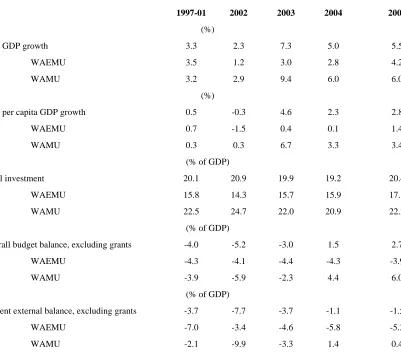
Analysis of West Africa’s economic performance shows that growth has speeded up since 2002. The West African economy showed a growth rate of close on 6% in 2006. The trends show that the real GDP growth rate since 2002 has been around 5% on average for the ECOWAS region as a whole (Table 1), in contrast to 3.3% between 1997 and 2001. In the WAEMU area, the 2,9% growth rate in recent years (2002-2005) is now below the average for the West Africa region (ECOWAS) whereas it was higher than the regional average between 1997 and 2001. The faster pace of growth has not, however, had any significant impact from the point of view of job creation.
For some years, the political troubles in Côte d’Ivoire – the largest of WAEMU’s economies – have had an adverse effect on the sub-region as a whole. The signing of the Ouagadougou Agreement of 4 March 2007, marking the beginnings of a return to normality in Côte d'Ivoire, should enable this country to resume its role as the region’s driving force. In the West African Monetary zone, Nigeria has been a source of major growth in recent years (2004-2005) as a result of rising oil prices. There has also been strong growth in other member States such as Ghana and Sierra Leone as a result of a dynamic raw material export policy.
Total investment continues to be stable, accounting for some 20% of GDP since 1997. This average figure nevertheless masks the fact that investment is 7% higher in the West African monetary zone area than in WAEMU because it includes Nigeria which is one of Africa’s major oil producers.
Inflation remains below 3% since 1997 in the WAEMUWAEMU area as a result of the efforts countries have made to manage budgets and the fixed CFA franc-euro parity, but is much more variable and generally above 10% in WAMU, although inflationary pressures have dropped back substantially in the WAMU area in recent years.
On average, the budget deficits of the ECOWAS area have improved since 2002, but this encouraging regional result masks major variations between countries and between regions. In the WAEMU area, the average budget deficit (excluding external assistance) has increased from 4% in 2002 to 5,4% in 2005, largely because of the sharp upturn in expenditure. The substantial progress that has been made in budgetary management in Burkina Faso, Mali and Niger has been largely cancelled out by growing deficits in the other member States, especially Côte d’Ivoire. In the same period, the spiralling price of crude oil has provided Nigeria with a great deal of unexpected income which, coupled with wiser budgetary management, has helped to free up budget surpluses. Elsewhere in WAMU, Ghana has been controlling its deficit since 2003 and the lessons learnt from budgetary consolidation in recent years are progressively impacting positively the economic in a climate of moderate inflation and interest rates.
tariff measures, particularly in terms of business law, in terms of taxation and in the field of competition rules prevent free competition..
External public debt reduction and increases in external aid flows have been very significant in recent years. As a result of the financing and implementation of the Multilateral Debt Relief Initiative for the Heavily Indebted Poor Countries (HIPC), launched in 2006, 13 African countries became eligible for full debt relief, including six ECOWAS members (Benin, Burkina Faso, Ghana, Mali, Niger, Senegal).
[image:14.595.96.497.318.678.2]Export performance in West Africa has been good since 2003, with the result that current account deficits have decreased. This is largely due, however, to the oil-exporting countries, especially Nigeria. In the WAEMU sub-region, exports have decreased as a proportion of GDP; this can be attributed to the downturn in exports of cotton from Mali and the decrease in the export prices of cocoa from Côte d’Ivoire which have led to a growing current account deficit in this sub-region. The impact of major aid flows and debt relief under the debt reduction initiative has nevertheless improved the balance of payments.
Table 1: West Africa: Main economic indicators, 1997-2005
1997-01 2002 2003 2004 2005
(%)
Real GDP growth 3.3 2.3 7.3 5.0 5.5
WAEMU 3.5 1.2 3.0 2.8 4.2
WAMU 3.2 2.9 9.4 6.0 6.0
(%)
Real per capita GDP growth 0.5 -0.3 4.6 2.3 2.8
WAEMU 0.7 -1.5 0.4 0.1 1.4
WAMU 0.3 0.3 6.7 3.3 3.4
(% of GDP)
Total investment 20.1 20.9 19.9 19.2 20.4
WAEMU 15.8 14.3 15.7 15.9 17.1
WAMU 22.5 24.7 22.0 20.9 22.2
(% of GDP)
Overall budget balance, excluding grants -4.0 -5.2 -3.0 1.5 2.7
WAEMU -4.3 -4.1 -4.4 -4.3 -3.9
WAMU -3.9 -5.9 -2.3 4.4 6.0
(% of GDP)
Current external balance, excluding grants -3.7 -7.7 -3.7 -1.1 -1.5
WAEMU -7.0 -3.4 -4.6 -5.8 -5.3
WAMU -2.1 -9.9 -3.3 1.4 0.4
2.2.2. Production sectors3
The industrial base in the West African countries is very small-scale and does not play much of a part in the formation of Gross Domestic Product (GDP). Small industrial units predominate in most countries and their output is generally for national and regional markets. There is little processing of raw materials and commodities, and exports are largely of unprocessed products.
The study conducted by UNIDO in 2003 in the framework of the ‘African Productive Capacity Initiative’ highlighted two important sectors for West Africa: agri-foodstuffs and textiles. These two sectors account for 2/3 of manufacturing added value in several countries. In general, however, support industries – packaging and agricultural machinery for instance – are not very advanced. In most countries, local operators are not exposed enough to competition and challenges of the international market. This is doing little to promote emulation and innovation in production sectors. Intra-regional trade is consequently weak: local or regional value or integration chains are rare.
With the exception of Nigeria4, whose economy is nevertheless facing a downturn in productivity and competitiveness, the agri-foodstuffs industry processes just under 20% of national agricultural output. As a result less than 5% of cotton from Mali, Burkina Faso and Benin is currently processed to any real extent even though there is genuine potential for added value which is not developed due to internal and external factors. In many countries, there is little industrial capacity to process a number of agricultural products (fruit and vegetables) and pastoral products (hides and leather) which are consequently treated by traditional, very low-productivity methods. In Guinea Bissau and Côte d’Ivoire for instance, all cashew nut production (crude and lacking any major added value) is exported/marketed to Indian enterprises which shell, process and package the nuts. Indeed, the West Africa region does not have the necessary technical resources. A policy of import substitution survives in the region: construction materials, light chemicals and cosmetics, small wood industries, metalworking and craftwork, small agricultural machinery, mechanical and electrical engineering. However, imports of counterfeit goods and cheap products from Asia creates a major barrier to any expansion of these industries.
Enterprises with more than 10 employees in the manufacturing sector of the ECOWAS countries and Mauritania are estimated to 14000. As matters stand, Nigeria and Ghana account for most of the regional industrial capacity.
The service sector is not sufficiently developed in West Africa and accounts for 30 to 60% of added value as a percentage of GDP, depending on the country. Integration of the regional market and the liberalisation of selected sectors could well improve the competitiveness of service sectors and benefit to agricultural and industrial production sectors through a better access to more efficient and cheaper basic services (for instance transport, telecommunications, banking and insurance).
3
This section is based on the UNIDO study ‘Industrial Restructuring and Upgrading in West Africa Programme’ drawn up in the framework of the EPA Regional Preparatory Task Force.
4
Sectors with a high growth potential
A number of agricultural products (fruit and vegetables) and their by-products for which there is potential, as well as local raw materials (ores and minerals), are industrial raw materials which are not exploited locally due to the lack of logistics chain for collection, transport, storage and initial processing chains. In these sectors, replacing traditional and ancestral methods with modern processing could stimulate job creation and contribute to fight against poverty. Unless these sectors are developed and strengthened, the creation regional and global markets may well lead to job losses in these sectors.
Some sectors or branches have a growth potential which is not just regional and could become exporting sectors and a source of currency (manioc, mangos, cashew nuts, cotton).
The mines and quarries sectors (Niger, Benin, Côte d’Ivoire, Burkina Faso and Mali) also have a considerable resource and development potential.
Manufacturing enterprises in the informal sector
The industrial fabric of the West African countries is essentially made of a large number of micro, small and medium-sized industries operating in the informal sector. Despite the lack of accurate5 and comparable statistics, the myriad of small craft enterprises and shops, workshops and cottage industries working in initial processing and service sector activities demonstrate a ‘dynamic informal sector’. This informal sector is often seen as a specific feature of the industrial sector in West Africa. It is also a major pool and incubator for the development of enterprises.
Whether in rural or urban areas, informal sector enterprises are set up by or employ people who are for the most part illiterate, mainly women, without training apart from know-how gained from learning on the job. However, progresses in education combined with massive unemployment of young people may lead some of the graduates to become entrepreneurs, and create jobs after an experience in the informal sector.
Comparative advantages, analysis of factors of competitiveness and production costs
West Africa has a wide range of ecosystems enabling a wide range of agri-pastoral output from the 236 million hectares of cultivable land, only 23% of which is being exploited. The region occupies a leading position in the production of cocoa, coffee, cotton, palm oil, cashew nuts and oilseeds (sesame, shea, groundnut). The region’s various agricultural, animal and fish resources offer a major pool which could be drawn on to develop value chains of an agri-foodstuffs industry whose beginnings can be seen in Côte-d’Ivoire, Nigeria and Ghana.
According to the World Economic Forum’s report on competitiveness in 2007, the six countries6 of West Africa covered by the report are ranked below 100 and are therefore
5
Obtaining accurate and comparable statistics is not just problematic from the point of view of methods (for instance definitions, seasonal work), but is also a practical problem because of the lack of data gathered periodically to evaluate developments.
6
among the 25 least competitive countries of the world. Competitiveness is measured here by taking account of the relative performance of all institutions, development policies and factors determining the productivity and therefore the prosperity of a country. This study shows that the greatest problems which West African economies are faced with are access to credit, inadequate infrastructure, low-skilled workforce and governance problems.
Similarly, according to the World Bank’s 2007 report 'Doing Business', the ECOWAS countries are ranked on average 143rd out of 173 as regards ease of business criteria7. Of the 45 countries of sub-Saharan Africa examined by the report, only Ghana, in the West Africa region, is among the 10 leading African countries and is also recognised as one of the most reforming countries of the 175 countries ranked throughout the world.
Generally speaking, the industrial sector, along the lines of all West African production sectors, is faced with high costs and irregular supplies of key production factors such as energy, transport, communications, water, etc. As a result, maintenance costs may in some cases account for as much as 50% of the price of goods. Moreover, shortcomings in transport systems are such that it is often more time-efficient to import goods from outside the region.
Strengths and weaknesses and main barriers to the export of the sub-region’s main products
As trade accounts for 60% of GDP, the degree of openness of West Africa is relatively high. Nevertheless, in thirty years, the share in world exports of West Africa has fallen from 1.06% to 0.48%. As exports from West Africa are dominated by minerals (oil, iron, aluminium and gold), agricultural products (cotton, cocoa, coffee and fresh fruit) and fishery and wood products, manufactured products continue to account for a small proportion of exports. As a result, West Africa’s foreign trade has not led to the transfers of know-how that generally go along with an expansion of production and trade in manufactured products.
Although the region has potential comparative advantages, West Africa is far from achieving any strategic position. Sectors which have the potential to increase exports from West Africa to Europe and the rest of the world are largely linked to agri-foodstuffs and continue to be fairly uncompetitive as a result of quality problems and high transaction costs. One of the region’s assets is nevertheless that it produces fresh goods which are out of season elsewhere. There is also a growing market for tropical products and organic products in Europe8.
Over and above the lack of competitiveness resulting from the high cost of production factors, compliance with standards (SPS and technical) and non-compliance with quality, quantity and delivery deadlines are further barriers to European imports of West African products. Packaging and health inspection services fall well below the standards required
7
Starting a business, obtaining permits, employing and dismissing workers, registering property, getting credit, protecting investments, paying taxes, trading across borders, enforcing contracts, closing a business.
8
by the developed countries, reflecting the lack of private and public services for enterprises. Barriers to intra-regional trade and exports also impede trade flows.
The European Commission’s Food and Veterinary Office (FVO) has carried out inspections in the region which confirm that major efforts are needed in the SPS field if the region’s countries are to fall into line with European and international standards. It is clear from their performance that the region’s countries have not benefitted from the trade opportunities offered by the EU’s non-reciprocal system of preferences and the globalisation of the economy. This failure can be attributed to a lack of productive capacity, a supply which does not match quality standards, an inability to prove that export products comply with international standards and insufficient economies of scale due to a low level of integration at regional level and into multilateral trade .
If the countries of West Africa are to develop and benefit from trade, reforms need to be implemented at national and regional level to create an enabling environment favourable to enterprises and exports from the region. The EPA should help to create this environment.
2.2.3. Agriculture and food security
Agriculture (vegetal, animal, forestry and fishing), rural development, environment protection and the management of natural resources are the major challenges facing West Africa with regards to economic performance, employment, income and foreign currency earnings, food safety, spatial planning, utilisation of natural resources and regional integration. Indeed, agriculture contributes 35% to the region’s GDP (up to 60% in some countries), produces 15,3% of goods and services exported, and even 30% without Nigeria, which exports are dominated by petroleum products. Agriculture also employs 65% of the region’s workforce.
The demonstrations due to the high cost of living that have taken place in developing countries and in West Africa in particular show how relevant it is to support the development of agricultural production. Indeed, there is a great imbalance at international level between offer and demand for cereals, which increases the price for staple foods. Net importing countries are the most affected along with an increase in prices of petroleum products. In West Africa, the situation worsened by the decrease in rainfall during the winter 2006-2007, marked by a sudden rain resulting from poor harvests in several regions of Africa 's West. This shortage has led to higher prices of imported foodstuffs.
In addition, less than 10% of irrigable land is operated: only 900 00 ha of a potential of 9.5 m ha. The aim is to exploit this potential on the basis of low-cost technologies that meet the needs for small scale irrigation. The exploitation of this potential land requires building the capacity of authorities in charge of the management of water basins.
2.2.4. Trade
From the point of view of trade, and despite gradual integration, West Africa continues to be a fragmented regional area with little integration. Trade flows among ECOWAS member States are still very limited.. Indeed, national economies are targeting world markets rather the regional one. However, intra-regional trade in West Africa is underestimated to a considerable extent, at least in terms of volume.
Nigeria – the region’s main economic engine – plays a central role in ECOWAS and consequently influences directly or indirectly the neighbouring economies through its trade flows. Moves towards regional integration since 1994 and the introduction of the CET in the WAEMU area in 2000 have brought about a slight upturn in intra-community trade which remains , however, low. The main barriers to the economic integration of West Africa as a whole include, among others, non-compliance with the rules of regional integration, the lack of regional interconnections (roads, railways, telecommunications, air and sea networks) and ongoing non-tariff barriers.
[image:19.595.77.516.436.725.2]Although trade integration is relatively low , official statistics on intra-regional trade show that community trade in West Africa is the highest of all the ACP intra-regional groups (Table 2).
Table 2 – Proportions of ACP exports and imports, by region Exports
(as % of total)
EU Intra-community Other ACP Rest of world
ECOWAS 31.9 9.3 1.2 57.6
CAEMC 37.4 0.8 3.2 58.6
COMESA 29.9 9.2 4.8 56.1
SADC 32.6 2.1 4.5 60.8
Caribbean 20.0 8.9 0.8 70.3
Pacific 15.4 0.6 0.5 83.4
All ACP 29.8 6.7 2.5 61.0
Imports (as % of total)
EU Intra-community Other ACP Rest of world
ECOWAS 37.0 10.5 1.3 51.3
CAEMC 53.5 1.4 8.2 37.0
COMESA 22.4 6.4 2.7 68.5
SADC 23.3 2.5 4.3 69.9
Caribbean 18.1 5.8 1.4 74.6
Pacific 8.8 1.3 0.8 89.1
All ACP 27.9 6.7 2.4 63.0
EU, and 37.0% of the region’s imports come from the EU. Among all the ACP regional groups, ECOWAS is the EU’s second largest trading partner after CAEMC.
The balance of trade between West Africa and the EU fluctuated greatly between 1988 and 2005: while the balance was positive for West Africa in 1988-1991 (+€1.51 billion) it became negative (-€1.49 billion on average) in 1998-2002. This deficit fell in 2003-2004 (-€0.64 billion on average). As a result of spiralling world oil prices, the balance became positive again in 2005. Indeed, variations in oil prices have a major impact on balance of trade developments. The balance of trade, excluding oil, between West Africa and Europe is therefore very negative, and stood at -€5.7 billion in 2005.
Agricultural products exported from the region are essentially raw materials subject to little or no processing, most of which are exported to Europe (coffee, cocoa, fish, citrus fruit, cut flowers, etc.) or to Asia (cotton). Cocoa alone accounts for 20% of the region’s total exports to the EU. The region’s imports from the EU are largely vehicles and spare parts, as well as machinery and capital goods. Exports of industrial and craft products from West Africa to the EU are very low.
Exports from West Africa to Europe come largely from three countries, Nigeria, Côte d’Ivoire and Ghana, which account for almost 80% of West Africa’s exports to the EU.
2.2.5. Social situation
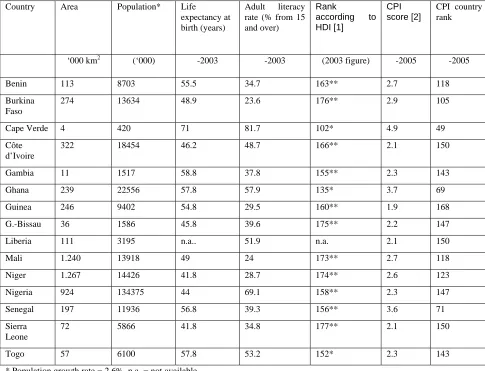
Table 4 below summarises the main social indicators for West Africa: a sizeable proportion of the population of West Africa continues to live in extreme poverty.
With regards to health, malaria, tuberculosis and HIV/AIDS are the transmissible diseases considered to represent the greatest threat. There are also high levels of non-transmissible diseases and infant diseases. Obstetric problems continue to pose a dramatic challenge.
According to a method developed by the WHO, most of the countries of West Africa have health systems whose reactivity and performance make it unlikely that programmes to combat the diseases most directly responsible for the problems of poverty can be successfully implemented. Infant mortality continues to be a serious problem in Sierra Leone, Niger and Mali, while it is much lower in Cape Verde, Ghana and Senegal. A number of emerging or re-emerging diseases such as avian influenza (bird flu), West Nile virus, Dengue fever, Usutu virus and even the Rift Valley fever virus have been increasing substantially in recent years and are now a major threat to public health in Africa and the rest of the world. According to various studies, the factors that are causing human and animal diseases to occur are the demographic explosion and the concomitant increase in animal product needs, leading to more intensive production methods and a higher geographical density of livestock concerns, the increase in international traffic and even deforestation.
Table 3: Demographic and socio-economic figures
Country Area Population* Life
expectancy at birth (years)
Adult literacy rate (% from 15 and over)
Rank
according to HDI [1]
CPI score [2]
CPI country rank
‘000 km2 (‘000) -2003 -2003 (2003 figure) -2005 -2005
Benin 113 8703 55.5 34.7 163** 2.7 118
Burkina Faso
274 13634 48.9 23.6 176** 2.9 105
Cape Verde 4 420 71 81.7 102* 4.9 49
Côte d’Ivoire
322 18454 46.2 48.7 166** 2.1 150
Gambia 11 1517 58.8 37.8 155** 2.3 143
Ghana 239 22556 57.8 57.9 135* 3.7 69
Guinea 246 9402 54.8 29.5 160** 1.9 168
G.-Bissau 36 1586 45.8 39.6 175** 2.2 147
Liberia 111 3195 n.a.. 51.9 n.a. 2.1 150
Mali 1.240 13918 49 24 173** 2.7 118
Niger 1.267 14426 41.8 28.7 174** 2.6 123
Nigeria 924 134375 44 69.1 158** 2.3 147
Senegal 197 11936 56.8 39.3 156** 3.6 71
Sierra Leone
72 5866 41.8 34.8 177** 2.1 150
Togo 57 6100 57.8 53.2 152* 2.3 143
* Population growth rate = 2.6%. n.a. = not available.
Sources: (i) Selected Statistics on African Countries – Vol. XXIII of the African Development Bank; (ii) Report according to the Transparency International index; (iii) UNDP Human Development Report (2005 – http:/hdr.undp.org); (iv) Transparency International corruption perceptions index, 2004.
The literacy rate continues to be low in the Sahel countries (Niger, Burkina Faso, Gambia, Guinea Bissau, Senegal). Over 75% of the population of Burkina Faso and over five out of six Nigeriens are illiterate. Togo is the only country in the WAEMU with a literacy rate of over 50%, while Nigeria, and in particular Ghana and Cape Verde, have literacy rates well above the regional average. The literacy rate among young people aged 15-24 is much higher than among the population as a whole. This is particularly true of Mali. The literacy rate among girls is systematically lower than among boys. While the difference is small in some countries (Cape Verde, Ghana, Nigeria and Côte d’Ivoire), it is higher in others (Niger, Guinea Bissau).
Migration is a very widespread problem in West Africa. According to the UN9 there were 7.5 million migrants in the region in 2005, i.e. 3% of West Africa’s population and 44% of all migrants identified throughout Africa. Emigrants from West Africa play a substantial part in the economic development of their region. In some countries, the mass of these financial flows represents more than 5% of the country’s GDP: Cape Verde (9.5%), Togo (7.7%), Senegal (6.9%), Burkina Faso (5.8%). Effective management of migration is therefore becoming a major issue with regards to the control of illegal immigration and the fight against human trafficking.
9
[image:21.595.74.559.67.438.2]2.2.6 Research in West Africa
A whole range of historic and structural constraints have prevented the development of science and technology in West Africa, with the result that scientific and technological capacity is lacking and is not implemented into production systems. Science and technology have a role to play in the socio-economic development of the countries of West Africa and the fight against poverty. Capacity-building in science, technology and innovation has a key part to play in the development strategies of these countries and in the achievement of the MDGs.
2.3.
The environment
Extreme weather conditions, especially in the arid areas of the Sahel where drought is a recurring problem, and the foreseeable impact of climate change on food production, drinking water availability and desertification, pose major challenges to West African countries.
Ecosystems vary from semi-desert and savannah to tropical forests, mangroves, rivers and freshwater lakes, and marshes. The Guinean forest, extending from the west of Ghana, through Côte d’Ivoire, Liberia, Guinea and the south of Sierra Leone, is an unique ecosystem in the world and is considered to be a world priority (‘hotspot’) in the conservation field. This ecosystem provides a habitat for many species of flora and fauna.
Coastal erosion is a problem for the West African coastal countries. But there are also concerns about growing level of pollution and harvest fluctuations.
Although the countries of West Africa have substantial freshwater resources, those bordering the Sahel suffer from frequent droughts. Access to this freshwater and its joint management continue to be among the region’s main problems.
The urban population in West Africa is estimated to be 38% of the total population (UNEP, 2005). Cape Verde has the highest proportion of urban population and Burkina Faso has the lowest. Urban population growth is the result of the substantial population growth in general and migration. Demographic pressure, climate change, and the fragmentation of traditional land systems are all factors which contribute to damaging vegetation and soil, reducing yields and jeopardising food security.
3. THEREGIONALINTEGRATIONPROCESS
3.1.
Introduction
3.1.1. Issues, vision and strategy
The region is facing major political and economic challenges. From a political point of view, the image of West Africa is one of a region where certain countries are going through a transition to democracy, which is still fragile, and others are emerging from crises or are in post-conflict situations, and where ongoing or latent conflicts are having an adverse effect on development and transnational crime is growing. From an economic point of view, the fragmented nature of the area, the lack of development infrastructure and the small-scale industrial base combined with a limited competitiveness are all factors hindering regional integration, economic growth and poverty reduction. The ongoing rise in energy and agricultural commodities prices and climate change also constitute major long-term political and economic challenges.
Progress with regional integration depends largely on the impetus that it is given by Nigeria, as a result of its economic size and the political role that it plays in the region. ECOWAS and WAEMU share the same goal of regional integration and have decided jointly to implement a ‘strategy to accelerate the regional integration process in West Africa’. This strategy includes a mechanism for cooperation and convergence between the two regional organisations. The joint regional strategy is detailed in the Regional Growth Strategy and Poverty Reduction Paper prepared jointly by the two regional organisations. The joint guidelines have been translated into priority action plans in the WAEMU area through the ‘Regional Economic Programme’ (REP). An overall regional economic programme, taking into account the WAEMU REP, is being drawn up following the instructions given by the ECOWAS Heads of State and Government. This ‘Community Development Programme’ (CDP) will be a platform for the development of the region as a whole and will provide a coherent framework for action from external partners. It will also be a platform for regional dialogue between states, the private sector and civil society. The CDP is the instrument through which the ECOWAS 2020 vision advocated by the Heads of State and Government in Abuja in June 2007 is to be achieved.
Four main priorities can summarize the economic and political guidelines of the joint Regional Strategy:
managing conflicts and promoting democracy and good governance in order to improve social cohesion and make policies more efficient;
deepening integration of the economic area in order to reduce trading costs and improve competitiveness with a view to speeding up diversification and intensifying growth;
food security, sectoral and development policies, interconnection of infrastructure to support the integration of the economic area and make it more competitive;
strengthening human capital and facilitating mobility in the common area in order to support growth and ensure that everyone benefits from it.
3.1.2. Institutions
Alongside these two organisations, there are many regional institutions with specific vocations and differing regional coverage. This variety of institutions reflects the view of decision-makers and populations that there are many issues to be tackled at regional level and that a common approach is required.. Under the subsidiary principle, ECOWAS and WAEMU may delegate the implementation of some activities to other regional organisations.
In accordance with its Treaty, ECOWAS is the key institution as regard economic integration in West Africa. The objectives of its initial 1975 Treaty are to establish an economic and monetary union paving the way for a regional market with free movement of goods and people throughout West Africa. When the Treaty was revised in 1993, the principle of solidarity was introduced and provision was made for supervisory and arbitration bodies as well as institutional financing arrangements intended to make the Community work more effectively. Abiding by NEPAD principles in the context of policies to develop the African continent, ECOWAS is trying to consolidate itself by restructuring and strengthening its institutions. From an institutional point of view, the Executive Secretariat was transformed in 2007 into a Commission10 composed of a President and Vice-President and seven other Commissioners, and the Parliament and Court of Justice of the Community were restructured as well as the ECOWAS Bank for Investment and Development (EBID)11. ECOWAS has made great progress in the area of conflict prevention, peace and security. It has also implemented major economic integration policies, especially in the field of free movement of people, road infrastructure and telecommunications.
WAEMU was set up in 1994 when the CFA franc was devaluated in order to ensure future coherence between the Union’s monetary policy and the budgetary and economic policies of its member States. WAEMU has from the outset benefited from the institutional expertise of WAMU and WAEC and the existence of a single central bank, the BCEAO (Central Bank of West African States). The preamble of the WAEMU Treaty takes up the objectives of ECOWAS. WAEMU has set up a solid institutional framework with a decision-making structure which is framed by clear legislative texts, and credible and stable machinery for own-resource financing. These factors have helped the WAEMU Commission to acquire substantial technical and administrative capacity and to fully play its key role in deepening economic integration between its member States, particularly by setting up a customs union. WAEMU’s institutional architecture includes a Commission, an Inter-Parliamentary Committee, a Court of Justice, a Court of Auditors and a Regional Consular Chamber. The Central Bank of Western African States (BCAEO) and the West African Development Bank (WADB) are specialist WAEMU institutions.
The 22nd Summit of the Heads of State and Government of ECOWAS, meeting in Lomé on 9 and 10 December 1999, stressed that ECOWAS and WAEMU integration programmes needed to be coordinated. Since then, there has been consultation between the two organisations and various political and technical discussions and consultations have taken place to reinforce the synergies between their respective programmes. The
10
Decision adopted at the 29th Ordinary Summit of the Heads of State and Government of ECOWAS held on 12 January 2006 in Niamey and implemented at the 31st Summit of 19 January 2007 in Ouagadougou.
11
Presidents of the ECOWAS and WAEMU Commissions meet at least once a year to draw up policy guidelines. Technical meetings between the institutions are held in the framework of the Joint Technical Secretariat so that programmes can be followed up from selection to implementation.
3.1.3. The role of the states in regional integration
Both Treaties clearly define the role that states are to play in the two processes of regional integration. This role is mainly performed at three levels: the Conference of Heads of State and Government under rotating presidencies, the Council of Ministers and the Committees of National Experts.
Poverty reduction strategies and the Millennium Development Goals (MDGs) reflect the development priorities of the region’s states. In this context, the states have initiated similar structural reforms and poverty reduction strategies whose implementation could be facilitated by pooling efforts and gradually setting up a regional market. An important aspect here is that the commitments that the region’s states have entered into in the framework of ECOWAS and WAEMU are incorporated into national strategies and policies. Political instability, protectionist reflexes and difficulties to implement reforms decided at regional level are nevertheless ongoing obstacles.
3.1.4. The role of civil society in regional integration
In West Africa, civil society is represented chiefly by groupings of economic actors (professional groups, trade unions, chambers of commerce, etc.) and associations promoting and defending ideals and specific interest groups (Women’s Association, religious and cultural associations, etc.).
To date, integration has focused largely on the economy and trade. Results achieved are not clearly identified by the West African people.. Information, awareness and consultation mechanisms need to be enhanced and made more effective if civil society, the private sector and therefore populations are to be genuinely involved in the integration process. In this respect, ECOWAS has started to set up a network of research centres and think-tanks in West Africa. ECOWAS has also played an important role in the creation of the West African Civil Society Forum (FOSCAO) and although the Forum is not entirely representative of the region’s civil society, it is able to provide a platform for dialogue and consultation.
3.2.
Regional integration – a progress report
3.2.1. Achievements
The multilateral macroeconomic policy monitoring mechanism is also an important achievement by WAEMU and has also been passed on to ECOWAS. Significant advances have also been made in sectoral policies, especially as regards infrastructure and telecommunications. However, food security remains a major issue for which the region has yet to find effective and sustainable solutions. From an institutional point of view, both organisations are trying to strengthen their institutional capacity and to improve coordination with each other.
3.2.2. Priority: ‘Conflict prevention, promotion of democracy and governance’
The relationship between conflict prevention and management, peace and security is very firmly on the ECOWAS agenda. ECOWAS has taken a very proactive stance and has gained considerable experience in ‘Preventive Diplomacy and Mediation’, to which it attaches priority and which it conducts in cooperation with the United Nations, the European Union and the African Union. This proactive stance can be seen from conflict management in Côte d’Ivoire, Togo, Sierra Leone and more recently in Guinea, although reaction and decision-making speeds need to be further improved. The legal bases for action are laid down in two Protocols to the revised Treaty – the Mechanism for Conflict Prevention. Management, Resolution, Peacekeeping and Security (December 1999) and the Supplementary Protocol on Democracy and Good Governance.
In the field of security, ECOWAS has adopted a Convention on Small Arms and Light Weapons. Implementation of this Convention, which transforms a moratorium into a much more binding system, is assisted by a ‘small arms and capacity building programme division’ (ECOSAP) in Bamako. The region’s Heads of State and Government have also approved the establishment of the ECOWAS Standby Force (ESF) which is part of the African Union’s standby force system. The police and gendarmerie component is currently being planned. The aim is to integrate it into the current standby force with a view to reinforce systematic and harmonised participation by the security services in peacekeeping operations and the development of a unit responsible for transnational cooperation to combat all forms of crime. In the area of conflict prevention, a Strategic Framework for Conflict Prevention has been adopted and is currently being implemented.
As to governance, ECOWAS has strengthened its election monitoring and support expertise and set up a back-up unit for that purpose. In the long term, ECOWAS will encourage its member States to engage in harmonising election regulations. It has set up a network of election management organisations and adopted a code of practice for observers.
In its support for the fight against crime, ECOWAS has launched various initiatives including the ECODRUG Regional Fund and its operational unit which offers mutual financial assistance for measures to control and combat drug trafficking. In the fight against money laundering and the financing of terrorism, the GIABA (Intergovernmental Anti-Money Laundering Group in Africa) is now in operation. To end with, ECOWAS is preparing a common approach on the delicate but vital issue of human trafficking, especially trafficking in children.
3.2.3. Priority: ‘Deeper integration of the economic area’
The multilateral surveillance mechanism, introduced at various levels in the two organisations is a key instrument for sound economic governance and macroeconomic stability in the region. In WAEMU, the surveillance mechanism is intended to ensure that the Union’s common monetary policy, based on a single currency, the CFA franc, is consistent with the budgetary and economic policies of its member States. The ECOWAS countries which are not members of WAEMU, with the exception of Cape Verde and Liberia, have decided to set up a second monetary area (WAMA) which has not yet come into operation. In addition to the monitoring of macroeconomic situations, especially public finance, with respect to convergence and stability criteria, a major effort is being made to streamline public finance and make it transparent (transparency code, harmonisation of laws and regulations, reform of public procurement) and to strengthen the national statistical system (national accounts, industrial production, foreign trade, sectoral information) especially though PARSTAT (WAEMU) and ECOSTAT (ECOWAS). An important aspect is that the multilateral surveillance mechanism is part and parcel of the national programmes agreed with the IMF and that is likely to enhance its role in the macroeconomic programmes of the region’s countries.
One of the main achievements in the region has been the WAEMU customs union which came into operation on 1 January 2000 following the liberalisation of internal trade and the introduction of a common external tariff (CET). The WAEMU customs union has the following elements:
complete dismantling of internal tariffs,
the Common External Tariff (CET) which has four levels of 0%, 5%, 10% and 20% for goods in categories 0, 1, 2 and 3 respectively,
the Statistical Fee of 1% and the Community Solidarity Levy (CSL) of 1%,
temporary duties and taxes: the Taxe Dégressive de Protection (TDP – Digressive Protection Tax) intended temporarily to offset the major drop in protection brought about by the implementation of the CET, and the Taxe Conjoncturelle à l’Importation
(TCI - Short-Term Import Tax) which aim is to combat erratic changes in the world prices of some products and to counter unfair import practices.
Customs entries recorded from 1 January 2006 are no longer eligible for financial compensation. In April 2007 the WAEMU Council of Ministers adopted WAEMU’s new tariff and statistical nomenclature based on the 2007 version of the Harmonised Commodity Description and Coding System. The WAEMU Commission is continuing work to standardise customs documentation and encode customs and statistical systems. Some of the member States are nevertheless continuing to apply customs regimes which do not comply.
The harmonisation of the trade liberalisation regimes of ECOWAS and WAEMU on the basis of WAEMU’s CET, decided by the ECOWAS Conference of Heads of State and Government in January 2003, also represents important progress and should in the short term make it possible to create a customs union for the region as a whole.
The introduction of the ECOWAS CET, initially scheduled for 1 January 2008, has been postponed in the light of the negotiations under way to reclassify certain products and Nigeria request a fifth rate of 50% to protect some local products. If progress is to be made towards implementing the customs union for the region as a whole, a fair compromise will have to be found between those countries who wish to classify some products in a lower category to avoid increasing consumer prices and those countries who wish to classify those products in a higher category to protect their local production. The establishment of the common market is based on the four freedoms: free movement of goods, capital, services and persons. Progress towards the common market is nevertheless uncertain. There are four main problems: the need to consolidate the liberalisation regime, the reluctance of member States to implement agreements and protocols adopted at regional level, the persistence of tariff and non-tariff barriers in most States and the lack of regional interconnections for transport and telecommunications.
Internal tariff dismantling and the reduction of non-tariff barriers are the two main elements of trade policy as regards the free movement of goods within the region. Following the harmonisation of the ECOWAS and WAEMU trade liberalisation regimes in 2003, tariff preferences are based on rules of origin common to both institutions, a common nomenclature based on the Harmonised System and a Single Customs Declaration (SCD). The ISRT (Inter-State Road Transport) Convention provides a regional legislative framework for joint cooperation on road transport.
Much remains to be done, however, to consolidate and harmonise liberalisation regimes. There are ongoing differences between the two organisations. Originating (industrial) goods are subject to an approval procedure which is different for the two institutions with the result that a product may be approved in the WAEMU area but not in the ECOWAS area. In 2007, the WAEMU Commission took a major step forward by transferring responsibility for managing and recognising community origin to the member States. The WAEMU customs code and the national codes of ECOWAS members which are not members of WAEMU include a whole raft of economic and suspensory regimes to facilitate production and export operations for units in West African customs territories, making it difficult for economic operators to understand customs regimes.
Rules of origin are in some cases incorrectly applied. The CET is in some cases applied to community goods. To tackle this problem, WAEMU has set up a trade surveillance system.
Movement of capital continues to be very limited: savings are limited and there has been little harmonisation of investment codes because member States tend to grant exemptions and special advantages to attract investors. Attracting foreign investment remains difficult and there is little such investment throughout the region. The regional organisations has consequently understood that the customs union has to be complemented with common sectoral policies, especially in the area of communications and energy, and measures supporting enterprises’ competitiveness, in order to make the most of the potential offered by the internal market and attract foreign investment.
As regards financial services and the movement of services, the region has made substantial progress in the area of financial integration, especially in the WAEMU area where an integrated financial market has been implemented. The regional organisations have committed resources and made efforts to develop micro-finance in order to bring in savings and facilitate loans to poor people. Most small operators do not as yet have adequate access to micro-finance services despite the efforts that the regional organisations have been making in this area.
Insurance and re-insurance services are governed by the CIMA Code ratified by most of the West African countries. The brown card adopted by ECOWAS enables any national to take out an insurance policy to cover third-party road transport liability in all the member States.
Inadequate mutual recognition of qualifications places a real barrier to access the services market at a time when an increasing number of West African countries are starting to have a critical mass of experts able to export their services both within and outside the region (computer science, research and development, consultancy, market research, development policy formulation). Other services, in particular transport, communications and telecommunications, are discussed below in connection with sectoral policies.
There are three strands to ECOWAS regional policy on the free movement of persons: freedom of movement, right of residence and right of establishment. This also encompasses allied issues raised by the harmonisation of economic rights, in particular access to employment and ownership, and political and social rights.
It is encouraging to see that West Africa has made substantial progress. The ECOWAS passport is being increasingly widely used. However, there are still major shortcomings regarding rights of residence and establishment due to insufficient harmonisation of related rights, especially the labour market legislation and property rights. The WAEMU Commission has taken a sectoral approach, identifying activities for which the right of establishment is a priority for the sub-region as a whole; these include lawyers, notaries, doctors, nurses, pharmacists, accountants and architects.