Professional Learning and Development
A S
ocialN
etworkP
erspectiveM
uhammadF
irdausA thesis submitted for the degree of
Declaration
Except where otherwise acknowledged in the text, this thesis represents my
own original work.
Muhammad Firdaus Canberra
Acknowledgement
Many people have helped in drawing this project to a conclusion. First and
foremost, I would like to thank my supervisor Dr. Alden Klovdahl whose gentle,
patient and expert guidance made this thesis possible. I am especially grateful
for all the useful social network concepts that I have learned during my PhD
study through his influence. I have also greatly appreciated his warm and kind
personality in listening carefully to my plan and to the difficulties I faced while
trying to complete this thesis, and in providing support and encouragement,
which made him a truly great PhD supervisor.
My sincere thanks are also due to other members of my supervisory panel
for their invaluable advice. Dr. Larry Saha provided guidance that help shaped
my thinking about the subject from the very early stages of this study and spent
a lot of time reading the drafts. Dr. An Kumar provided helpful advice on the
cultural aspects of Indonesian organisations.
I am grateful to Catherine Strong for her useful comments in proof-reading
the thesis. I would also like to thank the staff of the School of Social Sciences
for their help and support.
Finally, I thank my wife Frida for being with me through the ups and downs
Abstract
Human resource development in organisations generally relies on formal
training programs as a tool for employee development. However, such formal
programs are not sufficient to fulfil the entire learning needs of employees. The
increasingly complex, contingent and idiosyncratic nature of work in today's
organisations puts pressure on employees to learn faster and continuously,
often rendering formal training unable to keep up. Consequently, employees are
compelled to resort to informal learning. Here, formal learning refers to
scheduled classes or other training programs, with standardised learning goals
for a whole class of learners. In contrast, informal learning refers to more
personalised iearning, which may be spontaneous, and which can involve
communication, spontaneous exchange, advice-seeking and advice-giving that
are related to an individual’s specific, personal learning needs.
The literature suggests that a large amount of learning takes place
informally outside the classroom context. Such a learning process is inherently
social and relational. One way in which such learning takes place is through
interpersonal exchanges of information, ideas and other learning resources.
However, the types of social relations that are instrumental in learning and the
structure of these social relations have not received adequate empirical
scrutiny, causing their applied values to be neglected in the human resource
development practice. This thesis attempts to bridge this gap by examining
some social relations that previous research indicates are instrumental for
informal learning.
The empirical research for this study is based on the networks of social
Indonesia, one of which is a Government Training Centre (GTC) and the other
is a Company Training Unit (CTU). The structure of their social relations is
analysed using a social network approach.
The study compares and contrasts network structures in which the two
groups of trainers are involved. The main issues addressed include the process
of informal learning, the types of social relations that are facilitative for the
trainers' learning, the overall characteristics of these networks of social
relations, the internal subgroup structures forming the network cores, and the
structures of positions based on the trainers' patterns of interconnections.
The empirical research reveals some similarities and differences between
the two groups of trainers. In terms of similarities, both groups engage in and
benefit from informal learning through their relations with other people, despite
the fact that they are may not be fully aware of it. Their involvement in informal
learning is driven by the less structured nature of their activities, by the
continuous changes in their subjects of specialisation, by the intrinsic need to
maintain a positive self-image and to stay competitive, and by the need to be
ready for unexpected teaching opportunities.
The trainers' informal learning systems constitute networks of multiple
social relations, consisting of communication, collaboration, advice-seeking and
advice-giving ties. The combination of these four types of relations provides
both groups of trainers with access to not only explicit knowledge, the type of
knowledge easily delivered through formal training programs, but also to tacit
knowledge which is helpful in getting their jobs done.
Although the trainers perceive that their relations are close, intimate, and
mutual, results of the social network analyses suggest the contrary. The
externally oriented. Such structures are not effective in spreading learning
resources as they lack the number of ties through which learning resources can
reach all of the trainers quickly. However, they have the potential to support
innovation because such sparse ties reduce the possibility for redundant
information to circulate in the networks, and the extensive ties to diverse
external associates could also provide them with access to a wide variety of
information.
The differences were mainly found in the internal structure of the
networks. The networks for each group of trainers contain subsets of actors
who form cohesive parts of the networks. The division of trainers into these
cohesive subgroups is influenced by the main organising principles of their
organisations. For the public service trainers, members of subgroups tend to be
homogeneous in terms of their rank and level of education, which reflects the
hierarchical nature of the Indonesian public service. The private sector trainers
are divided into cohesive subgroups based on their areas of specialisation,
reflecting the expertise driven nature of commercial organisations.
The trainers are also divided into positions based on their patterns of
interconnections. Structural equivalence and regular equivalence notions of
position are used and the results from each are compared. For the networks in
the two organisations considered in this study, structural equivalence appears
to produce more meaningful position models. Thus, based on structural
equivalence, the position models for each group of trainers exhibit different
prototypes, which reflect the nature of their organisations. The public service
trainers in the GTC are grouped into 'core-periphery' position models by rank,
where the junior and the middle rank trainers occupy the core and the senior
trainers in the CTU forms 'cohesive subgroup' models. Each subgroup (position)
is occupied by trainers of similar areas of expertise, reflecting a high division of
labour in commercial organisations.
Overall, results of the study demonstrate the usefulness of social network
analysis as a method of investigation. They also show the potential capacity of
social network analysis as a management tool for understanding informal
learning systems in organisations, which could become a basis for developing
improved human resource development strategies. At the same time, this
research is only a beginning. Future research will necessarily take up the
challenge of more indepth measurement of the many dimensions of informal
Table of Contents
Acknowledgement... m
Abstract... iv
Tableof Contents...viii
Listof Figures... xn Listof Ta b l e s... xv
CHAPTER ONE. AN OVERVIEW OF THE STUDY 1 The Importanceof Informal Learning...2
Social Network Paradigm...4
The Research Problem... 7
The Study Objectives... 8
Outlineof Chapters... 10
CHAPTER TWO. THE RESEARCH DESIGN 14 The Research Approach... 14
Social N etw ork Analysis...14
Qualitative A n a ly sis...18
The Research Sites, Participantsand Data...19
Research Sites...19
Network B oundaries...21
Study P articipants...26
Response Rate...29
The D a ta...31
Structural Data...31
Composition Data...36
Research Procedures... 37
Phases o f the Research...37
Ethics (Human Subjects) Procedures...39
Instruments and Procedures o f Data C ollection...41
Data Collection Instruments...41
Data Collection Procedures...42
Data A n a ly sis...44
CHAPTER THREE. SOCIAL NETWORKS AND INFORMAL LEARNING 48 The Significanceof Informal Learning...49
Characteristics o f Formal and Informal Learning...54
Dimensions o f Know ledge...57
Social Perspectiveof Learning...59
Social Character o f Learning...59
The Development o f Learning Paradigms...60
Situated Learning and Communities o f Practice...63
Relational Character o f Learning...65
CHAPTER FOUR. DESCRIPTIONS OF THE TRAINERS’ ORGANISATIONS 76
Organisational Statusand Services Rendered...76
Physical Setupand Work Organisation...77
Areasof Teaching Specialisation...79
Career Structure... 80
Incentives System... 82
Information Technology Support... 83
Sociodemographic Features... 83
Expectations... 84
CHAPTER FIVE. THE ROLE OF SOCIAL RELATIONS IN INFORMAL LEARNING 89 Learning Drives... 91
Informal Learningand Consciousness... 99
Relationshipbetween Formaland Informal Learning... 108
The Processof Informal Learning...112
Independent Learning Using Self-access Learning Resources...112
Knowledge Sharing and Construction through Social Relations...115
Communication Relations... 115
Advice-seeking Relations...117
Advice-giving Relations...118
Collaboration Relations...119
The Instrumental Roleof Social Relationsfor Informal Learning...121
CHAPTER SIX. THE OVERALL CHARACTERISTICS OF THE TRAINERS’ SOCIAL NETWORKS 126 The Knowledge Networkinthe Government Training Centre (GTC)...127
Network Size, Memberships and Density...127
Reachability, Components and Distance...133
The GTC Networks Centralisation...138
Degree... 140
Closeness... 141
Betweenness...143
The Instrumental Relationsforthe GTC Trainers... 144
The Knowledge Networkinthe Company Training Unit (CTU)...156
Network Size and Density...156
Reachability, Network Components and Distance...159
The CTU Network Centralisation...161
The Instrumental Relationsforthe CTU Trainers... 163
Implicationsofthe Network Features... 170
CHAPTER SEVEN. EXPLORING SUBSTRUCTURES IN THE TRAINERS’ NETWORKS 179 The Conceptsof Cohesive Subgroups... 180
Proceduresfor Identifying Cohesive Subgroups...184
Cohesive Subgroupsinthe GTC Trainers’ Networks...188
Knowledge Network... ...188
Communication Network...199
Collaboration Network...206
Advice-seeking Network...212
Advice-giving Network...217
Cohesive Subgroupsinthe CTU Trainers’ Netw orks...226
Knowledge Network...227
Communication Network...233
Collaboration Network...238
Advice-seeking Network...243
Advice-giving Network...248
Overall Characteristics o f the subgroups in CTU Trainers' Networks...253
Overall Featuresofthe Subgroupsinthe GTC and the C T U ... 257
CHAPTER EIGHT. THE TRAINERS’ INFORMAL ORGANISATIONS: DETECTING PATTERNS IN LOOSELY BOUNDED STRUCTURES 262 Positional An a l y s is...263
Structural Equivalence...265
Regular Equivalence...268
Modellingthe Structureof Positionsforthe GTC Trainers... 270
Structural Equivalence Based Positions in the GTC Networks...270
Regular Equivalence Based Positions in the GTC Networks...292
Modellingthe Structureof Positionsforthe CTU Trainers... 305
Structural Equivalence Based Positions in the CTU Networks...306
Regular Equivalence Based Positions in the CTU Networks...315
Characteristicsofthe Position Mo d e ls... 324
CHAPTER NINE. THE COMPARATIVE ANALYSIS OF THE NETWORKS IN THE GTC AND THE CTU 330 The Natureof Informal Learningand Social Networks...330
Overall Network Characteristics...332
Thestructureof Cohesive Subgroups...342
The Structureof Po sitio n s... 344
CHAPTER TEN. CONCLUSIONS: SUMMARY OF FINDINGS, THEIR IMPLICATIONS, AND NEXT STEPS 349 Summary of Key Findings... 349
The Importance o f Informal Learning and Social Networks...349
The Instrumental Social Relations...352
The Basic Network Features...352
The Internal Network Substructures...354
Cohesive Subgroups...355
Positional Structure...356
Comparative Analysis...358
Implicationsand Recommendations... 358
Social Network Analysis as a Study Method and as a Management Tool...359
Network Features...361
Learning Characteristics...362
Limitationsand Future Directions...364
APPENDICES 369
Appendix 1. Ethics (Human Subjects) Protocol... 369
Appendix 2. Data Collection Instruments... 370
Appendix 3. Consent Form... 407
Appendix 4. Adjacency Matrices... 408
Appendix 5. Activitiesofpublicservicetrainersandtheircreditpointvalues417 Appendix 6. Similaritymatricesbasedonstructuralequivalenceandregular EQUIVALENCE... 420
List of Figures
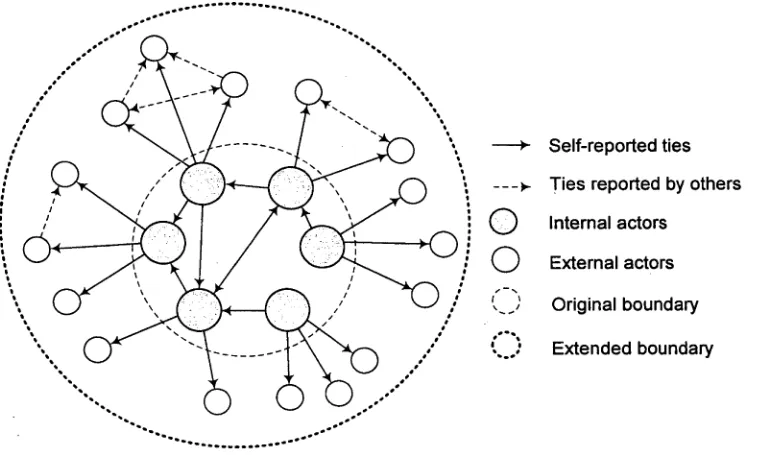
Figure 2.1. Internal and external actors... 24
Figure 2.2. Barriers to tacit knowledge transfer... 34
Figure 2.3. The study phase...38
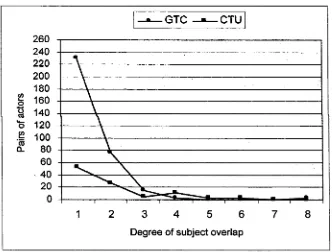
Figure 4.1. The degree of subject overlaps in the GTC and the CTU... 80
Figure 5.1. Relationship between formal and informal learning... 111
Figure 6.1. The category of actors making up the GTC trainers’ networks... 129
Figure 6.2. Strong and weak components... 135
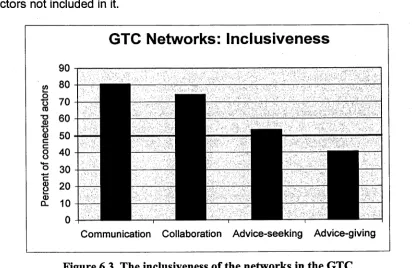
Figure 6.3. The inclusiveness of the networks in the GTC... 146
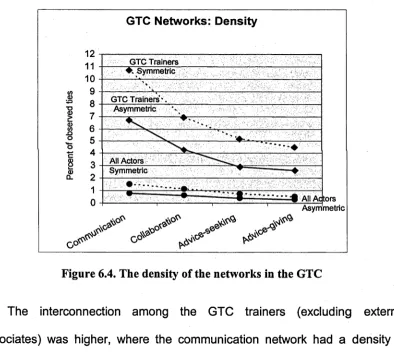
Figure 6.4. The density of the networks in the GTC... 148
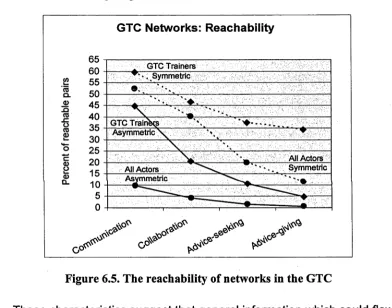
Figure 6.5. The reachability of networks in the GTC... 150
Figure 6.6. Average distance among reachable pairs in the GTC... 151
Figure 6.7. The average number of geodesic path in the GTC networks... 152
Figure 6.8. The category of actors making up the CTU trainers’ networks... 157
Figure 6.9. The inclusiveness of the network in the CTU... 164
Figure 6.10. The density of the networks in the CTU ... 165
Figure 6.11. The reachability of the networks in the CTU...166
Figure 6.12. Average distance among reachable pairs in the CTU ...167
Figure 6.13. The average number of geodesic path in the CTU networks... 168
Figure 7.1. n-cliques... 183
Figure 7.2. Clique overlap in the GTC trainers’ knowledge network... 189
Figure 7.3. Intersection graph of for the GTC trainers’ knowledge network... 191
Figure 7.4. The cohesive subgroups in the GTC trainers’ knowledge network... 192
Figure 7.5. MDS of distance in the GTC knowledge network... 194
Figure 7.6. Clique overlap in the GTC trainers’ communication network...200
Figure 7.7. Intersection graph of the GTC trainers’ communication network...201
Figure 7.8. The cohesive subgroups in the GTC communication network...202
Figure 7.9. MDS of distance in the GTC communication network...204
Figure 7.10. Clique overlap in the GTC trainers’ collaboration network... 206
Figure 7.11. Intersection graph of the GTC trainers’ collaboration network...207
Figure 7.12. Cohesive subgroups in the GTC trainers’ collaboration network...208
Figure 7.13. MDS of the distance in the GTC collaboration network...209
Figure 7.14. Clique overlap in the GTC trainers’ advice-seeking network... 212
Figure 7.16. Cohesive subgroups in the GTC trainers’ advice-seeking network...214
Figure 7.17. MDS of the distance in the GTC advice-seeking network...215
Figure 7.18. Clique overlap in the GTC trainers’ advice-giving network...218
Figure 7.19. Intersection graph for the GTC trainers’ advice-giving network...219
Figure 7.20. Cohesive subgroups in the GTC trainers’ advice-giving network...220
Figure 7.21. MDS of the distance in the GTC advice-giving network...221
Figure 7.22. Clique overlap in the CTU trainers’ knowledge network...227
Figure 7.23. Intersection graph of the CTU trainers’ knowledge network...228
Figure 7.24. The cohesive subgroups in the CTU trainers’ knowledge network... 229
Figure 7.25. MDS of the distance in the CTU knowledge network...230
Figure 7.26. Clique overlap in the CTU trainers’ communication network...234
Figure 7.27. Intersection graph of the CTU trainers’ communication network... 234
Figure 7.28. Cohesive subgroups in the CTU trainers’ communication network...236
Figure 7.29. MDS of the distance in the CTU communication network...237
Figure 7.30. Clique overlap in the CTU trainers’ collaboration network...239
Figure 7.31. Intersection graph of the CTU trainers’ collaboration network...239
Figure 7.32. The cohesive subgroups in the CTU collaboration network...240
Figure 7.33. MDS of the distance in the CTU collaboration network...241
Figure 7.34. Clique of overlap in the CTU trainers’ advice-seeking network...243
Figure 7.35. Intersection graph of the CTU trainers’ advice-seeking network...244
Figure 7.36. Cohesive subgroups in the CTU trainers’ advice-seeking network... 245
Figure 7.37. MDS of the distance in the CTU advice-seeking network... 246
Figure 7.38. Clique overlap in the CTU trainers’ advice-giving network...248
Figure 7.39. Intersection graph of the CTU trainers’ advice-giving network...249
Figure 7.40. Cohesive subgroups in the CTU trainers’ advice-giving network...250
Figure 7.41. MDS of the distance in the CTU advice-giving network...251
Figure 8.1. Stylised equivalences... 267
Figure 8.2. Single link hierarchical clustering of correlation for the GTC... 271
Figure 8.3. Blocked adjacency matrices for GTC (structural equivalence)...279
Figure 8.4. The density tables for the four relations involving GTC trainers...281
Figure 8.5. Image matrices and reduced graphs for the GTC networks... 283
Figure 8.6. Burt’s typology of positions... 287
Figure 8.7. Patterns of relations within and between positions in the GTC...288
Figure 8.8. Hierarchical clustering for GTC networks (categorical REGE)...294
Figure 8.10. Blocked adjacency matrices for GTC (regular equivalence: 42.921)...299
Figure 8.11. Blocked adjacency matrices for GTC (regular equivalence: 64.445)... 304
Figure 8.12. Single link hierarchical clustering of correlation for CTU...307
Figure 8.13. Blocked adjacency matrices for CTU (structural equivalence)...310
Figure 8.14. The density tables for the four relations involving CTU trainers...311
Figure 8.15. The image matrices and reduced graphs for the CTU networks...313
Figure 8.16. Patterns of relations within and between positions in the CTU...314
Figure 8.17. Hierarchical clustering for CTU networks (CATREGE algorithm)... 315
Figure 8.18. Hierarchical clustering for CTU networks (REGE algorithm)...316
Figure 8.19. Blocked adjacency matrices for CTU (regular equivalence: 56.913)... 320
Figure 8.20. Blocked adjacency matrices for CTU (regular equivalence: 75.862)... 323
Figure 9.1. The proportions of ties to internal and to external associates...334
List o f T a b les
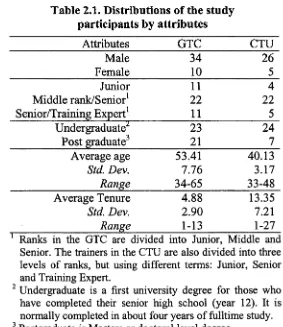
Table 2.1. Distributions of the study participants by attributes...27
Table 2.2. Response rate of the GTC trainers... 30
Table 2.3. Response rate of the CTU trainers... 30
Table 2.4. Representative quotes for each category of relation...45
Table 5.1. Comparison between formal and informal learning... 110
Table 6.1. Ties from the GTC trainers to internal and external actors... 130
Table 6.2. The density of the GTC trainers’ network... 131
Table 6.3. The strong network components in the GTC knowledge network... 135
Table 6.4. The weak network components in the GTC knowledge network... 136
Table 6.5. The distribution of geodesic distance in the GTC trainers’ network... 138
Table 6.6. GTC Trainers’ overall knowledge network centralisation... 140
Table 6.7. GTC networks fragmentation into strong components... 154
Table 6.8. GTC networks fragmentation into weak components... 154
Table 6.9. Centralisation of the uniplex networks in the GTC... 155
Table 6.10. Ties from the CTU trainers to internal and external actors...158
Table 6.11. The density of the CTU trainers’ network...159
Table 6.12. The strong network components in the CTU knowledge network...160
Table 6.13. The distribution of geodesic distance in the CTU trainers’ network...161
Table 6.14. CTU trainers’ overall knowledge network centralisation... 162
Table 6.15. CTU networks fragmentation into strong components... 168
Table 6.16. CTU networks fragmentation into weak components... 169
Table 6.17. Centralisation of the uniplex networks in the CTU... 170
Table 7.1. Subgroups by actor attributes for GTC knowledge network... 196
Table 7.2. GTC networks fragmentation (symmetrised with strong criterion)... 198
Table 7.3. Subgroups by actor attributes in the GTC communication network.205 Table 7.4. Subgroups by actor attributes in the GTC collaboration network... 210
Table 7.5. Subgroups by actor attributes in the GTC advice-seeking network.216 Table 7.6. Subgroups by actor attributes in the GTC advice-giving network.. 222
Table 7.7. Cliques and their degree of overlap in the GTC trainers’ networks...223
Table 7.8. Size and density of the main region of the GTC trainers’ networks...224
Table 7.9. Unifying features of the subgroups in the GTC networks...226
Table 7.10. Subgroups by actor attributes in the CTU knowledge network... 231
Table 7.12. Subgroups by actor attributes in the CTU communication network.238
Table 7.13. Subgroups by actor attributes in the CTU collaboration network...242
Table 7.14. Subgroups by actor attributes in the CTU advice-seeking network.247 Table 7.15. Subgroups by actor attributes in the CTU advice-giving network..252
Table 7.16. Cliques and their degree of overlap in the CTU trainers’ networks... 253
Table 7.17. Size and density of the main region of the CTU trainers' networks... 254
Table 7.18. Unifying features of the subgroups in the CTU networks... 257
Table 8.1. Classes of structurally equivalent actors by rank in the G TC... 275
Table 8.2. Classes of structurally equivalent actors by education in the GTC... 275
Table 8.3. Mean attributes of structurally equivalent actors in the GTC... 275
Table 8.4. Typology of positions for the four relations in the GTC... 290
Table 8.5. Classes of regularly equivalent actors by rank in the GTC... 296
Table 8.6. Classes of regularly equivalent actors by education in the GTC... 297
Table 8.7. Mean attributes of regularly equivalent actors in the G TC... 298
Table 8.8. Higher level of regularly equivalent actors by rank in the GTC ...301
Table 8.9. Higher level of regularly equivalent actors by education in GTC... 302
Table 8.10. Mean attributes of higher regularly equivalent actors in GTC...302
Table 8.11. Classes of structurally equivalent actors by work unit in the CTU... 308
Table 8.12. Classes of structurally equivalent actors by education in the CTU... 308
Table 8.13. Classes of structurally equivalent actors by rank in the CTU ... 309
Table 8.14. Mean attributes of structurally equivalent actors in the CTU... 309
Table 8.15. Classes of regularly equivalent actors by work unit in the CTU... 317
Table 8.16. Classes of regularly equivalent actors by education in the CTU... 318
Table 8.17. Classes of regularly equivalent actors by rank in the CTU... 318
Table 8.18. Mean attributes of regularly equivalent actors in the CTU... 319
Table 8.19. Higher level of regularly equivalent actors by work unit in the CTU... 321
Table 8.20. Higher level of regularly equivalent actors by education in the CTU... 321
Table 8.21. Higher level of regularly equivalent actors by rank in the CTU... 321
Table 8.22. Mean attributes of higher regularly equivalent actors in the CTU... 322
Table 9.1. Average number of external actors in network neighbourhoods... 335
Table 9.2. The density of the networks in the GTC and in the CTU... 338
Table 9.3. The reachability of the networks in the GTC and in the CTU... 339
CHAPTER ONE. AN OVERVIEW OF THE STUDY
Human resource development is, undoubtedly, one of the major concerns
of management in any modern organisation. The development of human
capacity has been largely attributed to arranged learning processes, which take
place within a formal context, particularly those delivered through formal
classroom-based programs of instruction. Consequently, formal programs of
instruction have received much empirical scrutiny. This has led to a neglect of
the learning that takes place incidentally through exchange of knowledge, ideas,
or information in the work place.
In practice, informal learning in organisations tends to be intangible,
unpredictable and ad hoc in nature which makes it difficult to reconcile with the
dominant rational procedures of bureaucratic practices in today’s organisations.
The value of informal learning is often overlooked because of the pervasiveness
of the more predictable formal classroom training, characterised by being
intentional, prescribed by formal curriculum, competency standards and
learning outcomes, which appeals more to the principles of bureaucratic
organisations. For research, the characteristics of informal learning make it
more difficult to study using the conventional cognitivist perspective, conceiving
learning as a process that takes place inside the minds of individuals, and the
standard study approach focusing on individuals' attributes.
This chapter provides a broad overview of the issues addressed in this
thesis. It highlights the importance of informal learning and why it needs to be
considered in human resource development. It demonstrates the relevancy of
the social network paradigm in studying informal learning. It also discusses the
study objectives and problems. Finally, it indicates how the remainder of the
The Importance of Informal Learning
Today, organisational environments are characterised by increasing
uncertainty, volatility and are fast changing. The nature of work itself is
increasingly complex and unpredictable. This has important implications for the
learning needs of organisations and their employees. For example, employees
are compelled to learn faster and continuously in order to keep up with changes
that affect their work. This has implications for the type of knowledge and mode
of learning required. Due to the episodic, time-bound and space dependent
nature of formal training programs, they are rarely sufficient to fulfil the on-going
demands of a contingent and dynamic work environment. Consequently,
employees increasingly have to take advantage of informal ways of fulfilling at
least a portion of their learning needs.
Informal learning in organisations is inevitable. In Blau's (1963) study of
the behaviour of agents in an American law enforcement agency, he
demonstrated that the agents learned from one another by exchanging advice,
despite the official rules prohibiting them to do so. As Gorard (1999) also noted,
“much valuable and non-trivial learning already goes on, and has always gone
on, outside formal programmes of instruction” (p. 544). Likewise, Taylor (1997)
argued that the majority of learning takes place every day, informally,
incidentally, implicitly, or even tacitly, but remains unacknowledged. More
precisely, researchers have shown that up to 70 to 90 percent of learning
actually takes place informally (see Leslie, Aring et a/., 1997; Day, 1998; Low,
Tjongarero et a/., 2001). Thus, without harnessing informal learning,
organisations miss the opportunity to capitalise on a cost-effective tool of
Formal and informal learning, however, should be seen as
complementary, rather than mutually exclusive. As Leslie, Aring and Brand
(1997) note, formal and informal learning augment each other. Each learning
mode has its own weaknesses, which are complemented by the strengths of the
other. Formal training programs, on the one hand, are very useful in transferring
explicit and codified knowledge to a large number of people simultaneously.
However, their limitation is that they are not as effective at delivering tacit
knowledge, a type of knowledge which is important in actually getting work
done. In addition, formal training programs cannot accommodate on-going and
incidental learning needs due to time and space dependencies. Informal
learning, on the other hand, has the capacity to develop tacit knowledge, and it
takes place irrespective of time and place.
Leveraging informal learning is, therefore, imperative to the success of
employee development. Paradoxically, given its immense importance (see
Taylor, 1997), it is largely unexplored and overlooked in research and in
practice. As Boud and Walker (1991) note, although learning in highly controlled
settings (task analysis, curriculum, trainers, support resources) has been well
documented in research, we know little about learning in the messy reality of
the workplace, that is, learning that takes place after people have completed
their formal training.
There are two particular reasons for the slow progress of the recognition
and appreciation of informal learning in practice and in research. Practically, as
indicated earlier, it is incompatible with the principles of bureaucracy, a form of
organisation which is still dominant today, thus concealing the significance of
informal learning from management, human resource development
difficulty of instigating informal workplace learning initiatives even in a forward-
looking organisation such as Xerox, and argues that such an effort requires a
paradigm shift to succeed. Methodologically, informal learning is intangible,
therefore it is difficult to observe and measure. As Hager (1998) noted, informal
learning is implicit or tacit, where learners are themselves often unaware of the
extent of their learning. Thus, this presents methodological difficulties if informal
learning is to be taken as an object of empirical study. The conventional
approach that focuses on individual attributes is not sufficient to examine such a
covert process.
Social Network Paradigm
A social network approach provides an alternative perspective in
understanding learning in general and informal learning in particular. The real
ways people learn and get their work done can be found in the hidden
associations among workers (Stamps, 2000), also referred to as informal
organisation (Krackhardt and Hanson, 1993), rather than within the structure
depicted in the formal organisational chart. The capacity of social network
approach to reveal the structure of such implicit informal social relations in
which informal learning is embedded can help to overcome methodological
difficulties. From a social network perspective, learning takes place within
naturally occurring and enduring networks of social relations, involving people
from a variety of backgrounds. Thus, the boundary of the social relations is not
limited to that of the organisation, group, profession, or rank.
The fruitfulness of the social network approach has been demonstrated in
studies of various social phenomena, such as bank decision making (Mizruchi
and Stearns, 2001), getting a job (Granovetter, 1973), diffusion of innovation
Potterat et a/., 1994; Curtis, Friedman et a/., 1995; Friedman, 1996), career
mobility (Burt, 1992), disputes resolution (Kapferer, 1969), conjugal
relationships (Bott, 1957) and many more.
Although the role of social networks in learning has not been widely
appreciated, the connection between the two has been recognised in some
recent conceptualisations of learning, such as in the concepts of situated
curriculum (Gherardi, Nicolini et a/., 1998), situated learning (Lave and Wenger,
1991; Führer, 1993; Singleton, 1998; Nidumolu, Subramani et a!., 2001), and
communities of practice (see among others Wenger, 1998; Brown and Duguid,
2000; Kulkarni, Stough et al., 2000; Stamps, 2000; Wenger and Snyder, 2000b;
Hara, 2001; Mansoor and Dabbagh, 2002; Wenger, McDermott et al., 2002).
These conceptualisations conceive of learning as a social and relational, rather
than purely as an individual, process. They place important emphasis on the
social context within which the learning process takes place.
Researchers in this newer tradition generally challenge the widely held
assumptions emanating from the traditional cognitivist concepts, applied mostly
in formal training programs, where learning is conceived of as a process that
takes place inside the head of individuals, and where the learning process is
stripped of the genuine context where the learning outcomes are to be applied.
Richter (1998) highlights this, arguing that our society has been dominated by a
view in which learning is conceived of as an individualistic form of activity and
knowledge is considered embedded in the invisible cognitive world of individual
players. Similarly, Cross, Rice and Parker (2001c) also critique approaches in
knowledge management initiatives in which knowledge is conceptualised as
creation and interpretation of knowledge is inherently a social process is
overlooked.
In social network literature, moreover, learning has also been implicated.
According to Podolny and Page (1998), network forms of organisation can
foster learning by promoting the rapid transfer of self-contained pieces of
information and encouraging novel syntheses of information residing within
distinct nodes.
In fact, many of the standard social network concepts are highly relevant
and very useful in explaining how the structure of informal social interactions
may affect learning. For example, measures of centrality such as degree,
closeness and betweenness (Freeman, 1979) are very helpful in examining the
kind and the level of access that network members have to resources
embedded in their networks. In addition, structural features such as network
density, centralisation, reachability, distance and subgroup configuration can
also reflect the potential capacity of social networks to spread learning
resources. Other network concepts such as the “structural hole” (Burt, 1992)
and “weak ties” (Granovetter, 1973) are also very useful in explaining how the
way individuals are embedded in networks can affect their opportunities to draw
on the network benefits, and can affect the overall effectiveness of the whole
structure. in mediating and facilitating learning activities and access to
knowledge repositories and other learning resources.
Although still limited in number, some studies have started to specifically
examine the relationship between social networks and learning processes in
organisations, such as the role of networks in knowledge sharing (Hansen,
the effects of informal social networks within the context of formal MBA
programs (Baldwin, Bedell et al., 1997).
In light of the concepts and theories discussed above, this study argues
that informal learning which takes place beyond the context of a conventional
formal classroom needs to be considered in order to account for the whole
amount of learning that contributes to the employees' performance. Although
the informal learning process is inconspicuous and is difficult to examine using
the conventional attribute-based approach, its structure can be revealed using a
social network approach.
The Research Problem
Using a network paradigm, this research compares and contrasts the
structure of social relations pertaining to informal learning and knowledge
exchange among two groups of trainers in Indonesia. These trainers are
employed to teach in a Government Training Centre (GTC) and in a Company
Training Unit (CTU). As far as the researcher is aware, this study is the first
attempt to use formal network analytic tools to study learning in organisations in
an Indonesian context.
Although a number of authors have looked at the social network
phenomena in Indonesia, their arguments are not based on a formal network
analysis (for example, see McVey, 1982; Campos and Root, 1996; MacIntyre,
1996; Djiwandono, 1999; Katoppo, 1999). There are a few studies that employ
a formal network approach, such as those by Schweizer (1997), Schweizer,
Klemm and Schweizer (1993), and Schweizer (1988), however, they focus on
the social structure of people in rural Java in Indonesia, rather than in particular
Due to the lack of social network studies that employ a formal social
network approach in Indonesian context, the present study was guided by
basic, yet important, questions. How do the trainers learn informally? Do
informal social networks play an important role in the informal learning process
and, if so, what social relations make up the networks? Can the characteristics
and the structures of these social relations be revealed, and if so, what do they
look like and in what way the structure of the networks in the two organisations
are similar or different? Finally, what implications do these network structures
have on learning processes in organisations?
The Study Objectives
The aim of the study has been to explore similarities and differences of the
structural form of social networks pertaining to informal learning in two
organisations in Indonesia (GTC and CTU). This is possible because the basic
institutional parameters of the two organisations are roughly comparable. For
example, they are of about the same size and their members have more or less
similar tasks and function. However, the context within which each organisation
operates is quite different.
This is only a first step in studying the extent to which the characteristics
of informal learning networks structure are common across organisations and to
which they are unique to an organisation. By analysing data from two different
sites, a comparison between them could be made, allowing some (preliminary,
exploratory) inferences about features related to network structures and
processes. This can become a foundation for a more structured comparative
analysis in the future. The next logical step would be to investigate empirically
and measure systematically actual effects of the network structures on the
The value of comparative study in this research context is attributable to
several reasons. First, as social networks are highly contextualised, it is
important to examine cross-organisational variations. Comparing two sites
provides an opportunity to see alternative structures of similar systems,
especially where the types of network studied based on the similar sets of
relations (communication, advice-seeking, advice-giving and collaboration).
Without a comparative analysis, there would be a tendency to consider that
everything in the social networks is either generic, or that everything is specific
to one set of organisation. Thus, it is important to avoid false assumption,
erroneously thinking that the structures of informal learning are necessarily
common.
Second, making observation on more than one cases can deepen
understanding of the phenomena under investigation and can increase the
credibility of the study. Empirical findings from two sites make a study more
convincing than those based on a single site (see Stinchcombe, 1968). By
implication, it can also be argued that drawing conclusions from multiple sites is
more convincing than from a single site.
Third, studying more than one cases can increase generalisability of the
study. Multiple site analysis can reveal the likelihood of the observed network
features to be generalisable beyond the two cases studied here. Drawing on
Denzin (1983), Guba & Lincoln (1981) and Firestone & Herriot (1983), Miles
and Hubberman (1984) note that although some argue that generalisability is
not relevant in a qualitative study, it is still important to know something about
the relevance or applicability of our findings to other similar settings, to
The fourth reason is to fill in the gap in social network research which are
mainly studying a single organisation. As Borgatti and Cross (2003, p. 441)
point out "[t]he great bulk of work in the social network tradition has largely
drawn conclusions based on a single social network within one organization in
one industry". Thus, conducting a study on two organisations, with different but
comparable characteristics could contribute to an improved understanding of
organisational networks.
A comprehensive understanding of social networks in these two
organisations can aid in designing a better strategy for developing trainers in
particular, and other professional-based occupations in Indonesia in general, by
demonstrating the need to harness informal social networks in order to leverage
informal learning in organisations.
The study has also been expected to evaluate the usefulness of social
network approach as a method for investigating the phenomena of learning in
organisations, and as a management tool for designing improved human
resource development measures. Furthermore, this study has been intended to
identify areas that require further empirical examination, and recommends some
directions for future studies along these lines. Finally, as the bulk of social
network studies have been largely carried out in the US, UK, France and
Europe in general, this study is expected to contribute to cross-cultural social
network data from an Indonesian context. It is important to note that this study is
exploratory in nature. It is hoped that it will stimulate more studies of social
networks and informal learning in developing countries.
Outline of Chapters
This thesis is organised into ten chapters. This first chapter presents a
carried out. It elaborates on the research design of the study and its
implementation procedures, covering methods used, research sites and
participants, research instruments and their administration in gathering data,
and data analysis. It also describes the research ethics safeguards that were
built in into the research design, such as how research participants were
recruited, and how their identities and the identities of their organisations as well
as data about them were (and are) protected.
Chapter Three establishes the conceptual framework of the study by
reviewing social network and learning literature. It demonstrates that although
informal learning plays a significant role in employees’ development, it is still
largely ignored by those concerned with human resource development in
organisations. It also shows that learning, especially informal learning, is a
social process, as it is relational in nature. It takes place within the context of
overlapping social networks. The argument of this chapter is that a social
network approach is a fruitful method for investigating social networks in which
informal learning is embedded.
Chapter Four describes the two organisations from which the two groups
of study participants were drawn. It covers the types of services provided, the
physical set up of the organisations, work organisations and degree of
specialisation, incentive systems, information access through information
technologies and the trainers’ socio demographic features. Based on these
characteristics, some speculations are made as to how the network structures
in the two organisations might be similar or different.
Chapter Five presents the results of the qualitative data analysis,
addressing factors that stimulated the trainers to engage in informal learning,
low awareness about the role and the benefits of informal learning and the role
of social networks in learning. The discussion also covers the ways in which the
trainers' informal learning takes place, the types of social relations that are
instrumental for the trainers’ learning, and the roles of these social relations in
informal learning.
Chapter Six starts using some basic concepts from the formal social
network approach to examine the overall characteristics of the social networks
in which the study participants are involved. These include the measures of
network size, inclusiveness, density, reachability, components, distance, and
the network's overall centralisation. It also discusses the composition and the
significance of external network associates. The results are discussed in terms
of their implications for the learning processes and knowledge sharing activities
among the trainers involved.
Having analysed the overall structure of the trainers’ networks in the
previous chapter, Chapter Seven moves on to examine the substructures of the
networks by identifying the cohesive subgroups into which each of the networks
can be divided. This is a basic starting point for understanding the more
complex internal structure of the networks. In this chapter, various concepts of
the subgroup are addressed. The subgroups are analysed for each network,
including the communication, collaboration, advice-seeking and advice-giving,
as well as the knowledge networks in which the other four networks are
combined. The subgroups forming the core of each network are identified and
interpreted. The chapter also discusses the important factors that bind the
trainers together into these cohesive subgroups.
Chapter Eight also employs a formal social network approach to examine
sharing patterns. The chapter starts by discussing the concept of position in
social network analysis. It then identifies positions, consisting of groups of
trainers who manifest the same patterns of relations across multiple network
structures entailing learning and knowledge exchanges. The concepts of
structural equivalence and regular equivalence - deemed most relevant for
present purposes - are used for modelling the positions. It then interprets the
identified position models using relevant actor attributes and the existing
position topology or characterisation.
After examining the overall and the specific structures of the networks for
both organisations in Chapter Five through to Chapter Eight, Chapter Nine
specifically compares and contrasts the two groups of trainers in terms of the
issues examined in those previous chapters, including their learning processes,
and the features of their networks. The network features compared include the
overall network characteristics, the cohesive subgroups and the structure of
positions. In addition, the features of their organisational contexts are also
compared and contrasted.
Finally, Chapter Ten concludes the thesis by presenting the summary of
the key findings, the implications of these findings, and some limitations of this
initial exploratory research. Also considered are some possible directions for
CHAPTER TWO. THE RESEARCH DESIGN
This chapter is devoted to discussing the study design and its
implementation. It provides a blueprint of how the study was carried out. Its
main purpose is to describe the methods chosen and their implementation. The
chapter starts by addressing the research approaches, covering both social
network and qualitative analysis components of the study. Then, it continues by
describing the research sites, research participants, and data. Finally, it outlines
the research procedures, covering the phases of the research, the ethical
procedures, data gathering instruments, data collection procedures and data
analysis.
The Research Approach
Social Network Analysis
In general, a social network can be defined as a finite set of nodes or
social actors connected by one or more social relationships of one kind or
another (see Knoke and Kuklinski, 1982; Wasserman and Faust, 1994;
Klovdahl, 1997; Borgatti and Foster, 2003). The nodes or social actors can be
persons, organisations, countries, or other social entities. Relationships or
social ties are linkages that exist between a pair of actors which in turn connect
the pair of actors to a larger relational system. These ties can be resource-
based or identity-based (Podolny and Baron, 1997). Alternatively, Bell, Atkinson
and Carlson (1999) classify them into transmission and non-transmission.
The study of social networks requires a formal social network analysis,
which has its own distinctive set of research questions, concepts and methods
of data collection, analysis and presentation (Tindall and Wellman, 2001).
social phenomena, including among others conjugal relationships (Bott, 1957),
dispute resolution (Kapferer, 1969), bank decision making (Mizruchi and
Stearns, 2001), getting a job (Granovetter, 1973), career mobility and individual
advancement (Burt, 1992; Podolny and Baron, 1997), disease outbreak
(Klovdahl et a/., 1994; Curtis et al., 1995; Friedman, 1996), diffusion of
innovation (Valente, 1995; Valente and Davis, 1999), the performance of
individuals and groups (Sparrowe, Liden et al., 2001), to mention a few.
Sociometric method, an early form of social network analysis, has been used
extensively in investigating social processes in educational settings (Saha,
1997). Today, the use of a social network approach has gained increased
recognition from researchers across different disciplines (see Borgatti and
Foster, 2003).
In this study, a social network approach was selected as a method of
investigation as it is relevant to the characteristics of the study participants and
their process of learning. The trainers, who became the study participants, are
part of hierarchical organisations, but are not themselves organised into
hierarchical structures. Their organisation is better viewed as a function of their
informal interactions with a wide range of people. Thus, from a social network
perspective, the trainers are the nodes or social actors, and the
interconnections that facilitated the trainers’ informal learning and professional
development constitute their social ties. Social network analysis is specifically
aimed at investigating such relational phenomena (Scott, 1991b).
The social network approach is particularly suitable for the topic under
investigation, that is, informal learning. According to Cross, Parker and Borgatti
understand the myriad of relationships that can facilitate or impede knowledge
creation and transfer.
The present study highlights the nature of social network analysis as a
fruitful method for characterising a loosely bounded system, that is, one not
governed by a hierarchical chain of command. In addition, this study also
attempts to demonstrate that the social network approach is highly relevant to
investigating a complex social system of informal learning and knowledge
sharing, which is not readily observable by means of conventional study
approaches.
Using a network approach, however, also proved to be quite challenging,
especially with regard to the implementation of ethical issues. This study, as
with most other network studies, needed information about personal
connections of individuals. Such information could be sensitive for some study
participants, and they might not want to reveal it. Although this study is
concerned with positive relations, it could not be assumed that every study
participant would be willing to provide information without any concern about
how the information that they provided would be treated, managed and used.
This presented some dilemmas that required careful and proper management.
In consequence, the research required more time than a conventional approach
would normally take.
For example, it was important to maximise response rate without being too
intrusive in getting the trainers to participate in the study. Although a network
study rarely has 100 percent response (see Stork and Richards, 1992), trying to
maximise it is very important. This is so because the building blocks of a
network are relations. As relations are shared rather than individual properties,
missing just one respondent could mean loosing many potential pieces of
relational data. However, trying to maximise the response rate in this study can
possibly be perceived as being intrusive which may cause the study participants
to feel uncomfortable. This could reduce response rates as the participants may
relay - through their networks - unpleasant experiences to colleagues who
have not yet been interviewed.
For the study participants, having to sign a formal consent letter for their
involvement in a study was unprecedented. In their environment, where a large
amount of personal information was not treated as confidential, requesting
access to such information formally in written form caused some respondents to
be initially hesitant to agree to participate, as they thought the study was going
to gather negative information about them or about their personal relations. This
was especially true as personal connections in Indonesia are often perceived as
being associated, to some extent, with misconduct such as nepotism and
collusion in organisations (see McVey, 1982; MacIntyre, 1996; Djiwandono,
1999). Although these issues could be dealt with by providing the study
participants with more information, in most cases, the process of convincing
them that these procedures were in fact to protect their privacy took much more
research time than would likely be required in a study that viewed individuals as
isolated from their social environments.
Nevertheless, the potential rewards of using a social network approach
can outweigh the challenges. With this approach, insight into a complex social
system not readily observable though other approaches may be obtained, and
relational structures mapped and analysed. This approach provides an
focusing on relational patterns, rather than on individuals conceived as isolated
one from another.
Qualitative Analysis
Although (quantitative) social network analysis was the primary study
approach, a qualitative analysis was also required because some subjective
and complex areas of the trainers' informal learning, which were deeply
embedded in their natural context, required in-depth qualitative understanding
beforehand. Examples of these include expression of how the trainers believe
they learn and grow in their profession, what social relations are most
instrumental in their learning, and how social networks contribute to the
development of those embedded in them.
The capacity of qualitative analysis to deal with such areas has been well
established. For instance, drawing on Barley (1986) and Leonard-Baron (1990),
Miner and Mezias (1996) stress the strength of qualitative studies in providing
insight into micro-processes that transform routines into taken for granted
organisational practices. The qualitative approach was especially useful here as
many aspects of the trainers’ informal learning processes, including its input
and output, were rarely articulated consciously by trainers. Such intricate and
obscured processes do not immediately nor easily yield to a quantitative
approach.
With regard to the topic of this study, Livingstone’s (2001)
recommendation is particularly relevant. He proposes that observation in situ
and/or in-depth interviewing is necessary in studying informal learning, which
includes tacit knowledge, so that the researcher is able to identify numerous
dimensions of previously obscured, but vitally important learning in social
By combining (quantitative) social network and qualitative approaches, the
study was able to explore the topic more thoroughly. The qualitative approach
provided a different, but complementary, contribution to understanding the
process of learning through social networks. The social network approach
uncovered the structure of social relations among the trainers. The qualitative
approach contributed to uncovering the meaning behind the observed social
structure, and to providing insights into intangible processes of informal learning
and the hidden social networks in which the learning processes were
embedded.
The Research Sites, Participants and Data
Research Sites
This study was carried out in two organisations, with extremely different
characteristics, so that it could contribute to the understanding of organisational
networks. By analysing data from two different sites, a comparison between
them could be made, allowing some (preliminary, exploratory) inferences about
features related to network structures and processes. In addition, empirical
findings from two sites make a study more convincing than those based on a
single site (see Stinchcombe, 1968). In fact, this study could have benefited
from some more additional sites. However, due to time and resource
constraints, a design involving two sites with moderate number of trainers was
most realistic.
One of the sites is a Government Training Centre (GTC), which provides
training services for Indonesian public servants. It is important to note that the
government training centre studied is only one of the many government training
and local governments have their own training establishments. The National
Institute of Public Administration, a central government organisation responsible
for managing public service training in Indonesia, recorded 425 government
training establishments in 2004 (SiDA, 2004). The other site is a Company
Training Unit (CTU), which provides training services to employees of private
companies. It operates as a business unit under a commercial organisation, and
thus is exposed to a competitive business environment.
It is important to stress that the names GTC and CTU are only used in this
study, so that the real identities of these organisations and that of their trainers
remain confidential. They are not the real names of the respective
organisations, nor are the organisations normally referred to by these names.
The sites were selected purposively based on the following criteria. First,
the organisations needed to operate in different environments, so that a
comparison could be made as to how contextual differences affected various
aspects of social networks and learning. Second, the training institutions
needed to have their own fulltime trainers. Some training institutions do not
have their own trainers, and only hire external trainers as needed. In such
institutions, scheduling and administering interviews and other instruments
would have been difficult. Third, the number of trainers that the institutions had
needed to be adequate and manageable to allow networks of interconnection
among trainers to be constructed and analysed within the available time and
resources.
Many organisations satisfied these criteria. However, GTC and CTU were
selected because besides meeting these criteria, the management in these
organisations were the earliest to give approval to provide access to interview
personnel records). It was important to choose the organisations that gave
approval the earliest, as the time available for data collection was limited.
Network Boundaries
Boundaries of relational systems are not always easy to draw, and this
has generated a considerable discussion in the literature. This is especially true
because a particular network may be part of a larger network. As Tindall and
Wellman (2001) put it, "social systems are networks of networks". Thus,
deciding where to draw the boundary of a network can be problematic, as was
the case in this study.
Although the main aim was to study the network of relationships among
the trainers in the two organisations, it was important to try to learn more about
the extent of their social relations by not placing restrictions on who or how
many people they could nominate. Although the trainers belonged to their
respective formal organisations, it could not be assumed that they only learned
and exchanged knowledge through interactions with other trainers in their
organisations.
In fact, some social network analysts tend to disregard group or
organisational boundaries, and think of networks as having fluid, porous,
permeable and overlapping boundaries (see, for example, Araujo, 1998; Tindall
and Wellman, 2001). As Klovdahl (1989) pointed out, the potential of social
network as a concept cannot be adequately understood if analysis stops at the
apparent boundaries of groups or organisations. In addition, Scott (1991b),
argued that ignoring connections outside the particular locale under
investigation will render a social network studied an imperfect representation of