Fiona Wishlade, Rona Michie, Patricia Robertson, Philip Vernon
Improving the take-up and
effectiveness of financial
instruments
Final Report
EUROPEAN COMMISSION
Directorate-General for Regional and Urban Policy Directorate B — Policy
Unit B.1 — Policy Development and Economic Analysis
Contact:Daniel MOUQUE
E-mail: [email protected]
Improving the take-up and
effectiveness of financial
instruments
LEGAL NOTICE
This document has been prepared for the European Commission however it reflects the views only of the authors, and the Commission cannot be held responsible for any use which may be made of the information contained therein.
More information on the European Union is available on the Internet (http://www.europa.eu).
Luxembourg: Publications Office of the European Union, 2017
ISBN: 978-92-79-72117-5 doi: 10.2776/981010
© European Union, 2017
Reproduction is authorised provided the source is acknowledged.
Europe Direct is a service to help you find answers to your questions about the European Union.
Freephone number (*):
00 800 6 7 8 9 10 11
Abstract
About this document
This document is the final deliverable of the study on Improving the take-up and effectiveness of Financial Instruments, Contract No 2015CE16BAT065. The study was carried out by the European Policies Research Centre (EPRC), University of Strathclyde.
Disclaimer
The information and views set out in this report are those of the authors and do not necessarily reflect the official opinion of the Commission. The Commission does not guarantee the accuracy of the data included in this study. Neither the Commission nor any person acting on the Commission’s behalf may be held responsible for the use which may be made of the information contained therein.
Authors of the study
Fiona Wishlade (EPRC) Rona Michie (EPRC) Patricia Robertson (EPRC) Philip Vernon (EPRC)
Acknowledgements
The study would not have been possible without the support of our national experts in different EU member states and our editors whose contributions are gratefully acknowledged. We would like to thank Vainius Bartasevičius, Stanisław Bienias, Aleksandrs Dahs, Dr Tatyana Daskalova, Viktoriya Dozhdeva, Claudia Gloazzo, Iveta Holá, Lucie Jungwiertová, Stefan Kah, Dr Damjan Kavaš, Zsuzsanna Kondor, Timothée Lehuraux, Dr Irene McMaster, Klaudijus Maniokas, Josef Mareš, Dr Carlos Mendez, Dr Georgios Michailidis, Professor Tatjana Muravska, Dr Vinko Muštra, Martin Obuch, Ricardo Pedraz-Gonzalez, Andreas Resch, Gabriela Šulmanová, Cristian Şurubaru, Dr Kristiina Tõnnisson, Dr Arno van der Zwet and Heidi Vironen.
Contents
1. INTRODUCTION ... 1
2. RATIONALES FOR FINANCIAL INSTRUMENTS CO-FINANCED BY THE FUNDS ... 3
2.1. The wider investment context ... 4
2.2. Access to finance - the provision of finance from private and public sources ... 10
2.3. What is the economic rationale for using financial instruments in Cohesion policy? ... 23
2.4. What evidence is there of the effectiveness of co-funded FIs? ... 35
3. THE USE OF FINANCIAL INSTRUMENTS CO-FINANCED BY ERDF, COHESION FUND, ESF AND EMFF IN 2014-20... 41
3.1. What are the overall trends in the planned use of financial instruments? ... 44
3.2. What are the main characteristics in the use of FIs at the level of Member States? ... 46
3.3. Which funds do Managing Authorities plan to use for financial instruments? ERDF, ESF and CF OPs ... 49
3.4. Which Thematic Objectives and Investment Areas are being addressed through FIs? ... 51
3.5. What are the key patterns in the planned use of FI at OP level? ... 58
3.6. What is the progress with FI implementation in 2014-20? ... 61
3.7. How have ex ante assessments of FIs been approached? ... 63
3.8. Who are the principal targets of financial instruments? ... 65
3.9. What is the scale and nature of operational financial instruments? ... 67
3.10. What are the plans for and progress of financial instruments under the EMFF? ... 70
4. PRACTICAL, LEGAL AND ADMINISTRATIVE ISSUES IN THE USE OF FINANCIAL INSTRUMENTS CO-FINANCED BY THE ESI FUNDS ... 74
4.1. How and why are different forms of support more appropriate for different objectives? ... 75
4.2. Ease of administration: how do different forms of support compare? ... 78
4.3. Value for money: how do different forms of support compare? ... 82
4.4. Economic impact: how do different forms of support compare? ... 86
4.5. What factors influence the choice of financial product in OPs using FIs? ... 89
4.6. Do different types of support compete and if so, what drives this? ... 92
4.7. What underlies decisions not to use financial instruments? ... 94
4.8. How useful are off-the-shelf instruments and how could they be improved? ... 99
4.9. What are the key steps in the decision to establish FIs?... 102
4.10. Does the current legislative framework facilitate or hinder the uptake of FIs? ... 105
4.11. To what extent does the available guidance and advice address support needs? 109 4.12. What changes to the legislative environment would assist FI implementation or encourage FIs where they are not used? ... 113
5. THE RELATIONSHIP BETWEEN ERDF, COHESION FUND, ESF AND EMFF FIS AND EU LEVEL INSTRUMENTS AND EFSI ... 118
5.1. What is the relationship between ESI Fund FIs and domestic sources of finance?120 5.2. What is the relationship between ESI Fund FIs and other EU sources of finance?123 5.3. What are the potential synergies between ESI Funds and other EU funds? ... 128
6. CONCLUSIONS AND RECOMMENDATIONS ... 133
6.1. Conclusions ... 133
6.2. Recommendations ... 137
Figures
Figure 2.1: EU trends in investment (public and private) and GDP ... 5
Figure 2.2: Contribution of investment to GDP 2007-2015 (selected countries) ... 6
Figure 2.3: Changes in public investment 2007-9 and 2013-15 ... 7
Figure 2.4: Changes in the contribution of public investment to GDP (2007-9 and 2013-15) ... 8
Figure 2.5: Trends in private investment and the impact of the crisis (selected countries) ... 9
Figure 2.6: SMAF index in 2013 ... 11
Figure 2.7: Development of institutions supplying public-sector FIs ... 13
Figure 2.8: Scale of public FIs (selected examples) ... 18
Figure 2.9: Examples of institutions using ESIF in 2007-13/2014-20 ... 19
Figure 2.10: EU-level FIs in 2014-20 and the role of NPBs ... 22
Figure 2.11: Selected EIF Fund of Funds ... 23
Figure 2.12: Target recipients, market imperfections and rationales for FI ... 34
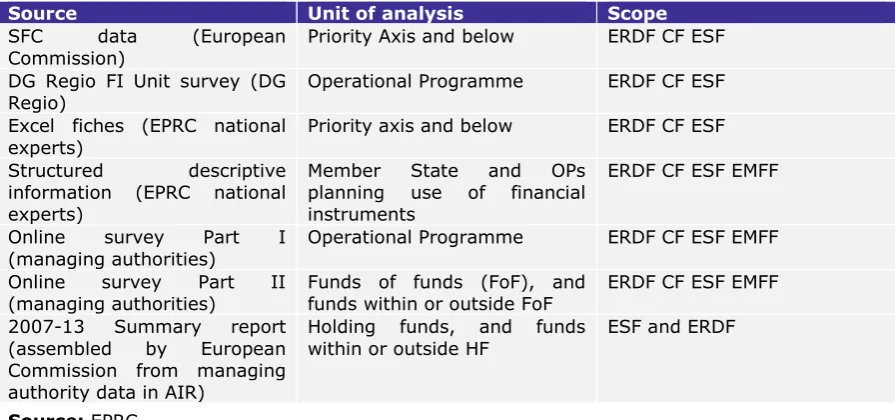
Figure 3.1: Summary of data sources ... 42
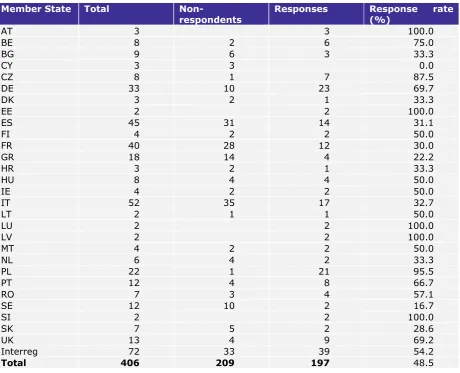
Figure 3.2: Responses to online Managing Authority survey (by Member State) ... 43
Figure 3.3: Responses to online Managing Authority survey (by users and non-users of FI) ... 43
Figure 3.4: Responses to Managing Authority survey (by TO among users of FIs) ... 44
Figure 3.5: Trends in OP commitments to FIs (% of EU OP contributions) ... 45
Figure 3.6: Trends in OP commitments to FIs (€ and % change), EU amounts ... 46
Figure 3.7: Initial changes in planned OP allocations to FIs ... 48
Figure 3.8: Have plans for FIs changed since OP adoption ... 48
Figure 3.9: OP indicative allocations to FIs by fund - €m (EU resources). ... 50
Figure 3.10: Commitments and planned contributions by fund and country ... 51
Figure 3.11: OP indicative allocations to FI by TO - €m (excluding EMFF) ... 52
Figure 3.12: OP indicative allocations to FI by TO - %, by Member State (excluding EMFF) ... 53
Figure 3.13: Thematic objectives (CPR) and Investment Areas ... 54
Figure 3.14: Planned shares of OP resources for FIs by Investment Area ... 55
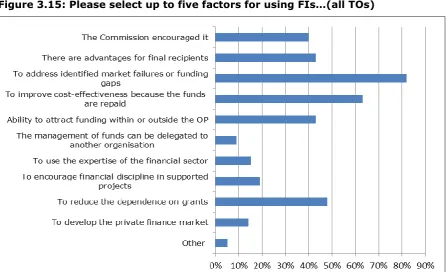
Figure 3.15: Please select up to five factors for using FIs…(all TOs) ... 57
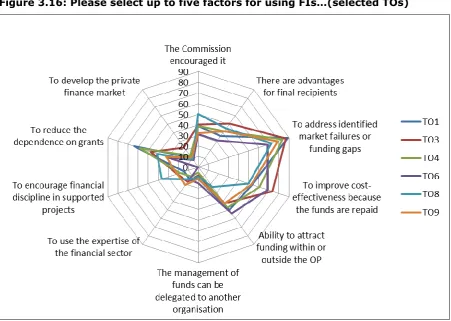
Figure 3.16: Please select up to five factors for using FIs…(selected TOs) ... 58
Figure 3.17: OPs ranked by planned allocations to FIs (€m) ... 59
Figure 3.18: OPs ranked by planned allocations to FIs (as % of OP total) ... 60
Figure 3.19: Progress with implementation of FI (by number of OPs) ... 62
Figure 3.20: Approaches to ex ante assessments ... 64
Figure 3.21: Potential target final recipients of FIs by TO (as described in the OPs) ... 66
Figure 3.22: Target final recipients: FIs in operational or advanced planning stage 2014-20 ... 67
Figure 3.23: Operational and near-operational FIs (as at spring 2016) ... 68
Figure 3.24: European Fisheries Fund FIs in 2007-13 ... 70
Figure 3.25: ‘Planned’ FIs and ex ante assessments under the EMFF ... 71
Figure 3.26: Scale and progress of planned EMFF FIs ... 71
Figure 4.1: Planned spend by form of support ... 75
Figure 4.2: ‘Ease of administration’ (all respondents, by Fund) ... 78
Figure 4.3: ‘Ease of administration’ (all Funds, excluding ‘D/Ks’) ... 79
Figure 4.4: ‘Ease of administration’ (ERDF MAs, excluding ‘D/Ks’) ... 79
Figure 4.5: ‘Ease of administration’ (ERDF MAs using FIs, excluding ‘D/Ks’) ... 80
Figure 4.6: ‘Value for money’ (all respondents, by Fund) ... 83
Figure 4.7: ‘Value for money’ (all Funds, excluding ‘D/Ks’) ... 84
Figure 4.8: ‘Value for money’ (ERDF MAs, excluding ‘D/Ks’) ... 84
Figure 4.9: ‘Value for money’ (ERDF MAs using FIs, excluding ‘D/Ks’) ... 85
Figure 4.10: ‘Economic impact’ (all respondents, by Fund) ... 86
Figure 4.11: ‘Economic impact’ (all Funds, excluding ‘D/Ks’) ... 87
Figure 4.12: ‘Economic impact’ (ERDF MAs, excluding ‘D/Ks’) ... 87
Figure 4.13: ‘Economic impact’ (ERDF MAs using FIs, excluding ‘D/Ks’) ... 88
Figure 4.14: Reasons for not using financial instruments ... 95
Figure 4.15: Reasons for not using financial instruments by Thematic Objective ... 96
Figure 4.16: Plans to use ‘off-the-shelf’ instruments (Managing Authorities planning to use FIs) 100 Figure 4.17: Barriers to take-up of ‘off-the-shelf’ instruments ... 101
Figure 4.19: Decision process - using FIs in the OP... 105
Figure 4.20: Advisory support needs among Managing Authorities ... 109
Figure 4.21: Perceptions of the impact of FIs on simplification (all Funds) ... 115
Figure 5.1: Estimating the scale of EU FIs by source and objective ... 118
Figure 5.2: OP contributions to EU-level initiatives... 120
Figure 5.3: Relationship between ESI Fund FIs and other instruments ... 121
Figure 5.4: Do ESIF FIs compete with other instruments? ... 122
Figure 5.5: What are the incentives and disincentives of the various modes of intervention? ... 126
Figure 5.6: Similarities and differences between the EFSI and the ESIF ... 129
Figure 6.1: Estimating the scale of EU FIs by source and objective ... 137
Figure 6.2: Options for improving the uptake and effectiveness of FI? ... 140
Figure 6.3: ‘Finessing’ the options ... 146
Boxes
Box 2.1: The State Development Bank of Poland (BGK) ... 14Box 2.2: The Czech-Moravian Guarantee and Development Bank ... 14
Box 2.3: Strategic Banking Corporation of Ireland ... 14
Box 2.4: Green Investment Bank, UK ... 15
Box 2.5: How Finnvera is funded ... 18
Box 2.6: National implementation of InnovFin SME Guarantee Scheme in France ... 20
Box 2.7: What are the rationales for choosing grants or financial instruments? ... 25
Box 2.8: What kinds of market imperfection can financial instruments address? ... 26
Box 2.9: How has the financial crisis affected the justification for using financial instruments? ... 27
Box 2.10: Energy Efficiency: FIs v Grants – the 2007-13 Experience ... 28
Box 2.11: What are the institutional considerations concerning forms of public intervention? ... 29
Box 2.12: What are the roles of different financial products? ... 30
Box 2.13: Effectiveness of FIs for urban development and energy efficiency ... 37
Box 3.1: Financial instruments for ICT ... 56
Box 4.1: The use of equity FIs in ESIF programmes ... 89
Box 4.2: Mechanisms to ensure complementarity of forms of support ... 92
Box 4.3: What drives competition between different delivery modes? ... 94
Box 4.4: Impediments to using FIs for water quality and low carbon projects ... 97
Box 4.5: Managing Authority experience with guidance and communication ... 111
Box 4.6: Participation in the SME Initiative ... 111
Box 5.1: ESIF FIs Combined with EFSI ... 119
Executive summary
Rationales for financial instruments co-financed by the ESI Funds
The planning and early implementation of EU Cohesion policy for 2014-20 took place in the aftermath of the worst financial crisis since the 1930s. The impact of the crisis has been both widespread and long-lasting, and, in general, Europe has been slow to recover. A key factor in the weakness of the recovery has been the impact of the crisis on both public and private investment, in spite of historically low interest rates and high levels of liquidity in European capital markets. The prime cause relates to uncertainty, as well as systemically low rates of economic activity. However, while there is no longer a general problem of access to finance, access to finance remains a serious concern for certain market segments – notably SMEs and infrastructure.
Both private and public sources play an important role in the supply of finance, but are not always easy to distinguish. In many EU Member States, the public sector has long been involved in the supply of FIs to pursue policy goals. The role of national promotional banks became more prominent during the economic crisis, and has continued to grow. Promotional banks can provide FIs directly, but most frequently operate indirectly, often through commercial banks. EU-level sources of funding are also increasingly channelled through these domestic sources.
The justification for public intervention in economic development policy is to support activities that market operators cannot or will not undertake alone, but which are considered in the wider public interest. This is sometimes characterised as ‘market failure’, but in fact can arise in situations where there simply is no market and the private sector is operating quite rationally, or where the market is imperfect and operating sub-optimally. These include the provision of public goods, the supply of merit goods, the presence of externalities and imperfect information in financial markets. Not all of these types of market imperfection can be addressed using FIs.
Financial instruments offer some advantages over non-repayable instruments (such as sustainability and cost-effectiveness), but must be tailored to circumstances and ultimately can only be used where the investment is income-generating, enabling the initial support to be repaid. In considering forms of intervention and rationales for FIs, it is worth noting that the term ‘financial instrument’ encompasses very diverse financial products that differ considerably in terms of their suitability for different targets, their implications for recipients and their modes of governance.
In terms of the rationale for using co-financed instruments in Cohesion policy, these are very much context-driven, reflecting the scale and focus of OPs, the appetite to experiment with forms of finance not widely used in domestic policy, as well as the wider domestic financial context.
The learning curve of FI implementation over several programming periods provides some evidence of the conditions which support effective FI implementation. FIs are most effective:
When they are based on an accurate assessment of the market situation where there is flexibility and an ability to respond to change
where there are safeguards against ‘objective drift’ where they build on previous experience
aid is well-focused and related to the programme strategy.
The use of financial instruments co-financed by ERDF, Cohesion Fund, ESF and EMFF in 2014-20
According to indicative data in the Operational Programmes (OPs), Member States planned to almost double their spend on financial instruments, from Structural Funds resources committed of around €11.4 billion in 2007-13, to around €21 billion in 2014-20. Plans vary very widely, with four Member States planning to commit more than four times 2007-13 levels (NL, PT, RO, SI), and others planning to reduce or even cease using FIs. Some Member States plan to commit more than 8 percent of OP contributions in the form of FIs (BG, HU, LT, NL, PT, SI and UK). However, under many OPs, the design and implementation of financial instruments remains in a state of flux and the final outcomes are likely to differ from OP plans in significant respects. Changes in plans for FIs are also affected by the outcomes of the ex ante assessments.
In 2007-13, the use of financial instruments was mainly the preserve of the European Regional Development Fund. All Member States that used FIs used the ERDF to co-finance them, with seven also using the European Social Fund. Six Member States used the European Fisheries Fund for financial instruments. The Cohesion Fund could not be used for financial instruments in 2007-13. In 2014-20, planned FI allocations remain predominantly under ERDF, but usage of the ESF and EMFF has also increased - the overall increase in the planned use of EU resources for FIs under the ERDF and the ESF is broadly the same (approaching double).
Analysis of spending plans for FIs shows that more than half of planned FI spend (52 percent) is targeted at SMEs (Thematic Objective 3). A further 17 percent each is aimed at research and innovation (Thematic Objective 1) and low carbon (Thematic Objective 4). This means that around 87 percent of all FI spend is planned for these three objectives.
Some 157 or just over half of ERDF, ESF and Cohesion Fund OPs allocate funds for financial instruments (excluding Interreg programmes, where no OP included plans for using FIs). However, the scale of planned financial instruments varies extremely widely both in absolute terms and in terms of importance within the relevant OP. Fourteen OPs have planned spending exceeding €400m; collectively these account for 55 percent of planned FI spend. Twenty-seven OPs plan to allocate more than 20 percent of resources to FIs. Only five EMFF OPs have definite plans for FIs in 2014-20, for which around €80 million has been earmarked. In addition to the above six Member States have or plan to implement SME Initiative OPs (BG, ES, IT, FI, MT and RO).
or financial products already envisaged or for specific Thematic Objectives. At the time of writing, few FIs were operational – those which were tended to build on previous experience, and largely address support for enterprises.
Practical, legal and administrative issues in the use of financial instruments co-financed by the funds
According to the research carried out for the study, the views of Managing Authorities on the advantages and disadvantages of different form of support (grants vs FIs) are not primarily conceived in terms of pros and cons, but rather in terms of the type project for which they are most suitable. Different forms of support suit different project types – MAs view SME development (TO3), low carbon economy (TO4) and research and innovation (TO1) as most appropriate for FIs.
The key disadvantage of grants is perceived by the MAs to be their lack of sustainability and the risk of creating a subsidy culture, while the key disadvantage of financial instruments is considered to be their administrative complexity. FIs are considered by MAs to be harder to administer than grants due to lack of experience, the quality of the regulatory framework and the associated administrative burden, although financial intermediaries can lessen the administrative burden of FIs. Some MAs also consider that, for final recipients, the administrative burden of FIs is lower than grants.
Value for money has been a growing concern in public policy for many years, and this has led many to question the role of grants to promote economic and social development. Indeed, the notion that financial instruments provide better value for money because sums are repaid and reinvested is one of the key arguments put forward by the Commission for their use. However, value for money is not intrinsic to the form of support - sometimes grants can offer better value for money than FIs, because of administration costs. Among the arguments for financial instruments is that their economic impact can be greater not only because funds are recycled and support more projects, but also because the use of repayable funding can improve project quality. FIs are perceived by MAs to have economic impacts on several levels and sometimes for less outlay than grants.
The term ‘financial instrument’ has become a ‘catch all’ for forms of support that are repayable, unlike grants. In practice, however, this term encompasses a variety of forms which may have little in common with one another. The choice of financial product by MAs is driven primarily by the outcome of the ex ante assessment.
The relationship between different forms of support (grants, FIs etc.) is important - unless the various instruments are appropriately tailored to meet policy and market requirements, and dovetailed with one another, there are risks that measures compete, overlap or leave some needs unmet. Competition or overlaps between forms of finance can be minimised by appropriate programme design.
Some Managing Authorities do not plan to use FIs at all, whereas others use or plan to use them under some, or even all, Thematic Objectives. The survey of Managing Authorities sought to understand why financial instruments had not been used. Overall the main stated reasons for not using FIs is their unsuitability for planned projects (e.g. non-revenue-generating); however, under TO3 and TO4, where FIs are most used, the main reason given for not using FIs is the perceived lack of demand among final recipients.
management costs and fees. Views on off-the-shelf FIs are broadly positive, but uptake has been low due to timing of the Regulation and a desire for greater domestic flexibility. In some cases, the OTS instruments have been used as ‘inspiration’ to design final products tailored more closely to local needs.
The 2014-20 Regulations underpinning the use of FIs are a step change from those applicable in 2007-13, partly in response to Member State concern at the absence of detail and lack of clarity in those rules in the previous planning period. The general perception of Managing Authorities on the new legislative framework is rather mixed, though it is fair to say that it is generally found to be challenging. Some Managing Authorities were positive on the new Regulations, and the obligatory ex ante assessment is viewed very positively; however the view that the Regulations could be improved was more widespread. A key area of concern is the uncertainty associated with the scope for interpretation.
The legislative framework for financial instruments in 2014-20 has been characterised by considerably increased emphasis on support, notably through fi-compass, and on written guidance issued by the Commission. Nevertheless, a significant number of Managing Authorities think that more guidance is needed in certain areas, and three main issues were identified:
timing: there has often been a significant gap between the regulation being issued and guidance being available
tailoring: many MAs consider the guidance to be too general for their needs, and often too theoretical or lacking in practical examples and would like more, and more effective, direct contact with the Commission on their specific needs
status: the impact the guidance can have on audit, and the perception that the Commission sometimes applies stricter rules in the guidance than is implied by the regulations themselves.
In considering what changes to the legislative context might facilitate the use or take-up of FIs, identified factors include changes to the State aid rules, simplification, improved communication with the Commission, training, information and advice.
The relationship between ERDF, Cohesion Fund, ESF and EMFF FIs and EU-level instruments and EFSI
Europe. The Commission published guidance on ensuring coordination, synergies and complementarity between the two sources of funds in April 2016.
The relationship between ESI Fund FIs and other EU instruments of various kinds is not well understood by MAs, although where an ex ante assessment has been completed, MAs are better able to form an opinion about the relationships between ESIF FIs and other instruments. These MAs are more likely to perceive there to be competition between ESIF FIs and other instruments than those MAs where no ex ante has been done, and there are concerns about the relationship between ESIF FIs and other EU sources of finance. This concerns, in particular the competitiveness of ESIF FIs and the perception that these are disadvantaged compared to other EU funding sources due to the State aid rules, and to some extent procurement issues. Financial intermediaries generally had a more comprehensive perspective on funding sources, but often agreed that the landscape was crowded and confusing. There are also potential overlaps between ESIF and EFSI supported FIs, and while some think there are opportunities for synergies, most consider these to be highly challenging.
Conclusions and recommendations
The aim of the final section of the report is to provide conclusions on the strengths and weaknesses of the legislative framework established at EU level for the use of financial instruments, and to identify specific recommendations for possible improvements and options for the future regarding the legal framework and the uptake of financial instruments co-financed by ERDF, Cohesion Fund, ESF and EMFF.
The recommendations arising from the study are essentially threefold:
First, there is a need to reappraise the role of Cohesion policy FIs against the backdrop of an increasingly complex intervention landscape. Cohesion policy FIs have specific strengths, such as their capacity to adapt to regional conditions or help develop local financial markets, but the regulatory aspects of Cohesion policy FIs are onerous compared to many horizontal and EU level initiatives, and while ‘synergies’ between different initiatives have become the ‘holy grail’ of policy implementation, their achievement demands significant administrative capacity.
Second, there is a compelling case for increased regulatory stability. In both the 2007-13 and 2014-20 policy cycles, discussions about the effectiveness of financial instruments have been dominated by issues of compliance and process, rather than policy design and a focus on ‘what works and in what circumstances’ to address specific economic development objectives.
Last and related, there is a case for refocusing guidance. The increased support provided has been widely appreciated, but Managing Authorities have been critical of its timing, and its status in relation to audit requirements. More specifically, if FIs are to be more widely used in areas where there is limited experience, more tailored support and exchange of best practice is needed.
Résumé
Les fondements des instruments financiers cofinancés par les Fonds ESI.
La préparation et les débuts de la mise en œuvre de la politique de Cohésion pour 2014-20 ont eu lieu à la suite de la pire crise financière depuis les années 1930. La crise a eu un impact à la fois large et durable, et la reprise en Europe a en général été lente. Un facteur clé de la faiblesse de la reprise a été l’impact de la crise sur l’investissement public mais aussi privé, en dépit de taux d’intérêts historiquement bas, et de niveaux de liquidités élevés sur les marchés de capitaux européens. La cause première est liée au climat d’incertitude, ainsi que des taux d’activité économique systématiquement bas. Cependant, alors qu’il n’y a plus de problème général d’accès au financement, celui-ci demeure une inquiétude dans certains secteurs du marché – notamment pour les PME et les infrastructures.
Les ressources privées et publiques jouent un rôle important dans l’offre de financement, mais ne sont pas toujours faciles à distinguer l’une de l’autre. Dans plusieurs Etats membres de l’UE, le secteur public est depuis longtemps impliqué dans l’offre d’instruments financiers à la poursuite d’objectifs de politique publique. Le rôle des banques nationales de développement est devenu plus proéminent pendant la crise économique, et a continué à grandir. Les banques de développement peuvent mettre directement à disposition des instruments financiers (IF), mais la plupart du temps les gèrent indirectement, souvent via des banques commerciales. Les sources de financement au niveau de l’UE sont également de plus en plus acheminées via ces canaux nationaux.
La justification de l’intervention publique dans les politiques de développement économique repose sur le soutien aux activités que les opérateurs de marchés ne peuvent ou ne veulent pas entreprendre seuls, mais qui sont tout de même considérées comme étant d’intérêt public. Ceci est parfois identifié comme une « défaillance du marché », mais peut en réalité avoir lieu dans une situation où il n’y a simplement pas de marché existant et où le secteur privé agit de façon rationnelle, ou bien quand la situation de marché est imparfaite et génère un équilibre sous-optimal. Cela inclut la production de biens publics, la production de biens d’intérêt social, la présence d’externalités et des informations imparfaites sur le marché. Toutes ces imperfections de marché ne peuvent pas être corrigées par l’utilisation d’instruments financiers.
Les instruments financiers offrent certains avantages par rapport aux instruments de soutien non-remboursables (comme leur soutenabilité, et leur efficacité-coût), mais doivent être adaptés aux circonstances, et ne peuvent être utilisés que pour des investissements qui génèrent des profits, permettant alors le remboursement du soutien initial. En considérant les différentes formes d’interventions et logiques des IF, il est utile de noter que le terme d’« instrument financier » comprend un ensemble divers de produits financiers, qui diffèrent considérablement en termes de pertinence selon les cibles, d’implications pour les bénéficiaires finaux, et de modes de gouvernance.
les instruments financiers ont contribué aux objectifs des PO, en particulier concernant un meilleur accès au financement, l’une des principales raisons présidant à l’utilisation d’instruments financiers dans les PO FEDER 2007-13. La transférabilité des leçons acquises sur les domaines où les instruments financiers sont les plus efficaces est limitée par les spécificités contextuelles de leur mise en œuvre : les retours d’évaluations suggèrent que les instruments financiers sont le plus efficace lorsqu’ils sont ajustés à des circonstances nationales ou régionales spécifiques, et donc qu’il n’existe pas de format unique approprié. Les modèles de mise en œuvre sont rarement transférables sans modification prenant en compte les éléments circonstanciels locaux, régionaux, ou nationaux. Cela peut inclure des différences en matière de conditions économiques, de systèmes bancaires et légaux, d’expériences passées de la mise en œuvre des instruments financiers etc.
La courbe d’apprentissage de la mise en œuvre des instruments financiers sur plusieurs périodes de programmation fournit des indications sur les conditions qui soutiennent une mise en œuvre des instruments financiers efficace. Les instruments sont le plus efficace : Quand ils sont basés une évaluation pertinente de la situation de marché
Quand il y a de la flexibilité et une capacité à réagir aux changements
Quand il y a des protections contre une déviation des objectifs initialement fixés Quand ils sont construits sur une expérience préalable
Quand l’aide est bien ciblée et en lien avec la stratégie du programme.
Le recours aux instruments financiers cofinancés par le FEDER, le Fonds de Cohésion, le FSE et le FEAMP en 2014-20
Selon les données indicatives des Programmes Opérationnels (PO), les Etats membres ont prévu de presque doubler le montant alloué aux instruments financiers, de 11,4 milliards d’euros des Fonds Structurels 2007-13 à environ 21 milliards d’euros en 2014-20. Les prévisions varient sensiblement, avec quatre Etats membres prévoyant d’allouer plus de quatre fois les montants de 2007-13 (NL, PT, RO, SI), et d’autres prévoyant de réduire, ou même d’interrompre l’utilisation d’IF. Certains Etats membres envisagent d’allouer plus de 8% des montants de leurs PO sous forme d’instruments financiers (BG, HU, LT, NL, PT, SI, and UK). Néanmoins, dans le cas de plusieurs PO, la conception et la mise en œuvre d’instruments financiers reste en cours d’élaboration, et les résultats finaux sont susceptibles de différer des prévisions des OP de façon significative. Les changements appliqués aux prévisions en terme d’instruments financiers sont aussi influencés par les résultats des évaluations ex-ante.
En 2007-13, l’utilisation des instruments financiers était principalement l’apanage du Fonds Européen de Développement Régional. Tous les Etats membres qui ont eu recours à des instruments financiers ont mobilisé le FEDER pour les cofinancer, dont sept ont également mobilisé le FSE, et six le FEAMP. Le Fonds de Cohésion ne pouvait pas être utilisé sous la forme d’instruments financiers en 2007-13. En 2014-20, les allocations prévues aux instruments financiers proviennent encore essentiellement du FEDER, mais le recours au FSE et au FEAMP a également augmenté – l’augmentation générale de l’utilisation prévue de ressources de l’UE pour les instruments financiers via le FEDER et le FSE est globalement la même (presque doublée).
L’analyse des plans de financements des instruments financiers montre que plus de la moitié des dépenses prévues (52%) sont orientées vers les PME (Objectif Thématique 3). 17% sont alloués d’une part à la recherche et l’innovation (Objectif Thématique 1), et autant à l’économie bas-carbone (Objectif Thématique 4)
aucun ne prévoit d’utiliser des IF). Cependant, l’ordre de grandeur des instruments financiers prévus varie grandement, à la fois en termes absolus et en pourcentage du PO concerné. Quatorze PO ont prévu des dépenses excédant 400 millions d’euros ; ceux-ci représentent en cumulé 55% des dépenses totales prévues sous forme d’instruments financiers. 27 PO prévoient d’allouer plus de 20% de leur enveloppe aux instruments financiers. Seuls 5 PO FEAMP ont arrêté un plan définitif d’utilisation d’instruments financiers en 2014-20, pour lesquels 80 millions d’euros ont été réservés. En outre, six Etats membres ont mis en œuvre ou prévoient de mettre en œuvre des PO pour l’Initiative PME (BG, ES, IT, FI, MT and RO).
L’avancement de la mise en œuvre varie également nettement entre et au sein de chaque pays. Plusieurs Etats membres sont toujours engagés dans des stades primaires de mise en œuvre (bien que cet état de fait soit constamment en mouvement et en progrès). Un nombre significatif d’évaluations ex-ante sont achevées (143 au moment de l’écriture de ce rapport). Les approches choisies par celles-ci sont multiples, avec certaines Autorités de Gestion organisant les évaluations ex-ante en blocs, ou en étapes, pendant que d’autres entreprenaient des mises à jour d’études existantes. De plus, des évaluations ex-ante ont été réalisées à l’échelle des Fonds (par exemple, pour le FEDER), au sein d’un PO ou travers plusieurs, pour l’ensemble des fonds au sein d’un OP, pour des instruments spécifiques ou des produits financiers déjà envisagés ou pour des Objectifs Thématiques spécifiques. Au moment de l’écriture du présent rapport, peu d’Instruments Financiers étaient opérationnels – ceux développés sur la base d’une expérience préalable, et notamment dans le domaine du soutien aux entreprises.
Les problématiques pratiques, légales et administratives liées à l’utilisation des instruments financiers cofinancés par les fonds.
Selon les recherches menées dans le cadre de la présente étude, l’appréciation par les Autorités de Gestion des avantages et inconvénients des différentes formes de soutien (subventions vs. instruments financiers) n’est pas prioritairement conçue en termes de pour et contre, mais plutôt en termes de type de projets approprié. A différentes formes de soutien correspondent différents types de projets – les AG considèrent le développement des PME (OT3), l’économie bas-carbone (OT4), et la recherche et l’innovation (OT1) comme les domaines les plus adaptés aux instruments financiers. Le principal inconvénient des subventions, selon les AG, consiste en leur manque de soutenabilité, et le risque qu’elles comportent de créer une ‘culture de la subvention’, tandis que le principal inconvénient des instruments financiers réside dans leur complexité administrative. Les IF sont considérés par les AG comme plus complexes à administrer que les subventions, en raison d’un manque d’expérience, de la qualité du cadre réglementaire, et de la charge administrative qui y est associée, bien que les intermédiaires financiers permettent parfois d’en réduire le poids. Certaines AG considèrent par ailleurs que la charge administrative des IF est inférieure à celle des subventions pour les bénéficiaires finaux.
Le terme d’« instrument financier » est devenu un attrape-tout pour toutes les formes de soutien remboursable, à la différence des subventions. En pratique cependant, le terme comprend une variété de formes qui ont parfois peu à voir entre elles. Le choix d’un produit financier par une AG est en premier lieu motivé par le résultat de l’évaluation ex-ante.
Certaines Autorités de Gestion ne prévoient pas d’utiliser d’IF du tout, alors que d’autres y ont recours, ou prévoient d’y recourir pour certains, voire tous les Objectifs Thématiques. Le sondage des Autorités de Gestion cherchait à comprendre pourquoi les instruments financiers n’avaient pas été mobilisés. Dans l’ensemble, les principales raisons énoncées pour expliquer le non-recours aux IF concernent leur inadéquation avec les projets planifiés (e.g ne générant pas de revenus) ; néanmoins, dans le cadre des OT3 et OT4, où les IF sont le plus utilisé, la principale raison expliquant la non utilisation d’IF concerne un manque de demande anticipée des bénéficiaires finaux.
Dans les règlements pour 2014-20, la Commission a introduit la possibilité pour les AG de recourir à des IF types qui respectent des conditions générales standard (off-the-shelf/prêts à l’emploi). Ces modèles types ont pour but de faciliter la mise en place d’un IF ; si le modèle est appliqué, les AG ont l’assurance de la conformité de l’IF proposé avec un ensemble de dispositions réglementaires, y compris concernant la sélection des intermédiaires financiers, les accords de financement, les règles relatives aux aides d’Etat, et les coûts et frais de gestion. Les opinions concernant les instruments « prêts à l’emploi » sont plutôt positives, mais le recours à ces derniers a été faible, en raison du calendrier de publication de la réglementation et la volonté d’une plus grande flexibilité à l’échelon national et régional. Dans certains cas, les instruments « prêts à l’emploi » ont servi de source d’inspiration dans la conception de produits financiers plus adaptés aux besoins locaux.
Les Règlements 2014-2020 fondant l’utilisation des instruments financiers constituent un changement substantiel par rapport à ceux de la période 2007-13, en partie en réaction aux préoccupations des Etats membres face au manque de précision et de clarté de ces règles lors de la précédente période de programmation. L’impression générale des Autorités de Gestion sur le nouveau cadre réglementaire est plutôt mitigée, bien qu’il faille noter que ce dernier est généralement considéré comme complexe. Certaines Autorités de Gestion avaient un avis positif sur la nouvelle réglementation, et l’obligation de procéder à une évaluation ex ante a été perçue très favorablement ; cela dit, une opinion plus largement partagée soulignait que les Règlements pouvaient être améliorés. Une source de préoccupation importante concerne l’incertitude associée aux marges d’interprétation.
Le cadre réglementaire des instruments financiers en 2014-20 a été caractérisé par un accent considérablement accru porté sur le soutien, notamment via fi-compass, ainsi que sur les guidances de la Commission. Néanmoins, un nombre significatif d’Autorités de Gestion estime que plus de guidances sont nécessaires dans certains domaines, et trois sources de difficultés ont été identifiées :
- Timing : il y a souvent eu un délai significatif entre la publication de la réglementation et la disponibilité des guidances
- Adaptation : plusieurs AG trouvent les guidances trop générales par rapport à leurs besoins, et souvent trop théoriques, ou bien manquant d’exemples pratiques, et souhaiteraient davantage de contacts directs et efficaces avec la Commission en lien avec des besoins spécifiques.
- Statut : l’impact que les guidances peuvent avoir sur les audits, et l’impression que la Commission applique parfois des règles plus strictes dans les guidances que celles induites par les règlements eux-mêmes.
En considérant quels amendements au cadre règlementaire pourrait faciliter l’utilisation des Instruments Financiers, les facteurs identifiés incluent des changements apportés aux règles relatives aux aides d’Etat, de la simplification, une meilleure communication de la Commission, de la formation, de l’information et du conseil.
Les Fonds ESI font partie d’un paysage complexe de mécanismes de financement, privés et publics, domestiques et cofinancés par l’UE, visant les niveaux national, régional et européen. Les AG peuvent allouer des ressources FESI à des instruments conjoints tels que l’Initiative PME, et également rechercher des complémentarités avec d’autres instruments gérés directement au niveau européen (souvent administrés par le Groupe BEI). Le Règlement Portant Dispositions Communes (RPDC) fait explicitement référence à la possibilité d’engager des ressources (FEDER et FEADER) dans l’Initiative PME. Cela permet aux AG d’allouer des ressources à des Instruments Financiers établis au niveau UE. Jusqu’à présent, l’utilisation de l’Initiative a été plutôt limitée ; seules la Bulgarie, la Finlande, l’Italie, Malte, l’Espagne et la Roumanie s’y sont engagées. Une partie de l’explication de cette utilisation limitée provient de changements contextuels : le mécanisme a été introduit pour répondre à des problèmes de liquidité dans le secteur bancaire qui se sont avérés moins sévères que prévu.
Il existe un ensemble plus large d’instruments financiers européens faisant l’objet d’une gestion centralisée qui présentent potentiellement d’importantes synergies avec les activités couvertes par la politique de Cohésion, notamment COSME, qui vise à améliorer l’accès au financement des PME via des prêts, des garanties, et des investissements en fonds propres ; InnovFin, les instruments Horizon 2020 de partage des risques et de financement partagé à destination des PME innovantes ; et le Mécanisme pour l’Interconnexion en Europe (MIE), qui apporte des financements aux projets énergétiques, de transports, et digitaux. Une autre nouveauté au niveau européen est l’introduction du Fonds Européen pour les Investissements Stratégiques (FEIS), établi par la Commission Européenne et la Banque Européenne d’Investissement comme la pierre angulaire du nouveau Plan d’Investissement pour l’Europe. La Commission a publié en Avril 2016 une guidance pour assurer la coordination, les synergies et complémentarités entre les FESI et le FEIS.
La relation entre les instruments financiers des Fonds ESI et les autres instruments européens de différentes natures n’est pas bien comprise par les AG, bien que les AG soient plus en mesure de formuler une opinion à propos de l’articulation entre les IF FESI et les autres instruments lorsque les évaluations ex ante sont achevées. Ces AG sont plus susceptibles de percevoir une concurrence entre les IF FESI et les autres instruments que les AG qui n’ont pas mené d’évaluation ex ante. Par ailleurs la relation entre les IF FESI et les autres sources de financement UE est vectrice de préoccupations. Cela concerne particulièrement la compétitivité des IF FESI et la perception que ces derniers sont désavantagés par rapport aux autres sources de financement UE à cause des règles relatives aux aides d’Etat, et dans une certaine mesure, des difficultés liées aux règles de marché public. Les intermédiaires financiers ont en général eu une approche plus exhaustive concernant les sources de financement, mais ont également perçu un paysage encombré et confus. Il existe par ailleurs des possibilités de chevauchement entre les instruments financiers des FESI et ceux soutenus par le FEIS, et tandis que certains y voient des opportunités de synergies, la plupart y voit une source importante de difficultés.
Conclusions et recommandations
L’objectif de la section finale du rapport est de fournir des conclusions sur les forces et faiblesses du cadre réglementaire établi au niveau européen concernant l’utilisation d’instruments financiers, et d’identifier des recommandations spécifiques pour de potentielles améliorations et options pour le futur en termes de réglementation, et de recours aux instruments financiers cofinancés par le FEDER, le Fonds de Cohésion, le FSE et le FEAMP.
Premièrement, il existe un besoin de réévaluer le rôle des Instruments Financiers de la politique de Cohésion à la lumière d’un environnement d’intervention de plus en plus complexe. Les Instruments Financiers de la politique de Cohésion présentent des forces spécifiques, telles que leur capacité à s’adapter aux conditions régionales, ou à accompagner le développement de marchés financiers locaux, mais les dispositions réglementaires des IF de la politique de Cohésion s’avèrent coûteux par rapport à plusieurs initiatives horizontales ou au niveau européen, et alors que les synergies entre différentes initiatives sont devenues le Saint Graal de la mise en œuvre des politiques publiques, leur réalisation nécessite d’importantes capacités administratives.
Deuxièmement, il apparait essentiel d’augmenter le niveau de stabilité de la régulation. Dans le cadre des cycles 2007-13 et 2014-20, les discussions au sujet de l’efficacité des instruments financiers ont été dominées par les difficultés liées aux modalités de mise en conformité et aux procédures, plus que par des questions de conception de la politique, de focus sur « ce qui marche et dans quelles circonstances », afin de remplir les objectifs spécifiques en matière de développement économique.
Zusammenfassung
ESI-Fonds und Finanzinstrument: Hintergründe
Zur Zeit der Planung und der ersten Umsetzung der EU-Kohäsionspolitik 2014-20 waren die Nachwirkungen der schwersten Finanzkrise seit den 1930er Jahren noch zu spüren. Die Auswirkungen der Krise haben sich als sowohl weitreichend als auch langanhaltend erwiesen und Europa erholt sich im Allgemeinen nur langsam. Ein entscheidender Faktor für die schwache Erholung sind die Auswirkungen der Krise auf sowohl öffentliche als auch private Investitionen, trotz der historisch niedrigen Zinssätze und dem hohen Maß an Liquidität auf den europäischen Kapitalmärkten. Die wichtigsten Gründe sind die Unsicherheit und die systemisch niedrige Wirtschaftsaktivität. Im Allgemeinen gibt es mittlerweile zwar keine Schwierigkeiten mehr beim Zugang zu Finanzmitteln, Anlass zu ernsthaften Bedenken gibt es aber weiterhin für bestimmte Marktsegmente, vor allem für KMUs und Infrastruktur.
Sowohl private als auch öffentliche Quellen spielen eine wichtige Rolle bei der Bereitstellung von Finanzmitteln, allerdings ist deren Unterscheidung nicht immer ganz einfach. In vielen EU-Mitgliedsstaaten ist der öffentliche Sektor seit längerem an der Bereitstellung von Finanzinstrumenten (FI) zur Verfolgung entwicklungspolitischer Ziele beteiligt. Im Rahmen der Finanzkrise nahmen nationale Förderbanken eine stärkere Rolle ein und diese gewinnen auch weiterhin an Bedeutung. Nationale Förderbanken können FI direkt zur Verfügung stellen, agieren meistens aber auf indirekte Weise, oft über Geschäftsbanken. EU-Finanzquellen werden ebenfalls zunehmend über diese nationalen Quellen gelenkt.
Die Rechtfertigung für eine öffentliche Intervention in die Wirtschaftsförderungspolitik besteht darin, Tätigkeiten zu unterstützen, die die Marktteilnehmer nicht allein leisten können oder wollen, von denen man aber annimmt, sie seien im öffentlichen Interesse. Dies wird manchmal als „Marktversagen“ bezeichnet, kann aber auftreten wenn es einfach keinen Markt gibt und der private Sektor durchaus rational operiert oder wenn der Markt mangelhaft ist und suboptimal operiert. Dies ist der Fall bei der Bereitstellung öffentlicher Güter, der Versorgung mit meritorischen Gütern, der Präsenz von Externalitäten und bei mangelhafter Information auf den Finanzmärkten. Nicht alle diese Marktunvollkommenheiten können mit FI angesprochen werden.
FI bieten einige Vorteile gegenüber nicht rückzahlbaren Instrumenten (so zum Beispiel Nachhaltigkeit und Kosteneffizienz), müssen aber an die jeweiligen Umstände angepasst werden und können letztendlich nur eingesetzt werden, wenn die Investitionen einkommenserzeugend sind, so dass die anfängliche Unterstützung zurückgezahlt werden kann. Bei der Betrachtung von Formen der Intervention und der Grundprinzipien von FI ist es wichtig zu erwähnen, dass der Begriff „Finanzinstrument“ sehr unterschiedliche Finanzprodukte abdeckt. Diese unterscheiden sich stark, was ihre Eignung für unterschiedliche Zielsetzungen, die Implikationen für Empfänger und ihre Art der Steuerung anbelangt.
Was die Gründe für eine Nutzung von kofinanzierten Instrumenten in der Kohäsionspolitik anbelangt, so ist anzumerken, dass diese vor allem kontextbestimmt sind. Sie spiegeln das Ausmaß und den Fokus von OPs wieder, den Grad an Experimentierfreude mit in der nationalen Politik wenig genutzten Formen der Finanzierung, sowie die weiteren staatlichen Finanzzusammenhänge wieder.
beigetragen haben, insbesondere durch einen verbesserten Zugang zu Finanzmitteln – einer der wichtigsten Gründe für den Einsatz von FI in den EFRE OPs 2007-13. Die Übertragbarkeit von Lehren zum effektiven Einsatz von FI wird beschränkt durch den kontextspezifischen Charakter der FI-Implementierung: Es gibt Hinweise, dass FI dann am effektivsten sind, wenn sie auf spezifische regionale oder nationale Umstände zugeschnitten sind, da es keinen erfolgreichen einheitlichen Ansatz gibt. Modelle sind nur selten übertragbar ohne Abänderungen zur Berücksichtigung lokaler, regionaler oder nationaler Umstände. Dazu gehören Unterschiede bei lokalen wirtschaftlichen Rahmenbedingungen, sowie bei Bank- und Rechtssystemen und vorherige Erfahrungen bei der Umsetzung von FI etc.
Die Erfahrungskurve bei der Implementierung von FI über mehrere Programmperioden liefert Anzeichen für die Bedingungen zur Unterstützung einer effektiven FI-Umsetzung. FI sind am effektivsten:
wenn sie auf einer akkuraten Einschätzung der Marktsituation basieren,
wenn sie Flexibilität bieten, sowie die Fähigkeit auf Veränderungen zu reagieren, wenn es eine Absicherung vor einer Verlagerung von Zielsetzungen gibt,
wenn sie auf vorherigen Erfahrungen aufbauen, und
wenn die Förderung fokussiert ist und in Verbindung zur Programmstrategie steht. Der Einsatz von Finanzinstrumenten, die über EFRE, Kohäsionsfond, ESF und EMFF für 2014-20 kofinanziert werden
Laut indikativer Angaben in den Operationellen Programmen (OPs) planten Mitgliedsstaaten ihre Ausgaben für FI beinahe zu verdoppeln, von rund 11,4 Milliarden Euro Strukturfondressourcen in 2007-13 auf rund 21 Milliarden Euro für 2014-20. Die Pläne unterscheiden sich stark und vier Mitgliedsstaaten (NL, PT, RO, SI) planen, mehr als das Vierfache der 2007-13 eingesetzten Mittel bereitzustellen, während andere eine Reduzierung oder sogar Beendigung des Einsatzes von FI vorsehen. Einige Mitgliedsstaaten planen, mehr als acht Prozent der OP-Beiträge in Form vom FI einzusetzen (BG, HU, LT, NL, PT, SI und UK). In vielen OPs bleiben der Entwurf und die Implementierung von FI jedoch in einem ständigen Fluss und es ist sehr wahrscheinlich, dass die endgültigen Ergebnisse deutlich von den OP-Plänen abweichen werden. Zudem beeinflussen die Ergebnisse der Ex-ante-Bewertungen eventuelle Änderungen bei der FI-Planung.
2007-13 war der Einsatz von FI vor allem die Domäne des EFRE. Alle Mitgliedsstaaten, die FI einsetzten, nutzten den EFRE zur Kofinanzierung, sieben von ihnen nutzten zudem den ESF. Sechs Mitgliedsstaaten nutzten den EMFF für FI. Der Kohäsionsfonds konnte 2007-13 nicht für FI genutzt werden. Für 2014-20 fällt die geplante FI-Zuweisung vor allem unter den EFRE, aber der Einsatz des ESF und des EMFF hat ebenfalls zugenommen – der gesamte Anstieg beim geplanten Einsatz von EU-Ressourcen für FI im Rahmen des EFRE und des ESF ist in etwa gleich (nahezu das Doppelte).
Eine Analyse der Investitionspläne für FI zeigt, dass mehr als die Hälfte der geplanten FI-Ausgaben (52 Prozent) auf KMUs ausgerichtet ist (Thematisches Ziel 3). Weitere 17 Prozent gehen jeweils an die Bereiche Forschung und Entwicklung (Thematisches Ziel 1) und CO2-Reduktion (Thematisches Ziel 4). Dies bedeutet, dass rund 87 Prozent der gesamten FI-Ausgaben für diese drei Ziele vorgesehen sind.
Ressourcen für FI einzusetzen. Nur fünf EMFF OPs haben konkrete FI-Pläne für 2014-20, für die rund 80 Millionen Euro vorgesehen sind. Zusätzlich haben oder planen sechs Mitgliedsstaaten OPs im Kontext der KMU-Initiative (BG, ES, IT, FI, MT und RO).
Fortschritte bei der Implementierung von FI variieren innerhalb und zwischen Ländern. Viele Mitgliedsstaaten befinden sich noch immer in einer frühen Phase der FI-Implementierung, wobei sich die Situation jedoch ständig verändert. Eine bedeutende Zahl an Ex-ante-Bewertungen wurde abgeschlossen (zum Zeitpunkt der Verfassung dieses Berichts geschätzte 143). Die Ansätze waren hierbei sehr unterschiedlich. Einige Verwaltungsbehörden haben Ex-ante-Bewertungen in Blöcken oder Abschnitten durchgeführt, andere haben existierende Studien aktualisiert. Zusätzlich fanden teilweise auch auf Fonds-Ebene Ex-ante-Bewertungen statt (z.B. für EFRE), entweder innerhalb eines OPs oder auf OP-übergreifender Basis, für alle Fonds innerhalb eines OPs, für spezifische Instrumente oder bereits vorgesehene Finanzprodukte oder für spezifische Thematische Ziele. Zum Zeitpunkt der Verfassung dieses Berichts waren nur wenige FI operativ – zumeist jene, die auf vorherigen Erfahrungen basierten und sich mit Unterstützung für Unternehmen befassten.
Praktische, rechtliche und verwaltungstechnische Aspekte beim Einsatz kofinanzierter Finanzinstrumente
Laut der für die Studie durchgeführten Forschungsarbeit bilden sich Verwaltungsbehörden ihre Meinung zu den Vor- und Nachteilen unterschiedlicher Arten der Förderung (Zuschüsse vs. FI) nicht vorrangig auf Basis von Pro- und Kontraüberlegungen, sondern vielmehr auf Basis der Art von Projekten, für die FI sich am besten eignen. Unterschiedliche Arten der Förderung eignen sich für unterschiedliche Arten von Projekten – Verwaltungsbehörden sehen KMU Entwicklung (TZ3), Kohlenstoffarme Wirtschaft (TZ4) und Forschung und Entwicklung (TZ1) als die am besten geeigneten Einsatzbereiche für FI.
In den Augen der Verwaltungsbehörden sind die wichtigsten Nachteile von Zuschüssen ihre mangelnde Nachhaltigkeit und das Risiko der Entstehung einer „Zuschusskultur“, während der größte Nachteil von FI deren administrative Komplexität ist. Verwaltungsbehörden sehen die Anwendung von FI auf Grund mangelnder Erfahrung als schwieriger an als die von Zuschüssen, allerdings können Finanzmittler den Verwaltungsaufwand für FI mildern. Einige Verwaltungsbehörden gehen auch davon aus, dass der Verwaltungsaufwand für Empfänger bei FI niedrige ist als bei Zuschüssen.
Verwaltungsbehörden wird vor allem durch die Ergebnisse der Ex-ante-Bewertungen bestimmt.
Die Beziehungen zwischen unterschiedlichen Förderformen (Zuschüssen, FI, etc.) spielen eine wichtige Rolle – sind die unterschiedlichen Instrumente nicht auf die Bedürfnisse von Politik und Markt zugeschnitten und aufeinander abgestimmt, besteht das Risiko, dass Maßnahmen miteinander konkurrieren, sich überlappen oder bestimmte Bedürfnisse nicht abdecken. Konkurrenz und Überlappungen zwischen Finanzierungsformen können durch geeignetes Programmdesign minimiert werden.
Einige Verwaltungsbehörden planen keinen Einsatz von FI, wohingegen andere wiederum vorsehen, sie im Rahmen einiger, oder sogar aller, Thematischer Ziele einzusetzen. Die Befragung von Verwaltungsbehörden sollte zu einem besseren Verständnis der Gründe führen, warum FI nicht eingesetzt werden. Der Hauptgrund für die Nichtnutzung von FI war deren Unangemessenheit für geplante Projekte (z.B. nicht-einkommenserzeugend); der Hauptgrund für eine Nichtnutzung von FI im Rahmen von TZ3 und TZ4 war jedoch die Wahrnehmung, dass eine fehlende Nachfrage seitens der Endempfänger bestünde. Im Rahmen der Verordnungen für 2014-20 führte die EU-Kommission für Verwaltungsbehörden die Option der Nutzung von FI mit standardisierten AGBs ein („von der Stange“). Die Vorlagenmodelle sollen die Einrichtung von FI erleichtern; werden die Vorlagen befolgt, so können sich Verwaltungsbehörden sicher sein, dass die vorgeschlagenen FI einer Reihe rechtlicher Rahmenbedingungen gerecht werden, einschließlich der Auswahl von Finanzmittlern, der Finanzierungsvereinbarungen, der staatlichen Beihilfe und der Kosten und Gebühren für Verwaltung. Diese FI „von der Stange“ werden im Allgemeinen sehr positiv eingeschätzt, allerdings zeigt sich nur eine langsame Akzeptanz, auf Grund des Zeitpunkts der Veröffentlichung der Verordnungen und des Wunsches nach einer größeren staatlichen Flexibilität. In einigen Fällen wurden diese Instrumente „von der Stange“ als Inspiration für den Entwurf von Produkten genutzt, die besser auf lokale Bedürfnisse abgestimmt sind.
Die Verordnungen für 2014-20 zur Unterstützung des Einsatzes von FI stellen eine wesentliche Veränderung zu den Verordnungen 2007-13 dar, teilweise als Reaktion auf die Bedenken von Mitgliedsstaaten hinsichtlich fehlender Details und einem Mangel an Klarheit. Die allgemeine Auffassung von Verwaltungsbehörden zum neuen Rechtsrahmen ist sehr unterschiedlich, aber man kann sagen, dass er generell als eine Herausforderung gesehen wird. Einige Verwaltungsbehörden sehen die neuen Verordnungen sehr positiv und die obligatorische Ex-ante-Bewertung wird als sehr positiv betrachtet; weiter verbreitet aber ist die Ansicht, dass die Verordnungen verbesserungsfähig sind. Deutliche Bedenken gibt es in etwa hinsichtlich der Unsicherheit, die mit dem Interpretationsspielraum in Verbindung gebracht wird.
Der Rechtsrahmen für FI für 2014-20 zeichnet sich durch eine deutlich stärkere Schwerpunktsetzung auf Unterstützung bei der Umsetzung aus, vor allem über fi-compass, sowie auf über von der Kommission herausgegebene schriftliche Leitlinien. Nichtsdestotrotz ist eine deutliche Anzahl an Verwaltungsbehörden der Ansicht, dass es in gewissen Bereichen zusätzlicher Leitlinien bedarf. Es wurden drei Punkte herausgearbeitet:
Timing: Oft war der zeitliche Abstand zwischen der Veröffentlichung von Verordnungen und der Verfügbarkeit von Leitlinien sehr groß.
Eignung: Viele Verwaltungsbehörden sehen die Leitlinien als zu allgemein für ihre Bedürfnisse und als zu theoretisch oder durch zu wenige praktische Beispiele untermauert und wünschen sich mehr und effektiveren direkten Kontakt mit der EU-Kommission bezüglich ihrer spezifischen Bedürfnisse.
Überlegungen zu Änderungen des Rechtsrahmens, die die Nutzung oder Annahme von FI erleichtern könnten haben Faktoren wie Änderungen der staatlichen Beihilfevorschriften, Vereinfachungen, verbesserte Kommunikation mit der EU-Kommission, Training, Information und Ratschläge identifiziert.
Die Beziehungen zwischen EFRE-, Kohäsionsfonds-, ESF- und EMFF-FI und anderen EU-Instrumenten sowie EFSI
ESI-Fonds sind Teil eines komplexen Angebots an Fördermechanismen, einschließlich privater und öffentlicher, staatlicher und Quellen, auf regionaler, nationaler und EU-Ebene. Verwaltungsbehörden können ESIF-Ressourcen gemeinsamen Instrumenten beisteuern, wie etwa der KMU-Initiative, und viele streben zudem nach einer Komplementarität mit anderen Instrumenten auf EU-Ebene (oft von der EIB-Gruppe verwaltet). Die Verordnung zu gemeinsamen Bestimmungen bezieht sich spezifisch auf die Möglichkeit, der KMU-Initiative (EFRE und ELER) Ressourcen beizusteuern. Dies ermöglicht es Verwaltungsbehörden, Ressourcen für FI auf EU-Ebene zur Verfügung zu stellen. Bisher ist die Annahme der Initiative relativ beschränkt; nur Bulgarien, Finnland, Italien, Malta, Spanien und Rumänien haben sich dazu verpflichtet. Eine teilweise Erklärung für diese eingeschränkte Annahme könnten die kontextuellen Veränderungen sein: die Regelung wurde eingeführt, um die Liquiditätsprobleme von Banken anzugehen, diese haben sich aber als weniger schwerwiegend herausgestellt als angenommen.
Es gibt auch ein umfassenderes Set an zentral verwalteten FI auf EU-Ebene, die potentiell wichtige Synergien mit den Aktivitäten der Kohäsionspolitik aufweisen, einschließlich COSME, dessen Ziel ein verbesserter Fördermittelzugang für KMUs über Kreditbürgschaften und Eigenkapital ist. Andere Beispiele sind InnovFin, die Horizont 2020 Eigenkapital- und Risikoteilungsinstrumente für innovative KMUs und „Connecting Europe“, die Finanzmittel für Energie-, Transport- und digitale Projekte zur Verfügung stellt. Eine weitere Entwicklung auf EU-Ebene ist die Einführung des EFSI (Europäischer Fonds für strategische Investitionen), der von der EU-Kommission und der Europäischen Investitionsbank als Eckpfeiler des neuen Investitionsplans für Europa ins Leben gerufen wurde. Die EU-Kommission gab im April 2016 Leitlinien zur Koordinierung und zu Synergien und Komplementarität der beiden Förderquellen heraus.
Der Zusammenhang zwischen FI der ESIF und anderen EU-Instrumenten unterschiedlicher Art wird von Verwaltungsbehörden nicht immer ausreichend verstanden; dort wo Ex-ante-Bewertungen durchgeführt wurden sind Verwaltungsbehörden aber eher in der Lage, sich eine Meinung über Zusammenhang zwischen ESIF-FI und anderen Instrumenten zu bilden. Bei diesen Verwaltungsbehörden ist es wahrscheinlicher, dass die Wahrnehmung einer Konkurrenz zwischen ESIF-FI und anderen Instrumenten besteht, als bei Verwaltungsbehörden, bei denen keine Ex-ante-Bewertungen durchgeführt wurden und es Bedenken zum Zusammenhang zwischen ESIF-FIs und anderen EU-Finanzquellen gibt. Diese beziehen sich vor allem auf die Wettbewerbsfähigkeit von ESIF-FI und die Wahrnehmung, dass diese auf Grund von staatlichen Beihilfevorschriften und zu einem gewissen Maß auch auf Grund von vergaberechtlichen Vorgaben im Vergleich zu anderen EU-Förderquellen benachteiligt sind. Finanzmittler hatten in der Regel umfassendere Ansichten zu von Förderquellen, viele bestätigten aber, dass die Förderlandschaft zu weitreichend und verwirrend ist. Zudem gibt es potentielle Überlappungen zwischen ESIF- und EFSI-unterstützten FI und obwohl hier teilweise Möglichkeiten für Synergien gesehen werden, sehen die Meisten sie als eine große Herausforderung.
Schlussfolgerungen und Empfehlungen
zukünftige Optionen für den Rechtsrahmen und die Nutzung von FI, die mit Mitteln aus EFRE, Kohäsionsfonds, ESF und EMFF kofinanziert werden.
Die Empfehlungen, die sich aus der Studie ergeben, sind dreifacher Art:
Erstens besteht der Bedarf einer Neubewertung der Rolle kohäsionspolitischer FI vor dem Hintergrund einer zunehmend komplexeren Interventionslandschaft. Kohäsionspolitische FI haben spezifische Stärken, wie etwa ihre Kapazitäten, sich regionalen Gegebenheiten anzupassen oder lokale Finanzmärkte zu entwickeln. Die regulativen Aspekte kohäsionspolitischer FI sind jedoch aufwändig im Vergleich mit vielen horizontalen Initiativen und Initiativen auf EU-Ebene. Während sich „Synergien“ zwischen verschiedenen Initiativen zwar zum „Heiligen Gral“ bei der Umsetzung regionalpolitischer Ziele entwickelt haben, so verlangt ihre Erzielung doch auch nach geeigneten Verwaltungskapazitäten.
Zweitens gibt es überzeugende Argumente für eine stärkere rechtliche Stabilität. Sowohl in der Programmperiode 2007-13, als auch in der Programmperiode 2014-20 wurden Diskussionen zur Effektivität von FI oft von den Themen Einhaltung der Regeln und Implementierungsprozesse dominiert, anstatt von den regionalpolitischen Inhalten und einem Fokus auf „was funktioniert und unter welchen Umständen“, um spezifische Ziele der Wirtschaftsentwicklung anzugehen.
Zu guter Letzt und in Verbindung zum Obenstehenden kann argumentiert werden, dass es einer Neuausrichtung der Leitlinien bedarf. Die verstärkte Unterstützung seitens der EU-Ebene wurde sehr geschätzt, Verwaltungsbehörden haben allerdings Kritik geäußert hinsichtlich des Timings und Status von Leitlinien im Hinblick auf Prüfungsvorgaben. Dies bedeutet, dass mehr maßgeschneiderte Unterstützung und ein Austausch zu bewährten Vorgehensweisen nötig ist, sollen FI in Bereichen mit eingeschränkter Erfahrung vermehrt eingesetzt werden.
Die grundlegende Zielrichtung der oben aufgestellten Empfehlungen ist die Konsolidierung, Koordinierung und Stabilisierung des Rechtsrahmens für FI, sowie die Unterstützung und Entwicklung der Verwaltungskapazitäten von Verwaltungsbehörden. Es wäre auch möglich, radikalere Optionen zur Verbesserung der Annahme und Effektivität von FI zu unterstützen. Dazu könnte eine Reduzierung der Implementierung von FI auf sogenannte Modelle „von der Stange“ gehören, die Verpflichtung des Einsatzes von FI auf EU-Ebene, die Zweckbindung eines Teils der EU-Mittel oder eine Bevorzugung zu Gunsten von FI, indem eine ausdrückliche Rechtfertigung für den Einsatz von Zuschüssen verlangt wird. In der Praxis ist die wahrscheinlich effektivste Vorgehensweise eine Kombination verschiedener Elemente dieser Möglichkeiten, sowie die Anwendung eines stärker differenzierten Ansatzes, der Erfahrungen der Vergangenheit berücksichtigt. In anderen Worten, ein stufenweiser Ansatz zur Änderung politischer Richtlinien und der Förderung der Annahme von FI – aufbauend auf Erfahrung, Lernprozessen und dem Ausbau von Verwaltungskapazitäten, aber mit einer Anpassung politischer Richtlinien zur Maximierung der Vorteile von Elementen, die sich als erfolgreich erwiesen haben oder erweisen könnten. Der Einsatz kofinanzierter FI ging einher mit dem Ausbau von Verwaltungskapazitäten und der politischen Netzwerke, die zur Unterstützung ihres Einsatzes nötig sind. Rechtliche Stabilität ist unverzichtbar für eine Konsolidierung dieser Erfahrungen, sowie wie die Fokussierung auf eine Schwerpunktverlagerung weg von verfahrenstechnischen Herausforderungen und hin zu den substanziellen Veränderungen, die FI erreichen können. Dazu werden mehr und bessere Informationen benötigt, die eine detaillierte Analyse kofinanzierter Finanzprodukte ermöglichen, d.h. welche Produkte funktionieren und weshalb. Konkrete Belege dafür wie und wo FI effektiv eingesetzt werden können und „Erfolgsmodelle“ würden überzeugende Gründe für eine bessere Annahme der Instrumente liefern.
e
n
u
m
b
e