molbank
Short Note
(
E
)-1-(2-Aminophenyl)-3-(4-chlorophenyl)
prop-2-en-1-one
Rodrigo Abonia1,*, Lorena Cabrera1, Jairo Quiroga1, Braulio Insuasty1, Rodolfo Moreno-Fuquen1and Alan R. Kennedy2
1 Department of Chemistry, Universidad del Valle, A.A. 25360, Santiago de Cali, Colombia;
[email protected] (L.C.); [email protected] (J.Q.); [email protected] (B.I.); [email protected] (R.M.-F.)
2 WestCHEM, Department of Pure and Applied Chemistry, University of Strathclyde, 295 Cathedral Street,
Glasgow G1 1XL, Scotland; [email protected]
* Correspondence: [email protected]; Tel.: +57-2-339-3248
Academic Editors: René T. Boeré and Norbert Haider
Received: 14 September 2016; Accepted: 10 October 2016; Published: 15 October 2016
Abstract:The title chalcone (E)-1-(2-aminophenyl)-3-(4-chlorophenyl)prop-2-en-1-one was prepared with an excellent yield from a Claisen–Schmidt condensation reaction betweeno-aminoacetophenone andp-chlorobenzaldehyde. This product will be used as a key precursor for the development of an alternative route for the total synthesis of dubamine and graveoline alkaloids. Single crystals of the title compound suitable for X-ray diffraction were grown via slow evaporation in ethanol at room temperature. A complete crystallographic study was performed in depth to unequivocally confirm its structure and determine some interesting supramolecular properties. The crystal structure of the title o-aminochalcone, C15H12ClNO, shows two molecules per asymmetric unit (Z0= 2) and adopts anE configuration about the C=C double bond. In the title compound, the mean plane of the non-H atoms of the central chalcone fragment C—C(O)—C—C—C is as follows: [r.m.s. deviation = 0.0130 Å for A-B and 0.0043 for C-D molecules]. In the crystal, molecules are linked by N—H...N and C—H...O, hydrogen bonds forming edge-fused R66(46) rings parallel to (100). Additionally, N—H...O hydrogen bonds generate a three-dimensional network.
Keywords:o-aminoacetophenones; Claisen–Schmidt condensation;o-aminochalcones; single crystal X-ray diffraction
1. Introduction
Chalcones are synthetic or naturally occurringα,β-unsaturated diaryl ketones which have shown a wide spectrum of biological activities as anti-tubercular [1], anti-inflammatory [2], antimalarial [3], antibacterial [4], antifungal [5], and mainly antitumor agents [6]. These compounds have also been widely used as precursors for diverse synthetic approaches, mainly in the synthesis of hererocyclic compounds [7,8]. In this sense, and continuing with our current studies on the synthetic utility of o-aminochalcones [9,10], the amino-derivative3, and analogues, were obtained from the condensation reaction of o-aminoacetophenone 1 and p-chlorobenzaldehyde 2 (Scheme 1) to be subsequently transformed into heterocyclic alkaloids of biological interest.
2. Results and Discussion
Currently, our studies are focused in developing an alternative straightforward approach for the total synthesis of dubamine and graveoline alkaloids starting from a common quinolone precursor. For that,o-aminochalcones were visualized as key precursors for our goals. In consequence, several of them were synthesized including the target compound3. This product was obtained with an
excellent yield from equimolar amounts ofo-aminoacetophenone1andp-chlorobenzaldehyde2via a Claisen–Schmidt condensation reaction as shown in Scheme1. Reaction proceeded in ethanol at reflux and catalyzed by NaOH. The starting materials were consumed after 20 min of heating (TLC control), and the residue was crystallized from ethanol, affording a yellow solid. After analysis by analytical and spectroscopic techniques, the formation of the expected chalcone3with a 97% yield was confirmed. During purification, we noticed that pale yellow crystals formed from the ethanolic mother liquor.
consequence, several of them were synthesized including the target compound 3. This product was obtained with an excellent yield from equimolar amounts of o-aminoacetophenone 1 and
p-chlorobenzaldehyde 2 via a Claisen–Schmidt condensation reaction as shown in Scheme 1. Reaction proceeded in ethanol at reflux and catalyzed by NaOH. The starting materials were consumed after 20 min of heating (TLC control), and the residue was crystallized from ethanol, affording a yellow solid. After analysis by analytical and spectroscopic techniques, the formation of the expected chalcone 3 with a 97% yield was confirmed. During purification, we noticed that pale yellow crystals formed from the ethanolic mother liquor.
Scheme 1. Synthesis of o-aminochalcone 3. Structure 4 will be used below to compare some of its crystallographic properties with those of compound 3.
It is worth mentioning that o-aminochalcone 3 has previously been reported [11] and is currently a commercially available product [12]. Lee and Youn prepared it from a condensation reaction between ketone 1 and aldehyde 2 in a THF–NaOMe mixture. After a laborious workup, compound 3 was obtained with an 82% yield; however, no details about its characterization were supplied [11]. In spite of compound 3 being a known molecule, no crystallographic analysis has been reported. This finding encouraged us to collect and select the best crystals and solve the structure via X-ray diffraction. Before starting the X-ray analysis, we considered that a complete analytical and spectroscopic characterization of compound 3 would be worthwhile. IR, 1D and 2D NMR techniques, and mass spectrum and elemental analysis were used. The most relevant spectroscopic features for compound 3 are the NH2 and C=O absorption bands at (3468, 3321) and 1643 cm−1, respectively, in the IR spectrum. In the 1H-NMR spectrum, two doublets at 7.59 (J = 15.5 Hz, 1H) and 7.99 (J = 15.5 Hz, 1H) ppm, assigned to the α,β-vinylic protons in trans configuration associated with the new C=C bond, formed. A broad singlet at 7.42 ppm (2H) was assigned to the NH2 functionality. The 13C-NMR signals for all 13 different C nuclei expected for 3 were observed, one of which belongs to the carbonyl group at 190.8 ppm. Two molecular ions with m/z 257/259 (accomplishing the Cl-rule), and a base peak with m/z 146 (M – C6H4Cl), are consistent with the proposed structure for chalcone 3.
2.1. Structural Analysis
[image:2.595.114.479.197.252.2]Single crystals of 3 suitable for X-ray diffraction were grown via slow evaporation in ethanol at room temperature. According to the results (Figures 1, 2, and 3 and Tables 1 and 2), there is no doubt that the obtained compound corresponded to chalcone 3 as proposed above in the Scheme 1.
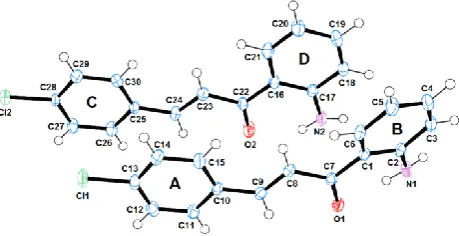
Figure 1. ORTEP drawing of the asymmetric unit for the o-aminochalcone 3; ellipsoids are displayed at the 50% probability level.
Scheme 1. Synthesis ofo-aminochalcone3. Structure4will be used below to compare some of its crystallographic properties with those of compound3.
It is worth mentioning thato-aminochalcone3has previously been reported [11] and is currently a commercially available product [12]. Lee and Youn prepared it from a condensation reaction between ketone1and aldehyde2in a THF–NaOMe mixture. After a laborious workup, compound3was obtained with an 82% yield; however, no details about its characterization were supplied [11]. In spite of compound3being a known molecule, no crystallographic analysis has been reported. This finding encouraged us to collect and select the best crystals and solve the structure via X-ray diffraction. Before starting the X-ray analysis, we considered that a complete analytical and spectroscopic characterization of compound3would be worthwhile. IR, 1D and 2D NMR techniques, and mass spectrum and elemental analysis were used. The most relevant spectroscopic features for compound3are the NH2 and C=O absorption bands at (3468, 3321) and 1643 cm−1, respectively, in the IR spectrum. In the 1H-NMR spectrum, two doublets at 7.59 (J= 15.5 Hz, 1H) and 7.99 (J= 15.5 Hz, 1H) ppm, assigned to theα,β-vinylic protons intransconfiguration associated with the new C=C bond, formed. A broad singlet at 7.42 ppm (2H) was assigned to the NH2functionality.
The13C-NMR signals for all 13 different C nuclei expected for3were observed, one of which belongs to the carbonyl group at 190.8 ppm. Two molecular ions withm/z257/259 (accomplishing the Cl-rule), and a base peak withm/z146 (M – C6H4Cl), are consistent with the proposed structure for chalcone3.
2.1. Structural Analysis
Single crystals of3suitable for X-ray diffraction were grown via slow evaporation in ethanol at room temperature. According to the results (Figures1–3and Tables1and2), there is no doubt that the obtained compound corresponded to chalcone3as proposed above in the Scheme1.
Molbank 2016, 2016, M911 2 of 6
consequence, several of them were synthesized including the target compound 3. This product was obtained with an excellent yield from equimolar amounts of o-aminoacetophenone 1 and
p-chlorobenzaldehyde 2 via a Claisen–Schmidt condensation reaction as shown in Scheme 1. Reaction proceeded in ethanol at reflux and catalyzed by NaOH. The starting materials were consumed after 20 min of heating (TLC control), and the residue was crystallized from ethanol, affording a yellow solid. After analysis by analytical and spectroscopic techniques, the formation of the expected chalcone 3 with a 97% yield was confirmed. During purification, we noticed that pale yellow crystals formed from the ethanolic mother liquor.
Scheme 1. Synthesis of o-aminochalcone 3. Structure 4 will be used below to compare some of its crystallographic properties with those of compound 3.
It is worth mentioning that o-aminochalcone 3 has previously been reported [11] and is currently a commercially available product [12]. Lee and Youn prepared it from a condensation reaction between ketone 1 and aldehyde 2 in a THF–NaOMe mixture. After a laborious workup, compound 3 was obtained with an 82% yield; however, no details about its characterization were supplied [11]. In spite of compound 3 being a known molecule, no crystallographic analysis has been reported. This finding encouraged us to collect and select the best crystals and solve the structure via X-ray diffraction. Before starting the X-ray analysis, we considered that a complete analytical and spectroscopic characterization of compound 3 would be worthwhile. IR, 1D and 2D NMR techniques, and mass spectrum and elemental analysis were used. The most relevant spectroscopic features for compound 3 are the NH2 and C=O absorption bands at (3468, 3321) and 1643 cm−1, respectively, in the IR spectrum. In the 1H-NMR spectrum, two doublets at 7.59 (J = 15.5 Hz, 1H) and 7.99 (J = 15.5 Hz, 1H) ppm, assigned to the α,β-vinylic protons in trans configuration associated with the new C=C bond, formed. A broad singlet at 7.42 ppm (2H) was assigned to the NH2 functionality. The 13C-NMR signals for all 13 different C nuclei expected for 3 were observed, one of which belongs to the carbonyl group at 190.8 ppm. Two molecular ions with m/z 257/259 (accomplishing the Cl-rule), and a base peak with m/z 146 (M – C6H4Cl), are consistent with the proposed structure for chalcone 3.
2.1. Structural Analysis
[image:2.595.184.414.615.733.2]Single crystals of 3 suitable for X-ray diffraction were grown via slow evaporation in ethanol at room temperature. According to the results (Figures 1, 2, and 3 and Tables 1 and 2), there is no doubt that the obtained compound corresponded to chalcone 3 as proposed above in the Scheme 1.
Figure 1. ORTEP drawing of the asymmetric unit for the o-aminochalcone 3; ellipsoids are displayed at the 50% probability level.
Molbank2016,2016, M911 3 of 6
Table 1.Selected bond lengths [Å], angles [◦] and torsion angles [◦] for chalcone3. Bond Lengths
Cl(1)-C(13); 1.7391(18) Cl(2)-C(28); 1.7401(18) C(7)-C(8); 1.482(2) C(8)-C(9); 1.332(3) C(9)-C(10); 1.468(2)
C(7)-O(1); 1.238(2) C(1)-C(7); 1.472(3)
C(2)-N(1); 1.372(3) C(16)-C(22); 1.467(3) C(22)-C(23); 1.483(3) C(23)-C(24); 1.325(3) C(24)-C(25); 1.468(2) C(17)-N(2); 1.353(3)
Angles
C(7)-C(8)-C(9); 120.15(18) C(22)-C(23)-C(24); 120.65(19)
Torsion angles
C(2)-C(1)-C(7)-O(1); 22.9(3) C(17)-C(16)-C(22)-O(2); 0.8(3) C(8)-C(7)-C(1)-C(2); -154.66(17) C(23)-C(22)-C(16)-C(17); -178.05(17) C(10)-C(9)-C(8)-C(7); -177.55(17) C(25)-C(24)-C(23)-C(22); -179.20(19)
In the title chalcone3, marked structural differences in the molecules of the asymmetric unit are observed. Central fragments C1/C7(O1)/C8/C9/C10 and C16/C22(O2)/C23/C24/C25 are almost planar with an r.m.s. deviation of 0.0043 Å and 0.0130 Å, respectively. The C1/C7(O1)/C8/C9/C10 fragment makes dihedral angles of 26.14(12)◦and 5.73(19)◦, with A and B rings, respectively. At the same time, the C16/C22(O2)/C23/C24/C25 fragment makes dihedral angles of 1.97(18)◦and 4.72(16)◦, with C and D rings, respectively (see Figure1). The amino groups aresynpositioned with respect to the carbonyl groups in both molecules.
Bond lengths and bond angles in3are in a good agreement with those of the common fragments of the recently reported and closely relatedo-aminochalcone4[13], Scheme1. The reported structure for4bears a close similarity to that of the title compound3including the internal NH...O hydrogen bond, with the exception of the values in the bond length of the double bonds C8–C9 and C23–C24. In the titleo-aminochalcone3, these bond lengths are 1.332(3) and 1.325(3) Å, whereas they appear as a unique value of 1.299(3) Å in4.
2.2. Supramolecular Features
Figure 2. Partial packing diagram showing the two-dimensional sheet network of molecules in the bc plane, the formation of which is governed by the occurrence of N–H...N and C–H...O hydrogen bonds, forming edge-fused R66(46) rings parallel to the direction [100]. Hydrogen bonds are depicted with dashed lines. (Symmetry codes: (i) x-1/2,-y+1/2,-z+2; (ii) -x+1,+y-1/2,-z+3/2).
Table 2. Hydrogen bond lengths [Å ] and angles [°] for chalcone 3.
D–H...A D–H H...A D...A D–H...A
N1–H2N...O1i 0.89(3) 2.09(4) 2.982(3) 176(3)
N2–H4N...N1i 0.83(3) 2.48(3) 3.269(3) 158(2)
C14–H14...O2ii 0.95 2.40 3.293(3) 157.3
C29–H29...O1ii 0.95 2.53 3.400(3) 152.7
N2–H3N...O2 0.89(3) 1.95(3) 2.633(3) 133(3)
N1–H1N...O1 0.88(3) 2.08(3) 2.699(3) 127(3)
[image:4.595.170.420.508.717.2]Symmetry codes: (i) x-1/2, -y+1/2, -z+2; (ii) -x+1, y-1/2, -z+3/2
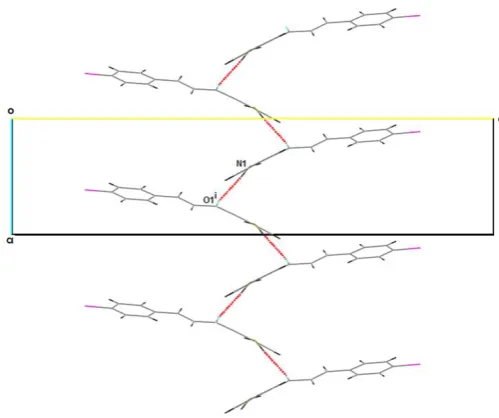
Figure 3. Part of the crystal structure of 3, showing the formation of C(6) chains along the direction [100]. (Symmetry code: (i) x-1/2,-y+1/2,-z+2).
Figure 2.Partial packing diagram showing the two-dimensional sheet network of molecules in the bc plane, the formation of which is governed by the occurrence of N–H...N and C–H...O hydrogen bonds, forming edge-fused R66(46) rings parallel to the direction [100]. Hydrogen bonds are depicted with dashed lines. (Symmetry codes: (i) x-1/2,-y+1/2,-z+2; (ii) -x+1,+y-1/2,-z+3/2).
Table 2.Hydrogen bond lengths [Å] and angles [◦] for chalcone3.
D–H...A D–H H...A D...A D–H...A
N1–H2N...O1i 0.89(3) 2.09(4) 2.982(3) 176(3) N2–H4N...N1i 0.83(3) 2.48(3) 3.269(3) 158(2) C14–H14...O2ii 0.95 2.40 3.293(3) 157.3 C29–H29...O1ii 0.95 2.53 3.400(3) 152.7 N2–H3N...O2 0.89(3) 1.95(3) 2.633(3) 133(3) N1–H1N...O1 0.88(3) 2.08(3) 2.699(3) 127(3)
Symmetry codes: (i) x-1/2, -y+1/2, -z+2; (ii) -x+1, y-1/2, -z+3/2.
Figure 2. Partial packing diagram showing the two-dimensional sheet network of molecules in the bc plane, the formation of which is governed by the occurrence of N–H...N and C–H...O hydrogen bonds, forming edge-fused R66(46) rings parallel to the direction [100]. Hydrogen bonds are depicted with dashed lines. (Symmetry codes: (i) x-1/2,-y+1/2,-z+2; (ii) -x+1,+y-1/2,-z+3/2).
Table 2. Hydrogen bond lengths [Å ] and angles [°] for chalcone 3.
D–H...A D–H H...A D...A D–H...A
N1–H2N...O1i 0.89(3) 2.09(4) 2.982(3) 176(3)
N2–H4N...N1i 0.83(3) 2.48(3) 3.269(3) 158(2)
C14–H14...O2ii 0.95 2.40 3.293(3) 157.3
C29–H29...O1ii 0.95 2.53 3.400(3) 152.7
N2–H3N...O2 0.89(3) 1.95(3) 2.633(3) 133(3)
N1–H1N...O1 0.88(3) 2.08(3) 2.699(3) 127(3)
Symmetry codes: (i) x-1/2, -y+1/2, -z+2; (ii) -x+1, y-1/2, -z+3/2
Figure 3. Part of the crystal structure of 3, showing the formation of C(6) chains along the direction [100]. (Symmetry code: (i) x-1/2,-y+1/2,-z+2).
Molbank2016,2016, M911 5 of 6
Other N–H...O hydrogen bonds are further observed that run along the direction [100] (see Figure3). The N1–H2N of the amino group in the first molecule of3at (x,y,z) acts as hydrogen bond donor to carbonyl O1 atom of the second molecule at (x-1/2,-y+1/2,-z+2). Finally, the O1 atom in the first molecule promotes simultaneous interactions with N1 and C29 in different directions, which is not noted for its counterpart (i.e. the O2 atom of the carbonyl group) in the second molecule. The rotation of theAring relative to the central segment of the chalcone brings the O1 atom to other hydrogen bond donors, including the N1–H2N along the direction [100].
3. Materials and Methods
3.1. General Information
Melting point was determined on a Büchi melting point B-450 apparatus (Instrumart, South Burlington, VT, USA) and is uncorrected. IR spectra were recorded on a Shimadzu FTIR 8400 spectrophotometer (Scientific Instruments Inc., Seattle, WA, USA) using KBr disks.1H and13C-NMR spectra were recorded on a Bruker Avance 400 spectrometer (Bruker BioSpin GmbH, Rheinstetten, Germany) operating at 400 MHz and 100 MHz, respectively, and using CDCl3 as a solvent and tetramethylsilane as an internal standard. The mass spectrum was obtained on a SHIMADZU-GCMS 2010-DI-2010 spectrometer (Scientific Instruments Inc., Columbia, NC, USA), equipped with a direct inlet probe) operating at 70 eV. Microanalysis was performed on a Thermo-Finnigan Flash EA1112 CHN elemental analyzer (Thermo Fischer Scientific Inc., Madison, WI, USA), and the values are within±0.4% of the theoretical values. Silica gel aluminum plates (Merck 60 F254) were used for analytical TLC. The starting ketone1and aldehyde2were purchased from (Sigma-Aldrich, San Luis, MO, USA) analytical or reagent grades and were used without further purification.
3.2. Synthesis of (E)-1-(2-Aminophenyl)-3-(4-chlorophenyl)prop-2-en-1-one (3)
A mixture ofo-aminoacetophenone1(0.5 g, 1 mmol),p-chlorobenzaldehyde2(1 mmol), a 20% NaOH aqueous solution (0.5 mL), and 96% EtOH (5 mL) was subjected to reflux for 20 min. The solid formed was filtered and washed with ethanol and water (10:5 mL). Recrystallization from 96% ethanol afforded3(97% yield, yellow solid, m.p. 94–95◦C). FTIR (KBr):ν= 3468, 3321 (NH2), 3034, 2974, 1643 (C=O), 1610, 1570, 1207, 1155, 750 str cm−1.1H-NMR (400 MHz, DMSO-d6)δ: 6.59 (t,J= 8.2, 1H, H-4), 6.80 (d,J= 8.2 Hz, 1H, H-3), 7.28 (t,J= 8.2, 1H, H-5), 7.42 (bs, 2H, NH2), 7.48 (d,J= 8.4, 2H, H-11,14), 7.59 (d,J= 15.5 Hz, 1H, H-9), 7.87 (d,J= 8.4 Hz, 2H, H-11,15), 7.99 (d,J= 15.5 Hz, 1H, H-8), 8.07 (d, J= 8.2 Hz, 1H, H-6) ppm.13C-NMR (100 MHz, DMSO-d6)δ: 114.9 (C-4), 117.4 (C-3), 117.9 (C-2), 124.7 (C-8), 129.4 (C-12,14), 130.8 (C-11,15), 131.9 (C-6), 134.5 (C-10), 134.9 (C-5), 135.0 (C-13), 140.9 (C-9), 152.6 (C-1), 190.8 (C-7, C=O) ppm. The numbering of the C and H atoms is the same than that for the structure3in Figure1. Anal. calcd. for C15H12ClNO (257.06): C, 69.91; H, 4.69; N, 5.43. Found: C, 70.05; H, 4.58; N, 5.52. MS (EI, 70 eV)m/z(%): 257/259 (20.4/6.8) [M+], 256 (31), 146 (100).
Crystal Data: C15H12ClNO (M = 257.71 g/mol): orthorhombic, space group P212121 (no. 19), a= 7.2156(2) Å, b = 11.2733(3) Å, c = 30.0334(7) Å, V = 2443.03(11) Å3, Z = 8, T = 123(2) K, µ(MoKα) = 0.298 mm−1,Dcalc = 1.401 Mg/m3, 12065 reflections measured (3.267◦ ≤Θ ≤ 28.87◦), 5488 unique (Rint= 0.0255, Rsigma= 0.0401) which were used in all calculations. The finalR1 was 0.0379 (I > 2σ(I)) andwR2 was 0.0782 (all data).
refined. Correctness of the model was confirmed by low residual peaks (0.246) and holes (−0.255 e.Å−3) in the final difference map. (CCDC 1501017 contains the supplementary crystallographic data for this paper. These data can be obtained free of charge via http://www.ccdc.cam.ac.uk/conts/retrieving. html (or from the CCDC, 12 Union Road, Cambridge CB2 1EZ, UK; Fax: +44 1223 336033; E-mail: [email protected])).
Supplementary Materials: Copies of the IR,1H-, 13C-NMR, DEPT-135, 2D NMR and mass spectra and the checkCIF and CIF files for compound3can be found at http://www.mdpi.com/1422-8599/2016/4/M911.
Acknowledgments: Authors thank COLCIENCIAS and Universidad del Valle for financial support - Project Number CI-7907. LC specially thank COLCIENCIAS for a “Joven Investigador” fellowship.
Author Contributions: R.A. designed the experiments; L.C. performed the experiments; R.A., L.C., J.Q., and B.I. analyzed the IR, MS, and NMR spectral data and wrote the manuscript; R.M-F. and A.R.K. performed the measurement and analysis of the X-ray experiments and helped to write the manuscript. All authors read and approved the final manuscript.
Conflicts of Interest:The authors declare no conflict of interest.
References and Note
1. Lin, Y.M.; Zhou, Y.; Flavin, M.T.; Zhou, I.M.; Nie, W.; Chen, F.C. Chalcones and flavonoids as anti-tuberculosis agents.Bioorg. Med. Chem.2002,10, 2795–2802. [CrossRef]
2. Won, S.-J.; Liu, C.-T.; Tsao, L.-T.; Weng, J.-R.; Ko, H.-H.; Wang, J.-P.; Lin, C.-N. Synthetic chalcones as potential anti-inflammatory and cancer chemopreventive agents.Eur. J. Med. Chem.2005,40, 103–112. [CrossRef] [PubMed]
3. Liu, M.; Wilairat, P.; Go, M.-L. Antimalarial alkoxylated and hydroxylated chalones: Structure-sctivity relationship analysis.J. Med. Chem.2001,44, 4443–4452. [CrossRef] [PubMed]
4. Pereira-Ávila, H.; de Albino-Smânia, E.F.; Delle-Monache, F.; Smânia-Júnior, A. Structure-activity relationship of antibacterial chalcones.Bioorg. Med. Chem.2008,16, 9790–9794. [CrossRef] [PubMed]
5. Sivakumar, P.M.; Muthu-Kumar, T.; Doble, M. Antifungal activity, mechanism and QSAR studies on chalcones.Chem. Biol. Drug Des.2009,74, 68–79. [CrossRef] [PubMed]
6. Modzelewska, A.; Pettit, C.; Achanta, G.; Davidson, N.E.; Huang, P.; Khan, S.R. Anticancer activities of novel chalcone and bis-chalcone derivatives.Bioorg. Med. Chem.2006,14, 3491–3495. [CrossRef] [PubMed] 7. Elarfi, M.J.; Al-Difar, H.A. Synthesis of some heterocyclic compounds derived from chalcones.Sci. Revs.
Chem. Commun.2012,2, 103–107.
8. Kalirajan, R.; Sivakumar, S.U.; Jubie, S.; Gowramma, B.; Suresh, B. Synthesis and biological evaluation of some heterocyclic derivatives of chalcones.Int. J. ChemTech Res.2009,1, 27–34.
9. Abonia, R.; Cuervo, P.; Insuasty, B.; Quiroga, J.; Nogueras, M.; Cobo, J.; Meier, H.; Lotero, E. An Amberlyst-15® mediated synthesis of new functionalized dioxoloquinolinone derivatives.Open Org. Chem. J.2008,2, 26–34. [CrossRef]
10. Abonia, R.; Cuervo, P.; Insuasty, B.; Quiroga, J.; Nogueras, M.; Cobo, J. A simple two-step sequence for the synthesis of novel 3-aryl[1,3]dioxolobenzo[f]pyrrolo[1,2-a]azepin-11-ones from 6-amino-3,4-methylenedioxyacetophenone.Eur. J. Org. Chem.2008, 4684–4689. [CrossRef]
11. Lee, J.I.; Youn, J.S. A novel synthesis of 2-aryl-4-quinolones from 2-aminobenzoic acids. Bull. Korean Chem. Soc.2008,29, 1853–1856.
12. This compound is commercially available from ChemSRC (China) under the CAS number 78396–06–2. 13. Cuenú, F.; Abonía, R.; Cobo, J.; Glidewel, C. 1-(2-Aminophenyl)-3-(4-pyridyl)prop-2-en-1-one:
A three-dimensional framework structure built from N—H_ _ _N, C—H_ _ _O and C—H_ _ _p(arene) hydrogen bonds.Acta Cryst.2010,C66, o589–o592. [CrossRef] [PubMed]
14. Sheldrick, G.M. Crystal structure refinement withSHELXL.Acta Cryst.2015,C71, 3–8.
![Table 1. Selected bond lengths [Å], angles [◦] and torsion angles [◦] for chalcone 3.](https://thumb-us.123doks.com/thumbv2/123dok_us/1504398.103132/3.595.103.491.110.297/table-selected-bond-lengths-angles-torsion-angles-chalcone.webp)