
Development of a functional food ingredient using extrusion processing technology : a thesis presented in partial fulfillment of the requirements for the degree of Master of Technology in Food Technology at Massey University
232
0
0
Full text
(2) DEVELOPMENT OF A FUNCTIONAL FOOD INGREDIENT USING EXTRUSION PROCESSING TECHNOLOGY. A T HESI S PRESENTED I N PARTIAL FULFILLMENT OF THE REQUIREMENTS FOR THE DEGREE OF. MASTER OF TECHNOLOGY IN FOOD TECHNOLOGY. AT MASSEY UNIVERSITY, PALMERSTON NORTH, NEW ZEALAND.. BRIAR MARIE GIBBS, B. TECH (HONS), MASSEY UNIVERSITY. 2003.
(3) Gibbs, B.M , Master Thesis, 2003. ABSTRACT. Thi s proj ect aimed to develop a puffed " fun cti ona l food " cerea l ingredient th at could subsequ entl y be used in muesli bar products and potenti all y be on so ld to breakfast cerea l manu facturers. T his in gredi ent was to contain nu tri ents th at prov ided heart health benefit s and a lso to possess good tex tural properti es a nd to have an acce ptable taste. E xtrusion process ing was used to produce th e ingredi ent ; ex trusion processing tran sform ed th e raw materi als used into a more pa latable and tex tura ll y acceptable fom1 and changed th e nu t:"i ti ona l qu ality.. Th e decision as to w hi ch nutri ents to inc lude in th e ing redi ent required considerati o n of effi cacy, reg ul atory a nd con sum er and mark et fac tors. A litera ture review w as undertaken to ide ntify po tential nutri ents th at wo uld have heart hea lth effi cacy, meet regul atory guid e lines and still be acceptabl e to co ns um ers.. A qu a litati ve consum er. study was co nd ucted to ga uge consum er awareness of th e nutri ents in ves ti ga ted and th e des ira bili ty fo r th ese ing redi ents to be inc luded in a bar benefi tin g hea rt hea lth .. T he main hea rt hea lth nutri ent se lected fo r use in th e puffed mues li ingredi e nt, based on th e res ul ts of screenin g, was so lubl e fibre. Th e so urce of so lubl e fi bre se lected was oat. T he tota l, so lubl e and p-g lucan (a parti cul ar fo rm of so luble fibre) di e tary fibre co ntents and the phys ica l pro perti es we re of interest du e to th eir influence on hea rt health be nefit s, produ ct cla ims a nd senso ry charac teri sti cs.. Th e effect of fo rmul ati o n (s tarc h level, starch type), enzyme treatm ent and ex truder processin g settin gs on th e fibre content and phys ica l properti es of the puffed ingredi ent w as investi ga ted. It w as found that solubl e fibre increased durin g th e extrusion process, partially at th e ex pe nse of insolubl e di etary fibre. However, ~- g lu ca n was found to de crease durin g process ing. The level of starch in th e fom1ul ation was found to have th e most signifi cant effect on both th e ph ys ica l and nutriti ona l properti es. Increasing th e level of starch had a positi ve effect on the ph ys ica l properti es, but decreased dietary fibre level s..
(4) Gibbs, B.M, Master Thesis , 2003. The puffed extrusion product contained a low level of ~-glucan and a moderate level of total and soluble dietary fibre. A number of recommendations are presented concerning the feasibility of commercialisation, ingredient supplementation requirements and further research associated with the optimisation of the fonnulation and extrusion processing conditions.. 11.
(5) Gibbs, B.M, Master Thesis, 2003. ACKNOWLEDGEMENTS. Firstly, l would like to thank Nice and Natural Ltd. (the project sponsor) for the opportunity to work on such an interesting project. Functional food is an area of great market and research potential , and to be exposed to the numerous issues involved in the development and marketing of such products, I am privileged. This project has been a great learning experience, both interesting and challenging. I only hope that the infom1ation and learning from this project can go on to be successfully commercialised .. There have been many people who have contributed significantly to th e completion and achievements in this project, I would like to take this opportunity to thank them .. First and foremost, I would like to thank my chief supervisor Ms. Carol Ma for all of the time and effort she has dedicated to this project and for the continuous support and encouragement she has provided. Her academic guidance and knowledge of extrusion technology has been of great assistance.. I would like thank my co-supervisors, Or. Janet Weber and Dr. Brian Wilkinson. 1 would like to thank Janet for her assistance with nutritional issues and interpretation of clinical studies, and guidance throughout th e consumer research process, particularly ethics approval. Many thanks to Brian for his expert opinion on product development issues throughout the project and for reviewing my work, despite his extremely bus y sc hedule . 1 would also like to thank Brian and Janet for their on-going encouragement, motivation and support.. I would like to thank everyone at Nice and Natural who contributed to this project, but in particular I would like to make a special thanks to Juli Mercer (Technical Manager) for her direction , perspective and on-going support. 1 would like to thank both Allen Peters (Managing Director) and Lawrie McColl (Marketing Manager) and Nimma Sherpa (Food Technologist) for their support, understanding and encouragement.. I would like to thank Dr. Chris Baldi and Dean Fourie from the University of Auckland Cardiac Rehabilitation Clinic for assistance in the recruitment of focus group. l11.
(6) Gibbs, B.M, Master Thesis, 2003. participants, particu larly to Dean for gomg beyond expectations and conducOting a p ostal request to past members on my behalf. Thanks are also due to Klaus Borges and Lauri e Holl oway of th e Rotary C lub of Auckland City W est for th e ir assistance in recruiting club members to participate in focu s group s and organi sing a venue for focu s gro up sess ions to be he ld . The contributi on of a ll focu s gro up parti cipants is greatl y appreciated. I regret that yo ur nam es can not appear here for sake of anonymity.. There are a great number of peopl e that I would like to th ank for ma kin g tri als and product testin g happe n more easily , both in Pa lm erston North and Alban y.. At M assey Uni ve rsity in Pa lmersto n N orth , 1 would like to th ank Garry Radford for hi s ass istance w ith th e o perati on of th e ex trud er, Byron Kil lop fo r hi s he lp and ideas in th e modificati on of th e ex truder hoppe r, and Steve Gl asgow and Gheeda Re id fo r th eir help in th e lab .. I wo uld li ke to thank th e Massey Uni ve rsity N utriti on Laborato ry staff, pa rti cul arl y Fe licity Jackson (N utriti on Lab M anage r) fo r arranging trainin g and testin g and Hi an and R oshe la, who de monstra ted th e di etary fibre tes tin g proce du res . Thanks are due to a ll techni c ians who co nducted tes tin g and res ponded to urgency.. At Massey Uni ve rs ity in A lbany, l would like to thank M ari e Wong for organi sing access to th e lab fac iliti es, Li sa Dui ze r fo r her ass istance w ith tex ture ana lys is and a bi g th ank s to th e techni c ian s Du shi Bi gwood and Raschn a Pam1ar who we re a tre mend ous he lp orga ni sing equipment and space in a territory th at was new to me .. Othe rs have contributed adv ice, and informati on.. Many thanks to D av id Roberts (Di etician) and Dave Monroe (Industry Settings Man ager) from th e. ati onal H eart Found ation for th eir w illing ness to assist and. contribute informati on.. Thanks to Professor H arshamjit Gill from Massey University in Pa lmerston North for the provi sion of conference material on the subject of functiona l foods that I would not have been able to access otherwi se. IV.
(7) Gibbs, B.M, Master Thesis, 2003. I would also like to thank Allan Hardacre and Rebecca Harding from Crop and Food Research for their guidance in the early stages of this project.. On a personal level , I wou ld like to make a very specia l thanks to my family and friends who have been so supportive towards the completion of this project. Your support, encouragement, and patience has been crucial to the achievements in this project, it means a great deal to me.. Last but not least, the Education Fellowship from Technology New Zea land 1s gratefu ll y acknowledged .. v.
(8) Gibbs , B.M, Master Thesis , 2003. TABLE OF CONTENTS ABSTRACT .................................................................................. ............................................................... I ACKNOWLEDGEl\1ENTS .................................................................................................................... I ll LIST OF TABLES ................................................................................................................................... XI LIST OF FIGURES ............................................................................................................................... XII LIST OF ABBREV IAT I ONS ............................................................................................................... X l l l I.. I NT RODUCT I ON ............................................................................................................................ 1. 2.. FUNCTIONAL FOODS MARKET ................................................................................................ 4. 2.1. MARKET SI ZE ··· ···· ············· ··········· ·· ··· ······ ···················· ··············· ········ ······ ···· ········· ···· ··· ···· ···· ··· ····· ·· 4. 2.2. MARKET SITUAT ION AND PRODUCT TR EN DS .......................... ..... ........ .......... ................ ... .. .. ......... .. 5. 2.2.1.. United States. 2.2.2.. Europe. 2.2.3 .. Japan ............ .. ... 6. 2. 2.4.. A ustralia. .... 7. 2.2.5.. New Zealand. ...... 5 6. 7. 2.3. MEDI CAL COND IT IONS OF I MPORTANCE IN T HE D EVELO PMENT OF F UNCTIO A L FOODS ................ 9. 2 .4. MARKET FOR H EA RT H EA LTH P RODUCTS ...... ..... ........ ... .... ...... ... ........ ......... ........... ............... ... ... 10. 2.4.1.. Ma rket Size .............. .. 10. 2.4.2.. Predicted Cro1Fth. ll. 2.4.3.. Market Fo cus .................. ... . .. 2.4.4.. H eart Benefit Cereals and Cereal Bars ... ......... ...... .... ... ........ .... .... ... ... ... ........... ..... ..... ..... 12. 2.44. 1.. ..................... .... .... ...... ..... .. ........ .............. .. .. .. .... ... ........ . . 11. Market Performance ... ... ........ ............ .. ......... ... ......... .......... .. .. ...... ....... ...... ......... ... ......... .. ... 14. 2 .5. M ARKET PLAYERS ........... .... .. ... .. .......... ... .... ...... .. .... ... .. ..... .. .......... ... ... ... ..... ..... ....... ..... .... .... ... ...... 2.6. TRE NDS DRIVI NG F UNCTIONAL F OODS M A RKET .. ... .. ... ... .... ..... ......... ........ .... ... ...... ...... .. ...... ... .... . I 7. 2.7. CONSUMER M ARKETI G I SSUES .. ... ... .. .... ...... .... ..... .. .... .... ...... .. .... .... .... .......... .. ... ... ....... ....... ....... .. 3.. 19. 2. 7. I .. Product Attributes ..... ... ....... ........... ... ....... .......... ... ....... ... ...... ... .. ... .. .... ........ .. ........ ... ... ... .. 19. 2.7.2.. Tmget Ma rket .... ........ ... .. ....... ...... ....... ... .... ..... ... .. ....... ...... ... .. 2.7.2. 1.. Positi oning.. 2.7.2.2.. Hea lth Claim s .......... .. ...... .... ....... .. 2.7.3 .. 2.8. 16. ..... ...... ..... ...... .. ...... ... 21 .. ... ..... ......... 22. ...... 23. Promo!ion ... ... ..................... .. ....... ....... .. .......... ................ ... ....... ....... ......... .. . ...... ........ ..... 2 3. S UMMARY AND CONCLUS ION .. ...... ... . ....... ......... .... ........ .... ........ ... ................ ....... ... .... .... .. ..... .. .... . 25. NUTR ITION LITERATURE REVIEW ...................................................................................... 27. 3.1. O VE RV IEW OF NUTR ITI ON AN D CO RONA RY H EA RT DI SEASE (CHD) ... ......................... ................ 27. 3.2. C HD AN D DI ETA RY FI BRE .... .......... .... ..... .. .. ..... .. .. .... ...... ........ ........ .... .......... ......... ..... ... ... .... ..... .. . 29. VI.
(9) Gibbs, B.M, Master Thesis, 2003. 3.3. CHD AND FATIY ACI DS ... . ...... ................ .......... ... .......... ............. .......................... .. ..................... 33. 3.3.1.. Saturated Fatty Acids ..... .. .. .......... ...... .... ............. ... .......... ................... ........................ ....... 34. 3.3.2.. Monounsaturated Fatty Acid~ .. .... ... ..... ..... ....... .. .... .... ..... ..... ..... ...... ...... ....... ......... ............. 34. 3.3.3.. Polyunsatllrated Fatty Acids- ..... ................................ .. .... ....... .. .. ..... ............. .. ....... ..... ... .... . 34. 3.3.3. 1.. 3.3.4.. Omega-3 ... ....... ....... ....... ...... ..... ... ..... ........... ... ..... ....... .... ........................ .......... ....................... 35. Trans fatly a cids .. ... ..................... ...................... .. ..... ...... ........ ... ..... ... .. ...... .... ..... ... .... ........ . 36. 3.4. CHO AND P HYTOSTEROLS ....... ....... ................ ... .............................. .................. ................... .. ....... 3.5. CHO AND SOYA ........... ......... .. .... .......... .. .................... .............................. ... .. .................... ........ .. 39. 3.6. C H DANDfOLATE ... . .... .. ... .. .. .. .... ............................................................................................... .. 40. 3.7. A NTIOXI DANTS.................................... .... ...... .... ...... ..... .......... . ..................................................... 4 1. 3.8. EXTRUSION AND NUTRITION ................... .............. ........... ...... ... ...... .. ...... .. ... ... ............................. 42. 3.8. 1.. 37. Dietal)' Fibre ........ ... ...... ....................................... ................. ............. ........ .. .............. ....... . 43. 3.8.1.1.. Effect of Extrusion Processing on Dietary Fibre Contc nt ............................ ......... ........ .... ....... 43. 3.8.1.2.. Effect of Extrus ion Processing on Dietary Fibre Solubil ity ................... .......... ........................ 46. 3.8.1.3.. Effect of Extrusion Processing on Dietary Fibre Vi scosity .............. ..................... ........ ........... 4 7. 3.8. 1.4.. Health Significance ...................... ..................................................................... ..... ...... ........... .48. 3.8.1.5.. Effect on Product Texrure ........... ..... ..... ............................... ................... .......... ..... ................. .48. 3.8.1.6.. Summary ............. ..... ....... ...... ........ ........................ .............. .................. .. .......... ..... ...... ........... .48. 3.9. LIPIDS ..... .................. .. ............... ................................... .... . ... ... ........ .... .. .. . ... .... .... ... .. ...... ........... ... 49. 3. 10. PHYTOSTEROLS ............ .. . .......... ........ ....................... ..... ... . ....... ......... .. .. .. .... .... ... ... . .. ... ................. 5 1. 3. 11. SOYA .................. .. .... ..... ... ... .... .. .... ........ .................... ... .. .. .. ........ .. .. .......... .. .. .. .... ...... ... ..... ............ 5 1. 3 .1 2. FOLATE .. .... .. .. ............ ...... ... .. ... .......... ... ....................... ... ........ ........ ....... .......... .. .... . ..... ................. 52. 3 . 13. VITAM IN E ..... .......... ............. .... ..... ............... .... ................ .. .. ........... .............. ............................... 53. 3. 14. CONCLUSIONS AN D RECOMMENDATIONS ........... ....... ........................... ........................................ 53. 4.. REGU L ATIONS REV I EW .......................................................................................................... 58. 4.1. R EGULATION OF CLAIMS .......................... .................. .......... . ...................... ...... ...... .......... ........... 58. 4.2. NUTRI ENT I N FORMATION AND H EALTH CLAIMS .................................................. .... .................... 59. 4.2. 4.2. 1.. Ingredient List .................... ............................. .......... ........... ........ ........ ...... ............. ........... 59. 4.2.2.. Nutrient information........... .......... ......................... .... ................ ... ..... ........... ... .... .... .... ....... 59. 4.2.3.. Claims ........................... .... ...... ...... .................. ........ .. ....... ........ ......... ....... ... .. .. ... ........ .... ... . 59. 4.2. 3. 1.. Nutrient Content Claim ............................................................................. ..... .......................... 59. 4.2.3.2.. Structure-Function Claim .............. .............. ..................... ................. ...... ...................... .......... 60. 4.2.3.3.. Health C laim ................................. ........... .. ...................... ..... ............................................ ..... .. 60. R EGULATORY STATUS OF SELECTED COUNTRIES .... ... ... ..... ...................... ......................... .................... 60. 4.2.4.. New Zealand and Australia ...... ............ ......... .... ...... ... ... ...... ... ...... ............ .......................... 60. 4.2.5.. USA .. ....... ............................................. ... .. ..... ... ................ ..... ............ ............... ................. 61. 4.3. R ELEVANT CLAIMS PERMITIED IN NEW ZEALAND AND US MARKET ........................................... 62. 4.4. NATIONAL HEART FOUNDATION GUIDELI NES ................... ........... ........ ............... ......................... 65. 4.5. SUMMARY AND CONCLUSIONS ..................................................... ............ ........ ..... ............ .. .. ....... 65. 5.. C ONSUMER RESEARC H ............................................................................................................ 67. V ll.
(10) Gibbs, B.M, Master Thesis, 2003. 5.1. 5.2. CONSUMER ACCEPTANCE OF FUNCTIONAL FOODS ........... ... .... ........................ .. ... ............ ... ...... .. . 67. 5.1 .1 .. Perceived Susceptibility .... ......... .... .... ........ .. ...... ..... ... .... .... ........ .. ..... ..... ................ ...... ...... 68. 5. 1.2.. Perceived Severity .. ..... ............... ............. .... ....... ... .................. .. .. .. .... ... .... ... .. ....... ........ .... .. 68. 5.1 .3.. Perceived Benefit...... ..... .. ... ... ........... .... ... ...... ..... ... ...................... ... ......................... ........ ... 69. 5. 1.4.. Barriers ..... .. ........ .. ... ... ... ......... ... .... ................... .......................... ... ..... ..... ... ... ... ... .. .......... .. 70. 5.1 .5.. Cues toAction .................... ............ ........... ..... .... ....... ..... .... ..... ......... ..................... ............. 72. 5.1. 6.. Summary and Recommendations ........ ................... ...... .... ..... .. ... .... ....... .. .............. .. ... ........ . 73. Focus GROUP R ESEARCH ..... ...... .... ........ ................ ... .... ...... .. .... ...... ..................................... ... ..... 74. 5.2. 1.. A ims and Objectives ........ .. ..... .............. ... ........... ... .... ........ ........ ........ ............. .... ....... .. .... ... 74. 5.2.2.. Method .... .. ... ...... ......... ..... ... ........ ......... .. .... ....... .. ... .. ...... ...... ............... ... .... .. .. ......... .... .. .. ... 75. 5.2.2. 1.. Data Coll ecti on .... ... ..... .. ......... ........ .............. ... .......... ......... .... .. ...... ....... ..... ... ..... .... ...... ...... ... .75. 5.2.2.2.. Parti c ipants and Rec rnitment ... ... ... ...... ...... ............................ .................. .... ............ ...... ..... .... 75. 5.2.2.3 .. Focus Groups Sessions. 5.2.2.4.. Analysis....... 5.2.3.. .. ... ...... ... .... ....... ... .. ........... .... 76. .. ....... .... ...... ......... .. .. ..... ... ......... ........ .............. .................... . .... 78. Results and Discussion ........ .......... ...... .... ..... .... ....... .... .. ..... ... .. .. .. ...... ... .. ..... .. ..... ... ... ......... 79. 5.2.3.1.. Participants ..... .... ...... ........... .... ... ...... ....... .............. ............ ....... ..... ... .......... ... ...... ... ... ... ......... ..79. 5.2.3.2.. Heart Health Concern .............. ... ..... .. .. .... .... ... ....... ..... .. 5.2.3.3.. Hea rt Disease Pre vention .......... ......... ... ........... ...... .. . .. 80. 5.2.3.4.. Awareness of Foods and Food Com po nents ... ... .. ... .. . ... 82. 5.2.3.5.. Market Co nsiderat ions. ... 88. 5.2.4.. . ....... ..................... 80. Discussion/comparisons .... .... ... .... ...... .... 5.2.4.1.. New Zeala nd/ Austra lia. 5.2.4.1.. us ................. .. 5.2.5. 6.. ..... ..... ....... ... ... .. ...... .. Conclusions and Recommendations ...... ... ...... .. ...... ......... ... ...... ..... ... .... .... ... ..... 98 .. 98 . ......... 99. . 100. SCREEN I NG ................................................................................................................................ 104. 6.1. SCREENING METHOD ... ........ ... .... ... .. ... .............. ......... ... ...... .. ....... .................. .... ... ....... ... .... ......... I 04. 6.2. SCREEN ING RESULTS AND DI SCUSS ION ..... ..... .......... ......... .. ................... ....... .. ................ ............ I 07. 6.3. CONCLUS ION ............ ..... .... ........... .......... .. ........ .. ... ....... ............. ... ...... .. ...... ... .. .... ... .... .. ..... .... ...... I 09. 7.. EXTRUSION LITERATURE REVIEW .................................................................................... 111. 7. I. EXTRUS ION PROCESS ...... ....... ............. ........ ........... .............. ....... .... ........................... .... ............. 111. 7.2. R AW M ATE RIALS .... ............. .......... .. ... .. ........... .......... ......... ........ ... .... ..... ..... ............. .......... . .. ...... 7.3. 112. 7.2.1 .. Group 1: Structure Forming Materials ... .... ...... ................................... ...... ..... ..... ... ... ..... . 11 3. 7.2.2.. Group 2: Dispersed-Phase Filling Materials ................... .. ... ... ...... ........... ......... .... ........ . 116. 7.2.3.. Group 3: Ingredients that act as plasticisers and lubricants .... .... .... ......... ......... .. ... ..... ... 11 7. 7.2.4.. Group 4: Soluble Solids ... .... .. .... ..... .......... ................... ..... .... ... ............... .. ............ ... .. ... ... 11 8. 7.2.5.. Group 5: Nucleating Substances .......... .. ... .. ..... .. .. ...... ......... .......... ..... ............ .................. 11 8. 7.2.6.. Group 6: Colouring Substances ... .. ... ... .. ... ........... ........... ...... ... ...... ... ..... .. ........... ............. 11 8. 7.2. 7.. Group 7: Flavouring Substances .......... .......... ..... ..... ................................. ........... ............ 119. EXTRUS ION PROCESS VARIABLES ... ...... ......... .. .... ... .. ..... .............. .......... ....... ... .. .... ... ................ ... 7.3.1.. 119. Moisture Content ..... ....... ............. ..... ........ .. .. .. .... ... ... ...... .... ...... ... ...... .. ...... ...... .... .. ... ........ 119 Vlll.
(11) Gibbs, B.M, Master Thesis, 2003. 7.4. 7.5. 8.. 7. 3.2.. Barrel and Die Temperature ............ ..... .... .. ........... ... ................ .. ....... .................. ......... ... I 20. 7. 3. 3.. Feed Rate and Screw Speed ................ .. ....... ...... ..................................... ..... ........ ........ .... 121. 7.3.4.. Screw Design and Configuration ............................................. ...... .. ................................ 122. EXTRUSION AN D O ATS .................................................................................... ........... ..... ............ 123. 7. 4.1.. Effect ofExtrusion on Physical and Sensory Properties .............. ............ ........................ 124. 7. 4.2.. EJ]ect ofExtrusion on Dietary Fibre ... ...... ...... ...... ..................... ... ......... ... ........ .... .. ......... 125. 7.4.3.. Resistant Starch ............. ..... ..... .. ..... .................................................. ... .... ..... ........ .... ..... ... 126. CONCLUSION .. ............ ...... ..... .... .. ........ ..... .............. ........ ..... .... ...................... .......... ....... .. ........... 128. EXT RUSI ON EXPERI MENT .................................................................................................... 130. 8. 1. MATERI ALS .... ... ... .. .. ......... .. .. ..... .................... ............. .. . ........ ... ......... .... ... .. ....... ... ..... ..... ........ .... 130. 8.2. EXTR USION .. .. ................... ......... .. .................. ... ........ .... .................. ...... ...... ... ... .. .......... ... ... ......... 132. 8.2.1.. Formulation Preparation .......... .... ... ..... ... ... ....... ........ ... ...... ... ... ... ... ...... ............ ........ ....... 132. 8. 2.2.. fatrnder ... ......................................... ... .. ..... ...... .. ....... ... ...... ........ .. ...... ... ..... .. .... ..... ..... .. .. .. 132. 8.2.3.. Post-extrusion Treatment .................. .............................................. ....... ............. ............. l 34. 8.2.4.. Sighter Trials .............................................. .. ... ................................ .................... ............. l 34. 8.2.5.. Hopper Modification ......... ........... ..... ......... .. ... .. ........... ..... .............. ................................. l 35. 8.2.6.. Factorial Experiment ..................... ............................. ..................................................... 138. 8 .2.6.1.. 8.3. 8.4. Starch Pre-Treatment ........ ............... ...... .............................. ............ .......... ..... ....................... 139. UTRITIONAL ANALYSIS ............... ....................... ....... ......... ............. .. ........................................ 139. 8.3.1.. Dietmy Fibre ..................... ................. ....... ...... .............. .. .... ...... .... ... .. ..... ... .... ....... .... ... .... l 39. 8. 3.2.. Beta-Cl11ca11 ...... .. ....... .. ..................... .. .............. ......... ... ............................. ............... ....... l 4 l. 8.3.3.. Moisture .................. ......... ... ....... ...... .. ...... ........................... ... ...... .................................... 143. PHYSICAL PROPERTIES .. .. .. ... .... ........ ................ ............................. . ..... ... ....... ..... ..... ...... .. ........... l 43. 8.4. 1.. Diameter ....................... .................................................. ........ .. .............................. .. ........ 143. 8.4.2.. Texture Analysis ............................................................................................. .................. 143. 8.5. STATISTICAL ANALYSIS .................................... ......... . ................................................ . ... ... ... .. .... 144. 8.6. R ESULTS . ... ......... .................. .... .... . ............ ...... .. ..... .. ... .. ................. . ...... . .. ....... ......... ..... .. .... ... .... 144. 8.6.1.. 8.6.1.1.. Se lection of raw materials ...................... .................... ................................. ........................... 144. 8.6.1 .2.. Select ion of process conditio ns .............. ....................................... ................................... ... ... 145. 8.6. 1.3.. Expansion ........... ..... ........ ......... ....... ............. .................................................. ............... ........ 145. 8.6. 1.4.. Dietary Fibre ................................................................................................................... ....... 146. 8.6.1.5.. Effect of citric acid addition ....................... .......... ............. ...................... .................. ............ 147. 8. 6. 2.. 9.. Sighter Trial ...... .... .......... .... ......... ..... .. ...... ..... ...... ........ ...... ...... ...... ..................... ....... .... .. 144. Factorial Design Experiment ................ .. ......... ..... .... ...................... ................. .... ...... ...... 147. 8.6.2. 1.. Extruder Output Variables ..... ................................................................................................ 148. 8.6.2.2.. Physical Properties ..................................................... ................ ............................................ 154. 8.6.2.3 .. N utriti onal Properties ............ ........................................................ ..................... .......... .......... 162. 8.6.2.4.. Summary ...................................................................................................................... .......... 182. 8.6.2.5.. Optimisation ........................ ......... ................ ..... .. ....... .......... ................................................. 182. 8.6.2 .6 .. Conclusion ................ ..... ............................... .............. ................................................. ...... .... 184. CONCLUS IONS AN D RECOMMENOATI ONS ...................................................................... 187 IX.
(12) Gibbs, B.M, Master Thesis, 2003. 9. 1. SUMMARY OF WORK CONDUCTED AND CONCLUS IONS .... ........ ............................. ....................... 187. 9.2. R ECOMMENDATIONS FOR FUTURE WORK ................. ................................................................... 192. 9.3. 9.2.1.. Ingredient Development .............................................. ............................... ...................... 192. 9.2.2.. Related Research .................. ..... ......................... .......................................... ..... ............ ... 193. 9. 2.3.. Feasibility for ingredient Co111111ercialisation .......... .... ........ ........ ....... ....... ...... ... ............. 193. 9.2.4.. Production and Scale-up ..................... .. ....... ... ... .......... ...... ...... .......... .......... ........... ... ...... 193. F UTU RE D EVELOPMENT OF SNACK B A R PRODUCT .... ... .... .. ......... ... ... .............. ........................... 194. 9.3.J.. Formulation ....................................... .... .......... ............. ............. ... ....................... .... .... .... . 194. 9.3.2.. Sens01y Ana~vsis ......... .... ......... ... ....................... .... ..... .................................. .................... 195. 9.3.3.. Commercialisation ofSnack Bar Product ......... ............................ ... ....... ......................... 195. 9.3.3.1.. Consumer rcscarch ....................................................................................... .......................... I 95. 9.3.3.2.. Manufacnirc ......................................... .......................................... .................... ................ .... 195. 9.3.3.3.. Marketing ................... ................................................................................................... ........ 196. 9.4. SUMMARY········· ·············· ································································································ ··········· 196. 10.. R EFERENCES ......................................................................................................................... 197. 11 .. A PP EN DIX OUTLINE ........................................................................................................... 213. LIST OF TABLES (APPENDIX) ......................................................................................................... 214 LIST OF F IGURES (APPENDIX) ....................................................................................................... 215. x.
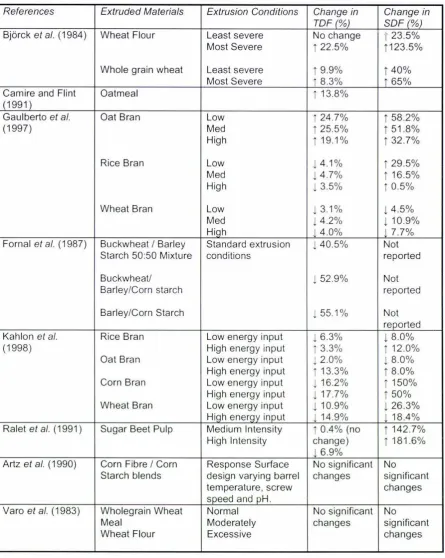
(13) Gibbs, B.M, Master Thesis, 2003. LIST OF TABLES. Table 2. 1: International Market for Functional Foods in Selected Countries, 1999 ..................................... 5 Table 2.2: Products Promoted on Heart Health Basis in the New Zealand Market. . .... .............. ... ... ... 8 Table 2.3: Summary of Selected Heart Benefit Cereal Bars and Cereals .. ....... ...... .... ..... ... ..... ....... ........... . 12 Table 2.4: Examples of Unsuccessful Functional Food Launches - Key Reasons for Failure ............... 15 Table. 2.5 :. Examples. of. Successful. Functional. Food. Launches. Key. Reasons. for. Success . .. .............. 155 Table 2.6: Trends driving the Functional Foods Market. .... . ..... .. .. ... .... ..... .... ... ......... . .......... ..... . 18 Table 3.1: Effect of extrusion processing on total dietary fibre and soluble dietary fibre .......................... 44 Table 3.2: Summary of Heart Health Benefits and Extrusion Processing Stability of Nutrients Investigated ............... ... .... ............................................ .................... ......... .. .. .. ...... .. .. ....... ...... .. ................. . 56 Table 4.1: Summary of relevant Health C laims and Nutrition Content Claims in NZ and US Markets .. .. 63 Table 5 .1 : Age and gender criteria for focus group participants recruited from the Rotary Club and Cardiac Clinic .............. .. ........... ....... ..... .. ............ ... .... ... .... .................. ... ......... ........ ... .... ....... ..... .. ............ 756 Table 5.2: Summary of the awareness of foods and food components that provide heart health benefits . 88 Table 5.3: Claims/Properties desired in a Heart Health Cerea l Bar ........... ............ ...... ......... .... .. .. ... ......... . 91 Table 5.4: Nutrients Desired in a Heart Hea lth Cereal Bar ... .. .... ............ ... ... .... ........ .... ...... ....... ....... ......... 91 Table 6.1: Product Screening Criteria ........ ...... .. .. ... ........ .. ...................................... ... .... ......................... . I 05 Table 6.2: Summary of Screening Scores ......................................... ....................................................... I 07 Table 7. I: Size, shape and composition of some common ly used starches ...................... ..... .. ..... . 1 I 4 Table 7 .2: Effect of Oat Flour, Moisture and Screw Speed on Physical Properties and Colour. ....... .... 124 Table 7.3: Effect of Oat Flour, Moisture and Screw Speed on Texture and Sensory Properties) ....... ..... 125 Tab le 8 . 1: Specification for Oat Flour and Oat Bran ... .......... ... .. ............... ... ..... ....... ................ ............ .. . 130 Table 8.2: Fonnulations used for Extrusion Sighter Trials .... ... .. ............. .. .............................. I 35 Table 8.3: Processing Conditions used for Extrusion Sighter Trials .. .... .... ..... . .............. .... .. .... .. . I 35 Table 8.4: Factorial Design .. . .. . . . . .. ..... . ... ........ . ....... ....... ......... . ........ . ........... . ... ... .... . .... . I 38 Table 8.5: Particle Size Distribution of Treated Starch .......... . .... ...... .. .. ... . ... . .......... ............... 139 Table 8.6: Effect of Extrusion and Oat bran addition on dietary fibre content (dry weight basis) ......... 147 Table 8.7: Effect of citric acid addition on dietary fibre content and composition (dry weight basis) .... 147 Table 8.8: Summary of Extruder response variables and Physical Properties for Factorial Experiment. 148 Table 8.9: Results of Factorial Experiment- Nutritional Properties ....... .. ................................ .............. 162 Table 8. l 0: Dietary Fibre Contents of Raw Material Blends (dry weight basis) ...... ..... ..... .... ........ ......... 163 Table 8.11: Beta-Glucan Contents in Raw Blends (dry weight basis) ... ............ ... ........... ... ..... ......... .... ... 176 Table 8.12: Summary of Effects of Factors on Responses Investigated ............ ........ ....... .......... .. ...... ..... 182. XI.
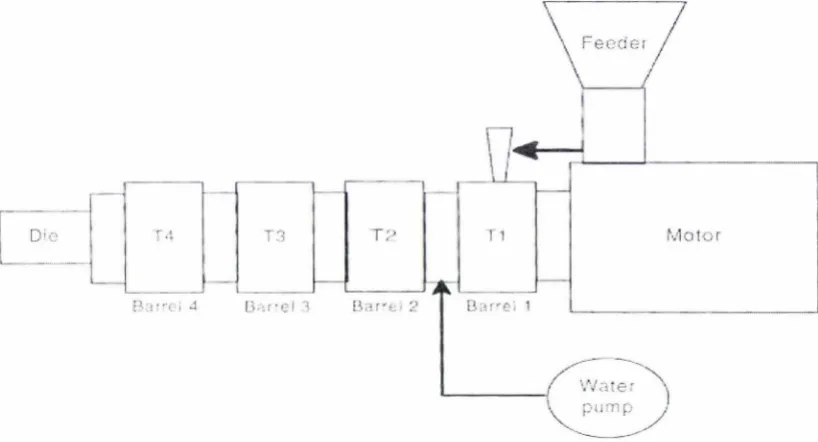
(14) Gibbs, B.M, Master Thesis, 2003. List of Figures. Figure 2. I: Positioning of Products Promoted on Heart Health in the New Zealand Market ................ ..... . 9 Figure 2.2: Size and Composition of Heart Benefit Foods Market by Country 2000 - 200 I .. .. ...... ......... . I 0 Figure 5. I: Product Concept - Ben ecol Snack Bar. ................................. .... ........... .... . ...... . .... 89 Figure 8. I : Schematic diagram of the twin-screw co-rotating extruder Clextral BC2 I.. (Li,. I 998) ..... .. I 33} Figure 8.2: Schematic diagram of the screw configuration used. (Li, I 998) ............. ............. ..... ... .. ...... I332 Figure 8.3: Schematic diagram of vibration units ............................ .......... . .... . .. .. ........... ... .. . I 36 Figure 8.4: Schematic diagram of the positioning ofvibrator units on the extruder hopper. . .. .... .. .. ..... I 36 Figure 8.5: Variation in Feed Flow rate with and without Vibration ................... ... ................... ....... ....... I 37 Figure 8.6: Effect of Oat Bran addition on Expansion ........... ........... ... ......... .... ......... ... ..... .. .. .. ... ............ 146 Figure 8.7: Effect of Factors on Torque .. ..... ......................... ..... ........................ ..... .. ........... ... ........ ......... 149 Figure 8.8: Interaction Plot for Effect of Factors on Torque .. ..... .. ... .. ... ... ...... ...... ... ........... ...................... I 50 Figure 8.9: Effect of Screw Speed on Torque ..... ........ .......... .... ... ..... ...... ..... .............. ........ ........ .............. I 50 Figure 8. I 0: Effect of Water Feed Rate on Torque ....... .. ............................. ... ............... .. .... ... .... .. ... .. ...... I 50 Figure 8. 11: Effect of Factors on Die Pressure (Pdi e) ............ ...... ...... ............. ... .. ... ................................. 151 Figure 8.12: Interacti on Plot for Die Pressure (Pd ie) ............. ...... ....... .. ... ....... .. ... ...... ................ .. ..... ....... 152 Figure 8.13: Effect of Screw Speed on Pdie ....................... ... .. ........ ...... ... ........ ...... .. ................................ 152 Figure 8. 14: Effect of Water Feed Rate on Pdie ............ ....... .. .... ...... ... ...... .. .. ...... ...... .... .... ... .... .. ... .......... 152 Figure 8. 15: Relationship between Torque and Die Pressure .. .... .. ... ... .... ........ ... .............. .... ........ .. .......... I 53 Figure 8. 16: Effect of Factors on Expansion .......................... ........ ... .... .. ... .. .. ....... ... ....... ........... .... ... ....... 154 Figure 8. 17: Effect of Factors on Hardness ......................... .. ...... ..... .. ..... ..... ... ....... .... .... ... ........... ... ..... .. .. I 57 Fi gure 8. I 8: Interaction Plot for Effect of Factors on Hardness ..... ... .. ............... ...... ... ...... ....................... 157 Fig ure 8. I 9: Relationship between Expansion (Diameter) and Hardness by Starch Type .... ................... I 58 Figure 8.20: Photographs of samp les; screw speed 300rpm, no enzyme ............ ... ... .. ..... .... ......... ........... 160 Figure 8.2 1: Photographs of extruded samp les ................. ......... .. .... ..... .. .... ..... .. ....... ...... ..... ...... ............ .. 161 Figure 8.22: Effect of Extrusion Processing on TDF ......... ........ ... .............. .. ................. .... ...... ......... .. ..... 164 Figure 8.23: Effect of Extrusion Processing on SDF ............... ....... ..... ...... ............................... ......... ... ... 164 Fig ure 8.24 : Effect of Extrusion Processing on IDF ......... ..... ..... ... .... ............ ......... ...... .......... ................. 165 Figure 8.25: Effect of Factors on TDF ......................................... ....... ....... ...... ............. ........................... 166 Figure 8.26: Pareto Chart for% TDF (High Amy lose Starch 2 3 Factorial) ................... ..... ..... ................ 168 Figure 8.27: Effect of Starch Level and Type on TDF (No Enzyme) .... ..... ... ... ....... ......... .. ... .......... ........ 169 Figure 8.28: Effect of Factors on % IDF ....... ....... ............................ ........ ............................. .... ... ............ I 70 Figure 8.29: Effect of Starch Level and Type on% IDF (No Enzyme) ... ........................... ........ ............. I 7 I Figure 8.30: Effect of Factors on SDF .............. ..................... ...................... ....... ..... .............. ....... ........... I 72 Figure 8.3 I: Effect of Starch Level and Type on SDF (No Enzyme) .......... .... .... ..... ...... ....................... .. 173 Figure 8.32: Effect of Extrusion on Figure 8.33: Effect of Factors on. ~-Glucan. ~-glucan. Content ..... ................. ... ...... ... .. ... ...................... ... .. ... .. ..... I 76. content... .................. ... ... .. .......... ..... .................. .. .. ... ............. I 78. Figure 8.34: Optimisation of Expansion and % SDF .... ......... ...... ...... ...... ............ .. .... ... .. ..... ..... ............... I 83 Xll.
(15) Gibbs, B.M, Master Thesis, 2003. Figure 8.35: Optimisation of expansion and P-G luca n ................. ................ .. ......................................... 184. X lll.
(16) Gibbs, B.M, Master Thesis, 2003. LIST OF ABBREVIATIONS. AA. Arachidonic acid. ALA. Alpha- lin olenic acid. ANZFA. Australia New Zealand Food Safety Authority (renamed FSANZ). CHD. Coronary Heart Di sease. CIAA. Confederation of Food and Drink Industries of the European Union. CMC. Carboxymethy l cellul ose. DHA. Docosahex anoic acid. Dwb. Dry Wei ght Basis. EPA. Eicopentaenoic acid. EU. European Union. FA. Fatty acid. FDA. Food and Drug Administration (food regulatory authority in the United States). FOAM A. Food and Drug Modernisation Act (in th e United States). Feed rate rpm is the number of revo luti ons of the feed conveyi ng screws per minute FOSHU. Foods for Specified Health Use (a regulatory fram ework in Japan). FSA NZ. Food Safety Australia New Zealand, (New Zea land and Austral ian Food Regulation Authority) formerly ANZF A. GE. Genetic Engineering. GM. Genetic Modification. GJ. Glycaemic Index. HDL. High density lipoprotein (cholesterol). ISSFAL. The International Society for the Study of Fatty Acids and Lipids). LA. Linoleic acid. LDL. Low density lipoprotein (cho lesterol). LFRA. Leatherhead Food Research Association Millimetres. mm 1. mmolL-. units for blood cholesterol concentration. MUFA. Monounsaturated fatty acid. MUHEC. Massey University Human Ethics Committee. n-3. Omega-3 (po lyun saturated fatty acid). XIV.
(17) Gibbs, B.M, Master Thesis, 2003. n-6. Omega-6 (polyunsaturated fatty acid). NHF Ti ck. National Heart Foundation approved Tick symbo l. NHF. National Heart Foundation. N. l.P. Nutrition Informati on Panel. NLEA. utrition Labe lling and Educati on Act (in the United States). NZHI S. New Zea land Health Information Service. PUFA. Polyunsaturated fa tty ac id. rpm. Number of rotati ons of the screw per minute.. RS. Resistant Starch. RS I. Phys icall y Inaccess ible starch (a classifi ca ti on of resistant starch). RS2. Res istant Starch granules (a classification of resistant starch). RS3. Retrograded Starch. Sf A. Saturated fatty acid. TFA. Trans Fatty Acids. TG. Triglyceride (general ly referred to as plasma triglycerides). UK. Un ited Kingdom. us. Un ited States of America. ~-g luca n. ( 1-3)( l-4)p-D-glucan (a fo rm of solubl e dietary fibre present in oa ts). xv.
(18) Gibbs, B.M, Master Thesis, 2003. 1.. INTRODUCTION. Functional foods are genera ll y considered to be foods that provide a hea lth or physiologica l benefit beyond normal nutriti on ( Has ler, 1998). The market for fun ctiona l foods is growing, both in New Zea land and overseas. hmctional food produ cts may be classi fi ed on a continuum between conventional food prod ucts and pharmaceuti cal drugs. It remains a 'grey' area in the way that funct ional foods are both classifi ed and regulated . The regul atory framework (food regulati ons, dietary supplement regulations and codes of. practi ce~). varies between countries, as do the types of al lowed claims.. The fun ctional foods market is an area that the spon soring company of this proj ect, Nice and Natural Ltd., wou ld like to pursue with the snack bar products that they manufacture.. Marketing foods as hav ing fu ncti onal benefits is considered a way to increase market share and the va lue of prod uct sales. However, the success of funct iona l food s products has been mixed hence there are a number of importan t product, regulatory and marketing factors to consider. These factors include product sensory attributes, se lecti on of a desired health or phys iological benefit, efficacy, regulatory all owances and claims and the adopti on of suitabl e positioning and communi cation strategy such that consumers understand the functional benefit and arc prepared to purchase th e product.. Most extruded cerea l ingred ients that are read il y avail able, such as ri ce bubb les and wheat based ingred ients, contribute favourably to prod uct texture and provide bu lk in bar products, but often deli ver very littl e hea lth benefit. Whereas, many ingredients that provide functi onal benefits have poor taste and textura l properties making them undesirable for use in food products wi thout modification. For example, soy protein lowers cholesterol, but contains bitter compounds and contributes to a gritty mouth-fee l. Modification of funct ional ingred ients may allow them to be incorporated with out undesirab le sensory consequences. Thus it was the aim of thi s product deve lopment proj ect to deve lop a functional cerea l food ingredient that would provide appropri ate health benefits for inclusion in snack bars, and in particular in a heart healthy muesli.
(19) Gibbs, B.M , Master Thesis, 2003. bar. The ingredient could possibly also be sold to cereal manufacturers for inclusion in muesli s as well.. Extrusion techno logy can be used to transform functiona l raw materials into an ingredi ent with des irable textural and taste characteristics. However, it is poss ible that ex trusion may change some of the nutri tional properties of the raw ingred ients, so thi s must also be in vesti gated.. The health conditi on selected as the focu s for thi s projec t was coronary heart di sease. Coronary heart d isease is a major publi c hea lth problem in New Zea land.. lschaemi c. Heart Di sease was the second highest cause of death of New Zeala nders in 1998 (NZ HI S, 2003). It is therefore anticipated that consumers may be respons ive to purchasing products marketed as benefiting heart health. Although a number of whol e food s may be incorporated into a 'heart friend ly diet', it is also poss ibl e to use technology (in thi s case, extrusion technology) to produce foods or ingredi ents with enhanced leve ls of nutrients identified as benefitin g heart hea lth in the contex t of the presen t. Z di et. Since few snack food products arc marketed as heart hea lthy in New. Zealan d, the opportunity ex ists to commerciali se such a product.. Hence, the snack bar sha ll be marketed primarily within the Au stra lasian mark et and potentially in the United States where heart hea lth claims are permitted. In the deve lopment of thi s ingredi ent the requ irements such as regulatory clai ms for both the Australa sian and US markets have been considered.. The main obj ectives of this research were to: I. ldentify suitable raw materi als fo r inclusion in the proposed puffed snack from a heart hea lth perspective and from an extm sion perspective. 2. Examine th e food and drug regulati ons in Australasia and North America to determine whether there were any ingredie nt restri ctions and to ascertain what hea lth claims were permitted in the two markets. 3. Consult the New Zea land Heart Foundation to fi nd out what restrictions they mi ght place on the proposed product and what claims they would allow given the fac t that the company wished to have the endorsement of the Heart Foundation for thi s new product. 2.
(20) Gibbs, B.M , Master Thesis, 2003. 4. To carry out a comprehensive market survey to find out what heart health bars are avai labl e in the proposed markets and the claims that manufacturers' of these products were making, together with any product specific information such as fo rmul ations, pack sizes, prices etc. 5.. To caITy out a small foc us group study to ascertain potential customers views about and understanding of a number of proposed mues li bar ingredients and whether these consumers wou ld purchase muesli bars that contained the proposed puffed ingred ient.. 6. To detem1in e the extrusion parameters that would have a major impact on the proposed product and to then investigate the effect of these parameters together w ith formulation changes on the nutritional and phys ica l properties of the proposed puffed ingredient.. 3.
(21) Gibbs, B.M, Master T hesis, 7.003. 2.. FUNCTIONAL FOODS MARKET. Thi s secti on firstl y prov ides an overv iew of th e global fun cti ona l foo ds market, g iv ing an indi cati on of th e market size a nd th e ma in areas of ac ti v ity in major markets (US, Europe, Ja pan and A ustra li a). It th en focuses on th e heart hea lth marke t (size, growth and ac ti vity) an d prov ides an in sight into th e heart hea lth cerea ls a nd cerea l bar category, th e focus fo r thi s proj ect. S ince New Z ea land sa les data was not readil y ava il able and th e Austra li an mark et was simil ar to th e New Zea land market, Australi an data was used as a bas is fo r predi ctin g th e s ize of th e New Zea land market.. The. author's observa ti ons of func ti ona l food produ c ts on th e New Zea land marke t are a lso given. F ina ll y, the market pl aye rs in the fun c ti ona l foo ds market, strategic o ptions and important co nsum er mark etin g iss ues are d isc ussed.. 2.1. Market Size. Func ti ona l food is often described as a ' hot trend ' in the food sector and is show ing strong growth in most estab li shed processed food markets . T he op portuni ty ex ists to enter a marke t th a t boas ts hi gh marg in s co mpa red to the matu re and dec linin g marke ts of tra di tiona l food segments (Za mm er, 2000). Therefore, marketin g a cerea l bar w ith fun cti ona l benefi ts may prov ide N ice and Na tura l Ltd w ith a n o pportunity to furth er ex pand th e rap idl y ex pandi ng mues li bar market. N ice and Na tu ra l do not ma ke breakfast cerea ls, and are unli ke ly to in th e near fu ture.. However, th e pro posed. ingredi ent may a lso enabl e brea kfast cerea l manu factuers w ith an opportuni ty to kickstart th eir rather sta ti c mark et segment.. Therefore, marketin g a cerea l bar or an. ingredi ent w ith fu ncti onal benefit s fo r inc lus ion in breakfas t cerea l may prov ide the opportunity to sustain hi gher profit margin s th an th e marg ins susta ined for th eir standard cerea l bars a nd hence increase N ice and Na tura l Ltd . 's overa ll profitability.. Estimates of th e mark et size vary greatl y between market research reports, dependin g on th e defi ni tion used to categorise fun cti on al foods and th e meth odo logies used to co llect sa les data (Heasman and M e ll entin, 2002). Limiting th e definiti on to "food and drinks that make a spec ifi c hea lth cla im on-pack or in advertisin g" th e combined m arket va lue of Europe, US, Japan and Austra li a was estimated to be $5.7 billion in 1999 4.
(22) Gibbs, B.M, Master Thesis, 2003. (Hilliam and Young, 2000). If a broader definition is used, and healthy foods not necessarily making health claims (but often perceived as functional) are included, the market estimate rises to over $30 billion (Hilliam and Young, 2000). On the basis of the above trends the size of the functional foods market in New Zealand (on a population basis) could be expected to be between $36-$200 million depending on which definition was used. A breakdown of these figures for selected countries is shown below in Table 2.1. Growth rate estimates vary between 8% and 14% per annum (Heasman and Mellentin , 2002). However, these figures can be misleading due to the nature of functional food marketing and the frequent leveraging of hidden assets causing established food products to become "functional" overnight (Heasman and Mellentin , 2002) . Despite the difficulty in quantifying the growth, the functional food market is one of considerable activity, yet still in the early growth stage. Table 2.1: International Market for Functional Foods in Selected Countries, 1999 Strict definition. Broad definition ($ billion) Europe 1.79 4-8 us 1.80 15 Japan 2.13 14 Australia 0.05 N/A Total 5.77 33+ Source: Leatherhead Food RA/various (Hilliam and Young, 2000). ($ billion). 2.2. Market situation and product trends. The maJor markets have developed in rather different ways, with different health propositions dominating each market. The major trends of the European , US , Japanese and Australian markets will be outlined briefly.. 2.2.l.. United States. One of the most significant functional food successes in the United States (US) has been the new category creation of the energy and nutrition bar market, estimated to be valued at > US $600million in 2000, double the value of the market in l 997 (Heasman and Mellentin, 2002). This market grew extremely rapidly (30% annual growth) from a market dominated by small entrepreneurs in 1998 to a market now dominated by large multinational companies including Nestle, Kraft, General Mills and Unilever.. 5.
(23) Gi bbs, B.M , Master Thesis, 2003. The US functional food market is dominated by anti-cancer products and the mam functional ingredients in these products are herbs and botanicals. Many of the products laun ched fit somewhere between dietary supplements and food products, perhaps influenced by the strong interest in dietary supplements (Hilliam and Young, 2000). There is also interest in heart-benefit-produ cts, particularl y cholestero l lowering products, dri ven by FDA approved claims for hea rt hea lth (LFRA, 200 I). Joint ve ntures between food and ingredient companies and food and pharmaceutica l companies and acquisitions of smaller compan ies by the major companies have been common in the US industry (Hilliam and Young, 2000).. 2.2 .2.. Europe. The UK, French and German markets were the most sizeabl e fun ctional food s markets in Europe in 1999 (Hilli am and Youn g, 2000). Fin land has al so seen much acti vity, as th e pioneer of chol esterol lowerin g spreads containing plant stero ls. The Europea n functi onal foods market was initial ly highl y fragmented, but has since ex peri enced growth in pan-European brands.. Functional dairy products, pa11icul arly probi otic yoghurts and drinks, dominate in Europe, accounting for 72% (va lue share) of the total functional foods market in 1999 (I lilli am and Young, 2000). Fun ctional prcads was the next largest sector with 14%. va lue share in 1999. Th e bakery and cerea l sector compri sed mainly of specialist nutritional bra nds. Activ ity in thi s sector has included vitamin and min eral fortificat ion, prcbioti cs and in the cerea l market repositi oning of products and marketing based on hea lth benefits, particularly oat based products bearing choles terol lowering claims (Hilliam and Young, 2000).. There has been some activ ity in heart hea lth, parti cularl y with phytosterol spreads in addition to some omega-3 containing products. However, some European countri es have seen more activity than others (LFRA, 200 I).. 2.2.3.. Japan. The Japanese market is long establi shed in functi onal foods and includes most sectors of the food and drink mark et. The ma in area of interest to Japanese consumers has been 6.
(24) Gibbs, B.M, Master Thesi s, 2003. gut health. Japanese consumers are entirely different to those of western cultures with a greater awareness of food and health. Many products do not make specific claims, but rely on consumer knowledge of functional additives (LFRA , 2001 ). The Japanese regulate health claims under a FOSHU (foods approved to caITy claims) system, with the number of FOSHU approved products increasing. Yet FOSHU products comprise only 15% of the total functional foods market in Japan . Although there are a number of FOSHU claims for cholesterol moderation , activity in this area has been fairly limited. Several products that regulate blood pressure have emerged however.. 2.2.4.. Australia. The Australian market has seen activity m many sectors including fortified bread, cereals, functional drinks and cholesterol lowering spreads, with much of the development from domestic companies such as Goodman Fielder. Australia has been a key region in heart benefit foods with the launch of a phytosterol range of products and Healthwise heart health cereals (Hilliam and Young, 2000).. 2.2.5.. New Zealand. Numerous functional food products are cu1Tently available in the New Zealand market. Areas of activity include vitamin and mineral fortification , particularly calcium and vitamin C, probiotic dairy products, fibre (particularly in the bread, cereal and bakery sectors), plant sterol s which are limited to spreads under the FSANZ food regul ations and essential fatty acids (omega-3 and omega-6). There is also a large market dedicated to diet/slimmin g and sports supplements.. Several niche heart health benefit products have emerged on the New Zealand market and the number of products marketed based on heart benefits is increasing. In addition, many conventional food products are endorsed by the National Heart Foundation (NHF) under the 'Pick the Tick ' program . Functional heart benefit products cuITently available in the New Zealand market are outlined in Table 2.2. These products are making structure-function claims and in some cases borderline health claims. All of these products except Metamucil caITY the NHF Tick, and prices range from being similarly priced to standard products to as much as four times the price of their standard counterparts. Product claims and price comparisons are outlined in Table 2.2 below. To the knowledge of this researcher, there are cuITently no snack bars or snack food 7.
(25) Gibbs, B.M, Master Thesis , 2003. products that are promoted on heart health in the New Zealand market, nor are there any cereal bars that are endorsed by the Heart Foundation under the Tick program. Table 2.2: Products Promoted on Heart Health Basis in the New Zealand Market. Product Flora Proactiv .. Claim "with natural plant sterols which reduce cholesterol uptake". Logical. "with plant derived ingredients that lower absorption " "source of omega-3 and 6 nutrients". Meadowlea HiOmega. "A rich source of long chain omega-3* canola spread with Heart Benefits" *Long chain omega-3 has been shown to help maintain a HEAL THY CARDIOVASCULAR SYSTEM & promote general wellbeing when used in conjunction with a healthy balanced diet" "with Omega-3 DHA" Back panel: Heart - The Heart Foundation recommends we include sources of Omega3 DHA as part of a healthy eatinq pattern "For your Heart" Back Panel: Burgen Oatbran and Honey is packed with natural ingredients including wholegrains, oatbran and folate that are beneficial for maintaining a healthy heart "Metamucil with 100% natural psyllium fibre . Fibre for regulatory and can help lower cholesterol levels" Side panel: Diets low in saturated fat and cholesterol that include ?grams of soluble fibre from psyllium husk as in Metamucil , may lower cholesterol levels. Reductions in cholesterol levels may contribute to reducing the risk of heart disease.. Tip Top UP Bread. Burgen Oatbran and Honey. Metamucil. Price Premium Approx. 4 x price of standard Flora and 2.7-2.9 x price of olive oil spreads 3.5- 4 x price of standard Meadowlea ; approx 2.5 x price of olive oil spreads . 2 x standard Meadowlea; 1.3 x olive oil spreads. Negligible (2%). Negligible. Priced as a supplement $21.95 for 336g (48 doses). Positioning Functional food products may be positioned on a continuum from conventional food products to pharmaceutical drugs. The positioning of the previously mentioned available products is illustrated in Figure 2.1 below. Competition exists not only from other food products , but dietary supplements and medical drugs as well (Childs, 2001).. 8.
(26) Gibbs, B.M, Master Thesis, 2003. Figure 2.1: Positioning of Products Promoted on Heart Health in the New Zealand Market. Medicine. 2.3. Conventional Foods. Medical Conditions of Importance in the Development of Functional Foods. Heart disease (lschaemic, hypertension and other forms of heart disease combined) was the most common cause of death in both males (29.7% of deaths) and fema les (27.4% of deaths) in 1999. This was close ly fo ll owed by cancer which accounted for 28.3% of male deaths and 26.0% of fema le deaths in 1999 (NZ HlS, 2003).. From a survey conducted in Europe by the Leatherhead Food Research Association (LFRA) in 2000 it was found that heart disease was regarded to be the most influential medical condition in the development offunctional foods over the 5 year period 20002005. Over 94% of respondents stated that heart disease would be very or quite influential, closely followed by osteoporosis (9 1%), gut health (8 1%) and cancer (78%) (Hilli am and Young, 2000).. As heart disease appears to be a major concern amongst consumers in the o lder age groups and also because the functional foods industry recognises that producing foods to prevent heart problems is a major growth opportunity (Hilliam and Young, 2000) it was decided that heart health should be the health condition to foc us on in this project.. 9.
(27) Gibbs, B.M, Master Thesis, 2003. 2.4. Market for Heart Health Products. 2.4.1.. Market Size. The global market for heart health products was worth approx imately US$3.4 billion in 1999 and was predicted to grow by 40% to reach $4.7 billion by 2005 (LFRA , 200 1). The market size and composition for heart benefit foods in major functional food marketing countries is shown in Fig ure 2.2 below. As illustrated in Figure 2.2 the U S dominates this market, with o ver $2 .6 billion sales, accounting for 76% of the global market (LFRA, 200 I) . The do minant catego ries arc bakery and cereal and soya products. The Australian heart bene fit food market was val ued at $215 mill ion in 2000 200 I (LFRA, 200 I). New Zealand has seen similar activity to Australia however the market size is likely to be proportionately smaller due to a small er po pulatio n (approximately $43 million popu lation basis).. Figure 2.2: Size a nd Co mpositio n of Heart Benefit Foods Market by Country 2000 - 2001. 3000. 2611 2500 0 Miscella nous. • Eggs. c. ~. O Soya O Da1ry • Bakery and Cereal. 2 000. ~. e. ~. O Fats a nd Oils. 1500. ~. Q). ~. ...... i. 1000. 585. 500. 500. 215 0. us. Europe. Japan. Australia. Source: Lcatherhead Food RA (LFRA, 200 l).. Indicative Australasia Market Size for Heart Health Cereal Bars Sales data for the breakfast cerea l market in Australia may provide some indication of the likely interest in functional muesli bars in the New Zealand market. Of particular. 10.
(28) G ibbs, B.M , Master Thesis, 2003. interest 1s the Healthwise range of products launched by Uncle Tobys (Goodman Fielder). Initiall y two variants were launched : ' Healthwise for Improved Heart Health ' (Refer to Tabl e 2.3, page 12 for product detai ls) and ' Hea lthwise for Improved Di gesti ve Hea lth ' (Hilliam and Young, 2000). On e year after laun ch the range had taken only a small market share; 3.9% vo lume share and 6.4% value share of the bran cerea ls market which compri sed just over I 0% of the total Australian breakfast cereal market (Hilli arn and Young, 2000). This indicates that the market is a sma ll niche market on ly. In addition, Uncle Toby's is a well established brand (a lthough less so in the breakfast cerea l market) and has greater marketing resources than Nice and Natura l Ltd, therefore the market share which could be achieved by Nice and Na tural in the heart hea lth. muesli. bar market is. likely to be smaller (McCo ll , Personal. Communi cation, 2003).. 2.4.2.. Predicted Growth. Leatherhead (LFRA, 200 I) predi cts th at heart benefit foods will be one of the fastest grovving functional food market segments over the next 5 years. It is the opin ion of th is author that the television advertising that has occurred recently in New Zealand for other heart hea lth benefit in g fu ncti onal food s products (e.g. Tip Top UP omega-3 bread and Mcadow lea omcga-3 spread, Flora Proactiv. margarine containing pl ant sterols and Metamucil containing psy lli um fib re), will ra ise consumer awareness about the nutrients they contain and have a positi ve effect on the growth of the market as a whole. Certainly, the 1984 Kellogg's All -Bran advertising campaign has shown the potential for the use of hea lth claims in adverti sing to increase consumer awareness and change consumer behaviours (Ippolito and Mathi as, l 990, cited in Willi ams, 1998). However, the heart health market is still small in the context of the total food market and high growth rates refl ect the small initial market size (LFRA, 200 I). It is important to understand that the number of consumers who purchase heart benefit food is li kely to be limited to those that have heart problems or a fa mily history of heart disease, or are interested in healthy eating and disease prevention (Wood, 1994 ; Wrick, 1995) rather than attracti ng th e mass market.. 2.4.3.. Market Focus. The greatest number of products available and highest sale values in the heart health market has been in cholestero l lowering produ cts, apart from Japan where blood II.
(29) Gibbs, B.M , Master Thes is, 2003. pressure regulation products had hi gher sales. The dominance of cholesterol lowering products is likely to have been influenced by the large number of US Food and Drug Admini stration (FDA) approved claims for chol esterol reducti on, including oats, whol e grains, psyllium, soya and phytosterol s. However, it is ex pected th at anti -hyperte nsion products w ill a lso become m ore common (LFRA , 2001 ).. It is ex pected th at cereals, bake ry and soya product categori es will continue to lead th e g lobal mark et over the next few years du e to th eir strength in the US, with values forecast to grow by 14% to reach $2 billion by 2 005 (LFRA, 2001 ). However, th e stro nges t grow th is ex pected to be in th e fats and da iry sectors, w ith a predi cted grow th rate of 825 % and a forecast mark et va lue of $2 50 mi Ili on in 2005 (LFRA , 200 I).. In genera l, th e breakfas t cerea l m arke t has con centrated on cholesterol redu cti on throu gh th e use of oats, psyllium, soya and w ho le grains. Th e bakery sector has concentra ted on DH A omega-3 fo rtifi cati on; O mega-3 moderates bl ood lipids.. The. co mbin ed heart benefi t cerea l mark e t for US/ UK/A ustra li a was va lued at $ 1.75 billi on in 200 I , alth ough not a ll of th ese produ cts ma ke direct claims. It should be noted th at th e Austra li an cerea l m ark et has a small sector of p rodu cts w ith heart benefit additi ves (s uch as oat bran, lec ithin , psy llium) va lued at $ 11 .3 milli on (LFRA , 200 1), whi ch indi cates some awareness and interest. The situati on is like ly to be simil ar in New Zea land .. 2.4.4.. Heart Benefit Cereals and Cereal Bars. The heart hea lth cerea l bar and cerea ls ma rk e t is di scussed as th ese are th e intended applicati ons fo r th e ingredi ent being developed in thi s proj ect.. Ta bl e 2.3 on th e. fo llowing page summari ses th e fun cti onal ingredi e nts used a nd ass ociated claims fo r se lected. cereal. bars. and. cereal s. marketed. fo r. their. heart. health. benefit s.. 12.
(30) Gibbs, 8.M, Master Thesis, 2003. Table 2.3: Summary of Selected Heart Benefit Cereal Bars and Cereals Product ranqe Cereal Bars Cereal Bars Cereal Bars/ Cereal Cereal Bars. Cereal bars/ Cereal Cereal Bars/ Cereal Cereal Cereal Cereal. Cereal. Brand. Manufacturer. Ingredient. Claimed Benefit. Country. Benecol. Pla nt sterol esters. Helps lower cholesterol. US . UK. Heartbar. McNeil consumer Products Cooke Pharma. Aviva. Novartis. Take Heart. Plant Sterols (Reducol Branded}. Lowers LDL cholesterol. Ensemble. Altus Foods (Quaker Oats/ Novartis Joint venture now owned byPepsiCo) Kelloggs. Psyllium. FDA claim related cholesterol reduction. & More. Marks and Spencer. Soy Protein. Hel ps maintain cholesterol levels. Cheerios. General Mills. Wholegrains. Axa Futura Muesli Smart Start Soya Protein Healthwise. Kungsornen. Beta-glucan. Helps to maintain heart hea lth helps lower cholesterol. Kelloggs. Soya protein. FDA claim related cholesterol redu ction. Uncle Toby's. Beta-glucan (from oats). Help cholesterol levels Fight free radicals Protect coronary arteries. Fibre, L-arginine , Phytoestrogens , antioxidants (Vit C , E, B6 , B 12, folate , niacin) Oat , Soya and Antioxidants. Antioxidants (vit C and E) , Fol ate. Price 1 Premium Approx . 5 x. Market Performance Very good niche product. 3-5 x. Poor (Range Withdrawn). us Helps lower cholesterol. UK , Switzerland. to. healthy. to. Test market (Midwest). us. UK. 40%. Poor (Range Withdrawn) Poor. UK,. None. Exce llent. Sweden. us Australia. Niche (Ra nge withdrawn due to regulatory non-compliance). The pri ce premium shown in tabl e 2.3 is an indi cati on of th e price of th e fun cti onal cerea l or cerea l bar produ ct compared to a standard product of a simil ar nature in the given market. The actual pri ces were not always ava il able in the publi ca ti ons thi s data was so urced from.. 13.
(31) Gibbs , B.M , Master Thesis, 2003. 2.4.4.1. Market Performance The marke t performance of function al cereals and cereal bars marketed on heart health benefits (a nd functional foods in general) has been variable. As shown by Table 2.3 a bove, numero us products marketed on heart hea lth benefits we re w ithdrawn a short time after test market or product lau nch due to poor market performance or in some instances due to regul atory ban (e.g. Uncle Toby's ' Hea lthwise' was wi thdrawn from the A ustralian m arket as th e product carried a heart hea lth claim; hea lth claims are not pennitted in Australia). Other products ha ve performed well. Marketing a functional cerea l bar/cereal product does have potential but desirable product attributes and benefits as we ll as the ab ility to market these benefits is critical.. Unsuccessful Launches Three product laun ches th at failed are the 'Aviva ' range from. ovartis, Kell ogg's. 'Ensembl e ' ra nge and Marks and Spencers '& More', these products all carried a cho lestero l lowerin g claim but each contained a different active ingred ient. Reasons for fa ilure are outlined in Tab le 2.4 on the following page.. These fa ilures show the relative difficulty of functional foods marketing and emphasise the importance of consumer understanding, an acceptabl e pricing strategy and a clear communi cati on strategy. Consume r marketin g issues are discussed in sect ion 2.7.. 14.
(32) Gibbs, B.M, Mas ter Thesis, 2003. Table 2.4: Examples of Unsuccessful Functional Food Launches - Key Reasons for Failure. Product Range Aviva. Ensemble. & More. Key Reasons for Failure Launched under unknown brand (Lack of brand trust) Too expensive (3-5 times the price of standard products) Poor Taste Packaging was highly medicalised Timing of Television Commercial Screening (9 months after launch due to approval delay) • Retailer resistance to create a Functional Foods Section • Expectation of a mainstream market (Anon., 2001 ; Heasman and Mellentin , 2002) Poor Taste • Poor Packaging • Psyllium not seen as new • (Heasman and Mellentin , 2002 ; Grant, 2000) • Cholesterol-lowering as only unique selling point • Lack of consumer concern for heart health (despite it being UK's greatest killer) • UK consumer unfamiliarity with Soy as a food ing redient • Complete lack of communication, education and information • Pricing premiums higher than the 20% premium Marks & Spencers had intended, th is may have been too high (40%). (Mellentin , 2002) .. • • • • •. Successfu l Launches. Two we ll k.nown and very successful functi onal food products, mark eted in very different ways are Yakult (Yakult Honsha) and Cheeri os (Genera l Mills). Yakult is a successful exa mpl e of new category creation, whilst the Cheeri o case stud y is an exampl e of th e leveraging of hidden nutriti onal assets (Heasman and Mellentin, 2002). The key rea ons for th e success of these two brands are outlined in Table 2.5 below.. Table 2.5: Exa mpl es of Successfu l Functional Food Launches - Key Reasons for Success. Product Range Cheerios (Genera l Mills) Yakult. Key Reasons for Success • Established (57 year old) brand • Competitively priced • Successful nutritional marketinq of whole qrains • Innovative product and packaging format • Long term vision (See Functional Food Brand Bu ilding as a 5-10 year process) • Health proposition (gut health) related to consumer need • Long term commitment to consumer education (Heasman and Mellentin , 2002) • Ded ication to research (Shortt, 2000). 15.
Figure



+7




Related documents
A non-response analysis was conducted for age, gender, primary health care cost, secondary health care cost, medicine cost, production loss cost and the number of attended education
Our aim was to understand ethnic differences in ac- cess to care among women with breast cancer in New Zealand. The specific hypotheses tested were: i) that the prevalence of
Anopheles arabiensis specimens collected in Ethiopia (species confirmed with ITS2 sequences) from the present study.. Taxa in blue were collected in the Harewe locality and red
pisiformis eggs spiked into negative produce washes demonstrated that the FastDNA ™ SPIN Kit for Soil.. method was superior to the modified QIAamp ®
The Lainya County pilot provides evidence that a demand-driven community-based distribution can not only sustain ITN coverage levels obtained through a mass campaign but
Field research staff faced significant logistical barriers to participant recruitment and data collection, including a lack of available transportation to cover long distances, and
Tick-borne encephalitis virus (TBEV) was detected in questing Ixodes ricinus ticks in 2010, 2011 and 2013 at Raron and Salgesch in Canton Valais, confirming the temporal persistence
Female mosquito abundance, wet weight, and the extrinsic incubation period for dengue virus in these mosquitoes were estimated for current and future climate (MPI ECHAM 5 model, B1
