Research
www.knowledge.aidr.org.au/monograph
MONOGRAPH NO. 1 JULY 2017
Australian Journal of Emergency Management
Monograph
Teaching emergency and
disaster management in
Australia:
Standards for higher
Monograph No. 1, July 2017
Citation
Fitzgerald G., Rego J., Ingham V. et al, 2012, Teaching emergency and disaster management in Australia: Standards for higher education providers, Australian Journal of Emergency Management, Monograph No. 1 Available online at knowledge.aidr.org.au/monograph
About the Journal
The Australian Journal of Emergency Management is Australia’s premier journal in emergency management. Its format and content are developed with reference to peak emergency management organisations and the emergency management sectors—nationally and internationally. The Journal focuses on both the academic and practitioner reader. Its aim is to strengthen capabilities in the sector by documenting, growing and disseminating an emergency management body of knowledge. The Journal strongly supports the role of the Australian Institute for Disaster Resilience (AIDR) as a national centre of excellence for knowledge and skills development in the emergency management sector. Papers are published in all areas of emergency management. The Journal encourages empirical reports but may include specialised theoretical, methodological, case study and review papers and opinion pieces. The views in the Journal are not necessarily the views of the Australian Government, AIDR or AIDR’s partners.
About the Monograph Series
The Australian Journal of Emergency Management Monograph series was established in 2017 to provide ongoing and timely publication of information in selected topic areas that are relevant to emergency management and disaster resilience in Australia and internationally. The series publishes peer-reviewed research papers and news and views articles as independent publications that are consistent with the objectives and themes of the Australian Journal of Emergency Management.
Publisher
The Australian Journal of Emergency Management is published by the Australian Institute for Disaster Resilience – a partnership between the Australian
Government Attorney-General’s Department, the Bushfire and Natural Hazards Cooperative Research Centre, the Australasian Fire and Emergency Service Authorities Council and the Australian Red Cross. The Journal is published online at knowledge.aidr.org.au
Editor-in-chief
Dr Michael Rumsewicz, Bushfire and Natural Hazards CRC
Editorial Committee
Dr John Bates, Australian Institute for Disaster Resilience David Bruce, Bushfire and Natural Hazards CRC
Hansika Bhagani, Australian Institute for Disaster Resilience
Editorial Advisory Board
Chair: Professor John Handmer, RMIT University
Editorial Team
Managing Editor: Christine Belcher
Design, typesetting and production: Catrin Harris
Copyright
Articles in the Australian Journal of Emergency Management are provided under a Creative Commons Attribution Non Commercial (CC BY-NC 4.0) licence that allows reuse subject only to the use being non-commercial and to the article being fully attributed ( creativecommons.org/licenses/by-nc/4.0).
© Australian Institute for Disaster Resilience 2017.
Contact Us
Mail: Australian Journal of Emergency Management Australian Institute for Disaster Resilience Level 1, 340 Albert Street
EAST MELBOURNE VIC 3002 Email: [email protected]
Research
The need for emergency and disaster professionals with multidisciplinary knowledge and holistic understanding is widely recognised. Despite this, there is currently no international nor an Australian consensus on a set of common standards for higher education that could ensure graduates possess knowledge and skills with sufficient commonality to facilitate interoperability in all facets of disaster management cycle. Thus, this research project aimed to develop a standards and an associated conceptual framework for higher education programs in emergency and disaster management.
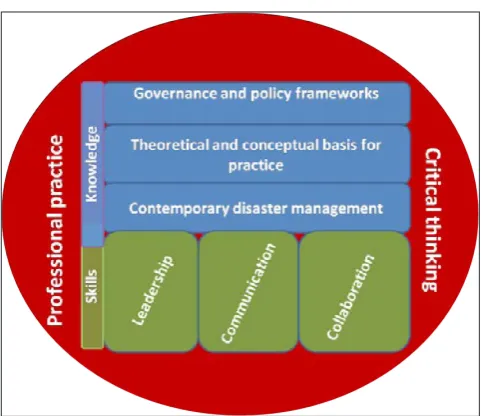
The Generic Emergency and Disaster Management Standards (GEDMS) were developed through a mixed qualitative research approach involving a systematic literature review, mapping of current course content offered in Australia and New Zealand, focus groups of experts and consultation with policy makers, industry representatives and other relevant stakeholders. The Standards consist of three main domains: knowledge, skills and application. Governance and policy frameworks, theoretical and conceptual basis for practice, and contemporary disaster management were identified as underlying themes for the knowledge domain. Leadership, communication, and collaboration were fitted under the skills domain. The professional practice, together with critical thinking, were considered the means by which knowledge and skills are applied.
Teaching emergency and
disaster management
in Australia:
Standards
for higher education
providers
Professor Gerry FitzGerald
1, Dr Joanna Rego
1, Dr Valerie Ingham
2,
Dr Ben Brooks
3, Associate Professor Alison Cottrell
4, Ian Manock
2,
Associate Professor Akhilesh Surjan
5, Associate Professor Lidia
Mayner
6, Chris Webb
7, Professor Brian Maguire
8, Heather Crawley
9,
Dr Jane Mooney
10, Dr Sam Toloo
1, and Professor Frank Archer
111. Queensland University of Technology. 2. Charles Sturt University.
3. University of Tasmania. 4. James Cook University. 5. Charles Darwin University 6. Flinders University.
7. Auckland University of Technology 8. Central Queensland University 9. TAFE NSW Riverina Institute 10. University of Queensland 11. Monash University
Introduction
Over recent years there has been a strong public perception of an increase in the frequency, intensity and impact of disasters worldwide and this has attracted much attention and concern from government leaders, academics, managers, communities, and relevant stakeholders (Bradt, Abraham & Franks 2003, Chen & Helminiak 2013, Subbarao et al. 2008). This increase in attention is compounded by matters which have heightened community risk, including the effects of climate change, population growth, the interconnectivity and complexity of modern societies, urbanisation and its impact on land use planning, and an increase in the proportion of vulnerable members of society (FitzGerald et al. 2010, Ingrassia et al. 2014, Johnson et al. 2013).
There has been increased interest in training new staff as well as developing the existing capability of those charged with leading and managing communities before, during and after the disastrous events. Additionally, the unpredictability of the future challenges, emanating from climate and global environmental change, non-traditional security threats, and others, require people who have the expertise, competency and ability to deal with the uncertainty. All of these factors led to an increased interest in developing further expertise through higher education and training.
In recent years, the need for standardisation of curricula and training in the disaster management sector has become evident among experts (Alexander 2003, Bromley & Andina 2010, FitzGerald et al. 2010, Kapucu & Knox 2013, Coles 2014). Since the early 2000s, high priority has been given to the
Disaster and Emergency Medicine (WADEM) has led the way in the development of international standards and guidelines for higher education and training for disaster medicine. It was noted that “evidence based standards and guidelines for education and training need to be developed in a broad sense, for all members of the health care community” (Seynaeve et al. 2004). The Working Party of the WADEM Education Committee, which undertook this task, emphasized the need for the conceptual framework to be informed by “best practice” and discussed the structure and pedagogy of existing disaster medicine education and training programs. Important outcomes of this meeting included the development of a conceptual framework for Disaster Health/Medicine based on the Bradt Model, which initially consists of three areas: clinical medicine, disaster management, and public health (Bradt, Abraham & Franks 2003). The final proposed framework for Disaster Health based on the consensus of all involved was significantly extended and included: primary disciplines, support disciplines, community response, resilience, and com and socio-political context. It was believed that this framework could then be used to underpin the development of education programs in the field and would concentrate on the “Core of Disaster Health” for undergraduates, the “Breadth of Disaster Health” for practicing professionals wishing to expand their practice, and “Disaster Health Specialists” for academics, professionals, or policy leaders in this field (Archer & Seynaeve 2007).
This development was seen as a starting point as the input from the emergency health community would help guide the development of such standards. In the same way, we anticipate the standards presented through the GEDMS project will stimulate debate and form the basis for further discussion and refinement.
Despite the body of knowledge and work undertaken to date, there is a recognised need for an evidence-based curriculum design to inform tertiary emergency and disaster management programs. Tertiary education plays a key role in developing capabilities within the workforce, leading to more effective emergency and disaster management. A curricula informed by industry needs and designed with a generic benchmark in mind is essential for effective tertiary education (Britton 2004, Burkle 2012, Burkle et al. 2013, Kapucu 2011, Hemstock 2016). At present, however, the growing number of university programs, at both undergraduate and postgraduate levels, offer diverse curricula without standards for content or outcome. In the absence of standards, the programs reflect the diverse interests and “specific expertise” and focus of their designers. Therefore, developing generic standards for emergency and disaster tertiary programs strongly contributes to the establishment of a core curriculum which will enable an employer a sense of predictability and generic expectation of graduates. Such standards will facilitate international cooperation and exchange amongst emergency and disaster professionals,
Consequently, this project aimed to develop generic standards for higher education programs in emergency and disaster management in Australia at both
undergraduate and postgraduate levels and a conceptual framework within which those standards would be positioned. This framework and standards may deliver a tool for integrating higher education curriculum development with government and community priorities. While the focus is necessarily on the Australian context, it is recognised that university programs in Australia attract international students as well as Australian students willing to make career with international organizations including United Nations, and therefore the methods used to develop the standards drew on and were inclusive of international literature. The development of generic emergency and disaster management standards for tertiary curricular is of specific value to Australia as it provides cohesion between the various levels of national and regional leadership. Moreover the generic nature of the standards also makes these suitable for contextualising and adapting in other parts of the world. It should be noted that a number of similar projects have been conducted in other countries such as the UK, USA, New Zealand, and the Pacific. It is hoped that close cooperation and exchange of ideas between these projects will benefit the global Emergency Management community and eliminate the risk of producing conflicting standards of practice.
Methods of development
The Generic Emergency and Disaster Management Standards for higher education were developed through a mixed qualitative research approach in which information was drawn from a variety of sources. The details are available from the authors. The sources include:
• A detailed analysis of current emergency and disaster related university programs throughout Australia and New Zealand, with subsequent thematic analysis and consolidation.
• A comprehensive, international literature review to identify recommendations for course content. A list of articles is presented as an appendix to this article. • Five focus groups of 34 interdisciplinary experts from various government organisations (e.g. Attorney General’s Department, Queensland Public Safety Business Agency, NSW Department of Industry), academic institutions across Australia, New Zealand, USA and the UK, and other agencies such as Red Cross were included to inform the analysis and guide consolidation.
Research
• Broad based consultation with industry to test the validity, utility and appropriateness of the proposed standards.
• A one-day final seminar with industry representatives and relevant stakeholders to validate the findings of the research and to ensure the appropriateness of their utility and application.
This approach ensured that the GEDMS was drawn from a comprehensive set of diverse data and reflected a sophisticated and holistic approach to the data analysis.
Background and context of the
GEDMS
The GEDMS have been developed to specify the scope and content of higher educational programs. However such standards do not exist in isolation but rather as part of a broad framework supported by conceptual understanding of their role and of the principles that underpin them. This GEDMS Framework provides a more comprehensive package to inform future policy and practice.
The GEDMS that have resulted from this project described the core body of knowledge and skills pertaining to the generic emergency manager and the intellectual understanding required to translate their knowledge into action. The tertiary focus of GEDMS complements the competency based approach of vocational training and thus contributes to the formation of an overarching education framework for emergency and disaster management education in Australia. The GEDMS will be widely accessible by any agency or education provider, and is designed to identify a core body of knowledge that can be contextualised by those delivering or seeking to deliver more specific emergency and disaster management courses in speciality areas. The GEDMS defines the broad scope of intellectual considerations of the domain of emergency and disaster management and aims to identify how higher education institutions may use them to develop programs that provide a relatively consistent and sound intellectual basis for the expertise required.
The definition of what constitutes a ‘disaster is contested (Cornea & Ryhs 2013). The GEDMS do not focus on what would be considered the ‘business as usual’ expertise required for the management of routine emergencies. Rather the GEDMS focus on the more significant events that challenge communities and require special arrangements to be put in place. The GEDMS focus on the way in which society aims to reduce the impact of major disruptions to health and normal functioning through enhancing coping and adaptive capacities and building resilience. The intellectual scope of the GEDMS informed curricular will refer not only to sudden emergencies or defined events but to major disruptions to societies, which are often prolonged. The GEDMS curricular focuses beyond disaster response to encompass the strategies required to manage
disasters and their effects throughout the continuum of the disaster cycle. Regardless of the background of those involved in emergency and disaster management, there are core concepts, principles and practices that, while complementing the diverse expertise, also define the field.
The GEDMS recognise that disaster management is a very broad and contestable domain in which many areas of expertise intersect. It is also recognised that there are many new perspectives being tested by those at the cutting edge of research. These standards respect the value of such activities but do not seek to use these standards to define, categorise or resolve emerging areas of thought. We concentrate on consolidating what is currently known and accepted, while recognising that university programs will always be focussed on developing the intellectual capacity of those people who will lead emerging thought. They also focus on developing the intellectual capacities of those who will make sense of the unpredictable challenges; dealing with the ‘unknown unknowns’.
The philosophical basis
TThese GEDMS should be read and applied with the following philosophical assumptions:
1. In general, all disaster management is local and community based. Although some disasters may cross international borders and affect multiple countries, it is communities and local government institutions and organisations that confront the impact of disasters and have the authority and responsibility to lead preparedness and recovery. However, when a disaster is beyond the resourcing scope of the local agencies in Australia, a ‘disaster’ is declared and thus affected population become eligible for state/national assistance and additional ‘external’ resources are called upon. In recent decade, communities became highly networked through spread of good quality Internet, smartphones and social media. This trend is likely to further intensify in near future, and thus, communities will be witnessing highly complex virtual and real networks. Disasters are increasingly being considered a social phenomenon with strong spatial and temporal dimension attached to all events, large or small (Collins, Jones & Manyena 2015). The role of professional expertise is to comprehend the socio-political-economic-cultural criticalities, the nature and dynamics of communities in order to identify ways in which that expertise may be brought to bear to support communities and local governments and to facilitate their empowerment.
2. The GEDMS recognise that there is a wide diversity of roles and expertise involved in emergency and disaster management across individuals,
organisations and communities. The focus of the GEDMS is on the shared understanding required to work cooperatively.
require competencies which will allow them to operate across various communities and cultures across the globe. The GEDMS also recognise that Australia is an active player in the complex international environment that constitutes emergency and disaster management. 4. The GEDMS focus on core knowledge which should be shared by the variety of participants in emergency and disaster management. The GEDMS seek to define broadly the scope of core knowledge, skills and their application to the task of achieving cohesion amongst the variety of participants in the continuum of emergency and disaster management. The GEDMS encompass disaster management and disaster risk reduction, including building resilience, and not merely on the roles and responsibilities of emergency and disaster managers.
5. The GEDMS recognise that often what reduces the impact of disasters has not traditionally been considered as emergency or disaster management. The GEDMS take a comprehensive view that also recognises the mitigation impact of strategies such as land use planning, public health protections and building construction standards. The GEDMS focus on the knowledge skills and application that recognises this diversity and the competencies required to coordinate these activities and policy environments into broader emergency and disaster management strategy. 6. The GEDMS will require continual review and updating, not only to address any inadequacies that emerge, and to test new approaches, but also to accommodate changes in the principles and practices of emergency and disaster management that need validating.
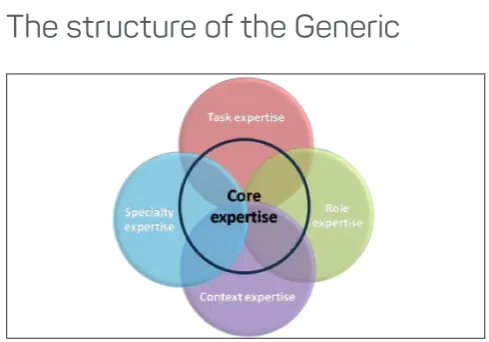
The GEDMS reflect that the scope of core competencies vary, dependent on the role of the individual. The GEDMS assume that all people should understand a small component of core knowledge such as that there are risks from disasters and there are mechanisms in place to deal with them. On the other hand, those accountable for leading policy development will need an extensive understanding of the underpinning concepts, principles and practices.
This is demonstrated in Figure 1. The GEDMS also recognise that in addition to these core concepts there are:
a. Task specific knowledge which relates to the particular functions of various stakeholders.
b. Role specific knowledge which relates to the roles and responsibilities of individuals and/or organisations.
c. Context specific knowledge which relates to particular physical and socio-cultural environments. d. Specialty knowledge for key elements of the emergency and disaster management continuum or particular expertise e.g. media and communications.
education, but rather by operational/specialised agencies or through special disciplinary programs.
The structure of the Generic
Emergency and Disaster
Management Standards
The GEDMS have been organised around the main domains: knowledge and skills, based on the consensus from the literature review and focus group consultations. This categorisation also remains consistent with the AQF. The required achievements within these domains may be mapped against the AQF.
The three main themes that were identified within the knowledge domain are:
1) Governance and policy frameworks;
2) Theoretical and conceptual basis for practice; and 3) Contemporary disaster management.
The three main themes that emerged within the skills domain were:
1) Leadership;
2) Communication; and 3) Collaboration.
The two main themes that emerged from the application domain were:
1) Professional Practice; and 2) Critical thinking.
[image:6.595.310.555.146.317.2]The first two focus of the ‘what’ and ‘how’ that providers require in this field of study, graduates also need to apply these skills to the solving of complex problems through the use of domains of professional practice and critical thinking. The relationships between the GEDMS domains are demonstrated in Figure 2. However, it must
Research
be emphasised that any attempt to describe the complex inter-relationships that characterise emergency and disaster management is by its nature a simplification intended for illustration only.
The application of GEDMS to the development of university programs will vary according to the level of the program. All graduates would be expected to have a broad and coherent body of knowledge and be able to review critically, analyse, consolidate and synthesise knowledge and identify and solve problems. However, the extent to which they do so and the complexity of the problems to which these core competencies are applied will vary.
For example, a graduate from a Bachelor Degree (AQF Level 7) program will have a broad and coherent knowledge of emergency and disaster management at the core level as described in the GEDMS whereas a graduate from an AQF Level 8 program (Graduate Certificate, Graduate Diploma) may have a more advanced and/or specialised body of knowledge of emergency and disaster management and the ability to think critically and to generate and evaluate complex ideas.
The detailed content of each domain with all underlying themes of the GEDMS is presented as an appendix to this article.
Conclusion
The GEDMS project achieved extensive recognition regarding the value of the exercise. All involved
recognised the need for a generic standard to inform the tertiary education of emergency and disaster managers. There remains a need for further consultation with the emergency and disaster management community to evaluate the GEDMS and to refine further the main themes. The actual application of the GEDMS will further inform future adjustments. Consequently, an ‘appropriate
authority’ should be identified, in order to endorse the proposed standards and facilitate their maintenance and review. This authority should have sufficient power to enable those tasked with designing higher education programs to rely on its credibility and authority and should be identified by the federal agencies responsible for emergency and disaster management in Australia. Moreover, further consideration should be given as to how the GEDMS inter-relate with vocational training programs and the subsequent development of an integrated approach to training and education to facilitate an articulated educational pathway for students.
Additionally, it is recommended, that in the first instance, universities will take a self-regulatory approach to evaluate their own course design against the proposed standards. Finally, the professional connections that resulted from this project will form a consortium who will continue to monitor educational opportunities, collaboration and assist the implementation of future directions.
Acknowledgements
We would like to acknowledge the valuable input and dedication from the Steering Committee members. For their exceptional contributions, we thank: Professor Frank Archer, Professor Peter Leggat, Professor Brian Maguire, Professor Paul Arbon, Associate Professor David King, Associate Professor Lidia Mayner, Associate Professor Akhilesh Surjan, Associate Professor Alison Cottrell, Mr Jason Males, Mr Luke Brown, Dr Valerie Ingham, Mr Ian Manock, Dr Ben Brooks, Ms Heather Crawley, Mr Chris Webb, Ms Eve Coles.
We especially wish to acknowledge the participation of all those who generously gave their time and expertise to attend focus groups and to provide written submissions and amendments. We also wish to acknowledge the financial support of the Australian Government through the National Emergency Management Program and the support from the Capability Development Subcommittee of the Australian and New Zealand Emergency
Management Committee. We express our particular appreciation to the following staff members involved in the project including Dr Jane Mooney, Ms Emily Buster, Ms Celina Lidstone and Ms Melinda Service.
References
Alexander D 2003, Towards the development of standards in emergency management training and education. Disaster Prevention and Management: An International Journal, vol. 12, no. 2, pp. 113-23.
[image:7.595.42.283.65.273.2]Archer F & Seynaeve G 2007, International guidelines and standards for education and training to reduce the consequences of events that may threaten the health status of a community. A report of an Open International WADEM Meeting, Brussels, Belgium, 29-31 October, Figure 2: Domains of the Generic Emergency and
Bradt D, Abraham K & Franks R 2003, A strategic plan for disaster medicine in Australasia. Emergency Medicine, vol. 15, no. 3, pp. 271-82.
Britton N 2004, Higher education in emergency management: What is happening elsewhere, in 7th Annual By-Invitation Emergency Management Higher Education Conference, Emmitsburg, MD, June. Britton NR & Lindsay J 2005, Designing educational opportunities for the emergency management professional of the 21st century: Formulating an approach for a higher education curriculum, in Higher Education Conference, Emergency Management Institute National Emergency Training Center, Emmitsburg, MD.
Bromley P & Andina M 2010, Standardizing chaos: a neo-institutional analysis of the INEE Minimum Standards for Education in Emergencies. Chronic Crises and Early Reconstruction, vol. 40, no. 5, pp. 575-88.
Burkle FM 2012, The development of multidisciplinary core competencies: the first step in the
professionalization of disaster medicine and public health preparedness on a global scale. Disaster Medicine and Public Health Prepardness, vol. 6, no. 1, pp. 10-2.
Burkle FM, Walls AE, Heck JP, Sorensen BS, Cranmer HH, Johnson K, Levine AC, Kayden S, Cahill B & VanRooyen MJ 2013, Academic affiliated training centers in humanitarian health, Part I: program characteristics and professionalization preferences of centers in North America. Prehospital Disaster Medicine, vol. 28, no. 2, pp. 155-62.
Chen D & Helminiak C 2013, Meeting the Challenges of the 21st Century: The Federal Education and Training Interagency Group for Public Health and Medical Disaster Preparedness and Response. Disaster Medicine and Public Health Preparedness, vol. 7, no. 01, pp. 4-7.
Coles E 2014, A Real Profession or Simply ‘professional’? Some thoughts on the status of Emergency
Management in the UK. Emergency Management, vol. 2, no. 1, pp. 22-42.
Collins AE, Jones S, Manyena B, & Jayawicrama J 2015, Hazards, risks, and disasters in society. Academic Press. Cornea C & Ryhs OT 2013, Dramatising disaster: charcter, event, representation. Cambridge Scholars Publishing.
FitzGerald GJ, Aitken P, Arbon P, Archer F, Cooper D, Leggat P, Myers C, Robertson A, Tarrant M & Davis ER 2010, A national framework for disaster health education in Australia. Prehospital and Disaster Medicine, vol. 25, no. 1, pp. 4-11.
Hemstock SL 2016, Accredited qualifications for capacity development in disaster risk reduction and climate change adaptation. Australasian Journal of Disaster and Trauma Studies, vol.20, no. 1, pp. 15-33.
development of a core curriculum centered on blended learning and simulation tools. Prehospital Disaster Medicine, vol. 29, no. 5, pp. 508-15.
Johnson K, Idzerda L, Baras R, Camburn J, Hein K, Walker P & Burkle FM 2013, Competency-based standardized training for humanitarian providers: making humanitarian assistance a professional discipline. Disaster Medicine and Public Health Preparedness, vol. 7, no. 04, pp. 369-72.
Kapucu N 2011, Developing competency-based emergency management degree programs in public affairs and administration. Journal of Public Affairs Education, vol. 17, no.4, pp. 501-21.
Kapucu N & Knox CC 2013, Utilization of Service Learning in Emergency Management Programs in the United States. Journal of Public Affairs Education, vol. 19, no. 1, pp. 31-51.
Seynaeve G, Archer F, Fisher J, Lueger-Schuster B, Rowlands A, Sellwood P, Vandevelde K & Zigoura A 2004, International standards and guidelines on education and training for the multi-disciplinary health response to major events that threaten the health status of a community. Prehospital Disaster Medicine, vol. 19, no. 2, pp. 17-30.