This is a repository copy of
Ensemble Morphosyntactic Analyser for Classical Arabic
.
White Rose Research Online URL for this paper:
http://eprints.whiterose.ac.uk/99602/
Version: Accepted Version
Proceedings Paper:
Alosaimy, AMS and Atwell, E orcid.org/0000-0001-9395-3764 (Accepted: 2016) Ensemble
Morphosyntactic Analyser for Classical Arabic. In: Proceedings. 2nd International
Conference on Arabic Computational Linguistics, 03-09 Apr 2016, Konya, Turkey. . (In
Press)
[email protected] https://eprints.whiterose.ac.uk/
Reuse
Items deposited in White Rose Research Online are protected by copyright, with all rights reserved unless indicated otherwise. They may be downloaded and/or printed for private study, or other acts as permitted by national copyright laws. The publisher or other rights holders may allow further reproduction and re-use of the full text version. This is indicated by the licence information on the White Rose Research Online record for the item.
Takedown
If you consider content in White Rose Research Online to be in breach of UK law, please notify us by
Ensemble Morphosyntactic Analyser
for Classical Arabic
Abdulrahman Alosaimy and Eric Atwell
April 7, 2016
Abstract In Modern Standard Arabic text (MSA), there are at least seven available morphological analysers (MA). Several Part-of-Speech (POS) taggers use these MAs to improve accuracy. However, the choice between these analysers is challenging, and there is none designed for Classical Arabic. Several morphological analysers have been studied and combined to be evaluated on a common ground. The goal of our lan-guage resource is to build a freely accessible multi-component toolkit (named SAWAREF1) for part-of-speech tagging and morphological
anal-ysers that can provide a comparative evaluation, standardise the outputs of each component, combine diferent solutions, and analyse and vote for the best candidates. We illustrate the use of SAWAREF in tagging ad-jectives and shows how accuracy of tagging adad-jectives is still very low. This paper describes the research method and design, and discusses the key issues and obstacles.
1 Introduction
The Arabic language has several variants where each has its own characteristics in morphology, lexicon and syntax. Classical Arabic, Modern Standard Arabic (MSA) and Dialectal Arabic have been written on diferent genres and media: from social networks to newspapers to journals. Researchers tends to build POS taggers for speciic variant or dialects. While several POS taggers exist, many of them are incompatible: incompatible tokenization and diverse tagsets. The ultimate goal of our system is to build a methodology of combining POS taggers; hence, a more robust tagger.
In Machine Learning, ensemble methods refer to the process of combining multiple learning methods to obtain a higher accuracy in classiication predica-tion that was not achieved by any of individual learning methods. Multiple types of ensemble exist in the literature, including: bagging (equally-weighted models trained on random subsets of the training data), and boosting (adaptive training where each new model focus on subset of training data that were misclassiied). Many other combination techniques are available.
1 SAWAREF is freely accessible through the following link: sawaref.al-osaimy.com.
In POS tagging, diferent techniques were used, including knowledge based models: (table lookup, syllable-based morphology, pattern morphology) and em-pirical methods: (Hidden Markov Models (HMM), Support Vector Machines (SVM), ). Each POS tagger is designed diferently; however, without a full understanding of the language, no POS tagger could ensure perfect accuracy. Because of their diferent bases and contains diferent knowledge, taggers will typically produce diferent errors [1]. A combination of POS taggers exploit these diferences, and it is reported to achieve a better accuracy for several languages, including English [1 3], Italian [4], Icelandic [5], Polish [6, 7], Telugu [8], and Swedish [9] and even for Arabic [10].
Most of the combination of POS-taggers are based on training diferent mod-els on one training corpus. Therefore, each model uses the same tagset and morphological segmentation as the one on the training corpus. However, combin-ing black-box taggers involves handlcombin-ing diferent issues, such as unifycombin-ing taggers tagsets into one standard tagset. In addition, the output of those taggers need to be aligned on the diferent levels: document, sentence, word, and morpheme. One of the earliest attempts is The Automatic Mapping Among Lexico-Grammatical Annotation Models (AMALGAM)[11, 12] project which aims to provide POS-tagset conversion method for English annotation schemas; i.e. given a text tagged with one tagset, it outputs the text tagged with another tagset, no matter how the two tagsets difer in their formalism, size, etc. The AMALGAM project mapped the tagset A to tagset B by the following steps: First, it builds a POS-tagger trained on the corpus tagged with tagset A. Next, it uses the tagger to predict the tag of the word in a corpus tagged with tagset B. In another words, there is no mapping rules from tagset A to tagset B. This decision was made as the authors discovered in earlier experiments that the n-to-m and 1-to-n mapping predominated over the simple 1-to-1 and n-to-1 mappings.
Alabbas and Ramsay [14, 15] reported more promising results. They per-formed a simple method for combining three Arabic taggers: MADA, AMIRA and a simple house-made maximum likelihood tagger (MXL). They examined four strategies of combining the results: three stratigies of majority voting (with backof to MADA, AMIRA or MXL), majority voting with backof to the most conident, and most conident as the main strategy. To deine the most con-ident, they irst examined how likely a tagger is correct when tagging with X (e.g. noun), e.g. MADA is 95% correct when it is tagging as noun. Most-conident strategy achieved the highest accuracy with 0.995 with a coarse-grained tagset and 0.96 with a ine-grained. To recover from the mismatches between the ref-erence corpus used (PATB Part 1 v. 3) and AMIRA tagset, the authors used transformation-based retagging (TBR) which improves the score from 90% to 95%. However, AMIRA and MADA tokenize sometimes diferently. To solve this problem, the PATB were translated to a coarser version of AMIRA s tagset, and compared with AMIRA s output: if the output is compatible with the translated tag, it is used, otherwise, the translated tag is used. This ensured that AMIRA and MADA will use same token number as the PATB. The accuracy of this study is very encouraging. The combination of tagger boosts the accuracy by 2-4%. We would like to see how this combination work in diferent genre or maybe a diferent variant of Arabic: e.g. classical Arabic. In addition, the technique used for enforcing the same tokenization leads to a bias in the test set. If AMIRA s tag is not compatible with PATB, the TBR tagger will use a translated PATB tag which is always correct. In addition, this technique also can not be applied in tagging a raw text as it relies on a tagged corpus to enforce same tokenization.
2 Overview
Currently, SAWAREF system can run 7 morphological analysers, namely: AlKhalil (KH) [16], Buckwalter (BJ) [17], Elixir-FM (EX) [18], Microsoft ATKS Sarf (MS), ALMORGEANA (AL) [19], AraComLex (AR) [20], and Xerox (XE) [21]. In addition, it can run 7 POS taggers, namely: Madamira (MA) [22], MADA (MD) [23], AMIRA (AM)[24], Stanford POS tagger (ST) [25], Microsoft ATKS POS Tagger (MT), MarMoT (MR) [26], Wapiti Arabic Model (WP) [27]. It is a web-based system, which avoids all the hassle of installation and provides a simple interface for comparing between taggers and evaluating them. It is meant not to be compared with those taggers: instead it provides a range of useful tools to compare them against each other.
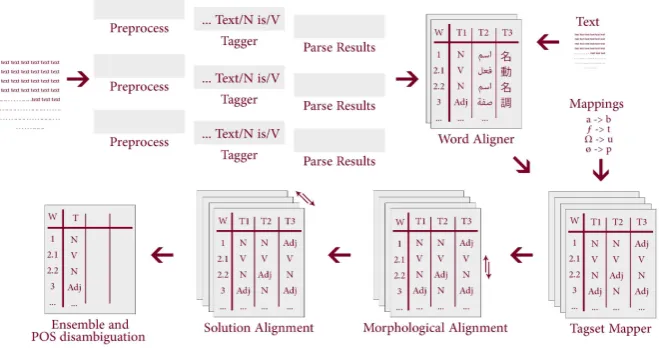
Figure 1: The overall process of the ensemble system: SAWAREF.
In the next sections, we will dive into each stage in the system. It is im-portant that while the system is not yet thoroughly evaluated and tested, most of the stages are completed and can be useful for other applications: perform evaluation and testing of taggers, ease the choice of a tagger for speciic research needs. Solution grouping and the inal POS disambiguation stages are still under development.
3 Pre-processing
Most of the time, each component does the required pre-processing step on its own. That is, it transliterates, normalizes, spell corrects, and/or tokenizes the input text in the format suitable for the component s needs. However, after a series of tests to maximise the accuracy, we found that some poorly-documented components assume input in certain conditions. Some components work bet-ter when diacritics, digits, and/or punctuations are deleted, text is normalised, and/or text is transliterated. In general, we followed the documentation require-ments, if such exist, and pre-processed the input the way it achieves maximal accuracy.
we used its sibling: Stanford word segmenter2. AraComLex assumed the text to
be tokenized: each word in a line. We used a simplesed command line tool that replaced punctuation marks and white spaces with a newline.
TRANSLITERATON: We transliterate the input if the tagger does not support the UTF-8 format (e.g. MarMoT and BAMA) using the two-way table-lookup transliteration system based on the Buckwalter convention.
4 Component Manipulation
RunningMost of the tools are runnable through the command line. Some com-ponents have an API (e.g. Stanford Segmenter) that allows them to be integrated in developer s code. One component (Alkhalil) is only runnable through a Graph-ical User Interface (GUI), and for the purpose of integrating in the SAWAREF system, we added the functionality to permit the run from the command line without interfering with the analysis code.
Wrap-To-Service Since we plan to allow the usage of those tools from the web, we wrap each component in a service. The goal here is to speed up the processing of texts by having the morphology model loaded and ready for each subsequent requests. We were able to extend some components and build a web service that accepts HTTP requests and returns component output whilst maintaining dictionaries in memory.
Special ModiicationsIn Alkhalil morphological analyser, if a word reap-pears in the text, it will be ignored and no analyses will be given. We edited Alkhalil to print the analyses of each word, allowing us to align the analyses with other components results. In addition, the word s type and POS tag in Alkhalil are printed in free text and thus are not in a good reusable format. We edited the source code and changed the format of the output to be in JSON. TODO EXAMPLE HERE
5 Parsing Results and Extracting Morphological Features
Every component has its own format of output. We built several parsers that extract analysis for each tagger and transform them to a standard JSON object. The goal is to standardise the format so that they can be reused for evaluation and ensemble tagging purposes.
For each morpheme, we maintain the following output, if they exist:
Basic POS tag The tag after being post-processed.
Morphological Features Person, gender, number, aspect, voice, is empha-sised.
Syntactical Features Mood and Case.
Morphological Segmentation How the word has been segmented.
2 Stanford Word Segmenter process raw text input according to the Penn Arabic
Word Analysis Root, Stem and Lemma.
Since we standardized the outcomes of each tagger, we were able to show them in a convenient side-by-side way that allows any researcher to study these taggers and see its features (what features it is extracting), accuracy of POS disambiguation, its tokenization scheme, and more.
Within the parsing step, it is important to mention that we altered the result of taggers with a complex tagset. A complex tagset is a tagset that embodies morphological features (like gender, number or person) in its tags. Since our ref-erence corpora (SALMA (Sawalha et al. 2013) and QAC (Dukes 2011)) use the lemma-plus-features representation, we extract those morphological features and map the complex tag to its base tag. For example, AMIRA has a tag NNS_MD that represents a masculine dual noun. We mapped to NN and assigned morpho-logical features (gender, number) as appropriate. The goal of this transformation is twofold: to compare morphological features with other taggers, and to reduce the sparsity in the POS tagging. This should ease the mapping between the tagsets and improve the quality of the evaluation of those taggers.
6 Word and Morphological Alignment
It is obvious that we must align (morphologically and by token) the output of participating taggers before we can compare their tagging. However, what is not obvious is how this can be done. Alignment in level of word is an easier job as taggers mostly tag every single word. We have not encountered a single case in which two words were tagged with a single tag, as opposed to English, where sometimes compound names or idiomatic phrases are given a single wordtag [12, p. 11].
Some taggers drop punctuation marks from their analyses. Some do not re-peat the analysis of words they already encountered. Therefore, we adapted a word aligner module that checks against the input text to align it properly. It is a simple aligner that assumes an alignment window of three words, that is, the analysis should correspond to either the current word, the previous or the next word. It aligns the word to the one that has least edit distance.
We learn the morphological alignment (i.e. alignment of morphemes of a sin-gle word) from our multi-tagged corpus . The corpus tagged chapter 29 of the Quran (1000 words and 2000 morphemes) by 12 taggers and manually aligned and proofread (any incorrect solution is marked). While the corpus is meant for evaluation purposes, we found it very useful in building similarity matrices be-tween tags, and use those matrices to align the tokens based on several features: its POS-tag and morphological features (like gender, person, ..etc.).
two stream of tokens using the matrix. See Table 1 for an example of the output of this stage.
Table 1: Aligned morphemes of the wordﺪﻘﻟوwalqd tagged by several taggers.
MT KH AR EX MD & MA BP ST SW MR AM
Wa ﻒﻄﻌﻟا فﺮﺣ َل َو conj C- wa_conj CONJ CC p c PUNC CC
ءاﺪﺘﺑﻻا فﺮﺣ F- p z
Lqd ﺐﻳِﺮﻘَﺗو ﻖﻴِﻘﺤَﺗ فﺮ َﺣpart F- part_verb FUNC_WORD RP p b RP RP
7 Mapping Morphological Features
Mapping means the conversion from one format or value described in the source tagger to the standardised format. We chose the SALMA tagset [29, 30] as it is the most ine-grained tagset in two dimensions: its number of features (15 features) and the possible tags of each word (100 tags). The SALMA tagset has thirty-four possible tags for nouns, one for verbs3, twenty-two for particles,
twenty for others, and twelve for punctuations. It is the most inely-grained tagset in Arabic in terms of tagset size and feature set size.
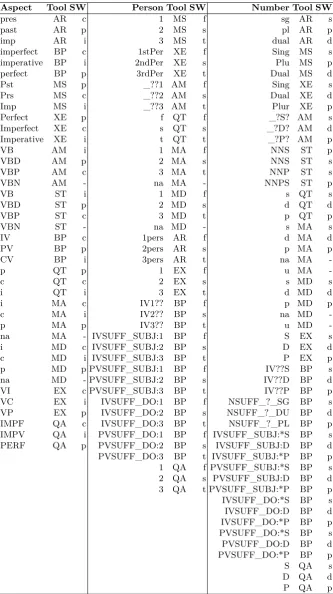
The mapping involves two components: First, we map morphological features to the values of the SALMA tagset. This mapping is straightforward and it is mostly one-to-one renaming, e.g. mapping from gender=male to gender=m.
However, we made some necessary modiications to the SALMA tagset. In the number feature, the SALMA has nine possible values; typical plural value, has six possible values (i.e. sound plural, broken, etc). Instead, we diminish these diferences and use a single value: p to represent all types of plurals as all taggers have 3 values in maximum. In addition, we map e for energetic in the Case or Mood possible values. Furthermore, we addn for emphatic verb in the case andm for non-empahatic. For the full mapping rules of morphological features please see tables 2 and 3.
8 Mapping Main POS tagsets
The second mapping is the mapping of main POS tagsets. While many map-pings in the literature involves reducing tagset size, our mapping is the inverse. We inlate the solution set by mapping to the most inely-grained tagset (the assumption: more inely-grained than any participating tagset) and then disam-biguate the results.
3 Originally three values that represents the aspect of the verb: perfect, imperfect, and
Table 2: The mapping rules of morphological features from all participated taggers to SALMA convention. Part 1
Mood Tool SW Gender Tool SW Case Tool SW Voice Tool SW State Tool SW
i MA n masc AR m 2 EX a active AR a IsDeinitiveAL MS d
s MA a fem AR f 4 EX g pass AR p -IsDeinitiveAL MS i
j MA j Masc MS m 1 EX n a QT a DET AM d
u MA - Fem MS f Nom MS a p QT p DT* ST d
na MA - Masc XE m Acc MS g Active XE a d QT d
I EX n Fem XE f Gen MS n Passive XE p a QT
-E EX j _F?? AM f n QT n VB AM - i QT i
J EX j _M?? AM m a QT a VBD AM a i MA i
S EX a m QT m g QT g VBP AM a d MA d
Ind MT n f QT f na MA - VBN AM p c MA
-Jus MT j x QT - u MA - VB ST - na MA
-Sub MT a m MA m a MA a VBD ST a u MA
-Eng MT j f MA f g MA g VBP ST a i MD i
Indicative XE n na MA - n MA n VBN ST p d MD d
Subjunctive XE a m MD m na MD - a MA a c MD
-Jussive XE j f MD f u MD - p MA p na MD
-Energetic XE j na MD - a MD a na MA - u MD
-n QT n M EX m g MD g u MA - defArt AR d
a QT a F EX f n MD n a MD a indef AR i
g QT j - EX - accgen AR - p MD p I EX i
i MD n NSUFF_MASC BP m acc AR a na MD - D EX d
s MD a NSUFF_FEM BP f NSUFF_*_ACCGEN BP - u MD - R EX
-j MD j IV?M? BP m NSUFF_*_ACC BP a A EX a A EX
-u MD - IV?F? BP f NSUFF_*_NOM BP n P EX p C EX d
na MD - IVSUFF_SUBJ:M BP m ACC QA a PV BP a L EX i
acc AR a IVSUFF_SUBJ:F BP f GEN QA g IV BP a NSUFF_*_INDEF BP i
_MOOD:I BP n PVSUFF_SUBJ:M BP m NOM QA n CV BP a -NSUFF_*_INDEF BP d
_MOOD:SJ BP - PVSUFF_SUBJ:F BP f PV_PASS BP p INDEF QA i
_MOOD:S BP a M QA m IV_PASS BP p DEF QA d
_MOOD:J BP j F QA f ACT QA a
IND QA n PASS QA p
ENG QA j
JUS QA j
SUBJ QA a
We chose to inlate instead of reduce because mapping a tagset to a reduced standard tagset will cause a loss of information. Thus, for evaluating POS taggers, we will not evaluate the full tagging performance of the tagger. In addition, such mapping would force our ensemble tagger to use its reduced tagset.
We want to ensure that we will only have one-to-one and one-to-many situa-tions. That is a tag can be mapped to one or many tags, but no tag on the target can originate from two tags. If we ind a congestion on one tag (many-to-one), we will extend the target tagset to break this congestion. For example, in QAC tagset, EXP and RES tags (exception and restriction particles) map to one tag in SALMA ( p x- exceptive particle).
Since one-to-many and many-to-many mappings predominated one-to-one and many-to-one [12], we always extend the target tagset (SALMA) to avoid having many possible mapping targets.
Table 3: The mapping rules of morphological features from all participated taggers to SALMA convention. Part 2
Aspect Tool SW Person Tool SW Number Tool SW
pres AR c 1 MS f sg AR s
past AR p 2 MS s pl AR p
imp AR i 3 MS t dual AR d
imperfect BP c 1stPer XE f Sing MS s
imperative BP i 2ndPer XE s Plu MS p
perfect BP p 3rdPer XE t Dual MS d
Pst MS p _??1 AM f Sing XE s
Prs MS c _??2 AM s Dual XE d
Imp MS i _??3 AM t Plur XE p
Perfect XE p f QT f _?S? AM s
Imperfect XE c s QT s _?D? AM d
Imperative XE i t QT t _?P? AM p
VB AM i 1 MA f NNS ST p
VBD AM p 2 MA s NNS ST s
VBP AM c 3 MA t NNP ST s
VBN AM - na MA - NNPS ST p
VB ST i 1 MD f s QT s
VBD ST p 2 MD s d QT d
VBP ST c 3 MD t p QT p
VBN ST - na MD - s MA s
IV BP c 1pers AR f d MA d
PV BP p 2pers AR s p MA p
CV BP i 3pers AR t na MA
-p QT p 1 EX f u MA
-c QT c 2 EX s s MD s
i QT i 3 EX t d MD d
i MA c IV1?? BP f p MD p
c MA i IV2?? BP s na MD
-p MA p IV3?? BP t u MD
-na MA - IVSUFF_SUBJ:1 BP f S EX s
i MD c IVSUFF_SUBJ:2 BP s D EX d
c MD i IVSUFF_SUBJ:3 BP t P EX p
p MD p PVSUFF_SUBJ:1 BP f IV??S BP s
na MD - PVSUFF_SUBJ:2 BP s IV??D BP d
VI EX c PVSUFF_SUBJ:3 BP t IV??P BP p
VC EX i IVSUFF_DO:1 BP f NSUFF_?_SG BP s
VP EX p IVSUFF_DO:2 BP s NSUFF_?_DU BP d
IMPF QA c IVSUFF_DO:3 BP t NSUFF_?_PL BP p
IMPV QA i PVSUFF_DO:1 BP f IVSUFF_SUBJ:*S BP s
PERF QA p PVSUFF_DO:2 BP s IVSUFF_SUBJ:D BP d
PVSUFF_DO:3 BP t IVSUFF_SUBJ:*P BP p
1 QA f PVSUFF_SUBJ:*S BP s
2 QA s PVSUFF_SUBJ:D BP d
3 QA t PVSUFF_SUBJ:*P BP p
IVSUFF_DO:*S BP s
IVSUFF_DO:D BP d
IVSUFF_DO:*P BP p
PVSUFF_DO:*S BP s
PVSUFF_DO:D BP d
PVSUFF_DO:*P BP p
S QA s
D QA d
with its proportion of all mapping pairs and a list of examples. We used this list to build SAWAREF mapper component.
The second stage involves manually choosing target tags that are most ap-propriate. We already asked two Arabic linguistic researchers to do a mapping from one tagset (MADAMIRA s); we unite the two mapping rules to build the mapping.
Our method expands the solution set of each tagger, which increases ambi-guity. However, this could make for a fairer voting between taggers and the most probable mapping should be selected in the POS disambiguation stage.
9 Case study: Tagging Adjectives
While the complete system aims to morphologically and syntactically tag a text in a more robust way, we found it useful for some other purposes. We studied the accuracy of tagging adjectives, and show that they are commonly mistagged as nouns. The cause of this confusion is the deinition of adjectives in Arabic. In tra-ditional Arabic grammar, an adjective is marked when it qualiies its preceding corresponding noun, i.e. attributive adjective. In this case, attributive adjectives agree with their corresponding noun in deiniteness, number, case and gender. For example, ﻞﻳﻮﻃ ﻞﺟر Rajol Taweel (a tall man). Taggers agree mostly on tagging tall as an adjective. However, taggers often vary in tagging tall in predicative adjectives:ﻞﻳﻮﻃ ﻞﺟﺮﻟا اﺬﻫHatha Rajol Taweel (This man is tall).
We used chapter twenty-nine of the holy book which is a parallel annotated corpus (PAC) by [31, 32] to study the tagging of adjectives. We feed the chapter to the SAWAREF toolkit up until the morphological analysis stage. We ended up with a spreadsheet CSV ile where each morpheme is tagged by SAWAREF taggers and the results are aligned on the morpheme level. We used the ile to analyse the case of tagging adjectives.
Table 4: Tagging adjective morphemes by two manually annotated corpora. Recall = 0.38, Precision=0.85.
SALMA Nj - Others
QA
C ADJ 11 2
N (noun) 18 N/A
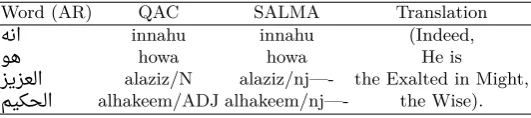
Table 5: One sentence shows how linguistics do not agree on tagging predicative ad-jectives.
Word (AR) QAC SALMA Translation
ﻪﻧا innahu innahu (Indeed,
ﻮﻫ howa howa He is
ﺰﻳﺰﻌﻟا alaziz/N alaziz/nj - the Exalted in Might,
ﻢﻴﻜﺤﻟا alhakeem/ADJ alhakeem/nj - the Wise).
The wordalaziz was tagged by QAC as a noun as it is acting as a predict (khabar) in traditional grammar. SALMA tagged it however as an adjective. However, QAC is not consistent in this matter; verse 19 of chapter 29: ﻚﻟذ نإ ﺮﻴﺴﻳ ﻰﻠﻋ that for Allah is easy/ADJ is not consistent with its following verse:ﺮﻳﺪﻗ ءﻲﺷ ﻞﻛ ﻰﻠﻋ نإ Indeed Allah , over all things, is competent/N . The words: easy/ADJ and competent/N are both adjectives acting as predict (khabar) and should be treated similarly.
The same confusion carried over to SAWAREF participant taggers: in the case QAC is gold standard, the average f-score is 0.11 (precision=0.14, recall= 0.2). With SALMA, the average f-score is 0.12 (precision=0.22, recall= 0.14). These very low scores show how hard it is to tag adjectives correctly. The full precision and recall of each tagger is reported in table 6. As a conclusion, even though adjectives play an important role in the semantic level, they need more robust deinition and more investigation on how to predict them in Arabic specif-ically.
Table 6: The precision, recall and f-score of predicting adjectives in the chapter twenty-nine of the holy quran. We used QAC as actual tagging (tag = ADJ) for the top scores. We used SALMA gold standard (tag = nj -) in bottom scores.
10 Next steps: Solutions Alignments and POS
disambiguation
In this section we describe our plans for the remaining stages of the system: solution alignment and grouping and POS disambiguation. Because Arabic is highly ambiguous, a word analysis usually has several analysis solutions. Some taggers (i.e. morphological analysers) produce diferent possible analysis with no ranking. We mentioned also in the last section that we might increase the solution set size after the mapping process. The pool of solutions needs to be sorted so the ensemble system can vote for the best solution. This requires those solutions to be aligned such that similar solutions are grouped together.
We plan to perform this step by deining the distance function between the two solutions. Each solution is represented in a vector of values, and there are a plenty of distance measures to compute the similarity of two vectors (e.g. cosine similarity). We then simply group the solutions that reach a certain threshold.
Finally, with a list of solutions (originated from the taggers), the system will use a variety of POS disambiguation techniques to select the most probable tags. This includes using tagger predictions, weighting solutions based on frequency, and context-aware sequence labelling techniques (e.g. HMM).
Since we use taggers that vary in their kernel technique, we expect the ac-curacy to be higher than any participating tagger. But this comes with a price: the ensemble tagger is computationally much more expensive, and the through-put is lower. However, we target applications where tagging is performed oline (e.g. annotating a corpus) and the accuracy is more important than eiciency. The system is designed such that some taggers can be turned of, and we plan to employ an adaptive technique to switch of taggers that do not add to the accuracy.
11 Conclusion
We identiied the key parts of the SAWAREF system and showed the stages of the ensemble POS tagger process. We showed how we deal with key obstacles in the ensemble method, namely morphological alignment, diversity in tagset, and multiple solutions per token. SAWAREF currently runs multiple taggers, standardizes their results, and aligns the result of each analysis. An expected issue is low agreement among Arabic linguists on the deinitions of grammatical categories, as exempliied by the tagging of adjectives.
Acknowledgments
References
[1] Halteren, H.V., Zavrel, J., Daelemans, W.: Improving Accuracy in Word Class Tagging through the Combination of Machine Learning Systems. Computational Linguistics27(2001) 199 229
[2] Montolio, J.: Improving POS Tagging Using Machine-Learning Techniques. (1997) 53 62
[3] Schroder, I.: A case study in part-of-speech- tagging using the ICOPOST toolkit. (2002)
[4] S gaard, A.: Ensemble-based POS tagging of Italian. IAAI-EVALITA, Reggio Emilia, Italy (2009)
[5] Henrich, V., Reuter, T., Loftsson, H.: CombiTagger: A System for Devel-oping Combined Taggers. (2007) 254 259
[6] Kobyli ski, L.: PoliTa: a Multitagger for Polish. In: Proceedings of the Ninth International Conference on Language Resources and Evaluation (LREC 14), Reykjavik, Iceland, European Language Resources Association (ELRA) (2014) 2949 2954
[7] niatowski, T., Piasecki, M.: Combining. In: Combining polish morphosyn-tactic taggers. Springer Berlin Heidelberg, Berlin, Heidelberg (2012) 359 369
[8] RamaSree, R., Kumari, P.K.: Combining pos taggers for improved accuracy to create telugu annotated texts for information retrieval. Dept. of Telugu Studies, Tirupathi, India (2007)
[9] Sj bergh, J.: Combining POS-taggers for improved accuracy on Swedish text. Proceedings of NoDaLiDa 2003 (2003)
[10] Aliwy, A.H.: Arabic Morphosyntactic Raw Text Part of Speech Tagging System. (2013)
[11] Atwell, E., Hughes, J., Souter, C.: AMALGAM: Automatic Mapping Among Lexico-Grammatical Annotation Models. Proceedings of ACL workshop on The Balancing Act: Combining Symbolic and Statistical Approaches to Language (1994) 11 20
[12] Atwell, E., Demetriou, G., Hughes, J., Schifrin, A., Souter, C., Wilcock, S.: A comparative evaluation of modern English corpus grammatical annota-tion schemes. (1998) 7 24
[13] Rabiee, H.S.: Adapting Standard Open-Source Resources To Tagging A Morphologically Rich Language: A Case Study With Arabic. Volume 0. (2011) 127 132
[14] Alabbas, M., Ramsay, A.: Combining strategies for tagging and parsing Arabic. ANLP 2014 (2014) 73 100
[17] Buckwalter, T.: Buckwalter Arabic Morphological Analyzer Version 1.0. (2002)
[18] Smrz, O.: Functional Arabic Morphology. Formal System and Implemen-tation. The Prague Bulletin of Mathematical Linguistics (2007)
[19] Habash, N.: Arabic Morphological Representations for Machine Transla-tion. In: Arabic Computational Morphology. Text, Speech and Language Technology. Springer Netherlands (2007) 263 285
[20] Attia, M., Pecina, P., Toral, A.: An open-source inite state morphological transducer for modern standard Arabic. Proceedings of the 9th Interna-tional Workshop on Finite State Methods and Natural Language Processing (2011) 125 133
[21] Beesley, K.R.: Arabic Morphology Using Only Finite-State Operations. Proceedings of the Workshop on Computational Approaches to Semitic lan-guages (1998) 50 57
[22] Pasha, A., Al-Badrashiny, M., Diab, M., El Kholy, A., Eskander, R., Habash, N., Pooleery, M., Rambow, O., Roth, R.M.: Madamira: A fast, comprehensive tool for morphological analysis and disambiguation of ara-bic. In: Proceedings of the Language Resources and Evaluation Conference (LREC), Reykjavik, Iceland. (2014)
[23] Habash, N., Rambow, O., Roth, R.: MADA+TOKAN: A Toolkit for Arabic Tokenization, Diacritization, Morphological Disambiguation, POS Tagging, Stemming and Lemmatization. Proceedings of the Second International Conference on Arabic Language Resources and Tools (2009) 102 109 [24] Diab, M.: Second generation AMIRA tools for Arabic processing: Fast and
robust tokenization, POS tagging, and base phrase chunking. Conference on Arabic Language Resources and Tools (2009) 285 288
[25] Toutanova, K., Klein, D., Manning, C.D.: Feature-rich part-of-speech tag-ging with a cyclic dependency network. In Proceedings of the 2003 Con-ference of the North American Chapter of the Association for Computa-tional Linguistics on Human Language Technology - Volume 1 (NAACL
03), (2003) 252 259
[26] Thomas, M.: Eicient Higher-Order CRFs for Morphological Tagging. Emnlp (2013) 322 332
[27] Gahbiche-Braham, S., Bonneau-Maynard, H.: Joint Segmentation and POS Tagging for Arabic Using a CRF-based Classiier. Lrec (2012) 2107 2113 [28] Monroe, W., Green, S., Manning, C.D.: Word segmentation of informal
Arabic with domain adaptation. ACL, Short Papers (2014)
[29] Sawalha, M., Atwell, E.: A standard tag set expounding traditional morpho-logical features for Arabic language part-of-speech tagging. Word Structure
6(2013) 43 99
[30] Sawalha, M., Atwell, E., Abushariah, M.a.M.: SALMA: Standard arabic language morphological analysis. 2013 1st International Conference on Communications, Signal Processing and Their Applications, ICCSPA 2013 (2013)