R E S E A R C H
Open Access
CONSORT 2010 statement: extension to
randomised pilot and feasibility trials
Sandra M. Eldridge
1*, Claire L. Chan
1, Michael J. Campbell
2, Christine M. Bond
3, Sally Hopewell
4, Lehana Thabane
5,
Gillian A. Lancaster
6and on behalf of the PAFS consensus group
Abstract
The Consolidated Standards of Reporting Trials (CONSORT) statement is a guideline designed to improve the transparency and quality of the reporting of randomised controlled trials (RCTs). In this article we present an extension to that statement for randomised pilot and feasibility trials conducted in advance of a future definitive RCT. The checklist applies to any randomised study in which a future definitive RCT, or part of it, is conducted on a smaller scale, regardless of its design (eg, cluster, factorial, crossover) or the terms used by authors to describe the study (eg, pilot, feasibility, trial, study). The extension does not directly apply to internal pilot studies built into the design of a main trial, non-randomised pilot and feasibility studies, or phase II studies, but these studies all have some similarities to randomised pilot and feasibility studies and so many of the principles might also apply. The development of the extension was motivated by the growing number of studies described as feasibility or pilot studies and by research that has identified weaknesses in their reporting and conduct. We followed
recommended good practice to develop the extension, including carrying out a Delphi survey, holding a consensus meeting and research team meetings, and piloting the checklist.
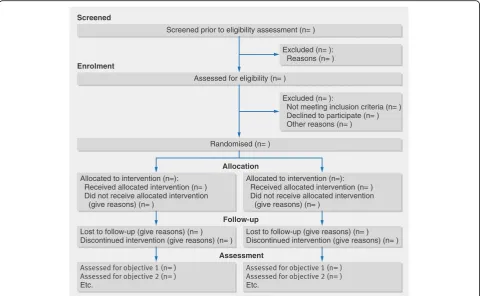
The aims and objectives of pilot and feasibility randomised studies differ from those of other randomised trials. Consequently, although much of the information to be reported in these trials is similar to those in randomised controlled trials (RCTs) assessing effectiveness and efficacy, there are some key differences in the type of information and in the appropriate interpretation of standard CONSORT reporting items. We have retained some of the original CONSORT statement items, but most have been adapted, some removed, and new items added. The new items cover how participants were identified and consent obtained; if applicable, the prespecified criteria used to judge whether or how to proceed with a future definitive RCT; if relevant, other important unintended consequences; implications for progression from pilot to future definitive RCT, including any proposed amendments; and ethical approval or approval by a research review committee confirmed with a reference number.
This article includes the 26 item checklist, a separate checklist for the abstract, a template for a CONSORT flowchart for these studies, and an explanation of the changes made and supporting examples. We believe that routine use of this proposed extension to the CONSORT statement will result in improvements in the reporting of pilot trials.
Editor’s note: In order to encourage its wide dissemination this article is freely accessible onthe BMJandPilot and Feasibility Studiesjournal websites.
Introduction
The Consolidated Standards of Reporting Trials (CON-SORT) statement (www.consort-statement.org) is a guide-line designed to improve the transparency and quality of the reporting of randomised trials. It was first published in 1996, revised in 2001, last updated in 2010 [1, 2] and published simultaneously in 10 leading medical journals, including the
Lancet,JAMA,BMJ,Annals of Internal Medicine, andPLoS Medicine. The CONSORT statement comprises a checklist of the minimum essential items that should be included in reports of randomised trials and a diagram documenting the flow of participants through the trial.
The development of CONSORT guidelines has received considerable international recognition. The CONSORT statement has been cited more than 8000 times and has received support from the World Association of Medical Editors, Council of Science Editors, International Com-mittee of Medical Journal Editors, and more than 600 * Correspondence:[email protected]
1Centre for Primary Care and Public Health, Queen Mary University of
London, London, UK
Full list of author information is available at the end of the article
journals worldwide. Several studies have examined the impact of the statement on the reporting quality of pub-lished randomised trials and found that adoption of the statement leads to an increase in reporting quality [3].
In addition to the CONSORT statement, extensions to the CONSORT checklist for reporting trials with non-inferiority, equivalence, and cluster or pragmatic designs have been published [4–6], as have extension checklists for reporting harms [7], different types of interventions (non-drug treatments [8] and herbal interventions [9]), and patient reported outcomes [10]. The main CONSORT statement and all of the current extensions focus on trials for which the research question centres on the effective-ness or efficacy of an intervention. However, some rando-mised trials, that we refer to as pilot and feasibility trials, do not have effectiveness or efficacy as their primary focus. Rather, they are designed to support the develop-ment of a future definitive RCT. By “definitive” in this context we mean an appropriately powered study focusing on effectiveness or efficacy. The need for high standards in conduct and reporting applies just as much to pilot and feasibility trials as it does to definitive trials.
Scope of this paper
In this article we present an extension to the CONSORT statement for randomised pilot and feasibility trials con-ducted in advance of a future definitive RCT. In keeping with the broad scope of CONSORT, the future definitive RCT might evaluate either the efficacy or the effectiveness of an intervention. The primary aim of the randomised pilot or feasibility trial, however, is to assess feasibility of conducting the future definitive RCT.
We make no distinction in this extension between pilot and feasibility randomised trials. Although in prac-tice we recognise that different researchers might have preferences for different terms, the lack of distinction is based on a framework developed by the authors, which defines such studies [11]. In that framework, a feasibility study for a future definitive RCT asks whether the future trial can be done, should be done, and, if so, how. Pilot studies are a subset of feasibility studies. They ask the same questions about feasibility (whether the future trial can be done, should be done, and, if so, how) but have a particular design feature: in a pilot study (that might or might not be randomised) the future definitive RCT, or part of it, is conducted on a smaller scale.
For brevity, we use the term“pilot trial”to refer to any randomised study in which a future definitive RCT, or a part of it, is conducted on a smaller scale. However, these studies might legitimately be referred to using any of the following terms: pilot RCT, randomised pilot trial, pilot trial, pilot study, randomised pilot study, feasibility RCT, randomised feasibility trial, feasibility trial, feasibility study, or randomised feasibility study. In fact, we have set
no restrictions on the terminology used to describe pilot trials; rather we have specified only that they are rando-mised, conducted in advance of a future definitive RCT, and primarily aim to assess feasibility.
The development of this extension was motivated by the growing number of studies described as feasibility or pilot studies [12] and by research that has identified weaknesses in the reporting and conduct of these studies [12–15]. We expect that improved reporting quality will lead to more high quality examples of pilot trials, enab-ling yet further improvements in the conduct of pilot tri-als and making it possible for readers to use the results of reported pilot studies in preparing future trials in similar settings and with similar participants. Because the purpose of a pilot trial (to assess feasibility) is different from that of the future definitive RCT (to assess effective-ness or efficacy), the focus of the reporting should be dif-ferent, and that difference is reflected in the extension.
The extension does not apply to internal pilot studies that are built into the design of a main trial, or to non-randomised pilot and feasibility studies. However, much of what is presented here might apply to, or be adapted to apply to, these types of pilot or feasibility studies or similar types of trial, such as“proof of concept”or phase II trials done in the development of drugs [16, 17]. Proof of concept or phase II trials are small RCTs the main objective of which are to inform the sponsor whether or not to con-tinue the development of a drug with larger trials. Similar to pilot trials, the focus is on assessing the feasibility of further development rather than assessing effectiveness or efficacy. However, to do this these trials tend to focus on aspects such as safety and potential effectiveness or efficacy. They might use accepted methods devised for phase II trials [18] to assess the outcome to be used in a future phase III trial (which could be meta-analysed if required) [19] or use surrogate outcomes—that is, intermediate mea-sures, often biochemical, which have less direct impact on a patient than, for example, cure or death, but which should be associated with these “hard” outcomes. Safety, and potential effectiveness or efficacy, are usually less important in pilot trials, where the focus is on the development of interventions and their evaluation and where issues related to feasibility might be different. Nevertheless, pilot trials do sometimes assess potential effectiveness using surrogate outcomes. For example, oxygenation of the blood as a surrogate measure for improved lung function and survival [20] or the number of steps walked each day as a surrogate for clinical measures of heart disease [21].
Stand-alone qualitative studies that are reported separately from the pilot trial, such as Hoddinott et al. and Schoultz et al. [22, 23] should follow appropriate reporting guidelines [24–26] and should provide link references to other pilot work carried out in preparation for the same definitive trial. When qualitative work is reported within the primary report of a pilot trial [27], it is not always possible to put sufficient detail into the methods section of the re-port to comply with rere-porting guidelines for qualitative studies. If this is the case, we recommend an online supplement or appendix to report the methods in detail. O’Cathain et al., Hoddinott et al., and Schoultz et al. have provided guidelines and examples for conducting qualitative feasibility studies alongside pilot trials [22, 23, 26, 28, 29].
Adapting the CONSORT statement for pilot trials
The development of this CONSORT extension for pilot trials is described briefly here and in detail elsewhere [30]. Before developing the checklist for this extension, the research team agreed on the definitions of pilot and feasibility studies. This was done by initially considering pilot and feasibility studies to be discrete types of study and therefore in need of separate checklists. However, preliminary work concluded that pilot and feasibility studies could not be defined in a mutually exclusive way, compatible with current understanding and the use of these terms among the research community. We there-fore adopted an overarching definition of feasibility stud-ies, with pilot studies being a subset, and developed a
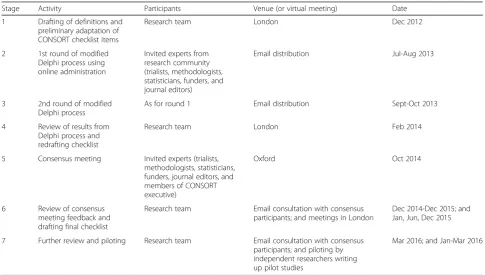
single checklist for such studies that use a randomised approach, referred to as pilot trials in this paper. The process of agreeing on the definitions of feasibility and pilot studies and the underpinning conceptual framework are reported separately [11]. That work was done in paral-lel with the development of the checklist (Table 1). We used the principles in Box 1 to guide the work.
In stage 1, the research team met and worked through each of the existing CONSORT checklist items, agreeing whether each was relevant and should be retained, not relevant and should be excluded, or needed rewording in the context of either a feasibility study or pilot study. This resulted in two checklists. We then applied the re-vised checklists to a sample of 30 articles identified from previous work [13, 15] and our own personal collections. In stage 2, we used a modified Delphi survey to seek consensus on the appropriateness of each of the checklist items. Participants (n= 93) were asked to rate each item on a scale of 1 to 9 (1 = not at all appropriate to 9 = completely appropriate). They were also given the opportunity to com-ment on each item, definitions of pilot and feasibility stud-ies, and the perceived usefulness of the checklist [11].
[image:3.595.55.541.456.731.2]In stage 3, participants in the Delphi survey were asked to review responses for items that 70% or more of partici-pants had rated as 8 or 9 in round 1 of the survey and to make additional comments on these items. They were asked to review the remaining items and classify each using one of four options: discard, keep, unsure, or no opinion. They were also asked to add any items they
Table 1Stages of adapting CONSORT statement for pilot trials
Stage Activity Participants Venue (or virtual meeting) Date
1 Drafting of definitions and preliminary adaptation of CONSORT checklist items
Research team London Dec 2012
2 1st round of modified
Delphi process using online administration
Invited experts from research community (trialists, methodologists, statisticians, funders, and journal editors)
Email distribution Jul-Aug 2013
3 2nd round of modified
Delphi process
As for round 1 Email distribution Sept-Oct 2013
4 Review of results from
Delphi process and redrafting checklist
Research team London Feb 2014
5 Consensus meeting Invited experts (trialists,
methodologists, statisticians, funders, journal editors, and members of CONSORT executive)
Oxford Oct 2014
6 Review of consensus
meeting feedback and drafting final checklist
Research team Email consultation with consensus
participants; and meetings in London
Dec 2014-Dec 2015; and Jan, Jun, Dec 2015
7 Further review and piloting Research team Email consultation with consensus
participants; and piloting by independent researchers writing up pilot studies
believed had been missed. In total 93/120 (77.5%) re-sponses were received for round 1 and 79/93 (84.9%) for round 2.
[image:4.595.61.287.126.459.2]In stage 4, the research team met face to face to review the feedback from the Delphi survey and to revise the checklist. In stage 5, the revised checklist was then fur-ther reviewed in detail during a two day expert consen-sus meeting. In stage 6, some checklist items were reworded to ensure clarity of meaning and purpose, and the research team met face to face a further three times to agree on the final wording of the checklist, identify examples of good reporting, and develop the explanation and elaboration section of this paper. A full draft of the paper was then sent to members of the consensus meeting to ensure it fully reflected the discussion of the meeting.
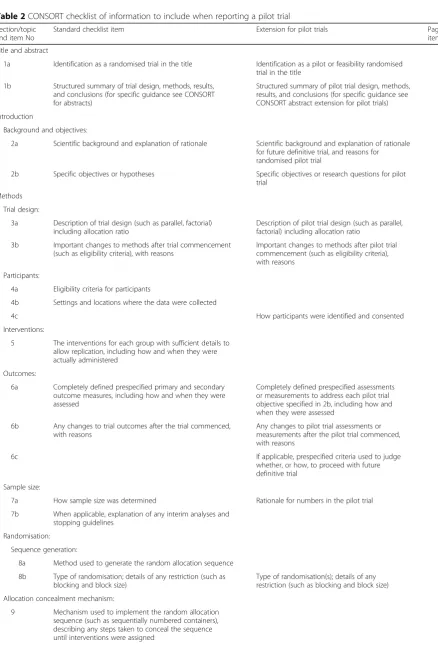
Table 2 presents the final checklist, laid out in accord-ance with other CONSORT extensions. Items in the standard checklist column should be adhered to unless the extension column indicates a change in the item. Box 1 lists the methodological considerations and princi-ples that guided the process.
Extension of CONSORT 2010 to pilot trials
Title and abstract - Item 1a
- Standard CONSORT item: identification as a rando-mised trial in the title
- Extension for pilot trials: identification as a pilot or feasibility randomised trial in the title
-Example 1 (using the words pilot, randomised, and trial)
−“Bespoke smoking cessation for people with severe mental ill health (SCIMITAR): a pilot randomised controlled trial”[31]
- Example 2 (using the words feasibility, randomised, and trial)
−“A cluster randomised feasibility trial evaluating nutritional interventions in the treatment of malnutrition in care home adult residents”[32]
-Explanation
The primary focus of these guidelines is randomised pilot and feasibility trials. To ensure that these types of studies can be easily identified from specific search criteria, a title containing the descriptors “pilot” or “feasibility” as well as“randomised”provides a necessary, recognised ter-minology for selecting randomised pilot and feasibility tri-als [13]. This would tri-also enable these studies to be easily indexed in electronic databases, such as PubMed [33]. Al-though the descriptors might appear in the title for many studies, they might not necessarily occur together, as in: “Feasibility of a randomised trial of a continuing medical education program in shared decision-making on the use of antibiotics for acute respiratory infections in primary care: the DECISION+ pilot trial [34].” Furthermore, in some cases authors might use the phrase“randomised pilot study”or“randomised feasibility study,”as in“‘Not just an-other walking program’: Everyday Activity Supports You (EASY) model—a randomized pilot study for a parallel randomized controlled trial [21].” Such papers could be identified in appropriate searches. However, in general we recommend the descriptors are given together in one phrase, and the word“trial”rather than“study”is used, as in“randomised pilot trial”or“randomised feasibility trial.”
- Item 1b
- Standard CONSORT item: structured summary of trial design, methods, results, and conclusions (for specific guidance see CONSORT for abstracts) [35, 36].
-Extension for pilot trials: structured summary of pilot trial design, methods, results, and conclusions (for spe-cific guidance see CONSORT abstract extension for pilot trials) (Table 3)
-Example
See Figs. 1, 2 and 3 [21]. Box 1. Methodological considerations and principles
that guided the development of the CONSORT extension to pilot trials
•The rationale of a pilot trial is to investigate areas of uncertainty about the future definitive RCT
•The primary aims and objectives of a pilot trial are therefore about feasibility, and this should guide the methodology used in the pilot trial
•Assessments or measurements to address each pilot trial objective should be the focus of data collection and analysis.
This might include outcome measures likely to be used in the definitive trial but, equally, it might not
•Since the aim of a pilot trial is to assess the feasibility of proceeding to the future definitive RCT, a decision process about
how to proceed needs to be built into the design of the pilot trial. This might involve formal progression criteria to decide whether to proceed, to proceed with amendments, or not to proceed •Methods used to address each pilot trial objective can be
qualitative or quantitative. A mixed methods approach could result in both types of data being reported within the same paper. Equally, a process evaluation or other qualitative study can be done alongside a pilot trial and reported separately in more detail •The number of participants in a pilot study should be based on
the feasibility objectives and some rationale should be given •Formal hypothesis testing for effectiveness (or efficacy) is not
recommended. The aim of a pilot trial is not to assess effectiveness
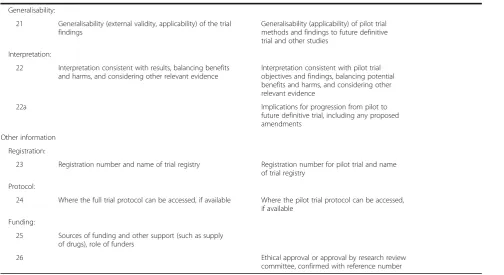
Table 2CONSORT checklist of information to include when reporting a pilot trial
Section/topic and item No
Standard checklist item Extension for pilot trials Page No where
item is reported
Title and abstract
1a Identification as a randomised trial in the title Identification as a pilot or feasibility randomised trial in the title
1b Structured summary of trial design, methods, results, and conclusions (for specific guidance see CONSORT for abstracts)
Structured summary of pilot trial design, methods, results, and conclusions (for specific guidance see CONSORT abstract extension for pilot trials)
Introduction
Background and objectives:
2a Scientific background and explanation of rationale Scientific background and explanation of rationale for future definitive trial, and reasons for randomised pilot trial
2b Specific objectives or hypotheses Specific objectives or research questions for pilot
trial
Methods
Trial design:
3a Description of trial design (such as parallel, factorial) including allocation ratio
Description of pilot trial design (such as parallel, factorial) including allocation ratio
3b Important changes to methods after trial commencement (such as eligibility criteria), with reasons
Important changes to methods after pilot trial commencement (such as eligibility criteria), with reasons
Participants:
4a Eligibility criteria for participants
4b Settings and locations where the data were collected
4c How participants were identified and consented
Interventions:
5 The interventions for each group with sufficient details to allow replication, including how and when they were actually administered
Outcomes:
6a Completely defined prespecified primary and secondary outcome measures, including how and when they were assessed
Completely defined prespecified assessments or measurements to address each pilot trial objective specified in 2b, including how and when they were assessed
6b Any changes to trial outcomes after the trial commenced, with reasons
Any changes to pilot trial assessments or measurements after the pilot trial commenced, with reasons
6c If applicable, prespecified criteria used to judge
whether, or how, to proceed with future definitive trial
Sample size:
7a How sample size was determined Rationale for numbers in the pilot trial
7b When applicable, explanation of any interim analyses and stopping guidelines
Randomisation:
Sequence generation:
8a Method used to generate the random allocation sequence
8b Type of randomisation; details of any restriction (such as blocking and block size)
Type of randomisation(s); details of any restriction (such as blocking and block size)
Allocation concealment mechanism:
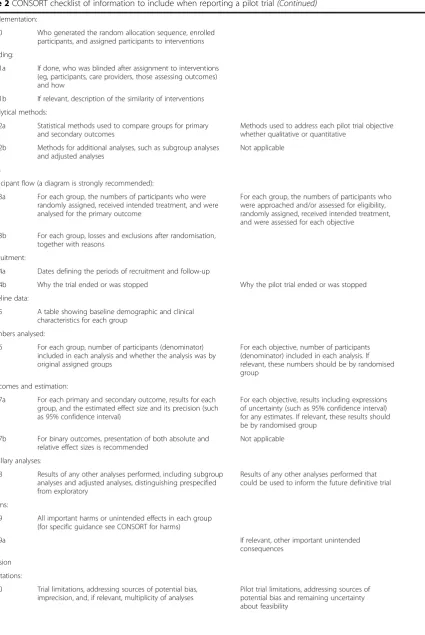
Table 2CONSORT checklist of information to include when reporting a pilot trial(Continued)
Implementation:
10 Who generated the random allocation sequence, enrolled participants, and assigned participants to interventions
Blinding:
11a If done, who was blinded after assignment to interventions (eg, participants, care providers, those assessing outcomes) and how
11b If relevant, description of the similarity of interventions
Analytical methods:
12a Statistical methods used to compare groups for primary and secondary outcomes
Methods used to address each pilot trial objective whether qualitative or quantitative
12b Methods for additional analyses, such as subgroup analyses and adjusted analyses
Not applicable
Results
Participant flow (a diagram is strongly recommended):
13a For each group, the numbers of participants who were randomly assigned, received intended treatment, and were analysed for the primary outcome
For each group, the numbers of participants who were approached and/or assessed for eligibility, randomly assigned, received intended treatment, and were assessed for each objective
13b For each group, losses and exclusions after randomisation, together with reasons
Recruitment:
14a Dates defining the periods of recruitment and follow-up
14b Why the trial ended or was stopped Why the pilot trial ended or was stopped
Baseline data:
15 A table showing baseline demographic and clinical characteristics for each group
Numbers analysed:
16 For each group, number of participants (denominator) included in each analysis and whether the analysis was by original assigned groups
For each objective, number of participants (denominator) included in each analysis. If relevant, these numbers should be by randomised group
Outcomes and estimation:
17a For each primary and secondary outcome, results for each group, and the estimated effect size and its precision (such as 95% confidence interval)
For each objective, results including expressions of uncertainty (such as 95% confidence interval) for any estimates. If relevant, these results should be by randomised group
17b For binary outcomes, presentation of both absolute and relative effect sizes is recommended
Not applicable
Ancillary analyses:
18 Results of any other analyses performed, including subgroup analyses and adjusted analyses, distinguishing prespecified from exploratory
Results of any other analyses performed that could be used to inform the future definitive trial
Harms:
19 All important harms or unintended effects in each group (for specific guidance see CONSORT for harms)
19a If relevant, other important unintended
consequences
Discussion
Limitations:
20 Trial limitations, addressing sources of potential bias, imprecision, and, if relevant, multiplicity of analyses
-Explanation
Abstracts can follow different structures dependent on a journal’s style. They are typically around 300 words. We outline what information should be reported in the abstract irrespective of style. This information may also be used for writing conference abstracts. The structure of the abstract does not differ in format from item 1b of the standard CONSORT 2010 guidelines. However, its content focuses on the aims and objectives of the pilot trial and not on the future definitive RCT.
It is important that the abstract contains pertinent in-formation on the background, methods, results, and conclusions in relation to the feasibility objectives and outcomes, and that it states the study is a“randomised” pilot trial. This will aid researchers in understanding the nature of the paper and facilitates electronic searching through the inclusion of specific key words. A statement in the abstract that this study is in preparation for a future definitive RCT is recommended to place it in context. A description of the areas of uncertainty to be addressed and a statement of the feasibility aims and objectives should be included in the background, how these objectives have been addressed in the methods, and results for each ob-jective in the results. If there are a limited number of pilot trial objectives then all should be listed and results for each reported. If there are many pilot trial objectives, then agreement should be reached a priori about which are the most important, to decide whether to proceed to a future definitive RCT, and only these objectives should be
reported. An explicit statement relating to whether the fu-ture definitive RCT is likely to go ahead on the basis of the results of the pilot trial should also form part of the discussion and conclusions.
Introduction - Item 2a
- Standard CONSORT item: scientific background and explanation of rationale
- Extension for pilot trials: scientific background and explanation of rationale for future definitive trial, and reasons for randomised pilot trial
-Example
[image:7.595.56.561.98.373.2]“Reduced fetal movements (RFM) is a frequently seen problem in maternity care with 6–15% of women reporting attending at least one occasion of RFM to health professionals in the third trimester of pregnancy. RFM, defined by maternal perception of significantly reduced or absent fetal activity, is associated with increased risk of stillbirth and fetal growth restriction (FGR) due to placental dysfunction. Despite this association there is a paucity of evidence to direct clinical management of women presenting with RFM. This has been recently highlighted by guidelines from the Royal College of Obstetrics and Gynaecology (RCOG) and a meta-analysis…The absence of high-quality evidence has led to wide variation in management strategies for RFM in high-income Table 2CONSORT checklist of information to include when reporting a pilot trial(Continued)
Generalisability:
21 Generalisability (external validity, applicability) of the trial findings
Generalisability (applicability) of pilot trial methods and findings to future definitive trial and other studies
Interpretation:
22 Interpretation consistent with results, balancing benefits and harms, and considering other relevant evidence
Interpretation consistent with pilot trial objectives and findings, balancing potential benefits and harms, and considering other relevant evidence
22a Implications for progression from pilot to
future definitive trial, including any proposed amendments
Other information
Registration:
23 Registration number and name of trial registry Registration number for pilot trial and name of trial registry
Protocol:
24 Where the full trial protocol can be accessed, if available Where the pilot trial protocol can be accessed, if available
Funding:
25 Sources of funding and other support (such as supply of drugs), role of funders
26 Ethical approval or approval by research review
settings…Although there are randomised controlled trials (RCT) of counting fetal movements by a formal structure (e.g. count to ten) there have been no published RCTs of patient management following presentation with RFM. To undertake an RCT of patient management raises important practical concerns including: maternal anxiety for fetal wellbeing, the need to make a decision regarding participation in a short period of time due to the acute nature of RFM and adherence to protocol. Thus, studies have adopted an approach of changing practice at the unit level in quality-improvement projects or stepwise cluster RCT (AFFIRM, NCT01777022). We performed this study to address whether an RCT of the management of RFM in individual patients was an appropriate trial design, and was feasible with regard to i) maternal recruitment and retention ii) patient acceptability, iii) adherence to protocol. In addition, we wished to confirm the prevalence of poor perinatal outcomes in the study population [37].”
-Explanation
[image:8.595.65.533.98.445.2]It is important that the scientific background sets the scene and gives the rationale and justification for the future definitive RCT and why the pilot trial is needed, because under the principles of the Helsinki declaration it is unethical to expose people unnecessarily to the risks of research [38]. The background and rationale are nicely illustrated in the example. Other related pub-lications, or preliminary work such as systematic re-views, qualitative studies, or additional feasibility work, or absence of such work because no one has looked at this topic before, should also be mentioned. The ration-ale for the randomised pilot trial should be clearly out-lined, including the areas of uncertainty that need to be addressed before the future definitive RCT can take place and why such a trial is needed before proceeding to the future definitive RCT. This rationale is usually reported in the final paragraph of the introduction or background section to provide a justification for the pilot trial.
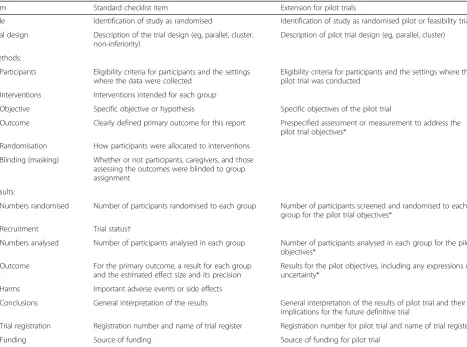
Table 3Extension of CONSORT for abstracts for reporting pilot trials
Item Standard checklist item Extension for pilot trials
Title Identification of study as randomised Identification of study as randomised pilot or feasibility trial
Trial design Description of the trial design (eg, parallel, cluster, non-inferiority)
Description of pilot trial design (eg, parallel, cluster)
Methods:
Participants Eligibility criteria for participants and the settings where the data were collected
Eligibility criteria for participants and the settings where the pilot trial was conducted
Interventions Interventions intended for each group
Objective Specific objective or hypothesis Specific objectives of the pilot trial
Outcome Clearly defined primary outcome for this report Prespecified assessment or measurement to address the
pilot trial objectives*
Randomisation How participants were allocated to interventions
Blinding (masking) Whether or not participants, caregivers, and those assessing the outcomes were blinded to group assignment
Results:
Numbers randomised Number of participants randomised to each group Number of participants screened and randomised to each group for the pilot trial objectives*
Recruitment Trial status†
Numbers analysed Number of participants analysed in each group Number of participants analysed in each group for the pilot objectives*
Outcome For the primary outcome, a result for each group
and the estimated effect size and its precision
Results for the pilot objectives, including any expressions of uncertainty*
Harms Important adverse events or side effects
Conclusions General interpretation of the results General interpretation of the results of pilot trial and their implications for the future definitive trial
Trial registration Registration number and name of trial register Registration number for pilot trial and name of trial register
Funding Source of funding Source of funding for pilot trial
*Space permitting, list all pilot trial objectives and give the results for each. Otherwise, report those that are a priori agreed as the most important to the decision to proceed with the future definitive RCT
- Item 2b
- Standard CONSORT item: specific objectives or hypotheses
- Extension for pilot trials: specific objectives or re-search questions for pilot trial
- Example 1 (listing objectives as primary and secondary)
“In this feasibility trial, the research aim was to explore trial design, staff and resident acceptability of the interventions and outcome measures and to provide data to estimate the parameters required to design a definitive RCT…The primary objectives of the trial were as follows:
1. To assess how many care homes accepted the invitation to participate in research.
2. To determine whether the eligibility criteria for care home residents were too open or too restrictive by estimating feasible eligibility and recruitment rate.
3. To assess retention of care homes and residents by estimating 3 and 6-month follow-up rates.
4. To investigate the acceptability of nutritional support interventions to malnourished care home residents in
terms of compliance and to care home staff in terms of adherence to the intervention schedule.
5. To assess the acceptability and feasibility (and factors influencing this) of the outcome measures as methods to measure efficacy of the interventions within a definitive trial.
The secondary objectives of the trial were as follows:
1. To investigate the completion of screening tools and questionnaires by care home staff.
2. To determine how many malnourished residents were able to participate in PROMs and to complete the questionnaires.
3. To pilot a Healthcare resource usage (HCRU) questionnaire.
4. To measure key outcome domains (for completion rates, missing data, estimates, variances and 95% confidence intervals for the difference between the intervention arms) for malnourished care home residents, including physical outcome measures and PROMs. 5. To collect and synthesise data, from which the Intracluster Correlation Coefficient (ICC) and sample size of a definitive cluster RCT (CRCT) could be estimated [32].”
[image:9.595.55.540.86.401.2]- Example 2 (objectives leading to a mixed methods study)
“The main aim of the study is to assess the feasibility of conducting a definitive trial in terms of
recruitment, use and acceptability of the intervention, follow-up at 3 and 6 months, and data collection methods. In addition, the study aims to establish suitable procedures for delivering the intervention and conducting assessments and procedures for
Fig 3Track changes version of example abstract for report of pilot trial [21], showing changes between Figs. 1 and 2
[image:10.595.63.540.87.392.2] [image:10.595.63.540.465.727.2]ensuring recruitment and retention in the study. Finally, the study aims to discover whether using a structured, individualized approach to lifestyle assessment and referral will improve uptake and participation in lifestyle- and behaviour-change interventions.
The study will also examine, qualitatively, the acceptability of the assessment tool to patients in an acute cardiology setting as well as patients’
experiences of making lifestyle changes in order to develop effective recruitment and retention strategies. The study will have a number of quantitative objectives:
1. To determine how many patients accept referral to a formal lifestyle programme;
2. To determine how many patients participate in a lifestyle-change intervention or initiate self-managed change;
3. To investigate the uptake of lifestyle intervention in relation to subsequent behaviour change and impact on health-related quality of life, mood and social satisfaction;
4. To estimate feasible eligibility, recruitment and refusal rates, and 3- and 6-months follow-up rates; 5. To measure key outcome domains (that is, for
completion rates, missing data, estimates, variances and 95% confidence intervals for the difference between the control and intervention groups) for patients including clinical indicators and patient-reported measures of social satisfaction; health-related quality of life; and mood;
6. To synthesize data to inform the sample size of a definitive trial;
7. To determine the acceptability (and factors influencing this) of financial incentives as a method to encourage behaviour change, their pricing and factors influencing this [39].”
-Explanation
Although many aspects of feasibility may be related to each other, an articulation of specific objectives enables readers to understand the main areas of uncertainty to be addressed in the pilot trial and provides a working structure for presenting the methods and results in rela-tion to these objectives. In addirela-tion, a comprehensive list of objectives enables other researchers to learn from and adopt similar approaches in their own studies.
It might be beneficial to separate the objectives into primary objectives (often those on which decisions about progressing to a future definitive RCT may be made) and secondary objectives, as in example 1, where feasibility objectives are primary and questions related to patient centred outcomes are treated as secondary. Because it is not always necessary to collect data on patient
centred outcomes, it is important to give the rationale for collecting such data. For example, the purpose may be to ensure that certain data can be collected, including from specific patient groups (eg, elderly people, as in ex-ample 1), or to ensure that difficult-to-measure concepts such as lifestyle behaviour change can be assessed appro-priately in the future definitive RCT (example 2). It might also be informative to state explicitly which objectives will be answered using quantitative methods and which using qualitative methods, as in example 2.
In example 2 the list of quantitative objectives are quite informative, but they are taken from the published study protocol. In the published pilot trial the objectives contained far less detail:“The Healthy Hospital Trial is a single-center, randomized controlled, 2-arm, parallel-group, unblinded feasibility trial that was conducted on 2 cardi-ology wards at the Leeds Teaching Hospitals Trust. Its pri-mary aim was to explore the feasibility of individualized lifestyle referral assessment, estimate the rate of recruit-ment, and explore the feasibility of collecting the data and follow-up of participants to inform the sample size of a definitive trial. A secondary aim was to test the concept that an individually tailored assessment improves uptake of lifestyle change compared with usual assessment. The trial protocol has been published elsewhere [40].”We rec-ommend putting detailed individual objectives into the pilot trial report itself so that readers can more easily judge the extent to which these have been fulfilled by the study.
Inclusion of an objective to test a hypothesis of effect-iveness (or efficacy) is not recommended (see Box 1). However, other kinds of hypotheses may be tested, such as when using an interim or surrogate outcome to ad-dress potential effectiveness [41]. (See also the section entitled Scope of this paper). However, a trial should al-ways be adequately powered for any hypothesis test, and in a pilot trial it should be clearly stated that the object-ive is to assess potential effectobject-iveness. If tests are carried out without adequate power (as they sometimes are in reality), they should certainly be viewed as secondary and a caveat included in the discussion [21].
Methods - Item 3a
- Standard CONSORT item: description of trial design (such as parallel, factorial) including allocation ratio
-Extension for pilot trials: description of pilot trial de-sign (such as parallel, factorial) including allocation ratio
-Example
-Explanation
The design of any study should be described, be it a definitive trial or a pilot trial. It is not uncommon for pilot trials to adopt ratios other than the usual 1:1 for randomisation. 1:1 randomisation provides the greatest power for testing effectiveness in, for example, a future definitive RCT. However, a pilot trial commonly involves new, not established, interventions and one of the aims might then be to gain experience in delivering the inter-vention, in which case it is often better to have as many participants receiving the intervention as is feasible.
- Item 3b
- Standard CONSORT item: important changes to methods after trial commencement (such as eligibility criteria), with reasons
- Extension for pilot trials: important changes to methods after pilot trial commencement (such as eligi-bility criteria), with reasons
-Example
“After randomly assigning 11 patients (5 to standard care), we recognized that patients assigned to standard care were receiving early surgery because, having achieved accelerated medical clearance, they were put on the operating room list. We therefore amended the protocol to randomly assign patients immediately on diagnosis; only those assigned to early surgery received an expedited medical assessment [43].”
-Explanation
Pilot trials are exploratory and so those conducting them should be able to modify the methods if a potential prob-lem becomes apparent. In the case of Buse et al. [43], the original protocol specified that patients had to have med-ical clearance for rapid surgery before randomisation, but this led to contamination of the control group as some pa-tients in this group were put on the surgical list for rapid surgery (accelerated surgery was the intervention) because it had been ascertained that they were suitable candidates. In the revised protocol participants were randomised first and then assessed for suitability to accelerated access. Thus the pilot potentially improved the design of the trial that was to follow. It is important to document all changes and give reasons for the changes. The example describes changes to the timing of randomisation, but there might also be changes to other aspects of the trial, such as the treatment regimen, eligibility criteria, or outcome variables.
- Item 4a
- Standard CONSORT item: eligibility criteria for participants
-Example
“Thirty-one sequential eligible people with HD [Huntington’s disease] were recruited from the
specialist HD clinics in Cardiff, the United Kingdom, and Oxford, the United Kingdom, between March 2011 and November 2011. Inclusion criteria were (1) diagnosis of HD, confirmed by genetic testing and neurological examination, (2) ability to walk independently as primary means of mobility, (3) willing to travel to the exercise center for the intervention, (4) capacity to give informed consent, (5) Unified Huntington’s Disease Rating Scale Total Motor Score (UHDRS-TMS) and Total Functional Capacity (TFC) of at least 5/124 and 5/13, respectively, from last clinic visit, and (6) maintenance of a stable medical regimen for 4 weeks prior to initiation of study and considered by the recruiting clinician as able to maintain a stable regimen for the course of the study. Participants were not eligible if they (1) had a history of additional prior major neurological condition such as stroke, (2) had an orthopedic condition that limited mobility, (3) demonstrated uncontrolled psychiatric symptoms, (4) were pregnant, (5) demonstrated any contraindication to exercise, or (6) were involved in any interventional trial or within 3 months of completing an interventional trial [44].”
-Explanation
Readers might want to know how the results of the trial are likely to apply to the future definitive RCT and other future trials with similar participants in similar set-tings. A variety of participants (eg, patients, doctors, as-sessors, caregivers, managers) might provide data to address objectives. For example, in a study in nursing homes, residents were interviewed to seek views on ac-ceptability of the intervention, whereas nurses participated in focus groups to elicit views on randomisation or adher-ence to treatment protocol [32]. Eligibility criteria should be specified for each set of participants included in a pilot trial. The details provided must be specific enough to identify the clinical population and any other populations and the setting from which they were recruited and to confirm that legal issues were complied with, such as having capacity to give informed consent. Details should be sufficient to allow other researchers to interpret, learn from, and use the information provided.
- Item 4b
- Standard CONSORT item: settings and locations where the data were collected
-Example
Institute and Clinic (WPIC); and (3) siblings of youth receiving treatment for BP at the Child and Adolescent Bipolar Services clinic (CABS) at WPIC [45].”
-Explanation
The settings for recruiting patients and collecting data must be specified so that readers can judge the applic-ability (generalisapplic-ability) of the findings to other trials as well as to the future definitive RCT. Authors should also make clear whether any pilot sites have particular features—for example, organisational features, charac-teristics that predispose the site to early adoption of new schemes, or specific relationships with the authors that could affect recruitment, consent, and follow-up. This is because these features may not be replicable in other sites and hence in future trials. As with item 4a, details must be sufficient to allow other researchers to interpret, learn from, and use the information.
- Item 4c
- Extension for pilot trials: how participants were identified and consented
-Example
“Between May and October 2013, clinical staff at participating gastroenterology outpatient clinics scanned and identified potential participants that met the study inclusion criteria. Then, either study invitation packs were sent to patients with researchers’ contact details or patients seen consecutively in clinics were approached with the study information. All study information was co-designed with patients from the pa-tient-involvement group. Interested participants then registered their interest with the researcher by tele-phone or email. This was followed up with a screen-ing visit with the researcher and then informed written consent was obtained [46].”
-Explanation
This is a new item. It is especially important to report details of identification and consent in a pilot trial to allow the feasibility of the recruitment methods to be assessed. The way participants are identified and approached should be described in detail (eg, by adver-tisement, or selection from medical records or another dataset) to enable readers to understand the generalis-ability (applicgeneralis-ability) of the results. This might be of particular importance for scaling-up for the future de-finitive RCT, as well as being informative for other fu-ture trials. In addition, it is important to know of any specific aspects that might not be easy to implement in the future definitive RCT. Furthermore, a view is some-times held that pilot trials do not need to be as rigorous in their processes as other trials, so it might be particu-larly important in these trials to show rigorous and
ethical identification and recruitment processes. If de-tails of the way participants were identified and consent obtained are already published in a protocol, then this should be clearly referenced.
- Item 5
-Standard CONSORT item: the interventions for each group with sufficient details to allow replication, includ-ing how and when they were actually administered
-Example
“Intervention (EXERcise or STRETCHing)
The amount of time required for participating in the exercise activities was the same for the EXER group and the STRETCH group. The only difference was the amount of energy expended during the activity. At the first session, the exercise trainer explained the
procedures for the respective intervention (EXER or STRETCH), showed them the equipment available for the exercise or stretch sessions, and the coordinator familiarized the participant with the Actical device. The first two weeks required a minimum of 3 sessions at CI [Cooper Institute] for the trainer to teach them how to use the equipment and complete the exercise or stretch routines. Following the first 2 weeks, participants began doing their exercise program at home or other location (gym, park, etc.), and only had to come to CI once a week for an exercise session. Each EXER/STRETCH session averaged about 30–40 min. EXERcise Intervention
Supervised exercise sessions at the Cooper Institute (CI) for the participants began by using the treadmills or stationary cycles. The CI trainers also taught patients how to complete home-based exercise sessions (e.g., choice of Wii Sports and Fit, jazzercise, jogging, weight training based on their preferred exercise) that were unsupervised workouts at the patient's home or in the community. The duration of each session generally was the time required to reach 1/3 or 1/4 of the total weekly caloric expenditure. There was a progression to the assigned exercise dose in the first few weeks that got them up to their minimum of 12 kilocalories/ kilogram/week (KKW) energy expenditure (e.g., 8 KKW first week, 10 KKW second and 12 KKW by the third week). Participants exercised three times per week. STRETCH Intervention
the gluts, inner thigh, calves and ankles, Achilles tendon, hamstring stretches, shoulder rolls forward and back, shoulder shrugs, isometrics for the neck hugging knees into the chest, moving forehead to right knee, then to left, then to both, and use of the pelvic tilt. An additional 10–15 minutes consisted of moving on to right and left calf stretches, quad stretches, and then to a series for the arms, hands, fingers, wrist, biceps/triceps, shoulders and back. All of the exercises were designed to be done slowly, emphasizing proper alignment, and rest periods to minimize overall physical exertion while obtaining general flexibility, and most importantly controlling for contact time with trainers and any social facilitation from participating in such activities. We had a different set of low level/low intensity routines for each of the 12 weeks to minimize boredom with the routines [47].” -Explanation
If the pilot trial is to inform future research, the au-thors should report exact details of the treatment given to all study groups, and if one group receives treatment as usual this should also be described thoroughly. Details should include who administered the treatment, as well as what it comprised and how often and where it was delivered. The template for intervention description and replication (TIDieR) guidelines should be followed and the checklist completed [48]. If there are changes to the details of the treatments for any group, these must be reported (see item 3b).
- Item 6a
- Standard CONSORT item: completely defined pre-specified primary and secondary outcome measures, in-cluding how and when they were assessed
- Extension for pilot trials: completely defined prespe-cified assessments or measurements to address each pilot trial objective specified in item 2b, including how and when they were assessed
-Example
“Acceptabilityanddemandwere assessed in terms of the usage and repeated usage of the intervention by the patients in the trial indicated by logged user statistics. The interventions’practicabilitywas considered as the ability to log in and occurrence of constraints in delivery and was assessed in terms of the percentage of users in adolescents and professionals, its bounce percentage (percentage of login-errors) and other login-problems. The bounce-percentage was logged and participants were asked to report login-errors.Integration was assessed in terms of the extent to which our web-based intervention promotes care that was consistent with recognized standards of diabetes care for adolescents including those published by the International Diabetes Federation (IDF) in collaboration
with the International Society for Pediatric and Adolescent Diabetes (ISPAD) and the American Diabetes Association (ADA; 3, 33); see also Appendix 1 [49].”
-Explanation
In a definitive trial investigators are primarily interested in response variables or outcomes that enable them to fulfil the primary objective (to assess the effect of an interven-tion or treatment), and a clear articulainterven-tion of prespecified outcomes is required to guard against bias in the assess-ment of this effect. In a pilot trial, however, objectives should relate to feasibility (see Box 1 and item 2b) and any measurements or assessments should enable these objec-tives to be addressed. To ensure the pilot trial meets its ob-jectives, measures or assessments should be defined to address each separate objective or research question. In the example, objectives were to assess acceptability, demand, practicability, and integration. The authors list the mea-sures used for each of these.
Variables that might be considered primary and second-ary outcomes for the future definitive RCT might be mea-sured in a pilot trial to assess response, completeness, or validity. The appropriate measures or assessments would then be response rates, completion rates, or measures of validity. Sometimes investigators may want to measure surrogate outcomes (see example in item 7b), variables on the causal pathway of what might eventually be the pri-mary outcome in the future definitive RCT, or outcomes at early time points, in order to assess the potential for the intervention to affect likely outcomes in the future defini-tive RCT (see item 2b).
- Item 6b
- Standard CONSORT item: any changes to trial out-comes after the trial commenced, with reasons
-Extension for pilot trials: any changes to pilot trial as-sessments or measurements after the pilot trial com-menced, with reasons
-Example 1 (change to assessment time period)
“Our outcome measures examined uptake and cessation because we hoped that our intervention would affect uptake by referring more people and the success rate of those referred by supporting adherence to treatment…The intervention had two distinct phases so, although not planned in the protocol, we examined uptake of services and 4-week quit rates by trial arm, in these two periods [50].”
-Example 2 (change to measurement instrument)
activity, smoking, or alcohol consumption at any time (binary)…In our published protocol, we had proposed 4 categories of change, but we found it difficult to distinguish between“persisted”and“maintained”in the qualitative follow-up interviews; hence, we combined persistence and maintenance of change in 1 category [40].”
-Explanation
An assessment or measure might change during a pilot trial because the change enables investigators to glean more information about the operation of the interven-tion (as in example 1) or for reasons of acceptability or practicability (example 2). In example 2 it became im-practical to use a measurement instrument with four categories when it was identified that researchers could not distinguish between two of the categories. In the in-terests of full reporting and because of the usefulness of such information to others working in the same spe-cialty, all such changes should be reported.
- Item 6c
- Extension for pilot trials: if applicable, prespecified criteria used to judge whether, or how, to proceed with future definitive trial
-Example
“Feasibility (delivery) and acceptability (uptake) of the DECISION+ program were the main outcome measures of this pilot trial. Investigators had established a priori threshold for specific feasibility and acceptability criteria. These were the following: (a) the proportion of contacted FMGs [Family medicine groups] participating in the pilot study would be 50% or greater, (b) the proportion of recruited family physicians participating in all three workshops would be 70% or greater, (c) the mean level of satisfaction from family physicians regarding the workshops would be 65% or greater, and (d) the proportion of missing data in each completed questionnaire would be less than 10% [34].”
-Explanation
This is a new item. The purpose of a pilot trial is to as-sess the feasibility of proceeding to the next stage in the research process. To do this investigators need some cri-teria on which to base the decision about whether or not to proceed. The next stage in the research process will normally, although not always, be the future definitive RCT.
The UK National Institute for Health Research requires that pilot or feasibility studies have clear criteria for decid-ing whether or not to progress to the next stage:“We ex-pect that when pilot or feasibility studies are proposed by applicants, or specified in commissioning briefs, a clear
route of progression criteria to the substantive study will be described. Listing clear progression criteria will apply whether the brief or proposal describes just the prelimin-ary study or both together. Whether preliminprelimin-ary and main studies are funded together or separately may be decided on practical grounds [51].”
In many pilot studies, however, such criteria may be best viewed as guidelines rather than strict thresholds that determine progression. In the example, the authors found that only 24% of the family medicine groups (FMGs) agreed to participate. They state “Not reaching the pre-established criteria does not necessarily indicate unfeasibility of the trial but rather underlines changes to be made to the protocol”[34]. Clearly it is important to discuss whether such changes to protocol are likely to be feasible, and this discussion might often benefit from input independent of the trial team—for example, from the trial steering committee. This would be a reason for having such a committee in place for a pilot trial. Bugge et al. recently provided further guidance on decision making after a pilot trial [52].
In addition to the possibility of making changes to the trial protocol, investigators should also be aware that es-timates of rates in pilot trials may be subject to consider-able uncertainty, so that it is best to be cautious about setting definitive thresholds that could be missed simply due to chance variation [41]. In fact it is becoming in-creasingly common for investigators to use a traffic light system for criteria used to judge feasibility, whereby measures (eg, recruitment rates) below a lower threshold indicate that the trial is not feasible, above a higher threshold that it is feasible, and between the two that it might be feasible if appropriate changes can be made.
- Item 7a
- Standard CONSORT item: how sample size was determined
- Extension for pilot trials: rationale for numbers in the pilot trial
- Example 1 (rationale based on assessment of practi-calities and estimating rates)
“Since this was a pilot study, a sample size calculation was not performed. The researchers aimed for 120 participants because it was felt this would be a large enough sample to inform them about the practicalities of delivering several self- management courses led by patients with COPD, recruitment, uptake, and attrition [53].”
- Example 2 (rationale based on percentage of number required for future definitive RCT)
number of participants required as around 10% of the number required for the Phase 3 trial. The sample size calculation for the Phase 3 trial suggests we need to recruit 1665 participants. Given the participant population, a high level of attrition may be anticipated. We therefore aim to recruit 200 participants to the feasibility trial to inform the design and sample size of the Phase 3 RCT [54].”
-Explanation
The criterion of congruency between the objectives and the sample size holds as true for a pilot trial as for any study. Many pilot trials have key objectives related to estimating rates of acceptance, recruitment, retention, or uptake (see item 2b for examples). For these sorts of objectives, numbers required in the study should ideally be set to ensure a desired degree of precision around the estimated rate, although in practice it may be difficult to achieve these numbers. Additionally, for pilot trials where the key objective focuses on the acceptability or feasibility of introducing the intervention, it might be useful to consider how many sites are needed, as the ac-ceptability or feasibility of introduction can sometimes depend on the site. In example 1, the authors state their reason for choosing their required sample size in rela-tion to estimating rates and to exploring practicalities of implementing the intervention. They could, however, have provided stronger justification for their chosen num-ber, such as likely recruitment or attrition rate and desired precision around these rates, so that the reader (and funder) has more grounds for believing the trial could achieve its objectives beyond a feeling.
Most methodological papers that focus on recommen-dations about sample size requirements for pilot trials assume that the main aim of such a trial is to estimate a quantitative measure such as the variance (or standard deviation) of an effect size to inform the sample size cal-culation for a future definitive RCT. Methods focus on the precision with which such estimates can be obtained. There are several relevant papers [55–57]. Among these, Whitehead et al. suggests that the size of a pilot trial should be related to the size of the future definitive RCT [58]. For such a trial designed with 90% power and two sided 5% significance, they recommend pilot trial sam-ple sizes for each treatment arm of 75, 25, 15, and 10 for standardised effect sizes that are extra small (0.1), small (0.2), medium (0.5), or large (0.8), respectively.
Example 2 illustrates another approach that uses a sample that is a certain percentage of the expected size of the future definitive RCT. The authors reference the paper by Cocks and Torgerson, which is based on using a sample size under which a one sided 80% confidence interval for the effect size will exclude the minimum clinically important difference if the null hypothesis is
true [59]. This is a similar calculation to that used in es-timating sample size needed for efficacy or effectiveness but allows for additional uncertainty in the resulting effect size estimate, thus effectively assessing potential effectiveness. If an objective is to assess potential ef-fectiveness using a surrogate or interim outcome, investi-gators will need to use a standard sample size calculation to ensure there is adequate power. However, this type of objective is rare in pilot trials.
- Item 7b
- Standard CONSORT item: when applicable, explan-ation of any interim analyses and stopping guidelines
-Example
“The board members were instructed to perform an interim analysis after 60 patients had been enrolled, at which point they could recommend stopping the trial if an overwhelming effect was detected on the basis of the critical significance level (P≤0.02), as adjusted for the Lan–DeMets alpha-spending function with Pocock boundary”[20]
-Explanation
As pilot trials are small, it is uncommon for them to define criteria for early stopping, but if they do, these should be reported. The example is a pilot trial testing a surrogate outcome. There was considerable uncertainty about the variability of this outcome measure, and so the authors calculated a conservative sample size but in-cluded an interim analysis after recruiting 60 patients, in case their a priori estimates were too large and they had enough information at that stage to inform subsequent trials.
- Item 8a
- Standard CONSORT item: method used to generate the random allocation sequence
-Example
“Participants were randomly allocated to the
intervention‘MBCT group’or‘wait-list control group’… Random allocation was computer generated [46].”
-Explanation
In addition, in some pilot trials one of the objectives might be to assess the feasibility of randomisation; it is also important, therefore, that details are reported. If assessing feasibility involves more than one method be-ing used to generate a random allocation sequence, each method should be described adequately.
- Item 8b
-Standard CONSORT item: type of randomisation; de-tails of any restriction (such as blocking and block size)
- Extension for pilot trials: type of randomisation(s); details of any restriction (such as blocking and block size)
-Example 1 (example with blocking)
“Participants were randomised in block sizes of three by computer-generated randomisation to the hydration group or the control group (2:1), stratified by gender [42].”
-Example 2 (two different types of randomisation)
“In addition to random allocation to one of the three treatment arms, we used a 2 × 2 factorial design to distribute practices and participants across two trial design factors: cluster versus individual allocation and systematic versus opportunistic recruitment (see Fig. 1). We randomly assigned 24 practices (8 practices in each of 3 geographical regions (Bristol, Devon and Coventry)) in a 3:1 ratio to cluster (practice) allocation or individual allocation, and in a 1:1 ratio to opportunistic or systematic recruitment. The differential allocation ratio with regard to randomisation method was due to the need to ensure even numbers of practices and participants in each of the three arms across the cluster randomised practices [60].”
-Explanation
The type of randomisation, including whether simple or restricted, should be reported.
For practical reasons simple randomisation is some-times used in pilot trials even when restricted random-isation is expected to be used in the future definitive RCT, and if this is the case this needs to be described.
Restricted randomisation is particularly useful in small trials evaluating the effectiveness of an intervention, to ensure balance in certain characteristics between inter-vention and control groups (see main CONSORT state-ment) [2, 61]. In pilot trials, restricted randomisation might be used to mimic the type of randomisation ex-pected in the future definitive RCT or, if it is deemed important, to have balanced groups even if restricted randomisation is not expected to be used in the future definitive RCT. In example 1, stratified randomisation, employing blocking, was used.
One of the objectives of a pilot trial might be to assess the feasibility of randomisation; it is therefore possible that different types of randomisation could be tried, as in example 2 where cluster versus individual randomisa-tion was considered [60].
- Item 9
- Standard CONSORT item: mechanism used to imple-ment the random allocation sequence (such as sequen-tially numbered containers), describing any steps taken to conceal the sequence until interventions were assigned
-Example
“Allocation…was implemented using an automated telephone randomization service provided by the Bristol Randomized Trials Collaboration to ensure concealment from clinical staff undertaking recruitment [62].”
-Explanation
Ensuring allocation concealment is a cornerstone of a good randomised trial design. This mechanism performs a key function in minimising bias by preventing fore-knowledge of treatment assignment, which could influ-ence those who enrol participants. In a future definitive RCT a single mechanism will be used to conceal alloca-tion. However, in a pilot trial the main purpose of using an allocation concealment mechanism is to establish the feasibility of the mechanism. If there is considerable un-certainty about the mechanism to be used, more than one mechanism may be tried in the pilot trial. We would expect this to be rare, but when it does occur the details of each mechanism tried should be fully described.
- Item 10
- Standard CONSORT item: who generated the ran-dom allocation sequence, who enrolled participants, and who assigned participants to interventions
- Example 1 (who generated the random allocation sequence)
“An independent statistical consultant set up the web-based randomization process to assign eligible participants to intervention or control groups by remote allocation, using permuted blocks of sizes 2 and 4. No one directly involved in the project had access to allocation codes [21].”
Example 2 (who enrolled participants, who assigned participants to interventions)
(usually at home)…Those willing to take part were randomized to receive either specialist medical care or to specialist medical care plus the Phil Parker Lightning Process (LP). Allocation…was
implemented…by the Bristol Randomized Trials Collaboration…”[62]
-Explanation
It is important that the pilot trial confirms that alloca-tion concealment can be implemented in a way that could be replicated in the future definitive RCT. This in-volves knowing who generated the randomisation se-quence and who enrolled and assigned participants.
- Item 11a
- Standard CONSORT item: if done, who was blinded after assignment to interventions (eg, participants, care providers, those assessing outcomes) and how
-Example 1 (blinding of multiple people)
“Patients, families, ICU [intensive care unit] staff, ultrasound technologists, and research personnel were all blinded to drug allocation. The study pharmacist at each center was the only person who was not blinded [63].”
-Example 2 (placebo controlled)
“A synbiotic formulation (Synbiotic 2000®) containing 4 strains of probiotic bacteria (1010each) plus 4 nondigestible, fermentable dietary fibers (2.5 g each) was provided each day, versus a fiber-only placebo formulation [64].”
-Explanation
In the future definitive RCT investigators will want to reduce the chance of a biased result as much as possible. Blinding is seen as one of the most effective ways of doing this, at least in trials where blinding is feasible (see main CONSORT statement for details). The main purpose of a pilot trial is to assess the feasibility of methods, including those to reduce bias. In some pilot trials it might be useful to report the method of blinding in detail, as in example 2, to help readers who might want to replicate the method in future RCTs.
It is tempting in a pilot trial to try and assess the suc-cess of blinding by asking people whether they believed they were blinded or not. This was done, for example in Arnold et al. [65]. This is not recommended, however, because evidence suggests that results of doing this largely reflects the effectiveness of the intervention rather than anything else [66].
- Item 11b
- Standard CONSORT item: if relevant, description of the similarity of interventions
-Example
“Each study drug infusion was administered using a standard volume-based rate escalation protocol preceded by the administration of 100 mg of
hydrocortisone intravenously, 50 mg of diphenhydramine orally or intravenously, and 650 mg of acetaminophen orally to minimize infusion-related reactions and avoid unblinding [65].”
-Explanation
If blinding is done by creating a placebo, it is import-ant in trials assessing the effect of an intervention to de-tail what features of the placebo were made similar to the active intervention (usually a drug)—for example, appearance, taste, smell, method of being administered. However, many of the interventions described in pilot trials are not drug interventions. Nevertheless, it remains important to describe what was done to try and ensure that the intervention and control arms received identical treatment aside from the active ingredient where this is possible. It is equally important to note that for complex interventions it might not be possible or feas-ible to blind certain people to allocation using these types of methods.
- Item 12a
- Standard CONSORT item: statistical methods used to compare groups for primary and secondary outcomes
- Extension for pilot trials: methods used to address each pilot trial objective whether qualitative or quantitative
-Example 1 (descriptive and narrative reporting)
“The feasibility outcomes were reported descriptively and narratively. For the clinical endpoints, only descriptive statistics, mean (standard deviation) for continuous outcomes and raw count (%) for categorical outcomes, were reported [67].”
-Example 2 (confidence intervals)
“For the primary outcomes, the feasibility criteria were the recruitment rate and duration, retention rate, safety, adverse events, compliance,

![Fig 1 Example of abstract for report of pilot trial [21], shown alongside CONSORT for abstracts extension for pilot randomised trials](https://thumb-us.123doks.com/thumbv2/123dok_us/7833057.175263/9.595.55.540.86.401/example-abstract-report-alongside-consort-abstracts-extension-randomised.webp)
![Fig 3 Track changes version of example abstract for report of pilot trial [21], showing changes between Figs](https://thumb-us.123doks.com/thumbv2/123dok_us/7833057.175263/10.595.63.540.87.392/track-changes-version-example-abstract-report-showing-changes.webp)
![Fig 4 Flow diagram of a randomised pilot trial of pharmacist led management of chronic pain in primary care (reproduced from Bruhn et al [69])](https://thumb-us.123doks.com/thumbv2/123dok_us/7833057.175263/20.595.59.538.87.663/diagram-randomised-pharmacist-management-chronic-primary-reproduced-bruhn.webp)