LOW COST HOME COOLING SYSTEM
MUHAMMAD FAUZI BIN YAHYA
This report is submitted in partial llfillment of requirements for the award of Bachelor of Electronic Engineering (Telecommunication Electronics) With Honours
Faculty of Electronic and Computer Engineering Universiti Teknikal Malaysia Melaka
A ~ ~ A W A
$
UNIVERSTI TEKNIKAL MALAYSIA MELAKAgL
FAKULTI KEJURUTERAAN EEKTRONIK DAN KEJURU'ERAAN KOMPUTER-
-
*Y , BORANG PENGESAHAN STATUS LAPORAN
PROJEK SARJANA MUDA I1
Tajuk Projek : Low Cost Home Cooling System
Sesi
Pengajian : 2008
Saya MUHAMMAD FAUZI BIN YAHYA
(HURUF BESAR)
mengaku membenarkan Laporan Projek Sarjana Mu& ini disimpan di Perpustakaan dengan syarat- syarat kegunaan seperti berikut:
1. Laporan adalah hakmilik Universiti Teknikal Malaysia Melaka.
2. Perpustakaan dibenarkan membuat salinan untuk tujuan pengajian sahaja.
3. Perpustakaan d i b k a n membuat salinan laporan ini sebagai bahan pertukaran antara institusi
pengajian tinggi. 4. Sila tandakan ( 4 ) :
(Mengandungi maklumat yang berdarjah keselarnatan atau SULlTL kepentingan Malaysia seperti yang temakhb di dalam AKTA
RAHSIA RASMI 1972)
TERHADC (Mengandungi maklumat terhad yang telah ditentdm oleh
organisasilbadan di mana penyelidikan dijalankan)
TlDAK TERHAD
Alamat Tetap: Lot 5 13, KM 8
Jalan Kandang
75460 Melaka
Disahkan oleh:
I .
ANGAN PENYELIA)
REDZUAN 8 AB3UL KWJ" Kelua Jabalan ( b j Telekomun~i js11 Fakulli Kei Eleklronik clan Kei Kom~uter it k F k 4 .
Universili leknikal Malaysia Mrodk2 , y ' e c ~ q . Kanlng Berkunci 1200. Ayer Keroh, 75450 Melaka
s w ~
t&o8"I hereby declare that this report is result of my own work except for quotes as cited in the references."
Signature :
Author
"I hereby declare that I have read this report and in my opinion this report is sufficient in terms o f scope and quality for the award o f Bachelor of Electronic Engineering (Telecommunication Electronics) with honour"
Signature :
u
Supervisor : Mr Redzuan Bin Abdul ManapACKNOWLEDGEMENT
Alhamdulillah and thanks to Allah, because finally this Porjek Sarjana Muda
I1 (PSM 11) thesis finished successfbl. PSM II took a semester to be completed which is fiom December 2007 till May 2008. It is a continuance from PSM I.
I would like to give a very a big appreciation and million thanks to my faculty dean, Prof Dato Mohd Nor Bin Hussain, and a lot of thanks to my supervision lecturer, En. Redzuan Bin Abdul Manap who helps helped me a lot during my PSM
period by giving their advices and guidance. Their cooperation and ideas make me
vii
ABSTRACT
viii
CONTENTS
CHAPTER TITLE PAGE
PROJECT TITLE
REPORT STATUS APPROVAL FORM CONFESSION SUPERVISOR'S APPROVAL DEDICATION ACKNOWLEDGEMENT ABSTRACT ABSTRAK CONTENTS LIST OF TABLES LIST OF FIGURE
LIST OF ABBREVIATION LIST OF APPENDIX
I INTRODUCTION
1.1 Project Background 1.2 Problem Statement 1.3 Project Objectives 1.4 Scope Work 1.5 Thesis Overview
i iv iii iv v vi vii viii ix xii xiii XV xvi
I1 LITERATURE REVIEW
2.2 Disadvantage of Using Air Conditioning 6
2.2.1 Personal Cost 6
2.2.2 Social & Environmental Costs of Air
Conditioning 7
2.3 Room Temperature 8
2.3.1 Scientific Definition 8
2.3.2 Condition for Physical Experiments 9
2.3.3 Ambient Versus Room Temperature 10
2.4 House Suitability 11
2.5 ATMEL 89C405 1 12
2.5.1 Pin Description/Function 13
2.6 CA3162 16
2.6.1 Description 16
2.6.2 Pin Connection 18
2.6.3 Features 18
2.7 LM35D (Precision Centigrade Temperature Sensors) 19
2.7.1 General Description 19
2.7.2 Pin Connection 19
2.7.3 Features 20
2.7.4 Absolute Maximum Ratings 20
2.8 Power Supply 21
2.9 Relay 2 1
2.10 PCB (Printed Circuit Board) 22
2.1 1 LM7805 22
2.1 2 LCD DISPLAY 1 6 X 2 23
2.12.1 Features 23
2.12.2 Mechanical Data 23
2.12.3 Absolute Maximum Ranting 24
2.12.4 Electrical Specification 24
2.12.5 Pin Connection 25
2.1 3 NTC Thermistors 26
2.14 Software 28
2.14.1 C Language 28
m
PROJECT METHODOLOGY3.1 Methodology 3.2 Project Planning 3.3 Flow Chart Of Project 3.4 Circuit Design Process 3.5 Etching Process 3.6 Drill Pnx;ess
3.7 Component Assembling Process 3.8 Soldering Process
IV RESULT AND DISCUSSION 4.1 Result and Discussion 4.2 Project Analysis
V CONCLUSION AND SUGGESTION
5.1 Conclusion
5.2 Suggestion and Enhancement
REFERENCES
LIST OF TABLES
NO TITLE
2.1 Port 3 Alternative Functions 2.2 Mechanical Data
2.3 Absolute Maximum Ranting 2.4 Electrical Specification 2.5 Pin Connection
LIST OF FIGURES
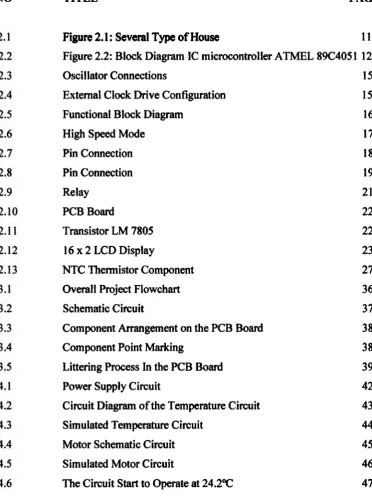
[image:13.550.107.480.213.712.2]TITLE PAGE
Figure 2.1 : Several Type of House 1 1
Figure 2.2: Block Diagram IC microcontroller ATMEL 89C405 1 12
Oscillator Connections 15
External Clock Drive Configuration 15
Functional Block Diagram 16
High Speed Mode 17
Pin Connection 18
Pin Connection 19
Relay 21
PCB Board 22
Transistor LM 7805 22
16 x 2 LCD Display 23
NTC Thermistor Component 27
Overall Project Flowchart 36
Schematic Circuit 37
Component Arrangement on the PCB Board 3 8
Component Point Marking 3 8
Littering Process In the PCB Board 39
Power Supply Circuit 42
Circuit Diagram of the Temperature Circuit 43
Simulated Temperature Circuit 44
Motor Schematic Circuit 45
Simulated Motor Circuit 46
4.7 Water Flow at Rooftop
xiv
LIST OF ABBREVIATION IC CA LCD COz C R K F CMOS CPU RAM YO LED AID BCD Vfl
Hz
v
GND AC MCU MSD LSD NSD Integrated CircuitConvert Analog Signal to Digital Signal
Liquid Crystal Display Carbon Dioxide
Celsius
Rankine
Kelvin
Fahrenheit
Complementary metal-oxide-semiconductor Control Processing Unit
Random Access Memory
Input and Output
Light Emitted Diode Analog to Digital
Binary Coded Decimal
Voltage to Current
Hertz
Volt
Ground
Alternate Current
Multipoint Control Unit
Most Significant Digit
Least Significant Digit
LIST OF APPENDIX
NO TITLE
A C Language
B Assembly Language
C 3-Terminal 1A Positive Voltage Regulator
CHAPTER I
1.0 Overview
This chapter consists of the project background, the objective and scope of
project, the problem statement, methodology and the work schedule. It will give the
overview of the whole project, h m the beginning until the implementation part.
1.1 Project Background
Low Cost Home Cooling System is one complex system in which this system is
consists of microprocessor circuit ATMEL 89C4051, Digithermo circuit and motor circuit. This circuit is proposed when an investigation is made on the hot temperature
problem encountered by many people in their house.
Most of the complaints are about the hot temperature in the house especially at afternoon
reason this project "Low Cost Home Cooling System" project is proposed to solved the
problem.
This system is aimed to decrease the hot temperature (around 24" Celsius) in the
house. Water is taken h m the water
tank
using motor circuit and the water flow to the roof top through PVC pipe. After the water flow on the roof process the hot temperaturein house decreased. This process cycle continued until the temperature decreases to 24"
Celsius.
The important component for this circuit is Integrated Circuit (IC) ATMEL
89C405 1, CA3 162 (convert analog signal to digital signal), IC78L05 (low voltage from
+9volt to +5volt), LM35D (temperature sensor), 16x2 Liquid Crystal Display (LCD)
Display (to show time and temperature) and relay (switch for motor circuit).
1.2 Problem Statement
Before this project is made, a research on the problem faced by common people
is made. The common problem is when a hot season arrives. The hot season problem in
Malaysia contributes an increase in the air conditioner usage. As the usage increases, the
electricity also increase leading to a higher cost of electricity bills.
Looking into a health aspect, air conditioning has no greater influence on health
than heating-that is to say, very little-although poorly maintained air-conditioning
systems (especially large, centralized systems) can occasionally promote the growth and
spread of microorganisms, such as Legionella pneumophila, the infectious agent
responsible for Legionnaire's disease, or thermophilic actinomycetes. Air conditioner
can also contribute to global warming. It produces Carbon Dioxide (C02) and can
reduce ozone layer. Furthermore house can use air conditioner. For example village
1.3 Project Objectives
The objective of this project is to solve the problem, stated before by designing a
low cost Low-Cost Homes Cooling System that can stabilize the temperature room. This
project involved familiarization and utilization of a
C
language and assembly language.The system is designed to include a 16 X 2 Liquid Crystal Display (LCD) to display the measured temperature.
1.4 Scope Work
The scope of work for this project can be divided into three parts. First is project
design. It comprised 3 separate tasks: circuit design, hardware and software
implementation. Each task is conceptually independent h m the other, but each is
necessary in order for the final product to work
The second is circuit design
-
In order to complete the project and before the hardware implementation, all the circuits that related to the project have to be designed.The software like C language or assembly language is used for this project. After all the task is done, the circuits are ready to be constructs and then combined together to make
it as a one complete project.
The last part for this project is hardware and software implementation. After all
the circuit has been designed, a technical is selected in order to implement the hardware
by combining idea and prototype from the earlier work. The motor circuit and
1.5 Thesis Overview
In this part, the summary or overview for each chapter contained in this thesis is
discussed. The introduction of this project is outlined in Chapter I where it contains
problem statement, objectives of the project and project scope methodology.
Literature research and review is discussed in Chapter 11. The function each of
the main components used in this project such as IC ATMEL 89C4051, LM35D,
CA3 162, LCD Display 16 x 2 and other component.
For chapter 111, the methodology and development of the project is to be
explained. The flowchart showing the flow of this project is outlined here to show step
by step plan to achieve the goal of this project.
Result and discussion of the project is covered in chapter IV. All the findings and analysis is discussed in this chapter to determine whether it has covers the overall
objectives of the project.
Finally, in chapter V the conclusion for the project is made and few
enhancements is suggested for further implementation and consequently to upgrade the
LITERATURE REVIEW
2.1 Introduction
There is a concern whether this project is practical as it is believed this project
cannot make the home temperature stablelcold as the water in tank itself can be hot. To make water in the tank hot is not fast like boiling water in the kettle. Before the sun
warm the water in the tank, this project will automatically operate as soon as possible and there is not hot water issue. This project is considered as very cheap compared air conditioning system and can make room temperature stable. It just cost a few ringgits and can make all room in the house cold. As compared to air conditioning system customers have to spend more money to buy air conditioner to cool all room and their
house.
Based on the interview with an air conditioner technician, to start using
the air conditioning system, there are pre-work to be considered and they all cost some
money. First the technician do is to see the room area. For the small room, customers
have to pay
RM700
and for the hall the air conditioner costs RM1800. That's depends on the area where to use it. Installation of air conditioner depends on the room area. Bigserviced. Air conditioning service usually involves the following: filter cleaning (RM 4),
gas refill
(RM
80) and leak piping checking (RM 30). In other word, there is a cost need to be considered for every 6 months.As comparison, only water is used in this project to stabilize the home
temperature. Plus, the used water can be recycled.
2.2 Disadvantage of Using Air Conditioning
2.2.1 Personal Cost
i
Increased Utility BillsAir conditioning can substantially increase in your electricity bill (and these costs
don't begin to reflect the real costs of damage to our health and environment)
ii. Indoor Air Quality Problems
If anyone in the household is sensitive to molds or chemicals, closing the
windows for air conditioning purpose can increase discomfort or even make
them ill.
iii. Trapped Indoors
Living or working in an air-conditioned environment means people have to
readjust each time they go outside. This can be uncomfortable, stressful and
could lead to illness. It also means people are more likely to avoid outdoors
activity and exercise. See the tips below for ways to enjoy hot weather, rather
iv. Blackouts
Air conditioning strains the electrical system at peak times and increases the
likelihood of brownouts and blackouts. The personal effects of electrical system
event include disruption of communication and transportation, lost pay, health
and safety risks, as well as potentially catastrophic damage to appliances,
computers and electronic equipment -just to name a few.
v. Noise
The noise that air conditioners make can be unpleasant and stressful. It can
interfere with conversation and enjoyment both indoors and out.
2.2.2 Social & Environmental Costs of Air Conditioning
i. Blackouts and Brownouts
When electrical system becomes unstable, it has serious effects on public health
and safety, the economy and the environment.
ii. Climate Change and Smog
Ironically, air conditioning contributes to climate change and smog. This only
creates an increasingly uncomfortable world.
iii. Social Isolation
A community in which everybody is sealed behind closed windows and doors is
not a healthy community. Decreased social interaction and physical activity lead
2 3 Room Temperature
Room temperature (also referred to as ambient temperature) is a common term to denote a certain temperature
within
enclosed space at which human beings areaccustomed. Room temperature is thus often indicated by general human comfort, with
the common range of 18OC (64.4 OF) to 24OC (75.2 OF), though climate may acclimatize
people to higher or lower temperatures.
The term can also refer to a temperature of food to be consumed which is placed
in such a room for a given time. Furthermore, it may refer to a certain temperature
within settings of scientific experiments and calculations.
For human comfort, desirable room temperature greatly depends on individual
needs and various other factors. According to the West Midlands Public Health
Observatory (UK), 21 OC (69.8 OF) is the recommended living room temperature,
whereas 18 OC (64.4 OF) is the recommended bedroom temperature. A study carried out
at the University of Uppsala (Sweden), on indoor air quality and subjective indoor air
quality (SIAQ) in primary schools, states that perception of high room temperature was
related to a poor climate of cooperation. To achieve a good SIAQ, it recommends room
temperature should be at a maximum of 24.0 OC (75.2 OF). [2]
23.1 Scientific Definition
For scientific calculations, room temperature is taken to be 20 to 23.5 degrees
Celsius, 528 to 537 degrees Rankine ("R), or 293 to 296 kelvins (K), with an average of
21 OC, about 69.8 degrees Fahrenheit (OF). For numerical convenience, either 20 OC or
300 K is often used. However, room temperature is not a precisely defined scientific term as opposed to Standard Temperature and Pressure, which has several, slightly