THE SOCIO-ECOLOGICAL IMPACTS
OF STRUCTURAL CHANGES IN THE
TRANSHUMANCE SYSTEM OF THE
MOUNTAINOUS AREAS OF NEPAL
A Dissertation Submitted by
Suman Aryal
MSc (Biodiversity and Environmental Management), MSc
(Environmental Science), BSc (Environmental Science)
For the award of
i
Traditional social-ecological systems such as pastoralism can be subject to major and rapid changes, resulting in adverse social, economic, cultural and ecological impacts. Transhumance, a type of pastoralism based on seasonal and recurring movement of livestock has been undergoing unprecedented changes. In the high Himalayas, transhumance is a threatened system due to social-economic and cultural transformations brought by globalisation, shifts from subsistence agriculture (e.g. grazing) to multi-functional land use (e.g. tourism and biodiversity conservation), conservation policies and practices, and climate change. Understanding the nature, extent and impacts of these changes will inform both policy and practice. However, knowledge of the current status of the transhumance system and its socio-economic, cultural and ecological significances is very limited. This study on the transhumance system conducted in or near three mountainous protected areas of Nepal Himalayas addresses the knowledge gap.
The study integrated both social and ecological components of transhumance systems using a system thinking approach. The study was multi-disciplinary in nature and applied mixed methods using a range of tools and techniques for data collection and analysis. Socio-economic data were collected by household surveys, focus group discussion, informal interviews and key informants interviews. The ecological data were collected from the rangelands sites using horizontal transects of grazed areas to collect data on grazing intensity, species richness and other environmental variables.
The study revealed that the transhumance system is a major source of household income of herders and is also embedded with culture and traditions. The results did not support the notion that transhumance grazing is necessarily detrimental to biodiversity. Though the species richness (α-diversity) was low and nitrophilous and grazing tolerant plants were abundant nearer to the goths (semi-permanent stopping and camping points), the highest species richness and occurrence of rare species at mid and further distances from goths within 800 m transects suggest that adverse impacts were confined to very limited areas near goths. In fact, the results indicate that light or medium grazing intensity promotes species richness and composition in other areas.
ii
different components of transhumance systems (rangelands, livestock and herders).
Herders perceived that fewer households were involved in the transhumance system, herd sizes had decreased, movement patterns have been changed, dependency on transhumance was reduced and the involvement of younger generations in transhumance systems has declined. These changes can decouple social and ecological subsystems that can induce adverse social-ecological impacts. The likely social impacts are decreased livelihood options, reduced agricultural production, loss of customary lifestyle and traditional knowledge and culture. The potential ecological impacts from the loss of transhumance systems can be on biodiversity, vegetation and land use, and ecosystem functions and services.
iii
I certify that the ideas, results, analyses and conclusions reported in this dissertation are entirely my own effort, except where otherwise acknowledged. It is also certified that the work is original and has not been previously submitted for any other academic award.
Signature of Candidate Date
Suman Aryal
Endorsement
Signature of Principal Supervisor Date
Professor Geoffrey J Cockfield
Signature of Co-supervisor Date
iv
First and foremost, I am overwhelmingly thankful to my principal supervisor, Professor Geoffrey Cockfield and co-supervisor Dr Tek Narayan Maraseni. I express my sincere gratitude for their academic excellence, continuous inspiration and incredible guidance throughout the PhD journey.
I am thankful to USQ for providing the opportunity to pursue a PhD and the USQ Postgraduate Scholarship for the Doctoral Degree. I would like to express my gratitude to all the faculty members of USQ for their direct and indirect help during my research. I am thankful to the Department of National Park and Wildlife Conservation (DNPWC), Government of Nepal, Sagarmatha National Park (SNP) and Khaptad National Park (KNP) for giving research permission to conduct this research in SNP and KNP. I am also thankful to the National Trust for Nature Conservation (NTNC), Lalitpur, Nepal and Gaurishanker Conservation Area (GCA) Project for providing me the research permission to conduct research in GCA.
I am deeply indebted to the respondents (herders) of Khumjung Village Development Committee (VDC) of Solukhumbu District, Kalinchok VDC of Dolakha District and Majhigaun VDC of Bajhang District of Nepal who were valuable sources of information for this study. My special thanks go to my friends Mr. Yub Raj Dhakal, Mr. Narayan Prasad Gaire, Ms. Kabita Karki and Mr. Narendra Joshi for accompanying me during field visits. I am also thankful to Mr. Tenjing Tamang (Sherpa), Mr Kuber Neupane and Ishwor Rawal who was there to guide in study sites, to carry logistics and assist me in data collection. I am also thankful to Mr. Ramchandra Kandel (Chief Warden SNP), Mr. Kishor Mehta (Chief Warden KNP) and Mr. Satya Narayan Shah (Project In-Charge, GCAP) for their kind cooperation during the field study.
v
Vandvik and Prof. Ole Reider Vetaas of University of Bergen, Norway. I am also thankful to Mr. Deepak Kumar Singh (Director, Administration), Mr. Ganga Jung Thapa (Executive Director) and Mr. Binod Basnet of NTNC for their help. Dr. Dinseh Raj Bhuju, Academician, Nepal Academy of Science and Technology (NAST), Dr. Eklabya Sharma, Director, International Centre for Integrated Mountain Development (ICIMOD); Dr. Shanta Raj Gyawali and Mr. Santosh Nepal from WWF Nepal. I am also thankful to Mr. Ram Kumar Bhandari (District Forest Office, Dolakha), Mr. Ramesh Chand (District Forest Office, Bajhang), Dr. Ram Chandra Sapkota (Veterinary Officer, District Livestock Service Office, Dolakha), Mr. Pashupati Nath (District Livestock Service Office, Bajhang), Mr. Ram Lalan Yadav (Yak Development Farm, Namche, Solukhumbu), Jaya Bahadur Thapa (Assistant Officer, KNP), Mahendra Kathit (Headmaster, Khumjung Secondary School, Solukhumbu), Krishna Pakhrin (Secretary, Conservation Area Management Committee, Kalinchok, Dolakha).
My deep appreciation goes to Dr. Rohini Prasad Devkota and Dr. Uttam Babu Shrestha for their support and help during the study. I am thankful to Mr. Madan Krishna Suwal for his help to prepare map of the study areas and Mr. Graeme Wegner for English language editing in my thesis. I would like to remember my friends Mr. Hemanga Sharma, Dr. Shiva Shankar Pandey, Mr. Sanjib Tiwari, Dr. Arjun Neupane, Dr. Arun Dhakal and Ms Arbaiah Abdul Razak who were there to interact and discuss different issues. I would like to express my sincere thanks to all members of Nepalese Association of Toowoomba (NAT) for their direct and indirect help.
At this point, I wish to express my sincere thanks to my family members for their love and encouragement. I remember my parents, brothers and sisters, brother in law and sisters in law and nieces for their encouragement and support. Last but not the least, my beloved wife Bhagabati Gyawali (BG) deserves my heartfelt thanks for her love, care, understanding and patience during the study.
Suman Aryal
vi
Abstract ... i
Certification of dissertation ... iii
Acknowledgements ... iv
Table of contents ... vi
List of tables ... xi
List of figures ... xii
Abbreviations ... xiv
Glossary of Nepalese words ... xvi
Publications during the PhD ... xvii
Chapter 1 : Introduction ... 1
1.1. Background ... 1
1.2. Statement of the problems ... 2
1.3. Goal, objectives and research questions ... 5
1.4. Scope and significance of the study ... 6
1.5. Structure of the thesis ... 7
1.6. Conclusions ... 10
Chapter 2 : Ways of seeing transhumance ... 11
2.1. Introduction ... 11
2.2. Overview of transhumance ... 11
2.2.1. Transhumance: A type of pastoral system ... 11
2.2.2. Transhumance in mountains ... 12
2.2.3. Transhumance system in Nepal ... 13
2.2.4. Components of transhumance system ... 14
2.2.5. Understanding mobility in transhumance ... 17
2.2.6. Transhumance system, indigenous knowledge and culture ... 17
2.3. Transhumance system: Status and trends ... 19
vii
2.4.1. Grazing and plant diversity in rangelands: Theoretical underpinnings 21
2.4.2. Studying plant diversity in relation to grazing: Methods and findings 23
2.5. Community forests, protected areas and transhumance system ... 24
2.5.1. Community forests and protected areas in global conservation movement ... 25
2.5.2. Implications of conservation to traditional land/resource users ... 26
2.5.3. Perceptions and attitude of land/resource users towards conservation 27 2.5.4. A brief scenario of Community forests (CFs), Conservation Areas (CAs) and National Parks (NPs) in Nepal ... 28
2.5.5. Previous studies on perceptions and attitude of local people towards CF, CAs and NPs in Nepal ... 29
2.6. Climate change and the transhumance system ... 30
2.6.1. Climate change scenario for Himalayas and Nepal ... 30
2.6.2. Perceptions of local people towards climate change... 31
2.6.3. Vulnerability to climate change: Concept, dimensions and analysis ... 32
2.6.4. Climate change adaptation: An overview ... 33
2.6.5. Adaptation strategies in grazing based livestock production ... 34
2.7. Key conceptual questions from the review ... 35
2.8. Human nature interaction: The theoretical perspective ... 36
2.8.1. Political ecology ... 36
2.8.2. Landscape ecology ... 37
2.8.3. Social-ecological system ... 38
2.9. Contextualisation of the study: Social-ecological system and system thinking ... 39
2.10. Conclusions ... 41
Chapter 3 : Study areas, methods of data collection and analysis ... 43
3.1. Introduction ... 43
3.2. Study areas ... 43
3.2.1. Selection of study areas ... 43
3.2.2. Description of the selected areas ... 45
3.2.3. Description of the selected VDCs ... 49
viii
3.4. Methods of data analysis ... 61
3.4.1. Document/content analysis ... 61
3.4.2. Statistical analysis ... 61
3.4.3. Vulnerability analysis... 64
3.5. Conclusions ... 68
Chapter 4 : Contemporary transhumance systems, socio-economy
and culture ... 69
4.1. Introduction ... 69
4.2. Status of transhumance systems ... 69
4.2.1. Livestock holding and composition ... 69
4.2.2. Spatio-temporal pattern of grazing... 74
4.2.3. Deciding date for movement ... 77
4.2.4. Reason for seasonal movement ... 78
4.3. Socio-economic and cultural significances of transhumance ... 79
4.3.1. Livestock production and herders household economy ... 79
4.3.2. Crop production and transhumance ... 80
4.3.3. Indigenous knowledge, culture and transhumance ... 80
4.4. Conclusions ... 83
Chapter 5 : Ecological role of transhumance grazing in the
Himalayan rangelands ... 85
5.1. Introduction ... 85
5.2. Grazing gradient ... 85
5.3. Species richness across sites ... 87
5.4. Pattern of species richness with distance from goth ... 88
5.5. Species composition ... 90
5.5.1. Results of Canonical Correspondence Analysis and species composition ... 90
5.5.2. Factors affecting species composition ... 94
5.6. Conclusions ... 94
ix
6.2. Globalisation ... 95
6.2.1. Tourism ... 95
6.2.2. Labour migration ... 98
6.3. Conservation policies and practices ... 100
6.3.1. State policies related to Community Forest (CF), Conservation Area (CA) and National Park (NP) towards transhumance system ... 100
6.3.2. Local practices in Community Forest (CF), Conservation Area (CA) and National Park (NP) ... 103
6.3.3. Perception and attitude of transhumant herders toward Community Forest (CF), Conservation Area (CA) and National Park (NP) ... 105
6.3.4. Expectation and participation of transhumant herders towards CF, CA and NP 106 6.4. Climate change ... 108
6.4.1 Trends of temperature and rainfall ... 108
6.4.2 Perceived changes in biophysical indicators ... 111
6.4.3 Vulnerability of transhumant herders to climate change ... 112
6.5. Major changes in the transhumance systems ... 118
6.5.1. Number of families involved in the transhumance systems ... 118
6.5.2. Herd size and composition ... 120
6.5.3. Grazing areas and movement pattern ... 123
6.5.4. Dependency on transhumance and social prestige of transhumance . 123 6.5.5. Involvement of young generation in the transhumance systems ... 124
6.6. Adaptation strategies of transhumant herders ... 125
6.7. Conclusions ... 127
Chapter 7 : Discussions of findings ... 129
7.1. Introduction ... 129
7.2. Transhumance systems and their socio-economic and cultural significance 129 7.2.1. Livestock holding and herd diversification ... 129
7.2.2. Seasonal movement of livestock, reason for movement and its advantages ... 131
7.2.3. Importance of transhumant livestock production to the households economy ... 132
x
7.3. Ecological roles of transhumance grazing ... 135
7.3.1 Grazing gradient along the distance from goth ... 136
7.3.2 Variation in species richness across sites ... 137
7.3.3 Species richness pattern with distance from goth ... 137
7.3.4 Vegetation environment relationship and species composition ... 138
7.3.5 Management implications ... 139
7.3.6 Limitations ... 140
7.4. Drivers of change to the transhumance systems... 140
7.4.1 Global and regional level drivers ... 140
7.4.2 National level drivers ... 150
7.4.3. Local level drivers ... 155
7.5. Major changes in the transhumance systems ... 156
7.6. Social-ecological impacts from the change in the transhumance systems 157 7.6.1. Social impacts ... 157
7.6.2. Ecological impacts ... 159
7.7. Local adaptation strategies ... 162
7.8. Possible responses and future scenarios ... 163
7.9. Key conceptual questions and findings of the study ... 164
Chapter 8 : Key findings, research contributions and policy
recommendations ... 167
8.1 Introduction ... 167
8.2 Key findings ... 167
8.2.1 Status of transhumance systems and their socio-economic and cultural significances ... 167
8.2.2 Ecological role of transhumance systems ... 168
8.2.3 Major drivers of changes to the transhumance systems ... 168
8.2.4 Major changes in the systems and social-ecological impacts ... 169
8.3 Research contributions ... 170
8.3.1 Contributions to literature ... 170
8.3.2 Contributions to policy and practice ... 171
xi
References ... 175
Appendices ... 227
List of tables
Table 2-1: Livestock types and their number in Nepal ... 16Table 3-1: General overview of the selected protected areas (PAs) ... 46
Table 3-2: General overview of the selected VDCs... 50
Table 3-3: Total number of HHs practicing transhumance ... 55
Table 3-4: Major change in Nepal after 1970 ... 57
Table 3-5: Components and indicators used in vulnerability analysis ... 66
Table 4-1: Livestock holding pattern in study areas ... 69
Table 4-2: Types of livestock by household ... 71
Table 4-3: Purpose of rearing different types of livestock in the study areas ... 73
Table 4-4: Major grazing areas at different elevation ... 76
Table 4-5: Weighted scores and ranks for different reasons of transhumance ... 78
Table 4-6: Number of households (HHs) by income sources; ... 79
Table 4-7: Average household (HH) income from different income sources ... 80
Table 5-1: Total number of species encountered, mean species richness, and the length of the gradient ... 88
Table 5-2: Mean number of species per plot and cumulative number of species ... 90
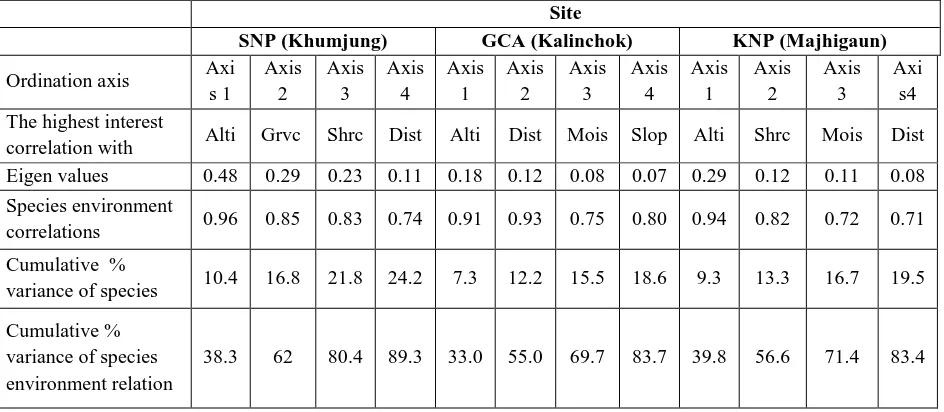
Table 5-3: Results of Canonical Correspondence Analysis (CCA) ... 90
Table 5-4: Variance explained by different environmental variables ... 94
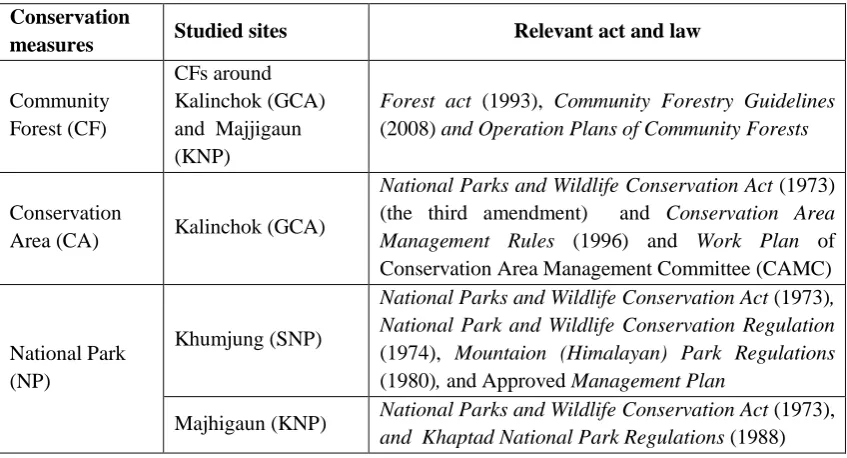
Table 6-1: Act and rules relevant to CF, CA and NP relevant to the study ... 101
Table 6-2: Percentages of herders agreeing by statements related to positive perception and attitude (PPA) and negative perception and attitude (NPA) ... 105
Table 6-3: Percentages of herders agreeing by statements related to expectation (EXP) and participation (PAR) ... 107
xii
Table 6-6: Indexed values for climatic vulnerability ... 115
Table 6-7: Indexed values for different dimensions of vulnerability ... 118
Table 6-8: Major changes in transhumance in the study areas ... 119
Table 6-9: Gender, age and education of herders in the study areas ... 124
Table 6-10: Adaptation type, strategies and the pathways for better adaptation ... 125
List of figures
Figure 1-1: Components of transhumance system and scope of the study ... 7Figure 1-2: Flow diagram of chapters ... 9
Figure 2-1: Different components of transhumance system ... 15
Figure 2-2: Trends of different livestock types in Nepal ... 17
Figure 2-3: Plant diversity in relation to grazing intensity along moisture gradient and evolutionary history of grazing ... 23
Figure 2-4: Gross anatomy of adaptation to climate change and variability ... 34
Figure 2-5: Human-nature-development interactions ... 36
Figure 2-6: Driver-Pressure-State-Impact-Response (DPSIR) framework... 41
Figure 3-1: Map showing selected protected areas (PAs), Village Development Committees (VDCs), and location of selected rangelands ... 44
Figure 3-2: Sampling design for vegetation study along the transect from goth ... 60
Figure 4-1: Total number of households (HHs), number of HHs having livestock and HHs practicing transhumance ... 70
Figure 4-2: Composition of livestock in the study areas... 70
Figure 4-3: Composition of livestock in the study areas... 71
Figure 4-4: Spatio-temporal pattern of livestock movement in the study areas ... 75
Figure 5-1: Level of dung and trampling at different distances from goths ... 86
Figure 5-2: Line graph showing principal component analysis (PCA) score ... 87
xiii
Figure 5-5: Total number of species at each distance from goth ... 89
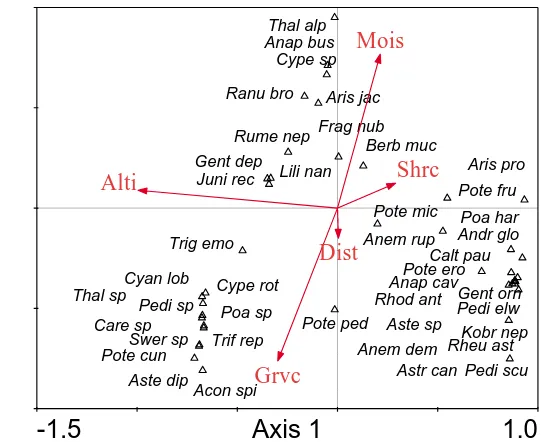
Figure 5-6: Canonical Correspondence Analysis (CCA) diagram (species and environment) for SNP (Khumjung) ... 92
Figure 5-7: Canonical Correspondence Analysis (CCA) diagram (species and environment) for GCA (Kalinchok) ... 92
Figure 5-8: Canonical Correspondence Analysis (CCA) diagram (species and environment) for KNP (Majhigaun) ... 93
Figure 6-1: Trend of foreign visitors in SNP ... 96
Figure 6-2: Mean livestock unit (LU) in the HHs not involved in tourism and involved in tourism ... 97
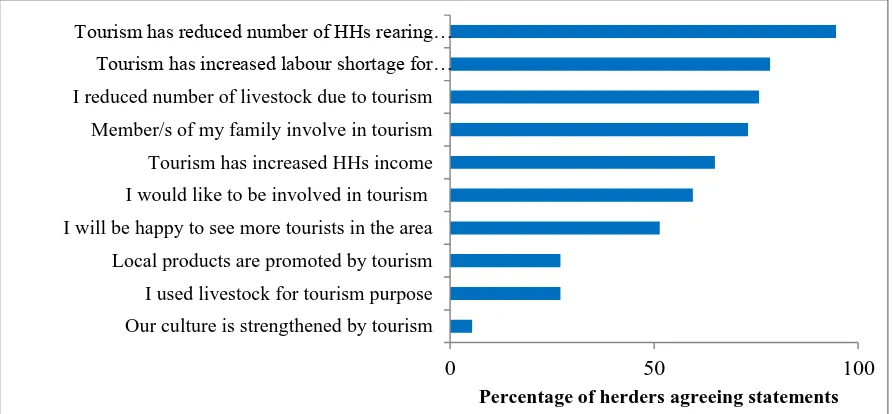
Figure 6-3: Percentage of herders agreeing (strongly agree + agree) statements ... 98
Figure 6-4: Percentage of HHs having member in foreign country ... 99
Figure 6-5: Mean livestock unit (LU) in migrants and non-migrants HHs ... 99
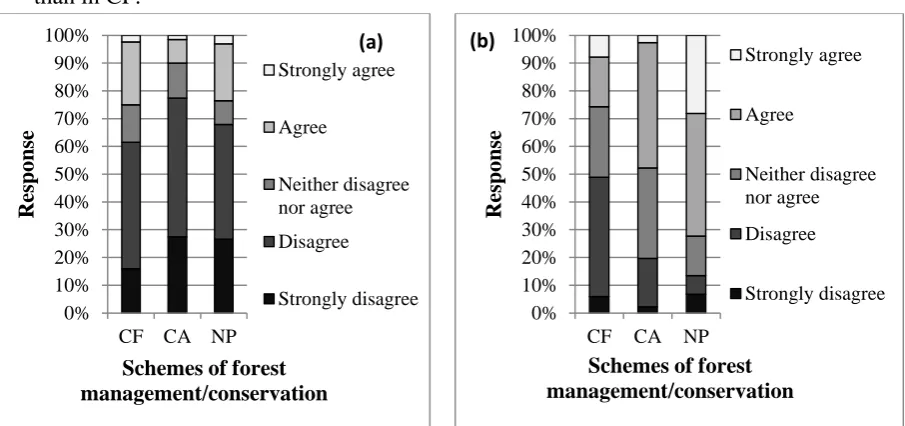
Figure 6-6: Positive perceptions and attitudes (a), Negative perceptions and attitudes (b) towards CF, CA and NP Figure 6-7: Expectations (a) of transhumant herders towards CF, CA and NP and participations (b) of transhumant herders toward CF, CA and NP ... 108
Figure 6-8: Temperature trends for the study areas ... 109
Figure 6-9: Rainfall trends of study areas ... 110
Figure 6-10: Vulnerability triangle diagram of the dimensions of CVI; ... 118
Figure 6-11: Total number of goths inside KNP ... 120
Figure 6-12: Trend of livestock in Khumjung VDC ... 121
Figure 6-13: Trend of each livestock type in Khumjung VDC ... 121
Figure 6-14: Trend of livestock in KNP ... 122
Figure 6-15: Trend of each livestock type in KNP ... 123
Figure 7-1: Average percentage shrub cover at different distance from goth... 138
xiv
˚C Degree Celsius
ANOVA Analysis of variance
BZ Buffer Zone
CA Conservation Area
CAMC Conservation Area Management Committee
CAMR Conservation Area Management Rules (1996)
CBS Central Bureau of Statistics
CCA Canonical Correspondence Analysis
CF Community Forest
CFUG Community Forests Users Group
CVI Climate vulnerability index
DCA Detrended Correspondence Analysis
DHM Department of Hydrology and Meteorology
DNPWC Department of National Parks and Wildlife Conservation
DoF Department of Forests
EXP Expectations
FGD Focus group discussion
GCA Gaurishankar Conservation Area
GDP Gross domestic product
GoN Government of Nepal
HH Household
HKH Hindu Kush-Himalaya
ICIMOD International Centre for Integrated Mountain Development
IPCC Intergovernmental Panel on Climate Change
IUCN International Union for Conservation of Nature
km kilometre
KNP Khaptad National Park
LU Livestock unit
LVI Livelihood vulnerability index
xv
MoAC Ministry of Agriculture and Cooperatives
n.a. not applicable
NARC Nepal Agricultural Research Council
NAST Nepal Academy of Science and Technology
NPA Negative perception and attitude
NP National Park
NPWCA National Parks and Wildlife Conservation Act (1973)
NTNC National Trust for Nature Conservation
PA Protected area
PAR Participation
PCA Principle Component Analysis
PPA Positive perception and attitude
SES Social-ecological system
SNP Sagarmatha (Mt. Everest) National Park
sq km square kilometre
TSES Traditional social-ecological system
UNESCO United Nation Educational, Scientific & Cultural Organization
VDC Village Development Committee
WWF World Wide Fund
xvi
aul-chana a local term for winter grazing areas in KNP
bari upslope rain fed agricultural land
chauri a female crossbreed of yak/nak with cow/bull and vice-versa churpi traditional cheese made from buttermilk
dasara Mela a festival celebrated in far-Western Nepal dashain the biggest festival for Hindu in Nepal
deuda a famous cultural song and dance in far-Western Nepal dhami-jhakri traditional witch doctor
ghunsa downslope winter settlements (local Sherpa term used in SNP) goth semi-permanentshelter used by herders
jestha Purnima full moon day in May
jokpyo amale cross breed of yaks/nak with cows/bulls and vice-versa jyaladari a system where labour are paid in cash or kind on a daily basis karmakanda ritual activities after the death of people
kharka rangelands far from the settlement areas lekh-chana a local term for summer grazing areas in KNP nawa pratha traditional system of electing nawa
nawa elected member from the village meeting to regulate livestock patans flat grazing areas(rangelands) in the mountains
purji written permission to graze livestock samudayik ban community forest
tatha bata local elites
vakal garne advance promising with goddess to offer something if the wish comes true
xvii
1.
List of journal papers
Aryal S.,Cockfield G., Maraseni T.N. (2015). Perceived changes in climatic variables and impacts on the transhumance system in the Himalayas. Climate and Development. (published online and awaiting assigning volume and issue). http://dx.doi.org/10.1080/17565529.2015.1040718
Panthi J., Aryal S., Dahal P., Bhandari P., Krakauer N.Y., Pandey V.P. (2015). Livelihood Vulnerability Approach to Assess Climate Change Impacts to Mixed Agro-Livestock Smallholders around the Gandaki River Basin in Nepal. Regional Environmental Change. (published online and awaiting assigning volume and issue) http://dx.doi.org/10.1007/s10113-015-0833-y
Aryal S., Cockfield G., Maraseni T.N. (2015). Effect of summer livestock grazing on plant species richness and composition in the Himalayan rangelands. The Rangeland Journal37(3), 309-321.
Panthi J., Dahal P., Shrestha M.L., Aryal S., Krakauer N.Y., Pradhanang S.M., Lakhankar T., Jha A.K., Sharma M., Karki R. (2015). Spatial and Temporal Variability of Rainfall in the Gandaki River Basin of Nepal Himalaya. Climate 3(1): 210-226.
Aryal S., Cockfield G., Maraseni T.N. (2014). Vulnerability of Himalayan transhumant communities to climate change. Climatic Change125(2), 193-208.
Aryal S., Maraseni T.N., Cockfield G. (2014). Sustainability of transhumance grazing systems under socio-economic threats in Langtang, Nepal. Journal of Mountain Science11(4), 1023-1034.
Aryal S., Maraseni T.N., Cockfield G. (2014). Climate change and indigenous people: perceptions of transhumant herders and implications to the transhumance system in the Himalayas. Journal of Geology and Geosciences3(4).
Aryal S., Bhattarai D.R. and Devkota R.P. (2013). Comparison of carbon stocks between mixed and pine-dominated forest stands within the Gwalinidaha Community Forest in Lalitpur District, Nepal. Small-scale Forestry12(4), 659-666.
xviii
2.
List of conference and workshop papers
Aryal S., Cockfield G., Maraseni T.N. (2014). Climate Change and Transhumance System in the Himalayas. Network for Indigenous Experiences of Changing Environments (NIECE), 8-9 December, 2014, Southbank, Brisbane, Australia.
1
Chapter 1
: Introduction
1.1.
Background
Traditional social-ecological systems (TSESs) can persist in particular configuration of social-cultural, institutional and environmental factors for hundreds of years (Janssen et al. 2007) providing a range of ecosystem services and functions (Carpenter et al. 2001; Huntsinger & Oviedo 2014; Martín-López et al. 2011). They have long continuous history with relatively consistent practices and link people and nature. Such TESs are however, facing a range of challenges from global social and environmental change (Abel et al. 2006; Young et al. 2006). Given rapid changes in human and biophysical processes, many TSESs may break down by the end of this century (Ostrom 2007b). The loss or decline of such systems may be irreversible (Marini et al. 2011) and this is likely to affect ecosystem services and livelihood of people embedded in the relevant systems. Small farms (Aubert & Perrier‐Cornet 2009; Hazell 2005) and different types of pastoral systems (Ayantunde et al. 2011; Steinfeld et al. 2006; Thornton et al. 2009) are examples of TSESs subject to significant forces for change.
Transhumance is a form of pastoralism in which livestock are moved between fixed points to utilize seasonal availability of grazing resources (Ayantunde et al. 2011; FAO 2001; Nyssen et al. 2009). Transhumance evolved as a strategy to harness low and seasonal production of grazing resources distributed over large areas having harsh climatic conditions (Manzano-Baena & Casas 2010; Moktan et al. 2008). It is practised by people from settled communities in combination with arable agriculture (Jones 2005). Transhumance differs from other types of pastoralism such as nomadism and agro-pastoralism because of its periodicity, regularity and mobility combined with a sedentary base. Nomadism is practised by pastoral people having no fixed residence and their movements are more opportunistic based on the availability of pasture resources that may vary from year to year. Agro-pastoralism is practiced by settled pastoralists who cultivate sufficient areas to feed their family and graze livestock within a finite area (Jones 2005).
2
privatisation and nationalisation (Bassett 2009; Fu et al. 2012), property right alteration (Beyene 2009) and climate change intensification (Martin et al. 2014; Namgay et al. 2014; Nardone et al. 2010; Thornton et al. 2009). Compounding pressures include change in national land-use policies that promotes intensive agriculture and settlement in grazing land (Bassett 2009; Herzog et al. 2005; Kamara et al. 2004; Shaoliang et al. 2007) and conservation policies that restrict traditional grazing inside national park and reserves (Colchester 2004; Kala & Shrivastava 2004; Namgay et al. 2014; Rao et al. 2003a; Urgenson et al. 2014). Transhumance in mountainous regions is especially vulnerable to these systematic change pressures.
In the transhumance system, the movement of livestock occurs between summer and winter pastures (Aitken 1945; Manzano-Baena & Casas 2010) and is one of the most important livelihood activities in high altitude areas of the Himalayas where it has been practiced since early human settlement (Bhasin 1998; Moktan et al. 2008). Customary rules and informal institutions play an important role for the sustenance of transhumance systems (Dong et al. 2009a; Rao et al. 2003b). The transhumance systems in the mountainous areas of Nepal are some of the traditional pasture management strategies (Karki & Mcveigh 1999; Sharma 2006) and considered as a herder’s rational approach to livestock production utilizing seasonal production of pastures at different altitude (Chetri et al. 2011).
The northern mountainous part of Nepal where transhumance systems were practised has witnessed change in socio-economy, policies and climate (detailed in section 1.2). These changes have the potential to affect both social and ecological systems of the transhumance and it is important to know how these changes have affected transhumance systems and how elimination or decline of the systems for any reasons operates in the mountainous region of Nepal. The study of transhumance systems, including their socio-economic, cultural and ecological aspects, helps to understand whether or not their sustainability is desirable and what would be possible strategies to sustain them. This study, therefore, aims to study the contemporary transhumance system in the northern mountainous areas of Nepal. Some of the issues that highlight the needs of this study are given in the next section.
1.2.
Statement of the problems
3
additional income opportunities and diversified household income, but on the other hand, it has created labour shortage, increased land abandonment and decreased production from traditional farming systems (Ghimire & Aase 2007; Khanal et al. 2015). This has also affected the viability of some highland communities (Childs et al. 2014) and traditional farming systems are at the forefront to suffer from these changes. There is however, no study on how the transhumance systems have responded to these changes and whether the socio-economic and cultural significances of transhumance have changed.
Second, there is a change and broadening for functions from the Himalayan rangelands. Transhumance systems in mountains of Nepal evolved to utilise high elevation rangelands for subsistence livelihood. Due to variable and seasonal production of grasses across large areas, other means of land use by local people were impractical and there was no or little influence from the outside world due to inaccessibility and remoteness (Banskota 2000). Government policies, initially, were also to support livestock production in those areas; for instance, by establishing cheese factories where herders could sell milk and generate cash (Yonzon & Hunter 1991). However, other potential uses of landscapes gradually became apparent and government policies tried to accommodate multi-functionality. Some of them are tourism promotion and initiation of biodiversity conservation in the mountainous area.
Chapter 13 of Agenda 21 (the ‘Mountain Agenda’) of United Nations Conference on Environment and Development (1992) highlighted that the mountains can be one of the most popular tourist destinations due to its spectacular landscapes, majestic beauty, and high ecological and cultural diversity and tourism can improve the livelihood of mountain people (UNCED 1992). Following this, tourism was assumed to be a central means for sustainable economic development in some mountainous areas of Nepal (Nepal & Chipeniuk 2005). The government of Nepal started to promote tourism in different ways such as through opening trekking routes and permitting climbing in several peaks which were restricted in the past (Nepal 2000). As a result, tourism increased dramatically in some areas. Some people therefore switched their traditional business of animal rearing to tourism related business. On the one hand tourism has diversified income opportunities and improved the livelihood of people in some areas but on the other, it has brought socio-cultural and environmental problems (Nyaupane et al. 2014; Sharma 2000).
4
Protected areas of Nepal are acknowledged for their role in protecting endangered and charismatic mammals, but there are concerns as they are located in territories of indigenous peoples (Stevens 2013) and removed many customary rights (Heinen & Shrestha 2006). The Forest Act (1993) legalized the concept of community forestry whereby patches of government managed forests are handed over to users groups for conservation, management and utilisation. Since then more than 1.6 m ha of government managed forest (about 23 % of national total forest) have been handed over to 17,685 Community Forest Users Groups (CFUGs) (DoF 2014; MFSC 2013); most of them in the mid-hills. Nepal is one of the pioneering countries for initiating community forestry (Nurse & Malla 2006) and considered successful in reviving greenery in degraded lands. However, some studies (Ahlborg & Nightingale 2012; Banjade & Paudel 2008; Gautam 2009) have also indicated that the issues of marginal people and groups are neglected by CFUGs (Gautam 2009). It is important to know how PAs and community forestry policies consider transhumance grazing, what the current practices at local level are and how they are perceived by transhumant herders. Adverse perceptions of policies and practices will be a disincentive to herding.
5
Fourth, climate change has emerged as a systemic threat to the transhumance system that compounds earlier socio-economic and political changes. Temperature trends suggest that warming is more pronounced in the northern high altitude areas than in the lower elevations of Nepal (NAPA 2010; Shrestha & Aryal 2011). The form of precipitation will change in the higher Himalayas where there will be more rainfall instead of snowfall. This will reduce the snow cover duration in rangelands (Paudel & Andersen 2011) which provides moisture for a long period of time. Transhumance systems are practised in those areas which are most affected by global climate change (Kullman 2004) and are likely to be affected by the timing of rainfall, agricultural seasons, persistence and melting of snow in rangelands, availability of water near grazing spots and so on. Previous studies (Gentle & Maraseni 2012; Macchi et al. 2014) suggest that climate change has affected the livelihood of people in the mountainous areas of Himalayas and has added to the burdens of marginalised people. The transhumant herders may be disproportionately more vulnerable due to climate change (Dong et al. 2011) and the situation could be even more severe when the flexibility of herders is restricted (Fu et al. 2012; Sherpa & Kayastha 2009; Tyler et al. 2007). However, there is a lack of study on how vulnerable they are to climate change, how climate change may impact transhumance systems and how climate change is perceived by transhumant herders. If herders do not recognize climate change, they are less likely to take steps to adapt.
Therefore, it is evidenced that the transhumance system in the mountains of Nepal is under pressure due to multiple factors. The decline or loss of such TSESs is often associated with adverse social-cultural and ecological impacts (Homewood 2004; Kala & Shrivastava 2004; Nautiyal & Kaechele 2007; Oteros-Rozas et al. 2012). However, there is no information about the current status of the transhumance system, its socio-cultural, economic and ecological roles, major changes in the system and likely impacts from such changes. Therefore, it was realized that an integrated study is essential in the northern mountainous areas of Nepal to resolve these research problems (Rangeland Policy 2012; Aryal et al. 2014). Hence, the objectives and research questions of this study were framed to address these research problems and given in the following section.
1.3.
Goal, objectives and research questions
The overall goal of this study is to examine the transhumance system in the northern mountainous areas of Nepal.
The objectives and specific research questions under each objective are: 1. To investigate the contemporary transhumance systems and their
socio-economic and cultural significances
6
ii. What are the socio-economic and cultural significances of transhumance systems?
2. To determine the ecological role of transhumance grazing in the Himalayan rangelands
iii. How transhumance grazing affects plant species richness and composition in the Himalayan rangelands of study areas?
3. To identify the major drivers of change to the transhumance systems
iv. What are the implications of globalisation (tourism, labour migration) to the transhumance systems?
v. What are the implications of state conservation policies and practices to the transhumance systems?
vi. What are the implications of climate change to the transhumance systems? 4. To identify the major changes in the transhumance systems and their
social-ecological impacts
vii. What are the major changes in the transhumance systems?
viii.What are the likely social-ecological impacts from the changes in the transhumance systems?
1.4.
Scope and significance of the study
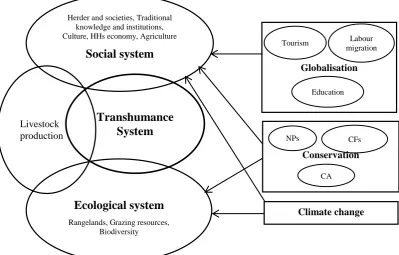
This study considers the transhumance system among other livestock production systems in Nepal where it is practiced in the northern mountainous region. Transhumance systems comprise both the social and ecological components and this study revolves around these components (Figure 1.1). This study takes a holistic (system thinking) approach which requires a hybrid research method that combines research tools and methods from both the social and natural sciences.
The study is significant in a number of ways; all related to the possibility that this is a system that seems to be undergoing major change and possible extinction. The socio-economic, cultural and ecological significances in the changing contexts and the social and ecological consequences from the changes or loss of systems have been little examined and there are a number of reasons for doing so. First this will help to preserve the indigenous knowledge from this system and contribute to the sustainability of the system (Fernández-Giménez & Fillat Estaque 2012).
Second, it will contribute to debates about the ecological role of transhumance grazing in the higher Himalayas. This study will increase the evidence base relating to transhumance grazing and rangeland biodiversity particularly studying patterns of species richness and composition along the distance from livestock assembly points.
7
Figure 1-1: Components of transhumance system and scope of the study
Finally, the methodological approach applied for the study is novel in the sense that it combines ideas from different disciplines to investigate a socio-ecological system (SES) that has been experiencing multiple change pressures. Furthermore, there is limited knowledge about the socio-ecological impacts form the loss of traditional SES. The study of SESs is a relatively new area and within that, traditional SESs are of particular interest. But the transhumance system of the Himalayas has not been studied with this approach. This study could be an example for investigating other SESs that are constrained by contemporary threats.
1.5.
Structure of the thesis
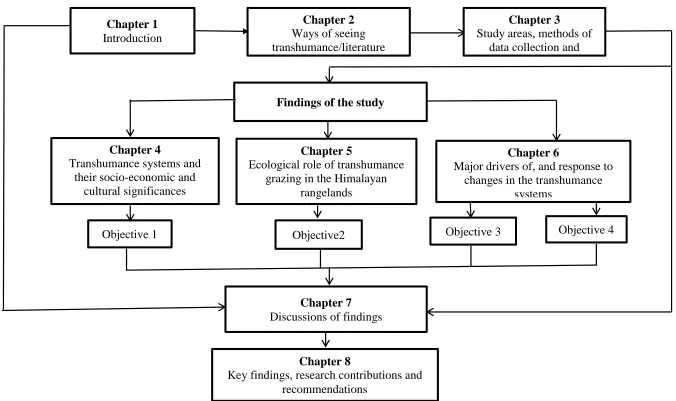
This thesis is organised into eight chapters (Figure 1.2). After this introductory chapter (chapter 1), the detailed overview of transhumance is given and dimensions of the study are illustrated (chapter 2). The description of the study areas, methods of data collection and analysis is given in chapter 3.
The findings are presented from chapter 4 to chapter 6. In Chapter 4, the current status of the transhumance system and its socio-economic and cultural significance are presented. In the ecological section, the role of transhumance grazing in rangelands in terms of its effects to plant diversity and composition are presented (chapter 5). In chapter 6, major drivers of change and major changes in transhumance systems are described.
The findings that are presented from chapter 4 to chapter 6 are discussed in chapter 7. The thesis concludes in chapter 8 which covers a brief summary of findings, research
Transhumance System Livestock
production
Conservation Globalisation
Tourism Labour migration
Education
Climate change Ecological system
Rangelands, Grazing resources, Biodiversity Herder and societies, Traditional
knowledge and institutions, Culture, HHs economy, Agriculture
Social system
CFs NPs
[image:26.595.120.520.77.332.2]8
9
Figure 1-2: Flow diagram of chapters Chapter 8
Key findings, research contributions and recommendations
Chapter 7 Discussions of findings
Objective 1 Objective2 Objective 3 Objective 4
Chapter 4
Transhumance systems and their socio-economic and
cultural significances
Chapter 5
Ecological role of transhumance grazing in the Himalayan
rangelands
Chapter 6
Major drivers of, and response to changes in the transhumance
systems Findings of the study
Chapter 1 Introduction
Chapter 2 Ways of seeing transhumance/literature
review
Chapter 3 Study areas, methods of
10
1.6.
Conclusions
11
Chapter 2
: Ways of seeing transhumance
2.1.
Introduction
First, this chapter presents an overview of transhumance, which is downscaled to the Himalayas and then to the mountainous region of Nepal. The rangelands, livestock and herders (people) are described as different components of the system and seasonal mobility, traditional knowledge and culture as key features of the transhumance systems. Second, the socio-economic, cultural and ecological importance of social-ecological system (SES), contemporary threats, changes brought about by these threats and implications from the decline or loss of such systems are given. Third, the research gaps identified in chapter 1 are elaborated and key conceptual questions are presented. Finally, a human-nature interaction is explained as a theoretical perspective, and a transhumance system is contextualised as an SES and the framework for the study has been proposed.
2.2.
Overview of transhumance
2.2.1. Transhumance: A type of pastoral system
Livestock production systems differ widely in terms of resources use, degree of intensification, species and orientation (Bernués et al. 2011). Most frequently, these systems have been classified based on land use by livestock. According to this criteria, there are three types of livestock production systems (Devendra 2007; Sere et al. 1995; Steinfeld et al. 2006; Thornton et al. 2009); (i) grazing systems (pastoral systems), (ii) mixed farming systems, and (iii) industrial or landless systems.
12
In transhumance, livestock are moved seasonally between fixed points to utilize availability of grazing resources (FAO 2001; Fernandez-Gimenez & Le Febre 2006; Nyssen et al. 2009). Transhumance is often associated with the production of some crops, although primarily for herders’ own use rather than for markets (Jones 2005). Transhumant pastoralists often have a permanent homestead and base at which the older members of the community remain throughout the year. Transhumance is one of the many customary practices developed by ancient Mediterranean societies to cope with an unpredictable and highly fluctuating climate (Oteros-Rozas et al. 2012). Common features of transhumance are flexibility, complexity and the utilization of complementarities in space (between habitats/landscapes) and time (between seasons) (Herzog et al. 2005). Advantages of transhumance include that there is access to better pastures and livestock enjoy a high degree of freedom which ultimately benefits the nutrient and health of livestock. However, there is additional energy expenditure for movement, the chance of irregular supplies of grazing resources and a high incidence of pests and diseases. Turner et al. (2014) argue, however, that the advantages of livestock mobility outweigh the disadvantages.
2.2.2. Transhumance in mountains
Mountain areas cover one fifth of the world’s terrestrial surface (Körner et al. 2005). Mountain regions possess three major ecological and environmental features (Rhoades & Thompson 1975): (i) vertical biotic zonation; (ii) irregular biotic distribution; and (iii) geologic features of slope, elevation, and ruggedness of surface configuration. Adaptation by human or animal populations must involve strategies for coping with these features (Spoon 2013). Transhumance is one of the adaptive strategies developed by the mountain people for the optimum utilisation of low productive mountain pastures (Körner et al. 2005). Vertical transhumance involves livestock moving between high elevation pasture in the summer and low elevation valleys in the winter, effectively there is a vertical stratification of resources by altitude (Galaty & Johnson 1990; Montero et al. 2009). Transhumant herders follow a seasonal calendar to utilise these pastures. Inverse transhumance i.e. downward movement of herds in the summer, are also reported from some areas of Europe such as in County Clare of Ireland where animals are taken to the higher plateau in winter that retains the heat captured during the summer (Biber 2010). Crop cultivation is generally geographically restricted due to climatic, edaphic and topographic factors in the cold high mountain areas but transhumance links high mountain rangelands with the agricultural land in the valleys and in some cases adjacent lowlands (Herzog et al. 2005).
13
(Geddes 1983). There is a difference in pasture availability between the tropical and the temperate mountains. In tropical mountains such as in the Andes, there is year round pasture availability for grazing but for the temperate mountains like the Alps and the Himalayas, high elevation pastures are available only for the summer months (Rhoades & Thompson 1975). Therefore, in some tropical mountains such as in the central Andes, sedentary systems were well established because there is no pronounced seasonal variability in fodder availability. The shift from sedentary to migratory patterns is a response to the perception of economic opportunity (Stewart et al. 1976).
Pastoralism in the Hindu Kush-Himalayan (HKH) region is thousands of years old (ICIMOD 1997) and sometimes it is mentioned that pastoralism is ‘as old as hills’ (Chakravarty-Kaul 1998). More than 60% of the HKH region is covered by rangelands which are the source of livelihood for 25 to 30 million pastoralists and agro-pastoralists (ICIMOD 2009). Transhumant agro-pastoralism is considered as an important part of the living cultural heritage of the Himalayas (Banskota 2000; Namgay et al. 2013). This is still the main livelihood strategy for many families in the high Himalayas (McVeigh 2004; Moktan et al. 2008; Namgay et al. 2014). Transhumant pastoral societies inhabit the higher Himalayas and use the seasonal production of grazing areas (Bhasin 2011; Pawson & Jest 1978). As in other parts of the world, transhumance in the region is a response to harsh climatic conditions (cold temperatures), low productivity (shortage of forage) and the search for livelihood opportunities (Moktan
et al. 2008; Namgay et al. 2013). Transhumant herders of the Himalayas have adjusted their livelihood activities to ecological niches at different altitudes. They use resources while synchronizing their socio-cultural activities with the seasonality of transhumant practices. Mobility during transhumance can also help diversify a pastoralists income sources through, for example, enabling the marketing/selling of livestock products and allowing other family members to work as labourers and porters (Bhasin 2011; McVeigh 2004).
2.2.3. Transhumance system in Nepal
14
Livestock production in Nepal differs through the ecological zones (FAO 2005). Three traditional livestock management system were identified and described by Pariyar (2008) in Nepal. According to him, they are the (i) transhumance; (ii) sedentary; and (iii) stall feeding. The transhumance system is predominant in the mountains, the sedentary system in the mid-Hills and the stall feeding system in the Terai and low-Hill regions (Pariyar 2008).
In Nepal, the transhumance system is common in the northern mountainous areas (FAO 2005; Pariyar 2008; Sharma 2006). Livestock move seasonally in an annual cycle according to their requirement and grazing resources availability at different altitudes. Herds of yaks, chauri (female crossbreed of yak/nak and cow/bull), cattle, sheep, goats and horses seasonally move from one place to another. Yaks can occupy an ecological niche in between 3000–5000 metre above sea level (m asl), chauri move between 1500 and 4000 m asl, while cattle move between 2000 and 3000 m asl. In contrast, sheep, goats and horses are more adaptable and move between 1200–4000 m asl. Rangelands at higher altitudes are only accessible in summer (July–September) season. Therefore herds are moved to low lying areas in the winter (December– February) season. During transhumance, livestock utilizes forage resources of alpine pastures to stubbles from fallow agricultural lands of lower elevation. During upward and downward migration, undergrowth in the forest is the major forage source. The transhumance of sheep and goats covers large altitudinal ranges between summer and winter pastures (Pawson & Jest 1978).
2.2.4. Components of transhumance system
The transhumance system has three components (Figure 2.1); rangelands (land), livestock and herders (labour or people) (Brower 1990). Livestock production primarily depends upon grass availability and the productivity of the rangelands. Rangelands include grasslands, scrublands, woodlands etc. Broadly, rangelands (grasslands) are categorised as climatically determined, successional and agricultural (Milchunas et al. 1988). Climatically determined rangelands occur in areas where the availability of soil water is below the requirements of trees. Savannah and shrub steppes are examples of climatically determined rangelands. Successional and agricultural grasslands result from the removal of original forest and are maintained by agronomic or other management practices.
Rangelands differ from pastures in the sense that natural vegetation grows in the rangelands whereas plants are established by human beings in pastures. Rangelands
used for domestic livestock are often the common property of several owners (Crépin
& Lindahl 2009) and are managed principally with extensive practices such as
15
Figure 2-1: Different components of transhumance system
Rangelands cover approximately one-third of the Himalayan land area and are concentrated in higher elevation regions, usually above 3000 m asl where grasses and alpine shrubs are the dominant vegetation (McVeigh 2004; Miller 1995). In Nepal, rangelands occupy almost 12 percent of the land mass of the country and an additional 10% by scrublands which are also used to graze livestock (LRMP 1986). About 80 % of the grazing land lies in the high mountains and higher Himalayas and about 27% lies within protected areas (Nepal Biodiversity Strategy 2002; Rangeland Policy 2012). The rangelands in Himalayas, including the mountainous areas of Nepal, also represent one of most significant global 200 ecoregions, the ‘alpine shrub and meadow’ ecoregion (Basnet 2003) and a biodiversity hotspot, the ‘Indo-Burma’ (Brooks et al. 2006a; Myers et al. 2000).
The average forage productivity of the natural rangeland varies depending upon the location, altitude and the edaphic environments. Furthermore, the inter-annual precipitation variability strongly influences vegetation production in the rangelands (Paudel & Andersen 2010). The scattered grazing resources in the rangelands are converted through livestock to different products that are consumable by human beings. The rangelands vegetation at high altitude is fragile and susceptible even to the low intensity disturbance. The rangelands have historically been a major source of livestock rearing in Nepal for many generations. Different types of livestock are reared for different purposes and the purpose of rearing livestock also varies from place to place. This is also influenced by the culture of the local people. For example, in Hindu culture, the consumption of beef is prohibited and cows are mainly reared for dairy products whereas in other cultures, they serve as the primary meat item.
Livestock rearing is an important livelihood activity in Nepal. From national figures, 3 out of 4 households own livestock and Nepal has the highest ratio of livestock to humans in Asia (IRIN 2013). Virtually every household in the mountains and in the hilly areas owns livestock. About 95% of households in the mountains own large ruminants (Maltsoglou & Taniguchi 2004). Agriculture sectors have contributed 37.6% of total gross domestic product (GDP) of which one third is contributed by livestock (FAO 2005). Despite its importance, livestock production is declining in
Rangeland
Transhumance system
16
Nepal (IRIN 2013). The trends for number of livestock in Nepal differ with different sources. According to the statistics published by Ministry of Agricultural Development, there is an increasing trend for all livestock types except sheep from 2000/01 to 2012/2013 (Table 2.1). However, the statistics from Central Bureau of Statistics (CBS) Nepal published from agricultural census shows declining trends for cattle, chauri, buffaloes and increasing trends for goat and pig from 2001/02 to 2011/12 (Figure 2.2).
Table 2-1: Livestock types and their number in Nepal
SN Livestock type Numbers (in, 000) 2000/01
Numbers (in, 000) 2012/13
1 Cattle 6982.66 7274.02
2 Buffaloes 3624.02 5241.87
3 Sheep 850.17 809.53
4 Goat 6478.38 9786.35
5 Pigs 912.53 1160.03
6 Milking cow 852.58 1025.59
7 Milking buffaloes 936.81 1369.79
Source: Ministry of Agriculture and Co-operatives (2013)
17
Figure 2-2: Trends of different livestock types in Nepal; Sources: CBS (2006) and CBS (2014))
2.2.5. Understanding mobility in transhumance
Mobility of livestock can be viewed based on two knowledge systems. In terms of local knowledge systems or from a herder’s perspective, it is rational to move livestock to the area with available grazing resources (Adriansen 2006). Livestock mobility is both an economic and ecological necessity and an adaptive response of herders as grazing resources are distributed over larger spatial areas. When grazing resources are distributed over a large area and productivity is low, it is uneconomical to use those lands for another purpose. Mobility offers more flexible and adaptive utilisation of resources (Fernandez-Gimenez & Le Febre 2006; McAllister et al. 2006; Wang et al. 2014) and helps to convert low quality plant resources into high quality animal products. Transhumance helps to achieve multiple objectives of the practitioners (Bell & Moore 2012; Bishop 1989; Wright et al. 2012). From the scientific knowledge system, the mobility is ecologically rational in arid and semi-arid ecosystems to avoid overgrazing and rangeland degradation (Adriansen 2006). It provides vegetation in grazed areas a recovery period (Bruegger et al. 2014). Furthermore, the mobility is the best way to deal with environmental variability such as drought and resource variability (Dong et al. 2009a; Moktan et al. 2008; Nyong et al. 2007).
2.2.6. Transhumance system, indigenous knowledge and culture
Indigenous knowledge is a cumulative body of knowledge, practice and belief built by a group of people in close contact with nature and handed down through generations (Berkes & Berkes 2009). Indigenous knowledge pursues holism by considering large number of variables (Berkes & Berkes 2009). Generally, people living in agrarian
0 2000 4000 6000 8000 10000 12000
1981/82 1991/92 2001/02 2011/12
L
ives
tock
nu
m
ber
in, 000
Year
18
societies and remote areas following a livelihood based on direct utilisation of natural resources, are considered rich in indigenous knowledge (Lebel 2013; Rao et al. 2003b). Even within the same geographical areas and communities, traditional knowledge and their use can differ based on age, gender and ethnicity (Ayantunde et al. 2008; Oladele 2012). They gain knowledge based on experiences and social interactions. Pastoralists who follow grazing based livestock production combine experiences and knowledge gained by trial and error, and develope certain sets of rules and regulations for resource utilisation. They possess active knowledge applied to management decisions, embedded knowledge from living in the place and integrative knowledge linking ecological, social and economic aspects (Knapp & Fernandez-Gimenez 2009).
There are literatures from around the world indicating that the knowledge of herders can be instrumental for different purposes. Studies have shown that such knowledge is useful in assessing rangeland conditions (Dong et al. 2009a), rangeland biodiversity (Waudby et al. 2012), plant palatability (Waudby et al. 2013), landscape condition (Oba & Kaitira 2006; Spoon 2011) and ecosystems dynamics (Kgosikoma et al. 2012). Furthermore, they are used in managing grazing (Mapinduzi et al. 2003) and rangelands (Dong et al. 2010; Fernández-Giménez & Fillat Estaque 2012). The indigenous ecological knowledge of the transhumant herders is sometimes even seen as superior to that of modern ecologists in relation to grazing management (Oba 2001). Indigenous ecological knowledge for assessing grazing pressure (based on plant utilisation, density of faecal drops and density of livestock track) and rangeland degradation (based on indicator species) can be considerable (Bruegger et al. 2014; Oba & Kaitira 2006).
In addition to the indigenous knowledge, the transhumance system is closely associated with the culture of many societies. Transhumance itself is sometimes seen as one step of human civilisation following hunter-gatherers and before sedentary agriculture. The transhumance system has also been described as a living cultural heritage (McVeigh 2004; Namgay et al. 2013) and social ideology (Chang 1993). Oteros-Rozas et al. (2012) and Oteros-Rozas et al. (2014) have described 12 cultural services of transhumance. The transhumance between upland and lowland in the mountainous areas are sometime compared with natural activity such as seasonal migration of birds (Chang 1993). The movement is also described as a period of joy and expectation such as to leave the heat of the plains for cool mountains, an opportunity for leisure time and less expense for livestock production (Gooch 2009). Some livestock and their number symbolise the social status of the households in rural societies (Subedi 2007).
19
central Himalayas and found that a number of wild plants are domesticated and developed their own mechanism for cattle production. In a case study from Rasuwa District in northern Nepal, Dong et al. (2007) concluded that local herders had developed an indigenous rangeland management system because herders have traditionally classified rangelands based on livestock suitability and practice rotational grazing based on feed availability. To fulfil the knowledge gap on indigenous knowledge, culture and traditions related to the transhumance systems, this study attempts to document traditional knowledge, beliefs and practices associated with transhumance systems in the study areas.
2.3.
Transhumance system: Status and trends
2.3.1. Transhumance system: A declining practice
Examples from around the world indicate that the transhumance system has been declining, contracting or transforming. There is a marked decline of transhumance systems in Mediterranean Spain (Oteros-Rozas et al. 2013a) and Romania (Juler 2014). Tibetan sheep population under transhumance has declined in Sikkim, India as younger generations are attracted towards alternate sources of income (Banerjee 2009). Transhumance and customary lifestyle has been changed in Kumaon Himalaya (lies in Uttarakhand State of India) due to the separation of trade with Tibet (Negi 2007). Indigenous knowledge and practices of transhumant Bhotiya communities are on the verge of extinction due to the integration of this society with the mainstream of other societies and the market economy (Farooquee et al. 2004).
Some long distance movements are gradually replaced by short distance movements, for example in Romania (Huband et al. 2010). In West Africa, long distance movements are inhibited by different climatic, socio-political and land use changes (Gonin & Gautier 2015; Turner et al. 2014). Availability of alternative livelihood options and change in policies and climate have been affecting this system in Bhutan (Namgay et al. 2013).
20
2.3.2. Reasons for declining transhumance system
Pastoral systems are vulnerable and it is uncertain whether or not pastoral systems and societies will continue in the future (Mearns 2004). Similar to other traditional social-ecological systems (TSESs), there is tremendous pressure from contemporary changes to the transhumance system (Farooquee 1998). Both aspects of globalisation; the global social change as well the global climate change have affected the transhumance system. The term globalisation has different meaning in different disciplines, therefore, it is very difficult to define and trace indicators of globalisation that fits all disciplines. However, the common interpretations of globalisation are the idea that the world is becoming more open and homogenous through a technological, commercial, and cultural synchronization (Pieterse 1994). Globalisation has increased the flow of people, ideas, knowledge, technology and money by various degrees (Young et al. 2006) and has brought people from distant parts closer. The global social changes include the widening, intensifying, speeding up and growing impact of world-wide connectedness. The economic and cultural attractions of urban life has played an important role for rural-urban migration, particularly for young people (Aide & Grau 2004). Shortage of family labour, increased workloads and change in social and cultural values were identified as the major three risks of transhumance systems in the Swiss mountains (Jurt et al. 2015). Young et al. (2006) also argued that globalisation is now a central feature of human-environment systems.
There are the social and economic changes in some communities which are mostly driven by globalisation. But the impacts of the globalisation are too uncertain in remote mountainous areas (Chaudhary et al. 2007). The Himalayan transhumance system is affected by both emigration and immigration. About 15 % of the world’s migrants come from the countries of the HKH region (Hoermann & Kollmair 2009). The migration of young people from Himalayan countries was induced by labour demand in other countries that has created a shortage of people in livestock rearing. Although the migration is not a new phenomenon, globalisation has boosted it to unforseen levels. Migration from Nepal has tripled since the 1980s (Hoermann & Kollmair 2009). Overseas migrants from the Himalayan countries are largely attracted by employment opportunities in the Gulf countries as their booming construction sector offers vast employment opportunities for unskilled workers. The rural-urban and international migration induced by globalisation might have implications to the local ecosystems as seen in the Latin America (Aide & Grau 2004).
21
(especially from the tourism dominated sites) have sent their children to district headquarters and other cities. All of these processes have reduced the involvement of younger generation in the transhumance system.
The regional tension and disruptions of trade across the Tran-Himalayan border with Tibet was another reason for the decline of transhumance systems in the Himalayan region (Bauer 2004; Bhasin 2011). The export of livestock products from higher Himalayas and the import of salt from Tibet was an integral aspect of the transhumance system.The movement of livestock across the border was important because livestock from higher Himalayas were used to graze in Tibetan rangelands. The movement across borders was also important as it would help gene flow and reduce the chance of inbreeding. However, access restriction to summer pastures and trade with Tibet has disturbed the traditional base of local economies (Brower 1992; Rose & Scholz 1980).
Another factor affecting transhumance systems is the introduction of conservation and forest management policies. The establishment of protected areas (PAs) in Bhutan and Nepal has restricted resource appropriation by herders (Seeland 2000). The change (decline) in the transhumance in the Nanda Devi Biosphere Reserve was attributed to different factors: disruption of trade with Tibet, improved access and service, increased tourism and employment opportunities, and increasing constraints to transhumant pastoralism from conservation (Nautiyal et al. 2003). Therefore, a better understanding of the current transhumance system and how it is changing and responding to the recent changes is critically important.
2.4.
Livestock grazing and plant diversity
One of the objectives of the study is to explore the ecological role of livestock grazing in the Himalayan rangelands in order to contribute to debate as to whether grazing is beneficial or detrimental to biodiversity and to infer likely ecological impacts if transhumance grazing is lost for any reasons. This section first presents the theoretical understanding for how grazing affects plant diversity in the rangelands. Second, a brief synopsis of different methods used to study the effect of livestock grazing to plant diversity and findings of previous studies are given. An indication of approach and methods to be followed by this study is given at the end.
2.4.1. Grazing and plant diversity in rangelands: Theoretical underpinnings
22
The effect of herbivores on plant species richness depends upon types and abundance of herbivore, scales (temporal and spatial) at which diversity is measured and environmental gradients. Spatial variability occurs at landscape and patch levels (Landsberg et al. 2002) because grazing pressure is not uniformly distributed throughout the landscape. This is especially true in areas with free-range grazing. Grazing activities are related to the distribution of the grazing resources (food), water and minerals (Adler et al. 2001). At the local scale, grazing animal effect varies with vegetation types, accessibility of patches, area protected by obstacles such as shrub.
Pastoral systems in rangelands are also viewed in terms of equilibrium and non-equilibrium concepts. Equilibrium ecosystems occur in the areas where climatic variability is not very high and livestock grazing is the major factor affecting vegetation. Arid and semi-arid range ecosystems function as non-equilibria