Original article
An online analytical processing
multi-dimensional data warehouse
for malaria data
S. M. Niaz Arifin
1,*, Gregory R. Madey
1, Alexander Vyushkov
2,
Benoit Raybaud
3, Thomas R. Burkot
4and Frank H. Collins
1,4,51
Department of Computer Science and Engineering, University of Notre Dame, Notre Dame, Indiana,
USA,
2Center for Research Computing, University of Notre Dame, Notre Dame, Indiana, USA,
3Institute
for Disease Modeling, Bellevue, Washington, USA,
4Australian Institute of Tropical Health and
Medicine, James Cook University, Cairns, Queensland, Australia
5Department of Biological Sciences,
University of Notre Dame, Notre Dame, Indiana, USA
*Corresponding author: Tel:þ1 574 387 9404; Fax: 1 574 631 9260; Email: [email protected]
Citation details: Arifin,S.M.N., Madey,G.R., Vyushkov,A.et al. An online analytical processing multi-dimensional data warehouse for malaria data.Database(2017) Vol. 2017: article ID bax073; doi:10.1093/database/bax073
Received 15 July 2016; Revised 21 August 2017; Accepted 22 August 2017
Abstract
Malaria is a vector-borne disease that contributes substantially to the global burden of
morbidity and mortality. The management of malaria-related data from heterogeneous,
autonomous, and distributed data sources poses unique challenges and requirements.
Although online data storage systems exist that address specific malaria-related issues,
a globally integrated online resource to address different aspects of the disease does not
exist. In this article, we describe the design, implementation, and applications of a
multi-dimensional, online analytical processing data warehouse, named the VecNet Data
Warehouse (
VecNet-DW
). It is the first online, globally-integrated platform that provides
efficient search, retrieval and visualization of historical, predictive, and static
malaria-related data, organized in data marts. Historical and static data are modelled using star
schemas, while predictive data are modelled using a snowflake schema. The major
goals, characteristics, and components of the DW are described along with its data
tax-onomy and ontology, the external data storage systems and the logical modelling and
physical design phases. Results are presented as screenshots of a Dimensional Data
browser, a Lookup Tables browser, and a Results Viewer interface. The power of the DW
emerges from integrated querying of the different data marts and structuring those
queries to the desired dimensions, enabling users to search, view, analyse, and store
large volumes of aggregated data, and responding better to the increasing demands of
users.
Database URL:
https://dw.vecnet.org/datawarehouse/
VCThe Author(s) 2017. Published by Oxford University Press. Page 1 of 20 This is an Open Access article distributed under the terms of the Creative Commons Attribution License (http://creativecommons.org/licenses/by/4.0/), which permits unrestricted reuse, distribution, and reproduction in any medium, provided the original work is properly cited.
(page number not for citation purposes)
Introduction
Malaria is probably the third most important pathogen-specific cause of human morbidity and mortality in the world today. The disease is caused by parasites of the genus Plasmodium, which are transmitted between humans byAnophelesmosquitoes. The populations of sub-Saharan Africa experience the highest burden of the disease with most of the approximately 627 000 annual deaths (1). Malaria-related data management shares many chal-lenges faced by common generic biological data manage-ment tasks. The complex nature of the disease and the integration of data from heterogeneous, autonomous, dis-tributed, and fast-changing data sources make the task es-pecially challenging. In this article, we describe the design and implementation of a multi-dimensional, online analyt-ical processing (OLAP) data warehouse (DW), named
VecNet-DW (2), for malaria-related data. VecNet-DW
uses open-source software modules and frameworks inte-grated in the Vector-Borne Disease Network (VecNet) (3). VecNet is an online portal which facilitates access to math-ematical/simulation models and the data to parameterize these models. It allows users to understand how different vector control and parasite-targeted interventions affect malaria transmission in different geographical areas where heterogeneity in vector behaviours can dramatically impact intervention effectiveness. Such analyses will identify where new strategies to eliminate malaria are needed. Hence, VecNet enables its users to collaboratively conduct research and to analyse and share results from multiple malaria models. In this article, we discuss the major goals, characteristics, and components of VecNet-DW, along with its data taxonomy and ontology, the external data storage systems, and the logical modelling and physical de-sign phases.
Data management challenges for malaria-related
data
The complex epidemiology of malaria presents several data management challenges involving (i) heterogeneity in data contents, and (ii) integration of data stored in differ-ent formats. For example, the World Malaria Report (WMR) (4) stores data on recommended policies and strat-egies as well as intervention coverages estimates while the Malaria Atlas Project (5) stores geographical maps on dominant malaria vectors, estimated human populations at risk, etc., the Pacific Rainfall Database [PacRain, (6)] and the Global Surface Summary of Day [GSOD, (7)] store weather-related malaria data, and so on.
Often, these data are stored in different formats [e.g. re-lational databases, spreadsheets, comma-separated values (CSV), plain text files and others], sometimes with an
unclear understanding of its meaning, forcing the user to decipher the definition of the data content from other sup-porting and/or accompanying information (metadata) pro-vided with the original data. For example, both PacRain (6) and GSOD (7) provide additional information in separ-ate files that describe the meaning of content, column headers, codes used in the content etc. with publishers changing the data definitions or columns, augmenting new types and entries or reordering existing data, requiring users to learn the changes to understand and use the data.
In recent years, the need to integrate heterogeneous malaria-related data has grown. Increasingly, storage of data in flat files (e.g. in spreadsheets or CSV files) or traditional relational database management systems (RDBMSs) cannot cope with the growing demand of this integration process. The primary concern of traditional databases is to ensure concurrent multi-user access, data consistency, recovery techniques and the day-to-day oper-ations of an organization (8). However, due to their highly normalized nature, they cannot always satisfy the complex requirements of advanced data analysis and often perform poorly when executing complex queries or aggregating large volumes of data (8,9).
Any comprehensive digital framework dealing with malaria data such as VecNet (3) must incorporate new data sources while maintaining the consistency and quality of the existing content when the content from the ‘same’ data sources changes over time. A well-designed DW, based on dimensional modelling (DM) techniques, may eliminate some of these challenges, and respond better to the increasing needs of users (8–10). Some of the other major differences between traditional databases and DWs follow:
i. Nature of operations (queries): users of a traditional database usually deal with one record at a time, and re-peatedly perform the same operational tasks (8–10); users of a DW almost never deal with one record at a time; rather, they are mostly interested in aggregates of data/contents that often represent hundreds or thou-sands of records which are searched and compressed into an answer set (10,11); hence, DW users usually have drastically different needs than traditional data-base users.
ii. Data sharing:each traditional database often exists as a natural isolated application, with little investment made to sharing common data (e.g. date, location etc.) with other databases in the organization. In a DW, these databases are re-engineered to ensure consistency (11).
dimensions of interest (8, 11). Being different from the more traditional entity-relationship modelling (ER) tech-nique, DM focuses on aggregations, which are performed to summarize many records with potential filtering based on attributes of relevant facts and dimensions (11).
Several bioinformatics- and life science-focused data storage systems (databases and DW) exist to support the data needs of various diseases (12–23). However, a globally-integrated online resource to exclusively address different aspects of malaria-related data, which may serve as the equivalent of a malaria decision support system, does not exist. For malaria, it can serve both long-term strategic or short-term tactical decision-making. For ex-ample, based on existing malaria control interventions, it can help in making decisions about introducing new, novel interventions in a particular location by analysing the long-term demographic, entomological, epidemiological, and other characteristics of that location (e.g. the incidence and prevalence data collected and stored over several decades). As an example of short-term decision making, a DW can help predict the outcome of modifying and/or increasing the levels of coverage for existing vector control interven-tions, or introducing new drugs or insecticides, for which the immediate impact needs to be measured.
VecNet-DW
: the VecNet data warehouse
VecNet-DWis an online multi-dimensional DW, designed specifically to store, access, and analyse malaria-related data scattered in heterogeneous forms across many data storage systems. Although there are other online data stor-age systems that provide malaria-related data, such as the EuPathDB Bioinformatics Resource Center (23) which pro-vides genomic-scale datasets associated with eukaryotic microbes, or the Malaria Atlas Project (5) which provides geographical data on dominant malaria vectors, a globally integrated online resource for the storage and analysis of many different aspects of the disease does not exist. VecNet-DWis the first integrated online platform designed exclusively for providing OLAP functionalities (slice and dice, roll up and roll down etc.) as well as efficient search, retrieval, analysis, and visualization of historical, predict-ive/synthetic, and static malaria-related data. Its DM intui-tively views the multi-dimensional data as data cubes. The four prime characteristics ofVecNet-DWare:
i. Subject-oriented:VecNet-DWtargets multiple subjects of analysis according to the requirements of malaria decision-making managers/users at various levels; these subjects include data on existing and new mal-aria control interventions, household surveys, antimal-arial drugs, entomological inoculation rates (EIRs),
distributions and abundances of dominant vector spe-cies, various models and studies (e.g. mathematical, agent-based, field-based), model-specific parameters etc.
ii. Integrated: the contents of VecNet-DW include inte-gration of data from various external data storage sys-tems, historic archives, or operational source systems (OSSs); some of these OSSs include WMR (4), GSOD (7) etc.
iii. Nonvolatile:once ingested,VecNet-DWdata are read-only and persistent with modification/curation of con-tent from the OSSs only in the data staging area (described later); thus,VecNet-DWstores curated and nonvolatile data, retained for long-term analysis and aggregation purposes.
iv. Time-varying:VecNet-DWrecords the temporal evo-lution of data from the OSSs for a long period of time (typically many years); for example, it may keep track of temporal malaria data on endemicity, incidence, prevalence, etc. ranging over several decades.
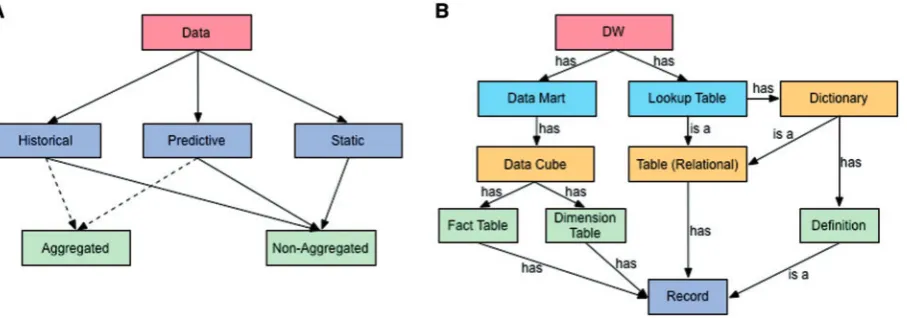
VecNet-DWserves a wide range of (often overlapping) user groups, including researchers, modellers, malaria con-trol managers, product developers, etc. It stores three broad categories of data: historical, predictive, and static. The interrelations between these categories are crucial be-cause predictions and interpretations of biological data are often made by comparing predictive data against existing historical data. Also, in some cases, both of these catego-ries may interrelate to the static category. Both the histor-ical and predictive categories may encompass aggregated and non-aggregated storage forms, while the static cat-egory may only encompass the non-aggregated form. A taxonomy defining groups of data stored inVecNet-DW on the basis of shared characteristics, is shown in Figure 1A.
model-specific input/output must also be considered in de-signing the DW to store the predictive data. Predictive data may traverse the ‘past’ and the ‘future’. The ‘past’ data allow users to fill in missing historical data, to compare outputs from the stochastic models, and to validate the models against real, measured, or otherwise verified data (often originating from field-based studies). The ‘future’ data, generated by prediction-based models, may inform decision makers at different levels of malaria control and eradication campaigns. For example, public health officials may make decisions on purchasing and distributing mal-aria control products (such as bed nets, drugs, diagnostic tests and insecticides) using anticipated needs predicted by the models. Since not all vector control interventions are equally efficient in different regions of the world, the ‘fu-ture’ data, based upon the stochastic modelling for specific locations, may also prove helpful to prioritize, schedule, manage, and assess the impact of finite resource allocations based on analyses of several scenarios with multiple vari-ables simulated simultaneously. Last, ‘static’ data, which are mostly non-numeric (textual), are also collected and modelled from the OSSs and the literature, and stored in the lookup tables (described later).
A simple ontology for VecNet-DW is presented in Figure 1B. It depicts the high-level description of concepts and their relationships in the upper parts ofVecNet-DW knowledge domain, using a representative vocabulary (described in Supplementary Material S1). The DW (VecNet-DW) exists as the single entity in the root level
(Level 1), and has multiple data marts and lookup tables as Level 2 entities. Each data mart can be modelled as one or more data cubes (Level 3). Each data cube usually has one or more fact tables (Level 4), and multiple dimension tables (Level 4), all of which store records (facts and di-mensions, Level 5) of varying granularities. Each lookup table can be either a relational table or a dictionary (Level 3). A relational table may contain records, which are mostly dimension-less. A dictionary may in turn be a rela-tional table, or may contain semantic definitions (Level 4), which are stored as records.
Materials and methods
In this section, the modelling process of the three categories of data supported by VecNet-DW is described, together with the major components, the data cubes and OLAP op-erations, and the implementation frameworks. The con-ventions used in this article for different types of entities are described inTable 1.
Data sources
[image:4.612.84.538.59.218.2]The data sources ingested in the data marts and the lookup tables inVecNet-DWare available in the VecNet Digital Library (24), which is another major component of VecNet. The VecNetDigital Library also contains related links/URLs to the original data sources and other metadata.
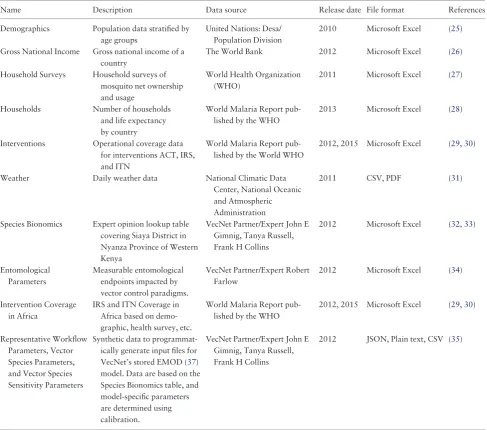
Table 2describes all datasets, including data sources, release dates, file formats, and URLs in theVecNetDigital Library from which each dataset can be downloaded.
Modelling historical data
InVecNet-DW, historical data are modelled using a con-stellation schema, which is a collection of multiple star schemas. It ties together all the fact tables and dimension tables, contained within the data marts that represent his-torical data. Hishis-torical data are ingested intoVecNet-DW from external data storage systems, sometimes also known as OSSs. The constellation schema, shown inFigure 2, in-cludes high-level views of all OSSs. Note that although we could combine multiple data marts (and the corresponding ingested data originating from multiple OSSs), most of the data marts are segregated in anticipation of large volumes of data to be integrated in the future. Currently modelled datasets are described below.
i. Demographics: describes population data stratified ac-cording to different age groups; associated with dimen-sions ‘location’, ‘date’ and ‘source’.
ii. Gross national income: describes the gross national in-come (total domestic and foreign output claimed by residents) of a country; associated with dimensions lo-cation and date.
iii. Household Surveys: describes household surveys of mosquito net ownership and usage data, as part of the WMR 2010 (4); associated with dimensions location, date, source and subgroup.
iv. Households: describes the number of households in a country; associated with dimensions location, date, source and subgroup.
v. Interventions: contains operational coverage data for three malaria control interventions: artemisinin com-bination therapy (ACT), indoor residual spraying (IRS) and insecticide-treated net (ITN) (4), which are stored as individual fact tables; associated with dimen-sions ‘location’ and ‘date’.
vi. Weather: contains a collection of daily weather data from GSOD (7); associated with dimensions ‘station’ and ‘date’.
Modelling static data
The static data stored inVecNet-DWcurrently entails the following lookup tables:
i. Species bionomics: specifies vector species bionomics parameter values.
ii. Entomological parameters: outlines major measurable entomological endpoints impacted by vector control paradigms.
iii. ITN coverage in Africa: describes ITN coverage in Africa based on demographic, health survey and WMR data.
iv. IRS coverage in Africa: describes IRS coverage in Africa based on demographic, health survey and WMR data.
v. Representative workflow parameters: describes vector species parameters to calibrate models in VecNet’s Transmission Simulator interface (36).
vi. Vector species parameters:specifies vector species par-ameters for transmission models.
vii. Vector species sensitivity parameters: specifies add-itional vector species parameters for transmission models.
Modelling predictive data
‘Predictive’ (or ‘synthetic’) data are mostly generated as outputs of different types of malaria models. Due to the need of users’ (mostly researchers) privacy protection, pre-dictive data are marked as ‘private’, and only a selected subset is made available for public viewing via another interface (the Transmission Simulator under the VecNet portal, 36).
VecNet-DW independently stores the simulation
[image:5.612.61.555.75.170.2]out-puts from two models, namely EMOD (37) and
Table 1.Conventions used in this article for different types of entities
Entities Text style Letter case Color code Examples
Dimensions, dimension tables italic, always singular all lowercase brown ‘date’, ‘location’
Definitions italic, always singular sentence case N/A ‘Human blood index’, ‘Sugar meal frequency’ Facts regular sentence case N/A number of long-lasting insecticidal nets, % ITN
coverage
Fact tables, data marts regular, always plural title case light blue Demographics, Household Surveys, Weather Lookup tables regular, always plural title case N/A Species Bionomics, Entomological Endpoints
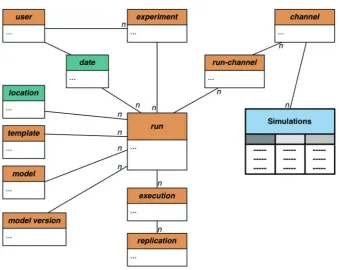
OpenMalaria (38), using a snowflake schema (a normal-ized version of a star schema) as shown inFigure 3. This approach provides flexibility and extensibility, since it allows a model’s outputs to be seamlessly integrated. Currently, most of the simulation outputs assume the form of time series data. The snowflake schema consists of sev-eral dimensions and one single fact table, Simulations, which contains time series data collected as outputs from stored models. It is connected to several dimension tables including ‘run’, ‘replication’, ‘channel’, ‘model’, ‘model version’ etc. A run represents a specific simulation run of a particular model (with the current stored model version). Its spatio-temporal information is stored via the conformed dimensions ‘location’ and ‘date’. Each simulation run is also associated with a ‘template’, which typically refers to a description of configurations (in either hierarchical or
flattened form). The templates describe all parameters, along with their respective values, which are to be used by simulations with baselines, campaigns (including interven-tions) or other configuration settings.
[image:6.612.63.551.74.504.2]The output of a simulation run is stored in multiple channels. Each ‘channel’ represents a specific type of out-put (e.g. adult mosquito population, human biting rate, parasite prevalence etc.), which is accumulated once per simulated time step and written to output files. Depending on the type of analysis, the channels may vary between models, and also within the same model. For all channels, the time steps and their corresponding output values are in-dividually stored, which allows the DW to generate aggre-gates over any time range within a channel for any given run. A ‘user’ submits simulation jobs as experiments. Each ‘experiment’ is transformed into runs, which, in turn, are Table 2.Description of datasets ingested in data marts and lookup tables inVecNet-DW
Name Description Data source Release date File format References
Demographics Population data stratified by age groups
United Nations: Desa/ Population Division
2010 Microsoft Excel (25)
Gross National Income Gross national income of a country
The World Bank 2012 Microsoft Excel (26)
Household Surveys Household surveys of mosquito net ownership and usage
World Health Organization (WHO)
2011 Microsoft Excel (27)
Households Number of households and life expectancy by country
World Malaria Report pub-lished by the WHO
2013 Microsoft Excel (28)
Interventions Operational coverage data for interventions ACT, IRS, and ITN
World Malaria Report pub-lished by the World WHO
2012, 2015 Microsoft Excel (29,30)
Weather Daily weather data National Climatic Data Center, National Oceanic and Atmospheric Administration
2011 CSV, PDF (31)
Species Bionomics Expert opinion lookup table covering Siaya District in Nyanza Province of Western Kenya
VecNet Partner/Expert John E Gimnig, Tanya Russell, Frank H Collins
2012 Microsoft Excel (32,33)
Entomological Parameters
Measurable entomological endpoints impacted by vector control paradigms.
VecNet Partner/Expert Robert Farlow
2012 Microsoft Excel (34)
Intervention Coverage in Africa
IRS and ITN Coverage in Africa based on demo-graphic, health survey, etc.
World Malaria Report pub-lished by the WHO
2012, 2015 Microsoft Excel (29,30)
Representative Workflow Parameters, Vector Species Parameters, and Vector Species Sensitivity Parameters
Synthetic data to programmat-ically generate input files for VecNet’s stored EMOD (37) model. Data are based on the Species Bionomics table, and model-specific parameters are determined using calibration.
VecNet Partner/Expert John E Gimnig, Tanya Russell, Frank H Collins
Figure 2.Constellation schema for historical data. The constellation schema, also known as the galaxy schema, is a collection of simple star schemas. It ties together all the fact tables and dimension tables contained within all data marts representing historical data. The connections link fact tables to corresponding dimension tables. The fact tables are (partially) shaded in light blue. Dimensions are shaded in brown.
[image:7.612.137.477.356.626.2]broken into executions. An ‘execution’ thus represents a sin-gle realization of the run configuration, coupled with a se-lected ‘template’ and associated with a stored ‘model’. The primary goal of transforming a run into multiple executions is to allow parameter sweeps of a particular configuration, by allowing each execution to represent a single configur-ation in which an individual value of the desired parameter, selected from a specified range, can be submitted.
To allow replications of a simulation run, the execution dimension is also coupled with the ‘replication’ dimension. Since the stored models involve substantial stochasticity in the forms of probability-based distributions, equations etc., performing sufficient number of replicated runs (with identi-cal parameter settings) is important for validation of the re-sults. In addition, to increase the performance of the DW, search indexes are built on the fact table (Simulations) for se-lected dimensions (‘run’, ‘replication’ ’and ‘channel’). The snowflake schema thus allows for efficient search and aggre-gation of the simulation output data, enablingVecNet-DW to answer a variety of research questions.
Design
DW components
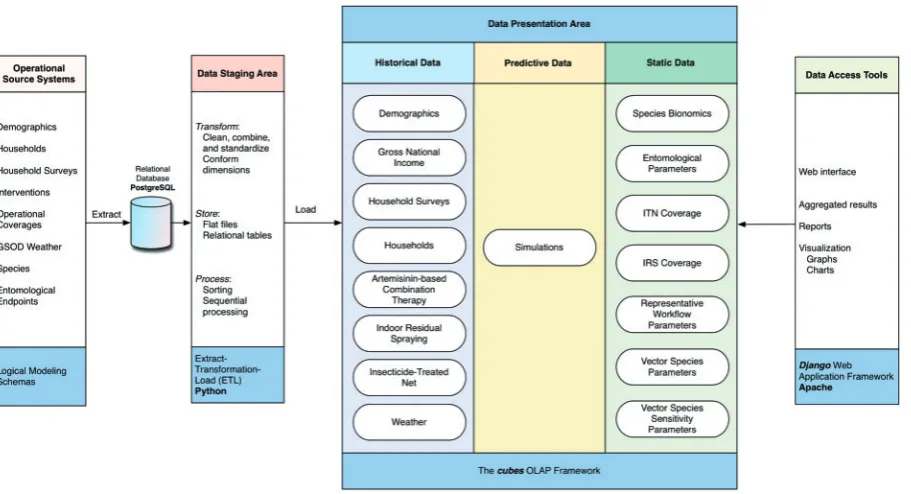
[image:8.612.83.539.58.305.2]The four distinct components ofVecNet-DWare shown in Figure 4, and are described below:
i. OSSs: The OSSs are external data storage systems (mostly flat files) whose contents are ingested into
VecNet-DW. After transferring the content of each OSS, we identify the dimensions and facts, and then decide on existing or new data marts to ingest the con-tent. In this logical modelling phase, we pay particular attention to identify the correspondence between the data marts and the ‘conformed’ dimensions, and popu-late the bus matrix (seeSupplementary Material S2). At the end of this phase, as each data mart have been logically modelled, the constellation schemas tie to-gether all the fact tables, dimension tables, lookup tables, and dictionaries. As we perform the domain analysis for individual data marts, we analyse the con-tents and data type of each attribute in the OSSs’ source files. To ensure that each record can be uniquely identified within the data source (i.e. the referential in-tegrity), we determine and assign primary keys for all dimensions and facts (if no such keys can be found, we assign additional candidate keys).
ii. Data staging area:Once the content of each OSS has
been logically modelled, we perform
extract-transformation-load (ETL) processes on the content. We extract the content by reading and understanding the source data, and perform data transformations by data cleansing (done primarily by correcting misspell-ings, dealing with missing or null elements, and pars-ing into standard formats), and assign DW keys. Then, following the logical model and schemas, we load the content into a Postgre structured query language (SQL) RDBMS (39) by using a Python SQL toolkit
named SQLAlchemy (40). To adhere to the key archi-tectural requirements for the data staging area, we keep the PostgreSQL instance off-limits to our users, and isolate it from our query and presentation services. iii. Data presentation area:In the data presentation area, following the constellation schemas, we organize and store the most detailed (i.e. ‘atomic’) data from the PostgreSQL RDBMS into an open-source OLAP Python framework named ‘cubes’ (41).
iv. Data access tools:Currently, the data access tools in-clude the open access, Web-based graphical user inter-face front-end developed in Django (42), which allows users to have unrestricted access via the published interface (2). Aggregation operations for selected data marts are also supported.
Data cubes and OLAP operations
The DM ofVecNet-DWviews the data stored in the DW as cubes of data. Each data mart can be modelled with one or more data cubes. Data points inside a cube represent the stored facts (measurements) for specific combinations of the associated dimensions. The multidimensional cube view of data promotes understandability by allowing data visualization in a concrete and tangible way (11). A result of a multidimensional query is either a cell, a two-dimensional slice, or a multitwo-dimensional sub-cube (9). Common OLAP operations on the multidimensional data stored inVecNet-DWinclude:
i. Roll up and roll down:these operations allow the user to navigate among levels of data ranging from the most summarized (up) level to the most detailed (down) level, along any hierarchical dimension. ‘Roll up’, also known as ‘aggregation’, or ‘drill up’, permits higher levels of summarization. ‘Roll down’, also known as ‘drill down’, is the opposite operation, which permits viewing more fine-grained levels of data. The design and granularity of the DW determines its ability to roll up or down. The summarization rule (for rolling up) may involve computing the sum, average, maximum, or minimum values along the hierarchical dimension, or applying a set of formulas, for example:
number of bed nets¼number of ITNs þnumber of LLINs
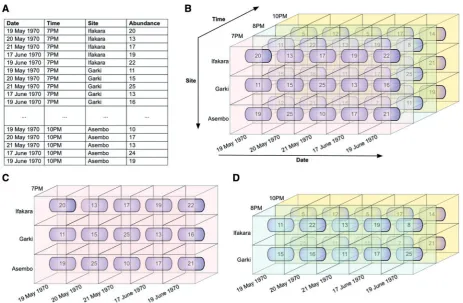
ii. Slice and dice:these operations allow the user to access a DW through any of its dimensions; the process gener-ally implies a systematic reduction of DW data in any logical combination. The ‘slice’ operation selects a rect-angular subset of a data cube by choosing a single value for one of its dimensions, creating a new cube with one
fewer dimension. The ‘dice’ operation produces a sub-cube by selecting specific values of multiple dimensions.
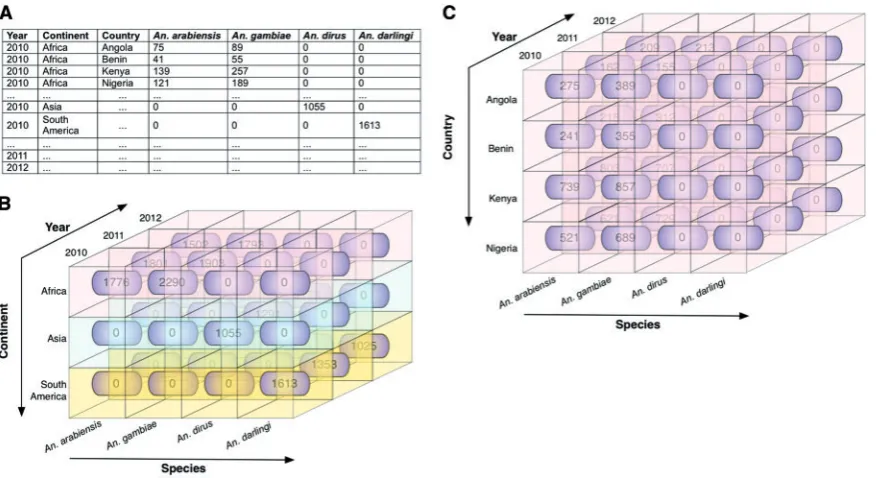
These operations are illustrated inFigures 5and6.
Implementation frameworks
We use ‘cubes’ (41) in the back-end to implement the DW, and Django (42) in the front-end to support the web-based user interfaces. The data flow and usage model for VecNet-DW, depicting the role of both frameworks, are shown inSupplementary Material S3.
The cubes framework
The ‘cubes’ is an open-source OLAP Python framework that uses a logical model to describe the organization, ana-lysis, and reporting of content in a DW (41). Being inde-pendent of the physical implementation, data is described from the user’s or analyst’s perspective, emphasizing as-pects of measurements (facts), aggregations, and reports. The logical model in ‘cubes’ creates an abstraction layer in the DW’s data presentation area (discussed earlier) using the JavaScript Object Notation (JSON) file format (43).
In ‘cubes’, both ‘hierarchical’ and ‘non-hierarchical’ di-mensions can be shared by multiple data cubes, and thus belong to the model space. For hierarchical dimensions, the levels of the hierarchy are defined in the logical model (e.g. include ‘date’ as ‘year-month-day’ and ‘location’ as ‘continent-country-district-region’). Non-hierarchical di-mensions include ‘source’, ‘subgroup’, ‘active’ ingredient, ‘chemical class’ etc. The data cubes are usually specified by a list of dimensions, facts and aggregations. It uses a set of ‘mapping rules’ to map logical attributes in the model into physical attributes in the data cube table. Each mapping rule consists of a ‘key-value’ pair, where the key refers to the attribute name of the dimension, and the value refers to the column name of the physical table.
One of the advantages of using the ‘cubes’ framework is its resilience to changes: if the metadata and the logical model are properly defined and used in an application, then most of the model changes can be handled by the ap-plication ‘without’ any modifications. This allows, e.g. adding or removing levels from a dimension without changing the DW’s reporting applications. It also supports our iterative development methodology, as we progres-sively advance the DW by incorporating new sources of data (see ‘Discussion’ section).
The Django web application framework
We use the Django Web application framework (42) in the front-end to build the Web-based user interfaces of
framework, written in Python, which encourages rapid software development and clean, pragmatic design, facili-tating the tasks of creating complex, database-driven Web applications. Django is equipped with a Python-based ob-ject-relational mapper database, and also officially sup-ports multiple databases as back-ends.
Results
TheVecNet-DW Portal (2) consists of three major inter-faces that are built according to different categories of modelled data: (i) the ‘Dimensional Data’ browser for his-torical data, (ii) the ‘Lookup Tables’ browser for static data and (iii) the ‘Results Viewer’ for predictive data [available for public viewing through the Results Viewer interface of the Transmission Simulator (36)]. Figure 7 shows a screenshot ofVecNet-DWhomepage, which can be accessed using modern web browsers. VecNet-DW homepage provides links (on the left navigation bar) to its interfaces. We discuss the interfaces in the following.
The ‘dimensional data’ browser
The ‘Dimensional Data’ browser allows easy access to the historical data stored inVecNet-DW. By nature, historical
data, which range over many years, are mostly numeric. Hence, aggregation over the data is important, especially for purposes of analysing trends, discovering biological in-sights etc., for which the non-aggregated versions are not suitable. Since it may be associated with many hierarchical as well as non-hierarchical dimensions, we employ the technique of ‘faceted search’ for browsing the data cubes. Faceted search, also known as faceted navigation or fa-ceted browsing, is a technique for accessing information organized according to a faceted classification system, allowing users to explore information by applying multiple filters (44). For VecNet-DW, the filters encompass the non-hierarchical dimensions, different levels of the hier-archical dimensions, and particular values stored in these dimensions.
[image:10.612.90.531.58.297.2]Using the ‘Dimensional Data’ browser, the user selects a data cube available on the left panel (seeSupplementary Material S4A). This action populates the ‘Dimensions’ and ‘Measures’ (facts) panels on the bottom with associated di-mensions and facts, respectively, for the selected cube. Using a ‘drag and drop’ interface, the user can then select dimensions and facts from these panels, and place (drop) them on the right under the ‘Selection Summary’ panel. Clicking the ‘Create Graph’ and ‘Create Table’ buttons (on the right panel) generates the corresponding graphs and
Figure 5.Illustrative example of roll up and roll down. These operations allow the user to navigate among levels of data ranging from the most sum-marized (up) level to the most detailed (down) level, along a specific dimension.(A)Illustrative data showing mosquito abundances for various loca-tions (continents and countries), years, and Anopheles species.(B)The data cube, derived from the data in A, shows the mosquito abundance facts (numbers in rounded rectangles). The cube is associated with three dimensions: species, year, and continent, which are displayed along the three axes, with data labels coming from A. Fact cells with different values of the continent dimension are distinctly colour-coded for ease of visualization.
tabular views, respectively. The resulting graphs or tabular data can then be downloaded in various formats. If there are too many items on the X-axis to display, some of them are skipped in regular intervals (axis thinning, see Supplementary Material S4B). In the following, we de-scribe the data slicer and some faceted search examples.
The data slicer
The data can also be specified to slice on a given cube. As described before, the slice operation allows us to select a single value for one of the associated dimensions for a se-lected data cube (seeFigure 6). In the ‘Dimensional Data’ browser interface, once the user drags and drops a dimen-sion (to slice) on the Data Slicer panel, specific values for different levels within the dimension (or a single value for a non-hierarchical dimension) can be specified. Once all ‘Dimensions’, ‘Measures’ and ‘Slices’ are selected, the data can be viewed as either a graph or a table (by clicking the ‘Create Graph’ or ‘Create Table’ button, respectively). A screenshot of the Data Slicer Panel is presented in Supplementary Material S4A.
Faceted search examples
Faceted search allows both ‘aggregated’ and ‘non-aggre-gated’ forms of historical data to be accessed using the interface. Users can view the results from the faceted searches in multiple forms (e.g. graphical or tabular), and also download them for offline analysis. The general work-flows for both forms are similar, and described below through examples inFigures 8and9.
[image:11.612.75.539.56.359.2]Figure 8shows an example of the resulting graphs of a faceted search with ‘aggregated’ data for the Weather data cube, where average temperature and total precipitation data are aggregated over time ‘by year’ for the entire data-set (1980–2012) using the hierarchical ‘date’ dimension. The location Kenya!Nyanza!Kisumu is selected from the hierarchical dimension ‘location’, using the ‘Data Slicer’ panel. Various properties of the generated graphs (type, title, legend, axes, series etc.) can also be modified. The tooltip, as shown in the figure, appears when hovering over a data point in a data series, showing the values (24.24 in this example) of the data point and the name of the data series. The tabular view, which can be printed or downloaded in various formats (including plain text,
spreadsheet and PDF), is presented in Supplementary Material S4C.
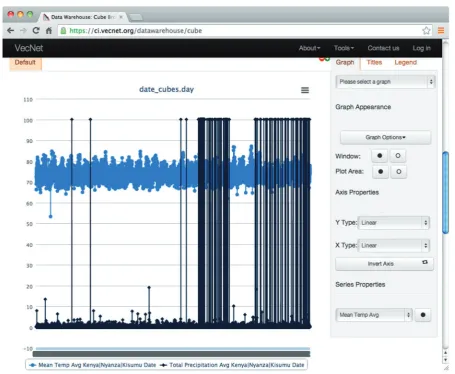
‘Non-aggregated’ data may be considered as a special case of aggregated data (data aggregated at its ‘lowest level of granularity’). Continuing with the above example, the non-aggregated results, based on the temporal dimension ‘date’, consist of ‘daily’ values (instead of ‘yearly’ aggre-gates), which can be specified in the ‘Dimensions’ panel. Figure 9 shows the non-aggregated result graphs for the Weather data cube, where average temperature and pre-cipitation are to be displayed over time by day (using the hierarchical date dimension) for the same location. The tabular view is presented inSupplementary Material S4D.
We present a typical use case (Figure 10) of the ‘Dimensional Data’ browser as follows: a researcher wishes to investigate the effectiveness of a proposed new mosquito control intervention in a particular malaria endemic
[image:12.612.73.541.48.443.2]location. At theVecNetonline portal, the simulation model EMOD (available via the Transmission Simulator, 36) will be used to model the current transmission baseline and to estimate the impact of various levels of coverage using the proposed new intervention. As part of the simulation setup, a population profile must be selected from several profiles provided, specifying the distribution of the population over 5-year age intervals, 0–4, 5–9, 10–14 etc. In the DW browser, the data cube Demographics is selected, along with two dimensions ‘location’ and ‘date’, and all age meas-ures (i.e. years 0–4, 5–9, through 80plus). Finally, two slices are specified, Kenya as the location and 2001–20 as the date, as shown inFigure 10A. The resulting age distribution graph and table of this query are shown inFigure 10Band Figure 10C, respectively. The table is then used to either build a custom profile or select from an option provided by the EMOD web interface.
The ‘lookup tables’ browser
The ‘Lookup Tables’ browser allows access to all lookup tables, which serve as auxiliary tables to hold static data. Mostly, these records are textual and non-numeric in na-ture, and cannot be meaningfully aggregated using the di-mensions. This type of data is used primarily to help users to parameterize different models, and to form guided opin-ions about a variety of topics. Given its textual nature, the data is most suitable to be presented only in tabular for-mats. A separate interface for the non-numeric data allows a better presentation to the users as well as to other models of VecNet. It also ensures that accidental aggregations over non-numeric values can be prevented.
Figure 11depicts a screenshot of the Species Bionomics lookup table, listing several bionomics parameter values for different mosquito species (e.g. form of larval habitat, flight range, indoor feeding rate etc.). The data can be copied as plain text, or downloaded in different formats (CSV, PDF,
etc.). The ‘Search’ input box provides live search functional-ity for all existing parameters, and works as a live filter. For example, typing the characters ‘fun’ in the ‘Search’ box fil-ters the table with a single record ofAn. funestus.
The ‘results viewer’
[image:13.612.85.529.54.421.2]The ‘Results Viewer’ interface, available through the Transmission Simulator (36), allows users to navigate through the simulation-based predictive data, which are generated as outputs of the stored simulation models (EMOD and OpenMalaria). The ‘scenario-based’ visual-ization interface allows users to graphically view and analyse the stored data series results from a specific Transmission Simulator run, and is useful for comparing data from within the same scenario or run of a simulation. On the other hand, the ‘custom interface’ is provided to visualize data simultaneously (i.e. on the same chart or graph) from multiple Transmission Simulator runs, which
allows users to create custom charts that are not bound by simulation model, scenario, or homogenous output types. This, in turn, allows users to access the results of stored model parameterizations, or a public set of parameteriza-tions, and perform a variety of quantitative tasks including trend analysis, outlier identification etc.
Figure 12 shows an example of navigating the simulation-based predictive data, in which output channels ‘Daily EIR’ and ‘Parasite Prevalence’ are selected to be dis-played from a ‘Rift Valley’ run from the ‘Risk Mapper— Kenya’ experiment. The resulting graphs are displayed on the right. For each graph, the user can zoom in using the slider placed under the x-axis, by dragging out a rectangle in the graph. In this example, the ‘Daily EIR’ graph is zoomed in to display a monthly view of the data series (from July 2002 to January 2005). Another example is given inSupplementary Material S4E.
We envisage that eventually this interface will provide faceted search functionalities for all dimensions of the
snowflake schema of the simulation-based predictive data (seeFigure 3). However, even at its current stage, it offers valuable capabilities to the users, helping them to retrieve important parameter sets for visual or offline analysis.
Discussions
Some of the key features, characteristics and future direc-tions of VecNet-DW are highlighted below.
Design methodology
[image:14.612.80.536.58.432.2]To facilitate rapid development, we use a ‘bottom-up’ proach (as opposed to a time-consuming ‘top-down’ ap-proach, which requires a global enterprise model) (9,11) and a ‘centralized’ architecture (as opposed to ‘federated’ or ‘tiered’ architectures), which stores all data from various data marts into a ‘single’ DW (9). Initially, we follow the ‘source-driven’ (as opposed to ‘analysis-driven’) approach for the logical/conceptual design (8). This approach allows
us to analyse and collect information from the heteroge-neous sources to the DW. However, as the DW matures, the analysis-driven approach, which centres on the analysis requirements of the users, would be combined with the source-driven approach into an iterative development methodology. This, in turn, would ensure the correspond-ence of the analysis requirements with the available infor-mation in the DW.
Because of its ability to yield rapid turnarounds on de-liverables, the ‘iterative and incremental’ development model is advocated as a key to success for a DW implementation (45). As we progressively advance the DW by incorporating new sources of data, many of the development steps are undertaken in a series of iterative refinements. Adjustments and enhancements of features to the data sets in previous it-erations are made based on the collected feedback. Since the users ultimately decide on the success of any DW (45), we consider the direct involvement of our end-users in the early development phases as a critical success factor.
Open-source software and open data access policy
As part of the VecNet Cyberinfrastructure (CI), VecNet-DWuses open-source software components for its various
elements. All software used are freely available, mature, and widely used, and provide a low risk, maintainable, and portable design. The contents of VecNet-DWare partly ‘open access’, allowing users to have unrestricted ‘data’ ac-cess (the ‘compute’ acac-cess, however, is limited to only ‘ex-pert users’). As non-public data is also stored within VecNet-DW, we implement privacy services, ensuring the protection of information being transmitted from and to the DW. For example, to protect users’ privacy, only a se-lected subset of predictive data is made available for public viewing through the Results Viewer interface via the Transmission Simulator (36).
Star vs. Snowflake schemas
[image:15.612.87.522.58.320.2]As discussed before, inVecNet-DW, the historical and pre-dictive data are modelled using the star (or, constellation) and snowflake schemas, respectively. Since each schema type has its own benefits and drawbacks, a case-by-case analysis, based on metrics and features of the desired char-acteristics of the DW, is used to determine the suitable type for the two data categories, as described inTable 3. The star schema becomes a suitable choice for historical data for the highly structured nature of the data and its low
degree of normalization. On the other hand, the enormous volume and less structured nature of predictive data make the snowflake schema a more natural choice.
Performance aspects
Currently, response times for complex queries in the DW are in the range of milliseconds. For example, for a com-plex weather query, the response time (measured using a feature in the Google Chrome browser) is 500 ms.
Due to the enormous volume of predictive data (larger than 100 million rows), the high disk storage requirement soon becomes a concern for the DW. As the number of rows grows, a given row in the fact table causes significant increase in the normalized dimension tables. Trying to minimize the disk storage requirement would cause more complex queries with higher number of joins, which, in turn, would result slower aggregation speed.
[image:16.612.81.533.56.454.2]To alleviate this, the stored predictive data (from simula-tion models) are partisimula-tioned ‘by simulasimula-tion’, allowing us to restrict the number of rows needed to be searched and joined for any given query to be<100 million rows. Data partitioning increases the average query execution speed for aggregations, and, more importantly, also sets a threshold on query execution times. This ensures that any given query will require searching on a ‘single’ partition of the stored data, and the query execution time would be bounded by (no more than) the time required to read the largest parti-tion on the server (assuming all other factors remain un-changed). The partitioned fact tables allow only a small subset of data to be searched against a query, facilitating high availability and low query times forVecNet-DW. The maintenance operations related to data partitioning are per-formed on the simulation results on a monthly basis. Thus, for predictive data, the use of data partitioning allows us to overcome the major drawbacks of the snowflake schema:
the DW achieves faster speed for aggregation queries to a degree which is desired for most OLAP applications, while minimizing the disk storage requirements on the system by saving hundreds of gigabytes of storage. However, for his-torical data, the marginal gains in speed and storage, at a cost of significant losses in the ease of data updates and maintenance prohibit the use of data partitioning.
Model-to-model comparison
The outputs from the two stored models (EMOD and OpenMalaria) contain little similarity, except for the for-mat of ‘time series’ data as the output variables. This
motivated us to dimensionally model and store the outputs in the DW in time series format (in the snowflake schema used for predictive data). This also allows the DW to retain the most detailed level of temporal granularity with which the outputs were originally produced by the two models.
[image:17.612.126.492.57.486.2]However, as became apparent in the DW design phases, both models use different sets and combinations of input variables to generate various output variables, some of which share the ‘same’ names across the models (e.g. EIR). Since these variables may have subtle differences in their definitions, meanings, and calculation procedures, they may not be directly comparable across the models. Until further future work eliminates these differences, we store
both lists of variables on a ‘per-model’ basis. This will be especially useful for expert and advanced users who under-stand both models comprehensively.
Dynamic integration and application
programming interface
One of the design goals ofVecNet-DWis its seamless inte-gration capability with the other major components of VecNet CI (3), especially the Digital Library and the Integrated Modelling Platform. Since the primary compo-nents of VecNet-DW are based on the Python program-ming language (46), it integrates well with a wide variety of other programming languages and tool-sets. The two Python-based Web application frameworks, ‘cubes’ (41) and Django (42), provide the flexibility to create dynamic-ally generated interfaces based on the preferences and roles of a set of given users. They also facilitate dynamic gener-ation of and opergener-ations on the OLAP data cubes, making these query-able through VecNet’s Digital Library (24) and other third party software components/tools.
To meet this end, we equipVecNet-DWwith an appli-cation programming interface (API), which allows indi-vidual users and other third party tools to browse, aggregate, and download portions ofVecNet-DWcontent for offline analysis. The JSON-enabled Web API provides direct links (Web addresses) for all browsable data at the bottom of the pages, generated during the faceted searches in VecNet-DW Web Portal. This is especially helpful to mitigate the limitations of the Portal in cases when its existing analysis tools may seem inadequate for a given task. In the future, we plan to extend the API by writing and distributing drivers for direct use with a var-iety of analysis tools.
Miscellaneous issues
Modelling the three categories of data with its most de-tailed level of granularity inVecNet-DWallows the users to select from aggregated as well as non-aggregated forms of searches. In the modelling process, expert users (e.g. modellers) can visually interpret, analyse, and decide whether to accept or reject the data, before they actually submit simulation jobs in VecNet.
In some cases, the star or constellation schema, which is used to model the historical data, may not represent the best design technique. As we strive to achieve an appropri-ate balance between traditional databases and DM tech-niques, in future, these situations would be handled by considering our DW needs as well as the performance crite-ria, rather than reliance upon specific technical panaceas (e.g. the star schema).
In most cases, unlike other biological DW projects [e.g. BioMart (12–15), transformation of existing content from third normal form into a DM schema was not necessary for modelling historical or static data, because the bulk of the data sources we worked with so far were stored as flat files, spreadsheets etc. (e.g. non-RDBMS data sources). However, for query performance and optimization issues, we took the leverage of using an RDBMS as a back-end to our multi-dimensional schema.
Future directions
As VecNet-DW experiences continuous improvement
[image:18.612.66.551.74.239.2]cycles, we will continue to follow the iterative development methodology, and progressively advance the DW by incor-porating new data sources. We plan to add new data cubes related to other categories of malaria-related data such as geo-referenced EIR, rainfall, insecticides, and other Table 3.Comparison of star and snowflake schemas for historical and predictive data, respectively
Feature/Metric Star schema Snowflake schema
Type of modelled data historical predictive
Data modelling approach top-down bottom-up
Structure of data highly structured less structured
Degree of normalization low or moderate high
Query execution time less more
Number of joins per aggregation fewer more
Speed of aggregation faster slower
Update on records more complicated simpler
Disk storage requirements higher lower
Number of conformed dimensions across data marts many few
Average data volume per table <100 million rows >100 million rows
Ease of maintenance more complicated easier
malaria control interventions. We also plan to improve the faceted search techniques and the geo-spatial aspects of navigation (e.g. by including customized geographical maps for data browsing). To improve the historical data representation, the spatial and temporal dimensions are also likely to be re-modelled. The snowflake schema for modelling predictive data is also being updated to store and present the simulation results from the OpenMalaria model. General performance criteria of the DW (e.g. query response time) are also being continuously refined.
In addition, for all three major components of VecNet-DW(the ‘Dimensional Data’ browser, the ‘Lookup Tables’ browser and the ‘Results Viewer’), we also plan to enhance the suite of open-source tools used to process and analyse the DW’s content, with two major goals of: (i) providing better analysis capability, and (ii) decreasing the need of external tools for post-processing tasks. Significant security challenges also need to be addressed and overcome to allow third-party users’ access toVecNet-DWAPI.
Conclusions
VecNet-DW can translate stakeholder questions into ap-propriate analyses and visualizations of model predictions, providing a robust data environment for VecNet users. The power of the DW emerges from integrated querying of its different data marts, and by structuring those queries according to the desired dimensions.
Supplementary data
Supplementary dataare available atDatabaseOnline.
Acknowledgements
We acknowledge the contributions of Lawrence Selvy and the team at Notre Dame Center for Research Computing (47) in implement-ing theVecNet-DWWeb Portal (2). We also thank our colleagues in VecNet (3), and Natalie Meyers, E-Research Librarian of the Hesburgh Libraries at the University of Notre Dame, for sharing VecNet data.
Funding
This work was supported by the Bill & Melinda Gates Foundation (grant numbers 1030706-302365 and 18931).
Conflict of interest. None declared.
References
1. World Health Organization (WHO). http://www.who.int/en/ (August 2017, date last accessed).
2. VecNet Data Warehouse Browser. https://ci.vecnet.org/data warehouse/ (August 2017, date last accessed.).
3. Vector-Borne Disease Network (VecNet). http://www.vecnet. org/. (August 2017, date last accessed).
4. World Malaria Report (WMR). http://www.who.int/malaria/ world_malaria_report_2010/en/ (August 2017, date last accessed). 5. Malaria Atlas Project. http://www.map.ox.ac.uk/ (August 2017,
date last accessed).
6. The Pacific Rainfall Database (PacRain). http://pacrain.ou.edu/ (August 2017, date last accessed).
7. Global Summary of the Day (GSOD). https://data.noaa.gov/data set/global-surface-summary-of-the-day-gsod. (August 2017, date last accessed).
8. Malinowski,E. and Zima´nyi,E. (2008) Advanced Data
Warehouse Design. Springer, Berlin.
9. Lenzerini,M., Vassiliadis,P., Jarke,M.et al. (2003)Fundamentals
of Data Warehouses. Springer, Berlin.
10. Inmon,W. (2005) Building the Data Warehouse. Wiley technology publishing, John Wiley & Sons, Inc., Hoboken, NJ, USA.
11. Kimball,R. and Ross,M. (2002)The Data Warehouse Toolkit:
The Complete Guide to Dimensional Modelling. John Wiley &
Sons, Inc., Hoboken, NJ, USA.
12. Kasprzyk,A. (2011) BioMart: driving a paradigm change in bio-logical data management. Database. https://doi.org/10.1093/ database/bar049.
13. Zhang,J., Haider,S., Baran,J.et al. (2011) BioMart: a data feder-ation framework for large collaborative projects. Database. https://doi.org/10.1093/database/bar038.
14. Smedley,D., Haider,S., Ballester,B.et al. (2009) BioMart – biolo-gical queries made easy.BMC Genomics, 10, 22.
15. Haider,S., Ballester,B., Smedley,D.et al. (2009) BioMart central portal – unified access to biological data.Nucleic Acids Res., 37, W23–W27.
16. To¨pel,T., Kormeier,B., Klassen,A.et al. (2008) BioDWH: a data warehouse kit for life science data integration. J. Integr.
Bioinform., 5, 49–57.
17. Fischer,M., Thai,Q., Grieb,M.et al. (2006) DWARF – a data warehouse system for analyzing protein families. BMC
Bioinformatics, 7, 495.
18. Teodoro,D., Choquet,R., Pasche,E. et al. (2009) Biomedical data management: a proposal framework. Stud. Health.
Technol. Inform., 150, 175–179.
19. Kormeier,B., Hippe,K., To¨pel,T.et al. (2010) CardioVINEdb: a data warehouse approach for integration of life science data in cardiovascular diseases.J. Integr. Bioinform., 7, 41–46. 20. Shah,S., Huang,Y., Xu,T.et al. (2005) Atlas – a data warehouse
for integrative bioinformatics.BMC Bioinformatics, 6, 34. 21. Trissl,S., Rother,K., Mu¨ller,H.et al. (2005) Columba: an
inte-grated database of proteins, structures, and annotations.BMC
Bioinformatics, 6, 81.
22. Lee,T.J., Pouliot,Y., Wagner,V.et al. (2006) BioWarehouse: a bio-informatics database warehouse toolkit.BMC Bioinformatics, 7, 170.
23. The EuPathDB Bioinformatics Resource Center. http://eupathdb. org/eupathdb/ (Accessed August 2017, date last accessed). 24. Vector-Borne Disease Network (VecNet): Digital Library.
https://dl.vecnet.org/ (August 2017, date last accessed). 25. VecNet Digital Library: World Population Prospects 2010
(United Nations). https://dl.vecnet.org/files/qn59q3974 (August 2017, date last accessed).
27. VecNet Digital Library: World Malaria Report 2011 Annex 5: Household surveys of mosquito nets ownership and usage, 2006-2010 (World Health Organization). https://dl.vecnet.org/ catalog/hq37vn62g (August 2017, date last accessed).
28. VecNet Digital Library: Life expectancy by country (World Health Organization). https://dl.vecnet.org/catalog/4j03cz719 (August 2017, date last accessed).
29. VecNet Digital Library: World Malaria Report 2012 Annex 4 (the World Health Organization). https://dl.vecnet.org/catalog/ m613mx64s (August 2017, date last accessed).
30. VecNet Digital Library: World Malaria Report 2015 Annex 4: Intervention coverage estimated from routinely collected data (the World Health Organization). https://dl.vecnet.org/catalog/ gh93h9255 (August 2017, date last accessed).
31. VecNet Digital Library: 1980-2011 Global Surface Summary of the Day (GSOD) weather data for Kisumu, Kenya. https://dl.vec net.org/catalog/v118rd54q (August 2017, date last accessed). 32. VecNet Digital Library: Western Kenya VecNet Expert Opinion
Table 2012. https://dl.vecnet.org/files/sb397829v (August 2017, date last accessed).
33. VecNet Digital Library: Malaria Vector Species Parameters for Africa. https://dl.vecnet.org/catalog/x059c7397 (August 2017, date last accessed).
34. VecNet Digital Library: Entomological End Points for Vector Control. https://dl.vecnet.org/catalog/wm117n96b (August 2017, date last accessed).
35. VecNet Digital Library: EMOD (search). https://dl.vecnet.org/? q¼EMOD (August 2017, date last accessed).
36. Transmission Simulator: Modeling malaria transmission and con-trol. https://ci.vecnet.org/ts/ (August 2017, date last accessed). 37. Epidemiological Modelling (EMOD). http://intellectualventure
slab.com/ (August 2017, date last accessed).
38. OpenMalaria: A simulator of malaria epidemiology and control. https://github.com/SwissTPH/openmalaria/wiki (August 2017, date last accessed).
39. PostgreSQL Global Development Group. http://www.post gresql.org/ (August 2017, date last accessed).
40. SQLAlchemy: The Python SQL Toolkit and Object Relational Mapper. http://www.sqlalchemy.org/ (August 2017, date last accessed).
41. Cubes: Data Brewery. http://cubes.databrewery.org/index.html (August 2017, date last accessed).
42. Django: A Python Web Framework. https://www.djangoproject. com/ (August 2017, date last accessed).
43. JavaScript Object Notation (JSON). http://www.json.org/ (August 2017, date last accessed).
44. Tunkelang,D. (2009) Faceted Search. Synthesis Lectures on
Information Concepts, Retrieval, and Services. Morgan &
Claypool Publishers, San Rafael, CA, USA.
45. Poe,V., Klauer,P. and Brobst,S. (1998) Building A Data
Warehouse for Decision Support. Prentice Hall, Inc., Upper
Saddle River, NJ, USA.
46. Python Programming Language. http://www.python.org/ (August 2017, date last accessed).