A STUDY ON
MADHUMEGAM
Dissertation submitted to
THE TAMILNADU DR. M.G.R MEDICAL UNIVERSITY
Chennai-32
For the partial fulfillment of the requirements to the Degree of
For the partial fulfillment of the requirements to the Degree of
For the partial fulfillment of the requirements to the Degree of
For the partial fulfillment of the requirements to the Degree of
DOCTOR OF MEDICINE (SIDDHA)
(Branch I – Pothu Maruthuvam)
DEPARTMENT OF POTHU MARUTHUVAM
GOVERNMENT SIDDHA MEDICAL COLLEGE
PALAYAMKOTTAI – 627 002.
ACKNOWLEDGEMENT
First of all I wish to express my gratitude to My Parents, who
showed me this colourful world and for their sacrifice and best wishes.
I express my Mellipluous thanks to the ‘Siddhars’ who are our
preaches.
I wish to thank the esteemed Vice-Chancellor of the TamilNadu
Dr. M.G..R. Medical University, Chennai for permitting me to undertake
this study, and The Special commissioner, Directorate of Indian
Medicine and Homeopathy, Chennai who flagged my dissertation with
cheer.
I sincerely extend my gratefulness to the Joint Director of Indian
Medicine and Homeopathy for giving due recognition for my dissertation
work.
I sincerely thankfull of our principal Dr. N. CHANDRA MOHAN
DOSS M.D.(S), and Vice Principal Dr. S. SOUNDARAJAN M.D.(S),
Government Siddha Medical college, Palayamkottai, for granting
permission and providing the necessary infrastructure for this work.
Words seem to inadequate to express my gratitude to professor
Dr.S.Mohan M.D.(S) Head of the Post Graduate Department of Pothu
Maruthuvam, Govt. Siddha Medical College, Palayamkottai, for his
been provided very good guidance during this study for which I deeply
thank him.
I express my sincere thanks to Prof.Dr. R. Thangamoney
M.D(S), Former Head of the Post -Graduate Department of Pothu
Maruthuvam for his excellent guidence and encouragement, right from
the time of choosing this topic for my study.
I express my whole hearted thanks to Dr. A. Manoharan M.D(S)
Reader, Post graduate department of pothu maruthuvam for his excellent
guidance at every step of my dissertation work.
I express my thanks to Dr. S. Justus Antony M.D.(S), Asst.
Lecturer, Post Graduate Department of Pothu Maruthuvam, Government
Siddha Medical College, Palayamkottai for his valuable guidance and
timely help in the completion of this dissertation.
I express my thanks to Dr. G. Subash Chandran M.D(S) Ph.d
Former Asst. Lecturer, post Graduate Department of Pothu Maruthuvam,
Government Siddha medical college,Palayamkottai.
It is my duty to place a record of my profound sense of gratitude to
Prof. Dr. Neelakandan, M.D., HOD of Modern Medicine, Government
Siddha Medical College, Palayamkottai, for his unstained encouragement
I express my thanks to Dr. Kaniraja M.D.,(s) HOD of Sirappu
Maruthuvam & Dr. Aathinarayanan, M.D.,(s) HOD of Aruvai
Maruthuvam Government Siddha Medical College, Palayamkottai.
I express my thanks to Mr. M.Kalaivanan M.Sc.,M.Phil., HOD,
Department of Pharmacology, Government Siddha Medical College,
Palayamkottai.
I am also thankful to Mrs.N.Nagaprema M.Sc., M.Phil. HOD of
Biochemistry and other staffs in the Department of Bio-Chemistry,
Government Siddha Medical College, Palayamkottai.
I should not forgot to express my gratefulness to Mrs.T.Poongodi
M.A.M.L.I.S., Librarian, Government Siddha Medical College,
Palayamkottai for her invaluable help.
I Sicerely thank my Dear friends and my colleagues and other
staff members who helped me during this whole period.
And my great thanks to Broad-Band Net Cafe for their sincere
CONTENTS
SL.NO. TITLE NAME PAGE NO.
ACKNOWLEDGEMENT i
1 INTRODUCTION 1
2 AIM AND OBJECTIVES 3
3 ABSTRACT 4
4 REVIEW OF LITERATURES
A. SIDDHA ASPECT
B. MODERN ASPECT
5
34
5 RESULTS AND OBSERVATIONS 79
6 DISCUSSION 91
7 SUMMARY 98
8 CONCLUSION 100
9 ANNEXURE
10 A. PREPARATION AND PROPERTIES OF
TRIAL MEDICNES
B. BIO-CHEMICAL ANALYSIS
C. PHARMACOLOGICAL ANALYSIS
D. PROFORMA OF CASE SHEET
101
105
108
128
11 BIBLIOGRAPHY
INTRODUCTION
Siddha system is considered to be one of the ancient system of
medicine in the world. Siddha is a complete holistic medical system that
has been practiced in India for two thousand years and above.
This system was formulated and established by the eminent
spiritual power called siddhars and hence the name siddha medicine. The
medicine were prepared by the various type of herbo – mineral
formulations.
Siddha system emphasizes not only a healthy body and it regulate
sound mind and soul.
In the recent years, India has witnessed a rapidly exploring
epidemic of diabetes. Indeed, India today leads the world with its largest
number of diabetic people in any given country. WHO estimates that
there are 32 million people with diabetes in India in 2000, which is
projected to rise to 80 million by the year 2030. Increase in prevalence is
rapid in urban areas from 2% in 1970s to 12% in 2000 and in rural areas
also it is now beginning to increase.
According to WHO recent estimates indicate there were 171
million people in the world with diabetes in the year 2010 and this is
projected to increase to 366 million by 2030. Diabetes is a major threat to
global public health that is rapidly getting worse, and the biggest impact
is on adults of working age in developing countries.
World Diabetes Day, a joint IDF-WHO day of global activities
which takes place on November 14th each year to raise awareness of
different aspects of diabetes and its complications.
The Siddhars explained 20 types of pramega noi. Its diagnosis is
based on tridhosham and panchapootham. It is described on the basis of
Madhumegam is a chronic metabolic disorder commonly known as
“Neerizhivu” characterized by increased and frequent urination, which is
sweet in odour, resulting in gradual diminition of udalthathus.
In the book of Theraiyar karisal urinary diseases are classified into
two types.
1. Neerinai perukkal noi (Neerizhivu)
2. Neerinai arukkal noi
In my dissertation “Neerizhivu” is coming from the neerinai
perukkal noi. The present study is limited to the specific type of
madhumegam or enippu neer which is characterized by polyuria
containing sugar.
The evidence or proof for this disease has been explained by “Yugi
Munivar” in the book of “Yugi Vaidhya Chinthamani 800”.
The Egyptian papyrus of Ebors (1500BC) has mentioned the
malady associated with polyuria. The Greeks who know about its
prominent manifestation of persistent polyuria named the disease
Diabetes which means passing urine like a fountain or through siphon.
Mellitus means sweetness.
The signs and symptoms of “Madhumegam” is correlated with
that of “Diabetes mellitus” in modern science is DM.
In this study along with siddha aspects the criteria in the modern
medicine for this disease had also been included with the available
facilities in the post-graduate department an attempt has been made to
install the pharmacological and therapeutical role of siddha medicines to
AIM AND OBJECTIVES
Aim:
Preclinical and clinical study on Madhumegam (Type 2-
DIABETES MELLITUS) and the drug of choice is Neerizhivu
Chooranam.
Objectives
1. To evaluate the efficacy of siddha formulation Neerizhivu
Chooranam for decreasing the blood glucose level in the treatment
of Madhumegam.
2. To Prepare the trial drug Neerizhivu Chooranam as per Siddha
literature (The Pharmacopoeia of Siddha Research Medicines -
Specific Medicine) and to analysis the qualitative and quantitative
constituents present in the trial drug.
3. To establish the toxicological profile by performing acute oral
toxicity studies and sub chronic toxicity studies on mice and rats
following who guidelines.
4. To have a notion of the range of the diseases with sex, age,
occupation, social status, diet, hereditary, and paruvakaalam., etc.
5. To study the Safety and efficacy of the test drug through an open
ABSTRACT
Since the commonest disease in the society, number of sufferers
increasing day by day. So that the author had chosen the disease,
“Madhumegam” for his dissertation work.
20- Out patients and 20 In patients of either sex were selected for
the study at PG-I Pothumaruthuvam department and administered with
the trial medicine.
The trial drug “Neerizhivu hoornam” 2 gm two times a day with
butter milk was administered during the whole study period.
The trial medicine was subjected to Biochemical and
pharmacological analysis.At the end of the trial study, the majority of the
REVIEW OF LITERATURES
SIDDHA ASPECT
MADHUMEGAM
Siddha system of medicine is an ancient system and it deals not
only with the body of man but also with the inner soul.
According to siddhars the imbalance of tridhosha causes totally
4448 diseases to human being. Among them megarogam is considered to
be the emperor of diseases.
‘Mkg;gh kdpjh; nra;j fd;kj;jhNy mufuh Nkfnkd;w uhrhthNy“
----mfj;jpah;.mfj;jpah;.mfj;jpah;. mfj;jpah;.
Madhumegam has been described by many siddhars in their texts.
The aetiology, pathogenesis, classification, features, diagnosis and
prognosis have been dealt in detail in these texts.
Synonyms of Madhumegam :-(verupeyar)
Neerizhivu, vegumoothiram, madhuprameham, inippuneer,
meganeer, Thiththipuneer.
Definition:- (Iyal)
It is a clinical condition characterized by frequent passage of urine
more than the normal, resulting in deterioration and diminution of seven
udal thathus.
‘,dpg;ghd ,dpg;gy;y < te;jhLk;
xU Jsptha; tpl;lhh;ifg; gpzpaha; Njhd;Wk;”
- FUehbFUehbFUehbFUehb
The above description quotes that ant and flies are attracted to the
site of voided urine and when the urine is heated it gives honey odour.
‘mz;ikahabf; fbf;F ePhpwq;F
kpf;fhd rlk; ntSj;J Nkdp fd;Wk;”
----a+fp itj;jpa rpe;jhkzpa+fp itj;jpa rpe;jhkzpa+fp itj;jpa rpe;jhkzp a+fp itj;jpa rpe;jhkzp
ETIOLOGY: (Noivarum vali)
a) The authentic etiological factors described by various siddhars are as
follows,
‘Nfhijah; fytp Nghij
nfhOj;j kPd; ,iwr;rp Nghij ghJtha; nea;Ak; ghYk;
ghpTld; cz;gP uhfpy; Nrhj ghz;LUt kpf;f
Rf;fpy gpuNkfe;jhd; xJ ePhpopT Nru
Tz;nld mwpe;J nfhs;Ns”
----mfj;jpah; 1200mfj;jpah; 1200mfj;jpah; 1200mfj;jpah; 1200
The above poem quotes that erosive intake of rich food like ghee,
fish, milk, toddy and excessive indulgence in sex leads to madhumegam.
The same also discussed in “Yugi Sinthamani”.
‘cw;gtpf;Fk; ghy; nea;ahy; ,iwr;rp fs;shy; Thpiraha; kPd;jd;dha; mUtpUe;j kw;gtpf;Fk; gjhh;j;jj;;jhy; kJut];jhy;
ke;jq;fs; jidGrpj;jy; Ntfhg; gz;lq; Fw;gtpf;Fk; FSj;j td;d kq;if Nfh\;b
Fwpj;j epj;jpiu jtph;jy; mf;fpdp ke;jk; jw;gtpf;Fe; rhPue;jhd; kpfg;gUj;jw;
rQ;rye;jhd; kpfg;gaj;jhy; jhpf;Fk; NehNa”
- a+fp itj;jpa rpe;jhkzpa+fp itj;jpa rpe;jhkzp a+fp itj;jpa rpe;jhkzpa+fp itj;jpa rpe;jhkzp
Yugimuni in his text attributes this disease due to injudicious diet
containing rich fat, sweet and also obesity. Too much of sedentary
habits without exercise also leads to madhumegam, undue fear, severe
depression has also emphasized for the development of madhumegam.
Statistics indicate that those with family history of diabetes have
higher (25-35%) risk than those without such background.
‘NgW ,sik ,d;gk; gpzp %g;G rhf;fhL MWk; fUtpy; mike;j gb
Kiw Nfl;fpy; xd;gJ Kaw;rpahy; te;jJ
Jiw Nfl;fpw fUg;gj;jpw; Wtq;fpa Nkfq;fs; eiu g+j;j nfhq;ifahs; ehafd; Nkhfj;jhy;
kiwNghw;Wq; fUg;gj;jpy; tsh;e;jJ NkfNk”
----jpU%yh; jpU%yh; jpU%yh; jpU%yh;
‘cw;wpLk; cyfj;Njhh;f;F cWgy tpahjpnay;yhk;
gw;wpLk; Fzq;fs; jd;id gfh;e;jJiu nra;aNtz;Lk; xj;jpLk; rddthWk; clYapUdthUk;
me;jp khkiyapd; thOk; khKdp tFj;jjhNk”
----mfj;jpah; FU ehb rhj;jpuk; mfj;jpah; FU ehb rhj;jpuk; mfj;jpah; FU ehb rhj;jpuk; mfj;jpah; FU ehb rhj;jpuk;
C) Sexual indulgence:
‘fd;dp kaf;fj;jhy; fz;bL NkfNk”
---- ehb E}y; ehb E}y; ehb E}y; ehb E}y;
‘fpue;jp Gz;zPud Nkf fPrfndDe; Jd;khhf;fd;
mUe;jjp vd;Dk; ghQ;rhyp ad;idia fz;Zw;whNd”
----Njud; kUjNjud; kUjNjud; kUjNjud; kUj;Jtghujk; ;Jtghujk; ;Jtghujk; ;Jtghujk;
‘];jphpNghfk; nra;jjpdhy; NtT nfhz;L rpuRkl;Lk; nte;JUfp fdNy kPwpf; FwpAlNd Nkfe;jhd; nfhLik nra;J
Fiwe;J tUk; jhJnty;yhk; Fd;wpg; NghFk;”
----FUehbFUehbFUehbFUehb
From the above poem, all siddhars attribute diabetes mainly due to
excessive indulgence in sex which results in depletion of total strength of
body as a whole, making the individual susceptible to this disease.
d) Psychomatic factors:-
Yugimunivar and other siddhars said stress is a great importance to
subjective guiltiness and psychosomatic stress resulting in disease like
diabetes, peptic ulcer and hypertension.
‘kjq;nfhz;L nghpNahiu itifahYk;
khjh; fw;Gepiyik jd;id mopf;ifahYk; gjq;nfhz;l rptNahfp rhgj;jhYk;
gj;Jtif rpNyw;gdq;fs; NkfePuhk;";
---- a+fp itj;jpa rpe;jhkzpa+fp itj;jpa rpe;jhkzpa+fp itj;jpa rpe;jhkzp a+fp itj;jpa rpe;jhkzp
e) Kanma Noi:-
‘jhNd g+Ut tpjpajdhw; rhUk; gpzpfsy;yhky;
khNdhh; tpopahh; Ntl;ifapdhy; tUe;Jk; gpz;Zk; grpahNy jhNd nghWj;J cz;ifapdhy; jhfe; jd;dhy; kpfr;rhh;e;J
jhNd fkyk; Gz;zhfpr; nra;Ak; gpukpar; nray;jhNd”
----Njiuah;thflk;Njiuah;thflk;Njiuah;thflk;Njiuah;thflk;
‘Mkg;gh kdpjh;nra;j fd;kj;jhNy
mufuh Nkfnkd;W uhrhthNy
fhkg;ghy; tPjijjhw; tUq;fd;kj;jhNy
iff;flq;fh Neha;fs; tUq;fd;kj;jhNy Nghkg;gh Nkfk; te;j fhuze;jhd;”
----mfj;jpah; fd;k fhz;lk; mfj;jpah; fd;k fhz;lk; mfj;jpah; fd;k fhz;lk; mfj;jpah; fd;k fhz;lk;
In the views of Theraiyar, Agasthiar, Thirumoolar, madhumegam
also occurs as a result of bad deeds committed in his or her past.(or their
previous births)
Noi Enn (Classification):-
‘my;Y nkd;Nw NkfkJ ,uz;Lgj;J kfpo;e;J eP NfSnkd;W trdpj;jhNu”
---- a+fp itj;jpa rpe;jhkzpa+fp itj;jpa rpe;jhkzpa+fp itj;jpa rpe;jhkzp a+fp itj;jpa rpe;jhkzp
‘fopAk; thjk; ehd;fhYk; fhAk; gpj;jk; MwhYk;
RopAk; Nrj;Jkk; gj;jhYk; nrhy;Yk; ehyQ;rha;j; topAk; thjk; ehd;fhNk khwh jtpo;jhy; jd;dhNy
nghopAk; thjk; epy;yhJ NghNk kUe;ijg; ngha;nadNt”
ePhpopT Nehia NkfePh;Neha; vd;W toq;FtJk; mJ tspf;Fw;wj;jhy; gpwg;gd ehd;F> mow;Fw;wj;jhy; gpwg;gd MW> Iaf;Fw;wj;jhy; tUtd gj;J Mf nkhj;jk; ,UgJ ghpTfnsd NkfePh; Nehia tFj;Js;shh;fs;.
tspf;Fw;wj;jhy; tUk; NkfePh; tspf;Fw;wj;jhy; tUk; NkfePh; tspf;Fw;wj;jhy; tUk; NkfePh;
tspf;Fw;wj;jhy; tUk; NkfePh; Neha;:Neha;:Neha;:Neha;: nghJf;FwpFzk;:
nghJf;FwpFzk;: nghJf;FwpFzk;: nghJf;FwpFzk;:
nghJthf if> fhy;> fz;> cly; ,it moy; Nghy; vhpAk;> ehtwSk;> gy;> eh> njhz;il ,it fWj;J ,Uf;Fk;. Ngr;Rtd;ik FiwAk;> fz;fs; Nky;Nehf;Fk;> mbf;fb grpAk;> ePh;Ntl;ifAKz;lhFk;> cly; KOikAk; typ vLf;Fk;;.
tspNkfePh;fs;: tspNkfePh;fs;: tspNkfePh;fs;: tspNkfePh;fs;: 4 tifg;gLk; nea;kzePh; gRePh; kzePh; Cd; kzePh;
,skwpf; nfhOg;G kzePh;
moy; Fw;wj;jhy; gpwf;Fk; NkfePh; Neha;fs;: moy; Fw;wj;jhy; gpwf;Fk; NkfePh; Neha;fs;: moy; Fw;wj;jhy; gpwf;Fk; NkfePh; Neha;fs;: moy; Fw;wj;jhy; gpwf;Fk; NkfePh; Neha;fs;:
‘mwpaNt gpj;jrykhWNk jhd;
mq;fkjpw; nra;fpd;w Fzj;ijf; Nfsha; jwpaNt cly;tw;wp vhpTz;lhFk;
rlj;jpYe;jhd; ePhpYe;jhd; ftpr;Rz;lhFk; njwpaNt rPg;NghYq; fw;whio NghYe;
Nry;NghYe; Njd;NghY ehw;wKz;lhk; ntwpaNt gPrj;jpw; Nfhrj;jpy; Fj;jy;
kpFkPuy; ehgpapYk; Ntf;fhlhNk”
‘Ntf;fha; tpuzKz;lha; tha;jhdhYk; tpf;fNyhL mUjpaha;r; RuKz;lhFk; jPf;fhlha; Njfe;jhd; fplf;nfhl;lhJ
jpaf;fnkhL %h;r;irAz;lh kaf;fkhr;Nr rhf;fhlha; ehtwSq; fz;zPh; jhfQ;
jhf;fhlha; kyrye;jhd; kpfTz;lhFe; jhf;fhlha; kyrye;jhd; kpfTz;lhFQ; rkFze;jhd; gpj;jry khWkhr;Nr”
----a+fpitj;jpa rpe;jhkzpa+fpitj;jpa rpe;jhkzpa+fpitj;jpa rpe;jhkzpa+fpitj;jpa rpe;jhkzp nghJ FwpFzq;fs;:
nghJ FwpFzq;fs;: nghJ FwpFzq;fs;: nghJ FwpFzq;fs;:
gpj;j Fw;wj;jYz;lhFk; NkfePh; Nehapy; cly; KOikAk; ntg;G cz;lha; vhpr;ry;> cly; twz;L RUq;fy;> cly; tpah;j;jy;>
rpWePh; Njd;kzj;Jld; ,Uj;jy;> ePh;g;Gio> tpiu> <uy;> ce;jp> ,t;tplq;fspy; Ntf;fhL cz;lhjy; Kjypa FwpFzq;fis Njhw;Wtpf;Fk.;
gpj;jNkfePh; Neha;f gpj;jNkfePh; Neha;f gpj;jNkfePh; Neha;f gpj;jNkfePh; Neha;fs; s; s; s; ,J MW tifg;gLk; ,J MW tifg;gLk; ,J MW tifg;gLk; ,J MW tifg;gLk;
ahid nfhOg;G kzePh; fw;whio kzePh;
Rz;z kzePh; jpj;jpg;G ePh; gspq;F ePh; Kaw;FUjp ePh;
Iaf;Fw;wj;jhy; gpwf;Fk; NkfePh;Neha;fs;: Iaf;Fw;wj;jhy; gpwf;Fk; NkfePh;Neha;fs;: Iaf;Fw;wj;jhy; gpwf;Fk; NkfePh;Neha;fs;: Iaf;Fw;wj;jhy; gpwf;Fk; NkfePh;Neha;fs;:
‘jrkhd gj;Jf;Fq; Fzj;ij Nfsha;
rhPue;jhd; gUj;JNk ntSg;;Gz;lhFk; mrkhd jpdTz;lh kbf;fbf;F
frkhd tpUkYld; Nfhio Az;lhq;
fdthpth ahahr KoiyahFq;
Frkhd Fzq;fisnay;yhk; rpNyl;Lke; jd;dpy;
nfhba ryf;Fznkd;W $wpdhNu”.
----a+fpitj;jpa rpe;jhkzpa+fpitj;jpa rpe;jhkzpa+fpitj;jpa rpe;jhkzpa+fpitj;jpa rpe;jhkzp nghJFwpFzk;:
nghJFwpFzk;: nghJFwpFzk;: nghJFwpFzk;:
IaNkfePh; Neha;fs;: IaNkfePh; Neha;fs;: IaNkfePh; Neha;fs;:
IaNkfePh; Neha;fs;: ,J gj;J tifg;gLk;,J gj;J tifg;gLk;,J gj;J tifg;gLk; ,J gj;J tifg;gLk; epzk; kpjf;Fk; ePh;
njspePh; %is ePh; ,sePh; fs; ePh; Rf;fpy ePh; fOePh; Njd;ePh; cg;GePh; ,iwr;rp ePh;
Agasthiyar kanmakaandam 300:
‘eykhd Ngh;njhLj;J nrhy;yf;NfS
ey;y nfe;jd; cUj;jpuhq;fd;; ,e;jpufz;b Fykhd rNyhj;jpud; gr;irtz;zd;
nfhba Urpfd; rpyhq;fd; nuj;jtz;zd; ngykhd gPjtz;zd; uj;jpdtz;zd;
Ngrhpa rk;gpuhrd; mde;j ehkd; mde;jNdhL ePyfz;ld; jtstz;zd;
mjpgpukd; kJNkfd; mj;jNdhL rpde;jzpf;F vYk;GUf;fp Gl;guhrd;”
NkfNeha;fs; NkfNeha;fs; NkfNeha;fs;
NkfNeha;fs; kzk;kzk; kzk;kzk; Rit Rit Rit Rit Kf;Fw;wePh; Kf;Fw;wePh; Kf;Fw;wePh; Kf;Fw;wePh; nfe;jd; khk;g+thrk; Gspg;G thjryk; cUj;jpuq;fd; jhok;g+thrk; ,dpg;G rpNyj;JkePh; ,e;jpufz;b nrz;gfg+thrk; ehftplUrp rpNyj;JkePh; ryNjhj;jpud; Fq;Fkg+thrk; ifg;G Gspg;G -
gr;irtz;zd; jirehw;wk; mjpf jhfk; thjgpj;jePh; Urpfd; ghdfk; thrk; mjpf ifg;G gpj;jePh; rpyhq;fd; fhbehw;wk; ifg;G Gspg;G thj ePh; uj;jtz;zd; cjputhrk; ,dpg;G fgePh;
rk;gpuhrd; Nfh%j;jpuk; mjp%j;jpuk; gpj;jthj ePh; mde;jd; rh;kthrk; rPdpUrp fgePh;
ePyfz;ld; mjpf%j;jpuehw;wk; vWk;ghpf;Fk; fggpj;jePh; jtstz;zd; fhzhfk;tPRk; rh;f;fiu ,dpg;G fgePh; gpukd; ge;jdthrk; kpsFciwg;G gpj;jthjePh; kJNkfd; fs;ehw;wk; Gspg;G fggpj;jePh; mj;jd; ghy;ehw;wk; ntz;nza;Urp thjePh; vYk;GUf;fp Rz;zehw;wk; Rz;zUrp gpj;jePh; Gl;guhrd; ky;ypifg+thrk; fhpj;jy; gpj;jePh;
Noi kuri kunangal (clinical features):
‘rhpahf Nkfj;jhy; mghd thA
jhd; Giff;F NkNywpf; fghyr;#lhk; nghpjhd Nkfj;jhy; mj;jp nte;J
Nghkg;gh jirnte;J uj;jk; tw;wpg; ghpthfpj; jrthAthy; ke;jq;nfhz;L
ngUe;jPdp kyge;jk; cjhdthA thpthfpj; Njfnky;yhk; tplePuhNy
nka;aope;j Nkfnkd;w jpUgjhr;Nr”
----rpj;j kUj;Jtk;rpj;j kUj;Jtk;rpj;j kUj;Jtk;rpj;j kUj;Jtk; msT fle;j grp jhfk; vd;Dk; Fwpfisf; fhl;b grp nfhz;l msT Grpf;fpDk; cly; td;ik ngUfhJ> ehSf;F ehs; nkyptiljy;.
ePh;Ntl;ifiaj; jLf;Fk; nghUl;L gUFk; ePhpd; mstpw;F Vw;g rpWePh; ,wq;Fjy;> J}f;fkpd;ik> kdf;fyf;fk;> gpRgpRj;j tpah;it> ,isg;G
ngU%r;R kaf;fk; vd;Dk; Kw;Fwpfis fhl;b Neha; td;ikapy; kpFk;.
Premonitory symptoms :-
Thirst
Excessive hunger
Polyuria
Body Pain
Signs and symptoms:-
Yugimuni has described the signs and symptoms of madhumegam
as followed
‘$whd NkfkJ ,UgJf;Fk;
Fze;jid rptd;nrhy;y NjtpNfl;f jhwhd jhfnkhL Nrhf Nkfe;
jhpahky; ePhpopjy; ,Uky; %r;R MwhdmUrp rj;jp rpj;j gpuik
mbf;fbf;Fj; jz;zPh; jhdd;dq ; Nfl;ly; <whd ,Lg;Gfs; fLg;G fhzy;
vYk;G ow;wyow;wNyh nlhpTz;lhFk;”;
‘vhpNthL rhPunky;yh kiwgl;lhw; Nghy; vopOlk;G Nehjy; epj;jpiu apy;yhik kdJ rQ;ryg;gLjy; fhw;W Ntz;ly;
nkhpNthL Nky;%r;R kpfTz;lhjy; tpf;fnyhL kaf;fe;jhd; nkj;jf; fhzy;
njhpNthL Njfnkq;Fk; ntSUz;ljhy; Njfnkj;j thNyhgg;gLjy; fhNz”
‘jz;ikaha; rye;jhDk; gRg;G kQ;rs; jhdpwq;Fk; gPrKk; NfhrKq; fLf;Fk; mz;ikahabf; fbf;F ePhpwq;Fk;
mbf;fbf;F miuehop jdpNy jhZk;
‘ntz;ikaha; abajdpw;whd; gpbf;Fk; kpf;fhd rlk;ntSj;J Nkdpfd;Wk; gz;ikaha;g; gQ;thz;ljdpw; nfhy;Yk;
gfph;fpd;w kJNkfj;jpd; ghq;F jhNd”
----a+fp rpe;jhkzpa+fp rpe;jhkzpa+fp rpe;jhkzpa+fp rpe;jhkzp
The urine thus passed is cold ,slimy touch, has brownish yellow
vessel. The skin is pale and there is generalised tenderness. If it is
diagnosed in time and not instituted proper treatment with diet restriction,
the disease will run a fulminating course.
In Agasthiyar Aayulvagadam:
‘KfNk fhe;jp neQ;Ryh;;e;J KWj;J
KlY eLq;fp efNk gupe;J rPh; nefpo;e;J
eQ;Rz;lth; Nghy; Njfk; Nrhh;e;J gfYkpuT KUf;fpAly; gfWNkdpAk; jsh;e;J kpfNt jhtzKz;lhFk;”
In this poem burning sensation on hands, legs, Face, dryness of
mouth, giddiness, general weakness, tiredness, tremors, loss of appetite,
sweating, pallor of skin are mentioned.
Avathaigal [Complications Of Madhumegam]:
‘fhzNt Kjytj;ijr; rhPue; jhDq; fdkhfg; gUj;jpWfp ePh;j;J thuk; NtzNt Ntz;lhf;fp afyk; gz;Z
kpf;ftuz; lhktj;ij tpsk;gf; Nfsha; %zNt %j;jpug;gP ilAkhr; Rf;y
KfKOfpj; Nj[Rjhd; kpfNt Fd;Wk; ehzNt %d;whF ktj;ijf; Fj;jhd;
ehtwSk; thAtJ kPWe; jhNd”
‘jhdhd ehytj;ij aq;f jhfQ;
rd;dpaJ ghjKz;lh ike; tj;ijj;
Njdhd ePh; ngUFe; jhJe\;lk;
epiyahw ktj;ijAlw; fpilnfhs;shJ %dhd %h;r;irtU Nko tj;ij
kpf;ftNuh rfQ;Rthre; Njf rhl;bak; Vdhd vl;lht jtj;ij jhNd
vOfpue;jp gpsit Ae;jhd; kpfTz;lhNk cz;lhF nkhd;gjh ktj;ijf; Nfsha;
cof;fhd tjprhuq; fpUkp Az;lhk; gz;lhd gj;jhe;jh itj;ij Nfsha;
----a+fp itj;jpa rpe;jhkzpa+fp itj;jpa rpe;jhkzpa+fp itj;jpa rpe;jhkzp a+fp itj;jpa rpe;jhkzp
Yugimuni has described the complications of madhumegam as
Avathaigal.
Avathaigal 10:-
1. First symptom for meha disease is obesity and dilatation of urethral
canal.
2. Body becomes dry and loses its lusture due to excessive secretion and
flow of urine mixed with vital fluid (Semen).
3. Dryness of tongue and distension of abdomen due to formation and
accumulation of excessive gas.
4. Delerium (toxic Condition) supervenes following dehydration due to
excessive elimination of tissue fluid.
5. Restlessness due to loss of vital fluid in urine.
6. Breathlessness and restlessness.
7. Nausea, tastelessness, laboured breathing, exhaustion.
8. carbuncle and multiple abscess formation .
9. Maggot formation and generalised emaciation.
10.Intractable troublesome, cough with profuse expectoration leading to
death.
The above complications occur in undiagnosed and improperly
treated cases. The complications of madhumegam described in siddha
text is really correlates with diabetes mellitus in modern medicine.
Mukkutra Verupadugal:-
‘gfh;gpj;j tpe;ijayhJ Nkfk; tuhJ”
----Njiuau; Njiuau; Njiuau; Njiuau;
‘FwpAlNd Nkfe;jhd; nfhLik nra;J
Fiwe;J te;J tUe;jhJ nty;yhq; Fd;wpg; NghFk;”
In case of Madhumegam Pitham is affected first and then Vaatham
is affected. Finally Kabam is affected. So, all the three Uyir Thathus and
seven Udal thathus are affected.
Gradually body become emaciated and these are excreted through
urine. The severity of the disease is measured by the functions of three
dhosha and seven thathus.
As per siddha system of medicine the body is madeup of
panchabhoothas. Three Primary naadies idakalai, Pinkalai, Suzhumunai
respectively combined with abanan, pranan and smanan.
Idakalai + Abanan → Vatham
Pinkalai + Pranan → Pitham
Suzhumunai + Samanan → Kabam
Normally these three factors tend to be in their states of
equilibrium (1:½:¼) but at times they are susceptible to imbalance and
such alteration leads to disease state.
Mukkutram:-
Vaatham
Pitham
Kabam Vaatham:-
Vaatham is the primal constituents of living body whose structure
is vayu + Agayam. It maintains the cohesive unity of the body as a whole.
Types of Vaatham:-
Vaatham is just like a Air but it also causes motion energy and
sensation in the body. It is further divided in to ten types.
Pranan
Abanan
Viyanan
Samanan
Nagan
Koorman
Kirukaran
Devathathan
Dhananjeyan
In case of madhumegam, following types of vatham are affected
Abanan - Polyuria
Viyanan - Burning sensation and numbness over the
plantar Surface of the foot
Udhanan - thirst, nausea, vomiting
Koorman - Disturbances of vision
Kirugaran - Excessive hunger, dryness of tongue
Pitham:
The main function of pitham which represents agni. It’s function is
thermo genesis or heat production, metabolism and process of digestion
etc.
Types of Pitham:
It is divided into five types,
1) Anarpitham:
2) Ranjaga pitham:-
3) Pirasaga pitham:-
4) Sathaga pitham:-
5) Aalosaga pitham:
In case of mathumegam following types of pitham are affected
Anarpitham - Polyphagia
Kabam:
The detoriation of the two main kutram also accompany the kabha
kutram which structure is Earth + water and is concerned with the
digestion of food and lubrications of joints etc.
Types of Kabam:
It is divided into five types,
Avalambagam:
Kilethagam:
Pothan:
Tharpagam:
Santhigam:
In case of madhumegam following types of kabam are affected
Kilethagam - Increased appetite
Avalambagam - Impaired heart function
Udal Kattugal:-
Disturbance in vatham, Pitham and kabam gets reflected on udal
thathus leading to disease. The seven udal thathus that supports the body
in their state of equilibrium are as follows.
1) Saaram:
Strengthens the body and mind.
2) Senner:
It gives power, knowledge and boldness.
3) Oon:
It gives structures of the body and responsible for movements of
the body.
4) Kozhuppu:-
It lubricates the joints and other parts of the body to facilitate
5) Enbu:
It is responsible for the posture and movement of the body and
protect the internal organs.
6) Moolai:
It nourishes the bone and gives strength to the body.
7) Sukkilam/ Suronitham:
Responsible for reproduction.
In case of madhumegam all udal kattugal affected
Saram - Tiredness
senner - Weakness
Oon - Weight loss
Kozhuppu - Obese or weight loss
Enbu - Joint pain
Moolai - Affected
Sukkilam - Excessive flow of urine mixed with vital fluid
Kosam:
1) Annamayakosam:-
Made by 7 udalthathukkal i.e the physical frame maintained by
food and nourishments.
2) Piranamayakoam:-
Piranan + Kanmenthiriyam
3) Manomayakosam:-
Manam + Gnanenthiriyam
4) Vingnanamayakosam:-
Puddhi + Gnanenthiriyam
5) AnanthamayaKosam:-
Udal Vanmai:
Udal vanmai means the body resistant to a disease because of the
formation of humoral antibodies that is called immunity.
Iyarkai vanmai:
Natural immunity of the body present in birth onwards.
Seyarkai vanmi:
Improving the health by nutritious food, medicines, karpams,
vaccines all fall in to this category of increasing the immunity by human
measures.
Kala vanmai:
Developing the immunity and stamina according to the age of the
person, season and evironment.
Piniyarimuraimai (Diagnosis):
To deal one disease and confirm what is what, diagnosis is made
out. It is very helpful to take over. Correct line of treatment and assess
the progress of the disease.
In siddha medicine the diagnosis is based upon the following
methods.
Poriyal aridhal
Pulanal aridhal
Vinathal
Envagai thervugal
Naadi paritchai
These also comprises some other parameters to confirm the
diagnosis, These are Thinai, kaalam, Udal vanmai, Mukkutrangal,
Poriyal arithal and pulanalarithal:
Pori is considered as the five sense of perception namely skin,
Tongue, Eye, Nose, Ear.While pulan are five objective senses. These are
Touch, Taste, Vision, Smell, Hearing.
Gnanendriyam:
Organ Sensory function
Mei Touch
Vai Taste
Kan Vision
Mooku Smell
Kaadhu Hearing
In case of madhumegam, touch (numbness and burning sensation
over the foot) and vision (Blurring of vision, cataract, glaucoma) affected.
Kanmendhriyam:
Organ Function
Kai Movements of upper limbs
Kaal Movements of lower limbs
Vai Speaking
Eruvai Defaecation
Karuvaai Reproduction
Alavai Nool:
Alavai methods are very much used for the purpose of diagnosing a
disease. Among the ten the first three are very important and helpful in
the examination of patients.
Kaandal:
This disease can be suspected by emacication or obesity,
Karuthal:
when the patient complaint of polyuria, polydipisa, polyphagia,
loss of body weight etc.
Urai:
‘,Ukpa gpj;jk; thjk; $by;
kUT ryNkfk; thUjp NghyhLk; cUtk; NtwhL Kz;lTlw; fha;e;jpLk;
cUfNt t+NdhL cwpQ;R ,dpf;FNk”
----jpU%yh;jpU%yh;jpU%yh; jpU%yh;
In addition to the above clinical manifestations the pithavatham
nadi felt in the Madhumegam.
Vinathal:-
It has the procedure for gathering information about the patients
In madhumegam vinathal is very much useful for
piniyarimuraimai.
Kaalam:
The period of human life in 100 yrs this has been divided in to
three stages. First stage vatha period, Second stage pitha period, third
stage kabha period.
33yrs 4 Months - Vatham
33yrs 4 Months - Pitham
Thinai:-
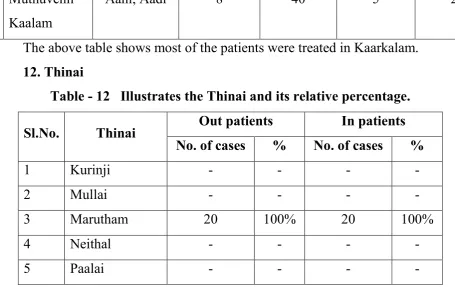
Nilam is classified into five types depending on the surrounding
vegetation. Landscape and ecological state.
Kurunji - mountain and its surroundings
Mullai - Forest and its surroundings
Marutham - Field and its surroundings
Neithal - Sea and seashore
Paalai - Desert and its surroundings.
Madhumegam is prevalent in all types of land.
Envagai Thervugal:-
‘md;ghd rhj;jpuq;fs; mwpa Ntz;Lk; md;ghd ehbjidg; gpbf;f Ntz;Lk; Fd;whd kiyNghd;w ehbnay;yhk;
Fwpg;Gld; mrhj;jpaKQ; rhj;jpaq;fz;L jd;whd ml;ltpj ghpl;ir fz;L
jf;fhd Fzq; Fwpfs; ahTe; Njh;e;J td;whd thflj;jpd; EZf;fk; ghh;j;J
tskhf gpzpajidj; jPh;g;Nghh; jhNk”
---- a+fp itj;jpa rpe;jhkzpa+fp itj;jpa rpe;jhkzpa+fp itj;jpa rpe;jhkzp a+fp itj;jpa rpe;jhkzp
‘ehb ];ghprk; eh epwk; nkhop tpop kyk; %j;jpukpit kUj;JtuhAjk;
nka;f;Fwp epwe;njhdp tpop ehtpUgha; iff;Fwp”
----Njiuah;Njiuah;Njiuah;Njiuah;
‘juzpAs;s tpahjpjd;id al;lq;fj;jhy;
jhdwpa Ntz;LtJ Nanjhntd;dpy;
jpuzpa Njhh; ehb fz;fs; rj;NjhL Njfj;jpdJ ghprk; cUzk; ehf;F apuz ky %j;jpukh tpitfnsl;Lk;
apjk; glNt jhd; ghh;j;Jf; Fwpg;Gq;fz;L gUzUshy; ghh;j;Jf; Fwpg;Gq;fz;L
----Fzthfl ehb Fzthfl ehb Fzthfl ehb Fzthfl ehb
The unique diagnostic principle in siddha system of Medicine is
Envagai thervugal
Naadi
Sparism
Naa
Niram
Mozhi
Vizhi
Malam
Moothiram Naadi:
Naadi is responsible for the existence of life and can be felt one inch below the wrist on the radial side by means of palpation with the tips of index, middle and ring finger corresponding to vatham, pitham, kabam.
Normally the three humours vatham, pitham and kabam exist in the ratio 1: ½ : ¼ Any variation in these ratio leads to disease and it is diagnosed by Naadi.
Naadi in madhumegam:-
“,Ukpa gpj;jKk; thjKk; $by;
kUTy Nkfk; thUjp NghyhLk;
cUtk; NtnwhU Kz;lTlw; fha;e;jpLk;
cUfNt t+NdhL cwpQ;rp ,dpf;FNk’
----jpU%yh;ehbjpU%yh;ehbjpU%yh;ehb jpU%yh;ehb
The pitha and vatha variation is indicated clinically by excessive hunger, thirst, emaciation and passing of large quantities of urine.
----jpU%yh;ehb jpU%yh;ehb jpU%yh;ehb jpU%yh;ehb
When the aggravated vatha nadi combines with aggravated kabha
nadi, there is genesis of meha disease in the body. In the affected
individuals body is emaciated thin and pale.
‘ghh;j;jpL %d;Wk; gjpe;J nkype;J epw;fpy;
Njh;e;jpL Nkfk; te;Njhd;wpNa nghUe;jp nka;apy;”
----jpU%yh; ehbjpU%yh; ehbjpU%yh; ehbjpU%yh; ehb
In madhumegam, three Naadis are feeble and weak.
‘gw;gpbf;f Nkfk; vd;why; gpj;jkPWk;
ghyfNd fhq;if nfhz;L ePuhk; ghNu”
----ghpg+uzehbghpg+uzehbghpg+uzehb ghpg+uzehb
Any alteration in vatha, pitha, kabha leads to meganeer disease.
‘JuzKld; ePh;g;ghL nfh;g;gg; ghlhzhw;
nrhy;YfpNwd; ehbnay;yhe; fod;W fhZk;”
----ghpg+uzehb ghpg+uzehb ghpg+uzehb ghpg+uzehb
‘ePh;Nkfkhdth;f;F ehb jhDk;
ePh;kakha; ehbnay;yhk; gyNk nfl;Lf; fhh;Nkfk; NghNyte; njhpNky; Guz;L
tpOk;GOg; NghyNt Guz;L fhl;Lk;”
----ghpg+uzehbghpg+uzehbghpg+uzehb ghpg+uzehb
Sparisam (Palpation):
The following features can be found out by sparisam. Dryness of
the skin, oedema, diabetic ulcer.
Naa (tongue):
In the examination of tongue its colour, coating, dryness,
salaivation, deviation, movement, taste and the conditions of teeth and
gums are also to be noted.
In mathumegam dryness of tongue due to excessive loss of water
and electrolytes.
The colour of the skin, nails, hair, conjunctiva, teeth and mucous
membrane all are to be noted.
Mozhi(speech):
Here the quality of the voice is assessed whether of nasal character,
shrill, hoarseness, slurred inarticulated. Types of aphasia whether
expressive or comprehensive dysphonia all are to be noted.
Vizhi (Eye):
Both sensory and motor disturbance are noted. In madhumegam
visual disturbances (blurring of vision, glaucoma, cataract) may be
present in some cases.
Malam (faces):
In the examination of malam its nature whether it is solid,
semisolid or liquid and its colour and quantity also be noted. Other
findings such as diarrhoea, constipation, presence of blood, mucous
membrane, undigested food and odour all are to be noted.
Moothiram (urine):-
In the examination of urine , its colour, odour, quantity, presence of
frothy, blood, pus, Inorganic sediments, abnormal constituents such as
sugar, protein etc. And the frequency of micturitions are to be noted.
Methods of urine examination:-
Neer kuri
Neikuri Collection of urine:-
Prior to the day of urine examination the patient should be advised
to take a balanced diet and rest. The first urine of the patient is collected
in glass container.
The colour of urine is noted and a drop of gingelly oil is added in
Though the urine should be examined only according to the rules
and regulation, at time of emergency these can be relaxed.
Neerkuri of Madhumegam is studied as follows:-
1. Niram:
Clear and white. This is due to kabha variation.
2. Edai:
Consistency of urine is just like honey.
3. Manam:
Just like a honey, ants and flies are attracted towards the voided
urine.
4. Nurai:
At the time of urination, urine may have frothy appearance.
5. Enjal:
Large quantity of urine is passed.
If the urine is lightly transparent it indicates the vitiation of kabha
in which the prognosis is said to be very bad.
‘ntz;ikAw;W kpfj; njspTilj;Njy; cz;ikahe; Rj;j rPjsj; Jjfkhh; ,e;ePh;g; grg;glhjpj;tDila Ae;juk;
Ke;ePh; ngUf;fkopthd; ca;jnthf;FNk”
----Njud;Njud;Njud; Njud;
‘Gz;zPh; Nkfg;Gz; fz;khg;gpzp
ez;zpy; epj;jpa ehjpak; MnkDk;
----epj;jpa ehjPak;epj;jpa ehjPak;epj;jpa ehjPak;epj;jpa ehjPak;
Neikuri:
A drop of gingelly oil is dropped in to a wide vessel containing the
urine to be tested and kept it under the sunlight. The variations of three
thathus in disease can be diagnosed by the behavior of gingelly oil on the
surface of urine.
The drop of oil spread like a snake, it indicates vatham.
‘Mop Nghw; gutpd; m‡Nj gpj;jk;”
if the drop of oil spread like a ring it indicates pitham.
‘Kj;njhj;J epw;fpd; nkhoptjd; fgNk”
If the drop of oil assumes a pearl shape, it is presumed to be kabha.
By the careful examination of the urine with gingelly oil, the
physicians can know whether the disease is curable or not. For this
purpose siddhars explained various spreading tendencies of oil on urine
surface of define prognosis of disease.
Noi kanippu vivadham: (Differential diagnosis):
1. Thelineeer:
The signs and symptoms of the thelineer were polyuria (Voided
urine is clear and snow like appearance), Polydipsia, loss of appetite, loss
of body weight, and dryness of skin, constipation or diarrhoea, muscle
cramps.
Due to the presence of loss of appetite and absence of excessive
sugar in blood and urine sample, this disease can differentiated from
madhumegam.
2. Due to prolonged intake of diuretics:
Due to the history of prolonged intake of diuretics the patient may
have symptoms of polyuria. But due to the absence of excessive sugar in
blood and urine sample the symptoms can be differentiated form
madhumegam.
Noi Nithanam (prognosis):
As per siddha system four types of mega formed as a result of
vathaneer is incurable. The six types arising due to the vitiation of pitham
But then ten types of pramegam arising due of iyyam are curable
Maruthuvam:
‘‘‘‘itj;jpa nray; itj;jpakhNk
gythW khWjyile;J nfLf;fpd;w cliy epiyf;Fk;gb khWjy; mZfhkYk; xNu jd;ikahf
nra;Jk; mjdhyhQ; nrapyf; Fiwtpd;wp elf;fr; nra;tJ njJNth mJNt itj;jpak;”
----jpU%yh; jpU%yh; jpU%yh; ----800jpU%yh; 800800800
In siddha system of medicine is not only for treat the disease, but
also prevent the disease and improve the immunity. This is said as
follows.
Kaapu - Prevention
Neekkam - Treatment
Niraivu - Restoration
Line of treatment:
The derangement of thridosha especially the pithathathu is the
mainfactor for madhumegam. This happens especially during once pitha
period of life that is 33 to 66years of life. So Vamanam was given to the
patients before treatments.
1.trk;G FbePh; - 30ml (fhiyapy; 2 my;yJ 3 Kiw ju the;jpahFk;)
the;jpepw;fhtpby; nfhj;jky;yp FbePh; 30ml gUfTk;.
Then the first day trial medicines were given.
‘Nth;ghU jioghU kpQ;rpdf;fhy; nky;y nky;y gw;g nre;J}uk; ghNu”
----Fzghl jhJrPt tFg;G.Fzghl jhJrPt tFg;G.Fzghl jhJrPt tFg;G.Fzghl jhJrPt tFg;G.
Hence the author tries the herbal preparation “Neerizhivu
Chooranam” for antidiabetic activity.
Diet in siddha system:-
‘czNt kUe;J kUe;Nj czT”
‘kUe;njd Ntz;lhthk; ahf;iff; mUe;jpaJ mw;wJ Nghw;wp Azpd;”
- jpUf;Fws; jpUf;Fws; jpUf;Fws; jpUf;Fws;
Siddha system says a great importance on the observation of ruks
regarding diet in everyday life because the siddha system has rightly
realised that the basic factor of the body is food. That is Annamayakosam
is the first among the five kosams constituting our physical and mental
existence. To prevent the occurrence of the disease, elaborate inference
regarding food item in our daily diet is given in the text book of siddha.
Principles of Diet therapy:
Diet should be balanced:
It should have 10-15% calories from proteins, 20-25% calories
from fats and rest of 60-65% from complex carbohydrates with adequate
vitamins and minerals.
Quantity of the diet:
For under weight and normal weight diabetic there need not any
restriction on calories. For an overweight diabetic, reduction in the
number of calories is essential. Total Calories should be approximately
30cal/kg of body weight + extra allowance of physical activity.
Simple sugar need to be avoided:
Simple sugars like cane sugar, glucose, sweets, soft drinks, cakes,
ice creams should be avoided in day diet as they are rapidly absorbed and
cause sudden rise in the blood glucose.
Fibre in plenty:
Diet should be rich in fibre, approximately 20-30gm / day. Grain
foods should be consumed with their natural fibrous coating eg. whole
wheat flour instead of refined brown bread instead of white fruits with
peals, instead of fruit juices have been widely recommended for diabetics
Fats:
Total intake of fats should not exceed 25% of calories. Animal fats
(Saturated) ingestion should be limited.
Fats and cooking oils:-
Fats and oils are essential components of human diet 20-25% of the
total calories should come from them. In a 2000 calories diet, this amount
to 40-50gm oil per day.
Poly unsaturated fats are less atherogenic than monounsaturated
and saturated fats. Daily cholesterol intake in diet should be less than 250
mg.
Essential fatty acids play an imporatant role in lipid physiology and
protect against atheroscelerosis by lowering cholesterol levels and
regulates the clotting mechanisms and maintaining the stability of
vascular endothelial cells. czT Kiwfs;:
czT Kiwfs;: czT Kiwfs;: czT Kiwfs;:----
jhuhskhf Nrh;f;fNtz;ba czTfs;:
fPiufs; fhul;
NfhJik fhshd;
mtiu #g;tiffs;
nfhj;;jtiu ehh;rj;Js;s czTfs;
ghfy; ehtw;gok;
Gliy Kl;ilNfh];
jtph;f;fg;glNtz;bait: jtph;f;fg;glNtz;bait: jtph;f;fg;glNtz;bait: jtph;f;fg;glNtz;bait:
fpoq;F tiffs; ,dpg;G tiffs; ntz;nza;> nea; nghhpj;j czTfs;
Ml;biwr;rp> khl;L;,iwr;rp ,why>; ez;L
thiog;gok;
cyh;e;j gotiffs; nfhl;ilg; gUg;G kJghdq;fs;
Exercise:
Burn calories to earn them. From a medical point of view such
activities are most welcome as there is no doubt about the importance of
exercise in promoting physical and mental health and perhaps even in
preventing and helping to care disease.
During exercise, whole body oxygen consumption may increase by
as much as 20 fold and even greater increase may occur in the working
muscles.
To meet its energy needs under these circumstances, Skeletal
muscle uses, at a greatly increased rate its own stores of glycogen and
triglycerides, as well as free fatty acids derived from break down of
adipose tissues, triglycerides and glucose released from liver.
The presence of high levels of insulin, due to exogenous insulin
administration, can attenuate or even prevent the increased mobilization
of glucose and other subtrates induced by exercise and hypoglycaemia
may ensure.
Indeed, in patients with type 2 diabetes exercise may improve
insulin sensitivity and assist in diminishing elevated blood glucose levels
in to the normal ranges.
Yogasana treatment for madhumegam :
According to Thirumanthiramn Yoga is the attainment of spiritual,
psychological and physical perfection. As the body is said to be the abode
of divinity. Thirumoolar has advised each and every individual aspiring
lead a pure and healthy life. The practice of yoga lessens and prevents the
decay of issues by increasing with abundant energy.
Aasanaas are nothing but a kind of yogic exercises. There are
innumerable types of Aasanaas.
According to Thirumoolar, each yogasanam is indicated for a
definite effect in a particular region of the system by stimulating the
internal organs to function in a normal way and to co-ordinate bodily
functions.
The following aasanaas are advised for controlling madhu megam
Padmaasanam
Mayuraasanam
Chakkaraasanam
Pachimothaasanam
Vilaasanam
Mathsyaasanam
Pujangaasanam
Sarvaangaasanam
All these aasanas should be practiced daily and regularly which can
be of immense value to patients of madhumegam. All these aasanaas
activate the pancreatic cells and have a curative value. These helps in
retiring cellular function of the pancreas and activate them to work more.
Out of these aasanas “Vilaasanam” and “Mayuraasanam” are
REVIEW OF LITERATURES
MODERN ASPECT
DIABETES MELLITUS
Definition:
Diabetes mellitus is a clinical syndrome characterized by
hyperglycaemia due to absolute or relative deficiency of insulin.
Lack of insulin affects the metabolism of carbohydrate ,protein and
fat and causes a singnificant disturbance of water and electrolyte
homeostasis.
Epidemiology:
Diabetes is worldwide in distribution and the incidence of both
type 1 and type 2 diabetes is rising day by day. It is estimated that, in the
year 2000, 150 million people worldwide had diabetes, and this is
expected to increasing double the amount by the year 2010. It is
associated with several contributory factors including increased
longevity, obesity, unsatisfactory diet, sedentary lifestyle and increasing
urbanization.
However, the prevalence of both types of diabetes varies
considerably around the world, and is related to differences in genetic and
environmental factors. A pronounced rise in prevalence occurs in migrant
populations to industrialized countries, e.g. Asian and Afro-Carribbean
immigrants to the United Kingdom.Many more cases of type 2 diabetes
remain undetected.
DM is expected to continue as a major health problem, because of
its serious complications, especially renal disease, ischemic heart
Anatomy of the pancreas:
Pancreas is a retro-peritoneal, fleshy organ, has both endo and
exocrine function. It is supra-umbilical, intrahepatic, posterio-abdominal,
retroperitoneal organ, crossing the mid-line from right to the left. As it’s
retroperitoneal, the organ does not move with respiration.
Generally, it has head, neck, body and tail. The head of the
pancreas is within the concavity of the deodenum. The neck crosses the
portal vein. The body crosses the great vessels of the abdomen like,
inferior vena cava, aorta, and left renal blood vessels. The tail of the
pancreas is in the left hypochondrium and, it contacts the hilum of the
spleen. The superior border is related to spleenic artery. The anterior
border gives attachment to transverse mesocolon.
Histophysiologically, this is a compound tubular gland showing
endo and exocrine functions of which are correlated with pituitary gland.
Microscopic anatomy of islets of – langerhans:
They are found more in the tail of the pancreas than in the other
parts. They form about 1 – 2% of pancreatic weight. The histological
structure of the islets shows Alpha, Beta and Delta cells, of which,
Alpha cells form 20% and glucagon secreting
Beta cells form about 75% and insulin secreting
Delta cells form about 5% and gastrin secreting.
Beta cells are the source of insulin hormone. The cells are
polyhydral, the nuclei are centrally or eccentrically placed, the cytoplasm
is grannular, filled with prominent secretary vacuoles containing few
ribosomes. The secretory granules show species variations. In man they
Insulin Biosynthesis, Secretion, and Action:
Biosynthesis:
Insulin is produced in the beta cells of the pancreatic islets. It is
initially synthesized as a single-chain 86-amino-acid precursor
polypeptide, namely preproinsulin. By the action of proteolysis the
aminoterminal single peptide is removed and giving rise to proinsulin.
Proinsulin is structurally related to insulin-like growth factors I and II,
which bind weakly to the insulin receptor. Cleavage of an internal
31-residue fragment from proinsulin generates the C peptide and the A (21
amino acids) and B (30 amino acids) chains of insulin, which are
connected by disulphide bonds.
The mature insulin molecule and C peptide are stored together and
cosecreted from secretory granules in the beta cells. Because the C
peptide is less susceptible than insulin to hepatic degradation, it is a
useful marker of insulin secretion and allows discrimination of
endogenous and exogenous sources of insulin in the evaluation of
hypoglycemia.
Secretion:
Glucose is the key regulator of insulin secretion by the pancreatic
beta cell, although amino acids, ketones, various nutrients,
gastrointestinal peptides, and neurotransmitters also influence the insulin
secretion. Glucose levels >3.9 mmol/L (70 mg/dL) stimulate insulin
synthesis, primarily by enhancing protein translation and processing, as
well as inducing insulin secretion. Glucose stimulates insulin secretion
through a series of regulatory steps that begin with transport into the beta
cell by the GLUT2 glucose transporter. Glucose phosphorylation by
glucokinase is the rate-limiting step that controls glucose-regulated
Metabolic Actions of Insulin:
Anabolic actions:
a. Carbohydrate metabolism:
Insulin increases the glucose transport (muscle, adipose tissue),
phosphorylation, glycogenesis , glycolysis, pyruvate dehydrogenase
activity and pentose phosphate shunt.
b. Lipid metabolism:
Insulin increases the triglyceride synthesis , fatty acid synthesis
(liver) and lipoprotein lipase activity (adipose tissue).
c. Protein metabolism:
Insulin increases the amino acid transport and protein synthesis.
Anticatabolic actions:
a. Carbohydrate metabolism:
Insulin decreases the gluconeogenesis and glycogenolysis.
b. Lipid metabolism:
Insulin decreases the lipolysis, ketogenesis and fatty acid
oxidation (liver).
c. Protein metabolism:
Insulin decreases protein degradation.
Normal Blood Sugar Level:
In normal persons, blood glucose level is controlled within a narrow
range. After the overnight fasting, in early morning, the blood glucose
level ranges between 80 and 90 mg/dl of blood. Between first and second
hour after meals (post prandial), the blood glucose level raises to 120-140
mg/dl. The glucose level in the blood is brought back to normal at the end
Necessity Of Regulation Of Blood Glucose Level:
Regulation of blood glucose level is very essential because, glucose
is the only nutrient that can be utilized by tissues of brain, retina and
germinal epithelium of the gonads.
Role Of Liver In The Maintenance Of Blood Sugar Level:
Liver acts as an important glucose buffer system. When blood
glucose level increases after a meal, the excess glucose is converted into
glycogen and stored in liver. When the blood glucose level falls, from the
normal range the liver glycogen is converted into glucose and released
into the blood from the liver cells.
Role of Insulin In The Maintenance Of Blood Sugar Level:
Insulin is the only antidiabetic hormone, as it reduces blood sugar
level. It reduces the blood sugar level by the following actions.
1. Transport and uptake of Glucose:
When a food with excess amount of carbohydrate is taken, the
blood sugar level is increased. Immediately, pancreas secretes insulin.
The insulin facilitates the transport of glucose from the blood into the
cells by increasing the permeability of cell membrane to glucose.
Insulin enhances the uptake of glucose by all the tissues
particularly by liver, muscle and adipose tissues. However, insulin is not
required for glucose uptake in some tissues like brain (except
hypothalamus), renal tubules, mucus membrane of intestine and red blood
cells.
2. Peripheral utilization of Glucose:
The glucose entering the cells is oxidized by most of the cells
immediately. The rate of utilization depends upon intake of glucose, and
3. Storage of Glucose:
Insulin promotes the rapid conversion of glucose into glycogen
(glycogenesis) in muscle and liver. Thus, glucose is stored in these two
organs in the form of glycogen. The insulin causes conversion of glucose
into fatty acids.
4. Inhibition of Glycogenolysis:
Insulin prevents the breakdown of glycogen into glucose in
muscles and liver.
5. Inhibition of Gluconeogenesis:
Insulin prevents gluconeogenesis i.e., it prevents the formation of
glucose from proteins by following ways:
a) Inhibiting the release of amino acids from muscle and
b) Inhibiting the activities of enzymes involved in gluconeogenesis.
Thus insulin decreases the blood sugar level in following manner:
Facilitating the transport and uptake of glucose by the cells.
Increasing the peripheral utilization of glucose.
Conversion of glucose into glycogen in liver and muscle.
Prevention of glycogenolysis.
Inhibition of gluconeogenesis.
Role Of Glucagon In The Maintenance Of Blood Sugar Level
1. Glucagon increases glycogenolysis (breakdown of glycogen into glucose) in liver. And, the glucose thus formed is released from the
liver cells into the blood. Glucagon does not induce glycogenolysis in
muscle.
2. Glucagon increases gluconeogenesis (formation of glucose from
Role Of Other Hormones In The Maintenance Of Blood Sugar Level
I.Growth Hormone
Growth hormone increases the blood sugar level by the following
ways:
Decrease in the peripheral utilization of glucose for the production of energy.
Increase in the deposition of glycogen in the cells.
Decrease in the uptake of glucose by the cells.
Diabetogenic effect of growth hormone. II.Cortisol
Cortisol increases the blood glucose level by acting on liver cells
and the peripheral tissues. Following are the actions of cortisol on
glucose metabolism.
a. It increases the gluconeogenesis in liver from amino acids. When
the amino acids enter the liver, gluconeogenesis is accelerated.
b. It decreases the glucose (anti-insulin action) uptake by peripheral
cells and the utilization of glucose.
III. Adrenaline
Adrenaline increases the blood glucose level by increasing
glycogenolysis in liver and muscle. So, a large quantity of glucose enters
the blood.
IV. Thyroxine
Thyroxine increases the blood sugar level by the following ways;
It increases the absorption of glucose from gastrointestinal tract.
It increases the breakdown of glycogen into glucose.
Classification
Etiologic Classification of Diabetes Mellitus
I. Type 1 diabetes – 10% (β-cell destruction, usually leading to absolute insulin deficiency)
A. Immune-mediated
B. Idiopathic.
II. Type 2 diabetes – 80% (may range from predominantly insulin
resistance with relative insulin deficiency to a predominantly insulin
secretory defect with insulin resistance)
III. Other specific types of diabetes – 10%
A. Genetic defects of – β cell function characterized by mutations in
various enzymes:
1. Hepatocyte nuclear transcription factor (HNF) 4 (MODY 1)
2. Glucokinase (MODY 2)
3. HNF – 1 (MODY- 3)
4. Insulin promoter factor (IPF) 1 (MODY 4)
5. HNF – 1 (MODY 5)
6. Mitochondrial DNA
7. Proinsulin or Insulin conversion.
B. Genetic defects in insulin action
C. Diseases of the exocrine pancreas-pancreatitis, neoplasia, cystic fibrosis, hemochromatosis, fibrocalculous pancreatopathy.
D. Endocrinopathies like acromegaly, Cushing’s syndrome,
pheochromocytoma, hyperthyroidism, aldosteronoma
E. Drug- or chemical-induced Vacor, pentamidine, nicotinic acid,
glucocorticoids, thyroid hormone, diazoxide, adrenergic
agonists,thiazides, phenytoin, interferon, protease inhibitors,
F. Infections: congenital rubella, cytomegalovirus
G.Uncommon forms of immune-mediated diabetes: “stiff-man”
syndrome, anti-insulin receptor antibodies
H.Other genetic syndromes sometimes associated with diabetes: Down’s syndrome, Klinefelter’s syndrome, Turner’s syndrome, Friedreich’s
ataxia, Huntington’s chorea, Laurence-Moon-Biedl syndrome,
myotonic dystrophy, porphyria, Prader-Willi syndrome
IV. Gestational diabetes mellitus (GDM):
Gestational diabetes, defined as hyperglycaemia diagnosed for the
first time in pregnancy. About 4% pregnant women develop DM due to
metabolic changes during pregnancy. Although they reverse back to
normal glycaemia after delivery. These women are prone to develop DM
TYPE 1 DIABETES
(INSULIN DEPENDENT DIABETES MELLITUS)
Pathogenesis
Genetic Considerations
The genetic contributions to type 1 DM involve multiple genes. The development of the disease appears to require inheritance of a sufficient complement of genes to confer susceptibility to the disorder.
The major susceptibility gene for type 1 DM is located in the HLA region on chromosome 6. Polymorphisms in the HLA complex appear to account for 40 to 50% of the genetic risk of developing type 1 DM.
Environmental Factors
It has been proposed that lack of exposure to pathogenic organisms in early childhood limits maturation of the immune system and increases susceptibility to autoimmune disease (‘the hygiene hypothesis’).
1 Viruses 2.Diet 3.Stress
4.Immunological factors
Viruses
The evidence that viral infection might cause some forms of type 1 diabetes is derived from studies where virus particles known to cause cytopathic or autoimmune damage to beta cells. The viruses have been isolated from the pancreas.
Virusus that causes type 1 diabetes include
Diet:
Dietary factors may influence the development of type 1 diabetes. Bovine serum albumin (BSA), a major constituent of cow’s milk, has been implicated in triggering type 1 diabetes. It has been shown that children who are given cow’s milk early in infancy are more likely to develop type 1 diabetes than those who are breastfed. BSA may cross the neonatal gut and raise antibodies which, because of the close homology between BSA, the Beta chain of HLA class II antigens and a heat-shock protein expressed by beta cells, could cross-react with and cause damage to beta cell components. Various nitrosamines and coffee have been proposed as potentially diabetogenic factors.
Stress:
Stress may progress the development of type 1 diabetes by stimulating the secretion of counter-regulatory hormones and possibly by modulating immune activity.
Immunological Factors
TYPE 2 DM
( NON INSULIN DEPENDENT DIABETES MELLITUS
)
Type 2 DM is a heterogeneous disorder with a complex etiology that develops in response to genetic and environmental influences. Central to the development of type 2 DM are insulin resistance and abnormal insulin secretion. Although controversy remains regarding the primary defect, most studies support the view that insulin resistance precedes insulin secretory defects.
Risk factors for Type 2 Diabetes Mellitus
1. Family history of diabetes (i.e., parent or sibling with type 2 diabetes)
2. Obesity (i.e., ‘>20% desired body weight or BMI> 27 kg/m2) Age > 45 years.
3. Race/ethnicity(e.g. African American, Hispanic American, Native American, Asian American, Pacific Islander)
4. Previously identified IFG or IGT.
5. History of GDM or delivery of baby over 9 Ibs. 6. Hypertension (blood pressure> 140/90 mmHg)
7. HDL cholesterol level<0.90 mmol/L (35 mg/dL) and/ or a triglyceride level>2.82 mmol/L(250 mg/dL)
8. Polycystic ovary syndrome.
Genetic Considerations
and 90%. Individuals with a parent with type 2 DM have an increased risk of diabetes; if both parents have type 2 DM, the risk in offspring may reach 40%. Insulin resistance, as demonstrated by reduced glucose utilization in skeletal muscle, is present in many nondiabetic, first-degree relatives of individuals with type 2 DM. However, definition of the genetic abnormalities of type 2 DM remains a challenge because the genetic defect in insulin secretion or action may not manifest itself unless an environmental event or another genetic defect, such as obesity, is superimposed.
Environmental Factors
Lifestyle
Malnutrition in utero
Age
Pregnancy
1. Life Style
Epidemiological studies of type 2 diabetes shows that overeating, especially when combined with obesity, middle-aged people with diabetes eat significantly more and are fatter and less active than their non-diabetic siblings. Obesity probably acts as a diabetogenic factor (through increasing resistance to the action of insulin) in those genetically predisposed to develop type 2 diabetes.
2. Malnutrition In Utero
Retrospective analysis of the birth weight of males born an inverse relationship between weight at birth and at 1 year, and the development of type 2 diabetes in late adulthood.
3. Age
Age is an important risk factor for type 2 diabetes. Over 70% of all cases of diabetes occur after the age of 50 years. Type 2 diabetes is principally a disease of the middle aged and elderly, affecting 10% of the population over the age of 65.
4. Pregnancy
During normal pregnancy, insulin sensitivity is reduced through the action of placental hormones and this affects glucose tolerance. The term ‘gestational diabetes’ refers to hyperglycaemia occuring for the first time during pregnancy. Repeated pregnancy may increase the likelihood of developing irreversible diabetes, particularly in obese women; 80% of women with gestational diabetes ultimately develop permanent clinical diabetes requiring treatment.
Pathogenesis of type 2 diabetes
Insulin resistance