FORMULATION AND EVALUATION OF BILAYER TABLETS OF LOSARTAN POTASSIUM FOR IMMEDIATE RELEASE AND METFORMIN
HYDROCHLORIDE FOR SUSTAINED RELEASE
THE TAMIL
in partial fulfill
Mrs. R. Devi Damayanthi M.Pharm., (Ph
FORMULATION AND EVALUATION OF BILAYER TABLETS OF LOSARTAN POTASSIUM FOR IMMEDIATE RELEASE AND METFORMIN
HYDROCHLORIDE FOR SUSTAINED RELEASE
A Dissertation submitted to
THE TAMIL NADU DR. M.G.R. MEDICAL UNIVERSITY
CHENNAI – 600 032
lment of the requirements for the award of degree of MASTER OF PHARMACY
IN
PHARMACEUTICS
Submitted by Reg. No. 26108303
under the guidance of
Mrs. R. Devi Damayanthi M.Pharm., (Ph.D.)
Tutor in Pharmacy
Department of Pharmaceutics
COLLEGE OF PHARMACY
MADRAS MEDICAL COLLEGE
Chennai – 600 003
MAY- 2012
FORMULATION AND EVALUATION OF BILAYER TABLETS OF LOSARTAN POTASSIUM FOR IMMEDIATE RELEASE AND METFORMIN
HYDROCHLORIDE FOR SUSTAINED RELEASE
NADU DR. M.G.R. MEDICAL UNIVERSITY
FORMULATION AND EVALUATION OF BILAYER TABLETS OF LOSARTAN POTASSIUM FOR IMMEDIATE RELEASE AND METFORMIN
HYDROCHLORIDE FOR SUSTAINED RELEASE
THE TAMIL
in partial fulfill
Mrs. R. Devi Damayanthi M.Pharm., (Ph.D.)
FORMULATION AND EVALUATION OF BILAYER TABLETS OF LOSARTAN POTASSIUM FOR IMMEDIATE RELEASE AND METFORMIN
HYDROCHLORIDE FOR SUSTAINED RELEASE A Dissertation submitted to
THE TAMIL NADU DR. M.G.R. MEDICAL UNIVERSITY
CHENNAI – 600 032
lment of the requirements for the award of degree of MASTER OF PHARMACY
IN
PHARMACEUTICS Submitted by Reg. No. 26108303
under the guidance of
Mrs. R. Devi Damayanthi M.Pharm., (Ph.D.) Tutor in Pharmacy
Department of Pharmaceutics
COLLEGE OF PHARMACY
MADRAS MEDICAL COLLEGE
Chennai – 600 003
MAY- 2012
FORMULATION AND EVALUATION OF BILAYER TABLETS OF LOSARTAN POTASSIUM FOR IMMEDIATE RELEASE AND METFORMIN
HYDROCHLORIDE FOR SUSTAINED RELEASE
NADU DR. M.G.R. MEDICAL UNIVERSITY
DEPARTMENT OF PHARMACEUTICS
COLLEGE OF PHARMACY
MADRAS MEDICAL COLLEGE
CHENNAI – 600 003
DATE:
This is to certify that the Dissertation entitled “Formulation and Evaluation of Bilayer tablets of Losartan potassium for Immediate Release and Metformin
hydrochloride for Sustained Release” submitted by the candidate bearing Register No. 26108303 for The Tamil Nadu Dr. M.G.R. Medical University examinations.
Dr. A. Jerad Suresh, M.Pharm., Ph.D.
Principal
College of Pharmacy
Madras Medical College
Chennai – 600 003
CERTIFICATE
This is to certify that the dissertation entitled “Formulation and
Evaluation of Bilayer tablets of Losartan potassium for Immediate Release and
Metformin hydrochloride for Sustained Release” submitted by the candidate bearing
Reg. No. 26108303 in partial fulfillment of the requirements for the award of the degree of
MASTER OF PHARMACY in PHARMACEUTICS by The Tamil Nadu Dr. M.G.R.
Medical University is a bonafide work done by him during the academic year 2011-2012.
Place: Chennai
Prof. K. Elango, M.Pharm., (Ph.D.)
Professor and Head
Department of Pharmaceutics
College of Pharmacy
Madras Medical College
Chennai – 600 003
CERTIFICATE
This is to certify that the dissertation entitled “Formulation and
Evaluation of Bilayer tablets of Losartan potassium for Immediate Release and
Metformin hydrochloride for Sustained Release” submitted by the candidate bearing
Reg. No. 26108303 in partial fulfillment of the requirements for the award of the degree of
MASTER OF PHARMACY in PHARMACEUTICS by The Tamil Nadu Dr. M.G.R.
Medical University is a bonafide work done by him during the academic year 2011-2012.
Place: Chennai
Mrs. R. Devi Damayanthi, M.Pharm., (Ph.D.)
Tutor in Pharmacy
Department of Pharmaceutics
College of Pharmacy
Madras Medical College
Chennai – 600 003
CERTIFICATE
This is to certify that the dissertation entitled “Formulation and
Evaluation of Bilayer tablets of Losartan potassium for Immediate Release and
Metformin hydrochloride for Sustained Release” submitted by the candidate bearing
Reg. No. 26108303 in partial fulfillment of the requirements for the award of the degree of
MASTER OF PHARMACY in PHARMACEUTICS by The Tamil Nadu Dr. M.G.R.
Medical University is a bonafide work done by him under my guidance during the
academic year 2011-2012.
Place: Chennai
ACKNOWLEDGEMENT
“Science may set limits to knowledge, but should not set limits to imagination.” First of all I am thankful to the god for giving me strength, endurance and showering his blessing to undertake this project and pursue with full dedication and giving me courage always to do the hard work .
It is my privilege to express my gratitude and heartfelt thanks to my esteemed Principal Dr. A. Jerad Suresh, M.Pharm., Ph.D., College of Pharmacy, Madras Medical College, Chennai - 03.
I humbly show my gratitude and sincere regards to thank my Professor Mr. K. Elango, M.Pharm., (Ph.D.), Head, Department of Pharmaceutics, College of
Pharmacy, Madras Medical College, Chennai, for his valuable suggestion and support.
I express my whole hearted thankfulness to my guide Mrs. R. Devi Damayanthi M.Pharm., (Ph.D.), Tutor in Pharmacy, Department of Pharmaceutics, College of Pharmacy, Madras Medical College, Chennai-03 for providing indispensable guidance, tremendous encouragement at each and every step of this dissertation work. Without her critical advice and deep-rooted knowledge, this work would not have been a reality.
I express my sincere thanks to Mr. Ulaganathan, Managing Director, ATOZ Pharmaceuticals Pvt. Limited, Chennai for giving me an opportunity to work and learn in their organization.
I also take this opportunity to thank Shanmugasundaram V, Chief Executive Officer, ATOZ Pharmaceuticals Pvt. Limited, Chennai for giving me an opportunity to work and learn in their organization.
I owe my gratitude and sincere regards to Mr. Senthilnathan, Technical Manager, ATOZ Pharmaceuticals Pvt. Limited, Chennai for providing guidance during my project work.
I express my great pleasure to thank Mrs. Geetha, Quality Control Manager, ATOZ Pharmaceuticals Pvt. Limited, Chennai for providing suggestions to complete my project work.
I am deeply thankful all my staff members, Mr. Ramesh Kumar K, Mrs. Daisy Chellakumari S, Mr. Deattu N, Department of Pharmaceutics, College of Pharmacy, Madras Medical College, Chennai - 03 for their suggestions in completing this work.
A special word of thanks goes to all the non-teaching staff members Mr. Marthandam R, Mr. Arivazhagan G, Mrs. Subbulakshmi S, Mrs. Shankari R and Mr. Lakshmipathy E, Department of Pharmaceutics, College of Pharmacy, Madras Medical College, Chennai – 03.
I take great pleasure in sharing the credit of this project with my dear X-Calibur batchmates, Anglina Jeniffer Samy, Bhavani M, Rajesh Kumar N, Rekha S, Saravanan K, Subramani P, Uma Maheswari A, Vignesh Babu S and my dear friends Suganya V, Padmavathi P for giving me constant encouragement and suggestions to complete my project.
I extend my cordial thanks to my seniors and to my PG and UG juniors who helped
me in different ways and for their kind support and co-operation.
Last but not the least, words fail to express my feeling to my grandparents, parents,
Dedicated to
Dedicated to
Dedicated to
Dedicated to
My family
My family
My family
My family
&
&
&
&
CR - Controlled Release
IR - Immediate Release
SR - Sustained Release
HPMC - Hydroxy Propyl Methyl Cellulose
EC - Ethyl Cellulose
PEG - Polyethylene Glycol
LR - Laboratory Reagent
HPC - Hydroxy Propyl Cellulose
FTIR - Fourier Transform Infrared
UV - Ultraviolet
SSG - Sodium Starch Glycolate
PVP - Poly vinyl Pyrrolidone
MCC - Microcrystalline Cellulose
IPA - Isopropyl Alcohol
LP - Losartan Potassium
MH - Metformin Hydrochloride
SCMC - Sodium Carboxy Methyl Cellulose
AT1 - Angiotensin 1
ACE - Angiotensin converting enzyme
DM - Diabetes mellitus
BP - Blood Pressure
mm - Millimetre
cm - Centimetre
mg - Milligram
mL - Millilitre
MI - Myocardial Infarction
HCl - Hydrochloric Acid
µg - Microgram
nm - Nanometer
rpm - Revolution per minute
Kg - Kilogram
min - minutes
Hrs - Hours
RH - Relative Humidity
% - Percentage
NLT - Not less than
NMT - Not more than
S D - Standard deviation
GLP-1 - Glucagon like peptide-1
S.NO S.NO S.NO
S.NO TITLETITLETITLETITLE PAGEPAGE NOPAGEPAGENONONO.
01 0101
01 INTRODUCTIONINTRODUCTIONINTRODUCTIONINTRODUCTION 1111161616 16
02 0202
02 LITERATURE REVIEWLITERATURE REVIEWLITERATURE REVIEWLITERATURE REVIEW 17171717292929 29
03 0303
03 AIM AND PLAN OF WORKAIM AND PLAN OF WORKAIM AND PLAN OF WORKAIM AND PLAN OF WORK 30303030313131 31
04 0404
04 RATIONALE OF RATIONALE OF RATIONALE OF RATIONALE OF STUDYSTUDYSTUDY STUDY 32323232
05 0505
05 PROFILESPROFILESPROFILESPROFILES 33333333595959 59
06 0606
06 MATERIALS AND METHODSMATERIALS AND METHODSMATERIALS AND METHODSMATERIALS AND METHODS 60606060656565 65
07 0707
07 FORMULATION DEVELOPMENTFORMULATION DEVELOPMENTFORMULATION DEVELOPMENTFORMULATION DEVELOPMENT 66666666767676 76
08 0808
08 RESULTS AND RESULTS AND RESULTS AND RESULTS AND DISCUSSIONDISCUSSIONDISCUSSIONDISCUSSION 7710777777 1010107777
09 0909
09 SUMMARY AND CONCLUSIONSUMMARY AND CONCLUSIONSUMMARY AND CONCLUSIONSUMMARY AND CONCLUSION 108108108108101010910999
10 1010
10 REFERENCESREFERENCESREFERENCESREFERENCES 110110110110119119119 119
Department of Pharmaceutics, Madras Medical College Page 1
1. INTRODUCTION
TABLETS
HISTORICAL BACKGROUND
Oral route is a most common route of administration; about 90 percent of
drugs are administered via oral route for systemic effects. Among the drugs administered
orally, solid dosage forms represent the preferred choice of class of product. Most
common solid oral dosage forms are tablets and capsules. Tablets and capsules account for
well over half the total number and cost of all prescription issued. In December 1843, a
patent was granted to the Englishman, William Brockedon, for a machine to compress
powders to form compacts. The invention was first used to produce compacts of potassium
bicarbonate and caught the imagination of a number of pharmaceutical companies. Later,
Wellcome, in Britain was the first company to use the term tablets to describe the
compressed dosage forms. 1
What is tablet?
Tablets are solid preparations each containing a single dose of one or more
active medicaments and usually obtained by compressing uniform volumes of particles.
Tablets are intended for oral administration. Some are swallowed whole or after being
chewed, some are dissolved or dispersed in water before being administered and some are
retained in the mouth where the active medicament is liberated. Tablets are usually solid,
right circular cylinders, the end of which are flat or convex and the edges of which may be
bevelled. They may exist in other shapes like triangular, rectangular, etc. They may have
lines or break-marks and may bear a symbol or other markings. Tablets may be coated or
uncoated. They are sufficiently hard to withstand handling without crumbling or
breaking.2
The British Pharmacopoeia defines tablet as, circular in shape with either flat or
convex faces and prepared by compressing the medicament or mixture of medicaments
usually with the added excipients, such as diluents, binders, disintegrants, glidants,
lubricants, substance capable of modifying the preparation in the digestive tract, colouring
Department of Pharmaceutics, Madras Medical College Page 2 ADVANTAGES OF TABLET MEDICATION 3
They are the unit dosage form and offer the greatest capabilities of all oral dosage
forms for the greatest dose precision and least content variability.
Low cost of among all oral dosage forms.
They are lightest and most compact dosage forms.
They are easiest and cheapest to package and ship.
Product identification requires no additional processing steps when employing an embossed or monogrammed punch face.
Provides greatest ease of swallowing with the least tendency for hang up above the stomach, especially when coated, provided the tablet disintegration is not excessively
rapid.
They lend themselves to certain special release profile products e.g. enteric coated or delayed release profiles.
Easy large scale production than other oral dosage forms.
They have the best combined properties of chemical, mechanical and microbiological stability among all the oral dosage forms.
The emergency supplies of the drug can be conveniently carried by the patient.
DISADVANTAGES OF TABLET MEDICATION 3
Some drugs have resistance for compression into dense compacts, owing to their
amorphous nature or flocculent, low density properties.
Drugs with bitter taste, objectionable odour, sensitivity towards oxygen or
hygroscopic nature may require encapsulation/entrapment prior to compression, or
coating of tablets is required.
Department of Pharmaceutics, Madras Medical College Page 3 TYPES OF TABLETS 4
Tablets are divided into classes based on their route of administration and
their function.
1. TABLETS ADMINISTERED ORALLY
A. Compressed tablets
• Sugar coated tablets
• Film coated tablets
• Enteric coated tablets
• Chewable tablets
• Controlled release tablets
B. Multiple Compressed Tablets
• Layered tablets
• Press coated tablets
2. TABLETS ADMINISTERED IN ORAL CAVITY
A. Buccal and sublingual tablets
B. Lozenges and Troches
C. Dental cones
3. TABLETS ADMINISTERED VIA OTHER ROUTES
A. Implants
B. Compressed suppositories or inserts
4. TABLETS ADMINISTERED IN SOLUTION FORM
A. Effervescent tablets
B. Dispensing tablets
C. Hypodermic tablets
D. Tablet triturates
METHOD OF PREPRATION OF GRANULES FOR TABLETS 4
1. Wet granulation
2. Dry granulation
Department of Pharmaceutics, Madras Medical College Page 4 FLOWCHART FOR DIFFERENT METHODS FOR TABLET GRANULATION
PREPARATION
Department of Pharmaceutics, Madras Medical College Page 5 MULTILAYER TABLETS 5
Multilayer tablets are tablets made by compressing several different granulations
fed into a die in succession, one on top of another, in layers. Each layer comes from a
separate feed frame with individual weight control. Rotary tablet presses can be set up for
two or three layers. More are possible but the design becomes very special. Ideally, a
slight compression of each layer and individual layer ejection permits weight checking for
control purposes.
Advantages of Multilayer Tablets
1. Incompatible substances can be separated by formulating them in separate layers as a
two-layer tablet or separating the two layers by a third layer of an inert substance as a
barrier between the two.
2. Two layer tablets may be designed for sustained release; one layer for immediate
release of the drug and the second layer for extended release, thus maintaining a
prolonged blood level.
3. Layers may be coloured differently to identify the product.
VARIOUS TECHNIQUES FOR A BILAYER TABLET 6 The techniques are as follows
01. OROS® push pull technology
02. L-OROS tm technology
03. EN SO TROL technology
04. DUROS technology
05. DUREDAS™ technology
01. OROS® push pull technology
This system consists of mainly two or three layers which among one or more
layer are essential of the drug and other layer consist of push layer. The drug layer mainly
consists of drug along with two or more different ingredients. The drug layer consists of
poorly soluble drug. There is further addition of suspending agent and osmotic agent. A
Department of Pharmaceutics, Madras Medical College Page 6 Fig. 1: Bilayer and Trilayer OROS push pull technology
02.L-OROS tm technology
This system used for the solubility issue. Alza developed the L-OROS system
where a lipid soft gel product containing drug in a dissolved state is initially manufactured
and then coated with a barrier membrane, then with a osmotic push layer and then a semi
permeable layer membrane drilled with an external orifice.
Fig. 2: L-OROS tm technology
03.EN SO TROL technology
Solubility enhancement of an order of magnitude or to create optimized
dosage form Shire laboratory used an integrated approach to drug delivery focusing on
identification and incorporation of the polymer that enhances the controlled release
Department of Pharmaceutics, Madras Medical College Page 7 Fig. 3: EN SO TROL technology
04.DUROS technology
The system consists of an outer cylindrical titanium alloy reservoir. The
reservoir has high impact strength and protects the drug molecules from enzymes. The
DUROS technology is the miniature drug dispensing system that opposes like a miniature
syringe and release minute quantity of concentrated form in continuous and consistent
form over months or years.
Fig. 4: DUROS technology
05.DUREDAS™ technology
It is a bilayer tablet which can provide immediate or sustained release of two
drugs or different release rate of the same drug in one dosage form. The tabletting process
can provide an immediate release granulate and a modified- release hydrophilic matrix
complex as separate layers within the one tablet. The modified-release properties of the
Department of Pharmaceutics, Madras Medical College Page 8 Fig. 5: DUREDAS Technology
Benefits offered by the DUREDAS™ technology includes:
Bilayer tabletting technology.
Tailored release rate of two drug components,
Capability of two different CR formulations combined.
Capability for immediate release and modified release components in one
tablet.
Unit dose, tablet presentation
The DUREDAS™ system can be easily manipulated to allow incorporation
of two controlled release formulation in the bilayer. Two different release rates can be
achieved from each side. In this way greater prolongation of sustained release can be
achieved. Typically an immediate release granule is compressed first followed by the
addition of a controlled release element which is compressed onto the initial tablet. This
gives the characteristic bilayer effect to the final dosage form.
A further extension of DUREDAS™ technology is the production of
controlled release dosage forms where by two drugs are incorporated into the different
layers and drug release of each is controlled to maximise the therapeutic effect of the
combination. Again both immediate and controlled release combinations of two drugs are
Department of Pharmaceutics, Madras Medical College Page 9 PRECAUTIONS TO BE TAKEN TO GET GOOD BILAYER TABLETS 5
For good-quality tablets with sharp definition between the layers, special care
must be taken as follows:
1. Dusty fines must be limited. Fines smaller than 100 mesh should be kept at a minimum.
2. Maximum granule size should be less than 16 mesh for a smooth, uniform scrape-off at
the die.
3. Materials that smear, chalk, or coat on the die table must be avoided to obtain clean
scrape-off and uncontaminated layers.
4. Low moisture is essential if incompatibles are used.
5. Weak granules that break down easily must be avoided. Excessive amounts of
lubrication especially metallic stearates should be avoided for better adhesion of the
layers.
6. Formulation of multilayer tablets is more demanding than that of single layer tablets.
For this reason, selection of additives is critical.
IMMEDIATE RELEASE TABLETS
Immediate release dosage forms are those for which ≥ 85% of the labelled amount dissolves within in 30 minutes. For immediate release tablets, the only barrier to
drug release is simple disintegration or erosion stage which is generally accomplished in
less than one hour. To enhance dissolution and hence bioavailability of any drug for
immediate release tablets, disintegration is one of the important process.7 Disintegrants are
substances or mixture of substances added to the drug formulation that facilitates the
breakup or disintegration of tablets or capsule content into smaller particles that dissolves
more rapidly than in the absence of disintegrants. Superdisintegrants are generally used at
a low level in the solid dosage form, typically 1-10% by weight relative to the total weight
of the dosage unit. Few superdisintegrants are available commercially as Croscaramellose
sodium, Crospovidone and Sodium starch glycolate.
Tablets for immediate release often consist of filler, a binder, lubricants and
disintegrants. In many cases, the disintegration time of solid dosage forms is too long to
provide appropriate therapeutic effect. To improve the disintegration time, so-called
Department of Pharmaceutics, Madras Medical College Page 10
swelling, and deformation recovery and particle repulsion.8 Together, these phenomena
create a disintegrating force within the matrix. In the past, non-modified disintegrants
were used to accelerate disintegration, that is, alginates, starches, ambrelite resins,
cellulosic materials, pectines and others. Today, a fast working superdisintegrant is
chemically modified, typically by cross linking the organic chains of a polymeric
molecule. Three classes of superdisintegrants are commonly used. Modified cellulose
(Croscaramellose Sodium - Ac-Di-Sol®, Vivasol®), crosslinked polyvinyl-l pyrrolidone
(Polyplasdone® XL-10) and modified starch (Sodium Starch Glycolate – Primojel®,
Explotab®)
CONTROLLED DRUG DELIVERY SYSTEMS
9In the past, many of the terms used to refer to therapeutic systems of
controlled and sustained release have used in an inconsistent and confusing manner.
Although descriptive terms such as “timed release” and “prolonged release” give excellent
manufacturing identification, they can be confusing to health care practitioners.
Sustained release constitutes any dosage form that provides medication over
an extended period of time. Controlled release however denotes that the system is able to
provide some actual therapeutic control, whether this is of temporal nature, spatial nature or
both. In other words, the system attempts to control drug concentrations in the target tissue.
This correctly suggests that there are sustained release systems that cannot be considered as a
controlled release systems.
In general, the goal of a sustained release dosage form is to maintain
therapeutic blood or tissue levels of the drug for an extended period. This is usually
accomplished by attempting to obtain zero order release from the dosage form. Zero order
release constitutes drug release from the dosage form that is independent of the amount of the
Department of Pharmaceutics, Madras Medical College Page 11
Sustained release generally do not attain this type of release and usually
try to mimic zero order release providing drug in a slow first order fashion (i.e.,
concentration dependent).
Systems that are designated as prolonged release can be considered as
attempts at achieving sustained release delivery. Repeat action tablets are a method of sustained release in which multiple doses of a drug are contained within the dosage form
and each dose is released at a periodic interval. Delayed release systems, in contrast, may not be sustaining, since often the function of these dosage forms is to maintain the drug
within the dosage form for some time before release. Commonly the release rate is not
altered and does not result in sustained delivery once drug release has begun. Enteric
coated tablets are example of this type of dosage form.
Controlled release, although resulting in a zero order delivery system, may also incorporate methods to promote localization of the drug at an active site. In some
cases, a controlled release system will not be sustaining, but will be concerned strictly
with localization of the drug. Site- specific systems and targeted delivery systems are the
descriptive terms used to denote this type of delivery control.
GENERAL PRINCIPLE OF CONTROLLED RELEASE SYSTEMS
The idea of providing an exact amount of drug at the site of action for a
precise time period is usually approximated by most systems. This approximation is
achieved by creating a constant concentration in the body or an organ over an extended
period of time; in other words, the amount of drug entering the system is equivalent to the
amount removed from the system. All forms of metabolism and excretion are included in
the removal process: urinary excretion, entero hepatic recycling, sweats, faecal and so on.
Since for most of the drugs these elimination processes are first order, it can be said that at
certain blood level, the drug will have specific rate of elimination. This idea is to deliver
drug at the exact rate for an extended period. This is represented mathematically as
Department of Pharmaceutics, Madras Medical College Page 12
Where, Cd is the desired drug level, Vd is the volume of distribution and Kelim
is the rate of drug elimination from the body. Often such exacting delivery proves to be
difficult to achieve administration routes other than intravenous infusion. Non invasive
routes (e.g., oral) are obviously preferred.
Fig. 6: Drug level versus time profile showing differences between zero order controlled
release, slow first order sustained release, and release from a conventional tablet or
capsule.
Figure 6 shows comparative blood level profiles obtained from administration
of conventional, controlled and sustained release dosage forms. The conventional tablet or
capsule provides a single and transient burst of drug. A pharmacological effect is seen as
long as the amount of drug is within the therapeutic range. Problems occur when peak
concentration is above or below this range, especially for drugs with narrow therapeutic
windows.
The slow first order release obtained by sustained release preparation is
generally achieved by slowing the release of drug from a dosage form. In some cases this
is accomplished by a continuous release process; however system that release small bursts
Department of Pharmaceutics, Madras Medical College Page 13
SUSTAINED RELEASE (SR) DRUG DELIVERY SYSTEMS
4Sustained release drug delivery systems can be defined as any dosage form
that prolongs the therapeutic activity of the drug by continuously releasing medication
over an extended period of time. In absence of suitable clinical evidence of this therapeutic
effect it can be defined as any dosage form that gives prolongation of the drug levels in the
blood. The major advantage of this category is that, in addition to the convenience of
reduced frequency administration, it provides levels that are devoid of the peak and valley
effect.
By providing smooth plasma level of drug over longer period of time, sustained
release drug delivery technology can minimize side effects, improve efficacy and by
enabling once daily dosing – maximize patient compliance.
ADVANTAGES
Sustained release products offer many potential benefits over conventional
dosage formulations e.g,
1. Sustainedbloodlevels
• For drugs with relatively short half lives, the use of sustained release products
may maintain therapeutic concentrations over prolonged periods.
2. Dosagefrequencyreduction
• Minimize or eliminate local side effects.
• Minimize or eliminate systemic side effects.
• Obtain less potentation or reduction in drug activity with chronic use.
• Minimize drug accumulation with chronic dosing.
3. Improvepatientcompliance
• A reduction in the number of daily doses offered by sustained release products
has the potential to improve compliance.
4. Improveefficiencyintreatment
• Improve control of condition i.e., reduced fluctuation in drug levels
• Improve bioavailability of some drugs.
• Make use of special effects. Eg., sustained release of aspirin for morning relief
Department of Pharmaceutics, Madras Medical College Page 14 5. Economyi.e. reduction in health care costs
• The average cost of treatment over an extended time period may be less, with
less frequency of dosing, enhanced therapeutic benefits and reduced side
effects.
• The time required for health care professional to dispense and administer the
drug and monitor patient is also reduced.
DISADVANTAGES
1.Sustained release products contain a higher drug load and thus any loss of integrity of
the release characteristics of the dosage form has potential problems.
2.The larger size of sustained release products may cause difficulties in ingestion or
transit through the gut.
3.Sustained release products may cause decreased systemic bioavailability in comparison
to conventional dosage forms, which may be due to incomplete release, increased first
pass metabolism, increased instability, insufficient residence time for complete release,
site specific absorption, pH dependent stability etc.
4.Possibility of dose dumping due to food, physiologic or formulation variables or
chewing or grinding of oral formulations by the patient and thus increased risk of
toxicity.
RELEASE MECHANISM FOR SUSTAINED AND CONTROLLED RELEASE PRODUCTS 10, 11
Based on the release mechanism these are classified as follows
Diffusion controlled products
Dissolution controlled products
Erosion products
Osmotic pump systems
Ion exchange resins
01. Diffusion controlled products
In these systems, there is a water soluble polymer, which controls the flow of
Department of Pharmaceutics, Madras Medical College Page 15
when a drug passes through the polymer that forms the controlled release device. The
diffusion can occur through the pores in the polymer matrix or by passing between
polymer chains. These are broadly classified into two categories.
A. Reservoir devices
B. Matrix devices
The basic mechanisms of drug release from these two systems are fundamentally different.
A. ReservoirDevices
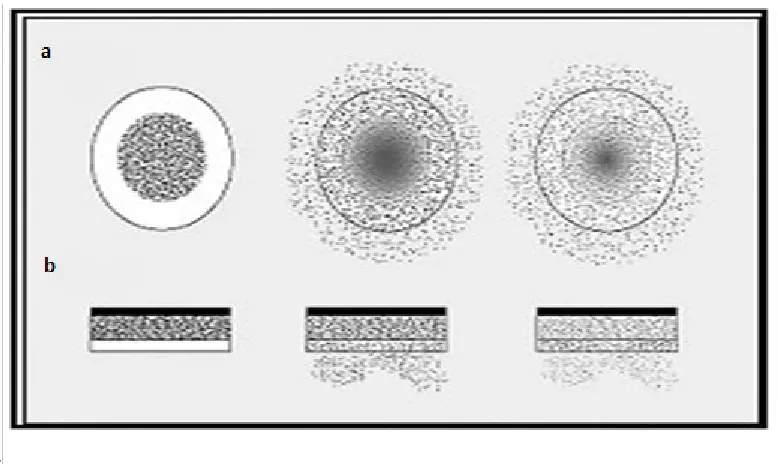
In this system a water insoluble polymeric material encases a core of drug. Drug
will partition into the membranes and exchange with the fluid surrounding the particles or
tablet.
The active ingredient is released to the surrounding environment by diffusion
process through the rate limiting membrane. In the reservoir systems the drug delivery rate
remains fairly constant.
.
Fig. 7: Drug delivery from typical reservoir devices: (a) Implantable or oral
systems and (b) Transdermal systems
B. Matrix Devices
In the matrix device the drug or active ingredient is dispersed in polymer
matrix to form a homogenous system known as matrix system. Diffusion occurs when the
[image:28.595.106.495.391.623.2]Department of Pharmaceutics, Madras Medical College Page 16
continuous, its rate normally decreases with the system, since the active ingredient has
progressively longer distance to travel and therefore requires a long diffusion time to
release.
Fig. 8: Drug delivery from a typical matrix drug delivery system
Department of Pharmaceutics, Madras Medical College Page 17
2. LITERATURE REVIEW
REVIEW FOR BILAYER TABLETS
1)
Ramana G et al. 12 formulated and evaluated the sustained release bilayer tablets of Ambroxol hydrochloride. The tablets were prepared by direct compression techniqueusing sodium starch glycolate as super disintegrant for fast release layer and CR grade
polymers such as HPMC K4M , Ethyl cellulose independently and also in combinations.
The formulation containing Drug: HPMC: EC at the ratio of 1:0.5:30% exhibited an initial
burst effect followed by sustained release over a period of 12 hours. The dissolution data
of various formulations were fitted into Higuchi and Peppas models, which are linear with
Higuchi’s plot and “n” values obtained from Peppas were within 0.45 to 0.89 indicate the
mechanism of drug release diffusion coupled with erosion.
2)
Brijesh Patel et al. 13 designed and evaluated Mucoadhesive controlled release oral bilayer tablets of Indomethacin. Solid dispersion of Indomethacin was prepared using PEG6000 to improve the solubility of Indomethacin. Bilayer tablets were prepared using direct
compression technique employing Ac-Di-Sol as superdisintegrant for immediate release
layer and Carbapol 934 LR, HPC for sustained release layer. The polymers were used
alone or in combinations. By varying the concentrations of polymers several batches were
formulated. The batch containing the mixture of Carbapol 934 LR and HPC in the ratio of
1:1 showed a better drug release than individual formulation containing Carbapol 934 LR
and HPC. The drug release kinetics was studied and it was found that the drug was
released from the formulation by diffusion.
3)
Deelip Derle et al. 14 formulated and evaluated buccoadhesive bilayer tablets of Propranolol hydrochloride. The tablets were prepared by direct compression method.Bioadhesive polymers such as sodium alginate and Carbapol 971P were used and ethyl
cellulose was used as an impermeable backing layer. The tablets were prepared in two
steps, initially the drug polymer mixture was compressed after that the backing layer of
ethyl cellulose was placed over the compact and then compressed into bilayer tablets.
Tablets containing sodium alginate and Carbapol 971P in the ratio of 5:1 showed the
maximum percentage of in vitro release without disintegration for 12 hours. The
Department of Pharmaceutics, Madras Medical College Page 18
4) Nagaraju R et al. 15 formulated and evaluated bilayer sustained release tablets of Salbutamol and Theophylline. Wet granulation technique was employed for preparation of
granules. PVP K30 in Isopropyl alcohol was used as a binder. Various polymers such as
HPMC K4M, HPMC K100M, Xanthan gum, Ethyl cellulose and HPMC-P were studied.
HPMC-P and HPMC K4M were found to be best in controlling the release.
5) Ashish A Pahade et al. 16 designed and developed bilayer sustained release tablets of Isosorbide mononitrate. Wet granulation technique was employed for preparing granules
using PVP K30 as binder. The immediate release granules were prepared using
Croscaramellose Sodium as superdisintegrant. Hydrophilic and hydrophobic matrix
material such as HPMC K4M and Polyox WSR 303 was used for preparing sustained
release layer. The influence of hydrophilic and hydrophobic polymer and granulation
technique was studied. By varying the concentrations of HPMC K4M four formulations of
bilayer tablets were prepared. The formulation containing HPMC K4M at a concentration
of 19.33% w/w was selected as the optimized batch as it showed better in vitro release
profile compared to other batches. Similarly by varying the concentration of hydrophobic
polymer Polyox WSR 303 three batches of bilayer tablets were prepared. The formulation
containing 15% w/w showed better in vitro release profile and thus it was optimized for
further studies.
6) Bhavesh Shiyani et al. 17 formulated and evaluated bilayer tablets of Metoclopramide hydrochloride (MTH) and Ibuprofen (IB). MTH was formulated as immediate release
layer by using various disintegrants like Ac-Di-Sol, Polyplasdone XL, Explotab, Agar and
Gellan Gum. The formulation containing Ac-Di-Sol was optimized for preparing Bilayer
tablets. Sustained release layer of IB was formulated using hydrophilic matrix HPMC
K4M, buffering agent sodium bicarbonate and PVP K30. By increasing the concentrations
of HPMC K4M and PVP K30 the release was reduced. By inclusion of buffering agent
sodium bicarbonate the release was increased as well as there is reduction in gastric
irritation as IB is a weak acid. The drug release mechanism was found to be Quasi-Fickian
diffusion.
7) Narendra C et al. 18 studied the optimization of bilayer floating tablets of Metoprolol Succinate. A 23 factorial design was used for optimizing the formulation with respect to
polymer-drug (X1), polymer-polymer (X2) and different viscosity grades of s polymer
ratio(x3) as independent variables. Four dependent variables are percentage of drug
Department of Pharmaceutics, Madras Medical College Page 19
affected the floating time and release properties, but the effect of different viscosity grades
of HPMC K4M and HPMC K100M was not significant.
8) Vinoth kumar G et al. 19 formulated and evaluated bilayer tablets of Cefixime trihydrate and Dicloxacillin sodium. Wet granulation technique was used to formulate
granules for both the layers. Cefixime trihydrate was formulated as immediate release
layer using Croscaramellose sodium as superdisintegrant. Sustained release layer of
Dicloxacillin sodium was formulated by varying the concentrations of HPMC K4M and
HPMC K100M. Nine batches of bilayer tablets were prepared. All the formulations were
compared with the innovator product in respect to all tablet properties such as hardness,
friability, disintegration time and dissolution. The percentage drug release of formulation
F5 showed drug release comparable to the innovator product disintegration time and drug
release and thus it was optimized and kept for further studies.
9) Gohel MC et al. 20 fabricated and evaluated bilayer tablets containing conventional Paracetamol and modified release Diclofenac sodium. A 23 full factorial design was
adopted using the amount of polyethylene glycol, microcrystalline cellulose and
Crospovidone as independent variables for fabricating Paracetamol tablets. Diclofenac
sodium tablets were prepared using varying concentrations of HPMC K4M as matrixing
agent. The results of analysis of variance showed that the friability of Paracetamol was
distinctly influenced by the formulation variables. Diclofenac sodium layer was optimized
by comparing the formulation with the innovator product. The optimized layers were
finally compressed into bilayer tablets. The tablets were subjected for drug release
mechanism. It was found out that the bilayer tablets followed Korsmeyer-Peppas model.
10) Naeem MA et al. 21 developed and evaluated controlled release bilayer tablets containing microencapsulated Tramadol and Acetaminophen. Microencapsulation based
phase separation technique using medium viscosity ethyl cellulose was employed to
formulate separate Microparticles for extending the release of both drugs. The
Microparticles of both the drugs were prepared separately and were used for formulating
the bilayer tablets. The optimized batches were subjected for studying the release
mechanism. The release kinetics was followed by Higuchi model with a good R2 value.
The tablets were subjected to accelerated stability studies for 3 months.
Department of Pharmaceutics, Madras Medical College Page 20
immediate release layer using Croscaramellose sodium as superdisintegrant. Nicotinic acid
was formulated as sustained release layer using HPMC K100M in varying concentration.
12) Remya PN et al. 23 studied the formulation and evaluation of bilayer tablets of Ibuprofen and Methocarbamol. Wet granulation technique was employed for preparing
granules using PVP K 30 as binder. The bilayer tablets were film coated using Advantia
prime clear film coat material. Nine batches of bilayer tablets were prepared. The in vitro
release of the bilayer tablets were compared with the innovator and the release kinetics of
formulation 8 were taken as optimized formulation due to its higher dissolution rate and
complied all other parameters with the official specifications.
13) Jadhav RT et al. 24 formulated and evaluated bilayer tablets of Piracetam and Vinpocetine. Wet granulation technique was employed for formulation of both layers.
PVP K 30 was used as binder for preparing Piracetam granules and maize starch was used
as binder for preparing Vinpocetine granules. Sodium starch glycolate was used as
superdisintegrant. Bilayer tablets were optimized based on the disintegration time and
comparison of the dissolution profile with the innovator product.
14) Hiremath JG et al. 25 studied the preparation and physicochemical characterization of Simvastatin loaded Mucoadhesive bilayer tablets. Tablets were prepared by direct
compression technique by using mucoadhesive polymers such as Carbapol 934, HPMC
and PVP in varying concentrations. Ethyl cellulose was used as backing membrane layer
because of its water impermeable nature. The core layer was composed of drug and
polymer in varying concentrations. To the backing layer Carbapol 934 and PVP K 32 was
added to avoid premature cracking. FTIR and DSC were done to study the compatibility of
the drug and excipients. F3 and F9 formulations were selected as optimized batch. F3 was
selected for in vitro permeation studies based on its maximum drug release F9 formulation
was selected based on the in vitro drug release, swelling index and good bioadhesive
strength. The optimized batches were subjected to drug release kinetics.
15) Ajit S Kulkarni et al. 26 prepared the floating bilayer tablets of Diltiazem hydrochloride and Lovastatin. Direct compression technique was employed for preparing
bilayer tablets. Lovastatin was formulated as immediate release layer using sodium starch
glycolate as super disintegrant and Diltiazem hydrochloride was formulated as sustained
release layer comprising of HPMC K4M and Xanthan gum as the release retarding
Department of Pharmaceutics, Madras Medical College Page 21
released the Lovastatin within 30 minutes. HPMC K4M and Xanthan gum sustained the
release for 12 hours.
16) Ziyaur Rahaman et al. 27 developed the bilayer floating tablets of Captopril using direct compression technique. The floating layer was formulated with various HPMC
grades (K4M, K15M and K100M) and effervescent mixture of citric acid and sodium
bicarbonate. The sustained release layer comprised of Captopril and various polymers
such as HPMC K15M, PVP K30 and Carbapol 934P alone or in varying combination with
the drug. Final formulation released approximately 95% of drug in 24 hours, while the
floating time was 10 min and the tablet remained floatable throughout the studies. Placebo
formulation containing barium sulphate in the release layer administered to human
volunteers for in vivo X-ray studies showed the BFT had significantly increased the gastric
residence time.
17) Ankarao A et al. 28 prepared the Buccoadhesive bilayer tablets of Metoprolol tartrate. Core tablet of Metoprolol tartrate was prepared by direct compression technique using
HPMC K4M, SCMC and Carbapol 934 as bioadhesive polymers to impart mucoadhesion
and ethyl cellulose to act as an impermeable backing layer. Six formulations containing
the bioadhesive polymers were prepared. The formulation F2 and F5 were optimized and
obeyed zero order release kinetics with Non-Fickian diffusion.
18) AnkaraoAet al. 29 studied the formulation and evaluation of Buccoadhesive Bilayer tablets of Carvedilol. Direct compression was employed for preparing core tablets using
HPMC K4M, SCMC, and Carbapol 934 as bio-adhesive polymer to impart mucoadhesion.
Ethyl cellulose was used as impermeable backing membrane. The formulations containing
HPMC and SCMC were optimized based on the buccoadhesive property and release
characteristics.
REVIEW FOR METFORMIN HYDROCHLORIDE
19) Bagyalakshmi J et al. 30 developed a bilayer formulation containing Metformin hydrochloride and Glipizide. Metformin hydrochloride was formulated as sustained
release layer using varying grades of HPMC (K4M, K15M, and K100M). Glipizide was
formulated as immediate release layer. Due to the poor solubility of Glipizide, Solid
dispersion technique using sodium starch glycolate was employed using Kneading method
Department of Pharmaceutics, Madras Medical College Page 22
FT-IR and in vitro dissolution studies. Both the layers were optimized separately the
optimized batches were then finally compressed into bilayer tablets.
20) Kotta Kranthi Kumar et al. 31 designed, developed and characterized sustained release of Metformin and Gliclazide bilayer tablets. Wet granulation technique was
employed using various grades of HPMC for preparing granules. Trail batch of Metformin
hydrochloride containing HPMC K100M and trail batch of Gliclazide containing HPMC
K15M was optimized for preparing bilayer tablets. The tablets were compared with the
innovator product.
21) Rajendran NN et al. 32formulated and evaluated sustained release bilayer tablets of Metformin hydrochloride and Pioglitazone hydrochloride. Pioglitazone HCl was
formulated as immediate release layer by direct compression method using sodium starch
glycolate and Croscaramellose sodium. Sustained release layer of Metformin
hydrochloride was formulated by wet granulation technique using different viscosity
grades of HPMC (K4M & K100M). The immediate release layer containing varying super
disintegrants was compressed separately and they were compared with the innovator
product. The formulation containing sodium starch glycolate (5%) was optimized as it
matched with the burst release of the innovator product. The sustained release layer was
formulated by varying the concentration of HPMC K4M and HPMC K100M. The
formulated tablet was compared with the innovator. The concentration of HPMC K100M
(8.82%) and HPMC K4M (4.70%) was optimized as it showed the comparable release
profile with the innovator. The optimized formulations were finally compressed into
bilayer tablets and were studied for drug release kinetics.
22) Ramesh et al. 33 formulated and evaluated bilayer sustained release tablets of Metformin hydrochloride and Pioglitazone. Dry granulation technique was employed for
formulation of immediate release layer using Croscaramellose sodium in varying
proportions. Sustained release layer granules were formulated by wet granulation
technique using bio-adhesive polymers such as Sodium carboxy methyl cellulose and
various grades of HPMC (K4M & K15M). The tablets were optimized separately and the
optimized batches were finally compressed into bilayer tablets. The bilayer tablets gave a
bimodal release indicating the immediate release followed by sustained release. The
optimized batch was subjected to release kinetics to study the release mechanism.
Department of Pharmaceutics, Madras Medical College Page 23
and was optimized separately. Metformin was formulated as sustained release layer. Two
different matrix formulations were developed, one matrix layer with hydrophilic swellable
layer such as HPMC and another matrix layer with hydrophobic layer such as PEO. The
sustained release profile of HPMC matrix system was better than PEO matrix system.
Thus it was optimized and compared with the innovator product. The optimized
formulations were finally compressed into bilayer tablets. The tablets were subjected to
study the drug release mechanisms. The formulation exhibited zero order kinetics and
followed Non-Fickian transport.
24) Yamsani Madhusudan Rao et al. 35 studied the formulation and release characteristic of a bilayer matrix tablet containing Glimepride immediate release
component and Metformin hydrochloride as sustained release component. Immediate
release layer was formulated by direct compression using sodium starch glycolate as super
disintegrant. Sustained release layer was formulated in 5 batches by wet granulation
technique using HPMC K4M, SCMC as matrix forming polymer and PVP K 30 as binder.
Batch 5 containing a mixture of Hydrophilic polymers in the ratio of 7.05:26.4% released
the drug in the controlled manner and thus optimized and evaluated for further studies.
25) Madhabhai Manordas Patel et al. 36designed and developed bilayer gastro retentive tablets containing Metformin hydrochloride and Glipizide for the treatment of Type II
diabetes. Direct compression was employed for formulating both the layers. Metformin
hydrochloride was formulated as sustained release layer using various grades of HPMC.
Glipizide was formulated as immediate release layer using various superdisintegrants i.e.
Croscaramellose Sodium, Crospovidone and sodium starch glycolate. Sodium starch
glycolate (5%) was optimized as superdisintegrant for immediate release layer based on
faster disintegration time. 32 full factorial designs were used to optimize sustained release
formulations of Metformin hydrochloride. The ratio of polymer blend (X1) and content of
gas generating agents (X2) was chosen as independent variables. Among the different
grades of HPMC investigated, the viscosity of the polymer affects the drug release. From
the results we can conclude that prepared bilayer tablets showed desirable release profile,
good floating and sustained effect in stomach.
26) Saptarshi Dutta et al. 37 studied the formulation and evaluation of Metformin hydrochloride sustained release matrix tablets. Dry granulation technique was employed
using various grades of HPMC (K4M & K100M). The formulation containing HPMC
Department of Pharmaceutics, Madras Medical College Page 24
12 hours and thus it was optimized. The optimized formulations were studied for drug
release kinetics which showed that the formulation released the drug by diffusion. The
tablets were kept for accelerated stability studies.
27) Senthilkumar KL et al. 38 formulated, developed and evaluated Metformin hydrochloride sustained release tablets. Wet granulation technique was employed for
formulation of tablets by using various grades of HPMC (K4M & K100M) as release
retarding polymers and PVP K 30 as binder. The formulation containing 13% HPMC
K100 was optimized as it fulfilled the requirements for a sustained release tablets.
28) Jayaprakash S et al. 39 studied the formulation and evaluation of bilayer tablets of Metformin hydrochloride. Direct compression technique was employed for formulation of
bilayer tablets using sodium starch glycolate and Crospovidone as super disintegrant for
immediate release layer and HPMC K4M as release retardant polymer for sustained
release layer. Formulation containing HPMC K4M, SCMC as binder for sustained release
layer was optimized. Immediate release layer containing Crospovidone and sodium starch
glycolate in combination was optimized. The optimized formulation was finally
compressed into bilayer tablets and its drug release mechanism was studied and was found
out that it followed swelling mediated diffusion. The formulations were kept for
accelerated stability studies for a period of 3 months.
29) Manju Nagpal et al. 40 formulated and evaluated of Metformin Oro-dispersible tablets. Direct compression method using super disintegrant approach, effervescent
approach and sublimation approach was used for formulation of tablets. Formulation
prepared by effervescent approach showed improved disintegration time and dissolution
profile and thus it was taken as an optimized batch.
30) Prameela Rani A et al. 41 studied the formulation and evaluation of Orodispersible Metformin tablets. A comparative study on Isphagula husk and Crospovidone as
superdisintegrants. Direct compression technique using superdisintegrants was used for
the formulation. The batch prepared using Isphagula husk (8%) was taken as an optimized
formulation as it showed rapid disintegration time, hardness and good dissolution profile.
31) Sunil Kumar et al.42 formulated and evaluated of extended release Metformin tablets. Wet granulation technique was employed for the formulation of extended release
tablets using HPMC K100M as polymer and stearic acid and IPA as binder agent. Seven
Department of Pharmaceutics, Madras Medical College Page 25
showed better release profile compared to other batches. The optimized batch was kept for
accelerated studies for a period of 3 months.
32) Kamlesh J Wadher et al.43 formulated and evaluated of sustained release matrix tablets of Metformin hydrochloride using pH dependent and pH independent methacrylate
polymers. Direct compression technique was employed for formulation of tablets using pH
dependent (Eudragit L-100 and S-100) and pH independent (Eudragit RLPO and RSPO)
polymer combinations. Various formulations were prepared using the polymers alone or in
combination. Formulation containing Eudragit S-100 and Eudragit RLPO in the ratio of
0.3:0.7 w/w gave a sustained release pattern.
33) Margret Chandira et al.44studied the formulation and evaluation of extended release tablets containing Metformin hydrochloride. Wet granulation technique was employed for
the formulation of tablets using HPMC K100M and Carbapol 71 G in combinations. Ten
batches of formulations were prepared using the above polymers. Batch 10 showed the
release profile comparable with the innovator product. The optimized formulation was
kept for accelerated stability studies.
34) Ashok Kumar A et al. 45 formulated and evaluated Mucoadhesive microcapsules of Metformin hydrochloride with Gum Karaya. The microcapsules were prepared with a coat
of alginate and Gum Karaya by employing Ionotropic Gelation process and Emulsification
Ionotropic Gelation process. The microcapsules prepared by Emulsification Ionotropic
Gelation process was found to be spherical which showed slow and extended release over
a period of time. Drug release was diffusion controlled and followed zero- order kinetics.
35) Lian-Dong Hu et al. 46 prepared and evaluated sustained release Metformin hydrochloride pellets. Centrifugal granulation was used to prepare pellets. The influence
of surface modification by talc, the effects of Eudragit types and ratios, as well as the
correlation between in vitro release and in vivo absorption were investigated in detail. The
blend was coated with Eudragit L30D-55 and Eudragit NE30D at 7% or 10% level. The
coated pellets showed good release profile. The absorption site specificity of Metformin
hydrochloride in the intestine, three dissolution media, 0.1 N HCl, distilled water and
Department of Pharmaceutics, Madras Medical College Page 26
REVIEW FOR LOSARTAN POTASSIUM
36) Doddayya Hiremath et al. 47designed and characterized of bilayer controlled release matrix tablets of Losartan potassium. Direct compression technique was employed for
formulating bilayer tablet. Losartan potassium was formulated as immediate release as
well as sustained release layer. Immediate release layer was formulated using Sodium
starch glycolate as super disintegrant. Sustained release layer was formulated using
polymers such as Xanthan gum and Gum Karaya in varying proportions. Immediate
release layer containing Sodium starch glycolate (6%) was optimized. Sustained release
layer containing polymer in equal proportions was optimized for final preparation of
bilayer tablets. The optimized formulations were subjected to study the drug release
mechanisms. The tablets showed zero order release Kinetics and Non-Fickian diffusion.
37) Varma MM et al. 48 studied the formulation and evaluation of Losartan potassium matrix tablets for controlled release. Tablets were prepared by direct compression
technique using Carbapol 934P and HPMC K100M as polymers. 11 formulations were
prepared totally and all the batches showed the release profile for a period of 24 hours.
38) Ramya Chakrahari et al. 49 formulated and evaluated of sustained release matrix tablets of Losartan potassium. Wet granulation technique was employed using different
polymers such as HPMC, Ethyl cellulose and Xanthan gum. Nine formulations were
prepared. The formulation containing HPMC was optimized as it released the drugs for a
period of 10 hours. The drug followed zero order release and non-Fickian transport. The
optimized tablets were kept for accelerated stability studies.
39) Prajapati BG et al. 50 studied the formulation and in vitro evaluation of once daily
sustained release matrix tablets of Losartan potassium. Direct compression technique was
employed using polymers HPMC K4M, HPMC K200M, Eudragit RSPO. 8 batches were
prepared by varying the polymer concentrations. Batch 4 containing HPMC K4M, HPMC
K200M, Eudragit RSPO was optimized based on the release profile as it sustained the
release for a period of 24 hours.
40) Mohanthy BR et al. 51 developed and optimized Losartan potassium tablets. Direct compression technique was employed using sodium starch glycolate as super disintegrant.
Totally 8 formulations were prepared. Formulation 8 was selected as optimized batch as
the release profile was comparable with the innovator product. The optimized tablets were
Department of Pharmaceutics, Madras Medical College Page 27
41) Rajesh Gollapudi et al. 52 formulated and evaluated sustained release matrix tablets of Losartan potassium. Direct compression method was followed for preparing tablets
using Eudragit RLPO, RSPO and Ethyl cellulose individually or in combination. The
formulations containing Eudragit RLPO and RSPO were optimized based on the in vitro
release profile and f2 factor. Mathematical analysis of the release kinetics indicated that
drug release mechanism was Fickian diffusion.
42) Suhas M Kakade et al. 53studied the formulation and evaluation of mouth dissolving tablets of Losartan potassium. Direct compression technique was employed for preparing
tablets using super disintegrants like Polyplasdone XL 10, Croscaramellose sodium and
Explotab in different concentrations. The tablets were optimized based on the
disintegration time. Polyplasdone XL 10 has faster disintegration time compared to the
other two superdisintegrants.
43) Mohd Azharuddin et al. 54 formulated and evaluated controlled release matrix tablets of antihypertensive drug using natural and synthetic hydrophilic polymers. Direct
compression technique was employed for preparing tablets using HPMC K4M and
Xanthan gum. The polymers were used alone or in combinations for the formulation of
tablets. Nine batches were prepared and the 9th batch containing the polymers in equal
proportions was optimized as it sustained the release for a period of 24 hours.
44) Lingaraj S Danki et al. 55 developed and evaluated gastro retentive drug delivery system of Losartan Potassium. Wet granulation technique was used for formulating the
tablets by employing polymers like HPMC K4M, HPMC K 15M, Carbapol 934P and
sodium alginate at different drug to polymer ratios with and without gas generating like
sodium bicarbonate and citric acid. Various formulations were prepared using the
polymers and gas generating agents. The formulation containing HPMC K4M as polymer
and gas generating agent in the ratio of 1:1 showed shorter floating lag time, good
swelling property and good release profile. The optimized formulation was subjected to
further short time stability studies.
45) Vijaya Muthumanikandar R et al. 56 developed and evaluated Buccoadhesive tablets of Losartan Potassium.Wet granulation technique was employed for formulation of
tablets using Carbapol 934P, HPC, sodium alginate and SCMC as bioadhesive polymer.
The formulation containing Carbapol and HPC in the ratio of 30%:20% was optimized
based on its adequate bioadhesiveness, swelling properties and release profile. The
Department of Pharmaceutics, Madras Medical College Page 28
first order release kinetics. The optimized formulation was sealed in aluminium packing
and kept for accelerated stability studies for a period of 3 months.
46) Suman A et al. 57 studied the formulation and in vitro evaluation of Losartan
potassium floating tablets. Effervescent technique was used for formulating granules using
varying grades of HPMC(K4M, K15M & K100) and using gas generating agent.12
formulations were prepared using the varying grades of HPMC. The formulation
containing HPMC K100 (12%w/w of drug) and sodium bicarbonate (9%) showed rapid
floating time, higher swelling and better release profile compared to the other formulations
containing HPMC K4M and HPMC K15M. The optimized formulation was subjected to
release kinetics.
47) Reeta Rani Thakur et al. 58 studied the formulation evaluation and optimization of mouth dissolving tablets of Losartan potassium. Direct compression technique was
employed for the formulation of tablets using sodium starch glycolate as Super
disintegrant and sodium bicarbonate and citric acid as effervescent agents. Nearly ten
formulations (A-J) were formulated and evaluated for precompression and post
compression parameters and it was concluded that formulation C satisfied the criteria in all
aspects and thus it was optimized.
48) Pavithra TK et al. 59 formulated and evaluated hydrogel based oral controlled drug delivery system of antihypertensive drug. Tablets were prepared by wet granulation
technique. Simplex lattice design was used to develop the matrix tablets and evaluate the
relationship and influence of different content levels of HPMC, Eudragit RSPO, Eudragit
RLPO and ethyl cellulose in order to achieve zero order release of drug. The combination
of HPMC with Eudragit sustained the release for a period of 8 hours. The tablets were then
studied for drug release kinetics.
49) Permender Rathee et al. 60 studied the stability indicating UV- Spectrophotometric methods for simultaneous determination of Losartan potassium and Hydrochlorothiazide
in pharmaceuticals. Two new stability indicating methods have been described for
simultaneous assay of Losartan potassium and Hydrochlorothiazide in bulk and tablet
formulation using 0.1N HCl as solvent. Method A is based on simultaneous equation and
Method B is based on Q absorbance ratio method. Both the methods have been developed
and validated. Both the methods provide good sensitivity comparable to that achieved in
sophisticated techniques such as HPLC. Thus these methods can be used routinely for
Department of Pharmaceutics, Madras Medical College Page 29
50) Rudy Bonfilio et al. 61studiedLosarta