Evaluation of the Foundation Phase
Flexibility Pilot Scheme: Final Report
2016
Mae’r ddogfen yma hefyd ar gael yn Gymraeg. This document is also available in Welsh.
© Crown Copyright Digital ISBN: 978-1-4734-8171-8
SOCIAL RESEARCH NUMBER: 80/2016
Evaluation of the Foundation Phase Flexibility Pilot Scheme:
Final Report 2016
Daniel Evans, Chris Taylor and Mirain Rhys
Wales Institute of Social and Economic Research, Data and Methods (WISERD), Cardiff University
Views expressed in this report are those of the researchers and not necessarily those of the Welsh Government
For further information please contact: Name: Dr Neil Roberts
Department: Education and Public Services Group Welsh Government
Cathays Park Cardiff
CF10 3NQ
Tel: 029 20826448
Table of contents
Glossary of Acronyms ... i
Acknowledgements ... i
EXECUTIVE SUMMARY ... ii
1 Introduction ... 1
2 Evaluation of the Foundation Phase Flexibility Pilots ... 16
3 Evaluation of Newport Flexibility Pilot ... 26
4 Evaluation of Neath Port Talbot Flexibility Pilot ... 48
5 Evaluation of Carmarthenshire Flexibility Pilot ... 59
6 Evaluation of Denbighshire Flexibility Pilot ... 69
7 Evaluation Conclusions ... 77
8 Further Issues ... 93
References... 102
Appendix A. Baseline Information Collected From Pilot Local Authorities by the Welsh Government ... 103
Appendix B. Summary of Findings from e-Survey of Parents ... 109
Appendix C. Average Child Wellbeing and Engagement by Setting ... 117
Index of Figures
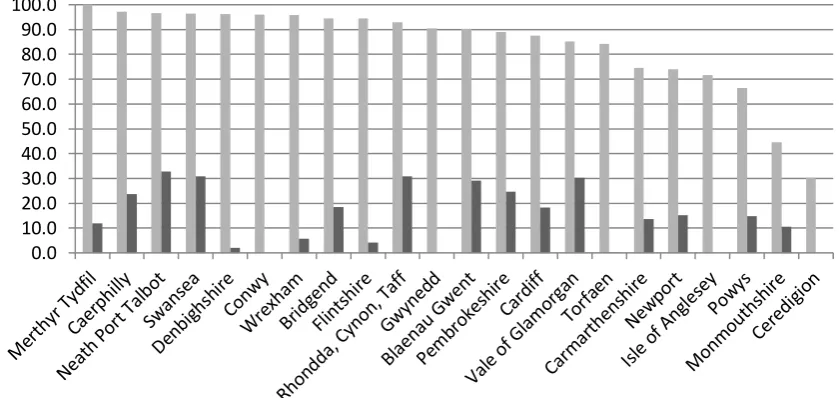
Figure 1. Estimated percentage of N1 and N2 children in maintained schools only (Flexibility Pilot local authorities highlighted) (2010/11, 2011/12, and
2012/13 combined) ... 8
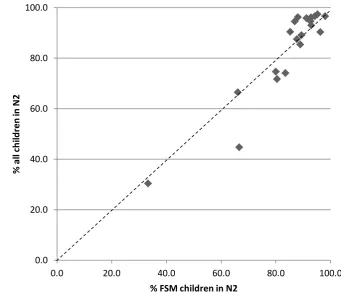
Figure 2. Comparison of Participation in N2 Maintained Classes Between all Children and Children Eligible for Free School Meals (FSM) by Local Authority ... 10
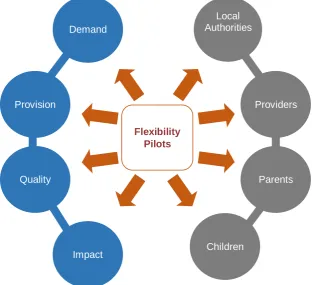
Figure 3. Conceptual Framework for the Evaluation of the Foundation Phase Flexibility Pilots ... 17
Index of Tables
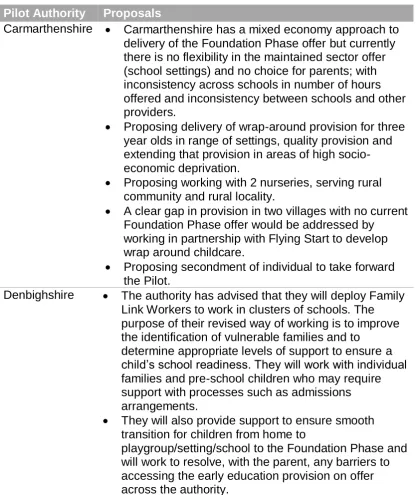
Table 1. Foundation Phase Flexibility Pilot Summary of Proposals ... 14Table 2. Evaluating the Effectiveness of the Foundation Phase Flexibility Pilots ... 19
Table 3. Summary of Evaluation Design and Data Collection ... 25
Index of Boxes
Box 1. Key Points of Newport Flexibility Pilot ... 28Box 2. Key Points of Newport’s Shared Provision ... 37
Box 3. Key Points of Newport’s Unsociable Hours Provision ... 42
Box 4. Key Points of Newport’s 50 Week Provision ... 47
Box 5. Key Points of Neath Port Talbot’s Two-and-a-half-days Week Provision ... 58
Box 6. Key Points of Carmarthenshire’s Ad Hoc Flexible Provision ... 68
Glossary of Acronyms
FSM Free School Meals
HLTA Higher Level Teaching Assistant
MM Mudiad Meithrin
NDNA National Day Nurseries Association
PACEY Professional Association for Childcare and Early Years
PLASC Pupil Level Annual Schools Census
WISERD Wales Institute of Social & Economic Research, Data & Methods
WPPA Wales Pre-school Providers Association
Acknowledgements
The evaluation team would like to thank each of the four local authority
EXECUTIVE SUMMARY
Introduction and Aims of Evaluation
1. Early years education has been a key component of the Welsh Government’s education strategy since 1999. It recognises that early childhood experiences are vitally important in determining children’s long-term development and their later life trajectory. Of particular significance within early years education in Wales has been the introduction of the Foundation Phase curriculum for 3-7 year old children. This was rolled-out in a progressive manner in order to replace Key Stage 1 and full roll-out was achieved by 2011/12.
2. In Wales, children generally enter primary school aged between 3 and 4 years, although they are not legally required to begin school until the term after their fifth birthday (during Reception Year). However, children are entitled to access the Foundation Phase curriculum ahead of mandatory schooling, in the term after their 3rd birthday in either a maintained primary school (Nursery) or in a funded non-maintained setting1. So an important but sometimes overlooked factor within early years education is the access that children have to the Foundation Phase curriculum before they begin compulsory education.
3. In order to ensure that three-year-olds access the Foundation Phase, local authorities are required to provide a minimum of ten free hours of Foundation Phase education per week for all 3 to 4-year-olds. 4. Despite guidelines that encourage providers to offer flexible provision
of the Foundation Phase, it has been suggested that the current way the Foundation Phase is organised and offered to parents in Wales is ‘inflexible’ and may be preventing some children accessing the
Foundation Phase. The prospect of some children not accessing
1
their early years educational entitlement obviously represents a significant issue for the Welsh Government’s early years strategy, and indeed for Welsh education more generally.
5. In Building a Brighter Future: Early Years and Childcare Plan (2013) the Welsh Government set out how it would make early years
Foundation Phase provision more accessible. The ultimate aim of increasing flexibility of provision is to increase participation in the early years of the Foundation Phase.
6. To further these aims in 2013 the Welsh Government established a flexibility pilot scheme, inviting four local authorities to explore ways of increasing flexibility in the provision of the early years of the Foundation Phase. The aims of the Flexibility Pilots were to:
i. Test the flexibility options across the Foundation Phase in the maintained and non-maintained funded settings. ii. Identify issues that may surface for local authorities and
settings as a result of providing or trying to provide greater flexibility.
iii. Consider how those issues can be addressed through low-cost/no cost solutions.
iv. Gain a better understanding of whether increased flexibility makes a difference to parent’s ability to access the
Foundation Phase for their child.
7. The four local authorities which participated in the Foundation Phase Flexibility Pilot scheme represented a cross-section of rural and urban, deprived and non-deprived areas across Wales:
Carmarthenshire
Denbighshire
Neath Port Talbot
Newport
9. The two main aims of the evaluation were:
i. To evaluate how the pilots are being implemented; and ii. To evaluate the effect increased flexibility has on families. 10. The evaluation also had the following research objectives:
Support the pilot local authorities in establishing a baseline of take-up (parents who signal they want to take up a flexible offer) and session attendance (the levels of attendance of children who subsequently attend the sessions).
Assess the effectiveness of the implementation of the pilots.
Identify the barriers and enablers for local authorities in providing greater flexibility.
Examine the additional costs of providing increased flexibility.
Determine the effect of increased flexibility on both parents/carers and their children.
Identify the policy and practice implications of providing
increased flexibility within the Foundation Phase. Methodology
11. The evaluation of the Foundation Phase Flexibility Pilot scheme investigated the demand and the design of the pilot scheme within each local authority (i.e., what the problem or issue was in each local authority that the flexibility pilots hoped to solve); the provision of the flexibility pilot (i.e., how the pilot was actually put into practice within local authorities and settings); the quality of the flexible provision within settings (i.e., the impact, if any, that the flexibility pilot had on pedagogy and the implementation of the Foundation Phase
curriculum); and finally, the evaluation assessed the overall impact of the pilot on settings, parents and children.
Conceptual
12. The evaluation drew upon the following methods:
Interviews with local authorities; teaching and managerial staff;
parents.
Surveys (both paper and e-surveys) of staff and parents.
School visits and classroom observations (to investigate the
impact flexibility may have on the implementation of the Foundation Phase curriculum)
13. In total, researchers visited 26 settings across the four local
authorities. They conducted 40 face-to-face interviews with ‘nursery’ staff; 43 telephone interviews with parents; distributed over 500 paper surveys and sent out supplementary e-surveys, (receiving 52 paper and 31 e-surveys back); observed 19 classes across the four local authorities. On top of this, researchers conducted numerous informal ‘school gate chats’ with parents at the various settings. 14. The findings of the report consider the effect of the pilots on parents,
staff and children.
Key Findings and Recommendations
15. This summary outlines the effects of the pilots on parents, children and settings and the salient issues which pertain to each of these groups. The report also highlights other significant general issues which arose over the course of the research. Generally, the flexibility pilots were found to have worked well and to have helped solve or alleviate the problems they were designed to address across the different local authorities.
Effect on Parents
16. The research found that the forms of flexibility offered generally helped parents’ work/life balance and made their daily routines easier to manage.
easier. Working parents often find it hard to manage the logistics of travelling to work and dropping off and/or picking up children, since working hours very rarely correspond to school/setting opening times/sessions.
18. Equally, non-working parents also often find the traditional format difficult, especially those parents with children of different ages, who spend much of their day travelling back and forth to settings. Many non-working parents stated that the traditional format of only morning or afternoon made it harder to carry out important daily tasks such as shopping, cleaning and care giving.
19. Some form of accessible wrap-around provision would also assist parents with issues such as respite. This need may be particularly acute for certain households, for example for parents of children with disabilities or parents who are also carers. We recommend that the issue of respite, rest and parental mental health should factor into the debate about childcare provision in Wales.
20. The lack of wrap-around provision within maintained nurseries means that many working parents in Wales are often reliant on ‘private’ (i.e. fee-paying) childcare, yet the cost of ‘private’ childcare is almost universally seen as prohibitively expensive by parents. Working parents claimed that they are ‘not being rewarded for working’ because of the amount that childcare costs. The greater flexibility of non-maintained settings that offer both state-funded and privately-funded provision is an obvious choice for parents seeking to access flexible, longer hours and/or wrap-around provision. This too raises the issue of cost, but is also dependent upon the provision of funded non-maintained provision in the local area. We recommend that the Welsh Government continue to research affordable childcare options and to consider the relationship between childcare and early years provision.
21. The cost of wrap-around care can be seen to negate any benefit of receiving ten free hours of Foundation Phase education.
grandparents) for childcare support. For parents who have this support network in place, childcare costs and working full/part time are obviously less of a problem than they are for families who lack these networks. Many of the families who lack these family networks (and were therefore reliant on private childcare) are mobile, middle-class families who have moved to Wales from the rest of the UK or from other parts of Wales to new areas. Significantly, many parents in the research expressed concern about the ‘burden’ they were placing on older relatives and stated they wished they didn’t have to rely on family members for this support.
23. Whilst these informal patterns of care are traditional and therefore normalised in many areas of Wales, they perhaps obscure the extent of the problems in the childcare ‘market’. During the evaluation we spoke to a number of grandparents who stated that their role in childcare was often very difficult and demanding. Crucially, the lack of affordable childcare may be placing a significant strain on older people. We recommend the nature of informal childcare in Wales be explored further by the Welsh Government, for this area may have knock on effects on the well- being of older people.
24. Many parents (particularly working parents) also struggle to find childcare during the school holidays. There is a clear demand for some form of holiday provision. Indeed, during the evaluation it was clear that flexible provision did not just mean how the statutory ten free hours of Foundation Phase education could be provided within each week but also whether an element of the overall amount of free Foundation Phase education could be provided as general childcare during school holidays. We recommend that holiday provision be considered as part of the Welsh Government’s childcare strategy. Effect on Staff and Settings
of flexibility to impact on the implementation of the Foundation Phase curriculum. Of most concern was how some forms of flexible
provision led to mixed timetables and fluctuating pupil numbers. In turn, this meant teachers and teaching assistants were occasionally faced with larger class sizes and ultimately more work (i.e., increased planning and preparation, more complex tracking of children) to ensure that children did not experience curriculum replication or gaps in their education.
26. The success of future flexible provision depends on the ability of the local authority to properly inform and mentor schools and settings about the aims and goals of flexible provision and advise them on how to implement it with minimal impact on the delivery of the Foundation Phase. We recommend that local authorities provide close guidance to schools regarding the implementation of flexible forms of provision.
27. Local authorities should provide more formal guidance or advice to schools regarding how to advertise the availability of flexible
provision to parents. Schools’ sophistication in communicating information to parents varies greatly. The evaluation found that the unevenness in communicating the availability of flexible Foundation Phase provision is likely to have led to uneven levels of uptake. 28. Any future implementation of flexible Foundation Phase education
needs to be assessed against the capacity and staffing levels of schools/settings. Some forms of flexibility have the potential to swell pupil numbers in classrooms and in settings.
Effect on Children
30. A central issue when evaluating the impact of the various forms of flexibility is to consider the impact they have on children. Like their parents, children have complex and varying needs, and their development is contingent upon numerous factors. As our
discussions with educators made clear, different forms of flexibility may impact on different groups of children in different ways. Children may develop at different rates and certain groups of children with specific characteristics or circumstances may benefit more or less from different types of flexible provision. This may depend on locality, socio-economic circumstances, household structure and learning needs: there is unlikely to be any ‘one size fits all’ form of flexibility which benefits every child equally. We recommend that this
consideration be at the centre of any future research into flexible provision.
31. A central issue raised by forms of full-day provision (whether it be wrap-around childcare or full-day Foundation Phase provision) was the impact that increased contact time had on children. The research noted no adverse impact on participating children, and indeed many parents and teachers believed that extra contact time aided
children’s school readiness/development. Nonetheless, there were others (parent and practitioners) who were concerned that full-day provision could have a detrimental impact on children (such as increased fatigue) We recommend that the Welsh Government investigate this issue further and the evidence acquired should help inform future discussions on flexible provision.
32. Many educators stressed the importance of routine in children’s educational and social development. Again, this should be
Further Issues and recommendations
33. A relatively low number of children in Wales (between 5-12%) do not access their statutory ten hours of free early years Foundation Phase education. Although it was beyond the scope of this research to answer why some families do not access their entitlement (it is very hard to research groups who remain ‘outside the system’), given the differing perceptions of the demand for flexible provision observed throughout the study, it is possible that the explanations for this are wide-ranging, including: a lack of local early years Foundation Phase providers; the way free places are offered (such as a lack of
flexibility); a lack of flexibility from employers; a lack of awareness about their entitlement to the statutory ten free hours of Foundation Phase education; or a limited understanding of the educational and social benefits of early years education for children. We recommend that more research is conducted in this area to firstly, accurately measure the precise number of children who do not access their entitlement; and secondly, to investigate why some families don’t take it up.
34. Some educators expressed concerns regarding parental perceptions of early years education. Specifically, they felt that many parents view it as a form of childcare. In future discussions of flexible
provision, the relationship between ‘care’ and ‘education’ needs to be central. For example, what is the difference between quality childcare and Foundation Phase education? Should schools be central to solving the issue of flexibility or does the solution lie in the childcare sector?
35. The evaluation’s parental engagement could not establish any definitive relationship between flexible Foundation Phase provision and access to the labour market. However, some non-working
36. Parents spoken to during the study were generally made aware of their entitlement by the setting or through word of mouth. Very often, receiving this information about entitlement is contingent on already being part of a social network of parents. That is, those ‘outside the system’ will continue to be missed out. There is clearly a need for more systematic and ultimately more effective communication of childcare and Foundation Phase education provision to parents in Wales (e.g., educational entitlement, childcare entitlement,
information about the benefits of early years education and so on). Whilst The Family Information Service in each local authority currently plays a central role here, there are numerous other
strategies that could be used to communicate this vital information to parents, including: a dedicated centralised (i.e. national) website; television, print and radio advertising campaigns; and the use of social media.
37. In any future roll out of flexible provision there is a need to clarify the strategic aim of increased flexibility and the logic behind this strategy. For example, is greater flexibility designed to help working parents or is it to help workless parents access the employment market?
Flexible provision was largely intended to increase participation of children in the Foundation Phase, but could the form of that flexible provision be designed to improve children’s educational and social development too? And lastly, how can flexible provision support the broader organisation of educational provision, such as encouraging participation in local schools or to improve Welsh language provision in the early years? These are varied goals and whilst they may not necessarily conflict with each other, they may not always be
complementary either.
38. Once the overall aim of increased flexibility is clarified, it is also important that this is clearly communicated to local authorities, schools/settings and parents.
1
Introduction
1.1. The Welsh Government has embarked on a series of educational reforms in recent years, within which, particular attention has been focused on early years education2. The central importance afforded to early years 1 within Welsh education strategy is highlighted inthe cross department ‘Building a Brighter Future’ strategy (Welsh Government, 2013). This policy document notes that there is
“widespread agreement that early childhood experiences are crucially important for children’s long term development and their
achievements in later life. As a consequence, the early years are the foundation on which society depends for its future prosperity and progress” (Welsh Government, 2013:6).
1.2. Of particular significance within early years education in Wales has been the introduction of the flagship Foundation Phase curriculum for 3-7 year - old - children. The Foundation Phase marks a radical departure from the more formal Key Stage 1 national curriculum that it replaced.
The Current Organisation of Early Education in Wales
1.3. An important but overlooked factor within the success of early years education is the access that children have to the Foundation Phase early education entitlement/places for 3 and 4 year-olds before they begin compulsory education. In Wales, children generally enter primary school between the ages of 3 and 4, although they are not legally required to begin school until their fifth birthday (when they would enter Reception).
1.4. The ‘Building a Brighter Future’ (Welsh Government, 2013) strategy notes the importance of educational interventions before the age of 5
2 Defined as ‘the period of life from pre-birth to the end of the Foundation Phase or 0-7
(i.e., before compulsory schooling) (Building a Brighter Future, 2013:7) and consequently identifies quality early education as a central pillar of the early years strategy in Wales. The document states that these early interventions are particularly important for those children from disadvantaged backgrounds (Building a Brighter Future, 2013:11). Children are therefore encouraged to begin the Foundation Phase at age 3 in their early years settings (before they begin formal education) because it is understood to be beneficial to their cognitive development and socialisation.
1.5. Relatedly, as part of a holistic commitment to early years
interventions, the Welsh government has also committed to improving early years childcare3 (i.e. pre-education provision), through
initiatives such as Flying Start, an initiative which provides 12.5 hours per week of free childcare to children aged 2 -3 years old in some of the most disadvantaged communities in Wales.
1.6. In order to ensure that three year olds access the Foundation Phase, the Welsh Government requires local authorities to provide secure, part-time nursery provision for all three year olds from the term following their third birthday. All children in Wales are entitled to a minimum of ten free hours of early education per week4. This place can either be taken up in the maintained (i.e. State) sector through nurseries attached to primary schools or in nursery schools, or in approved childcare providers in the non-maintained sector5.
3
For a good overview see: http://www.jrf.org.uk/sites/files/jrf/end-child-poverty-wales-summary.pdf
4
Although some local authorities offer more generous provision than others. This unevenness of provision will be a recurring theme throughout this report.
5
1.7. In the maintained sector, the early education entitlement is generally delivered through the ‘traditional’ format of two hours sessions (sometimes 2.5 hours) in either the morning (9am to 11/11.30am) or afternoon (1pm to 3/3.30pm). Most local authorities have parameters in place regarding the provision of pre-school education, for example maintained settings generally require children to attend a minimum of four or five sessions per week in order to access their free
entitlement; children are generally not allowed to access their ten free hours through full day provision, and similarly state settings do not generally provide wrap-around child care (although there is significant variation between local authorities). In the non-maintained sector, these parameters are generally more relaxed and depending on the setting children may stay all day. In day nurseries6 wrap-around care is widely available.
1.8. This is a very general picture of the organisation of the early education entitlement. In reality, there is significant variation in the provision of early years educational provision across Wales between different education authorities.
The Problem: Why Do We Need Flexibility?
1.9. Although the Welsh Government has advised local authorities to ensure that pre-school education is organised flexibly, it has been suggested that the current way the Foundation Phase is organised and offered to parents in Wales is ‘inflexible’ and may therefore be a barrier to the uptake of free places (Welsh Government, 2013: 35). For example, two online petitions7 organised by parents in and around Cardiff expressed dissatisfaction with the accessibility of free early years education.
6
A private childcare facility which normally looks after children from birth to 5 years old.
7 http://www.gopetition.com/petitions/make-early-years-education-more-accessible.html and
1.10. As the following comments indicate, many of these parents point towards the difficulties of taking up the free entitlement if they are already in employment – either because they are employed more than 2.5 hours a day, or because their hours of work do not coincide with the start and end times of nursery provision. They tend to share the view that greater flexibility in nursery provision is necessary:
“As a full time working mother, I will be unable to send my son
to state funded nursery when he is 3. The cost of paying a
private nursery to provide wrap around care and transport to
school will make it financially unviable. I also pay for full time
care for my 11 month old daughter. The WAG needs to offer more help for working parents.” (Comment by parent from
online petition in Cardiff)
“The free entitlement needs to be far more flexible.” (Comment
by parent from online petition in Cardiff)
“Due to the lack of flexibility in the 'free' nursery places
available in Cardiff, we (as working parents) will probably have
to keep our son in his current nursery rather than him being
able to go to the nursery in the school in which he will
eventually be a pupil. It is simply unfair that only parents who
do not work and are able to pick up/ drop off their children after
their 2.5 hr daily sessions can benefit from the 'free' places. I
am originally from the Rhondda valley and if I still lived here
my son would be entitled to a full time place in a state nursery
from the age of 3 (as I was as a child). In Cornwall (where my
husbands) family live, the 15 free hours can be split as they
like i.e. full day sessions for 2 or 3 days a week. Surely Cardiff council needs to develop a more flexible system?” (Comment
“I believe that through my taxes I am paying for this service
which is intended for my family, but as working parents we can't access it.” (Comment by parent from online petition in
Cardiff)
“We need more flexibility, in order to give working Mums better
choices and children more security. To not offer this the same
as England, just makes us seem uncompromising and
practically Victorian in our attitude to working families.
Everyone wants to tackle the people on benefit and put more
pressure, through rising fuel prices, redundancies, etc., on working families but no one wants to do anything to help!”
(Comment by parent from online petition in Cardiff)
“Currently an unhelpful 2.5 hrs a day 5 times a week – so not
easily accessible to working parents and their families. It would
be easier not to work and this isn't the right attitude. How are
parents supposed to work when they have to drop their
children off certain times and then go back 2.5 hrs later. Half a day’s work has been lost.” (Comment by parent from online
petition in Cardiff)
1.11. These parental concerns are recognised and enshrined in the Building a Brighter Future document, ” (Welsh Government, 2013) which, referring to the aforementioned ‘traditional format’, states that “parents tell us that this approach can be a barrier to uptake” (Welsh Government, 2013:35).
1.13. Children not accessing their pre-school educational entitlement obviously represent a challenge for the Welsh Government in fully implementing its early years strategy.
Why Might Parents Withhold Their Children From Pre-school
Education?
1.14. There is very little systematic research or evidence in Wales about the attitudes and decisions of parents in taking up free Foundation Phase places for their ‘nursery-aged’ children generally, let alone about the need for greater flexibility in that provision. That is, we do not know for sure why parents withhold children from pre-school education. A recent study for the Department for Education (in
England) investigated the take-up of free places for three year olds. It found that parents’ preferences and attitudes were often more
significant than the availability of flexible places (Ipsos MORI, 2012). However, the study also found that for ‘partial users’ – parents accessing some but not all 15 free hours – the lack of flexibility in its provision was a key obstacle in taking up the full free entitlement. The study also pointed towards the rather “haphazard” way in which
parents were informed of their entitlement, an issue of particular concern for the most marginalised and deprived families.
Uptake of Pre-school Education in Wales by Local Authority: Who Is
Missing Out On Their Entitlement?
1.16. Although there are no published national figures for the number of three to four year olds participating in the Foundation Phase, it is possible to estimate the number of ‘nursery-age’8
children who are in the maintained sector from the Pupil Level Annual Schools Census (PLASC). Combining data for 2010/11, 2011/12, and 2012/13 (to remove year-on-year fluctuations in the number of children) we can study the number of children in N19 and N210. From this it is possible to estimate that 88.5% of ‘nursery-age’ children attended a Nursery school/class in the maintained sector (it is not possible from this data to know how many hours a day or week a child is in attendance, but we know that approximately three-quarters of those attending
Nursery are part-time). In addition to this estimate, a 2009 report Childcare and Early Years Survey Wales (Welsh Government, 2009) stated that 95% of eligible 3-4 year olds were in early years
education, although this does not specify whether this is in the maintained or non-maintained sector (and accordingly, whether they are therefore guaranteed to be accessing the Foundation Phase curriculum). A realistic figure for children accessing their early years entitlement will therefore probably fall between 88-95%.
1.17. These figures appear to vary dramatically by local authority across Wales (Figure 1), reflecting both differences in the take-up of free places in the Foundation Phase prior to compulsory school age (Reception Year) and differences in the availability of such places in the maintained sector and the dependence on funded places in the
8 We refer to ‘nursery age’ children throughout this report as all children who are aged three
or four years of age but who are not old enough to enter Reception classes in a primary school.
9
Children entitled to receive education in N1 will be those whose third birthday is after 31st August but before 31st March of the corresponding school year – often referred to as ‘rising threes’.
10
non-maintained sector. There are also significant variations in the number and proportion of children who enter a maintained nursery class/setting immediately following their third birthday (as indicated by the figures for N1 in Figure 1)11.
[image:24.595.93.513.436.635.2]1.18. For comparison, it is estimated that only 5% of children in England, where they are entitled to 15 hours free education a week and where there already exists some degree of flexibility in provision, do not take up their free place. And according to estimates from the Childcare and Early Years Survey of Parents 2010 (available in England only) 68% of parents using the free entitlement used the full 15 hours or more and 32% used less than 15 hours.
Figure 1. Estimated percentage of N1 and N2 children in maintained
schools only (Flexibility Pilot local authorities highlighted) (2010/11,
2011/12, and 2012/13 combined)
N1 – ‘Rising Threes’: children aged 3 years old after 31st
August but before 31st March of corresponding school year.
N2 – Children aged 3 years old at 31st August of corresponding school year but not old enough to enter Reception classes.
11
We would expect the proportion of N1 children to be approximately 33% if all eligible children took a place in the maintained sector.
0.0 10.0 20.0 30.0 40.0 50.0 60.0 70.0 80.0 90.0 100.0
Flexible Provision and Disadvantaged Families
1.19. Also of critical importance to the Welsh Government and the aims of Building a Brighter Future is the extent to which greater flexibility in the provision of free Foundation Phase places for ‘nursery-aged’ children could increase the participation of socio-economically disadvantaged families.
1.20. Perhaps reassuringly, analysis of PLASC data suggest that children who are eligible for free school meals (FSM) (as measured from when they were in Reception, since the recording of information about eligibility for free school meals in nursery is very limited) appear to be just as likely to attend Nursery schools/classes in the
maintained sector as children who are not eligible for free school meals – we estimate 88.8% of FSM children attended a maintained Nursery compared to 88.5% overall. That is, there is no ostensible correlation between a lack of uptake and deprivation.
1.21. Since children from more socio-economically advantaged families are more likely to be able to access private pre-school childcare we perhaps ought to expect this proportion to be higher. Furthermore, more detailed analysis of the participation of FSM children in
maintained Nursery settings might suggest that there are important variations in the take-up of such places by local authority (see Figure 2)12. For example, in Newport and Monmouthshire, children eligible for free school meals are more likely to attend a maintained nursery setting than non-eligible children.
1.22. Some of the differences in the take-up of free Foundation Phase places by socio-economically disadvantaged families may be explained by the relative levels of take-up overall – for example, in
12
Newport fewer families overall take up their free place entitlement in a maintained setting. It may also be the case that there are differences in the take-up of free places in the funded non-maintained sector, for which there is currently no published national data available.
1.23. It is also not possible from the PLASC data to see how much of the 10-hour free entitlement different groups of families use.
[image:26.595.102.444.386.683.2]Nevertheless, this is an important consideration given the emphasis placed on using free early years education to help mitigate the impact of poverty and other socio-economic factors on school readiness and educational achievement.
Figure 2. Comparison of Participation in N2 Maintained Classes
Between all Children and Children Eligible for Free School Meals (FSM)
by Local Authority
N2 – Children aged 3 years old at 31st August of corresponding school year but not old enough to enter Reception classes.
0.0 20.0 40.0 60.0 80.0 100.0
0.0 20.0 40.0 60.0 80.0 100.0
%
a
ll
ch
ild
ren
in
N
2
The Development of Flexibility Within Welsh Education Strategy and
the Development of the Pilots
1.24. In response to the concerns about children and parents not accessing their pre-school educational entitlement, the Building a Brighter
Future document identifies increased flexibility of pre-school
education provision as a central aim of future early years strategy in Wales.
1.25. The document states “our ambition is for our universal Foundation Phase offer to be leading the way internationally in terms of the number of free hours of early education provided, flexibility of the offer, the quality of the curriculum and outcomes for our children”. It continues: “Looking to the future… we will improve the flexibility, accessibility and affordability of early education and childcare and work with the sector to address the key concerns of parents and providers” (Welsh Government, 2013:33) and “we will consider options to improve the flexibility of provision; produce updated guidance for local authorities to support them in improving the flexibility of the Foundation Phase offer to parents” (Welsh Government, 2013:35-36).
1.26. The overarching strategic aim of increased flexibility is to increase participation in the early years of the Foundation Phase.
Putting these aims into practice, in 2013 the Welsh Government decided to
The Local Authority Pilot Schemes
1.27. The Welsh Assembly Government invited local authorities to apply to participate in the Pilot scheme, allowing each Local Authority the freedom to design and deliver their own versions of flexible provision based on local demand and local issues. The four participating Local Authorities are:
Carmarthenshire
Denbighshire
Neath Port Talbot
Newport
1.28. Each local authority was awarded up to £100,000 for the period 1 January 2014 to 31 August 2015 to facilitate the implementation of their respective initiatives to increase the flexibility of the provision of the Foundation Phase. The aims of the awards were to:
test the flexibility options across the Foundation Phase in the
maintained and non-maintained funded settings;
identify issues that may surface for local authorities and settings as a result of providing or trying to provide greater flexibility;
consider how those issues can be addressed through low-cost/no cost solutions;
gain a better understanding of whether increased flexibility makes a difference to parent’s ability to access the Foundation Phase for their child; and
work with the appointed formal evaluation team.
1.29. In addition to these aims, local authorities were also asked to meet the following two criteria:
The Pilot will aim to cover provision for 3 and 4 year olds in rural, urban and Communities First areas while meeting the minimum requirements of the Foundation Phase.
1.30. On commencement of the award, each local authority was asked by the Welsh Government to complete a questionnaire. Their responses to the questionnaire are presented in Appendix A, which provides a snapshot of the typical forms of provision and uptake of nursery places in each participating region prior to the implementation of the flexibility Pilot. As stated above, the provision of pre-school
education across Wales is uneven. As a consequence, each
participating local authority had a different interpretation of the aim of the flexibility Pilots reflecting differences in their current provision and differences in the kinds of ‘issues’ that they hoped the Pilots would address. The form of flexibility proposed by each local authority are summarised in Table 1.
1.31. The structure of the remainder of this report is organised in the following way. Chapter 2 provides detail about the evaluation,
Table 1. Foundation Phase Flexibility Pilot Summary of Proposals
Pilot Authority Proposals
Carmarthenshire Carmarthenshire has a mixed economy approach to delivery of the Foundation Phase offer but currently there is no flexibility in the maintained sector offer (school settings) and no choice for parents; with inconsistency across schools in number of hours offered and inconsistency between schools and other providers.
Proposing delivery of wrap-around provision for three year olds in range of settings, quality provision and extending that provision in areas of high socio-economic deprivation.
Proposing working with 2 nurseries, serving rural community and rural locality.
A clear gap in provision in two villages with no current Foundation Phase offer would be addressed by working in partnership with Flying Start to develop wrap around childcare.
Proposing secondment of individual to take forward the Pilot.
Denbighshire The authority has advised that they will deploy Family Link Workers to work in clusters of schools. The purpose of their revised way of working is to improve the identification of vulnerable families and to
determine appropriate levels of support to ensure a child’s school readiness. They will work with individual families and pre-school children who may require support with processes such as admissions arrangements.
They will also provide support to ensure smooth transition for children from home to
Neath Port Talbot
Neath Port Talbot proposal is to continue to offer the Foundation Phase in the local authority maintained provision (schools) only, but to offer a more flexible provision of the five sessions of nursery provision a week within a code of conduct.
Neath Port Talbot intend to provide the Foundation Phase flexibility offer across a good breakdown / range of schools, making good use of data around Free School Meals (FSM), Welsh medium provision and possible demand, Flying Start, social deprivation, ethnic minority populations.
This model will test the impact on the non-maintained sector. Evaluation of maintained sector approach only will test which school/s the flexibility of offer will make the greatest/least difference to across this diverse breakdown of school provision, e.g. higher or lower FSM.
Newport Newport proposed a non-maintained sector approach only with:
a stretching and interesting 39 weeks or up to 50 weeks Foundation Phase offer;
at up to 2 settings (to address bilingual and Welsh medium sessional demand); and
catering for atypical hours.
2
Evaluation of the Foundation Phase Flexibility Pilots
Aims and Objectives of the Evaluation
2.1 The two main aims of the evaluation, as set out in the original tender document, are:
a) To evaluate how the Pilots are being implemented; and b) To evaluate the effect increased flexibility has on families.
2.2 Within these aims the evaluation will address six specific objectives as set out in the tender specification:
1. Support the Pilot local authorities in establishing a baseline of take-up (parents who signal they want to take take-up a flexible offer) and session attendance (the levels of attendance of children who subsequently attend the sessions)
2. Assess the effectiveness of the implementation of the Pilots 3. Identify the barriers and enablers for local authorities in providing greater flexibility
4. Examine the additional costs of providing increased flexibility 5. Determine the effect of increased flexibility on both parents/carers and their children
6. Identify the policy and practice implications of providing increased flexibility within the Foundation Phase
2.3 This is largely a process evaluation – looking at how flexibility of provision is being offered and how parents are taking it up. In doing so, the evaluation will also examine an array of issues and questions, most of which are posed above, about the interrelationships between four key elements of flexible access and four main groups of
the delivery of the Foundation Phase), and impact of flexible access (for local authorities, providers (including the whole pre-school childcare market), parents and children).
Figure 3. Conceptual Framework for the Evaluation of the Foundation
Phase Flexibility Pilots
2.4 Using this conceptual framework (Figure 3) we begin to assess the effectiveness of the implementation of the Pilots in terms of provision, demand, quality and impact, and from the four perspectives of local authorities, providers, parents and children. This can be usefully summarised in Table 2.
2.5 Although the focus of this evaluation is now on processes rather than outcomes, throughout the report we are keen to identify examples of best practice, both at the local authority level and provider level. We
Flexibility Pilots Demand
Provision
Impact Quality
Local Authorities
Providers
Children
Table 2. Evaluating the Effectiveness of the Foundation Phase
Flexibility Pilots
Local Authorities Providers Parents & Children
Demand
How demand for flexible access is assessed
How demand for flexible access is understood (i.e. what do local authorities perceive the benefits to parents to be)
How parents are consulted on flexible access
How demand for flexible access is interpreted and understood by providers
How enthusiastic and prepared are providers to offer flexible access
What forms of flexible access do parents (a) need and (b) desire
Kinds or types of flexible access required
How demand for flexible access relates to other factors for choosing provision
Provision
How assessment of needs are used to develop provision
How flexible access is communicated to parents
What local authority support and guidance is available to
providers
How flexible access is communicated to parents
How flexible access is designed and
organised
What are the challenges and limitations of providing flexible access
What parents think about the choice of provision overall and flexible access specifically
Is more flexible access required
What prevents take-up of new flexible access
Awareness of parents about any arrangements for flexible access
Quality
What support is given to providers to implement flexible access alongside the delivery of Foundation Phase
How flexible access is
Delivery of the Foundation Phase for nursery-aged children
Quality of Foundation Phase experience for nursery-aged children
Impact
Increase in take-up of free places in the Foundation Phase
Earlier take-up of free places in the
Foundation Phase
Cost of assessing needs of flexible access
Changes in admissions procedures and
Earlier entry to maintained schools
Economic benefits for non-maintained sector
Financial and
organisational costs of providing flexible access
Satisfaction of provision amongst parents
Access to employment for parents
oversubscription criteria
Design and Methodology
2.6 The evaluation of the flexibility Pilot schemes investigated the demand and the design of the Pilot scheme within each local
authority (i.e., what the problem or issue was in each local authority that the flexibility Pilots were hoped to solve); the provision of the flexibility Pilot (i.e., how the Pilot was actually put into practice within local authorities and settings); the quality of the flexible provision within settings (i.e., the impact, if any, that the flexibility Pilot had on pedagogy and the implementation of the Foundation Phase
curriculum); and finally, the evaluation assessed the possible impact of the Pilot on settings, parents and children.
2.7 The evaluation process began with consultations and a series of scoping interviews (seven in total) with the local authority
representatives responsible for organising and rolling out the flexible Pilots.
2.8 This first stage of the research served to clarify the wider local context and the differing demands within each area and what
‘flexibility’ was hoped to address in each region. The research team conducted one scoping interview each with local authority educational representatives in Newport and Neath Port Talbot; three in
Denbighshire and two in Carmarthenshire.
2.9 After this initial scoping exercise the final design of the evaluation was decided. This involved two main strands:
Case study visits
2.10 In each Pilot local authority a number of case study settings were selected that were participating in the Flexibility Pilot scheme, 26 in total. Since the design of each Flexibility Pilot scheme differed in each local authority no single sampling strategy was appropriate. In principle, however, case study settings were selected on the basis of the greatest level of demand amongst parents for flexible places. This was to ensure that the evaluation could observe the greatest potential impact of flexible provision within the resource constraints of the evaluation.
2.11 In addition, case study settings were also selected, where
appropriate, on the basis of low or no demand for flexible provision. The main reason for the involvement of these settings was so the evaluation could consider why there was limited demand for flexible places despite the potential for this.
2.12 Lastly, some case study settings were selected because they were not involved in the Pilots but who were very similar schools or settings to those involved (i.e. they were located nearby and served very similar communities). A breakdown of case study
schools/settings is provided in Table 3.
2.13 Case study visits were designed to assess the impact of the Flexible Pilots on staff, teaching and the setting more generally, and the impact of the flexible initiatives on children and their education. Researchers interviewed and spoke to head teachers, teachers and teaching assistants (i.e. nursery practitioners) involved in the Flexible Pilots; 40 practitioner interviews in total.
observation of groups/classes over at least one session (usually one hour). This was used to gauge how well the Foundation Phase was being delivered in the case study settings.
2.15 In addition, this involved the systematic observation of involvement and wellbeing amongst pupils using the Leuven scale13, particularly paying close attention to those children participating in the Flexibility Pilots. Appendix C contains the results of these observations for each case study school/setting,
2.16 For non-participating case study settings the evaluation team
interviewed staff about their views about flexible provision (including why they had not participated, where applicable) but did not observe pupils.
2.17 In Newport, researchers visited seven settings in total: six
participating settings and one non-participating setting. They also conducted telephone interviews with managers at an additional two non-participating settings. Researchers conducted eleven formal interviews in total, during which they spoke to nine setting managers and five nursery lead practitioners (some interviews throughout the evaluation were conducted with the manager/HT and NLP
simultaneously, hence the odd number). Over the course of the case study visits in Newport, researchers observed nine different nursery classes.
2.18 In Neath Port Talbot, researchers visited four settings in total: including three participating settings and one non-participating
13
The Leuven scale is an educational research tool developed in Belgium to aid classroom observation and assessment. “The tool focuses on two central indicators of quality early years provision: children’s ‘well-being’ and ‘involvement’. Well-being refers to feeling at ease, being spontaneous and free of emotional tensions and is crucial to good ‘mental health’. Well-being is linked to self-confidence, a good degree of self-esteem and resilience. Involvement refers to being intensely engaged in activities and is considered to be a
setting. Researchers completed a total of seven formal interviews, speaking to four head teachers and five nursery lead practitioners. Researchers observed pupils in six different nursery classes.
2.19 In Carmarthenshire, researchers visited nine settings in total: five participating settings and four participating settings. Of the non-participating settings, two were in the maintained sector and two were in the non-maintained sector. The team conducted eleven formal interviews in total, speaking to seven head teachers and managers and four lead nursery practitioners. Researchers observed pupils in five different nursery classes.
2.20 In Denbighshire case study settings were not used. Instead the research team ‘shadowed’ family link workers during their day-to-day role, both in schools and communities. The research team also spoke to school staff, parents and families associated and engaged with the family link workers. The team also observed the linked teachers during their work in non-maintained settings, interviewed the linked teachers and spoke to the staff at the settings.
2.21 This engagement with local authorities and settings was inevitably a recursive process, and over the course of the evaluation researchers were in regular contact with the respective local authorities and participating schools/settings whenever clarification or additional information was needed.
Parental engagement
the school day. Parents were asked to complete the survey and return to the research team or the school (using pre-paid envelopes where necessary). Over 500 surveys in total were distributed this way, and 52 completed survey responses were received back (approx. 10% response rate)14.
2.23 Second, these paper-based surveys were then supplemented by an electronic web-based survey (or e-survey). The link to the survey was distributed by the schools/settings to parents via e-mail, text message and other social media. The evaluation received 31 valid responses to this e-survey. The results of this e-survey are presented in
Appendix B.
2.24 Third, the research team conducted 43 telephone interviews with parents who were using or who had previously used the Flexibility Pilots in Newport, Neath Port Talbot and Carmarthenshire15. The local authorities obtained the contact details and consent for these parents to be contacted. In total 43 telephone interviews with parents were conducted.
2.25 In addition to these more formal forms of parental engagement, the research team also carried out numerous ‘school gate chats’ with parents about the Flexibility Pilots during the case study visits.
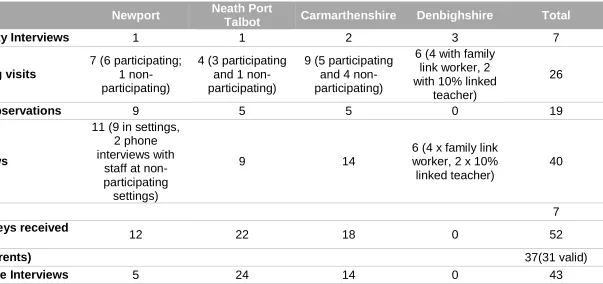
2.26 A full breakdown of the research process is included in Table 3.
14
This response rate of ten percent is the typical rate expected from survey research with parents. It is directly comparable to a larger scale study undertaken in England (Smith et al., 2009).
15
Table 3. Summary of Evaluation Design and Data Collection
Newport Neath Port
Talbot Carmarthenshire Denbighshire Total
Local Authority Interviews 1 1 2 3 7
School/setting visits
7 (6 participating; 1 non-participating)
4 (3 participating and 1 non-participating)
9 (5 participating and 4 non-participating)
6 (4 with family link worker, 2 with 10% linked
teacher)
26
Classroom Observations 9 5 5 0 19
Staff Interviews
11 (9 in settings, 2 phone interviews with
staff at non-participating
settings)
9 14
6 (4 x family link worker, 2 x 10% linked teacher)
40
Staff e-survey 7
Parental Surveys received
(Paper) 12 22 18 0 52
E-surveys (parents) 37(31 valid)
3
Evaluation of Newport Flexibility Pilot
Local Demand and Design
3.1 Newport has a well -developed system of nursery provision across the maintained and non-maintained sector. Currently, all maintained
primary schools in Newport have on site nursery provision (and if not,
they will have this provision in place by 2017).
3.2 Historically, demand for pre-school education outstrips supply in Newport and the non-maintained sector has traditionally helped out. If
parents cannot get a place in the maintained setting of their choice then the local authority’s Family Information Service signposts them
to local non-maintained settings where they can access their ten free
hours entitlement. The non-maintained sector therefore plays a
central role in assisting parents who cannot get a place in a
maintained nursery.
3.3 Maintained nursery settings in Newport generally offer the ‘traditional’
provision of mornings (9-12) or afternoon (1-3) sessions, although the
precise form of the provision differs from school-to-school based on
their capacity and whether they have one or two Nursery classes.
Children in Newport cannot access their provision by doing mornings
and afternoons in the same day (as implemented in the Neath Port
Talbot Pilot). Moreover, children in maintained sector nurseries
currently have to do a minimum of five sessions in order to access their entitlement (i.e., children are not allowed to be ‘part time’16). This
represents an ‘all-or-nothing’ approach.
16
3.4 In contrast, the non-maintained sector provides wrap-around care, and may take children all day17. The non-maintained sector also
allows parents to take a minimum of three sessions a week, allowing
children to attend for just part of the working week.
3.5 In Newport, the explicit aim of the Flexibility Pilot was to help working parents. Given the significant range of existing pre-school educational
options for parents in Newport, particularly in the funded
non-maintained sector, the introduction of the Flexibility Pilot must
therefore be seen as an extension of flexibility within the existing
system, rather than a radical overhaul.
3.6 The Newport ‘Early Years Board’ (including representatives from
maintained and non-maintained sector) met to discuss the concept of
flexible provision (e.g. demand and feasibility). After consultations with schools, the Local authority’s ‘flexibility Pilot sub group’ designed
three different types of flexible provision: (i) shared provision; (ii)
unsociable hours, and (iii) 50 week provision. Each different form of
flexibility was tailored to respond to different issues faced by certain
sectors of local parents.
3.7 During these initial consultations, the maintained sector
representatives decided that they would prefer to maintain the status
quo and not participate in the Flexibility Pilot. This led to the Flexibility
Pilot being offered only in funded non-maintained settings18.
3.8 Following this, the local authority then ran drop-in discussions and information days for interested non-maintained settings, who then
17
The family information service stated that they publicise non-maintained and maintained settings equally to parents because of their awareness that working parents may require the wrap around provision offered by the non-maintained sector.
18 The payment system works as follows. Parents pay for their children’s nursery (normally
3-5 full day sessions). The nursery then receives funding from the local authority to cover the ten free hours that children are legally entitled to. The nursery then refunds parents the price of their ten free hours from their bill at the end of the month. Within the
submitted bids to implement the Pilot. Newport’s ‘prescribed’ system
offering settings the choice of implementing three pre-arranged types
of flexibility differs markedly from the other local authorities involved
with the Pilot.
3.9 All settings that agreed to participate in the Newport Pilot had to offer
shared provision as a minimum, and may then offer parents one or
both of unsociable hours and/or 50 hour provision. The funding for
settings increased with each additional type of provision offered.
Box 1. Key Points of Newport Flexibility Pilot
Flexible provision only rolled out in non-maintained sector.
‘Prescribed’ types of flexibility offered to settings (i.e. generally
led/decided upon by LEA rather than settings).
Three types of flexibility offered: ‘shared provision’; ‘unsociable hours’ and ’50 week provision’.
Settings can offer all three types of provision but have to offer shared provision in order to be in the Pilot (i.e. to access the
funding), and can then offer one or both of the additional
schemes.
Shared Provision
Demand
3.10 The main flexible ‘offer’ proposed by Newport local authority was
shared provision, a scheme where children could access their ten
hours entitlement between two different settings (with the proviso that
they have to choose a minimum of two days in each setting).
wrap-around care within the maintained sector, coupled with fractional
employment amongst parents (mainly mothers). In other words,
parents needed wrap-around care in more than one locality. For
example, a parent may want wrap-around care on the days they were
in work (locality X) and then some form of provision on the other days
of the week, near where they lived (locality Y).
3.12 Local nurseries (maintained and non-maintained) only offer mornings
or afternoon provision, (i.e., with no-around care, or
wrap-around care which does not last long enough for working parents) so
parents would have to arrange for someone to look after the children
after they finish Nursery or take their children to a non-maintained
day Nursery that does offer extended wrap around provision. On days
when parents are not working, and are therefore able to pick up the
child after the morning session (or take for an afternoon session), it is
unlikely that the parent will want the child to spend the whole day in a
non-maintained nursery (or pay for a full-day). On these days when
they can manage pick up/drop off, parents would instead prefer to
utilise a local nursery (without wrap around provision). This has an
additional benefit of helping to socialise their child with children who
are likely to attend the same school at age 4/5 years.
3.13 This issue is more prominent amongst working parents (particularly those travelling to work outside the local area), those working part
time, and those who cannot rely on local or family connections for
childcare.
3.14 Prior to the (formal) introduction of shared provision, parents could not access their ten hours free entitlement across multiple settings,
so parents in this situation would not be able to get a refund/financial
help towards using non-maintained day care nurseries. Moreover, the
existence of necessary limits on provision (such as specifying that a
child has to attend a Nursery for a minimum amount of days or hours
means that parents are unable to put their children in their local
maintained Nursery on the days when they were off work. These
parameters could also mean that parents are likely to keep their
children out of the non-maintained Nursery on the days they are not
working, thereby reducing the amount of time their children could
access the Foundation Phase curriculum.
3.15 Shared provision thus became the central pillar of the Flexibility Pilot because of a perceived demand in the local authority. Apparently
parents had regularly requested that Nurseries offer this option and
indeed it had been implemented on an ad hoc basis previously. The
Flexibility Pilot helped to formalise this.
Provision
3.16 Under shared provision, parents and children in Newport could
access their ten hours entitlement across multiple settings. As well as
being able to access their entitlement across different settings and
locations within Newport, children could access shared provision in
settings in the neighbouring local authorities of Caerphilly,
Monmouthshire and Torfaen – all part of the South East Regional
Consortium. However, this reciprocal arrangement was not available
in in Cardiff, which belongs to a different consortium (Central South
Joint Education Service)
3.17 This form of flexibility had multiple positive impacts. First, by allowing entitlement to be taken across multiple settings, parents could now
access a financial benefit previously unavailable to them. Second,
formalising the entitlement across multiple settings meant that parents could now always be able to get their children in the ‘local Nursery’ as well as a setting near where they worked.
3.19 Finally, the shared provision encourages parents to take their child to Nursery on the days that they were not working (previously they may
have kept the child at home) and therefore encouraged greater
uptake of the Foundation Phase since children would have attended
more sessions across the week.
3.20 The children who participated in the shared provision overwhelmingly shared provision between sessional nurseries (i.e., those which
mornings or afternoon provision only) and day nurseries (i.e. with full
day wrap around provision). Children were generally not found
sharing provision across two full-day settings.
3.21 Parents were informed of the shared provision scheme by the settings themselves through the traditional lines of communication (newsletters and informal ‘school gate chat’). Nonetheless, some
parents surveyed stated they were not aware of the Flexible Pilot,
suggesting a need for more systematic (or different forms of) publicity
for the provision.
3.22 Settings also reported that the initial implementation of shared
provision was disorganised, with little communication between
settings and little supervision offered by the local authority. Some
parents spoken to similarly suggested that the settings involved did
not seem to be in communication with one another. Staff, however,
claimed that these teething problems had since been resolved, and
that the scheme began to run smoothly.
3.23 The settings now have termly meetings with local authority
representatives regarding the scheme and managers from the shared
provision settings meet each term to discuss the development of their