City, University of London Institutional Repository
Citation
:
Abbas, Z., MacFarlane, A. ORCID: 0000-0002-8057-0737 and Robinson, L. ORCID: 0000-0001-5202-8206 (2017). Use of Mobile Technologies by Law Students in the Law Library: an Exploratory Study. Legal Information Management, 17(3), pp. 180-189. doi: 10.1017/s1472669617000354This is the accepted version of the paper.
This version of the publication may differ from the final published
version.
Permanent repository link:
http://openaccess.city.ac.uk/id/eprint/22995/Link to published version
:
http://dx.doi.org/10.1017/s1472669617000354Copyright and reuse:
City Research Online aims to make research
outputs of City, University of London available to a wider audience.
Copyright and Moral Rights remain with the author(s) and/or copyright
holders. URLs from City Research Online may be freely distributed and
linked to.
Use of Mobile Technologies by Law Students in the Law Library – An
Exploratory Study.
By
Zaki Abbas – PhD Student at the School of Mathematics, Computer Science and
Engineering at City University, London EC1V 0HB
Dr Andrew MacFarlane – Reader, School of Mathematics, Computer Science and
Engineering at City University, London EC1V 0HB
Dr Lyn Robinson, Centre for Information Science, City, University of London, EC1V
0HB
Abstract
This paper outlines the first part of a wider, two-part study on the information behaviour of law students.
Background and motivation for the study have been described in a previous publication1 which reports the results of interviews with 3 academic law librarians. Our initial work found that although mobile technologies offered benefits to law students seeking information for their academic studies, there was concern from law librarians that the use of electronic resources via both non-mobile and mobile interfaces resulted in a loss of skills required for information retrieval due to the increasing capabilities of electronic resources’ search interfaces.
To gain more insight into how law students were using mobile information resources, and to further understand the advantages and disadvantages of such resources, we extended our study to a wider cohort.
This second phase, of our first part study, was conducted over 2 years (2013-2015). During this time, we carried out interviews with 13 law librarians and fielded both quantitative and qualitative questionnaires to 36 law students. We also conducted a greater review of literature and examined several existing information seeking models, we used the results of the research from this phase of study, together with the knowledge from the literature to propose a novel information seeking behaviour (ISB) model for law students. These findings are reported within this paper.
Biographies
Zaki Abbas is a part-time final year PhD student at City, University of London. He works full-time as a Technology Services Manager for a Global Outdoor Advertising company based in London. He has over 17 years’ experience working within the technology divisions of leading UK and US law-firms as well as global investment banks.
Dr Andrew MacFarlane is a Reader in Information Retrieval at City, University of London. He got his PhD in Information Science from City University London under the supervision of Prof Robertson and Prof. J.A. McCann (now at Imperial College London). His research interests currently focus on many areas including Information behaviour, image retrieval, disabilities and Information Retrieval (dyslexia in particular), AI techniques for Information Retrieval and Filtering, and Open Source Software Development.
Dr Lyn Robinson is the Head of Library & Information Science (LIS) at City, University of London. She established and directs the Library School, which offers postgraduate courses in Library Science and Information Science. Lyn’s research interests include documents and documentation, information behaviour, and the impact of new technologies on all aspects of LIS.
Introduction
Mobile technologies have become well established society. Research shows that the dependency on these technologies is so great, that impacts are felt within a variety of social orders and cultures. From the youth of today using mobile devices at the dinner table2 to farmers in the third-world
engaging in banking services previously impossible3, these technologies have caused disruption at an
unprecedented, global level, and both positive and negative effects of this disturbance have been recorded in the literature4, 5. With the capabilities of mobile devices continually developing as
technology advances, – alongside the infrastructures that support them - the seeking, exchanging and creating of information has become a key area driving the success of mobile technology use6, 7.
Students, are key players in this arena, and their use of mobile devices is changing how learning and teaching takes place.
Law students are primarily engaged in the study of a largely text-based profession and they are often required to navigate through hundreds of multi-volume works, some dating back several decades. The digitalisation of this material has reduced the physical challenges of management, access and navigation that came with non-electronic resources and allowed the content to be made available via mobile platforms, fuelling the use of mobile technologies in this contextual use8. However, these
developments bring new challenges to the information seeking experience of law students– who enjoy a rich variety of electronic resources accessible through many technological platforms – whilst also having the traditionally voluminous collections of paper-based materials at their disposal.
Consequently, information seeking and the way it is performed is also changing9, 10, 11. Existing
research has focused on isolated projects and tasks, but does not provide a well-rounded picture of information seeking12, and whereas prior work exists in respect of the general student population13,
students through a series of interviews and questionnaires. Our main research focus was informed by a pilot study1, which collected insight from three academic law librarians.
Key comments from the pilot study included;
law students’ research skills were becoming weaker due to their reliance upon electronic resources; which to a certain extent managed to locate information at much faster speeds than manual research methods
Digitalisation of legal resources had provided another conduit through which law students could access information for their academic needs; mobile technologies such as
Smartphones only complimented this approach
Electronic resources and the growing use of mobile technologies to access them alleviated the need for traditional books as well as desktop PC’s; which provided opportunities for law libraries to re-deploy floor space to other needs
We then sought further insight from both law librarians, and from law students, the latter mostly from a generation which has mobile technology is a part of everyday life.14.
Our research is split into three phases: firstly, we conducted a pilot study discussed earlier1.
Secondly, reported in this article, we undertook a more comprehensive study based on a larger cohort, conducted over 2 years (2013-2015). During this time, we interviewed law librarians and fielded 2 different questionnaires to law students, one with a more quantitative focus whilst the other geared towards qualitative discovery. Their feedback together with our understanding of the topic from the literature helped propose an ISB model specifically for law students.
The third phase of the research will explore use of mobile information resources by law students in more detail, by means of a focus group.
Results from the focus group will be used to refine and formalise the ISB model proposed in this paper, and to build a final set of recommendations for law librarians on the ISB of law students in relation to using mobile technologies in the law library.
Current Study - Background & Methods
In our previous paper1, we outlined the motivation behind this research and how it sought to explore
the ISB of law students within the context of using mobile technologies. Drivers for this research included;
Growth of mobile technology use throughout the U.K. general population2
Increased affordability of mobile technologies leading to higher uptake at near saturation levels15
Advancement in applications that can harness the capabilities of mobile technologies more effectively
Progress of the integration of mobile technologies within the learning environment
A literature review found a tremendous amount of evidence that mobile technologies were being implemented in some form or another in education. This included;
Language instruction18
Leveraging the technology for a more customised pedagogic approach19
For academic information seeking in universities20
There was also literature that voiced concerns over the growing use of mobile technologies and how this may lead to negative impacts on the learning experience of students21, 22, 23 and addiction24,
however this was beyond the scope of our research.
Information seeking models were also explored which included the works of Wilson, Broeder, Leckie, Ellis and that of Elsweiler, Wilson & Lunn covering ISB relating to individuals, specific electronically-focussed tasks, that of professionals, transitional ISB, contextual ISB and those incorporating both work and casual ISB25,26,27,28. Yet, mobile technologies were not specifically emphasised, their
contextual capabilities illustrated29, or the various other technologies that are often in the
possession of modern-day students mentioned. Furthermore, law students as a specific cohort were not the focus and the reviewed models provided a perspective from a more holistic viewpoint as opposed to an explicit and contextual journey that this cohort would undertake to fulfil their information seeking needs.
We found that there was a call for a model that would specifically illustrate the journey that law students undertook when searching for academic information utilising the various technologies at their disposal to access the resources provided by the law library. There were clear gaps in our understanding of law students’ use of mobile technologies for academic information retrieval and the resources they used to fulfil this. We knew that mobile technologies were making a significant impact in the classroom16, 17, 18, 19, 20, 21, 22, 23, but knowledge on how this was affecting the use of space
within the law library was also limited, more so, on how this change was impacting upon law librarians and how they delivered academic resources and ancillary information to the Law Student body.
We reviewed the literature and moved to focus specifically on the use of mobile technologies by law students. We found that these devices were already being effectively leveraged by law libraries to correspond with the general law student body by way of using social media apps29, 30. And by law
students using the mobile internet31 and services like the library catalogue32 were widely supported
for use when searching for resources and mobile web browsing for legal information33. But what
about law librarians’ perspectives on these developments? What challenges did they face with the increasing footprint of mobile devices within the law library? How were they managing electronic resources vs. paper-based resources? What was the change in this landscape? What did law students think of all this and how did they perceive the use of mobile devices for their studies?
Research Questions & Objectives
Given the gaps we identified in the literature specific to this area and the need for a greater
understanding of law student’s ISB in the context of mobile technologies, we set out to fulfil our own information seeking need for this paper by posting the following questions;
1. How do law students use mobile devices?
3. How has the use of mobile devices changed the information behaviour of law students?
Which would be met by the following objectives;
1. Investigate the current legal information resources law students use for their academic information needs, focussing on the electronic resources used for the same purpose – in the context in which these are utilized.
2. Examine the drivers of behind the use of these electronic (both mobile and non-mobile centric) resources by law students by obtaining background on the different types of technologies law students use and in what context.
3. Assess the challenges law libraries may have faced on their existing work practices to meet students’ use and expectations of mobile devices for study-related information retrieval.
4. Propose, develop and test a new model which will outline the information seeking behaviours of law students in the context of Mobile Devices using the research outputs from the law librarians, law students and literature review
In this paper, we summarise the second study where we attempt to address the above using a variety of tools and methods as well as present the findings.
Research Methodology
The overall research methodology employs mixed methods, which are widely used in studies of this sort. For the work reported here, interviews and questionnaires were used34, 35.
The Study Participants
Our study included law librarians as well as law students, to gain a more holistic view of the use of mobile information resources.
Academic law librarians, viewed as “Gatekeepers” of legal information36, 37, were selected to be part
of the research cohort due to their role within the academic legal information provision domain.
The participation of academic law librarians was as follows;
Higher Education Institution (HEI) N %
England 12 92%
Wales 0 0%
Scotland 1 8%
Table 1. Academic Law Librarian Participation
The law students who participated were from only one HEI located in London. This was because many declined to involve their law students in the study due to existing examination commitments at that time. This limitation was overcome by conducting another study, which will be reported in the third phase of this research. The participation breakdown of law students in the second phase was as follows (N=34: 2 participants did not wish to disclose their gender and they were both 1st
Course Academic Year Gender Count Percentage
Undergraduate/LLB 1st Year Male 2 6% Undergraduate/LLB 1st Year Female 11 32% Undergraduate/LLB 2nd Year Male 1 3% Undergraduate/LLB 2nd Year Female 5 15% Undergraduate/LLB 3rd Year Male 2 6% Undergraduate/LLB 3rd Year Female 1 3% Postgraduate/GDL 1st Year Male 7 21% Postgraduate/GDL 1st Year Female 3 9% Postgraduate/GDL 2nd Year Male 1 3% Postgraduate/GDL 2nd Year Female 1 3%
Table 2. Law Student Participation
Cohort Sampling Issues
The key sampling issues we encountered during this phase of the research were;
Law librarians from England were over-represented
Law students who took part came from the same HEI
Female participants were generally greater in number than male
Lack of research student participation
Undergraduate participants were almost twice as many as postgraduate
As a lesson learnt, appropriate measures were implemented in the following phases of this research to ensure a more balanced participation from the cohorts.
Research Part I – Law Librarian Interview
The interviews with the law librarians were conducted in a face to face discussion or via telephone. There were nineteen questions, which were split into three sections including; Current resource overview in the law library, law librarians understanding of mobile information retrieval with opinions on it and finally, law library strategies towards mobile technologies and electronic resources. The output qualitative data was then summarised and sent to the participant for minor corrections where required and approval. Examination of the content was then conducted via thematic analysis.
Research Part II – The Questionnaire
This was the quantitative component comprised of multiple choice questions in electronic format, available via a Web link to the chosen tool for managing this research part. Some questions were based on a Likert Scale. This approach was taken due to the potentially large amount of quantifiable data that could be extracted, providing attitudes towards the subject in discussion together with frequency output as well as the opportunities of further deep analysis that quantitative data could present38, 39. The questionnaire was split into 5 sections: law students’ Smartphone Choice, law
Research Part III – The Search Study
We used a semi-structured questionnaire including both qualitative and quantitative elements to gauge the law students’ search behaviour, results and overall experience in using the various tools and methods available to them. This questionnaire was designed to help build a benchmark from which the use of electronic resources via mobile technologies vs the use of electronic resources via non-mobile technologies and paper-based resources could be measured. The 6 sections of the questionnaire included: Resource Location, Resource Used, Result of Search, Resource Feedback, Other tools Used and Demographics.
Results
Research Part I – Law Librarian Interviews
The 13 law librarians’ responses to the interview questions provided a very rich collection of data and having been evaluated as above, many high-level perspectives were observed. We found out that digital resources were firmly embedded within the law student psyche and usage was driven by their experience in using web-based information services as well as mobile technologies.
Smartphones were dominant when it came to accessing the library catalogue for brief information seeking periods and usage shifted towards laptops and desktops when more detailed research and information creation such as writing essays was required. This was due to the inherent fact that mobile devices had smaller screens and limited capabilities for multi-tasking and connectivity to peripherals such as keyboards for large scale text input. Printed material was still used but often when electronic material on that topic was not available or when printed copies were needed for annotations and digital resources restricted printing for that topic area. Law Journals were popular in print due to their less voluminous size.
Some electronic resources’ popularity dominated much of the landscape, leading to concerns that this may inadvertently block law students in looking for legal information from other resources and possibly deny them the opportunity for more legal content. Vendors providing legal resources also complicated the environment by marketing both electronic and paper-based resources, pushing for the procurement of both which resulted in both confusion and frustration for law librarians.
Whilst digital resources reduced the pressure on shelf space and were easier to manage and update, printing demands continued to increase and seen as a hidden cost for law students. law librarians also noted that they saw their roles becoming more technically versed, especially with the growing adoption of mobile technologies and ancillary electronic communication platforms such as social media and their interoperability with mobile technologies in the context of legal studies.
Research Part II – Law Student Smartphone Questionnaires
Law students’ responses revealed that the use of mobile technologies to access legal information had become a natural addition to the many use-cases that were already applied to these devices. Internet-based search remained the dominant activity not only in the Law Library but also outside the building.
longer periods for non-academic information seeking. This behaviour aligned with the comments from law librarians who pointed out that mobile technologies - whist providing access to academic information in a portable context – would be limited due to their screen sizes which would not provide a good user-experience when displaying text-heavy legal content, also it was widely observed that law students used these technologies in the law library for social purposes far more often than that to study with. When students did use mobile devices to access legal information they complained about the poor usability, limited functionality but commended the aspects of portability and immediacy of access that was brought by these technologies into their learning space. These comments too matched the sentiment of law librarians who noted that mobile devices were best suited for short periods of academic information seeking. law students indicated a preference of Smartphone “apps” that were fast and contained no pop-ups or other distraction material that would impact the general usability of the resource itself. Students called for more support from their respective institution to use their Smartphones for their academic studies; indicating a willingness of the student body to use their devices more often in this specific context.
Also, law students indicated that laptops and desktop PC’s were still the preferred choice of
[image:9.595.70.523.362.660.2]technology when conducting academic study, this was driven by these devices’ ability to provide the necessary capabilities of multi-tasking, desktop publishing and peripheral inter-connectivity that mobile technologies could not facilitate.
Fig. 1. Time spend using various methods for study-related activities
Research Part III – Law Student Search Study
This part of the study found that students were more critical of the resources available to them. Textbooks and digital libraries such as Westlaw40 and Lawbore41 portal remained popular choices for
students seeking information. Citing convenience, fast search results and the perception of the said
0% 10% 20% 30% 40% 50% 60% 70% 80% 90% 100%
Visit the Library/Law Library Seek help from lecturers/academic staff Seek help from other students Seek help from the subject librarian Search for information on my Smartphone Search for information on a laptop/PC
When searching for study-related information, which
method(s) do you use and how often?
resource being reliable and trusted were key comments made by the cohort. Some of the most popular aspects of electronic resources included ease of use, quick at retrieving results and
convenience, whilst the more negative aspects stated were the resource being time consuming, too much output and sometimes not specific enough;
“Sometimes you need little bits of information, googling terms for example that a smart phone is
easy for. Also, if you’re out and about. My smartphone loads adobe so I can use it anywhere for larger files and articles as well.” And
“Too small, restricted software…” or “…very frustrating when trying to use a site which is simply too
small, and the zoom only operates when you click on a certain link…”
Comments like these coincided with the perspectives of law librarians in relation to smartphones and their use as information seeking devices best suited for short periods of academic research largely due to their small screens. This indicates, that law librarians could greatly benefit from further research on this topic given the potential opportunities to maximise their use of their investments in a more uniform and strategized manner based on the shared lessons learnt from the anonymised inputs contained within this report. Additionally, law students’ comments as well as statistical preferences on aspects of mobile device working and study have shed much light on the subject, given that most of the law librarians inputs were based on assumptions and personal experiences, this study has uniquely delivered outputs from both sides on the same topic to provide a more open and fair platform from which further discussions on such subject could continue.
Discussion & Proposed Model
The academic law librarians shared a lot of knowledge and expertise around legal resources, both paper-based and electronic. Challenges in using both types of resources were articulated through first-hand experience and observations of how law students interacted with these resources and were utilising mobile technologies in this context.
Law students provided their perspectives and several synergies became apparent including the challenge of mobile device screen sizes, poorly built interfaces and the lack of multitasking
capabilities. Their attitude towards legal resources was that of increased expectation to deliver the information to them with little effort, coinciding with the concerns from law librarians who observed a decline in law students’ research skills and abilities to navigate through paper-based resources confidently. It was visible that electronic resources were automating the burden of conducting the search and digitalisation of text meant that information could be retrieved relatively quickly
compared to paper-based equivalents. There was also clear evidence that mobile technologies were moving law librarians towards a more digitised environment and this was fuelled by legal
information providers making their content increasingly available in this format. The capabilities that this provided acted as a driver towards further adoption and mobile devices supplemented this through their ubiquitous and personable appeal.
needs. We also examined the drivers behind the use of electronic resources to access legal
information and found out that amongst others, the law library catalogue was a popular information resource to be accessed via mobile technologies, largely due to convenience, speed and near-instant-access facilitated through a mobile device; answering our second question.
We assessed from our interviews with the law librarians that their existing work practices had changed over time to account for the disruption mobile technologies were introducing into their landscape, coupled with the drive for more electronic resource provision by the vendors and demand for same from law students. law librarians were constantly observing this fast-changing landscape and providing support to their patrons where possible to enable them to navigate through the vast corpus of both electronic and paper-based legal information and saw their roles becoming more technically versed.
Additionally, we found an emerging theme from the research feedback which outlined a linear relationship between the size of a screen on a device when plotted against the time spend on the device itself for both casual and academic information seeking. Here casual information seeking would be conducted for longer time periods and academic for shorter. Coinciding with law librarians feedback that mobile technologies were not well-suited for text-heavy legal study.
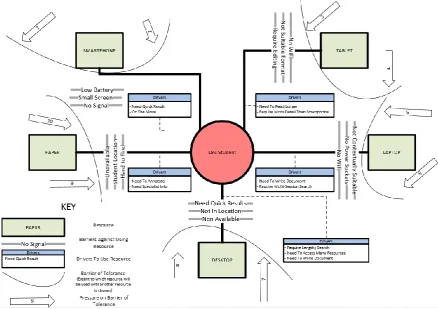
Fig. 2. The LSISB (Law Students Information Seeking Behaviours) Model
1 Need to view information on a larger screen
2 Need to take notes of information found on Smartphone
3 Require further information but opening another information source means closing existing one 4 Need a larger screen to read the information obtained on this device
5 Low battery power and lack of charging power sockets in vicinity 6 Lack of space to use device
7 Too many others wanting to use this resource
8 Resource is not going to be available after a certain time due to maintenance or system updates 9 Resource does not contain all the information in the same physical item or book shelf, making it
easier to search electronically
10 Require taking notes and need to copy & paste content electronically for later referral
Table. 3. Pressure Arrows against Barriers of Tolerance
Summary & Conclusion
In this phase of the study, we sought to find out how law students were using mobile devices in the law library for their academic information seeking needs. We learnt that although smartphones were the most dominant mobile technology, Tablet devices were also occasionally used. Laptops – although not specifically classed as a mobile technology per se – maintained a key position for law students conducting legal research and dominated the landscape when it came to activities where information creation – i.e. taking notes, writing essays etc. – was required.
and this created a bias towards these formats from the outset. Hence if resources were available in both, given the initial journey being digital, law students would be likely to continue down that path and fulfil their information seeking need without consulting a paper-based resource, if possible. The capabilities of electronic resources to interrogate large amounts of data at rapid pace and
accessibility through a simple internet connection enabled a truly convenient information service. Mobile technologies only accelerated this ambition by leveraging its portable attribute to a greater application and eventually appearing to overshadow the use of paper-based resources. This troubled the law librarians and they incorporated many strategies to encourage use of the wider collection of both electronic and paper-based legal material available. Our understanding of the drivers for using the various technologies to access legal resources was illustrated in the proposed model which compiles our findings into an illustration that can be used to elaborate on the ISB of law students concisely.
We also found out about the concerns law librarians had on the impact electronic resources were having on law students research skills – abilities that were an essential part of the professional practice – now under threat due to the automation and intelligent search capabilities that digital formats could deliver. This raised some additional concerns including;
Over-dependence on specific electronic resources that had provided user-friendly and multi-functional search capabilities coupled with encompassing a significant amount of data within
Risk of not having the most relevant information as electronic resources with the above abilities may inadvertently discourage law students from looking further and accepting the material they find on their initial search
In the third part of our study, we will address the following question:
1. What implications does the use of mobile devices have for the academic law library and information services for law students?
More specifically:
1. Outline any strategies law libraries may have adopted to incorporate mobile device technologies within their domain and future proof their space through this approach. 2. Propose, develop and test a new model which will outline the information seeking
behaviours of law students in the context of Mobile Devices using the research outputs from the law librarians, law students and literature review
3. Use the model to deliver a set of recommendations to help Law Libraries be better informed on the information seeking behaviours of law students
We found that further research with a greater number of we still needed to speak to more law librarians and law students was required to ensure we addressed our cohort sampling issues
model; which will in turn be used to deliver a set of recommendations that will better inform law librarians on the ISB of law students in these exciting and changing times.
Research Ethics
All research outputs were checked to ensure that no identification could be made possible of the participants, be it by direct, or deductive disclosure42. An incentive was employed where each
participating law student was awarded a £5 Amazon Gift Voucher for each completed questionnaire. Academic law librarians who participated in the research study did not receive any remuneration and their contribution is highly appreciated. These methods of engagement and conduct were approved by the ethics committee of the school.
References
1 Abbas. Zaki., MacFarlane. Andrew., Göker. Ayşe., (2014). Smartphones for Law Students – Persuasive, Pervasive and Legal: a Research Study. Legal Information Management, 14, pp 174-180. doi:10.1017/S1472669614000413. [Accessed: 24 September 2014]
2 Deloitte., (2016). “The smartphone approaches a perfect peak” – Mobile Consumer 2016. Available: https://www.deloitte.co.uk/mobileuk/perfect-peak/ [Accessed: 7 February 2017]
3 Millar, Michael., (2013) “Market for feature phone apps is low-tech goldmine” Available: http://www.bbc.co.uk/news/business-22390444 [Accessed: 1 November 2013]
4 Chandran. Renju., (2014). “Pros and cons of Mobile banking”. International Journal of Scientific and Research Publications, Volume 4, Issue 10, October 2014. ISSN 2250-3153. [Accessed: 24 February 2015]
5 Smith. Aaron., (2012). “Part III: The Impact of Mobile Phones on People’s Lives” – The Best (And Worst) of Mobile Connectivity. Pew Research Centre, Internet & Technology. Available: http://www.pewinternet.org/2012/11/30/part-iii-the-impact-of-mobile-phones-on-peoples-lives/ [Accessed: 8 March 2014]
6 Evans. Benedict., (2015) “Forget about the mobile internet” Available: http://ben-evans.com/benedictevans/2015/9/1/forget-about-mobile-internet [Accessed: 7 March 2016]
7 Naughton, John., (2015) “Mobile internet is now just the internet” – Guardian Online. Available:
https://www.theguardian.com/commentisfree/2015/dec/27/mobile-internet-is-now-just-the-internet-smartphones-apple-android [Accessed: 7 March 2016]
8 Forrester., (2012). “The Expanding Role of Mobility In The Workplace” - A Custom Technology Adoption Profile Commissioned by Cisco Systems. Available:
http://www.cisco.com/c/dam/en_us/solutions/trends/unified_workspace/docs/Expanding_Role_of_Mobility_in_the_Workplace.pdf [Accessed: 7 February 2017]
9 EBIYE, EDONKUMOH VICTOR SIR, "Impact of Smartphones & Tablets on the Information Seeking Behaviour Of Medical Students And Staff of Niger Delta University Bayelsa State - Nigeria" (2015). Library Philosophy and Practice (e-journal). Paper 1288.
http://digitalcommons.unl.edu/libphilprac/1288 [Accessed: 9 May 2016]
10 Mills. Leila. A., Knezek. Gerald., Khaddage. Ferial., (2013). “Information Seeking, Information Sharing, and going mobile: Three bridges to informal learning”. Computers in Human Behaviour. Volume 32, March 2014, Pages 324-334. Available Online:
11 Chen, H.-l., Chen, H.-l., Fulton, C., Gleave, H., Theng, Y.-L. and Wu, M.-M. (2013), Use of mobile apps in information seeking: An international viewpoint. Proc. Am. Soc. Info. Sci. Tech., 50: 1–4. doi:10.1002/meet.14505001004 [Accessed: 16 April 2014]
12 Gladys. Min Ting. Yong., May. Thiri., Perdana. Iqbal. Muhammad., (2013). “Critical Inquiry in Information Needs and Behaviours of Students using Smartphone and Tablet for Learning: A Case in Singapore”. Nanyang Technological University, Wee Kim Wee School of Communication and Infromation. Available:
http://www.wkwsci.ntu.edu.sg/programmes/CurrentStudents/Graduate/Forms%20and%20Procedures/Coursework/Documents/D1.%20P roposal%20Samples%2001.pdf [Accessed: 19 March 2017]
13 Farley, H. et al., (2015). How Do Students Use Their Mobile Devices to Support Learning? A Case Study from an Australian Regional University. Journal of Interactive Media in Education. 2015(1), p.Art. 14. DOI: http://doi.org/10.5334/jime.ar [Accessed: 15 April 2016] 14 Abbas. Zaki., (2016). “#citylis Reflections and Research: Zaki Abbas on “Generations” - CityLIS News – Library & Information Science at City, University of London. Available: https://blogs.city.ac.uk/citylis/2016/01/29/citylis-reflections-and-research-zaki-abbas-on-generations/#.WSGu2GczVD8 [Accessed: 29 January 2016]
15 Hope. Katie., (2016). “UK ‘has never been more addicted to smartphones’” BBC Online. Available: http://www.bbc.co.uk/news/business-37468560 [Accessed: 9 November 2016]
16 Jeffreys. Branwen., (2015). “Can a smartphone be a tool for learning?” BBC Online. Available: http://www.bbc.co.uk/news/education-34389063 [Accessed: 9 November 2015]
17 Barnwell. Paul., (2016). “Do Smartphones Have a Place in the Classroom?”. The Atlantic Online. Available:
https://www.theatlantic.com/education/archive/2016/04/do-smartphones-have-a-place-in-the-classroom/480231/ [Accessed: 3 February 2017]
18 Norton. Joanna., (2014). “How students can use mobiles to learn English”. British Council. Available:
https://www.britishcouncil.org/voices-magazine/teaching-tips-how-students-can-use-mobiles-to-learn-english [Accessed: 3 March 2016] 19 Factor. Sari., (2014). “Ed Tech Is Poised to Go Mainstream” Forbes, Education. Available:
https://www.forbes.com/sites/schoolboard/2014/02/28/ed-tech-is-poised-to-go-mainstream/#1888d8ee7b39 [Accessed: 3 March 2016] 20 Md. Emran Hossain, S.M. Zabed Ahmed, (2016) "Academic use of smartphones by university students: a developing country
perspective", The Electronic Library, Vol. 34 Issue: 4, pp.651-665, doi: 10.1108/EL-07-2015-0112 [Accessed: 18 February 2017]
21 Beland. Louise-Phillippe., (2015). “Technology, Distraction & Student Performance”. Centre for Economic Performance – Discussion Paper No 1350. Available: http://cep.lse.ac.uk/pubs/download/dp1350.pdf [Accessed: 9 November 2016]
22 Weale. Sally., (2015). “Mobile phones’ impact on lessons coming under scrutiny”. The Guardian Online. Available:
https://www.theguardian.com/education/2015/sep/13/mobile-phone-impact-school-lessons-scrutiny [Accessed: 14 June 2016] 23 Gibb. Nick., (2015). “Impact of smartphones on behaviour in lessons to be reviewed”. Gov.UK Online. Department of Education. Available: https://www.gov.uk/government/news/impact-of-smartphones-on-behaviour-in-lessons-to-be-reviewed [9 November 2016] 24 Alosaimi, F. D., Alyahya, H., Alshahwan, H., Mahyijari, N. A., & Shaik, S. A. (2016). Smartphone addiction among university students in Riyadh, Saudi Arabia. Saudi Medical Journal, 37(6), 675–683. http://doi.org/10.15537/smj.2016.6.14430 [Accessed: 18 February 2017]
25 Andrei Broder, ‘A taxonomy of web search’ ACM Sigir forum. Vol. 36. No. 2. ACM, 2002.
26 Gloria J. Leckie, Karen E. Pettigrew, and Christian Sylvain. ‘Modelling the information seeking of professionals: A general model derived from research on engineers, health care professionals, and lawyers’ The Library Quarterly (1996): 161-193.
27 Natalya Godbold, ‘Beyond information seeking: towards a general model of information behaviour’ (2006) (Information Research 11 (4), paper 269. <http://InformationR.net/ir/11-4/paper269.html> accessed 3 August 2013
28 Don Turnbull, ‘Augmenting Information Seeking on the World Wide Web Using Collaborative Filtering Techniques’ (2000) <https://www.ischool.utexas.edu/~donturn/research/augmentis.html#Heading7> accessed 14 April May 2014
29 David Elsweiler, Max L. Wilson, Brian Kirkegaard Lunn, ‘Understanding Casual-leisure Information Behaviour’ (2011) < http://epub.uni-regensburg.de/22699/1/spinkCIBchp_CR.pdf> accessed 18 May 2014
30 Ahlbrand. Ashely, A., (2013) “The ‘Social’ Side of Law Libraries” – Maurer School of Law: Indiana University. Available: http://www.repository.law.indiana.edu/cgi/viewcontent.cgi?article=1804&context=facpub [Accessed: 13 April 2015]
33 The Squire Law Library at the University of Cambridge. Available: https://www.squire.law.cam.ac.uk/) [Accessed: 14 January 2017]
34 Driscoll, David L.; Appiah-Yeboah, Afua; Salib, Philip; and Rupert, Douglas J., "Merging Qualitative and Quantitative Data in Mixed Methods Research: How To and Why Not" (2007). Ecological and Environmental Anthropology (University of Georgia). Paper 18. http://digitalcommons.unl.edu/icwdmeea/18 [Accessed: 5 May 2014]
35 Harris, Lois R. & Brown, Gavin T.L. (2010). Mixing interview and questionnaire methods: Practical problems in aligning data . Practical Assessment, Research & Evaluation, 15(1). Available online: http://pareonline.net/getvn.asp?v=15&n=1. [Accessed: 5 May 2014] 36 Kerins, G.T., Madden, R., Fulton, C. " Information seeking and students studying for professional careers: the cases of engineering and law students in Ireland". Information Research: An international journal, ISSN 1368-1613. Volume 10, No. 1 [Accessed: 29 December 2016] 37 Allbon. Emily., (2012). “Is there a life outside the lecture theatre for law students” – Guardian Online. Available:
https://www.theguardian.com/law/2012/oct/12/law-degree-extracurricular [Accessed: 9 April 2014]
38 LaMarca, N. (2011). The Likert Scale: Advantages and Disadvantages. [online] Field Research in Organizational Psychology. Available at: https://psyc450.wordpress.com/2011/12/05/the-likert-scale-advantages-and-disadvantages/ [Accessed 4 May 2015].
39 McLeod, S. A. (2008). Likert Scale. Retrieved from www.simplypsychology.org/likert-scale.html [Accessed: 8 September 2015]
40 Westlaw., (2017). “Westlaw UK”. Available: http://legalresearch.westlaw.co.uk/ [Accessed: 22 March 2017] 41 Lawbore., (2017). “Lawbore – The Law Students Guide”. Available: http://lawbore.net/ [Accessed: 22 March 2017]