COMMISSION OF
THE
EUROPEAN
COMMUNITIES
com(76)Llt
rLnal/2.Technical annexes Bruesels,
U. ilay
L976.I|II]LTIANNUAT PROCNAM}fE OF TIIE
JOINT RESEARCH CE}i?RE
DgTAlI,gD TECHIIICAL PROFOSAL
1977
-
rg8o(submitted.
to
the
Councilby
the
Commission)This
d.ocwnent containsthe
Cetailed
technical
proposal.sfor
tbe
tenprog:eanmes formiqg
the
muLtianirual reaearch progranneof
the
JOi}i'I RESEARCH CEIiTIREfor
the
periocl L977-
1980.APPENDIX E-I-01
PROGRAMME :
REACTOR SAFETY
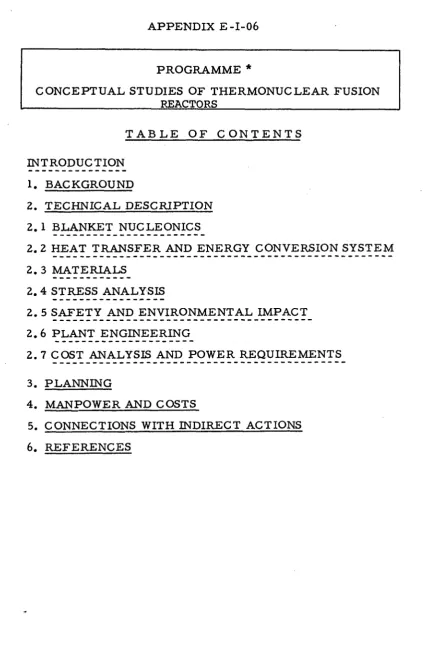
TABLE OF CONTENTS
INTRODUCTION
I.
PROJECT: RELIABILITY
AND RISK ASSESSIT4FNTI.
1.
BACKGROUNDI.
2.
TECHNICAL
DESCRIPTION2.
PROJECT:
LIGHT
WATER REACTOI".L__gS€OF COOLANT ACCIDENTouT 6F
PILE
STUDIES ANDIN
PILE
ST![QIESL. Z.
I.
_Asqsrqi!ia4_Ar'4__9 ionof
codesfor
mecistic
accident anI.Z.Z.
LlifR core
accidentplobalistic
analvsisL.2.3.
Set-up o{-a europeanreliabilitv
data svstemI.3.
PLANNINGI.4.
MANPOWER AND COSTSI.
5.
COLI,ABORATION WITHEXTERNAL
ORGANIZATIONS2.
I.
OUTOF
PILE
STUDIES2.1.1.
BackgrouEq_z. I . I . I
.
I : e g : 3 1e--eJ{e-c5-
elgl
g:
- 9-oll891 Ill
}9F-"-i9 Y : -t-eiJ:
2.r.r.2.92:1._'l-'g-th_e-rrnalby9:ggliS-s_le-1t9-2.
I.
Z.
Technical description
?,. L.
z.I.
Lo-o_q Pley_agy-t p-r9j99!- pl-og-rglttt-"- +-(l) -11a- B-(-z)2. I . Z.
Z.
Blowdown codevalidation
an{ {gygl"-plqe{
-;-!1 lic-!!99retic
al
: g Epg : I j9 _tlr-e_ !!o-1{"_yg_ _p I 9 te_qt_
z . L . z. 3
.
Pe:!:
_e_x-P-e_r-Tt9t!4- :EBPg:! i9 -E9y-qgY3a) Experirnental investigation
of
the heattransfer
crisis
in blowdown . conditionsb)
Hydraulic Oscillation
Experirnentsd) Developrnent
of
a massflow
NMR measurement z.t.z.a.J!r_e_rggbZg:e:t-iS_$*-!gl$t_e_!-e!gy_igg:-qtr-ilg_I,9_9+_a) Development and
validation
of
cornputation rnodelefor
traneient
fuel
bundle behaviourduring
LOCAb) Experimental
shrdies onrod
bundle heattransfer
during
LOCAZ.
L.3.
Planning2.1.4.
Manpower and cogtgZ.
l.
5.
Collaboration
with
external
organizationsZ.
2.
IN-PILE
STUDIES2.2.1.
Background2.2.2.
Proposedin-pile
experirnental Programrne
-
Schematicdeecription
z.2.z.l.Prelirnin?:y_:I9:gi1e-_=__eIpJg:3!"_1y-:'I1+_9glt_g_._'l_"_T-s_tL1 experirnent
--L--2.2.2.2.
COFAS_IJITL91_e_r_c!g9I
=fuel
behaviour
in
power/cooling
ftG-dit-CrilP-Clfr)tt-riaiiio-riJ-
-=----i----'
2.2.2.3.
COFAQ_!o-o_p_91_e_r-c-ig9_2 =fuel
behaviour Jgl-1_oy_tr_g-1_S_r_o-O_t0,"_nDrocKage
2.2.2.4.
COFAS loopexercise 3
=fuel
behaviour
in loss-of-collant
i 6 E i<i'e-rif (
LbtA)
t-dria-ii ioir- --a)
Blowdownb)
Refilt,
reflood
and/or spray
coolingc)
Cornplete LOGAsirnulation
z. 2. z.5. Aralyti"_1t-:*geg:!
2.2.3.
Proposed
actions for the
L977-L979
period
2..3
;
.I{ANPOWER AND eOSTS3.
PROJECT:
LIQUIDMETAL
FAST
BREEDER SUBASSEMBLY THERMOHYDR.AULICS3.
1.
BACKGROUND3.
1.1.
Sinqle phasefuel
rod
bundleternperature fields
3.1.2.
Temperature
noise3.
1.3.
Baeic
sodiumboiling
phenornena3.1.4.
Sodiumboilins in
rod
bundles3.
Z.
TECHNICAL DESCRIPTION3. z.
I.
I.-|gyll
-c_o3_d_i1i939-99: JS-e:gf-qtl-i:3t-
33-"*?Li-u9 3. z.I.
2.
The-r:n3! ly_el _s_gu-:1s-s_ei1!Jl_t_'3l'3-i:111-3.2.2.
Earlv
warning
techniquesEtsed
onternperature noiseanalv8is
3 . 2. 2. |
.
I:'_.1-*JS*:ll
l:itgl_"-9:lu-:ti93
-13-q -i!91!t{lc-1t-i91-3.2.
2.2.
?e$*g-kt_"-"jiq':
Jg: -*:p-it-.-!-tg:5:9-fy-"]-qtsngl!
-elP-el:13-e-*3.2.2"
3.
Noise detector
development3. Z.
2.4.
ExperimentaL devices3. 2.
3.
Studies-on,lthej
s andbasic
cracteristics of
sboil,ing Er subassernblv confiqurations
3.2.3.I.
''
Experimental
andtheorqtigfl__ilyg*igqtions
on the influenceof
fi
*6ru=.-"-A-r'6;--A;iio-fii-6Eii
iirrt-a-i?E ib-u-ii6i -dn-iffi
-pl2iiin_g_EE! a
ii.:,!i ir
:r
i:'un*:
s ei+}:'s-3.2.3.2.
E:Ll:io_.g9j-p-o-r-o-ls-ge:ffg::11-t11t-!:::99:-s-t1b-11e-s-e-1!-1i-e13.2.3.3.91g:L"l-!s-it-ilg-:TP9:*1-e:1j:-T-9gI+-1-u-gqa-L1g99gl9qy-3.3.
Pr,AtINJllg
3.
4.
\44rry-9yI*-+NP
-q99F-3.5.9-o-Ll4-E9-q4TI9n-qlTF-FIIF-ryIy+l--939{rygArl-o-Ns
4.
PROJECT:
FUEL
COOLANT INTERACTIONSAND
COREMELT
DOWN4.
r.
P+-c_Eglggll?
4.
Z.
TECHNICAL DESCRIPTION4.2.1.
Fuel
coolantinteractions
4.2.2.
Corernelts,
post
accident heatremoval
4.2.2.1.
Basic
studiesa)
Material
ProPertiesU)
n"n".riour of irradiated fuel
rods during
rnelt
downc) Heat
transfer
studiesei
tnerrnomechanical
behaviourof core-melt barriers
4. 2. z.
2.
bl:
g:?1_ ig"_Ls_4.3. Pr,Atq{Itg
4.
4.
MANPO$TER AND COSTS4.
5.
c o L r,A Bo RAr
roN
w I rH
E-{ T-q+}-{+!-q }-q+N-I
?{l
L9}-{9-5,P
JECT
:
DYNAMIC sTBqS-TgBE DING ANDBACKGROUND
TECHNICAL DESCRIPTION
l.
Code development andvalidation
5.l.
5.2.2o
Determination of
material
constitutive
laws5.
3.
PI.ANNING5.4.
IVTANPOWER AND COSTS5.5.-c-o-rjl+-Eg_q+T_rgllylTlr_p}_TPs!+l:-o-+g+_ryF_Arr_o_r!q
6.PRorE-cr_'-gT_{g-clv5+_!_{+l!_u_+-E_tEEygryT-rg]t
6.I.
BACKGROUND6.
z.
T E_cttllr-c:tI,_ DEs_c_
sIpT
r_o_N6.2.1.
Failure
genesis6.2.1.1.
Crack
instabiliff
andembrittlernent effects
in
LMFR
;t-rlic-+iiJ
6.2.r.2,Fatigue/_c_r_e-ep_c_r_"_cl._g:gyj!_T-:t3lg"_:-s_t5r_e]_s_tgg_cJ:::
6.2.r.3.91t{y-_o_f-l*glggggplc_pf_o-c_e_s-e_e_s_9{_c_r3_c}-gl9}14_a_qqlggFu-t-tity
6. 2. I .
4.
9f-uSp_9gtt1s_e_ :ee 9:L1Fe6.z.r.s.f
-r-o!9!-ilis!i.-3te9:$lgg-€:!'-._11s_o_rJ9-s_i9l_qT:tpg-e_6. Z.
2.
Failure
detection6. z. z.
1.
A-p-p-1-ig:ligg-e1ib:
-glile:3998g11-c-gt"-T-s-i9g-t9-h._
9-"jg:ligl_
9!31ggle_r-i_za3i_o_n_alr9_1o_c-ati9t_€a:aals_*:l-_1_;il<!:----6.2.2.2.
*_eriqlil:T_9{_"gl'y_.:,!i"-'"-1t-ggl:gg:lr_qqtjyg_t-e_cJr3_iggg:6.3.
PI,ANNING6.4.
MANPOWER AND COSTSE.
I.0lll
APPENDD(
E.I.OI
PROGRAMME
REAqTOR SAFETY
INTRODUCTION
The expanding
electrical
energy needgin
the Gomrnunity can be rnetin
the
greater
part
only
by anincrease of
thenumber
ofnuclear
powerplants.
This,
together
with
theincreased sensibil.ity of
thepublic feeling
towardsthe safety
aspects ofnuclear power
instailations,
andits
reflection
on tlrelicensing
process,
has been themost
general.rnotivation
for a
continuousincrease of
this
activity
in
the
JRC.
Theproposals
of
the JRC Reactor SafetyProgramme take into account
:-
the
reconunendationof
theACMP-Safety,
uihichgave
the indicationeof
theresearch necessities
in
this field in
thedifferent
rnernbercoun-tries
and the Comrnunity (eeeDoc. ACS-51-e);
-
theexiating
and developing competenceof
the JRCin this field;
-
the outcomeof
the discussions andcollaboration
with
thedifferent
internatior:al
comrniteesinvolved
in
thereactor
safetyresearch
urhere theconstructors,
the licensing
authorities
and theutilities
are
represented;-
the
support givento
the
reactor
safetyprogramme of
the JRC bycontracts
with
external
bodies.The proposed
progranune involves
activities in
thefield of Light
'W'aterReactors
(LWRo) andLiquid
Metal
CooledFast
Breeder
ReactorsE,r. ol/z
a)
Themajor
accidentto
be consideredin
a
Light
Water
Reacbr
is
a severeloss of
coolant dueto
ttrerupture
of
theprimary circuit
andthe consequent bLowdown.
Queetions to be ans$rered
in this
aseaare
: what
degrad'ationof
cooling
does the core haveto tolerate
and whatis
the conseqlrentbehaviour
of
the claddingtemperature
? Doestle
emergency corecooling
systeil-
(neCS)irwide
sufficient
c ompendatory -coolingor
does the EGGS
water
fail
to
enter
thecore
? How doesthe rupture
size and
position
andthe
re8Ponseof
theprirmary
circui't affect
theans$tel
to
thesequestions
?In
the caseof
imigined
EGCSfailure
andwide-spread
core melting'
what
is
the behaviourof the
core-melt
?The
Iapra contritnrtion to
this
problem
is
qainly
centeredaroimd
the loop blowdown
project
whictr
simul,;ates blovdownconditions
in
a
four-loop prirnary
coollng
system ofa I300
MWePWR.
Theoreti-cal
sfudiesinvolving
theacqulsition
andcomparison
of
existing
blowdown corlesare
proPosedto
supporttl-e experimental
project'
Basic
experimenta!. supportusing
simptrefacil'ities is
also provided'
Investigations
on thefuel-coolant interaction
and sn thecontrol'
ofmolten core debris are
also part
of
tJreprograrune'
Furtherrnofe,
a
proposaLis
being madefor
in-pile
safety
studiesin
the
ESSgR-reactlr irrhut.
t.Lebehaviour of fuel pins
and b,ndLesin
a
variety
ofaccident conditions
wi.Il beinvestigated.
b)
The basiefeahrre
of LtvffiBR
safetyis tj.e
fact
t'hat compactionof
thecore
-
or part
of
it -
may Leadto
anincrease
of
reactivity
above tJreprornpt
critical
state,
di;
initiation
of an trncontrollabLe nuctr'earexcursion and
the
generation of anexplosive
energyrelease'
Thechain
of
events to beinvestigated incfudes
:the
loss
of heattransfer
in
subassernblies dueto bloJkages,
structlrral deforrnation' local
sodiumboiling
leadingto
fue!.pin
overheating andrupture
; thewide-spread
Jubas".*bly
darnage and fuel-melting with
consequenti""iZ"-.i"f.it
interaction
i
thefuel
compaction andprornpt
critical
excursion ;
the Post-accidentheat
rernoval
and thecontrol
of
molten-core
debris ;
the explosive i.oadingof
thereactor
vessel,
internal
struchrres
andprimary
circuit'
The
Ispra
c,ontributionin this field
involves
boththeoretical
ande:q>erimental studies
in
thefield
of
sodiumthermohydraulic
s,
faeL/coolant
interaction, control
of molten core
debris,
dynarnicstructrrre
loading and resPonse.E,r,0l/3
c)
special. emphaeisis
givenin
the proposedprograrnme to
tbetleoretical
aesesmentof
reliability
andrisls.
This activity is
airned
principatly
at
developing aprobabilistic
approachto
the asseamentof
LWR
safety.It
includesalso
the development ofa
rrEuropean W.hol,e CoreAccident
Goderr, Bponsored by dre'rsafety
$rorking
Groupof
theEuropean tr"a st
Reactor Coordinating
G ommittee t t.d)
rinauy,
a
Bpeci,al.chapter
is
devotedto the
structural failure
prevention
which includeematerial
research
oncrack
growth andfrachre
rnechanics and tJle developmentof early failure
detection techniques.The proposed
activities are
groupedinto
six
projects
:-
Reliability
andRisk
Aseessment,-
Light
'WaterReactor Loss of
CoolantAccident.
tr
and out ofPile
Sttrdies,*
Liquid
Metal
Cooled FastBreeder
(LM!.BR)
Subassembl.yTherrnohydraul.ics,
-
Fuel-Coolant Interaction
andCore
Melt-Down,-
DynarnicStructure
Loading
and Response,-
Structural
Failure
Prevention"For
eachproject
tJlefollowing
information
is
given
:-
Background-
Technical
Description
of
theActivity
-
Pl,anning-
.lvfanpower and costs-
Collaboration
with
external
organizationsft
must
be mentionedhere
thata
part
of
the new mzrnpowerrequired
for
the executionof
the proposedprograrnme
shouldbe recruited
from
outside because thenecessary
competenceis
not avail,ablewithin
the JRG.CONNEC TIONS
WITH
I'INDIRECT ACTIONS''At
present noindirect actions exist in
theframework
of
the Reactor SafetyProgramme.
TheComrnission
endeavoursto
coordinate thenational
efforts
in
this field
through anumber
ofExpert
Groupsin
which the JRG
actively participates.
E.L.
Ol/4The
following
grouPsexiet
at
the preeenttime
:-
*
r-.E-€
P:ell
-Ylt:
:
39? : !o-r-s- -(-c-c-p)\4rorking Group
Nr, I
:
Methods, Codes,
Griteria
and Standards' Tforking GroupNr.
2
: ResearchPrograrnrnes'
-
Fa st
Rea ctor
c_o_o:_d15r1r$ge_ _c_o_1gltjtg g-Lc-c- P)
LMFBR
Safety W'orking GrouP,-
Whole GoreAccident
Codes,-
Gontainment Loading and Respottse'-
Ac ME _ : !_qIsH _(_c-99:-89)-Blowdown
Fart
B,LMFBR
SubassemblYFault AnalYsis,
ReliabilitR
Gore
Melt-Down andFuel-Goolant Erteraction'
Structural Faihrre
Prevention.
-
qEN-r-(-oPgP-)Working Group on Mechanical and
lUaterial
Probl'emsRelating
to Safety .A.spectl of Steei. Gornponegtsin Nuclear
Plants;
Liquid
Metal
Boiling
$rorking Group'
European Two-Ptrase
f'low
GrouP'European Working
Group
ttAcoustic Emissionrr.x H F] fi{ d q &
I
o fl;
= E H A rtto.
+JO doE
.oo
DgrO
xc
E El HI I I o o r-o o o r\ o
Enr;
HO '.{ Ur D5V
tr5
=om r
& o 01 ao o o o o t\ () IJ c\ o tn f-N o @ C\l N o (J 1 c\ o N rO .o r'l uto^
o.
${4 5.op
oo=
&1 vI I I I I I I I I I I I uro
co
.r.{ |tct
c .lJEE
gD{
F{O
'da
E+JX OH H o o\ (f) o o rO (o LO o rr) 8 o\ .-; o @ r-o r-@ o N cr N F{ o +J^q.
o4
E. +tD a OE>\,
H I I I o ro (n F{ o r-ro o o tn o o 8 ro o o rn LO o o o @ (n tH q{ rd {J^ (at{ dso
oh
t{ .d lioo
OOI ov &rn
c\l N.r\ (no slo c\too
o si o| (ro N E H = o o H
v
Q(
u o H ft o z d >t*l
H5t
H Fild bl H Ol FlflH
FT }I hH OA (h2 (nHo\
'J E{
D
tro
8A
HE Fl t{xa
Hff8
c.rl Fr
(
ul
sen
BI HSH
RI
HgH
(A
U
H
6'J
Fl D
od Flft r40
tr )'t rq Et
o
HI
qx
dFl hE E{ rJ d>, HFl
ro I frl gl
ElEf
Hl
a3
BI AS
trI
HDAl
l-1o2 d (1l z o H E{ () fr, frl E HZ B
E8
srl
S ErHl
8d
HI
?E
bl Fl FlBI
Hg
A z
(
u z H aI
Fl FI fr D H U P IH rol qltFl HI U(,l
HI
E8
Bl
XIga
HFTal afi
z o H E Fl H A fl p f fi
(ot H
Hl
gHt
I
HI
Ho
H
H
E.I.
OI/5
1.
PROJEGT :RELIABILITY
AND
RISK ASSESSMENTI
.I.
BACKGROUNDThe
action
is
afuningto
developa
probabilietic
approachto
theassessrnent
of
the LWR SafetY.In
thereactor
safetyanalysis a
deterministic
approach ha-s, up gntil.now,
beenpredominant.
Butin
thelast
years
it
has been generall.yr*cogoired
that the
deterministic
approachis
insuffi-Iient
a,ndpilot
-"ttai""
based onprobabilistic
rnethods have beenpromoted
by various
govelnrnental or ganisation e (T[a ah t 400 -concer:ringPTIIR,
BwR
in USA'
1972-1976);ASFA
concerningIITR in
USA,
Lg?4-19?9; Swedish shrdy onsiting,
L97Z-L974iBMF'T
Project
"Risk
andReliabiuty"
; KETvIA Shrdy oneiting,
1974-1975i
etc.).
The main
justifications
for
these studiesariee from
thefollowing
two
facts
:1.1..1. nuclear
eafetyis
now concernedwith four
main
ttinfluencing groupsrr :public,
licensing
authorities,
manufacturee,
utilities.
itte
ittltrde
of
thevarious
groups can bedifferent
in
various
countries "
However,
the balance of Poweris
changingin
favour of
thepublic.
!.L.2.
the investmentin
research related
tonuclear
eafetyis
conti-nuously
increasing
so that an optimizatioraof
the uge ofavailable
information
anda
decision
asto
the
guidelinesfor further
research
efforts is
etronglYdesired'
The above mentioned
pilot
stlrdieeextensively
use methods and data comingfrom
ttrenuclear
and nonnuclear
field.
But
in
spiteof
theimpressive
effort
spentin
such studies tJreresultg are a
longuay
from
beingcornpletely satisfactory as the
debate on theRaemussen
Report
has
shown (seefor
inetance tJrerninutes of
the
Meetingof the
LTIR
safety \4rorkingGroup
Brussels,
14 lvlarch 19?5). &rfict,
afutl
scal.e andgatisfactory application
of
theprobabilisti.c
approaehto
safety
stil.l requires
a
I'ongterrn effort.
During
tiheactual
pluriariurualPlogramme Iapra
has givenrelenant
contributions to
this effort
by metJrodological deveLopmente andpilot
applicationg
in
collaboration with
national
otganizations
and theComrnission
Servicee.
The continuationof
this activity
during
the nextpluriannual prograrnme
is
motivated byvarioua
reasons
:t:
E,l:,
ol/6
-
thelong-term character
of
this
reaearch,
-
the needof
compl,ementing theparallel
errperimental*tivities
proposedin
the
eafetyprogramrne with
an adequate capacityfor
theanalysis
and evaluationof
complex
safetyrelated
chainsof
events,-
the needof
ajelling
point
for
various
safetyanalysie
methodg,and
epecific
probabilistic
methods being developedin
Europein order
tohelp
in
reaching aunified
European approach,-
thetypical international character
of
certain initiativeg
such asthe
setting up ofa Reliabil.ity
Data System,-
the needof
technical
supportfor
the
Cornmissionin
its
effort
to harmonize
tJ:elicensing procedures
in
Europe
(ref.
COM 75/60final).
I . 2
.
T E_c_ry_r$
!_DES-C_SIPT ro_NThe
action
proposedfor
thefuttrre pluriannual programme
wilL bemainly
focused on theprobabilietic
analysis
of
theaccident
chaingleading to
a core
disruptive
accident
to
copeat
some extentwith
theparal.lel experimental
projects
proposedin
the safety
programme. Gonsideringthe
stateof
t.Leart
in
the domainof
theprobabilistic
safety,
theaction
will
involve
development and couplingof
methode, bothmechanistic
andprobabilistic,
pilot
applications
to
sornereference
designs andvalidation
of
the rnethode by comparigonwith
the experienceof
someabnormal occurrences
in
plant
operation
in
Europe.The connections
with
the national.ectivitiee
Ehould be eneuredprimarily
throughthe LMBFR
and LWR Safety W'orking Groupain
Bruesels.
The
action
wilL bedivided
into
three
activities
:The
first
activity
consists of
theacquisition
and evaluationof
codes
for
mechanistic
accidentanalysis
in
LMBI'R
and LWR.The
scopeof
this
activi.ty to
beinitiated
in
tJ:e JRCis
not
onlyrepresented
by theacquisition
of
some toole necessaryto
per-form
thefurther
stepsin probabilistic
accident chain analyeiebut
also impinges
on the needfor
a
critical
review of
thevarioug
physical. models adopted.
&rdeed, many modele and codes that
are
presently available are
not
thoroughly understood outgide theorganizationg
in
vihich theywete evolved.
E.r.
or/7
Furthermore,
manyof
the codes have not beencritically
compared againstother
codeswith
cornparablecapabilities,
or
u'itb. methods ofanalysis.
An
independent assessment anda
comParisonof
theresults is
therefore highly
desirable.
tr"inaIIy,
ofparticul,ar
interest
is
theintercoupling of
moduleafor
the LMFBR
wtroLecote accident
: thejustification
for
this
action
stems
from
a
direct
request by t.Le$rAC Experte
Groupto Ispra.
The
secondactivity
witLconsist
ofa
probabilistic
analysis
of
LlltrRcore accidents.
This
activity
will
developa
probabilistic
approachto
deecribe
tJlespectrum of
possibilitiee
of
compl.ex Phenomenainvolved
in
core
aceidents. In
tle
analysis
of accidentprogreesion
twomain
stepsare
considered
:the
system degradation step andthe core
disrup-tion
etep.The
firet
stepie
ofpre-erninent
relevancefor
operational
safety(normaL
operation). However,
fhe degradation paths can widen therange
of
theinitiating fault
conditionsfor
thefollowing
disruptive
accidents and can
therefore
widen tJle rangeof
thefinal
risk.
The
third activity
will
consist
of setting
uP,
ona
coll,aborative basisa
reliability
datasystem
specifically
for
LWRreactor
corrPo-nents.
l.Z.I.
Acouisition
andEvaluation of
Codesfor
MechanisticAccideut
Analveig
The
initial
phasesof
tlris
shrdyare
the
review of
existing
modelling capabilities
andthe
definition
of the
modelreq-uirements
for
accidentanalysis.
Oncethe
most
suitablecodes
are storod
in
the JRCcomputer,
a
phaseof
evaluation and
intercomparison of
thegewill
bestarted
:if it
is
felt necessary, work
on couplingthe
different
rnodelsand on
improving
the codes thernselveewill
al.so be achieved.A
typical. e:rarnpleof
this activity
will
be tePresentedby
theimplementation
in Ispra
of
thernodular
codefor
tJle studyof
the wholecore
accidentin
a LMFBR
aekedfor
by
the W'ACExperts
Group. Sirnilar activities
couldalso
becarried
out fo:r LWR.
The need
to
improve
themechanigtic
codesarises frorn
tJrefact
that upuntil
now the codee have been developed and ueedwittr reference
to
extrerne situations
(Oee). ffre
spectrum
of
consequences(over
ptessures, over
tempe-ratures,
etc. )for
all
thepossible
relevant sifirationg,
h
tJle
majority
of
cases,
cannot betackled
with
the existing
tools.
E.
I.
oI/8
In
general,
four
typesof
modelswill
betreated
in
this
ehrdy :neutronic
models,
component and eubsystemmodels,
physical
andchemical
models,
andglobal
eystem models.The
neutronic
modelsare
aimedat a
description of
thefull
rangeof core traneients
andw'ill
include thermohydraulic calculations
as
required.
After
heatremoval
is
therefore
a
aubjectof
interest
in
thig area.
Seperate component and subsystem models
will
be congideredfor
items
of
particular
aafetysignificance
in
tJ,.e syatem;for
e:campleone can
mention
steamgenerators,
EGCS, PumPs, containmentg,cote structtrreB,
etc.
Several types
of physical
andchemical
processes mugt beinclu-ded
in
themodelling of
thevarious reactors
:a few
e:rampleeare
soldium and
water
boiling, MI'Cf,
molten
fuel slumping, corium
behaviou!,
€tc.
Ultimately,
tJle modelin
thefourth
category
ehould include asmuch
of
the pl,ant aspossible, with
ae muchdetail in
individual
areas
as
is
practicable
:
therefore
these global modelswill
usually
avoidhighly
detailed treatments of
themost
complexprocesses
: examplesof
this
typeof
codeare
the rnodular FRAXand CAPRI
for
the
shrdyof
LMFBR.
I.2.2.
LWR CoreAccident Probabilistic
Anal.vsieThe
activity
will
cover areas of
tJlerisk
analyeis
of
LWR whichare particularly
critical
or
whichare
net, or
incufficiently,
covered bythe
studiescarricd
out upto
nowin
Europc
or
theUSA.
Suchareaeare
:-
ProbabiListicamalysis
of
someinitiating events,
euch aspressure
vessel
andprimary
piping
failure.
-
Probabilistic
analysis
of core
degradation,
i.e.
evaluationof
theprobabilistic distribution of
ternperature
andother
coolantpara-meterg
in various
points of
thecore
andwith
time,
in
normal
and
in
blovdournconditions.
-
Probabilistic
modelling
ofvarious
accidental
Pathsto core rnelt
down andradioactivity
releage.
The
solutionof
the mentionedproblems involves
a
large
amountof basic
method developmentB.tr
particular
it
will
involve
:-
the devel.opmentof
anintegrated
andmodular
softwarefor
probabilistic
transients
analysis starting from
theactual
stepby
step approach?
l.2.3.
E.l. ol/g
-
the developmentof
nonnumerical heuristic
techniquesfor
complextree
rnanipulation.
Thie
development intends to extend andfacilitate
theapplication
of
graph analysis(event-tree
fault-tree) to
systernswith
cornplex evolutionwith
tirne
andwith
dependenciesat
various
levels
-
developmentof
techniquesfor
autornaticfault-tree
analyaisstarting frorn
functional relationships
-
the developmentof
approachesfor
analysinghighly
correla-ted
etructures
such ae the veseel and piping.In
the frameof this
activity,
andin parallel with
tJ:e mentioned studyat
ttdesignrrlevel,
scrne trvalidationrrpilot tests
should becarried
out,Such
tests
will
consist
of
ananalysie
Itaposteriorirr of
sorneabnorrnal
occurrences
andtransients
experiencesin
operatingLWR.
Set-up
of
a EuropeanReliabilitv
Data SvsternThroughout Europe and the USA
several
datacollection
systetnsexist
concerningreliability
in
nonnuclear
fields.
However, in
general,
the useof
data outgidea special
field,
where
they have beencollected,
appearsto
bevery
doubtful.Ref.
:
Conclusionsof
the EuropeanReliability
Data Seminar heldin
Stockholrnin
October
1973.Moreover,
for
alarge part of
the componentgin
nuclear reactora,
data
ie
cornpletelylacking. This
situation stresses
the needto
ma-ke the best use
of
theinformation
corningfrorn
thereactors in
ope-ration
in
Europe.In
I973-1974 the United StatesNuclear Plant
Data Syetern has been developed and irnplernented.In
Europe sorneefforts
have been made butonly
on anational
basis. The dimensionsof
theproblern
andite
relevance
for
the
Europeannuclear
industry
suggestsa
solution
on a comrnunitybaeis.
Theini-tiative
should be based on aco-operative
effort
betweenthe
Indus-try
Directorate of
theCEE,
the JRC and thevarious
national
orga-nizations already involved
in thie
typeof
effort.
The data shouldconcern componente
of
existing
cornmercial
reactors,
i.
e.
of
LWR.The
activity
foreseegvarious
steps :-
etateof
theart
andfeasibility
etudy(thie
prelirninary work
can becarried
out
in
the actualpluriannual
prograrnrne).-
Set upof
a Steering Cornrnitteeincluding representative
from
elec-tric utilities,
nuclear
eteameystem
suppliers,
andnational
licen-sing
authorities,
which
shouldorient
the
JRC tagkforce
to
definea
Reporting Procedures
Manual.E.r.ol/lo
-
Pilot
programme
ona
fewnuclear
units
(four)
-
Implernentationof
theprogramme
throughout thenuclear
Powetindustry.
I .
3.
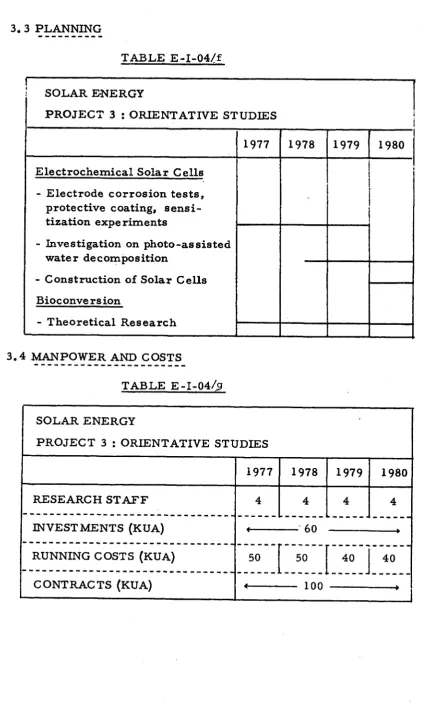
PI,ANNINGSee
table
E,-I-OI/a
I
.4.
TVIANPOWER AND COSTS1.5'9-o-IiI+-E-o3AT-r9lt-{IT$-PIJPSI+I'--o-RGANrz-+rr-o-Ns
CNEN
.
GBRA
-
Bruxellee
CESNEF
-
Milano
CISE
-
MiLanoCEA
-
Saclay,
Cadarache KEil4ARCN
-
PettenKFK
-
I(arlsruhe
UI(AEA
-
Risley
FRAIvIATOME
-
Paris
CNR
-
MilanoENEL
-
Mil,anoULB
-
BruxeLLesI
t] tt REACTOR SAFETY
RELIABILITY AND RISK ASSESSMENT
t
r977 t978 1979 1980
STAFF 25 25 25 25
t-
---lrrwestl{nNTs (K. u. A. ) I
NG COSTS(K.U.A.) 50 60 70 80
(K.U.A. )
F---.---;;;
TABLE
E-r-Olla
c
o E E o co
o*
c.=o
c-qrg
.=
5f
g
ce
€E
'F
g'--o-=
orli:bL
'6
o
tP
E
€
cbtr.=e
g
=_ ;p
P.,
5v(!
E :5Hd
r'5FE
::= EE;5
E*S; e[;F
€f
[gE=
FE
?
T* EE.:i
b9a5
.,-e€ A:ES
E3P'E
sg8
EESS
#.rf
A(,
z
z
z
J
o-g .9
(|F
E. r.
ollI
IOT' COOI,ANT ACCIDENT
2.
PROJECT:
LIGHT
WATER REACTOR LOSSOUT OF.
PII,E
STUDIESAND
INPII,E
STUDIES2.
I.
OUT OFPILE
STUDIESZ.L.L.
Ee,ckgror:ndThe
loss
of
coolant due toa
primary
cooling
circuit
rupture
is
coneidered
to
be theworst
LWRaccident.
Themain
conseguenceof
such an accidentis
thefuel
claddingtemperature
increagedue
to
the degradationof
core
cooling,
urhich
canfir:ally
I'ead toa
claddingrupture
anda
releaeeof
radioactive
material.
Toprevent
such coneequencesit
hasto
be Proventhat
:- a
giventhreshold
for
a
maximumadmissible
claddingtemPe-rahrre
will
not be exceeded-
the clad,dingtemperahrre increase during
a
LOCA and the ECCSoperation remains
controllable.
The two main approaches
to
reach
this
goalare
:-
theprovision
ofa
supplementary coolant by meansof
Eccs
-
theimprovernent of
the understandingof
fluid
flow
and heattransfer
rnechanismsocculing within
tfrecore
region
duringa
LOCA.Both approaches
reguire
experirnental
andtheoretical
investi-gationi in
thefield of
traneient
thermalhydraulice.
Suchinvesti-gations rePteeent
a
large part of reactor
safetyresearch
Programmesflready
ottdut*ay
for
several years
in
manycountries over
fhewhole
world.
For
about 10years
activities at Ispra in
thefield
of
thermal-hydraulics
havealeo increaeingly contributed
to
theeeefforte.
Thepreviously
existing
knowledge andcorrelations
for
deecri-bingireat
tranifer
andiluid
flow
mechanisms have been obtainedmainty
from
investigatione
1rndersteady-
etate conditions.Their
application to
thehighly
cornpl.ex andtransient
mechanisrnsoccuring
within
a
reactor cole
during
a
LOCAis
therefore
questionable.
To satisfy
the
strong needfor
extending tl.eialidity
range
and/or
improvement of
tJleexisting
correl'a_tiongde scriLin g
tral
sient
the rmalhydraulic
me chani smg,
mainly
two
different
classes
of
investigations
have been setup
:-
separateeffects
andfor
comPonentbehaviour
tests-
systemsthertnalhydraulic
stests.
E.l,
ol/12
Their
finaLobjective
is
:-
the development and val.idationof best estimate
models andcorrelations
- to
obtain thebest
data possibl.e ultrichis
required
toverify.the
applicability
of
thesecorrelations to
LWR
safetyanalysis.
Theactivities in
thefield
LOCAthermalhydraulics,
proposedfor
the next pLuriannr:al
reactor
safetyresearch
prograrune of
theIepra Establishrnents,
are
concernedwith
both tytrresof
inveetigat-ions.
Z.l,I.l.
Separate-e_f {e_c-tg_11!/g:_c_oj:lp-o3_en1_b_eharr_i_ou-r
teste
are
aiming
mainly at
a
more
frrndamentalinvestigation of
more
or
less
singlephenomena. The
Ispra
activities
proposedin
chapt.
2.1.2.3.
and2.L.2.4.
are
intendingto contribute rnainly
thefollowing three
outof about 8 such
problem
areas
:-
blowdown heattransfer
studies-
transient
cHF (critical
heatflux)
andpost
cHF
heattrarefer
studies
-
thermalhydraul.ic
inte raction s between subchannele.More
or
less
important
research
programmes,
already
under-waymainly in
theusA,
are
dealingwith
trresethree problem
areas,
coveringa rather
wideparametet
tange asfar
a8pressure,
Erassflow,
density andtemperature
transients
on the one hand, anddifferent flow
geometries
(circular,
annular
androd
bundles) on theother
are
concerned.
(Seetable
E-I-OI/b).
The
special
interest
of
trre proposedrspra
activities
regarding
the
first
twoitems
is
given by tJrefact,
that
theBowAL
facility
allowg an extension
of
thoseinveetigations
into
ranges beyondtrre
normal
operationpressure
andternperature. This
regionis
of
special. irnportancein
corurectionwith
so-cal1edATws
(Antic ipated T ran
sients
Without Scram)
probl.em s.The
required theoretical
andexperirnental
work (third
itern,
chap.2.I.2.4.
concernedwith
subchannelanalysig
and the developmentof
correepondingcomputer
codesis
doneby
groups whichhive
already
beenworking
in
this field
mErnyyears
and urhichduring
the
last
fewyears
haveincreasingly
oriented the objective of
their
work
towardstransient
and two-phaeeflow
phenomena. Thevery
close co-operation of
these groupswhich
to
our
Iorowledge
is
not exieting
to
such an extentin
other
laboratoriee
will
aesure a highl.y appreciabl,ecompletion of
theseinvestiga-tiong.
TABLE
E-r-Ol/b
o
=F
E;6
J
J
fr=g
tc
{o u,t 2 C) ulI
? co (9 -uJil=
(J<
@ (9 ltt o c (E E L o (9 j N d)3b
ft3
;E
Aut
+!@ +
=Y :) YO F
i
N o) 3 o (9 f, = u C o) o, E uJ l = Y c) () (g ll-g .ct o o, I 4 ul C) (|, 3 o (D (o 4 u, C) g .ct o c o) I 4 uJ o U' lg;
=-z:,
E
dr.t
3lq€f
="
EE
zu
F
;u?
5j'=
!
='H
<crulzJ
I
<-l3
E -.? z l-C trEU=tg
o o q, lt o o l! P (g o) E, c 3 o ! 3 o 6 .9 E = F tl-, (Jr P'fABLE E-r-Ol,/c U' 6 o c o, P o o. E o () o E (! E o
z
,* * Fz
UI=
uJo
E4
=
{
(9=
Yo
uJ (J C" UJo
o
C' E UJ F3
o. Eo
o
z
=
o
o
=
o
J 6 tro
lto
F ct, ul Fo
(J J f Eo
r
J=
E UIr
F E UI Fo
U'p
(o CL3
I X- f 1
o 08
Eoo
fi J,l
u-=
(rl E =EF
P
9
E = H; E-i
sX
H
EH= nEc';eE
=:
II
*€38
EBiEE+
-.o
5
$6
Ec-o
o
I
=
8.9 9t=
rofr
€
_E6
." 6a
*.= z.o
R
LR
F I I
c\r
t
.E
oJ=
c\ri
(J
z
F<
l!loi
Jur
=
cn D ()ez
8<
0lFJ
6uJcnz
.gE
-i
AHFL -
g*
o
q
=
Nr-E
e5(o
o=
i
c.r
g ;RE,o-- 8F
d HS
grri
T
3t
og
8E
F E9
.=;F
HEPFn=
n:
-E=
.:E=
6 Sd;
-EE
q
q
I
D E
t
c{ 6.q - +
Gt rt(De
ox
i*
';
YL
P.2 'c'06'= ld
gLF'= o'68-L
g
! z s
EE
c'
g E o
5.
H., & €
[email protected]
,;;
O E ;
E
E PU !i.;
E.
I.
oI/13
?,.1.1.2.
Syste-m_a_ttt_qt_lf_t|ydraulicsteets
are
airning
at
theinveeti-#tii,il
oi ?tie -iiritu-Jn-&-Ai
t[a-b;6aviour
of
t]re diff er ent compo -nents on the behaviourof
the wholeof the
circuit
syBtemunder depressurization
andloss of
coolant conditions,Four
reaearch
projecte in
theworld are
concernedwith
investigatione
oruti"
kind,
eeetable
E-I-oI
fc.
T}re LOBI(Loop Bloodown
Investigations)
project at
IsPra
is
uniquein Europe.
It
will
bepartially
perforrned
in
theframework
of
a
R
& Dcontract
between theBMFT-Bonn
and thecommiesion of
theEc.
Its
design and Progratrunereveals
two
main feattues not existing
in
theother similar
projecta
andtherefore
cover aa essentidg.p :
thefull
length of heattransfer
surfaces and the ECCwater injection
also
into
hotleg
and upPet Plenum.The
main objective of thie inveetigation
is
to
check andimprove
blowdown comPuter codee.Furthermore
theactivity
proposedin chapt.
II.2
ie
conceraedwith
work not
envieagedto
euch an extentelsewhere,
andat
the
sametime typical for
aninternational
research
institute
:the
validation
of
themost
important
andmost
auitable blowdowncomputer codes,
with
theaim
of providing
apublic
servicefor
the ComrnunitY.Finally
there
ate
propogedthree
activities
concernedwith
ttre developmentof
rneasuringmethods,
\firhichie
an essential needto
besatisfied
in view of
theexperimental
investigationain this field.
z.r.z.@
2 . t
.2.
1.
!,_o-op_!t_gy9g1tr-P:9le-c-t:-P:9 glg-n-11-e-
$[
)-a-{
-n-(3]The
LOBI
(Loop BlowdownInvestigations)
project
ag oneof
the main
activities
udthin
theIspra
Safety Research Programme wagstarted
in
January 19?4, andu"ill
beperformed mainly
in
theframework
ofa four
year
R
& Dcontract
between t]:eBMFT-Bonn
and theCommission
of
the European Communities.Hence, contractual
work,
being concernedwith
the design andconstruction
ofa
Large blowdown Loop system and the perforrnanceof
loss of
coolantinvestigations
(programrne A.) haveto
becontinued up
until
October
I9?8,
taking into
accounta
I0
monthdelay
already
accurnulated upto
now.Thereafter, a eimilar
progtamrne B
(Gommunity programme) ofat least
oneyearrs
duration
definedby experts of
the membercor:ntries,
will
beperformed
onthe
eameor
slightly
modified
test
rig.
E,r,
ol/14
The experirnents
to
becarried
out witJ:thig
twoloop
eystern,simulating
afour
loopprirnary
cooling
systemof a
1300 MWePWR,
are
dealingwith
theinvegtigation
of
LPWR LOCAScau-aed by tube
ruphrreg
of different rupture
sectionsat
different
positions
within
theprirnary
eooling systemeof
thereactor,
algo
taking into
accountthe intervention
of different
ECCS. s.The
resulte
wiLl be ueedfor
checking andirnproving
blowdowncomputer codes and associated
theorieg
for
safeanalysie
ofPWR|e.
The
work
for
theLOBI
project
to
beperforrned during
the nextfour
year
prograrnmewill
be concernedwith
tJ'.efollowing
rnain taeke :Task
I
-
Stepby
step cornrniseioningof
the wholeloop
systern,particularly of
the rneasurernentinstrurnentation
andthe
signal conditioning
and dataacquisition
eysternTesting of rnini-cornputer
prograrnrnefor
:-controlling electrical
power
(heat)input
to
the rod
bun-dle
-controlling
the purnp speed as afunction
of tirne
during
blowdown-data
acquisition,
reduction
andrepresentation
-rough
data evaluation(balances,
etc. )Perforrnance of a eeries
of pretirninary
tests
airnedat
-checking tfre steady atate
therrnal-hydraulic
characteris-ticg of
thetest
rig
-isotherrnal
andadiabatic
blowdownexperiments
(hotwall
tests,
etc. )with
andwithout
ECC operation.E.
I. Ol/15
Teeting of
computerprogrammea
for
the
era.luatioaof
aeparatethermal-hydrauLic effects
and of blowdown componentsEvaluation
ofpreliminary
teets.Taek 2
-
Pre-prediction
calculatione of teet faciLity
bloudowtr exPerimentswith
RELAP
4 codefor
ProgrammeA
Tagk
3
-Taek
4
-2.L
.2.2.
Ditto
for
programme
BDeterrnination,
byREI"AP 4
codecalculationg,
of PumP speedcontrol time
functionPerformance of
programrneA
e:<periments:
54 (phrs 6) blow-down teste airningat
theinvestigation of
theinfluence
of different
component operation
conditions
on blowdownin
dependenceof
rupture
section andposition.
Evaluation of programme
A
test results with
respect
to-
separatethermal-hydraulic
effects-
influence of
thermal-hydraulic
behaviourof
LPWRcircuit
components and ECCS
operation
on bloudown-
comparieonwith calculation reeults from
RELAP
4 code-
checking andimproving of
aeparate moduleaand/or
hypotheeesof RELAP
4 computer codee aewell
aeof
theintegral
RELAP
4code.
Performance of
prograrlrne
B
e:qrerimentg:
repetition of
?ptogramme
A
testeas
reference teets
for
a
serieg of
bl.owdowntests
(to be definedduring
l9?6) aiming
at
theinveatigation of
theinfluence
of different
component size a and"/or elevation andof
further
rupture positions
and ECCwatet
injection positiona
onblowdown.
Evaluation
of
programmeB
test results,
see Task
3.BlowdowncodevaLidationanddevelo_p-19_el.liPgSl:-t.!r-e-o5-e$-c-{-g*pp 9 :
t
!9 -+-.- PL"-YS9YT-P : 9ie-9t-The
advisory
Committee of
the SafetyProgramme
has expressedseveral
times
the strong
interest of
the Member
statesin
anintensification of
the blowdown-codework
with
theaim
ofproviding
a
public
service
for
the Comrnunity and to accomPany thee:rperi-mental
activity at
laPra,E. r.
oIlt6
-
To acquirea
good working knowledge of the scope and tJ:elimi-tatione of the
major
blowdown/nCC
codetest
calculatione-eepecially with RELAP
3,
THETA-IB,
I(APCOR and"/ot BRUCH-Dwill
be made ;-
Comparieon of the main codeewith
experimentalresulte
todernon-strate their various
abilities
to predict
real
sihrations ;-
Fundamental improvementsin
the physical theory and nurnericalmethods used by tlre more
prornising of
the codes,or for
al.terna-tively
to developa
completely new codewith
therequired
capabi-litie
s ;-
Contribution totire
survey calculationsfor
tfreversion
Bof
theblowdown loop to uncover the most effective parameter
variatione
for
the defintion of the testmatrix
of programme B.2.1.2.3.
Baeic experimental support to blowdowna) Experirnental investigation of the heat
transfer
crisis
inblovrdown conditions
Present blorvdown codes calculate the DNB on the
heater
rodsurface
with relations
obtainedfrom
ateady state experimente.This
leadsto extremely
conservativeresulte,
i.e.
the calcu-lated cladding temperaturesare
muchhigher t}an
those ob-tainedin
blowdownexperiments.
Ir
order
toimprove
tJle codesuPon
this
pointit
is
desirable
to know quantitavely thetime
dependentinfluence
of
such pararneterB as imass-flow,pressure,
heatflux
and geornetry.For
tlre proposedwork
two experimentalfacilities
alreadyexist
(DHTI
andBO\rAL-loop)
which can be usedfor
theeeinveetigations
after
srnall modifcatione of tjhe rneasurernent equipment.DHT 1
:
-
pressure upto
150 bars-
power 180 kW- nahrral
convection/open blowdownfacility
-
extremely
emallwall
thicknessof
the teet-eection(geometry influence)
lvvlth
t}is
facility
the investigationof
cornplete flow-etoppageafter
rupttrre
simul.ation can becarried
out. BOWAL: -
pressure up to Z5O bare-
power3.6
MW
?-
closed Loopwith circulation
pumpof
100 rr."/h
and valve
for partial
depressurization-
sibgle hrbetest
section ofdifferent
geornetries.b)
E.r.
at/t?
The
facility
BOWAL all.ows theinvestigation of
theinfluence of
partial
mass-flow
and preaeurevariation
on the DNts-delay andrewetting
proceBs.As
regardg
theinfluence of
cluster configurations,
a
literattrre
ehrdy
wil.l
be madeto
decideufiether
subsequentteets with
bundlegeometries
are
worthwhile.
Hvdraul.ic
Oscillation
ExperimenteExperimental
asseBsmentof
theapplicability
of
the rnomenttrrn equationin
the nodal approachof
the blowdown codee.From
tbethree
baeicequations,
describing
ahydraulic
eystemin
tJ: enodal
approach,
the rnasB and energy conserffation equationare
eaaily
formulated andunquestionable.
The momenttrm equationhowevet,
is
more
doubtful becauee thefriction
factor
and momen-hrmflow terms are
general.Iyformulated
on the basieof
steady etateconditions.
The
extensionof
thevalidity
of
this-formulation
to
rapid oscillary
traneiente
ig
not
well
agreedupon.
The proposedexperimell
will
attempt to provide
direct
experimental
data on thevalidity
andshort
comingeof the
current
assumptions byrrreaaure-mente
in extremely
simple andclear
gitr:ations.The
experimental
facility
ie
a
U
shaped tr.rbe, separated bya
quickopening
valve
in to
twoparts.
The twoparts
of the
U-ttrbe eachreptesent a
part
of aprimary
LilrR
circuit.
Theyare
partially
filled
with
air-water
or
vapour-water
and heldat different
pressure
levels.
Once connected by meansof
thequick
opening va1ve, theosciallation
behaviourof
the two volurnesis
measured andrecorded.
Theair-water
experiments
are
foregeento minimize
the influenceof
two-phaseflow
disturbances andthermohydraulic
non-equili-brium
conditione, while
tJrevapour-water
experiments
will
simulate thereal
conditions occuriag during
reactor
blowdown.Two
Phage lvlassF}ryr
through Convergent NozzlesThe
objective of
this
e:<perimental studyis
thecalibration
of
con-vergent
nozzleefor
two phase massflow
measurements.
SuchnozzLes
are
required
for
the
rupture
Eimulationin
blowdownexperiments.
The
experimental
facility
required coneists of
-
theteet
gection,
composedof a
circular
hrbewith
convergentrozzlee
ofvariable cross
sectionsat
theupstream
end ;-
a
two-phasernixhrre
supply systemfor
preesure
upto I00
bargand
mixhrre qualities
between 0 and 100percent;
-
instrumentation
for
rneasuring absohrte anddifferential
preaeures,
temperattres,
two-phaseflow
momenhrmat
the hrbeoutlet
and densitie s.c)
E.I.
OI/I8
d) Development of
a
lvlagsFlow
NMR MeagurementThe
objective of
this
shrdyis
the development ofa
two-phaee Erassflow
rneasurement method and device applying NMR techniqueg. Such measurementsare
essential
for
the IepraBlowdown
Experiment. Existing
meaauring devicee do notreveal
therequired
perforrmances andprecigion.
Nuclear
magnetic resonance (NlWn,)is
a powerful tool
for
shrdying the
motions of nuclear
possessinga magnetic
moment.Theee
motions
can beeither
ofa etatistical molecular
type (e.g.
diffusion),
ot
ofa rnacroscopic
flow
type.Commercial
apparatus doesnot
meetthe special
conditiongof
maesflow
meagurements foreseenin a
Blowdownexperirnent.
A
special apparatue rnusttherefore
be developed which rneetsthese
requirements.
It
is
intendedto
measure thefree
induction
decayfollowing
a
90' pulee,
or
t*re echo ernrelopein a
Carr-Rrcell
pulse
sequence.This
signalis
proportional to
thenumber of
pol,arized protonein
the NPRcoil
wound arounda
looptube, in
whichwater is
flowing.
Theflow
of
theseprotons
outof
thecoil
is
measuredand
from this their velocity
d.istribution
can beobtained.
Themass
distribution
in
a
two phase system poses sotne problernsand the
theory
for its
extraction
from
the meagured data rnustbe developed
in
thecourse of
thework.
The
first
stepof
theinvestigation
will
bea
preliminary
experi-ment
giving valuegof
the signal to
noieeratio
andof
thetra"ns-mitter
power which can beextrapolated to
thefinal
conditioneof
the Bl.owdownexperiment.
Er
the
eecond stepa
magnetic resonancecoil
rnugt be conetructed whichwill
withstand thefinal
conditionain the L08/,,
Irrparalle!
tJle
theory
for
the evaLuationof the
resulte
muet be developed.The
tlird
steprequired
tlre set-up
of apower
trangmitter
andof
a
combinedpolarizing
andmeasuring
rnagnet.In
the Lastpart
of
tJre shrdy aprotofite
apparattrs,
dimensionedfor
the
LOOlwill
be setup,
andtest
rneasurementewill
becarried
out
with
it.
2.r
.2.4.
f
!91g1o_tr_y_qr_1gt!g-fgr_el-bgq{_e!:Le:i"-r"-
-ayr*e
19
9$
For
predicting
the therrnohydraul.icbehaviour
of
thecore
during
LOCA
it
is
necessary toapply
computation modelewhich
rely
on