Rochester Institute of Technology
RIT Scholar Works
Theses Thesis/Dissertation Collections
11-17-2010
Reposition
Ratna KhannaFollow this and additional works at:http://scholarworks.rit.edu/theses
This Thesis is brought to you for free and open access by the Thesis/Dissertation Collections at RIT Scholar Works. It has been accepted for inclusion in Theses by an authorized administrator of RIT Scholar Works. For more information, please [email protected].
Recommended Citation
RIT
Reposition
By
Ratna Khanna
A Thesis Submitted in Partial Fulfillment of the Requirements For the Degree of Master of Fine Arts
In Imaging Arts
School of Photographic Arts and Sciences College of Imaging Arts and Sciences
Rochester Institute of Technology Rochester, NY
November 17, 2010
Approval:
Angela Kelly
Committee Chair ______________________________________________Date_____________
Jessica Lieberman
Committee Member ____________________________________________Date_____________
Alex Miokovic
TABLE OF CONTENTS
3. Acknowledgements
4. Abstract
5. List of Figures
I. Introduction
II. Geography
III. The Billboard and Illusion
IV. Simulation
V. Note on Science and Politics
VI. The Exhibition and Conclusion
ACKNOWLEDGEMENTS
I am deeply grateful for my experience in Rochester and the surrounding area and most
importantly, to the people I have encountered here. My committee members - Angela
Kelly, Jessica Lieberman and Alex Miokovic for their direction and friends and
colleagues for their humor.
To my family: your support, guidance and intelligence - unquestioningly continues to be
REPOSITION
By
RATNA KHANNA
B.F.A., University of Pennsylvania, 2004
M.F.A., Imaging Arts, Rochester Institute of Technology, 2010
ABSTRACT
Landscape should be an instrument of cultural force. This work contemplates the
relationship between the artificial and the natural. It resulted from thinking about matters
concerning my interactions with public space; the combination of nature and the culture
we inflict upon it. By including “nature” here, I use it to denote an outside environment
that includes biological activity that is untamed, yet still capable of being influenced by
human agency. This human agency takes the form of culture, that which appropriates
nature towards our social needs. Hence, this agency benefits the formation of
landscapes. A cultural artifact such as an outdoor sign (and its position both as signifier
and signified) interacts with public space. Through this fabricated objectʼs deliberate
placement within the contextual landscape, itʼs mirrored gaze only subjects what it
LIST OF FIGURES
Figure 1.1 Urban Blooz, See-Through: Tree, 2003
Figure 1.2 Untitled, Reposition, 2009
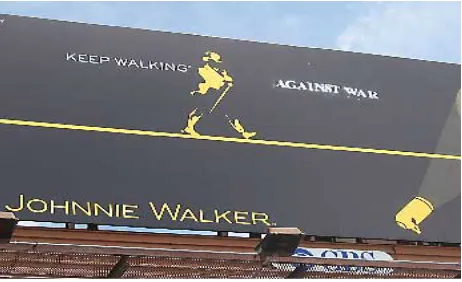
Figure 2.1 Billboard Liberation Front, Johnnie Walker Marches Against War, 2007
Figure 2.2 Ron English, Fat, Fucked Up & 50, 2005
Figure 2.3 Untitled, Reposition, 2009
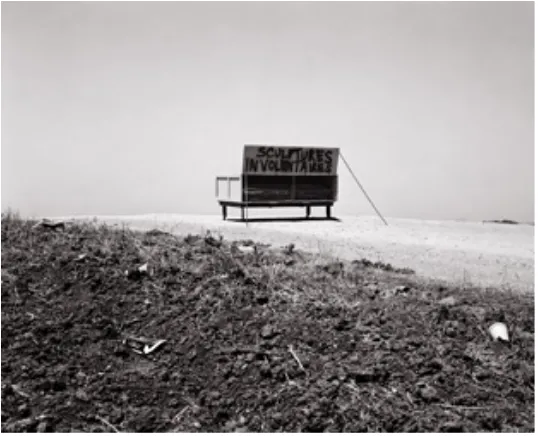
Figure 2.4 Shannon Ebner, Sculptures Involuntaires, 2006
Figure 2.5 Untitled, Reposition, 2009
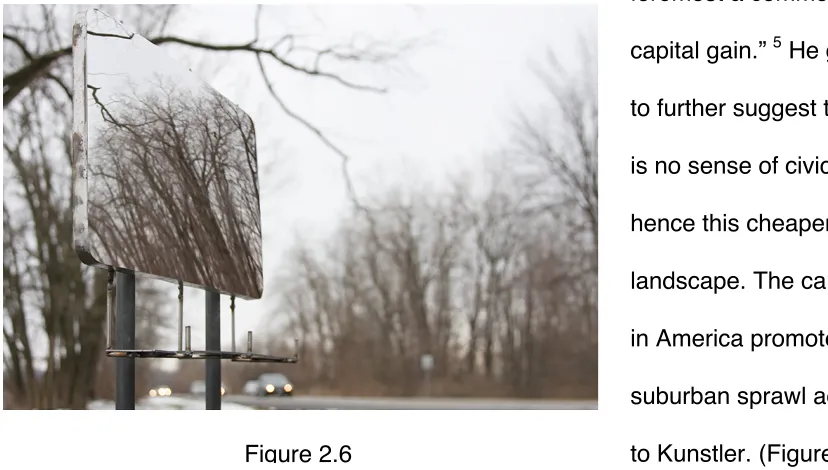
Figure 2.6 Untitled, Reposition, 2009
Figure 3.1 Thomas Cole, The Course of Empire, 1835-1836
Figure 3.2 Untitled, Reposition, 2009
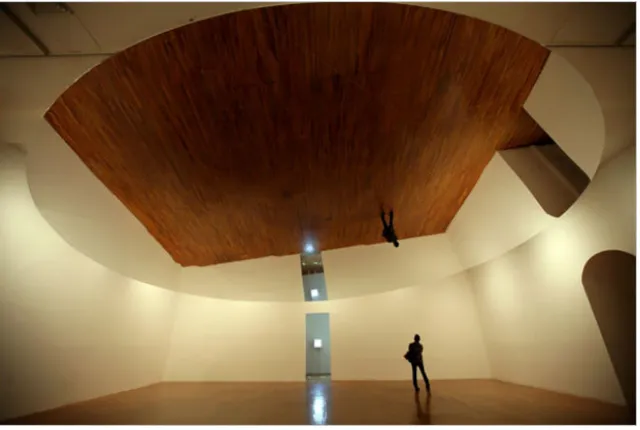
Figure 4.1 Olafur Eliasson, Take your time, 2008
Figure 5.1 Untitled, Reposition, 2009
Figure 6.1 Untitled, Reposition, 2009
I. Introduction
This visual project has evolved through my living in the foreign landscape of
upstate New York. The genesis of my work has evolved from the specific experience of
acquiring formal education in this geographic and cultural location into thinking deeply
and critically about my surroundings vis-à-vis the resulting thesis. By living in the
suburbs of Rochester, I have had a cultural experience unfamiliar to me. The process of
experiencing this landscape—especially the civic disharmony it projects to the practicing
image maker—made me rethink my creative work. This work emerged from thinking
about matters concerning our interactions with public space, the combination of nature
and the culture we inflict upon it. I believe this combination gives meaning to the term,
“Landscape.” By mentioning “nature” here, I use it to denote an outside environment
that includes biological activity that is untamed, yet still capable of being influenced by
human agency. This human agency takes the form of culture, i.e., that which
appropriates nature towards our social needs. Hence, this agency benefits the formation
of landscapes.
In my thesis work titled Reposition, I investigate the relationship between a
cultural artifact (the outdoor sign) and the landscape it occupies. The intrinsic nature of
outdoor signs have usually presented themselves to be somewhat of an eyesore to the
community. Through his wit, the American poet Ogden Nash voices his concerns with
the billboard:
Perhaps, unless the billboards fall, I'll never see a tree at all. 1
The paradox of this complaint and the helplessness in how one approaches the problem
of the replacement of the natural with the artificial is an interesting one. The artificiality
of outdoor signs and the way we fill our surroundings with them is in direct proportion to
our relationship with the landscape and our attitudes toward our landscape. Reposition
talks about both the natural and suburban landscapes. Even though this entire body of
work was shot in the western part of upstate New York, it is my intention that it
considers landscapes that have problematically designed spaces. The outdoor signs in
our landscape occupy various and generally high visibility locations such as highways,
busy intersections and so on. The role of these objects as imposing or having a
symbiotic relationship with the landscape is the one I am choosing to contemplate.
II. Geography
The Situationists used the idea of détournement as a way to reestablish
preexisting aesthetic elements to subvert and rethink the original message, i.e.,
“[Détournement] employs more direct reuse or faithful mimicry of the original works
rather than constructing a new work which merely alludes strongly to the original.” 2
Reposition employs a technique not like détournement but rather “a new work which
1 Nash, Ogden. The Face is Familiar; the selected verse of Ogden Nash (Boston: Little Brown and company, 1941), 21.
merely alludes strongly to the original.” 3 It takes into account not only the artificial form
of an outdoor sign and the message it displays, but also what it signifies within the
context of the surrounding landscape. The radical art group Urban Blooz (figure 1.1)
camouflages or equates the
billboard with a tree behind it.
This representation of a tree
on the face of the billboard
alters perception the same
way (figure 1.2) does. Urban
Bloozʼs public art aims to
subvert the standard
commercial aspect of the
message on the billboard
and instead takes into
account the surrounding
urban environment. The
two-dimensional image on
the billboard acts like a
puzzle piece of the actual
urban picture in the
background. The point of
view of the pedestrianʼs position while looking at the billboard plays an important role, as
[image:9.612.241.519.423.627.2]
3 Ibid.
Figure 1.1
that is when the billboard playfully interacts to create a confusion in perception within
the pedestrian. The viewerʼs perspective
of (figure 1.1) remains constant as the
medium itself is a two-dimensional
photograph. This allows very specific
framing of the subject matter as opposed
to Urban Bloozʼs public art. The
experience of the pedestrian (in Urban
Bloozʼs work) as opposed to the viewer (in Reposition) is very different. The
pedestrianʼs encounter with an actual billboard is an unmediated, first-hand, outdoor
experience which allows the pedestrian to be influenced by other outdoor stimuli during
it. This encounter is in continuous flux, whereas the photographs in Reposition are
highly controlled and filtered through my specific experiential perception and then
presented to the viewer.
Adbusters, Ron English and BLF (Billboard Liberation Front) are some of the
organizations and artists who use détournement effectively. Their cultural commentary
is often satirical, anarchistic and humorous when
talking about billboards; it is aimed specifically
towards the message on the billboard and little to
none on the landscape that surrounds it (figures
2.1-2.2). Whereas my thesis project, Reposition,
[image:10.612.72.303.112.253.2]attempts to take into account the cultural meaning Figure 2.1
[image:10.612.88.251.536.664.2]of these artificial objects within the landscape and investigates this relationship (figure
2.3)
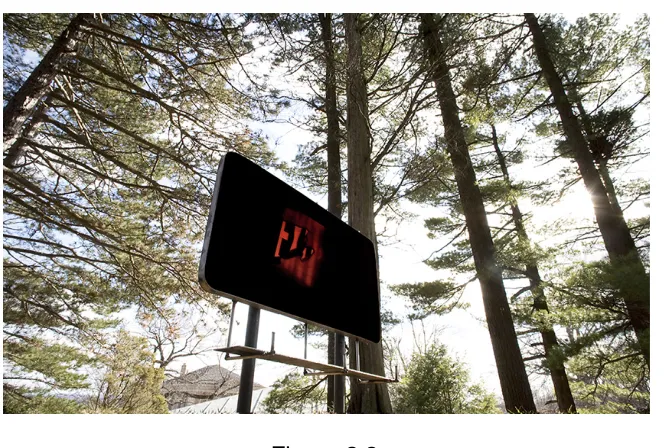
In this image, the
broken “exit” sign
acts as an escape
from the realm it
represents. Thus the
“exit” also acts as an
entrance into another
realm, a freedom that is at once granted and quickly reclaimed. Notably, the word
“realm” is used here to signify an idea rather than a physical space. Moreover, the
geographical space in which it is situated is a park with trees surrounding it with a shed
in the background. The location of this object enhances the idea of “exit.” The comfort
and pleasantness of the surrounding landscape complicates the notion of “exit from
where?” The park area where the billboard is situated provides a place of repose but
also reminds us of the presence of the artificial billboard.
Shannon Ebner, a photographer, constructs large cardboard letters in the
landscape and photographs them. The spaces she considers for photographing are
sparse and look dilapidated. She effectively explores language as an attempt to “free” it
[image:11.612.84.417.138.362.2]ambiguously phrased text, for
example, “Sculptures
Involuntaires” (figure 2.4). This
interacts with the surroundings to
re-contexualize the meaning of
the words the same way (figure
2.3) does.
Suburbs in America have
[image:12.612.80.349.77.295.2]been regarded as a place of
escape from city life. 4 Their infrastructure was historically designed to provide the
worker in the city an escape to a place of respite from the busyness and toils of city
living. However, this suburban ideal has deviated from its original intent into a place
receiving much criticism today. American suburbia was built under the precipice of
providing the worker an idyllic setting, a getaway, and once they returned to the city to
face the workday, they were refreshed and ready to be as efficient a worker as possible.
“Havens” were built on the borders of cities but the lack of civic art, the inattentiveness
to the spaces between buildings (housing complexes, shopping malls and government
buildings), lack of cultural institutions and repetitious architectural design gave way to a
monotonous way of living.
Despite these problems, however, suburbia in Rochester, very much akin with
American suburbia at large, has parks for recreational purposes. These Arcadian places
4 Kunstler, James Howard. The Geography of Nowhere: The Rise and Decline of Americaʼs Man-Made
Landscape (New York: Simon & Schuster, 1993), 26.
have provided myself with a getaway from suburbia itself, similar to the original intent of
suburbia as a getaway from city life. But the overlap of these parklands with the culture
of a suburban lifestyle do
not always work together.
This confusion faced by
myself when living
amongst a wealth of
natural resources and
lack of cultural enterprise
in terms of a continuous
and meaningful exposure
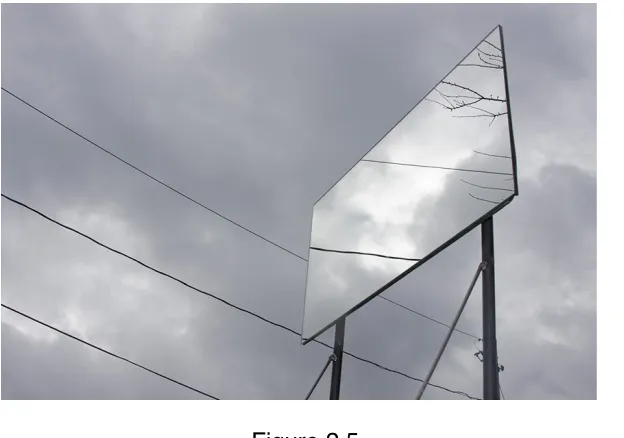
to cultural institutions is one that my thesis work contemplates. (Figure 2.5) was
photographed on the edge of Highland Park in Rochester. This park exists on the edge
of the city center and presents itself not only as combining a residential neighborhood
(within its geographical context) with a natural setting but also both the city dweller and
suburbanite a refuge. It holds a water reservoir and is host to a seasonal festival and
theatrical events. This place to me has often represented a space that welcomes
cultural encounters within a park setting. Acting as a bridge between the cultural and the
natural, the park in itself is a haven, but the greater city that surrounds it is problematic.
Classified as a tree garden, it was important for me to include branches in the
composition of this photograph. Monochromatic and ominous, the mood of the
[image:13.612.78.390.139.358.2]Clearly not showcasing the natural wonders of this park, I chose to photograph in a way
which hinted at flora but rather specifically stressed on the cloudy sky and electricity
wires.
James Howard Kunstler, a major critic of Americaʼs history and treatment of
urban planning and design (and himself a resident of upstate New York), speaks of the
“ugliness” of urban and suburban dwelling, of how this landscape is devoid of focal
points of visual interest. In his book, The Geography of Nowhere, his condemnation of
American land use and sarcastic tone underline the problem of suburbia. He says that
“American land law was predicated on the paramount principle that land was first and
foremost a commodity for
capital gain.” 5 He goes on
to further suggest that there
is no sense of civic art and
hence this cheapens the
landscape. The car culture
in America promotes
suburban sprawl according
to Kunstler. (Figure 2.6)
combines the object (the billboard as a medium of advertising and thus an instrument
for capital gain) and the landscape (the cars in the background). The image on the face
of the object is a remediated reflection of the surrounding landscape; it is intentionally
5 Kunstler, James Howard. The Geography of Nowhere: The Rise and Decline of Americaʼs Man-Made
[image:14.612.77.491.343.578.2]Landscape (New York: Simon & Schuster, 1993), 26.
manipulated by using photo editing software. This artifice still uses the symbolic quality
of billboards as it purposefully points out the complexity of the relationship between the
billboard and the surrounding landscape. While Rochester, in contrast to cosmopolitan
urban centers such as LA and Atlanta where the issue of city life is overrun by a car
culture, is not economically or culturally their equal, it provides a city experience that is
not congested and has places (e.g. Highland Park) as relief. It is the potential of this city
at large that throbs towards a drab suburban existence with a lack of city-like cultural
experience of which I am concerned about here. Another medium I would like to
reference here is nineteenth century painting and the idea of the American sublime. This
building apprehension towards a vast nation fulfilling its promise of settlement was
questioned by a literary and art historical canon. Before the nineteenth century in
America, there was very little American art or literature. Writers like Henry David
Thoreau and painters like Thomas Cole were at the forefront of this Romantic period
and sought to champion the ideals of nature and wilderness. This came at a time when
America was undergoing its industrial transformation. They believed that wilderness was
the seat of all transcendent values (of godliness) and so with the juggernaut of
settlement and industrialization they tried to determine that American wilderness was
the repository of the sublime. Their interest in romanticism and this notion of secular
faith in spiritual beliefs was gained from contemplating natural beauty. Thoreau lived at
Walden Pond which was situated at the outskirts of Boston in Massachusetts. While
living here he wrote Walden. He contrasts and compares the meditative aspect of living
of comparing the sound of a train whistle to natural sounds. Thomas Cole painted the
American landscape (figure 3.1) in
allegorical terms. The painting, The
Course of Empire, pictures the rise
and fall of the Roman empire in five
canvases. This series shows the
destruction of the Roman empire
from a stormy wilderness to an
Augustan City of huge temples, to the
fiery destruction of the city and finally to a peaceful city in ruins overwrought by vines
and creepers with no people. Thomas Cole was very apprehensive about the changing
America, and his paintings of the sublime posed as a warning to Americans (as shown
in this painting) of the material greed and the downfall from such a vice. To him, the
comfort gained from the
abode of nature as a safe,
warm, green and
sheltering realm remained
an antidote to the new
place called the industrial
city.
Reconsidering Cole
[image:16.612.75.321.112.293.2]in the light of recent social Figure 3.1
[image:16.612.72.384.445.655.2]concern for the environment and the preservation of those very ideas that both Thoreau
and Cole talked about (holding on to the already existing present while questing for the
sublime) is relevant to the mood of today. The sublime cannot be reached abstractly
with writing or painting alone; it is a physical space of which these artists talked about.
The contradiction of attaining the sublime while still trying to preserve the past is intrinsic
to the concerns of today as well. While there remains a growing concern for the
environment, humanity still strives for development and discovery and often this means
putting natural resources through a vulnerable stage. (Figure 3.2), when compared with
The Course of Empire, connotes the idea of this primacy of untamed nature with the
tree and branches taking over the entire composition including the billboard-object. The
monolithic billboard-object can be equated with the Augustan city and the treeʼs
branches with the vines and creepers. Both images show no human presence.
III. The Billboard and Illusion
I started my thesis with designing and building an object and think it is necessary
to speak about the process. The object I designed and built is a derived form of the
billboard. The first (in a series of five) was fabricated as a sculpture. It was meant to
stand in a gallery space with a message on it. The smallness of this billboard object was
initially conceived to stand in contrast with the “big” message across it. The importance
of this was to deny the rights of a billboard as a large, imposing sign and to ridicule it by
object then grew into five in a series, and I then decided to use it as a prop in
photographs rather than as a sculpture. The illusion of it as part of a photograph rather
than a sculpture was far more convincing and effective. I chose the description of a
billboard (when designing) as it is symbolic of outdoor advertising and is invasive,
prodigious and artificial in nature. I use the terms “billboard” and “outdoor sign”
interchangeably because the objects I have photographed are neither billboards nor
outdoor signs; they do not function as either. They are, however, metaphorically linked
to these objects that proliferate throughout our landscape. These objects that I have
built function as signifiers. They signify a deep and significant relationship between
nature and culture that transforms our landscape. As W.J.T. Mitchell writes:
Landscape is a natural scene mediated by culture. It is both a presented and represented space, both a signifier and a signified, both a frame and what a frame contains, both a real place and its simulacrum, both a package and the commodity inside the package.6
My thesis work was executed after considering these contemporaneous concerns about
landscape, as W.J.T. Mitchell also considers the landscape to be a medium and not a
genre.
Billboards are not naturally occurring objects in our surroundings, i.e., they have
a purpose and are thoughtfully placed in specific locations. The billboard attracts
attention through its size, placement and the advertising message it displays. The idea
of building an object was conceived specifically through careful observation of the
structure of billboards. I chose metal as a building material for two reasons. First, to
imitate the realistic look of the billboard acting in an outdoor scene and furthermore, the
weight of steel fixes this object in position in order for it to withstand harsh weather
conditions. I have altogether built five billboard-objects to use in my photographs. Each
one has a specific design and all are free standing. The portability and size of each
object is of utmost importance as when building these objects, each one is no wider
than fourteen inches, no taller than twenty inches and the heaviest of them is seventeen
pounds in weight. The reasoning behind having five differently designed objects is to
provide the viewer with aesthetic variation as well as keeping in mind the fact that actual
billboards in the landscape differ in design and size, hence this adds to the illusion of
the photographs in Reposition. Although these metal objects are welded together, small
and handmade (as opposed to industrial manufacturing) the intention is for them to
remind the viewer of a
huge object and are
photographed to create
this illusion of scale.
This size allows me to
place this object at any
location of my choosing
and thus talk about
[image:19.612.75.395.433.648.2]Most importantly, I have also chosen to place a mirror on the face of the
billboard-objects. This decision was made after photographing the object, initially
without a mirror, in the landscape and using photo editing software to manipulate the
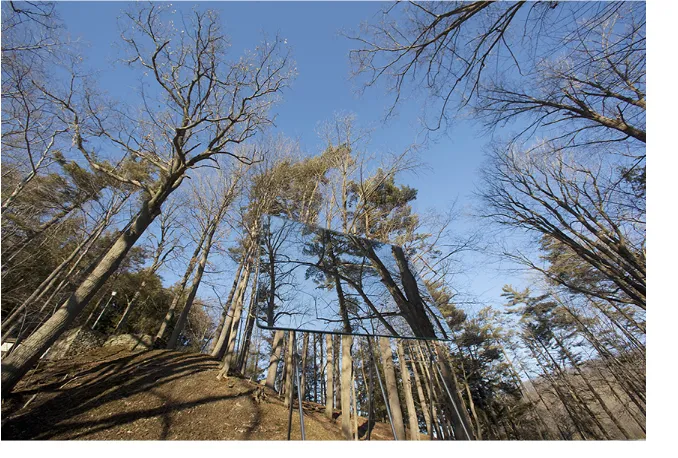
image on the billboard-object. The mirror acts as an illusory device, enhancing the
game-play between the image and viewer. Olafur Eliasson (Figure 4.1) has worked with
the idea of reflection by placing a huge circular mirror on the ceiling of an indoor gallery
space. Within this enclosed environment, the viewerʼs perception of place and self is
continuously shifting. This mirror, forty feet in diameter and weighing one thousand
pounds, is mounted at an angle and rotates at one revolution per minute. This results in
destabilizing the viewerʼs perception of space as they move beneath the mirror. The
mirror as used in Reposition is also inclusive of the viewer and acts as a metaphorical
reminder; the making of meaning in nature is through the actions of human agencyʼs
changing perception. The billboard-landscape relationship would not exist if it were not
for the viewer. The mirror thus reflects the actions of humans.
Jacques Lacan investigates the mirror image as an illusion. He talks about the
mirror stage as being a permanent structure of subjectivity in the relationship between
the imaginary and the real:
must find the opportunity for an essential integration. 7
In Reposition, it is our doing, our egos that are represented in the mirror, and it is always
an artifice, always imaginary. Even though it is an illusion, it is not a lie because it is a
simulation and not a conclusion of the relationship between the real and the imaginary.
The illusion is possible in these photographs because it works in a highly absurd and
abstract, yet believable way. The mirror as a reflector in the landscape works twofold
here: it is a highly subjective point of view (through the deliberate placement and
photographing of the billboard object) and therefore personal to my experience within
that space, and at the same time a reminder of things overlooked or unforeseen within
that space, literally reflecting a different point of view. Through this fabricated objectʼs
deliberate placement within the contextual landscape, itʼs mirrored gaze only subjects
what it partially reflects.
Peter Zumthor, the Swiss architect, writes of building, “In a society that
celebrates the inessential, architecture can put up a resistance, counteract the waste of
forms and meanings, and speak its own language." 8. The architectonic nature of the
form of these objects in the photographic scene they inhabit interact with their often
organic surroundings in a similarly meaningful way as architectural forms do. Through
this appropriation I borrow the aesthetic elements from an actual outdoor scene to
produce an imagined photographic scene that corresponds to the original idea (after
considering the original space that is dedicated to advertisingʼs effects).
7 Lacan, Jacques. The Four Fundamental Concepts of Psycho-Analysis. Edited by Jacques-Alain Miller. Translated from the French by Alan Sheridan. (New York: W.W. Norton & Company, 1981), 159.
The veracity of the photographs in my thesis work, Reposition, are immediately
questioned. The deliberate fiction (and absurdity) of these photographs transcends
reality in a way to overcome public space. Conventionally, traditional photography, as
opposed to other art media, has a relentless tendency to keep presenting reality as the
de facto reality. In Reposition, through illusion and artifice, I am forcefully aware of this
imagined reality and therefore accept it. The “truth claim” in these photographs, as Tom
Gunning puts it, “relies upon both the indexicality and visual accuracy of [the]
photographs.”9 The positioning of the bus on the face of the billboard-object (figure 5.1)
is where the doubt towards the reality of this photograph arises. The composition and
color are both elusive and regardful, respectively, to Gunningʼs claim.
[image:22.612.76.432.379.654.2]
9 Gunning, Tom. “Whatʼs the Point of an Index? Or, Faking Photographs”, (NORDICOM Review, vol. 5, no.1/2, September 2004), 41.
IV. Simulation
Umberto Ecoʼs essay, Travels in Hyperreality, talks about how we re-create
reality through realistic fabrications of it. The fabrications are an attempt to better reality.
These photographic simulations in Reposition are a way in which I “better” my
surroundings. Through the result of photographing I am presented with a changed
version of what I come across in everyday life; it is more beautiful, interesting and
fantastic. Eco, like Kunstler, denounces American landscape. He says in this essay,
which was written after his travels in America, he is in search of “the Absolute Fake” in
which imitations donʼt just reproduce reality but try to improve it. Through the production
of Reposition, I have indeed simulated reality, like the fabricated cities in the Epcot
Center in Disney World. Moreover, very much like Disney World, there is an underlying
sales pitch involved. Eco says of Disney World, "An allegory of the consumer society, a
place of absolute iconism, Disneyland is also a place of total passivity. Its visitors must
agree to behave like its robots." 10 Places like Disney World and Las Vegas remediate
real life experience by giving people easy access and simple answers. Reposition,
through its remediation, purposefully raises questions rather than provides easy
answers about our experience with the everyday outside. As Jean Baudrillard states:
The objects are no longer commodities: they are no longer even signs whose meaning and message one could decipher and appropriate for oneself, they are tests, they are the ones that interrogate us, and we are summoned to answer them, and the answer is included in the question.11
10 Eco, Umberto. Travels in Hyperreality. Translated from the Italian by William Weaver. (New York: Harcourt Brace Jovanovich, 1986), 48.
Baudrillard contested the replacement of reality and meaning with signs and images.
One of the ways in which simulacra (signs of media and culture which create the
perceived reality) are
different from reality is
through the
phenomena of
urbanization, that is,
what separates
humans from the
natural world. The
work in Reposition,
with illusion already
confirmed as its precept, therefore never identifies itself with simulacra and positions
itself with simulation.
Even though in both Reposition and Disney World the differences between the
artificial and the real are blurred, the message that is created in Disney World is quite
different from the one in Reposition. The world of illusion that is presented in Reposition
is cognizant of its illusory aspect (figure 6.1). Although the artificial object in this
photograph is flanked by the distorted trees around it, it neither acts in accordance nor
is it secondary to its surroundings; it immediately looks out of place and so do the trees
[image:24.612.79.418.172.401.2]can. Its Jungle Cruise ride promises a nature adventure through three different
continents. During this you are promised to see animatronic snakes, elephants, zebras
and exotic greenery (figure 6.2).
V. Note on Science and Politics
Neuroaesthetics is a new discipline that takes a scientific approach towards the
study of aesthetic perceptions of art. Seed magazine, in their article, “Beauty and The
Brain,” introduces us to new studies that are being developed that show how physical
spaces alter brain function. John Williams, the senior scientist at the Wellcome Trust in
London, suggests that the study of neuroaesthetics could reveal the underpinnings of
[image:25.612.80.390.167.410.2]interested specifically with Hugo Spiers, a neuroscientist at University College London,
who claims that “when someone traverses a space, their brain produces an oscillating,
rhythmic pattern.”12 The article goes in answer to claim that “such knowledge of spatial
cognition provides an understanding of the brainʼs response to the built environment
and can inform architects as they consider the aesthetic elements and function of a
space.”13 Reposition talks about space and suggests an alternate reality. It does not
claim to be a blueprint for the future but rather reminds us (and to an extent remedies)
the problematic built environment. This new science may supply an understanding of
images at a cognitive, biological level that will expand the social study of images
themselves.
(Figure 7.1) shows an effort by Israel to strengthen the city of Jerusalem by
[image:26.612.77.498.397.625.2]
12 Costandi, Moheb. “Beauty and the Brain”, Seed Magazine, October 2008, 14. 13 Ibid.
promoting its park space. Here, Palestinians are shown sitting amongst billboards as
part of a one hundred million development plan by the city to promote significant
religious and national heritage sites. Garbage dumps and wasteland are to be converted
into gardens and parks to welcome the resident or visitor with signs and displays
pointing out and educating them to important points in Jewish history. The display of
images in the landscape (figure 7.1) enhances and cultivates this political purpose by
the Israeli government. I, too, am deeply interested in following in this vein of the use of
images for political purposes that specifically recognize public space as a means for
recreation and education, i.e., not political propaganda, but rather a political purpose
that develops land use into the creation of parklands.
VI. The Exhibition & Conclusion
The manifestation of this digitally produced thesis work culminated in seventeen
prints in total. Fourteen of them were of twenty by thirty inches and three were of
fourteen by twenty-one inches. Three of these were presented as a triptych. The triptych
was presented as such because they were the only photographs that did not involve a
mirror in the composition, and while they had a similar composition, the only difference
between the three was the image on the billboard-object. The other fourteen
photographs used a mirror in the composition. The editing of a large amount of
photographs to just seventeen for the final presentation was done while keeping a few
second, to remind the viewer foremost of a landscape familiar to them despite the
previous statement; and third, the variation in the landscape in terms of the built
environment, climate, terrain and flora. These photographs were presented in a gallery
exhibition as a part of my thesis work under the title of Reposition. I chose this title as
suitable for my thesis work to use here in a twofold sense—to put in a new or different
position, and to adjust or shift oneʼs perspective. Hence, by shifting the location and
placement of these objects in the landscape, I am also continuously changing my
SELECTED BIBLIOGRAPHY
Bachelard, Gaston. The Poetics of Space. New York: Orion Press, 1964.
Baudrillard, Jean. Simulacra and Simulation. Ann Arbor: University of Michigan Press, c1994.
Bolter, Jay David, and Grusin, Richard. Remediation: understanding new media. Cambridge, Mass.: MIT Press, c. 1999.
Boorstin, Daniel J. The Image: A guide to pseudo-events in America. New York: Vintage Books, 1992.
Cosgrove, Denis. Geography and Vision: Seeing, Imagining and Representing the World. New York: St. Martin’s Press, 2008.
De Zengotita, Thomas. Mediated: how the media shapes your world and the way you live in it. New York: Bloomsbury, 2005.
Eco, Umberto. Travels in Hyperreality. San Diego: Harvest Books, 1990.
Fiore, Quentin and McLuhan, Marshall. The Medium is the Massage. New York: Random House, 1967.
Kunstler, James Howard. The Geography of Nowhere: the rise and decline of America’s man-made landscape. New York: Simon & Schuster, 1993.
Lacan, Jacques. The Four Fundamental Concepts of Psycho-Analysis. New York: W.W. Norton & Company, 1981.
Lefebvre, Henri. The Production of Space. Translated by Donald Nicholson- Smith. Cambridge, Mass.: Blackwell, 1991.
McLuhan, Marshall. Understanding Media; the extensions of man. New York: McGraw-Hill,1964.
Mitchell, W.J.T. Landscape and Power. Chicago: University of Chicago Press, 2002.
Thoreau, Henry David. Walden. Boston: Beacon Press, c2004.