
This is a repository copy of Selective non-catalytic reduction – Fe-based additive hybrid technology.
White Rose Research Online URL for this paper: http://eprints.whiterose.ac.uk/117443/
Version: Accepted Version
Article:
Daood, S.S. orcid.org/0000-0002-4580-2504, Yelland, T. and Nimmo, W.
orcid.org/0000-0001-5571-026X (2017) Selective non-catalytic reduction – Fe-based additive hybrid technology. Fuel, 208. pp. 353-362. ISSN 0016-2361
https://doi.org/10.1016/j.fuel.2017.07.019
[email protected] https://eprints.whiterose.ac.uk/
Reuse
This article is distributed under the terms of the Creative Commons Attribution-NonCommercial-NoDerivs (CC BY-NC-ND) licence. This licence only allows you to download this work and share it with others as long as you credit the authors, but you can’t change the article in any way or use it commercially. More
information and the full terms of the licence here: https://creativecommons.org/licenses/ Takedown
If you consider content in White Rose Research Online to be in breach of UK law, please notify us by
1
Selective non-catalytic reduction
–
Fe-based additive
1
hybrid technology
2
Syed Sheraz Daood*, Thomas S. Yelland, William Nimmo
3
Energy Engineering Group, Energy 2050, Department of Mechanical Engineering, University of 4
Sheffield, Sheffield, S10 2TN, UK. 5
HIGHLIGHTS 6
A Fe-based additive altered performance of selective non-catalytic reduction. 7
Pseudo-catalytic activity provides active sites for ammonia to reduce NO. 8
This interaction led to greater NO reduction and greater ammonia utilisation. 9
This is an economically viable opportunity for full-scale coal combustion plants. 10
ABSTRACT 11
Fe-based additives can be used to improve coal combustion and reduce NOx emissions; further to
12
this, iron oxide (Fe2O3) has been found to interact with ammonia. Therefore, it is critically
13
imperative to understand and assess the impact of the Fe-based additive on the use of ammonia 14
based selective non-catalytic reduction (SNCR) and to evaluate the economic feasibility of such 15
a combination for full-scale use. Experiments were performed using a 100 kWth down fired-16
2 while the ammonia input was varied between normalised stoichiometric ratios 0-3. This study 18
finds evidence of an interaction between the Fe-based additive and SNCR. The interaction leads 19
to greater ammonia utilisation and an increased NOx reduction due to the SNCR of >10%. The
20
interaction is theorised to be pseudo-catalytic with the fuel additive providing an active site for 21
ammonia to reduce NO. Using Carnegie Mellon University’s ‘Integrated Environmental Control 22
Model’ (IECM), this has been shown to create an economically viable opportunity to increase 23
SNCR effectiveness. 24
KEYWORDS 25
SNCR, NOx, coal, additive, ammonia, Fe 26
NOMENCLATURE 27
AFR – Ammonia flow rate (ml/min) 28
NH3– Ammonia utilisation efficiency
29
NOinitial– The concentration of NO in the flue gas prior to ammonia injection (ppm)
30
NSR – Normalised stoichiometric ratio 31
Q – Volumetric flow rate of air (ml/min) 32
33
1. INTRODUCTION 34
The use of coal for power generation has only grown in popularity across the world in spite of 35
leading nations pledging to maximise efforts to reduce the inevitable impact of climate change, 36
in solidarity with many other future affected nations. The focus of many energy researchers is 37
therefore to create opportunities for economical clean coal technologies, particularly regarding 38
innovative SOx and NOx control technologies.
3 NOx abatement technologies have been extensively reviewed [1] and are understood to be largely
40
split into two categories: combustion modification and post combustion abatement. The most 41
common combustion modification techniques include variations of low NOx burners and over
42
fire air (OFA); these can have the unintended side-effect of reducing the combustion efficiency 43
and increasing carbon in ash [2]. Nevertheless, they are a popular choice when a European plant 44
operator is in need of economical NOx reduction; this is due to only modest costs [2] and their
45
ability to reach the old Large Combustion Plant Directive (LCPD) (2001/20/EC) [3] emission 46
limits. Under the Industrial Emissions Directive (IED) (2010/75/EU), existing coal and biomass 47
plants over 500MWth and new coal and biomass plants over 300MWth in the EU are required to
48
keep their NOx emissions below 200 mg/Nm3 [4]. In the UK, this has been a costly and laborious
49
task, and has already seen a number of coal power plants opt-out and choose to shut down [5]. In 50
China and the US, these limits are even tighter reaching 100 mg/Nm3 [6] and 117 mg/Nm3 [7] 51
respectively. These emission limits effectively require plant operators to install a post-52
combustion abatement technology; this has forced a dilemma: accept the large financial blow but 53
secure long-term NOx compliance with selective catalytic reduction (SCR) or install selective
54
non-catalytic reduction (SNCR) at a low cost and risk intermittent limit breaches. This is a 55
simpler choice for those running on biomass, or co-firing with biomass, as initial NO 56
concentrations tend to be far lower. 57
SCR can achieve NOx reductions of up to 90% [2], however the catalyst that makes this possible
58
is prone to rapid fouling and the whole process is known to be very cost intensive (around 59
$2600-7400/ton of NO reduced [8]). SNCR is seen as a less attractive prospect with a 60
substantially lower maximum removal rate (in this paper found to be ~45%); however, it is 61
4 reduced [8]) than SCR. SNCR is also attractive due to being unaffected by fly ash and easily 63
modified to work with other NOx abatement technologies [9].
64
The technique of SNCR involves the reduction of NO by a reagent, usually ammonia or urea, at 65
a temperature window between 850 °C and 1175 °C [2]. The reagent, ammonia in this study, 66
reacts with hydroxyl radicals (OH) to form an amidogen radical (-NH2):
67
(R1) 68
This radical is selectively reactive towards NO and primarily reacts in the following reactions: 69
(R2) 70
(R3) 71
Reaction (R3) is important because it is a chain branching reaction that regenerates OH radicals 72
needed for the chain propagation reaction (R1). However, the NNH radical undergoes a further 73
reaction: 74
(R4) 75
Which leads to: 76
(R5) 77
The H atom is then involved in a chain branching reaction to create more hydroxyl radicals. 78
Therefore, even though reaction (R3) is not as efficient as reaction (R2) at reducing NO, it is just 79
as vital because it leads to the SNCR process being self-sustaining. 80
5 Another option would be to install SNCR while also capitalising on the research highlighting the 82
tendency of Fe to reduce NO [10] [11] [12]. In Daood, et al. (2014, 2014), a commercial Fe-83
based fuel additive, for use with pulverised coal combustion, was demonstrated and discussed 84
[13] [14]. This technology was found to reduce NO emissions, reduce carbon in fly ash and 85
increase combustion efficiency. This fuel additive technology has proven to be potentially 86
beneficial for coal power generators and may provide the extra NOx reduction needed to comply
87
with emission limits. However, the main constituent of the Fe-based additive, iron oxide (Fe2O3),
88
has been reported to display SCR like properties [15]. Considering the plurality of encouraging 89
research into the in-flame NO reduction benefits of Fe [10] [11] [12] [13] [14] and investigations 90
into the effect of alternate additives on NO reduction in SNCR [16] [17], it is unexpected that 91
there is a knowledge gap regarding the potential effect of Fe on SNCR. 92
Previously, fuel additives for pulverised coal combustion have received a sceptical view, as seen 93
by a 1994 European Commission report that found many manufacturers’ claims to be unjustified 94
[18] and, later, a 2007 report by IEA Clean Coal Centre which commented on a general 95
ineffectiveness of commercially available additives [19]. It is, therefore, categorically imperative 96
for detailed investigation of promising additives to be undertaken to answer any outstanding 97
questions and allow operators to benefit from technological development. Recently, there have 98
been positive industrial trials for some new coal additives, including Pentomag 2550 I; which, 99
when used in a coal fired boiler, was found to achieve fuel savings of 7.36% which amounted to 100
net savings of 2038000 rupees [20]. 101
Although fuel additives technologies have not been widely adopted, the use of process additives 102
to boost SNCR performance has been extensively studied. This involves controlling the 103
6 [22], carbon monoxide [21] [23] and hydrocarbons [23] [24] or introducing reagents to influence 105
process conditions, such as hydrogen peroxide to provide a rapid source of hydroxyl radicals 106
[25]. In general, they were found to produce desirable effects such as lowering the optimal 107
temperature window for SNCR; however, this was accompanied by decreased maximum NO 108
reductions, decreased selectivity and greater conversion of NO to NO2. From these studies, it is
109
implicit that there is a desire and drive to improve SNCR performance. This drive could be 110
legislative, environmental or economical in nature, and, as of yet, there has been little success in 111
finding a commercially viable option. Hybrid SNCR-SCR technologies have also been 112
demonstrated as an option to maximise NOx reduction due to SNCR, providing up to 75%
113
reduction [26] while eliminating ammonia slip using a volumetrically smaller SCR. However, 114
further demonstrations found issues regarding the flue gas temperature through the catalyst and 115
arsenic poisoning of the catalyst [27]. 116
Therefore, the aim of this study is to identify a novel hybrid of Fe-additive - SNCR to boost 117
SNCR performance with the intention to help power generators achieve NOx legislation
118
requirements. The objectives are: to critically assess the impact of the Fe-based additive on the 119
use of SNCR and to evaluate the economic feasibility of such a combination. This study finds 120
that the Fe-based additive has a positive impact on SNCR in terms of NOx reduction and reagent
121
consumption, while also proving to be an economical option for improving SNCR performance. 122
2. METHODOLOGY 123
2.1. Pilot Scale Test facility. 124
The 4 m tall pulverized fuel (PF) combustion test facility (CTF) consists of eight modular 125
7 fixed block swirl. The walls of the top sections behind the refractory are water-cooled to avoid 127
temperature creep and provide stable operating conditions. The PF rig is designed up to 100 kWth
128
input of coal ranging from 15-20 kg.h-1 based on the calorific value of the fuel. The coal feeding 129
arrangement contains a Rospen twin-screw feeder, with an uncertainty of ±0.5%, and a vibratory 130
feeding tray. The Fe-based additive is added to the coal vibratory tray through a smaller separate 131
feeder with a single fine pitch screw. This smaller feeder can be calibrated to feed the Fe-based 132
additive from 0.27 kg.h-1 to 1 kg.h-1; a 3 point calibration is done on this feeder to give 133
repeatability confidence. The output from the vibratory tray is fed into the primary air. Due to the 134
turbulent nature of the primary air and the length of pipe between the vibratory tray and the 135
burner (roughly 9-10 m), it can be assumed that the additive and coal are homogenously mixed 136
when arriving at the burner. The majority of the combustion air is split between the primary 137
(carrier) air and secondary air, which is supplied through a dedicated compressor and a blower 138
fan. 139
The flue gas is monitored using a water-cooled probe inserted at a sample port in the eighth 140
section located in proximity to the flue point of the CTF; this sample then passes through a series 141
of filtration and conditioning units to remove water vapour and particulates. The sample probe is 142
periodically purged using compressed air to remove condensed water and deposited fly ash 143
which may block the probe or influence measurements. The concentrations of the major flue gas 144
constituents, NOx, CO2, CO and O2, are measured using chemiluminescence, non-dispersive
145
infra-red and paramagnetic based standard instruments respectively. Further details of the test 146
facility have been discussed in Daood et al. (2014, 2014) [13] [14]. 147
The arrangement for the ammonia injection consisted of a specialized mixing skid with 148
8 The momentum induced by the mixed nitrogen helps induce thorough mixing of the injected 150
ammonia into the hot gas mixture inside the furnace. The ammonia and nitrogen mixture, 151
through a water-cooled injection probe, is introduced at the module that provides a compromise 152
between highest possible NO reduction and lowest possible ammonia slip as discussed in section 153
3.1. This arrangement benefits in the maximum reactivity of the reducing amides with the oxides 154
of nitrogen within the optimum temperature window (850 oC to 1100 oC). The appropriate 155
ammonia flow rate (AFR) is calculated using: 156
157
The NSR is a term used to standardise the desired NOx reduction between different reagents, e.g.
158
a NSR of 1 will theoretically reduce 1 mole of NO and requires 1 mole of ammonia or 0.5 moles 159
of urea. The calculated ammonia flow rate is converted to an arbitrary flow value using the 160
manufacturer’s calibration chart. 161
2.2. Experimental method. 162
Once the aforementioned temperature ramp from the switch to coal from propane has levelled off 163
at ~1300 °C, steady state is assumed to be achieved and the NO concentration in the flue gas is 164
designated as the coal baseline level. Following the acquisition of sufficient data points, 165
approximately 100-120 points (with one reading every ten seconds), at the coal baseline, 166
ammonia is added at a flow rate to give a desired NSR. The NSR range under investigation is 167
between 0-3. This is because during preliminary tests, it was discovered that above a NSR 3 the 168
self-inhibition effect is observed and NOx reduction is greatly decreased. After all the desired
169
NSRs have been investigated, the ammonia addition ceases and there is a return to coal baseline. 170
9 based additive is then added and the steady state NO reduction is observed. Using the NO 172
concentration in the flue gas for the Fe-based additive baseline as NOinitial, ammonia is
re-173
introduced to the system at the same NSRs as before. Each combination of NSR and Fe-based 174
additive concentration is observed and recorded for approximately ten minutes. This gives a 175
direct indication of the effect of Fe-based additive on the NO reduction by SNCR. A simplified 176
infographic of the experimental procedure can be seen in figure 1. 177
2.3. Coal characterisation. 178
The coal used to collect the data presented here is Durrans grade 240 coal, the as-received 179
ultimate analysis and calorific value is displayed in table 1. 180
3. RESULTS AND DISCUSSION 181
3.1. Optimisation of the SNCR: Effect of the NH3 injection (distance from the wall- 182
temperature window) on the NOx reduction 183
A major issue concerning the implementation of SNCR regards how successfully the injected 184
ammonia would react with the flue gas NO within the optimum temperature window. This effect 185
has been studied by varying the dilution rate of the nitrogen, the radial injection position and the 186
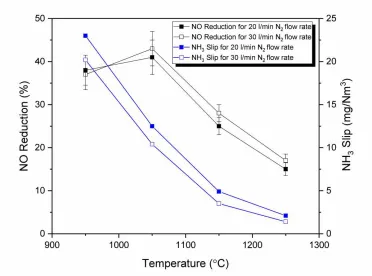
axial position for the optimum temperature window. Figure 2 summarises the impact of the axial 187
position with varying dilution rate of the nitrogen on the NOx reduction and ammonia slip
188
(mg/Nm3). The NO reduction rate is reduced below 1000 oC causing an increase in the ammonia 189
slip; this could result initially in the formation of the ammonia sulphates, which usually re-190
condenses in the flue gas path post convective section of the boiler. Similarly, the reaction rate is 191
slowed down above 1100 oC due to oxidation of the ammonia as evident from the near zero 192
ammonia slip values. Usually a subtle balance must be established to gain the maximum NOx
10 reduction at the expense of minimum ammonia slip without compromising the overall secondary 194
installations of the plant. This fine balance can also be greatly affected by the uniform and 195
effective dispersion of the reducing ammonia within the flue gas path at the correct temperature 196
window. Figure 3 illustrates the effectiveness of the radial dispersion position of the injected 197
ammonia towards NOx reduction. The maximum NOx reduction is achieved at the 150 mm radial
198
position of the injection probe from the sidewall. The effectiveness of the homogeneous 199
distribution of the injected ammonia has a direct impact on the reactivity rate. Nitrogen carrier 200
flowrate of 30 l/min with injection probe at 150 mm position from the wall ensured a greater 201
penetration depth for the reactions resulting in the highest NOx reduction. It is evident that the
202
overall penetration of the reducing agent, especially when injected at the right angle close to the 203
sidewall, is less; this substantially improves at 150 mm traversed position. This could be due to 204
the improved lateral and radial mixing of the penetrated reducing agent at that specific location. 205
3.2. Effect of Fe-based additive on SNCR 206
Following a simplified and prolonged procedure to that described in section 2.2, figure 4 207
summarises the benefit of utilising the fuel enrichment process with SNCR for NSR 1.5 by 208
presenting the NO concentration in the flue gas as the conditions in the CTF are changed, 209
including the addition of the additive and ammonia. Figure 4 shows that there is a clear 210
additional benefit to the NOx abatement potential of combining Fe-based additive with SNCR,
211
with NO concentrations in the flue gas reducing from ~750 ppm to ~375 ppm. The only repeated 212
conditions were for coal and Fe-based additive baselines. This represents the overall tolerance 213
for the established baselines to be within 5% confidence for the CTF. The methodology adopted 214
for this continuous data log was to highlight the varying impact of SNCR with respect to solely 215
11 window, i.e. 1000oC < optimum temperature window < 1100oC, and NSR = 1.5, with 30 l/min of 217
carrier nitrogen. 218
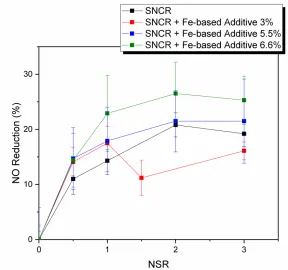
Figure 5 directly compares the NO reduction rates of SNCR with the combined SNCR-Fe- 219
additive hybrid, including varying concentrations of the additive in the fuel, as the NSR 220
increases. The SNCR reduction rate is with respect to the coal baseline value of NO in the flue 221
gas and the combined reduction rates are with respect to the Fe-based additive baseline values of 222
NO in the flue gas. Therefore, the initial NO concentration for the combination is lower and 223
SNCR should be less effective [2]. 224
However, figure 5 clearly shows greater SNCR effectiveness in the presence of Fe-based 225
additive, indicating that the presence of the additive at the location of ammonia injection, module 226
5 (2.24m axial distance from the quarl), is facilitating NO reduction due to ammonia. The low 227
ammonia region (NSR < 1) has a similar NO reduction for all Fe-based additive concentrations, 228
which is an indication that additive concentration is relatively independent to the mechanism at 229
this stage. The reduction rates of the hybrid proceed to diverge when NSR > 1, and the 230
concentration of additive starts to affect the effectiveness of the SNCR. The greatest reduction is 231
observed with the greatest concentration of additive, this implies that the additive may be acting 232
as an active site for NO reduction by ammonia. When the additive concentration is reduced, a 233
lower reduction is observed. This could indicate that active sites on the fuel additive are 234
becoming completely occupied and that the number of active sites limits this NO reduction 235
mechanism; this also can lead to a negative effect on NO reduction as seen for a 1.5 NSR and 3% 236
Fe-based additive (this is further discussed in section 3.3 and figure 11). When investigating an 237
error of two standard deviations from the mean in figure 5, there is obvious variation associated 238
12 the coal’s chemical composition. However, the trends associated with each condition remain 261
confirmed on the basis of the average mean values. 262
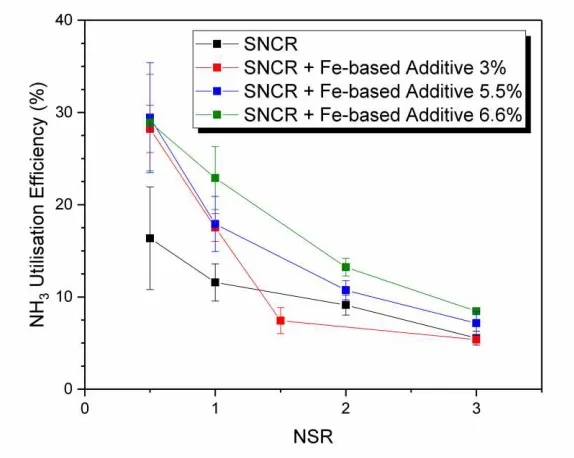
Figure 6 shows the effect of the fuel additive on ammonia utilisation efficiency of SNCR, where 263
the ammonia utilisation efficiency is calculated using [28]: 264
265
This property represents the proportion of reagent that is used to reduce NO, with the remaining 266
reagent either oxidised by oxygen or lost in slip. The initial NO concentration used for the SNCR 267
values is the NO in the flue gas at the coal baseline, whereas the initial NO concentration used 268
for the hybrid is the NO in the flue gas at the Fe-based additive baseline. 269
Figure 6 shows that at NSR ≤ 1, the NH3 utilisation efficiency is far larger for the hybrid
270
technology; therefore, SNCR in the presence of the additive is far more effective. At NSR = 3, 271
the efficiencies for each scenario come close to converging; this suggests that as more ammonia 272
is introduced, the active sites become full and the SNCR NO reduction mechanism becomes the 273
more active mechanism. This effect can be seen at lower NSRs for a lower concentration of 274
additive, implying that there is a relationship between the two. The lack of ammonia slip is a 275
vital parameter that also indicates a high NH3 utilisation efficiency. Figure 6 includes a
276
representation of a two standard deviation error; this reaffirms the analysis that there is a great 277
increase in ammonia utilisation when the additive is present. 278
The reductions observed in this study may not be the highest reduction possible; this is due to 279
two factors. One is that the residence time between ammonia injection in the CTF and flue gas 280
13 ammonia injection is 1100 °C (±8 °C); this is on the high end of the optimum temperature 282
window for SNCR and therefore may be affected by NH oxidation system that becomes 283
competitive with the NO reduction mechanism at ~1200 °C. 284
3.3. Catalytic interaction between Fe-based additive and SNCR 285
When using Fe-based additive in conjunction with the conventional NOx abatement technique,
286
an additional ‘bonus’ reduction was expected. This cumulative reduction was predicted to work 287
as so: the additive would have the same effect as reported in Daood, et al. (2014, 2014) [13] [14] 288
within the quarl and the first 4 sections of the combustion test facility and then in section 5, the 289
location of the ammonia injection, there would be reduction due to the selective non-catalytic 290
properties of ammonia. However, the reduction observed did not follow the expected cumulative 291
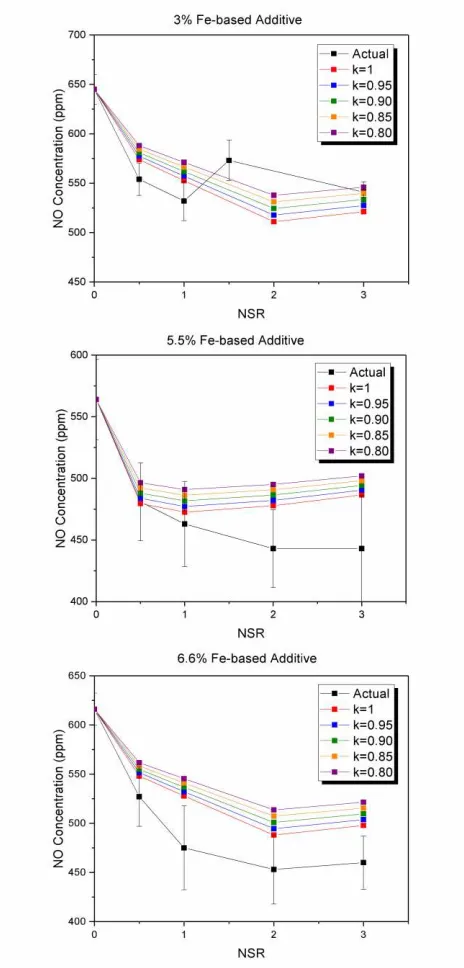
trend. Figure 7 displays the observed reduction of NO concentration in the flue gas with varying 292
degrees of additive concentration in the coal inlet compared with a number of scenarios that 293
would have represented cumulative reduction. If a cumulative effect were taking place then the 294
observed results would fall in line with the predicted results. Since the initial NO concentration is 295
lower when the additive is present, due to the in-flame reduction caused by the Fe-based 296
additive, the reduction due to SNCR will be slightly decreased [2]. Therefore, a k factor was 297
applied to simulate that lower reduction effect; where a k factor of 0.9 indicates that the SNCR is 298
90% as effective compared to when the additive is not present (and the initial NO concentration 299
is at coal baseline levels) and a k factor of 1 indicates no change in SNCR performance. The 300
14 302
Where SNCR%NSR is the NO reduction due to SNCR at a given NSR and [NO]additive is the
303
concentration of NO in the flue gas at the additive baseline. 304
This suggests that the cumulative reduction is not the active mechanism here. When there is 305
assumed to be no drop in effectiveness of SNCR (k=1), the NO reduction is not as great as 306
observed. Under an increasing Fe-based additive concentration in the coal feed, there is a greater 307
divergence in NO reduction between the observed results and the predicted results. The data 308
from the trial with 3% Fe-based additive, shows that at an NSR 3, the observed NO reduction is 309
similar to a predicted reduction with a 15% (k=0.85) decrease in effectiveness of SNCR. 310
However, the observed trend before this point (NSR ≤ 1.5) is vastly different from the predicted 311
trends. This all suggests that there is an interaction between the additive and the ammonia. When 312
investigating the uncertainty surrounding the observed results using two standard deviations 313
from the mean, it remains apparent that it is improbable that cumulative reduction is the active 314
mechanism. This is summarised by the majority of the data from the k factor conditions is 315
outside the 95% accuracy range of the observed values. 316
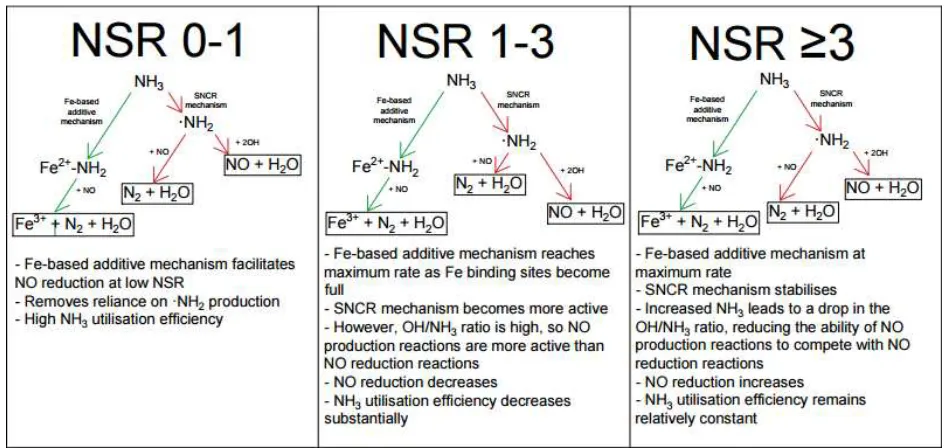
Figure 8 shows a mechanism suggested by Apostlescu, et al., (2006) [15] where iron oxide was 317
tested as a catalyst for NO reduction by SCR. This Eley-Rideal mechanism involves an ionised 318
iron atom acting as a binding site for the ammonia creating an amide, which in turn reduces the 319
NO to N2, therefore facilitating the NH3/NO reduction mechanism by removing the reliance on
320
hydroxyl radicals to initiate the mechanism by reacting with ammonia. 321
Figure 8 may, also, help explain why the fuel additive becomes detrimental for additive 322
15 active sites is exhausted, the SNCR mechanism becomes active once again and the reaction (R1) 324
is initiated: 325
(R1) 326
However, the ratio of hydroxyl radicals to ammonia molecules is very large compared to solely 327
SNCR at the same NSR. The high hydroxyl concentration enables the reaction (R6) to compete 328
with, and even become dominant over, reactions (R2) and (R3). 329
(R6) 330
The imidogen (NH) produced from reaction (R6) is then oxidised to NO; this results in a greatly 331
decreased NO reduction and NH3 utilisation. This phenomenon is usually observed when SNCR
332
is undertaken at a temperature far above the optimum, as the reaction rate of hydroxyl radical 333
creation reactions are greatly increased. Returning to figure 5, as the NSR is increased past 1.5 334
the 3% additive concentration scenario shows an increase in NO reduction. The greater ammonia 335
concentration would lead to a greater reaction rate for reaction (R1), increasing the concentration 336
of NH2 but decreasing the concentration of OH radicals. Since NH2 favours reducing NO, the
337
reaction (R6) will no longer be as competitive with the reactions (R2) and (R3), the system will 338
stabilise and NO elimination will become greater than NO formation. A pictorial representation 339
can be seen in figure 11. 340
Although there appears to be a catalytic type effect, this mechanism cannot be described as SCR. 341
Within SCR systems at temperatures above ~750 °C, NOx reduction will rapidly decrease due to
342
the increasing competition of ammonia combustion reactions with NO reduction reactions [29]; 343
i.e. the system is no longer selective and will lead to low ammonia utilisation efficiency and high 344
16 The Fe-based additive and SNCR hybrid technology is also far less sensitive to dust compared to 346
conventional catalysts used in SCR applications; especially the typical catalyst poisons, which 347
can have a substantial impact on a plant’s balance sheets. The benefits of the Fe-based additive 348
[13] have already proven to be scalable (i.e. small-scale: 100 kWth and plant-scale: 233 MWth);
349
therefore it is also expected that the hybrid catalytic effect of the fuel additive and SNCR from 350
the small-scale tests could be a good precursor of the full-scale demonstrations. 351
3.4. Possible economic impact of Fe-based additive 352
The effects on NO reduction and NH3 utilisation efficiency combine to reduce the optimum NSR
353
for the SNCR from 2 to 1, displayed in figure 9. The reduction of the optimum NSR is an 354
opportunity for pulverized coal power generators to make substantial savings on chemical costs, 355
while continuing to meet NOx reduction legislation. Decreasing the quantity of ammonia into the
356
system would also have a positive effect on the potential ammonia slip; this could be key for 357
operators that see ammonia as becoming a fully regulated pollutant. 358
An alternative economic benefit would be to use the additive without altering the ammonia 359
flowrate to greatly enhance the SNCR system and achieve a greater NO reduction. This region of 360
NO reduction would be accessible without the additive but would dramatically increase reagent 361
costs and the likelihood of a prominent ammonia slip. Carnegie Mellon University’s ‘Integrated 362
Environmental Control Model’ (IECM) was used to show how effective Fe-based additive would 363
have to be to achieve an economic benefit over increasing ammonia input. A generic 650MW 364
pulverised coal fired boiler was modelled with a capacity factor of 47% using a coal with an 365
equivalent proximate make up to Durrans grade 240 coal. The NOx emission rate was altered to
17 0.5202 mg/kJ to give a similar initial NO concentration to that of the flue gas during the steady 367
state coal baseline within the CTF. 368
The model offers the integration of a number of environmental controls. To best simulate a 369
conventional modern coal fired power plant, wet flue gas desulphurisation, cold side electro-370
static precipitators, low NOx burners and SNCR were used. The option to include OFA was not
371
available with SNCR. The LNBs were said to account for a 30% reduction in NOx [1], and the
372
SNCR was said to account for another 30% reduction [30]. The reduction capability of the 373
SNCR was increased while observing the OPEX (operating expenditure). The NO in the flue gas 374
followed a linear reduction while the OPEX increased dramatically and the ammonia slip 375
increased beyond advisory levels. 376
Using the Fe-based additive at the baseline SNCR conditions (30%) is likely to increase the NO 377
reduction by SNCR to ~45%. The OPEX associated with using the Fe-based additive at 5.5% of 378
the coal feed rate with SNCR operating at 30% was compared with the values of the OPEX from 379
the IECM scenarios in which the SNCR was operating at 30% and 45% NO reduction. This 380
comparison can be observed in figure 10. The OPEX for the Fe-based additive scenario was 381
calculated by combining the estimated cost of the additive with the total OPEX of the IECM 382
scenario in which the SNCR is running at 30%, assuming a cost of £45/tonne. Figure 10, 383
therefore, shows that use of the Fe-based additive provides the plant operator with a unique 384
opportunity to reduce NOx emissions while only increasing OPEX by ~$5M/yr compared to
385
~$30M/yr and without the worry of an unacceptable ammonia slip. The combination of the 386
additive’s in-flame NOx reduction, the NOx reduction due to LNBs and the increased
387
effectiveness of SNCR could, cumulatively, help a plant operator to comfortably meet NOx
388
18 This hybrid technology could even prove to be a financially viable alternative for the costly SCR 390
system. Using the IECM, an identical plant with SCR running at 80% NOx removal and using a
391
catalyst with a cost of $10,000/m3 [31] was simulated. This showed that although SCR would 392
only have a slightly higher OPEX than the hybrid technology, the annualised capital cost is 393
almost $5million/yr greater, indicating that this is not a sustainable option for most generators. 394
On the other hand, this figure is likely to be practically inaccurate as the model is for a new build 395
plant. The EPA claim that retrofitting an existing boiler with SCR exhibits a higher CAPEX 396
(capital expenditure) [32], with 30% of this increased CAPEX being attributable to demolition of 397
structures and relocation of displaced equipment [33]. Therefore, this furthers the argument for 398
using the fuel enrichment process in conjunction with SNCR as retrofitting is minimal and 399
requires no down time; meaning no loss in revenue from the plant and negligible capital needed 400
for the retrofitting process. 401
4. CONCLUSIONS 402
From the data presented here, it is evident that there is an interaction between the Fe-based 403
additive and ammonia during selective non-catalytic reduction (SNCR). A combination of these 404
technologies can increase the NOx reduction by SNCR by >10% and provide a greater ammonia
405
utilisation efficiency, which could decrease the chance of ammonia slip. The interaction between 406
the technologies is theorised to be a pseudo-catalytic reaction between the ammonia and one of 407
the major components of the fuel additive, iron oxide. The iron oxide is theorised to act as a 408
binding site for ammonia, facilitating contact between the reagent and the NO and increasing the 409
number of NO reduction reactions. This theory is used to explain why there is not only an 410
increased NO reduction, but also, the greater ammonia efficiency. The possible financial benefits 411
19 economic impacts. This showed that use of the Fe-additive - SNCR hybrid technology has a 413
modest impact on the OPEX but creates a unique scenario where the NOx reduction observed
414
would not be economically feasible when SNCR is exclusively applied. The Fe-additive - SNCR 415
hybrid technology was also shown to be an economically viable alternative to SCR. Therefore, 416
the hybrid is a credible alternative to hybrid SNCR/SCR and process additives for power 417
generators wishing to improve their SNCR performance. 418
AUTHOR INFORMATION 419
Corresponding Author 420
* Dr. Syed Sheraz Daood, Level 1, Arts Tower, Energy Engineering Group, Energy 2050, 421
Department of Mechanical Engineering, University of Sheffield, Sheffield, S10 2TN, UK. 422
Email: [email protected]; [email protected] 423
Author Contributions 424
The manuscript was written through contributions of all authors. All authors have given approval 425
to the final version of the manuscript. All the authors contributed equally. 426
427
428
Acknowledgement 429
The authors are grateful to International Innovative Technologies UK Ltd (Unit 5 Queens Court, 430
Third Avenue, Team Valley Trading Estate, Gateshead, NE11 0BU) for providing access to the 431
20 REFERENCES
433
[1] Skalska K, Miller JS, Ledakowicz S. Trends in NOx abatement: A review. Science of the 434
Total Environment, 2010; 408: 3976-89. 435
[2] Javed MT, Irfan N, Gibbs BM. Control of combustion-generated nitrogen oxides by selective 436
non-catalytic reduction. Journal of Environmental Management, 2007; 83: 251-89. 437
[3] European Union. Large Combustion Plants Directive, 2001/20/EC, Brussels, Belgium. 438
[4] European Union. Industrial Emissions Directive, 2010/75/EU, Brussels, Belgium. 439
[5] DECC. Running hours during winter 2013/14 for plants opted-out of the Large Combustion 440
Plant Directive (LCPD),
441
https://www.gov.uk/government/uploads/system/uploads/attachment_data/file/357531/LCPD.pdf 442
; 2014 [accessed 26.03.17]. 443
[6] IEA Clean Coal Centre. Emissions standards: China, http://www.iea-444
coal.org.uk/documents/82539/9516/China; 2015 [accessed 22.05.17]. 445
[7] IEA Clean Coal Centre. Emissions standards: USA, http://www.iea-446
coal.org.uk/documents/82575/9515/United%20States%20of%20America; 2015 [accessed
447
22.05.17]. 448
[8] Neuffer B. NOx Controls for Existing Utility Boilers, 449
https://www.epa.gov/sites/production/files/2015-07/documents/nescaum2.pdf; 2015 [accessed 450
26.03.17]. 451
[9] Hampartsoumian E, Folayan OO, Nimmo W, Gibbs BM. Optimisation of NOx reduction in 452
21 [10] Lissianski VV, Maly PM, Zamansky VM, Gardner WC. Utilization of Iron Additives for 454
Advanced Control of NOx Emissions from Stationary Combustion Sources. Industrial and 455
Engineering Chemistry Research, 2001; 40: 3287-93. 456
[11] Fennell PS and Hayhurst AN. The kinetics of the reduction of NO to N2 by reaction with 457
particles of Fe. Proceedings of the Combustion Institute, 2002; 2179-2185. 458
[12] Lasek JA. Investigations of the reduction of NO to N2 by reaction with Fe under fuel-rich 459
and oxidative atmosphere. Heat Mass Transfer, 2014; 50: 933-43. 460
[13] Daood SS, Ord G, Wilkinson T, Nimmo W. Fuel additive technology – NOx reduction, 461
combustion efficiency and fly ash improvement for coal fired power stations. Fuel, 2014; 134: 462
293-306. 463
[14] Daood SS, Ord G, Wilkinson T, Nimmo, W. Investigation of the Influence of Metallic Fuel 464
Improvers on Coal Combustion/Pyrolysis. Energy & Fuels, 2014; 28: 1515-23. 465
[15] Apostolescu N, Geiger B, Hizbullah K, Jan MT, Kureti S, Reichert D, et al. Selective 466
catalytic reduction of nitrogen oxides by ammonia on iron oxide catalysts. Applied Catalysis B: 467
Environmental, 2006; 62: 104-114. 468
[16] Li T, Zhuo Y, Chen C, Xu X. Effect of CaO on NH3+ NO + O2 reaction system in the 469
absence and presence of high concentration CO2. Asia-Pacific Journal of Chemical Engineering, 470
2010; 5: 287-293. 471
[18] Hao J, Yu W, Lu P, Zhang Y, Zhu Y. The effects of Na/K additives and flyash on NO 472
reduction in a SNCR process. Chemosphere, 2015; 122: 213-218. 473
[18] European Commission. The Role of Fuel Additives to Control Environmental Emissions 474
and Ash Fouling, https://bookshop.europa.eu/en/the-role-of-fuel-additives-to-control-475
22 [19] IEA Clean Coal Centre. Significant achievements of European Coal and Steel Community 477
R&D programmes in the development of clean coal power generation technology, 478
http://www.iea-coal.org.uk/documents/81741/6388/Clean-coal-technology-R,D&D; 2007
479
[accessed 26.03.17]. 480
[20] TELLABS Chemicals Private Limited. Tellabs Trial Report for PENTOMAG 2550 I - Coal 481
Additive, https://www.pentol.net/sites/default/files/pentomag2550-trial_naachiar-india.pdf; 2013 482
[accessed 26.03.17] 483
[21] Javed MT, Nimmo W, Gibbs BM. Experimental and modeling study of the effect of CO and 484
H2 on the urea DeNOx process in a 150 kW laboratory reactor. Chemosphere, 2008; 70: 1059-485
67. 486
[22] Lyon RK and Hardy JE. Discovery and Development of the Thermal DeNOx Process. 487
Industrial & Engineering Chemistry Fundamentals, 1988; 25: 19-24. 488
[23] Bae SW, Roh SA, Kim SD. NO removal by reducing agents and additives in the selective 489
non-catalytic reduction (SNCR) process. Chemosphere, 2006; 65: 170-5. 490
[24] Wenli D, Dam-Johansen K, Østergaard K. Widening the temperature range of the thermal 491
DeNOx process, an experimental investigation. 23rd Symposium (International) on Combustion, 492
The Combustion Institute, Pittsburgh, 1990; 297–303. 493
[25] Azuhata S, Akimoto H, Hishinuma Y. Effect of H2O2 on homogenous gas phase NO 494
reduction reaction with NH3. AlChE Journal, 1982; 28: 7-11. 495
[26] Urbas J and Boyle JM. Design, Optimization and Economic Analysis of SNCR/SCR Hybrid 496
on a Utility Boiler in the Ozone Transport Region. 1998 American/Japanese Flame Research 497
23 [27] Urbas, J.B. Hybrid selective non-catalytic reduction (SNCR)/selective catalytic (SCR) 499
demonstration for the removal of NO, from boiler flue gases. 500
http://citeseerx.ist.psu.edu/viewdoc/download;jsessionid=1F7EF09CE1134A492C78949FD262C 501
667?doi=10.1.1.172.3627&rep=rep1&type=pdf; 1999 [accessed 26.03.17]. 502
[28] Daood SS, Javed MT, Gibbs BM, Nimmo W. NOx control in coal combustion by 503
combining biomass co-firing, oxygen enrichment and SNCR. Fuel, 2013;105: 283-92. 504
[29] Horvath IT. Encyclopedia of Catalysis: Volume 5. Hoboken, New Jersey: John Wiley & 505
Sons Inc.; 2003. 506
[30] Gomez-Garcia MA, Pitchon V, Kiennemann A. Pollution by nitrogen oxides: an approach 507
to NOx abatement by using sorbing catalytic materials. Environment International, 2005; 31: 508
445-67. 509
[31] EPA. EPA-CICA Fact Sheet: SCR. https://www3.epa.gov/ttncatc1/dir1/fscr.pdf; 2003 510
[accessed 26.03.17]. 511
[32] EPA. U.S. Environmental Protection Agency, Office of Air Quality Planning and Standards. 512
EPA Air Pollution Control Cost Manual Section 4 Chapter 2. 513
https://www3.epa.gov/ttncatc1/dir1/c_allchs.pdf; 2000 [accessed 26.03.17]. 514
[33] Cochran JR, Gregory MG, Rummenhohl V. The Effect of Various Parameters on SCR 515
System Cost. Presented at Power-Gen ’93, the Fourth International Power Generation Exhibition 516
& Conference, ASME, Dallas, Texas, November 1993
24
[image:25.612.210.404.270.501.2]Figure 1 - Infographic of Experimental Procedure
Table 1 - As-received ultimate analysis of Durrans Grade 240 coal with the net fuel calorific value
Wt% AR
Carbon 69.2 %
Hydrogen 4.4 %
Oxygen 18.0 %
Nitrogen 0.8 %
Sulphur 0.6 %
Ash 3.0 %
Moisture 4.0 %
Net fuel calorific value
25
Figure 2 - NOx reduction and NH3 slip as function of temperaure and N2 dilution rate for normalised stoichiometric ratio (NSR)
26
Figure 3 - NOx reduction as a function of NH3 injection distance from the wall
[image:27.612.162.450.425.695.2]27
Figure 5 – NOx reductions due to SNCR in the presence of varying concentrations of Fe-based additive
28
29
Figure 8 – Possible mechanism for ammonia-Fe interaction [13]
[image:30.612.107.506.279.607.2]30
Figure 10 – Comparison of the total OPEX of different scenarios to show cost effective benefits to SNCR. Error bars represent
uncertainty in Fe-based additive price.
[image:31.612.69.541.422.646.2]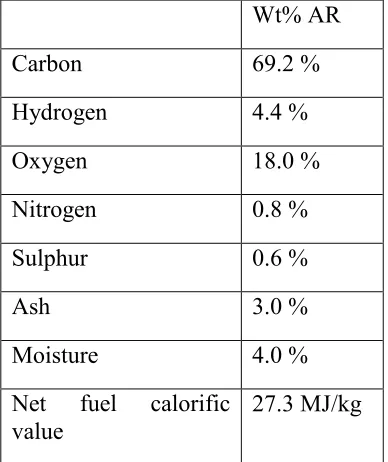
![Figure 8 – Possible mechanism for ammonia-Fe interaction [13]](https://thumb-us.123doks.com/thumbv2/123dok_us/7742528.165384/30.612.107.506.279.607/figure-possible-mechanism-ammonia-fe-interaction.webp)
![18 C++ Programming Language [ PUNISHER ] pdf](data:image/gif;base64,R0lGODlhAQABAIAAAP///wAAACH5BAEAAAAALAAAAAABAAEAAAICRAEAOw==)