This is a repository copy of Human development without democratic accountability: how regressive taxation contributes to human development through state capacity.
White Rose Research Online URL for this paper: http://eprints.whiterose.ac.uk/137077/
Version: Accepted Version
Article:
Kato, J and Tanaka, S orcid.org/0000-0001-6246-3332 (2018) Human development without democratic accountability: how regressive taxation contributes to human development through state capacity. Japanese Journal of Political Science, 19 (3). pp. 429-443. ISSN 1468-1099
https://doi.org/10.1017/S1468109918000233
© 2018, Cambridge University Press. This article has been published in a revised form in Japanese Journal of Political Science https://doi.org/10.1017/S1468109918000233. This version is free to view and download for private research and study only. Not for
re-distribution, re-sale or use in derivative works. Uploaded in accordance with the publisher's self-archiving policy.
[email protected] https://eprints.whiterose.ac.uk/
Reuse
Items deposited in White Rose Research Online are protected by copyright, with all rights reserved unless indicated otherwise. They may be downloaded and/or printed for private study, or other acts as permitted by national copyright laws. The publisher or other rights holders may allow further reproduction and re-use of the full text version. This is indicated by the licence information on the White Rose Research Online record for the item.
Takedown
If you consider content in White Rose Research Online to be in breach of UK law, please notify us by
Human Development without Democratic Accountability:
How Regressive Taxation Contributes to Human
Development through State Capacity
Junko Kato
The University of Tokyo
Seiki Tanaka
University of Amsterdam
Abstract
State revenue production since the third wave of democratization contrasts sharply with the
experiences of the first and second waves of democratization. The late democratizers tend to
adopt and raise revenue from a regressive tax on consumption (the value-added tax: VAT),
which is more compatible with economic development in global markets but is considered as
unequal taxation. How does the weak redistributive (i.e., regressive) effect of this form of
taxation affect the welfare of people? We build on conventional wisdom that democratic
accountability through multiparty contestation improves human development. Focused on
taxation, we argue that an increasing state financial capacity contributes to an increase in
human development, even when electoral contestation is absent. Empirical analyses
employed a reduction in infant mortality as an indicator for the improvement of human
development and demonstrate the counter-intuitive effect of the VAT on human development.
Despite the effect of weak redistribution, the VAT contributes to human development in
countries with less democratic accountability. The results also show that the state’s financial capacity to secure tax compliance, rather than a mere increase in tax revenue, intervenes
critically in such development in countries since the third wave. We conclude that the
increased state financial capacity with regressive taxation is expected to promote human
Introduction
Human development depends largely on the distribution of public services. In particular, how
much services are distributed, how effective the distribution is, and how they are distributed
are key in affecting human development (Hanson, 2015). According to previous studies, both
democracy and state capacity are expected to positively affect these three aspects of the
distribution and thus promote human development. The theoretical expectations are, in fact,
confirmed by empirical analyses (Gerring et al, 2012; McGuire, 2010 for democracy; and
Hanson, 2015 for state capacity).
However, the literature fails to examine another important variable as a possible
correlate of human development that affects all three aspects of the government’s
distribution: taxation. The level of government revenue, the effective extraction and
distribution of revenue, and the degree of distribution are all related to taxation. This strong
association with the distribution of public services by the government implies that taxation
should also affect human development. Yet, we know little about the relationship between
taxation and human development. This paper provides a novel theoretical argument about the
relationship between taxation and human development and conducts systematic quantitative
analyses.
The focus on taxation is particularly relevant in the contemporary world because the
value-added tax (VAT), instead of an income tax, has played a critical role in financing the
2008; Kato and Tanaka, 2018). Unlike progressive income taxation, regressive taxation on
consumption (i.e., the VAT) facilitates economic adjustments in developing economies, but it
applies a flat-rate, i.e., a regressive levy. Thus, it is considered to hinder socioeconomic
equality together with the absence of effective progressive taxation (for example, see
Bräutigam, Fjeldstad, and Moore 2008; Corbacho, Cibils, and Lora 2013).1 In this sense, the
introduction of regressive taxation can possibly increase the level of socioeconomic
inequality in society, thereby directly and indirectly hurting or stagnating human development,
in particular for the poor.2
However, by closely examining the impact of regressive taxation on human
development, this paper argues that the VAT improves human development through
increasing state financial capacity. Consistent with Hanson (2015), we claim that state
capacity contributes to the improvement of human development. However, this paper
provides a more detailed mechanism that begins with regressive taxation. The introduction of
the VAT enhances state capacity and thereby improves human development. The VAT can
increase the capacity to raise revenue for human development as well as increase tax
compliance, which, in turn, makes the state apparatus more effective in distributing resources.
Focusing on infant mortality, which the existing literature considers one of the
primary proxies for human development, this study conducts a time-series, cross-national
the contemporary world. Our focus on regressive taxation and state capacity qualifies the
conventional wisdom about the association between human development and democratic
accountability (Gerring et al., 2016; McGuire, 2010). More specifically, the analysis explores
an interaction between democratic accountability and regressive taxation and provides a
novel finding: even when democratic accountability is low, the introduction of regressive
taxation can improve human development through enhancing state capacity. In other words,
in autocracies without electoral contestation, we find that the VAT contributes to decreasing
infant mortality. However, when a country enjoys high democratic accountability, as the
existing studies expect (e.g., Gerring et al., 2016), electoral contestation decreases infant
mortality and furthers human development, whereas the VAT has a negligible, albeit positive,
effect on infant mortality. This suggests that the introduction of regressive taxation can
generally improve human development through state financial capacity, but the size of its
effect hinges on the presence and absence of democratic accountability.
To explore more detailed causal mechanisms through which the VAT promotes
human development, we also disaggregate state financial capacity into those that raise
revenue and those that secure compliance. Using a mediation analysis, our empirical analyses
find that the state financial capacity to secure compliance rather than its capacity to raise
revenue critically intervenes in the effect of the VAT on human development. This indicates
the state apparatus more effective.
Recent literature has renewed an interest in the role of taxation in democratization
and examined how differences in who pays how much are associated with different paths of
democracy (Baskaran, 2014; Timmons, 2010; Kato and Tanaka, 2018). In particular, Kato
and Tanaka (2018) find that regressive taxation goes hand-in-hand with contemporary
democratization: the VAT, which was introduced under autocracies, is a critical correlate of
democratization since the third wave. Taken together with this finding, this paper ultimately
suggests that regressive taxation not only promotes human development in autocracies in the
short-term, but can also contribute to people’s welfare in the long-run by increasing the likelihood of a democratic transition over time.
Human development, democracy, and the VAT
Democracy is the most popular correlate of human development (Sen, 1999) and,
among a variety of aspects of a democratic institution, electoral accountability has a strong,
positive impact (Gerring et al., 2016; Miller, 2015).3 However, Hanson finds that a state’s
capacity, independent from democracy, improves human development (Hanson, 2015).4
Taxation is considered a critical part of a state’s capacity, and state capacity is often defined
shares its historical origin with the legal capacity to support and regulate market institutions
(Besley and Persson, 2009). Drawing on the recent literature but with a focus on taxation, this
study closely examines a state’s financial capacity and qualifies the view that democratic accountability is a primary correlate of human development. This section derives three novel
hypotheses about the relationship between regressive taxation and human development in the
contemporary world.
Today, most developing countries adopt the VAT without introducing progressive
taxation (Kato and Tanaka, 2018). The reliance on revenue from a regressive VAT rather than
from income taxation has often been considered an obstacle to reducing inequality (Swank,
2016; Genschel and Seelkopf, 2016; Gemmell and Morrissey, 2005).5 A state financed solely
by regressive taxation questions whether such countries are able to advance socioeconomic
equality, which leads to a concern that regressive taxation may hurt human development, in
particular, for the poor.
However, the VAT can increase state capacity, which is considered critical in human
development (Hanson, 2015), thereby effectively allowing the government to pay for
advancing human development. The VAT can contribute to an increase in state capacity with
its revenue-increasing and compliance-enhancing features. First, many studies concur that the
VAT, if implemented with a wide tax base, contributes to increased government revenues
and Gloppen, 2003; Cnossen 2015). At the same time, the VAT is expected to increase
compliance by businesses with the government, thereby making the state apparatus more
effective. From this, we derive that, all else being equal, the VAT enhances state financial
capacity and thus contributes to human development.
But the VAT’s impact on human development has important scope conditions,
because an historical contingency affects the relationship between taxation, democracy, and
human development. More specifically, although they have recently adopted regressive
taxation as well, early democratizers (1st and 2nd wave democratizers) relied on progressive
taxation, which can lead to more revenue and more redistribution than regressive taxation,
(Kato 2003; Kato and Toyofuku 2018). At the same time, such early democratizers already
had strong state capacity through past wars (Scheve and Stasavage 2010; Tilly, 1990). In
addition, many comparative studies find that regardless of the timing in democratization,
democratic accountability, rather than the state capacity, generally improves human
development (Gerring et al., 2016). In light of these studies, we may observe the VAT’s greater effect on contemporary autocratic countries where democratic accountability is low
and citizens cannot effectively demand public services that are key for human development.
In other words, the relative effect of the VAT is conditional on the level of democratic
accountability, and the VAT becomes more crucial for autocracies in improving human
In sum, the introduction of the VAT generally increases revenue and/or improves
government effectiveness, thereby contributing to human development, but its contribution to
human development is expectedly mitigated by democratic accountability. Table 1
summarizes the main expectations based on the VAT’s introduction and regime type. Concurring with the existing views on the pervasive effect of democracy on human
development, we expect democratic accountability, regardless of the presence or absence of
the VAT, to improve human development. But we argue that regardless of regime type, the
VAT can ameliorate human development by strengthening state capacity. The most important
expectation for our study among four outcomes is found in autocracies without electoral
accountability. We expect that the VAT has the most positive impact on human development
in that combination. From the discussion, we summarize the main hypothesis as follows:
HYPOTHESIS 1: The relative impact of the VAT on human development is greater when
democratic accountability is lower.
[Table 1 about here]
We also examine why the VAT contributes to human development. We maintain that
the VAT enhances state financial capacity through distinct channels: (1) the state’s capacity to raise revenue to provide a financial source for human development; and (2) its capacity to
increase tax compliance to make a more effective state apparatus. The capacities to raise tax
more likely results in larger revenues. However, they are not identical, because the
government’s enforcement of tax compliance also requires a strong hand to regulate the
economy. To focus on the first aspect of the state’s financial capacity, we hypothesize that the introduction of the VAT results in human development through increased revenue.7 The
hypothesis focused on revenue-raising is thus:
HYPOTHESIS 2: A state’s financial capacity to raise revenue intervenes in the VAT’s impact on
human development.
While contributing to greater revenue for developing countries, the VAT also serves
to enhance tax compliance by businesses and traders. Unlike a direct tax (an income tax),
which requires citizens to file taxes, the VAT is an indirect tax, which requires consumers to
pay taxes but asks trading businesses to file tax returns only. In principle, all industries and
enterprises must comply with filing a flat rate tax on all stages of transactions in the VAT
system (Pomeranz, 2015). This new tax-filing obligation facilitates the government’s tax enforcement and compliance effectively in developing economies that have large, informal
sectors.8 The VAT encourages businesses to abandon a shadow economy and contribute to
rationalizing and modernizing developing economies. Increasing compliance in growing
economies accompanies a strong hand to regulate domestic markets and rationalize economic
activities, thereby generally making the state apparatus more effective in providing public
HYPOTHESIS 3: A state’s capacity to ensure the compliance of tax payers intervenes in the
VAT’s impact on human development.
Empirical Analyses
Data
We test the effect of the introduction of the VAT on human development with a
cross-national, time-series dataset that includes 170 countries and covers the period between
1970 and 2007. Building on previous studies that focus on the relationship between
democracy and human development, we compiled a dataset based on the Varieties of
Democracy (V-Dem, version 6.2) database (Coppedge et al., 2016). The novelty of our
analysis is that it examines how taxation affects human development through the formation of
state financial capacity after the introduction of VAT. For this purpose, we add VAT-related
variables to the analysis.
Following the existing literature (Gerring et al., 2016; Miller, 2015; Ross, 2006),
we focus on the infant mortality rate as a dependent variable, which is measured as the
number of deaths prior to age one per 1,000 live births in a year. The infant mortality data
come originally from Gapminder, and missing values were imputed (see also Ross 2006 on
the impact of missing values). We take the logarithm of the infant mortality rate to factor in
available, but the infant mortality measure is better for the following three reasons. First, the
variable has fewer measurement error issues, because the definition and operationalization
are relatively clear compared with other popular measures, such as education variables.9
Further, compared to composite indices, such as the Human Development Index, infant
mortality rates do not have to deal with aggregation problems (see also Munck and Verkuilen,
2002). Finally, infant mortality rates usually have strong temporal and spatial coverage,
partly because the data collection process can go backward in time (Riley, 2005).
The independent variable is the VAT introduction, which is coded 1 in the
subsequent years after the introduction of the VAT and 0 otherwise. The variable is a
reasonable proxy to test our argument when reliable revenue data of the VAT in the third
wave countries are not available. Although the variable may be an indirect measure of the
impact of the VAT, once introduced, the VAT has generally ensured that developing
countries extract much larger revenues from consumption than before its introduction (Bird
and Gendron, 2007b; Gillis, 1989; Gordon, 2010a). The introduction of the VAT is
considered to capture the fiscal contribution of the VAT. We also construct a VAT (%GDP)
variable as our secondary measure. This variable represents consumption tax revenue after
the VAT was introduced.10 Without reliable revenue data for the VAT, this variable is a
reasonable alternative, because once adopted, the VAT constitutes most of the consumption
values and is thus used for a robustness check for the main analysis with the VAT
introduction variable.
To represent the impact of electoral accountability, we use the Multiplicative
Electoral Democracy Index (MEDI), which the literature uses to capture electoral
accountability and contribute to a decline in the infant mortality rate (Gerring et al., 2016;
Miller, 2015). The MEDI variable is constructed based on five components: clean elections,
election of a chief executive, extensive suffrage, freedom of association, and freedom of
expression (Gerring et al., 2016).11 According to Gerring et al. (2016:16), the “index draws
on indicators that tap into the institutional procedures” of polyarchy by Dahl (1989),
including “the extent of responsiveness and accountability between leaders and citizens
through the mechanism of competitive elections.” As an alternative measure, we also use Unified Democracy Scores (UDS) (Pemstein et al., 2010). The UDS variable is constructed
by using a Bayesian latent variable model with existing measures of democracy. We use an
interaction term of the MEDI with the VAT introduction to examine our hypothesis about the
different impacts of the VAT on human development, depending on the level of democracy
(Hypothesis 1).
The analysis also includes all the covariates employed in the analyses of Gerring et
al. (2016) and several additional variables that may affect both infant mortality and the
urbanization, fertility rate, internal and external conflicts, corruption, and resource abundance.
All the covariates come from the V-Dem database. See Table 2 for summary statistics.
[Table 2 about here]
Design
Our main specification is the following fixed effect models:
yit = xit-1 + zit-1 + i + t + it
where yit is the logarithm of infant mortality rate in country i at time t, and xit-1 is the VAT
introduction in country i at time t-1. zit-1 is a vector of covariates. Following previous studies
(Gerring et al., 2016; Ross, 2006), we also include country-fixed effects i and year-fixed
effects t to control for unobserved country-specific factors and common shocks.12 Finally,
to control for the persistent nature of infant mortality, we also include a lagged dependent
variable.13
Results
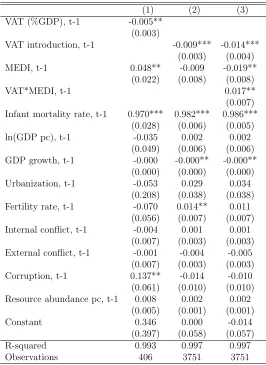
Table 3 reports our main result. Model 1 uses the VAT (%GDP) variable, and we
find that as tax revenue increases after the VAT introduction, infant mortality rates tend to
decrease. Model 2 employs the VAT introduction variable instead of the VAT (%GDP)
time-invariant, unobserved heterogeneity across countries. This suggests that the VAT, once
introduced, generally improves human development measured by infant mortality.
[Table 3 about here]
Model 3 adds an interaction term to Model 2 between the VAT introduction and MEDI
variables and examines whether the effect of the VAT on human development varies,
depending on the level of electoral accountability (Hypothesis 1). First, the result shows that
the main effects of the interaction model are both negative (statistically significant, at least at
the 5% level). This indicates that both the VAT and electoral accountability have an
independent effect on a decline in infant mortality rates, which is consistent with our
expectation. Second, we find that the interaction term is statistically significant, but the sign of
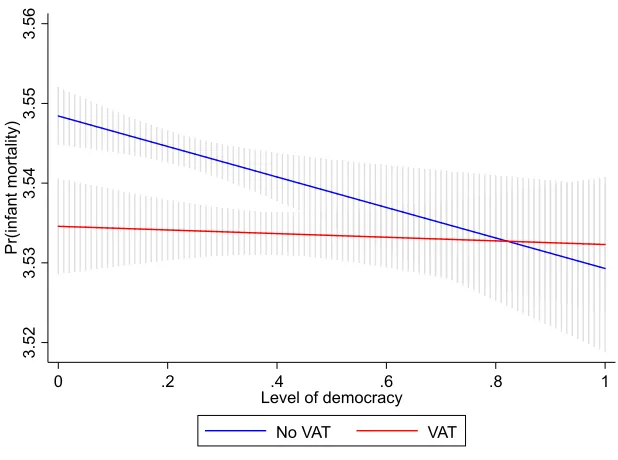
the coefficient is positive. To see the interaction effect visually, we plot predicted probabilities
of infant mortality rates based on the VAT introduction and MEDI variables (based on Model 2
of Table 3). Figure 1 shows a clear interaction effect: when electoral accountability is low, the
VAT has a significant, negative impact on infant mortality, but, as accountability improves, the
effect of the VAT diminishes, and the VAT loses a statistical significance in societies with a
higher level of electoral accountability. In substantive terms, if a country introduces the VAT
when the regime type is autocratic (defined here as when the MEDI is at the 25th percentile), the
probability of the infant mortality rate in a given year for observation decreases by 1.4%, with
The result above supports Hypothesis 1: the effect of the VAT on human development
depends on the level of electoral accountability. First, high electoral accountability tends to
decrease infant mortality as argued in Gerring et al. (2016). Second, in a society with low
electoral accountability, the VAT can play a significant role in decreasing infant mortality
rates. This novel finding, which is also complementary with previous studies of electoral
accountability and human development, implies an alternative channel to improve human
development. Thus it has a significant policy implication: policy makers can improve human
development without relying on electoral accountability.
The results for covariates find that GDP growth contributes to decreased infant
mortality, which is consistent with the development literature (Nishiyama, 2011).14 The
lagged dependent variable is positive and statistically significant, confirming the persistent
nature of the variable and suggesting that the lagged dependent variable (t-1) accounts for
some variation in the contemporaneous development variable (t).
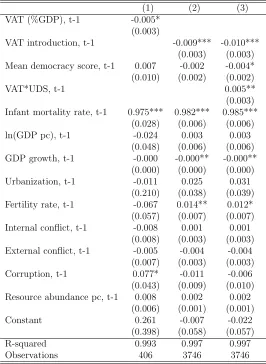
Finally, as a robustness check, we employ a different democracy measure (UDS) instead
of the MEDI variable and provide additional evidence for Hypothesis 1 (Table 4). Across all
the models, results with the UDS variable (Table 4) are similar to those with the MEDI
variable (Table 3), which suggests that the findings are not sensitive to particular democracy
measures and specifications.
Mediation Analysis
Thus far, we find robust evidence that the VAT decreases infant mortality in a
country with low electoral accountability. In this section, we further examine the causal
mechanisms behind the relationship and how the VAT improves human capital without
relying on electoral accountability. First, to measure the capacity for revenue-raising in
Hypothesis 2, we use the Tax revenue variable, which represents the level of total tax revenue
to capture the state’s overall financial capacity to improve human development. The Tax
revenue variable comes from the World Bank and employs the government’s tax revenue as proportions of GDP.15 For a state’s capacity to ensure tax compliance (Hypothesis 3), we use
the Shadow economy variable as a dependent variable. Although a state’s capacity for
compliance is considered an elusive concept (Mann, 1984; Soifer and vom Hau, 2008), recent
studies regard Shadow economy as a reasonable measure for state capacity (Buehn and
Schneider, 2012; Ottervik, 2013). The analysis operationalizes the Shadow economy variable
using the size of the shadow economy relative to all legal economic activity.16
To examine the causal mechanisms proposed in Hypotheses 2 and 3, we employ a
causal mediation analysis proposed by Imai, Keele and Tingley (2010) (See also Imai, Keele,
Tingley and Yamamoto (2011)). The causal mediation analysis relies on a potential outcome
framework to identify the indirect effects or average causal mediated effects (ACME). One
parameters from the sampling distribution to compute the causal mediation effects in the
second stage.
By using the Tax Revenue and Shadow economy variables as a mediator, we are
interested in examining how the impact of the VAT on human development operates through
increasing state capacity for revenue raising and tax compliance. Because the VAT, Tax
Revenue, and Shadow economy variables are all observational variables, we include the same
control variables as in Table 2. We use OLS for both the first and second stages of the
analysis to estimate the effect of the VAT on the mediator and the effect of the VAT on infant
mortality through state capacity. Because we are interested in the effect of the VAT in
countries with low electoral accountability (refer to Figure 1), we limit the sample for
autocratic countries by using the median cut-off of the MEDI variable. Finally, given the
nature of causal mediation analysis, we transform our time-series data into cross-sectional
data by aggregating all the variables. We use the latest value for infant mortality, which is our
dependent variable, and the median values of each variable as a baseline.17
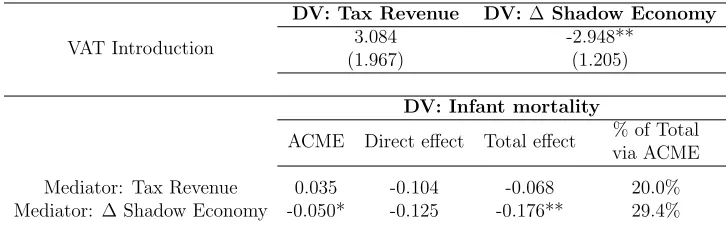
Table 5 shows the results of the causal mediation analysis. The top panel shows the
estimates of the first stage, and the bottom panel reports the estimate of the indirect effect of
the mediator (“ACME” on the table) as well as how much of the mediator accounts for the total effect of the VAT introduction (“% of Total via ACME” on the far right of the table).
the relationship is not statistically significant at the 10% level. However, as expected, the
VAT’s introduction reduces the size of the shadow economy, and the effect is statistically
significant at the 10% level. More important, the bottom panel shows the causal mechanisms
– although the VAT does not affect human development through tax revenue, the VAT
contributes to a decline in infant mortality by reducing the size of the shadow economy. The
latter indirect effect through state capacity is statistically significant at the 10% level.18 It
also shows that the indirect effect accounts for 29.4% of the overall effect of the VAT on
infant mortality. The result rejects Hypothesis 2 but is consistent with Hypothesis 3.
[Table 5 about here]
Although the analysis confirms that one of our hypothesized mechanisms is actually
present, there are two potential concerns for the analysis that may affect our interpretation.
First, because we aggregate our time-series data into a cross-sectional format, the analysis is
subject to the researcher’s arbitrary decision of how to transform the data. Second, given that
a causal mediation analysis is better suited for an experimental design, our analysis may also
be subject to certain omitted variable bias. Further, although observable covariates are
included in the analysis for control, a mediation analysis involves the problem of possible
reverse causality – countries with a larger shadow economy are more likely to introduce the VAT, thereby decreasing infant mortality. However, the possibility of the reverse causality is
strength of the VAT lies in its neutrality in economic activities, which is important for
developing economies to adjust to global markets without interfering with economic
development. Therefore, economic organizations, such as the IMF, have encouraged
developing countries to adopt the VAT as a revenue-raising measure that is compatible with
economic development. Although the VAT is expected to alleviate the adverse effects of
informal sectors and this side-effect is regarded as desirable, its revenue-raising power is a
driving force for the adoption of the VAT. The presence of a large shadow economy does not
increase the possibility of the VAT introduction among developing and developed economies.
Autocracy and human development
We now move to a discussion of the implications of our findings to the literature of
autocracy and human development. Although previous studies find a positive association
between human development and democracy (Gerring et al., 2012; Gerring et al., 2016;
Hanson, 2015; Ross, 2006), the recent literature argues that autocracies can also promote
human development if contested elections contribute to increasing government accountability
(Miller 2015).
However, our findings suggest that even with the absence of democratic pressure,
autocrats can improve human development through the introduction of regressive taxation if
promote the welfare of people for some strategic reasons, such as economic development and
co-optation of opposition groups. In European history, for example, the authoritarian regime
under Bismarck in Germany institutionalized social programs with limited political
representation. Contemporary authoritarian regimes also distinguish between social programs
on which to spend and which to avoid (Huber et al., 2008). Some autocrats also attempt to
co-opt social groups that may become potential challengers to their own rule (Haber, 2007)
and pursue a “collusive” strategy when implementing social policies (Mares and Carnes, 2009). This results in variation in non-democratic, welfare states and argues that regime type
fails to predict social expenditures (Mares and Carnes, 2009). In terms of human
development and specifically infant mortality, no significant difference is found between
democracies and non-democracies (Dietrich and Bernhard 2016).
The existing literature has yet to examine the effect of state capacity on human
development in autocratic countries.20 One reason for the lack of research is the absence of
an appropriate concept for state capacity that can be operationalized across regime types in
empirical research (Ottervik, 2013). To close this gap, we focused on taxation and
distinguished state financial capacity to ensure tax compliance from state capacity to raise tax
revenue. Our results offer empirical support for the argument that regressive taxation, by
increasing compliance with state taxation in society, can explain variation in human
Placing human development in tax-democratization linkages
The present study demonstrates that the state financial capacity with the VAT
favorably affects human development in autocracies, but after regime transition, democratic
accountability increases its importance at the expense of the regressive taxation. This
conditional effect of the VAT in autocracies and democracies implies that there is a possible,
long-run effect of regressive taxation on human development. This is the case in light of Kato
and Tanaka (2018)’s quantitative study demonstrating that the introduction of the VAT
increases the likelihood of democratization. If regressive taxation really induces
democratization, then we can expect that state financial capacity with the VAT improves
human development in autocracies (in the short run, which is our finding). Further, increased
democratic accountability through regressive taxation also improves human development
after a regime transition (in the long-run).21 Building on the recent findings by Kato and
Tanaka (2018), a cross-national comparison explores the long-term effect of the VAT on
human development along with their tax-democratization linkage. For this purpose, we
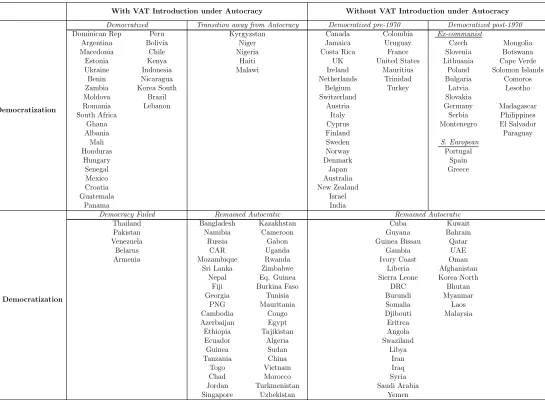
categorize both democracies and non-democracies by whether the state adopted the VAT as a
revenue source under an autocracy, i.e., before democratic transition (Table 6). Each cell in
Table 6 suggests potential paths for countries in terms of human development.
“democratization without the VAT introduction (under autocracy),” because they had no way
to adopt the VAT under an autocracy. The VAT gave new life to modern consumption taxation
in the 1950s after the two early waves consolidated their democratic regimes (see Kato and
Toyofuku, 2018). Twenty-nine of the fifty-one countries in this category are stable
democracies that belong to the first and second waves of democratizers. This category also
includes some third-wave democratizers, such as the former socialist countries, which
introduced the VAT immediately after regime transition.22
Most of the third wave of democratizers are included in the upper-left category
(democratization with the VAT introduction (under autocracy)). In this category, twenty-nine
countries were democratized within 9.8 years, on average, after the autocratic introduction of
the VAT, and five autocratic countries showed clear signs of democratic transition.23 Here,
human development is expected to improve with the introduction of the VAT in autocracies,
and with democratic accountability after regime transition in the long run as well.
Autocracies in the lower-right category, “no democratization without the VAT introduction,” are extraneous cases. Resource-rich autocracies,24 which could finance the
state by rents from natural resources, account for the majority, i.e., thirteen out of thirty-one
countries (41.9%).25 In contrast, the cases in the lower-left category of “no democratization
further improvement is not expected without an advance in democratic accountability in the
long run. These countries, however, have shown a clear sign of regime transition. All but two
of the forty countries that have not yet democratized 12.7 years (on average) after the VAT’s
introduction now show signs of democratization.26 Therefore, a further improvement in
human development is expected in non-democracies.
The VAT improves human development through increased state capacity to ensure
tax compliance. However, when autocracies experience the instability of regime transition,
reversion, and stagnation (please see also Figure 1), taxation can also improve human
development indirectly by encouraging democratic transition. The tax-democratization
linkage is confirmed in a cross-national examination and suggests that our result is consistent
with the democratic effect on human development found in previous studies (Gerring et al.
2016).
Conclusion
This study argues and finds empirical evidence that the institutionalization of the
VAT contributes to human development through enforcing tax compliance, even when the
democratic pressure to serve the interests of citizens is absent. In other words, the presence of
the VAT has a significant impact on decreasing infant mortality in autocracies with low
democracies. This suggests that despite its regressive nature, the VAT facilitates rather than
thwarts the welfare of the people living in autocracies that have been and are about to
democratize since the third wave. A state’s capacity to gain tax compliance intervenes critically in the improvement of human development in contemporary autocracies. Our
comparative analysis of tax-democratization linkages further confirms that the role of the
VAT in autocratic states complements the long-term effect of the state capacity on human
development after a regime transition.
References
Acemoglu, Daron and James A. Robinson (2006), Economic origins of dictatorship and
democracy, Cambridge, Cambridge University Press.
Aizenman, Joshua and Yothin Jinjarak (2009), "Globalisation and Developing Countries - a
Shrinking Tax Base?" Journal of Development Studies, 45 (5): 653-671.
Bahl, Roy W. and Richard M. Bird (2008), "Tax policy in developing countries: looking back
and forward." National tax journal 61 (2): 279-301.
Barreix, Alberto, Carlos Garcimartin and Fernando Velayos (2013), Personal Income Tax: An
Empty Shell. in Corbacho, Ana, Cibils, Vicente Fretes and Lora, Eduardo (eds.) More
than Revenue: Taxation as a development tool. Palgrave Macmillan. pp.115-134
Baskaran, Thushyanthan (2014), "Taxation and Democratization." World Development, 56:
287-301.
Baskaran, Thushyanthan and Arne Bigsten (2013), "Fiscal Capacity and the Quality of
Government in Sub-Saharan Africa." World Development, 45: 92-107.
Beck, Nathaniel and Jonathan N. Katz (2011), "Modeling Dynamics in
Time-Series–Cross-Section Political Economy Data." Annual Review of Political Science, 14 (1): 331-352.
Besley, Timothy and Torsten Persson (2009), "The Origins of State Capacity: Property Rights,
Taxation, and Politics." American Economic Review, 99 (4): 1218-1244.
Besley, Timothy and Torsten Persson (2014), "Why Do Developing Countries Tax So Little?"
Bird, Richard Miller and Pierre-Pascal Gendron (2006), "Is VAT the best way to impose a
general consumption tax in developing countries?". Andrew Young School of Policy
Studies, Georgia State University, International Studies Program Working Paper
06-17.
Bird, Richard Miller and Pierre-Pascal Gendron (2007), The VAT in developing and
transitional countries, New York, Cambridge University Press.
Boix, Carles (2003), Democracy and redistribution, Cambridge University Press.
Bräutigam, Deborah (2008), Introduction: taxation and state-building in developing countries.
in Bräutigam, Deborah, Fjeldstad, Odd-Helge and Moore, Mick (eds.) Taxation and
state-building in developing countries: capacity and consent. Cambridge, Cambridge
University Press. pp.1-33.
Bräutigam, Deborah, Odd-Helge Fjeldstad and Mick Moore (2008), Taxation and
state-building in developing countries: capacity and consent, Cambridge, Cambridge
University Press.
Buehn, Andreas and Friedrich Schneider (2012), "Shadow economies around the world:
novel insights, accepted knowledge, and new estimates." International Tax and Public
Finance, 19 (1): 139-171.
Cheibub, Jose Antonio, Jennifer Gandhi and James Raymond Vreeland (2010), "Democracy
and dictatorship revisited." Public Choice, 143 (1-2): 67-101.
Cnossen, Sijbren (2015), "Mobilizing VAT revenues in African countries." International tax
and public finance 22 (6): 1077-1108.
Coppedge, M., Gerring J., Lindberg S.I., Skaaning S.-E., Teorell J., Altman D., Andersson F.,
Bernhard M., Fish M.S., Glynn A., Knutsen C.H., McMann K., Mechkova V., Miri F.,
Paxton P., Pemstein D., Sigman R., Staton J. and Zimmerman B. (2016), "V-Dem
Codebook v6." Varieties of Democracy (V-Dem) Project.
Corbacho, Ana, Vicente Fretes Cibils and Eduardo Lora (eds.) (2013), More than Revenue:
Taxation as a development tool, Palgrave Macmillan.
Dahl, Robert A. (1989), Democracy and its Critics, New Haven, Yale University Press.
Dietrich, Simone and Bernhard Michael (2016), "State or Regime? The Impact of Institutions
on Welfare Outcomes." European Journal of Development and Research, 28 (2):
252-269.
Ebrill, Liam P., Michael Keen, Jean-Paul Bodin and Victoria Summers (2001), The modern
VAT, Washington, D.C., International Monetary Fund.
Garcia, Maria Melody and Christian von Haldenwang (2016), "Do Democracies Tax More?
Political Regime Type and Taxation." Journal of International Development, 28:
485-506.
Gemmell, Norman and Oliver Morrissey (2005), "Distribution and Poverty Impacts of Tax
Policy Review, 23 (2): 131-144.
Genschel, Philipp and Laura Seelkopf (2016), "Did they learn to tax? Taxation trends outside
the OECD." Review of International Political Economy, 23 (2): 316-344.
Gerring, John, Carl Henrik Knutsen, Svend-Erik Skaaning, Jan Teorell, Michael Coppedge,
Staffan I. Lindberg and Matthew Maguire (2016), Electoral Democracy and Human
Development, University of Gothenburg, Varieties of Democracy Institute: V-Dem
Working Papers..
Gerring, John, Strom C. Thacker and Rodrigo Alfaro (2012), "Democracy and Human
Development." Journal of Politics, 74 (1): 1-17.
Gillis, Malcolm (1989), Tax reform in developing countries, Durham, Duke University Press.
Gordon, Roger H. (2010a), Introduction: Overview of Tax Policy in Developing Countries. in
Gordon, Roger H. (ed.) Taxation in developing countries: six case studies and policy
implications. New York, Columbia University Press.
Gordon, Roger H. (2010b), Taxation in developing countries: six case studies and policy
implications, New York, Columbia University Press.
Haber, Stephen (2007), Authoritarian Government. in B, Weingast and D, Wittmans (eds.)
The Oxford Handbook of Political Economy. New York, Oxford University Press.
Hanson, Jonathan K. (2015), "Democracy and State Capacity: Complements or Substitutes?"
Studies in Comparative International Development, 50 (3): 304-330. journal article.
Huber, Evelyne, Thomas Mustillo and John D. Stephens (2008), "Politics and Social
Spending in Latin America." The Journal of Politics, 70 (2): 420-436.
Imai, Kosuke, Luke Keele and Dustin Tingley (2010), "A General Approach to Causal
Mediation Analysis." Psychological Methods, 15 (4): 309-334.
Imai, Kosuke, Luke Keele, Dustin Tingley and Teppei Yamamoto (2011), "Unpacking the
Black Box of Causality: Learning about Causal Mechanisms from Experimental and
Observational Studies." The American Political Science Review, 105 (4): 765-789.
Kato, Junko and Seiki Tanaka (2018), "Does taxation lose its role in contemporary
democratisation? State revenue production revisited in the third wave of
democratisation", European Journal of Political Research (DOI:
10.1111/1475-6765.12276).
Kato, Junko and Miki Toyofuku (2018), "The Ddivergent paths of tax development during
different waves of democratization." Japanese Journal of Political Science this issue.
Keen, Michael and Ben Lockwood (2010), "The value added tax: Its causes and
consequences." Journal of Development Economics, 92 (2): 138-151.
Levi, Margaret (1988), Of rule and revenue, Berkeley, University of California Press.
Lindert, Peter H. (2004), Growing public: social spending and economic growth since the
eighteenth century, Cambridge, Cambridge University Press.
Economic-Development and Political Legitimacy." American Political Science
Review, 53 (1): 69-105.
Mann, Michael (1984), “The autonomous power of the state: its origins, mechanisms and
results” European Journal of Sociology, 25 (2): 185–213.
Mares, Isabela and Matthew E. Carnes (2009), "Social Policy in Developing Countries."
Annual Review of Political Science, 12 (1): 93-113.
McGuire, James W. (2010), Wealth, health, and democracy in East Asia and Latin America,
New York: Cambridge University Press.
McGuire, Martin C. and Mancur Olson (1996), "The Economics of Autocracy and Majority
Rule: The Invisible Hand and the Use of Force." Journal of Economic Literature, 34
(1): 72-96.
Meltzer, Allan H. and Scott F. Richard (1981), "A Rational Theory of the Size of
Government." Journal of Political Economy, 89 (5): 914-927.
Miller, Michael K. (2015), "Electoral Authoritarianism and Human Development."
Comparative political studies, 48 (12): 1526-1562.
Morrison, Kevin M. (2009), "Oil, Nontax Revenue, and the Redistributional Foundations of
Regime Stability." International Organization, 63 (1): 107-138.
Morrissey, Oliver, Christian Von Haldenwang, Armin Von Schiller, Maksym Ivanyna and
Ingo Bordon (2016), "Tax Revenue Performance and Vulnerability in Developing
Countries." The Journal of Development Studies, 52 (12): 1689-1703.
Munck, Gerardo L. and Jay Verkuilen (2002), "Conceptualizing and Measuring Democracy
Evaluating Alternative Indices." Comparative Political Studies, 35 (1): 5-34.
Nishiyama, Akira (2011), "Economic Growth and Infant Mortality in Developing Countries."
European Journal of Development Research, 23 (4): 630-647.
Niskanen, William A. (1997), "Autocratic, Democratic, And Optimal Government."
Economic Inquiry, 35 (3): 464-479.
Ottervik, Mattias (2013), "Conceptualizing and Measuring State Capacity: Testing the
Validity of Tax Compliance as Measure of State Capacity." QoG Working Paper
Series 2013:20.
Pemstein, Daniel, Stephen A. Meserve and James Melton (2010), "Democratic Compromise:
A Latent Variable Analysis of Ten Measures of Regime Type." Political Analysis, 18
(4): 426-449.
Pomeranz, Dina (2015), "No Taxation without Information: Deterrence and Self-Enforcement
in the Value Added Tax." American Economic Review, 105 (8): 2539-69.
10.1257/aer.20130393.
Profeta, Paola and Simona Scabrosetti (2010), The political economy of taxation, Edward
Elgar.
Democracy and development : political institutions and well-being in the world,
1950-1990, Cambridge ; New York, Cambridge University Press.
Rakner, Lise and Siri Gloppen (2003), Tax reform and democratic accountability in
sub-Saharan Africa. in Walle, Nicolas van de, Ball, Nicole and Ramachandran, Vijaya
(eds.) Beyond structural adjustment- The institutional context of African development.
Houndmills, Palgrave Macmillan.
Ranis, Gustav, Frances Stewart and Alejandro Ramirez (2000), "Economic Growth and
Human Development." World Development, 28 (2): 197-219.
Riley, James C. (2005), "Estimates of Regional and Global Life Expectancy, 1800-2001."
Population and Development Review, 31 (3): 537-543.
Rogers, Melissa Ziegler and Nicholas Weller (2014), "Income Taxation and the Validity of
State." Journal of Public Policy, 34 (2): 183-206.
Ross, Michael (2006), "Is Democracy Good for the Poor?" American Journal of Political
Science, 50 (4): 860-874.
Sandford, Cedric T. (2000), Why tax systems differ: a comparative study of the political
economy of taxation, Bath, Fiscal.
Scheve, Kenneth F. and David Stasavage (2010), 'The Conscription of Wealth: Mass Warfare
and the Demand for Progressive Taxation', International Organization, 64 (4):
529-561.
Scheve, Kenneth F. and David Stasavage (2012), "Democracy, War, and Wealth: Lessons
from Two Centuries of Inheritance Taxation." American Political Science Review, 106
(1): 81-102.
Scheve, Kenneth F. and David Stasavage (2016), Taxing the rich: a history of fiscal fairness
in the United States and Europe, Princeton, Princeton University Press.
Seelkopf, Laura, Hanna Lierse and Carina Schmitt (2016), "Trade liberalization and the
global expansion of modern taxes." Review of International Political Economy, 23
(2): 208-231.
Sen, Amartya (1999), Development as Freedom, Oxford, Oxford University Press.
Soifer, Hillel and Vom Hau, Matthias (2008), “Unpacking the strength of the state: the utility of state infrastructural power.” Studies in Comparative International Development, 43(3/4):219–30.
Stiglitz, Joseph E. (2010), Development-Oriented Tax Policy. in Gordon, Roger H. (ed.)
Taxation in developing countries: six case studies and policy implications. New York,
Columbia University Press.
Swank, Duane (2016), "The new political economy of taxation in the developing world."
Review of International Political Economy, 23 (2): 185-207.
Tilly, Charles (1990), Coercion, Capital and European States, AD 990-1990, Cambridge:
Timmons, Jeffrey F. (2010), "Taxation and Representation in Recent History." Journal of
Politics, 72 (1): 191-208.
Webber, Carolyn and Aaron B. Wildavsky (1986), A history of taxation and expenditure in
the Western world, New York, Simon and Schuster.
The authors are listed in alphabetical order, implying equal authorship. This project was funded by research
grants from a grant in aid for scientific research from the Japanese government. A previous version was
presented at the University of Tokyo Symposium: Democratization, Taxation, and the Welfare State in the
Developing World, January 11, 2017. We would like to thank Sijeong Lim, Jim Mahon, Miki Toyofuku, and the
participants of the symposium for their comments.
1 The taxation literature concurs that developing countries since the third wave have failed to implement
progressive income taxes effectively (for example, see Bahl and Bird, 2008; Barreix, Garcimartin and Velayos,
2013; Bräutigam, Fjeldstad and Moore, 2008; Gordon, 2010a; Stiglitz, 2010).
2 This statement assumes that there is little redistribution to the poor.
4 This may refute the pessimistic view that democratic states support middle- and upper-income classes rather
than the poor (Ross, 2006).
5 The weakness of income taxation, which is the opposite side of the same coin, questions state financial
capacity in general. For example, Rogers and Weller (2014) argue that the income tax, rather than the VAT,
serves as a valid indicator of state capacity because the VAT is easier to collect than an income tax.
6
We will discuss why autocrats have incentives to do this in Discussion.
7 The state revenue-raising is expected to lead to more transparency and less corruption and increase democratic
accountability (Baskaran and Bigsten, 2013). We discuss a long-term effect of the VAT on democratic
accountability in the Discussion section.
8
In a VAT system, for example, retailers pay a VAT on their wholesale inputs and transfer those tax amounts in
charges to their customers. Retailers in informal sectors have no invoices and thus cannot transfer the tax to their
customers, which reduces their competitive edge against retailers in formal sectors.
9
For example, literacy variables face the incomparability of languages and variation in literacy standards across
countries.
10 This variable can be constructed by interacting a VAT introduction dummy variable with the consumption tax
revenue. The revenue data of the consumption tax are obtained from the International Monetary Fund (IMF)’s
Government Financial Statistics
11 The index tends to score high when (a) elections are clean and not marred by fraud or systematic irregularities,
(b) the chief executive of a country is selected (directly or indirectly) through elections, (c) suffrage is extensive,
(d) political and civil society organizations operate freely, and (e) there is freedom of expression, including
12 Because the fixed-effect models lead to a loss of within-country variation, we also conduct results using the
random-effect model as an alternative specification (results not reported).
13 Although the inclusion of a lagged dependent variable can lead to an inconsistent estimator, the fixed-effect
estimator should become consistent when the time span becomes larger. According to Beck and Katz (2011), an
appropriate time span is twenty years or more. The average time span for our dataset is thirty-four years. In any
case, the inclusion of a lagged dependent variable would lead to underestimation only, rather than to
overestimation (Beck and Katz, 2011).
14
Although Model 1 shows no significant result for the variable, we believe that the inclusion of our variable of
VAT revenue as a proportion of GDP has something to do with the inconsistency.
15 Because not all the government’s tax revenue goes to ameliorating infant mortality, we also use a more
specific measure - a Health expenditure variable. The results are largely similar.
16 This operationalization also follows Ottervik (2013)’s definition, which considers state capacity to be the
ability of the state to dominate, i.e. coax compliant behavior from the individuals of a given territory; he
operationalizes this as tax compliance.
17 For the Shadow economy variable, we use Shadow economy, which measures how much the VAT has
improved state capacity by taking the difference between the latest and median values. Here, because the
Shadow economy variable is not available at the beginning of our observation, we use the median values for the
Shadow economy variable as a proxy for the baseline value.
18 This is largely due to the relatively small sample size (N = 68).
19 See the following literature to find out the strength of the VAT system and reasons for its adoption by
developing economies. Bird and Gendron (2007b); Bräutigam (2008); Corbacho, Cibils, and Lora (2013); Ebrill
et al. (2001); Gordon (2010b); Profeta and Scabrosetti (2010); Sandford (2000).
20 Miller (2015, 1537) has argued that electoral authoritarianism plausibly increases the state’s capacity, but he
has neither examined directly a state’s capacity nor its impact on human development under autocracies.
21 It is also possible that instead of democratizing, the VAT can co-opt citizens by improving human
development. It can help stabilize and prolong autocracies, and the enhanced state financial capacity may work
against human development in the long run by keeping democratic accountability low. However, Kato and
Tanaka (2018) observe the opposite trend.
22 Some third-wave democratizers are included but constitute clear exceptions. We count three southern
European counties that democratized in the 1970s, when the VAT had just started to diffuse, and ten former,
socialist countries. All of them except Serbia and Montenegro are now EU member countries. Serbia and
Montenegro were also candidates for EU membership as of 2016. Among the remaining nine countries in this
category, five are small countries with a population below three million: Mongolia, Botswana, Cape Verde,
Solomon Islands, and Comoros. Four countries - Madagascar, Philippines, El Salvador, and Paraguay -
democratized in the 1990s without the VAT, but introduced it after one or two years.
23 These countries (“Transition away from Autocracy”) increased their polity scores by more than one standard
24 They are defined above the 75th percentile of the country-average Resource Abundance variable.
25 The introduction of the VAT might be less likely in resource-rich countries, but the effect of its introduction
can be even larger in those countries that have natural resources. For example, resource-rich countries were less likely to remain autocratic after the VAT’s introduction than non-resource rich countries. In the key category of “representation with regressive taxation,” for example, 32.3% (eleven out of thirty-four) of democratizers are
resource-rich countries with the VAT. Among autocracies that introduced the VAT with little sign of democratic transition (“no representation with regressive taxation” countries), however, the proportion of resource-rich
countries is lower, i.e., 20% (nine out of forty-one). In terms of the polity score by which democracy is defined
by a larger value than 6, the positive effect of the VAT in resource-rich countries is more evident than in
non-resource-rich ones. Without the VAT, the average polity score of resource-rich countries is 2.69 points lower
than the score for other non-resource-rich countries. Among countries with the VAT, however, the average score
of resource-rich countries is only 0.54 points lower than non-resource-rich countries. Within-country
comparison before and after the VAT introduction further confirms this. Resource-rich countries increased their
polity score by 7.62 points after the introduction, whereas other countries increased the score only by 6.19
points.
26 Five countries were formerly democratized but have reverted to autocracies (“Democracy failed”). Among
two exceptions that have remained stable autocracies for more than twenty years after the introduction of the
VAT, Morocco has not reached even the threshold of a so-called “autocracy” (−5 or greater and +5 or less in the
Tables and Figures
Table 1: Theoretical expectations
VAT introduction
Yes No
Democracy Infant mortality↓ Infant mortality ↓
Table 2: Summary Statistics
Mean SD Min Max
Infant mortality rate 3.628 1.029 0.79 5.37
VAT (%GDP), t-1 4.232 2.114 0.00 9.37
VAT introduction, t-1 0.367 0.482 0.00 1.00
MEDI, t-1 0.270 0.326 0.00 0.93
Mean democracy score, t-1 -0.026 0.988 -2.04 2.25
Infant mortality rate, t-1 3.661 1.021 0.83 5.41
ln(GDP pc), t-1 7.976 1.098 5.32 10.67
GDP growth, t-1 1.505 6.167 -61.49 86.95
Urbanization, t-1 0.467 0.235 0.02 0.97
Fertility rate, t-1 1.306 0.559 0.11 2.22
Internal conflict, t-1 0.160 0.367 0.00 1.00
External conflict, t-1 0.053 0.224 0.00 1.00
Corruption, t-1 0.493 0.271 0.01 0.95
Table 3: Baseline analysis
(1) (2) (3)
VAT (%GDP), t-1 -0.005**
(0.003)
VAT introduction, t-1 -0.009*** -0.014***
(0.003) (0.004)
MEDI, t-1 0.048** -0.009 -0.019**
(0.022) (0.008) (0.008)
VAT*MEDI, t-1 0.017**
(0.007)
Infant mortality rate, t-1 0.970*** 0.982*** 0.986***
(0.028) (0.006) (0.005)
ln(GDP pc), t-1 -0.035 0.002 0.002
(0.049) (0.006) (0.006)
GDP growth, t-1 -0.000 -0.000** -0.000**
(0.000) (0.000) (0.000)
Urbanization, t-1 -0.053 0.029 0.034
(0.208) (0.038) (0.038)
Fertility rate, t-1 -0.070 0.014** 0.011
(0.056) (0.007) (0.007)
Internal conflict, t-1 -0.004 0.001 0.001
(0.007) (0.003) (0.003)
External conflict, t-1 -0.001 -0.004 -0.005
(0.007) (0.003) (0.003)
Corruption, t-1 0.137** -0.014 -0.010
(0.061) (0.010) (0.010)
Resource abundance pc, t-1 0.008 0.002 0.002
(0.005) (0.001) (0.001)
Constant 0.346 0.000 -0.014
(0.397) (0.058) (0.057)
R-squared 0.993 0.997 0.997
Figure 1: Probability of infant mortality, by the VAT and electoral accountability
3
.5
2
3
.5
3
3
.5
4
3
.5
5
3
.5
6
Pr(i
n
fa
n
t
mo
rt
a
lit
y)
0 .2 .4 .6 .8 1
Level of democracy
Table 4: Baseline analysis with the UDS variable
(1) (2) (3)
VAT (%GDP), t-1 -0.005*
(0.003)
VAT introduction, t-1 -0.009*** -0.010***
(0.003) (0.003)
Mean democracy score, t-1 0.007 -0.002 -0.004*
(0.010) (0.002) (0.002)
VAT*UDS, t-1 0.005**
(0.003)
Infant mortality rate, t-1 0.975*** 0.982*** 0.985***
(0.028) (0.006) (0.006)
ln(GDP pc), t-1 -0.024 0.003 0.003
(0.048) (0.006) (0.006)
GDP growth, t-1 -0.000 -0.000** -0.000**
(0.000) (0.000) (0.000)
Urbanization, t-1 -0.011 0.025 0.031
(0.210) (0.038) (0.039)
Fertility rate, t-1 -0.067 0.014** 0.012*
(0.057) (0.007) (0.007)
Internal conflict, t-1 -0.008 0.001 0.001
(0.008) (0.003) (0.003)
External conflict, t-1 -0.005 -0.004 -0.004
(0.007) (0.003) (0.003)
Corruption, t-1 0.077* -0.011 -0.006
(0.043) (0.009) (0.010)
Resource abundance pc, t-1 0.008 0.002 0.002
(0.006) (0.001) (0.001)
Constant 0.261 -0.007 -0.022
(0.398) (0.058) (0.057)
R-squared 0.993 0.997 0.997
Table 5: Mediation analysis: VAT introduction as a Treatment
DV: Tax Revenue DV:∆Shadow Economy
VAT Introduction 3.084 -2.948**
(1.967) (1.205)
DV: Infant mortality
ACME Direct effect Total effect % of Total
via ACME
Mediator: Tax Revenue 0.035 -0.104 -0.068 20.0%
Table 6: A New Typology of Regressive Taxation and Democratization
With VAT Introduction under Autocracy Without VAT Introduction under Autocracy
Democratization
Democratized Transition away from Autocracy Democratized pre-1970 Democratized post-1970
Dominican Rep Peru Kyrgyzstan Canada Colombia Ex-communist
Argentina Bolivia Niger Jamaica Uruguay Czech Mongolia
Macedonia Chile Nigeria Costa Rica France Slovenia Botswana
Estonia Kenya Haiti UK United States Lithuania Cape Verde
Ukraine Indonesia Malawi Ireland Mauritius Poland Solomon Islands
Benin Nicaragua Netherlands Trinidad Bulgaria Comoros
Zambia Korea South Belgium Turkey Latvia Lesotho
Moldova Brazil Switzerland Slovakia
Romania Lebanon Austria Germany Madagascar
South Africa Italy Serbia Philippines
Ghana Cyprus Montenegro El Salvador
Albania Finland Paraguay
Mali Sweden S. European
Honduras Norway Portugal
Hungary Denmark Spain
Senegal Japan Greece
Mexico Australia
Croatia New Zealand
Guatemala Israel
Panama India
No Democratization
Democracy Failed Remained Autocratic Remained Autocratic
Thailand Bangladesh Kazakhstan Cuba Kuwait
Pakistan Namibia Cameroon Guyana Bahrain
Venezuela Russia Gabon Guinea Bissau Qatar
Belarus CAR Uganda Gambia UAE
Armenia Mozambique Rwanda Ivory Coast Oman
Sri Lanka Zimbabwe Liberia Afghanistan
Nepal Eq. Guinea Sierra Leone Korea North
Fiji Burkina Faso DRC Bhutan
Georgia Tunisia Burundi Myanmar
PNG Mauritania Somalia Laos
Cambodia Congo Djibouti Malaysia
Azerbaijan Egypt Eritrea
Ethiopia Tajikistan Angola
Ecuador Algeria Swaziland
Guinea Sudan Libya
Tanzania China Iran
Togo Vietnam Iraq
Chad Morocco Syria
Jordan Turkmenistan Saudi Arabia
Singapore Uzbekistan Yemen