R E S E A R C H A R T I C L E
Open Access
Implementing medication reconciliation from the
planner
’
s perspective: a qualitative study
Sadie H Sanchez
1, Sanjum S Sethi
2, Susan L Santos
3,4and Kenneth Boockvar
1,5,6*Abstract
Background:Medication reconciliation can reduce adverse events associated with prescribing errors at transitions between sites of care. Though a U.S. Joint Commission National Patient Safety Goal since 2006, at present
organizations continue to have difficulty implementing it. The objective of this study was to examine medication reconciliation implementation from the perspective of individuals involved in the planning process in order to identify recurrent themes, including facilitators and barriers, that might inform other organizations’planning and implementation efforts.
Methods:We performed semi-structured interviews with individuals who had a role in planning medication reconciliation implementation at a large urban academic medical center in the U.S. and its affiliated Veterans Affairs hospital. We queried respondents’perceptions of the implementation process and their experience with facilitators and barriers. Transcripts were coded and analyzed using a grounded theory approach. The themes that emerged were subsequently categorized using the Consolidated Framework for Implementation Research (CFIR).
Results:There were 13 respondents, each with one or more organizational roles in quality improvement, information technology, medication safety, and education. Respondents described a resource- and time- intensive medication reconciliation planning process. The planning teams’membership and functioning were recognized as important factors to a successful planning process. Implementation was facilitated by planners’understanding of the principles of performance improvement, in particular, fitting the new process into the workflow of multiple disciplines. Nevertheless, a need for significant professional role changes was recognized. Staff training was recognized to be an important part of roll-out, but training had several limitations. Planners monitored compliance to help sustain the process, but acknowledged that this did not ensure that medication reconciliation actually achieved its primary goal of reducing errors. Study findings fit multiple constructs in the CFIR model.
Conclusions:Study findings suggest that to improve the likelihood of a successful implementation of medication reconciliation, planners should, among other considerations, involve a multidisciplinary planning team, recognize the significant professional role changes that may be needed, and consider devoting resources not just to compliance monitoring but also to monitoring of the process’impact on prescribing.
Keywords:Medication reconciliation, Adverse drug event, Patient safety, Implementation, National patient safety goals
* Correspondence:[email protected] 1
Icahn School of Medicine at Mount Sinai, One Gustave L. Levy Place, Box 1057, New York, NY 10029, USA
5
Geriatrics Research, Education, and Clinical Center, James J. Peters Veterans Affairs Medical Center, 130 West Kingsbridge Road, Bronx, NY 10468, USA Full list of author information is available at the end of the article
© 2014 Sanchez et al.; licensee BioMed Central Ltd. This is an Open Access article distributed under the terms of the Creative Commons Attribution License (http://creativecommons.org/licenses/by/2.0), which permits unrestricted use, distribution, and reproduction in any medium, provided the original work is properly credited. The Creative Commons Public Domain Dedication waiver (http://creativecommons.org/publicdomain/zero/1.0/) applies to the data made available in this article, unless otherwise stated.
Background
Over the last decade, patient safety in the healthcare system has received increased attention from the med-ical community. An Institute of Medicine report from 2000 highlighted that 44,000-98,000 deaths per year could be attributed to preventable errors in healthcare delivery [1]. Observational studies have found that ad-verse events occur in 2-4% of hospitalized patients [2]. Of these, drug complications are the most common type, with 20% or more being medication-related; i.e., adverse drug events (ADEs) [3,4].
Evidence suggests that medication reconciliation can reduce ADEs associated with transitions within and be-tween healthcare settings, especially for patients who are at higher risk because of older age, multiple chronic conditions, or use of many medications [5-7]. Medica-tion reconciliaMedica-tion is the process of creating a best pos-sible list of medications being used by a patient and comparing that list with the provider’s admission, trans-fer, and/or discharge orders. This occurs in 3 steps: ve-rification (collecting the patient’s medication history), clarification (ensuring that the medications and doses are appropriate), and reconciliation (documenting changes in the orders) [8,9]. Since nearly 30% of prescribing errors are associated with incomplete medication histories on admission [10], a focus of this process is to reduce pre-scribing errors at hospital admission and discharge. In one study, medication reconciliation was shown to de-crease ADEs caused by admission prescribing errors by 43% [11]. A systematic review suggests that the most ef-fective medication reconciliation interventions are those that utilize pharmacy staff and focus on patients at high risk for adverse events [6].
The Joint Commission, an independent non-profit accreditation body of hospital systems, introduced medication reconciliation as a National Patient Safety Goal in 2006 [8]. Despite an extensive effort on the part of many organizations to implement it within vari-ous healthcare settings, implementation has been chal-lenging [12]. After temporarily removing medication reconciliation from the list of National Patient Safety Goals, The Joint Commission brought it back again in 2011. Within this background, the objective of this study was to perform a qualitative examination of the medication reconciliation planning process in two healthcare organizations. We report on factors affect-ing implementation from the perspectives of those in-volved in planning, including physician managers, nurse managers, quality specialists, pharmacy man-agers, information technologists. We also indicate how emergent themes fit into constructs in a healthcare imple-mentation model [13] and discuss how these findings could to inform organizations’ongoing implementation efforts.
Methods
Study design
This qualitative study utilized key informant interviews with individuals involved in planning medication recon-ciliation implementation at two healthcare organizations, and used a grounded theory approach [14]. We chose to use individual semi-structured interviews as opposed to closed-ended survey questions to better explore respon-dents’perspectives. Individual interviews were utilized in favor of focus groups to foster respondents’freedom of expression without self-censoring.
Setting and timing
The settings were a large urban academic tertiary care center and an affiliated Veterans Affairs (VA) hospital in New York City. At the time of the study, the medication reconciliation planning and implementation process had taken place approximately three years prior (i.e., the in-patient medication reconciliation procedure had been in place for three years).
Respondents
Respondents were recruited who were involved in the medication reconciliation planning process, selected from: pharmacy directors, chiefs of staff, nurse managers, quality improvement managers, information technology represen-tatives, and physicians with administrative roles. Potential respondents were members of standing or ad hoc plan-ning committees such as quality improvement, patient safety, information technology, and risk management committees, and were recruited by email and telephone. We used a snowball sampling strategy in which initial respondents were asked to refer us to additional poten-tial respondents, and we continued recruiting respon-dents until there were no further individuals involved in the medication reconciliation planning process to inter-view. Respondents provided written informed consent, and the protocol was approved by the Institutional Review Boards of the James J. Peters VA Medical Center and Icahn School of Medicine at Mount Sinai in New York City.
Data collection
Interviews took place in or near the respondents’ own offices and were conducted by two research team mem-bers. The primary interviewer (SLS) used an interview guide of semi-structured questions and probes while a second interviewer (KSB) asked additional clarifying questions. The interviewers explored respondents’ per-ceptions of the medication reconciliation implementa-tion planning process and their attitudes regarding its purpose. They were questioned on the optimal roles in the process for physicians, nurses, pharmacists and other members of the healthcare team. They were asked about facilitators and barriers to planning and implementation
Sanchezet al. BMC Health Services Research2014,14:290 Page 2 of 10
and potential improvements to the process. Interviewers debriefed after each interview to identify additional po-tential areas of exploration and focus for subsequent in-terviews. Interviews were 30 to 60 minutes in length, were audiotaped, and were transcribed verbatim. Only one author (KSB) had access to the file linking tran-scripts with respondents’identities.
Data analysis
Transcripts were analyzed using a grounded theory ap-proach [15-17]. Using multiple close readings, two research team members (SLS and KSB) reviewed the interviews in-dependently to generate a list of concepts and domains and to determine a preliminary coding scheme. Codes were de-rived from a combination inductive approach using a con-stant comparison method [14]. To test the preliminary scheme, an initial transcript was independently coded by two investigators and the scheme revised. Discussion among all four investigators yielded a final coding scheme. Two team members (SHS and SSS) then applied the codes to each transcript by labeling individual words or phrases on hard copy. Consistency and reliability was repeatedly assessed by having the coders review a randomly selected set of transcript passages in duplicate and reconcile dis-agreement by discussion, with input from a third team member. The coded transcripts were entered into software Atlas.ti version 5.2 (Berlin, Germany) to facilitate sorting of passages. Research team members compared codes within and across interviews to elucidate themes. Quota-tions were chosen that were illustrative of each theme. Themes were then labeled using constructs in the Consol-idated Framework for Implementation Research (CFIR), which was selected because it combines constructs across multiple published implementation theories [13]. This re-port adheres to the BioMed Central guideline (RATS) for reporting qualitative studies [18].
Results
Characteristics of respondents
Of 14 individuals invited to participate, one was unavail-able to be interviewed. Of the 13 interview respondents 12 reported participating directly in the medication rec-onciliation planning process while one became involved in medication reconciliation after implementation was already underway. Respondents had the following de-partment or committee roles: quality improvement (4), information technology (4), medication safety (3), and education (2). They had on average 5.9 (SD = 3.7) years of experience in their current position and all except one were present in their current position at the time the medication reconciliation implementation process had taken place. By professional training, there were four physicians, four nurses, four pharmacists, and one infor-mation technologist.
Theme 1
Respondents recognized the value of medication recon-ciliation in improving patient safety and reducing medica-tion errors, but respondents also had a broader view of its value that motivated them to contribute to the planning process.
Respondents indicated a high level of agreement that the purpose of medication reconciliation is to improve patient safety by preventing errors in medication history-taking, recording, and decision-making. Several respondents indicated that medication reconciliation has additional value in that it increases patient dialogue and education, promotes communication between healthcare providers, and mitigates risks at transfer points:
The purpose of medication reconciliation is in a global way to provide safe care because when the patient comes into the hospital we’ve come to realize we need to have a firm understanding of the
medications the patients have been taking at home, and the importance of it has risen (Nurse Manager).
Respondents were motivated to participate in the medication reconciliation planning process by a belief that medication reconciliation is inherently proper med-ical management, not just because it is a Joint Commis-sion standard: “This is one of the few things that is mandated that has a value”(Pharmacist Manager).
A few respondents observed that medication recon-ciliation also forces physicians to make individual active prescribing decisions for each and every medication and bring increased cognitive focus to their prescribing decisions:
It forces the provider to say is this drug therapy still consistent with the patient's current medical
condition, should it be continued at this time or not, and should it be reinstituted when the patient goes home (Pharmacist Manager).
These quotes reflect planners’ knowledge and beliefs about medication reconciliation, and reflect the influ-ence of such beliefs on the implementation planning process, a core CFIR construct (Table 1).
Theme 2
The planning teams’ membership and functioning were recognized as facilitators to a successful medication recon-ciliation planning process.
A majority of respondents agreed that the planning team had to be multidisciplinary; i.e., to include stake-holders in medical, nursing, pharmacy, and information technology departments, as well as relevant committee members (e.g. patient safety, quality improvement, and
Sanchezet al. BMC Health Services Research2014,14:290 Page 3 of 10
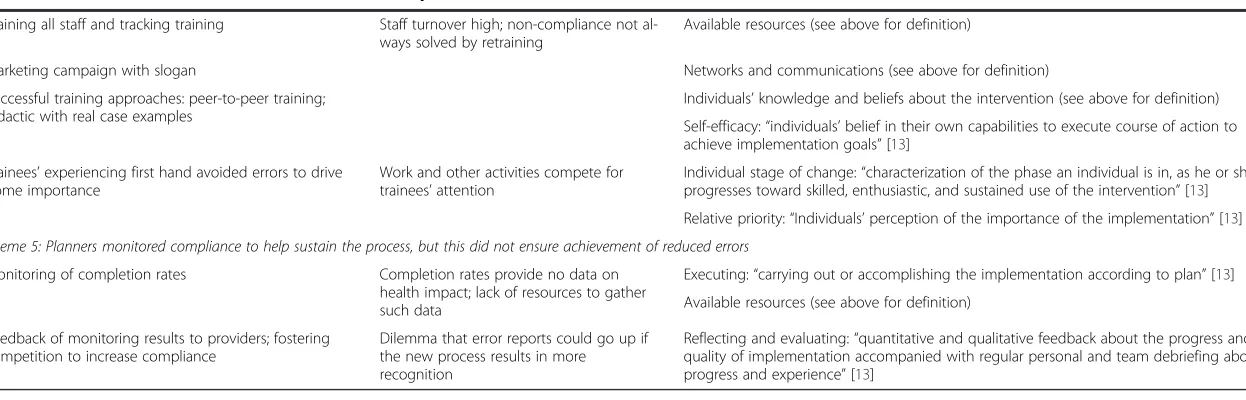
Table 1 Themes, facilitators, and barriers to implementing medication reconciliation according to qualitative analysis of interviews with healthcare managers, and selected relevant Consolidated Framework for Implementation Research (CFIR) constructs [13]
Facilitator Barrier CFIR construct(s) with short definition [13]
Theme 1: Consensus that purpose of medication reconciliation is to improve patient safety; respondents also had a broader view of its value
Planners with a broad view of the process’value Individuals’knowledge and beliefs about the intervention:“attitudes toward and value placed on the intervention as well as familiarity with facts, truths, and principles related to the intervention”[13]
External policy and incentives:“external strategies to spread interventions including policy and regulations (governmental or other central entity), external mandates,…and public or benchmark reporting”[13]
Theme 2: Planning team’s membership and functioning recognized as facilitators to a successful planning process
Planners who were or became champions of the process Engaging champions:“’individuals who dedicate themselves to supporting, marketing, and “driving through”an [implementation]’, overcoming indifference or resistance that the intervention may provoke in an organization”[13]
Planners organizationally positioned to carry out the plan Engaging individuals:“attracting and involving appropriate individuals in the implementation”[13]
Planners who were compelling leaders, who could get buy-in from front line staff
Engaging opinion leaders:“individuals in an organization who have formal or informal influence on the attitudes and beliefs of their colleagues with respect to implementing the intervention”[13]
Planners with openness to others’perspectives and a willingness to compromise, to facilitate discussion and joint problem-solving
Learning climate:“climate in which leaders express their own fallibility and need for team members’assistance and input; team members feel that they are essential, valued, and knowledgeable partners in the change process; individuals feel psychologically safe to try new methods;…sufficient time and space for reflective thinking and evaluation”[13]
Perseverance in obtaining resources Lack of resources, staffing and/or budgetary support
Available resources:“the level of resources dedicated for implementation…including money, training, education, physical space, and time”[13]
Multi-departmental participation in planning Process planning:“the degree to which scheme[s]…for implementing an intervention are developed in advance and the quality of those schemes”[13]
Communication among team members, in or out of meetings
Poor team communication Networks and communications:“the nature and quality of formal and informal communications within an organization”[13]
Theme 3: Implementation facilitated by planners’understanding of performance improvement, and fitting the new process into workflow
Planners with an understanding of the basic tenets of performance improvement
Individuals’other personal attributes:“personal traits such as tolerance of ambiguity, intellectual ability, motivation, values, competence, capacity, and learning style”[13]
Fitting the process into each discipline’s workflow Compatibility:“how the intervention fits with existing workflows and systems”[13] Assigning roles to multiple disciplines Resistance to changing roles and/or scope
of practice; enforcer is a negative role
Implementation climate:“The absorptive capacity for change, shared receptivity of involved individuals to an intervention”[13]
Providing value to front-line providers to improve uptake Relative advantage:“stakeholders’perception of the advantage of implementing the intervention versus an alternative solution”[13]
Testing to optimize human-computer usability IT staff may not be available or able to do testing
Trialability:“ability to test the intervention on a small scale in the organization, and to be able to reverse course”[13]
Recognition that intervention should be refined based on reevaluation
Trialability (see above for definition)
Theme 4: Training recognized as important to sustaining the process, but training has limited effect on some individuals or groups
Sanchez
et
al.
BMC
Health
Services
Research
2014,
14
:290
Page
4
o
f
1
0
http://ww
w.biomedce
ntral.com/1
Table 1 Themes, facilitators, and barriers to implementing medication reconciliation according to qualitative analysis of interviews with healthcare managers, and selected relevant Consolidated Framework for Implementation Research (CFIR) constructs [13](Continued)
Training all staff and tracking training Staff turnover high; non-compliance not al-ways solved by retraining
Available resources (see above for definition)
Marketing campaign with slogan Networks and communications (see above for definition)
Successful training approaches: peer-to-peer training; didactic with real case examples
Individuals’knowledge and beliefs about the intervention (see above for definition)
Self-efficacy:“individuals’belief in their own capabilities to execute course of action to achieve implementation goals”[13]
Trainees’experiencing first hand avoided errors to drive home importance
Work and other activities compete for trainees’attention
Individual stage of change:“characterization of the phase an individual is in, as he or she progresses toward skilled, enthusiastic, and sustained use of the intervention”[13] Relative priority:“Individuals’perception of the importance of the implementation”[13]
Theme 5: Planners monitored compliance to help sustain the process, but this did not ensure achievement of reduced errors
Monitoring of completion rates Completion rates provide no data on health impact; lack of resources to gather such data
Executing:“carrying out or accomplishing the implementation according to plan”[13] Available resources (see above for definition)
Feedback of monitoring results to providers; fostering competition to increase compliance
Dilemma that error reports could go up if the new process results in more recognition
Reflecting and evaluating:“quantitative and qualitative feedback about the progress and quality of implementation accompanied with regular personal and team debriefing about progress and experience”[13]
Sanchez
et
al.
BMC
Health
Services
Research
2014,
14
:290
Page
5
o
f
1
0
http://ww
w.biomedce
ntral.com/1
risk management) and administrators such as the Chief Medical Officer. Respondents indicated that implemen-tation was facilitated by planning team members who were or became champions of the medication reconcili-ation process.
A key functional characteristic of the planning team was ease of communication. Respondents indicated openness to others’ perspectives and willingness to compromise, both of which facilitated discussion and joint problem-solving. Commitment of members to the planning process was high. Many respondents commented that, in the be-ginning, meetings were scheduled at least weekly in order to create momentum and facilitate rapid trouble-shooting. Open channels of communication outside of the meetings were equally important.
Implementation was facilitated by planning members who were perceived as compelling leaders and who could get cooperation from front line staff:
Buy-in is extremely important - getting principals and strong people on the committee. People who are good at convincing…. You have to have a provider onboard if you expect the residents and the other attendings to go with it (Pharmacist Manager).
Having organizationally well-positioned planning team members was important when it came to obtaining re-sources, which was often noted as a barrier. Statements indicated that planning team members persevered to ob-tain the necessary resources, even when faced with admin-istrators who were reluctant to allocate them: “I know how to push some buttons and I probably pushed some buttons if I needed to [get administrators] onboard” (Pharmacist Manager).“There was no budget for this and there were no resources….. [So the project was accom-plished by] whatever we could grab…. It was on our time” (Physician Manager).
These quotes underscore the importance of en-gaging champions, opinion leaders, and individuals; the organizational “learning climate”; available resources; and communications, all core CFIR constructs (Table 1), and their contribution to the medication reconciliation planning process.
Theme 3
Planners’approach to implementation was facilitated by understanding the need to fit the new process into work-flow and to revise the process as needed, basic tenets of performance improvement.
Respondents recognized a need to fit the new medica-tion reconciliamedica-tion process into the hospital’s existing staff-ing structure and multiple disciplines’different workflows (the CFIR construct of“compatibility”) (Table 1). Initially each discipline’s medication management workflow was
examined, after which each discipline’s role in the new medication reconciliation process was proposed. Respon-dents noted that physicians were the ultimate decision makers and that completing medication reconciliation is part of their hospital admission process. However, each organization assigned varying roles to other disciplines. In one case, pharmacists were assigned to be present on the patient care units to educate the patients and talk with the doctors. This was considered to be a transformative role change:
We used to have pharmacists work centrally and verify the orders remotely and we changed the paradigm and sent pharmacists to the floors. So now…every unit has a pharmacist during the day (Pharmacist Manager).
Yet, the limits of the pharmacist’s new role was also articulated:
As a pharmacist, it's not in my scope of practice to decide this versus this. It's within my scope to make recommendation based on what I'm seeing but it's up to the provider in the end to make that final decision (Pharmacist Manager).
In another case of changing traditional roles, respon-dents decided that nurses could input medication infor-mation into the medication reconciliation record before the physicians did. This created a multi-disciplinary ap-proach to the medication reconciliation process with the added unexpected, benefit of increased communication among all providers:
I think it promotes communication between the doctors and the nurses…. Many times patients tell nurses things they don’t tell doctors and vice versa (Nurse Manager).
Respondents expressed that increasing work efficiency was an important facilitator of uptake by providers:
We tried to offer something of value. For the physicians…no typing in meds or anything, its click, click, click, do a little editing and you get this beautiful discharge summary…. For the nurse, you don’t have to write down your own list on admission or on discharge, you just click, accept, and get what you need for patients…. I think that was pretty important to people that it helped them do the work they were already doing (Physician Manager).
Respondents also recognized that implementation is dynamic. They recognized that the process would be
Sanchezet al. BMC Health Services Research2014,14:290 Page 6 of 10
imperfect at the beginning and would need to be adapted. Several described an initial piloting in which they watched an early user navigate the process and then adjusted the process to better accommodate users (the CFIR construct of“trialability”(Table 1)).
Theme 4
Staff training was recognized to be an important part of rolling out and sustaining the process, but training has limited effect on some individuals or groups.
Several training approaches were reported, including didactic presentations during staff orientation, online learning, presentations at departmental in-services and conferences, and one-to-one training by peers. Training occurred on all shifts and respondents reported the cre-ation of tracking systems to ensure everyone involved was trained. Promotion of the new process among pro-viders was facilitated by a marketing campaign with the slogan,“One list. One process. Universal access.”
Real near-miss case examples were presented to pro-viders to demonstrate how medication reconciliation can affect outcomes. There was recognition of the import-ance of new users’experiencing the benefit first hand in order to drive home the importance of complying with the new medication reconciliation process:
They don’t see a value until they come across the case where they picked up a mistake and then they say,
‘Oh thank God we had this because look at what I caught.’[When] they've had that firsthand experience of capturing something, that brings it home to them (Pharmacist Manager).
Respondents also reported limitations to training ap-proaches. First, staff turnover, especially of house staff and trainees, was high, and rotations short, resulting in insufficient time to solidify practice habits. Work and other training activities competed for staff attention. One respondent described an abbreviated “see one, do one, teach one” approach to the new medication recon-ciliation process. One respondent made the observation that lapses in compliance cannot always be attributed to inadequate training, nor corrected by more training:
Training is training. Performance is performance. There's a link but you've got to be very careful in always blaming training…. at some point the adult learner has to take training and use it…. You've got to hold people accountable (Nurse Manager).
These quotes reflect recognition that training’s impact depends on the educational phase an individual is in, an individual’s perception of the importance of medication reconciliation, and the concept of self-efficacy. This
theme is consistent with the core CFIR construct of the influence of “individuals’ belief in their own capabilities to execute course of action to achieve implementation goals”(Table 1).
Theme 5
Planners monitored compliance to help sustain the new process, but acknowledged that this did not ensure that medication reconciliation was actually achieving its pri-mary goal of reducing errors.
Most respondents indicated that monitoring of com-pletion rates helped ensure that providers were complet-ing medication reconciliation appropriately. They agreed that the best way to ensure compliance was via direct feedback of monitoring data to providers, to hold pro-viders accountable, and to enable managers to reach out to providers individually, part of the CFIR construct of
“reflecting and evaluating” (Table 1). Another respond-ent believed that competition among units or teams could facilitate increased compliance.
However, many also respondents noted that comple-tion rates do not provide informacomple-tion on the quality of the medication reconciliation process or error avoidance. The central problem, as described by one respondent, is that “We’re not collecting a gold standard medication list, and comparing it to what people enter into the sys-tem. We don’t have the infrastructure for that” (Phys-ician Manager). This individual leaves open the question of whether execution (“carrying out or accomplishing the implementation according to plan,”a core CFIR con-struct, Table 1) has actually been achieved. Another re-spondent agreed:
We’re not…doing what really…should be happening which is…a continuous process where we’re gathering data in a consistent way and measuring our progress against it and deciding whether that data is meaningful for patient care. It’s easy to gather numbers–compliance–but whether or not that means patient’s lives are better, or errors are reduced, is much harder (Another Physician Manager).
Respondents acknowledged that ADE reports could go down if the medication reconciliation process was suc-cessful in preventing them, or, paradoxically, go up if the new process resulted in increased recognition and reporting of them, thereby creating a safety reporting dilemma.
Discussion
In this study, we describe the implementation of medica-tion reconciliamedica-tion at two hospitals through analysis of semi-structured interviews with individuals instrumental
Sanchezet al. BMC Health Services Research2014,14:290 Page 7 of 10
in planning and implementing the process. Respondents agreed that the purpose of medication reconciliation is to improve patient safety by reducing medication errors and ensure compliance with the Joint Commission Na-tional Patient Safety Goal. Planning process characteris-tics emphasized by the respondents included: assembling an interdisciplinary team, getting buy-in from adminis-trators and clinical leaders, fitting the new process into providers’existing workflow, and providing value to pro-viders assigned to key roles. Assignment of roles was a decision that required discussion and compromise dur-ing the planndur-ing process. Overall, key qualities of plan-ning team members included a significant stake in the outcome, cooperative spirit and willingness to com-promise and embracing challenges associated with solv-ing a complex problem.
Results of the current study indicated that planners understood tenets of performance improvement, and followed steps akin to a Plan-Do-Study-Act (PDSA) model. PDSA is a change model consisting of the fol-lowing steps: developing a plan to implement and test the change (Plan), carrying out the change (Do), observ-ing and learnobserv-ing from the consequences (Study), and determining what modifications should be made (Act) [19]. Our study included statements that indicated ac-ceptance of an imperfect process at the beginning followed by process refinement, fitting the process into existing workflow to the extent possible, use of teaching and mar-keting to generate acceptance of the process by users, and subsequent monitoring of and feedback on process per-formance. Use of a PDSA approach is notable because medication reconciliation may be more difficult to imple-ment than other performance improveimple-ment interventions, as demonstrated by the history of pushback against the Joint Commission National Patient Safety Goal by many or-ganizations [8]. Whether adaptation and promotion of the PDSA approach specifically for this process could improve its implementation is an open question.
Respondents indicated that there were some important role changes or adjustments that were expected of pro-viders. For physicians, the introduction of medication reconciliation forced focused consideration of the pa-tient’s entire list of medical problems and treatments. For pharmacists, transformative roles required pharma-cists to spend more time on the hospital units reviewing medications with patients before discharge and inter-facing with medical and nursing providers. This finding is consistent with other studies, which have reported on role changes of similar magnitudes for physicians, phar-macists, and nurses involving medication reconciliation such as having hospital nurses, pharmacists or pharmacy technicians play a larger role in taking medication his-tories [20,21]. Yet studies also report significant barriers to providers’ accomplishing the new tasks, including
unreliable sources of medication information and tasks that compete for providers’time and attention that they consider higher priority. As a result providers are at risk for having low self-efficacy; i.e., low perceived capability to achieve the process’objectives [22].
Our study produced some unanticipated findings. First, although respondents were unanimous that the purpose medication reconciliation was to decrease errors, monito-ring efforts focused on completion of the medication recon-ciliation process (i.e., compliance), with limited resources allocated to monitoring its accuracy or effectiveness (i.e., ef-fect on medication errors). This is important because, in a previous study we found that providers who were complet-ing medication reconciliation did not have confidence that the process was sufficient to prevent errors and ADEs as intended and their attitudes toward the process were often negative [22]. Other authors have noted the insufficiency of simply monitoring compliance [12] and at least one safety advocacy group has promoted a measure called the Medi-cation Reconciliation Success Index (MRSI), which is a measure of avoidance of unintended discrepancies adjusted for the total number of pre-hospital medications [MRSI = 1-(number of unintended discrepancies/number of pre-hospital medications)] [23].
Second, the majority of the suggestions for improving the medication reconciliation process were hospital, pro-vider, or departmental measures, and not driven by consid-ering the patient’s experience. Patient-centered comments were rare, potentially in part because we did not ask about the patient experience. Yet improving the patient experi-ence with medication reconciliation could have a positive impact on medication-related outcomes and patient satis-faction. One emerging patient-centered measurement tool, the Care Transitions Measure, explicitly asks patients or family members whether they received all the information needed to manage their medications upon discharge from the hospital [24]. Knowing the effect of medication recon-ciliation on health care utilization such as hospitalization is also important to patients, providers, and planners. Al-though studies to date have not shown a consistent effect, this may be because of the design of the medication recon-ciliation intervention studied or because other factors had greater influence on hospital utilization [6].
A strength of this study is that it follows our prior studies in same setting, and our interview script, coding, and analysis were informed by prior data and experience [22,25]. In this regard, a limitation of the study is that one author (KSB) was a member of the participating or-ganizations during medication reconciliation planning and implementation, which may have influenced data collection and interpretation. However, this was not the case for the remaining authors. Results of this study were also shown to be consistent with constructs in an implementation model, the CFIR Table 1) [13]. Categories
Sanchezet al. BMC Health Services Research2014,14:290 Page 8 of 10
of constructs that fit our results include: intervention characteristics (e.g., relative advantage, trialability), inner setting (e.g., networks and communications, im-plementation climate, compatibility, relative priority, goals and feedback, learning climate, available re-sources), characteristics of individuals (e.g., knowledge and beliefs about the intervention, self-efficacy, in-dividual stage of change), and process (e.g., planning, engaging opinion leaders, engaging champions, execut-ing, and reflecting and evaluating). Consistency with this framework shows how medication reconciliation implementation is similar to other implementation problems, and also shows gaps in research on the topic that should be pursued in future studies. A limitation of our study is that we applied CFIR framework retro-spectively, and there are areas that we did not purpose-fully query, such as structural characteristics of the organization.
Conclusion
In this qualitative study, planners of medication re-conciliation described resource-intensive planning and implementation, acknowledged multiple challenges in-volved in these processes, and revealed a good under-standing of performance improvement principles. Our findings suggest approaches that may improve the like-lihood of medication reconciliation implementation success, and include constructs from established im-plementation models (i.e., PDSA and CFIR). Planners also need to understand provider perceptions of the new process, especially providers’ perceived capability to achieve the process’ objectives. The following ap-proaches may be particularly useful to improve the likelihood of successful planning and implementation of medication reconciliation:
1) Involve a multidisciplinary planning team consisting of highly-respected individuals who are open to change and compromise
2) Recognize that effective medication reconciliation may not be achieved by just refining existing practice and that significant professional role changes may be necessary, especially for nursing and pharmacy staff
3) Recognize the need to trial the new process and refine it
4) Recognize and promote other benefits of the process, such as enhanced communication between disciplines
5) Plan to devote resources not just to compliance monitoring but also to monitoring of the process’ impact on prescribing in order to be able to provide clinically meaningful evidence of the impact of the process to front-line providers
Competing interests
The authors declare that they have no competing interests.
Authors’contributions
SHS and SSS conducted pilot interviews, developed and applied the coding scheme, assisted in analysis, and helped draft the manuscript. SLS drafted the interview script, led interviews, helped draft the coding scheme, assisted in analysis, and revised the manuscript for important intellectual content. KSB assisted in all interviews, drafted the interview script and coding scheme, and drafted the manuscript. All authors read and approved the final manuscript.
Acknowledgements
The authors would like to acknowledge the contribution of Liz Rosen (Lehigh University) who helped enter and sort the coded files. This project was supported by VA Health Services Research and Development grants IAB-05-204 and REA 08–260. Dr. Boockvar was supported by the Greenwall Foundation.
Author details
1Icahn School of Medicine at Mount Sinai, One Gustave L. Levy Place, Box 1057, New York, NY 10029, USA.2Boston University School of Medicine, Division of Cardiology, 88 E Newton St, C-818, Boston, MA 02118, USA.3VA New Jersey Health Care System, War Related Illness and Injury Study Center East Orange, 385 Tremont Ave, Mailstop 129, East Orange, NJ 07018, USA. 4
Rutgers University School of Public Health Piscataway, Piscataway, NJ, USA. 5Geriatrics Research, Education, and Clinical Center, James J. Peters Veterans Affairs Medical Center, 130 West Kingsbridge Road, Bronx, NY 10468, USA. 6Jewish Home Lifecare Research Institute on Aging, New York, NY, USA.
Received: 5 November 2013 Accepted: 25 June 2014 Published: 4 July 2014
References
1. Institute of Medicine:To Err Is Human: Building a Safer Health System. Washington, D.C.: National Academy Press; 2000.
2. Brennan TA, Leape LL, Laird NM, Hebert L, Localio AR, Lawthers AG, Newhouse JP, Weiler PC, Hiatt HH:Incidence of adverse events and negligence in hospitalized patients. Results of the Harvard medical practice study I.N Engl J Med1991,324:370–376.
3. Leape LL, Brennan TA, Laird N, Lawthers AG, Localio AR, Barnes BA, Hebert L, Newhouse JP, Weiler PC, Hiatt H:The nature of adverse events in hospitalized patients. Results of the Harvard medical practice study II.
N Engl J Med1991,324:377–384.
4. Bates DW, Boyle DL, Vander Vliet MB, Schneider J, Leape L:Relationship between medication errors and adverse drug events.J Gen Intern Med 1995,10:199–205.
5. Pronovost P, Weast B, Schwarz M, Wyskiel RM, Prow D, Milanovich SN, Berenholtz S, Dorman T, Lipsett P:Medication reconciliation: a practical tool to reduce the risk of medication errors.J Crit Care2003,18:201–205. 6. Mueller SK, Sponsler KC, Kripalani S, Schnipper JL:Hospital-based
medication reconciliation practices: a systematic review.Arch Intern Med 2012,172:1057–1069.
7. Kripalani S, Roumie CL, Dalal AK, Cawthon C, Businger A, Eden SK, Shintani A, Sponsler KC, Harris LJ, Theobald C, Huang RL, Scheurer D, Hunt S, Jacobson TA, Rask KJ, Vaccarino V, Gandhi TK, Bates DW, Williams MV, Schnipper JL:Effect of a pharmacist intervention on clinically important medication errors after hospital discharge: a randomized trial.Ann Intern Med2012,157:1–10.
8. Sentinal Event Alert #35: Using Medication Reconciliation to Prevent Errors.The Joint Commission; 2006.
9. Medication reconciliation to prevent adverse drug events.In 2014. http:// www.ihi.org/explore/ADEsMedicationReconciliation/Pages/default.aspx). 10. Tam VC, Knowles SR, Cornish PL, Fine N, Marchesano R, Etchells EE:
Frequency, type and clinical importance of medication history errors at admission to hospital: a systematic review.CMAJ2005,173:510–515. 11. Boockvar KS, Blum S, Kugler A, Livote E, Mergenhagen KA, Nebeker JR,
Signor D, Sung S, Yeh J:Effect of admission medication reconciliation on adverse drug events from admission medication changes.Arch Intern Med2011,171:860–861.
Sanchezet al. BMC Health Services Research2014,14:290 Page 9 of 10
12. Kaboli PJ, Fernandes O:Medication reconciliation: moving forward.Arch Intern Med2012,172:1069–1070.
13. Damschroder LJ, Aron DC, Keith RE, Kirsh SR, Alexander JA, Lowery JC: Fostering implementation of health services research findings into practice: a consolidated framework for advancing implementation science.Implement Sci2009,4:50.
14. Bradley EH, Curry LA, Devers KJ:Qualitative data analysis for health services research: developing taxonomy, themes, and theory.Health Serv Res2007,42:1758–1772.
15. Miles M, Huberman M:Qualitative Data Analysis.Thousand Oaks, California: Sage Publications; 1994.
16. Patton MQ:How to use Qualitative Methods in Evaluation.Newbury Park, California: Sage Publications; 1987.
17. Miller:Handbook of Research Design and Social Measurement.5th edition. Newbury Park, CA: Sage Publications; 1991:1991.
18. Clark JP:How to peer review a qualitative manuscript.InPeer Review in Health Sciences.2nd edition. Edited by Godlee F, Jefferson T. London: BMJ Books; 2003:219–235.
19. Plan-Do-Study-Act (PDSA) Worksheet.In 2014. http://www.ihi.org/ knowledge/Pages/Tools/PlanDoStudyActWorksheet.aspx. 20. van Sluisveld N, Zegers M, Natsch S, Wollersheim H:Medication
reconciliation at hospital admission and discharge: insufficient knowledge, unclear task reallocation and lack of collaboration as major barriers to medication safety.BMC Health Serv Res2012,12:170. 21. Vawdrey DK, Chang N, Compton A, Tiase V, Hripcsak G:Impact of
electronic medication reconciliation at hospital admission on clinician workflow.AMIA Annu Symp Proc2010,2010:822–826.
22. Boockvar KS, Santos SL, Kushniruk A, Johnson C, Nebeker JR:Medication reconciliation: barriers and facilitators from the perspectives of resident physicians and pharmacists.J Hosp Med2011,6:329–337.
23. Villanyi D, Fok M, Wong RY:Medication reconciliation: identifying medication discrepancies in acutely ill hospitalized older adults.Am J Geriatr Pharmacother2011,9:339–344.
24. Coleman EA, Eilertsen TB, Smith JD, Frank JC, Thiare JN, Ward A, Kramer AM: Development and testing of a measure designed to assess the quality of care transitions.J Am Geriatr Soc2002,50:S7.
25. Kushniruk AW, Santos SL, Pourakis G, Nebeker JR, Boockvar KS:Cognitive analysis of a medication reconciliation tool: applying laboratory and naturalistic approaches to system evaluation.Stud Health Technol Inform 2011,164:203–207.
doi:10.1186/1472-6963-14-290
Cite this article as:Sanchezet al.:Implementing medication
reconciliation from the planner’s perspective: a qualitative study.BMC
Health Services Research201414:290.
Submit your next manuscript to BioMed Central and take full advantage of:
• Convenient online submission
• Thorough peer review
• No space constraints or color figure charges
• Immediate publication on acceptance
• Inclusion in PubMed, CAS, Scopus and Google Scholar
• Research which is freely available for redistribution
Submit your manuscript at www.biomedcentral.com/submit
Sanchezet al. BMC Health Services Research2014,14:290 Page 10 of 10
![Table 1 Themes, facilitators, and barriers to implementing medication reconciliation according to qualitative analysis of interviews with healthcare managers,and selected relevant Consolidated Framework for Implementation Research (CFIR) constructs [13]](https://thumb-us.123doks.com/thumbv2/123dok_us/8303620.290340/4.794.63.706.56.528/facilitators-implementing-medication-reconciliation-qualitative-healthcare-consolidated-implementation.webp)