Article
Determination of Forming Limits in Sheet Metal
Forming Using Deep Learning
Christian Jaremenko1,*, Nishant Ravikumar1, Emanuela Affronti2, Marion Merklein2and Andreas Maier1
1 Pattern Recognition Lab, Friedrich-Alexander-Universität Erlangen-Nürnberg Martensstr. 3, 91058 Erlangen,
Germany; [email protected] (N.R.); [email protected] (A.M.)
2 Institute of Manufacturing Technology, Friedrich-Alexander-Universität Erlangen-Nürnberg Egerlandstr. 13,
91058 Erlangen, Germany; [email protected] (E.A.); [email protected] (M.M.)
* Correspondence: [email protected]
Received: 18 March 2019; Accepted: 27 March 2019; Published: 30 March 2019
Abstract:The forming limit curve (FLC) is used to model the onset of sheet metal instability during forming processes e.g., in the area of finite element analysis, and is usually determined by evaluation of strain distributions, derived with optical measurement systems during Nakajima tests. Current methods comprise of the standardized DIN EN ISO 12004-2 or time-dependent approaches that heuristically limit the evaluation area to a fraction of the available information and show weaknesses in the context of brittle materials without a pronounced necking phase. To address these limitations, supervised and unsupervised pattern recognition methods were introduced recently. However, these approaches are still dependent on prior knowledge, time, and localization information. This study overcomes these limitations by adopting a Siamese convolutional neural network (CNN), as a feature extractor. Suitable features are automatically learned using the extreme cases of the homogeneous and inhomogeneous forming phase in a supervised setup. Using robust Student’s t mixture models, the learned features are clustered into three distributions in an unsupervised manner that cover the complete forming process. Due to the location and time independency of the method, the knowledge learned from formed specimen up until fracture can be transferred on to other forming processes that were prematurely stopped and assessed using metallographic examinations, enabling probabilistic cluster membership assignments for each frame of the forming sequence. The generalization of the method to unseen materials is evaluated in multiple experiments, and additionally tested on an aluminum alloy AA5182, which is characterized by Portevin-LE Chatlier effects.
Keywords: pattern recognition; machine learning; deep learning; forming limit curve; sheet metal forming
1. Introduction
The forming range of sheet metal is evaluated using the forming limit curve (FLC), whose limits are defined by the major and minor strain pairs at the onset of localized necking. In Europe, the procedure used for the generation of the FLC is summarized in DIN EN ISO 12004-2 [1]. The FLC is generated by means of Nakajima [2] and Marciniak [3] setups. The sheet metal is mounted into a clamping unit and then deformed to fracture by using a flat shaped or a hemispherical punch. The evaluation method proposed in the ISO standard is based on the Bragard study of 1972 [4], which evaluates the strain distribution of the material prior to failure and is referred to as the “cross-sectional method”. To determine the limiting strains, sections perpendicular to crack initiation are defined and the strain propagation is approximated with a second order polynomial. However, such an approach only allows evaluation of the last stage of the strain distribution without considering strain progression.
Presently, the forming behavior is evaluated using digital image correlation techniques (DIC) and employed to determine the FLC [5]. For this purpose, a stereo camera system measures strains on the material surface during Nakajima or Marciniak tests and thus enables the evaluation of strain progression. Despite technological progress, the standard is still based on the “cross-section method”. An added complexity in determining the forming limits is related to the intrinsic properties of the materials, for example, modern lightweight materials such as high-strength steels and aluminum alloys tend to develop multiple local strain maxima or spontaneous crack initiation without a necking phase. Consequently, second order functions are unsuitable to approximate the limit strains. To overcome the disadvantages of the “cross-section method”, several techniques have been developed which take into account the forming history during the Nakajima tests. These time-dependent methods include the “line-fit” approach proposed by Volk et al. [6] as well as the correlation coefficient method [7]. Both approaches are based on observing the reduction in thickness within a predefined instability zone and determining the initiation of necking as a response to a sudden decrease in the thickness of the specimen. One disadvantage of these time-dependent methods is their dependence on a predefined instability zone and thus limited area of evaluation. In 2015, an approach based on machine learning was considered to provide new insights to forming development [8]. Conventional pattern recognition [9] involves the automatic processing and evaluation of data, whereby a physical signal, e.g., images or speech, is first converted into suitable, more compact characteristic features that are commonly defined by experts of the respective field. To enable an automated separation into subspaces/classes, the data is first assigned to different classes by experts. Using a classification algorithm and a representative subset of the data, decision boundaries are learned based on the feature representation/label pairs, such that the hypothesis of the learned class boundaries can be verified with the remaining disjoint data. In [8], such a pattern recognition technique was used to predict the crack class for a DX54D steel with a prediction accuracy of 90% before the actual crack formation was observed.
Metallographic investigations have shown that both conventional deep drawing steels [10] and dual phase steels [11] have superficial patterns associated with local necking, which enables the application of automated pattern recognition methods using the strain distributions for the determination of forming limits [12]. In [13] (henceforth referred to as Part 1) this idea was extended by the assessment of several evaluation areas and by comparing the obtained classification results with expert annotations for several failure classes (diffuse, local necking, and crack). This study demonstrated that a consistent determination of local necking is possible with the use of expert knowledge. Additionally, it was shown that the accuracy and efficacy of the results are affected by subjective expert annotations as well as external factors such as sampling frequency, which have a particularly negative effect on the classification results of the diffuse necking class.
To address these problems and to remove the dependence on expert annotations, an unsupervised classification approach was developed (henceforth referred to as Part 2) in [14]. Several rectangular areas close to the strain maximum were evaluated and Histogram of Oriented Gradients (HoG) were used as characteristic features [15], to classify the local necking using One-Class Support Vector Machines (SVM) [16]. It was shown that the results are within the range of the “line-fit” method, while incorporating image information and ameliorating the need for defining a specific evaluation area. Additionally, advantages of this approach include independence from expert annotations, transferability to new materials, and the introduction of a probabilistic FLC.
In recent years, convolutional neural networks (CNN) have found widespread use in the field of pattern recognition, and can process a large amount of data in finite time due to the computing capacity that is now available, e.g., due to powerful graphics cards. The main advantage of these approaches is the automated, data-driven learning of representative features that are adapted to the problem, such that the design of handcrafted features is no longer necessary for the evaluation and assessment of classification problems. Different CNN approaches have outperformed conventional pattern recognition methods in various challenges (e.g., ILSVRC [17]) and are being successfully applied in the medical field, e.g., computer aided diagnosis [18], non-rigid registration [19], reconstruction [20,21], landmark detection [22], and in mechanical engineering for example in the field of event detection [23] or defect detection for photo-voltaic module cells [24].
In contrast to Part 1 and 2, this study uses a CNN for the automatic extraction of characteristic features, for the task of FLC estimation. Here, the extreme cases of the forming process (beginning of the homogeneous and end of the inhomogeneous forming phase) are used to train a Siamese CNN [25] to optimally separate the respective forming phases from each other. This allows the characteristic features to be adapted to the respective material properties, to enable a more precise description of the failure states and by extension, the estimation of a more accurate FLC. As a further advantage, time independency is introduced by clustering the feature representations of images using Students t Mixture Models [26], so that video sequences of incomplete forming processes may also be investigated, for e.g., prior to the occurrence of fracture. This not only allows a determination of forming limits independent of strain paths, which use the mean value of a heuristically defined region, but also the generation of the probabilistic FLC as introduced in Part 2, and theoretically a real-time monitoring of forming processes. To enable comparisons with previous studies, the data set of Part 1 is used, and the temporal derivative according to Part 2 is evaluated, which emphasizes the strain development over a sequence of successive images, as suggested by Vacher et al. [27]. In addition, the generalizability and transferability of the methodology to other materials that remain unseen during learning will be investigated. The data set consists of a deep drawing steel DX54D of two different thicknesses, a dual phase steel DP800, an aluminum alloy AA6014 (in previous studies referred to as AC170) and additionally another aluminum alloy AA5182 with Portevin-LE Chatlier effects (PLC) [28]. The results of the CNN approach are compared with the results of the method proposed in Part 2 and with the results of the time-dependent FLC of the “line-fit” method. Additionally, the transferability of the approach to unseen data is demonstrated by assessing forming tests which were stopped before fracture occurrence and for which metallographic examination results are available.
2. Experimental Procedure and Materials
optical measurement system
punch
test piece blank holder
[image:4.595.170.411.88.289.2]die
Figure 1.Schematic of the Nakajima experimental setup.
In this study, the three known materials from Part 1 and 2 are reused, while a challenging aluminum alloy is also evaluated: (1) DX54D, a deep drawing steel, with ductile necking behavior and observable localization on the surface; (2) DP800, a dual phase steel, high-strength material with a matrix of ferrite and martensite precipitations and hence multiple observable local maxima during Nakajima tests; (3) AA6014, a lightweight aluminum alloy of the 6xxx series with multiple maxima during Nakajima tests under plain strain conditions and (4) AA5182, an aluminum alloy of the 5xxx series with several local maxima in the form of shear bands (PLC effect). The principal material properties are summarized in Table1. For a comprehensive description of the forming behavior of the evaluated materials please refer to Part 1.
Table 1.Material properties of the investigated materials [13] including AA5182.
Material t0(mm) n YS (MPa) TS (MPa) UE (%) r0 r90 Frequency(Hz) Punch Velo-City (mm/s)
DX54D 0.75/2.00 0.23 164–170 297–322 22–23 1.80 2.22 40/20 1.0/1.5
DP800 1.00 0.16 465 775–797 14–16 0.76 0.90 40 1.0
AA6014 1.00 0.24 140–143 244–239 21–23 0.69 0.67 15 1.0 AA5182 1.00 0.32 130–132 265–275 20–21 0.72 0.67 40 1.0
3. Method
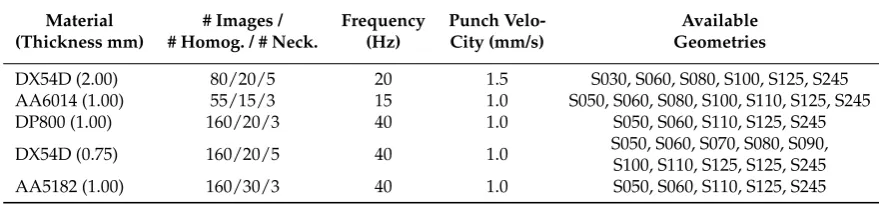
[image:4.595.76.516.476.555.2]generalizes to unseen data or if it over-fits to the training data. This procedure is repeated until convergence or until the error in the validation data set increases, and subsequently, the performance of the network is assessed using the remaining unseen test data set. There exist supervised and unsupervised deep learning-based techniques, similar to conventional pattern recognition approaches that either require expert annotations or solve the optimization problem without the use of data (class-) labels. The framework proposed in this study employs both types of learning techniques. In the supervised part, the extreme cases of the homogeneous and inhomogeneous forming phase, are used as labels for the data set. The number of images used per material for training are found in Table2, where # images depicts the total number of images per sequence for the individual material and geometry, # homog. The number of images of the homogeneous forming phase and # neck. The number of images of the inhomogeneous forming phase. Only these extreme cases e.g., beginning 20 from the clear homogeneous and last 3 images from the inhomogeneous phase, close to fracture, are used to train two identical CNN’s that share the same weights and hence assess the similarity of the images. Such a setup was designed to account for the difficulty in assigning labels in a reliable manner to images in a sequence. Consequently, we adopt a Siamese CNN to extract features from images which are guaranteed to belong to either the homogeneous or inhomogeneous class. This setup enables pairwise comparisons between the two types of images using a similarity metric in a low-dimensional feature space. As a result, of the similarity metric, the two instances either belong to the same or different class. This supervised classification setup is used to separate the two classes in an optimal manner, by simultaneously learning compact representations of both classes.
Table 2.Database per material with process parameters.
Material (Thickness mm)
# Images / # Homog. / # Neck.
Frequency (Hz)
Punch Velo-City (mm/s)
Available Geometries
DX54D (2.00) 80/20/5 20 1.5 S030, S060, S080, S100, S125, S245 AA6014 (1.00) 55/15/3 15 1.0 S050, S060, S080, S100, S110, S125, S245 DP800 (1.00) 160/20/3 40 1.0 S050, S060, S110, S125, S245
DX54D (0.75) 160/20/5 40 1.0 S050, S060, S070, S080, S090, S100, S110, S125, S125, S245 AA5182 (1.00) 160/30/3 40 1.0 S050, S060, S110, S125, S245
In the unsupervised part, the unused data between the beginning of the homogeneous and the end of the inhomogeneous forming phase, as well as the extreme cases are assessed using the trained network to create low-dimensional representations. Using an unsupervised clustering approach, the low-dimensional instances of each forming sequence are then assigned to one of the three clusters: homogeneous, transition, necking. For clarification, the data sets are disjoint, meaning that e.g., the extreme cases of all but one material are used for training, and validation as well as to learn an optimal separation between the two classes and a low-dimensional representation of the data. The actual evaluation and clustering is performed using the held-out material.
3.1. Preprocessing
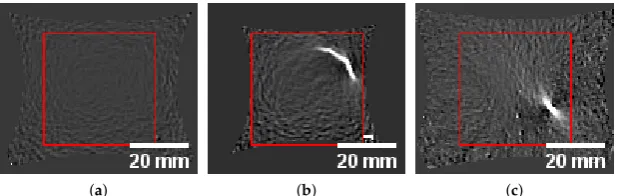
Single defect pixels or missing values that occurred occasionally were interpolated linearly using the temporal information, e.g., the strain progression. Other defect pixels, such as static defect pixels that contain no information during the whole forming process were replaced by the average value of a 3×3 neighborhood. To reduce the influence of outliers that usually occur at border regions of the specimen and are off by a large magnitude when compared to the rest of the image, the data was normalized using the 0.5% and 99.5% percentile of the image intensities and standardized afterwards. Furthermore, to be able to train the network without special restrictions due to the specimen geometries and to facilitate the experiments’ procedure and support interchangeability of materials, the data was center cropped by a rectangle with a side length of 72 px. This size was determined based on the S245 geometry of the DX54D material, and the largest possible inner rectangle. Since the aim of the study is to identify the localized necking based on the material changes, the dark homogeneous border regions must be avoided, to prevent the network from learning features based on these curved border regions, rather than the intensities that are included within each patch. The changing image size and the amount of the curved region included within the evaluation area would bias the network, as visualized in Figure2.
[image:6.595.144.454.311.409.2](a) (b) (c)
Figure 2.Varying images sizes depending on forming progression. Center cropped evaluation areas of DX54D and DP800 showing the extreme cases of the forming process: (a) DX54D-S245 homogeneous. (b) DX54D-S245 localization. (c) DP800-S245 localization.
3.2. Network Architecture
The Siamese network comprises two identical sub-networks, where each consists of the first 3 convolutional blocks of a VGG16 network [29] that was pretrained on a large-scale image database [30], rather than training the network from scratch with a limited amount of data. Additionally, to adapt to the new data, one dropout layer (0.5 dropout rate) between the two fully connected layers (512, 256 neurons) followed by one L2 normalization layer. The two CNN’s form a Siamese CNN architecture [25] as visualized in Figure3and depicted by feature learning, which is used for learning low-dimensional representations of the data, and to assess the images in a pairwise manner. Two inputs (X1,X2) are evaluated simultaneously using an identical network structure (Gw) with shared weights
(W). This setup allows a pairwise comparison between the two, L2 normalized, low-dimensional outputs of the network (Gw(X1),Gw(X2)), as different input images are assessed identically, based on
W
Convolutional
network (Vgg16)
Convolutional
network (Vgg16)
Gw(X1) Gw(X2)
||Gw(X1)−Gw(X2)||2
X1 X2
Gw Gw
Ew
Feature Learning
Convolutional
network (Vgg16)
XT
Gw
PCA + SMM
cluster membership
[image:7.595.126.477.83.243.2]Clustering
Figure 3.Supervised feature learning and unsupervised clustering, adopted from [25].
3.3. Supervised Siamese Optimization
While other loss functions usually sum over individual samples, this loss function evaluates the input samplesX1,X2in a pairwise manner, while learning the parameterized distance functionDW
using the Euclidean distance between the low-dimensional outputs ofGW.
DW(X1,X2) =||GW(X1)−GW(X2)||2 (1)
The general loss function is described as,
L(W(Y,X1,X2)) = (1−Y)LS(DW(X1,X2)) +YLD(DW(X1,X2)) (2)
where(Y,X1,X2)denotes a labeled input sample pair. The labelYrefers to the extreme cases of the
input sequence, whereY=0 if the samples are from the same class andY=1 if the samples are from different forming phases.LSdenotes the loss for samples of the similar phase whileLDdenotes the
loss for dissimilar samples. These losses are designed such that minimizingLwith respect toWleads to low values ofDWif the samples are similar and high values otherwise.
The final loss function, the contrastive loss [31] is denoted as,
L(W,Y,X1,X2) = (1−Y)1
2(DW(X1,X2))
2+ (Y)1
2max(0,m−DW(X1,X2))
2
(3)
where m is a margin parameter that defines a radius around GW(X), the threshold distance for
dissimilar pairs. Due to the incomplete nature of the data, as only the extreme cases are used for training, this parameter cannot be optimized and is naively set to 1.0.
3.4. Unsupervised Clustering
cluster the data. An increase in the density of the distributions is achieved by artificially augmenting the data, e.g., by cropping randomly, flipping, translating (by 5 px) and rotating (by 15 deg.) each image. The effect of such transformations is well described and visualized in [31]. For evaluation of each geometry of the held-out material, the three complete sequences of this geometry, depicted byXTare used by the network to create the manifolds, while after PCA dimensionality reduction,
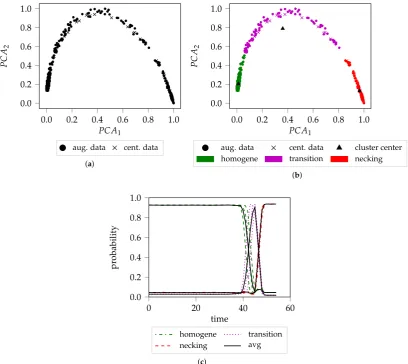
the components are clustered and described by distributions (cf. Figure3depicted by clustering), using Student’s t Mixture Models (SMM) [26]. These models are more robust to outliers compared to Gaussian Mixture models as shown in medical image segmentation [32] or registration [33]. This procedure enables the forming sequences to be described as probabilities, wherein, the probabilities represent the membership likelihood of the center cropped unaltered images at each time point, to the clusters of the mixture model. The clusters in turn represent distinct phases of the forming process, thereby enabling the frames of sequences to be classified into the same. The complete “unsupervised” pipeline is visualized in Figure4. Figure4a shows the unclustered PCA reduced features of the center cropped and augmented data of three trials of AA6014-S070. Figure4b depicts the same data after being clustered with SMM, whereas Figure4c visualizes the individual probability progression (with respect to mixture component membership) of each of the three sequences.
0.0 0.2 0.4 0.6 0.8 1.0 0.0
0.2 0.4 0.6 0.8 1.0
PCA1
P
C
A2
aug. data cent. data
(a)
0.0 0.2 0.4 0.6 0.8 1.0 0.0
0.2 0.4 0.6 0.8 1.0
PCA1
P
C
A2
aug. data cent. data cluster center
homogene transition necking
(b)
0 20 40 60
0.0 0.2 0.4 0.6 0.8 1.0
time
pr
obability
homogene transition
necking avg
[image:8.595.95.504.324.688.2](c)
4. Experiments
Multiple experiments are conducted to analyze generalization of the method from one material to another, and to evaluate the possibility of validating metallographic examination results by categorizing individual images of video sequences without defined localization regions.
4.1. Leave One Material Out Cross Validation (lomocv)
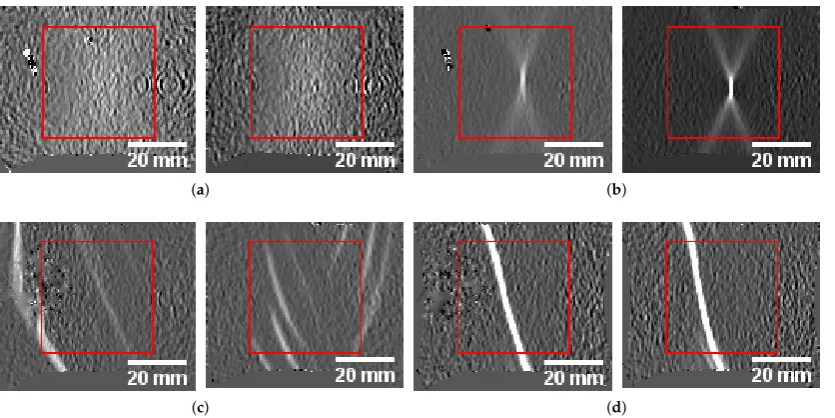
AA5182 was not considered in this experiment, as its behavior and the appearance of its images are significantly different compared to the other materials and hence would deteriorate learning. During forming AA5182 develops shear bands at random locations that seem comparable to the necking behavior of the remaining materials, as visualized by the examples of the homogeneous and inhomogeneous forming phase of DP800-S050 and AA5182-S050, shown in Figure5. The generalization and transferability of knowledge to unseen data is assessed with this experiment. One held-out material is evaluated after training the network with all geometries, of all materials, except the held-out one. Two thirds of the sequences are used as the training set, while the remaining sequences are used as the validation set. To generate an FLC for the held-out material, its sequences are processed by the network to generate low-dimensional representations. The determination of the actual strain values is carried out geometry wise. Three processed sequences per geometry are clustered using the described unsupervised framework, while the cross sections of the probability progression curves of the individual clusters (50% probability) are used as look up time points for the actual strain values.
(a) (b)
[image:9.595.93.511.372.581.2](c) (d)
Figure 5.Comparison of homogeneous and localization phase cases of DP800-S050 and AA5182-S050: (a) DP800 homogeneous. (b) DP800 localization. (c) AA1582 homogeneous. (d) AA1582 localization.
4.2. Leave One Sequence Out Cross Validation (losocv)
The data used to train the network is restricted to one geometry and material. Two thirds of the data per geometry are used as training and validation set, while the remaining sequence serves as test set. This way it is possible to assess the loading conditions separately and at the same time assess the generalization to unseen, comparable data.
4.3. Overfit
generalize to unseen data, but seems valid in the application of defining a forming limit based on three sequences for the generation of the FLC.
4.4. Metallography
This experiment assesses the location independence, as it evaluates multiple video sequences of forming processes of sheet metals that have not been deformed until fracture. The aim of this procedure was to stop the forming process close to the onset of localized necking, and hence to investigate the presence of material fatigue, based on metallographic examinations. The proposed method is used to validate these examination results and to ascertain if it is possible to assign frames to failure clusters without a well-defined localization region. Such an evaluation is not afforded by existing techniques, as they all require a priori definition of a localization area. As a result, of this procedure, strain path evaluations would be rendered unnecessary. Again, the evaluation is conducted using the held-out material.
Within all experiments, the 50% intersection of the homogeneous forming phase and transition phase as described in Figure4, and subsequent the intersection between the transition phase and localization phase, serve as look up time points for the strain values to create the FLC. The network is implemented in Keras [34] a high-level API of the TensorFlow framework [35]. The network was trained with a learning rate of 0.0001 in case of the losocv experiment, whereas in case of lomocv and overfit experiment a learning rate of 0.00001 was used. All experiments employed the Adam optimizer [36] for contrastive loss minimization. The Adam optimizer was chosen due to its ability to estimate adaptive learning rates based on the observed data, which has been demonstrated to improve convergence when training deep neural networks.
5. Results and Discussion
5.1. Comparison of Experimental Results
−0.10 0.00 0.10 0.20 0.30 0.15
0.20 0.25 0.30
minor strain
major
strain
lomocv loc. losocv loc. overfit loc.
(a)
−0.10 0.00 0.10 0.20 0.30
0.15 0.20 0.25 0.30
minor strain
major
strain
lomocv trans. losocv trans. overfit trans.
[image:11.595.86.512.97.278.2](b)
Figure 6.Different FLC candidates of DP800 (1.00 mm). (a) localization. (b) transition.
0 40 80 120 160
0.00 0.20 0.40 0.60 0.80 1.00
frame
pr
obability
homogene transition necking
avg.
(a)
0 40 80 120 160
0.00 0.20 0.40 0.60 0.80 1.00
frame
pr
obability
homogene transition necking
h. hold-out t. hold-out n. hold-out
avg.
(b)
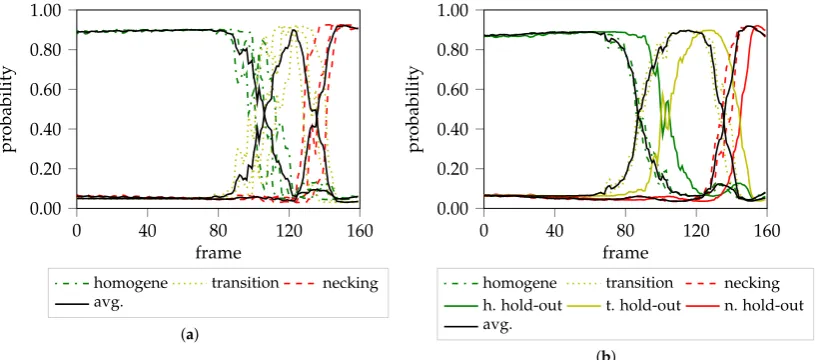
Figure 7. Differences between the lomocv and losocv experiment for DX54D-S060 (0.75 mm). (a) Probability progression for all three hold-sequences (losocv). (b) Probability progression for one hold-out sequence vs. The training sequences (losocv).
This especially occurs, when artifacts as visualized in Figure5are not consistently present in all data sets, as these affect the standardization procedure, or if the localization behavior is very different from the training data set. However, this effect may be reduced by increasing the number of forming sequences per geometry that are used to train the network. In the case of the lomocv experiment, a lot more data is used to train the network, which leads extraction of more generalized features, and hence a less conservative transition candidate. However, the negative effect of artifacts may also deteriorate the result of the lomocv approach, when the sequences of the held-out material contain artifacts that are a lot different from the ones in the training set. Overall it seems beneficial to pursue a leave one material out approach rather than performing a leave one sequences out setup.
[image:11.595.96.507.330.510.2]Furthermore, it would decrease the amount of available data per evaluation area and hence would negatively affect training of the network.
−0.10 0.00 0.10 0.20 0.30 0.40 0.10
0.20 0.30 0.40
minor strain
major
strain
[image:12.595.203.390.128.308.2]loocv loc. overfit loc. loocv trans. overfit trans.
Figure 8.FLC candidates of AA5182.
5.2. Comparison with State of the Art
−0.10 0.00 0.10 0.20 0.30 0.15
0.20 0.25 0.30
minor strain
major
strain
lomocv loc. lomocv trans. LF
<0.01 <0.6 <0.99
(a)
−0.10 0.00 0.10 0.20 0.30
0.10 0.20 0.30 0.40
minor strain
major
strain
loocv loc. overfit loc. LF
loocv trans. overfit trans.
[image:13.595.101.499.99.289.2](b)
Figure 9.Comparison with state of the art for DP800 (a) and AA5182 (b).
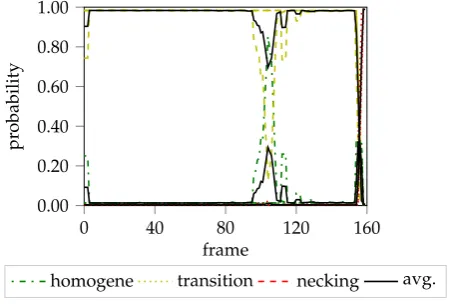
The homogeneous/transition intersection lookup for S245 was omitted in all experiments, since it tends to not occur within this geometry, or is very close to the necking lookup time point or even superimposed by the other two phases (cf. Figure10). For the AA5182 material, the localized necking candidates are above the “line-fit” candidates in all but the S245 geometry (cf. Figure9b), while the transition candidates are found slightly below the “line-fit” method, at least in near plane-strain conditions.
0 40 80 120 160
0.00 0.20 0.40 0.60 0.80 1.00
frame
pr
obability
homogene transition necking avg.
Figure 10.Probability progression of DP800-S245.
5.3. Metallography–Strain Path Quantification
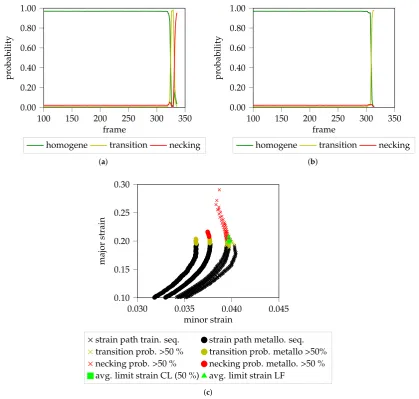
[image:13.595.186.411.403.555.2]distributions are estimated based on the trials that have been deformed until fracture. This allows to infer the current cluster membership for a frame of an incomplete formed specimen to be inferred, based on the center cropped image information. This approach is location independent and enables comparisons in a manner independent of the presence/absence of localization effects, and could be used in on-line forming processes, to stop the forming procedure. Two sequences of prematurely stopped forming trials of DP800-S110 are visualized in Figure11a,b with individual probabilistic cluster memberships per frame. The first sequence reaches the localized necking phase, whereas the second forming process was stopped within transition phase. The strain paths (cf. Figure11c) are created based on the strain distribution using the top 90% of thinning as threshold and color coded using a 50% threshold for each class. Additionally, the determined onset of localized necking according to the proposed classification method (CL) and the “line-fit” method are highlighted.
100 150 200 250 300 350 0.00
0.20 0.40 0.60 0.80 1.00
frame
pr
obability
homogene transition necking
(a)
100 150 200 250 300 350 0.00
0.20 0.40 0.60 0.80 1.00
frame
pr
obability
homogene transition necking
(b)
0.030 0.035 0.040 0.045 0.10
0.15 0.20 0.25 0.30
minor strain
major
strain
strain path train. seq. strain path metallo. seq. transition prob. >50 % transition prob. metallo >50% necking prob. >50 % necking prob. metallo. >50 % avg. limit strain CL (50 %) avg. limit strain LF
[image:14.595.89.509.257.656.2](c)
6. Discussion
Nakajima-based forming processes induce patterns on the surface of sheet metal materials and within the strain distributions when using a measurement device. In part 1 a supervised classification algorithm with expert knowledge/annotations was introduced, leading to good agreement between experts and classification results. Part 2 introduced an unsupervised classification algorithm, without expert annotations, based on conventional pattern recognition that evaluates edge information within small rectangular patches near maximum strain values using a one-class SVM with HoG features. In general, it led to consistent results throughout the experiments conducted, and introduced a probabilistic FLC. The main idea of this procedure was to introduce well-established pattern recognition methods and specific features that evaluate edge responses to support the hypothesis that localized necking correlates with a sudden increase/decrease of principal strains within strain distributions. As long as the hypothesis is correct, the method seems suitable as a base line approach that enables the estimation of multiple degrees of necking certainty using the FLC quantiles.
However, it has four disadvantages: (1) location dependency, due to evaluation only in the vicinity of the maximum strain area; (2) time-dependency, as it requires specimen to be formed until fracture and hence renders a comparison with prematurely stopped forming processes impossible; (3) predefined features limited to edge information; (4) transfer of knowledge to other materials or forming processes is not possible (i.e., it does not permit generalization to new materials/processes). The proposed method overcomes these limitations in a two-step approach. First a Siamese CNN is trained in a supervised manner, where only the extreme cases of the homogeneous and inhomogeneous forming phase (begin/end of forming process) are used to train the network. These images are separated optimally by minimizing the contrastive loss function, while augmentation is used to increase the data amount throughout several experiments. In the second step, complete forming sequences, not only the extreme cases, are assessed by the network and transformed into low-dimensional representative manifolds. Using PCA and SMM, these manifolds are clustered in an unsupervised manner into three distributions corresponding to the three phases, homogeneous, transition and localized necking. This procedure overcomes the mentioned limitations: (1) location dependency is reduced as a consequence of using the maximum possible square evaluation area of all materials; (2) the overall framework is now independent of time, by replacing the one-class SVM with SMM, allowing assessment of individual frames of incomplete forming sequences coupled with strain paths; (3) optimal features are learned by the Siamese CNN, and are not limited to edge information; (4) transfer of knowledge from one material to another is possible as shown with the lomocv experiment, enabling on-line supervision of unknown materials during forming processes; and (5) generalization of the method to materials with complex forming behavior such as AA5182, with limited data is possible as shown within the overfit and losocv experiment. However, accommodating measurement artifacts and defect pixels remains challenging, as their presence or absence may bias training of the network or negatively affect clustering of the data.
7. Conclusions
So far, the top 90% of thinning or other heuristics are used to define the region regarded as localized necking. Future work could investigate a data-driven approach to learn segmentations of regions representative of localized necking.
Author Contributions:Conceptualization, C.J. and N.R.; methodology, C.J. and N.R.; validation, C.J. and E.A.; investigation, C.J. and E.A.; writing—original draft preparation, C.J.; writing—review and editing, A.M. and M.M.; visualization, C.J.; supervision, A.M. and M.M.; project administration, A.M. and M.M.; funding acquisition, A.M. and M.M.
Funding: This research was funded by Deutsche Forschungsgemeinschaft (DFG) grant number DFG ME 2043/59-1. We acknowledge support by Deutsche Forschungsgemeinschaft and Friedrich-Alexander-Universität Erlangen-Nürnberg (FAU) within the funding program Open Access Publishing.
Conflicts of Interest:The authors declare no conflict of interest.
References
1. DIN Deutsches Institut für Normung e.V.Metallic Materials—Sheet and Strip—Determination of Forming Limit Curves—Part 2: Determination of Forming Limit Curves in the Laboratory (ISO 12004-2:2008); Beuth Verlag: Berlin, Germany, 2008.
2. Nakajima, K.; Kikuma, T.; Hasuka, K. Study of formability of steel sheets. Yawata Tech. Rep. 1968,284, 8517–8530.
3. Marciniak, Z. Stability of plastics shells under tension with kinematic boundary condition.
Arciwum Mechaniki Stosowanej1965,17, 577–592.
4. Bragard, A.; Baret, J.C.; Bonnarens, H. Simplified Technique to Determine the FLD on the Onset of Necking.
C.R.M.1972,33, 53–63.
5. Lewison, D.J.; Lee, D. Assessment of experimental methods for determination of forming limits.
NUMISHEET1999,99, 401–406.
6. Volk, W.; Hora, P. New Algorithm for a robust user-independent evaluation of beginning instability for the experimental FLC determination.Int. J. Mater. Form.2011,4, 339–346. [CrossRef]
7. Merklein, M.; Kuppert, A.; Mütze, S.; Geffer, A. New Time dependent method for determination of FLC applied to SZBS800.Proc. 50th IDDRG2010,50, 489–498.
8. Merklein, M.; Maier, A.; Kinnstätter, D.; Jaremenko, C.; Affronti, E. A New Approach to the Evaluation of Forming Limits in Sheet Metal Forming.Key Eng. Mater.2015,639, 333–338. [CrossRef]
9. Niemann, H.Klassifikation von Mustern; Springer: Berlin/Heidelberg, Germany, 1983.
10. Affronti, E.; Merklein, M. Metallographic Analysis of Nakajima Tests for the Evaluation of the Failure Developments.Proc. Eng.2017,183, 83–88. [CrossRef]
11. Affronti, E.; Weidinger, M.; Merklein, M. Metallographic analysis of failure mechanisms during Nakajima tests for the evaluation of forming limits on a dual-phase steel. IOP Conf. Series: Mater. Sci. Eng. 2018,
418, 012047. [CrossRef]
12. Jaremenko, C.; Huang, X.; Affronti, E.; Merklein, M.; Maier, A. Sheet metal forming limits as calssification problem. In Proceedings of the 15th IAPR International Conference on Machine Vision Applications (MVA), Nagoya, Japan, 8–12 May 2017; pp. 100–103.
13. Affronti, E.; Jaremenko, C.; Merklein, M.; Maier, A. Analysis of forming limits in sheet metal forming with pattern recognition methods. Part 1: Characterization of onset of necking and expert evaluation.
Materials2018. [CrossRef]
14. Jaremenko, C.; Affronti, E.; Maier, A.; Merklein, M. Analysis of Forming Limits in Sheet Metal Forming with Pattern Recognition Methods. Part 2: Unsupervised Methodology and Application.Materials2018,11, 1892.
[CrossRef]
15. Dalal, N.; Triggs, B. Histograms of Oriented Gradients for Human Detection.IEEE Comput. Soc.2005,1, 886–893.
17. Russakovsky, O.; Deng, J.; Su, H.; Krause, J.; Satheesh, S.; Ma, S.; Huang, Z.; Karpathy, A.; Khosla, A.; Bernstein, M.; et al. ImageNet Large Scale Visual Recognition Challenge. Int. J. Comput. Vis. 2015,
115, 211–252. [CrossRef]
18. Shin, H.; Roth, H.R.; Gao, M.; Lu, L.; Xu, Z.; Nogues, I.; Yao, J.; Mollura, D.; Summers, R.M. Deep Convolutional Neural Networks for Computer-Aided Detection: CNN Architectures, Dataset Characteristics and Transfer Learning.IEEE Trans. Med. Imag.2016,35, 1285–1298. [CrossRef]
19. Krebs, J.; Mansi, T.; Delingette, H.; Zhang, L.; Ghesu, F.C.; Miao, S.; Maier, A.; Ayache, N.; Liao, R.; Kamen, A. Robust Non-Rigid Registration through Agent-Based Action Learning. In Proceedings of the International Conference on Medical Image Computing and Computer-Assisted Intervention, Quebec, QC, Canada, 11–13 September 2017; pp. 344–352.
20. Würfl, T.; Ghesu, F.C.; Christlein, V.; Maier, A. Deep learning computed tomography. InInternational Conference on Medical Image Computing and Computer-Assisted Intervention; Springer: Berlin, Germany, 2016; pp. 432–440.
21. Hammernik, K.; Würfl, T.; Pock, T.; Maier, A. A Deep Learning Architecture for Limited-Angle Computed Tomography Reconstruction. InBildverarbeitung für die Medizin 2017; Springer Vieweg: Berlin, Germany, 2017; pp. 92–97.
22. Bier, B.; Unberath, M.; Zaech, J.N.; Fotouhi, J.; Armand, M.; Osgood, G.; Navab, N.; Maier, A. X-ray-transform Invariant Anatomical Landmark Detection for Pelvic Trauma Surgery. InInternational Conference on Medical Image Computing and Computer-Assisted Intervention; Springer: Berlin, Germany, 2018; pp. 55–63.
23. Sanchez, J.A.; Conde, A.; Arriandiaga, A.; Wang, J.; Plaza, S. Unexpected Event Prediction in Wire Electrical Discharge Machining Using Deep Learning Techniques.Materials2018,11. [CrossRef] [PubMed]
24. Deitsch, S.; Christlein, V.; Berger, S.; Buerhop-Lutz, C.; Maier, A.K.; Gallwitz, F.; Riess, C. Automatic Classification of Defective Photovoltaic Module Cells in Electroluminescence Images.CoRR2018,1807, 02894. 25. Chopra, S.; Hadsell, R.; LeCun, Y. Learning a similarity metric discriminatively, with application to face
verification.IEEE Comput. Soc. Conf.2005,1, 539–546.
26. Peel, D.; McLachlan, G.J. Robust mixture modelling using the t distribution.Stat. Comput.2000,10, 339–348.
[CrossRef]
27. Vacher, P.; Haddad, A.; Arrieux, R. Determination of the Forming Limit Diagrams Using Image Analysis by the Corelation Method.CIRP Ann. Manuf. Technol.1999,48, 227–230. [CrossRef]
28. Yilmaz, A. The Portevin–Le Chatelier effect: A review of experimental findings.Sci. Technol. Adv. Mater. 2011,12, 063001. [CrossRef]
29. Simonyan, K.; Zisserman, A. Very deep convolutional networks for large-scale image recognition.arXiv 2014,1409, 1556.
30. Deng, J.; Dong, W.; Socher, R.; Li, L.; Li, K.; Fei-Fei, L. ImageNet: A large-scale hierarchical image database. In2009 IEEE Conference on Computer Vision and Pattern Recognition; IEEE: Piscataway, NJ, USA, 2009; pp. 248–255. [CrossRef]
31. Hadsell, R.; Chopra, S.; LeCun, Y. Dimensionality Reduction by Learning an Invariant Mapping. In2006 IEEE Computer Society Conference on Computer Vision and Pattern Recognition (CVPR’06); IEEE: Piscataway, NJ, USA, 2006; pp. 1735–1742. [CrossRef]
32. Nguyen, T.M.; Wu, Q.J. Robust student’s-t mixture model with spatial constraints and its application in medical image segmentation.IEEE Trans. Med. Imag.2012,31, 103–116. [CrossRef]
33. Gerogiannis, D.; Nikou, C.; Likas, A. The mixtures of Student’s t-distributions as a robust framework for rigid registration.Image Vis. Comput.2009,27, 1285–1294. [CrossRef]
34. Chollet, F. Keras. Available online:https://keras.io(accessed on 29 March 2019).
35. Abadi, M.; Barham, P.; Chen, J.; Chen, Z.; Davis, A.; Dean, J.; Devin, M.; Ghemawat, S.; Irving, G.; Isard, M.; et al. Tensorflow: A system for large-scale machine learning.OSDI2016,16, 265–283.
36. Kingma, D.P.; Ba, J. Adam: A method for stochastic optimization.arXiv2014,1412, 6980.
c
![Table 1. Material properties of the investigated materials [13] including AA5182.](https://thumb-us.123doks.com/thumbv2/123dok_us/1859973.142827/4.595.170.411.88.289/table-material-properties-investigated-materials-including-aa.webp)
![Figure 3. Supervised feature learning and unsupervised clustering, adopted from [25].](https://thumb-us.123doks.com/thumbv2/123dok_us/1859973.142827/7.595.126.477.83.243/figure-supervised-feature-learning-unsupervised-clustering-adopted.webp)