This is a repository copy of
Supporting the routine collection of patient reported outcome
measures in the National Clinical Audits for assessing cost-effectiveness. Work Package
1. What patient reported outcome measures should be used in the 2013/14 National
Clinical Audit Programme. Appendix D - Epilepsy
.
White Rose Research Online URL for this paper:
http://eprints.whiterose.ac.uk/106550/
Version: Published Version
Monograph:
Ara, R., Duarte, A., Harnan, S. et al. (4 more authors) (2015) Supporting the routine
collection of patient reported outcome measures in the National Clinical Audits for
assessing cost-effectiveness. Work Package 1. What patient reported outcome measures
should be used in the 2013/14 National Clinical Audit Programme. Appendix D - Epilepsy.
Report. Policy Research Unit in Economic Evaluation of Health and Care Interventions
(EEPRU) (RR0031). Policy Research Unit in Economic Evaluation of Health and Care
Interventions
[email protected] https://eprints.whiterose.ac.uk/ Reuse
Unless indicated otherwise, fulltext items are protected by copyright with all rights reserved. The copyright exception in section 29 of the Copyright, Designs and Patents Act 1988 allows the making of a single copy solely for the purpose of non-commercial research or private study within the limits of fair dealing. The publisher or other rights-holder may allow further reproduction and re-use of this version - refer to the White Rose Research Online record for this item. Where records identify the publisher as the copyright holder, users can verify any specific terms of use on the publisher’s website.
Takedown
If you consider content in White Rose Research Online to be in breach of UK law, please notify us by
Economic Evaluation of Health
and Social Care Interventions
Policy Research Unit
RESEARCH REPORT
Supporting the routine collection of patient reported
outcome measures
in the National Clinical Audits for assessing
cost-effectiveness
Work Package 1
What patient reported outcome measures should be used in
the 13 health conditions specified in the 2013/14 National
Clinical Audit programme?
APPENDIX D, EPILEPSY
Authors: Roberta Ara, Ana Duarte, Sue Harnan, Jo Leaviss,
Steve Palmer, Mark Sculpher, John Brazier
Correspondence to:
Roberta Ara
, HEDS, ScHARR,
University of Sheffie
ld, Regent
Court, 30 Regent Street,
Sheffield, S1 4DA
. Email: [email protected]
RR003
1
2 The Policy Research Unit in Economic Evaluation of Health and Care interventions is funded by the Department of Health Policy Research Programme. It is a collaboration between researchers from the University of Sheffield and the University of York.
The Department of Health's Policy Research Unit in Economic Evaluation of Health and Care Interventions is a 7 year programme of work that started in January 2011. The unit is led by Professor John Brazier (Director, University of Sheffield) and Professor Mark Sculpher (Deputy Director, University of York) with the aim of assisting policy makers in the Department of Health to improve the allocation of resources in health and social care.
3 INDEX
1 BACKGROUND
2 OVERVIEW
3 METHOD
3.1 Psychometric properties (WP1.1) 3.2 Alternative measures (WP1.2)
3.3 Evidence required for economic evaluations (WP1.3)
4 RESULTS FOR EPILEPSY
4.1 Evidence of appropriateness of EQ-5D in epilepsy 4.2 Alternative measures in epilepsy
4.3 Evidence for economic evaluations in epilepsy 4.4 Recommendations for epilepsy
5 SUMMARY
6 REFERENCES
7 APPENDIX
TABLES
Table 1 Summary of evidence on PROMs for epilepsy
Table 2 Summary of existing models used in epilepsy TAs
Table 3 Recommendations and associated future research for epilepsy
Table 4 Summary of evidence currently available for recommended measure(s)
FIGURES
4
Acronym Definition
A&E Accident and emergency
AE Adverse events
AMED Allied and Alternative Medicine
AMSTAR Assessing the quality of systematic reviews CG Clinical guideline
CHQ Child health questionnaire
CHQ-CF87 Child health questionnaire child form 87 CHQ-PF50 Child health questionnaire parent form 50 CHU-9D Child Health Utility 9D
CINAHL Cumulative Index to Nursing and Allied Health Literature CMH Composite mental health subscale of ESI-55
CPH Composite physical health subscale of ESI-55 DH Department of Health
EEPRU Policy Research Unit in Economic Evaluation of Health and Care Interventions ELDQOL Epilepsy and Learning Disabilities Quality of life Scale
EQ-5D EuroQol 5 dimensions
EQ-5D-VAS EuroQol 5 dimensions visual analogue scale ESI-55 The epilepsy surgery inventory
ESI-CRF Epilepsy surgery inventory composite role function subscale
FR Future research
GRC Global rating of change
HADS Hospital anxiety and depression scale
HR Hazard ratio
HRQoL Health related quality of life
HRQoLCE Health related quality of life in children with epilepsy
HS Health states
HTA(s) Health technology assessment(s) HUI Health Utility Index
HUI2 Health Utility Index mark 2 HUI3 Health Utility Index mark 3 ICC Intraclass correlation coefficient
ICND Impact of Childhood Neurological Disability Scale IPES Impact of Paediatric Epilepsy scale
IPEF Impact of Paediatric Epilepsy on the Family KGV Known group validity
MFQ Mood and Feeling questionnaire MOS Medical outcomes study
MTAs Multiple technology assessments NCA National Clinical Audit
NHP Nottingham Health Profile NHS National Health Service
5 PREMs Patient Reported Experience Measures
PROM(s) patient reported outcome measure(s) QALYs Quality adjusted life years
QOLAS The quality of life assessment schedule QOLCE Quality of Life For Children with Epilepsy QOLIE-31 Quality of life in epilepsy -31
QOLIE-89 Quality of life in epilepsy -89
QOLIE-AD-48 Quality of Life Inventory for Adolescents with Epilepsy Q-TWIST Quality-adjusted time without symptoms or toxicity QVCE HRQoL questionnaire for Brazilian children with epilepsy R&D Research and development
RCT Randomised controlled trial
SCARED Screen for Child Anxiety Related Emotional Disorders SD Standard deviation
SDQ Strengths and Difficulties Questionnaire SF-12 Short form-12
SF-36 Short form-36 SF-6D Short form-6D
SIGLE System for Information on Grey Literature in Europe SIP Sickness Impact Profile
SRM Standardised response mean STA Single technology assessment TA Technology Appraisal
VAS Visual analogue scale WHOQOL-BREF WHO quality of life - BREF
6
1. BACKGROUND
The Policy Research Unit in Economic Evaluation of Health and Care Interventions (EEPRU) was
approached by Jason Cox (Research and Development (R&D) Division) to prepare a programme of
research to support the appropriateness of, and use of, patient reported outcome measures
(PROMs) collected for the National Clinical Audit (NCA). The EEPRU programme was informed by a
R&D template prepared by Simon Bennett, Steve Fairman and Keith Willett at National Health
Service (NHS) England.
The purpose of introducing PROMs into the NCA programme is to be able to 1) compare
performance between providers and commissioners in the NHS, 2) compare the cost-effectiveness
of alternative providers in delivering the specific services (i.e. linking outcomes and resource use),
and 3) assess the cost-effectiveness of alternative interventions and other changes in the NHS. The
intention is to introduce PROMs across a range of conditions over the next 3 years commencing with
13 conditions in the 2014/15 NCA programme.
The agreed research programme consists of 3 concurrent work packages (WP) as described in the
document submitted to the Department of Health (DH) (8th November 2013). The current document
provides details on the objectives, methodology and results for Work Package 1 (WP1): to determine
what PROMS should be used in the 13 health conditions specified in the 2014/15 NCA programme.
2. OVERVIEW
WP1 is split into three separate components consisting of:
WP1.1 To examine whether the EuroQol-5D (EQ-5D) is appropriate in the 13 health conditions
specified in the 2013/14 NCA programme.
WP1.2 To identify what measure could be used when the EQ-5D is not appropriate in the 13 health
conditions, taking into account that the proposed measure would be used to generate
preference-based utility measures (either directly through existing preference-based weights,
or indirectly through existing mapping functions suitable for the proposed measure).
WP1.3 To identify the evidence required to address questions of cost-effectiveness using the NCA
data.
7 This Appendix provides the detailed results for the condition epilepsy and should be read in
conjunction with both the main report and the methods/search strategy appendices.
3. METHOD
The full detailed methodology used is provided in Appendix A and B, including the search strategy,
selection criteria for studies included, and data extraction etc. In summary, a review of the literature
was undertaken to assess the appropriateness of the EQ-5D in terms of classic psychometric criteria
(WP1.1); where the EQ-5D was not considered appropriate, additional searches were undertaken to
identify alternative measures (WP1.2); and finally, existing health technology appriasials were
reviewed and data requirements were compared with variables currently collected in the epilepsy
audit (WP1.3).
3.1 Psychometric properties (WP1.1)
Assessments reported in the included studies were categorised according to the following
definitions:
Acceptability
Data relating to how acceptable the measure was to the person completing it, expressed as the
proportion of completed surveys, or the proportion of missing data.
Reliability
There are two main definitions for reliability, a) the degree to which a measure reproduces the same
results in an unchanged population and b) the degree to which a measure reproduces the same
results when completed by different assessors (e.g. patient and proxy report). In both cases,
reliability can be assessed by re-testing, and calculating the correlations or difference between tests.
In case a) the comparison may be between the same populations separated by time, where no
change in health state was observed (as compared to using an alternative condition specific or
generic measure). In case b) the measure may be completed by multiple people (proxies) on the
W
measure is specifically designed for self-report by patients, this test of reliability may be expected to
8 Construct validity
This is an assessment of how well an instrument measures what it intends to measure. Two main
definitions are used in this review.
a) Known group validity, where estimates for groups that are known to differ in a concept of interest
are compared either qualitatively or statistically. The known groups may be defined using other
measures, according to clinical categorisation.
b) Convergent validity assesses the extent to which a measure correlates with other measures of the
same or similar concepts. Correlation coefficients were considered low if <0.3, moderate if between
0.3 and 0.5, and strong when >0.5.
Responsiveness
a) Change over time. This is an assessment of whether measurements using the instrument can
detect a change over time, where a change is expected. This may be before and after an
intervention, or through progression of a disease. Evidence was considered to be good where a
t-test was significant, though weaker evidence to support responsiveness was considered where there
was a change in the expected direction, but was not statistically significant or not tested. Effect size
and standardised response mean were also acceptable assessments of responsiveness.
b) Ceiling and floor effects were also considered to be indicators of responsiveness. Assessments of
ceiling effects include the proportion of patients who score full health within a group of patients
with known health detriments. A ceiling or floor effect can affect the sensitivity of the measure in
detecting changes over time in patients at the extremes of the measure (for example those with
severe disease activity and those with just minor symptoms of the condition).
3.2 Alternative measures (WP1.2)
As the epilepsy audit includes paediatrics and the EQ-5D is not designed for use in this population,
alternative instruments were reviewed. This entailed a review of existing guidelines (section 4.2.1),
and a review of primary studies (section 4.2.2) relating to the four prespecified paediatric measures
(EQ-5D-Y, Child Health Utility 9D (CHU-9D), health utility index mark 2 (HUI2), Paediatric quality of
life inventoryTM (PedsQL)(1-4)), as detailed in section 3.2, Appendix A.
3.3 Evidence required for economic evaluations (WP1.3)
The existing Health Technology Assessments (HTAs) were reviewed alongside the variables currently
9 suffice to address questions of cost-effectiveness, and to identify any gaps in the evidence that
would be required to compare providers, or the cost-effectiveness of interventions or policies.
4. RESULTS FOR EPILEPSY
4.1 Evidence of appropriateness of EQ-5D in epilepsy (WP1.1)
The epilepsy NCA is in paediatrics, consequently the EQ-5D, which is recommended for adults, is
potentially not relevant for this population. However, evidence from studies in adults will provide a
useful indicator of the appropriateness of the EQ-5D in a younger population. For example, if the
EQ-5D is found to be inappropriate in adults, it is very unlikely to be appropriate in paediatrics. The
literature describing the appropriateness of the EQ-5D in adults with epilepsy is reviewed below. A
summary of the literature on measures for paediatrics with epilepsy is provided in section 4.2.
4.1.1 Selection of systematic review
No selection was required as only one review was identified.(5) This review was an update of a
previous review from the same group.(6)
4.1.2 Structured abstract for Davies et al. 2009(5)
Purpose of review
The review aimed to assess the evidence of PROMs for people with epilepsy, in order to provide
recommendations of the potential use of PROMs in epilepsy in large-scale populations, as an update
of a previous review. The previous review reported evidence for a number of PROMs: EQ-5D; Health
Utilities Index (HUI); Nottingham Health Profile (NHP); Quality-adjusted time without symptoms or
toxicity (Q-TWIST); Short form-36 (SF-36); Short form-12 (SF-12); Sickness Impact Profile (SIP). The
update provided additional evidence for the EQ-5D and the SF-36, and evidence for the performance
of the short form-6D (SF-6D) (derived from the SF-36); and WHO quality of life - BREF
(WHOQOL-BREF). Only results pertaining to the EQ-5D (and the associated comparator used in each analysis)
are reported here. It was not always clear if the results related to EQ-5D preference based index, the
EQ-5D visual analogue scale (EQ-5D-VAS), or both.
Methods of the review
Search and study selection: The following sources were searched: The PROM Bibliography
(developed by the Oxford PROMS group) which includes 12,000 records relating to published
10 (AMED), Biological Abstracts, British Nursing Index, Cumulative Index to Nursing and Allied Health
Literature (CINAHL), Econlit, EMBASE, Medline, PAIS International, PsycInfo, System for Information
on Grey Literature in Europe (SIGLE), and Sociological Abstracts); scanning the reference lists of key
articles; checking instrument websites; hand searching of titles of key epilepsy journals (2006 to
I P M
2006 review were also searched. Studies were included if they provided evidence of measurement
and/or practical properties for multi-item instruments assessing aspects of health status or health
related quality of life (HRQoL) in patients with epilepsy. Studies in adolescents and children were
excluded.1 Two reviewers assessed each citation retrieved.
Data extraction and synthesis: it was not clear whether data extraction was validated by a second
reviewer. A standardised form was used. Methods of analysis and synthesis were described as being
evidence, the quality of studies and, ultimately, the overall extent of positive and supportive
evidence of measurem F ).(6) In both the 2006
and 2009 report, a multidisciplinary expert panel discussed the evidence and drew conclusions,
which were then considered, alongside the evidence, by the authors of the report to draw overall
conclusions. Psychometric qualities considered by the authors were defined as follows: 1) reliability,
whether measurement is accurate over time, 2) validity, whether an instrument measures what it is
intended to measure in different setting, including face and content validity, and construct validity,
3) responsiveness, as assessed by distribution-based and anchor-based approaches, and considering
precision, floor and ceiling effects, 4) acceptability, how willing or able participants are to complete a
measurement instrument, and 5) practicality, the time and cost of administration.
Results of the review
The review provides a narrative evaluation of the performance of the EQ-5D for use in adult patients
with epilepsy. Very little data was provided from the included studies. In the previous review, 3
studies were identified. Evaluation of these studies demonstrated mainly negative evidence
regarding the appropriateness of the EQ-5D in patients with epilepsy. Three further studies were
identified in the update.(7-9) Again, data from the individual studies were not reported.
1
11 Responsiveness and known group validity were demonstrated by Selai et al.(7) according to
anti-epileptic drug type and seizure frequency in patients receiving adjunctive therapy (respectively), and
by Xu et al, who demonstrated that the EQ-5D was able to discriminate between patients with
epilepsy experiencing sleep disturbances and those with no sleep disturbance.(8) However, Langfitt
et al found that the responsiveness of the EQ-5D when considering seizure control was inferior to
other generic, preference-based measures such as the Health Utility Index-3 (HUI3) and SF-6D.
Langfitt et al also reported some ceiling effects with 34% of patients with epilepsy scoring full health
on the EQ-5D index.
‘
The review authors concluded that there are some concerns about the psychometric properties of
the EQ-5D, especially in terms of ceiling effects. The expert panel favoured the SF-6D. However, the
authors of the review recommended the EQ-5D for use in epilepsy, in combination with the
condition-specific measure, the quality of life in epilepsy -31 (QOLIE-31). Some of the reasons cited
by the authors for their final recommendation of the EQ-5D (rather than the SF-6D favoured by the
expert panel) related to an avoidance of overlap with the SF-6D, as the QOLIE-31 includes SF-6D
items.
4.1.3 Assessment of the review in relation to objectives of work package 1.1
Relevance of review question: The aim of Davies 2009(5) is convergent with the aims of WP1.1.
Assessment of review quality: A summary of the quality assessment is shown in Table A1 in the
Appendix. The quality assessment does not provide sufficient assurance of the quality of the review.
Whilst two reviewers assessed the retrieved papers for relevance, there was insufficient detail
reported within the review to enable an assessment of other quality criteria. Quality assessment of
individual studies does not appear to have been conducted in a formal sense, or documented,
though some consideration of study quality appears to have been integrated into the consideration
of the evidence by the review group. In addition, no data from individual studies were reported. It is
therefore unclear whether the evidence in the individual studies adequately supported
conclusions.
Acceptability of the search: The Oxford PROMS bibliography was the primary database that was
12 instrument website search) and supplementary named instrument searches in PubMed also added
to the evidence base. Whilst there is some uncertainty about the methods used in that the Oxford
PROMS bibliography is relied upon heavily rather than direct searching of bibliographic databases,
the EEPRU review team considered the search was unlikely to have missed studies.
Acceptability of the study selection: The inclusion/exclusion criteria were not well described and it is
therefore difficult to evaluate how well these met the objectives of work package 1.1. However,
given the convergent aims of the review, it would seem likely that study selection is appropriate.
Adequacy of available data and synthesis: It was difficult to assess the strength of the existing
evidence as data from individual studies was not reported, and no details of quality assessment were
provided. Therefore, it is not possible to evaluate the robustness of the findings, or how conclusive
they are. The review reports an overall appraisal of the content validity, construct validity and
responsiveness of the EQ-5D. Whilst the authors state that the quality of studies was considered in
the 2006 report, this was not clear in the 2009 update.
In conclusion: the methods employed in the review required some remedial action. The searches
were thought to be adequate, and the inclusion criteria appeared to be consistent with those of
WP1.1. However, the data extraction and synthesis were not detailed enough to allow a thorough
understanding of the psychometric properties of the EQ-5D in this population. As such, all studies
were re-considered for inclusion, an update search conducted, and a detailed data extraction and
narrative synthesis of these studies performed.
4.1.4 Update and reanalysis of Davies et al.(5)
Davies et al. included six studies in total across the two reviews. Reconsideration of these studies
revealed that two citations were parallel publications from one study.(7;10) A further parallel
publication for the same study, which was referenced in both the parallel publications(7;10) was
referred to for additional data.(11) As such, a total of five studies were available for analysis,
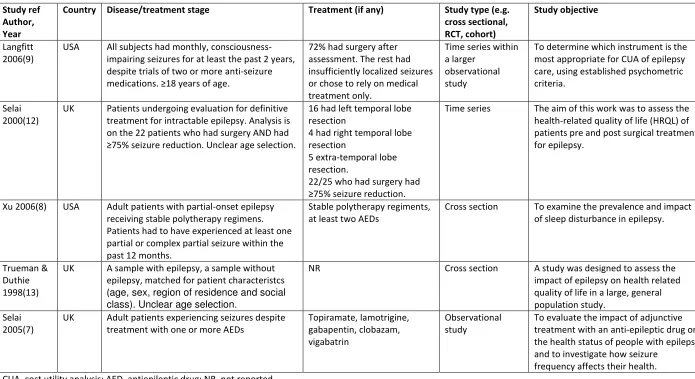
reported across seven publications.(7-13) Study characteristics and results are tabulated in the
Appendix (Tables A2 to A5).
The update search retrieved 37 titles. None of these studies met the inclusion criteria, and all were
13 Of the five included studies, two were conducted in the USA(8;9) and the remaining three were
conducted in the UK.(7;10;11;13;14) (Table A2) Two studies did not report which EQ-5D tariff they
used (13;14) whilst the other three used the UK tariff (Table A4).(7-9)
Three studies recruited patients who were experiencing seizures despite medication(7;9;12) and in
the case of Selai et al. these patients were undergoing evaluation for surgery.(12) The remaining two
studies recruited a more general population of people with epilepsy (Table A2).(8;13) However, the
worst mean EQ-5D at baseline was reported in Xu et al. at 0.64 (standard deviation (SD) 0.35)(8) and
the best in Selai et al. at 0.85 (SD 0.1772).(7) Mean ages were similar across studies, ranging from
32.8(12) to 46 years.(13) All studies were conducted in adults (Table A3).
Three studies were cross sectional(7;8;13) and two studies were time series(9;12), one of which was
a psychometric study.(9) The other four studies all aimed to assess the impact of epilepsy on quality
of life, but did not have a psychometric focus.(7;8;12;13) Study size ranged from 22(12) to 289
participants with epilepsy.(13) Missing data was not reported in three studies(7;8;13) and was
something of a problem in the other two studies, with both having >20% missing data (Table
A3).(9;12)
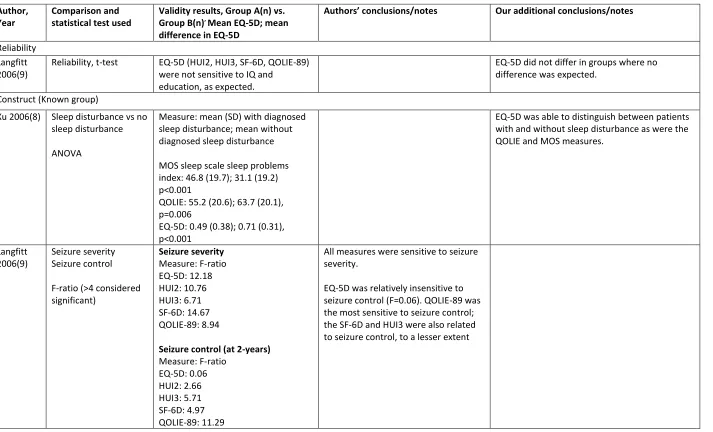
Construct validity (Known group): Five studies reported results that provide some support for the
construct validity of the EQ-5D.(7-11;13) However, formal statistical tests were not always
performed. Xu et al. compared mean EQ-5D scores for those diagnosed with and without sleep
disturbance, and found the expected difference for the sub-groups, as was observed in both the
QOLIE and Medical outcomes study (MOS) measures (EQ-5D: 0.49 vs. 0.71 p<0.001; MOS: 46.8 vs.
31.1 p<0.001).(8) Langfitt et al. used the national hospital seizure severity score (NHSSS) to measure
severity and control of seizures. They found the EQ-5D index was sensitive to seizure severity
(F=12.18, p<0.05), as were other generic measures (HUI2, HUI3, SF-6D, F>4.0, p<0.05), and the
condition specific measure, quality of life in epilepsy -89 (QOLIE-89) (F>0.04, p<0.05). They also
reported all generic tools had a similar strength of association to seizure control (F: 0.06 to 5.60),
and were generally insensitive.(9) Selai et al. considered the mean EQ-5D index for different
frequencies of seizure per month, and whilst a formal statistical comparison for all categories was
not performed, a trend of increasing mean EQ-5D scores for sub-groups with decreasing frequency
of seizures was observed (Table A5.(7;10;11) In addition, there was a significant difference (p-value
not reported) in the mean EQ- D
14 no formal statistical test) of mean hospital anxiety and depression scale (HADS) scores for patients
scoring no problem, some problems and severe problems in the EQ-5D anxiety/depression
dimension, and found the trend in mean HADS scores for the sub-group with epilepsy was in the
expected direction.(13)
Construct validity (convergent): Langfitt et al.(9) reported results relating to convergent validity.
Analysis of the EQ-5D dimensions showed that usual activity and pain/discomfort were significantly
correlated with seizure severity (p<0.05), and mobility was significantly correlated with seizure
control (p<0.05). However all correlations between the other dimensions and either comorbid
conditions or the two seizure variables (severity and control) were very small and not statistically
significant (p>0.05).
Responsiveness (change over time): Selai et al. (2000) compared patients pre- and post-surgery. The
EQ-5D (index) improved post-surgery, as did scores in each dimension, but the changes were not
statistically significant (index), or were not tested (dimensions). The quality of life assessment
schedule (QOLAS) and the composite mental health (CMH) and composite physical health (CPH)
subscales of the epilepsy surgery inventory (ESI-55) did detect a statistically significant improvement
post-surgery, whilst the composite role functional subscale did not (ESI-CRF). Selai et al. (2005)
compared the difference in mean EQ-5D index from baseline to follow-up (after treatment) for
groups of patients according to whether they achieved seizure reduction. No formal statistical
analysis was performed, but changes in means were positive fo
(7) Interestingly, results from an earlier report(10) of the same study were interpreted as negative evidence for the responsiveness of the EQ-5D.(15)
Specifically, these results related to the change in the EQ-5D in response to treatment only being
positive in two treatment groups out of five. The later report of this study(7) gave a more in-depth
assessment of responsiveness, and included the analysis of seizure reduction described above.
Langfitt showed the EQ-5D index was also able to detect a change (as observed in the change in
QOLIE-89) in sub-groups who reported being either much better or much worse on the global rating
of change (GRC).(9) However, when assessing the change in mean EQ-5D in patients who were free
from seizures for two years, the magnitude of change was substantially smaller than expected
relative to those observed for the QOLIE-89 measure.(9)
Responsiveness (ceiling effect): There is some evidence of a ceiling effect with 34% of patients in
15 4.1.5 Conclusion of appropriateness of EQ-5D in epilepsy
The evidence base assessing the psychometric properties of the EQ-5D in adults with epilepsy on the
whole is positive albeit limited. There is some evidence of a ceiling effect compared to other generic
measures (SF-6D and HUI).(9) Support for construct validity was relatively good with evidence the
EQ-5D was able to detect differences in sub-groups categorised by seizure frequency,(11) and the
NHSSS,(88) despite the correlations between the EQ-5D and both the severity and control of seizures
being small.(9) While there was also no correlation between responses on the EQ-5D health
dimensions and presence of comorbidity in one study,(9) Trueman and Duthie reported a
relationship between the EQ-5D anxiety/depression health dimension and HADS scores.(13) There
was also evidence to suggest the EQ-5D was able to detect changes in HRQoL over time in patients
sub-grouped by achievement of seizure reductions,(7) or improvement or deterioration on the
GRC.(9) However, one study suggested the magnitude of change in mean EQ-5D was smaller than
might have been expected based on changes in the QOLIE-89 measure,(9) and in another study
improvements in EQ-5D scores were not statistically significant in patients pre- versus post- surgery,
where other measures were.(12)
In conclusion, this evidence suggests that the EQ-5D may not be the most appropriate measure in
adults, though it may be regarded as adequate. However, the EQ-5D is not relevant for paediatrics,
the subject of the epilepsy NCA.
4.2 Alternative measures in epilepsy (WP1.2)
4.2.1 Other measures for epilepsy
Six documents were identified by the initial searches. Three documents were from the Royal College
of Paediatrics and Child Health, describing the methodology used in the Epilepsy 12 NCA reviewed
below (Section 5.4), and thus were excluded from further analysis. Two documents were research
guidelines from the EMA, which were produced by an expert panel with a stakeholder consultation
period.(16;17) One document was superseded by the other and as PROMS were not discussed these
documents were excluded from further analyses or review. It is worth noting that they
recommended the primary efficacy outcome should be seizure frequency, measured over a defined
period, with responders classified according to the percentage decrease in frequency.(17)
The final document was the Oxford PROM group review that is discussed above in section 3.1. In
16 should be used in children with epilepsy.(5) The authors noted that few measures had been used in
or developed for this patient group, and that there was little development in the field. They cited
two epilepsy-specific PROMs specifically developed for paediatric populations: the Health-Related
Quality of Life in Children with Epilepsy (HRQoLCE),(18) and the Quality of Life in Epilepsy Inventory
for Adolescents (QOLIE-AD-48).(98) While acknowledging there were many paediatric-specific
generic PROMs, the authors did not conduct an independent review of the literature themseleves.
They instead relied on the conclusions reported by Eiser and Morse (19) that only three of the
generic measures (CHQ,(20) PedsQL,(4) HUI2 (3)) satisfied even very basic psychometric criteria.(19)
However, the primary studies used by Eiser to inform this conclusion were not explicitly cited and
only summary results of psychometric properties (i.e. assessed or not) were presented.
4.2.2 Other measures for paediatrics with epilepsy
As the results of the reviews did not provide conclusive evidence to support the use of a particular
measure, an additional search was conducted with the aim of identifying literature describing the
psychometric properties of measures suitable for this population.
Results of searches: The searches identified 141 unique references. After consideration of titles and
abstracts, the full-text papers of 28 studies of potential relevance to the review were obtained. Of
these, 23 did not meet the inclusion criteria for the review and were excluded (detailed reasons
provided in Table A6).
Of the remaining five studies, two were retained as they were systematic reviews which included a
section on paediatric measures in epilepsy.(21;22) The remaining three studies presented data
which could be used to examine the psychometric properties of the PedsQL measure in paediatrics
with epilepsy. No studies were identified in this population for the other three paediatric generic
preference-based measures (EQ-5D-Y, CHU-9D, HUI2). The results reported in these five articles
were collated and are summarised below, augmented with any relevant evidence reported in Eiser
and Morse 2001, and the Oxford PROM review.(5;19)
Results of review: Cowen 2004 conducted a systematic literature review of subjective impact
measures for use in children and adolescents with epilepsy and identified five HRQoL measures
(Table A7). Waters 2009, described QoL instruments, found through a systematic search, for
children and adolescents with neurodisabilities including three generic and five epilepsy-specific
17 quality of systematic reviews (AMSTAR) criteria, with failures to report robust methods of data
extraction and study selection being key issues. Davis et al. cited the two epilepsy-specific
questionnaires (HRQoLCE, QOLIE-AD-48)(5) and Eiser et al. the three generic measures (CHQ,
PedsQL, HUI2) (19) described in the Oxford Proms review.(5) Brunklaus 2011, used two
epilepsy-specific (Impact of Peadiatric Epilepsy Scale (IPES), Epilepsy and Learning Disabilities Quality of Life
Questionnaire (ELDQOL)) and one generic measure (PedsQL) in their study in paediatrics with Dravet
syndrome (an epileptic encephalopathy with defined genetic etiology). Modi 2010 used the PedsQL
in children who had had a single seizure or were newly diagnosed and untreated.(23) Stevanovic
2011 used two anxiety / depression measures (Screen for Child Anxiety Related Emotional Disorders
(SCARED), Mood and Feeling questionnaire (MFQ)), and the PedsQL to evaluate the effects of
anxiety and depression in children and adolescents with epilepsy.(24) A brief comparison of the
measures used and the psychometric properties of the measures reported within the studies are
provided below, sub-grouped into epilepsy-specific measures and generic measures. Not all these
measures are PROMs, and the clinician reported measures (generally used as comparator for other
measures, or to define severity-based subgroups) are included for completion.
Condition-specific measures used in paediatrics with epilepsy
Eight condition-specific measures that had been used in paediatrics with epilepsy were identified:
the ELDQOL,(25-28), HRQoLCE,(18) the Impact of Childhood Neurological Disability Scale
(ICND),(29;30) the Impact of Paediatric Epilepsy on the Family (IPEF),(29) The Quality of Life For
Children with Epilepsy (QOLCE),(31;32) The QOLIE-AD-48(33), The HRQoL questionnaire for Brazilian
children with epilepsy (QVCE-50),(34) The Strengths and Difficulties Questionnaire (SDQ).(35;36)
Epilepsy and Learning Disabilities Quality of life Scale (ELDQOL)(25-28) used in Cowan 2004 and
Brunklaus 2011.
The ELDQOL was developed for use in children (2-18 years) with severe epilepsy and learning
difficulties, and is completed by either a parent or main caregiver. It covers seizure severity and
control, mood behaviour disturbance, overall quality of life, overall health and side effects of
treatments. No details of the scoring mechanism were provided. It has been reported to have a
modest test-retest coefficient (r=0.67-0.87) and inter -0.84), but as it is
relatively long, Espie et al. suggested it was more suited to provide an overview than to be used as
18 The HRQoL in Children with Epilepsy measure (HRQoLCE)(18) was used in Cowan 2004, and referred
to in Waters 2009, and Davies 2009.(5;21;22)
The HRQoLCE consists of a parent/proxy questionnaire and a self-report questionnaire and was
developed for use in older children (8-15 years) with epilepsy. The 25 item measure covers five
domains: ; worries and concerns mostly in daily life experiences;
s; secrecy and concealment of epilepsy; and quest for normality.
Reliability: Test-retest reliability over a two week period for the self-report (parent-proxy) measure
was 0.59 (0.60) although it was not clear if the condition was stable during this period. The
correlation between subscales ranged from 0.26 to 0.52.(21)
Construct validity (convergent): Convergent validity was demonstrated by examining the
associations with a number of clinical criteria, including health-care use and seizure severity, special
educational needs, anti-epilepsy drug toxicity, number of anti-epilepsy drugs taken, number of close
friends, extracurricular activities. The results showed that both the self-report and parent-proxy
scores were significantly correlated with the majority of these variables.(22) Internal consistency of
above 0.70 was reported on all subscales apart from the quest for normality subscale (C
0.63) and the parent-proxy subscale of present worries (C 0.64).
Responsiveness: The development study for the HRQoLCE reported adequate scaling properties
with no significant floor or ceiling effects for any of the subscales, and with scores being normally
distributed.(18)
In summary, the evidence reviewed for the HRQoLCE is limited, it does not describe health related
quality of life and thus its usefulness in economic evaluations is very restricted. Consequently this
measure is not recommended for inclusion in the NCA.
The Impact of Paediatric Epilepsy on the Family (IPEF)(29) used in Waters 2009 and Brunklaus 2011
As the name indicates, the IPEF2 was constructed to evaluate the impact of epilepsy on both the
H‘Q L > C
overall health, relationships, social life, academics,
E -point likert scale (0=epilepsy does not
affect the area; 3=epilepsy greatly affects the area) and summed to give the total IPEF total score
2
19 with low scores indicative of lower epilepsy related HRQoL. There is an additional numeric scale
(range 0- of life where the maximum value indicates excellent quality
of life. It was reported that these items may tap into a single factor based on high internal
consistency (coefficient 0.92),(39) but no additional results of alternative psychometric assessments
are provided. This measure does not have a self-report version thus is not considered a candidate
measure for the NCA.
The Impact of Childhood Neurological Disability Scale (ICND),(29;30) used in Cowan 2004.
The ICND is suitable for children (12-18 years) and is completed by a parent. The measure is an
expansion of the IPEF and includes additional questions relating to cognition, behaviour and
physical/neurological disability. In addition to the 4 point scales used for each of the 11 questions
in each area, there is a six point scale single overall quality of life item. Reliability and validity has
been evaluated on a sample of children with epilepsy (n=68) and a sample of children with epilepsy
and comorbidities (n=29).(22)
Reliability: Satisfactory (intraclass correlation coefficient (ICC)=0.89) test-retest reliability (using an
interval of 1-3 weeks) was reported.
Construct validity (convergent): Comparing with data on other measures such as family function,
parenting stress, self-concept and loneliness, children with high ICND scores also scored highly on
parenting stress and emotional problems. Cowan reported satisfactory item convergent validity,
and ), but did not provide any additional details.
Construct validity (known group): The ICND total score was shown to discriminate between children
with more severe epilepsy and comorbidities and was highly significantly negatively correlated with
the quality of life scores used for comparison.
Cowan concluded that while the brevity of the ICND contributes to weaknesses in several
psychometric properties, its brevity also makes it clinically attractive and suggested that it could be
useful to identify potentially problematic issues for patients with epilepsy. The authors cautioned
20 It is not thought that this measure was designed to capture all aspects of HRQoL (even when used in
conjunction with the IPEF). It is only suitable for adolescents, and does not have a self-report
version, thus it is not considered a candidate for inclusion in the NCA.
The Quality of Life For Children with Epilepsy (QOLCE)(31;32) used in Cowan 2004 and Waters 2009.
The QOLCE was designed to assess a variety of age-relevant domains and is completed by parents of
children (age 4-18 years) with refractory epilepsy with average intellectual abilities. The measure
consists of two parts. The first uses 56 items assessing seizure description and 31 items assessing
medication side effects. The second uses 77 (79 reported in Waters)(21) items assessing subjective
impact of epilepsy. The items are merged to provide five main domains (physical function, cognitive
function, emotional well-being, social function, behavioural function) and an overall quality of life
scale. Responses for all items are transformed linearly onto a 0-100 point scale.
Reliability:W C from 0.72 to
0.93) by Cowan,(22) Waters stated these were limited to the characteristics of the sample tested
and also reported high internal consistency in six subscales were indicative of item redundancy
(correlation ranges 0.07 to 0.84).(21) Both studies indicated that test-retest properties of the QOLCE
had not been analysed.
Construct validity (known group): The measure was reported to discriminate by age at epilepsy
onset, seizure frequency and number of anti-epileptic drugs.(31) However, Cowan advocated
caution regarding these results in all eligible populations as there is no evidence regarding the
psychometric properties of the QOLCE with children with learning disabilities.
Construct validity (convergent): Item convergent and discriminant validity was established (no
additional information provided). All of the QOLCE subscales (except depression, self-esteem,
attention, and behaviour) were negatively correlated with severity (assessed using severity of
seizures), and a significant inverse relationship was observed between the number of anti-epileptic
drugs taken over the previous 6 months and the QOLCE subscale of memory and language. Two
generic measures of child health were used to assess convergent validity using correlation
coefficients between theoretically similar and dissimilar constructs between the QOLCE and these
21
Responsiveness: Ceiling effects were reported for the social activities (17.5%) and stigma (32.5%)
subscales within the domains.
Epilepsy and learning difficulties often co-exist. Comparing the measure in parents of children with
average intelligence (n = 64) and those of children with mild to moderate learning disability (n = 30),
intellectual disability independently depressed scores on the QOLCE, indicating it may not be
appropriate in all populations.
In summary, both Cowan and Waters warned that small sample sizes used in the psychometric
analyses may have limited the apparent quality of the QOLCE's psychometric properties. Cowan also
stated that no examination of the possible existence of age effects had been reported even though
the QOLCE was intended for use with a large age range. There is sufficient negative evidence to
raise concerns regarding its appropriateness and a review of all literature on this measure would be
required before it could be recommended for use in the NCA.
The Quality of Life Inventory for Adolescents with Epilepsy (QOLIE-AD-48)(33) used in Cowan 2004,
Waters 2009, and Davis 2009.
The QOLIE-AD-48 is a self-report measure for adolescents (11-17 years) of average intelligence with
epilepsy. The measure consists of 48 items (rated on 5 point scale) describing eight subscales
(epilepsy impact, memory/concentration, attitudes towards epilepsy, physical functioning, stigma,
social support, school behaviour, health perceptions), and a total summary score.
Reliability: While test-retest reliability for the summary score over a 4 week period was good (0.83),
; this is assumed to be the
case.(22)
Construct validity (known group): The QOLIE-AD-48 was able to discriminate between groups
differing in seizure severity (known group validity).
Construct validity (convergent): Construct validity (convergent) for the summary score was reported
C
(Cronbach's good for the other subscales (Cronbach's (22) Cowan
reported issues with the factor analyses (convergent) reported on the measure, questioning its
QOLIE-22 AD-48 and measures of self-efficacy and self-esteem respectively.(40) In addition a greater overall
subjective impact of epilepsy was more likely to be reported in those with more severe epilepsy and
more symptoms of neurotoxicity, those living in households with lower socio-economic status and
older adolescents.(40)
Responsivenesss: No floor or ceiling effects were detected with responses on all subscales covering
the full range (0-100),(22) although items in two subscales were potentially redundant.(21) The
H‘Q L
explanatory variables were age, seizure severity, neurotoxicity of the anti-epileptic drugs and
socio-economic status.(33)
In summary while the QOLIE-AD-48 has been reported as meeting many of the psychometric criteria
necessary for a robust instrument, it is restricted to use with adolescents without learning
difficulties, does not have a self-report version, and further investigation of the construct validity in
larger populations has been recommended.(22)
The HRQoL questionnaire for Brazilian children with epilepsy (QVCE-50)(34) used in Waters 2009
The QVCE-50 is a Portuguse instrument completed by the care giver (age range not provided)
designed to measure quality of life. The measure includes 50 items covering four domains
(psychological health, physical health, cognitive educational issues, and social and family
relationships), indicating it will provide a mix of objective functional and subjective health
perceptions. This measure is not appropriate for inclusion in the NCA and is described here for
23 The Strengths and Difficulties Questionnaire (SDQ)(35;36) used in Brunklaus 2011
The SDQ is completed by the parent/ care giver, and provides information on psychosocial attributes
of children (age 3 to 16 T
T “DQ
symptoms, conduct problems, hyperactivity/inattention, peer relationship problems) with 5 items in
each scale. Higher values on the SDQ total score indicate greater difficulties. Brunklause stated
good validity and reliability had been reported but provided no additional details relating to
this.(35;36) It is not thought that this measure covers all aspects of HRQoL, it does not have a
self-report version, and is not considered a candidate for inclusion in the NCA.
Generic- measures used in paediatrics with epilepsy
Child Health Questionnaire (CHQ)(20) used in Waters 2009, and Eiser 2001.
O L CHQ wellbeing, functional
health status, and health outcomes in children (4-19 years) and is a widely used and accepted
measure. The parent/proxy (CHQ-PF50)(21) is the most widely used version while the Child health
questionnaire child form 87 (CHQ-CF87) is completed by adolescents (age 10-19 years).(19) The
questionnaire includes 50 items covering the following domains: behaviour, bodily pain, general
health, mental health, physical functioning, parent impact-time, parent impact-emotional,
-physical, and self-esteem. There are two overall summary scores: physical and psychosocial (range 0-100 with 100 being better health). Neither Waters nor Eiser
presented analyses exploring the psychometric properties of the measure in children with epilepsy.
As the literature searches were not designed to identify evidence for this measure, and no evidence
was found on the psychometric properties, additional searches and a review of all evidence on the
measure used in epilepsy would be required before it could be recommended for inclusion in the
NCA.
Health Utility Index Mark 2 (HUI2) (3) used in Eiser 2001
The HUI2 was originally designed for use in children with cancer and is now used as a paediatric
generic measure.(41) The instrument covers six dimensions: sensation, mobility, emotion, cognition,
self-care, pain with 3-5 levels on each question. A fertility dimension was originally used in the
version developed for cancer but was subsequently dropped from the generic version. In addition to
24 for use in economic evaluations.(42) No literature describing the psychometric properties of this
measure are reported in Eiser et al.
As the literature searches included terms to identify evidence of the HUI2 in paediatrics with
epilepsy, it is unlikely that there is evidence describing the psychometric properties of this measure
in this population. Consequently it cannot be recommended for inclusion in the NCA without
additional research (see recommendations below).
KIDSCREEN (43)used in Waters 2009
The KIDSCREEN-10 is a generic measure designed to measure the HRQoL of healthy and chronically
ill children (8 to 18 years). Either self-completed or completed by the parent/caregiver, the domains
include: physical well-being, psychological well-being, social support and peers, and financial
resources. The inter-subscale correlations range from poor to fair (0.1 to 0.62) demonstrating the
relative independence of the domains. Good test retest reliability (r=0.73) and internal consistency
(0.82) have been reported.(43)
It is not believed that this measure is widely used in epilepsy and a full systematic search would be
required to identify all available evidence before it could be recommended for use in the epilepsy
NCA.
The Paediatric Quality of Life Inventory (PedsQL(4)) used in Waters 2009, Eiser 2001, Brunklaus 2011,
Modi 2010, Stevanovic 2011
The PedsQL, a generic measure of HRQoL, has been reported as being one of the most thoroughly
developed measures available.(19) It takes 4 minutes to complete and is either self-completed (5-18
years), or completed by a parent/caregiver (2-18 years). The measure covers 23 items describing
four domains: emotional (5 items), social (5 items), physical (8 items), and school (5 items). Items
are answered on a five- L
The scores from these are used to derive summary scores in physical health (8 items) and
psychosocial health (15 items) and an overall total score. These are all standardised (0-100) where
higher scores indicate better HRQoL. In addition to the PedsQL core instrument, a new module for
epilepsy is currently being developed. However, this will not be available for a couple of
25
Reliability: The PedsQL Generic Core Scale total score has adequate internal consistency reliabilities
for both the proxy- - ,(45) and between 0.68 to
0.90 in a second study.(23) There were some differences in the ability of the measure to
discriminate between different levels of severity of anxiety and depression when comparing the
child and parent responses, though this is possibly to be expected.(24)
Construct validity (known group): The PedsQL total and sub-scores have been shown to differ
(construct, known group validity) between healthy children (n=665) and children with Dravet
syndrome (n=158, p<0.001), (46) and across age categories (e.g. 2-3, 4-5, 6-9, 10-14, >15 years) in
the Dravet sample with mean HRQoL scores decreasing as age increased (p<0.001 for all
comparisons).(46) The total number of comorbidites was associated with lower HRQoL for all
subscales and total score (p<0.05), and there was also significant differences in mean scores when
compared to PedsQL normative data (p<0.05).(23) In a different study, using both self-report and
parent-proxy data, the PedsQL was able to differentiate between severity of depression or anxiety
disorders in children with epilepsy (n=60).(24)
Responsiveness: Comparing children who had a history of a single seizure (n=53) with newly
diagnosed untreated children (n=56), no significant differences was found in any of the mean
subscales (p>0.05) for the patient proxy reports.(23) While the authors suggested these results
indicated that the PedsQL may not be sensitive to change due to treatment of epilepsy, it is unclear
why a change was expected based on the evidence reported in the article.(23)
Summary and conclusion of review of literature on paediatrics with epilepsy
Although limited, the evidence suggests the EQ-5D is adequate for adults, inferring the youth version
is worth considering for paediatrics. However, the EQ-5D-Y is only suitable for older children and no
evidence was identified on its appropriateness in paediatrics with epilepsy. The evidence identified
which could be used to compare PROMs in this population was limited. The searches, although
limited in scope due to the time constraints of the project, did not identify any evidence which could
be used to generate quality adjusted life years (QALYs) directly from PROMs in this population. The
most likely candidate measures for inclusion in the epilepsy NCA are the QOLIE-AD-48 and the
PedsQLTM v4. Based on the evidence reviewed, the target age group, and alternative responder
versions, the PedsQLTM is recommended over QOLIE-AD-48 measure (Table 1). However, research is
26 to one of the alternative preference-based generic measures) which could be used to generate
[image:27.595.64.531.153.379.2]utility values for use in cost-effectiveness evaluations.
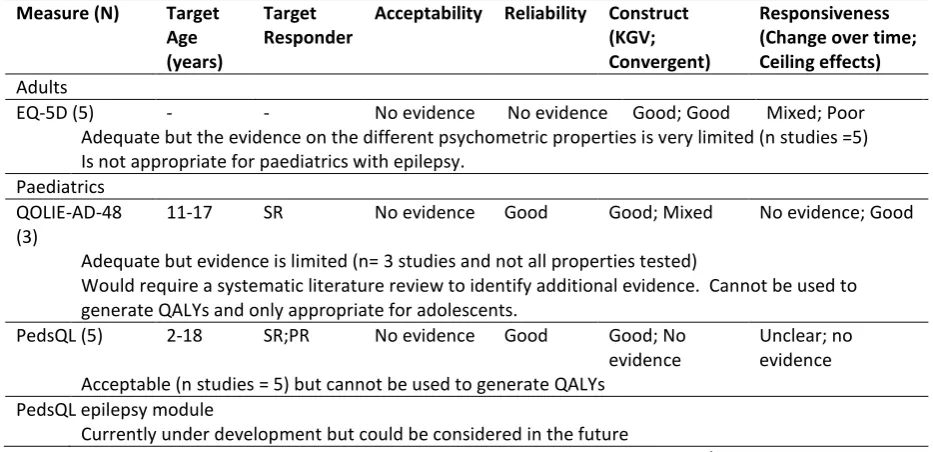
Table 1: Summary of evidence on PROMs for epilepsy
Measure (N) Target Age (years)
Target Responder
Acceptability Reliability Construct (KGV; Convergent)
Responsiveness (Change over time; Ceiling effects)
Adults
EQ-5D (5) - - No evidence No evidence Good; Good Mixed; Poor Adequate but the evidence on the different psychometric properties is very limited (n studies =5) Is not appropriate for paediatrics with epilepsy.
Paediatrics QOLIE-AD-48 (3)
11-17 SR No evidence Good Good; Mixed No evidence; Good
Adequate but evidence is limited (n= 3 studies and not all properties tested)
Would require a systematic literature review to identify additional evidence. Cannot be used to generate QALYs and only appropriate for adolescents.
PedsQL (5) 2-18 SR;PR No evidence Good Good; No evidence
Unclear; no evidence Acceptable (n studies = 5) but cannot be used to generate QALYs
PedsQL epilepsy module
Currently under development but could be considered in the future
KGV = known group validity; CE=ceiling effect; n = number, SR=self-report, PR=Parent/carer-report
4.3 Evidence foreconomic evaluations in epilepsy (WP1.3)
4.3.1 Cost-effectiveness modelling approach used in recent HTAs in epilepsy
Three Technology Appraisals (TA) relating to epilepsy were identified from the searches and one
clinical guideline (CG) was identified from the reference lists. Two of the multiple technology
assessments (MTAs) were superseded by the CG and thus excluded from the review.(47;48) The
remaining Single Technology Appraisal (STA) examined the clinical and cost-effectiveness of a
pharmaceutical intervention in adults with partial refractory epilepsy (10).(49) The CG compared
interventions in primary and secondary care for both adults and children.(50)
T “TA
reduction in seizures), non-responder (<50% reduction in seizures), withdrawal (due to adverse
events (AEs)) as described in Figure 1.(49) Baseline transitions for the health states were derived
from placebo arms of clinical studies, and treatment effects were modelled by applying relative risks
(RRs) (obtained from clinical studies) to the baseline transitions. The CG used a Markov model with
27 epilepsy related mortality).(50) Again both the baseline and active treatment health state
[image:28.595.77.522.138.395.2]transitions were derived from published clinical studies.
Figure 1: Modelling approach used in epilepsy HTAs
Orange framed boxes with uppercase text describe potential health states, blue framed boxes with lower case text describe the clinical evidence used in the economic models.
Both studies quality adjusted survival by assigning mean utility values to the discrete health states
and EQ-5D data (or proxy values) were sourced from the literature in both cases.(49;50) It is worth
noting that a) the results of the searches for preference-based utilities indicated that the volume of
evidence in this patient group was sparse, particularly in paediatrics, and b) it was reported that
28
Table 2: Summary of existing models used in epilepsy TAs
Model method, clinical effect Method used to model utilities
STA (TA232): Epilepsy (partial) - retigabine (adjuvant); 2011 Decision tree
reduction in seizures (responder), < 50% reduction in seizures (non-responder), withdrawal (due to AEs).
Effectiveness: applied RRs to baseline transitions (derived from placebo arms) for: seizure free, response (see above), withdrawal (due to AE), withdrawal for any reason
Source: RCTs used for clinical effect
Utility: EQ-5D; mean values assigned to discrete HS Source: published literature
AEs: not modelled explicitly as side effects of treatments assumed to mitigate withdrawal (due to AEs)
CG (CG137): The Epilepsies. Diagnosis and management of the epilepsies in adults and children in primary and secondary care; 2012
Markov models
4 discrete health states: seizure, reduction in seizure frequency, inadequate seizure control, epilepsy related mortality.
Effectiveness: baseline transitions (probabilities derived from survival curves) from RCT data; effects for active interventions applied to baseline transitions using HRs
Source: RCTs used for clinical effect
Utility: proxy EQ-5D elicited from clinicians; mean values assigned to discrete HS
Source: published literatureb
AEs: assumed transient and disappeared on treatment cessation (no disutility)
HS: health states; AE: Adverse Events; STA: Single Technology Appraisal; CG: Clinical Guideline; TA: Technology Appraisal; RCT: randomised controlled trial; HR: Hazard ratios
b
NB the evaluation for children used values elicited from paediatric neurology experts who ranked 6 epilepsy related health states and classified these using the EQ-5D descriptor
The health states used in the HTAs are informed by the clinical effectiveness evidence which is
typically reported as differences in rates of responders (as measured by reduction in seizure rates) in
this population. The health states appear crude (seizure free, responder, non responder and
withdrawal) when considering the full clinical pathway for paediatrics with epilepsy. It is possible
that the conceptual model could be further developed to cover the full spectrum of disease and
interventions for epilepsy, including hospitalisations, visits to accident and emergency departments
(A&E), surgical interventions etc. This would require additional evidence including a measure of
severity, in addition to the changes in frequency of seizures and adverse events associated with
treatment. It is likely that even if the design of the economic model was expanded to include these
additional health states, the approach taken to model HRQoL would remain the same with mean
values assigned to the individual health states.
In summary, the following evidence would be required to compare providers or the
29 Seizure frequency (repeatedly measured over time)
Seizure severity
Pharmaceutical interventions (type of intervention, concomitant medications,
rates, withdrawal rates, adverse events)
Surgical rates (type of intervention, success rate, post-surgical complication, length of stay)3 HRQoL data (collected alongside seizures if possible, and before and after surgical
interventions)
Death rates (seizure and surgical related, all cause)
The majority of this evidence would need to be linked through timings of collection.
4.3.2 Fields collected in the epilepsy NCA
The epilepsy NCA collects information on and from paediatrics with a diagnosis of epilepsy and the
corresponding health services provided. The fields in the NCA are collected via three questionnaires,
a Clinical proforma, a Service proforma, and a patient questionnaire.(51) All questions in the Clinical
and Service audits are mandatory for inclusion of the patient in the audit (Table A9). The former
includes questions relating to the diagnosis, nature and frequency of epilepsy episodes at initial
assessment and at 12 month after the first assessment; the type of investigations and professionals
involved; and the number of pharmaceutical treatments used. The latter obtains information on the
type of epilepsy services provided, and the number and type of consultants within the audit unit on
a specific day within the audit period. The patient questionnaire collects information of both
s of the health services provided (Table A10). There is
currently no PROM or clinical measure included in the patient questionnaire.
4.3.3 Comparing fields in epilepsy NCA with variables and methods used in existing HTAs
The existing HTA models are constructed around the number of seizures, the reduction in numbers
of seizures (response) due to treatment, withdrawal from treatment due to AEs, and HRQoL scores
categorised by current health status. The fields in the current NCA provide insufficient detailed
mandatory information to examine changes in frequency of seizures, the epilepsy medications taken
(and duration), or withdrawal due to AEs or non-response. The epilepsy Patient questionnaire does
not currently collect HRQoL information, concentrating on patient reported experience measures
3
30 (PREMs), and the mandatory fields do not include a surrogate measure which could be used to
estimate proxy utility values. The evidence used in the existing economic models indicates there is
very little appropriate published evidence which could be used. Consequently it will not be possible
to source robust values from the literature. It is not clear if surgical interventions and associated
information might be considered for collection in future audits but this is evidence that would be
useful for comparing providers or the cost-effectiveness of alternative policies.
While it is currently not possible to compare the cost-effectiveness of interventions in epilepsy using
the audit data, it may be possible to compare performance across units, stratified for example by the
type of services provided, using the mandatory annual aggregate number of seizures. It is not
known if there are plans to expand the audit to include additional fields or if there are any ongoing
studies relating to PROMs in this area.[personal communication, Calvin Down, Project Manager, 13th
May 2014]
4.4 Recommendations for epilepsy
The results from the paediatric review suggest the PedsQL is an appropriate measure for paediatrics
with epilepsy, but it cannot currently be used to generate utility values. The results of the review of
existing cost-effectiveness HTA models indicated that the evidence base of existing
preference-based data in patients with epilepsy was extremely sparse, particularly in paediatrics, and that
economic models are sensitive to the utility values used (Section 4.3). Finally, the current epilepsy
NCA does not provide sufficient mandatory information to compare providers or the
cost-effectiveness of interventions as used in general clinical practice. The issues and corresponding
potential recommendations (PR) and areas for future research (FR) are discussed below. All
suggested future research areas are indicative and would require a discussion and detailed proposal
if required.
Based on the evidence reviewed, the results for paediatrics with epilepsy suggest the PedsQLTM is
currently the most appropriate measure for this population and it is recommended that this is
considered for inclusion in the epilepsy NCA (PR.1). Once available, PedsQLTM epilepsy module may