R E S E A R C H
Open Access
Effect sizes in ongoing randomized
controlled critical care trials
Elliott E. Ridgeon
1, Rinaldo Bellomo
2,3, Scott K. Aberegg
4, Rob Mac Sweeney
5, Rachel S. Varughese
1,
Giovanni Landoni
6,7and Paul J. Young
8*Abstract
Background:An important limitation of many critical care trial designs is that they hypothesize large, and potentially implausible, reductions in mortality. Interpretation of trial results could be improved by systematic assessment of the plausibility of trial hypotheses; however, such assessment has not been attempted in the field of critical care medicine. The purpose of this study was to determine clinicians’views about prior probabilities and plausible effect sizes for ongoing critical care trials where the primary endpoint is landmark mortality.
Methods:We conducted a systematic review of clinical trial registries in September 2015 to identify ongoing critical care medicine trials where landmark mortality was the primary outcome, followed by a clinician survey to obtain opinions about ten large trials. Clinicians were asked to estimate the probability that each trial would demonstrate a mortality effect equal to or larger than that used in its sample size calculations.
Results:Estimates provided by individual clinicians varied from 0% to 100% for most trials, with a median estimate of 15% (IQR 10–20%). The median largest absolute mortality reduction considered plausible was 4.5% (IQR 3.5–5%), compared with a median absolute mortality reduction used in sample size calculations of 5% (IQR 3.6–10%) (P= 0.27).
Conclusions:For some of the largest ongoing critical care trials, many clinicians regard prior probabilities as low and consider that plausible effects on absolute mortality are less than 5%. Further work is needed to determine whether pooled estimates obtained by surveying clinicians are replicable and accurate or whether other methods of estimating prior probability are preferred.
Keywords:Intensive care unit, Critical care, Intensive care, Randomized clinical trial, Clinical trial design
Background
Mortality measured at a particular time point (landmark mortality) is often regarded as the gold standard out-come for randomized controlled trials in critical care medicine [1]. However, the utility of trials in generating evidence for interventions to increase survival in inten-sive care unit (ICU) patients has been disputed [2–4].
An important limitation of many critical care trials is that they hypothesize large and potentially implausible reductions in absolute mortality [5]. This is a major problem in trial design for two reasons. First, it makes a type II error (false-negative) more likely. Second, the less plausible a postulated mortality reduction is, the more likely it is that a statistically significant mortality difference
will represent a type I error (false-positive) [6]. This is be-cause aPvalue is defined as the probability of finding a re-sult equal to or more extreme than that actually observed, under the assumption that the null hypothesis is true. This means that the greater the pretrial chance or prior prob-ability that the null hypothesis is correct, the lower the chance that a P value below a particular significance threshold will represent a true-positive. Thus, estimating the plausibility of a trial’s hypothesis on the basis of prior knowledge has the potential to aid in the interpretation of the results [7]. However, assessment of such prior prob-ability is problematic and rarely discussed. This is because it is likely to be subjective, to be based on limited data, and to have a wide range of possible values. Systematic reporting of clinicians’ estimates of prior probability for clinical trials has not previously been attempted in the field of critical care medicine.
* Correspondence:[email protected]
8Intensive Care Unit, Wellington Regional Hospital, Wellington, New Zealand
Full list of author information is available at the end of the article
Accordingly, the primary aim of this study was to de-velop data-driven estimates of prior probability for some of the largest ongoing trials in critically ill adults where the primary endpoint is landmark mortality. We hypoth-esized that surveyed clinicians’estimates of prior prob-ability would be consistently low and that effect sizes regarded as plausible by clinicians would be smaller than those postulated by investigators.
Methods
Study design
We conducted a systematic review of databases of regis-tered clinical trials, followed by a clinician survey.
Systematic review
The EudraCT, ClinicalTrials.gov, and ANZCTR clinical trial registries were searched in September 2015 for crit-ical care medicine trials in which landmark mortality was the primary outcome. Studies were excluded if they were not two-sided superiority trials, cluster, or cluster crossover trials; if they were focused on a pediatric population; if they were not related to critical care medi-cine; or if they were purely investigations of surgical techniques. Trials that had completed recruitment were also excluded. Trials registered on more than one data-base were included only once. Trial investigators were emailed to request data used to inform their sample size calculations. Any trials found to meet exclusion criteria as a result of the reply from their investigators (e.g., tri-als no longer recruiting) were excluded.
We recorded the following trial characteristics from online registries: sample size, eligibility criteria for trial participants, intervention details, comparison group de-tails (e.g., placebo or usual-care strategy), trial origin country, and landmark for mortality outcome measurement (e.g., 28 days). We recorded the following from investigator replies: power used in sample size calculations, expected baseline mortality, and expected effect size (absolute mor-tality difference between control and intervention groups).
Survey
Each trial identified in our systematic review was presented according to the participants, intervention, comparison, outcome standard, and clinicians were asked two questions per trial. First, they were asked to estimate the percentage chance that the actual effect of the treatment being investi-gated in a particular trial would equal or exceed the effect postulated by investigators. Second, they were asked to spe-cify the largest absolute mortality reduction that they con-sidered to be plausibly attributable to each treatment being investigated. For example, for the ADjunctive coRticoster-oid trEatment iN criticAlly ilL Patients with Septic Shock trial [8], which is a 3800-participant trial in which re-searchers are investigating the effect of a continuous 7-day
intravenous infusion of 200 mg/day hydrocortisone on day 90 mortality among adults who are ventilated with septic shock and have received vasopressors/inotropes for at least 4 h, clinicians were asked the following questions:
1. Assuming a baseline day 90 mortality rate of 33% (the baseline mortality rate used by investigators in their power calculations [8]), what do you think the chances are that a continuous 7-day intravenous infusion of 200 mg per day of hydrocortisone reduces absolute mortality by 5% or more? (Answers from 0–100% were allowed.)
2. Assuming a baseline day 90 mortality rate of 33%, what is the largest absolute reduction in day 90 mortality that you believe could occur as a result of a continuous 7-day intravenous infusion of 200 mg per day of hydrocortisone? (Answers from 0% to 33% were allowed.)
Demographic data collected from survey respondents were region of residence (Australia and New Zealand [ANZ], United Kingdom [UK], Europe [outside UK], United States [USA], Canada, Central or South America, Asia, Africa) and training background (intensive care specialist, other specialist, training to be a specialist in intensive care medicine, training in an area of medicine other than intensive care). Intensive care specialists were asked how long they had been working as an intensive care specialist (<5 years, 5–10 years, >10 years).
The survey was piloted by 20 clinicians from ANZ, USA, Europe, and the UK who provided feedback on ease of use, interface, and the survey’s duration. The length of the survey was reduced following the pilot phase because feedback indicated that the original version was too long. Additional file 1 shows the final version of the survey, which was distributed with the weeklyCritical Care Reviewsnewsletter over 4 consecutive weeks [9]. The newsletter had 6243 subscribers at the end of this 4-week period. No demographic data are collected from list sub-scribers; however, the list is free to subscribe to from any-where in the world, and no restrictions are placed on registration. The email containing the survey was opened by between 2788 and 2889 people per week in each of the 4 weeks in which the survey was running. We chose to “crowd-source”responses from clinicians with an interest in critical care to provide us with“real-world”opinions.
Outcomes
The primary outcome was the clinicians’perceptions of prior probability for each trial, which was defined as the percentage chance that each trial would demonstrate a mortality effect equal to or greater than that used in the sample size calculation for that trial.
1. The calculated chance that a statistically significant result at theP= 0.05 level for each trial would represent a true-positive
2. The largest effect size that surveyed clinicians considered plausible for each trial
3. The sample size that each trial would require to detect the median largest effect size considered plausible by clinicians
Statistical analysis
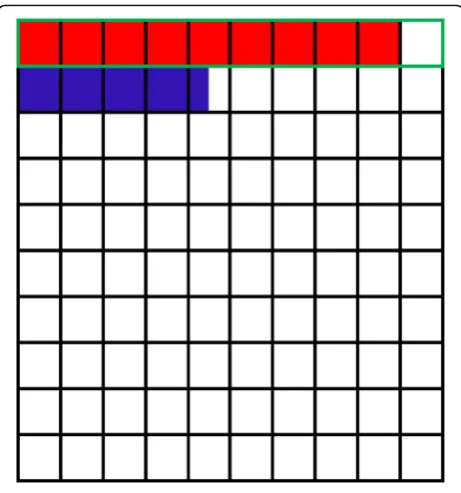
Continuous variables are reported as median and IQR or mean ± SD, and categorical variables are reported as counts and percents. Clinician-perceived prior probabil-ity for each trial was used to derive an estimate that a statistically significant result at the P= 0.05 level would represent a true-positive using the method described in Fig. 1. Specifically, as outlined in Additional file 2, the chance of a true-positive was calculated as follows [10]:
True‐positive rate¼ ðprior probability βÞ=ðð1‐prior probabilityÞ αÞ
þðprior probability βÞÞ
The sample size that each trial would require to detect the median largest effect size considered plausible by cli-nicians was calculated using standard methods for trials designed to compare two binomial proportions. We used the same β for these calculations as investigators had used in their initial sample size calculations and assumed an α of 0.05. Analysis of variance was used to analyze differences in survey results by location and specialty. A Mann-Whitney U test was used to compare clinicians’ estimates of effect size, with treatment effect sizes used to inform sample size calculations. A P value of <0.05 was considered to indicate statistical significance. Statis-tical analysis was performed using Real Statistics Re-source Pack release 3.8 software (London, UK).
Results
Search results
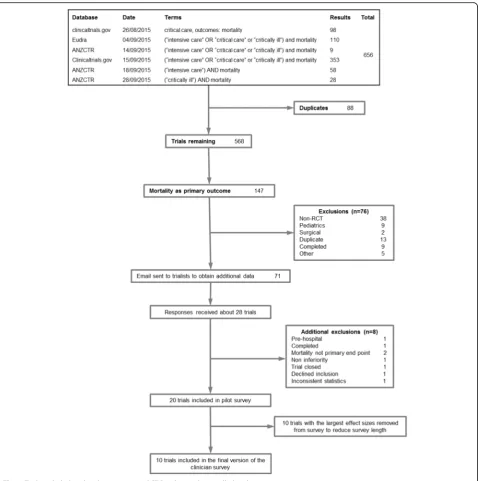
Trial registry searches returned 656 results, and 71 trials met our criteria for the request of further information from investigators. Twenty-eight responses were re-ceived, yielding a further eight exclusions and a final set of twenty trials for analysis. All 20 eligible trials were in-cluded in the pilot survey, but feedback indicated that the survey was too long; hence, we decided to include only the 10 trials [8, 11–19] with the smallest postulated effect sizes in the final survey (Fig. 2).
Characteristics of trials included in the survey
Trials included in the clinician survey had a median sample size of 3575 participants (IQR 725–7000), a median baseline mortality rate used in their sample size calculations of 26.5% (IQR 25–33%), and a median
postulated treatment effect size of 5% absolute mortal-ity reduction (IQR 3.6–10%) (Table 1).
Survey results
Responses
Completed responses were received from 166 (2.7%) of 6243Critical Care Reviewssubscribers.
Demographics
Of all respondents, 37 (22.3%) were based in the USA, 47 (28.3%) in the UK, and 29 (17.5%) in ANZ. The ma-jority (101 [60.8%]) were ICU specialists, 46 (45.5%) of whom had less than 5 years of experience at this level and 26 (25.7%) of whom had more than 10 years of ex-perience at this level (seeAdditional file 2: Table S1).
[image:3.595.306.537.86.333.2]Probabilities, effect size, and sample size
Clinicians’ estimates of prior probability varied very widely, from 0% to 100% for most trials, with a median trial prior probability of 15% (IQR 10–20%) (Table 2 and Additional file 2: Figure S1). On the basis of these esti-mates, the median estimate of probability of a true-positive result for each trial was 73.5% (IQR 64–82%) (probability of true-positive results derived as per Fig. 1); however, for every trial, the estimated chance of a true-positive was between 0% and 99% or 100% when the full range of estimates of perceived prior probability provided
by survey respondents was considered (Table 2 and Additional file 2: Figure S1).
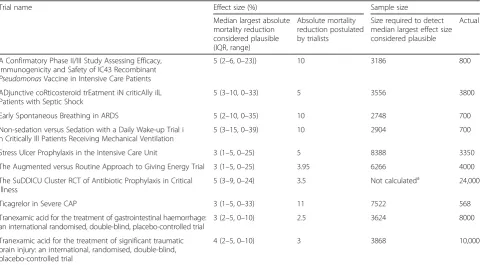
The median largest absolute mortality reduction con-sidered plausible was 4.5% (IQR, 3.5% to 5%) compared with a median absolute mortality reduction used in sam-ple size calculations of 5% (IQR, 3.6% to 10%) (P= 0.27) (Table 3 and Additional file 2: Figure S2, Online Data Supplement). For three trials [8, 11, 12], the actual trial sample size was greater than that needed to detect the median largest effect size considered plausible by survey respondents. For six trials [14–17, 19] sample sizes were
[image:4.595.60.539.86.568.2]too small to detect the median largest effect size consid-ered plausible, often by more than 2000 participants.
Discussion
Statement of principal findings
We conducted a systematic review of trial registries to identify ongoing trials in the field of critical care medi-cine in which researchers are reporting landmark mor-tality as the primary outcome. We then conducted a clinician survey to establish views about the prior prob-ability that the interventions in ten of these trials would reduce mortality by at least as much as postulated by investigators. Moreover, we also sought to establish clini-cians’estimates of the largest plausible mortality reduction
that might be attributable to each study intervention. We found that, in aggregate, respondents’ estimates of prior probability were low, but we also found that individual es-timates varied widely, from 0% to 100%, for most trials. We also found that the median largest absolute reduction in mortality considered plausible was≤5% for all study in-terventions. Although some trials were powered to detect such effect sizes, many were underpowered to detect effects of this magnitude by more than 2000 participants.
Study significance
[image:5.595.60.539.96.504.2]This study represents the first attempt to provide quan-titative estimates of clinicians’ perceptions about prior probability and plausible effect sizes for ongoing trials in
Table 1Trials included in the clinician surveya
Trial name Participants Intervention Comparator Outcome Baseline
mortality (%)
Postulated mortality effectb(%)
Power (%)
Sample Size
A Confirmatory Phase II/III Study Assessing Efficacy, Immunogenicity and Safety of IC43 Recombinant
PseudomonasVaccine in Intensive Care Patients
Adults requiring ICU ventilation for≥48 h
Recombinant
Pseudomonas
vaccine
Placebo Day 28
mortality
27.5 10 90 800
ADjunctive coRticosteroid trEatment iN criticAlly ilL Patients with Septic Shock
Adults who are ventilated with septic shock
Hydrocortisone Placebo Day 90
mortality
33 5 90 3800
Early Spontaneous Breathing in ARDS Adults ventilated with ARDS APRV Volume control ventilation Day 28 mortality
35 10 80 700
Non-sedation versus Sedation with a Daily Wake-up Trial in Critically Ill Patients Receiving Mechanical Ventilation
Adults ventilated in ICU Nonsedation Daily awakening Day 90 mortality
39 10 80 700
Stress Ulcer Prophylaxis in the Intensive Care Unit
Adults with shock, coagulopathy, or receiving RRT or ventilation
Pantoprazole Placebo Day 90
mortality
25 5 90 3350
The Augmented versus Routine Approach to Giving Energy Trial
Ventilated adults expected to require enteral nutrition for ≥2 days in ICU
Nutrition at 1.5 kcal/kg/h Nutrition at 1.0 kcal/kg/h Day 90 mortality
25 3.95 80 4000
The SuDDICU Cluster RCT of Antibiotic Prophylaxis in Critical Illness
Adults ventilated for ≥24 h in the ICU
SDD Placebo In-hospital
mortality
25 3.5 90 24,000
Ticagrelor in Severe CAP Adults with severe
CAP requiring ICU admission
Ticagrelor Placebo Day 90
mortality
33 11 80 568
Tranexamic acid for the treatment of gastrointestinal haemorrhage: an international randomised,
double-blind placebo-controlled trial
Adults with acute significant GI bleeding
Tranexamic acid
Placebo Day 28
mortality
10 2.5 90 8000
Tranexamic acid for the treatment of significant traumatic brain injury: an international, randomised, double-blind, placebo-controlled trial
Traumatic brain injury
Tranexamic acid
Placebo Day 28
mortality
20 3 90 10,000
Abbreviations:APRVAirway pressure release ventilation,ARDSAcute respiratory distress syndrome,CAPCommunity-acquired pneumonia,GIGastrointestinal,
ICUIntensive care unit,SDDSelective digestive decontamination,RRTRenal replacement therapy
a
The full description of the participants, intervention, comparator, and outcomes provided in the survey is shown in Appendix 1 in Additional file2; brief information provides an overview of the included trials
b
Table 2Prior probability estimates and calculated chances of a true positive result for each trial
Trial name Prior probability estimatesa(%) Chance of a true-positiveb(%)
Median estimate (IQR) Range of estimates
Median calculated chance (IQR)
Range of calculated chances
A Confirmatory Phase II/III Study Assessing Efficacy, Immunogenicity and Safety of IC43 RecombinantPseudomonasVaccine in Intensive Care Patients
5 (0.33–20) 0–82 49 (6–82) 0–99
ADjunctive coRticosteroid trEatment iN criticAlly ilL Patients with Septic Shock
20 (5–50) 0–100 82 (49–95) 0–100
Early Spontaneous Breathing in ARDS 10 (1–25) 0–100 64 (14–84) 0–100
Non-sedation versus Sedation with a Daily Wake-up Trial in Critically Ill Patients Receiving Mechanical Ventilation
20 (5–40) 0–100 80 (46–91) 0–100
Stress Ulcer Prophylaxis in the Intensive Care Unit 10 (0.030–28.75) 0–100 67 (1–88) 0–100
The Augmented versus Routine Approach to Giving Energy Trial 10 (2–40) 0–90 64 (29–91) 0–99
The SuDDICU Cluster RCT of Antibiotic Prophylaxis in Critical Illness 25 (10–50) 0–100 86 (67–95) 0–100
Ticagrelor in Severe CAP 2.5 (0–10) 0–100 29 (0–64) 0–100
Tranexamic acid for the treatment of gastrointestinal haemorrhage: an international randomised, double-blind, placebo-controlled trial
35 (10–57.5) 0–100 91 (67–96) 0–100
Tranexamic acid for the treatment of significant traumatic brain injury: an international, randomised, double-blind, placebo-controlled trial
20 (10–50) 0–100 82 (67–95) 0–100
Abbreviations:APRVAirway pressure release ventilation,ARDSAcute respiratory distress syndrome,CAPCommunity-acquired pneumonia,GIGastrointestinal,
ICUIntensive care unit,IQRInterquartile range,SDDSelective digestive decontamination,RRTRenal replacement therapy
a
Prior probability was defined as the percentage chance, estimated by clinicians, that a trial would demonstrate a mortality effect equal to or greater than that used by the trials investigators in their sample size calculation
b
Calculated chances of a true-positive result are based on the prior probabilities shown and assume power (β) specified by the trial investigators and anαof 0.05 using the following calculation: True-positive rate = (prior probability) ×β/(1−prior probability) ×α) + (prior probability ×β)
Table 3Largest effect size considered plausible by clinicians and the corresponding sample size to detect this effect
Trial name Effect size (%) Sample size
Median largest absolute mortality reduction considered plausible (IQR, range)
Absolute mortality reduction postulated by trialists
Size required to detect median largest effect size considered plausible
Actual
A Confirmatory Phase II/III Study Assessing Efficacy, Immunogenicity and Safety of IC43 Recombinant
PseudomonasVaccine in Intensive Care Patients
5 (2–6, 0–23)) 10 3186 800
ADjunctive coRticosteroid trEatment iN criticAlly ilL Patients with Septic Shock
5 (3–10, 0–33) 5 3556 3800
Early Spontaneous Breathing in ARDS 5 (2–10, 0–35) 10 2748 700
Non-sedation versus Sedation with a Daily Wake-up Trial i n Critically Ill Patients Receiving Mechanical Ventilation
5 (3–15, 0–39) 10 2904 700
Stress Ulcer Prophylaxis in the Intensive Care Unit 3 (1–5, 0–25) 5 8388 3350
The Augmented versus Routine Approach to Giving Energy Trial 3 (1–5, 0–25) 3.95 6266 4000
The SuDDICU Cluster RCT of Antibiotic Prophylaxis in Critical Illness
5 (3–9, 0–24) 3.5 Not calculateda 24,000
Ticagrelor in Severe CAP 3 (1–5, 0–33) 11 7522 568
Tranexamic acid for the treatment of gastrointestinal haemorrhage: an international randomised, double-blind, placebo-controlled trial
3 (2–5, 0–10) 2.5 3624 8000
Tranexamic acid for the treatment of significant traumatic brain injury: an international, randomised, double-blind, placebo-controlled trial
4 (2–5, 0–10) 3 3868 10,000
Abbreviations:APRVAirway pressure release ventilation,ARDSAcute respiratory distress syndrome,ARRAbsolute risk reduction,CAPCommunity-acquired pneumonia,
GIGastrointestinal,ICUIntensive care unit,IQRInterquartile range,SDDSelective digestive decontamination,RRTRenal replacement therapy
a
[image:6.595.58.539.440.705.2]the field of critical care medicine. Researchers in a number of previous studies have systematically evaluated rates of reported positive results in trials of critically ill patients with mortality endpoints. In one study, researchers re-ported positive results in 10 (14%) of 72 multicenter RCTs with mortality as the primary endpoint published before August 2006 [20]; in a second, investigators reported that 7 (18%) of 38 trials published in 5 major medical journals between 1999 and 2009 showed positive results [5]; and in a third study, in evaluating ICU-based trials published between January 2007 and May 2013 in 16 high-impact general or critical care journals, researchers identified that 3 (9%) of 34 were positive [21]. Authors of a more recent systematic review identified that 44 (5%) of 862 multicenter critical care medicine trials reported signifi-cant differences in mortality [22]. These data confirm that ICU-based trials with mortality endpoints are frequently negative and indicate that the median predictions of prior probability offered by survey respondents in our study are broadly congruent with the observed frequency of positive trials in the critical care medicine literature. However, they do not necessarily support the accuracy of the estimates of low prior probability provided for the ten large trials in-cluded in our survey. Logically, the accuracy of such esti-mates can only be determined prospectively by comparing prior probabilities and actual trial results for a large num-ber of trials over time.
Our method of eliciting priors through clinician survey is importantly different from other ways of eliciting priors in that it is a pragmatic, “real-world” method employing actual end-users of the trials to be assessed, whose beliefs ultimately will decide the impact of the tri-als on their practice. Previous work has used abstract modeling or“experts” (i.e., generators of research rather than end-users) [23, 24].
The extreme variability of the estimates, coupled with some manifestly implausible responses (e.g., suggestions that particular treatments might reduce mortality by 100%), could be interpreted as an indication that our es-timates lack validity. However, outlier responses have a limited effect on estimates based on medians, and the clinical equipoise required for the initiation of a trial [25] might reasonably be expected to result in a range of estimates from the members of clinical community. That said, our finding that effect sizes postulated by investiga-tors often appear to be larger than the median effect sizes considered plausible by clinicians is consistent with previous literature suggesting that effect sizes used to in-form sample size calculations are often inflated [5, 21]. For the range of interventions being tested in the studies in our survey, the largest treatment-associated mortality differences considered plausible would not be excluded by the 95% CIs in the vast majority of the 40 trials with a primary endpoint of mortality identified in a recent
systematic review of high-impact critical care-based trials [21]. Only six superiority trials identified in this systematic review had ≥80% power to detect a treatment-associated mortality reduction of≤5% [21].
Strengths and weaknesses
The key strength of our study lies in the fact we used data from sample size calculations for ongoing critical care trials to evaluate clinician estimates of prior probabil-ity and plausibilprobabil-ity in a way that had not been attempted previously. The systematic approach of searching trial registries ensured that relevant and important trials were captured. Because our sample of trials was small, there is a high risk of both type I and type II errors in our results, and consequently our analysis should be considered hypothesis-generating. Moreover, because we included only the trials with the smallest postulated effect sizes in our survey, our results are unlikely to be representative of what would be found if all currently recruiting trials were considered. Our sample was chosen in this way to allow assessment of those trials with the most plausible (or achievable)prima facieeffect sizes, giving us results for a model set of the “best” critical care trials. Because we depended on trialists responding to our queries regarding their sample size calculations, there was additional selec-tion bias applied to the trials we evaluated. Respondents were not blinded to trialists’ postulated effect sizes, and knowledge of these may have biased their responses.
Although our survey response rate was low (2.7%), a sufficient number of responses was achieved to provide broad geographical representation among respondents. In the descriptions of trials used in our survey, we asked respondents to assume that estimates of control arm mortality used by investigators were accurate. However, it appears that control arm mortality rates are often overestimated in critical care medicine trials [21]. We chose not to alter control arm mortality rates in our sur-vey, because doing so would have added substantial complexity to the scenarios being considered. On the one hand, as the control arm mortality rate falls, the proportion of potentially salvageable patients would be expected to fall, making the same absolute mortality re-ductions less likely. However, on the other hand, as the control arm mortality rate moves away from 50%, the power to detect given absolute differences increases.
that should be accepted or rejected is not established, but logically this should depend on the particular treatment being considered. For comparisons between standard treatments with similar known risk profiles and similar costs, the threshold value for practice change should prob-ably be lower than for expensive new treatments, where risk profiles are less certain.
Implications for clinical practice
The low perceived prior probabilities and exaggerated effect sizes suggested by our results are potentially of concern to clinicians who will need to interpret the re-sults of these trials when they are completed. Rejecting the null hypothesis in favor of the experimental hypothesis on the basis of aPvalue threshold of 0.05 in the setting of low prior probability will potentially result in clinicians and investigators drawing erroneous conclusions [26, 27]. If clinicians’perceptions of low prior probabilities are cor-rect, then the predominance of low prior probability in hy-potheses being evaluated may explain the frequent failure to replicate positive results in critical care medicine trials [28] and in trials in other disciplines [29]. However, as we have highlighted, the accuracy of the estimates of prior probability and effect size provided by our survey respon-dents is unknown. Nevertheless, our study is an important first step toward developing more robust assessments of prior probability in the future.
Conclusions
Our study represents the first attempt to provide quanti-tative estimates of clinicians’opinions about prior prob-ability and plausibility of effect sizes for trials in the field of critical care medicine. Our preliminary data indicate that, even for some of the largest trials currently recruit-ing, many clinicians appear to regard prior probabilities as low and consider that the plausible effects on absolute mortality for study treatments being investigated are ≤5%. This finding suggests that future trials with a primary end-point of landmark mortality should, in general, be powered to detect absolute mortality differences <5% and those that are not are, until proven otherwise, likely to be considered underpowered by clinicians.
Estimates of prior probability are vitally important to the proper interpretation of a trial’s results. Consequently, we recommend that trialists consider providing estimates of prior probability in their prepublished statistical analysis plans [30]. Further work is needed to determine whether pooled estimates obtained by“crowd-sourcing”clinicians’ views of perceived prior probability via survey provide a replicable and accurate method of assessing prior probability or whether other methods of estimating prior probability [31] are preferred.
Additional files
Additional file 1:Survey.pdf (final version of survey). (PDF 113 kb)
Additional file 2:Online data supplement. (DOCX 473 kb)
Acknowledgements
The authors acknowledge Prof. Richard Beasley, Prof. Andrew Forbes, and Prof. Michael Bailey, who provided feedback on the manuscript.
Funding
The Medical Research Institute of New Zealand is supported by independent research organization funding from the Health Research Council of New Zealand. This research was conducted during the tenure of a clinical practitioner research training fellowship from the Health Research Council of New Zealand (awarded to PJY).
Availability of data and materials
The datasets used and analyzed during the present study are available from the corresponding author on reasonable request.
Authors’contributions
PJY conceived of the study, participated in its design and coordination, interpreted data, and drafted the manuscript. EER participated in study design and data collection, performed data analysis and data interpretation, and drafted the manuscript. RB, SKA, RMS, RSV, and GL interpreted data and helped to revise the manuscript. All authors read and approved the final manuscript.
Competing interests
The authors declare that they have no competing interests.
Consent for publication
Not applicable.
Ethics approval and consent to participate
This study did not require formal ethics review, because it was a survey evaluating clinicians’opinions and was considered to be low-risk. Consent was implied by completion of the practitioner survey.
Publisher’s Note
Springer Nature remains neutral with regard to jurisdictional claims in published maps and institutional affiliations.
Author details
1Medical Research Institute of New Zealand, Wellington, New Zealand. 2
Australian and New Zealand Intensive Care Research Centre, School of Public Health and Preventive Medicine, Monash University, Melbourne, Australia.3Intensive Care Unit, Austin Hospital, Melbourne, Australia.4Division of Pulmonary and Critical Care Medicine, University of Utah School of Medicine, Salt Lake City, UT, USA.5Intensive Care Unit, Royal Victoria Hospital, Belfast, UK.6Department of Anesthesia and Intensive Care, Istituto di
Ricovero e Cura a Carattere Scientifico (IRCCS), San Raffaele Scientific Institute, Milan, Italy.7Vita-Salute San Raffaele University, Milan, Italy. 8
Intensive Care Unit, Wellington Regional Hospital, Wellington, New Zealand.
Received: 9 January 2017 Accepted: 22 May 2017
References
1. Taori G, Ho KM, George C, Bellomo R, Webb SA, Hart GK, et al. Landmark survival as an end-point for trials in critically ill patients–comparison of alternative durations of follow-up: an exploratory analysis. Crit Care. 2009;13:R128.
2. Gattinoni L, Tonetti T, Quintel M. Improved survival in critically ill patients: are large RCTs more useful than personalized medicine? We are not sure. Intensive Care Med. 2016;42:1781–3.
4. Vincent JL. Improved survival in critically ill patients: are large RCTs more useful than personalized medicine? No. Intensive Care Med. 2016;42:1778–80. 5. Aberegg SK, Richards DR, O’Brien JM. Delta inflation: a bias in the design of
randomized controlled trials in critical care medicine. Crit Care. 2010;14:R77. 6. Aberegg S. Challenging orthodoxy in critical care trial design: physiological
responsiveness. Ann Transl Med. 2016;4:147.
7. Kalil AC, Sun J. Bayesian methodology for the design and interpretation of clinical trials in critical care medicine: a primer for clinicians. Crit Care Med. 2014;42:2267–77.
8. Venkatesh B, Myburgh J, Finfer S, Webb SA, Cohen J, Bellomo R, et al. The ADRENAL study protocol: adjunctive corticosteroid treatment in critically ill patients with septic shock. Crit Care Resusc. 2013;15:83–8.
9. Critical Care Reviews. http://www.criticalcarereviews.com/. 10. Wacholder S, Chanock S, Garcia-Closas M, El Ghormli L, Rothman N.
Assessing the probability that a positive report is false: an approach for molecular epidemiology studies. J Natl Cancer Inst. 2004;96:434–42. 11. Roberts I, Coats T, Edwards P, Gilmore I, Jairath V, Ker K, et al. HALT-IT–
tranexamic acid for the treatment of gastrointestinal bleeding: study protocol for a randomised controlled trial. Trials. 2014;15:450. 12. Dewan Y, Komolafe EO, Mejia-Mantilla JH, Perel P, Roberts I, Shakur H.
CRASH-3 - tranexamic acid for the treatment of significant traumatic brain injury: study protocol for an international randomized, double-blind, placebo-controlled trial. Trials. 2012;13:87.
13. Krag M, Perner A, Wetterslev J, Wise MP, Borthwick M, Bendel S, et al. Stress ulcer prophylaxis with a proton pump inhibitor versus placebo in critically ill patients (SUP-ICU trial): study protocol for a randomised controlled trial. Trials. 2016;17:205.
14. Confirmatory Phase II/III Study Assessing Efficacy, Immunogenicity and Safety of IC43. https://www.clinicaltrials.gov/ct2/show/NCT01563263. Accessed 15 Sept 2015.
15. Early Spontaneous Breathing in Acute Respiratory Distress Syndrome (BiRDS). https://clinicaltrials.gov/ct2/show/NCT01862016. Accessed 15 Sept 2015. 16. Non-sedation Versus Sedation With a Daily Wake-up Trial in Critically Ill
Patients Receiving Mechanical Ventilation (NONSEDA). https://clinicaltrials. gov/ct2/show/NCT01967680. Accessed 15 Sept 2015.
17. The Augmented Versus Routine Approach to Giving Energy Trial (TARGET). https://clinicaltrials.gov/ct2/show/NCT02306746. Accessed 15 Sept 2015. 18. Selective Decontamination of the Digestive Tract in Intensive Care Unit Patients (SuDDICU-ANZ). https://clinicaltrials.gov/ct2/show/NCT02389036. Accessed 15 Sept 2015.
19. Ticagrelor in Severe Community Acquired Pneumonia (TCAP). https:// clinicaltrials.gov/ct2/show/NCT01998399. Accessed 15 Sept 2015. 20. Ospina-Tascon GA, Buchele GL, Vincent JL. Multicenter, randomized,
controlled trials evaluating mortality in intensive care: doomed to fail? Crit Care Med. 2008;36:1311–22.
21. Harhay MO, Wagner J, Ratcliffe SJ, Bronheim RS, Gopal A, Green S, et al. Outcomes and statistical power in adult critical care randomized trials. Am J Respir Crit Care Med. 2014;189:1469–78.
22. Ridgeon EE, Young PJ, Bellomo R, Mucchetti M, Lembo R, Landoni G. The fragility index in multicenter randomized controlled critical care trials. Crit Care Med. 2016;44:1278–84.
23. Moatti M, Zohar S, Facon T, Moreau P, Mary JY, Chevret S. Modeling of experts’divergent prior beliefs for a sequential phase III clinical trial. Clin Trials. 2013;10:505–14.
24. Pibouleau L, Chevret S. An internet-based method to elicit experts’beliefs for Bayesian priors: a case study in intracranial stent evaluation. Int J Technol Assess Health Care. 2014;30:446–53.
25. Freedman B. Equipoise and the ethics of clinical research. N Engl J Med. 1987;317:141–5.
26. Held L. A nomogram forPvalues. BMC Med Res Methodol. 2010;10:21. 27. Ioannidis JP. Why most published research findings are false. PLoS Med.
2005;2:e124.
28. Goodwin AJ. Critical care clinical trials: getting off the roller coaster. Chest. 2012;142:563–7.
29. Nagendran M, Pereira TV, Kiew G, Altman DG, Maruthappu M, Ioannidis JP, et al. Very large treatment effects in randomised trials as an empirical marker to indicate whether subsequent trials are necessary: meta-epidemiological assessment. BMJ. 2016;355:i5432.
30. Young PJ, Delaney AP, Dulhunty JM, Venkatesh B. Critical care statistical analysis plans: in reply. Crit Care Resusc. 2014;16:76–7.
31. Mann A. The power of prediction markets. Nature. 2016;538:308–10.
• We accept pre-submission inquiries
• Our selector tool helps you to find the most relevant journal • We provide round the clock customer support
• Convenient online submission • Thorough peer review
• Inclusion in PubMed and all major indexing services • Maximum visibility for your research
Submit your manuscript at www.biomedcentral.com/submit