Rochester Institute of Technology
RIT Scholar Works
Theses Thesis/Dissertation Collections
9-21-2005
An analysis of real-time captioning errors:
implications for teachers
Melissa VanZant
Follow this and additional works at:http://scholarworks.rit.edu/theses
This Master's Project is brought to you for free and open access by the Thesis/Dissertation Collections at RIT Scholar Works. It has been accepted for inclusion in Theses by an authorized administrator of RIT Scholar Works. For more information, please [email protected].
Recommended Citation
An Analysis of Real-time Captioning Errors: Implicationsfor Teachers
Master's Project
Submitted to the Faculty
of the Masters of Science Program in Secondary Education of Students who are Deaf or Hard of Hearing
National Technical Institute for the Deaf ROCHESTER INSTITUTE OF TECHNOLOGY
Developed By:
Melissa Anne VanZant
In Partial Fulfillment of the Requirements For the Degree of Masters of Science
Rochester, New York May 20, 2004
Approved:
(Program Director)
"
--Acknowledgments
I would like to thank Joy Schultz, David Schultz, and Stacey Davis for their
encouragement and assistance with categorizing the caption errors to study the reliability
of the process. I am also grateful to Dr. Michael Stinson for his support and help with
establishing the caption error categories. Finally, I would especially like to thank Dr.
Harry Lang, my mentor, for all of his time, support, ideas, encouragement and help in
writing this thesis. I could not have done it without him.
2
--Abstract
This study focused on the occurrence of errors during real-time captioning of live
news programs. An analysis was conducted of the types and frequencies of errors that
took place during a span of 5 hours oflive captioned television. Thirty-minute segments
from 10 different live news programs were randomly selected for analysis. Each error
was recorded as it was detected and a list of errors, along with the corresponding spoken
messages were compiled. A total of 235 caption errors were identified with an average of
23.5 errors on each station. The most common error categories were spelling errors
(33%), word substitution errors (19%), and phonetic system errors (13%).
Teachers should become actively involved in the process of preparing deaf
students to mentally repair these errors when possible. In order to foster incidental
learning, strategies are suggested for educators to use in the classroom to better prepare
their deaf students to deal with the most common types of errors that they will face
during real-time caption viewing.
3
--Introduction
Real-time caption errors often hinder comprehension of the material and information
presented by a program. Not only can this be frustrating to deaf viewers, but it can also
lead to a serious lack of understanding about current events and missed opportunities for
incidental learning.
An analysis of the types of errors that frequently occur during real-time captioned
live news programs is the focus of this study. Knowing which types of errors are most
prevalent may lead to a better understanding of the information by deaf viewers.
Given the importance of news programs to inform and educate, it is suggested that
educators of deaf students become actively involved in improving their students'
accessibility to this information. By taking the time to specifically teach methods for
mentally repairing common types of caption errors, they will be encouraging their
students to be well informed and empowered to overcome such obstacles to learning
through television and other captioned media. Educators need to promote a broad world
view and understanding of the environment in which their students live.
Literature Review
Captioned Television
Research has shown that captions have great benefits for deaf viewers for
acquisition of information and content of a television program. Captions can help
increase comprehension, expand vocabulary, and motivate deaf students to learn.
Captioned television can also be used in the classroom as a tool for teaching reading and
for giving deaf students access to knowledge (Boyd & Vader, 1972; McCoy & Shumway,
4
--1979; Koskinen, Wilson, Gambrell & Neuman, 1993). Fortunately, captioning
technology in televisions is now widely available to all who want to take advantage of
this access. The Television Decoder Circuitry Act of 1990 required that all new
televisions made after June 1993 have built-in decoders to display closed-captioned
programming (Koskinen, et.al, 1993).
It is not enough that all television sets provide access to captioned programs if
very few programs are captioned. That is why the Telecommunications Act of 1996
requires that all cable television operators, broadcasters, and satellite distributors use
closed captioning in their television programs. This is to be accomplished in phases,
requiring that 100% of all programs have closed captions by January 1, 2006 (The
National Captioning Institute,7/18/2003, http://content.epnet.com).This means that
within the next few years access to programs should have no limits for deaf viewers.
However, access to information through real-time captioning will still be limited
due to the errors that frequently occur. There are two common forms of captions that
appear on television, offline captioning and online captioning. Offline captioning is also
known as "additive" captioning, because they are prepared ahead of time for prerecorded
programs and then added during the programs airing. These captions have fewer errors
because they are prepared from a script of the show and there is time for the captions to
be edited before their use with deaf viewers. Offline captioning is typically used for
sitcoms and talk shows that have been prerecorded.
Online captioning is also known as "real-time" captioning, because the captions
are created as the program is taking place. These captions are created using a
stenographic keyboard by a captionist who is often hundreds of miles away from where
5
-the broadcast is taking place. Real-time captions are displayed in a scroll fashion at -the
bottom of the screen and are typically used during live news programs and sporting
events (NETAC, 7/18/03, http://www.netac.rit.edu/publication/tipsheet/captioning.html).
These nearly verbatim real-time captions are presented at an average rate of 141 words
per minute (WPM). One problem that occurs is that the captions move very quickly off
the screen which does not allow the viewer much time to look back at previous
information as is possible with printed texts (Jensema, McCann, & Ramsey, 1996; Lewis
& Jackson, 2001).
Challengesfor Incidental Learning
Many hearing children and adults learn indirectly from television news programs
by simply "overhearing" what is being said. Most deaf children and adults can miss this
incidental learning because of their lack of auditory input (Marschark, Lang, & Albertini ,
2002). Access through real-time captioning on television addresses the need for such
incidental learning opportunities for deaf people, but there are various challenges
associated with this technology. Television has been shown to playa large role in
influencing a person's social skills and learning. However, deaf viewers often miss these
influences due to a lack of essential reading skills needed to understand captioned
television (Lewis & Jaskson, 2001). The amount of incidental learning that can take place
through watching television programs is strongly dependent on the viewers reading level
and language development (Braverman, 1981; Jorgensen & Murphy-Berman, 1980).
Research shows that about 84% of the time deaf viewers watch television
programs is focused on viewing the captions. This leads to the conclusion that viewing
6
----captioned television is mainly a reading task. Since the average person watches about 30
hours of television per week, it may be that deaf television viewers typically spend about
25 hours each week looking at printed texts (Jenesema, Danturthi, & Burch, 2000). This
may present problems for a viewing population of deaf readers who on average are
several grade levels behind hearing peers in reading ability (Marschark, Lang, &
Albertini, 2002).
Errors in Captioning
Incidental learning depends not only on the deafviewer's reading level but also
on the quality of the captions. Many times, errors can occur that would cause confusion
to even the best reader. In order to understand essential information presented in a live
program, often deaf viewer's have to be able to mentally "repair" the errors that occur
within the captions. Possessing quality repair strategies may be essential to
comprehending and gaining knowledge from television.
With real-time captioning there is less opportunity to edit what will be presented
to the public. Mistakes can occur when the captionist presses the wrong key or when the
computer software incorrectly translates the phonetic code. Words and sounds must be
entered into the computer in order for the stenographic type to be changed into English
on the screen. Often the captionist will need to type a word that is not recognized by the
computer, resulting in phonetic errors. For example, if the captionist does not have the
term "mosquito" programmed into the computer dictionary, the word may appear as
"moss key toe". This is because the computer does not recognize the syllables as a word
(The National Captioning Institute, 7/18/2003, http://content.epnet.com).
7
-Other types of errors can occur when the captionist lacks knowledge of the
specific vocabulary used. The wrong word may be used in the wrong context, without
the captionist making the proper modification. An example would be the homonyms
"hair" and "hare." If a captioned science segment of the news was discus~ingthe rabbit
population and the captionist repeatedly presented the word "hair" instead of "hare" the
story could become quite confusing, especially for young audiences.
Still another type of error may be introduced through electrical "noise" when the
captions are transmitted through various forms of telecommunication over large
distances.
Repair Strategies
Learning and using strategies to mentally repair captioning errors is critical for
deaf viewers if they are to acquire adequate knowledge and comprehension from a news
program. This process of figuring out the correct word or words that should replace the
error often involves guessing. Research shows that in order to guess an unknown word in
context a reader must be able to recognize, on sight, most of the other words in the
sentence (Huckin & Coady, 1999). Research conducted with the cloze procedure shows
that in order to gain clues about the unknown word the reader must employ knowledge of
many aspects of the English language. This includes structural information within the
sentence and paragraph, semantic information, and thematic content knowledge (Huckin
& Coady, 1999).
This can pose a major problem for typical deaf viewers of real-time captioning
programs. Research has shown that deficiencies in vocabulary and syntactic knowledge
are prevalent among deaf readers and that these two processes directly and adversely
affect reading comprehension (Kelly, 1996). Because of these factors, guessing and
repairing strategies may be limited. Accurate guessing requires accurate word
recognition, a good understanding of the context, a knowledge of most of the surrounding
words, and good reading strategies (Hudon & Coady, 1999). Good guessing skills also
appear to be important when trying to mentally fix errors while viewing real-time
captioning.
Currently, little is known about captioning repair strategies used by deaf
television viewers.
Purpose of Research
This study will focus on real-time captions, particularly those used during live
news programs, which can provide opportunities for educational and incidental learning.
In order to better prepare deaf viewers for adjusting to the captioning errors that can
occur in real-time captioning it is necessary to know what they are up against. Research
has helped to identify the benefits of captioning, but little has been researched about the
specific types of errors that can occur and the implications of these errors for incidental
learning through real-time captioned news programs. This study will identify both
frequency and type of real-time captioning errors in a sample of news segments from
major television news channels. An analysis of these errors will be conducted to find out
which types of errors occur most often and how frequently errors in general occur within
live news program that are real-time captioned. Based on the findings, recommendations
9
--will be made to classroom teachers for helping prepare deaf students with repair
strategies.
Methods
Data Collection
Real-time caption data was collected from live news programs on ten television
stations. Out of the ten, three were local news programs, three were national news
programs and four were cable news programs. The programs represented were as
follows: ABC local, ABC national, CBS local, CBS national, NBC local, NBC national,
CNN, CNBC, FOX NEWS and MSNBC.
At least, one hour of video was recorded from each of the ten news programs at
randomly selected times and dates. A 3D-minutesection of each channel was then
selected to be analyzed for errors. The time and date of the video sections used for
analysis were also randomly selected. A total of 5 hours of video containing real-time
captions was selected to be analyzed.
Error Identification
Each program's 3D-minutesection was examined separately using a VCR to play
back the recorded news programs. The station, video number and counter number of the
program on the video were recorded. Each recorded segment was carefully studied and
the errors that were found in the real-time captions were recorded.
The identification of errors involved listening to the speech of the news presenters
and reporters and then comparing what was said to what appeared in the real-time
10
---captions. In this analysis, an "error" was defined as a caption that did not appropriately
match the spoken message. Each time that an error was identified, the counter number on
the video was recorded, as well as the spoken and captioned versions of the information
being presented.
This process was continued throughout each 30-minute program, with the
exception of the time consumed by commercials. The error data for each program was
recorded separately and saved to be categorized.
Categorization
To ensure that the error types were identified correctly for categorization, the
researcher consulted with two professors at the National Technical Institute of the Deaf.
After discussing a sample of the errors, three major error types were established: 1)
Missing Information; 2) Additional Information; and 3) Substitution Errors. Each of the
major categories was then broken down into a total of 15 error type subcategories. Each
error type was then defined and an example was decided on for reference. The final
analysis was conducted with the following error types:
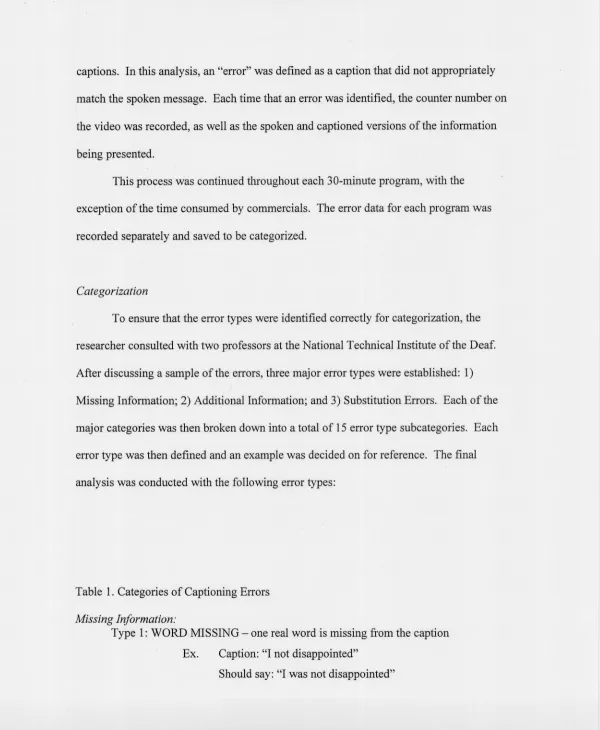
Table 1. Categories of Captioning Errors
Missing Information:
Type 1: WORD MISSING
-
one real word is missing nom the captionEx. Caption: "I not disappointed"
Should say: "I was not disappointed"
11
[image:12.612.8.608.18.748.2]----Type 2: WORD CLUSTER MISSING
-
two or more real words are missing fromthe caption.
Ex. Caption: "how the storm"
Should say: "how they weathered the storm"
Type 3: WORD ENDING MISSING
-
the proper word ending is missing from aword in the caption.
Ex. Caption: "the poll are open"
Should say: "the polls are open"
Additional Information:
Type 4: ERRATIC LETTER/S ADDED - one or more erratic letters added to the
caption.
Ex. Caption: "wz we are"
Should say: "we are"
Type 5: ERRATIC NUMBER/S ADDED - one or more erratic numbers added to
the caption.
Ex. Caption: "May 6th,19616789"
Should say: "May 6th,1961"
Type 6: TECHNICAL ERRORS ADDED
-
technical garble (not letters) added tocaption in place of words.
Ex. Caption: "is#$%"$ instead of'
Should say: "is done online instead of'
Type 7: WORD ADDED - one real word added to the caption.
Ex. Caption: "report it if a product"
Should say: "report if a product"
12
----Type 8: WORD ENDING ADDED
-
an improper word ending is present on aword in the caption.
Ex. Caption: "others things"
Should say: "other things"
Substitution Error:
Type 9: HOMONYM SUBSTITUTION ERROR - a wrong word substituted for
the appropriate word in the caption because the two words sound identical.
Ex. Caption: "paws"
Should say: "pause"
Type 10: SPELLING ERROR
-
one or more words in the caption are spelledwrong resulting in a word/s that are not real. May also be the result of a
missing space between words.
Ex. Caption: "superbendent"
Should say: "superintendent"
Type 11: PHONETIC SYSTEM ERROR - one or more words in the caption are
incorrect, due to a phonetic representation.
Ex. Caption: "Jay son Williams"
Should say: "Jason Williams"
Type 12: WORD SUBTITUTION ERROR - one incorrect real word replaces the
correct word in the caption.
Ex. Caption: "from an early ache"
Should say: "from an early age"
Type 13: WORD CLUSTER SUBSTITUTION ERROR
-
one or more incorrectwords replace the correct word/s in the caption.
Ex. Caption: "association peck a few delays"
Should say: "so you should expect a few delays"
13
-Type 14:NUMBER SUBSTITUTION ERROR - one or more incorrect number/s
replace the correct number/s in the caption.
Ex. Caption:"2.5-5.6Billion dollars"
Should say: "2.5-2.6 Billion dollars"
Type 15: ENDING SUSTITUTION ERROR - a base word with an appropriate
ending that has an incorrect ending used in the caption.
Ex. Caption: "ordered"
Should say: "orders"
Once the error types were established, each individual real-time caption error was
categorized as one of the fifteen error types. After the categorization was completed by
the researcher, the reliability of the categorization process was estimated.
Reliability
To study the reliability of the categorization of error types, a random stratified
sample of 30 caption errors was selected in order to have a representation of the various
errors in the analysis. Four professionals were given the sample of 30 caption errors that
was selected for the analysis, as well as the descriptions and examples of error types.
They were also given the original spoken messages (what was actually said during the
news program). The participants were asked to categorize each of the 30 caption errors.
Overall, the average percentage of agreement between the participants and the
researcher was approximately 80 percent. One of the raters produced data that was
particularly inconsistent. When this one rater was dropped from the analysis, the
remaining four raters (including the researcher) had approximately 85 percent agreement
in categorization of errors.
Results
The analysis of the five hours of video containing real-time captions from live
new programs resulted in a total of235 errors. This translates to an average of23.5
real-time caption errors occurring during a 3D-minutelive news program. The number of
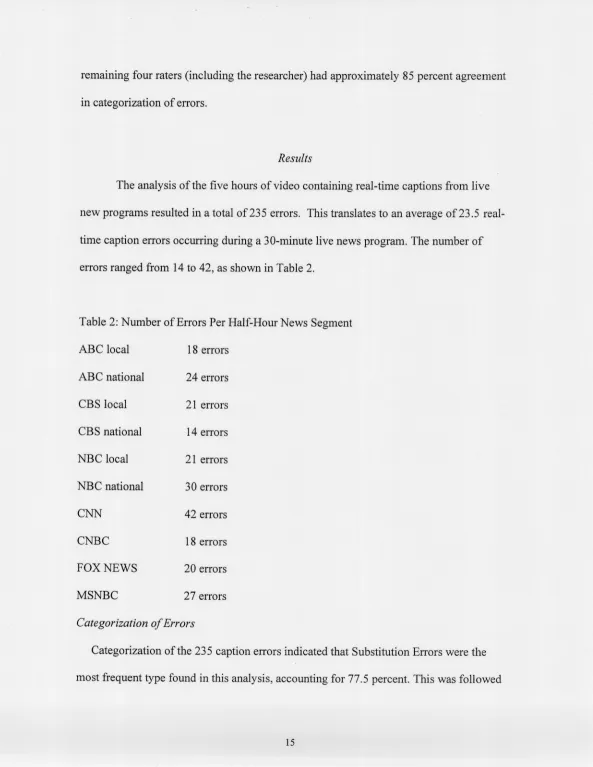
[image:16.612.7.600.12.779.2]errors ranged from 14 to 42, as shown in Table 2.
Table 2: Number of Errors Per Half-Hour News Segment
Categorization of the 235 caption errors indicated that Substitution Errors were the
most frequent type found in this analysis, accounting for 77.5 percent. This was followed
15
- - - --
---ABC local 18 errors
ABC national 24 errors
CBS local 21 errors
CBS national 14 errors
NBC local 21 errors
NBC national 30 errors
CNN 42 errors
CNBC 18 errors
FOX NEWS 20 errors
MSNBC 27 errors
by Additional Information (13 percent) and Missing Information (9.5 percent). These
[image:17.612.10.598.18.757.2]results are'summarized in Figure 1.
Figure 1. Results of Categorization by Major Error Types
nue8,MaioErrorTvPas
.
Missing InfDrmatiDnLJ
AddittonaHnformattonC
SubstitutionError71.5
Within eaChmajor category the following percentages of error types occurred:
Table 2-:Missing information Error Type percentages
Table 3: Additionallntorrnation Error Type Percentages
Type 4: Erratic Letterfs Added 8 errors 26%
Type 5: Erratic Numberls Added 3 errors 10%
Type 6: Technical Errors Added 5 errors 16%
---Type 1: Word Missing '8 errors 36%
Type 2: Word Cluster Missing 13 errors 59%
Type 7: Word Added
Type 8: Word Ending Added
13 errors 42%
6% 2 errors
Table 5: Summary of Error Analysis Across 15 Subcategories
Type 1: Word Missing
Type 2: Word Cluster Missing Type 3: Word Ending Missing Type 4: Erratic Letterls Added Type 5: Erratic Numberls Added Type 6: Technical Errors Added Type 7: Word Added
Type 8: Word Ending Added Type 9: Homonym Sub. Error Type 10: Spelling Error
Type 11: Phonetic System Error Type 12: Word Sub. Error
Type 13: Word Cluster Sub. Error Type 14: Number Sub. Error Type 15: Ending Sub. Error
3.4% 5.5% .5% 3.4% 1.3% 2.1% 5.5% 1% 3.4% 33% 13% 19% 6.8% .8% 1.3% 17 -- -- -- -
--Table 4: Substitution Error Type Percentages.
Type 9: Homonym Sub. Error 8 errors 4%
Type 10: Spelling Error 78 errors 43%
Type 11: Phonetic System Error 31 errors 17%
Type 12: Word Sub. Error 44 errors 24%
Type 13: Word Cluster Sub. Error 16 errors 9%
Typel4: Number Sub. Error 2 errors 1%
[image:18.612.16.608.13.764.2]Figure 27 S'ullUUaI'yof Error A:nalySIs-Across 15 Subcateg()ries
ErrorDistributiOn
40
33
30
o
Type of Error
Implicationsfor Teachers
.
WordMissing
. WordClusterMissing . WordEndingMissing . ErraticLetterlsAdded
II
.
ErraticNumbe.rJsAdded TechnicaJErrorAdded[J
Word Added.
Word EndingAdded[I
Homonym EO'OrCI
SpettingError.
Phonetic- System Error..
Word Substitution ErrorIII
WordClusterSub. ErrorCJ
Number Sub. Error [) EndingSub. ErrorThis study shows the immense obstacles that must be overcome in order for deaf
viewers to benefit from the information presented through real-time captions. Results
showing that within 5 hours of live news programming there were a total of235 errors
detected are staggering, but yet not surprising to many deaf viewers who have had to deal
[image:19.612.24.596.8.769.2]-with these challenges for years. Obviously, real-time caption errors -within live news
programs are prevalent and at this time unavoidable.
Knowing which types of errors are the most common can lead to a better
understanding of how to prepare deaf students to face these challenges. This study
showed that the main type of error that occurs are spelling errors (33%), followed by
word substitution errors (19%) and phonetic system errors (13%). The assumption can be
made, therefore, that these are the main types of captioning errors that deaf viewers of
real-time captioned news programs will face. Twelve other error types were identified,
although their frequency of occurrence was much smaller.
Given this information, the question is how can educators better prepare their
students to deal with these specific types of errors that will occur during television
viewing? It is critical that deaf viewers have the skills necessary to mentally repair these
errors, when possible, in order to comprehend live news programs. Enhanced
comprehension through repair strategies may enhance incidental learning.
One of the most important things that educators of deaf students can do is to bring
live captioned materials into the classroom to spark discussions about the errors that
occur. Addressing the issue openly will bring awareness to deaf students and help them
develop skills and strategies for dealing with the poor quality of the captions available to
them. By doing this, educators can also promote the need for deaf students, as well as
hearing students, to view the news regularly. Teachers should encourage students to
become knowledgeable about the world around them by showing them that viewing live
news programs is an important part of incidental and intentional learning.
19
--Suggested Strategies
Below are specific strategies that can be used in the classroom to prepare deaf
students to deal with some ofthe most frequently occurring types of errors in real-time
captioning found during this study. English teachers, in particular, could utilize such
strategies in their lessons, not only as a way to prepare their students to face the
challenges to real-time caption viewing, but also as a way to promote better overall
reading habits. However, all educators and parents should be involved in this process.
Spelling Errors:
(1) Give students examples of sentences with a misspelled word and ask them to
identify the misspelled word and then write the correct spelling in the blank
provided. (Dictionary use should be encouraged.)
Ex. 1 Are you sure it is nesecarv to do that? necessary
Ex. 2 I went to bed at 10:00pm last niht. night
(2) Give students examples of sentences that have two words together (with no
space between them) and ask the students to identify that mistake and draw a
line to show where the words should be separated.
Ex. 1 I want totalk to you. to / talk
Ex. 2 Mvmom is at the store. my/mom
20
--Word Substitution Errors:
(1) Give students examples of sentences that have a word missing (can possibly
give first and/or last letter of word). Ask the students to chose the word that
best fits the content of the sentence, given a choice of two similarly spelled
words.
Ex. 1 Sit b k and relax. book or back?
Ex. 2 I like to w
_
h television after school. watch or which?Phonetic System Errors:
(1) Give students examples of sentences that have phonetic representations of one
of the words and ask students to identify what the word should be using
phonetic clues, as well as clues from the context of the sentence. Ask the
students to write the correct word in the blank provided. (Dictionary use
should be encouraged.)
Ex. 1 I went outside and a moss kev toe bit me! mosquito
Ex. 2 Open the door by pulling the hand dell. handle
Word Added:
(1) Give students examples of sentences that have one extra word that is not
suppose to be there and, therefore, does not make sense in the sentence. Ask
students to identify which word does not belong and have them test their
guess by removing the word to see if the sentence still makes sense. Once
they have identified the added word, ask then to write the word in the blank
provided.
Ex. 1 She is veryfl.excited! --L
Ex. 2 I went on a walk be today.
~
Word Ending Errors:
(1) Give students examples of sentences that have a specific root word in need of
an ending that will make the word fit the context of the sentence. Provide the
students with the root word and give them two choices as to which ending
should be placed on the root word. Have students identify the correct root and
have then test their guess by using it in the sentence to see if it makes sense.
Ex. 1 I went shoDat the mall yesterday. shopping or shopped ?
Ex. 2 I vote last week. voting or voted?
Homonym Errors:
(1) Give students examples of sentences that have a blank where a word needs to
be provided and ask students to pick from a list of two homonyms. Ask
students to pick the word that best fits the context of the sentence. (Dictionary
use should be encouraged)
Ex. 1 I was searchingfor my glasses on the table, but when I looked the table
was bear or bare?
22
----Ex. 2 I am reading a book about King Arthur and all this
knights or nights?
Conclusion
The goal of this study was to provide deaf viewers and educators with a summary
of the specific types of errors that occur during real-time captioning. Not only were
excessive errors detected, but there were three main types that proved to be most
prevalent and in need of serious attention.
Educators need to prepare deaf students to learn through captions, despite the
errors. It is also important to make deaf viewers more aware of what challenges they are
likely to face in gaining access to live news programs.
Besides preparing deaf viewers to deal with caption errors, research is needed to
reduce the amount of errors occurring in the future. As mention earlier, error can be the
fault of the captionist or the computer system. Many times the errors that occur are out of
the captionist's hands. Signals between the television stations and the captionists are
often transmitted over a telephone line that can easily pick up "noise" and other
interference (Menchel, 2004). Until technology improves, there is little that can be done
to avoid such problems.
Errors caused by the captionist's lack of knowledge about the topics being
presented on the news programs may be reduced by improved training and strategies that
will familiarize the captionists with the material being captioned. Perhaps one solution
could be that caption providers raise their standards and criteria for hiring and
maintaining captionists in their companies.
23
--Additional research is also needed to determine if similar types of errors appear in
captions for television shows other than news reports. Live programs, such as sporting
events, the Olympic games, talk shows and presidential addresses can also present
opportunities for incidental learning.
More research is also needed on the correlation between the rate of speech by the
presenter and of the caption error rate.
With an increasing number of networks providing news programs and the
influence of the media on our society, it is imperative that deaf viewers have equal access
to information through real-time captioning. Hopefully, future strides will be made in the
area of improved access and comprehension of information through this important
technology.
24
--Bibliography
Boyd, J. & Vader, E.A. (1972). Captioning television for the deaf. American Annals of
the Deaf, 34-37.
Braverman, B. (1981). Television captioning strategies: A systematic research and
development approach. American Annals of the Deaf, 1031-1035.
Dowaliby, F. & Lang H. (1999). Adjunct aids in instructional prose: A multimedia study
with deaf college students. Journal of Deaf Studies and Deaf Education,
4,270-282.
Hucldn, T. & Coady, 1. (1999). Incidental vocabulary acquisition in a second language.
Second language reading and vocabulary learning, 181-193.
Jensema, C., Danturthi, R. & Burch, R. (2000). Time spent viewing captions on
television programs. American Annals of the Deaf, 145,464-469.
Jensema, C., McCann, R. & Ramsey, S. (1996). Closed-captioned television presentation
speed and vocabulary. American Annals of the Deaf, 141,284-292.
Kelly, L. (1996). The interaction of syntactic competence and vocabulary during reading
by deaf students. Journal of Deaf Studies and Deaf Education, 1, 75-89.
Koskinen, P., Wilson, R., Gambrell, L. & Neuman, S. (1993). Captioned video and
vocabulary learning: An innovative practice in literacy instruction. The Reading
Teacher 47. 36-43.
Lewis, M. & Jackson, D. (2001). Television literacy: comprehension of program content
using closed captions for the deaf. Journal of Deaf Studies and Deaf Education 6,
43-53.
Marschark, M., Lang, H. & Albertini, J. (2002). Educating Deaf Students. New York:
Oxford University Press.
Menchel, B. (2004). Around the town. Deaf Rochester News, April/ May, 21
McCoy, E. & Shumway, R. (1979). Real-time captioning- promise for the future.
American Annals of the Deaf 681-690.
Murphy-Berman, V. & Jorgensen, J. (1980). Evaluation of a multilevel linguistic
approach to captioning television for hearing-impaired children. American
Annals of the Deaf, 1072-1081.