DEFERASIROX DISPERSIBLE TABLETS
Dissertation submitted to
THE TAMILNADU Dr. M.G.R. MEDICAL UNIVERSITY,
CHENNAI
In partial fulfillment of the requirements for the award of the degree of
MASTER OF PHARMACY
IN
PHARMACEUTICS
By
(REG.NO:261210402)
Under the guidance of
Mr.V.SIVA KUMAR, M.Pharm.,(Ph.D)
DEPARTMENT OF PHARMACEUTICS,
ARULMIGU KALASALINGAM COLLEGE OF PHARMACY,
ANAND NAGAR, KRISHNANKOIL – 626 126,
This is to certify that the investigation described in the dissertation entitled
“FORMULATION DEVELOPMENT AND EVALUATION OF DEFERASIROX
DISPERSIBLE TABLETS” submitted by Reg.No:261210402 was carried out in the
Department of Pharmaceutics, Arulmigu Kalasalingam College of Pharmacy, Anand Nagar,
Krishnankoil-626 126, which is affiliated to The Tamil Nadu Dr. M.G.R. Medical University,
Chennai, under my supervision and guidance for the partial fulfillment of degree of
MASTER OF PHARMACY in PHARMACEUTICS.
Place: Krishnankoil. Mr. V.SIVAKUMAR., M.Pharm.,(Ph.D).,
Date: Department of Pharmaceutics,
Arulmigu Kalasalingam College of Pharmacy,
This is to certify that the investigation described in the dissertation entitled
“FORMULATION DEVELOPMENT AND EVALUATION OF DEFERASIROX
DISPERSIBLE TABLETS” submitted by Reg.No:261210402 was carried out in the
Department of Pharmaceutics, Arulmigu Kalasalingam College of Pharmacy, Anand Nagar,
Krishnankoil-626 126, which is affiliated to The Tamil Nadu Dr. M.G.R. Medical University,
Chennai, under the supervision and guidance of Mr.V.SIVAKUMAR.,M.Pharm., (Ph.D).,
(Professor, Department of Pharmaceutics for the partial fulfillment of degree of MASTER
OF PHARMACY in PHARMACEUTICS.
Place: Krishnankoil, Dr.M.PALANIVELU.,M.Pharm., PhD.,
Date: Principal,
Arulmigu Kalasalingam College of Pharmacy.
This is to certify that the dissertation work entitled “FORMULATION
DEVELOPMENT AND EVALUATION OF DEFERASIROX DISPERSIBLE
TABLETS” submitted by Reg.No:261210402 to The Tamil Nadu Dr. M.G.R. Medical
University, Chennai, in partial fulfillment of the requirements for the award of degree of
MASTER OF PHARMACY in PHARMACEUTICS were evaluated by,
Date:
Centre: Arulmigu Kalasalingam College of Pharmacy,
Krishnankoil.
Examiners:
1.
INTRODUCTION
The most widely accepted route of administration is the oral route.
Up to 50-60% of total dosage forms are administered by oral route. Of this, the most
commonly used dosage form for pharmaceutical preparation is tablet. Tablets, as a dosage
form offer many advantages. They are cost effective, convenient to dispose and store and
easy for the patient to administer.
When a new drug is discovered, one of the first questions that arise
is whether the drug can be effectively administered for its intended effect by the oral
route. They are the first formulations for any new drug. If the drug cannot be
administered by this route, then it is relegated to administration in a hospital setting.
Tablets may be defined as a solid pharmaceutical dosage form
containing drug substances with or without suitable diluents and prepared either by
compression or molding methods. Although are frequently discoid in shape, they may
also be round or oblong amongst many other shapes. They may vary in size and weight
depending on the amount of drug substance present and the intended method of
administration. Tablets can be classified as follows depending on the function and route
of administration.
TYPES OF TABLETS:
A. Oral Tablets for Ingestion:
i. Standard Compressed Tablets
ii. Modified Release Tablets
iii. Delayed Action Tablets
iv. Targeted Tablets
v. Chewable Tablets
vii. Multi Compressed Tablets
a. Compression Coated Tablets
b. Layered Tablets
c. Inlay Tablets
B. Tablets Used in Oral Cavity
i. Lozenges and Troches
ii. Sublingual Tablets
iii. Buccal Tablets
iv. Dental Cones
v. Mouth Dissolved Tablets
C. Tablets Administered by Other Routes
i. Vaginal Tablets
ii. Implants
D. Tablets Used to Prepare Solutions
i. Effervescent Tablets
ii. Hypodermic Tablets
iii. Soluble Tablets
Tablets, as dosage forms, suffer their share of disadvantages, despite their wide usage.
Some of them are formulation of drugs that resist compression; bioavailability problems;
unpalatable taste; swallowing problems in pediatric and geriatric patients; difficulty in
Pharmaceutical suspensions are uniform dispersions of solid drug particles in
a vehicle in which the drug has minimum solubility. These are usually formulated to
improve chemical stability of drug, mask the unpleasant taste and in instances where
liquid dosages form is preferred. Suspension as a dosage form, however, is associated
with issues such as microbial growth, sedimentation and non uniformity of dose, high
cost of manufacturing, difficult to carry, etc.
Solid oral dosage forms are most convenient from patient as well as from
manufacturing chemist’s perspective. They ensure uniformity of dosage, are most robust,
have less biological issues compared to liquid dosage forms. However, immediate release
tablets cannot act as a substitute for suspension. Thus, there is a need for a formulation,
which overcomes the problems associated with the swallowing of the solid dosage forms
and act as a viable substitute for suspensions. One such dosage form is dispersible tablets.
Dispersible tablets are defined in Ph. Eur. are uncoated or film coated tablets intended to
be dispersed in water before administration giving a homogenous dispersion. Usually,
about 10-15 ml of water is used and the resulting dispersion is administered to the patient.
However, they can also be placed directly on the tongue and sucked
.
Figure1:Step by step representation of disintegration process of a dispersible
Dispersible tablets are required to disintegrate within 3 minutes in water at 15-25 C.
Also the dispersion produced from a dispersible tablet should pass through a sieve screen
with a nominal mesh aperture of 710 microns. The dispersion properties of dispersible
tablets can be facilitated by the inclusion of an acid\base couple in which the base
liberates carbon dioxide when the components of the couple are dissolved in water.
IDEAL CHARACTERISTICS OF DISPERSIBLE TABLETS:
• They require water or other liquid at the time of administration.
• Should easily disintegrate and dissolve.
• Mask or overcome unpalatable taste of the drug.
• They should have high drug loading.
• They should have pleasant feel in the mouth.
• They should have low sensitivity against environmental conditions like moisture,
temperature, etc.
• Ease of administration for patients who are mentally ill, disabled and
uncooperative.
• Should be portable without fragility concern.
• They should be manufactured using conventional tablet processing and
packaging equipment at low cost.
SPECIAL FEATURES OF DISPERSIBLE TABLETS:
Dispersible tablets are not intended to be chewed or swallowed whole. They should not
be dispersed in carbonated drinks or milk due to foaming or slow dispersion. The purpose
of dispersible tablet is to provide a unit dosage form of medication which can be easily
administered to infants and children or to the elderly, who may have difficulty
ADVANTAGES OF DISPERSIBLE TABLETS:
• They are particularly suitable both for elderly and children.
• Rapid disintegration and absorption along with quick onset of action.
• Certain dispersible tablets can also be divided.
• The bitter taste is masked.
• Patient compliance.
• Convenient to carry, easy to manufacture and stable.
• Improved bioavailability, reduced side effects.
LIMITATIONS OF DISPERSIBLE TABLETS:
One common limitation of these formulations is settling of the insoluble solids at the
bottom of the container of the prepared dispersion, which may lead to the loss of part of
the drug during administration, resulting in suboptimal dosing.
DISADVANTAGES OF DISPERSIBLE TABLETS:
• Lack mechanical strength. Light weight and fragile. Patients should be advised
not to push the tablets through the foil film, but instead peel the film back to
release the tablet.
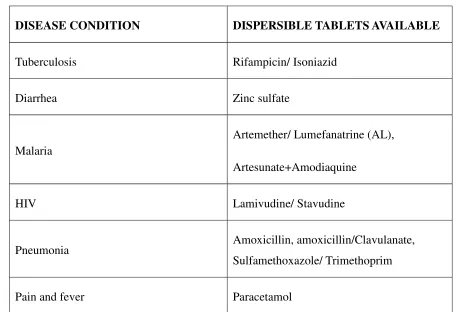
TABLE NO.1, Dispersible tablets available for common disease:
DISEASE CONDITION DISPERSIBLE TABLETS AVAILABLE
Tuberculosis Rifampicin/ Isoniazid
Diarrhea Zinc sulfate
Malaria
Artemether/ Lumefanatrine (AL),
Artesunate+Amodiaquine
HIV Lamivudine/ Stavudine
Pneumonia Amoxicillin, amoxicillin/Clavulanate,
Sulfamethoxazole/ Trimethoprim
Pain and fever Paracetamol
DEVELOPMENTAL CHALLENGES IN DISPERSIBLE DRUG DELIVERY
• Ease of administration:
These systems are easy to administer and handle hence, leads to better patient
compliance. Usually, geriatric and pediatric patients experience difficulty in
dysphasia. Fast Dissolving Delivery Systems may offer a solution for these
problems.
• ••
• Taste of the active ingredient:
Some drugs have relatively no taste, and simply adding a suitable flavor can hide
any unpleasant sensation. However, most drugs require taste masking if they are
to be incorporated into dispersible formulations. Simple wet granulation or roller
compression with other excipients to minimize the presented surface area of the
drug is one of the methods used to achieve this purpose. Spray coating can also be
used. Coating can be done using coating material such as HPMC, EC,
methacrylate and PVP. Cyclodextrins have been shown to provide some degree of
taste masking by trapping the drug within the cyclic structure long enough to
render initial dissolution. Electrochemical, hot-melt and supercritical fluid coating
can also be used.
• ••
• Dose:
High dose drugs present challenges to development of dispersible formulations
which include,
a. Taste masking of active ingredient
b. Mouth feel or grittiness
c. Tablet size
The degree of bitterness along with the relative dose of the drug will affect the
final tablet size. For example, coating of a tablet to mask the taste may increase
the size of the tablet. The extent to which this increase will affect the mouth feel
and tablet size will depend on the dose of the drug and the amount of coating
material required for masking the taste.
Several fast dissolving drugs are hygroscopic and cannot maintain integrity under
normal conditions of temperature and humidity. Hence they require protection from
humidity that calls for specialized product package.
• Friability:
In order to allow dispersible tablets to disintegrate rapidly in the mouth, they are
made of either very porous or soft molded matrices or compressed into tablets with
low compression force, which make the tablet friable and difficult to handle, often
requiring peel off blister packing.
• Mouth feel:
patients should receive a product that is pleasant. Any large particles which are
insoluble or slowly soluble in the mouth will lead to an unpleasant or gritty feel. This
can be avoided by keeping the particle size limits below the detectable size.
Effervescence and flavor can be added to improve the feel.
TABLET MANUFACTURING METHODS
There are three basic methods of manufacture:
• Direct compression
• Dry granulation
• Wet granulation
GRANULATION:
Primarily granules are prepared to improve flow and compression characteristics of the
blend. But there are many other reasons, sometimes, multiple reasons for granulation,
such as:
• Increasing the bulk density of the product.
• Facilitating metering or volumetric dispensing.
• Controlling the rate of drug release.
• Decreasing dust generation and employee exposure to the product.
• Improving product appearance.
Wet granulation
This is the most widely used process of granulation in the pharmaceutical industry. It
involves the addition of a liquid to powders, to form a wet mass or it forms granules by
adding the powder together with an additive. The wet mass is then dried and sized to
obtain granules. The liquid added binds the moist powder particles by a combination of
capillary and viscous forces in the wet state. More permanent bonds are formed during
the subsequent drying state which leads to the formation of agglomerates.
Steps involved:
• Mixing of drugs and excipients
• Preparation of binder solution
• Mixing of binder solution with powder mixture to form a wet mass
• Coarse screening of wet mass using a suitable sieve
• Drying of moist granules
• Screening of dry granules through a suitable sieve
• Mixing of screened granules with disintegrants, glidant and lubricant
Dry granulation:
In dry granulation process, the powder mixture is compressed without the use of heat and
solvent. It is the least desirable of all methods of granulation. The two basic procedures
are to form a compact material by compression and then to mill the compact to obtain
granules. Two methods are used for dry granulation. The most widely used method is
slugging, where the powder is pre compressed and the resulting tablets or slugs are milled
to yield the granules. The other method is to pre compress the powder with pressure rolls
using a machine such as chilosonator.
Advantages
The main advantages of dry granulation or slugging are that it uses less equipment and
space. It eliminates the need for binder solution, heavy mixing equipment and the costly
and time consuming drying step involved in wet granulation. Slugging can be used for
advantages in the following situations:
• For moisture sensitive material.
• For heat sensitive material.
• For improved disintegration since powder particles are not bound together by a
binder.
Disadvantages
• It requires a specialized heavy duty tablet press to form slugs.
• It does not permit uniform color distribution achieved with wet granulation where
the dye can be incorporated into the binder liquid.
• The process tends to increase the production of dust which may cause
contamination.
• Milling of drugs and excipients
• Mixing of milled powders
• Compression into large, hard tablets to make a slug
• Screening of slugs
• Mixing with lubricants and disintegrating agents
• Tablet compression
Slugging: granulation by slugging is the process of compressing dry powder of tablet
formulation with tablet press having die cavity large enough in diameter to fill quickly.
The accuracy and condition of the slug is not too important. Only sufficient pressure to
compact the powder into uniform slugs should be used. Once slugs are produced they are
reduced to appropriate granule size for final compression by screening and milling.
Roller compaction: The compaction of powder by means of pressure roll can also be
accomplished by a machine called chilosonator. Unlike tablet machine, the chilosonator
turns out a compact mass in a steady continuous flow. The powder is fed between the
rollers from the hopper which contains a spiral auger to feed the powder into the
compaction zone. Like slugs, the aggregates are screened or milled for production into
granules.
PRINCIPLE
The dispersible tablets are mainly based on the principle of employing super disintegrants
in their formulation which at low concentrations, facilitate quick disintegration of the
tablets. An ideal disintegrants should have poor solubility, poor gel formation, good
hydration capacity, good compressibility, flow properties and no tendency to form
complexes with the drugs.
As superdisintegrants are of prime importance, a careful selection of
• The disintegrants must possess quick wicking action for generating the
hydrostatic pressure required for faster disintegration.
• Smaller particles are preferred over larger particles as the latter produce gritty
mouth feel. The gel forming superdisintegrants are avoided for patient
non-compliance.
• A more compactable superdisintegrant is preferred to avoid friability.
Method of addition of superdisintegrants:
• ••
• INTERNAL ADDITION:
In wet granulation method, the superdisintegrant is added to the other excipients
before wetting the powder with the granulating fluid to incorporate it within the
granules. Whereas, in dry granulation method, the superdisintegrant is added to
other excipients before compressing the powder between the rollers.
• ••
• EXTERNAL ADDITION:
In both wet and dry granulation methods, the superdisintegrant is added to the
granules during the dry mixing step prior to compression.
• ••
• INTERNAL AND EXTERNAL ADDITION:
In this method, disintegrants is divided into two portions. Ne portion is added
before granule formation and the remaining is added to granules with mixing prior
to compression. The former is called intra granular disintegrants and the latter
inter granular disintegrants. If both methods are used, the inter granular portion
break the tablet into granules and the intra granular portion will help break the
granules to release the drug substance into solution.
The various mechanisms of disintegration are:
1. Swelling: High swelling force is observed in tablets with low porosity and
vice versa. During swelling the adhesiveness of the other ingredients is
considerably reduced and thereby facilitates the disintegration of the tablet.
Figure2:Swelling action:Particles swell and breakup the particles
2. Wicking: The main principle involved here is porosity and capillary action.
Liquid is drawn up or “wicked” into these pathways through capillary action
and rupture the inter particulate bonds causing the tablet to break apart.
Figure3:Wicking action:Water is pulled by the disintegrant and reduces
the physical bonding force between the particles..
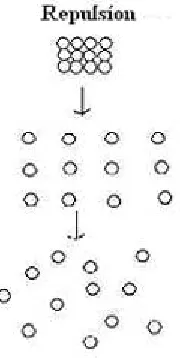
3. Electrostatic repulsion: In this mechanism water is required for
disintegration which is mainly due to electrostatic repulsions between the
particles. Wicking may sometimes be the secondary mechanism of
disintegration in such cases.
[image:18.612.107.546.625.722.2]
Figure4:Deformation and repulsion of particles
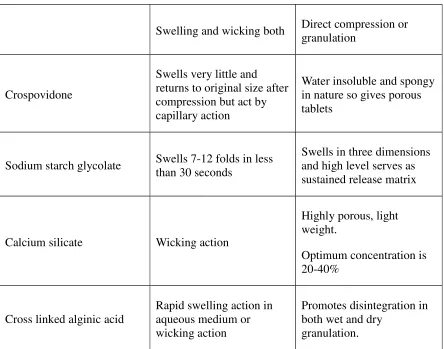
Table no.2,List of commonly used super disintegrants.
Superdisintegrant Mechanism of action Properties
Crosscarmellose sodium Swells 4-8 folds in less than 10 seconds
Swelling and wicking both Direct compression or granulation
Crospovidone
[image:19.612.103.547.68.417.2]Swells very little and returns to original size after compression but act by capillary action
Water insoluble and spongy in nature so gives porous tablets
Sodium starch glycolate Swells 7-12 folds in less than 30 seconds
Swells in three dimensions and high level serves as sustained release matrix
Calcium silicate Wicking action
Highly porous, light weight.
Optimum concentration is 20-40%
Cross linked alginic acid
Rapid swelling action in aqueous medium or wicking action
Promotes disintegration in both wet and dry
granulation.
METHOD OF PREPARATION:
1. Spray drying: Spray drying is one of the oldest forms of drying and one of
the few technologies available for the conversion of a liquid to a dry solid.
This process is carried out in three fundamental stages. The first stage is
atomization of a liquid feed into fine droplets. In the second stage, spray
droplets mix with the heated gas stream and the dried particles are produced
by the evaporation of the liquid from the fine droplets. The final stage
involves the separation of the dried powder from the gas stream and collection
of these powders in a chamber. Allen and Wang produced a particulate support
matrix for use in dispersible tablets by a spray drying technique. The
components include supporting agents like non hydrolyzed and hydrolyzed
2. Lyophilization or freeze drying: Freeze drying or lyophilization is a process
in which solvent is removed from a frozen drug solution or a suspension
containing structure forming excipients. Freeze drying process normally
consists of three steps:
Material is frozen to bring it below the eutectic point.
Primary drying to reduce the moisture around 4% w/w of dry
product.
Secondary drying to reduce the bound moisture up to the required
final volume.
The resulting tablets are very light and have highly porous structures that
allow rapid dissolution or disintegration. The freeze drying process may result
in a glassy amorphous structure of excipients as well as the drug substance
leading to an enhanced dissolution rate.
3. Sublimation: In this technique, highly volatile substances like camphor, urea
and urethane are added to the blend before compression. When highly volatile
substances are compressed, they can be easily removed by sublimation. This
improves the dissolution rate as the end product is a porous structure due to
the evaporation of the volatile substances. Additionally, several solvents like
cyclohexane, benzene etc can also be used as pore forming agents.
4. Molding: The molding method is a very effective technique used for taste
masking of bitter drugs. The major components used in this technique are
water soluble. This technique is similar to the conventional tablet compression
technique except that low pressures are used here. The powder blend is
moistened with the solvent and the tablet is molded. This process is called
solvent molding. The low compressional pressure used results in a porous
structure which leads to enhanced dissolution rates. For further improvement
fine screen. The major drawback of the molded tablets is that they lack
mechanical strength.
The molded forms have also been prepared directly from a
molten matrix in which the drug is dissolved or dispersed (known as heat
molding) or by evaporating the solvent from a drug solution or suspension at
ambient pressure.
5. Cotton candy process: The process is so named as it utilizes a unique
spinning mechanism to produce floss like crystalline structure, which mimic
cotton candy. Cotton candy process involves formation of matrix of
polysaccharides or saccharides by simultaneous action of flash melting and
spinning. The matrix formed is partially recrystallised to have improved flow
properties and compressibility. This candy floss matrix is then milled and
blended with active ingredients and excipients and subsequently compressed
to dispersible tablets. This process can accommodate high doses of drugs and
offers improved mechanical strength. However, high process temperatures
limit the use of this process.
6. Direct compression: This method can be applied to manufacturing
dispersible tablets by choosing appropriate combinations of excipients which
can provide fast disintegration and good physical resistance. This technique us
mainly preferred because of the availability of improved excipients especially
superdisintegrants and sugar based excipients.
a) Superdisintegrants: the addition of superdisintegrants principally affects
the rate of disintegration and hence the dissolution. Tablet disintegration
time can be optimized by concentrating the disintegrants. Below critical
concentration tablet disintegration time is inversely proportional to
disintegrants concentration. Above the critical concentration level,
however, disintegration time remains approximately constant or even
b) Sugar based excipients: these have been widely used as bulking agents
because of their high aqueous solubility, sweetness, pleasing mouth feel
and good taste masking. Nearly all formulations for dispersible tablets
incorporate some sugar materials in their formulations. The use of sugar
based excipients especially bulking agents like dextrose, fructose, isomalt,
lactitol, maltitol, sorbitol, starch hydrolysate, polydextrose and xylitol
which display high aqueous solubility and sweetness and hence impart
taste masking property and pleasing mouth feel.
7. Nanonization: A recently developed nanomelt technology involves reduction
in particle size of drug to nano size by wet milling technique. Surface
adsorption of the nano crystals of the drug is done on selected stabilizers for
stabilizing them against agglomeration, which are then incorporated in to the
dispersible tablets. This technique is mainly advantageous for poorly water
soluble drugs and also for wide range of doses (up to 200 mg of drug per
[image:22.612.101.543.457.628.2]unit).
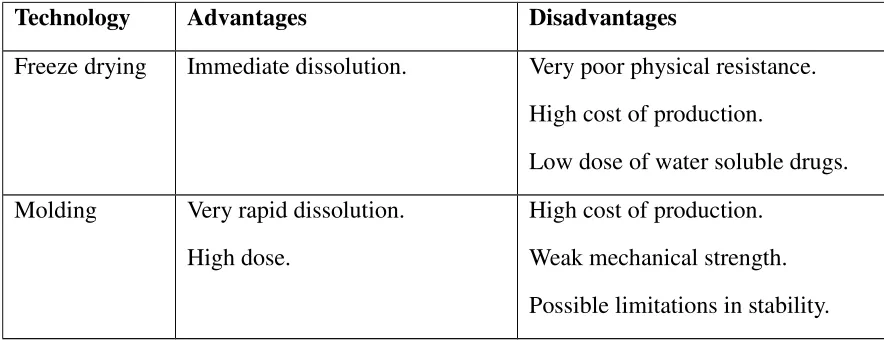
TABLE 3: Advantages and Disadvantages of the different technologies for preparing
rapidly disintegrating pharmaceutical forms.
Technology Advantages Disadvantages
Freeze drying Immediate dissolution. Very poor physical resistance.
High cost of production.
Low dose of water soluble drugs.
Molding Very rapid dissolution.
High dose.
High cost of production.
Weak mechanical strength.
Tableting Low cost of production
Use of standard equipment/materials.
High dose.
Good physical resistance.
Disintegration capacity markedly limited by the size and hardness of the tablets.
TABLE 4: Some examples of marketed products
Marketed Product Active Ingredient Therapeutic
Ingredient Manufacturer
Methadose Methadone Narcotic analgesic Gen pharma
Voltarol Diclofenac sodium NSAID Alpa pharma
Clarinex Redi Tabs Desloratidine Anti-histamine Yash pharma
Riamet Artemether and
Lumefanatrine Anti malarial Novartis Australia
Lamotrigine Lamotrigine Anti epilepsy and
bipolar disease Actavis
Ranmoxy distab Amoxicillin
trihydrate Anti bacterial Ranbaxy
Rapidol Paracetamol Analgesic and
antipyretic
Ethypharm industries, France
Analtra-DT Tramadol HCl Central analgesic May Flower, India
Azcin-DT Azithromycin Macrolide antibiotic West coast pharmaceuticals
C Pod dispersible tablets Cefpodoxime Proxetil Antibiotic Yash pharma laboratories Dispersible
acyclovir tablets Acyclovir Antiviral
Yash pharma laboratories
Lovan tablets Fluoxetin HCl SSRI Alphapharm P/L
Ivaver DT plus Ivermectin and
Albendazole Anti helminthetic Gen pharma
Cefocef LB Cefixime trihydrate Cephalosporin
antibiotic Centaur pharma
Piram D Piroxicam NSAID Mylan laboratories
Montasma Montelukast sodium
Leukotriene receptor
[image:24.612.104.584.267.723.2]antagonist Icarus healthcare
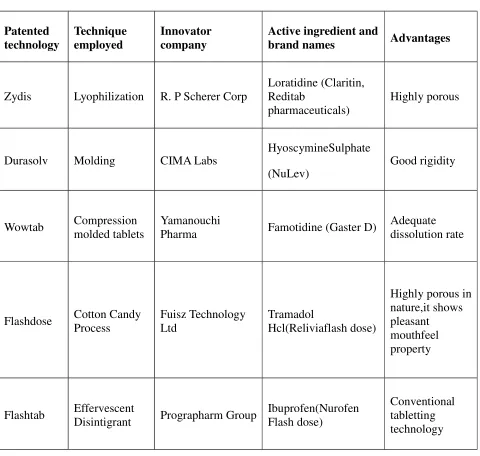
TABLE 5: Marketed technologies of fast disintegrating tablets
Patented technology Technique employed Innovator company
Active ingredient and
brand names Advantages
Zydis Lyophilization R. P Scherer Corp
Loratidine (Claritin, Reditab
pharmaceuticals)
Highly porous
Durasolv Molding CIMA Labs
HyoscymineSulphate (NuLev) Good rigidity Wowtab Compression molded tablets Yamanouchi
Pharma Famotidine (Gaster D)
Adequate dissolution rate
Flashdose Cotton Candy Process
Fuisz Technology Ltd
Tramadol
Hcl(Reliviaflash dose)
Highly porous in nature,it shows pleasant mouthfeel property
Flashtab Effervescent
Disintigrant Prographarm Group
Ibuprofen(Nurofen Flash dose)
Ziplets Molding EurandInternational Ibuprofen(Cibalgina due fast)
Sufficient mechanical strength
Oraquick Micromask
taste KV Pharma co,inc
Hyoscyamine sulfate ODT
Significant friability is present in tablets
CHELATORS:
Chelators are small molecules that bind very tightly to metal ions. Some Chelators are the
molecules that can be manufactured [e.g. ethylene diamine tetra acetic; EDTA]. The other
Chelators are proteins made by living organisms [e. g. transferrin]. The key property
shared by all Chelators is that the metal ion bound to the Chelators is chemically inert.
Consequently, one of the important roles of Chelators is to detoxify metal ions and
prevent poisoning.
Chelating agents were introduced into medicine as a result of the use of poison gas in
World War-1. The first widely used chelating agent, the organic dithiol compound
dimercaprol [also named British Anti- Lewisite or BAL], was used as an antidote to the
arsenic-based poison gas, Lewisite. The sulphur atoms in BAL’s mercaptan groups
strongly bond to the arsenic in Lewisite, forming a water-soluble compound that entered
the bloodstream, a allowing it to be removed from the body by the kidneys and liver.
BAL had severe side-effects.
After World War -11, a large number of navy personnel suffered from lead poisoning as a
result of their jobs repainting the hulls of ships. The medical use of EDTA as a lead
chelating agent was introduced. Unlike BAL, it is a synthetic amino acid and contains no
mercaptans. EDTA side effects were not considered as severe as BAL.
In the 1960s, BAL was modified into DMSA, a related dithiol with far fewer side effects.
DMSA quickly replaced both BAL and EDTA, becoming the US standard of care for the
Research in the former Soviet Union led to the introduction of DMPS, another dithiol, as
a mercury-chelating agent. The Soviets also introduced ALA, which is transformed by the
body into dithiol dihydrolipoic acid, a mercury and arsenic-chelating agent. DMPS has
experimental status in the US FDA, while ALA is a common nutritional supplement.
Since the 1970s, iron chelating therapy has been used as an alternative to regular
phlebotomy to treat excess iron deposition in people with haemochromatosis.
Several chelating agents are available, having different affinities for different metals.
Common chelating agents include:
• Alpha lipoic acid (ALA)
• Aminophenoxyethane-tetra acetic acid (BAPTA)
• Deferasirox
• Deferiprone
• Deferoxamine
• Diethylene triamine penta acetic acid (DTPA)
• Dimercaprol (BAL)
• Dimercapto propane sulfonate (DMPS)
• Dimercaptosuccinic acid (DMSA)
• Ethylenediamine tetra acetic acid(calcium disodium versanate) (CaNa2-EDTA)
• Ethylene glycol tetra acetic acid (EGTA)
• D-penicillamine
Iron overload is the result of many disorders and can lead to the development of organ
damage with increased mortalities. In humans, total body iron concentrations are
maintained within the range of 200-1500 mg by inadequate adjustment of intestinal
absorption, since no excretory mechanisms exist. In normal individuals, feedback
mechanisms inhibit iron absorption as storage iron increases. Each condition that induces
an increased net entry of iron within the body inevitably leads to iron overload. It can be
classified as primary or secondary depending whether it results from a primary defect in
the regulation of iron balance or acquired disorders. A known example of primary iron
overload is hereditary haemochromatosis [HHC], in which iron is absorbed in excess
because of increased iron transfer from the enteral cells to the blood. The secondary
includes iron overload either due to, or associated with, ineffective erythropoiesis,
chronic liver diseases, parenteral administration or ingestion of excessive amounts of
iron. Thalassemia major and sideroblastic anemia are the two best examples of iron
overload secondary to blood transfusions and ineffective erythropoiesis. Frequent blood
transfusions lead to excessive accumulation of iron with a toxic accumulation in 3-10
years.
The toxicity of iron results from two related events:
1. Excess iron concentration in various tissues of the body, particularly in liver,
heart and endocrine organs with the consequence of liver diseases, diabetes
mellitus and other complications.
2. Free iron that catalyses the formation of highly reactive hydroxyl radicles which
lead to membrane damage and denaturation of proteins.
Once iron exceeds a certain level, these effects lead to significant morbidity and
mortality. Without specific chelation therapy to remove iron, in 3-10 years almost all
regularly transfused patients will have acquired a toxicity of iron. The main cause of
death is cardiac complications.
The aim of treatment of iron storage disease is to remove from the body the excess iron
that has accumulated. This can be done by employing iron Chelators. Iron Chelators can
be classified using a number of criteria such as their origin (synthetic versus biologically
produced molecules), their interaction with solvents such as water (hydrophobic versus
hydrophilic) or their stoichiometric interaction (bidentate versus hexadentate). Some of
these properties have an important impact on the clinical utility of the chelator. One of the
key clinical features is the degree to which they are absorbed from the gastrointestinal
tract.
By increasing the dose of Chelators in an attempt to speed up iron removal, there is a risk
of increasing toxicity of iron Chelators by chelating iron, which is needed for normal
tissue metabolism. Therefore, while the slow process of decreasing tissue iron to safe
levels is being achieved; second goal is to make the iron as safe as possible by binding
the toxic iron pools responsible for causing tissue damage. Iron chelation therapy reduces
iron related morbidity, reduces and retards liver diseases, diabetes and other endocrine
failures, normalizes growth and sexual development, prevents, and in some cases reverses
cardiac insufficiency and improves quality of life.
TABLE 6: Available iron chelating agents used for the treatment of iron overload.
Agent Brand
name(manufacturer) Pharmacology
Route of administratio n
Deferasirox Exjade (Novartis) Tridentate molecule; 2:1
stoichiometry for iron Oral
Deferiprone Ferriprox (Apotex) Bidentate molecule; 3:1
stoichiometry for iron Oral
Deferoxamine Desferal (Novartis)
Hexadentate molecule; 1:1 stoichiometry for iron
IV
Excipients used in the formulation of dispersible tablets:
Excipients are inert substances used as diluents or vehicles for a drug. In the
pharmaceutical industry it is a catch all term which includes various sub groups
comprising diluents or fillers, binders or adhesives, disintegrants, glidants, flavors, colors
and sweetners. All of these must meet certain criteria as follows:
They must be physiologically inert.
They must be free of any bacteria considered to be pathogenic or otherwise
objectionable.
They must not interfere with the bioavailability of the drug.
They must be commercially available in the form and purity commensurate to
pharmaceutical standards.
Cost must be relatively inexpensive.
They must confirm to all regulatory requirements.
To assure that no excipient interferes with the utilization of the drug, the formulator must
carefully and critically valuate combinations of the drug with each of the contemplated
excipients and must as certain compliance of each ingredient with existing standards and
regulations.
The screening of drug-excipient and excipient-excipient interactions should be carried out
routinely in pre formulation studies. Determination of the optimum drug-excipient
compatibility has been adequately presented in the literature.
TABLE 7: List of excipients used in the formulation of dispersible tablets
Excipients Function Example
Diluents
Fillers used to make the required bulk of the tablet.
Also used as disintegrants in the dispersible and orally disintegrating tablets.
Secondary function is to provide better tablet properties like improve cohesion, flow, compactibility, stability, etc.
Lactose, spray dried lactose, microcrystalline cellulose (Avicel 101 and 102), mannitol (Pearlitol SD200 and 25 C), sorbitol, dibasic calcium phosphate dehydrate
Binders Impart cohesive strength to powdered materials
Gelatin, glucose, lactose, cellulose derivatives, EC, HPMC, PVP, CMC, acacia etc
Superdisinte grants
They facilitate tablet breaking when it comes in contact with water in oral cavity/ GIT
Ac-di-sol, Crospovidone, starch, sodium starch glycolate.
Lubricants Prevent adhesion of tablet material to dies and punches, reduce interparticulate friction.
Insoluble-stearic acid,
Facilitate easy ejection of tablet from dies.
Soluble- SLS, PEG-400,600,800 etc
Glidants Reduce friction between the particles and improve flow properties
Colloidal silicon dioxide, corn starch, talc.
Ant adherents
These are added to prevent adhesion of
tablet material to punches and dies. Talc
Sweetners To produce a palatable dosage form Sucrose, sucralose, saccharin, aspartame etc
Flavors Improve taste of dosage form Peppermint, vanilla, orange, banana, cinnamon,
Colors For better appearance Sunset yellow
Packaging of dispersible tablets:
Some of the dispersible tablets are stable during storage, E.G., for two years or even 3
years in conventional packing and these type of dosage forms are stored in HDPE bottles,
AIM AND OBJECTIVE
The objective of the current study was to development optimize a oral
disintegration tablets. Deferasirox is a rationally designed oral Iron chelator.
Its main use is to reduce chronic Iron overload in patients who are receiving long
term blood transfusions for conditions . such as “beta-thalassemia”.
It is the first oral medication of oral disintegration tablets were prepared by
direct compression method using different super disintegrating agents . such as cross
povidone, sodium starch glycolate & cross carmellose sodium.
The main objective of this study was .
To perform reformulation studies. To formulate deferasirox oral dispersible
tablets. To select formulation based on invitor studies of oral dispersible tablets. To
perform stability studies on the most satisfactory formulation. To correlate innovator
product.To formulate deferasirox oral dispersible tablets. To obtain a suitable dosage
LITERATURE REVIEW
PAST WORK CARRIED ON DEFERASIROX:
Elliott Vichinsky et. al., (2007) evaluated the safety and tolerability of Deferasirox in
comparision with Deferoxamine in this population. Assessment of efficacy, as measure by
the change in liver iron concentration (LIC) using biosusceptometry, was a secondary
objective. A total of 195 adult and pediatric patients received Deferasirox (n=132) or
Deferoxamine (n=63). Adverse events most commonly associated with Deferasirox were
mild, including transient nausea, vomiting. Diarrhea, abdominal pain and skin rash.
Abnormal laboratory studies with Deferasirox were occasionally associated with mild
non progressive increase in serum creatinine and reversible elevations in liver function
tests. Discontinuation rates from Deferasirox and Deferoxamine were similar. Over 1
year, similar dose-dependant LIC reductions were observed with Deferasirox and
Deferoxamine. Once daily oral Deferasirox has acceptable tolerability and appears to
have similar efficacy to Deferoxamine in reducing iron burden in transfused patients with
sickle cell disease.
Brad et. al., (2009) described the safety profile of open-label, adjunctive Deferasirox iron
chelation therapy in eight patients with biopsy-proven mucormycosis. Deferasirox was
administered for an average of 14 days [range, 7 to 21] at 5 to 20 mg/kg of body
weight/day. The only adverse effects attributable to Deferasirox were rashes in two
patients. Deferasirox treatment was not associated with changes in renal or liver function,
complete blood count, or transplant immunosuppressive levels. Thus, Deferasirox
appears safe as an adjunctive therapy for mucormycosis.
Renzo Gallenello et. al., (2008) investigated the effect of food and time of food intake on
the pharmacokinetics of Deferasirox on healthy volunteers and patients with transfusional
hemosiderosis. The bioequivalence of a single oral dose of Deferasirox (20 mg/kg) was
assessed following administration either before a high fat or standard breakfast or
volunteers. The bioavailability of Deferasirox was determined following a single oral
dose (20 mg/kg) under fed and fasted conditions in patients. These data showed that the
type of food, calorie content and fat content of the meal influence bioavailability of
Deferasirox when consumed concurrently. In conclusion, it is recommended that
Deferasirox be administered atleast 30 mins before meals.
Romain Sechaud et. al., (2008) evaluated the absolute bioavailability of a single 375 mg
oral dose of Deferasirox administered in the form of a tablet compared with a 130 mg
intravenous infusion of Deferasirox. The main study phase consisted of 17 healthy male
volunteers. Plasma concentrations of Deferasirox were measured following each
treatment, and pharmacokinetic parameters including absolute oral bioavailability were
determined. Absolute oral bioavailability of the Deferasirox tablets was 70% (90%
confidence interval, 62%-80%).
Cappelilini et. al., (2006) conducted a comparitive phase III trial to demonstrate the
efficacy of Deferasirox in regularly transfused patients with beta-Thalassemia aged 2
years or older. Patients were randomized and received treatment with Deferasirox
(n=296) or Deferoxamine (n=290), with dosing of each according to baseline liver iron
concentration (LIC). The primary end point was maintenance or reduction of LIC;
secondary end points included safety and tolerability, change in serum ferritin level, and
net body iron balance.
Deborah Chirnomas et. al., (2009) performed a prospective study of oral Deferasirox
pharmacokinetics (PK), comparing 10 transfused patients with inadequate Deferasirox
response (rising ferritin trend or rising liver iron on Deferasirox doses >30mg/kg per day)
with control transfusion dependant patients (n=5) with adequate response. Subjects were
admitted for 4 assessments: Deferoxamine infusion, urinary iron measurement,
quantitative hepatobilary scintigraphy, a 24 hour Deferasirox PK study following a single
35 mg/kg dose of oral Deferasirox; and pharmacogenomic analysis. Patients with
inadequate response to Deferasirox had significantly lower systemic drug exposure
compared with control patients (p< 0.00001). Cmax, V volume of distribution/
bioavailability as the likely discriminant. Effective dosing regimens for inadequately
responding patients to Deferasirox must be determined.
Andrej Skerjanee et. al., (2010) investigated the pharmacokinetic interactions of
Deferasirox with Midazolam, Rifampicin and Repaglinide in healthy volunteers. In the
induction assessment, single dose Deferasirox pharmacokinetics was obtained in the
presence and absence of a repeated dose regimen of rifampin. In the CYP3A interaction
evaluation, midazolam in the presence and absence of steady state concentrations of
Deferasirox. To test for interaction at the level of CYP2C8, single dose Repaglinide
pharmacokinetics/pharmacodynamics were determined with and without repeated dose
administration of Deferasirox. After rifampin, a significant reduction (44%) in AUC to
Deferasirox was observed. Upon co administration of midazolam, there was a modest
reduction of up to 22% in midazolam exposure (AUC, Cmax), suggesting a modest
induction of CYP3A4/5 by Deferasirox. Deferasirox caused increase in Repaglinide
plasma Cmax and AUC of 1.5 fold to over 2 fold, respectively, with little change in blood
glucose measures.
Schienfled et. al., (2007) reviewed the dermatologic uses and effects of Deferasirox,
bortezomib, dastinib and cyclosporine eye drops. He reviewed that Deferasirox, an oral
iron chelator could be an effective treatment against porphyria cutanea tarda,
haemochromatosis and pathogens such as mucor that thrive in iron rich environments.
REVIEW OF WORK DONE ON DISPERSIBLE TABLET:
Sandeep patil B et al Formulated quick dispersible tablet of olanzapine by
direct compression method. Effect of super disintegrant crospovidone on wetting time,
disintegration time, drug content & in-vitro release has been studied. Disintegration time
decreased and percent drug dissolved increased with increase in the level of
crospovidone.
Kuchekar BS et al Formulation dispersible tablets of norfloxacin using natural
substances as disintegrants such as isapghula husk powder, Cassia tora powder(defatted)
and Cassia nodosa powder in different concentration by direct compression method. The
Snehalatha et al Formulated dispersible tablets of piroxicam using different
natural disintegrants in order to get required theoretical release profile. The influence of
the disintegrant concentration and granulation technique on the release of piroxicam was
studied. The study reveals that the formulation prepared by direct compression exhibits
better dissolution, disintegration at low concentration of distegration of natural
distintegrants.
Mohanachandran et al Formulated mouth dispersible tablets of amlodipine
besylate by direct compression method using different super disintegrants. FDT’s were
evaluated for its physicochemical properties and in-vitro dissolution. Effect of different
superdisintegrant on disintegration behavior of tablets was evaluated in phosphate buffer
pH 7.2. All formulations were evaluated for pre-compression and post-compression
parameters. Wetting time of formulations containing crosscarmellose sodium was least
and tablets showed faster disintegration. FT-IR studies revealed that there
physio-chemical interaction between amlodipine besylate and other excipients.
Suresh Kulkarni V et al Formulated disintegrating meloxicam tablets by wet
granulation method. The influence of superdisintegrants, crosspovidone and
crosscarmellose sodium on disintegration time, wetting time and water absorption ratio
are studied. Tablets contained crospovidone exhibit quick disintegration time than tablets
containing croscaremellose sodium. The fast disintegrating tablets of meloxicam with
shorter disintegration time, acceptable taste and sufficient hardness could be prepared
using crospovidone and other excipients at optimum concentration.
Avani Gosai R et al formulated oro-dispersible tablets of ondansetron
hydrochloride by direct compression using super-disintegrants such as sodium starch
glycolate and croscarmellose as superdisintegrants, as the combination of these two
agents gives better disintegration of the tablet. Dissolution study revealed faster release
rate of ondansetron hydrochloride from the tablets as compared to pure drug and
marketed conventional tablet formulation of andansetron hydrochloride. It was concluded
that superdisintegrants addition technique is a useful method for preparing oro dispersible
PLAN OF WORK
Pre formulation studies of excipients and their compatibility with the API. Innovator product evaluation.
Development of various formulations and preparation of dispersible tablets by Direct compression method
Wet granulation technique
Selection and optimization of the best formulation.
Comparision of the optimized formulation with the innovator product.
To perform stability studies on the most satisfactory formulation as per ICH
guidelines.
I. Pre-compression parameters:
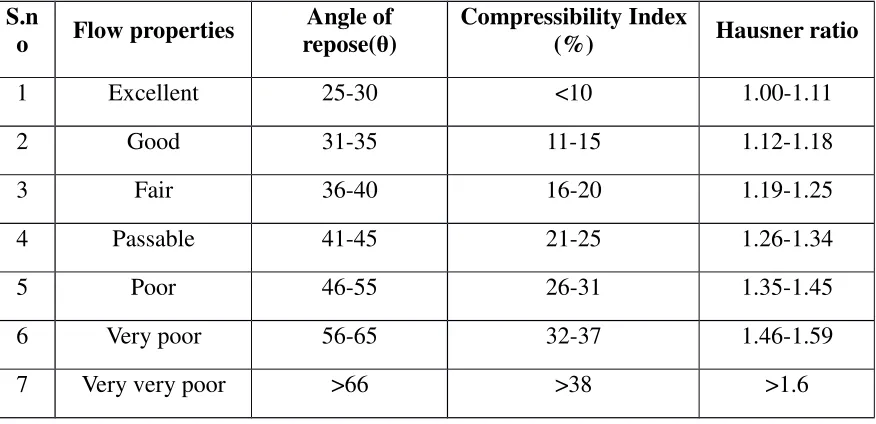
• Angle of repose • Bulk density • Tapped density • Hausner's ratio • Compatibility study
II. Post-compression parameters:
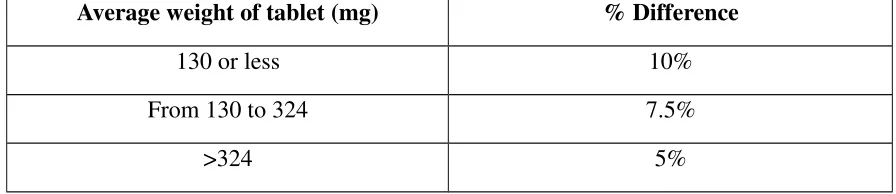
• Hardness uniformity • Uniformity of thickness • Friability test
• Weight uniformity test • Drug content uniformity • Wetting time
• In vitro dispersion time • In vitro disintegration time
• In vitro dissolution studies
LIST OF EQUIPMENTS:
Table 8: List of equipments
Equipments Manufacturer
Electronic balance Mettler-Toledo, USA
Bulk density apparatus Electrolab, Mumbai
Rapid Mixer Granulator (RMG) Anchor Mark Pvt. Ltd.
Rotary Tablet punching machine Rimek, Mumbai
Friability test apparatus Electrolab, Mumbai
Tablet dissolution apparatus Electrolab, Mumbai
Disintegration apparatus Electrolab, Mumbai
Helium lamp (LOD) Mettler-Toledo
Thickness (Vernier Calipers) Mitutogo Vernier Calipers
Environmental Chambers Thermolab
Hot air oven Eltek motors, Mumbai
High performance liquid chromatography
(HPLC) Waters, Hyderabad
Sieves Jayanth test sieves, Mumbai
Hardness tester Dr.Schleuniger pharmatron USA
Fluidized bed drier Anchor Mark Pvt. Ltd.
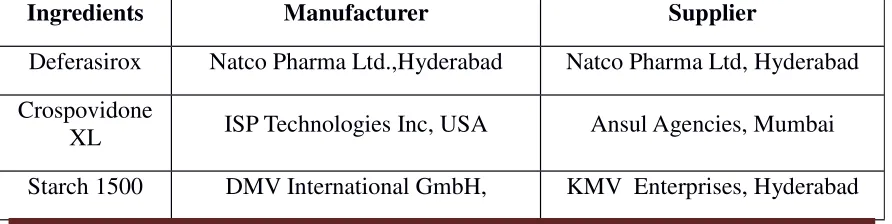
LIST OF CHEMICALS: Table no:9
Ingredients Manufacturer Supplier
Deferasirox Natco Pharma Ltd.,Hyderabad Natco Pharma Ltd, Hyderabad
Crospovidone
XL ISP Technologies Inc, USA Ansul Agencies, Mumbai
Netherlands
MCC pH 101 FMC Biopolymer, USA Signet Chemical Corporation, Mumbai
MCC pH102 FMC Biopolymer, USA Signet Chemical Corporation, Mumbai
SLS Merck limited, Mumbai Vasco Scientifics Pvt. Ltd., Secunderabad
Povidone K30 ISP Technologies Inc, USA Signet Chemical Corporation, Mumbai
Aerosil Mayur Chemicals, Mumbai Mayur Chemicals, Mumbai
Magnesium
stearate Ferro Industries Quimica, Portugal
Signet Chemical Corporation, Mumbai
SSG JRS Pharma, Germany KMV Enterprises, Hyderabad
Tween 80 Merck limited, Mumbai Vasco Scientifics Pvt. Ltd., Secunderabad
SSF JRS Pharma, Germany Merck chemicals, Mumbai
Talc Luzenac Valchisone, Italy Signet Chemical Corporation, Mumbai
L-HPC-LH11 DMV International GmbH,
Netherlands KMV Enterprises, Hyderabad
Lactose Monohydrate
DMV International GmbH,
Netherlands KMV Enterprises, Hyderabad
Sucralose M.B.Sugars & Pharmaceuticals Limited, Maharastra
Signet Chemical Corporation, Mumbai
DRUG PROFILE
DEFERASIROX:
Category: Iron chelator
Molecular formula: C21H15N3O4
Molecular weight: 373.4
Structural formula:
Chemical name: 4-[3, 4-Bis (2-hydroxyphenyl)-1H-1, 2, 4-triazol-1yl]-benzoic acid
Description: Deferasirox is a white to slightly yellow powder that is freely soluble in
dimethyl formamide and dimethyl sulfoxide, slightly soluble in methanol, practically
insoluble in water.
Indication: Deferasirox is indicated in for the treatment of Chronic Iron Overload due to
blood transfusions in adult and pediatric patients (aged 2 years and over).
Mechanism of action:
Deferasirox mobilize tissue iron by forming soluble, stable complexes that are then
excreted in the feces. It is a tridentate iron chelator requiring two molecules of the drug to
cells) as well as various parenchymal tissues. The chelated iron is cleared by the liver and
excreted through bile. It also has the ability to prevent myocardial cell iron uptake,
remove iron directly from myocardial cells. In fact, ICL 670 readily yields iron to DFO.
In animal models, on molar basis, it has been shown to be 5 times more potent than DFO
and ten times more potent than Deferiprone. Iron removal also depends on plasma
concentration, host factors, degree of loading and rate of accessibility of accumulation
iron to chelator.
Pharmacodynamics:
Pharmacodynamic effects tested in an iron balance metabolic study showed that
Deferasirox (10, 20 and 40 mg/kg per day) was able to induce a mean net iron excretion
(0.119, 0.329 and 0.445 mg Fe/kg body weight per day, respectively) within the clinically
relevant range (0.1-0.5 mg/kg per day). Iron excretion was predominantly fecal.
Pharmacokinetics:
ABSORPTION:
Deferasirox is absorbed following oral administration with median times to maximum
plasma concentration (Tmax) of about 1.5-4 hours. The Cmax and AUC of Deferasirox
increase linearly with dose after both single administration and under steady state
conditions. Exposure to Deferasirox increased by an accumulation factor of 1.3-2.3 after
multiple doses. The absolute bioavailability of Deferasirox tablets for oral suspension is
70% compared to an intravenous dose. The bioavailability was variably increased when
taken with a meal.
DISTRIBUTION:
It is highly protein bound (~99%) almost exclusively to serum albumin. The percentage
of Deferasirox confined to the blood cells was 5% in humans. The volume of distribution
at steady state (Vss) of Deferasirox is 14.37 ±2.69 L in adults.
Glucouronidation is the main pathway with subsequent bilary excretion. Deconjugation
of glucouronides in the intestine and subsequent reabsorption is likely to occur. The drug
is mainly glucouronidated by UGT1A1 and to a lesser extent by UGT1A3.
CYP450-catalysed metabolism of Deferasirox appears to be minor in humans (about 8%).
Deconjugation of glucouronides in the intestine was confirmed in a clinical study in
which the administration of cholestyramine 12g daily twice (strongly binds to
Deferasirox and its conjugates) 4 and 10 hours after administration after a single dose of
Deferasirox resulted in a 45% decrease exposure (AUC) by interfering with the
enterohepatic cycling of the drug.mai
EXCRETION:
Deferasirox and its metabolites are primarily excreted in the feces (~84%). Renal
excretion of Deferasirox and metabolites is minimal (8% of the administered dose). The
mean elimination half life ranged from 8-16 hours following oral administration.
Dosage and administration:
Recommended initial daily dose is 20mg/kg body weight.
Maintenance daily dose to be adjusted if necessary every 3 to 6 months based on serum
ferritin trends.
Maximum daily dose is 30mg/kg body weight.
Deferasirox must be taken once daily on an empty stomach at least 30 mins before food.
Deferasirox tablets are dispersed by stirring in a glass of water or apple or orange juice
[100-200ml] until affine suspension is obtained.
Contraindication:
Deferasirox is contraindicated in patients with:
Creatinine clearance <40ml/min or serum creatinine > 2 times the age appropriate upper
Poor performance status and high-risk myelodysplastic syndromes or advanced
malignancies.
Platelet counts < 50x 1000000000/l
Hypersensitivity to Deferasirox or to any of the excipients.
Drug interactions:
The concomitant administration of Deferasirox and aluminum containing antacid
preparations has not been formally studied. Although Deferasirox has a lower affinity for
aluminum than iron, do not administer Deferasirox with aluminum containing antacid
preparations.
Deferasirox is contraindicated in people already taking iron chelator due to an increased
risk of toxicity.
Side effects:
Deferasirox has a manageable side effect profile and when patients do experience side
effects, they are generally mild to moderate and transient.
Gastrointestinal disturbances (mainly nausea, vomiting, diarrhea or abdominal pain)
occurred in approximately 26% of patients in clinical trials. Diarrhea was reported more
often in pediatric patients aged 2-5 years than in older children and adults.
Rare cases of anaphylaxis and angiodema have been reported.
Skin rash was seen in 7% of the patients and was mostly mild to moderate and generally
transient.
As with other iron chelator therapy, high frequency hearing loss and early cataracts have
been uncommonly observed.
Warnings:
It should also not be dispersed in carbonated drinks or milk due to foaming and slow
dispersion.
It should not be combined with other iron chelator therapies as the safety of such
combinations has not been established.
Renal, hepatic failures and gastrointestinal hemorrhage.
Risks and precautions:
Some reports have been reported of kidney impairment associated with Deferasirox use.
Could cause cytopenia.
Liver failure, sometimes leads to death, has been reported during treatment of people
with pre existing severe liver damage such as cirrhosis.
Thus tests which determine these functions during this treatment must be carried out.
Dizziness while using Deferasirox, so care should be taken while engaging in activities
requiring alertness such as driving or using machinery.
Storage:
Store at room temperature at 77 F (25 C), away from light and moisture. Brief storage
between 59-86 F (15-30 C) is permitted. Keep away from children and pets.
Uses:
The medication is used to treat ongoing high levels of iron in the body caused by multiple
blood transfusions. Frequent blood transfusions are needed in certain types of blood
diseases. Blood transfusions have very helpful benefits, but they can cause the body to
hold onto too much iron. The extra iron can build up in various organs and cause
problems such as heart failure, liver disease and diabetes. Getting rid of extra iron can
EXCIPIENT PROFILE
LACTOSE, MONOHYDRATE:
Nonproprietary name: Lactose
Synonym: Capsulac, Lactochem, Tablettose.
Chemical name: O-β-D-Galactopyranosyl-(1,4)-α-D-glucopyranose monohydrate.
Empirical name: C12H22O11.H2O
Molecular weight: 360.31
Functional category: dry powder inhaler carrier, lyophilization aid, tablet binder, tablet
and capsule diluents and tablet and capsule filler.
Description: In the solid state, lactose appears as various isomeric forms, depending on
the crystallization and drying conditions. Lactose occurs as white to off white crystalline
powder or particles. Lactose id odorless and slightly sweet tasting; α-lactose is
approximately 20% as sweet as sucrose, while β-lactose is 40% as sweet.
Solubility: practically insoluble in chloroform, ethanol and water (1 in 5.24, 1 in 3.05 at
40 C, 1 in 2.30 at 50 C, 1 in 1.71 at 60 C. 1 in 0.96 at 80 C)
Stability and storage conditions: mould growth may occur under humid conditions.
Lactose may develop a brown color on storage, the reaction being accelerated by warm,
damp conditions. It should be stored in a well closed container in a cool, dry place.
Incompatibilities: a maillard type condensation reaction is likely to occur between
lactose and compounds with a primary amine group to form brown or yellow brown
Applications: lactose is widely used as filler and diluents in tablets and capsules, and to a
more limited extent in lyophilized products and infant formulas. Lactose is also used as a
diluents in dry powder inhalations.
Related substances: lactose, anhydrous; lactose, inhalation; monohydrate and corn
starch.
CROSPOVIDONE:
Nonproprietary name: Crospovidone.
Synonyms: crospovidonum; polyplasdone XL; polyvinyl polypyrrolidone.
Chemical name: 1-Ethenyl-2-pyrrolidone homopolymer
Empirical formula: (C6H9NO) n
Molecular weight: >1, 000, 000
Functional category:tablet disintegrants
Description: Crospovidone is a white to creamy-white, finely divided, free flowing,
practically tasteless, odorless or nearly odorless, hygroscopic powder.
Solubility: practically insoluble in water and most common organic solvents.
Stability and storage conditions: since Crospovidone is hygroscopic, it should be stored
in airtight container in a cool and dry place.
Incompatibilities: Crospovidone is compatible with most organic and inorganic
pharmaceutical ingredients. When exposed to a high water level, Crospovidone may form
molecular adducts with some materials.
Applications: Crospovidone is a water insoluble tablet disintegrants and dissolution
agent used at 2-5% concentration in tablets prepared by direct compression or wet and
dry granulation methods. It can also be used as a solubility enhancer.
STARCH:
Nonproprietary name: pregelatinised starch.
Synonyms: compressible starch, Lycatab C, starch 1500 G, Tablitz.
Chemical name: pregelatinised starch.
Empirical formula: (C6H10O5)n where n=300-1000
Functional category: tablet and capsule diluents, tablet and capsule disintegrants, tablet
binder.
Description: pregelatinised starch occurs as a moderately coarse to fine, white to off
white color powder. It is odorless and has a slight characteristic taste. Examination of
fully pregelatinised starch as a slurry in cold water, under a polarizing microscope,
reveals no significant ungelatinised granules, i.e., no ‘maltese crosses’ characteristic of
the starch birefringence pattern.
Solubility: practically insoluble in organic solvents. Slightly soluble to soluble in cold
water, depending on the degree of pregelatinisation. Pastes can be prepared by sifting the
pregelatinised starch into stirred, cold water. Cold water soluble matter for partially
pregelatinised starch is 10-20%.
Stability and storage conditions: pregelatinised starch is a stable but hygroscopic
material, which should be stored in a well closed container in a cool dry place.
Related substances: corn starch and pregelatinised starch; starch, sterilizable maize.
Applications: partially pregelatinised starch is a modified starch used in oral capsule and
tablet formulations as a binder, diluents and disintegrants. Both partially and fully
pregelatinised starch may also be used in wet granulation processes. Fully pregelatinised
MICROCRYSTALLINE CELLULOSE:
Nonproprietary name: microcrystalline cellulose.
Synonyms: Avicel PH; Celex; crystalline cellulose; emcocel; tabulose.
Chemical name: cellulose.
Empirical formula: C6H10O5)n where n~220
Molecular weight: ~36000
Functional category: adsorbent; suspending agent; tablet and capsule diluents; tablet
disintegrant.
Description: microcrystalline cellulose is a purified, partially depolymerized cellulose
that occurs as a white, odorless, tasteless, crystalline powder composed of porous
particle. It is commercially available in different particle sizes and moisture grades that
have different properties and applications.
Solubility: slightly soluble in 5% w/v sodium hydroxide solution; practically insoluble in
water, dilute acids and most organic solvents.
Stability and storage conditions: microcrystalline cellulose is a stable through
hygroscopic material. The bulk material should be stored in a well closed container in a
cool, dry place.
Incompatibilities: microcrystalline cellulose is incompatible with strong oxidizing
agents.
Applications: it is widely used in pharmaceuticals primarily as a diluents/binder in oral
compression processes. It also has some lubricant and disintegrants properties that make
it useful in tabletting. It is also used in cosmetics and food products.
Related substances: microcrystalline cellulose and carrageenan; microcrystalline
cellulose and carboxy methyl cellulose sodium; microcrystalline cellulose and guar gum;
powdered cellulose.
SODIUM LAURYL SULFATE:
Nonproprietary name: sodium lauryl sulfate
Synonyms: dodecyl alcohol hydrogen sulfate, sodium salt; dodecyl sodium sulfate;
sodium monolauryl sulfate.
Chemical name: sulfuric acid monododecyl ester sodium salt (1:1)
Empirical formula: C12H25NaO4S
Molecular weight: 288.38
Functional category: anionic surfactant; detergent; emulsifying agent; skin penetrant;
tablet and capsule lubricant; wetting agent.
Description: SLS consists of a white or cream to pale yellow colored crystals, flakes or
powder having a smooth feel, a soapy, bitter taste and a faint odor of fatty substances.
Solubility: freely soluble in water giving an opalescent solution; practically insoluble in
chloroform and ether.
Stability and storage conditions: sodium lauryl sulfate is stable under normal storage
conditions. However, in solution, under extreme conditions, i.e., pH 2.5 or below, it
undergoes hydrolysis to lauryl alcohol and sodium bisulfate. The bulk material should be
stored in a well closed container away from strong oxidizing agents in a cool and dry
Incompati