City, University of London Institutional Repository
Citation
:
Hawe, G.I., Coates, G., Wilson, D.T. & Crouch, R.S. (2012). Agent-based
simulation for large-scale emergency response: A survey of usage and implementation. ACM
Computing Surveys, 45(1), doi: 10.1145/2379776.2379784
This is the accepted version of the paper.
This version of the publication may differ from the final published
version.
Permanent repository link: http://openaccess.city.ac.uk/14438/
Link to published version
:
http://dx.doi.org/10.1145/2379776.2379784
Copyright and reuse:
City Research Online aims to make research
outputs of City, University of London available to a wider audience.
Copyright and Moral Rights remain with the author(s) and/or copyright
holders. URLs from City Research Online may be freely distributed and
linked to.
City Research Online:
http://openaccess.city.ac.uk/
[email protected]
Deposited in DRO:
18 June 2015
Version of attached le:
Accepted Version
Peer-review status of attached le:
Peer-reviewed
Citation for published item:
Hawe, G.I. and Coates, G. and Wilson, D.T. and Crouch, R.S. (2012) 'Agent-based simulation for large-scale emergency response: a survey of usage and implementation.', ACM computing surveys., 45 (1). p. 8.
Further information on publisher's website:
http://dx.doi.org/10.1145/2379776.2379784 Publisher's copyright statement:
c
2012 ACM. This is the author's version of the work. It is posted here by permission of ACM for your personal use. Not for redistribution. The denitive version was published in ACM Computing Surveys (45, 1, November 2012), Article No. 8, http://doi.acm.org/10.1145/2379776.2379784
Additional information:
Use policy
The full-text may be used and/or reproduced, and given to third parties in any format or medium, without prior permission or charge, for personal research or study, educational, or not-for-prot purposes provided that:
• a full bibliographic reference is made to the original source
• alinkis made to the metadata record in DRO
• the full-text is not changed in any way
The full-text must not be sold in any format or medium without the formal permission of the copyright holders. Please consult thefull DRO policyfor further details.
Durham University Library, Stockton Road, Durham DH1 3LY, United Kingdom Tel : +44 (0)191 334 3042 | Fax : +44 (0)191 334 2971
Response: A Survey of Usage and Implementation
GLENN I. HAWE, GRAHAM COATES, DUNCAN T. WILSON and ROGER S. CROUCH Durham University, England
When attempting to determine how to respond optimally to a large-scale emergency, the ability
to predict the consequences of certain courses of actionin silico is of great utility. Agent-based
simulations (ABSs) have become thede factotool for this purpose, however they may be used and
implemented in a variety of ways. This paper reviews existing implementations of ABSs for large-scale emergency response, and presents a taxonomy classifying them by usage. Opportunities for improving ABS for large-scale emergency response are identified.
Categories and Subject Descriptors: I.6.1 [Simulation and Modeling]: Simulation Theory—
Model classification; I.2.11 [Artificial Intelligence]: Distributed Artificial Intelligence— Intelli-gent aIntelli-gents;Multiagent systems
General Terms: Design
Additional Key Words and Phrases: Agent-based simulation, Emergency response
1. INTRODUCTION
1.1 Emergency Response and Preparedness
Multiple objectives may be used to define how to best respond to an emergency [Narzisi et al. 2006]. For example, in the U.K., the ‘Concept of Operations’ (ConOps) [U.K. Cabinet Office 2010b] lists thirteen general objectives for those in-volved in emergency response. High-level and qualitative, these include goals such as ‘saving and protecting human life’, ‘relieving suffering’ and ‘protecting property’. Due to the potential for conflict, the ‘Utopian’ response, which simultaneously op-timizes all objectives, does not necessarily exist. Consequently, Pareto-optimal trade-offs are the best that one can theoretically attain [Sawaragi et al. 1985]. The quandary of how to trade the objectives against one another [Branke et al. 2004] is complicated by the fact that “their relative priority may shift as the emergency develops” [U.K. Cabinet Office 2010b]. In the U.K., government ministers “advise on the appropriate balance to strike in light of the circumstances” [U.K. Cabinet Office 2010b].
Practically however, issues associated with emergencies such as time-constraints and uncertainty, mean that usually even these trade-offs are unachievable. The
Authors’ address: School of Engineering and Computing Sciences, Durham University, England DH1 3LE.
Permission to make digital/hard copy of all or part of this material without fee for personal or classroom use provided that the copies are not made or distributed for profit or commercial advantage, the ACM copyright/server notice, the title of the publication, and its date appear, and notice is given that copying is by permission of the ACM, Inc. To copy otherwise, to republish, to post on servers, or to redistribute to lists requires prior specific permission and/or a fee.
c
Preparedness
Response Recovery
[image:4.612.256.354.114.202.2]Mitigation
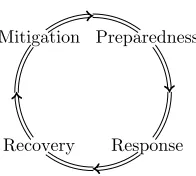
Fig. 1. The emergency management cycle.
response is the actions taken to: (1) avert animminent emergency1, mitigate its effects, prevent further damage, secure the scene, and address the immediate de-structive effects of an incident (crisis management), and (2) prevent the impact from escalating (consequence management) [U.K. Cabinet Office 2010b]. These ac-tions are precipitated by the bottom-up decision-making of the individuals involved, and the (often) top-down instructions which govern their coordination2, neither of which are easily optimized: as Stirling [2003] says, “no realistic decision making problem can account for all logically possible options”. This is especially the case in immediate impact emergencies [London Resilience Team 2010] (such as trans-portation accidents and terrorist attacks), which occur with little or no warning, and thus have limited time for options to be considered.
At the operational level, even the premise of having well defined objectives may be a luxury during an emergency. Introducing the concept of ‘flexecution’, the flexible execution of plans whereby ill-defined goals are discovered and refined as they are pursued, Klein [2007a] explains that “firefighters must handle emergent goals in the sense of managing goal conflicts but also revising goals depending on the progress they make”. Despite having changing, conflicting and emerging goals, an analysis of 69 incidents which the London Fire Brigade responded to found thatnot once was more than one alternative course of action considered by the incident commanders at any of the key decision points [Burke and Hendry 1997]. This is indicative of
naturalistic decision making [Klein 2008], a description of how humans actually makesatisficing[Simon 1957] decisions in demanding situations3. Whilst implying that ‘optimal response’ is an oxymoron, this satisficing (rather than optimizing) nature of human decision making “should not change the standard that is sought. Indeed, failure to achieve the standard should serve as motivation to improve the ability to perform, rather than a rationale for lowering the standards” [Stirling 2003].
1This is particularly relevant for ‘rising tide’ [London Resilience Team 2010] emergencies with
long ‘lead-in’ times, such as flooding and health pandemics. Recent examples of responses to
such emergencies include the evacuation of coastal areas in Hawaii in response to a tsunami threat [Reuters 2011], and the opening of floodgates in Louisiana to avert the potential flooding
of New Orleans “in a disaster that would have been much worse than Hurricane Katrina in
2005” [USA Today 2011].
2In the U.K., the principle ofsubsidiaritystates how these bottom-up and top-down forces should
coexist: decision-making takes place at the lowest possible level, whilst coordination occurs at the highest necessary level [U.K. Cabinet Office 2010b].
-2 -1 0 1 2 3
0 1 2 3 4
Log
10
(Geographic
exten
t
(km
2))
Log10(Number of affected individuals)
Small Medium
Large
Enormous Gargantuan
(a)
Single scene Cross-force Regional coverage Cross-region National coverage
Local responses
Significant Serious
Catastrophic
Geographic
spread
[image:5.612.126.482.121.220.2]Impact (b)
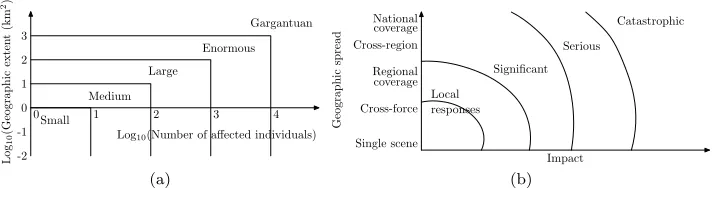
Fig. 2. Classification of emergencies using (a) Gad-el-Hak’s Classification of Disaster Severity and (b) the U.K. Concept of Operations.
Activities which improve the ability to perform in response occur during pre-paredness, the phase of the emergency management cycle [Haddow et al. 2010] which immediately precedes response. Recovery, the fourth phase, follows response and feeds back into mitigation, the first phase, as shown in Figure 1. In the U.S., the Federal Emergency Management Agency (FEMA) National Preparedness Guide-lines [FEMA 2007] describes preparedness as a cycle of planning; organizing and staffing; equipping; training; and exercising, evaluating and improving. Prepared-ness may even go beyond what is anticipated; for example, it may include tools for supporting improvisation [Mendon¸ca and Fiedrich 2006; Mendon¸ca 2007]. Work remains to be done however: for example, in his discussion of flexecution, Klein [2007b] notes “We must develop new tools and support concepts to enable people to simultaneously define and pursue goals”.
Finally, we point out that some things may affect the efficacy of a response which are simply down to luck. For example, paragraph 153 of the coroner’s inquest into the London bombings in July 2005 (‘7/7’) notes that “. . . amongst the tragedy on 7/7, there were two fortuitous events. First, . . . London’s Air Ambulance was hold-ing a clinical governance day. This enabled them to deploy a total of 27 physicians and paramedics across the four bomb scenes. Second, the explosion on the No. 30 bus occurred outside the British Medical Association building. This allowed many physicians to aid the victims of the attack.” [Hallet 2011]. Whilst welcome, such good fortune should of course not be allowed to conceal any deficiencies in pre-paredness.
1.2 Large-Scale Emergencies
1.2.1 Defining ‘large-scale’. Emergencies may be classified along many differ-ent dimensions, such as number of casualties, size of geographical area affected, duration, and cause. Different scales make use of different dimensions, according to their purpose. Examples include Berren’s five dimensional classification [Berren et al. 1980], de Boer’s disaster severity scale [de Boer 1990], Fischer’s sociological disaster scale [Fischer III 2003] and Gad-el-Hak’s classification of disaster sever-ity [Gad-El-Hak 2009], which is illustrated in Figure 2(a).
these are the two dimensions used by Gad-El-Hak [2009], with ‘impact’ being the number of individuals displaced, injured or killed. They are also the dimensions used in the U.K. ConOps [U.K. Cabinet Office 2010b], where an emergency is classi-fied as ‘significant’, ‘serious’ or ‘catastrophic’, depending on its geographical extent and ‘impact’ (two further categories are used for smaller emergencies which require only a local response). The 2005 7/7 London bombings (in which there were 56 fatalities and approximately 700 injuries), the 2007 U.K. floods (in which there were 13 fatalities and tens of thousands adversely affected), and the 2009 H1N1 flu pandemic (which lead to approximately 300 fatalities in the U.K., and hundreds of thousands infected) are all categorized as ‘serious’, leaving us to deduce that the generic ‘impact’ dimension is more likely to refer to the number of fatalities, than to the number of injured or adversely affected (which, across these three emergen-cies, varies by several orders of magnitude). The U.K. ConOps classification of emergencies is illustrated in Figure 2(b).
The two classifications in Figure 2 differ in at least two ways. First, in the ConOps classification, an emergency cannot be classified in either of the two most severe categories as a consequence of its geographical extent alone: a minimum level of impact is required as well. This is in contrast to Gad-el-Hak’s classifica-tion, where geographic extent alone is sufficient. Secondly, as already discussed, in the ConOps classification, ‘impact’ seems to refer to the number of fatalities; Gad-el-Hak’s ‘impact’ is measured by the number of individuals adversely affected. Nevertheless, the two classifications share some common fundamental features. In particular, both:
(1) classify an emergency by its geographical extent and a measure of its ‘impact’, (2) have five categories of emergency, and
(3) both follow the general pattern that going to the top right of the scale increases the severity of the emergency.
Because of this concordance with practitioner usage (in the U.K. at least), we use Gad-el-Hak’s classification to set lower limits on what is meant by ‘large-scale’, and thus set the scope of emergencies which will be considered in this paper. Thus, in this paper, a large-scale emergency is one whicheither affects an area of at least 10 km2 in size,or affects at least 100 individuals,or both. Furthermore, we consider any emergency larger than this still as large-scale, i. e. we do not concern ourselves with whether or not an emergency is ‘enormous’ or ‘gargantuan’ (or ‘serious’ or ‘catastrophic’).
1.2.2 Triggers of large-scale emergencies. As well as the scale, the cause4 of the emergency determines to a large extent the response required. As Dombrowsky [1995] states: “For the state, the breakdown of public order and safety is the key, not the phenomena itemized. However, the specification of possible disasters is required because of the need for an appropriate selection of countermeasures to reestablish public order and safety. . . . The trigger determines the measure; thus, riots the
4The distinction between what is being responded to (the ‘disaster’ or ‘emergency’), and what
triggered it, is captured by Dombrowsky [1995]:“Disasters do not cause effects. The effects are
use of the National Guard; epidemics, the General Surgeon; terrorism, the Special Forces and Bomb squads. . . . The type of phenomenon is only the key for the use of the appropriate tool box.”
For example, in the U.S., FEMA [FEMA 2011] list seventeen types of emergency:
Chemical emergencies; Dam failure; Earthquake; Fire or wildfire; Flood; Hazardous material; Heat; Hurricane; Landslide; Nuclear power plant emergency; Terrorism; Thunderstorm; Tornado; Tsunami; Volcano; Wildfire; and Winter storms. In the U.K., the Cabinet Office [U.K. Cabinet Office 2010a] list fourteen types of emer-gency, arranged into three different groups: Natural events: Severe weather; Coastal flooding; Inland flooding; Pandemic human disease; Non-pandemic human disease; Animal disease. Major accidents: Major industrial accidents; Ma-jor transport accidents. Malicious attacks: Attacks on crowded place; Attacks on critical infrastructure; Attacks on transport systems; Non-conventional attacks; Cyber-attacks (data confidentiality); Cyber-attacks (infrastructure). Each type of event has its own (location dependant) probability and impact associated with it. Together, these determine the overall risk it poses, and thus influence the amount of preparedness it attracts [FEMA 2007]. For example, in the U.K., the National Risk Register [U.K. Cabinet Office 2010a] plots the relative likelihood and impact of these fourteen types of emergency (at national level), and community risk registers refine these values at county level.
1.3 The Simulation of Large-Scale Emergency Response
Macal 2007]. Benefits of ABS include [Bonabeau 2002]: ABS captures emergent phenomena; ABS provides a natural description of a system; ABS is flexible. Emer-gency response satisfies the criteria for when it is suitable to use ABS [North and Macal 2007]. Many emergencies may involve the presence of crowds, e. g. [Samuel-son et al. 2008; O˘guz et al. 2010]. In their discussion of tools for responding to large-scale emergencies, Lin and Manocha [2010] state that crowds “are vital ele-ments to model in a virtual environment”. In their review of simulation tools for crowd behaviours, Challenger et al. [2009a] conclude “The most realistic simulation tools currently available on the market comprise agent-based models, and are pop-ulated by intelligent, autonomous agents, capable of making independent decisions and reacting to environmental conditions.”
1.3.2 Applications of computer simulation. The appropriateness of computer simulation for emergency response and preparedness may be seen by observing its two major categories of usage [ ¨Oren and Longo 2008]:
(1) To provide experience for three types of training and entertainment: (a) by using virtual equipment (to enhance motor skills)
(b) by gaming simulation (to enhance decision making skills)
(c) by a mixture of real system and simulation (to enhance operational skills) (2) To perform experiments, including for education, understanding and decision
support.
For example, as part of their ‘Integrated Emergency Response Framework’, Jain and McLean [2003] identify the following five possible applications of computer simulation for the emergency response and preparedness domain:
Planning. Determining the impact of a disaster event, and the most appropriate ways in which to prepare and respond.
Vulnerability Analysis. Evaluating and assessing existing emergency response strate-gies to hypothetical emergencies.
Identification and Detection. Determining the possibility of a particular emer-gency occurring.
Training. Training emergency services personnel for handling emergencies through interactive simulations.
Real-time Response Support. Determining alternative response strategies, based on current knowledge of an unfolding emergency situation.
As the idealized use of computer simulation for emergency response and prepared-ness requires multiple phenomena to be modelled at the same time (for example, a fire simulation, a traffic simulation and a crowd simulation may all be required), Jain and McLean [2003] emphasize the need for a set of standards to allow different simulators to be integrated together.
1.4 Remainder of this Paper
In Section 2, we provide a description of agent-based simulation (ABS), beginning with terminology. After discussing the essential components of an ABS, and con-cepts pertinent to its application to large-scale emergency response, a brief overview of the two main toolkits, JADE and Repast, is given. Constructing an ABS for any application requires making design decisions. For example, the abstract concepts relating to agent architecture need to be made concrete. Also a realistic virtual environment needs to be constructed, such that the environmental state that each agent observes is sufficiently detailed for its purpose. This paper reviews how de-sign decisions such as these have been made to date in the context of simulating large-scale emergency response. In Section 3.1, we begin by reviewing the different ways in which ABSs are used for large-scale emergency response, and propose a taxonomy classifying existing ABSs by usage. Validation and verification methods are also discussed. Sections 3.2 - 3.4 then review implementation details of ABSs for large-scale emergency response. Design decisions relating to the environment (Section 3.2), the agents (Section 3.3), and the large-scale nature of the problem (Section 3.4) are each reviewed. Section 4 concludes the paper with a summary, including future research directions regarding the use and implementation of ABS for large-scale emergency response.
2. AGENT-BASED SIMULATION
2.1 Terminology
We begin by acknowledging that what is now to be discussed (and is referred to as ‘agent-based simulation’ in this paper) suffers from ambiguous terminology [Hare and Deadman 2004]. In their review of ‘agent based modeling toolkits’, Nikolai and Madey [2009b] note the “conflicting use of terms in different domains”, with ‘agent’5, ‘agent-based’ and ‘multi-agent’ having the most inconsistent usage. Even focussing on a single application area does not help a consensus be reached how-ever, withmulti-agent system [Gonzalez 2009a],multi-agent simulation [Massaguer et al. 2006],multi-agent simulation system [Takeuchi 2005] andagent-based simula-tion [Schoenharl et al. 2009] being just some of the terms employed in the context of large-scale emergency response, with no apparent pattern to their usage.
Attempts have been made to distinguish between such terms on different grounds. For example, Nikolai and Madey [2009b] used heterogeneity to make the distinc-tion: an agent-based system is described as “a system capable of modeling a large number of fairly homogenous agents”, whilst a multi-agent system is “a smaller system of heterogeneous agents equipped with artificial intelligence”. Epstein and Axtell [1996] on the other hand describe the population of anagent-based model as ‘heterogeneous’, consisting as it does of “distinct agents, each with its own geneti-cally and culturally transmitted traits (attributes and rules of behavior)”. As well as heterogeneity, the emphasis in this definition is on ‘distinct’: there is noaggregation
in agent-based models. Heterogeneity and lack of aggregation also form part of the emphasis in definitions ofindividual based models, a term which appears to be
domi-5The issue of what is meant by ‘agent’ is a perennial debate [Franklin and Graesser 1997; Drogoul
nant within the ecological modelling community. Due to its ‘fuzzy’ usage in the mid 1990s [Grimm and Railsback 2005], four biologically important criteria were pro-posed by Uchm´anski and Grimm [1996] to distinguish individual based models from other ‘individual-oriented’ models, namely: (1) the degree to which the complexity of an individual’s life cycle is reflected in the model; (2) explicit representation of the usage of resources by individuals; (3) discreteness (individuals are discrete, and thus population size is an integer); (4) heterogeneity among individuals. As well as heterogeneity and individuality, the emphasis placed oninteractions has also been used to distinguish between terms. Sun [2006] describes a multi-agent system as “a community of autonomous entities each of which perceives, decides, and acts on its own, in accordance with its own interest, but may also cooperate with others to achieve common goals and objectives”, and states that agent-based social simula-tions “focus upon the interactions among agents”. Hare and Deadman [2004] also use the importance attached to modelling interactions (as opposed to modelling cognitive ability), and place various definitions in the literature on a “continuum according to the types of interaction modelled”, withagent-based modelling appear-ing towards one end of the scale andmulti-agent simulationappearing towards the other. The growing interest in including agents with cognitive ability in agent-based social simulations [Sun 2006; Gilbert 2006] however means that determining whether their focus is on modelling interactions or on modelling cognitive ability is difficult, as evidenced by two definitions of this term appearing in very different positions on the scale.
In this paper we shall follow Hare and Deadman [2004], and use ‘agent-based simulation’ (ABS) as an umbrella term, coveringmost papers which describe them-selves using terms such as those above, but not all. As minimum requirements of an ABS, we refer to Epstein and Axtell [1996], who identify “three basic ingredients: agents, an environment or space, and rules”. This is in concordance with Macal and North [2010], who state that “a typical agent-based model has three elements”: (1) A set ofagents, their attributes and behaviours.
(2) A set of agentrelationshipsand methods ofinteraction: an underlying topology of connectedness defines how and with whom agents interact.
(3) The agents’environment: agents interact with their environment in addition to other agents.
We stress at this point that the agents and environment are both virtual, so that by ‘ABS’ we mean software which runs on a desktop machine or supercomputer. This then precludes work such as [da Silva et al. 2008], which although uses a ‘multi-agent system’ for emergency response, does so through pervasive computing: agents arereal-world decision making entities which exist in thereal environment. Such work may be agent-based, but it is beyond the scope of this paper.
Furthermore, using the definition of ‘large-scale’ in Section 1.2, we restrict our-selves to ABSs which:
Agent
action action(next(i,sense(e, m))) sense
m
next
state
i
sense(e, m)
next(i,sense(e, m))
e Environment
(including
[image:11.612.126.490.108.240.2]other agents)
Fig. 3. An abstract agent with state, and its environment, adapted from [Wooldridge 2009].
28 agents from a single building), as the scenarios they simulate do not satisfy our notion of large-scale.
We now discuss briefly the central concepts of ABS, italicized in (1)-(4) above, in the context of simulating large-scale emergency response.
2.2 Agents
Perhaps the only trait common to every definition of an agent is autonomy [Wooldridge 2009]. An agent exercises its autonomy through actions in the environment in which it is situated. If the agent is intelligent [Wooldridge and Jennings 1995], then these actions are both proactive (initiated by the agent in order to achieve some goal) and reactive (in response to changes in the environment). Furthermore, communication between agents may also take place in order to achieve shared goals.
Figure 3, adapted from Wooldridge [2009], shows an abstract agent with an internal state, interacting with its environment, and with other agents situated within this environment. The internal state is updated via percepts, and used to determine which action to perform, via the following functions:
sense: E×M →P er. The agent observes its environmental stateeand receives zero or more message(s)mfrom other agents, and generates a perceptsense(e,m).
Eis the set of all possible environmental states,M is the set of all possible messages, andP er is the set of all possible percepts.
next: I×P er→I. The internal state i of the agent is updated via the next
function, being set to next(i,sense(e,m)). I is the set of all possible internal states, andP eris as before.
action: I→Ac. Theaction function programmatically represents agent be-haviour. It selects and returns6 an action, action(next(i,sense(e,m))), which is a member of Ac, the set of all possible actions available to the agent (which may include sending messages to other agents).
6Note that the return type of this function shares the same name as the function itself,viz. ‘action’.
To avoid equivocation, in this paper, when written intypewritertypeface, ‘action’ refers to the
function which algorithmically represents behaviour. This returns an ‘action’ (Roman typeface),
an element of the setAc which the agent performs. Specific actions, however, are themselves
written intypewritertypeface. So, for example, we may refer to amoveaction, returned by an
Whilst this description of an agent is quite common within the multi-agent sys-tems community, it also covers the characteristics deemedessential7 in the agent-based modelling community, namely [Macal and North 2010]:
(1) An agent is aself-contained, modular, and uniquely identifiable individual. (2) An agent isautonomous and self-directed. It hasbehaviours that relate
infor-mation sensed by the agent to its decisions and actions. An agent’s inforinfor-mation comes through interactions with other agents and with the environment. (3) An agent has a state that varies over time. An agent’s behaviours are
condi-tioned on its state.
(4) An agent issocialhaving dynamic interactions with other agents that influence its behaviour.
Given the application domain of large-scale emergency response, it is natural to consider an individual agent as representing one of the human individuals involved, typically either a civilian or rescuer. More generally however, agents are used to represent non-human entities as well: for example, vehicles and buildings have also been modelled as agents. Different implementations of agents for large-scale emergency response are reviewed in Section 3.3.
2.3 Environment
In the context of large-scale emergency response, the virtual environment in which the agents are situated represents a geographical area, which may be real or ficti-tious. Recall that the actions which an agent decides to perform depends partly on what it observes in its environment, i.e. what is contained in the environmental state e. Therefore all entities which are relevant to an agent’s decision making, such as the buildings it observes and the road network it can travel along, should be represented in the environment, at an appropriate level of detail [Sato and Taka-hashi 2011]. Many of the types of emergencies listed in Section 1.2.2, especially the large natural events, involve some level of destruction to the environment. When this is the case, the environmental entities need to contain attributes which can be modified to reflect this.
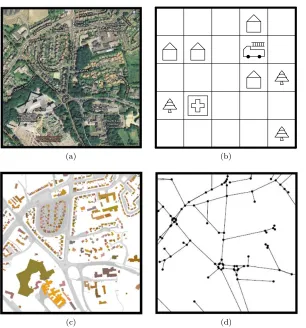
One of the simplest methods of representing a geographical area is using a grid. When representing real areas, vector Geographic Information System (GIS) files are popular, but integrating them with ABS is not trivial [Gimblett 2002; Gon¸calves et al. 2004; Schule et al. 2004; Rand et al. 2005; Brown et al. 2005; Castle and Crooks 2006; Pooyandeh et al. 2007; Sengupta and Sieber 2007; de Andrade et al. 2008; Crooks et al. 2008; Crooks 2008; Liebert et al. 2008; O´Sullivan 2008; Kennedy et al. 2009; Guo et al. 2008]. Representing the environment as a network may be sufficient, for example if there is no damage to the environment, as is the case with pandemics [Valle et al. 2006]. An example grid, GIS and network representation of a
7In [North and Macal 2007], Macal and North give slightly different criteria, listing
adaptive-ness, the capability to learn and modify behaviour, autonomy andheterogeneityas the “defining
characteristics of agency”. Furthermore, they state: “In the case that a simulation is structured
(a) (b)
(c) (d)
Fig. 4. (a) A geographical area and its representation using (b) a Grid, (c) vector GIS files and (d) a Network.
geographical area are shown in Figure 4. Different implementations of environments for large-scale emergency response are reviewed in Section 3.2.
2.4 Interactions
Epstein and Axtell [1996] describe “three types of rules of behaviour for the agents and for sites of the environment”:
[image:13.612.155.461.112.440.2]Environment-environment interactions. The state of the entities in the environ-ment may evolve due to processes other than agent actions. For example, fires may spread and buildings may collapse. These processes are the environment-environment interactions.
Agent-agent interactions. Agent-agent interactions include: communication (lead-ers may issue instructions, trapped agents may call for help); physical contact (adminstration of first aid, rescue from a building); social contact (being in the proximity of someone with an contagious disease may lead to infection).
These interactions form part of the discussion in Section 3.2 and Section 3.3.
2.5 Scale
When implementing agents and the environment, scale is an issue (from a compu-tational perspective). As the application is large-scale emergency response, either the number of agents representing displaced, injured or killed human individuals is greater than one hundred, or the virtual environment in which the agents are situated represents a geographical area greater than ten square kilometres (in which case it potentially contains thousands of entities of interest),or both. Distributed memory parallelism is one way to achieve this scalability: a large geographical area may be divided into smaller sub-areas which are then simulated on separate pro-cessors, e.g. [Koto and Takeuchi 2003]. Even still, large numbers of agents may still exist in one sub-area (processor), and so shared memory parallelism may be required to enable them to act concurrently. Different techniques related to scale are reviewed in Section 3.4.
2.6 Usage
The ultimate purpose of each ABS reviewed in this paper is to help answer some question pertaining to large-scale emergency response. Each ABS does this by predicting, through simulation, the consequences of a particular course of action, with a particular level of resources, to a particular large-scale emergency, at a particular location. The question posed defines which aspects of the ABS may vary in order to optimize the response (as well as the objective function(s) being optimized), and which aspects are required to mimic reality.
From the real-world perspective, the responseis the actions taken. These:
(1) are selected as a consequence of the behaviours of the real-world agents exe-cuting them; and
(2) are constrained by the resources available.
Thus, the actions which define the response may be altered by either changing agent behaviour, or changing the levels of resources, or both. In an ABS, determining optimal resource levels is a standard optimization problem, with resource levels as the design variables. When determining optimal agentactions however, there are two radically different approaches:
(1) Optimize existing behaviours: typically by either:
and then determining the optimal parameter8values by applying a suitable optimization algorithm, e.g. [Narzisi et al. 2006]; or
(b) testing the consequences of alternative actions, when these alternatives exist in reality and the best choice is not clear, e.g. [Khalil et al. 2010]. (2) Design and implement completely new procedures, which do not already occur
in real life: these can cover either bottom-up or top-down decision making, or both e.g. [Akin et al. 2010].
As put by Carley et al. [2006], ABSs containing agents of the second variety are9 “concerned with designing smart algorithms, not with investigating a current human social system as it exists and designing a public policy for it” and thus are quite different from ABSs of the first variety, which are concerned with optimizing aspects of current agent behaviour (e.g. the setting of parameters which are subjective in nature, or choosing between alternative competing policies).
The earlier premise ‘to a particular large-scale emergency, at a particular loca-tion’ served to fix certain control variables, which characterize the severity of the emergency, and the environment that it is occurring in. If these control variables were to change, the optimal response may change too. For example, viruses which cause pandemics vary in how infectious they are. Thus the probability of a virus being transmitted from one individual to another, is a control variable when mod-elling a pandemic [Kim et al. 2008]. The optimal response, defined (say) by the optimal radius which quarantined areas should have, depends on this probability of transmission. Investigating how the optimal resource and behaviour parameter values depend on the values of the control variables helps determine the optimal re-sponse to new emergencies at new locations, through generalization. In some cases, the parameters relating to agent behaviour and resource levels are kept constant throughout, to mimic real-life. Then, by changing control variables, the effective-ness of current procedures and resource levels are tested in unprecedented scenarios. Finally, the research question is often posed in order to learn lessons for potential future emergencies (i.e. as part of preparedness). However, ABS may also be used to answer questions about real emergencies, either retrospectively (learning lessons in hindsight, thus playing a role in preparedness for future similar events), or in real-time (as the emergency is happening, thus playing a direct role in the response). In all cases, some level ofverification andvalidation needs to be demonstrated before an ABS can be trusted for use. Using definitions from the U.S. Department of De-fense [Department of DeDe-fense 2009], verification is “the process of determining that a model or simulation implementation and its associated data accurately represent the developers conceptual description and specifications”, whereas validation is “the process of determining the degree to which a model or simulation and its associated data are an accurate representation of the real world from the perspective of the intended uses of the model”. As North and Macal [2007] state “verification and validation work together by removing barriers and objections to model use. After
8In practice, when behaviour is parameterized and optimized, resource levels are often
parame-terized and optimized too.
9The particular ABS being referred to here was RoboCup Rescue, which is discussed later in
all, if a model runs perfectly well and reflects the workings of an important real-world system, why wouldn’t someone want to use the model?”. The serious nature of the application may even mean that some form of accreditation is requisite to usage. A review of different usages, including validation and verification, takes place in Section 3.1.
2.7 Agent-Based Toolkits
Many agent-based toolkits exist to ease the development of an ABS [Railsback et al. 2006; Nikolai and Madey 2007; 2009b; Allan 2010]. Bearing in mind the discussion on terminology in Section 2.1, the review by Allan [2010] is particularly interesting, as it distinguishes between toolkits intended for ‘agent-based simulation and modelling’ and those intended for building ‘multi-agent systems’10. Given the number of toolkits available (Allan’s review discusses 31 toolkits for agent-based simulation and modelling, and 13 for multi-agent systems, whilst the review of Nikolai and Madey [2009b] discusses 53 toolkits in total), even a cursory description of each is beyond the scope of this paper. In any case, in the domain of large-scale emergency response, only two toolkits appear to dominate11: JADE and Repast. Due to their popularity, and as they are referred to again later, we here give a brief description of each of these toolkits.
2.7.1 JADE. JADE (Java Agent DEvelopment Framework) is a popular toolkit for building multi-agent systems, which after a decade of development is now in its fourth major version [JADE 2010]. Using JADE, an agent is implemented by extending from the Agent base class, which itself implements the Runnable
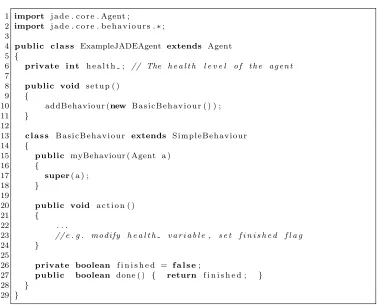
interface, and so is executed in a Java thread. Contained in this base class is some basic functionality common to all agents, such as the ability to send and receive messages (via the send(ACLMessage msg) and receive() methods respectively) and the scheduling of ‘behaviours’ (which cause agents to carry out tasks). Each agent behaviour is derived from one of the classes in theBehaviourclass hierarchy. An agent may use multiple behaviours, and complex behaviours may be constructed from simpler ones. In addition, by usingFSMBehaviours, an agent may be modelled as a finite-state machine (FSM). An example JADE agent is given in Figure 5.
Further functionality may be added to JADE agents through the use of external Java-based software. For example, Jess [Jess 2008], a Java-based rule engine may be used to create intelligent agents, whilst Jadex [Pokahr et al. 2005] may be used to implement agents with the Belief-Desire-Intention (BDI) architecture [Bratman et al. 1988; Georgeff et al. 1999].
The code-base in JADE for the construction of agents make it a popular choice for emergency response ABS. However, as it is intended for developing multi-agent systems rather than agent-based simulations, other important aspects remain
un-10Allan’s own words on the distinction between the two are: “There is a fine line between agent
based simulation and modelling (AMBS) [sic]and multi-agent systems (MAS). The former are used to simulate complex systems such as social networks and biology which exhibit emergent behaviours. The latter can also be used to simulate complex environments, such as supply chains. These could be referred to as ‘smart’ applications and components are called ‘intelligent’ agents”.
11It is interesting to note that, according to their respective home pages, JADE is for the
1 import j a d e . c o r e . Agent ;
2 import j a d e . c o r e . b e h a v i o u r s .∗;
3
4 public c l a s s ExampleJADEAgent extends Agent
5 {
6 private i n t h e a l t h ; // The h e a l t h l e v e l o f t h e a g e n t
7
8 public void s e t u p ( )
9 {
10 a d d B e h a v i o u r (new B a s i c B e h a v i o u r ( ) ) ;
11 }
12
13 c l a s s B a s i c B e h a v i o u r extends S i m p l e B e h a v i o u r
14 {
15 public myBehaviour ( Agent a )
16 {
17 super( a ) ;
18 }
19
20 public void a c t i o n ( )
21 {
22 . . .
23 // e . g . m o d i f y h e a l t h v a r i a b l e , s e t f i n i s h e d f l a g
24 }
25
26 private boolean f i n i s h e d = f a l s e;
27 public boolean done ( ) { return f i n i s h e d ; }
28 }
[image:17.612.112.490.110.416.2]29 }
Fig. 5. Example of an agent in JADE.
supported, in particular the construction of GIS-based environments. Toolkits for agent-based simulation, such as Repast, offer more functionality with regard to this aspect.
2.7.2 Repast. The Repast (Recursive Porous Agent Simulation Toolkit) Suite [Repast 2010] consists of two families of program for constructing agent-based mod-els: Repast Simphony andRepast HPC.
2.7.2.1 Repast Simphony. Repast Simphony is a Java-based toolkit for building agent-based models [North et al. 2007]. It uses the Eclipse Integrated Development Environment (IDE), and models may be developed using either flowcharts (Repast Flowchart) [North et al. 2007] or a Java Application Programming Interface (API) (Repast Java).
Repast Simphony models time discretely, advancing it in units called ‘ticks’ [Crooks 2007]. Through the use of Java annotations, methods may be scheduled to execute, either at a certain frequency (everynticks) or as a one-off (at tickm). Additionally, an agent action may be triggered as a result of another agent action.
Through the use of Geotools [Turton 2008] and the Java Topology Suite [JTS 2006], Repast Simphony offers methods for building an environment from GIS Esri (Environmental Systems Research Institute) Shapefiles [ESRI 1998]. This facili-tates the construction of complex environments, containing potentially thousands of individual entities, such as buildings. Methods enabling agents to sense this environment are also provided. All agents in Repast Simphony belong to a ‘Con-text’, which is associated with one or more named ‘Projections’ (which may be Network, Grid, Continuous or GIS). The details behind these concepts are beyond the scope of this paper, but are explained in [Howe et al. 2006]. For an agent to
sense what is in its proximity in a GIS environment, it can query its context for its GIS projection, use this projection to get its current coordinates, then call a
getObjectsWithinmethod on the projection to determine what entities are within a certain rectangular region (‘envelope’), which represents its field of vision.
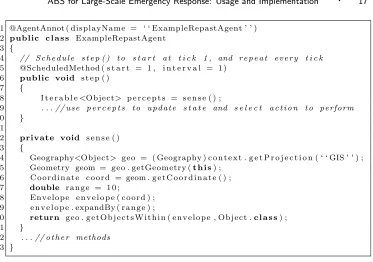
Figure 6 shows skeleton code for an agent in Repast Simphony, belonging to a GIS projection named ‘GIS’. It has a method calledstepwhich is scheduled to be called every time-step (starting at the first time-step). This calls asensemethod, which queries the GIS projection for a list of the objects within a rectangular region around the agent. These can then be used to affect the state and decision making of the agent in methods called after sense (which would be inserted at line 9 in Figure 6).
As any Java class can be used as an agent (in the Java versions), JADE agents can be used in Repast [Yoo and Glardon 2009]. This is useful as it allows the strong agent functionality of JADE to be combined with the strong GIS-environmental modelling of Repast, however in practice (with the exception of Yoo and Glardon [2009]) one of the toolkits is always used exclusively. Finally, batches of simulations may be scheduled to run using Terracotta [Terracotta 2010], e.g. for parameter sweeps.
2.7.2.2 Repast HPC. Although Repast Simphony has been used to distribute single simulations across multiple machines [Gulyas et al. 2009], the difficulty in doing so means such usage has been uncommon. In December 2010, a separate toolkit specifically for the purpose of running single simulations on multiple ma-chines, Repast HPC, was released [Collier and North 2011]. It is written using C++, and makes use of the Message Passing Interface (MPI) [Gropp et al. 2000] for dis-tributed memory computing. Synchronization between processes is handled by a
RepastProcessclass, and isconservative [Fujimoto 2000]: that is, an event is not processed until all events scheduled to happen before it have been processed. The
1 @AgentAnnot ( displayName = ‘ ‘ ExampleRepastAgent ’ ’ )
2 public c l a s s ExampleRepastAgent
3 {
4 // S c h e d u l e s t e p ( ) t o s t a r t a t t i c k 1 , and r e p e a t e v e r y t i c k
5 @ScheduledMethod ( s t a r t = 1 , i n t e r v a l = 1 )
6 public void s t e p ( )
7 {
8 I t e r a b l e<O b j e c t> p e r c e p t s = s e n s e ( ) ;
9 . . .// u s e p e r c e p t s t o u p d a t e s t a t e and s e l e c t a c t i o n t o p e r f o r m
10 }
11
12 private void s e n s e ( )
13 {
14 Geography<O b j e c t> g e o = ( Geography ) c o n t e x t . g e t P r o j e c t i o n ( ‘ ‘ GIS ’ ’ ) ;
15 Geometry geom = g e o . getGeometry (t h i s) ;
16 C o o r d i n a t e c o o r d = geom . g e t C o o r d i n a t e ( ) ;
17 double r a n g e = 1 0 ;
18 E n v e l o p e e n v e l o p e ( c o o r d ) ; 19 e n v e l o p e . expandBy ( r a n g e ) ;
20 return g e o . g e t O b j e c t s W i t h i n ( e n v e l o p e , O b j e c t .c l a s s) ;
21 }
22 . . .// o t h e r methods
[image:19.612.117.490.98.360.2]23 }
Fig. 6. Example of an agent in Repast Simphony, with a basicsensemethod.
3. ABS FOR LARGE-SCALE EMERGENCY RESPONSE
3.1 Usage
3.1.1 Where, when, why and how ABS is used. ABS is most commonly used during preparedness. Past real emergencies are often used as exemplar scenarios, in which case the usual procedure is first to tune the ABS to replicate how the real event unfolded, and then determine the optimal response in hindsight. Alter-natively, the emergency being simulated may be without precedent. For a given location, preparation for an unprecedented emergency is warranted if its triggering event is plausible there. The plausibilities of triggering events varies at national and regional levels. For example, as mentioned in Section 1.2.2, the National Risk Regis-ter [U.K. Cabinet Office 2010a] describes fourteen high consequence risks facing the U.K., and plots their relative likelihood against their relative impact. Community Risk Registers then refine these relative likelihoods and impacts at county level. In the U.K. the greatest risks (in a Pareto-sense, in that they are non-dominated in terms of relative likelihood and impact) are ‘attacks on transport’, ‘attacks on crowded places’ and ‘pandemic human disease’, each of which ABS is well suited to modelling [Challenger et al. 2009b; Epstein 2009].
SimGenis
(generic emergency) PLAN-C
(terrorist attacks)
RoboCup Rescue (earthquakes)
AROUND (earthquakes) IMAMCR
(pandemic flu) WIPER/DADS
(hurricanes) EpiSimS (biological attack; pandemic flu)
Event
Year ABS
1995 1997 1999 2001 2003 2005 2007 2009 2011
Kobe
Eathquake HurricaneKatrina
9/11 & Anthrax attacks
Swine flu pandemic
RoboCup
Rescue SimGenis
PLAN-C WIPER
AROUND IMAMCR
[image:20.612.126.484.95.322.2]DADS EpiSimS
Fig. 7. Illustration of how the large-scale emergencies simulated using ABS varies around the world depending on the local risks and history of events.
the types of research questions asked, including which parameters are optimized (if any), what the objectives are, and what control parameters (if any) are varied to generalize results.
Along the Pacific Ring of Fire, research focuses on natural disasters. For example, various research programmes in Japan [Kitano et al. 1999; Takeuchi 2005] and Vietnam [Chu et al. 2009] have each focussed on the response to earthquakes. RoboCup Rescue [Kitano et al. 1999] is an ABS used to determine the optimal actions for police, fire brigade and ambulance agents, and their coordination centres, in the wake of a simulated earthquake. The 1995 Kobe earthquake was the original test scenario used [Takahashi et al. 2001], although more have been added over the years [Takahashi 2009]. The response is optimized through the design and implementation of better action selection methods. Research teams from around the world continue to test their action selection mechanisms on a variety of disaster scenarios12, through an annual competition held since 200113. The success of a response is measured using the following objective function:
S=
P+ H
Hinit
r B
Bmax
(1)
where P is the number of alive individuals, Hinit and H are the initial and final sums of health points for all individuals respectively, and Bmax and B are the total area and final unburnt area for all buildings respectively. Clearly S is to be
12Using a variety of different scenarios represents a change in control variables.
13Further illustrating how research is driven by local risks, 12 out of the 13 entrants in the 2010
maximized. Recognizing the multi-objective nature of emergency response, a score vector has recently been proposed [Siddhartha et al. 2009b; 2009a]. Using this, each individual objective retains its ipseity as a component of a vector, and the notion of dominance is used to compare different responses. As of 2010, the score vector has not yet been adopted for use in the official competition.
Also vulnerable to earthquakes is Vietnam. In 2007, a collaboration between French and Vietnamese universities resulted in an ABS called GAMA (GIS and Agent-based Modelling Architecture) [Amouroux et al. 2009] being developed. The following year the AROUND (Autonomous Robots for Observation of Urban Net-work after Disasters) project became one of its first applications [Chu et al. 2008], with an earthquake hitting Hanoi being the test scenario. The goal of the AROUND project is to capture mathematically agent behaviour which is consistent with the objectives of emergency responders. This is done by enabling rescue agents to learn their behaviour from the experts they represent, through interactive sessions. Thus, as with RoboCup Rescue, it is the behaviour which is optimized (rather than resource levels). However, there are two major differences:
(1) Parameterizing the status quo versus the design of new procedures: In AROUND, behaviour is modelled using a parameterized utility function, which is used for action selection; by varying the parameters, optimal behaviour is found14. In RoboCup Rescue, better responses are obtained by designing and implementing new action selection methods for rescuer agents, which don’t necessarily bear any resemblance to real-life behaviour.
(2) Difference in objectives: In AROUND, optimal agent behaviour mimics that of the real-world rescuers they represent. In RoboCup Rescue, optimal agent behaviour maximizes the objective function in Equation 1.
The road map for RoboCup Rescue [Tadokoro et al. 2000; Tadokoro 2006] lists “autonomous robot rescue agent team saves human lives” as the goal for 205015. If robots are tasked with actually carrying out the rescue, optimal behaviour is the target. The AROUND project also envisages the use of robots [Boucher et al. 2009], however for observation tasks only. The information gathered by these robots is fed back to a spatial decision support system (SDSS), which uses the ABS to predict the outcomes of possible courses of action (by human rescue teams). Boucher et al. [2009] state that “ensuring the pertinence of the predicted outcomes requires incorporating in the system the knowledge used in situation by responders,” hence the need for AROUND to capture existing behaviour: the ABS is used to predict how a particular response by human teams will proceed.
Whilst natural disasters are the main concern in the East, malicious terrorist attacks have been a motivating factor in the West. For example, following the terrorist attacks on the World Trade Center on September 11th 2001, and the
14More details on the implementation of agent behaviour in AROUND are given in Section 3.3.
15Before the arrival of autonomous rescue robots however, attempts are being made to transfer
anthrax attacks a matter of weeks later, the Center for Catastrophe Preparedness and Response (CCPR) was founded at New York University. As part of its LaSER (Large Scale Emergency Readiness) project, an ABS named PLAN-C (Planning with Large Agent-Networks against Catastrophes) was developed to predict what people, individually and collectively, will do in a large-scale emergency such as a terrorist attack, to aid preparedness for such situations [Mysore et al. 2006]. PLAN-C is an example of a parameterized model used to optimize existing resources and procedures.
In [Mysore et al. 2006; Narzisi et al. 2006; Narzisi et al. 2007], PLAN-C is used to simulate the first 50 hours following a Sarin attack on Manhattan island (un-precedented in the U.S.). Multiple experiments are performed, to investigate the effect of different parameters on the response. Some experiments only vary param-eters related to resource levels. For example, the variation in the total number of fatalities is investigated in terms of:
—hospital resources levels (representing recoverable resources such as personnel and beds, and consumable resources such as drugs), and
—the number of first responders (Hazardous Materials teams (HazMats) and Major Emergency Response Vehicles (MERVs)).
Initial increases in either parameter leads to rapid decreases in the number of fatal-ities. However, beyond certain thresholds, further increases in either of these pa-rameters had no discernable effect, with the number of fatalities fluctuating around a non-zero constant value. This demonstrated that a number of victims in the simulated Sarin attack were destined to die, regardless of resource levels.
Other experiments only vary parameters related to actions. Again, using the number of fatalities as the objective, optimal values of the following behavioural parameters are determined:
—when (i.e. the health level at which) a civilian should decide to go to hospital: if they go too early, hospitals can become overwhelmed; if they go too late, then the civilian risks death;
—when (i.e. the health level at which) a hospital should release a patient: patients may die if released too early; however, if released too late, then hospital resources are needlessly wasted;
—characteristics of civilian behaviour, in terms of ‘worry’ and ‘obedience’ param-eters;
—the level of communication between hospitals (regarding their locations and ca-pacities) and civilians: above a critical level of communication, the number of fatalities begins to increase as healthier victims learn of nearby available hospi-tals, which they then choose to travel to and reach before less healthy victims, who are then forced to travel further.
treated earlier. This was attributed to victims distributing themselves more evenly over the remaining hospitals: before, large numbers of victims headed to the nearest hospitals, which quickly become overwhelmed.
Recognizing the multi-objective nature of emergency response, Narzisi et al. [2006] applied multi-objective evolutionary algorithms to the parameterized PLAN-C model to determine the Pareto-optimal trade-off between fatality rate, average health level of the affected individuals, and the average waiting time for victims at hospital. This time, only the first 16 hours following the attack were simulated. Ten parameters (two relating to the behaviour of civilians, five to the behaviour of hospitals, one to the behaviour of first responders, and two related to resources) were allowed to vary, although it is noted that it is difficult to actually control some of these in practice.
The Sarin attack modelled by PLAN-C is of a chemical nature, whilst the earth-quakes modelled by RoboCup Rescue and AROUND represent physical destruction. Of quite different ilk are pandemics, which are of biological origin. EpiSimS, another ABS developed in the U.S. (at Los Alamos National Laboratory), has been used to investigate pandemics caused both maliciously and naturally: initially developed to simulate the spread of epidemics of natural cause in urban areas [Eubank 2002], it has since been applied to model the response to a smallpox attack in Portland, Oregon [Barrett et al. 2005]. EpiSimS is another example of a parameterized ABS being used to optimize existing resources and procedures. In the simulated smallpox attack, it was found that the number of deaths was most heavily influenced by how quickly infected individuals isolated themselves from the rest of society (whether by withdrawing to their homes through their own choice, or through actions by health officials). By comparison, the actual response deployed by officials to contain the spread of smallpox (mass evacuation of the city, vaccination, or quarantine) had a very small effect on the death rate.
help whenever they first experience flu-like symptoms, was found to be the most effective control strategy.
Of course, not every ABS takes motivation from a particular type of local risk. SimGenis [Saoud et al. 2004; Saoud et al. 2005; Saoud et al. 2006], for example, which was developed at Universit´e la Manouba, in Tunisia, is designed to be ‘generic per accident and location’ [Saoud et al. 2006]. It was used in [Saoud et al. 2006] to design optimal, efficient and adequate rescue strategies, based on the initial state of victims, number of rescuers, and method of communication between rescuers. More precisely, the aim of the research was to determine how the response to a large-scale emergency depends on the use of:
—a centralized or a decentralized strategy, and
—an instantaneous electronic or a time-consuming paper-based means of commu-nication.
The optimal response was generalized to different scenarios by varying the fol-lowing control variables:
—the total number of victims, —the initial states of victims, and
—the number of rescuers (doctors, nurses and fire-fighters)16. The main findings from varying these control variables were:
(1) “there is no one unique ‘best’ rescue scenario (strategy), . . . (as) this depends on the disaster configuration”, and
(2) “for a given configuration, it is hard to predict which would be the best”, al-though some generalizations were able to be made17.
Generalizing findings from particular scenarios to the generic case is important if results are to be applied quickly and reliably to unforeseen emergencies, once they occur. In SimGenis, this was done using a traditional ‘design of experiments’ style investigation. However, the use of machine learning methods to classify emer-gencies by characteristics of their optimal response, including possibly the use of transductive inference (reasoning from the particular to the particular, without constructing a generic case) [Vapnik 2006], may be another option for generalizing optimal responses.
The remaining ABS in Figure 7, WIPER, is designed for real-time response. WIPER (Wireless Integrated Phone-based Emergency Response) [Schoenharl et al. 2006; Schoenharl 2007; Pawling et al. 2008; Schoenharl et al. 2009] is a Dynamic-Data Driven Application System (DDDAS) [Darema 2004], which couples ABS with real-time data. It is composed of five main components [Pawling et al. 2008]. A real-time data source provides real-time data regarding cell-phone usage from cell-phone providers. Using a historical data source (a repository of normal cell-phone usage), adetection and alert systemdetects possible anomalies in cell-phone
16Strictly speaking, this is a parameter which can be varied, during preparedness. However, at
the time a response is needed, this number is fixed, and so may be seen as a control variable.
17For example, when the ratio of victims to rescuers was high, a centralized strategy was found
ABS usage
Preparedness Real-time response
Agent behaviour Agent behaviour
based on reality uses new algorithms
Generalized optimal response
Specific
optimal response
[image:25.612.150.467.120.231.2]U1 U2 U3 U4
Fig. 8. Taxonomy of ABS usage for large-scale emergency response.
usage patterns. Hypotheses explaining these possible anomalies are produced by a simulation and prediction system (SPS), which are validated or rejected using streaming real-time data. Emergency response managers interact with these com-ponents through a web-based front enddecision support system. The SPS operates by creating a batch of agent-based simulations, which is run in parallel. In each ABS, an agent’s movement behaviour mimics that in one of three different types of crisis event: a flee event, where agents move away from a disturbance; a flock
event, where agents move as a mob; or a jam event, where agents move towards their individual goals, but are constrained, as in a traffic jam. Using the real-time data source, the progression of each ABS is compared to that of the real-event. The ABSs with the greatest predictive power are identified, and used both to infer the cause of the anomalous behaviour, and make future predictions about civilian movements. A wider range of movement behaviours is supported in DADS (Dy-namic Adaptive Disaster Simulation) [Chen et al. 2011], which builds upon WIPER using methods from continuum mechanics; Hurricane Katrina is cited as motivation for these developments.
From the seven ABSs discussed in this Section, we observe: (1) ABSs may be designed for use:
(a) before a large-scale emergency happens, during preparedness, or (b) during the real-time response (e.g. WIPER/DADS).
(2) Of those used during preparedness, an ABS may improve agent behaviour by: (a) varying some component of existing behaviour (e.g. PLAN-C), or
(b) designing entirely new procedures, which are unrelated to existing be-haviour (e.g. RoboCup Rescue).
(3) The description of the optimal response may be:
(a) for a particular scenario (e.g. IMAMCR), or it may be
(b) generalized, by investigating how this description depends on the control variables which describe the emergency and the environment (e.g. SimGe-nis).
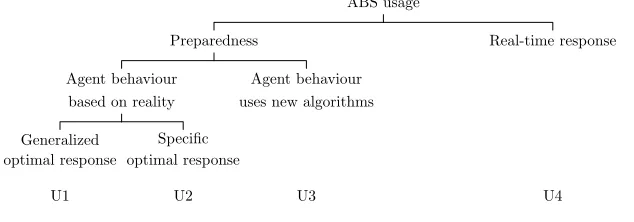
Using these observations, we may categorize existing ABSs according to their usage using the taxonomy in Figure 8. The four taxa18, labeled U1, U2, U3 and U4, are used to identify the usage of a variety of ABSs in Table I.
Verification techniques Structured code walk throughs
The developers of the ABS present the code they have written to an audience, which includes other developers (not involved in the development of the ABS), whose task it is to scrutinize the code. Structured debugging
walk throughs
This is similar to code walk throughs, but includes the debugging (execution of the code, stepping through it line by line), for a few test cases.
Unit testing The automated testing of each function in the source code, as is done during extreme programming (XP) software develop-ment [Beck and Andres 2004].
Test cases and sce-narios
The logging of information, particularly at the agent behaviour level, for a set of test cases, in a format which can then be scru-tinized by the developers.
Visualization Displaying the simulation output on a graphical display can help identify bugs, not readily identified using traces [Law and Kelton 1982].
Validation techniques
Face validation Asking domain experts whether the ABS behaves reasonably. Retrodiction Use historical data sets to test ABS predictions.
Prediction Compare ABS predictions to outcomes from real events or field experiments.
[image:27.612.136.481.107.351.2]Docking Compare the results from an ABS to those from another model whose validity has been tested [Axtell et al. 1996].
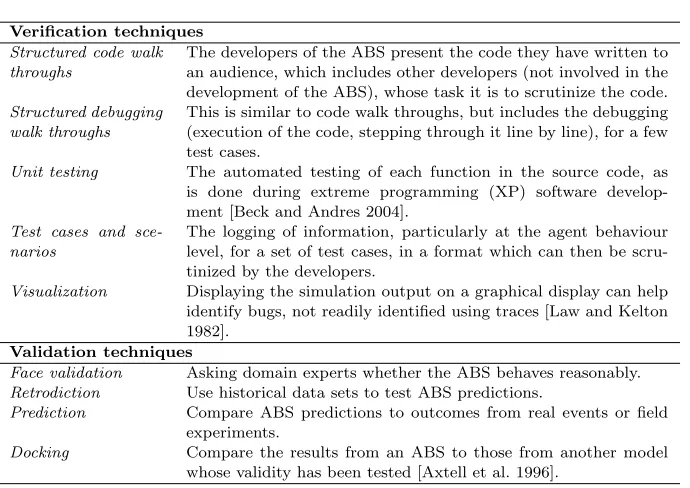
Table II. Common techniques for verifying and validating an ABS.
3.1.2 Verification and validation. A large number of techniques exist for the verification and validation of computer simulations. For example, Balci [1997] provides a taxonomy of 77 verification and validation techniques for simulation models19. Some of the more common techniques for validation and verification of ABSs [Xiang et al. 2005; North and Macal 2007] are listed in Table II.
Saoud et al. [2006] discusses the use of three methods for the validation of Sim-Genis20. Duringconceptual validation, which aimed to validate the adequacy of the the underlying model in representing reality, experts from Service d’Aide M´edicale Urgence (SAMU) were consulted to define model components. During internal validation21, which aimed to ensure the correctness of the code, andexternal val-idation, which aimed to validate the adequacy and accuracy of SimGenis results with real world data, results from fieldwork (attending a 4 hour simulated plane crash, and discussing rescue plans with firefighters and medical staff) were used.
In PLAN-C, “the model-checking approach focuses on individual agents’ traces” [Narzisi et al. 2006]. This is performed using external software, XSSYS Tempo-ral Logic Trace Analysis System [Antoniotti et al. 2003]. Its use is demonstrated in [Mysore et al. 2005], where the time trace of a person clearly shows how their health state improves upon admittance to hospital. A time trace of a hospital also clearly shows how hospital resources decrease as the number of patients admitted
at an appropriate level, e.g.: It does not further categorize ABSs for real-time response, as there as comparatively few of them.
19A further 38 techniques are included in a second taxonomy for object-oriented simulation models.
20Three further methods,cross-model, dataandsecurity were mentioned, but not used.
increases.
Feedback from domain experts (ambulance workers) is central to the development and use of AROUND. Consequently, much effort was put into the GUI design, a “cognitive (and not simply cosmetic) necessity” [Chu et al. 2009]. This may be seen as aiding face validation, which relies heavily on ‘animation’ and ‘graphical representation’ being presented to practitioners [Xiang et al. 2005].
Schoenharl [2007] describes three methods used to validate WIPER. Face valida-tion was performed by the developers (rather than emergency services personnel). One criteria for WIPER was that different runs of the ABS with exactly the same input parameters (including seeds for random number generators) should give ex-actly the same results. This was confirmed in six validation tests, each of which ran four simulations with the same input parameters. Finally, simulated cell-phone activity was confirmed to correlate well with empirical data; results from statistical tests demonstrated “significant evidence that the WIPER simulation generates call activity data similar to that seen in the empirical data”.
The validation of EpiSimS consisted of running (reduced size) experiments with twelve combinations of three input variables, namely the infectivity, the proportion of those who self isolate, and the number of people in the average room [Valle et al. 2006]. Variation of these variables all had the expected effect on the total number of people affected. IMAMCR was validated by comparison to a ‘SIR’ model (see Section 3.3 for description of ‘SIR’); although not matching perfectly, the graphs of the proportions of the population who were ‘susceptible’, ‘immune’ and ‘recovered’ followed the same pattern for both models. Comparison to a ‘SIR’ model was also the approach taken in the validation of CROWD [Skvortsov et al. 2007] and BIOWAR [Chen et al. 2004]. Carley et al. [2004] give further detail of the validation of BIOWAR, including the use of a software tool called WIZER (‘What-if AnalyZER’) [Yahja and Carley 2006]. WIZER is a tool for automated validation, and consists of two main components: Alert WIZER and the WIZER inference engine. Alert WIZER detects if the outputs of the ABS is within acceptable bounds, by comparison to an empirical data source. Using this information, a database which relates model outputs to model parameters, and estimated bounds on the ABS model parameters (set by subject matter experts, in BioWar’s case, experts on bioterrorism), the WIZER inference engine then identifies which ABS parameters to vary. These parameters are then tried in another ABS, and the process continues until some user-defined validation criteria is met.
If ABS is to be used by practitioners, the need for rigorous validation and verifi-cation is particularly important. For example, Takahashi [2007] reports feedback22 received from local Japanese authorities on RoboCup Rescue, and states “a greater validity of the ABSS is required to persuade fire-fighting departments to use them with other methods”. The use of ABS by practitioners will often require some form ofaccreditation [Duong 2010]. Accreditation is defined as “the official certification that a simulation, or federation of simulations is acceptable for use for a specific purpose” [Australian Government Department of Defence 2005], and may only fol-low appropriately high standards of verification and validation.
22Comments included “there are no theoretical backgrounds” and “the number of agents is small
Finally, we point out that some thoughts on the use of unvalidated large-scale agent-based models are presented in [Gross and Strand 2000].
3.2 Environment Implementations
3.2.1 Representation. When used for large-scale emergency response, the vir-tual environment in an ABS represents the geographical area affected by the emer-gency. In most cases this corresponds to a real-world area, but it may also be a fictitious area. For example, in the ABS SimGenis [Saoud et al. 2003; Saoud et al. 2004; Saoud et al. 2005; Saoud et al. 2006], the environment represents a fictitious city, of unknown size, ‘including its routes and hospitals’. It is modelled as a grid of ‘cells’, where a cell is described as ‘an elementary unit to represent graphically the environment’ [Saoud et al. 2006]. Three types of cell exist: obstacle cells, danger cells, and normal cells. The type of a cell determines:
(1) Which agents may pass through it: no agents may pass through obstacle cells, and only fire-fighters may pass through danger cells.
(2) The evolution of the health of any victim agents within it: each victim’s health state is modelled using a Markov chain; the probability of transition from one state to another depends, in part, on what type of cell the victim is in. Modelling the environment as a grid restricts agent movement to up-down and left-right type movements. In SimGenis, Dijkstra’s algorithm [Dijkstra 1959] is used by ambulance agents to determine the shortest route to a destination (presumably in this case each cell represents a node on a graph which resembles a regular grid). A grid was also used to model the environment in an early version of PLAN-C [Mysore et al. 2005], which simulated a food poisoning outbreak in the Brazilian state of Minas Gerais in 1998. In both these examples, the authors recognize the inadequacies of using a grid to model the environment. For example:
—Saoud et al. [2006] concludes “To be more realistic and in order to be able to simulate real accidents with real map, we are working on the connection of the simulator to a GIS”.
—Mysore et al. [2005] notes “We might need to switch the environment to a real city. Transportation constraints and modes, roads, subways, and other geographical information might need to be incorporated”.
The use of vector GIS data files to construct a virtual environment has at least two main advantages over a grid (raster) based environment:
(1) The geometries of individual entities, such as buildings, may be described as polygons of arbitrary shape (as opposed to a collection of rectangular grids). (2) Transport networks, such as road networks, which agents may travel along,
may be represented accurately as a graph.
![Fig. 3.An abstract agent with state, and its environment, adapted from [Wooldridge 2009].](https://thumb-us.123doks.com/thumbv2/123dok_us/1571379.109733/11.612.126.490.108.240/fig-abstract-agent-state-environment-adapted-wooldridge.webp)

![H5N1 flu outbreak in[Ren et al. 2009][Khalil et al. 2010]Table I.[Valle et al. 2006]Anthrax attack at aGeneric emergencySarin attack in Man-[Carley et al](https://thumb-us.123doks.com/thumbv2/123dok_us/1571379.109733/26.612.134.465.96.682/outbreak-khalil-valle-anthrax-ageneric-emergencysarin-attack-carley.webp)